Archive
05/19/2014 – Ephemeris – The meteor storm and an all night star party to view it
Ephemeris for Monday, May 19th. Today the sun will be up for 14 hours and 57 minutes, setting at 9:08. The moon, 2 days before last quarter, will rise at 1:33 tomorrow morning. Tomorrow the sun will rise at 6:09.
This will be a first for the Grand Traverse Astronomical Society, an all night star party this Friday night and Saturday morning. The reason is the predicted meteor storm Saturday morning from Comet 209P/LINEAR, discovered in 2004. Near a I can tell no one has seen a single meteor from this comet. However several astronomers who work on cometary debris have some confidence that debris from this comet which orbits the Sun every 5 years will cross the Earth orbit on the morning of May 24th around 3 a.m. give or take. The hardiest of the GTAS members will be at the Dune Climb of the Sleeping Bear Dunes National Lakeshore all night. Join us if you can.
Times are for the Traverse City/Interlochen area of Michigan. They may be different for your location.
Addendum
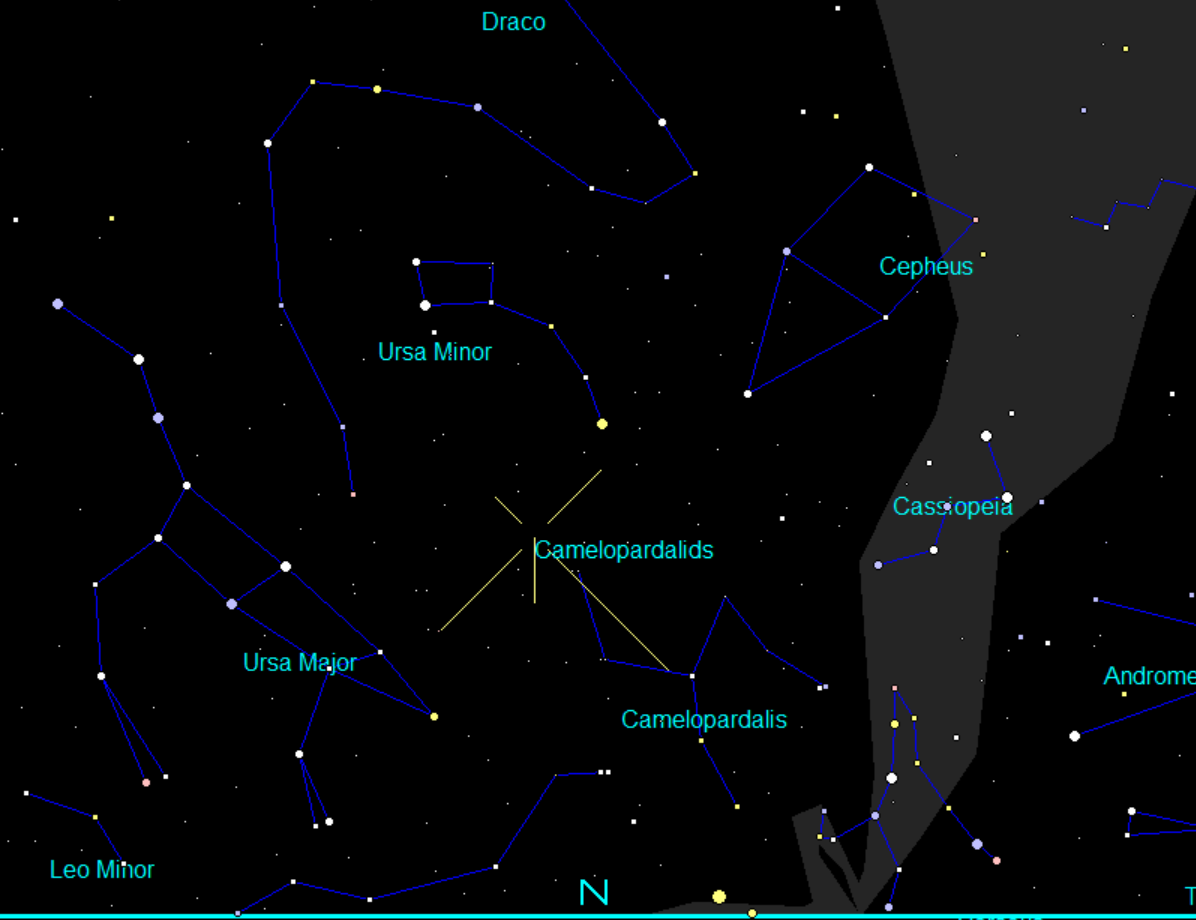
The expected radiant for the meteors of the May Camelopardids, the meteors from the comet 209P/LINEAR at 3 a.m. on May 24, 2014. Credit: My LookingUp program.
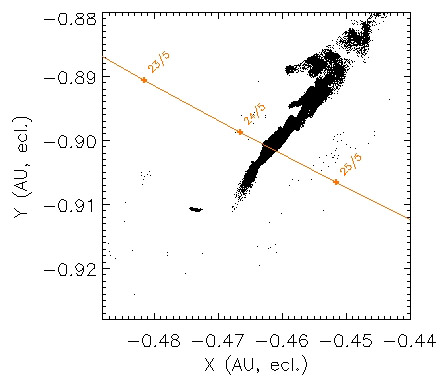
Earth’s motion in respect to the expected meteoroid stream from Comet 209P/LINEAR. Calculations by Jeremie Vaubaillon. From meteor.seti.org.
Interlochen Star Party Status
6:54 p.m.
The sky is getting hazier. I’m not sure what’s in store across the lake. If it’s not solid we can live with it. We are still a GO.
3:01 p.m.
I talked to Nadji earlier this afternoon and after looking at the Clear Sky Chart and other sources that we will proceed with the event. The students will arrive at the soccer field by 9:30 p.m. The weather prognosis has deteriorated somewhat in the most recent sky chart, so we’re going to keep our fingers crossed on this one.
05/16/2014 – Ephemeris – A busy weekend for astronomy in the Grand Traverse Region
Ephemeris for Friday, May 16th. Today the sun will be up for 14 hours and 51 minutes, setting at 9:04. The moon, 2 days past full, will rise at 11:10 this evening. Tomorrow the sun will rise at 6:12.
This will be a busy weekend for the Grand Traverse Astronomical Society. Tonight the society will host a star party to celebrate the grand opening of the new Betsie Valley District Library in Thompsonville. It starts at 8:30 p.m. There will be a program inside by yours truly if it’s cloudy. Saturday night we’ll be observing the heavens with the students of the Interlochen Arts Academy. And on Sunday the society will have members with their telescopes showing the Sun if clear and have two rooms of exhibits in the Health and Science building for the Northwestern Michigan College’s annual Barbecue on the main campus. One of the society telescopes is a special solar telescope to view solar prominences.
Times are for the Traverse City/Interlochen area of Michigan. They may be different for your location.
Addendum

Observing the sun through GTAS members telescopes at the NMC Barbecue in 2012. Credit: Eileen Carlisle.
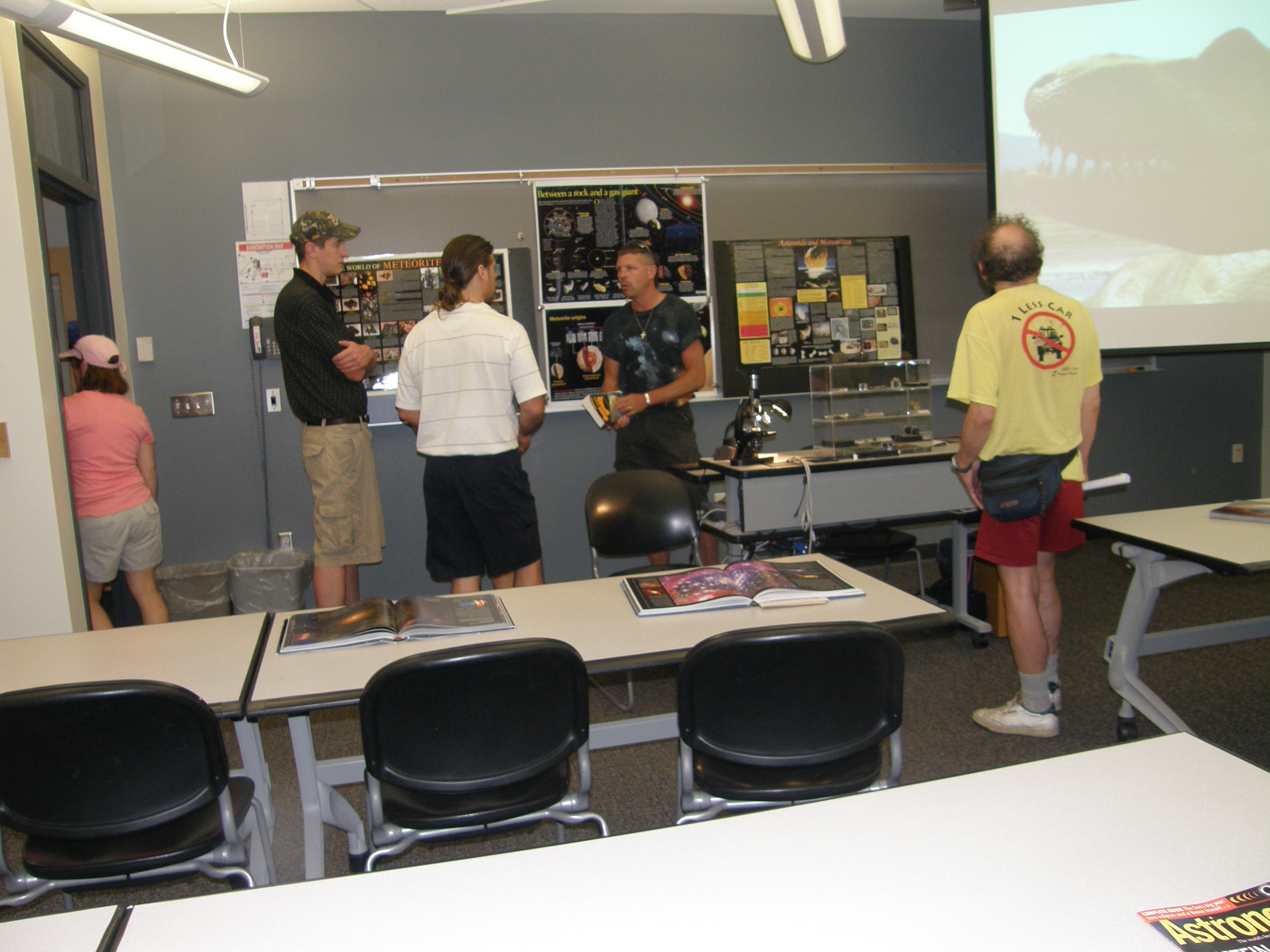
Joe Brooks, the GTAS “Meteorite Man” talks meteorites with Barbecue patrons. He has a video and meteorite samples. Photo credit: Eileen Carlisle.
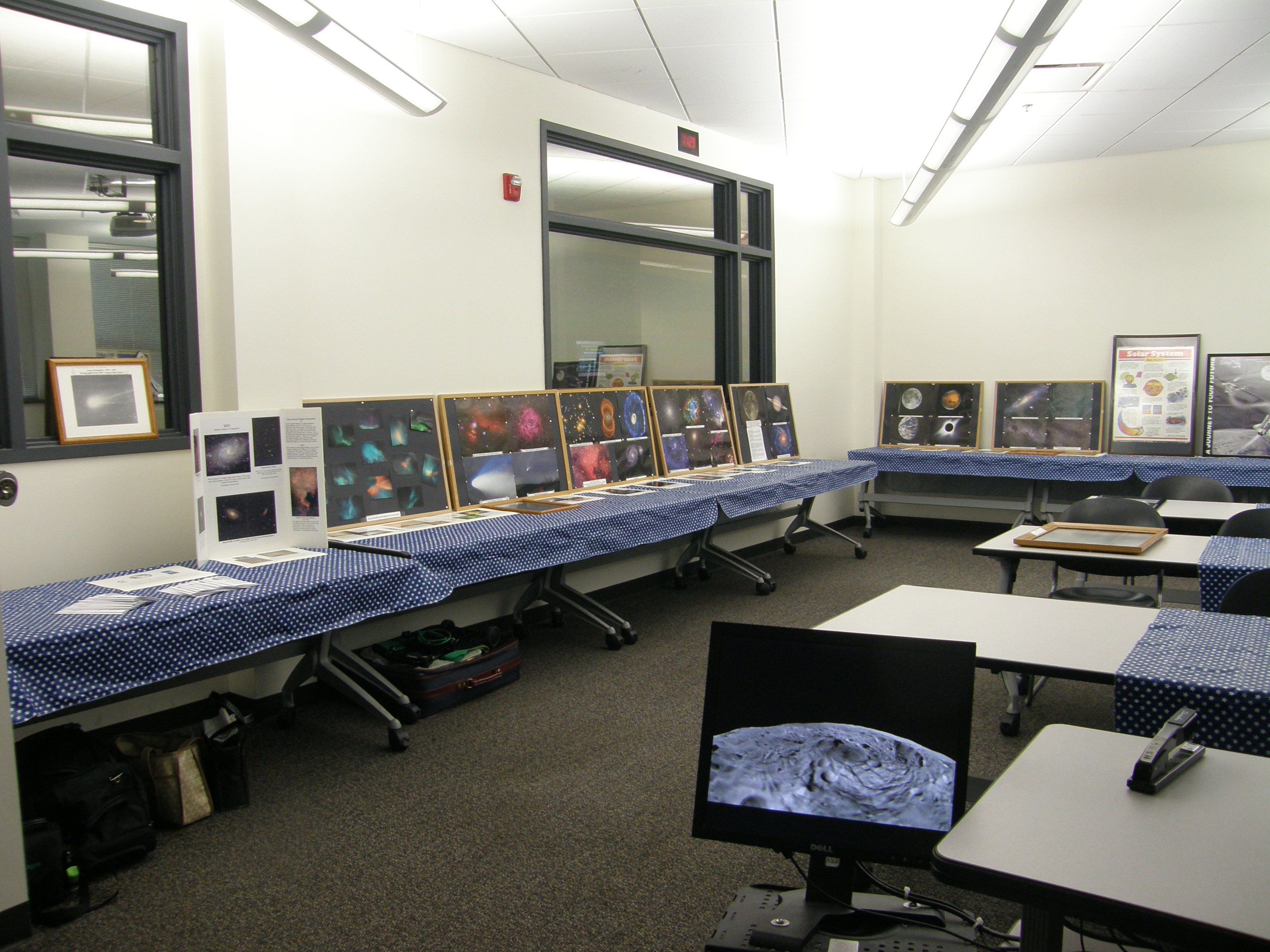
Astronomical photographs line the walls and tables of a classroom plus a series of astronomy videos are displayed at the NMC Barbecue. Credit: Eileen Carlisle.
05/15/2014 – Ephemeris – Comet 209P/LINEAR and the meteor storm
Ephemeris for Thursday, May 15th. Today the sun will be up for 14 hours and 49 minutes, setting at 9:03. The moon, 1 day past full, will rise at 10:10 this evening. Tomorrow the sun will rise at 6:13. | A possible meteor storm is predicted for the morning of Saturday May 24th, between the hours of 3 and 4 a.m. with the first meteors showing up shortly after 1:30 a.m. and building after that. Meteor showers are produced by the debris of comets. The comet that will be responsible is 209P/LINEAR discovered in 2004 by Lincoln Near-Earth Asteroid Research, though the comet has been in and near its present orbit for centuries. The comet will pass closest to the Earth on May 28th, it will be very dim. The debris cloud will be ahead if it, crossing the earth’s orbit 4 days earlier. The Grand Traverse Astronomical Society is attempting to set up an all night star party/meteor watch. Stay tuned.
Times are for the Traverse City/Interlochen area of Michigan. They may be different for your location.
Addendum
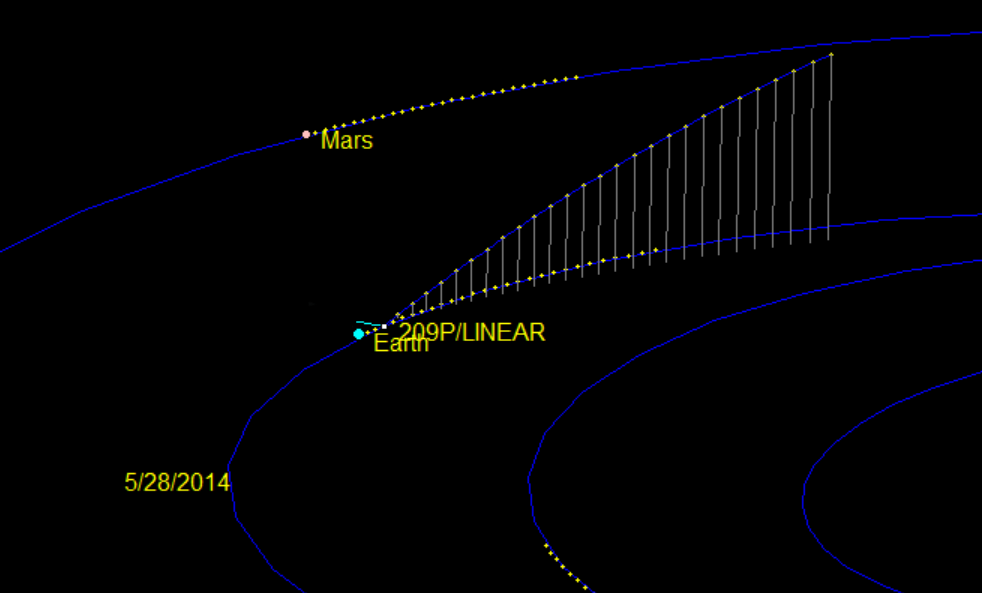
Comet 209P/LINEAR crosses the Earth’s orbit behind the Earth around May 28, 2014. The “stilts” on the comet’s orbit show that it is coming from north of the Earth’s orbital plane. Credit: Bob Moler’s LookingUp program.
The expected radiant for the meteors of the May Camelopardids, the meteors from the comet 209P/LINEAR at 3 a.m. on May 24, 2014. Credit: My LookingUp program.
05/14/2014 – Ephemeris – All 5 bright planets are visible this week
Ephemeris for Wednesday, May 14th. Today the sun will be up for 14 hours and 46 minutes, setting at 9:02. The moon, at full today, will rise at 9:05 this evening. Tomorrow the sun will rise at 6:14.
It’s Wednesday and once again time to locate the bright planets for this week. Mercury is beginning to show up in the west shortly after sunset, It will be at its farthest from the Sun on the 25th. It will set at 10:51. Brilliant Jupiter will be in the western sky as darkness falls tonight. It will set at 1:07 a.m. Reddish Mars is in Virgo in the southeast as darkness falls. It will pass due south at 10:47 p.m. It’s 64.6 million miles away now, and moving away, and will set at 4:38 a.m. Saturn will be low in the southeast as darkness falls. It’s in the faint constellation of Libra the scales this year. It will pass due south at 1:23 a.m. Brilliant Venus will rise in the east at 4:46 a.m. in twilight.
Times are for the Traverse City/Interlochen area of Michigan. They may be different for your location.
Addendum
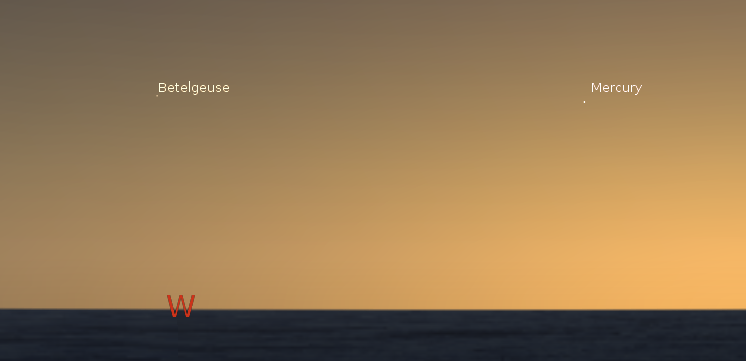
Mercury low in the west at 9:30 p.m. May 14, 2014. Created using Stellarium.
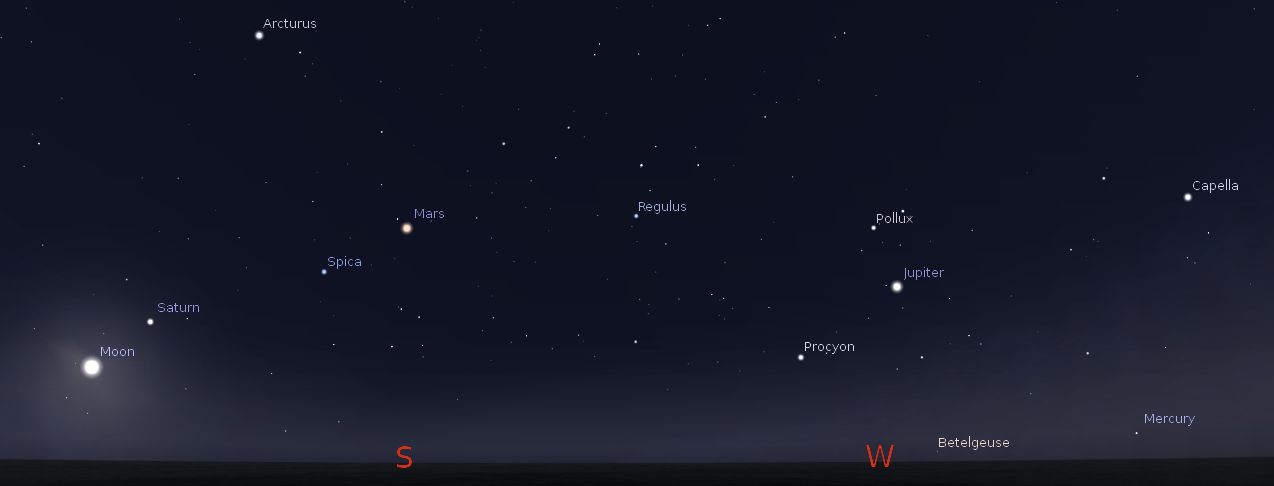
All the evening planets from Mercury to Saturn plus the moon at 10:30 p.m. May 14, 2014. Created using Stellarium.
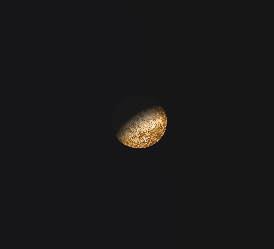
Mercury through a telescope on May 14, 2014. Created using Stellarium.
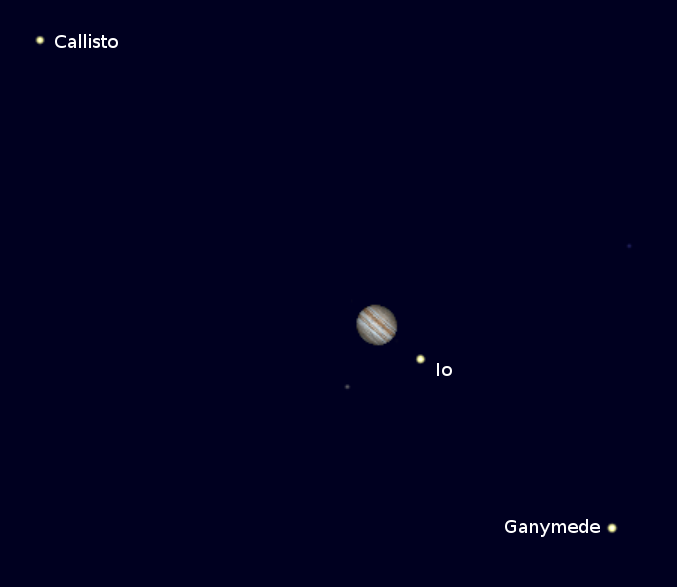
Jupiter and its moons at 10:30 p.m. May 14, 2014. Europa is being occulted by Jupiter. Created using Cartes du Ciel (Sky Charts).
Europa will disappear behind the moon at 9:48 p.m, and will reappear after Jupiter sets for northern Michigan. Places west of here will see Europa reappear before Jupiter sets.
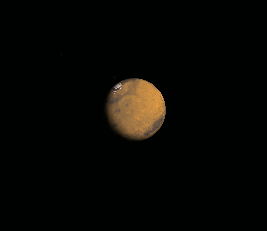
Mars through a telescope at 10:30 p.m. on May 14, 2014. Created using Stellarium.
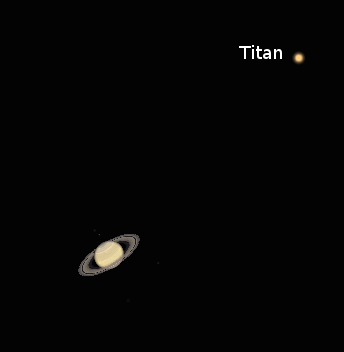
Saturn through a telescope. on May 14, 2014. Created using Stellarium.
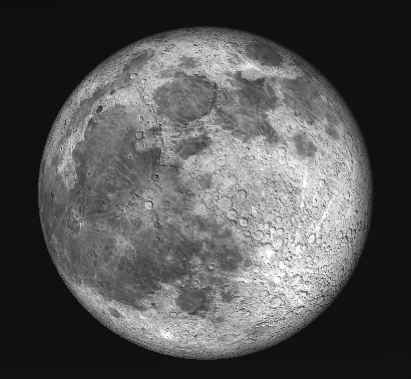
The Moon as it would appear through binoculars at 10:30 p.m. May 14, 2014. Created using Stellarium.
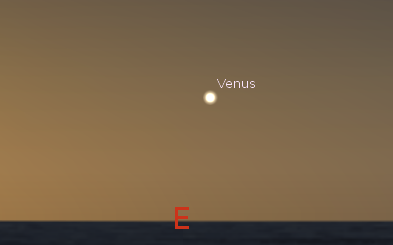
Venus in the east at 5:30 a.m. on May 15, 2014. Created using Stellarium.
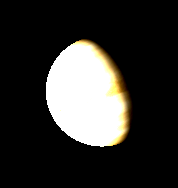
Venus through a telescope on May 15, 2014. Created using Stellarium.
05/13/2014 – Ephemeris – A possible meteor storm for the early morning hours of May 24th
Ephemeris for Tuesday, May 13th. Today the sun will be up for 14 hours and 44 minutes, setting at 9:01. The moon, 1 day before full, will set at 6:16 tomorrow morning. Tomorrow the sun will rise at 6:15.
A meteor storm is an enhanced meteor shower in terms of numbers of meteors seen over a short interval. Some astronomers predict one where no meteor shower has been seen before, on the morning of May 24th this year. In the last couple of years two astronomers have projected the orbits of the debris from the comet now known as 209P/LINEAR, discovered in 2004. These astronomers are Peter Jenniskens of the SETI Institute and NASA and Esko Lyytinen of Finland. The International Meteor Organization calendar for this year reports predictions for the peak of meteor storm to be between 3 and 4 a.m. on May 24th. But no one really knows if the meteor storm will show at all. I’ll tell you of local observing plans on Thursday.
Times are for the Traverse City/Interlochen area of Michigan. They may be different for your location.
Addendum
The expected radiant for the meteors of the May Camelopardalids, the meteors from the comet 209P/LINEAR at 3 a.m. on May 24, 2014. Credit: My LookingUp program.
Note that the meteors will appear all over the sky, but can be traced back to this radiant.
05/12/2014 – Ephemeris – NASA’s OSIRIS-REx mission to an asteroid
Ephemeris for Monday, May 12th. Today the sun will be up for 14 hours and 42 minutes, setting at 9:00. The moon, 2 days before full, will set at 5:37 tomorrow morning. Tomorrow the sun will rise at 6:16.
Construction is beginning on a spacecraft called OSIRIS-REx, which is slated to be launched in September of 2016 to reach asteroid Bennu in 2018 and retrieve a 2 or so ounce sample and return it in 2023. It is important to discover the physical features of near earth asteroids or NEOs, and so learn how best to deflect them, or even mine them for resources. If you’d like your name to ride along on the spacecraft to orbit the Sun forever, well for several billion years; and be apart of the return capsule, which will probably reside at the Smithsonian at the end of its travels, go to the Planetary Society website at http://www.planetary.org/get-involved/messages/bennu/, and sign up yourself and your family. Be part of space history.
Times are for the Traverse City/Interlochen area of Michigan. They may be different for your location.
Addendum
Mission webpage: http://www.asteroidmission.org/
NASA mission page: http://www.nasa.gov/mission_pages/osiris-rex/#.U3Br1HbDuBw
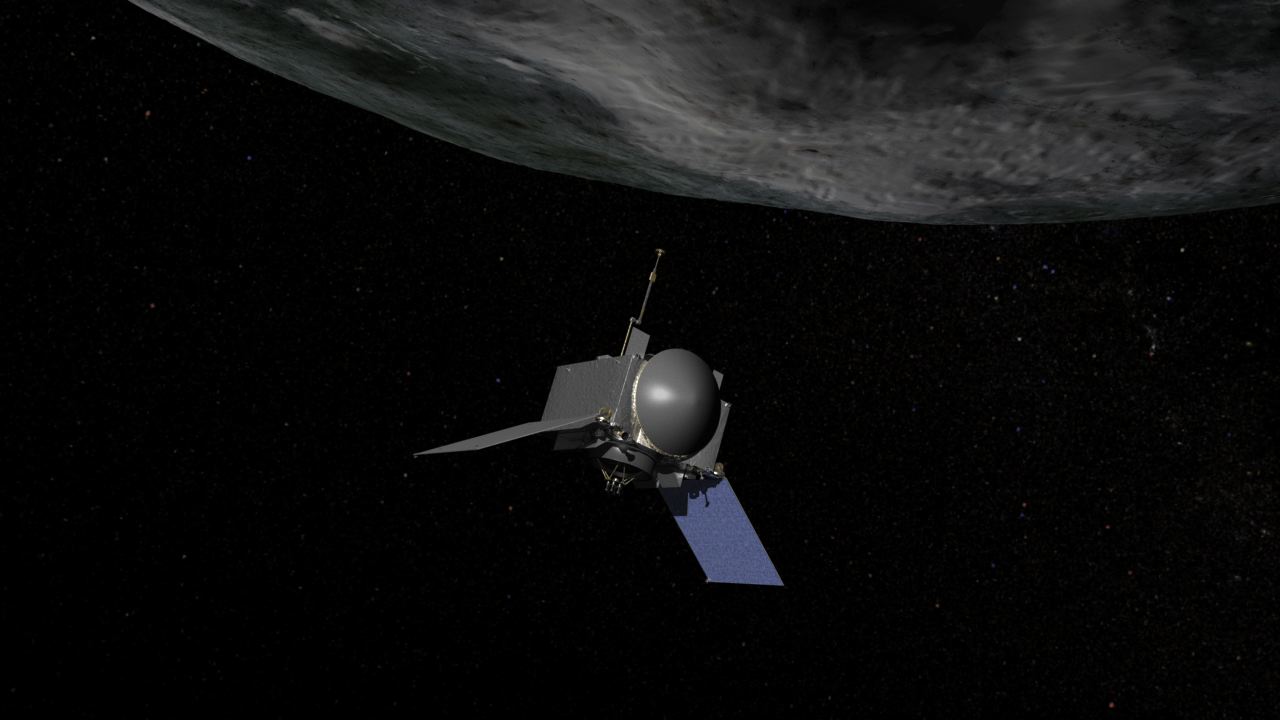
Artist’s conception of OSIRIS-REx about to collect a sample from asteroid Bennu. Image Credit:
NASA/Goddard/Chris Meaney
05/09/2014 – Ephemeris – This is Astronomy Day weekend
Ephemeris for Friday, May 9th. The sun rises at 6:21. It’ll be up for 14 hours and 35 minutes, setting at 8:56. The moon, 3 days past first quarter, will set at 4:04 tomorrow morning.
This Saturday is International Astronomy Day. There will be two star parties this weekend to celebrate. A star party is where amateur astronomers bring their telescopes to share the heavens with all those who come. The first will be at Sleeping Bear Dunes National Lakeshore, at Platte River Point at the end of Lake Michigan Road, off M22. Saturday’s Star Party will be at Northwestern Michigan College’s (NMC) Rogers Observatory, on Birmley Road south of Traverse City. Both events will start at 9 p.m. The Sleeping Bear event will be canceled due to clouds. The NMC event has an indoor component and will be open rain or shine. The planets Jupiter, Mars and Saturn will be featured at both events. These star parties are hosted by the Grand Traverse Astronomical Society.
Times are for the Traverse City/Interlochen area of Michigan. They may be different for your location.
05/08/2014 – Ephemeris – Saturn will reach opposition from the Sun this weekend
Ephemeris for Thursday, May 8th. The sun rises at 6:23. It’ll be up for 14 hours and 32 minutes, setting at 8:55. The moon, 2 days past first quarter, will set at 3:37 tomorrow morning.
In two days Saturn will be in opposition from the sun. That means the Earth will be nearly directly between the Sun and Saturn. Saturn will be the closest it gets to the earth all year, at 828 million miles (1,334 million km). Saturn, being about nine and a half times the earth’s distance from the sun, doesn’t vary its distance from the Earth by a great percentage, so it’s a great telescopic object at any time it’s visible. Mars, being closer and smaller is best seen near the time of opposition. One effect of opposition is the minimum amount of shadows between the planet and the rings visible. The shadows will increase until Saturn is 90 degrees from the sun, or quadrature, on August 10th. Then they will diminish again until it’s in conjunction with the sun.
Times are for the Traverse City/Interlochen area of Michigan. They may be different for your location.
Addendum
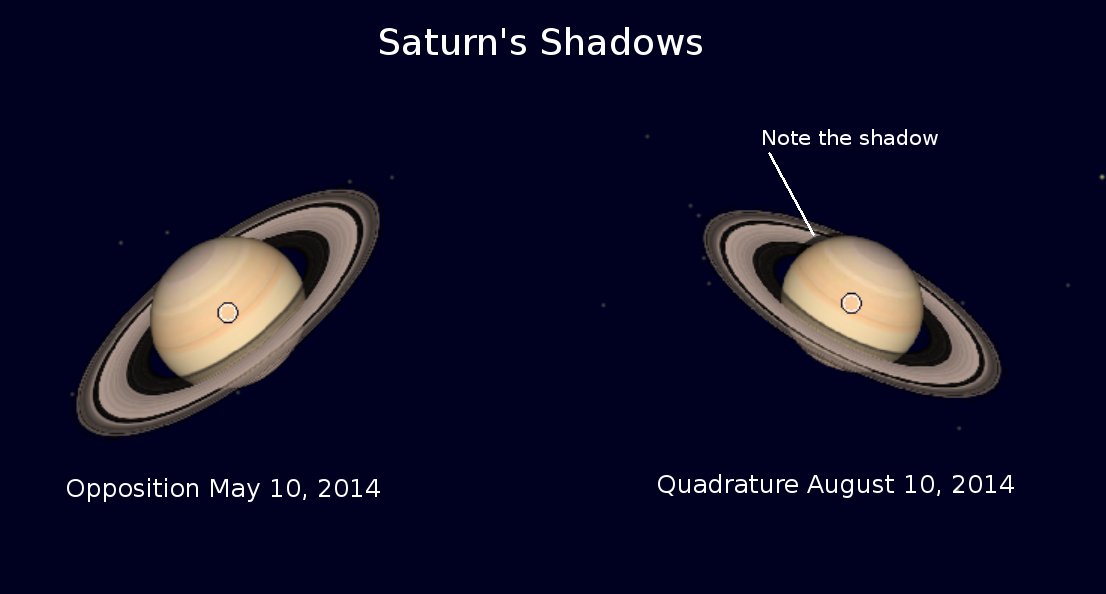
Saturn at opposition and quadrature showing the maximum shadow at quadrature. Created using Cartes du Ciel (Sky Charts).
Note that the different tilt of Saturn in these two views is due to the fact that Saturn is in the east at opposition and in the southwest at quadrature, helped out by the fact that we’re viewing it from 45 º north latitude. The different sizes of Saturn is due to Saturn’s greater distance of 919 million miles (1,481 million km) on August 10th. The little circle artifact in the center of the planet is due to telling the program that I’m tracking Saturn, so I wouldn’t have to re-find the planet when I shifted 3 months.
05/07/2014 – Ephemeris – Wednesday is bright planet day here on Ephemeris
Ephemeris for Wednesday, May 7th. The sun rises at 6:24. It’ll be up for 14 hours and 30 minutes, setting at 8:54. The moon, 1 day past first quarter, will set at 3:09 tomorrow morning.
It’s Wednesday and once again time to locate the bright planets for this week. Brilliant Jupiter will be in the western sky as darkness falls tonight. It will set at 1:30 a.m. Reddish Mars is in Virgo and outshines the bright bluish star Spica below left of it as darkness falls. Mars is in the south-east as it gets dark. It will pass due south at 11:18 p.m. It’s 61.8 million miles away now, and moving away, and will set at 5:09 a.m. Saturn will rise at 8:50 p.m. It’s in the faint constellation of Libra the scales this year. It will pass due south at 1:53 a.m. Saturn will be opposite the sun in the sky this Saturday. Brilliant Venus will rise in the east at 4:56 a.m. in twilight.
Times are for the Traverse City/Interlochen area of Michigan. They may be different for your location.
Addendum
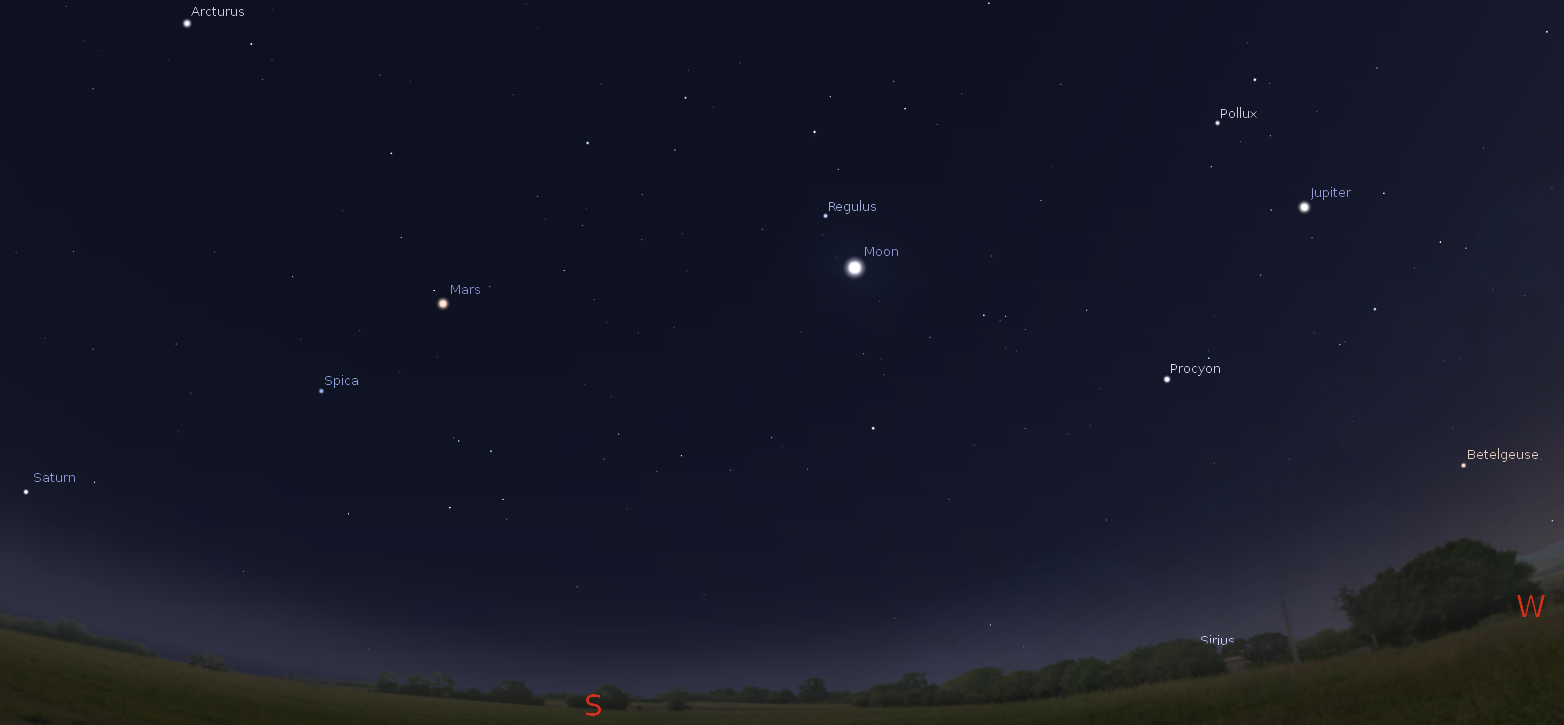
The evening planets: Jupiter, Mars and Saturn with the Moon at 10 p.m. on April 30, 2014. Created using Stellarium. Click to enlarge.
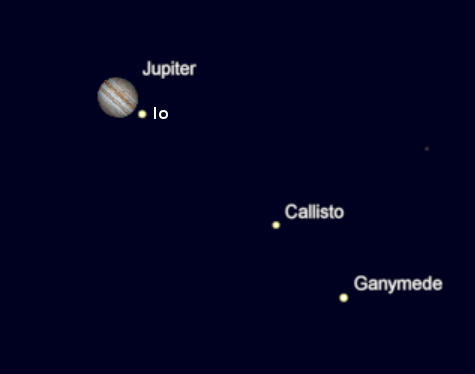
Jupiter with three of its bright satellites at 10 p.m. May 7, 2014. Io will go behind the planet at 10:28. Europa is in Jupiter’s shadow and will reappear at 12:04 a.m. Created using Cartes du Ciel.
Note: Cartes du Ciel (Sky Charts) was used because it takes into consideration the light-time delay. Stellarium does not and showed the occultation of Io already in progress.
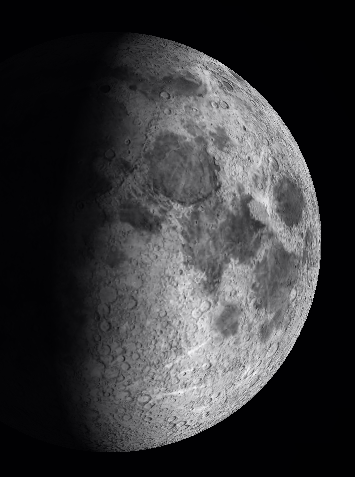
The Moon at 10 p.m. May 7, 2014. Created using Stellarium.
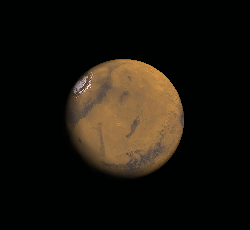
Mars in a telescope at 10 p.m. May 7, 2014. Created using Stellarium.
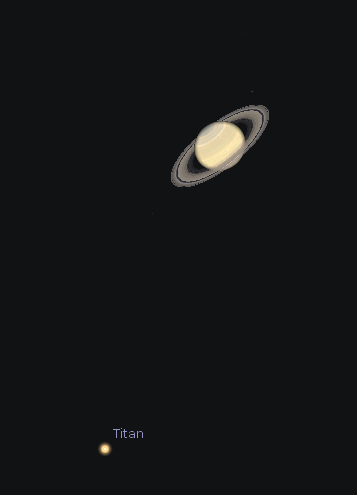
Saturn with its largest moon Titan in a telescope at 10 p.m. May 7, 2014. Created using Stellarium.
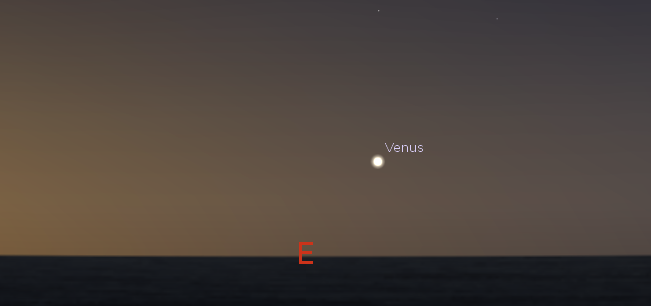
Venus low in the east at 5:30 a.m. May 8, 2014. Created using Stellarium.
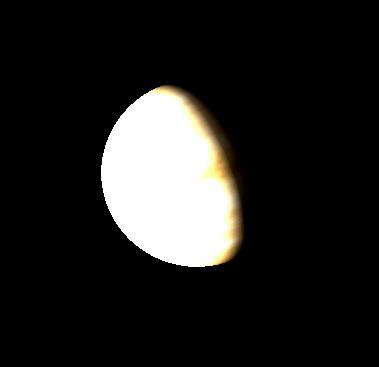
Venus in a telescope at 5:30 a.m. May 8, 2014. Created using Stellarium.
 Bob Moler's Ephemeris Blog