Archive
Ephemeris: 01/04/2024 – Viewing Orion’s Belt
This is Ephemeris for Thursday, January 4th. The Sun will rise at 8:20. It’ll be up for 8 hours and 55 minutes, setting at 5:15. The Moon, 1 day past last quarter, will rise at 2:10 tomorrow morning.
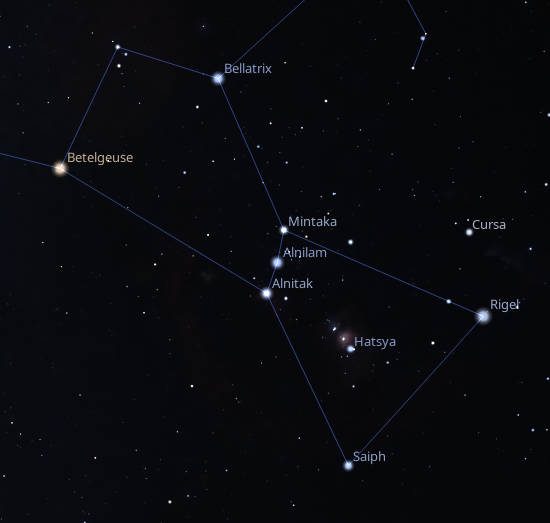
Orion’s belt of three stars is one of the most noticeable star groupings in the sky. There are no other groups of three bright stars in a straight line visible anywhere else in the sky. The star’s names from left to right are Alnitak, Alnilam and Mintaka. They are actually a bit farther away than the other bright stars of Orion. Alnilam, the center star, is over three times the distance of red giant Betelgeuse above them and over twice as far as blue white giant star Rigel below them. Alnilam is 375 thousand times brighter than the Sun. These three stars were also known as Frigga’s Spindle by the Norsemen. Frigga, also known as Freya, is the goddess from which we get the name of the day of the week we call Friday.
The astronomical event times given are for the Traverse City/Interlochen area of Michigan (EST, UT –5 hours). They may be different for your location.
Addendum
Ephemeris: 01/03/2024 – Where have the naked-eye planets wandered off to this week?
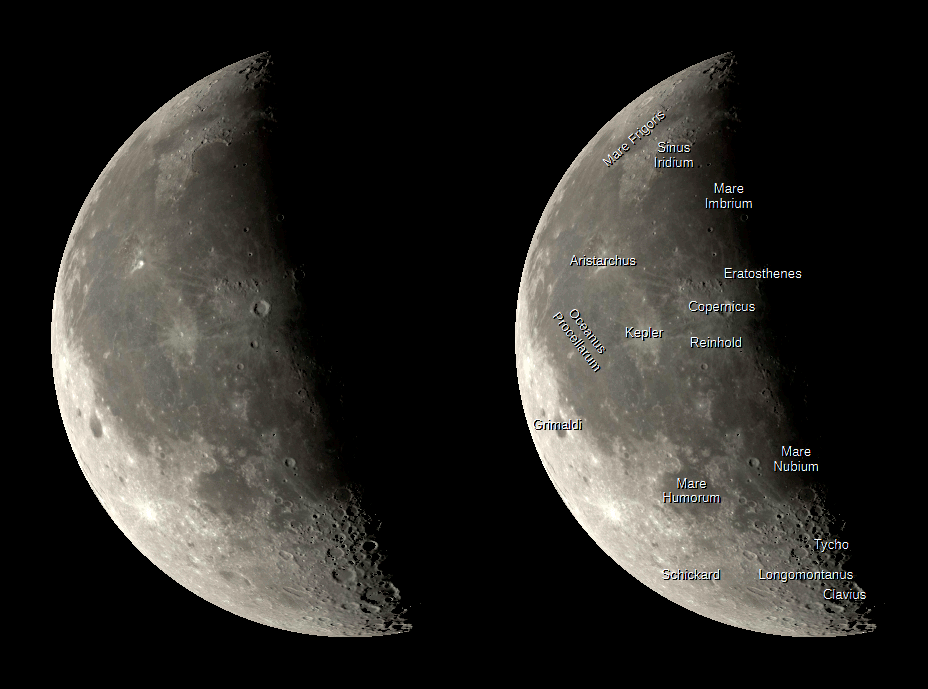
This is Ephemeris for Wednesday, January 3rd. The Sun will rise at 8:20. It’ll be up for 8 hours and 54 minutes, setting at 5:14. The Moon, at last quarter today, will rise at 1:04 tomorrow morning.
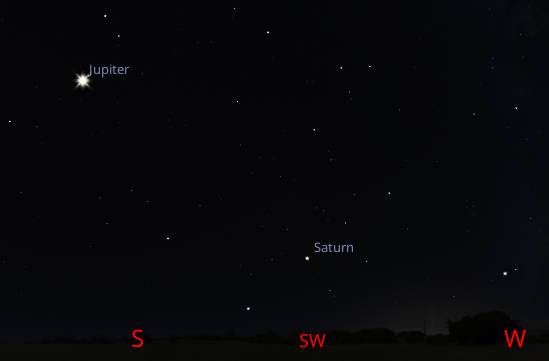
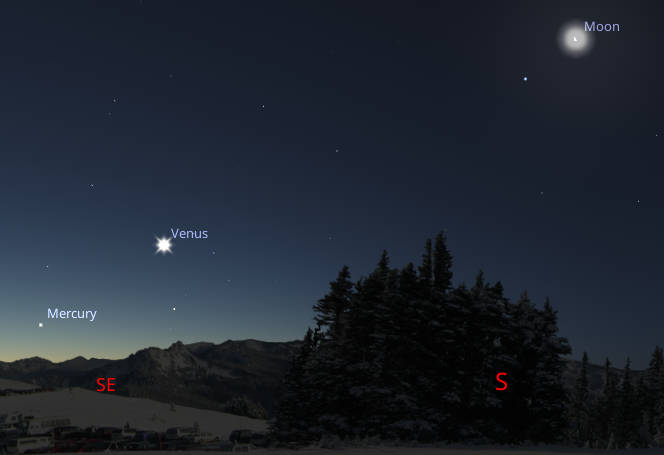
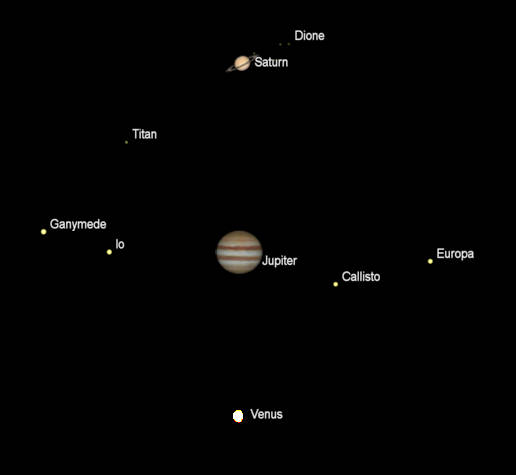
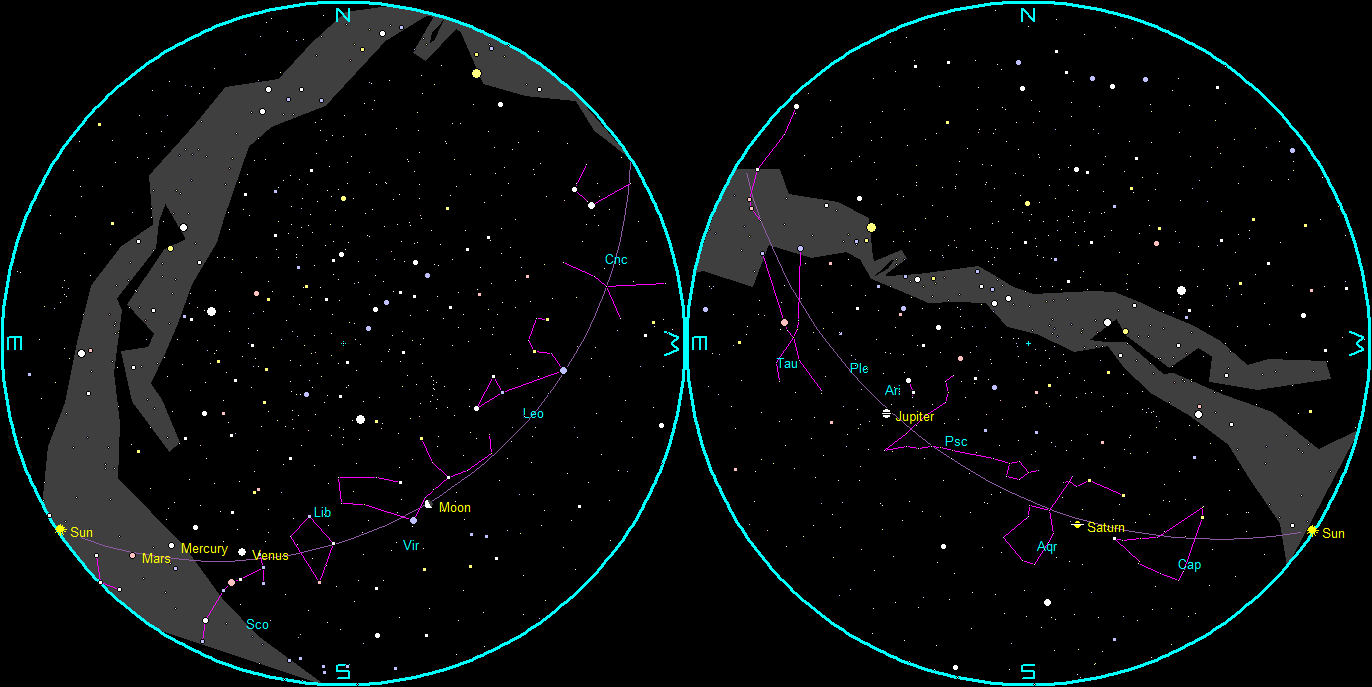
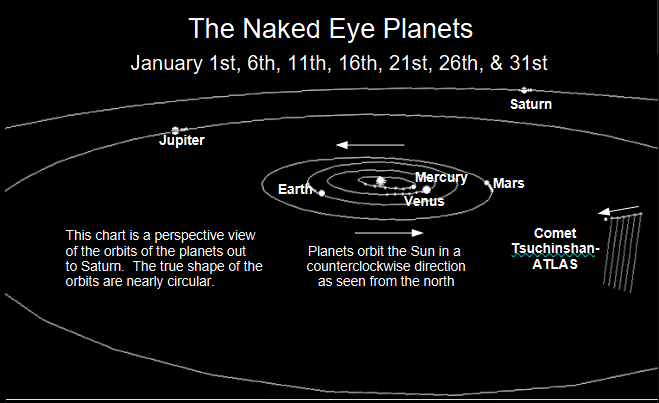
Let’s find out where the naked-eye planets have wandered off to this week. Four of those five planets are now visible. Mars rises too close to sunrise to be seen. Saturn and Jupiter are the only evening planets. Saturn can be seen moving from low in the southwest to setting in the west-southwest at 9:30 pm. Jupiter will be moving from the high in the south-southeast to the west-southwest, by midnight and will set at 2:57 am. The last quarter Moon will be in Virgo tomorrow morning. Venus, the brilliant morning star, will rise in the east-southeast at 5:29 am, and be a brilliant beacon in the morning, shining in the southeast before the bright morning twilight claims it around 8 am. Mercury may be glimpsed below and left of it.
The astronomical event times given are for the Traverse City/Interlochen area of Michigan (EST, UT –5 hours). They may be different for your location.
Addendum
Ephemeris Extra: 01/02/2024 – Two remarkable astronomical events for 2024
Ephemeris Extra posts are freestanding posts not tied to a specific Ephemeris radio program on Interlochen Public Radio
Total Solar Eclipse, April 8th
The big astronomical event of 2024, for us in Michigan, will be the total eclipse of the Sun, on the afternoon of Monday, April 8th. The path of totality will just clip the southeastern corner of Michigan by a few miles, so if you want to see the best of totality you need to leave the state. Totality is when the Moon completely covers the brilliant face of the Sun and allows the Sun’s silvery corona to be seen. Totality is the only part of the eclipse that can be viewed without eye protection or by projection.
Two relatively nearby large cities that will see totality are Indianapolis and Cleveland. Parts of Indianapolis will get to see more than 4 minutes of totality. Cleveland will see a little less. The closer you are to the center line of that path the longer totality will last.
For an interactive map of the eclipse path on the Internet, go to eclipse2024.org/eclipse_cities/statemap.html
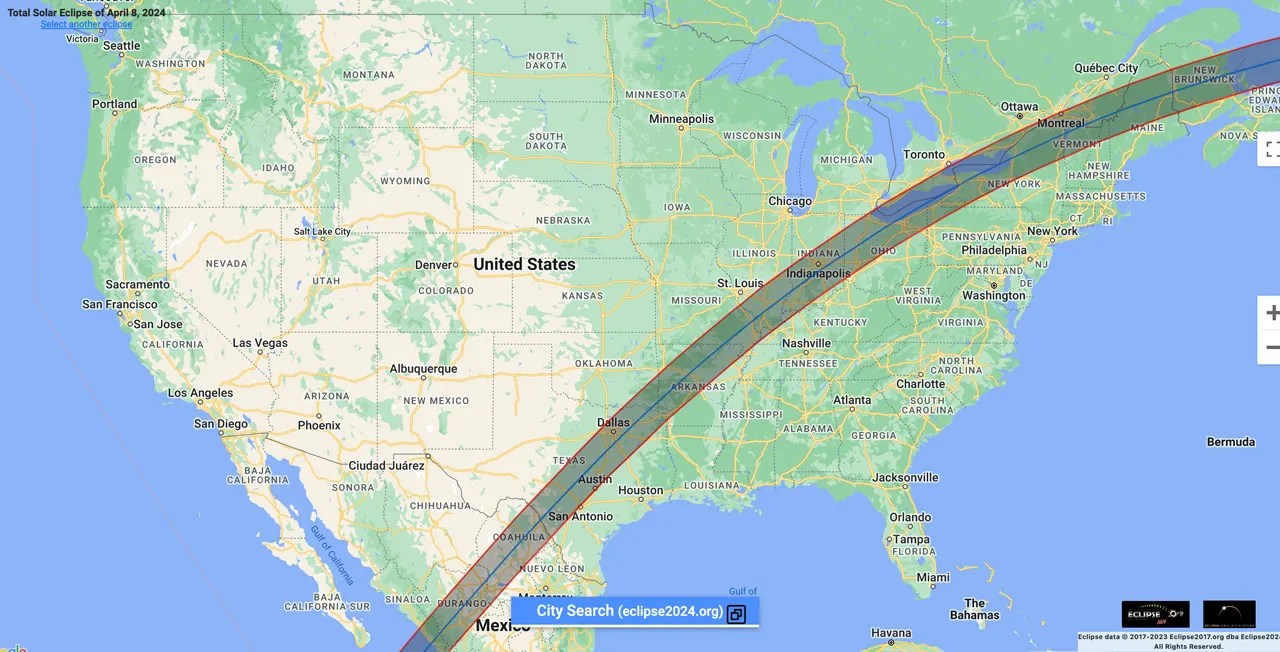
Weather is always a concern for eclipses. In general the farther south one goes the better the chances there are for clear skies. But all bets are off for eclipse day: It’s gonna be is what it’s gonna be. My current inclination is to head southwest along the eclipse path.
For those staying home and not chasing the shadow of the Moon will see a partial eclipse here with up to 87% of the Sun being blocked by the Moon.
Comet Tsuchinshan-ATLAS
We expect to see a new bright comet in October: C/2023 A3 (Tsuchinshan-ATLAS), otherwise known in this article as A3 for short. It may be the brightest comet to appear in our Northern Michigan skies since Comet Hale-Bopp in 1997, and a good deal brighter than 2020’s Comet NEOWISE. At least we’re hoping.
This comet was discovered last January by the station Xi Yi of the Purple Mountain Observatory in China, and a month later by the ATLAS search program on Maui. ATLAS is an acronym for the apocalyptic sounding Asteroid Terrestrial-Impact Last Alert System.
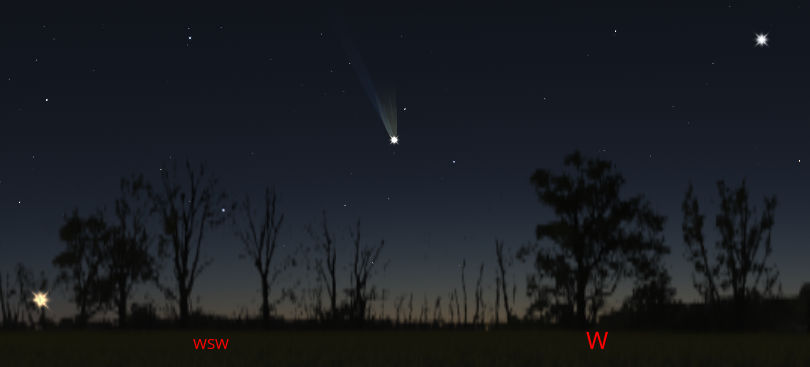
A3 will best be visible from Northern Michigan toward mid-October in the evening, not long after sunset. The comet is expected to reach magnitude 0 at it’s closest to the Sun in late September. However, we will be seeing it best as it’s leaving the vicinity of the Sun. By mid-October its magnitude will have dropped to magnitude 1 which is still pretty bright, and it will be moving at a high angle away from the setting Sun, so it will rapidly increase its distance from the Sun and the horizon faster than it fades in the latter part of October. That is, if it behaves itself. Comets are notoriously fickle in their brightness so we won’t know until we actually see it how bright it’ll be, or how bright or long its tail will be. As of this writing (Mid-December) A3’s brightness is tracking as predicted, at about 16th magnitude. As of January 1st its distance from the Sun was 4.24 AU, about 1 AU inside Jupiter’s orbit. 1 AU (Astronomical Unit) is the mean distance between the Earth and the Sun. The comet can be followed on Seiichi Yoshida’s Weekly Information about Bright Comets webpage: http://www.aerith.net/comet/catalog/2023A3/2023A3.html
Ephemeris: 01/02/2024 – We’re closest to the Sun today
This is Ephemeris for Tuesday, January 2nd. The Sun will rise at 8:20. It’ll be up for 8 hours and 53 minutes, setting at 5:13. The Moon, 1 day before last quarter, will rise at 12:01 tomorrow morning.
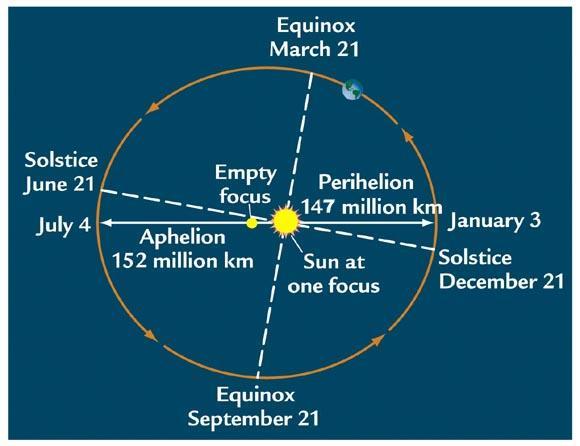
We start off the year with the Earth being really close to the Sun. As a matter of fact at 6:59 pm the Earth will reach perihelion, that is as close as it gets to the Sun for the entire year at 91.41 million miles (147.10 million kilometers). It’s not as big a deal as it seems, because the Earth varies only plus or minus a million and a half miles from the Sun over the year out of 93 million miles. It doesn’t make much difference in the amount of heat we get from the Sun. However, it’s much less than what the tilt of the Earth’s axis does to give us our seasons, but what it does do is alter the length of the seasons, and makes winter the shortest season. It’s shorter by about four days than summer, even though in Northern Michigan it doesn’t really seem like it. Today is also the date of the latest sunrise of the year.
The astronomical event times given are for the Traverse City/Interlochen area of Michigan (EST, UT –5 hours). They may be different for your location.
Addendum
Ephemeris Extra: 01/01/2024 – Previewing January skies
This post didn’t make it into a radio program, so enjoy.
We start a new year and a month. The daylight hours start slowly getting longer and will accelerate during the month. Daylight hours in Interlochen and Traverse City will increase from 8 hours and 52 minutes on the 1st to 9 hours and 46 minutes on the 31st. The sunrise time will decrease from 8:20 am on the 1st to 8:03 am at month’s end. The sunset times will increase from 5:12 pm on the 1st to 5:49 pm on the 31st. Along with that the altitude of the sun at noon will increase from 22 degrees tomorrow to nearly 28 degrees at month’s end. It will be a degree lower for folks in the Straits area because they are a degree of latitude farther north. Local noon, by the way for Interlochen and Traverse City is around 12:51 p.m. in January.
The astronomical event times given are for the Traverse City/Interlochen area of Michigan (EST, UT –5 hours). They may be different for your location.
January Evening Star Chart
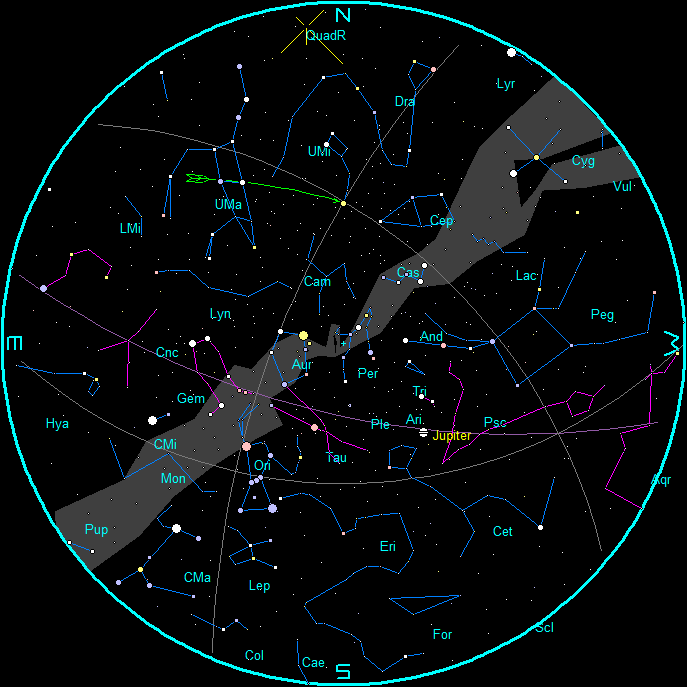
The planets and stars are plotted for the 15th at 9 p.m. EST in the evening and 6 a.m. for the morning chart. These are the chart times. The brilliant planet Venus will enter the sky at the chart time during the latter half of the month in the southwest. Note that Traverse City is located approximately 45 minutes behind our time meridian, West 75° longitude. (An hour 45 minutes behind our daylight saving time meridian during EDT).
January Morning Star Chart
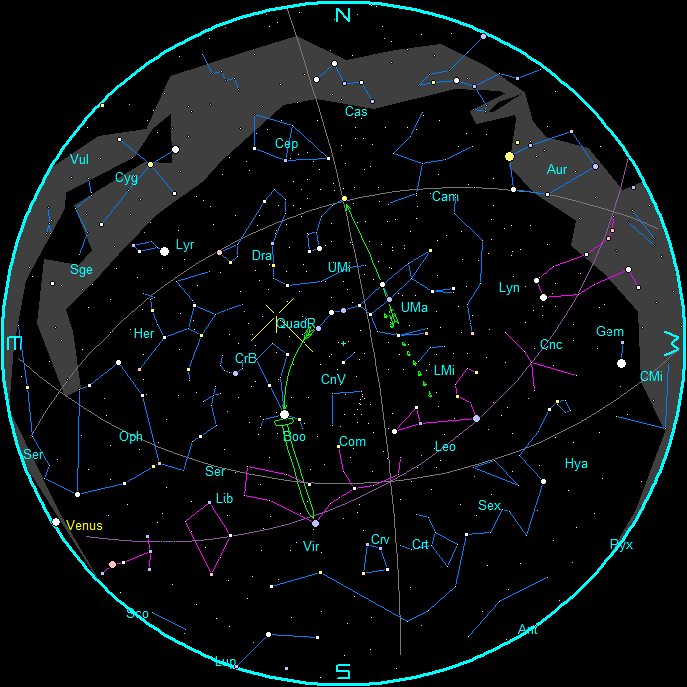
For a list of constellation names to go with the abbreviations click here.
- Pointer stars at the front of the bowl of the Big Dipper point to Polaris the North Star.
- The leaky bowl of the Big Dipper drips on Leo.
- Follow the arc of the handle of the Big Dipper to the star Arcturus, then
- Follow the spike to Spica.
- QuadR on the star charts is the radiant of the Quadrantid meteor shower which peaks on the 4th at 3:20 a.m. EST (8:20 UT).
Twilight Limits, Nautical and Astronomical
| EST | |||||||
| Morning | Twilight | Evening | Twilight | Dark | Night | Moon | |
| Date | Astro. | Nautical | Nautical | Astro. | Start | End | Illum. |
| 2024-01-01 | 6h35m | 7h11m | 18h22m | 19h01m | 19h01m | 22h59m | 0.68 |
| 2024-01-02 | 6h35m | 7h11m | 18h22m | 19h02m | 19h02m | – | 0.59 |
| 2024-01-03 | 6h35m | 7h11m | 18h23m | 19h03m | 19h03m | 0h01m | 0.50 |
| 2024-01-04 | 6h35m | 7h11m | 18h24m | 19h03m | 19h03m | 1h05m | 0.40 |
| 2024-01-05 | 6h35m | 7h11m | 18h25m | 19h04m | 19h04m | 2h10m | 0.30 |
| 2024-01-06 | 6h35m | 7h11m | 18h26m | 19h05m | 19h05m | 3h19m | 0.21 |
| 2024-01-07 | 6h35m | 7h11m | 18h27m | 19h06m | 19h06m | 4h31m | 0.13 |
| 2024-01-08 | 6h35m | 7h11m | 18h28m | 19h07m | 19h07m | 5h45m | 0.07 |
| 2024-01-09 | 6h35m | 7h10m | 18h29m | 19h08m | 19h08m | 6h35m | 0.02 |
| 2024-01-10 | 6h35m | 7h10m | 18h30m | 19h09m | 19h09m | 6h35m | 0.00 |
| 2024-01-11 | 6h35m | 7h10m | 18h31m | 19h10m | 19h10m | 6h35m | 0.01 |
| 2024-01-12 | 6h35m | 7h10m | 18h32m | 19h11m | 19h11m | 6h35m | 0.04 |
| 2024-01-13 | 6h34m | 7h09m | 18h33m | 19h12m | 20h14m | 6h34m | 0.10 |
| 2024-01-14 | 6h34m | 7h09m | 18h34m | 19h13m | 21h36m | 6h34m | 0.18 |
| 2024-01-15 | 6h34m | 7h09m | 18h35m | 19h14m | 22h55m | 6h34m | 0.28 |
| 2024-01-16 | 6h33m | 7h08m | 18h36m | 19h15m | – | 6h33m | 0.39 |
| 2024-01-17 | 6h33m | 7h08m | 18h37m | 19h16m | 0h12m | 6h33m | 0.51 |
| 2024-01-18 | 6h33m | 7h07m | 18h39m | 19h17m | 1h28m | 6h33m | 0.62 |
| 2024-01-19 | 6h32m | 7h07m | 18h40m | 19h18m | 2h44m | 6h32m | 0.72 |
| 2024-01-20 | 6h32m | 7h06m | 18h41m | 19h20m | 3h59m | 6h32m | 0.81 |
| 2024-01-21 | 6h31m | 7h06m | 18h42m | 19h21m | 5h12m | 6h31m | 0.88 |
| 2024-01-22 | 6h30m | 7h05m | 18h43m | 19h22m | 6h18m | 6h30m | 0.94 |
| 2024-01-23 | 6h30m | 7h04m | 18h44m | 19h23m | – | – | 0.98 |
| 2024-01-24 | 6h29m | 7h04m | 18h46m | 19h24m | – | – | 1.00 |
| 2024-01-25 | 6h28m | 7h03m | 18h47m | 19h25m | – | – | 1.00 |
| 2024-01-26 | 6h28m | 7h02m | 18h48m | 19h26m | – | – | 0.98 |
| 2024-01-27 | 6h27m | 7h01m | 18h49m | 19h28m | 19h28m | 19h44m | 0.95 |
| 2024-01-28 | 6h26m | 7h00m | 18h51m | 19h29m | 19h29m | 20h48m | 0.90 |
| 2024-01-29 | 6h25m | 7h00m | 18h52m | 19h30m | 19h30m | 21h51m | 0.83 |
| 2024-01-30 | 6h24m | 6h59m | 18h53m | 19h31m | 19h31m | 22h53m | 0.76 |
| 2024-01-31 | 6h24m | 6h58m | 18h54m | 19h32m | 19h32m | 23h57m | 0.67 |
Twilight calendar was generated using Cartes du Ciel (Sky Charts).
See my blog post: Twilight Zone for the definitions of the different periods of twilight here: https://bobmoler.wordpress.com/2018/09/27/.
NASA Calendar of Planetary Events
   Date      Time    Event
Jan  1  Mo            Venus: 37.4° W
     1  Mo  10:28 am  Moon Apogee: 404900 km
     2  Tu   6:59 pm  Perihelion:  .9833 AU
     3  We  10:30 pm  Last Quarter
     4  Th   4:15 am  Quadrantid Shower: ZHR = 120
     4  Th   1:52 pm  Moon Descending Node
     4  Th   6:06 pm  Moon-Spica: 2.2° S
     6  Sa   7:35 pm  Venus-Antares: 6.3° N
     8  Mo   9:24 am  Moon-Antares:  .8° S
     8  Mo   3:12 pm  Moon-Venus: 5.9° N
    10  We   2:04 am  Moon South Dec.: 28.2° S
    11  Th   6:57 am  New Moon
    12  Fr   8:59 am  Mercury Elongation: 23.5° W
    13  Sa   5:35 am  Moon Perigee: 362300 km
    14  Su   4:31 am  Moon-Saturn: 2.1° N
    17  We   9:05 am  Moon Ascending Node
    17  We  10:53 pm  First Quarter
    18  Th   3:40 pm  Moon-Jupiter: 2.9° S
    20  Sa   8:25 am  Moon-Pleiades:  .9° N
    22  Mo  10:44 pm  Moon North Dec.: 28.2° N
    24  We   2:00 pm  Moon-Pollux: 1.9° N
    25  Th  12:54 pm  Full Moon
    25  Th   3:04 pm  Moon-Beehive: 3.6° S
    27  Sa  10:48 am  Mercury-Mars:  .2° N
    29  Mo   3:14 am  Moon Apogee: 405800 km
    31  We   3:17 pm  Moon Descending Node
Feb  1  Th            Venus: 30.8° W

All event times are given for UTC-5 Eastern Standard Time.
Sky Events Calendar by Fred Espenak and Sumit Dutta (NASA’s GSFC),
http://eclipse.gsfc.nasa.gov/SKYCAL/SKYCAL.html.
If you go to the above site you can print out a list like the above for the entire year or calendar pages for your time zone.
Sun and Moon Rising and Setting Events
LU              Ephemeris of Sky Events for Interlochen/TC
January, 2024    Local time zone: EST
+-----------------------------------------------------------------------+
| DATE |  SUN     SUN  DAYLIGHT|   TWILIGHT*    |MOON  RISE OR    ILLUM |
|      |  RISE    SET    HOURS |  END    START  |PHASE SET** TIME FRACTN|
+=======================================================================+
|Mon  1| 08:20a  05:12p  08:52 | 06:22p  07:09a |      Rise 10:58p   70%|
|Tue  2| 08:20a  05:13p  08:53 | 06:23p  07:09a |      Rise 12:01a   61%|
|Wed  3| 08:20a  05:14p  08:54 | 06:24p  07:09a |L Qtr Rise 01:04a   51%|
|Thu  4| 08:20a  05:15p  08:55 | 06:25p  07:10a |      Rise 02:10a   42%|
|Fri  5| 08:20a  05:16p  08:56 | 06:26p  07:10a |      Rise 03:18a   32%|
|Sat  6| 08:19a  05:17p  08:57 | 06:27p  07:09a |      Rise 04:30a   23%|
+------+-----------------------+----------------+-----------------------+
|Sun  7| 08:19a  05:18p  08:58 | 06:28p  07:09a |      Rise 05:45a   15%|
|Mon  8| 08:19a  05:19p  09:00 | 06:29p  07:09a |      Rise 06:58a    8%|
|Tue  9| 08:19a  05:20p  09:01 | 06:30p  07:09a |      Rise 08:04a    3%|
|Wed 10| 08:18a  05:21p  09:02 | 06:31p  07:09a |      Rise 08:59a    1%|
|Thu 11| 08:18a  05:23p  09:04 | 06:32p  07:09a |New   Set  05:25p    1%|
|Fri 12| 08:18a  05:24p  09:06 | 06:33p  07:09a |      Set  06:49p    3%|
|Sat 13| 08:17a  05:25p  09:07 | 06:34p  07:08a |      Set  08:14p    9%|
+------+-----------------------+----------------+-----------------------+
|Sun 14| 08:17a  05:26p  09:09 | 06:35p  07:08a |      Set  09:36p   17%|
|Mon 15| 08:16a  05:27p  09:11 | 06:36p  07:08a |      Set  10:55p   26%|
|Tue 16| 08:16a  05:29p  09:12 | 06:37p  07:07a |      Set  12:12a   37%|
|Wed 17| 08:15a  05:30p  09:14 | 06:38p  07:07a |F Qtr Set  01:28a   48%|
|Thu 18| 08:15a  05:31p  09:16 | 06:40p  07:06a |      Set  02:43a   59%|
|Fri 19| 08:14a  05:33p  09:18 | 06:41p  07:06a |      Set  03:59a   69%|
|Sat 20| 08:13a  05:34p  09:20 | 06:42p  07:05a |      Set  05:11a   79%|
+------+-----------------------+----------------+-----------------------+
|Sun 21| 08:12a  05:35p  09:22 | 06:43p  07:05a |      Set  06:17a   86%|
|Mon 22| 08:12a  05:37p  09:24 | 06:44p  07:04a |      Set  07:14a   93%|
|Tue 23| 08:11a  05:38p  09:27 | 06:45p  07:03a |      Set  08:00a   97%|
|Wed 24| 08:10a  05:39p  09:29 | 06:47p  07:03a |      Set  08:36a   99%|
|Thu 25| 08:09a  05:41p  09:31 | 06:48p  07:02a |Full  Rise 05:30p  100%|
|Fri 26| 08:08a  05:42p  09:33 | 06:49p  07:01a |      Rise 06:37p   98%|
|Sat 27| 08:07a  05:43p  09:36 | 06:50p  07:00a |      Rise 07:43p   95%|
+------+-----------------------+----------------+-----------------------+
|Sun 28| 08:06a  05:45p  09:38 | 06:52p  06:59a |      Rise 08:47p   91%|
|Mon 29| 08:05a  05:46p  09:41 | 06:53p  06:59a |      Rise 09:50p   84%|
|Tue 30| 08:04a  05:48p  09:43 | 06:54p  06:58a |      Rise 10:53p   77%|
|Wed 31| 08:03a  05:49p  09:46 | 06:55p  06:57a |      Rise 11:56p   69%|
+-----------------------------------------------------------------------+
* Nautical Twilight
** Moonrise or moonset, whichever occurs between sunrise and sunset
Generated using my LookingUp for DOS program.
Ephemeris: 01/01/2024 – Why does the year start on January 1st?
Happy New Year! This is Ephemeris for New Year’s Day, Monday, January 1st 2024. The Sun will rise at 8:20. It’ll be up for 8 hours and 52 minutes, setting at 5:12. The Moon, 2 days before last quarter, will rise at 10:58 this evening.
Here we are January 1st the start of a new year. So why does the year start on January 1st? For a long time the Romans started their year in the middle of March near the vernal equinox, the Ides of March to be specific. The Hebrew calendar was the lunar calendar of either 12 or 13 months in a year so that 19 years in their lunar calendar was exactly 19 years on the Roman or Julian solar calendar. The Greeks until Roman times had a lunar calendar dictated haphazardly by every city state. Their year started with the summer solstice around mid-June. The Romans initially had a 10-month calendar. When they finally added those two months, the first they named after the god Janus the god of beginnings and endings, who had two faces, looking backward to the past and forward to the future.
The astronomical event times given are for the Traverse City/Interlochen area of Michigan (EST, UT –5 hours). They may be different for your location.
Addendum

 Bob Moler's Ephemeris Blog