Archive
Ephemeris: 05/06/2024 – The star Arcturus: Not from around here
This is Ephemeris for Monday, May 6th. Today the Sun will be up for 14 hours and 29 minutes, setting at 8:54, and it will rise tomorrow at 6:23. The Moon, 1 day before new, will rise at 5:53 tomorrow morning.
Arcturus, a red giant star in the constellation of Boötes the herdsman, is about two thirds the way up the sky in the east-southeast at 10 pm. It’s one of the earliest stars to appear in twilight, being nearly tied in brightness with Vega, a white star low in the northeast. A pointer to Arcturus is the handle of the Big Dipper, following the arc of the handle to Arcturus. Though only 37 light years away, it’s not from around here. It’s passing through the galactic disk from north to south. Arcturus is about 7 billion years old, and is about 8% more massive than our Sun. It appears to be starting its red giant phase, after running out of hydrogen to fuse into helium in its core, and is beginning to fuse the helium. It’s 25 times the size of the Sun and 170 times brighter, and a preview of our Sun when it gets that old.
The astronomical event times given are for the Traverse City/Interlochen area of Michigan (EDT, UT–4 hours). They may be different for your location.
Addendum

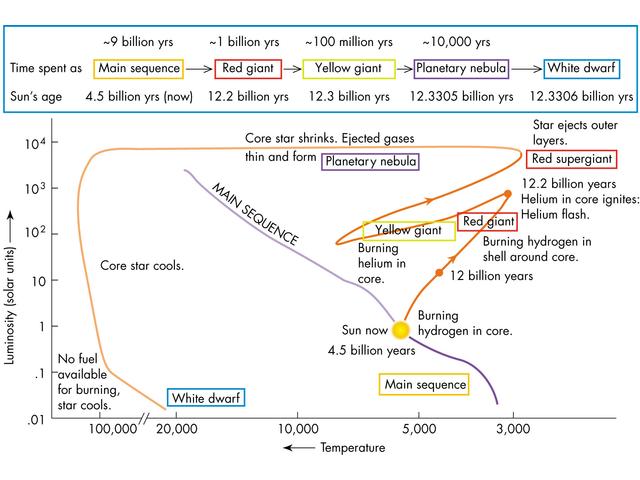
* Hertzsprung-Russell Diagram of a star’s surface (photosphere) temperature vs luminosity. The Main Sequence is where a star lives when it is burning hydrogen, and spends most of its life.
Ephemeris: 05/03/2024 – GTAS meeting tonight: Eclipse Tales
This is Ephemeris for Friday, May 3rd. Today the Sun will be up for 14 hours and 21 minutes, setting at 8:50, and it will rise tomorrow at 6:27. The Moon, 2 days past last quarter, will rise at 4:48 tomorrow morning.
The Grand Traverse Astronomical Society will meet this evening at 8:00 PM at the NMC’s Joseph Rogers observatory which is on Birmley Road, south of Traverse City. The program will consist of returning members from the total solar eclipse last month showing their photographs, and recounting their adventures of going down to the path of totality. And in my case a video of the changes in the sky at totality, as the Moon’s shadow passed over us. Afterward, if it’s clear, will be viewing the skies, though there will be no planets or the Moon out. In the morning hours before dawn tomorrow and Sunday morning there will be a meteor shower, the Eta Aquariid meteor shower of particles from Halley’s Comet striking the Earth’s atmosphere.
The astronomical event times given are for the Traverse City/Interlochen area of Michigan (EDT, UT–4 hours). They may be different for your location.
Addendum
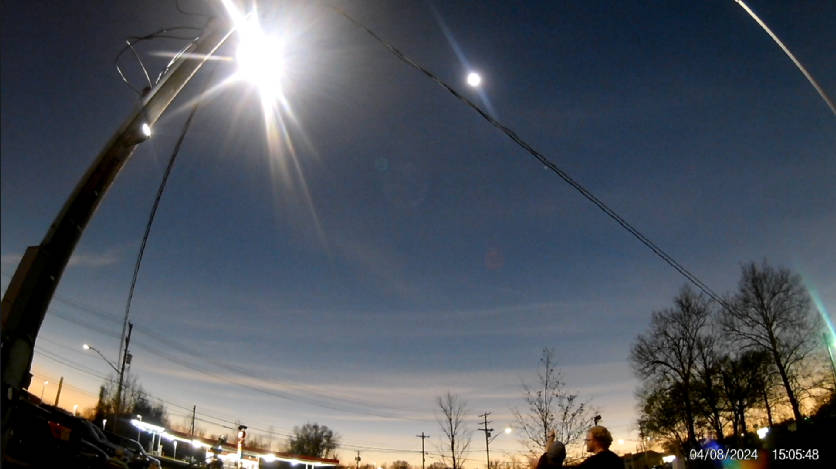
There will be more photos and stories at the meeting.
Ephemeris: 05/02/2024 – All about the constellation of Boötes and Ursa Major
This is Ephemeris for Thursday, May 2nd. Today the Sun will be up for 14 hours and 19 minutes, setting at 8:49, and it will rise tomorrow at 6:29. The Moon, 1 day past last quarter, will rise at 4:27 tomorrow morning.
Seen in the east at 10:30 p.m. tonight is the kite shaped constellation of Boötes the herdsman. The bright star Arcturus is at the bottom of the kite to the right. It is pointed to by the arc of the handle of the Big Dipper, higher in the east. Boötes represents a young hunter named Arcas, son of Callisto, a beautiful young lady who had the misfortune of being loved by Zeus the chief of the Greek gods. Zeus’ wife Hera, found out about it, and since she couldn’t punish Zeus, turned the poor woman into a bear. Arcas, many years later, unaware of the events surrounding his mother’s disappearance was about to kill the bear when Zeus intervened and placed them both in the sky to save her, as Arcas still pursues her across the sky nightly.
The astronomical event times given are for the Traverse City/Interlochen area of Michigan (EDT, UT–4 hours). They may be different for your location.
Addendum


Ephemeris: 05/01/2024 – Where are all naked eye planets?
This is Bob Moler with Ephemeris for Wednesday, May 1st. Today the Sun will be up for 14 hours and 16 minutes, setting at 8:48, and it will rise tomorrow at 6:30. The Moon, at last quarter today, will rise at 4:03 tomorrow morning.
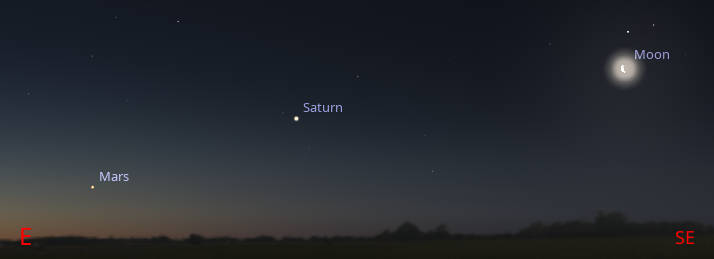
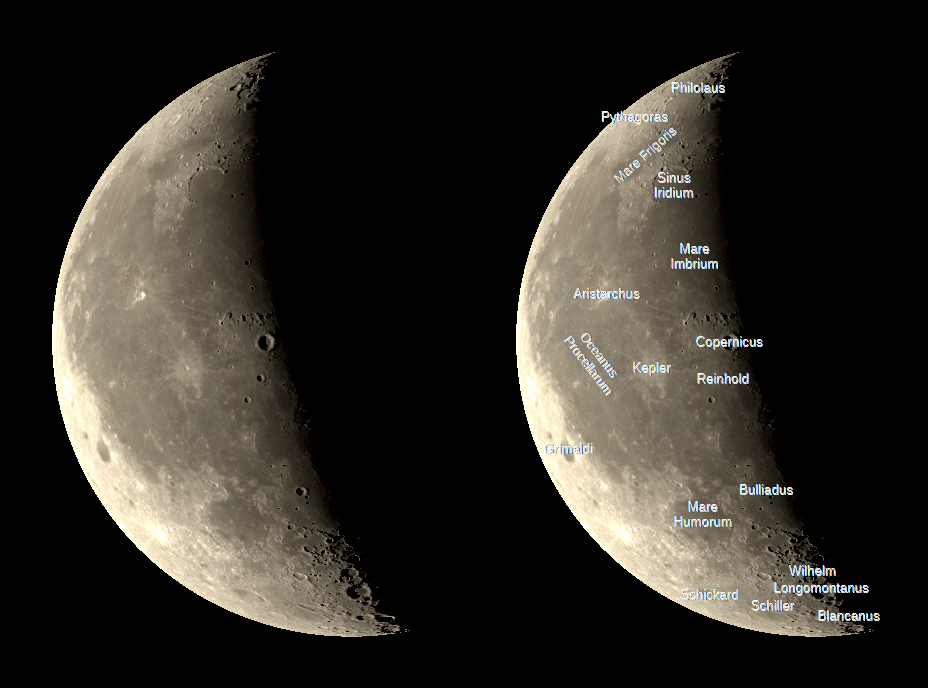
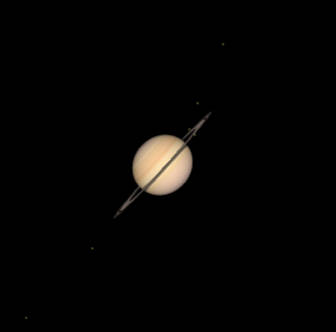
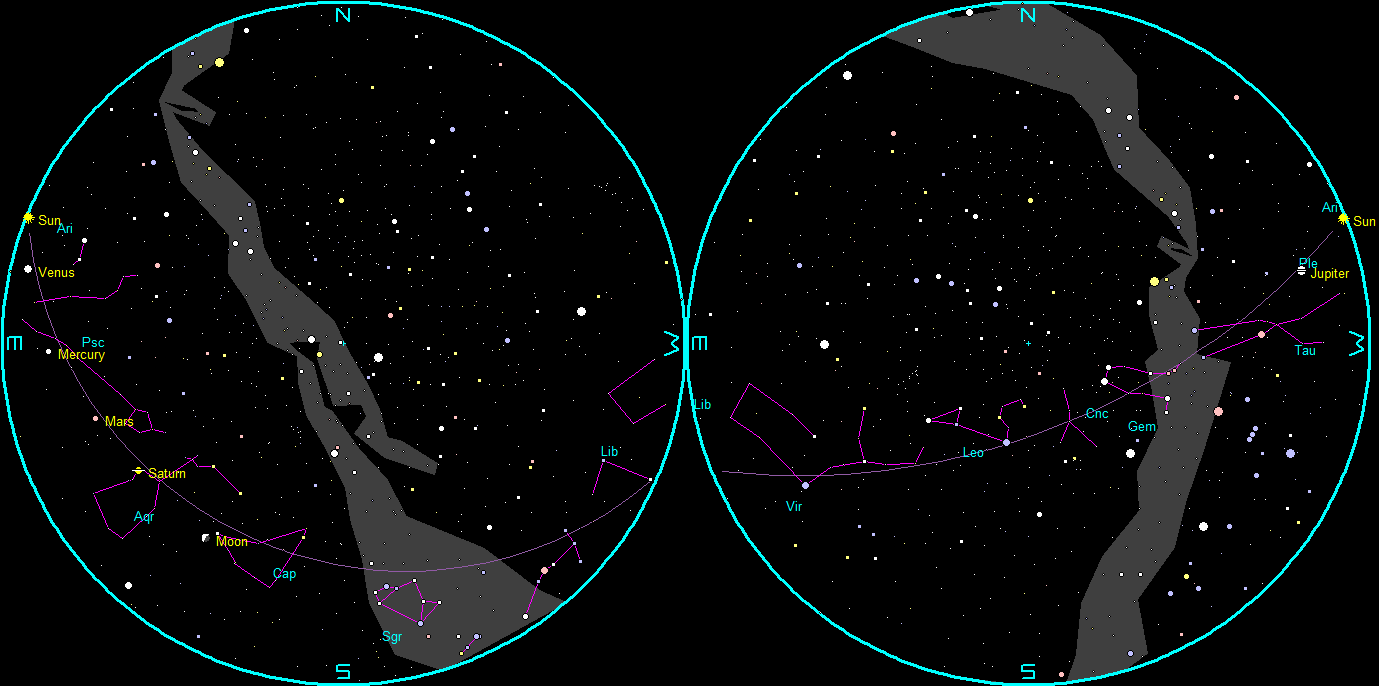
Let’s find out where the naked-eye planets have wandered off to this week, and see what planets are left. Jupiter now is too close to the direction of the Sun to be seen. It will set at 9:49 pm. It will move to be in conjunction with the Sun on the 18th of this month and by late July may be visible in the morning sky in twilight. By 5:30 tomorrow morning, about an hour before sunrise, the Moon, Saturn and Mars will be visible low and spread out from the southeast to east. The fat waning crescent Moon will be highest in the southeast and to the left of it, and a bit lower, will be Saturn. Farther to the east, and lower yet will be dimmer Mars. In telescopes, Saturn will look fairly different this year and next with its rings nearly edge on to us.
The astronomical event times given are for the Traverse City/Interlochen area of Michigan (EDT, UT–4 hours). They may be different for your location.
Addendum
 Bob Moler's Ephemeris Blog