Home > Adventures, Artemis Program, Ephemeris Program, The Moon > Ephemeris: 04/14/2026 – My virtual flight with the Artemis II crew

Ephemeris: 04/14/2026 – My virtual flight with the Artemis II crew

This is Ephemeris for Tuesday, April 14th. Today the Sun will be up for 13 hours and 26 minutes, setting at 8:26, and it will rise tomorrow at 6:58. The Moon, 3 days before new, will rise at 5:55 tomorrow morning.

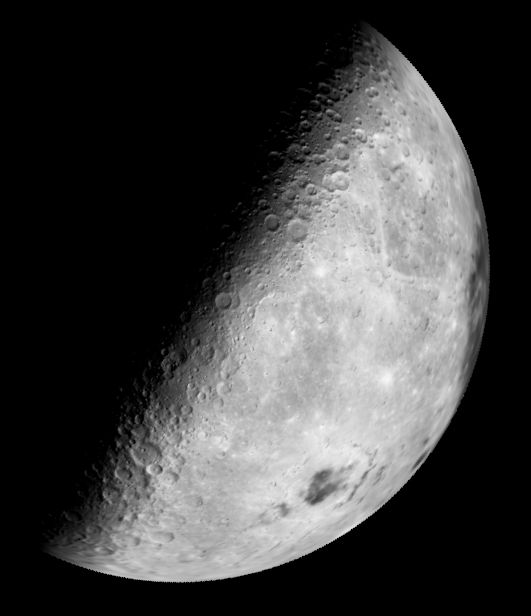
I hadn’t enjoyable time last week Monday afternoon listening to Artemis 2 astronauts talking with the science team on Earth about what they were seeing Moon’s far side. I have the program called Virtual Moon Atlas which allows one to see the entire Moon with the phase and shadows. And I was able to rotate it and get the phase right so it appeared pretty much as it did to the astronauts. So I was able to follow along with their discussions of the far side features that they were seeing and photographing. I could zoom in to craters and features they were talking about, but nowhere near the detail they were seeing. So I consider it to be a really great time of, in essence, flying along with the astronauts.

The astronomical event times given in this blog are for the Traverse City/Interlochen area of Michigan (Lat 44.7° N, Long 85.7° W; EST, UT – 5 hours) unless stated otherwise. Times will be different for other locations.

Addendum
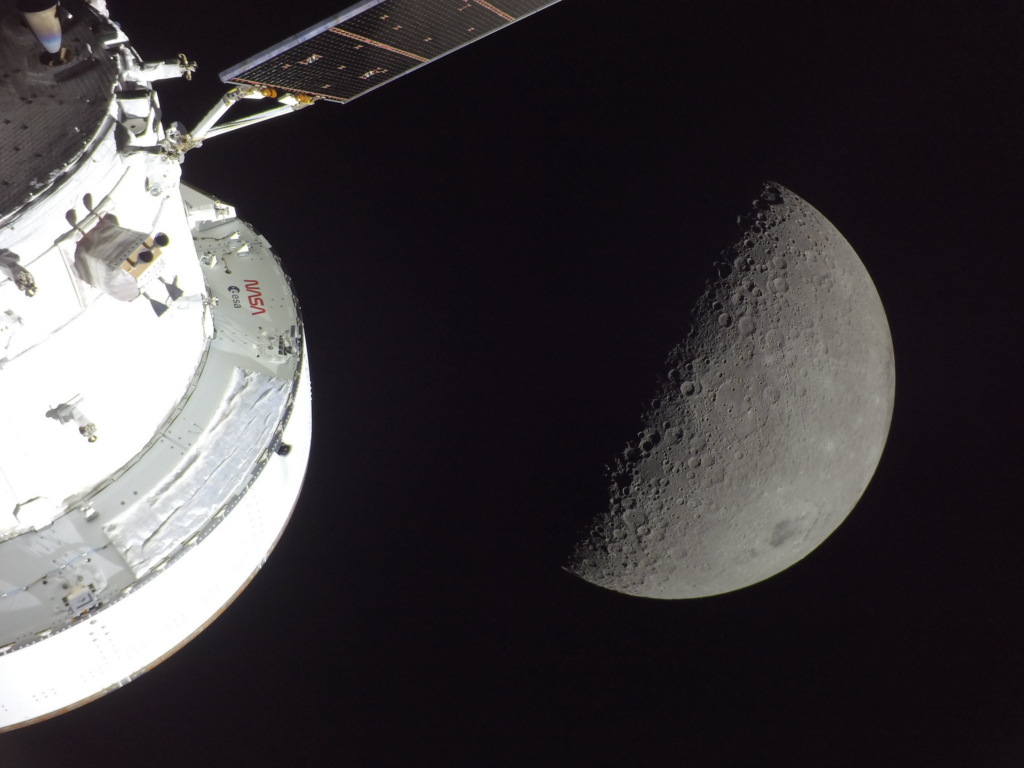
A view of the Moon from the camera attached to the solar panel of the European Service Module of the Orion spacecraft looking at the moon and crossing over the sunrise terminator on the far side.
This is a view of the Moon from the camera attached to the solar panel of the European Service Module of the Orion spacecraft looking at the moon and crossing over the sunrise terminator on the far side. The resolution of the image in on YouTube was about half the resolution of this image. Obviously the photographs that were taken would not be downloaded in real time as the lower resolution version of this image was. Credit: NASA European Space Agency.
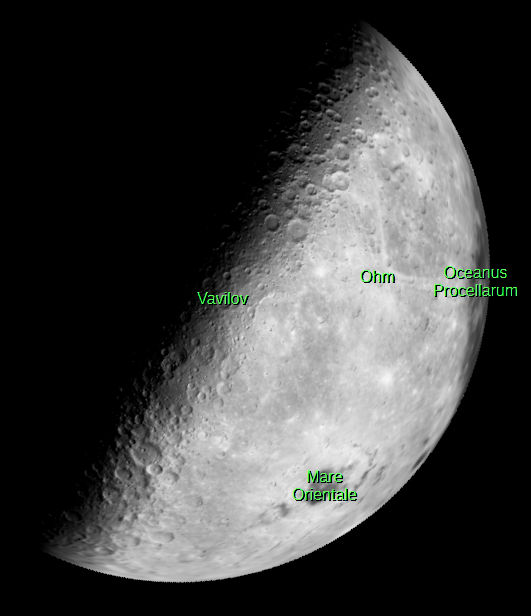
A view from the Virtual Moon Atlas (VMA) from the approximate viewpoint of the Orion spacecraft at the time of the image above, with increased contrast and rotated. Being closer to the moon than this image depicts the edge or limb of the moon or horizon is much closer than is shown here so Oceanus Procellarum is over their horizon. They mentioned the crater Vavilov a lot, but VMA requires exact spelling to point it out. Clicking on a crater will display its name. Vavilov happens to be a double crater, and eventually I clicked on it, and got its name… Russian, of course.

  1. No comments yet.
  1. No trackbacks yet.

Leave a comment

This site uses Akismet to reduce spam. Learn how your comment data is processed.