Archive
Ephemeris: 05/26/2026 – The Soviet Union’s Luna 3 provided first look at the far side of the Moon
This is Bob Moler with Ephemeris for Tuesday, May 26th. Today the Sun will be up for 15 hours and 11 minutes, setting at 9:16, and it will rise tomorrow at 6:03. The Moon, 3 days past first quarter, will set at 3:48 tomorrow morning.
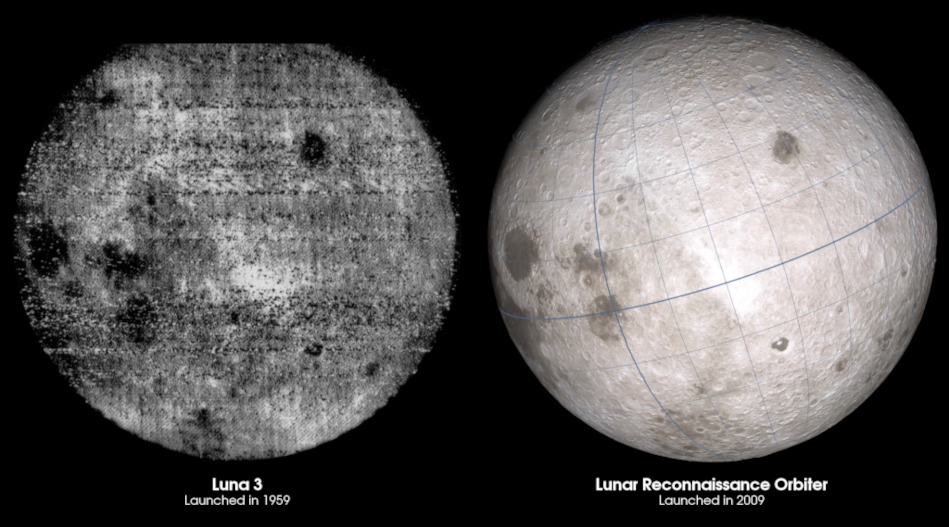
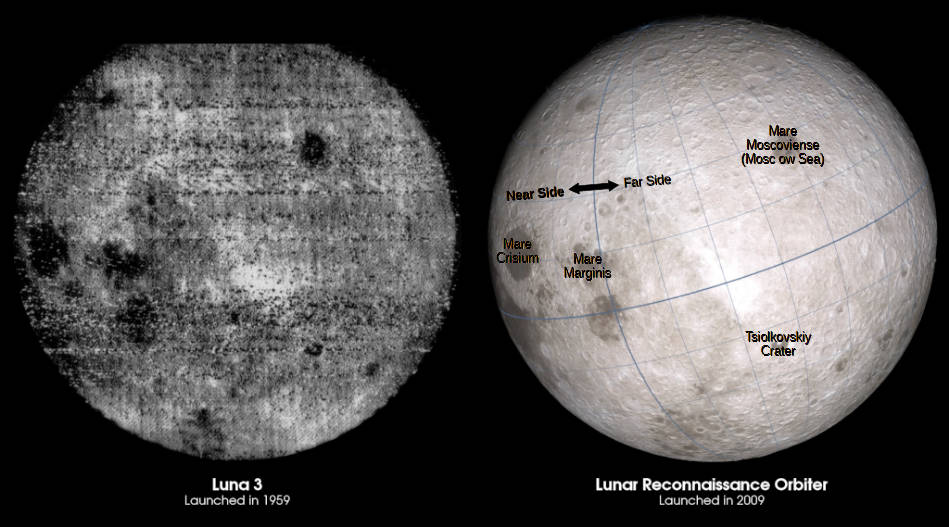
The space race with the Soviet Union started with the launch of Sputnik one in October 1957. The Soviets won the early milestones of the race, including less than two years after Sputnik 1, a flyby of Luna 3 around the moon, and taking the first photographs of the far side. Back then before CCDs, the best quality images from space were photographed onto film and then developed, then scanned on the satellite and the data is sent down to the earth. The images were rather crude and grainy. I was a senior in high school at the time and as interested in astronomy as I am today. We thought that the Far Side of the moon would be more of the same. The Far Side was completely different.
The astronomical event times given in this blog are for the Traverse City/Interlochen area of Michigan (Lat 44.7° N, Long 85.7° W; EDT, UT – 4 hours) unless stated otherwise. Times will be different for other locations.
Addendum
Ephemeris: 04/17/2026 – The Moon’s Far Side isn’t dark!
This is Bob Moler with Ephemeris for Friday, April 17th. Today the Sun will be up for 13 hours and 35 minutes, setting at 8:30, and it will rise tomorrow at 6:53. The Moon is new today, and won’t be visible.
When I hear discussions about the Artemis 2 missions, some people who ought to know better still refer to the far side of the moon as the dark side. Officially we have the two faces of the moon: the near side and the far side. I’ll even accept front side and back side. Until 1959 no one had ever seen the far side of the moon so it was dark, in the sense that we could not see it. Not dark because of the lack of light. I’ve been thinking about it. The far side sees more light from the sun, so maybe we should call it the bright side. It certainly has fewer maria or seas, those dark patches that we see on the near side of the Moon. There’s only one on the far side, it’s called the Moscow Sea since the Russian spotted first. Mare Orientale, subject of much study by the Artemis 2 crew, straddles the near side-far side line. It’s closer to the sun when it’s fully illuminated than the near side by about half a million miles, and it doesn’t suffer solar eclipses to darken it like the near side, being already in night, like it always is, at full moon.
The astronomical event times given in this blog are for the Traverse City/Interlochen area of Michigan (Lat 44.7° N, Long 85.7° W; EDT, UT – 4 hours) unless stated otherwise. Times will be different for other locations.
Addendum
Ephemeris: 04/14/2026 – My virtual flight with the Artemis II crew
This is Ephemeris for Tuesday, April 14th. Today the Sun will be up for 13 hours and 26 minutes, setting at 8:26, and it will rise tomorrow at 6:58. The Moon, 3 days before new, will rise at 5:55 tomorrow morning.
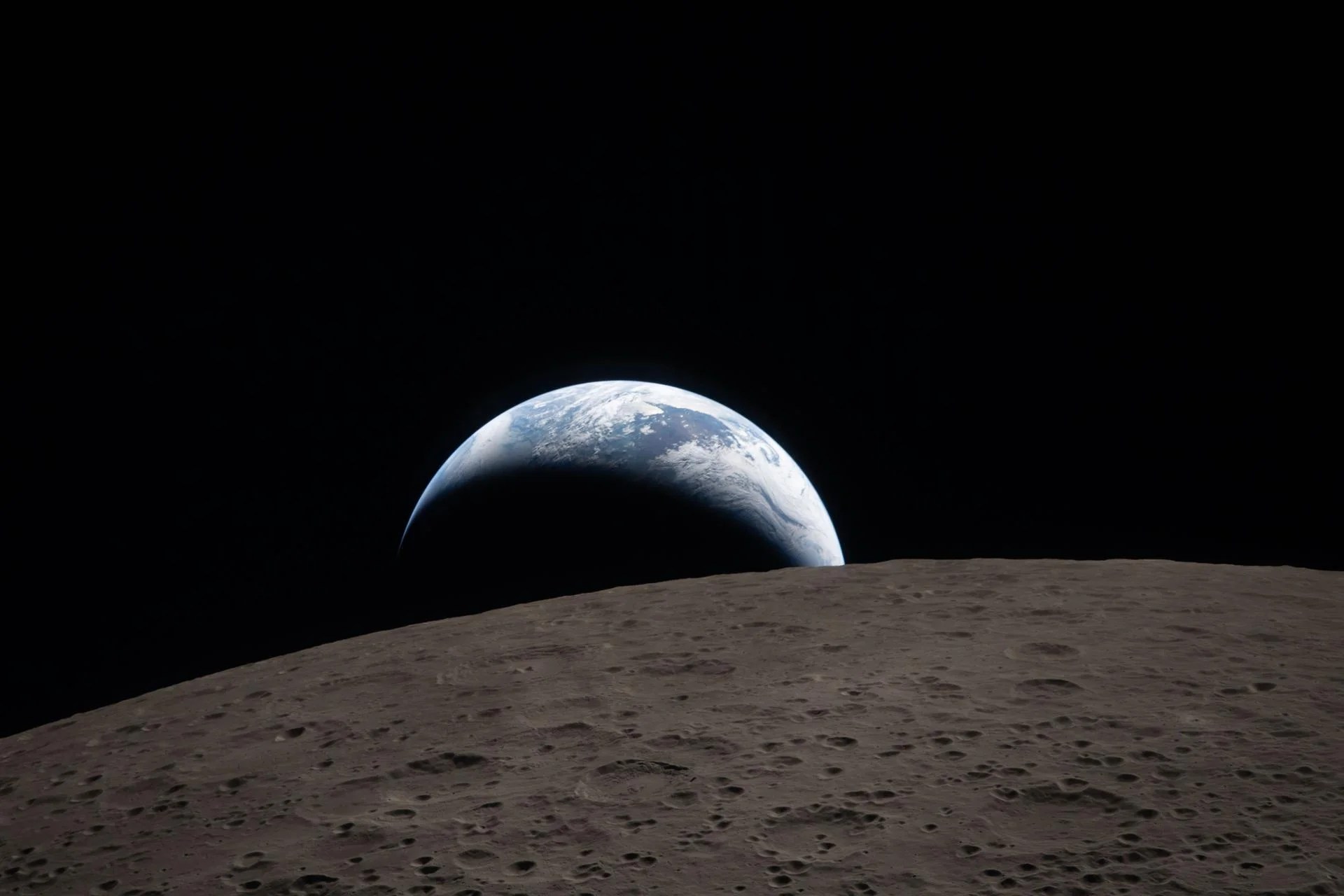
I hadn’t enjoyable time last week Monday afternoon listening to Artemis 2 astronauts talking with the science team on Earth about what they were seeing Moon’s far side. I have the program called Virtual Moon Atlas which allows one to see the entire Moon with the phase and shadows. And I was able to rotate it and get the phase right so it appeared pretty much as it did to the astronauts. So I was able to follow along with their discussions of the far side features that they were seeing and photographing. I could zoom in to craters and features they were talking about, but nowhere near the detail they were seeing. So I consider it to be a really great time of, in essence, flying along with the astronauts.
The astronomical event times given in this blog are for the Traverse City/Interlochen area of Michigan (Lat 44.7° N, Long 85.7° W; EST, UT – 5 hours) unless stated otherwise. Times will be different for other locations.
Addendum
Ephemeris: 04/07/2026 – The Artemis II crew made amazing observations of the Moon’s Far Side
This post was made late due to some WordPress posting issues last night.
This is Ephemeris for Tuesday, April 7th. Today the Sun will be up for 13 hours and 5 minutes, setting at 8:18, and it will rise tomorrow at 7:10. The Moon, 3 days before last quarter, will rise at 2:33 tomorrow morning.
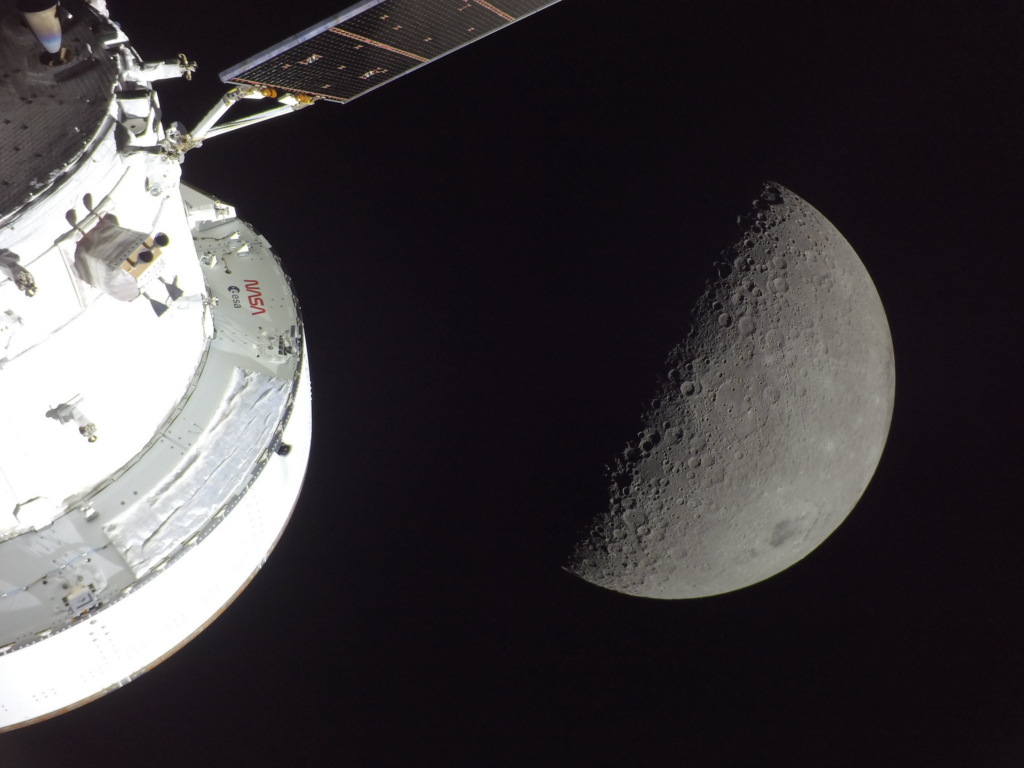
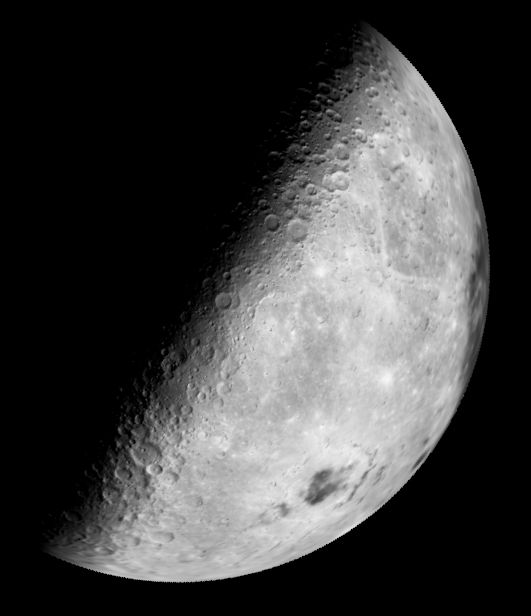
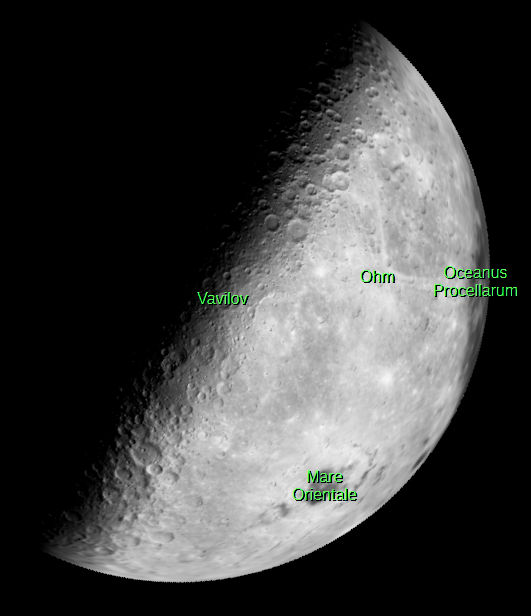
Yesterday evening the Artemis 2 crew flew over the far side of the moon. The moon to us has a waning gibbous phase. The far side is actually a waxing crescent, so most of the far side was in night. They might have gotten a good look at Mare Orientale, which is right on the edge of the moon that we see from Earth. It is a double-walled sea that looks like a bulls eye. Now they’re on their way back to the earth and will splash down in the Pacific Ocean later this week. Unlike Apollo 8 which orbited the moon, they will not be flying over any proposed landing sites. They flew over the moon’s equator while Artemis 4 will attempt to land near the moon’s South Pole. Besides, the Lunar Reconnaissance Orbiter has surveyed it much better than they could have.
The astronomical event times given in this blog are for the Traverse City/Interlochen area of Michigan (Lat 44.7° N, Long 85.7° W; EST, UT – 5 hours) unless stated otherwise. Times will be different for other locations.
Addendum
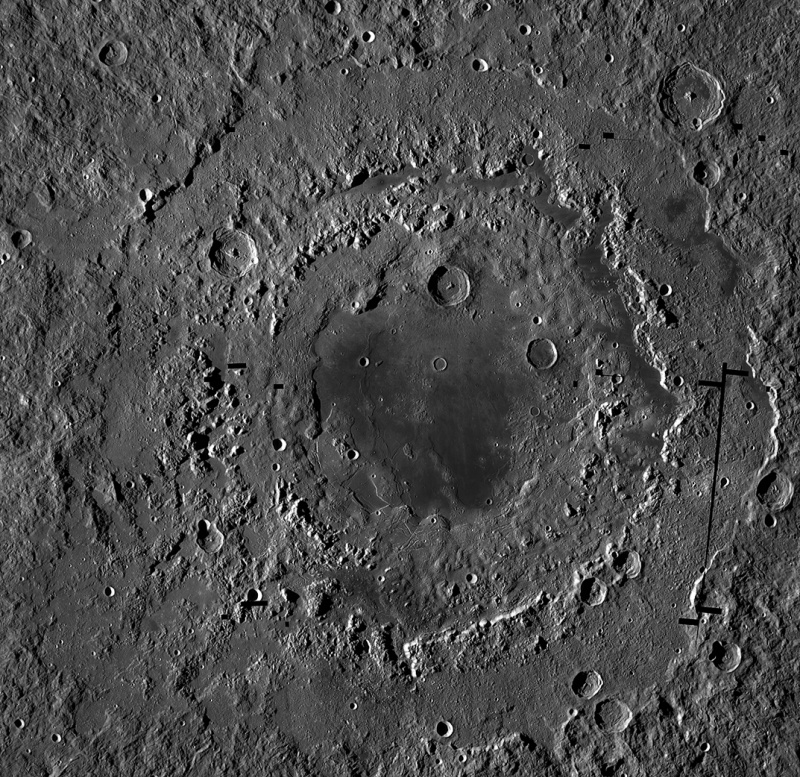
The script for the program seen above was written and recorded Sunday night April 5th before Artemis 2’s lunar flyby. This comment is made after the flyby on the late afternoon of April 6th. I speculated about Mare Orientale being something I wanted to have them investigate. And they did spend a great deal of time observing it, so we should expect some very nice photographs of it when they’re sent back. The image above is from the Lunar Reconnaissance Orbiter taken several years ago, at least. I find it a really cool feature.
Ephemeris: 04/11/2024 – What is the far side of the Moon good for?
This is Ephemeris for Thursday, April 11th. Today the Sun will be up for 13 hours and 19 minutes, setting at 8:23, and it will rise tomorrow at 7:02. The Moon, 3 days past new, will set at 12:40 tomorrow morning.
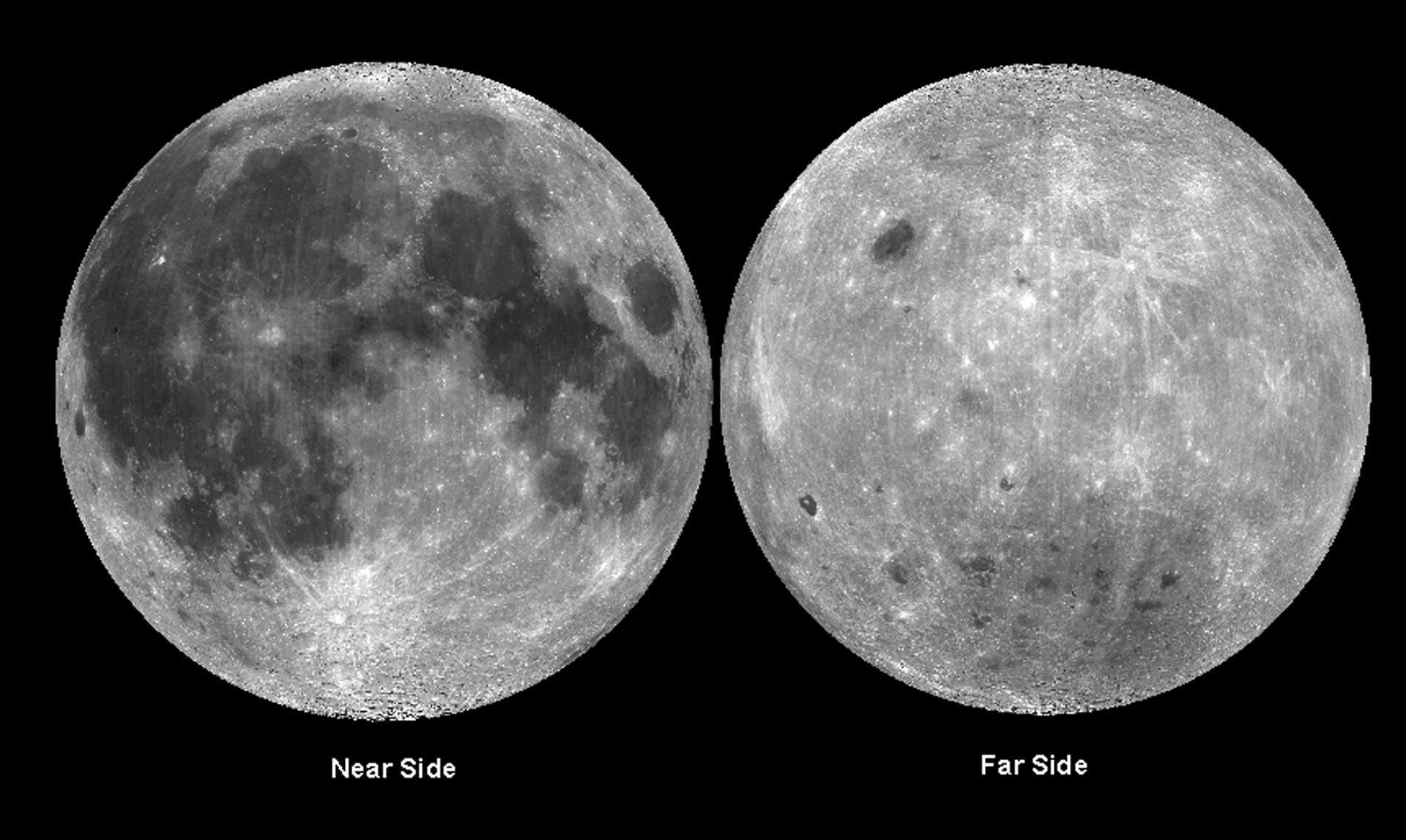
The Last Monday when we were having an eclipse of the Sun, the far side of the Moon was fully illuminated. So it can’t possibly be the dark side of the Moon, not permanently. The dark side of the Moon is the night side and Monday that was the side facing the Earth. But what’s the far side of the Moon good for? The Chinese seem to be very interested in it. They have a lander and a rover on the far side, and they’re going to go back and grab a sample from the far side and bring it back to the Earth. The far side of the Moon is one place in the whole solar system in which the cacophony of radio signals from the Earth cannot be heard so it’s a great place to set up a radio telescope. The craters on the far side of the moon might be used to place a dish antenna.
The astronomical event times given are for the Traverse City/Interlochen area of Michigan (EDT, UT–4 hours). They may be different for your location.
Addendum
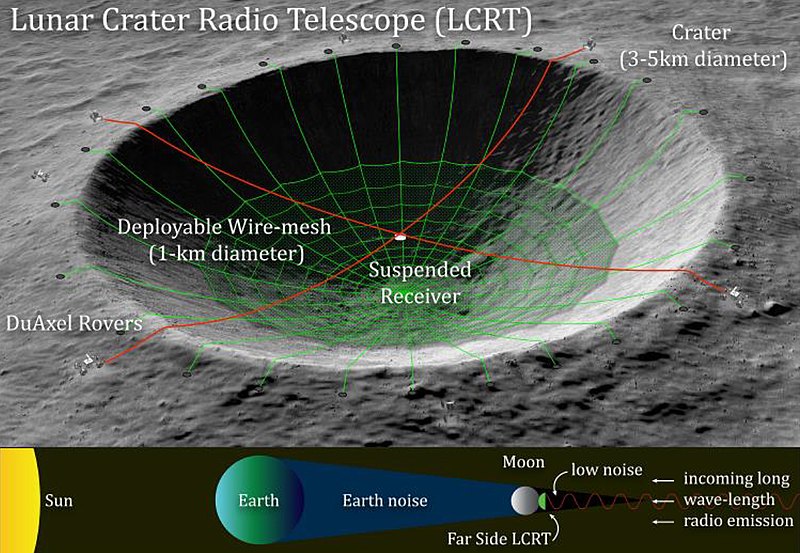
Ephemeris: 01/23/2024- The “dark” side of the Moon is its brightest side
This is Ephemeris for Tuesday, January 23rd. Today the Sun will be up for 9 hours and 27 minutes, setting at 5:38, and it will rise tomorrow at 8:10. The Moon, 2 days before full, will set at 8 o’clock tomorrow morning.
In a couple of days the far side of the Moon will become the dark side for real. It’ll be night when the near side of the moon becomes fully illuminated, the far side will be a night. The far side of the moon actually gets more sunlight than the near side of the moon because it does not suffer solar eclipses. The lunar solar eclipse occurs when we see a lunar eclipse. The Sun is blocked from shining on the Moon. The totality of a lunar solar eclipse lasts much longer than a few minutes that we get when the Moon totally blocks the Sun, the length of totality for the Moon’s solar eclipse can last several hours. The far side of the moon does not see eclipses, and when fully illuminated at what we call new moon it is a quarter of a million miles closer to the Sun than Earth.
The astronomical event times given are for the Traverse City/Interlochen area of Michigan (EST, UT –5 hours). They may be different for your location.
Addendum
03/11/2019 – Ephemeris – The Moon: Dark side, far side, which is it?
Ephemeris for Monday, March 11th. Today the Sun will be up for 11 hours and 40 minutes, setting at 7:43, and it will rise tomorrow at 8:01. The Moon, 3 days before first quarter, will set at 12:54 tomorrow morning.
Tonight the Moon is at its crescent phase, meaning it is slightly closer to the Sun than the Earth is. Most of the Moon we see is in night. Some earth shine may be seen on its night side due to the big nearly full Earth shining on it. I get ticked sometimes when someone who knows better, especially in the media, mentions the dark side of the Moon when they should use the term far side, the part of the Moon that permanently faces away from the Earth. When the Chinese Chang’e 4 spacecraft landed on the far side of the Moon recently many headlines proclaimed that it landed on the dark side of the Moon. The Moon has a night side, as does the Earth, but that changes as the Moon rotates in the sunlight. And the Moon does rotate. It happens to be in sync with its revolution about the Earth.
The times given are for the Traverse City/Interlochen area of Michigan. They may be different for your location.
Addendum
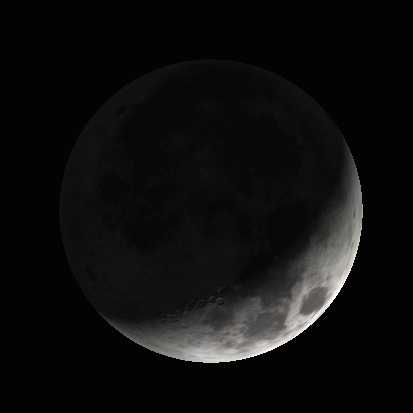
The crescent Moon tonight at 9 p.m. EDT, March 11, 2019. Created using Stellarium.
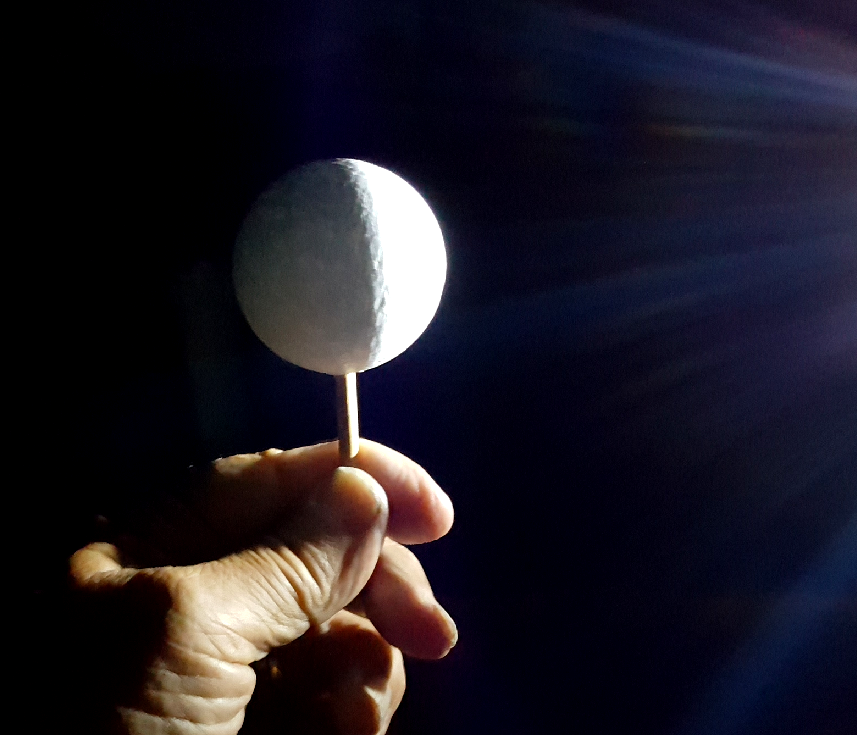
Demonstration of the Moon’s crescent phase with the Styrofoam moon ball we use for Project Astro held up to a light off frame to the right. The night side of the ball is illuminated a bit by the translucency of the ball, and the reflection off my hand. Note the roughness of the ball is visible only at the terminator.
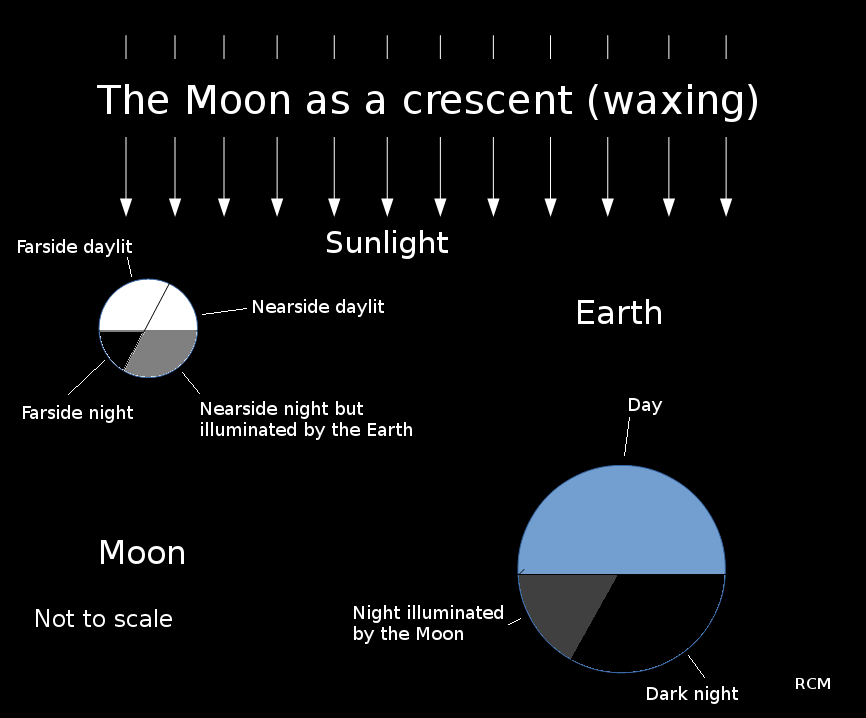
The Earth and Moon if seen as a crescent, near side, far side, sunlit side and earth shine. Credit: me.

