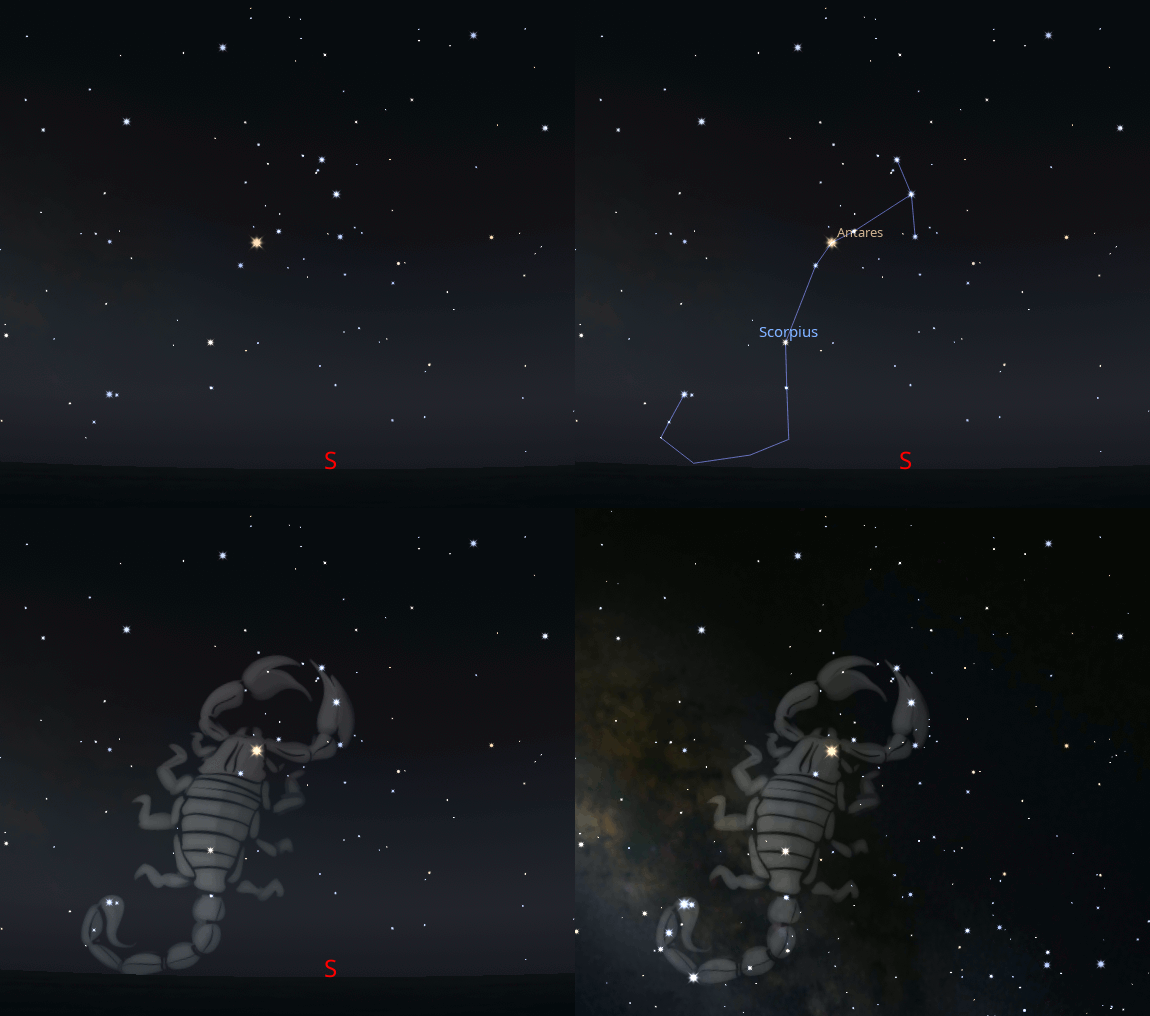
Ephemeris: 07/14/2026 – What the bright star Antares’ name means
This is Bob Moler with Ephemeris for Tuesday, July 14th. Today the Sun will be up for 15 hours and 15 minutes, setting at 9:26, and it will rise tomorrow at 6:11. The Moon is new today and won’t be visible.
The constellation of Scorpius the scorpion is low in the south at 11 PM these nights. Its bright star Antares will pass due south around 10:30 this evening. Antares is an interesting star in that it is a red giant star, and its name, Antares, means “Rival of Mars,” alluding to the fact that it and Mars appear to be the same color. A little translation is needed here: “Ant” is anti, against, “Ares” is the Greek god of war that the Romans appropriated as Mars. About every two years, Mars passes near Antares, so unless you know your stars and planets, you could mistake them for each other. Antares lies at the heart of the scorpion. To its upper right is the front part of its body and claws, and the trail of stars running down the other way, nearly to the horizon, in the south and back up in the south-southeast to the two stars of its stinger, make up its characteristic tail.
The astronomical event times given in this blog are for the Traverse City/Interlochen area of Michigan (Lat 44.7° N, Long 85.7° W; EDT, UT – 4 hours) unless stated otherwise. Times will be different for other locations.
Addendum