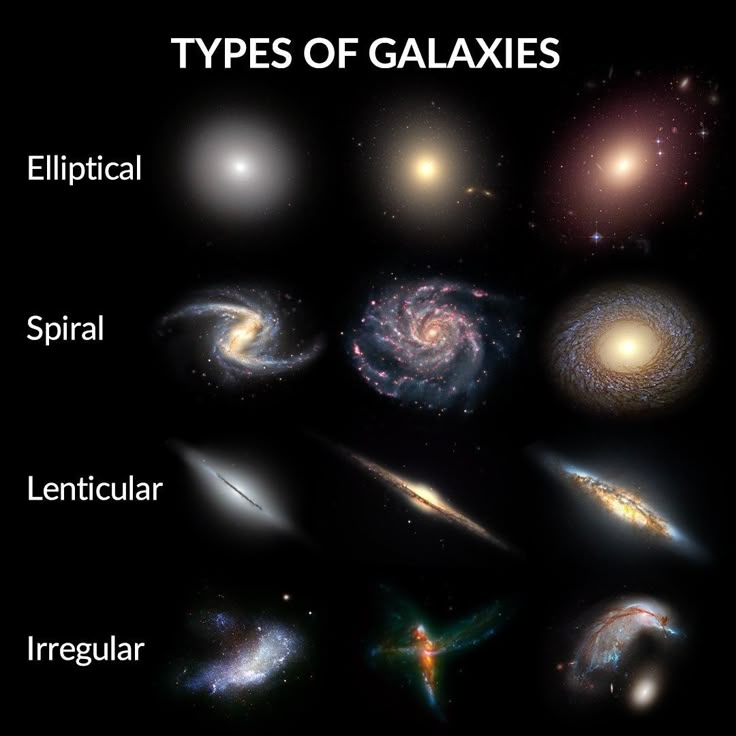
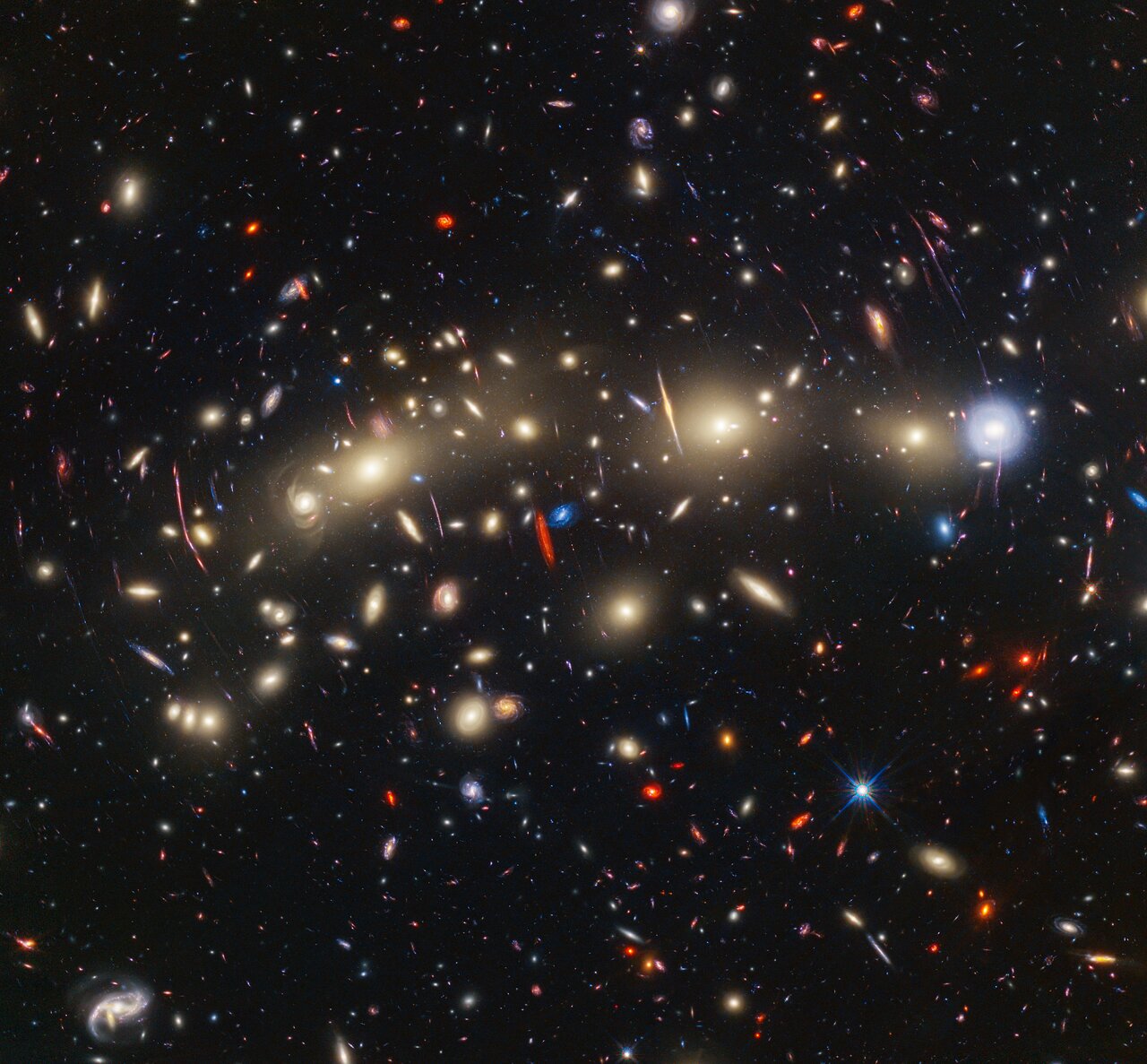
Ephemeris: 07/30/2026 – The types and distribution of galaxies
This is Ephemeris for Thursday, July 30th. Today the Sun will be up for 14 hours and 44 minutes, setting at 9:10, and it will rise tomorrow at 6:27. The Moon, 1 day past full, will rise at 9:52 this evening.
Until a little over 100 years ago the Milky Way was thought to be the whole universe. Then with photography the great Andromeda nebula turned out to be not a cloud of gas but a great group of stars outside. Since then we have found billions upon billions of these galaxies. Galaxy simply is a derivation from “Milky Way” in Latin. Galaxies are not sprinkled through the universe uniformly. They appear in great clusters and in small groups. The Milky Way and the Andromeda Galaxy belong to a relatively small group of galaxies called the Local Group, which contains 130 or more, mostly dwarf galaxies of which Andromeda and our Milky Way are the largest. The Great Andromeda Galaxy will come in view into the evening sky this autumn.
The astronomical event times given in this blog are for the Traverse City/Interlochen area of Michigan (Lat 44.7° N, Long 85.7° W; EDT, UT – 4 hours) unless stated otherwise. Times will be different for other locations.
Addendum