Archive
Ephemeris: 08/31/2026 – September’s Milky Way
This is Ephemeris for Monday, August 31st. Today the Sun will be up for 13 hours and 17 minutes, setting at 8:21, and it will rise tomorrow at 7:05. The Moon, 3 days past full, will rise at 9:35 this evening.
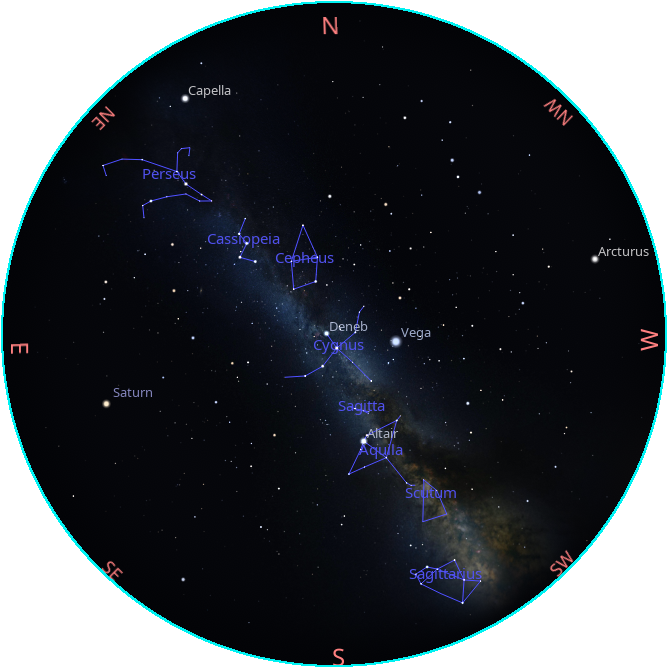
In the coming nights, as the moon leaves the evening sky, we will again be able to see the summer Milky Way. In September the Milky Way will twist from roughly northeast to south to northeast overhead to southwest. The teapot asterism of the constellation Sagittarius tilts and pours its tea onto the southwestern horizon and soon also succumbs to the rotation of the earth and sets. It will give us our last chance to see the great star clouds toward the center of our galaxy. The Milky Way will be with us until spring. Actually twisting, with new parts passing overhead. But, we will be looking out, opposite from the center, to the further reaches of the Milky Way that is not as bright, but the active star forming regions are closer.
The astronomical event times given in this blog are for the Traverse City/Interlochen area of Michigan (Lat 44.7° N, Long 85.7° W; EDT, UT – 4 hours) unless stated otherwise. Times will be different for other locations.
Addendum
Ephemeris: 08/28/2026 – Crater found from Falcon 9 impact on the Moon
This is Ephemeris for Friday, August 28th. Today the Sun will be up for 13 hours and 25 minutes, setting at 8:26, and it will rise tomorrow at 7:01. The Moon, which was full just after midnight this morning during ther lunar eclipse, will rise at 8:36 this evening.
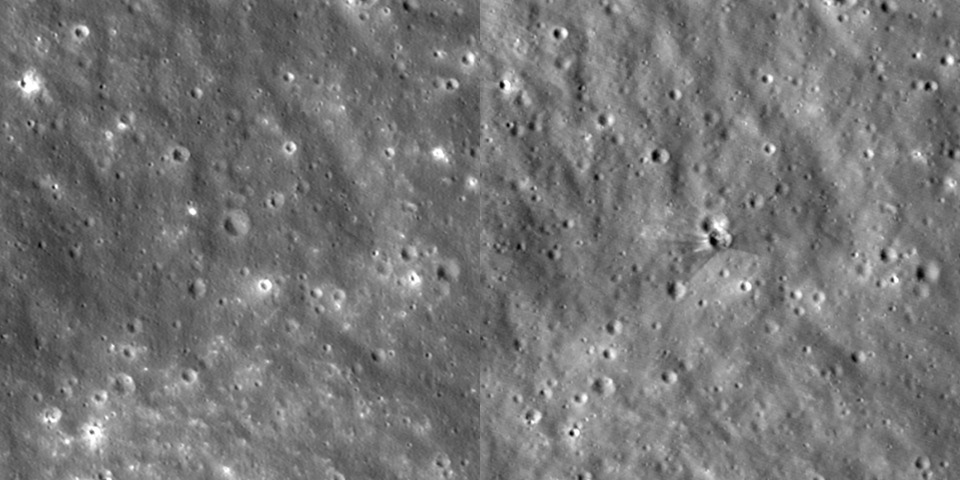
SpaceX made a big splash on the moon a couple of weeks ago when the second stage of the Falcon 9 rocket that delivered two lunar landers to the moon last year, itself crashed into the moon. This, plus detection of the flashes of several meteoroid strikes on the moon by the Artemis 2 crew, suggested to some scientists that lunar colonization might be a very risky thing. On the moon when something hits it, material flies off in all directions. But without an atmosphere to slow these particles down they fly a long way and will crash back onto the moon at the same velocity they were ejected with. The crash dug a crater 60 feet (18 meters) across and 10 feet (3 meters) deep.
The astronomical event times given in this blog are for the Traverse City/Interlochen area of Michigan (Lat 44.7° N, Long 85.7° W; EDT, UT – 4 hours) unless stated otherwise. Times will be different for other locations.
Addendum
Ephemeris: 08/27/2026 – Nearly total lunar eclipse visible tonight
his is Bob Moler with Ephemeris for Thursday, August 27th. Today the Sun will be up for 13 hours and 28 minutes, setting at 8:28, and it will rise tomorrow at 7:00. The Moon, 1 day before full, will set at 7:25 tomorrow morning.
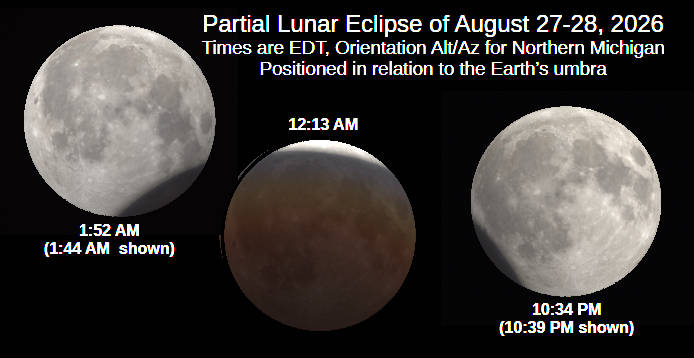
Late tonight and into tomorrow morning, clouds permitting, we will be able to see a partial eclipse of the moon. The moon will be almost totally immersed in the earth’s umbral shadow, with only a tiny sliver of the top of it visible at maximum eclipse. The partial eclipse starts at 10:34 PM EDT. The maximum of eclipse will be at 12:13 AM, and it will end at 1:52 AM. So it will be great viewing for those who can stay up late to see it. The moon will pass through the northern part of the earth’s shadow and since about 93% of the moon’s diameter will be immersed, the reddish appearance of the moon in the shadow might be apparent to the naked eye, and should be apparent in binoculars. The dusky appearance of the moon may appear half an hour before and after the eclipse. Use sunglasses to make the penumbral shadow easier to see.
The astronomical event times given in this blog are for the Traverse City/Interlochen area of Michigan (Lat 44.7° N, Long 85.7° W; EDT, UT – 4 hours) unless stated otherwise. Times will be different for other locations.
Addendum

Ephemeris: 08/26/2026 – Taking our weekly look at the whereabouts of the naked-eye planets
This is Bob Moler with Ephemeris for Wednesday, August 26th. Today the Sun will be up for 13 hours and 31 minutes, setting at 8:30, and it will rise tomorrow at 6:59. The Moon, 2 days before full, will set at 6:15 tomorrow morning.
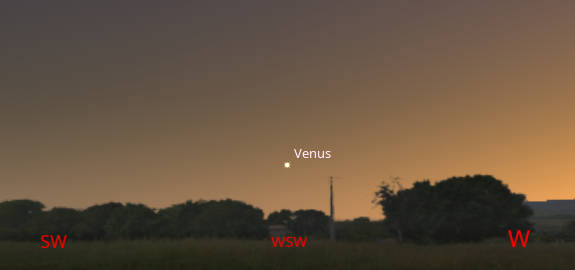
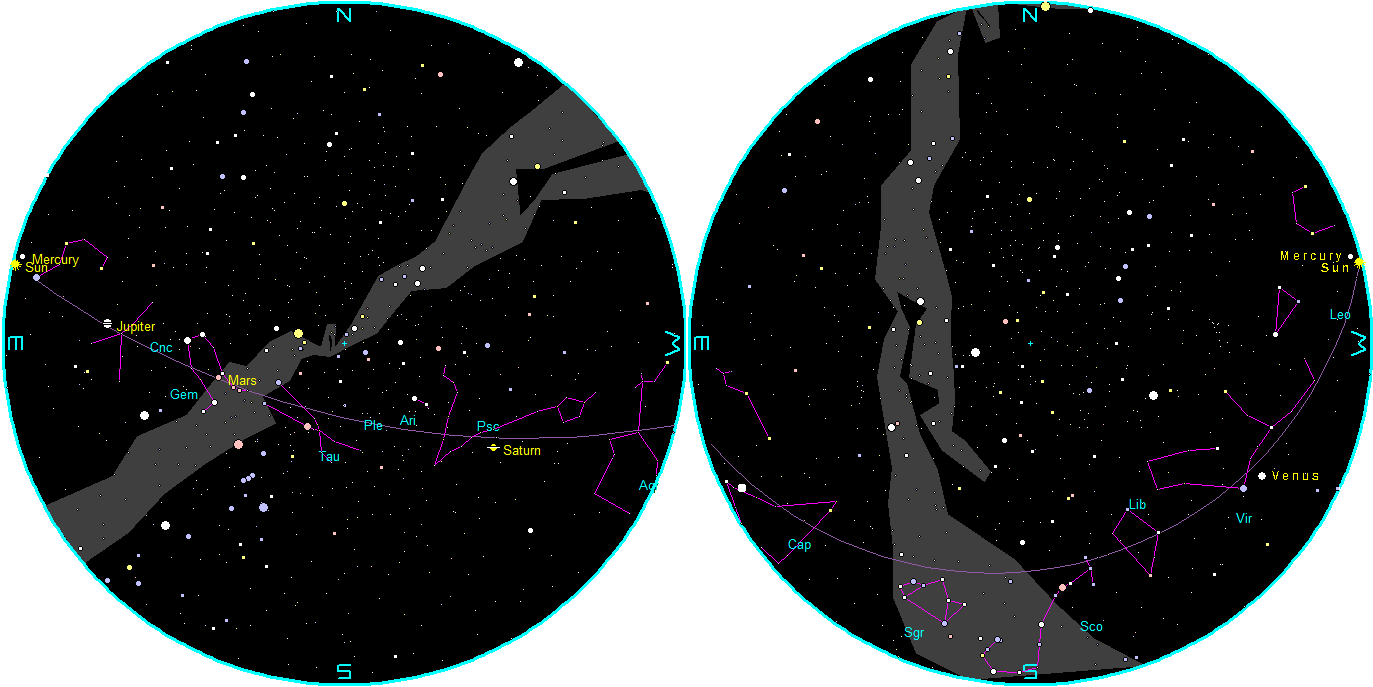
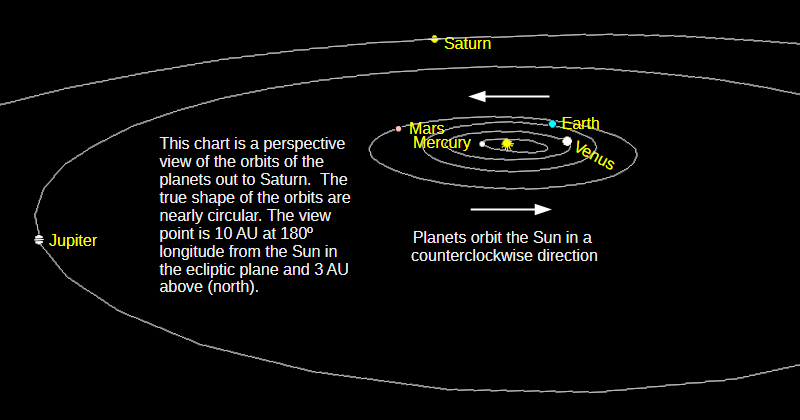
Let’s take our weekly look at the whereabouts of the naked-eye planets. By 9 PM tonight, a half-hour after sunset, Venus will be easily spotted in the west southwestern sky. A telescope will show a small, fat crescent disk of Venus. It is now rapidly approaching earth in its orbit, at 55.8 million miles (89.9 million kilometers) away from us. Venus’ phase is becoming an ever decreasing crescent as its apparent diameter grows in telescopes. At 6 AM, Saturn, Mars and Jupiter will be visible in the southwest, east and east northeast respectively. Saturn is the brightest “star” in its part of the sky, while Mars has the competition of brighter stars, and two brighter red stars of the coming winter evenings, while Jupiter outshines them all.
The astronomical event times given in this blog are for the Traverse City/Interlochen area of Michigan (Lat 44.7° N, Long 85.7° W; EDT, UT – 4 hours) unless stated otherwise. Times will be different for other locations.
Addendum



Ephemeris: 08/25/2026 – Thursday’s lunar eclipse – and when eclipses can occur
This is Ephemeris for Tuesday, August 25th. Today the Sun will be up for 13 hours and 34 minutes, setting at 8:31, and it will rise tomorrow at 6:58. The Moon, 3 days before full, will set at 5:06 tomorrow morning.
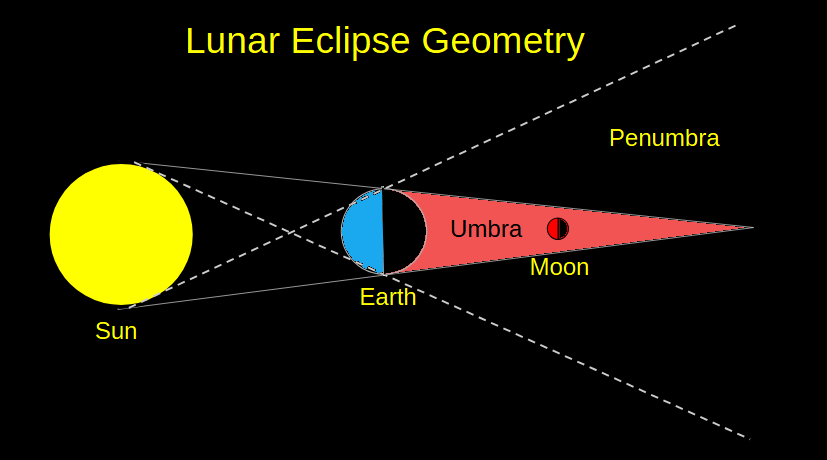
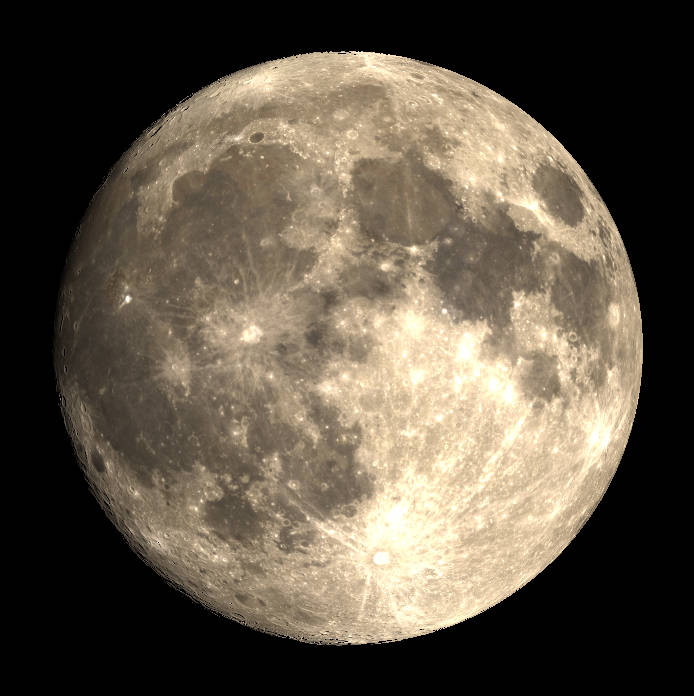
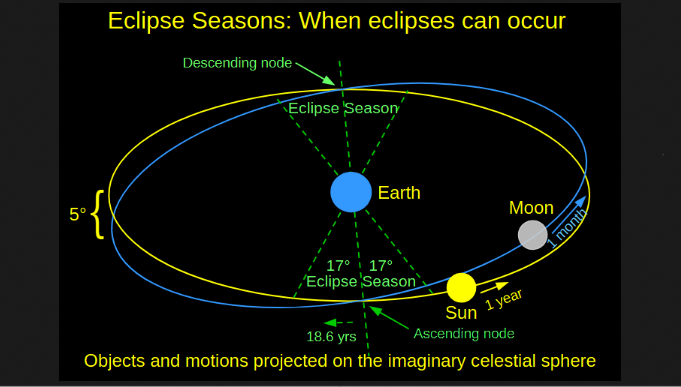
This Thursday’s partial lunar eclipse will occur only 15 days after the last eclipse, a nibble of a solar eclipse for us, and a total eclipse for others on August 12th. Eclipses occur in seasons of about a month long that occur at a bit less than six month intervals, so eclipses will occur a little earlier next year to this. That’s because the crossing points of the Moon’s and the Earth’s orbital planes regress slowly westward. In an eclipse season two eclipses will occur: a solar and a lunar eclipse. On rare occasions when a lunar eclipse occurs in the center of a season a partial solar eclipse can occur two weeks before and again after the lunar eclipse, but they will affect the opposite polar regions of the Earth. For Thursday night, the partial eclipse will start at 10:34 PM. Maximum eclipse occurs at 12:13 AM, and will end at 1:52 AM.
The astronomical event times given in this blog are for the Traverse City/Interlochen area of Michigan (Lat 44.7° N, Long 85.7° W; EDT, UT – 4 hours) unless stated otherwise. Times will be different for other locations.
Addendum
Ephemeris: 08/24/2026 – Get ready for a significant partial lunar eclipse Thursday night
This is Ephemeris for Monday, August 24th. Today the Sun will be up for 13 hours and 37 minutes, setting at 8:33, and it will rise tomorrow at 6:57. The Moon, 4 days before full, will set at 3:57 tomorrow morning.
Late Thursday night and into Friday morning, clouds permitting, we will be able to see a partial eclipse of the moon. The moon will be almost totally immersed in the earth’s umbral shadow, with only a tiny sliver of the top of it visible at maximum eclipse. The partial eclipse starts at 10:34 PM EDT Thursday night (2:34 UT Friday morning the 28th). The maximum of eclipse will be at 12:13 AM (4:13 UT), and it will end at 1:52 AM (5:52 UT). So it will be nice viewing for those who can stay up late to see it. The moon will pass through the northern part of the earth’s shadow and since about 93% of the moon’s diameter will be immersed, the reddish appearance of the moon in the shadow might be apparent, and will definitely be apparent in binoculars.
The astronomical event times given in this blog are for the Traverse City/Interlochen area of Michigan (Lat 44.7° N, Long 85.7° W; EDT, UT – 4 hours) unless stated otherwise. Times will be different for other locations.
Addendum
Ephemeris: 08/21/2026 – What are the chances of detecting another civilization in the galaxy?
This is Bob Moler with Ephemeris for Friday, August 21st. Today the Sun will be up for 13 hours and 46 minutes, setting at 8:38, and it will rise tomorrow at 6:53. The Moon, 2 days past first quarter, will set at 12:56 tomorrow morning.
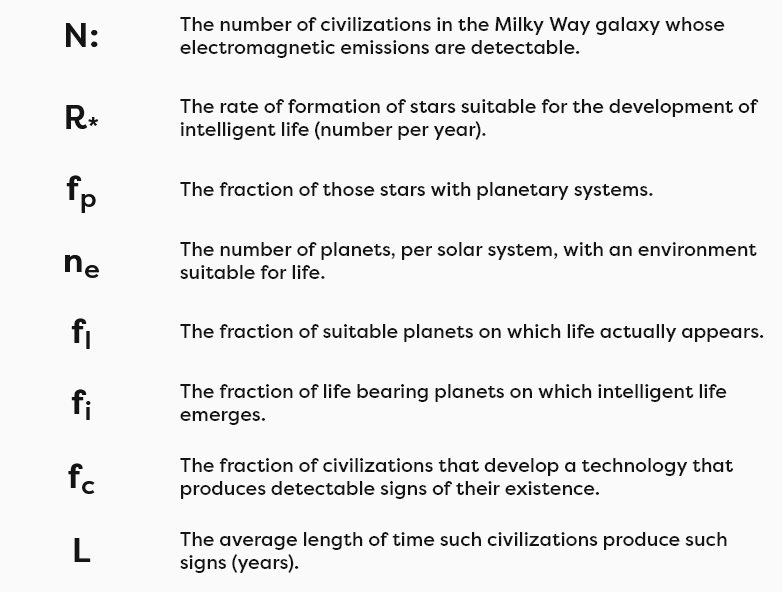
At the first conference for the search for extraterrestrial intelligence held at the National Radio Astronomy Observatory in Green Bank,West Virginia, astronomer Frank Drake presented an equation on the chances for the the number of civilizations we would be capable of detecting with radio telescopes in the Galaxy. The equation had seven factors such as the average rate of star formation in the Milky Way. The fraction of those that had planets in the habitrable zone, the fraction of those in the habitable zone that actually had developed life and thae fraction of those that have intelligent life and so on. It’s called the Drake equation. And the values have only been guessed at, but there could be many.
The astronomical event times given in this blog are for the Traverse City/Interlochen area of Michigan (Lat 44.7° N, Long 85.7° W; EDT, UT – 4 hours) unless stated otherwise. Times will be different for other locations.
The Drake Equation
N: = R* x fp x ne x fl x fi x fc x L

Ephemeris: 08/20/2026 – Fermi’s Paradox
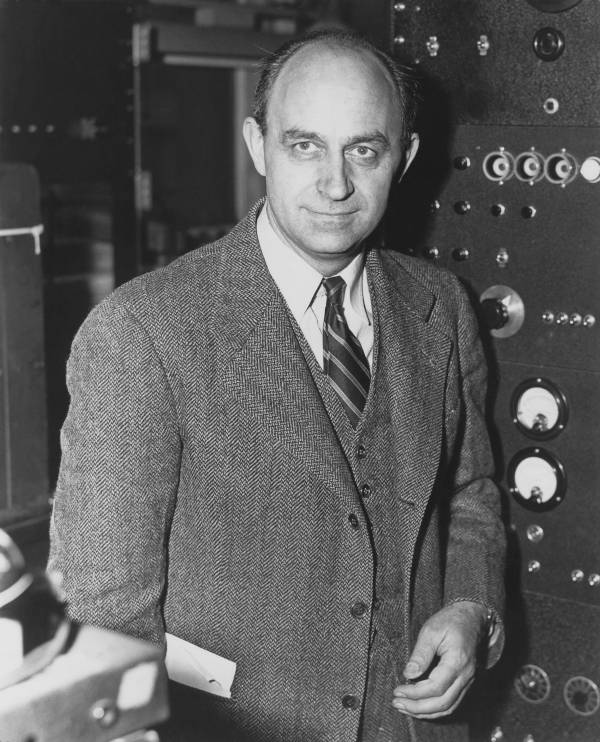
This is Ephemeris for Thursday, August 20th. Today the Sun will be up for 13 hours and 49 minutes, setting at 8:40, and it will rise tomorrow at 6:52. The Moon, 1 day past first quarter, will set at 12:11 tomorrow morning.
It is said that during lunch one day in 1950 in Los Alamos New Mexico, atomic scientist Enrico Fermi asked this question: Where is everybody? Meaning why haven’t we seen any aliens from the rest of the universe? He posited that there are many stars older than the sun by billions of years, so there could be many civilizations in the Milky Way. There is sufficient time, even traveling less than the speed of light, that a single civilization would have populated the entire Milky Way Galaxy in millions of years, a short time compared to the age of the Universe. The question is known as Fermi’s Paradox. So far the search for extraterrestrial intelligence, or SETI, has found nothing, though in the vast scheme of things, we’ve just started.
The astronomical event times given in this blog are for the Traverse City/Interlochen area of Michigan (Lat 44.7° N, Long 85.7° W; EDT, UT – 4 hours) unless stated otherwise. Times will be different for other locations.
Addendum
Ephemeris: 08/19/2026 – Taking a weekly look at the whereabouts of the naked-eye planets
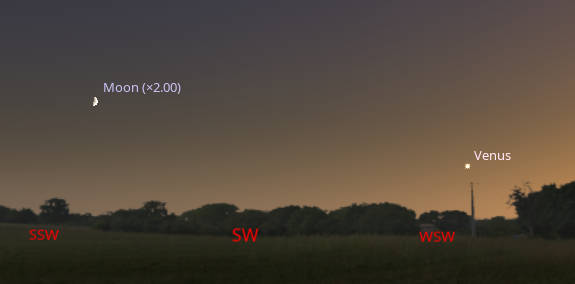
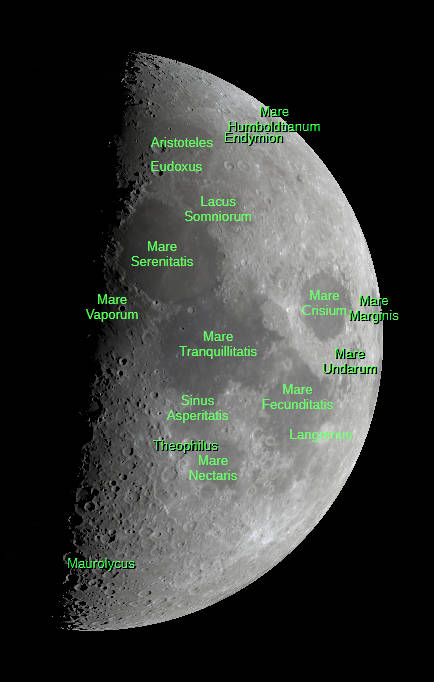
This is Ephemeris for Wednesday, August 19th. Today the Sun will be up for 13 hours and 51 minutes, setting at 8:41, and it will rise tomorrow at 6:51. The Moon, at first quarter today, will set at 11:35 this evening.
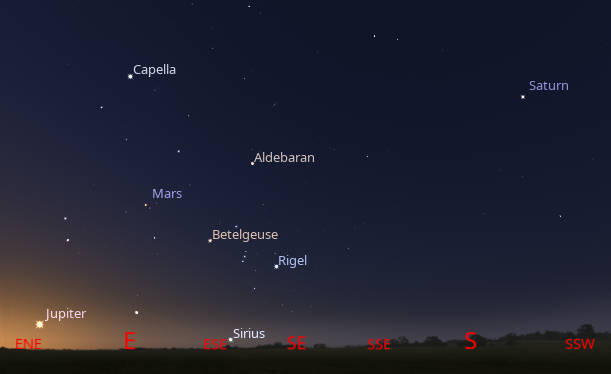
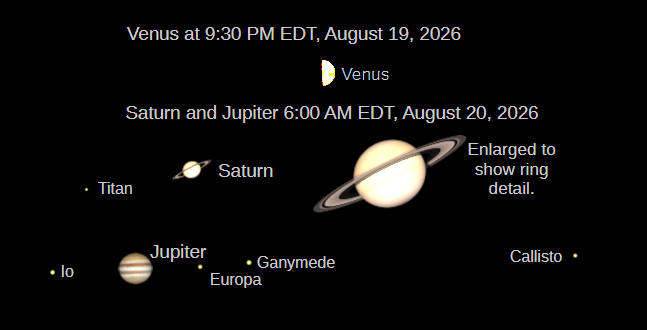
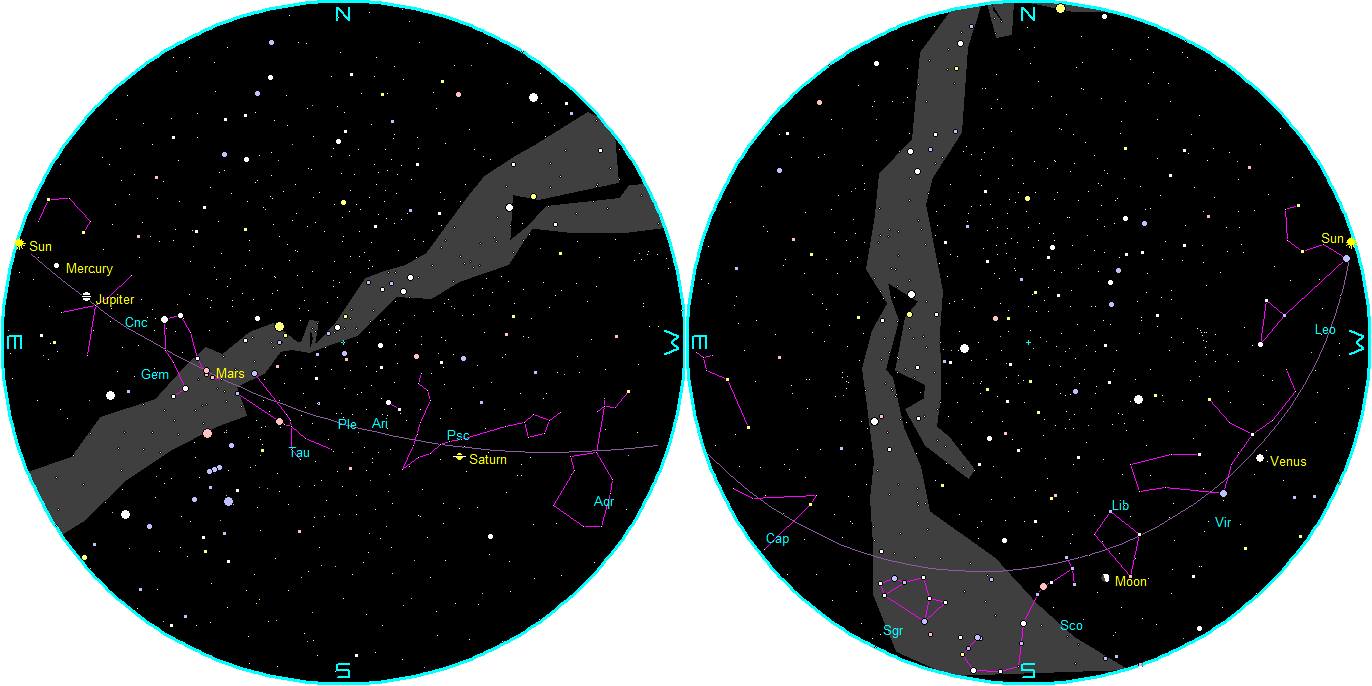
Let’s take our weekly look at the whereabouts of the naked-eye planets. By 9:15 PM tonight, a bit over a half-hour after sunset, Venus will be easily spotted in the western sky. A telescope will show a small, nearly half illuminated disk of Venus. It is now rapidly approaching earth in its orbit, at 60.9 million miles (98.1 mil km) away from us. Venus phase is turning into an ever decreasing crescent as its apparent diameter grows in telescopes. At 6 AM, Saturn, Mars and Jupiter will be visible in the south southwest, southeast and east respectively. Saturn is the brightest “star” in its part of the sky, while Mars has the competition of brighter stars, and two brighter red stars of the coming winter evenings. Jupiter is brightest of all.
The astronomical event times given in this blog are for the Traverse City/Interlochen area of Michigan (Lat 44.7° N, Long 85.7° W; EDT, UT – 4 hours) unless stated otherwise. Times will be different for other locations.
Addendum
Ephemeris: 08/18/2026 – The Artemis III Mission
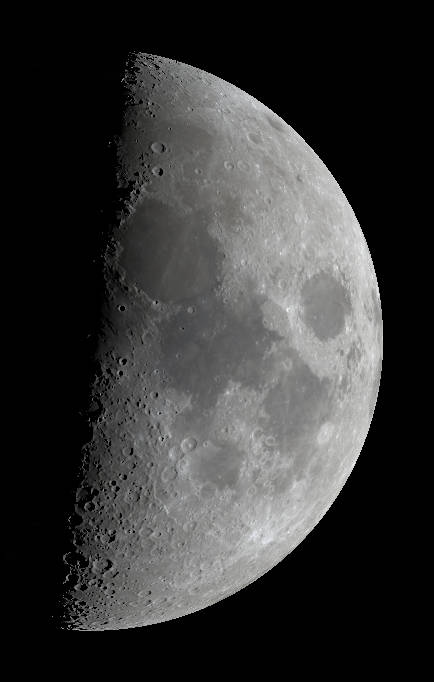
This is Ephemeris for Tuesday, August 18th. Today the Sun will be up for 13 hours and 54 minutes, setting at 8:43, and it will rise tomorrow at 6:50. The Moon, 1 day before first quarter, will set at 11:05 this evening.
Late next year or earlier 2028, NASA will launch the Artemis 3 mission to low earth orbit to test operations between the Orion spacecraft and one or both of the Human Landing Systems destined to take crews to the moon’s surface by 2030. The two landers are the SpaceX Starship HLS and Blue Origin’s Blue Moon Mark 2. Neither of the Landers will be operational, that is they may not even be pressurized, though they will need a docking port. However, it will be a test of rendezvous and docking to make sure that the vehicles can operate together. It will also be a test of the new lunar space suit. Artemis 3 will be a flight test similar to Apollo 9, except crews will not board the landers for independent flight testing.
The astronomical event times given in this blog are for the Traverse City/Interlochen area of Michigan (Lat 44.7° N, Long 85.7° W; EDT, UT – 4 hours) unless stated otherwise. Times will be different for other locations.
Addendum


