This is Ephemeris for Wednesday, July 29th. Today the Sun will be up for 14 hours and 46 minutes, setting at 9:12, and it will rise tomorrow at 6:26. The Moon, at full today, will rise at 9:30 this evening.
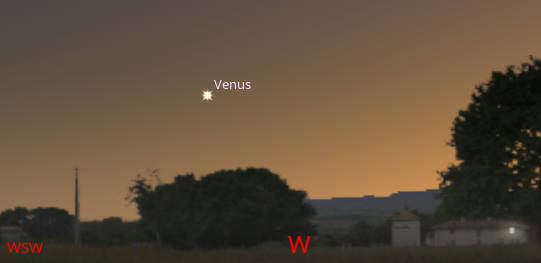
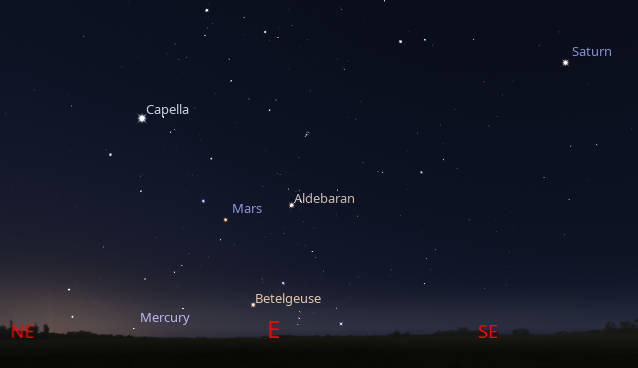
Let’s take our weekly look at the whereabouts of the naked-eye planets. By 9:45 PM tonight, a bit over a half-hour after sunset, Venus will be easily spotted in the western sky. A telescope will show a tiny gibbous disc of Venus. It is now closer than the Sun, at 76.5 million miles (123.3 mil km) away from us. We are 18 days from Venus greatest elongation east from the sun of 45.9 degrees. It’s within a degree of that now. In the morning, Saturn and Mars will be visible in the southeast and east respectively. Mars is competing with the brighter stars of winter, including the orange Aldebaran, and the red giant star Betelgeuse. The Earth is now chasing down Mars, which will be closest to the Earth and opposite the sun in the sky next February.
The astronomical event times given in this blog are for the Traverse City/Interlochen area of Michigan (Lat 44.7° N, Long 85.7° W; EDT, UT – 4 hours) unless stated otherwise. Times will be different for other locations.
Addendum
Venus in the western sky at 9:45 PM tonight, July 29, 2026.Created using Stellarium.
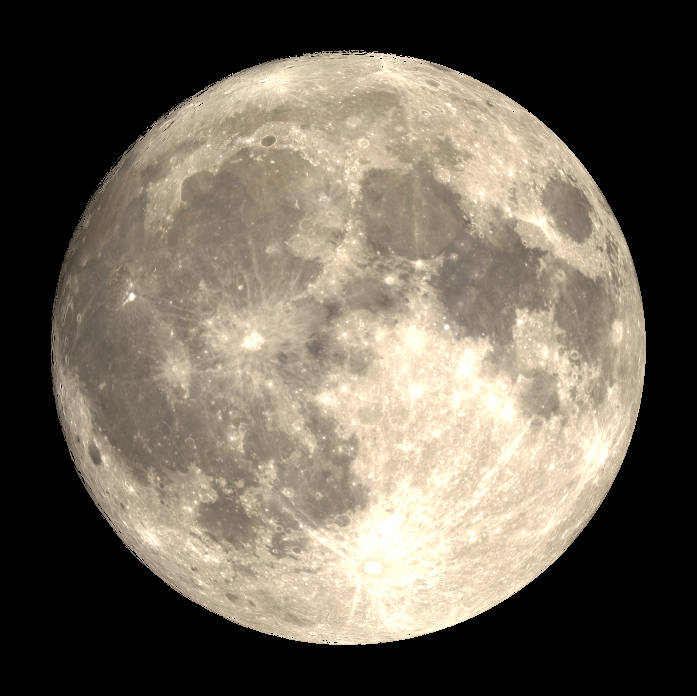
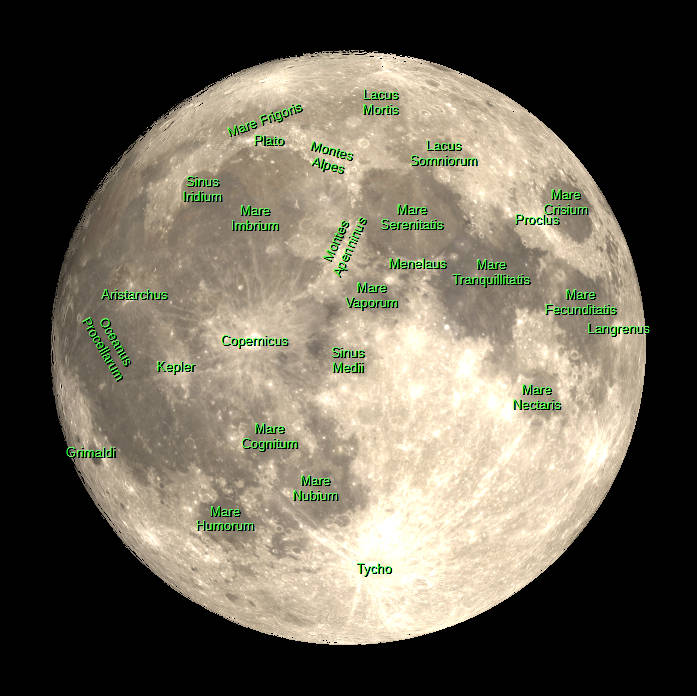
The full Moon, as seen at 11 PM tonight, July 29, 2026. A view visible in small telescopes showing an image with and without selected features labeled. Created using Stellarium, LibreOffice Draw, and GIMP.
Saturn, Mars and even Mercury will be seen at 5:15 AM tomorrow morning July 30, 2026. Mars is entering the part of the sky with bright stars, the winter sky. So it won’t stand out until it gets much closer to the Earth. Mercury will be very hard to spot. Created using Stellarium.
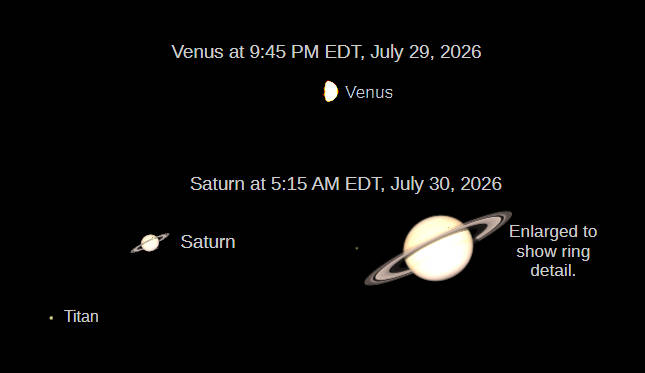
Telescopic Venus at 9:45 PM tonight, July 29, 2026, and Saturn at 5:15 AM on the 30th (north up), as they would be seen in a small telescope with the same magnification. Venus’ apparent diameter will be 20.5″, and be 56.8% illuminated. Saturn will also be 18.4″ in diameter, and its rings extend to 42.9″. Mars, not shown, will appear 4.7″ in diameter. Mercury, not shown, will appear 8.5″ in diameter. The (”) symbol means seconds of arc, or 1/3600th of a degree. Created using Cartes du Ciel (Sky Charts), LibreOffice Draw and GIMP.
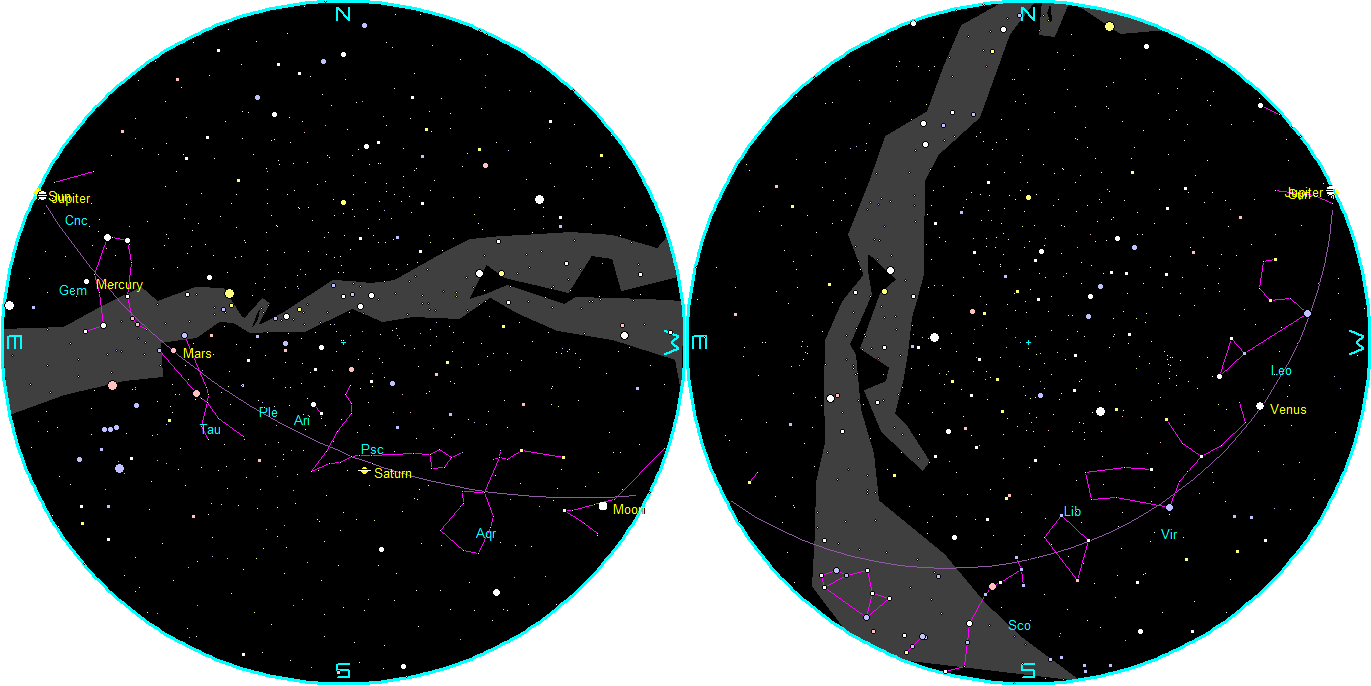
The naked-eye planets at sunset and sunrise on a single night, starting with sunset on the right on July 29, 2026. The night ends on the left with sunrise on the 30th. Click or tap on the image to enlarge it. Created using my LookingUp app and GIMP.
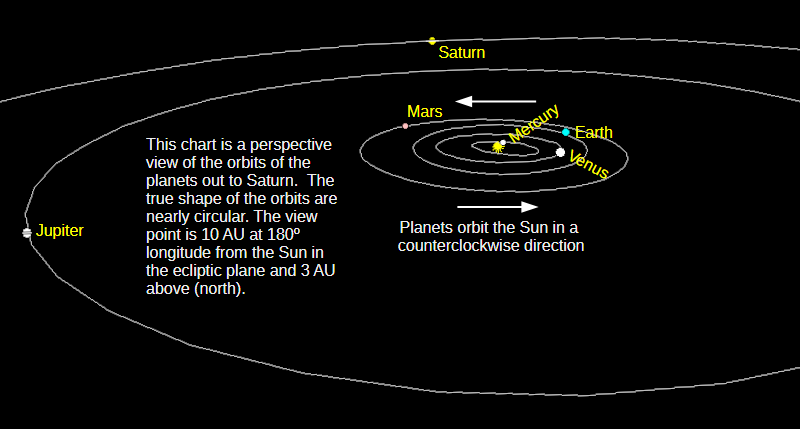
The naked-eye planets, from Mercury to Saturn, in a low angle perspective view of the solar system from above and a bit beyond Saturn’s orbit for today, July 29, 2026. Created using my LookingUp app, text and arrows created using LibreOffice Draw and produced a unified image using GIMP.