This is Ephemeris for Wednesday, September 16th. Today the Sun will be up for 12 hours and 28 minutes, setting at 7:51, and it will rise tomorrow at 7:24. The Moon, 2 days before first quarter, will set at 10:08 this evening.
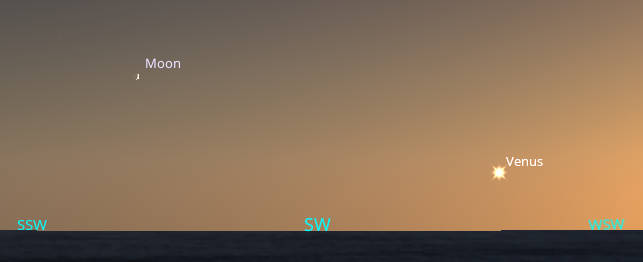
Let’s take our weekly look at the whereabouts of the naked-eye planets. By 8:15 tonight, about a half-hour after sunset, Venus will be spotted very low in the west southwestern sky with the moon above and to the left. Though at a 41º angle from the sun, it’ll only be 4º above the horizon then. A telescope will show a small crescent disk of the planet. It is now rapidly approaching earth in its orbit, at 41.2 million miles (66.3 mil km) away from us. Venus is becoming an ever decreasing crescent as its apparent diameter grows in telescopes. Saturn will rise at 8:47 PM in the east. At 6 AM, Mars and Jupiter will be in the east. Jupiter is brightest and lowest while Mars is just below and right of Pollux, the brightest star in Gemini.
The astronomical event times given in this blog are for the Traverse City/Interlochen area of Michigan (Lat 44.7° N, Long 85.7° W; EDT, UT – 4 hours) unless stated otherwise. Times will be different for other locations.
Addendum
Venus appears low in the west southwestern sky, with the crescent moon in the south southwest at 8:15 PM tonight, September 16, 2026. Created using Stellarium.
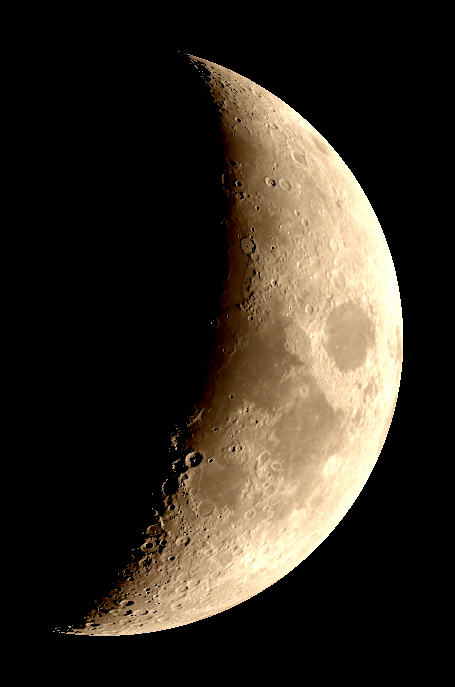
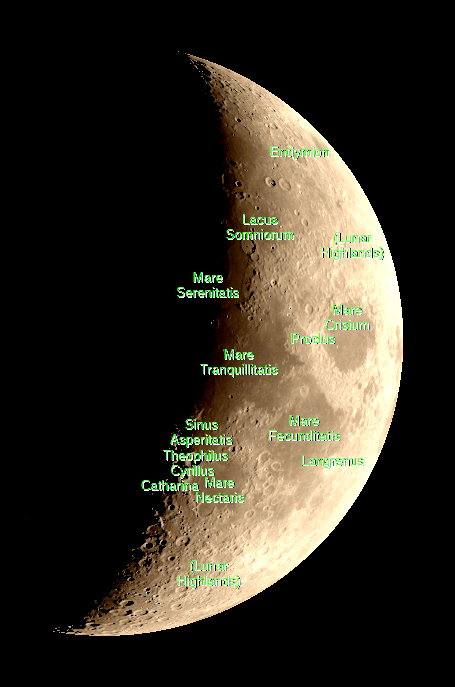
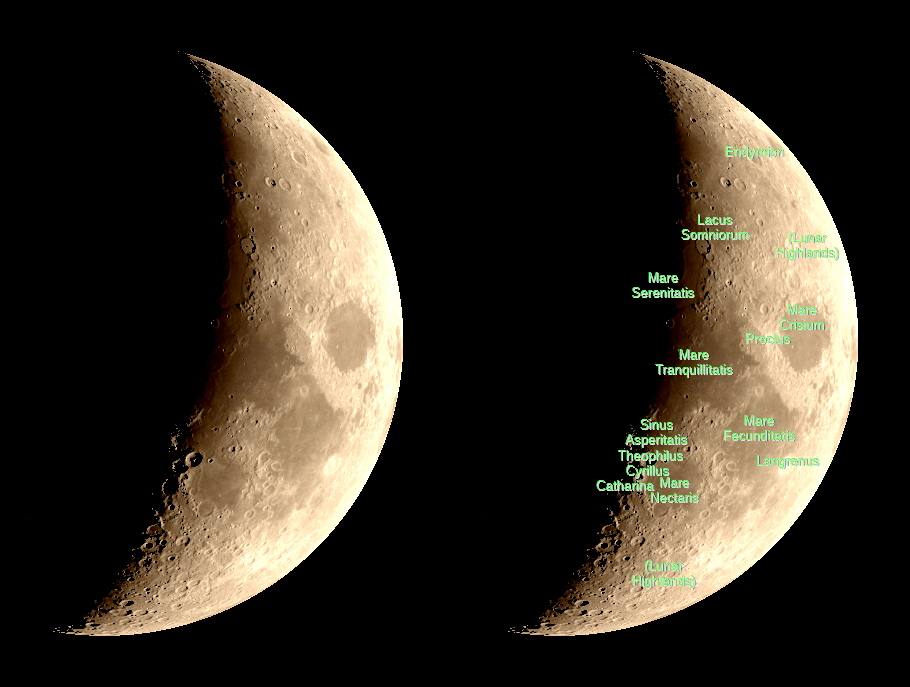
The Moon two days before first quarter at 10 PM tonight, September 16, 2026. A view visible in small telescopes showing an image with and without selected features labeled. Created using Stellarium, LibreOffice Draw, and GIMP. This presentation doesn’t work well on my Android phone.
The Moon two days before first quarter at 10 PM tonight, September 16, 2026. A view visible in small telescopes showing an image with and without selected features labeled. Created using Stellarium, LibreOffice Draw, and GIMP. Same as above, with an animated GIF. Answer in the comments, which you prefer.
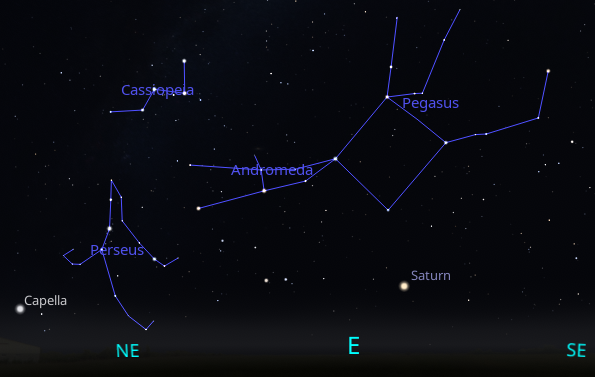
Saturn appers in the east by 10 PM directly under the Great Square of Pegasus, the winged horse of Greek myth. Created using Stellarium.
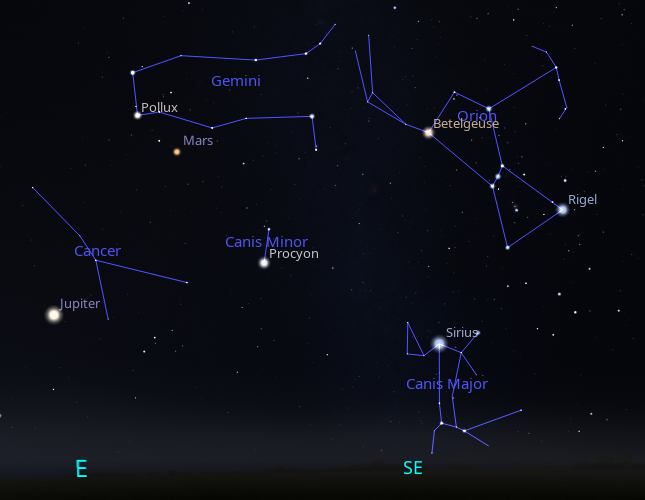
Mars and Jupiter appear with the stars of winter, now adorning the predawn sky at 6 AM. Created using Stellarium.
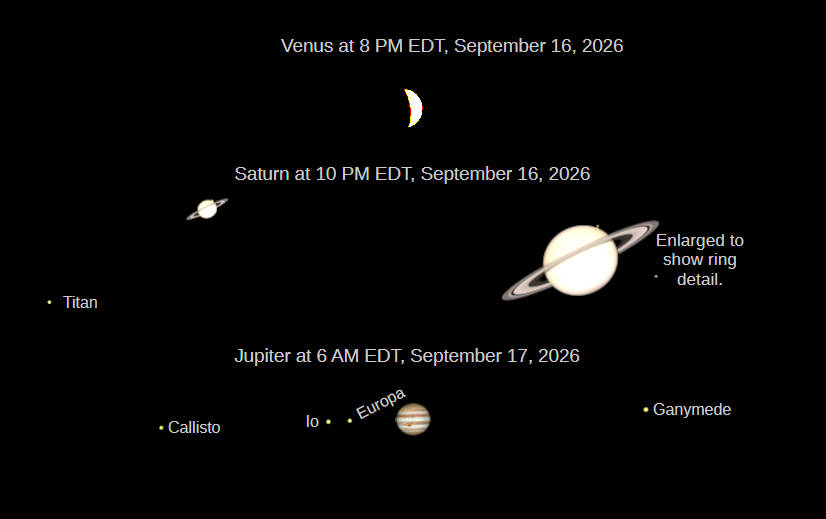
Telescopic views of the naked-eye planets as seen in a small telescope: Venus’ apparent diameter at 8:15 PM tonight will be 38.5″, and be 26.8% illuminated. At 10 PM, Saturn will be 19.6″ in diameter, and its rings extend to 45.7″. At 6 AM, Jupiter will be 32.5″ in diameter. Mars, not shown, will appear 5.3″ in diameter. The (”) symbol means seconds of arc, or 1/3600th of a degree. Created using Cartes du Ciel (Sky Charts), LibreOffice Draw and GIMP.
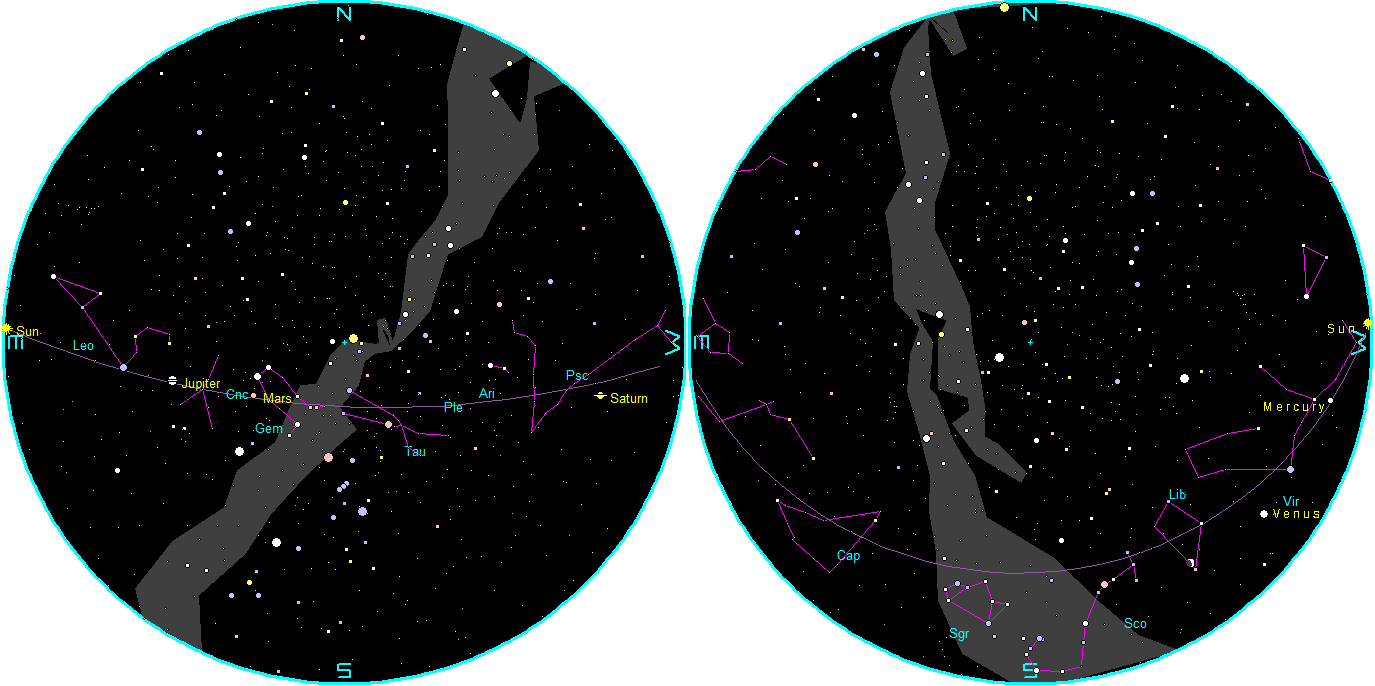
The naked-eye planets at sunset and sunrise on a single night, starting with sunset on the right on September 16, 2026. The night ends on the left with sunrise on the 17th. Click or tap on the image to enlarge it. Created using my LookingUp app and GIMP.
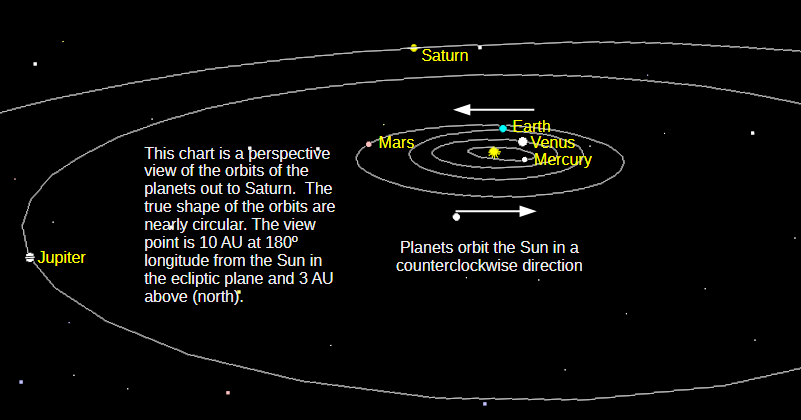
The naked-eye planets, from Mercury to Saturn, in a low angle perspective view of the solar system from above and a bit beyond Saturn’s orbit for today, September 16, 2026. Created using my LookingUp app, text and arrows created using LibreOffice Draw and produced a unified image using GIMP.
 Bob Moler's Ephemeris Blog