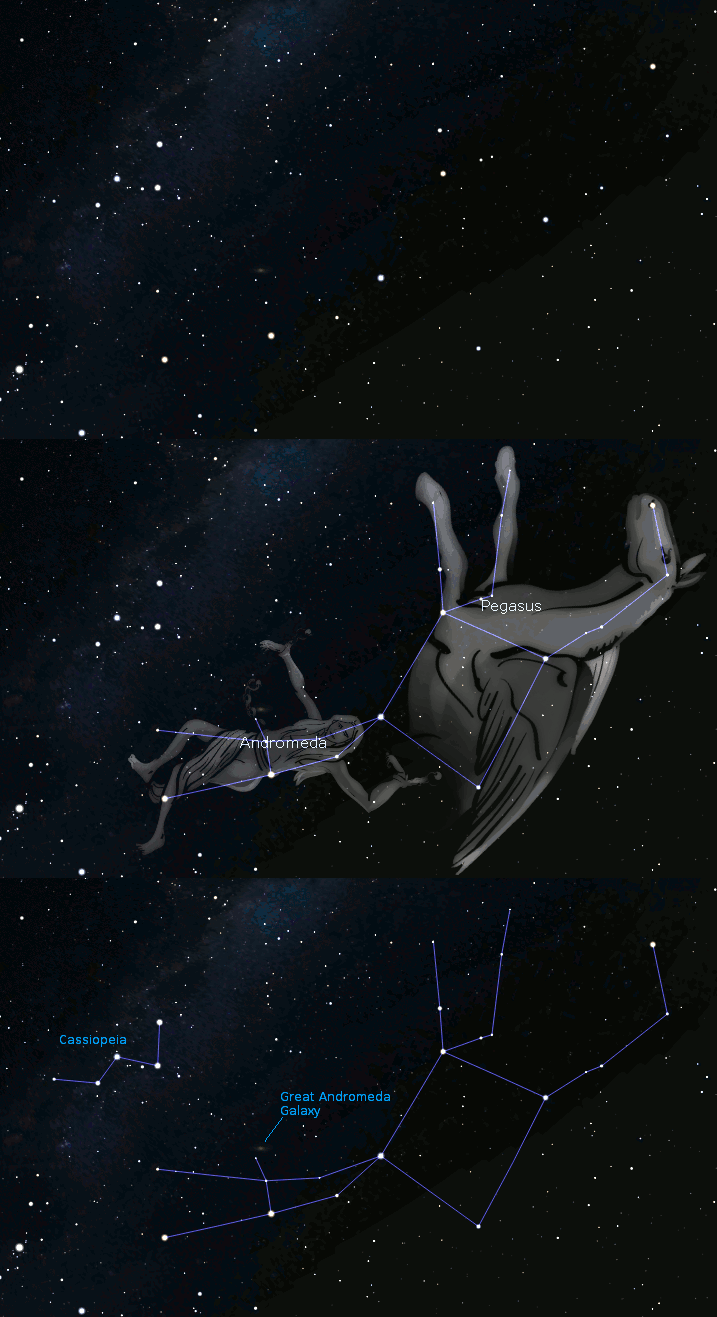
Ephemeris: Finding Andromeda and the great galaxy within
This is Ephemeris for Tuesday, September 29th. Today the Sun will be up for 11 hours and 48 minutes, setting at 7:26, and it will rise tomorrow at 7:39. The Moon, 3 days past full, will rise at 8:35 this evening.
For at least the last thousand or so years a fuzzy spot in the constellation of Andromeda has been known. It was known as the Great Andromeda Nebula until a little over 100 years ago. Nebula means cloud, and it belonged to the Milky Way. At that time it was finally recognized as another Milky Way just like ours. So the word to call it was galaxy, a word that’s related to milk. It looks to be among the stars of Andromeda, but it’s far beyond the stars that we make the constellation of Andromeda. Current estimates place it at about two and a half million light years away, well beyond the stars that we see in Andromeda that range to only a few thousand light years distance. It could collide with our galaxy in about 4 billion years or so.
The astronomical event times given in this blog are for the Traverse City/Interlochen area of Michigan (Lat 44.7° N, Long 85.7° W; EDT, UT – 4 hours) unless stated otherwise. Times will be different for other locations.
Addendum