Archive
Ephemeris: 04/03/2026 – GTAS Astronomy meeting tonight
This is Ephemeris for Good Friday, April 3rd. Today the Sun will be up for 12 hours and 53 minutes, setting at 8:13, and it will rise tomorrow at 7:17. The Moon, 2 days past full, will rise at 10:22 this evening.
The Grand Traverse Astronomical Society will hold its April meeting tonight at 8:00 PM at Northwestern Michigan College’s Joseph H Rogers Observatory. This may be an unstructured meeting, and a good time for anyone interested to ask knowledgeable members anything about the sky or telescopes. Even though our telescope clinic is passed, there will always be someone there to help with your telescope questions or problems. Afterward, about 9 PM if it’s clear, there will be viewing of the heavens through the observatory’s telescopes, featuring Jupiter, its cloud bands and moons. Its Great Red Spot might also be visible. The observatory is located on Birmley Rd. South of Traverse City between Garfield and Keystone roads.
The astronomical event times given in this blog are for the Traverse City/Interlochen area of Michigan (Lat 44.7° N, Long 85.7° W; EST, UT – 5 hours) unless stated otherwise. Times will be different for other locations.
Addendum

Ephemeris:04/02/2026 – Determining the date of Easter
This is Ephemeris for Thursday, April 2nd. Today the Sun will be up for 12 hours and 50 minutes, setting at 8:11, and it will rise tomorrow at 7:19. The Moon, 1 day past full, will rise at 9:14 this evening.
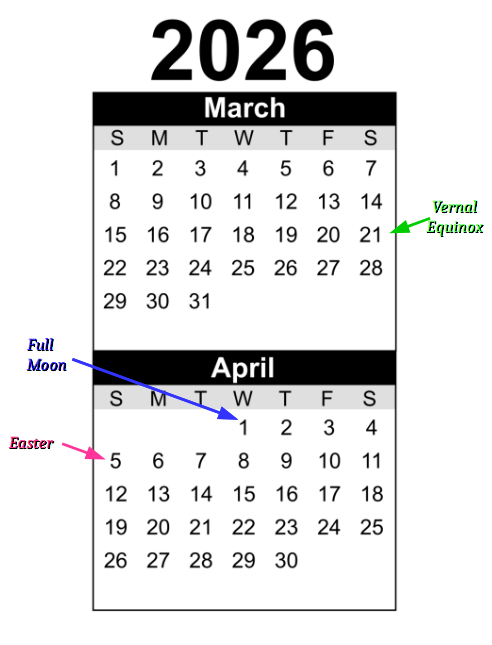
Easter will be celebrated by Western Christian churches this Sunday. Easter is a movable feast in that it falls on a different date each year following the first full moon of spring. It was an attempt to follow the Jewish Passover, which starts on the 15th of the month of Nisan. The Jewish calendar being a lunar calendar, the 15th generally begins at sundown on the night of the full moon. And since the Last Supper was a Seder, according to at least one Gospel, the Christian church wanted to link Easter with Passover as closely as possible using the Roman solar based (Julian) calendar. That’s not always the case, especially with our current Gregorian Calendar. Passover this year began last night at sunset, so this year it is nearly in agreement with the Gospel narrative.
The astronomical event times given in this blog are for the Traverse City/Interlochen area of Michigan (Lat 44.7° N, Long 85.7° W; EST, UT – 5 hours) unless stated otherwise. Times will be different for other locations.
Addendum
*Our Gregorian Calendar will correct for this by making the year 2100, normally a leap year of 366 days, an ordinary year of 365 days. The rule is that century years not divisible by 400 get clipped.
Ephemeris: 04/01/2026 – No fooling, we’re looking at the bright planets for this week
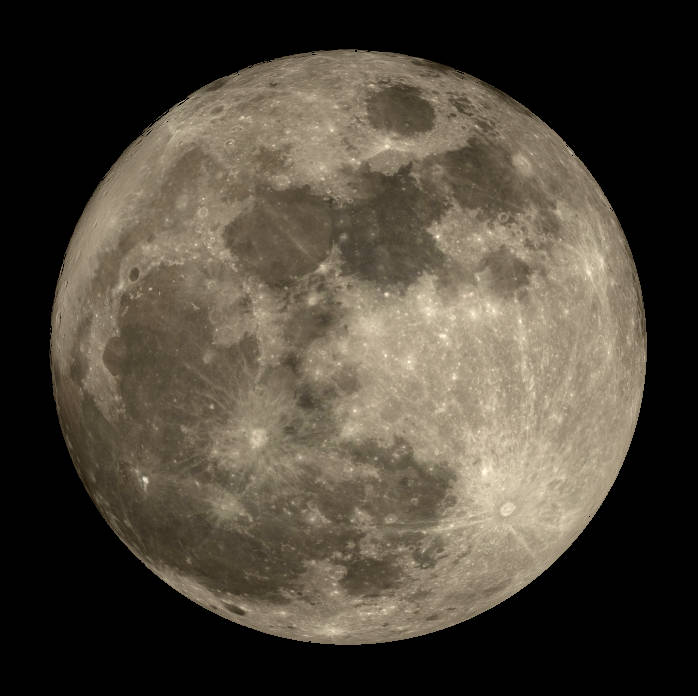
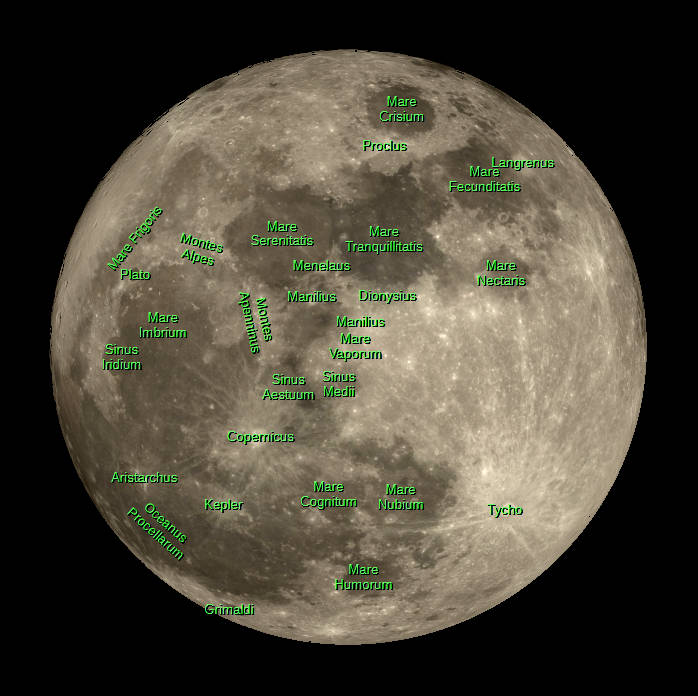
This is Ephemeris for April Fools’ Day, Wednesday, April 1st. Today the Sun will be up for 12 hours and 47 minutes, setting at 8:10, and it will rise tomorrow at 7:21. The Moon, at full today, will rise at 8:06 this evening.
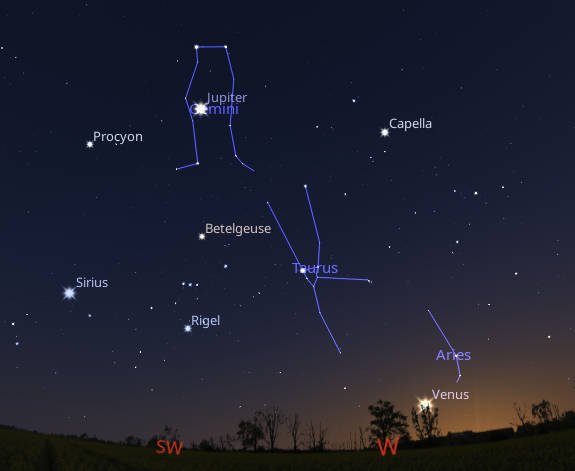
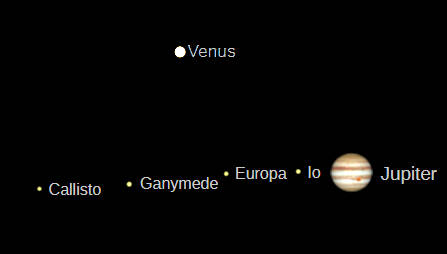
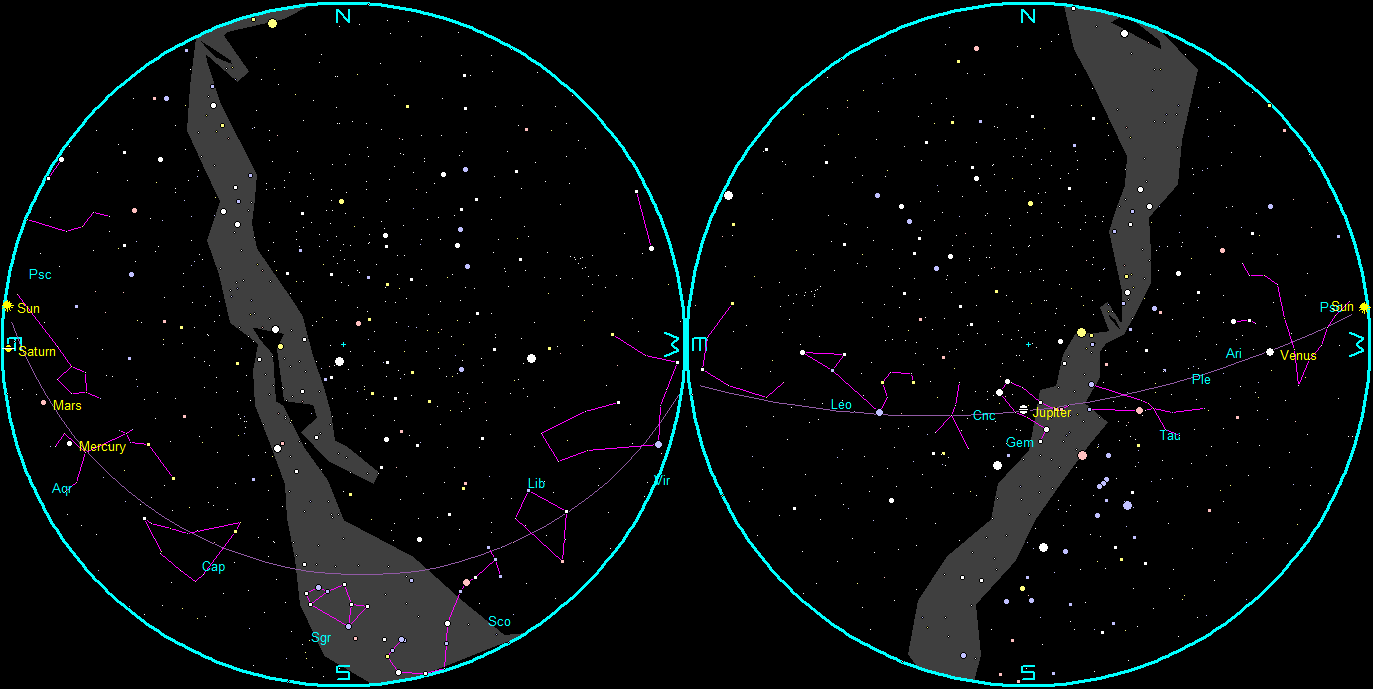
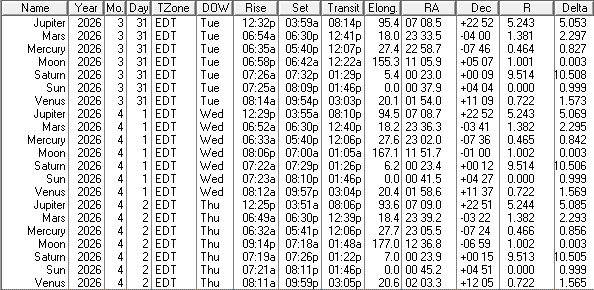
Let’s take our weekly look at the whereabouts of the naked-eye planets. By 8:40 PM tonight or about a half hour or so after sunset, Venus may be seen very low in the West. Binoculars or a telescope will show a very tiny disc on Venus, because it is pretty much behind the Sun, a good way from us. Over the next 7 months it will be moving closer to us and becoming much larger. Jupiter is the brilliant star-like object more than halfway up in the southwestern sky at 9 PM. At that time Venus will still be visible, setting at 9:57 PM. Mercury, Mars and Saturn are lined up just west of the Sun, but unfortunately are overwhelmed by bright morning twilight.
The astronomical event times given in this blog are for the Traverse City/Interlochen area of Michigan (Lat 44.7° N, Long 85.7° W; EST, UT – 5 hours) unless stated otherwise. Times will be different for other locations.
Addendum
Ephemeris: 03/31/2026 – Previewing April Skies
This is Ephemeris for Tuesday, March 31st. Today the Sun will be up for 12 hours and 43 minutes, setting at 8:09, and it will rise tomorrow at 7:23. The Moon, 1 day before full, will set at 7:00 tomorrow morning.
The 4th month of the year begins tomorrow. Daylight hours in the Interlochen/Traverse City area will increase from 12 hours and 47 minutes tomorrow to 14 hours and 12 minutes on April 30th. The altitude, or angle, of the Sun above the southern horizon at local noon will be 50 degrees tomorrow and will ascend to 60 degrees on April 30th. The altitude of the Sun in the Straits area will be a degree lower, but their daylight hours will be a bit longer. The actual time of local apparent noon, when the Sun passes due south at mid-month, will be about 1:42 PM. The Lyrid meteor shower will reach its peak on the afternoon of the 22nd. So the hours after 2 or 3 AM on the 22nd and 23rd will be the best time to see them in dark skies.
The astronomical event times given in this blog are for the Traverse City/Interlochen area of Michigan (Lat 44.7° N, Long 85.7° W; EDT, UT – 4 hours) unless stated otherwise. Times will be different for other locations.
Addendum
April Evening Star Chart
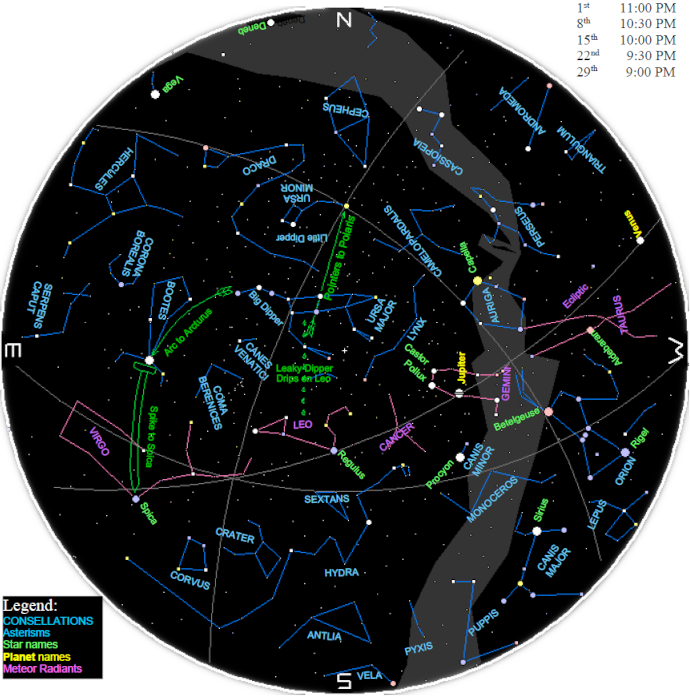
The planets and stars are plotted for the 15th at 10 PM EDT in the evening and 5 AM for the morning chart. These are the chart times. Note that Traverse City is located approximately 45 minutes behind our time meridian. (An hour 45 minutes behind our daylight saving time meridian during EDT). To duplicate the star positions on a planisphere (rotating star finder) you may have to set it to 45 minutes or one hour 45 minutes (Daylight Time) earlier than the current time.
Note the chart times of 10 PM and 6 AM are for the 15th and 16th. For each week before these dates, add ½ hour (28 minutes if you’re picky). For each week after, subtract ½ hour. Planet positions on dates other than the 15/16th can be found in the Wednesday planet posts on this blog.
April Morning Star Chart
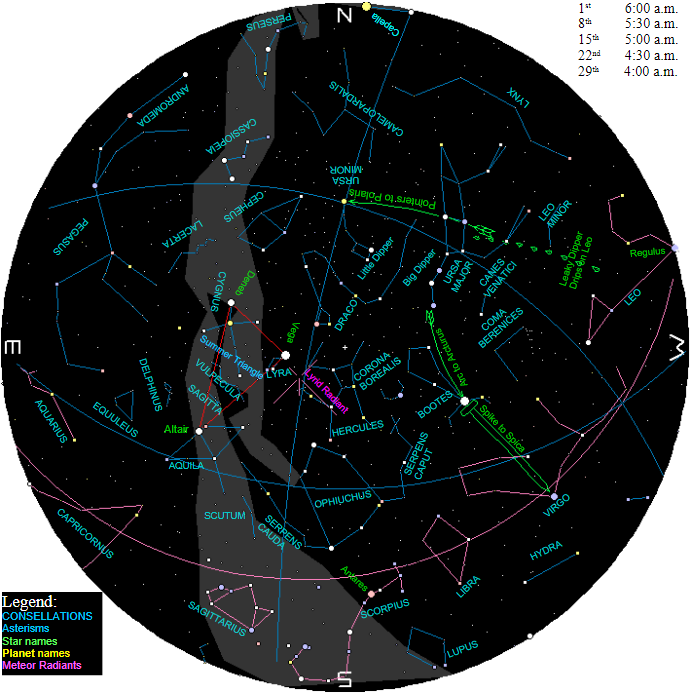
Twilight Limits, Nautical and Astronomical
| EDT | |||||||
| Morning | Twilight | Evening | Twilight | Dark | Night | Moon | |
| Date | Astro. | Nautical | Nautical | Astro. | Start | End | Illum. |
| 2026-04-01 | 5h43m | 6h19m | 21h17m | 21h54m | – | – | 100% |
| 2026-04-02 | 5h41m | 6h17m | 21h19m | 21h56m | – | – | 99% |
| 2026-04-03 | 5h39m | 6h15m | 21h20m | 21h57m | 21h57m | 22h23m | 96% |
| 2026-04-04 | 5h36m | 6h13m | 21h22m | 21h59m | 21h59m | 23h30m | 91% |
| 2026-04-05 | 5h34m | 6h11m | 21h23m | 22h00m | 22h00m | – | 85% |
| 2026-04-06 | 5h32m | 6h09m | 21h24m | 22h02m | 22h02m | 0h36m | 77% |
| 2026-04-07 | 5h30m | 6h07m | 21h26m | 22h04m | 22h04m | 1h38m | 69% |
| 2026-04-08 | 5h28m | 6h05m | 21h27m | 22h05m | 22h05m | 2h34m | 60% |
| 2026-04-09 | 5h25m | 6h03m | 21h29m | 22h07m | 22h07m | 3h20m | 50% |
| 2026-04-10 | 5h23m | 6h02m | 21h30m | 22h08m | 22h08m | 3h58m | 41% |
| 2026-04-11 | 5h21m | 6h00m | 21h32m | 22h10m | 22h10m | 4h29m | 31% |
| 2026-04-12 | 5h19m | 5h58m | 21h33m | 22h12m | 22h12m | 4h54m | 22% |
| 2026-04-13 | 5h17m | 5h56m | 21h35m | 22h14m | 22h14m | 5h16m | 14% |
| 2026-04-14 | 5h14m | 5h54m | 21h36m | 22h15m | 22h15m | 5h14m | 7% |
| 2026-04-15 | 5h12m | 5h52m | 21h38m | 22h17m | 22h17m | 5h12m | 2% |
| 2026-04-16 | 5h10m | 5h50m | 21h39m | 22h19m | 22h19m | 5h10m | 0% |
| 2026-04-17 | 5h08m | 5h48m | 21h41m | 22h21m | 22h21m | 5h08m | 1% |
| 2026-04-18 | 5h06m | 5h46m | 21h42m | 22h22m | 22h43m | 5h06m | 4% |
| 2026-04-19 | 5h03m | 5h44m | 21h44m | 22h24m | – | 5h03m | 11% |
| 2026-04-20 | 5h01m | 5h42m | 21h45m | 22h26m | 0h06m | 5h01m | 19% |
| 2026-04-21 | 4h59m | 5h40m | 21h47m | 22h28m | 1h20m | 4h59m | 29% |
| 2026-04-22 | 4h57m | 5h38m | 21h48m | 22h30m | 2h21m | 4h57m | 40% |
| 2026-04-23 | 4h54m | 5h36m | 21h50m | 22h31m | 3h08m | 4h54m | 51% |
| 2026-04-24 | 4h52m | 5h34m | 21h51m | 22h33m | 3h42m | 4h52m | 62% |
| 2026-04-25 | 4h50m | 5h32m | 21h53m | 22h35m | 4h09m | 4h50m | 72% |
| 2026-04-26 | 4h48m | 5h30m | 21h54m | 22h37m | 4h30m | 4h48m | 81% |
| 2026-04-27 | 4h46m | 5h29m | 21h56m | 22h39m | – | – | 88% |
| 2026-04-28 | 4h43m | 5h27m | 21h57m | 22h41m | – | – | 94% |
| 2026-04-29 | 4h41m | 5h25m | 21h59m | 22h43m | – | – | 98% |
| 2026-04-30 | 4h39m | 5h23m | 22h01m | 22h45m | – | – | 100% |
Twilight calendar was generated using Cartes du Ciel (Sky Charts).
See my blog post: Twilight Zone for the definitions of the different periods of twilight here: https://bobmoler.wordpress.com/2019/09/27/
NASA Calendar of Planetary Events
Apr  1  We            Venus: 20.5° E
     1  We  10:12 PM  Full Moon
     2  Th   9:32 PM  Moon-Spica: 1.9° N
     3  Fr   6:59 PM  Mercury Elongation: 27.8° W
     6  Mo   3:21 PM  Moon-Antares: 0.7° N
     7  Tu   4:32 AM  Moon Apogee: 405000 km
     8  We   1:01 AM  Moon South Dec.: 28.3° S
    10  Fr  12:52 AM  Last Quarter
    13  Mo   7:43 PM  Moon Ascending Node
    15  We   8:45 PM  Moon-Mars: 3.8° S
    17  Fr   7:52 AM  New Moon
    19  Su   2:57 AM  Moon Perigee: 361600 km
    19  Su   4:48 AM  Moon-Venus: 4.7° S
    19  Su  12:28 PM  Moon-Pleiades: 1° S
    19  Su   3:04 PM  Mars-Saturn: 1.2° N
    20  Mo   5:41 AM  Mercury-Saturn: 0.5° N
    20  Mo   6:15 PM  Mercury-Mars: 1.7° N
    21  Tu   7:12 AM  Moon North Dec.: 28.2° N
    22  We   3:02 PM  Lyrid Shower: ZHR = 20
    22  We   6:06 PM  Moon-Jupiter: 3.6° S
    23  Th  10:32 PM  First Quarter
    24  Fr  12:15 AM  Venus-Pleiades: 3.5° S
    24  Fr   3:46 AM  Moon-Beehive: 1.1° S
    25  Sa   8:37 PM  Moon-Regulus: 0.2° S (Occultation possibility)
    26  Su  10:36 AM  Moon Descending Node
    30  Th   4:17 AM  Moon-Spica: 2° N
May  1  Fr            Venus: 27.8° E
Sky Events Calendar by Fred Espenak and Sumit Dutta (NASA’s GSFC),
http://eclipse.gsfc.nasa.gov/SKYCAL/SKYCAL.html
If you go to the above site you can print out a list like the above for the entire year or calendar pages for your time zone.
Sun and Moon Rising and Setting Events
LU                  Ephemeris of Sky Events for Interlochen/TC
April, 2026    Local time zone: EDT
+-----------------------------------------------------------------------+
| DATE |  SUN     SUN  DAYLIGHT|   TWILIGHT*    |MOON  RISE OR    ILLUM |
|      |  RISE    SET    HOURS |  END    START  |PHASE SET** TIME FRACTN|
+=======================================================================+
|Wed  1| 07:23a  08:10p  12:47 | 09:15p  06:18a |Full  Rise 08:06p  100%|
|Thu  2| 07:21a  08:11p  12:50 | 09:16p  06:16a |      Rise 09:14p   99%|
|Fri  3| 07:19a  08:13p  12:53 | 09:18p  06:14a |      Rise 10:22p   96%|
|Sat  4| 07:17a  08:14p  12:56 | 09:19p  06:12a |      Rise 11:30p   92%|
+------+-----------------------+----------------+-----------------------+
|Sun  5| 07:16a  08:15p  12:59 | 09:21p  06:10a |      Rise 12:36a   86%|
|Mon  6| 07:14a  08:16p  13:02 | 09:22p  06:08a |      Rise 01:38a   79%|
|Tue  7| 07:12a  08:18p  13:05 | 09:23p  06:06a |      Rise 02:33a   70%|
|Wed  8| 07:10a  08:19p  13:08 | 09:25p  06:04a |      Rise 03:20a   61%|
|Thu  9| 07:08a  08:20p  13:11 | 09:26p  06:02a |      Rise 03:58a   52%|
|Fri 10| 07:07a  08:21p  13:14 | 09:28p  06:00a |L Qtr Rise 04:29a   42%|
|Sat 11| 07:05a  08:23p  13:17 | 09:29p  05:58a |      Rise 04:54a   33%|
+------+-----------------------+----------------+-----------------------+
|Sun 12| 07:03a  08:24p  13:20 | 09:31p  05:57a |      Rise 05:16a   23%|
|Mon 13| 07:01a  08:25p  13:23 | 09:32p  05:55a |      Rise 05:35a   15%|
|Tue 14| 07:00a  08:26p  13:26 | 09:34p  05:53a |      Rise 05:55a    8%|
|Wed 15| 06:58a  08:28p  13:29 | 09:35p  05:51a |      Rise 06:15a    3%|
|Thu 16| 06:56a  08:29p  13:32 | 09:37p  05:49a |      Rise 06:38a    0%|
|Fri 17| 06:54a  08:30p  13:35 | 09:38p  05:47a |New   Set  09:17p    1%|
|Sat 18| 06:53a  08:31p  13:38 | 09:40p  05:45a |      Set  10:42p    3%|
+------+-----------------------+----------------+-----------------------+
|Sun 19| 06:51a  08:33p  13:41 | 09:41p  05:43a |      Set  12:05a    9%|
|Mon 20| 06:49a  08:34p  13:44 | 09:43p  05:41a |      Set  01:20a   17%|
|Tue 21| 06:48a  08:35p  13:47 | 09:44p  05:39a |      Set  02:21a   27%|
|Wed 22| 06:46a  08:36p  13:50 | 09:46p  05:37a |      Set  03:07a   38%|
|Thu 23| 06:45a  08:37p  13:52 | 09:47p  05:35a |F Qtr Set  03:42a   49%|
|Fri 24| 06:43a  08:39p  13:55 | 09:49p  05:33a |      Set  04:08a   60%|
|Sat 25| 06:41a  08:40p  13:58 | 09:50p  05:31a |      Set  04:30a   70%|
+------+-----------------------+----------------+-----------------------+
|Sun 26| 06:40a  08:41p  14:01 | 09:52p  05:29a |      Set  04:49a   79%|
|Mon 27| 06:38a  08:42p  14:04 | 09:53p  05:28a |      Set  05:06a   87%|
|Tue 28| 06:37a  08:44p  14:07 | 09:55p  05:26a |      Set  05:24a   93%|
|Wed 29| 06:35a  08:45p  14:09 | 09:57p  05:24a |      Set  05:42a   97%|
|Thu 30| 06:34a  08:46p  14:12 | 09:58p  05:22a |      Set  06:03a   99%|
+-----------------------------------------------------------------------+
* Nautical Twilight
** Moonrise or moonset, whichever occurs between sunset and sunrise
Created using my LookingUp for MS-DOS app.
Ephemeris: 03/30/2026 – Have I ever seen a UFO?
This is Ephemeris for Monday, March 30th. Today the Sun will be up for 12 hours and 40 minutes, setting at 8:08, and it will rise tomorrow at 7:25. The Moon, 2 days before full, will set at 6:42 tomorrow morning.
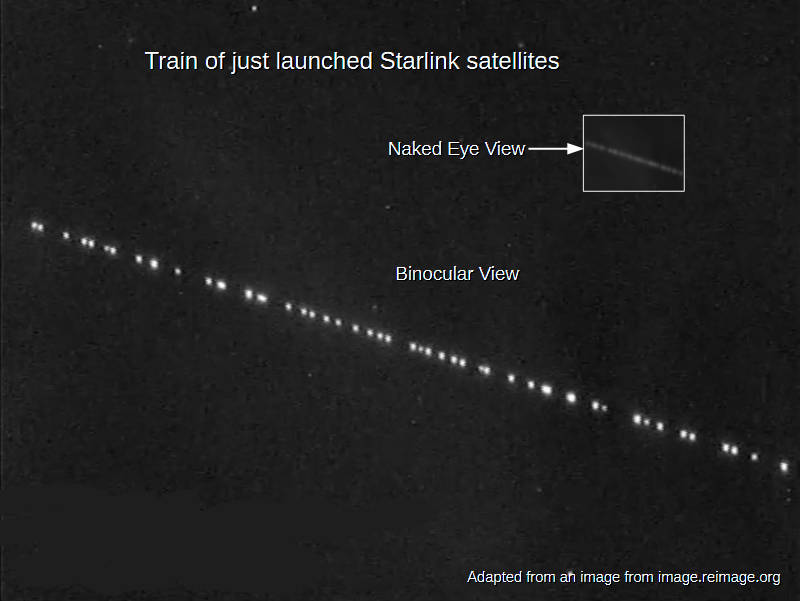
I’ve been asked whether I’ve ever seen a UFO. UFO stands for unidentified flying object, and based on the actual term it means that you don’t know what it is. The term UFO has come to mean alien spacecraft, but there’s no proof of that. I’ve seen things in the sky I could not immediately identify, but within a few minutes of observation or thinking about it, was able to find a plausible explanation for it. I haven’t seen anything that couldn’t be explained by being manmade or natural. The last time I saw something weird in the sky was a number of years ago during a star party at the Sleeping Bear Dunes National Lakeshore. A solid line of light silently moved northward through the sky. After a bit it dawned on me that the previous day SpaceX launched their first batch of Starlink satellites. They hadn’t separated far yet.
The astronomical event times given in this blog are for the Traverse City/Interlochen area of Michigan (Lat 44.7° N, Long 85.7° W; EST, UT – 5 hours) unless stated otherwise. Times will be different for other locations.
Addendum
Ephemeris: 03/27/2026 – Finding life out there
This is Ephemeris for Friday, March 27th. Today the Sun will be up for 12 hours and 31 minutes, setting at 8:04, and it will rise tomorrow at 7:30. The Moon, 2 days past first quarter, will set at 5:39 tomorrow morning.
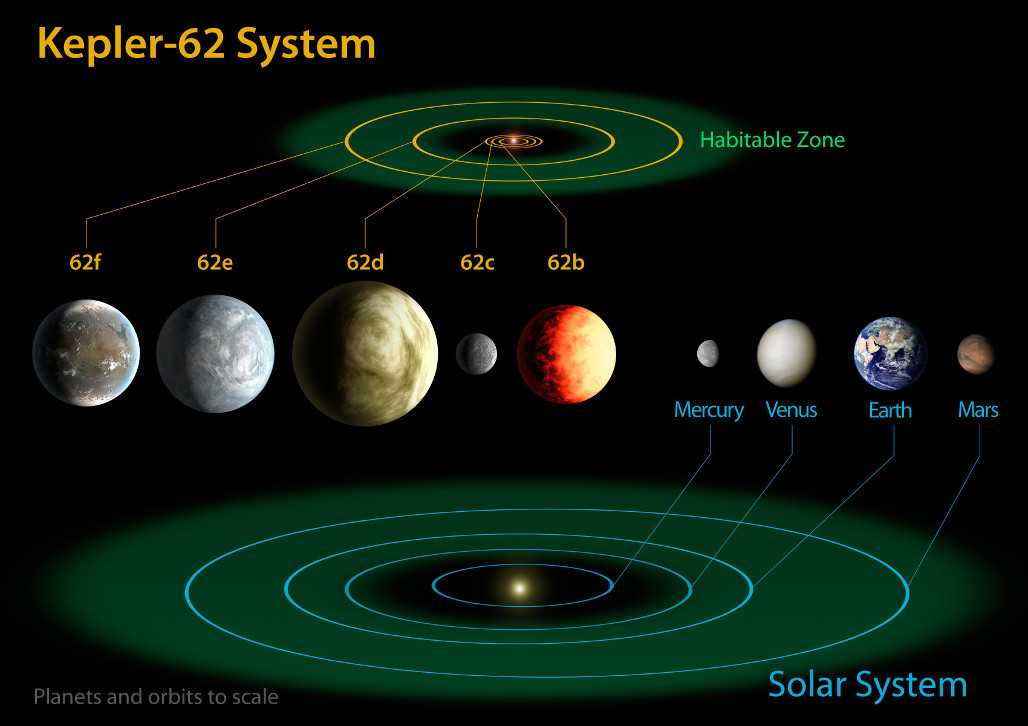
I have often been asked what I thought about life existing in the universe… besides the Earth of course. My answer is yes, I think there is life out there in the universe. There are more galaxies, stars and planets than we can possibly count, though when looking at exoplanets, we’re not finding much in the way of habitable planets. We have one example of life: the Earth and that’s what we look for. Our detection methods are too crude to be able to detect anything as small as the earth unless it’s orbiting a small red dwarf star. We seem to find a lot of large planets, that orbit extremely close to their stars because our detection methods depend on what they do to either block the light of a star or affect it gravitationally. The earth is almost too small to do either.
The astronomical event times given in this blog are for the Traverse City/Interlochen area of Michigan (Lat 44.7° N, Long 85.7° W; EST, UT – 5 hours) unless stated otherwise. Times will be different for other locations.
Addendum
Ephemeris: 03/26/26 – Jupiter compared to Earth and its visible features
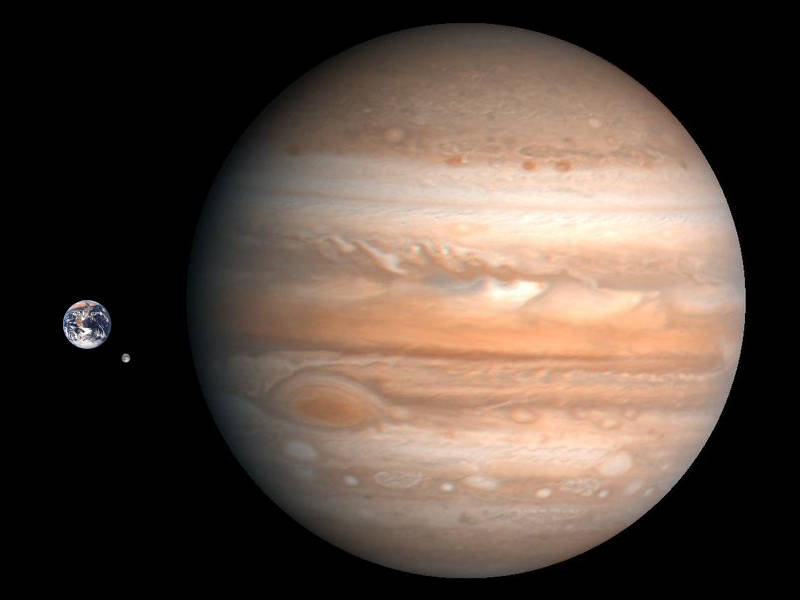
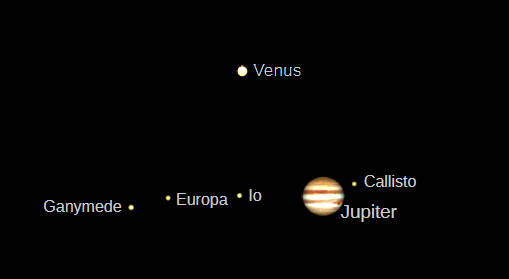
This is Bob Moler with Ephemeris for Thursday, March 26th. Today the Sun will be up for 12 hours and 28 minutes, setting at 8:03, and it will rise tomorrow at 7:32. The Moon, 1 day past first quarter, will set at 5:07 tomorrow morning. | The planet Jupiter rules over the night sky with the Moon after Venus sets. Jupiter, 11 times the diameter of the Earth, has the volume of 1,300 earths, however it is only 318 times the mass of the Earth. It is made-up mostly of hydrogen and helium, so it is called a gas giant planet, rather than a terrestrial or rocky planet like the Earth. Jupiter is the most viewable of the planets in a small telescope. It has 2 dark bands across it called belts of darker appearing clouds. The famed Great Red Spot is an anticyclone embedded in the southern of those belts. The spot is not as red anymore. I remember it being brick-red back in the late 1950s and early 60s. Jupiter spins very rapidly, its day lasts only 10 hours.
The astronomical event times given in this blog are for the Traverse City/Interlochen area of Michigan (Lat 44.7° N, Long 85.7° W; EDT, UT – 4 hours) unless stated otherwise. Times will be different for other locations.
Ephemeris: 03/25/2026 – Taking our weekly look at the whereabouts of the naked-eye planets
This is Ephemeris for Wednesday, March 25th. Today the Sun will be up for 12 hours and 25 minutes, setting at 8:01, and it will rise tomorrow at 7:34. The Moon, at first quarter today, will set at 4:26 tomorrow morning.
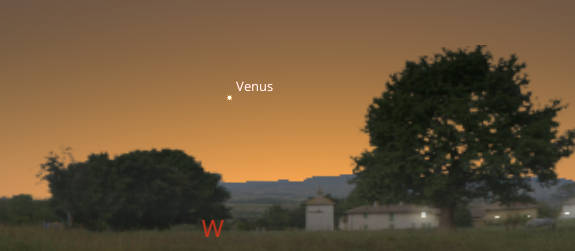
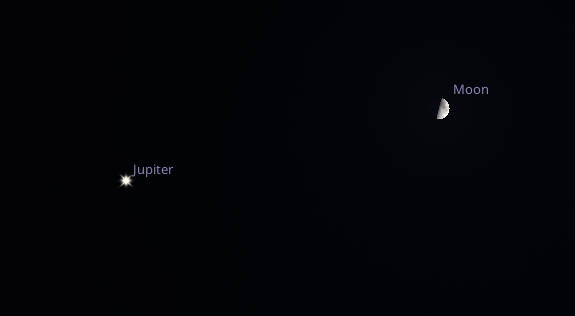
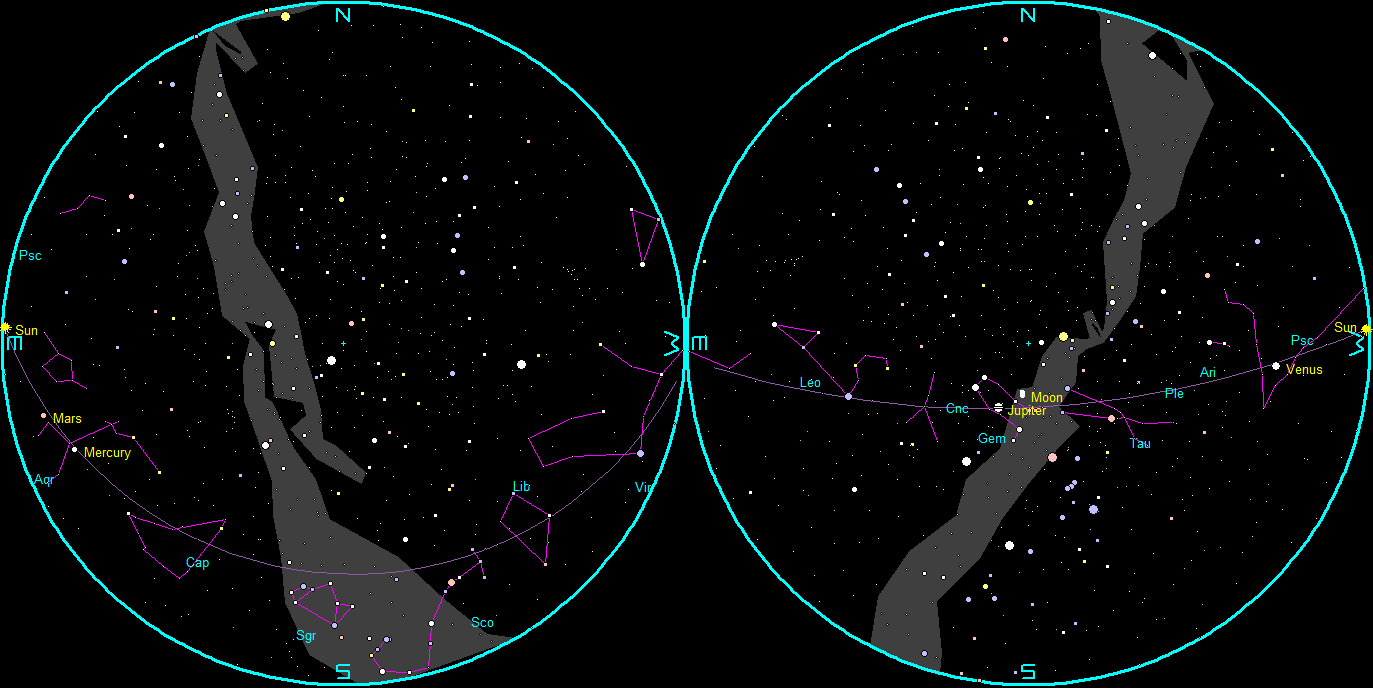
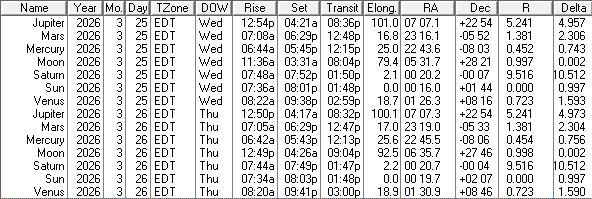
Let’s take our weekly look at the whereabouts of the naked-eye planets. Earlier this morning Saturn passed conjunction with the Sun becoming officially a morning planet. But it’ll be a couple of months before it’s visible in the morning and about seven months before it’s conveniently placed in the evening sky. By 8:30 PM tonight or about a half hour or so after sunset, Venus may be seen very low in the West. Binoculars or a telescope will show a very tiny disc on Venus, because it is pretty much behind the Sun, a good way from us. Over the next 7 months it will be moving closer to us and becoming much larger. Jupiter is the brilliant star-like object more than halfway up in the southwestern sky at 9 PM. Tonight, it’s below and left of the Moon.
The astronomical event times given in this blog are for the Traverse City/Interlochen area of Michigan (Lat 44.7° N, Long 85.7° W; EST, UT – 5 hours) unless stated otherwise. Times will be different for other locations.
Addendum
Ephemeris: 03/24/2026 – Visibility of the Moon’s features
This is Ephemeris for Tuesday, March 24th. Today the Sun will be up for 12 hours and 22 minutes, setting at 8:00, and it will rise tomorrow at 7:36. The Moon, 1 day before first quarter, will set at 3:31 tomorrow morning.
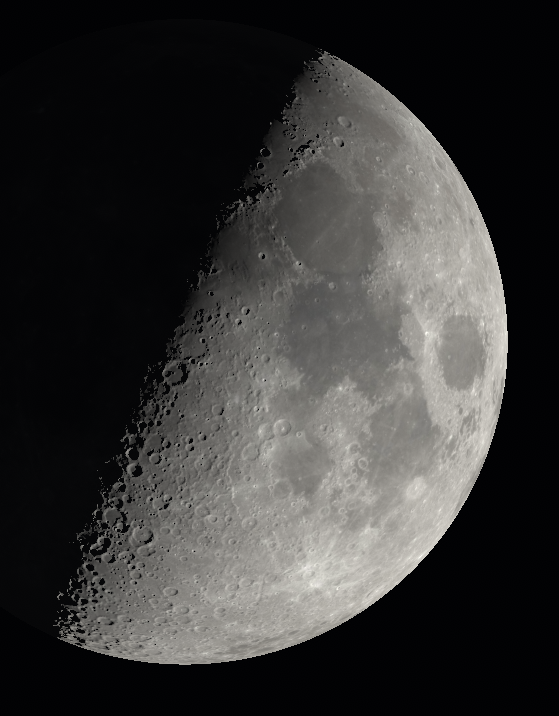
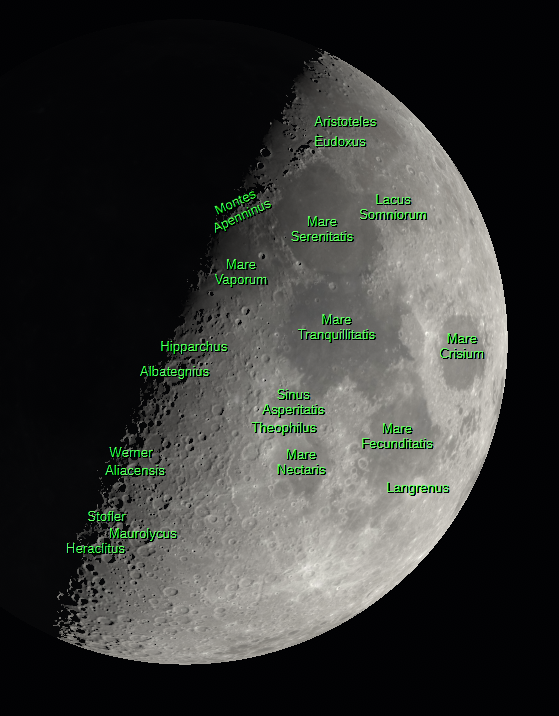
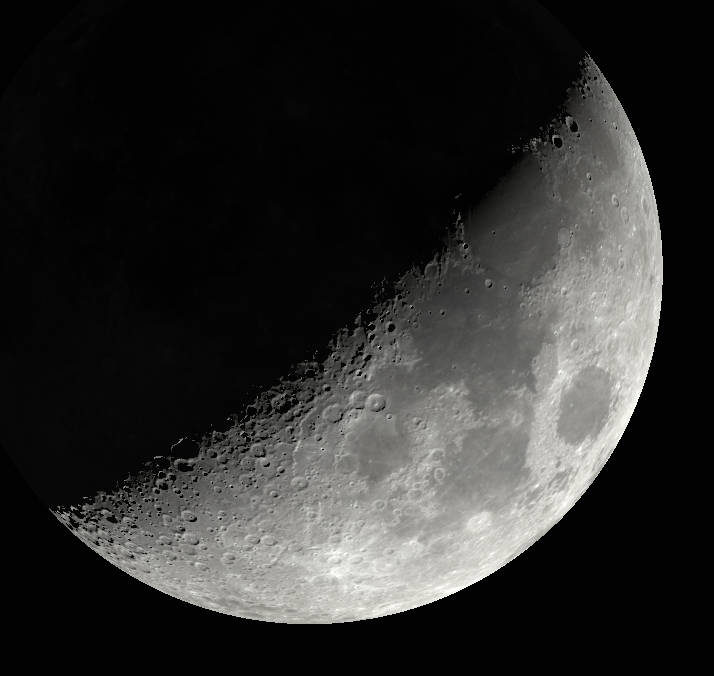
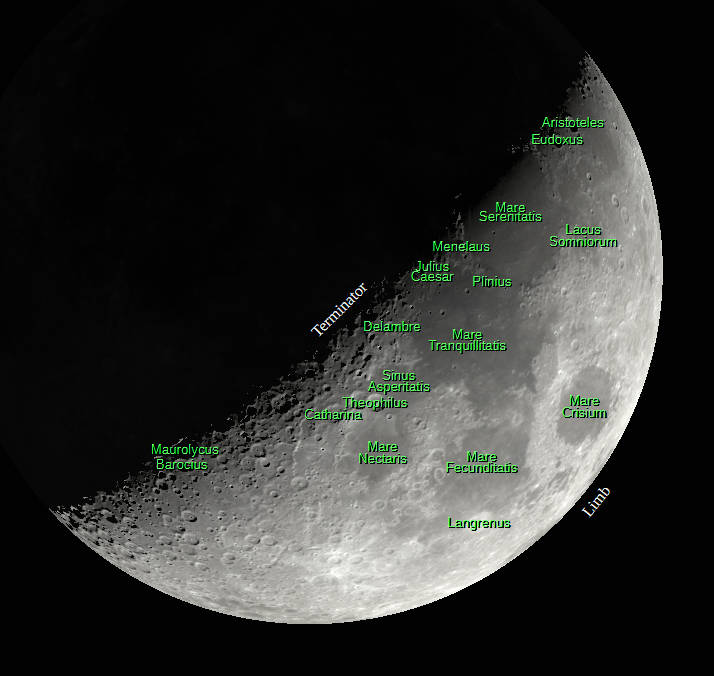
The Moon, tonight is just a day before first quarter. Its position in the sky is close to where the Sun will be around the 1st day of summer, so it’s quite high in the southwest as it gets dark. It’s a great time to view the Moon with the telescope, in that the moon isn’t too bright, and there are lots of craters showing up due to their shadows. The terminator nearly cuts the Moon in half. It is in this case, the sunrise line creeping across the surface. It is deep morning shadows that help delineate the features. Looking at the limb of the Moon, the curved edge, the craters are hard to spot, because they are under the midday sun, showing no shadows, which makes them very indistinct.
The astronomical event times given in this blog are for the Traverse City/Interlochen area of Michigan (Lat 44.7° N, Long 85.7° W; EST, UT – 5 hours) unless stated otherwise. Times will be different for other locations.
Addendum
Ephemeris: 03/23/2026 – Looking out beyond the spring stars
This is Ephemeris for Monday, March 23rd. Today the Sun will be up for 12 hours and 19 minutes, setting at 7:59, and it will rise tomorrow at 7:38. The Moon, 2 days before first quarter, will set at 2:23 tomorrow morning.
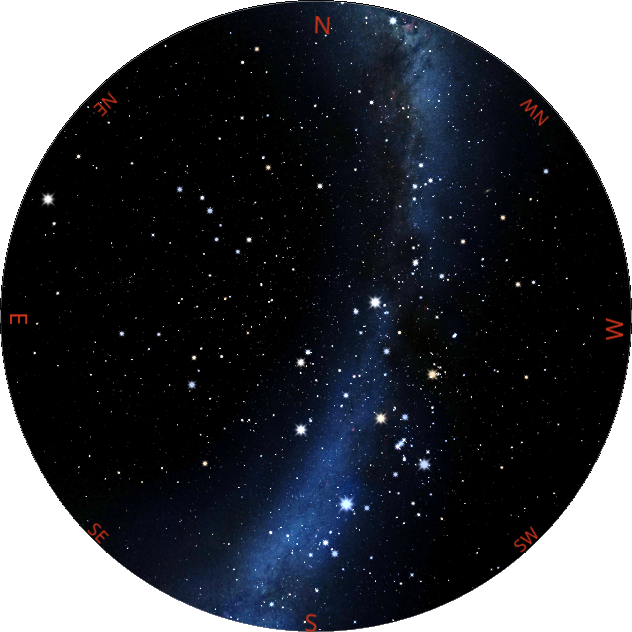
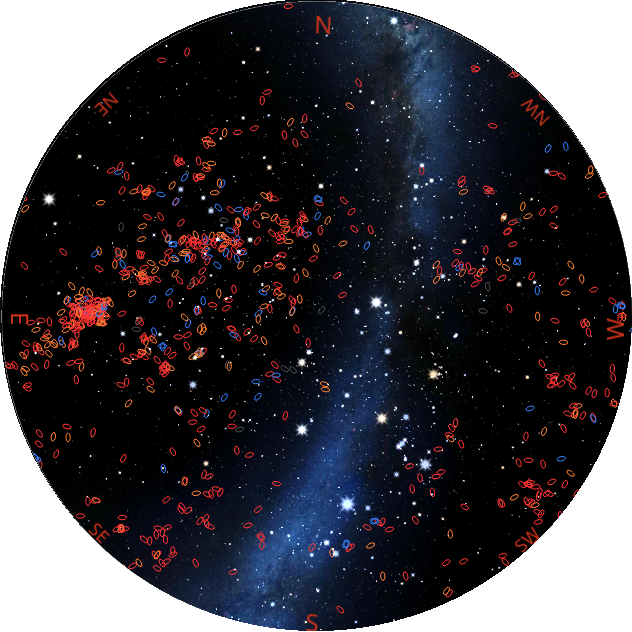
It is becoming more obvious as the Moon waxes, that there’s more bright stars in the south and southwestern part of the sky than there are in the southeastern sky. That’s because the Milky Way runs through the winter part of the sky. It’s not as bright as the Milky Way appears in the summer since we are looking away from the center of our Galaxy. The disk of our galaxy causes stars to congregate near that Milky band, whether we can see it well or not. That is the main reason the winter stars are so bright. In the southeast we are looking at the spring sky. Leo the lion and of course the Great Bear with the Big Dipper are there, but we are mostly looking outside the disk or galaxy to the universe beyond. So we’re looking through fewer nearby stars, so the spring sky seems somewhat lackluster compared to the crazy chaos of the winter sky.
The astronomical event times given in this blog are for the Traverse City/Interlochen area of Michigan (Lat 44.7° N, Long 85.7° W; EST, UT – 5 hours) unless stated otherwise. Times will be different for other locations.
Addendum
 Bob Moler's Ephemeris Blog