Archive
Ephemeris: 03/09/2026 – The Great Underwater Panther in the stars
This is Ephemeris for Monday, March 9th. Today the Sun will be up for 11 hours and 35 minutes, setting at 7:41, and it will rise tomorrow at 8:04. The Moon, 2 days before last quarter, will rise at 2:50 tomorrow morning.
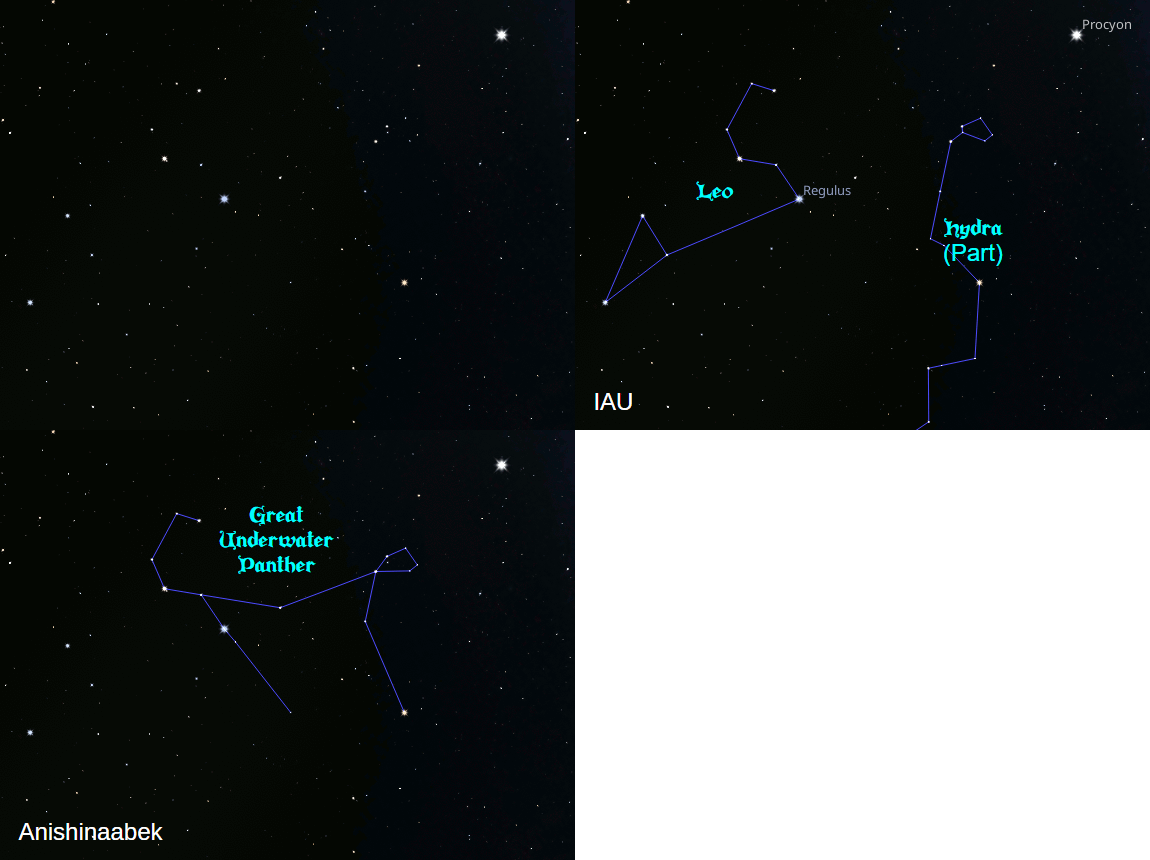
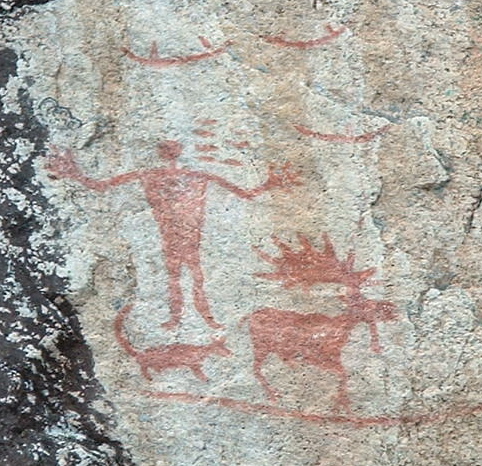
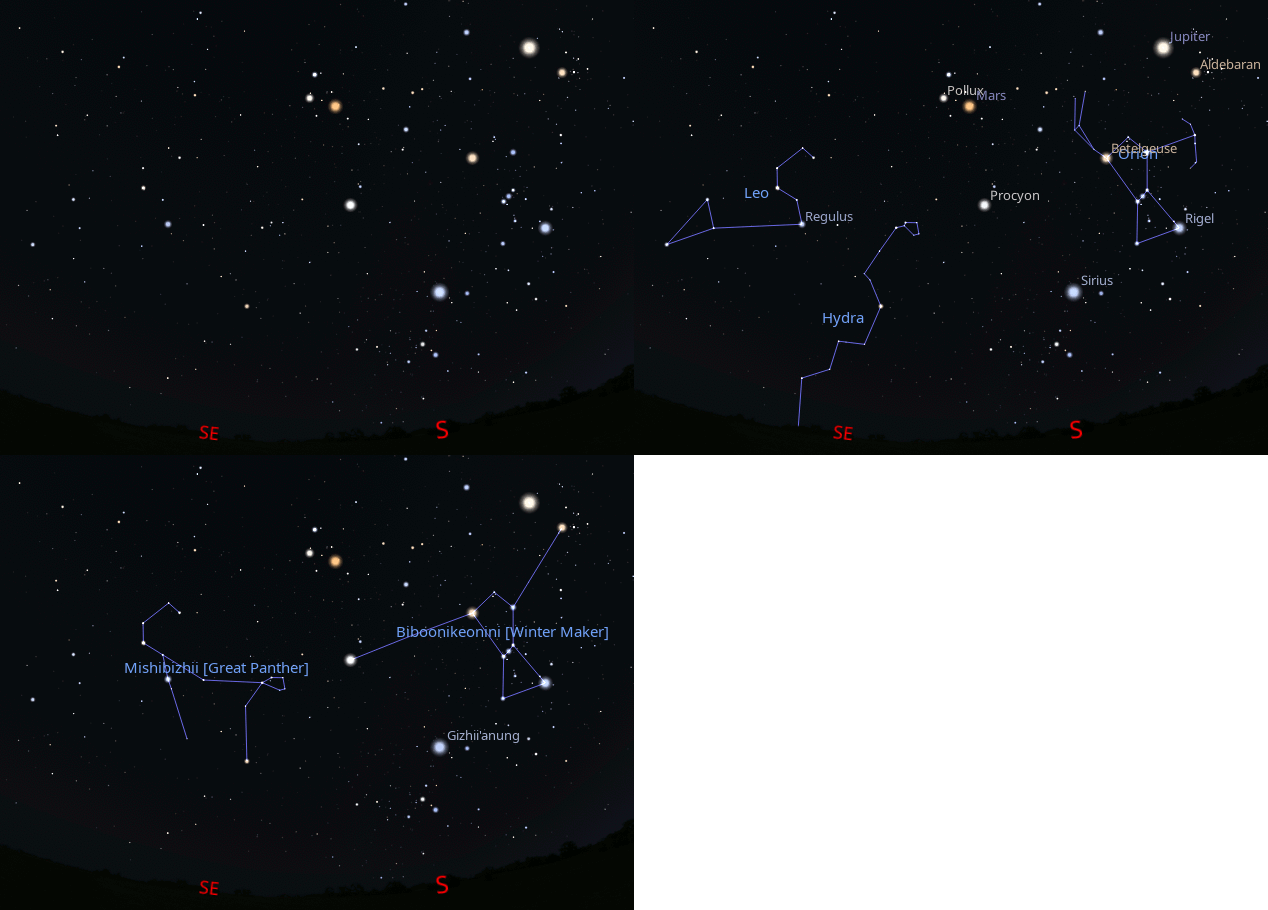
As Orion tilts into the southwest at 9 PM I’m reminded of our Anishinaabek native peoples here in Michigan, who saw it as the Winter Maker slowly beginning to leave the scene in the southwest. At this time in the southeast is Curly Tail, the Great Panther. I first knew him as the Great Underwater Panther, which tells us where he lives… beneath the ice. He’s in the sky to warn us that the warmer weather of spring is coming, and the ice on the lakes and rivers is getting thin. Be careful to not fall through and drown, becoming a victim of the Great Panther. The stars of the panther include those of the head of Leo the lion the great backwards question mark, as his curly tail, to his head, the head of what we call Hydra the water snake.
The astronomical event times given in this blog are for the Traverse City/Interlochen area of Michigan (Lat 44.7° N, Long 85.7° W; EST, UT – 5 hours) unless stated otherwise. Times will be different for other locations.
Addendum

Ephemeris: 03/06/2026 – The Fisher announces the coming of the maple sugaring season
This is Ephemeris for Friday, March 6th. Today the Sun will be up for 11 hours and 25 minutes, setting at 6:37, and it will rise tomorrow at 7:09. The Moon, 3 days past full, will rise at 10:30 this evening.
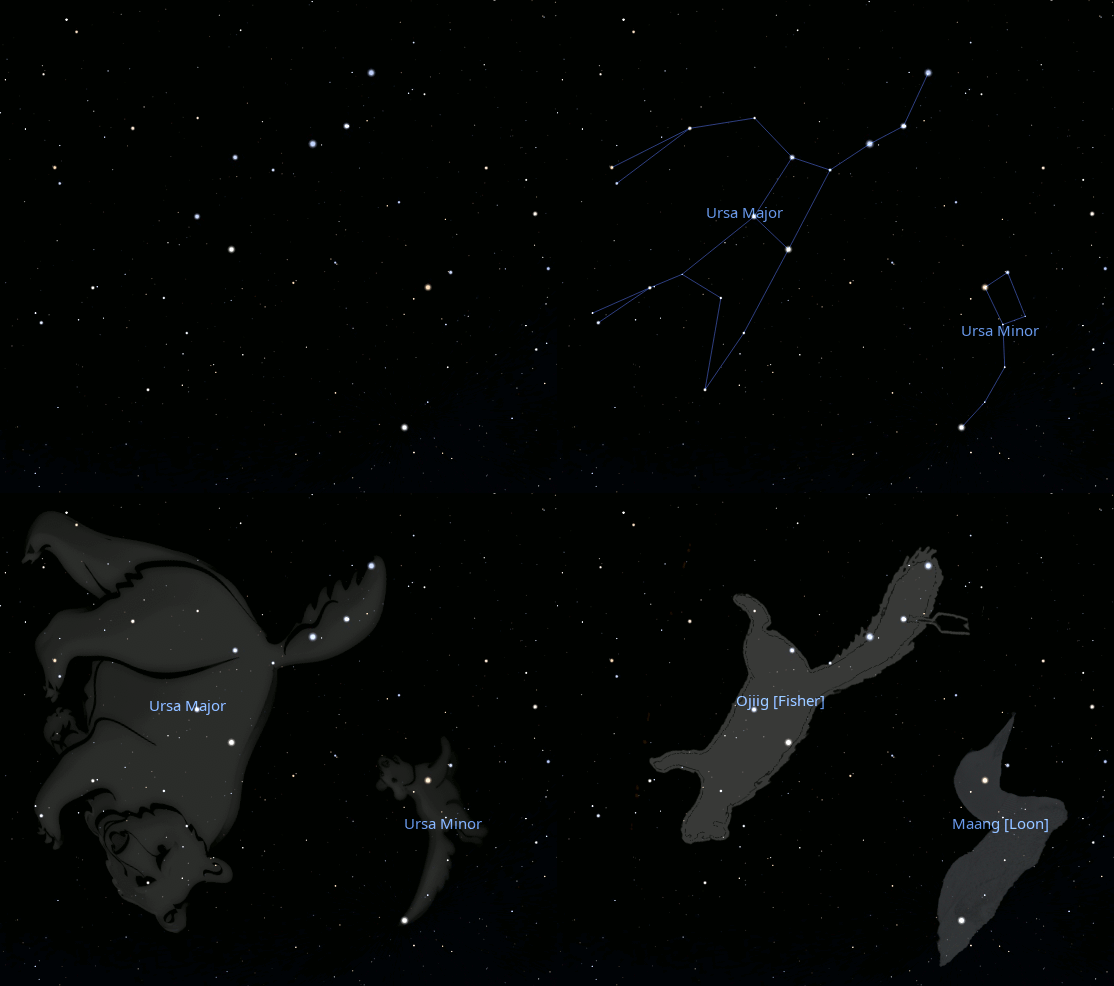
March is a month of transitions. The stars of the winter skies, that is Orion and his merry band of bright stars, move to the west as those of spring rise in the east. The Big Dipper is ascending in the northeastern sky, after lying low in the north during the long dark evenings in the heart of winter. The dipper is the hind end of the Great Bear, officially Ursa Major. The Anishinaabe peoples of the Great Lakes region saw the Big Dipper as the hind end and tail of a magical creature called Fisher, or in their language Ojiig, who brought summer to the Earth. Its position in the sky around the pole announces the seasons. The Fisher’s ascension high into the northeastern sky signals the start of the maple sugaring season later this month.
The astronomical event times given in this blog are for the Traverse City/Interlochen area of Michigan (Lat 44.7° N, Long 85.7° W; EST, UT – 5 hours) unless stated otherwise. Times will be different for other locations.
Addendum
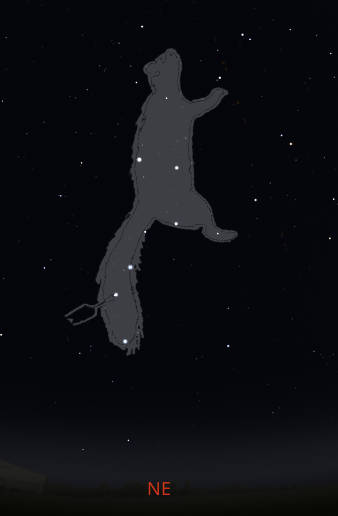
For the story of the Fisher, and how he got that arrow stuck in his tail, check out The story of the Fisher Star.
Ephemeris: 12/16/2025 – Finding Orion and the Wintermaker
This is Ephemeris for Tuesday, December 16th. Today the Sun will be up for 8 hours and 49 minutes, setting at 5:03, and it will rise tomorrow at 8:14. The Moon, 3 days before new, will rise at 6:19 tomorrow morning.
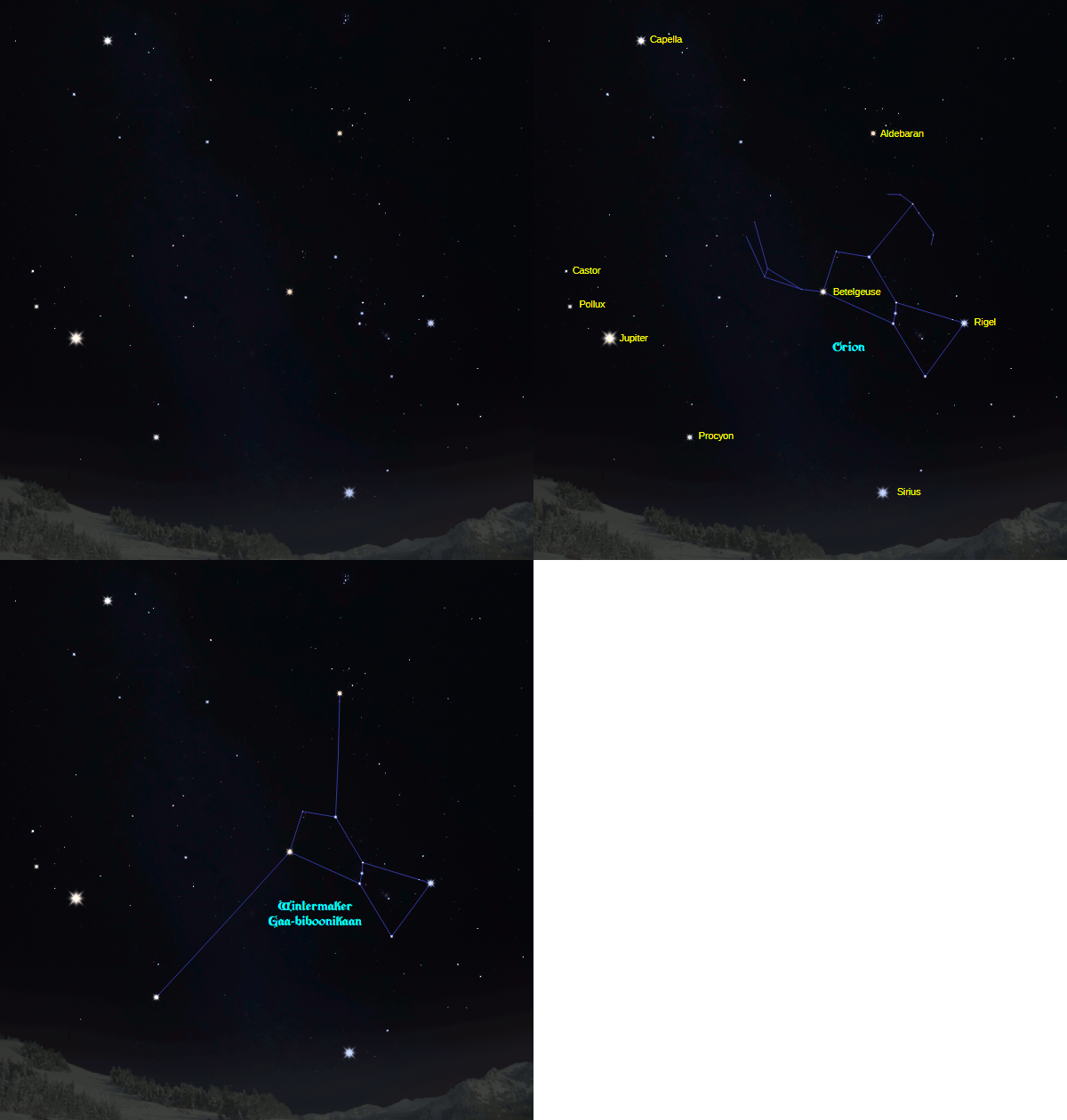
In the east, the central winter constellation Orion the hunter throws a leg over the horizon around 7 PM as Robert Frost told in his poem Star-Splitter. The upright rectangle that is his body is tilted to the left as he rises on December evenings. A bright red star, Betelgeuse, is at the top left of the rectangle, his shoulder. At the opposite corner is blue-white Rigel, a knee. In the center of the rectangle is a line of three stars nearly vertically aligned as he rises, which represents his belt. The stars of Orion’s belt are how many folks can find him. The Anishinaabe native peoples of this area call him the Wintermaker whose arms are held wide to encompass the winter stars. His rising in the evening heralds the coming of winter, five days from now.
The astronomical event times given in this blog are for the Traverse City/Interlochen area of Michigan (Lat 44.7° N, Long 85.7° W; EST, UT – 5 hours) unless stated otherwise. Times will be different for other locations.
Addendum
Ephemeris: 11/18/2025 – What other cultures see in the Pleiades
This is Ephemeris for Tuesday, November 18th. Today the Sun will be up for 9 hours and 27 minutes, setting at 5:11, and it will rise tomorrow at 7:45. The Moon, 2 days before new, will rise at 7:22 tomorrow morning.
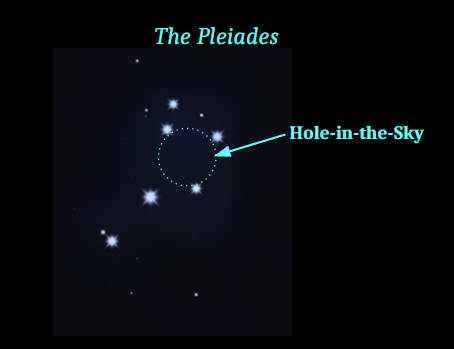
Let’s look at how some other cultures saw the Pleiades, the star cluster that is seen in the eastern sky these evenings. To the Anishinaabe native peoples around here, the Pleiades is the “Hole in the Sky” or the seven stones that are heated for the sweat lodge ceremony. To the Kiowa, these were sisters who were whisked up into the sky from the top of Devil’s Tower in Wyoming, where they were threatened by a huge bear. An Iroquoian legend has seven daughters who danced all day and were drawn into the sky, along with a black bear who danced with them. One daughter heard her mother’s call and fell back down to the Earth. In Norse mythology, these were the goddess Freya’s hens.
The astronomical event times given in this blog are for the Traverse City/Interlochen area of Michigan (Lat 44.7° N, Long 85.7° W; EDT, UT – 4 hours) unless stated otherwise. Times will be different for other locations.
Addendum
Ephemeris: 10/20/2025 – The Fisher paints the autumn colors
This is Ephemeris for Monday, October 20th. Today the Sun will be up for 10 hours and 44 minutes, setting at 6:49, and it will rise tomorrow at 8:06. The Moon, 1 day before new, will rise at 8:19 tomorrow morning.
The leaves on the trees are beginning to turn to reds and yellows as we advance through autumn. The native Anishinaabe peoples, whose homeland we share, have a story about how that came to be. Of how a magical weasel-like creature called the Fisher or, in their native language, Ojiig Anung (Fisher Star), brought summer to the Earth from Skyland. For his trouble, he was shot with an arrow in his only vulnerable spot, the tip of his tail. As he fell to Earth Gichi Manitou, the Great Spirit, caught him and placed him in the sky where we see the Great Bear and the Big Dipper. Every late autumn night we see his tail, the handle of the dipper, slowly swooping down to the horizon in the north, where his bloody tail paints the trees with their autumn colors.
The astronomical event times given in this blog are for the Traverse City/Interlochen area of Michigan (Lat 44.7° N, Long 85.7° W; EDT, UT – 4 hours) unless stated otherwise. Times will be different for other locations.
Addendum
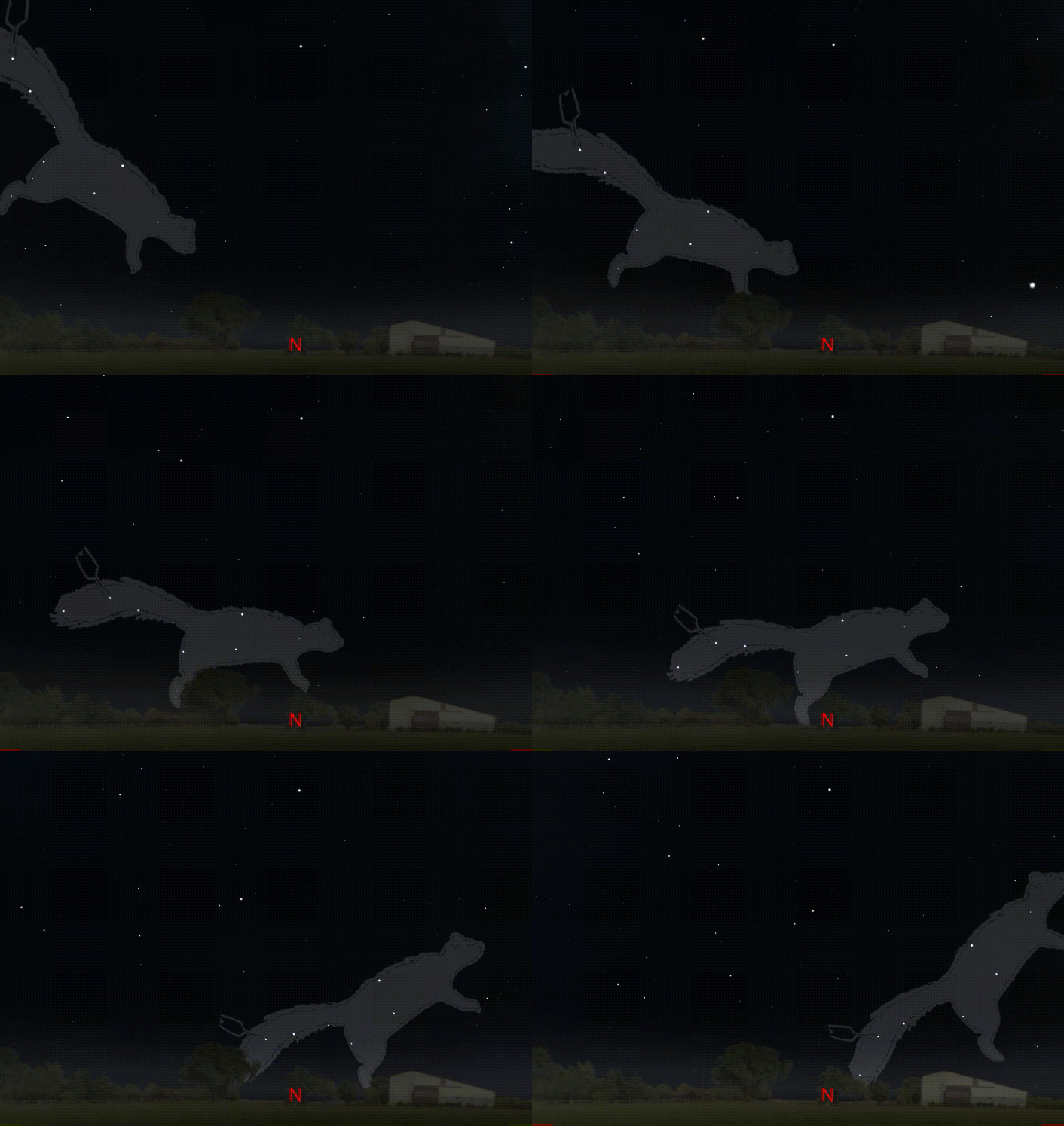
For my take on the story of how the Fisher brought summer to the Earth, click here.
Ephemeris: 10/16/2025 – The Anishinaabe saw a Moose where Pegasus is
This is Ephemeris for Thursday, October 16th. Today the Sun will be up for 10 hours and 55 minutes, setting at 6:55, and it will rise tomorrow at 8:01. The Moon, 3 days past last quarter, will rise at 3:57 tomorrow morning.
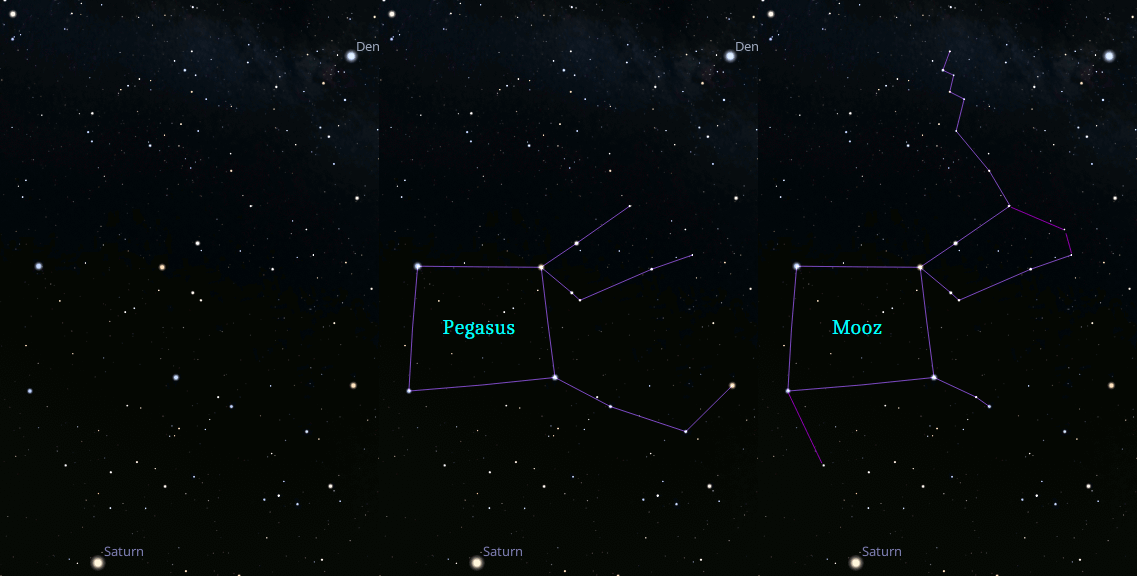
High in the southeast at 10 PM is the constellation officially called Pegasus the flying horse. The front part of his body is a pattern of stars we call the Great Square of Pegasus, and he’s flying upside down, quite an aerobatic horse. His wings are not seen in the stars, however his neck and head, up to his nose is, along with his front legs. The Anishinaabe peoples of this area call it Mooz, from which we get our word moose. He’s right side up, facing the west. His head is where we see the front legs of Pegasus, and his antlers are above it where there is another official constellation made of faint stars called Lacerta, which is a lizard. Not everyone sees the same figure in the stars.
The astronomical event times given in this blog are for the Traverse City/Interlochen area of Michigan (Lat 44.7° N, Long 85.7° W; EDT, UT – 4 hours) unless stated otherwise. Times will be different for other locations.
Addendum
Ephemeris: 09/19/25 – A different take on Cygnus the swan
This is Ephemeris for Friday, September 19th. Today the Sun will be up for 12 hours and 18 minutes, setting at 7:45, and it will rise tomorrow at 7:27. The Moon, 2 days before new, will rise at 6:06 tomorrow morning.
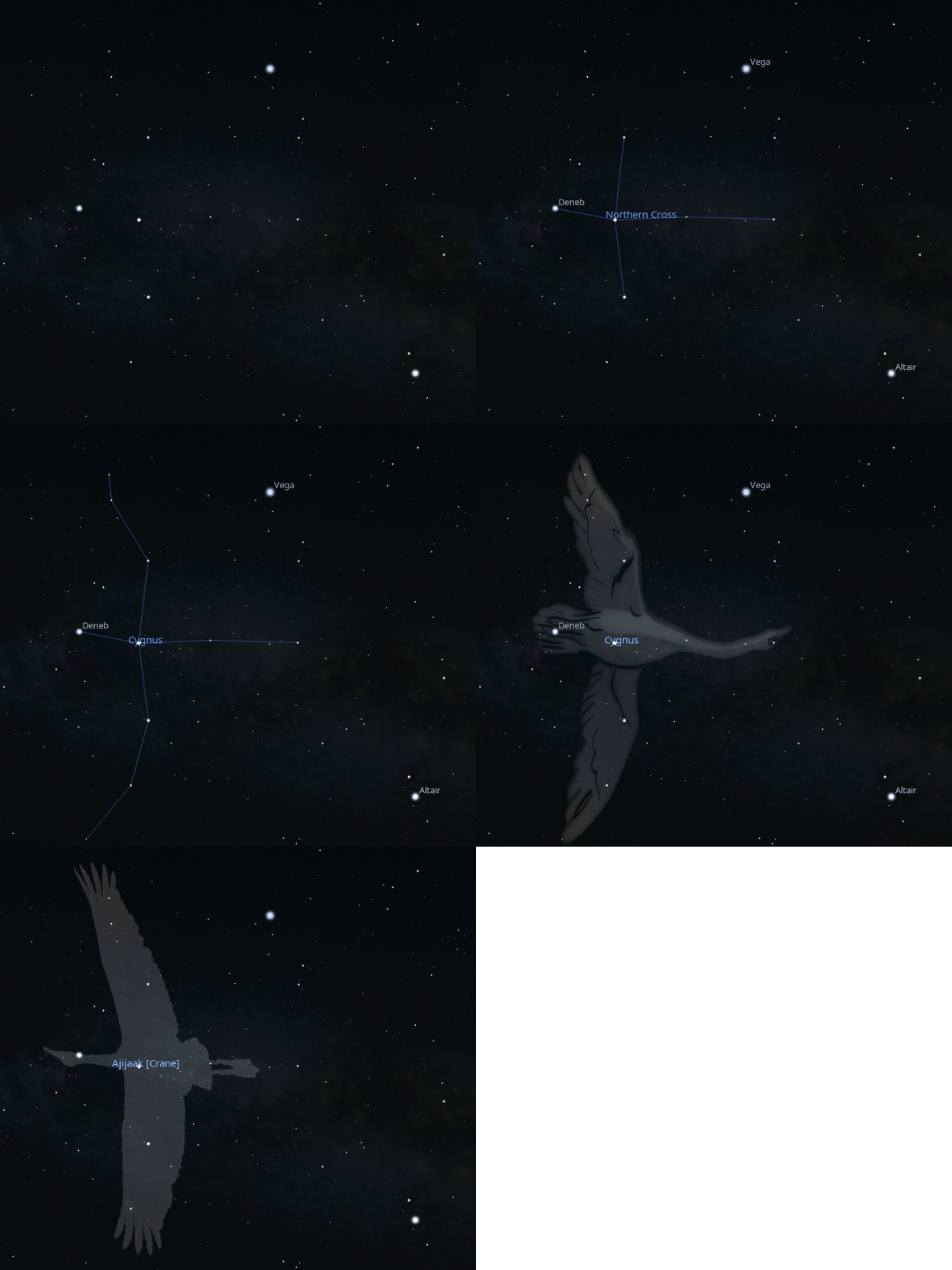
Yesterday I looked the star in the beak of the constellation of Cygnus the swan and the informal constellation or asterism made from most of its stars the Northern Cross. Cygnus is the official International Astronomical Union constellation name. However, the indigenous Anishinaabe people of our area had another bird in mind when seeing these stars, which are now fairly high in the east in the evening: Ajijaak, (pronounced a-ji-jock) a Sand Hill crane. While the swan is flying, neck outstretched to the south through the Milky Way, the crane is flying northward with its long legs trailing behind. The bright star Deneb is at his head. Where I live I see more cranes than swans these days and hear their creaking-door-like calls, and see a pair from time to time in a field south of where I live.
The astronomical event times given in this blog are for the Traverse City/Interlochen area of Michigan (Lat 44.7° N, Long 85.7° W; EDT, UT – 4 hours) unless stated otherwise. Times will be different for other locations.
Addendum
Ephemeris: 03/18/2025 – The Great Underwater Panther
This is Ephemeris for Tuesday, March 18th. Today the Sun will be up for 12 hours and 4 minutes, setting at 7:53, and it will rise tomorrow at 7:47. The Moon, halfway from full to last quarter, will rise at 12:47 tomorrow morning.
As Orion tilts into the southwest at 9 PM I’m reminded of our Anishinaabek native peoples here in Michigan who saw it as the Winter Maker slowly beginning to leave the scene in the southwest. At this time in the southeast is Curly Tail, the Great Panther. I first knew him as the Great Underwater Panther, which tells us where he lives… beneath the ice. He’s in the sky to warn us that the warmer weather of spring is coming, and the ice on the lakes and rivers is getting thin. Be careful to not fall through and drown, becoming a victim of the Great Panther. The stars of the panther include those of the head of Leo the lion the great backwards question mark, as his curly tail, to his head, the head of what we call Hydra the water snake.
The astronomical event times given are for the Traverse City/Interlochen area of Michigan (EDT, UT – 4 hours). Times will be different for other locations.
Addendum
Ephemeris: 08/02/2024 – The Northern Cross
This is Ephemeris for Friday, August 2nd. Today the Sun will be up for 14 hours and 35 minutes, setting at 9:06, and it will rise tomorrow at 6:31. The Moon, 2 days before new, will rise at 5:12 tomorrow morning.
The star Deneb is high in the east-northeast. It is the dimmest of the three stars of the Summer Triangle. It is at the head of the Northern Cross, an informal constellation or asterism. The upright extends to the South. The crossbeam can be seen crossing the star just south of Deneb. There’s also a constellation there. It’s actually Cygnus the swan flying southward along the Milky Way with its neck outstretched. The Anishinaabe natives peoples of our area see Ajijaak the crane, also with a long neck flying north, but also long legs trailing to the south, its wings outstretched. In Greek mythology Cygnus was the guise of the god Zeus when he seduced Leda, whose offspring was Pollux, one of the Gemini twins.
The astronomical event times given are for the Traverse City/Interlochen area of Michigan (EDT, UT–4 hours). They may be different for your location.
Addendum
Ephemeris: 06/04/2024 – Finding the Little Dipper
This is Ephemeris for Tuesday, June 4th. Today the Sun will be up for 15 hours and 25 minutes, setting at 9:24, and it will rise tomorrow at 5:58. The Moon, 2 days before new, will rise at 4:51 tomorrow morning.
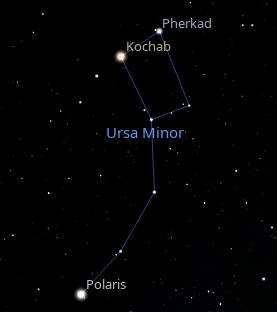
One of the constellations I don’t talk about much, except in passing is Ursa Minor, the Little Bear with an impossibly long tail. It is better known as the Little Dipper. As a dipper goes, its handle is bent the wrong way, like someone stepped on it. Anyway, this time of year in the evening, it’s standing on the tip of it’s handle, which is the North Star, Polaris. Polaris is pointed to by the front two stars of the Big Dipper. As dippers go they pour their contents into each other. The second and third-brightest stars of the Little Dipper are at the front of the bowl, and are Kochab and Pherkad, the Guard Stars, that is, Guardians of the Pole. To the Anishinaabe native peoples of our area the Little Dipper is Maang, the Loon.
The astronomical event times given are for the Traverse City/Interlochen area of Michigan (EDT, UT–4 hours). They may be different for your location.
Addendum
 Bob Moler's Ephemeris Blog