Archive
03/07/2019 – Ephemeris – Leo the lion rising
Ephemeris for Thursday, March 7th. Today the Sun will be up for 11 hours and 28 minutes, setting at 6:38, and it will rise tomorrow at 7:08. The Moon, 1 day past new, will set at 7:42 this evening.
Tonight as twilight fades around 8 p.m. the constellation of Leo the lion can be seen rising in the east. The head and mane of a male lion is seen as a backward question mark. This pattern of stars is also called the sickle. The bright star that is the dot at the bottom is Regulus, the “Little King Star”. To the lower left is a triangle of stars that is the lion’s hind end with the star Denebola at the far end. It is said that the reason the figure of a lion came to be seen in the stars here is because lions came from the desert, driven by the heat, to drink from the river Nile the time of the year that the sun was in this part of the sky. Leo can also be found by first locating the Big Dipper high in the northeast, a hole in its bowl drips on Leo.
The times given are for the Traverse City/Interlochen area of Michigan. They may be different for your location.
Addendum
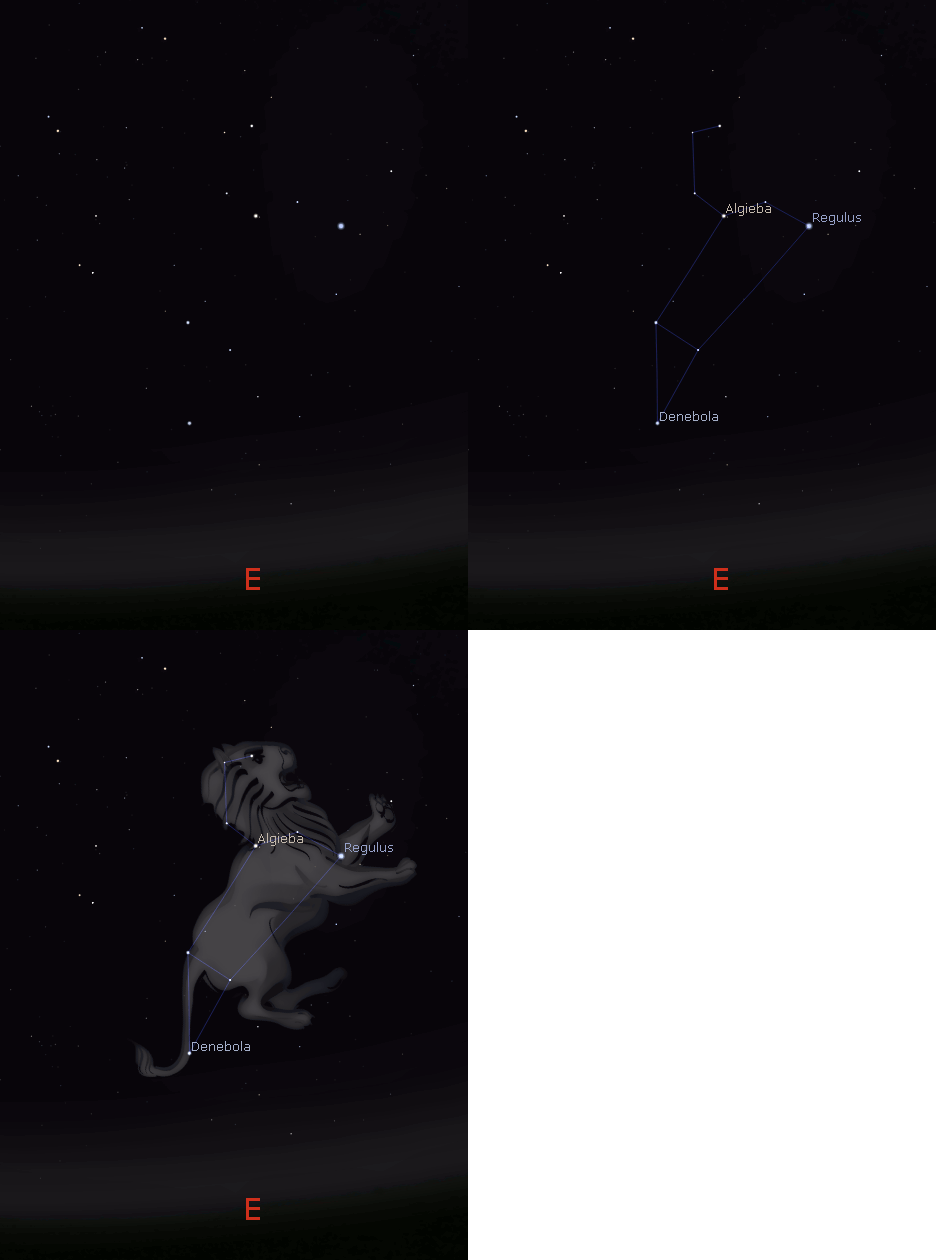
The constellation Leo rising animation. Created using Stellarium and GIMP.
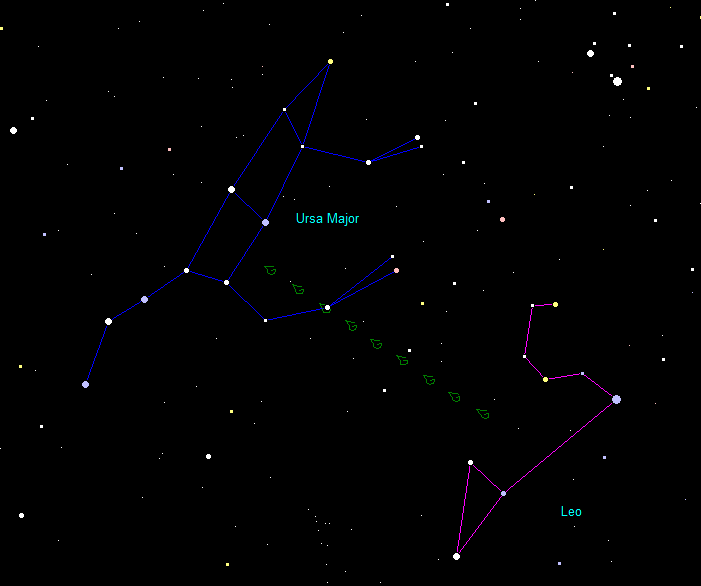
Finding Leo from the Big Dipper: Leaky Big Dipper drips on Leo. Created using my LookingUp program.
03/05/2019 – Ephemeris – The Big Dipper rising in the east
Ephemeris for Fat Tuesday, March 5th. Today the Sun will be up for 11 hours and 21 minutes, setting at 6:35, and it will rise tomorrow at 7:11. The Moon, 1 day before new, will rise at 7:33 tomorrow morning.
While Orion and the stars of winter are still holding forth in the south the Big Dipper is sneaking up in the northeast. Indeed at 8 p.m. the front stars of the dipper’s bowl are half way up the sky, at the same altitude of Polaris the North Star. To the Anishinaabe native peoples of this region the Big Dipper wasn’t part of a bear, it was the hind end of the Fisher, Ojiig in their language. The Fisher, a magical animal of their legends, a weasel-like animal brought warm seasons to the Earth, and serves as a weather indicator. As he climbs the sky in the east he is signaling spring and the maple sugaring season. The Big Dipper is also a pointer to some of the important stars and constellations of spring.
The times given are for the Traverse City/Interlochen area of Michigan. They may be different for your location.
Addendum
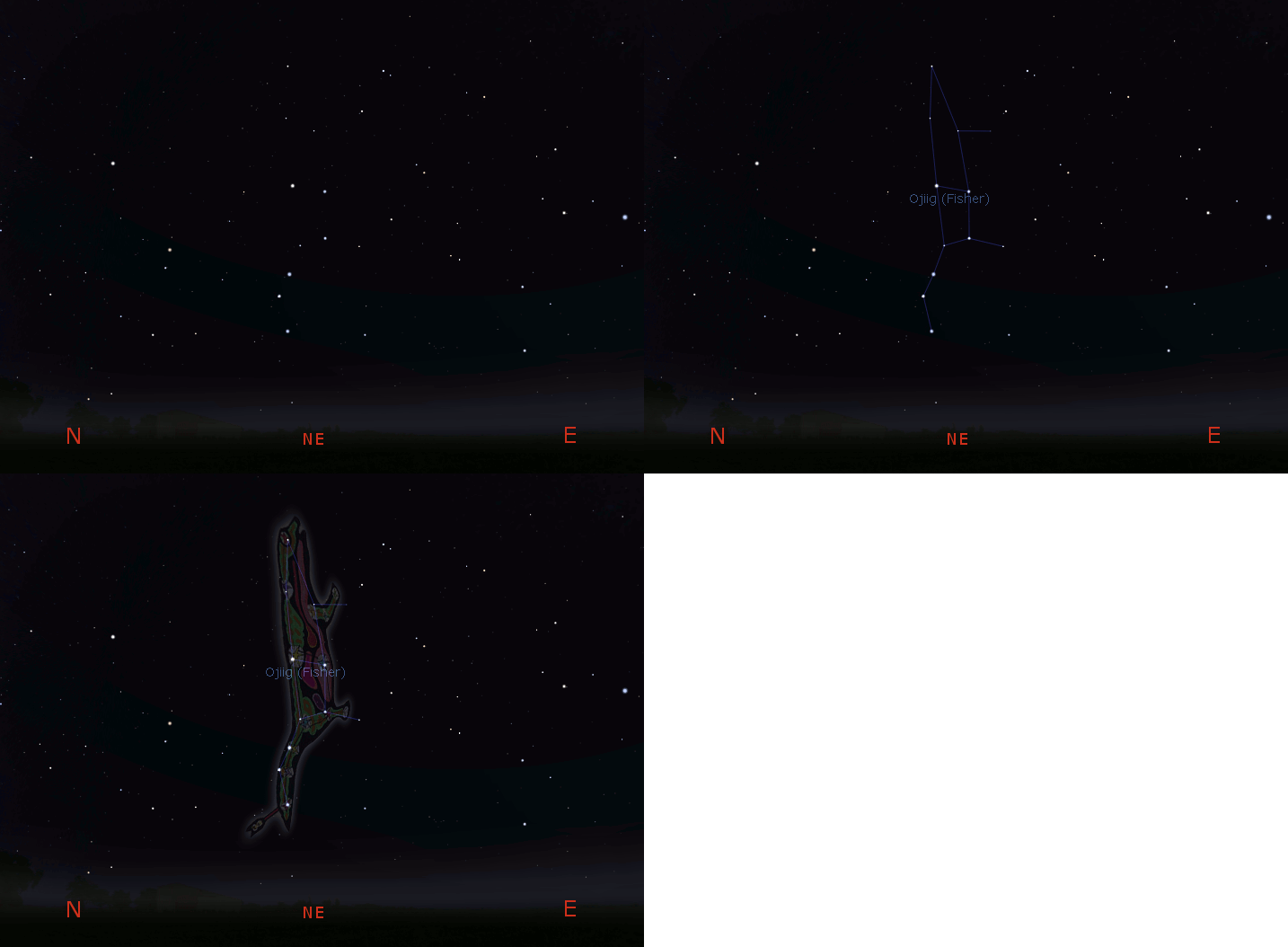
The Big Dipper, as Ojiig the Fisher of the Anishinaabe people rising higher in the northeast at 8 p.m. March 5, 2019. Created using Stellarium.
The Anishinaabe constellation drawing of the Fisher is from Ojibwe Sky Star Map Constellation Guide by Annette S. Lee, William Wilson, Jeffrey Tibbets and Carl Gawboy available locally and online. They are part of the latest editions of Stellarium, a free planetarium program. Links to it are on the right. Other information and links are available within the Sky Lore tab.
My story of the Fisher is here: https://bobmoler.wordpress.com/2012/10/11/the-story-of-the-fisher-star/
02/22/2019 – Ephemeris – Orion is a hard luck hero
Ephemeris for Friday, February 22nd. Today the Sun will be up for 10 hours and 48 minutes, setting at 6:20, and it will rise tomorrow at 7:30. The Moon, 3 days past full, will rise at 10:19 this evening.
We come back to the central constellation of the winter sky Orion the hunter, holding out in the south-southwest at 9 p.m. with his three stars of his belt in a straight line, with his shoulder stars above and knees below. In one Greek story he was killed by the sting of a scorpion so the gods made sure the rising of the constellation Scorpius would chase him out of the sky to the west. To the Greeks he was a hapless hero. Orion is mentioned in the Bible in the book of Job. The name for Orion in Hebrew is Kesil, meaning “Fool”. To the native peoples around the Great Lakes, the stars here are those of the Winter Maker, who stretches his arms from Aldebaran in Taurus to Procyon in Canis Minor. When he rides high the evening sky it is indeed winter.
The times given are for the Traverse City/Interlochen area of Michigan. They may be different for your location.
Addendum
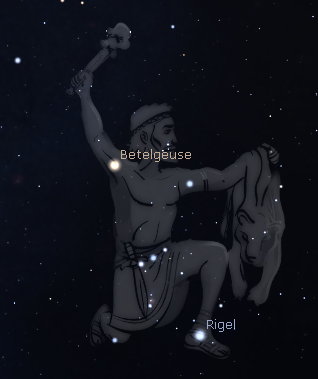
Orion as he is seen tonight at 9 p.m. February 22, 2019. Created using Stellarium.
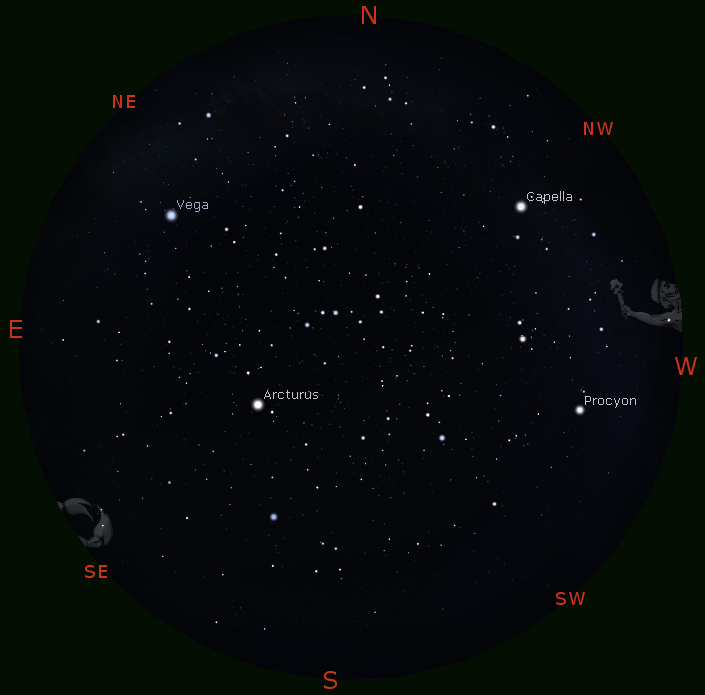
Scorpius, rising in the southeast, chases Orion, setting in the west, from the skies. February 23, at 2:44 a.m. any year.
02/11/2019 – Ephemeris – The stars Castor and Pollux
Ephemeris for Monday, February 11th. Today the Sun will be up for 10 hours and 16 minutes, setting at 6:05, and it will rise tomorrow at 7:47. The Moon, 1 day before first quarter, will set at 12:57 tomorrow morning.
At 9 p.m. the constellation of Gemini the twins will be seen high in the southeast. The namesake stars of the two lads are the two bright stars at the top of the constellation. Pollux the pugilist, or boxer, is the lower of the two, while Castor, the horseman, is the other star, or rather a six star system. In telescopes two close stars may be seen each is a spectroscopic binary, meaning the lines of two stars can be seen in the spectrum. A faint nearby spectroscopic binary also belongs. Pollux, though a single star, does have at least one planet, over twice the mass of Jupiter orbiting the star at a distance somewhat greater than Mars is from the Sun. Pollux is 34 light years away while Castor is 50 light years away. Not too far away as stars go.
The times given are for the Traverse City/Interlochen area of Michigan. They may be different for your location.
Addendum
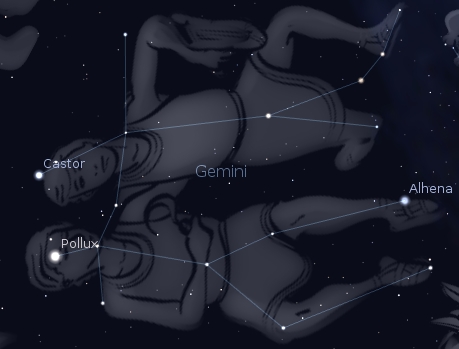
Gemini with Castor and Pollux. Created with Stellarium.
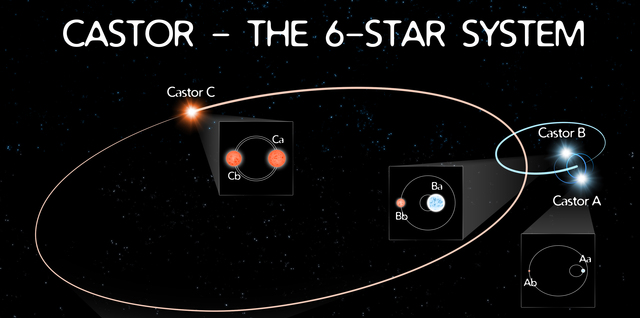
The Castor star system exploded in this JPL/NASA infographic.
02/04/2019 – Ephemeris – Gemini the twins, or are they?
Ephemeris for Monday, February 4th. Today the Sun will be up for 9 hours and 56 minutes, setting at 5:55, and it will rise tomorrow at 7:57. The Moon is new today, and won’t be visible.
Lets look at another of the winter constellations, and member of the Zodiac. The constellation Gemini, the Twins is visible high in the southeast, above and left of Orion the hunter at 9 p.m. The namesake stars of the two lads, will be at the left end of Gemini, nearly vertically aligned. Castor is on top, while Pollux is below. From them come two lines of stars extending toward Orion that outline the two. In Greek mythology the lads were half brothers, Castor was fathered by a mere mortal, while Pollux was fathered by Zeus in the famous Leda and the swan affair and immortal, but were born together as twins. When Castor was killed during the quest for the Golden Fleece, Pollux pleaded with Zeus to let him die also, so Zeus placed them together in the sky so they could be together forever.
The times given are for the Traverse City/Interlochen area of Michigan. They may be different for your location.
Addendum
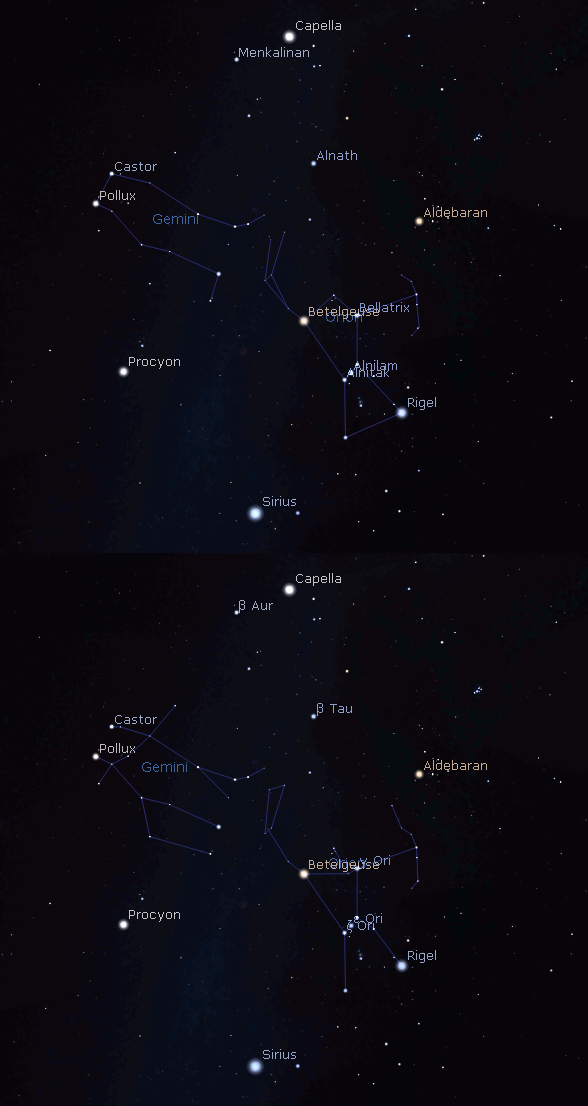
An animated look at two versions of the Gemini outlines. First the way I learned them as an outline of the lads. Second the way H. A. Rey from his popular 1952 book The Stars – A New Way to See Them, where the stars are connected to make stick figures. The Stellarium default for Gemini is that of H. A. Rey. My lines are due to a modification of the constellation lines table for the program. Created using Stellarium.
01/24/2019 – Ephemeris – Taurus the bull
Ephemeris for Thursday, January 24th. Today the Sun will be up for 9 hours and 29 minutes, setting at 5:40, and it will rise tomorrow at 8:09. The Moon, half way from full to last quarter, will rise at 10:14 this evening.
Midway up the sky in the southeast at 8 p.m. is the constellation of the giant hunter Orion. Above him, to the right is Taurus the bull. His face is a letter V shape of stars lying on its side, the star cluster Hyades, with the bright orange-red star Aldebaran at one tip of the V as its angry blood-shot eye, but actually about half way between us and the cluster. Orion is depicted in the sky facing, with club in one hand and a shield in the other, the charging Taurus. The Pleiades star cluster is in his shoulder. Taurus in Greek mythology was the form the god Zeus when he carried off the maiden Europa. Europa’s still with him as the intriguing satellite orbiting Zeus’ Roman equivalent the planet Jupiter.
The times given are for the Traverse City/Interlochen area of Michigan. They may be different for your location.
Addendum
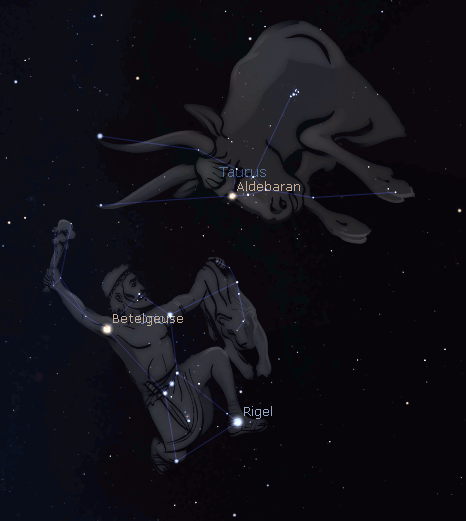
Taurus and Europa at 8 p.m. January 24, 2019. Created using Stellarium.
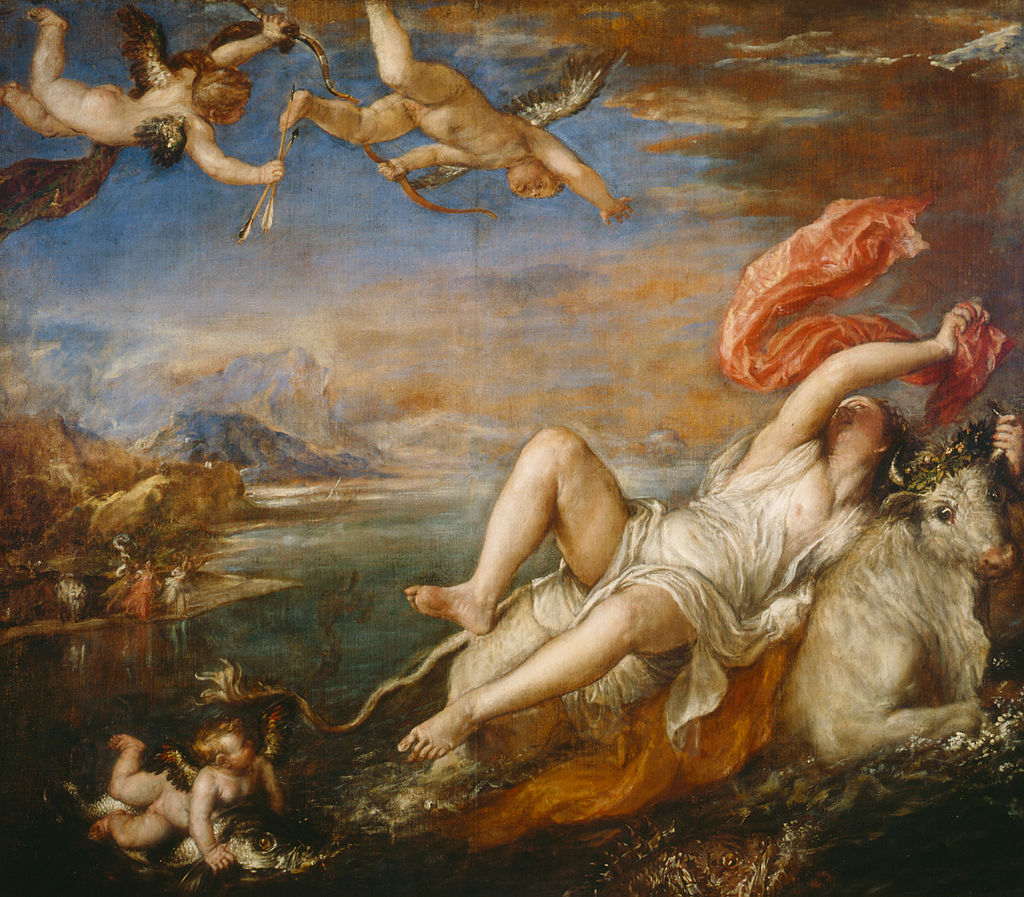
The Rape of Europa by Titian. According to the story Zeus as a bull abducted Europa and swam to Crete, where she became the first queen of that island, and bore him three sons. Other paintings of this subject are by Rembrandt and de Troy. This painting belongs to the Isabella Stewart Gardener Museum in Boston, MA. Click on the image to enlarge.
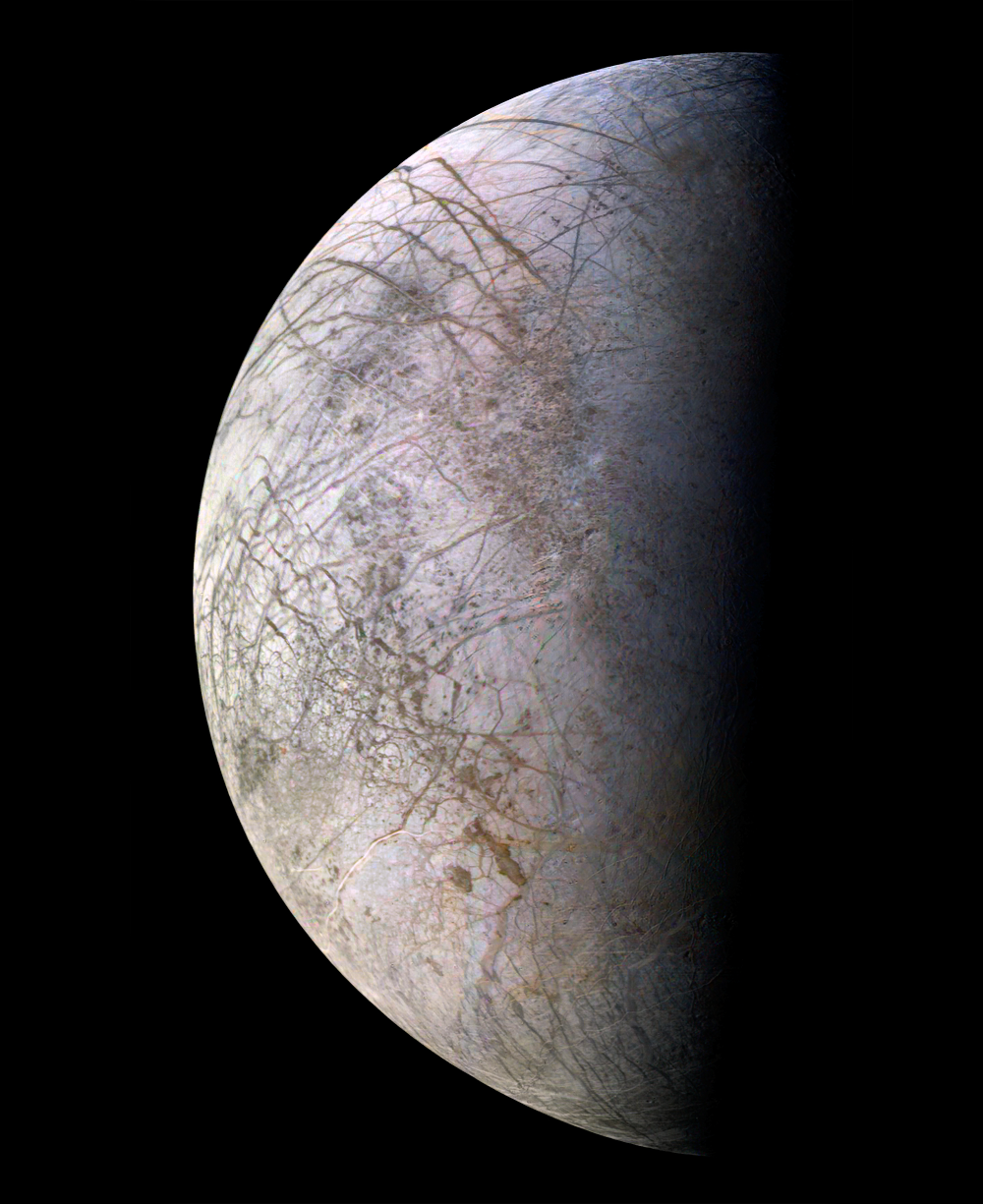
Jupiter’s satellite Europa, slightly smaller than the Earth’s moon, has a fresh ice surface with very little cratering. The ice floats on a deep water ocean supposedly containing more water than all the Earth’s oceans. Click on the image to enlarge. This is a place NASA will send a spacecraft to look for the chemistry of life. Credit NASA/JPL, Ted Stryk.
01/08/2019 – Ephemeris – The river at Orion’s feet
Ephemeris for Tuesday, January 8th. The Sun will rise at 8:19. It’ll be up for 9 hours exactly, setting at 5:19. The Moon, 3 days past new, will set at 7:55 this evening.
One of the more obscure constellations around is Eridanus, which depicts a river. The river starts near the lower right corner of Orion, near the bright star Rigel and flows to the right then down near the southwestern horizon, then it meanders along the horizon to the south before turning below the horizon. One has to travel to the far south to see the southern terminus of the river, the bright star Achernar. Writers over the ages have seen here the Nile and the earth circling river Ocean of the flat earth days. Achernar is actually two stars, the brightest was discovered to be the flattest star, due to its rapid spin. The dimensions of Achernar A has been determined to be twice as wide across its equator than from pole to pole. It’s 139 light years away.
The times given are for the Traverse City/Interlochen area of Michigan. They may be different for your location.
Addendum
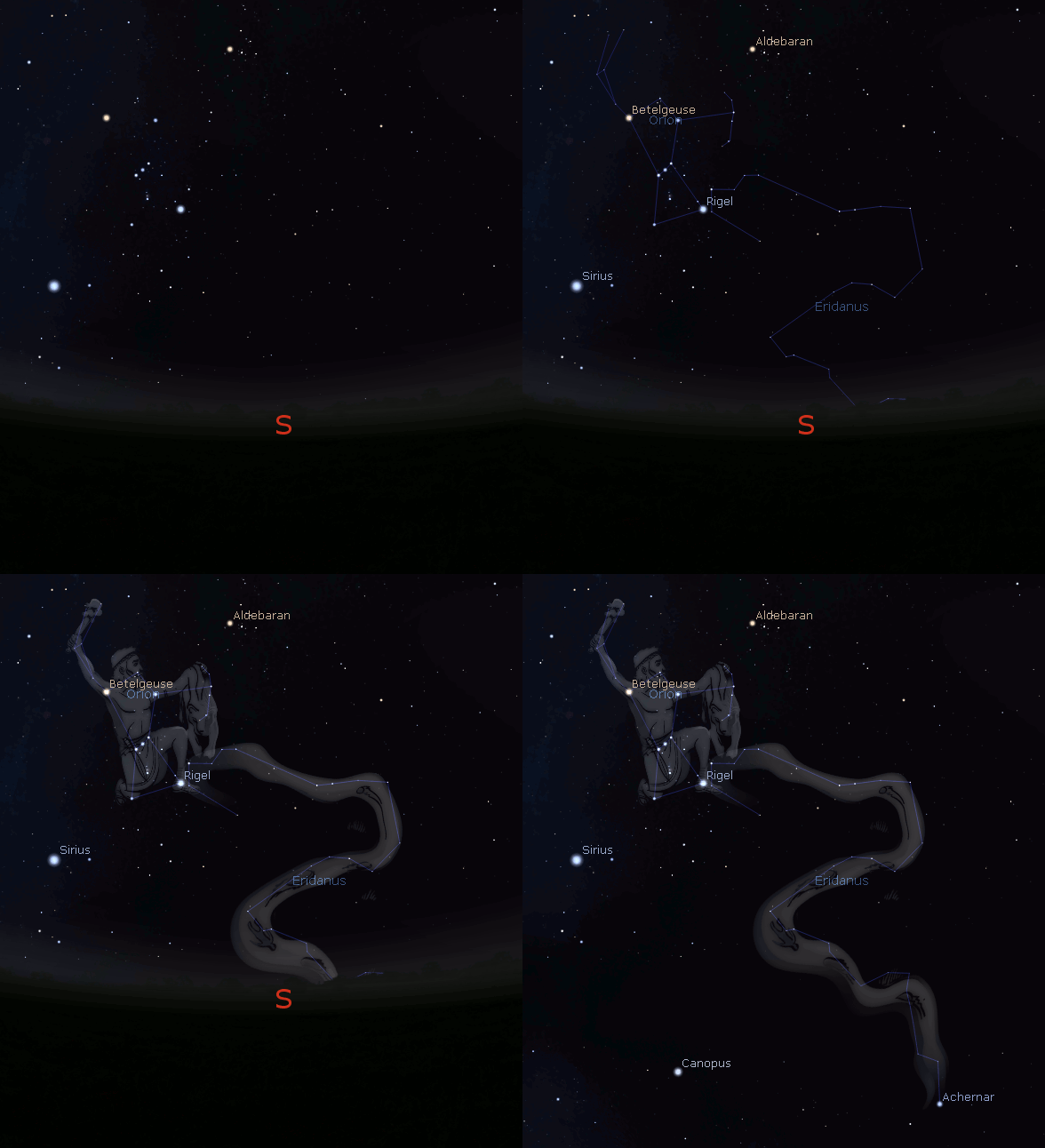
An animation of the constellation Eridanus which is a river that flows from Rigel in Orion to the star Achernar below our southern horizon at latitude 45 degrees north. Create using Stellarium and GIMP.
11/12/2018 – Ephemeris – Orion is rising
Ephemeris for Veterans Day Observed, Monday, November 12th. The Sun will rise at 7:35. It’ll be up for 9 hours and 41 minutes, setting at 5:17. The Moon, 3 days before first quarter, will set at 9:25 this evening.
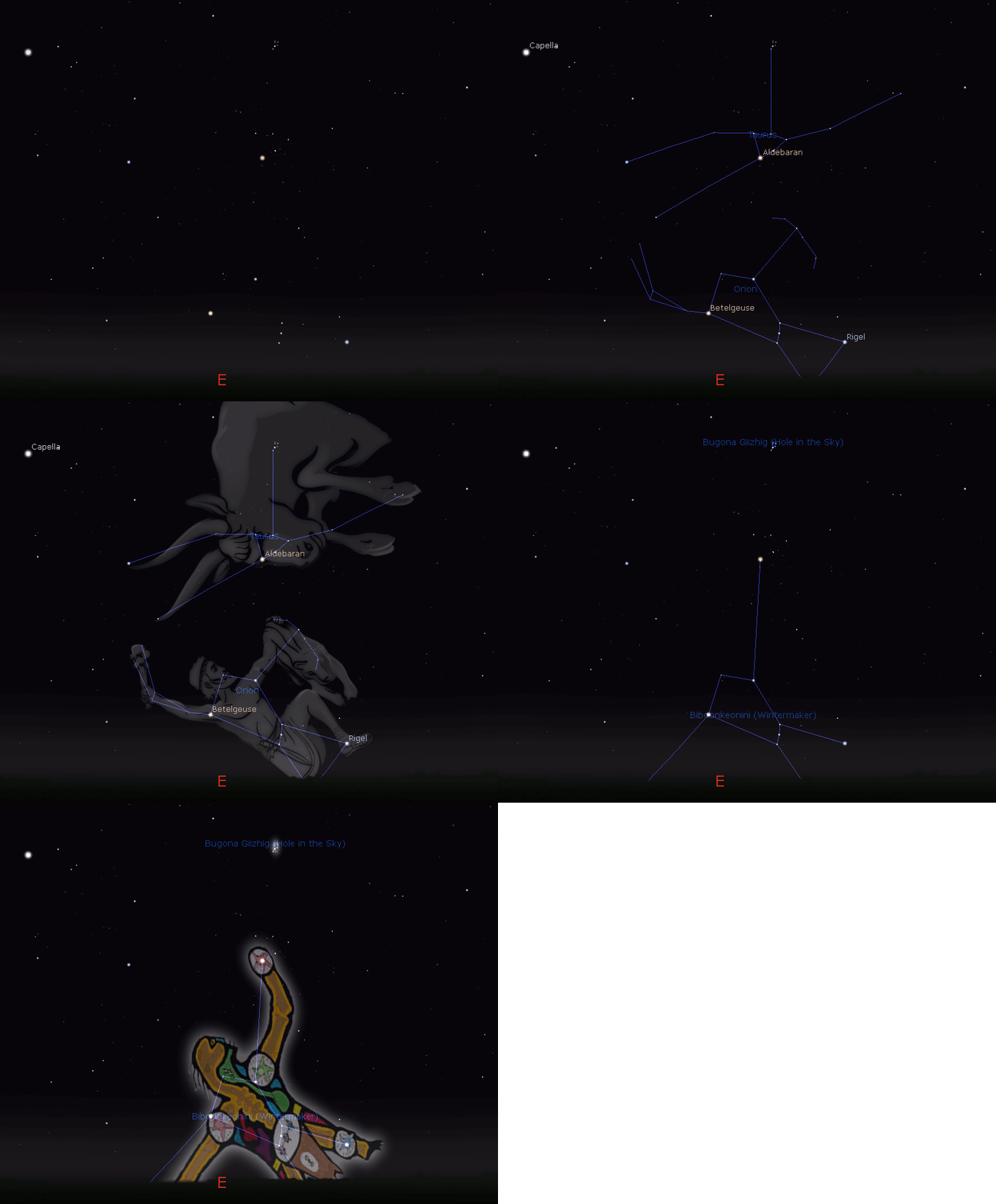
Just after the Moon sets tonight winter’s most dazzling constellation will be rising, Orion the hunter of Greek myth. The stars of his torso are in a rectangle leaning to the left. Orion’s belt of three stars in a straight line in the center of the rectangle is nearly vertical. The Anishinaabe peoples whose region we live in see the constellation of the Wintermaker rather than Orion. It uses Orion’s torso and belt stars, but his arms are spread wide from Aldebaran in the face of Taurus the bull to the west to Procyon in Canis Minor, which won’t rise until 11 p.m. to the east. The Wintermaker’s arms are wide enough to embrace the entire winter sky. Its name in Anishinaabemowin, which is Biboonikeonini, means “North Wind”.
The times given are for the Traverse City/Interlochen area of Michigan. They may be different for your location.
11/04/2018 – Ephemeris Extra – Wintermaker rising
A chill is in the air, The Fisher, Ojiig’s bloody tail has swooped low in the north at midnight to paint the trees with their fall colors, and the leaves have fallen to the ground. Haven’t heard of the Fisher? I mention it from time to time here on my Ephemeris program on Interlochen Public Radio. It’s a constellation of the Anishinaabe peoples indigenous to this area of Michigan, of which the Chippewa, Ottawa, and Ojibwe are a part.
The Fisher occupies the stars which we know as the Big Dipper and the Great Bear, Ursa Major. And unlike the bear, a fisher really does have a long tail. The fisher is a real weasel-like animal whose diet apparently does not include fish. It is found across southern Canada and in the American West. I’ve related the story of the Fisher, and how he brought summer to the Earth, in these pages in the August 2012 issue and on my blog bobmoler.wordpress.com. Search for fisher. Like most legends, there are different versions of that story and others about the Fisher.
Fisher or not, summer is gone and the world seems darker and colder. Over in the east these evenings great winter constellation of Orion is rising. It brings to mind the Robert Frost poem Star-Splitter, and our star chart this month from the November 1st post:
“You know Orion always comes up sideways.

Throwing a leg up over our fence of mountains,

And rising on his hands, he looks in on me

Busy outdoors by lantern-light with something

I should have done by daylight, and indeed,

After the ground is frozen, I should have done

Before it froze, and a gust flings a handful

Of waste leaves at my smoky lantern chimney

To make fun of my way of doing things,

Or else fun of Orion's having caught me.

Has a man, I should like to ask, no rights

These forces are obliged to pay respect to?"
The rest of the poem is available on the Poetry Foundation website: https://www.poetryfoundation.org/poems/44273/the-star-splitter. The poem is about one Brad McLaughlin and his telescope. While I don’t approve of how he financed his telescope, I do share his enthusiasm.
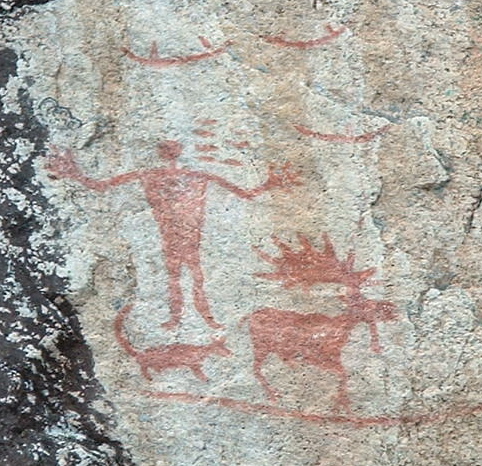
The Wintermaker, Biboonikeonini’s, name literally means North Wind. While his torso is the same as Orion’s his arms stretch from Aldebaran in Taurus to Procyon in Canis Minor, just about spanning the entire winter sky. The pictographs, seen above of the Wintermaker, Curly Tail and Moose can only be seen from a canoe in the cliff face on one side of the narrows between North Hegman and Trease lakes, 15 miles north of Ely, Minnesota
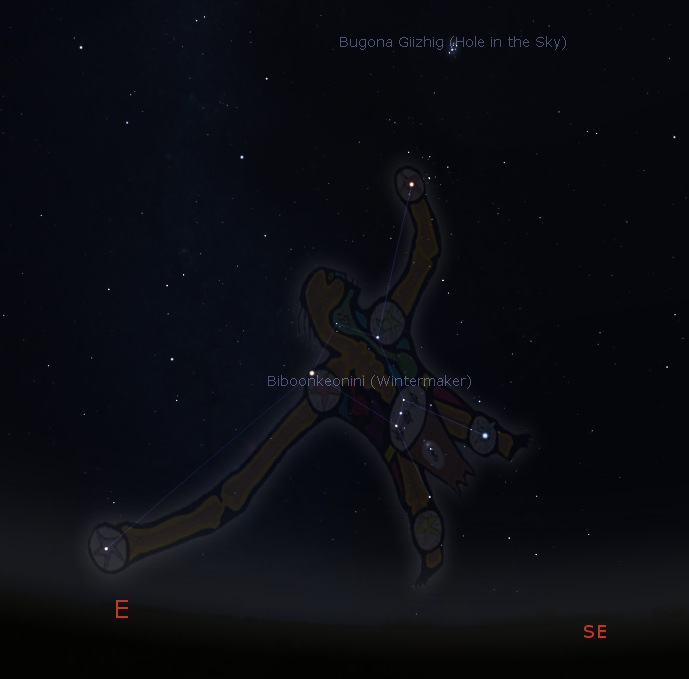
In late winter as Ojiig is rising in the northeast signaling the maple sugaring season, the Wintermaker is moving lower in the southwest. Some Ojibwe parents make bows for their children to shoot arrows at the Wintermaker to convince him to flee the skies so spring can begin as a way to teach them the old legends of their culture.
The Pleiades is an important group of stars for the Anishinaabe in several ways. It is the Hole-In-The-Sky, Bagone’giizhig, through which the Sky Woman fell and to give birth to the first humans on the Earth.
The Pleiades also represent the seven poles of the Shaking Tent Ceremony, and the seven sacred stones that are heated for the sweat lodge, which is also seen in the stars in the spring as Corona Borealis.

They are also the Seven Daughters of the Moon and Sun. They loved to dance and play, and when their father, the Moon was low in the sky, would descend to the Earth in a basket to do their thing. On one of their trips to the earth, one of them was captured by a human and she ended up falling in love with him, and married him. When father Moon found out he permanently dimmed her star, so now most people now only can spot 6 of the stars. This last bit seems to parallel the Greek story of the lost Pleiad.
Note: This is published as an article in the Grand Traverse Astronomical Society’s November 2018 newsletter Stellar Sentinel.
09/06/2018 – Ephemeris – The constellations of Delphinus and Sagitta
Ephemeris for Thursday, September 6th. The Sun will rise at 7:11. It’ll be up for 12 hours and 59 minutes, setting at 8:10. The Moon, 3 days before new, will rise at 4:19 tomorrow morning.
Located below the eastern edge of the Summer Triangle of three of the brightest stars in the sky, which is nearly overhead in our sky at 10 p.m., is the tiny constellation of Delphinus the dolphin. Delphinus’ 6 stars in a small parallelogram with a tail, really does look like a dolphin leaping out of the water. The parallelogram itself has the name Job’s Coffin. The origin of this asterism or informal constellation is unknown. Of the dolphin itself: the ancient Greeks appreciated this aquatic mammal as we do, and told stories of dolphins rescuing shipwrecked sailors. There’s another tiny constellation to the right of Delphinus, Sagitta the arrow a small thin group of 5 stars, which represents Cupid’s dart.
The times given are for the Traverse City/Interlochen area of Michigan. They may be different for your location.
Addendum
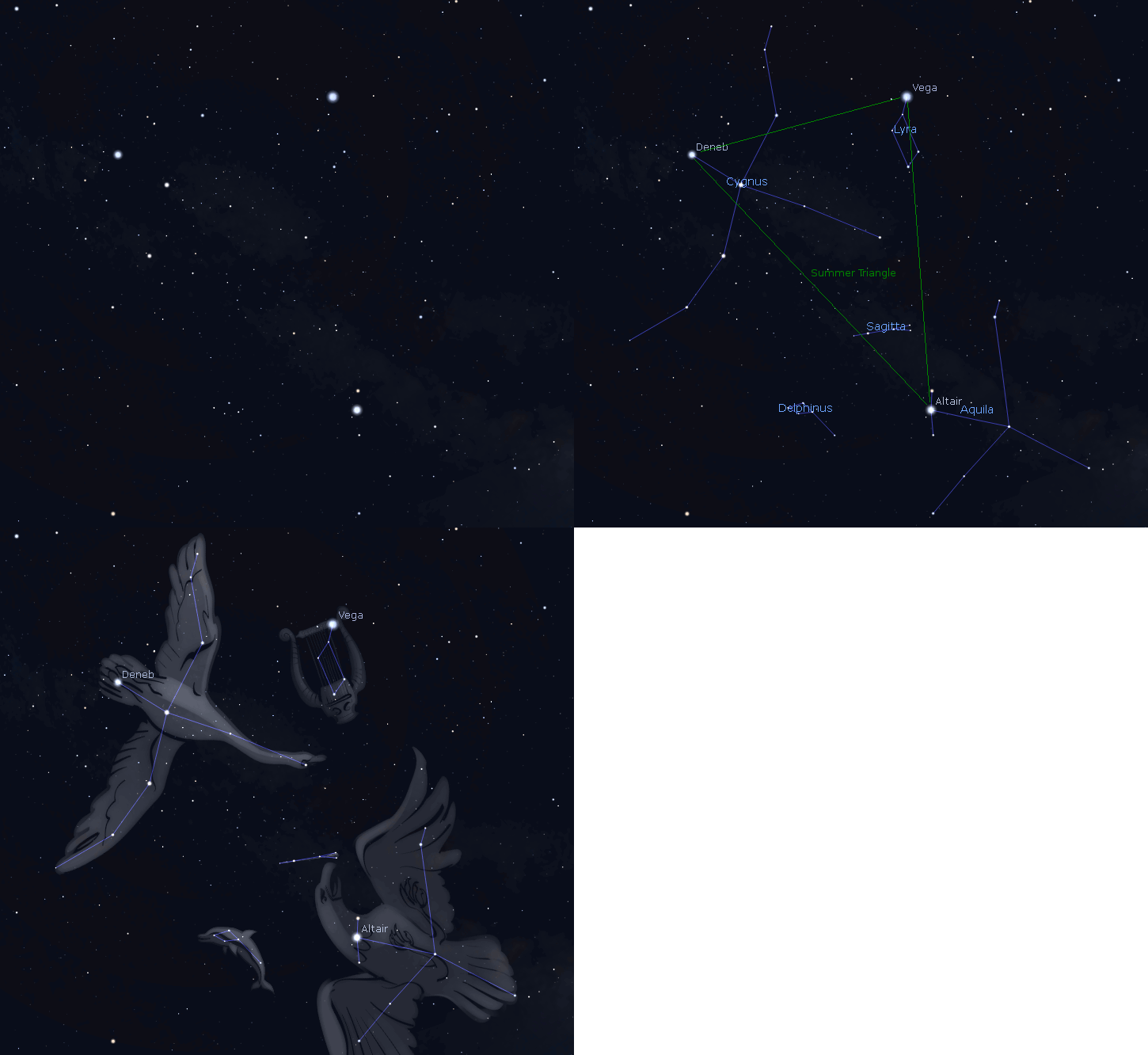
Delphinus and Sagitta finder animation. Click on image to enlarge. Created using Stellarium and GIMP.
 Bob Moler's Ephemeris Blog