Archive
01/31/2022 – Ephemeris – The winter circle of bright stars
This is Ephemeris for Monday, January 31st. Today the Sun will be up for 9 hours and 47 minutes, setting at 5:50, and it will rise tomorrow at 8:01. The Moon, 1 day before new, will rise at 8:48 tomorrow morning.
The winter skies are blessed with more first magnitude stars than any other season. Six of these stars lie in a large circle centered on the seventh, It’s called the Winter Circle. This circle is up in the evening. Starting high overhead is yellow Capella in Auriga the charioteer. Moving down clockwise is orange Aldebaran in the face of Taurus the Bull. Then down to Orion’s knee, we find blue-white Rigel. Down and left is the brightest star of all the brilliant white Sirius the Dog Star in Canis Major, lowest of these stars in the south-southeast. Moving up and left is white Procyon in Canis Minor, Above Procyon is Pollux in Gemini, the twins. All these are not quite centered on Betelgeuse, the bright red star in Orion’s shoulder.
The astronomical event times given are for the Traverse City/Interlochen area of Michigan (EST, UT – 5 hours). They may be different for your location.
Addendum
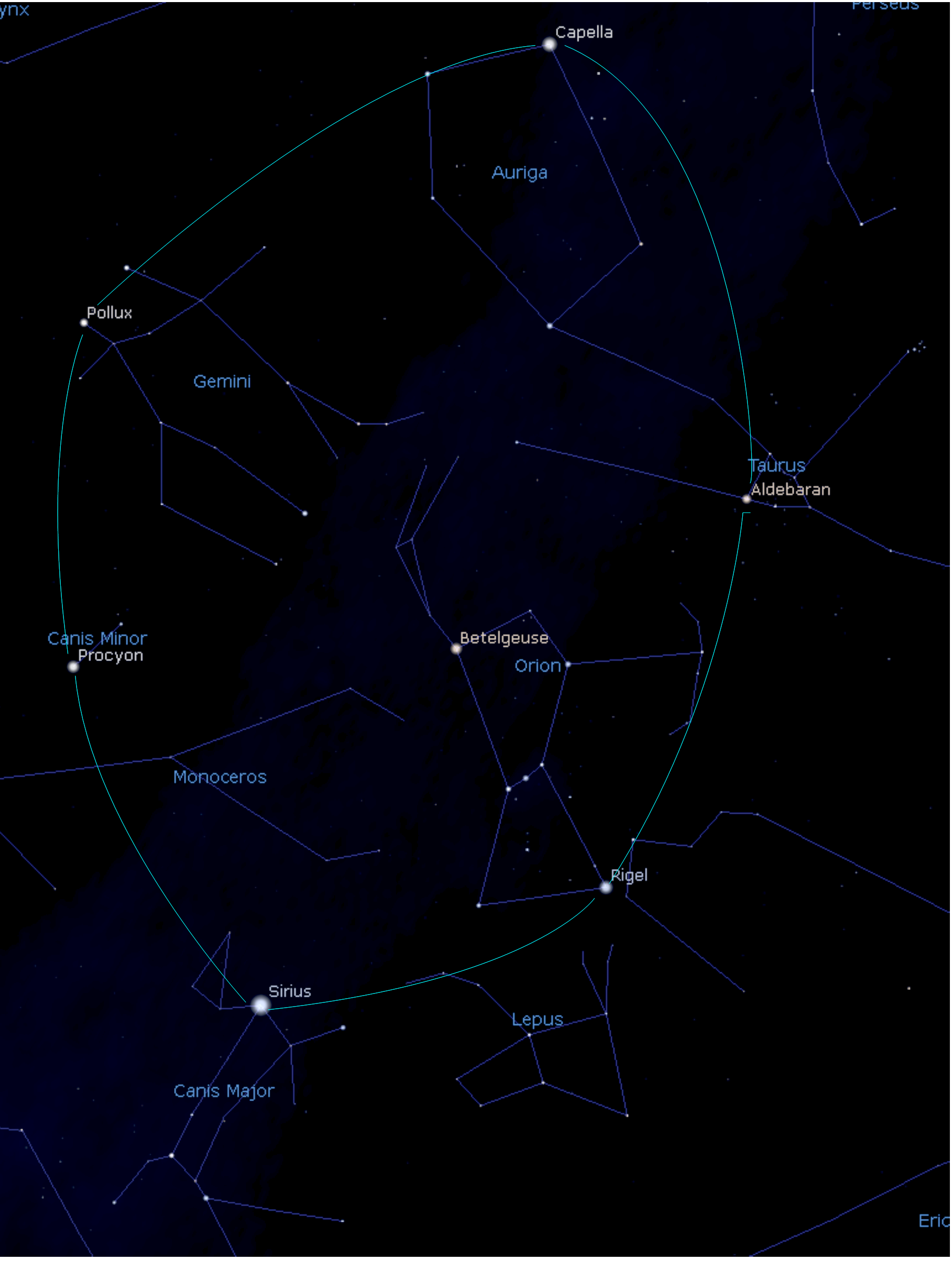
The bright stars of winter arrayed in a not so accurate circle. Some call it the Winter Hexagon. These stars are what make the winter sky so brilliant on the rare clear night in winter. Created using Stellarium.
01/28/2022 – Ephemeris – Auriga the charioteer without a chariot
This is Ephemeris for Friday, January 28th. Today the Sun will be up for 9 hours and 39 minutes, setting at 5:45, and it will rise tomorrow at 8:05. The Moon, 3 days past last quarter, will rise at 6:10 tomorrow morning.
The constellation Auriga the charioteer is nearly overhead at 9 p.m. It is a pentagon of stars, with the brilliant star Capella at one of its upper corners. Capella represents a she-goat he’s carrying. A narrow triangle of stars nearby Capella represents her three kids. The chariot, or by some a wagon is not seen in the stars and is supposed to be pulled by four horses, abreast. Or four oxen, or two oxen, a horse, and a zebra. None of these are depicted in the stars. The only constellation art I’ve seen is a man holding a large goat and three baby goats. There’s no chariot, no wagon and definitely no horses, oxen or zebras. What I see is a distinctive pentagon of stars, with one, Capella, brighter than the rest, and a nearby small triangle of stars.
The astronomical event times given are for the Traverse City/Interlochen area of Michigan (EST, UT – 5 hours). They may be different for your location.
Addendum
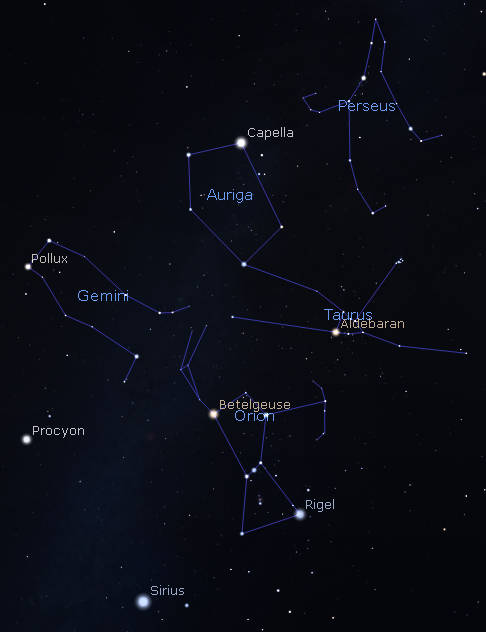
Auriga and surrounding constellations at 9 pm in late January. Created using Stellarium.
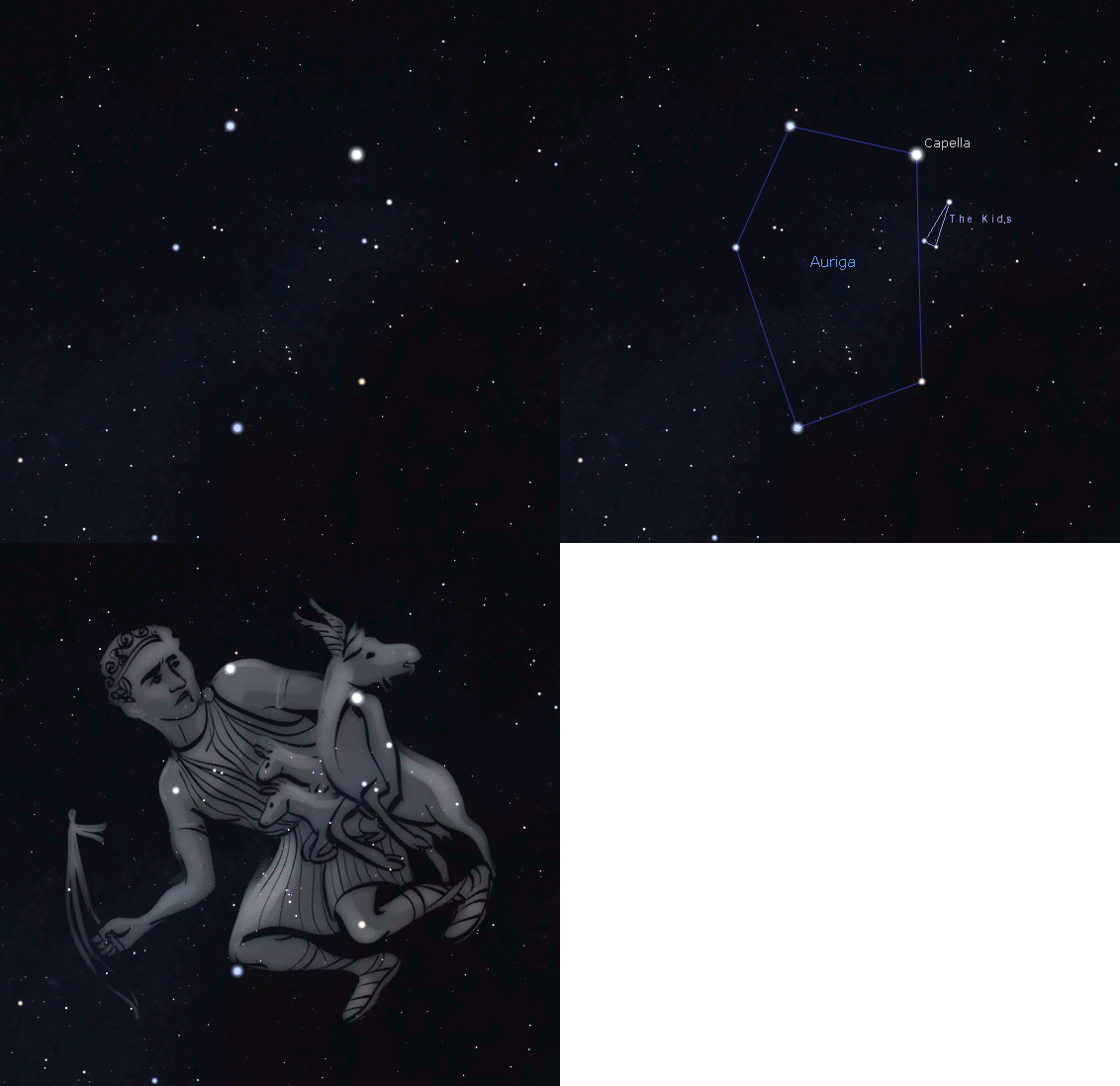
Auriga star field, constellation lines and art. Auriga seems to be missing a kid, he’s supposed to have three, I think. Created using Stellarium and GIMP.
I checked other constellation art, and it appears that there are only two kids. I may have been wrong all these years. Yet the asterism of The Kids has three stars.
01/27/2022 – Ephemeris – Looking at the constellation of Gemini the twins
This is Ephemeris for Thursday, January 27th. Today the Sun will be up for 9 hours and 37 minutes, setting at 5:44, and it will rise tomorrow at 8:06. The Moon, 2 days past last quarter, will rise at 4:56 tomorrow morning.
Another famous winter constellation is Gemini. The constellation of Gemini the Twins is visible high in the southeast, above and left of Orion the hunter, at 9 p.m. The namesake stars of the two lads, are the two bright stars at the left end of Gemini, and are high and nearly in the east. Castor is on top, while Pollux is below. From them come two lines of stars that outline the two, extending horizontally toward Orion. In Greek mythology the lads were half brothers, Castor was fathered by a mere mortal, while Pollux was fathered by Zeus, but were born together as twins. When Castor was killed during the quest for the Golden Fleece, Pollux pleaded with Zeus to let him die also, so Zeus placed them together in the sky.
The astronomical event times given are for the Traverse City/Interlochen area of Michigan (EST, UT – 5 hours). They may be different for your location.
Addendum
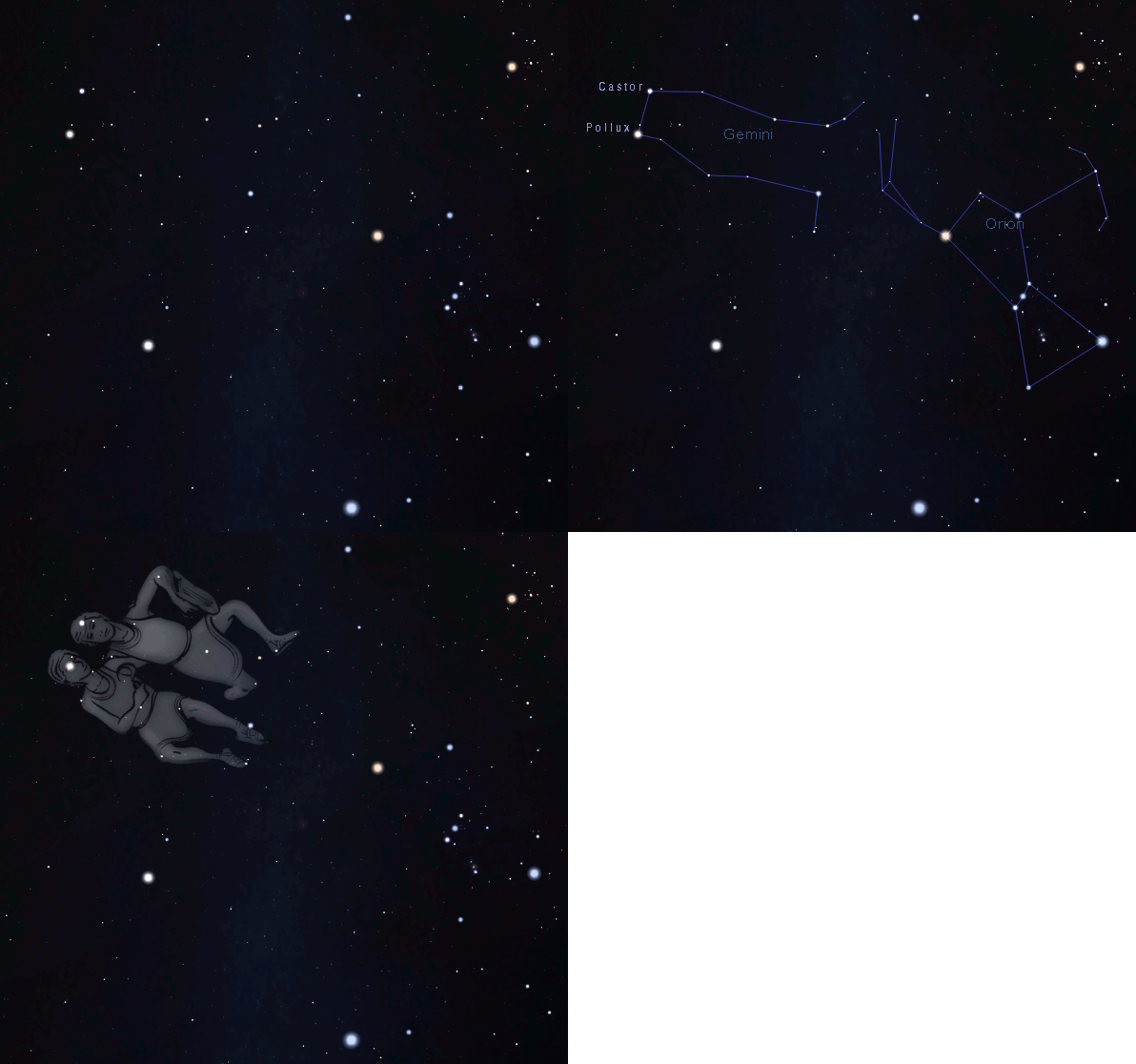
Gemini finder animation for 9 pm January 27th, showing just stars, constellation lines and star names, and figures of the lads. Click on the image to enlarge it. Created using Stellarium and GIMP.
01/24/2022 – Ephemeris – The Great Orion Nebula
This is Ephemeris for Monday, January 24th. Today the Sun will be up for 9 hours and 30 minutes, setting at 5:40, and it will rise tomorrow at 8:09. The Moon, 1 day before last quarter, will rise at 1:03 tomorrow morning.
The closest star nursery to us, places where stars are being born, is the Great Orion Nebula, 1,300 light years away. A light year is about 6 trillion miles, if you want to pace it out. It’s located in the constellation Orion’s sword that hangs below his belt. In as little as a pair of binoculars, it shines by emission and reflection of the light of a tiny clutch of four stars at its heart, which astronomers have called the Trapezium. These extremely hot young massive stars are not destined to live long. Unlike the Sun’s 10 billion year lifetime, these stars lifespans will be measured in millions of years. Yet do not mourn for them, even now stars are forming within their dusty cocoons in the nebula. The Trapezium stars’ deaths will provide heavy elements for new stars and planets.
The astronomical event times given are for the Traverse City/Interlochen area of Michigan (EST, UT – 5 hours). They may be different for your location.
Addendum
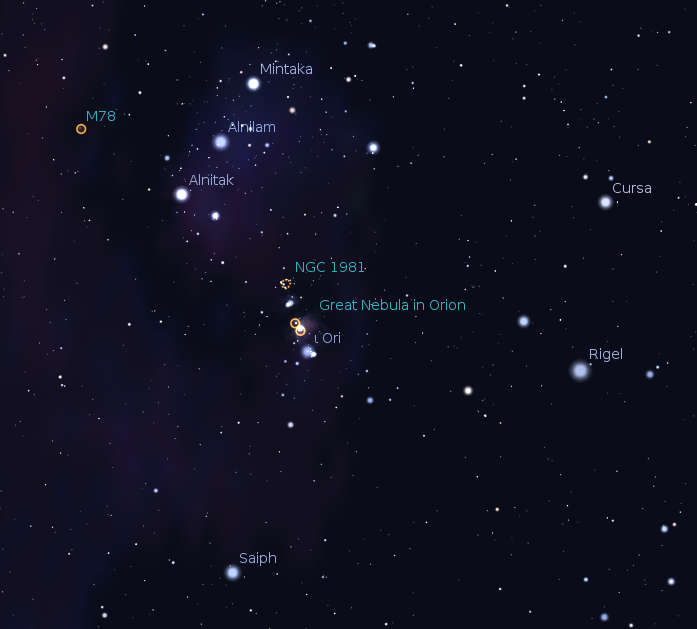
The lower part of Orion, with the Great Orion Nebula. Created using Stellarium.
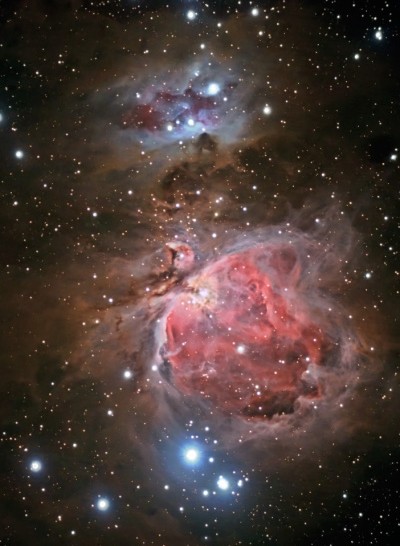
The Great Orion Nebula (M42) long exposure photograph by Scott Anttila. Includes all the sword stars.
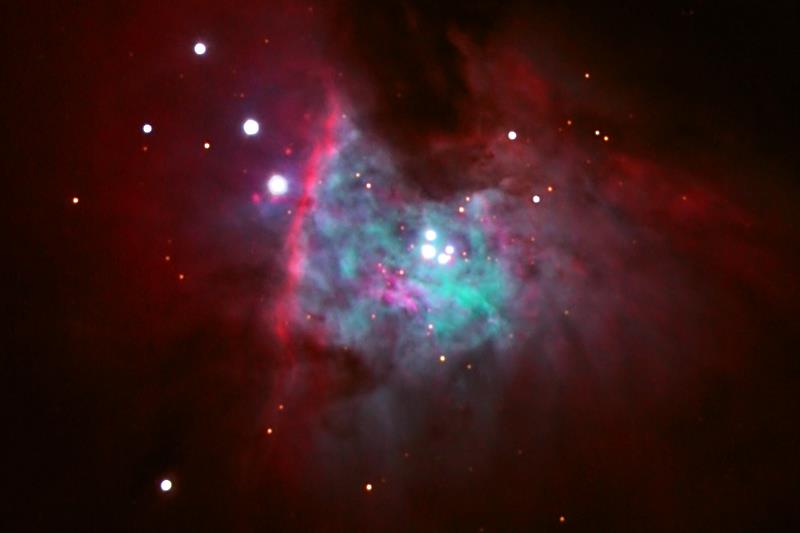
The inner and brightest part of the Great Orion Nebula. Also, visible are the four stars of the Trapezium, whose ultraviolet emissions light up the nebula. This is pretty much one’s perception of the nebula as seen in a small telescope, except it would appear colorless. In larger telescopes, one would perceive a greenish color. The red color of hydrogen is outside our night adapted visual range. The green emission is due to mainly doubly ionized oxygen and the green emission of hydrogen. Image by Scott Anttila.
01/21/22 – Ephemeris – A river in the sky, but not the Milky Way
This is Ephemeris for Friday, January 21st. Today the Sun will be up for 9 hours and 23 minutes, setting at 5:36, and it will rise tomorrow at 8:11. The Moon, halfway from full to last quarter, will rise at 9:31 this evening.
One of the more obscure constellations around is Eridanus, which depicts a river. The river starts near the lower right corner of Orion, near the bright star Rigel and flows to the right then down near the southwestern horizon, then it meanders along the horizon to the south before turning below the horizon. One has to travel to the far south to see the southern terminus of the river, the bright star Achernar. Writers over the ages have seen here the Nile and the Earth circling river Ocean of the flat earth days. Achernar is actually two stars. And the brightest was discovered to be the flattest star known, due to its rapid spin. The dimensions of Achernar A has been determined to be twice as wide across its equator than from pole to pole. It’s 139 light years away.
The astronomical event times given are for the Traverse City/Interlochen area of Michigan (EST, UT – 5 hours). They may be different for your location.
Addendum
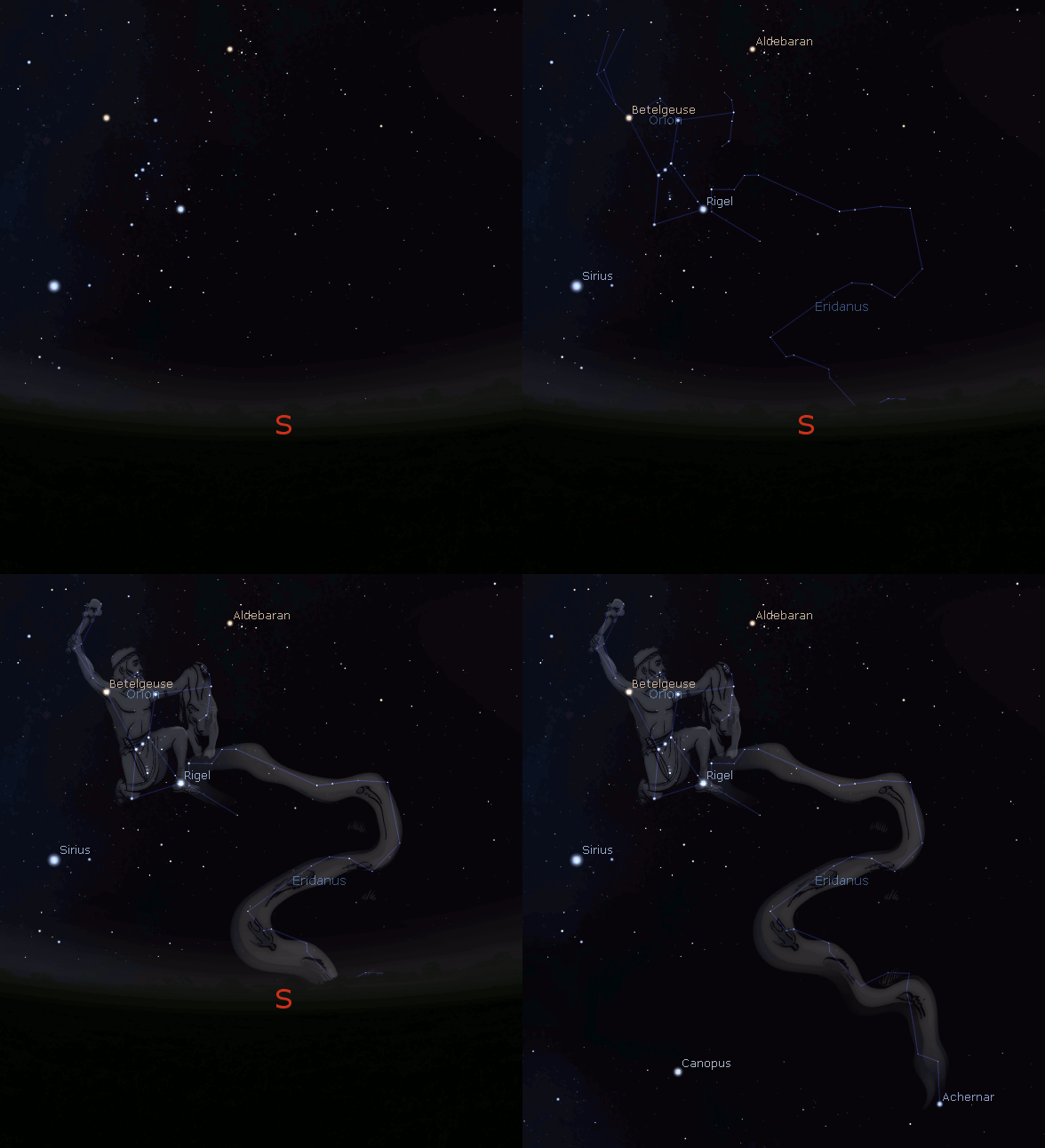
An animation of the constellation Eridanus, which is a river that flows from Rigel in Orion to the star Achernar below our southern horizon at latitude 45 degrees north. Create using Stellarium and GIMP.

A model of Achernar by the European Southern Observatory (ESO).
01/20/2022 – Ephemeris – Taurus and the half sisters of the Pleiades
This is Bob Moler with Ephemeris for Thursday, January 20th. Today the Sun will be up for 9 hours and 21 minutes, setting at 5:34, and it will rise tomorrow at 8:12. The Moon, 3 days past full, will rise at 8:23 this evening.
High in the south-southeastern sky, and above-right of Orion, is the bright star Aldebaran. It’s at one tip of a letter V of fainter stars. The group of stars is the face of the constellation of Taurus the bull. Aldebaran is the angry bloodshot eye of the bull that’s charging Orion, whose defending himself with a lion skin shield and an upraised club. The stars in the V, and many more visible in binoculars, except for Aldebaran, belong to a star cluster called the Hyades. In Greek mythology, these are the half sisters of the Pleiades, visible as a tight group of stars above them. The V of stars is actually an upside down letter A, or Aleph, the first letter of the Hebrew and Mesopotamian alphabets. This was invented when Taurus, not Aries, was host to the Sun at the spring equinox.
The astronomical event times given are for the Traverse City/Interlochen area of Michigan (EST, UT – 5 hours). They may be different for your location.
Addendum
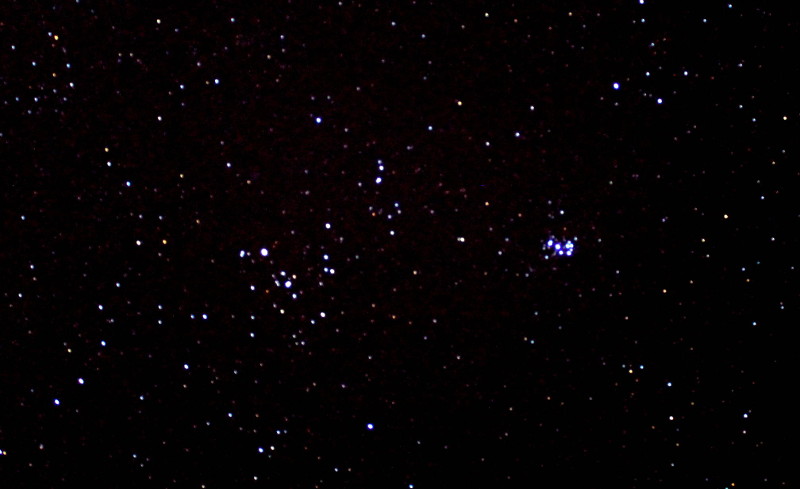
The Hyades (left) and the Pleiades (right) in this photograph I took January 4, 2016. Aldebaran is the bright star at the left tip of the Pleiades (right) of the Hyades.
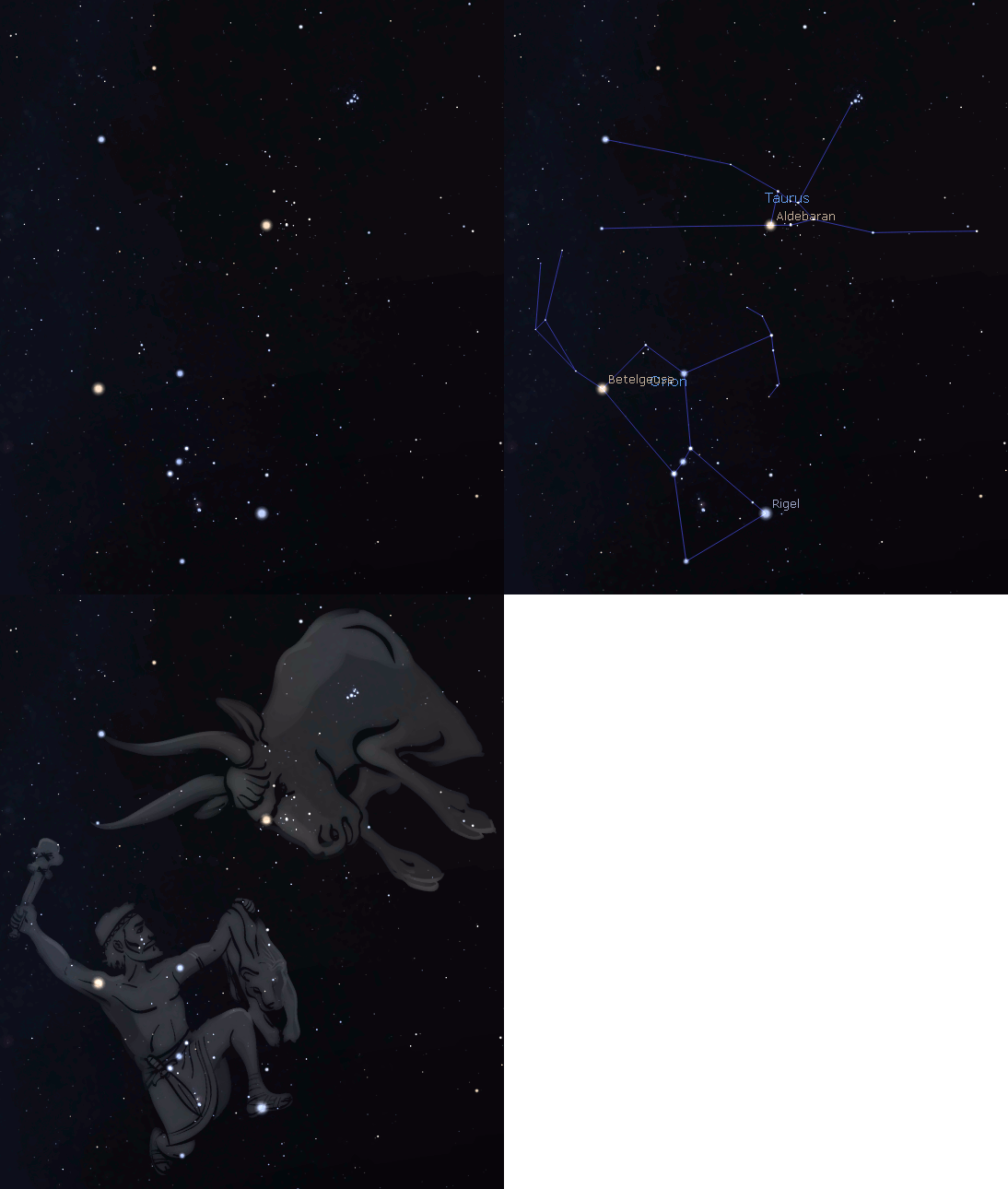
Orion and Taurus finder animation for mid-January. Created using Stellarium
01/06/2022 – Ephemeris – The named stars of Orion
This is Ephemeris for Thursday, January 6th. Today the Sun will be up for 8 hours and 58 minutes, setting at 5:18, and it will rise tomorrow at 8:19. The Moon, 3 days before first quarter, will set at 10:07 this evening.
Orion is still on an angle, leaning to the left, at 8 to 9 pm in the southeastern sky. It’s seven brightest stars have names from antiquity, and some of them are familiar. Starting from the top left, the bright reddish star is famous Betelgeuse. The top right star is Bellatrix, a name familiar to Harry Potter fans. The three stars of his belt, from bottom to top, are Alnilam, Alnitak, and Mintaka. The final bottom two stars from left to right are Saiph, pronounced “safe”. And blue-white Rigel, usually the brightest star of the constellation. These are the stars of Orion’s shoulders, belt and knees. He has other stars that delineate an arm with an upraised club and an arm holding a lion skin shield and a sword hanging from his belt.
The astronomical event times given are for the Traverse City/Interlochen area of Michigan (EST, UT – 5 hours). They may be different for your location.
Addendum
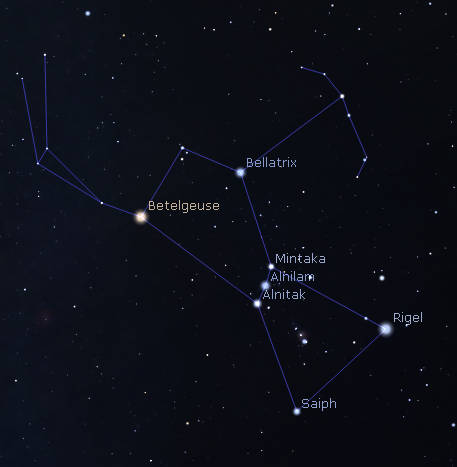
Orion’s named stars. Betelgeuse means “Armpit”. Bellatrix means “Female warrior”. The names of Orion’s belt stars refer to belt or girdle, Rigel refers to Orion’s foot. Saiph means sword, however Orion’s sword is the line of three stars below the belt stars. In binoculars, there’s more than three stars here. Around the second “star” of the sword is the Great Orion Nebula, barely visible here. Created using Stellarium.
11/29/2021 – Ephemeris – Orion is rising in the evening sky
This is Bob Moler with Ephemeris for Monday, November 29th. Today the Sun will be up for 9 hours and 6 minutes, setting at 5:04, and it will rise tomorrow at 7:59. The Moon, 2 days past last quarter, will rise at 3:07 tomorrow morning.
In the east, the central winter constellation Orion the hunter throws a leg over the horizon between 8 and 9 p.m. as Robert Frost told in his poem Star-Splitter. The upright rectangle that is his body on December evenings is tilted to the left as he rises, with a bright red star Betelgeuse at the top left of the rectangle, his shoulder. At the opposite corner is blue-white Rigel, a knee. In the center of the rectangle is a line of three stars nearly vertically aligned as he rises, which represents Orion’s belt. The Anishinaabe native peoples of this area call him the Wintermaker. His rising in the evening heralds the coming of winter.
The astronomical event times given are for the Traverse City/Interlochen area of Michigan (EST, UT – 5 hours). They may be different for your location.
Addendum
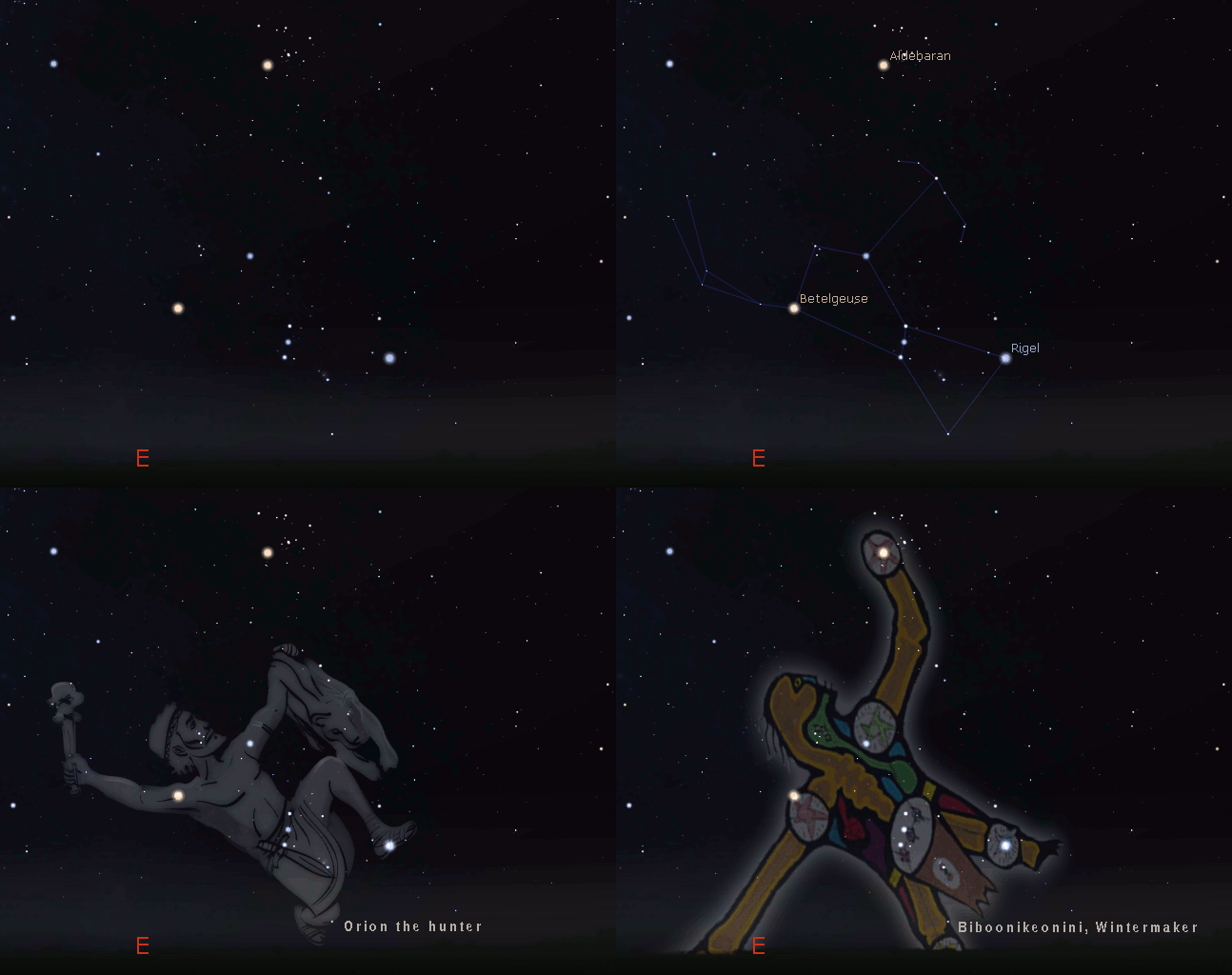
The stars of Orion and Wintermaker rising in this 4-step animation: Stars only, Western constellation lines and bright star names, Western constellation figure, Ojibwe (Anishinaabe) constellation figure. Created using Stellarium and GIMP.
11/26/2021 – Ephemeris – Native American Heritage Day
This is Ephemeris for Native American Heritage Day, Friday, November 26th. Today the Sun will be up for 9 hours and 11 minutes, setting at 5:05, and it will rise tomorrow at 7:55. The Moon, 1 day before last quarter, will rise at 11:33 this evening.
It’s also Black Friday, the day retail stores theoretically make it into the black, profit-wise. When looking at the sky and the few constellations of the native Anishinaabe people of our area, I am saddened there aren’t more of them. There were heroes, warriors, animals, fantastic and real, just like the Greek ones we learned of the European world. But they were lost in the attempted assimilation of these people into white society. It’s like the Borg of Star Trek: “You will be assimilated”. The atrocities of the Indian boarding schools are slowly coming to light, while certain powerful people want all the racial unpleasantness swept under the rug.
The astronomical event times given are for the Traverse City/Interlochen area of Michigan (EST, UT – 5 hours). They may be different for your location.
Addendum
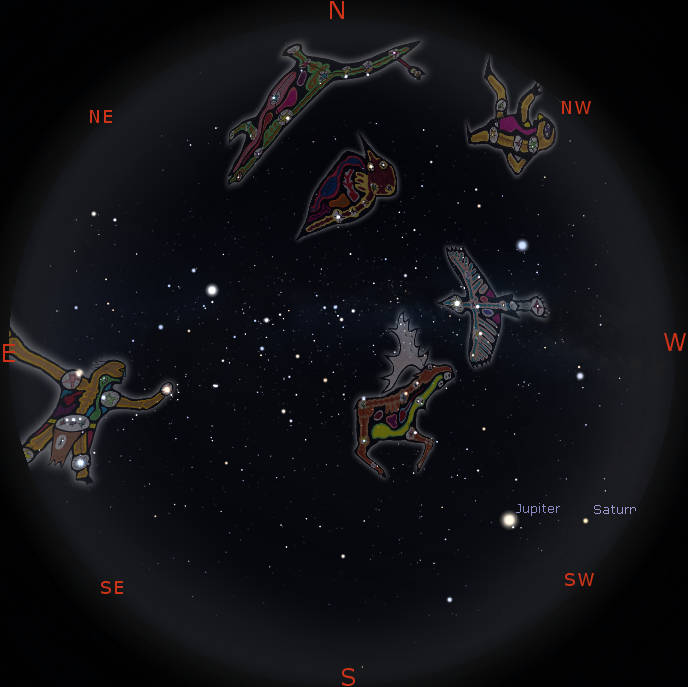
The Anishinaabe November Sky. Clockwise (sort of) from the top or North. The Fisher (Big Dipper); Loon (Little Dipper); Exhausted Bather (Hercules), in the northwest; high in the west, the Crane (Cygnus); nearly overhead, the Moose (Pegasus); and in the east the Wintermaker (Orion). Click on the image to enlarge it. Created using Stellarium. The Anishinaabe constellation drawings are from Ojibwe Sky Star Map Constellation Guide by Annette S. Lee, William Wilson, Jeffrey Tibbets and Carl Gawboy available locally and online. They are part of the latest editions of Stellarium, a free planetarium program. Links to it are on the right. Other information and links are available within Stellarium.
11/04/2021 – Ephemeris – Myths of the Pleiades from some other cultures
This is Ephemeris for Thursday, November 4th. The Sun will rise at 8:25. It’ll be up for 10 hours and 1 minute, setting at 6:26. The Moon is new today, and won’t be visible.
Let’s look at how some other cultures saw the Pleiades, the star cluster that is seen in the eastern sky these evenings. To the Anishinaabe native peoples around here, the Pleiades is the “Hole in the Sky” or the seven stones that are heated for the sweat lodge ceremony. To the Kiowa, these were sister stars that had been whisked into the sky from the top of Devil’s Tower in Wyoming, where they were threatened by a huge bear. In Norse mythology, these were the goddess Freya’s hens. The name we know them by has rather misty origins. Some think the Greek name is from the mother of the seven sisters, Pleione. The Greek word for sail is similar to Pleiades, and it seems the appearance of the Pleiades in the morning sky saw the best sailing weather in the Mediterranean.
The astronomical event times given are for the Traverse City/Interlochen area of Michigan (EDT, UT – 4 hours). They may be different for your location.
Addendum
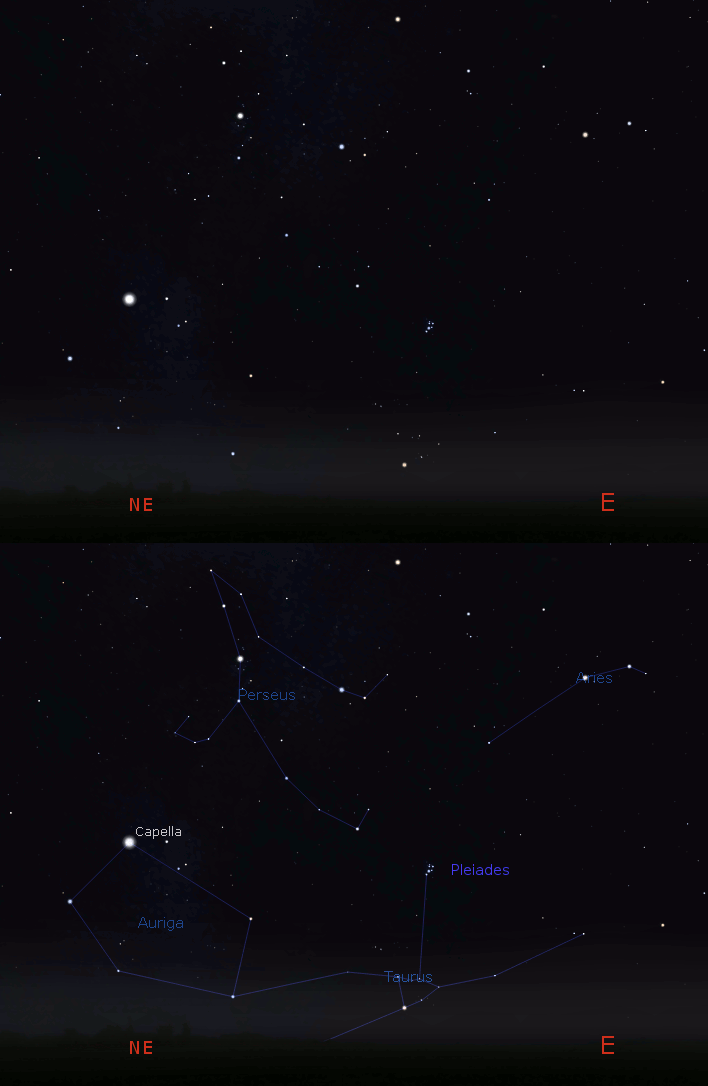
Finding the Pleiades animation for 9 p.m. October 29, 2019. Created using Stellarium and GIMP.

Seven maidens being attacked by a giant bear, having fled to the top of Devil’s Tower in Wyoming. Painting by Herbert Collins, http://www.nps.gov/deto.

They are also the Seven Daughters of the Moon and Sun. They loved to dance and play, and when their father, the Moon was low in the sky, would descend to the Earth in a basket to do their thing. On one of their trips to the earth, one of them was captured by a human, and she ended up falling in love with him, and married him. When father Moon found out he permanently dimmed her star, so now most people now only can spot 6 of the stars. This last bit seems to parallel the Greek story of the lost Pleiad.
 Bob Moler's Ephemeris Blog