Archive
Ephemeris: 02/25/2025 – Eridanus, a river in the sky
This is Ephemeris for Tuesday, February 25th. Today the Sun will be up for 10 hours and 59 minutes, setting at 6:25, and it will rise tomorrow at 7:24. The Moon, 2 days before new, will rise at 7:00 tomorrow morning.
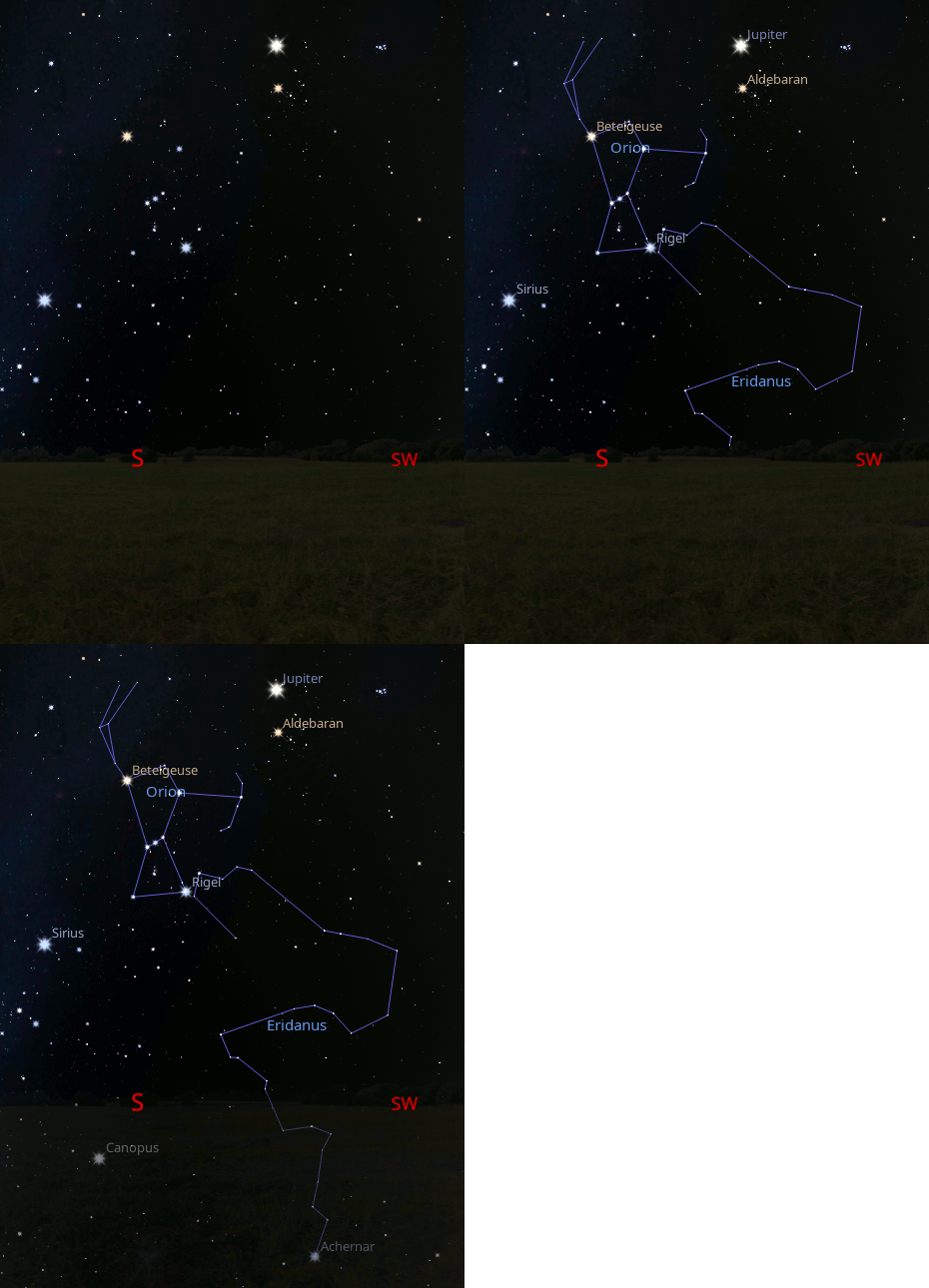
One of the more obscure constellations around is Eridanus, which depicts a river. At 8 PM the river starts near the lower right corner of Orion, near the bright star Rigel and flows to the lower right then zigzags back down to the south-southwestern horizon, it then heads below the horizon. One has to travel to the far south to see the southern terminus of the river, the bright star Achernar. Writers over the ages have seen here the Nile and the Earth circling river Ocean of the ancient flat earth days. Achernar is actually two stars, the brightest was discovered to be the flattest star known, due to its rapid spin. The dimensions of Achernar A has been determined to be twice as wide across its equator than from pole to pole. It’s 139 light years away.
The astronomical event times given are for the Traverse City/Interlochen area of Michigan (EST, UT – 5 hours). Times will be different for other locations.
Addendum
Ephemeris: 02/21/2025 – Orion’s most distinctive feature
This is Bob Moler with Ephemeris for Friday, February 21st. Today the Sun will be up for 10 hours and 46 minutes, setting at 6:20, and it will rise tomorrow at 7:31. The Moon, 1 day past last quarter, will rise at 4:09 tomorrow morning.
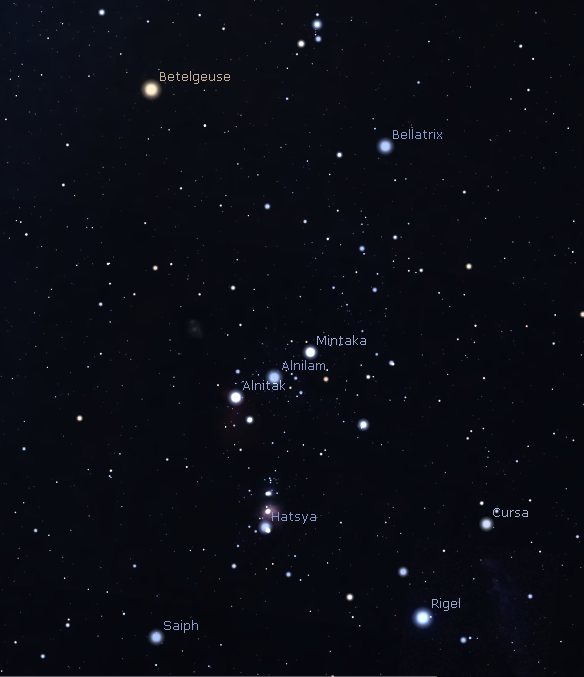
Orion’s belt of three stars is one of the most noticeable star groupings in the sky. There are no other groups of three bright stars in a straight line visible anywhere else in the sky. The star’s names from left to right are Alnitak, Alnilam and Mintaka. They are actually a bit farther away than the other bright stars of Orion. Alnilam, the center star, is over three times the distance of red giant Betelgeuse above it and over twice as far as blue white giant star Rigel below it. Alnilam is 375 thousand times brighter than the Sun. These three stars were also known as Frigga’s Spindle by the Norsemen. Frigga, also known as Freya, is the goddess from whom we get the name of the day of the week we call Friday.
The astronomical event times given are for the Traverse City/Interlochen area of Michigan (EST, UT – 5 hours). Times will be different for other locations.
Addendum
Ephemeris: 02/20/2025 – Can you find the celestial unicorn?
This is Bob Moler with Ephemeris for Thursday, February 20th. Today the Sun will be up for 10 hours and 43 minutes, setting at 6:18, and it will rise tomorrow at 7:33. The Moon, at last quarter today, will rise at 3:06 tomorrow morning.
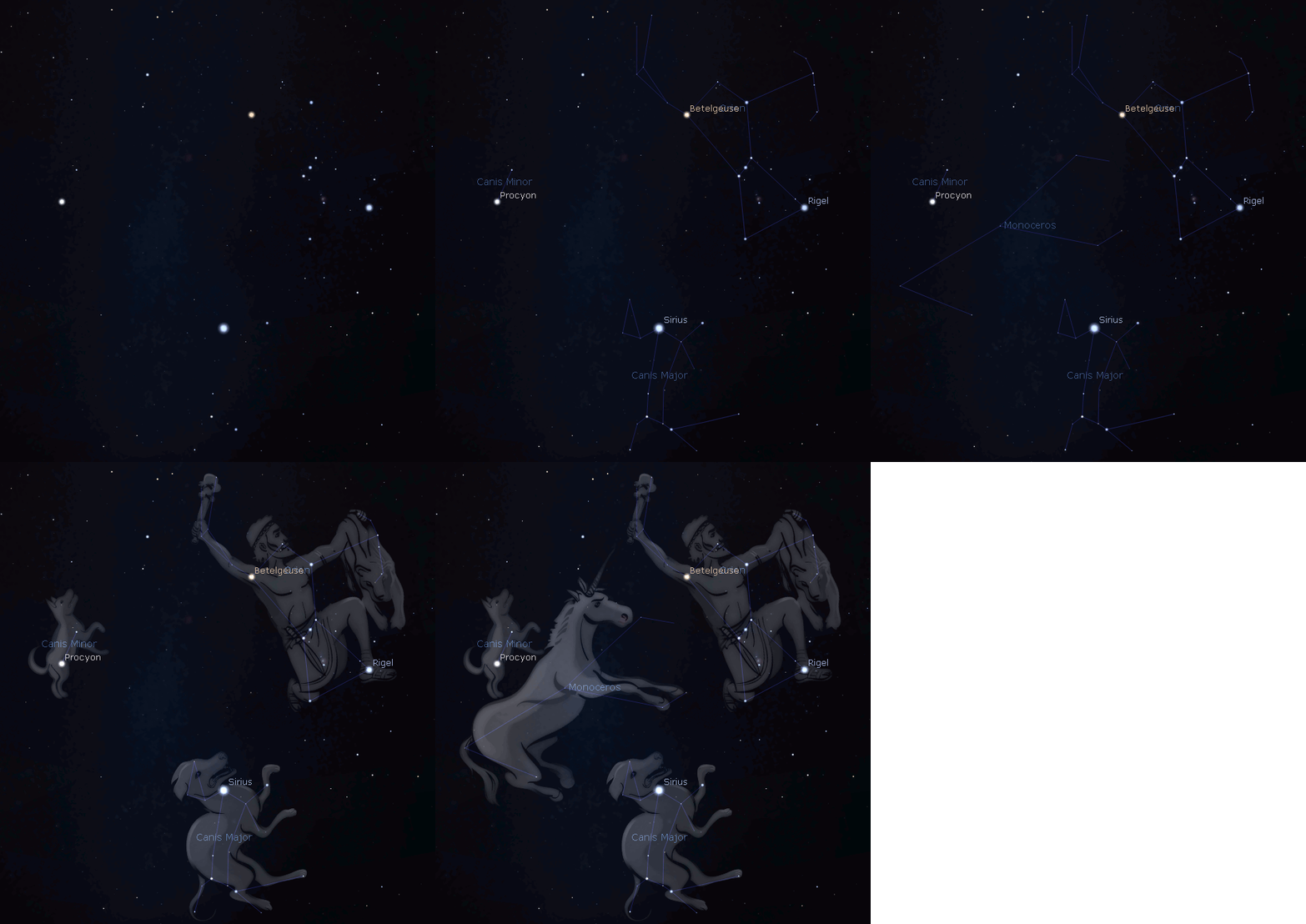
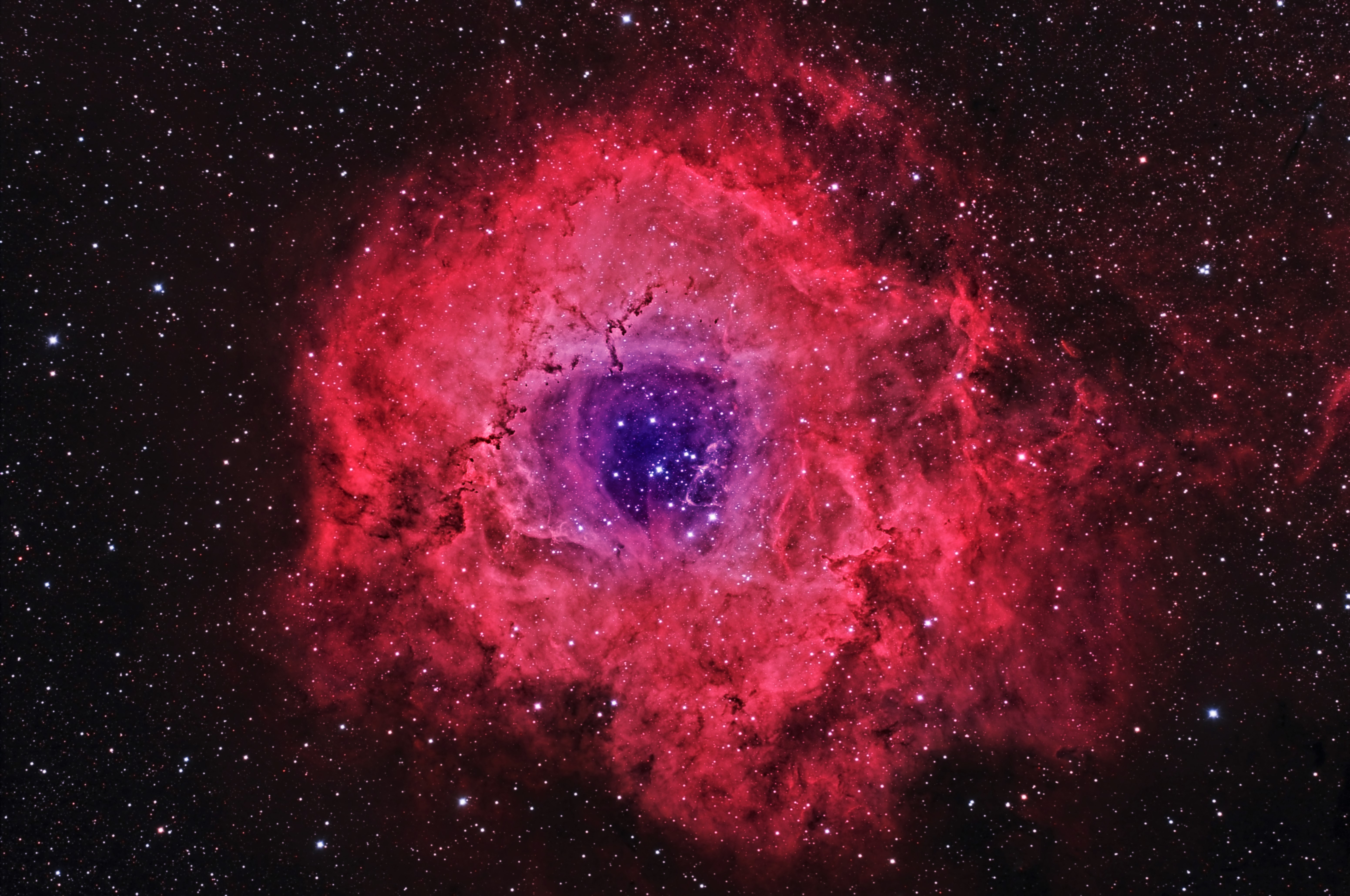
Among all the constellations in the sky of animals real and mythical, there is also a unicorn. It’s called Monoceros, and inhabits the southeastern sky at 8 p.m. mostly bounded by Orion on the right, Canis Major, the great dog below and Canis Minor, the little dog to the left and above. Unfortunately for observers without a telescope Monoceros, is devoid of any but the faintest stars. Maybe that’s why no one can find unicorns anymore. It has many faint stars because the Milky Way runs through it. For the astrophotographer it is a feast of star clusters and faint nebulae or clouds of gas and dust, the birthplace of stars, including the red rose of the Rosette Nebula. It also contains a beautiful telescopic triple star system, Beta (β) Monocerotis.
The astronomical event times given are for the Traverse City/Interlochen area of Michigan (EST, UT – 5 hours). Times will be different for other locations.
Addendum
Ephemeris: 02/18/2025 – Finding Orion’s greater hunting dog
This is Ephemeris for Tuesday, February 18th. Today the Sun will be up for 10 hours and 37 minutes, setting at 6:15, and it will rise tomorrow at 7:36. The Moon, 2 days before last quarter, will rise at 12:52 tomorrow morning.
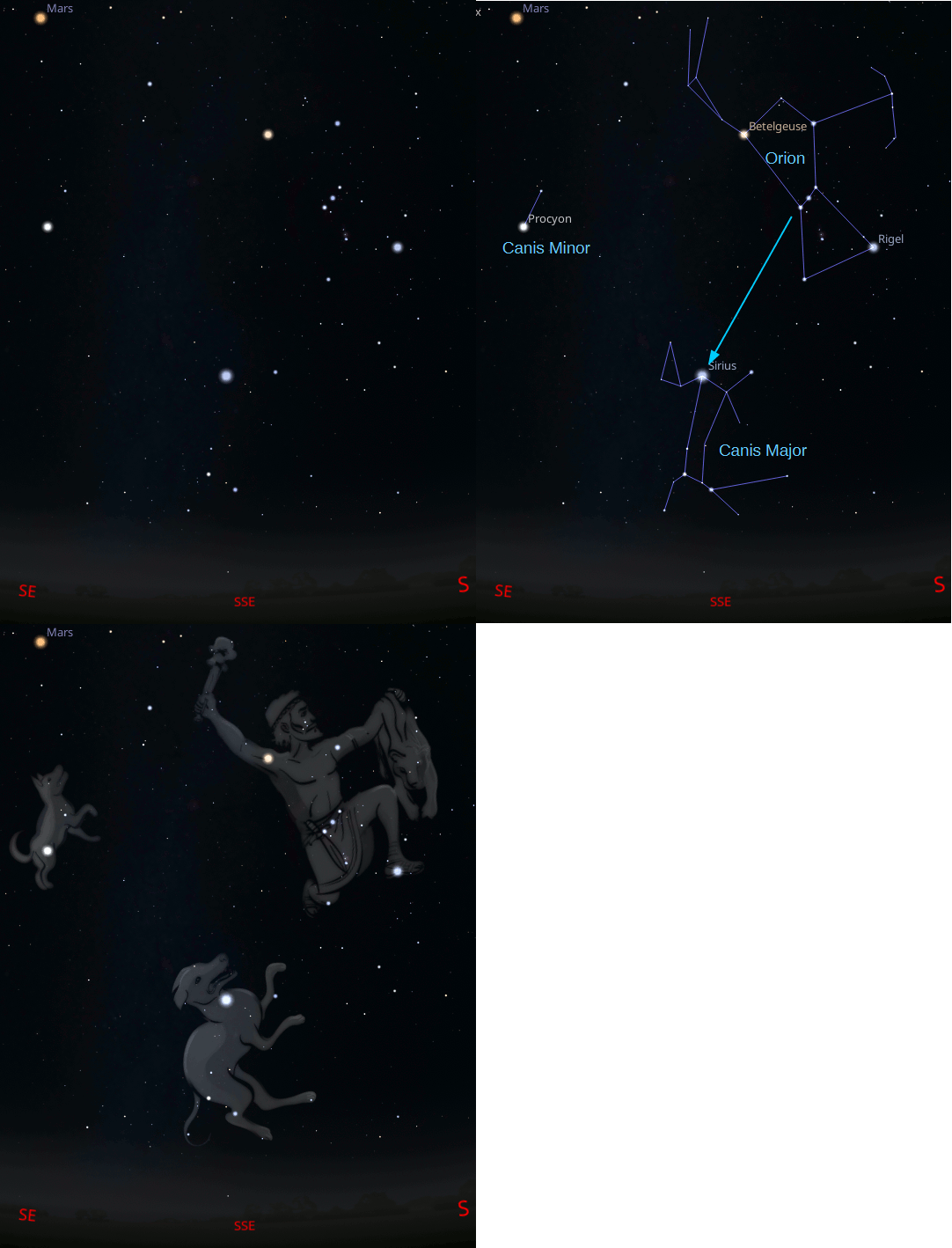
The great winter constellation or star group Orion the Hunter, is located in the south-southeastern sky at 8 p.m. His elongated rectangle of a torso is almost vertical. In the center of the rectangle are three stars in a line that mark his belt. As a hunter, especially one of old, he has two hunting dogs. The larger, Canis Major can be found by following the three belt stars of Orion down and to the left. There lies the brilliant star called Sirius, also known as the Dog Star. It’s in the heart of a stick figure dog low in the southeast, facing Orion, that appears to be begging. There’s a fine star cluster, called M41, at the 5 o’clock position from Sirius, easily visible in binoculars or a small telescope.
The astronomical event times given are for the Traverse City/Interlochen area of Michigan (EST, UT – 5 hours). Times will be different for other locations.
Addendum
Ephemeris: 01/27/2025 – Gemini the twins with Mars this year
This is Ephemeris for Monday, January 27th. Today the Sun will be up for 9 hours and 38 minutes, setting at 5:44, and it will rise tomorrow at 8:05. The Moon, 2 days before new, will rise at 8:00 tomorrow morning.
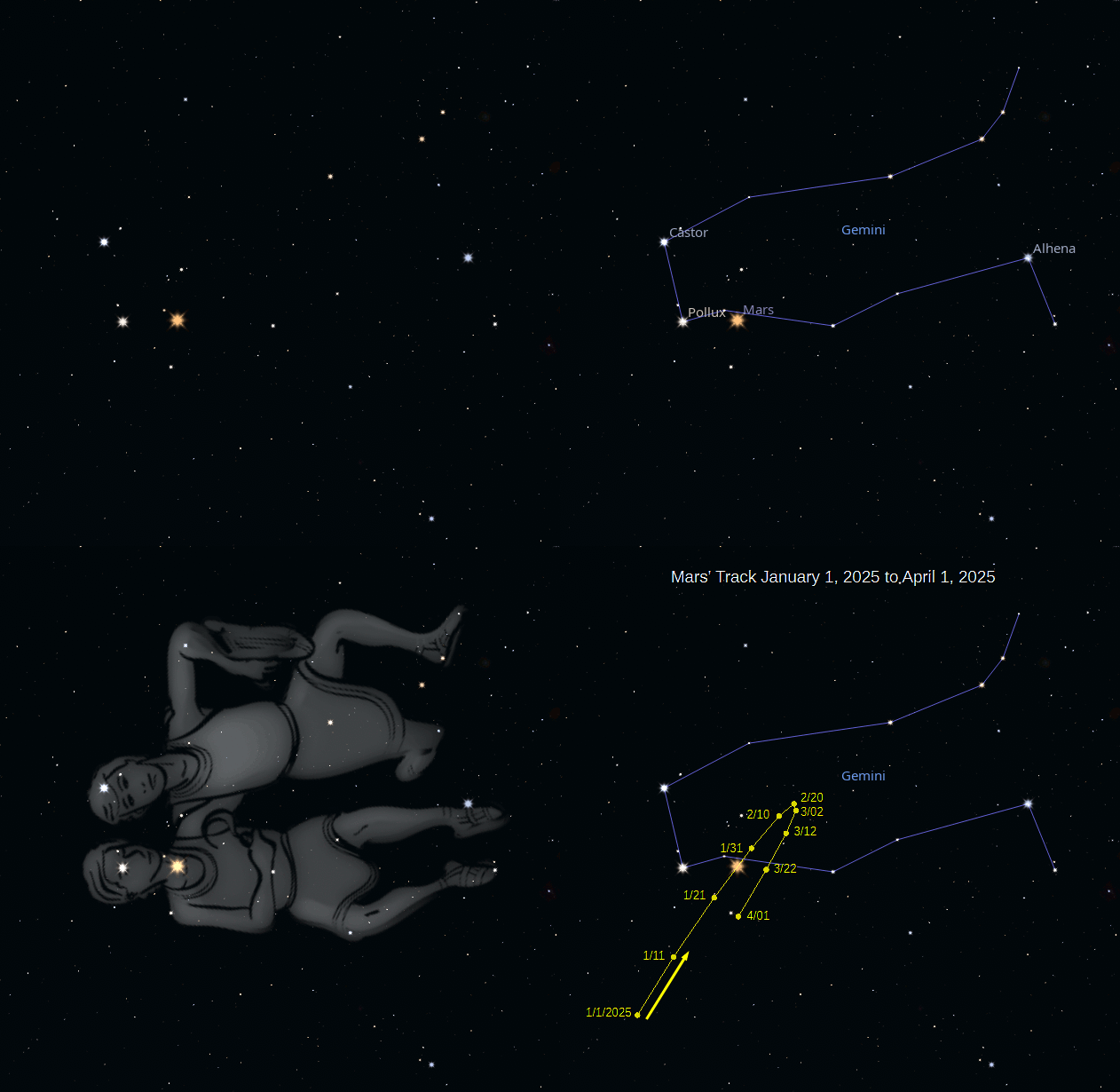
Another famous winter constellation is Gemini. The constellation of Gemini the Twins is visible halfway to the zenith in the east, at the top and left of Orion the hunter, at 9 pm. The namesake stars of the two lads, are the two bright stars at the left end of Gemini, and are high and are due east. Castor is on top, while Pollux is below. From them come two lines of stars that outline the two, extending horizontally toward Orion. Mars is passing in front of the stars of Gemini during the first quarter of this year, reaching the western end of its retrograde loop and doubling back to the east. In Greek mythology the Gemini twins were half brothers, Castor was fathered by a mere mortal, while Pollux was fathered by Zeus, but were born together as twins. When Castor was killed during the quest for the Golden Fleece, Pollux pleaded with Zeus to let him die also, so Zeus placed them together in the sky.
The astronomical event times given are for the Traverse City/Interlochen area of Michigan (EST, UT – 5 hours). Times will be different for other locations.
Addendum
Ephemeris: 01/23/2025 – Conflict in the heavens
This is Ephemeris for Thursday, January 23rd. Today the Sun will be up for 9 hours and 28 minutes, setting at 5:39, and it will rise tomorrow at 8:09. The Moon, 2 days past last quarter, will rise at 4:15 tomorrow morning.
There are several instances in the Greek heavens where constellations appear to interact with one another. This is true with Orion the hunter and Taurus the bull. Taurus, whose face is the letter V of stars, near Jupiter this year. The orangish star Aldebaran as his angry bloodshot eye is charging down on Orion, who has raised a lion skin shield on one arm and an upraised club in the other, ready to strike. They have been frozen in this pose for millennia. Stars below and right of the letter V of the Bull’s face suggest the front part of his body and his front legs charging at Orion. Orion also has two hunting dogs, Canis Major and Canis Minor. Canis Major with its dazzling star Sirius will rise around 6:21 on a line extending down from Orion’s belt.
The astronomical event times given are for the Traverse City/Interlochen area of Michigan (EST, UT – 5 hours). Times will be different for other locations.
Addendum
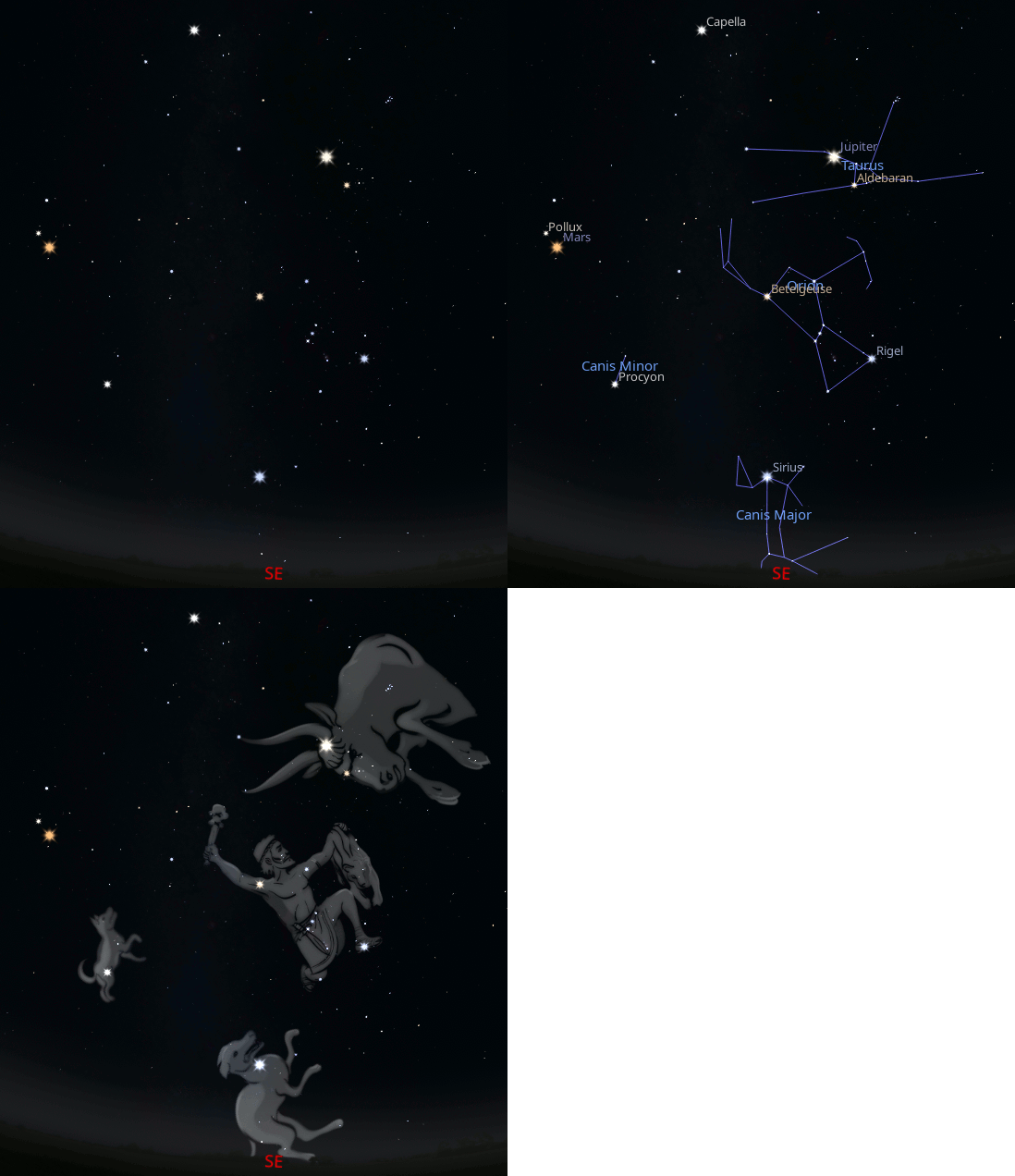
Perhaps Jupiter is not intruding, because the Roman god Jupiter is the Greek god Zeus, who turned himself into a bull to carry off the maiden Europa. And Europa is with him still as Jupiter’s moon, and target of NASA’s recently launched Europa Clipper spacecraft.
Ephemeris: 12/27/2024 – Orion’s story
This is Ephemeris for Friday, December 27th. Today the Sun will be up for 8 hours and 49 minutes, setting at 5:09, and it will rise tomorrow at 8:19. The Moon, 3 days before new, will rise at 6:32 tomorrow morning.
It may seem unfair that the greatest mythological hero Hercules gets a little constellation of dim stars on the border between the spring and summer constellations, while Orion, a virtual nobody, a hard luck hero gets the splashiest constellation in the sky. Orion’s claim to fame or infamy is how he died. And the Greeks had two completely different stories on how that happened. First, that he was killed by a sting of a giant scorpion represented by the constellation Scorpius, and second that he was killed by an arrow shot by the goddess he loved, the arrow being deflected by her brother who didn’t want her to marry a mere mortal.
The astronomical event times given are for the Traverse City/Interlochen area of Michigan (EST, UT – 5 hours). Times will be different for other locations.
Addendum
Ephemeris: 12/26/2024 – Finding Orion the hunter
This is Bob Moler with Ephemeris for Thursday, December 26th. Today the Sun will be up for 8 hours and 49 minutes, setting at 5:08, and it will rise tomorrow at 8:19. The Moon, halfway from last quarter to new, will rise at 5:24 tomorrow morning.
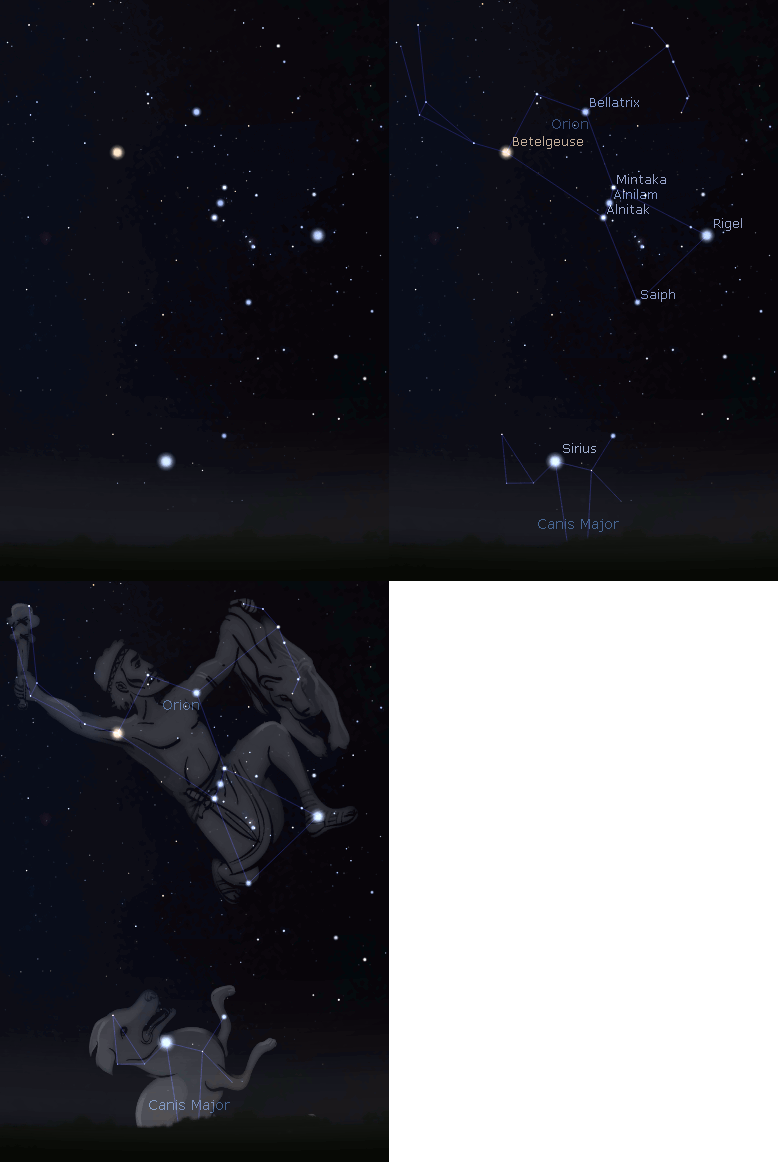
The constellation of Orion the hunter is the most famous constellation in the sky. At 8 o’clock tonight he is seen in the east southeast. Two of its stars are first magnitude, among the brightest in the sky while five are second magnitude, as bright as the brightest Big Dipper stars. His torso is a rectangle of stars, now tilted to the left, framed by Betelgeuse and Bellatrix in his shoulders and Rigel and Saiph and Rigel at his knees. Betelgeuse and Rigel are first magnitude stars at opposite corners of that rectangle. His most easily found feature is his belt of three stars in a straight line in the center of that rectangle, now nearly vertically aligned, which makes them easy to spot even if you don’t know the pattern of the rest of the stars.
The astronomical event times given are for the Traverse City/Interlochen area of Michigan (EST, UT – 5 hours). Times will be different for other locations.
Addendum
Ephemeris: 12/02/2024 – Orion is rising in the evening
This is Ephemeris for Monday, December 2nd. Today the Sun will be up for 9 hours and 1 minute, setting at 5:03, and it will rise tomorrow at 8:02. The Moon, 1 day past new, will set at 5:47 this evening.
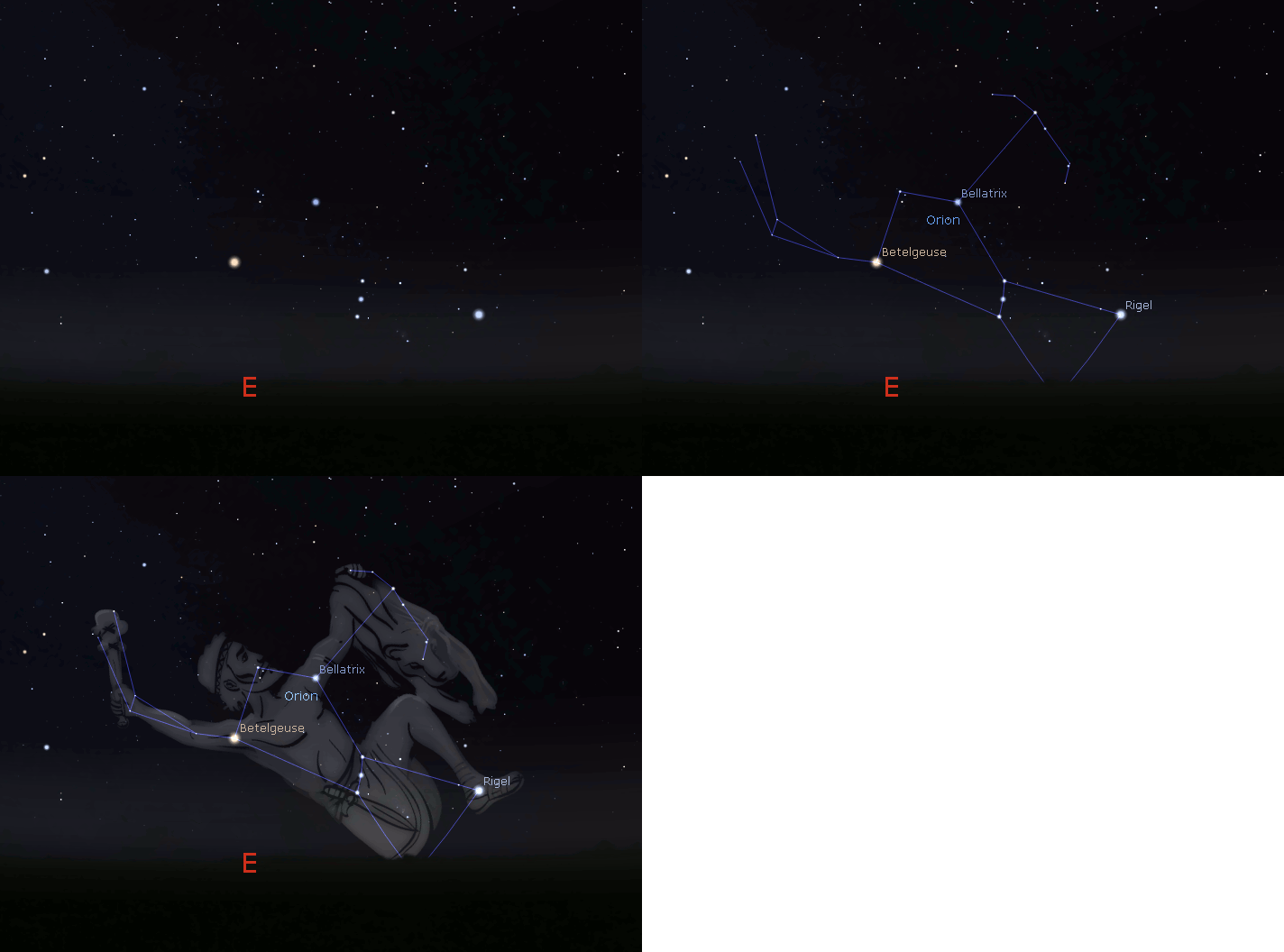
In the east, the central winter constellation Orion the hunter throws a leg over the horizon between 8 and 9 p.m. as Robert Frost told in his poem Star-Splitter. The upright rectangle that is his body on December evenings is tilted to the left as he rises, with a bright red star Betelgeuse at the top left of the rectangle, his shoulder. At the opposite corner is blue-white Rigel, a knee. In the center of the rectangle is a line of three stars nearly vertically aligned as he rises, which represents his belt. The stars of Orion’s belt are how many folks can find him. The Anishinaabek native peoples of this area call him the Wintermaker whose arms are held wide to encompass the winter stars. His rising in the evening heralds the coming of winter.
The astronomical event times given are for the Traverse City/Interlochen area of Michigan (EST, UT – 5 hours). Times will be different for other locations.
Addendum
Ephemeris: 11/26/2024 – Finding the celestial charioteer and his goats
This is Ephemeris for Tuesday, November 26th. Today the Sun will be up for 9 hours and 11 minutes, setting at 5:05, and it will rise tomorrow at 7:55. The Moon, 4 days past last quarter, will rise at 4:18 tomorrow morning.
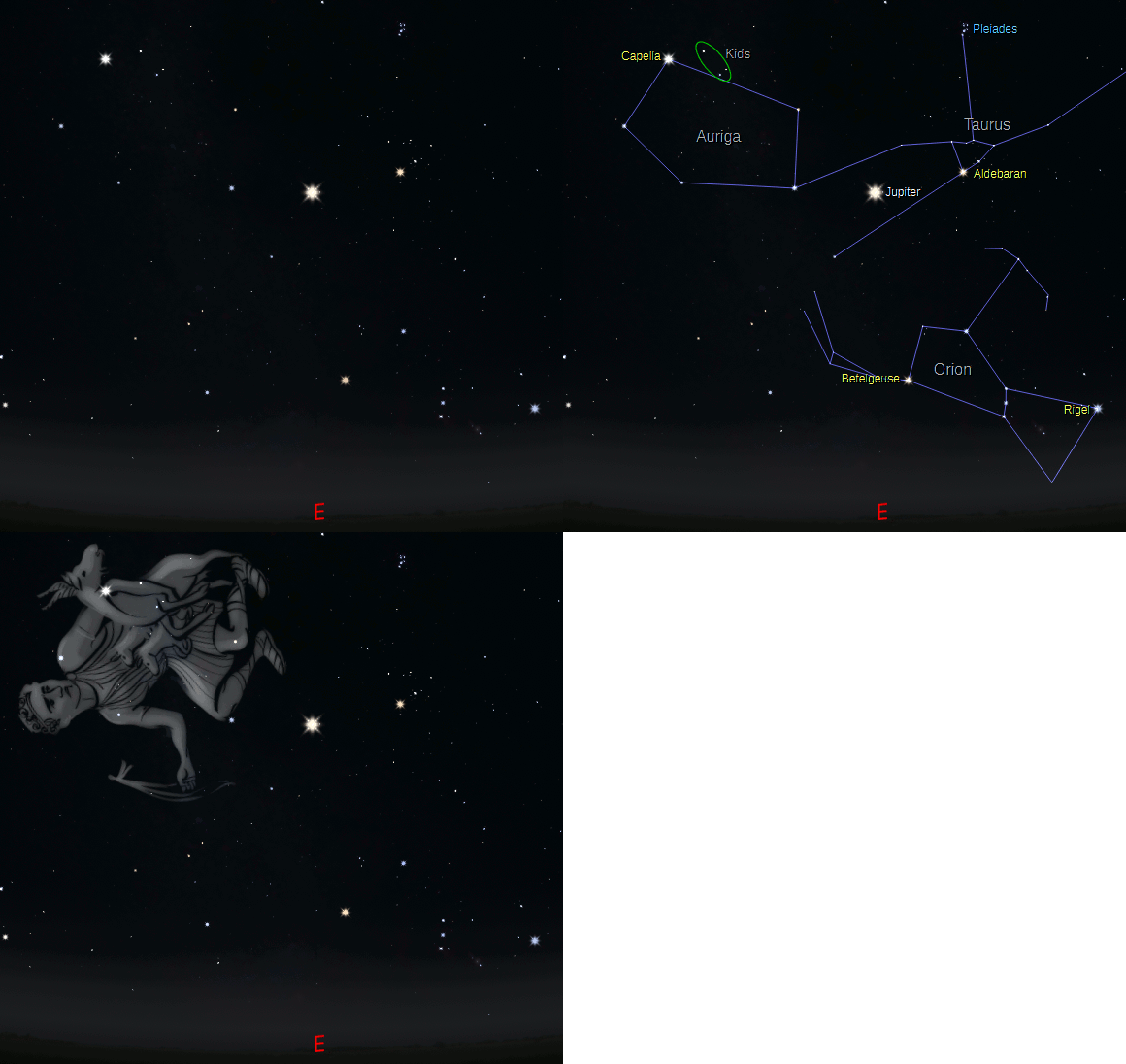
The constellation Auriga the charioteer is halfway up the sky in the east northeast at 9 p.m. It is a pentagon of stars, with the brilliant star Capella at the upper left of its corners. Capella represents a mama goat he’s carrying. A narrow triangle of stars just right of Capella are her kids, that is her baby goats. The Kids is an informal constellation or asterism. The Milky Way runs through Auriga, but it’s not very bright here. We are looking away from the center of the Milky Way to the more sparse outer parts of our galaxy. Within and near that pentagon, one can sweep with binoculars and low power telescopes to find several star clusters, groups of hundreds of stars born in the clump we still see them in. These star clusters will appear as fuzzy spots in binoculars.
The astronomical event times given are for the Traverse City/Interlochen area of Michigan (EST, UT – 5 hours). Times will be different for other locations.
Addendum
 Bob Moler's Ephemeris Blog