Archive
Ephemeris: 11/25/2024 – How to find Taurus the bull
This is Ephemeris for Monday, November 25th. Today the Sun will be up for 9 hours and 12 minutes, setting at 5:06, and it will rise tomorrow at 7:54. The Moon, 3 days past last quarter, will rise at 3:15 tomorrow morning.
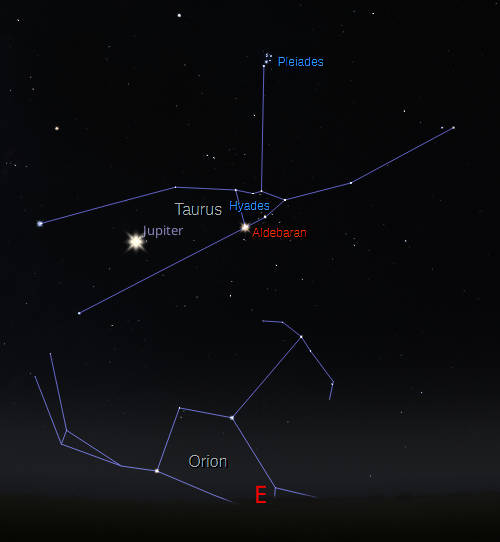
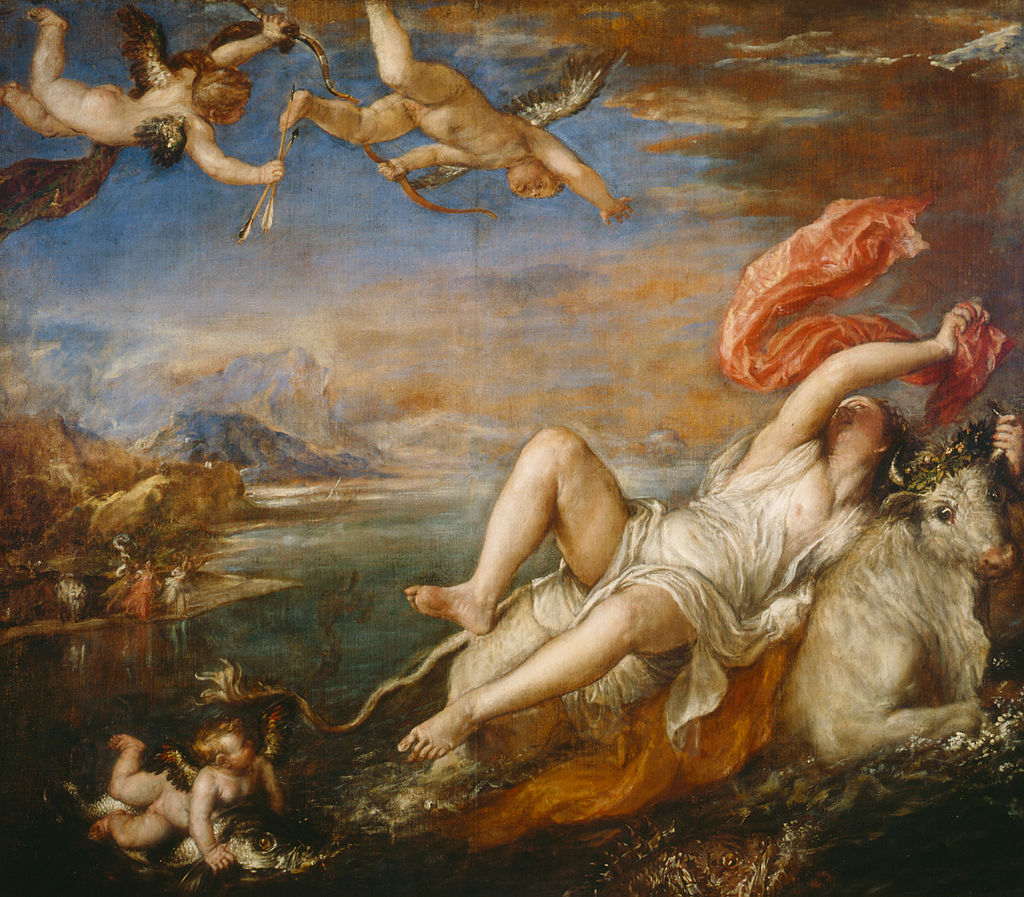
Low in the east at 8 this evening and below the beautiful Pleiades star cluster is Taurus the bull. His face is a letter V shape of stars lying on its side, the star cluster Hyades, with the bright orange-red star Aldebaran at one tip of the V as its angry bloodshot eye. Aldebaran is actually about halfway between us and the cluster. Tonight it is to the right of the brilliant planet Jupiter. The Pleiades star cluster is in his shoulder. Taurus is seen charging downward at that hour, the rising constellation of Orion. Taurus in Greek mythology was the form the god Zeus assumed when he carried off the maiden Europa. Europa’s still with him as a moon orbiting Zeus’ Roman equivalent, the planet Jupiter.
The astronomical event times given are for the Traverse City/Interlochen area of Michigan (EST, UT – 5 hours). Times will be different for other locations.
Addendum
Ephemeris: 11/22/2024 – Finding Aquarius
This is Ephemeris for Friday, November 22nd. Today the Sun will be up for 9 hours and 18 minutes, setting at 5:08, and it will rise tomorrow at 7:50. The Moon, at last quarter today, will rise at 12:04 tomorrow morning.
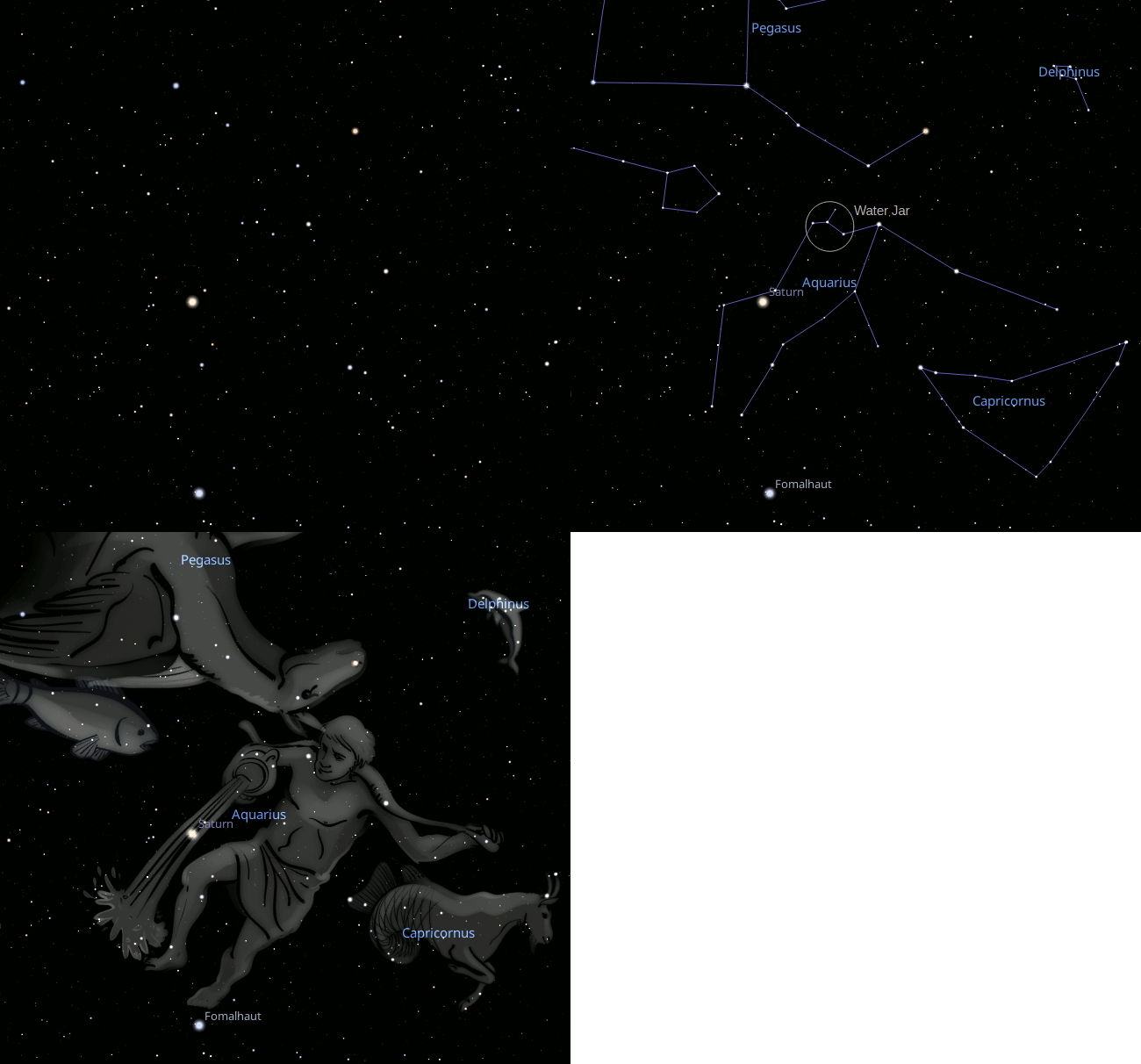
One of the constellations of the zodiac is in the southern sky at 8 in the evening, where Saturn is located this year. It’s the constellation of Aquarius, the water bearer. The image that is supposed to be depicted in the stars is that of a fellow carrying a stone jar of water. Aquarius is fairly hard to spot because it is made of faint stars. One part of him, though, is easier to spot. That is the Water Jar, an asterism or informal constellation. It is a distinctive small nearly equilateral triangle of stars with another star in the center. Aquarius is not a very good water bearer because he’s spilling the water out of his jar. The Water jar is above and to the right of Saturn this year and the water is flowing down a line of stars to the lower left.
The astronomical event times given are for the Traverse City/Interlochen area of Michigan (EST, UT – 5 hours). Times will be different for other locations.
Addendum
Ephemeris: 09/27/2024 – Finding Andromeda
This is Ephemeris for Friday, September 27th. Today the Sun will be up for 11 hours and 53 minutes, setting at 7:29, and it will rise tomorrow at 7:37. The Moon, 3 days past last quarter, will rise at 3:11 tomorrow morning.
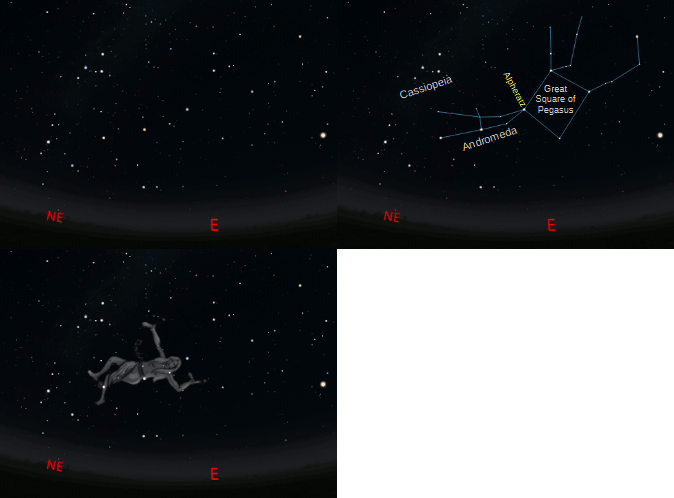
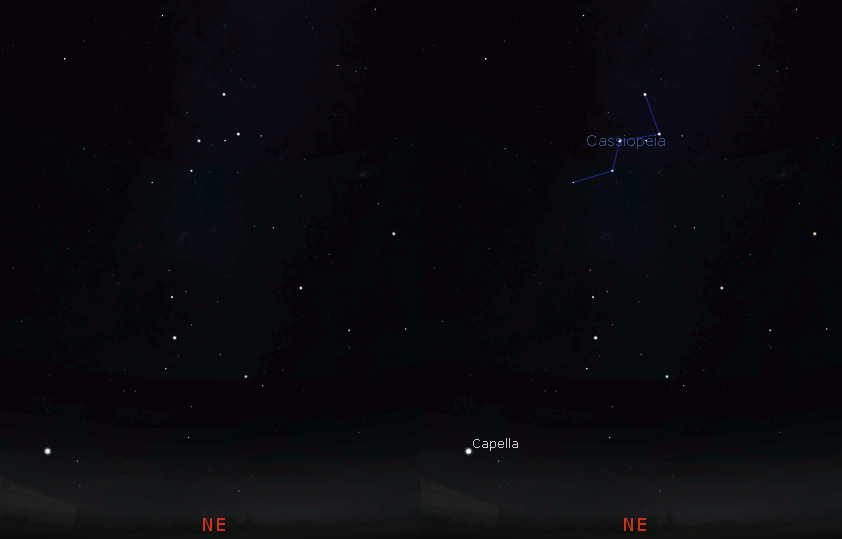
The constellation of Andromeda is famous mainly for the galaxy visible to the naked eye that is contained within it, called the Great Andromeda Galaxy, which is actually visible to the naked eye. Andromeda is found in the east northeast these evenings connected to the Great Square of Pegasus, the square of stars standing on one corner in the east. It shares a star with that square called Alpheratz, the leftmost star, and from that star two curved lines of stars are seen to the left that is the body of Andromeda. She was a Princess and daughter of Queen Cassiopeia, and was fated to be devoured by the monster Cetus. She was saved by the hero Perseus who flew in on his flying horse Pegasus.
The astronomical event times given are for the Traverse City/Interlochen area of Michigan (EDT, UT – 4 hours). Times will be different for other locations.
Addendum
Ephemeris: 09/26/2024 – Finding Cassiopeia the queen
This Ephemeris for Thursday, September 26th. Today the Sun will be up for 11 hours and 56 minutes, setting at 7:31, and it will rise tomorrow at 7:36. The Moon, 2 days past last quarter, will rise at 2:02 tomorrow morning.
High in the northeast sky at 9:00 PM can be found the constellation of Cassiopeia the queen. Its stars make a letter W in the sky. It is circumpolar, meaning that it never sets, as it appears to move around the North Pole of the sky. In the summer it is a W low in the north. It becomes kind of an open and angular number 3 in the autumn. In the winter it is overhead and looks like an M. In springtime it looks like the Greek capital letter Sigma in the northwest. I will visit Cassiopeia later this autumn and relate her story and other autumn constellations including her daughter Andromeda, husband King Cepheus, future son-in-law Perseus and his horse Pegasus, and the sea monster, Cetus.
The astronomical event times given are for the Traverse City/Interlochen area of Michigan (EDT, UT – 4 hours). Times will be different for other locations.
Addendum
Ephemeris: 09/24/2024 – Pegasus is rising on autumn evenings
This is Ephemeris for Tuesday, September 24th. Today the Sun will be up for 12 hours and 2 minutes, setting at 7:35, and it will rise tomorrow at 7:34. The Moon, at last quarter today, will rise at 11:47 this evening.
While we’ve been watching the stars and constellations of summer and the Milky Way, the constellations of autumn have been sneaking up on us from the east. About halfway up the sky in the east at 9 PM is one of the greatest constellations of autumn, Pegasus the flying horse. Her body or at least the front part of it is a large square of stars called the Great Square of Pegasus. It is an almost perfect rectangle. However, as she’s rising, it’s standing on one corner. From the upper star are her front legs, from the rightmost star her neck and head extend in the stars. And from the left star of the square are what might look like her hind legs but aren’t. Only half of her body is in the stars. It’s another constellation, Andromeda, which we’ll talk about later.
The astronomical event times given are for the Traverse City/Interlochen area of Michigan (EDT, UT – 4 hours). Times will be different for other locations.
Addendum
Ephemeris: 09/03/2024 – The constellation of Scutum the shield
This is Ephemeris for Tuesday, September 3rd. Today the Sun will be up for 13 hours and 6 minutes, setting at 8:14, and it will rise tomorrow at 7:09. The Moon, 1 day past new, will set at 8:38 this evening.
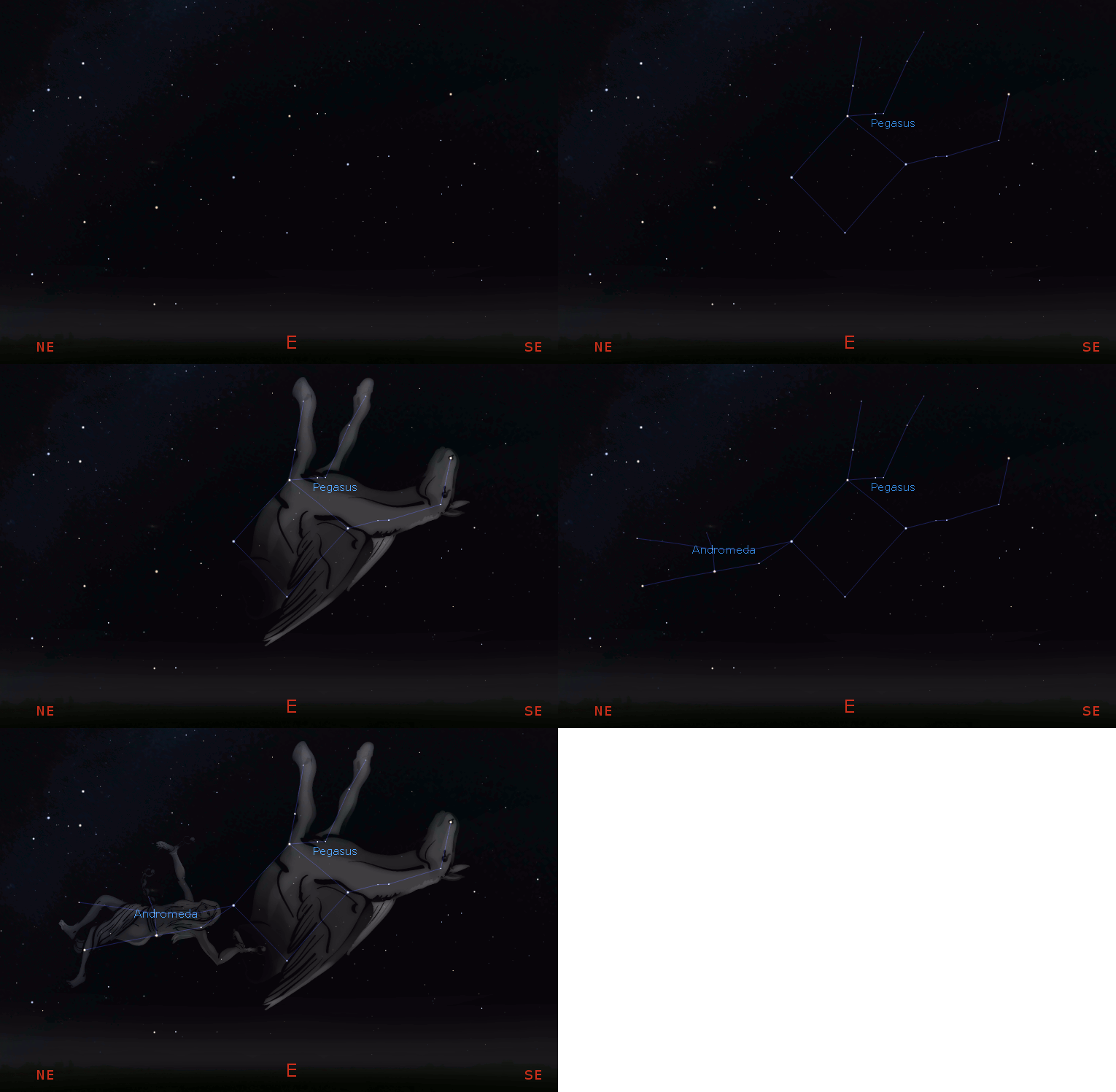
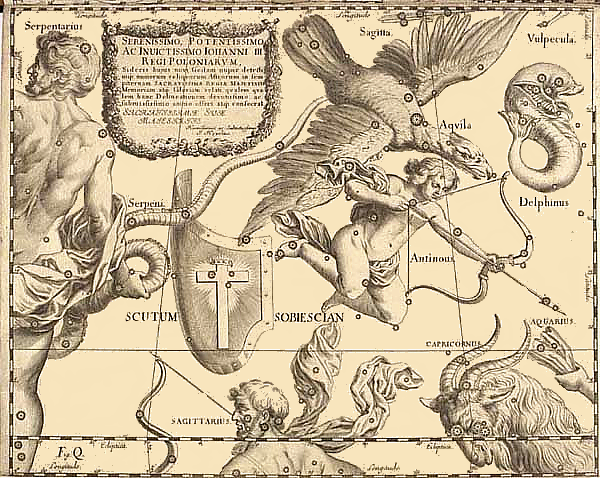
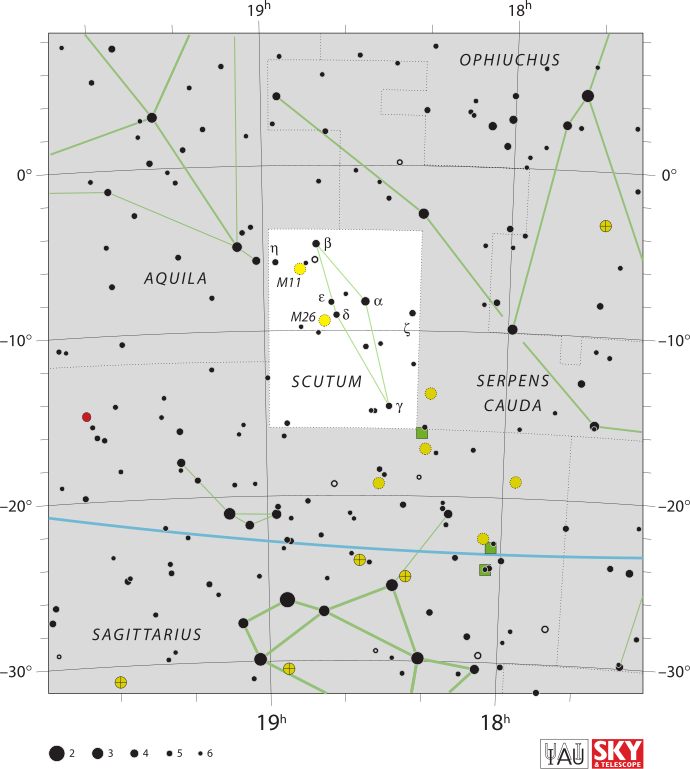
In the southern sky between the Teapot of Sagittarius below and Aquila the Eagle above, with Altair the southernmost star of the Summer Triangle, lies Scutum the shield of John Sobieski the Polish king who stopped the advance of the Turks at Kahlenberg, which lies on a hill overlooking Vienna, in 1683. The Polish half of me is very proud. Scutum is one of two official constellations which are related to real persons. The other one is Coma Berenices, a hank of Egyptian Queen Berenice’s hair. It’s recent as constellations go, to fill up a section of the sky that the ancients couldn’t make out anything, because the stars here are so dim and embedded in the glow of the Milky Way as to be nearly impossible to discern. Scutum lies in one of the richest portions of the Milky Way, wonderful to scan with binoculars and telescopes.
The astronomical event times given are for the Traverse City/Interlochen area of Michigan (EDT, UT–4 hours). Times will be different for other locations.
Addendum

Ephemeris: 08/29/2024 – Centaur or Teapot, you decide!
This is Bob Moler with Ephemeris for Thursday, August 29th. Today the Sun will be up for 13 hours and 21 minutes, setting at 8:23, and it will rise tomorrow at 7:03. The Moon, 3 days past last quarter, will rise at 3:02 tomorrow morning.
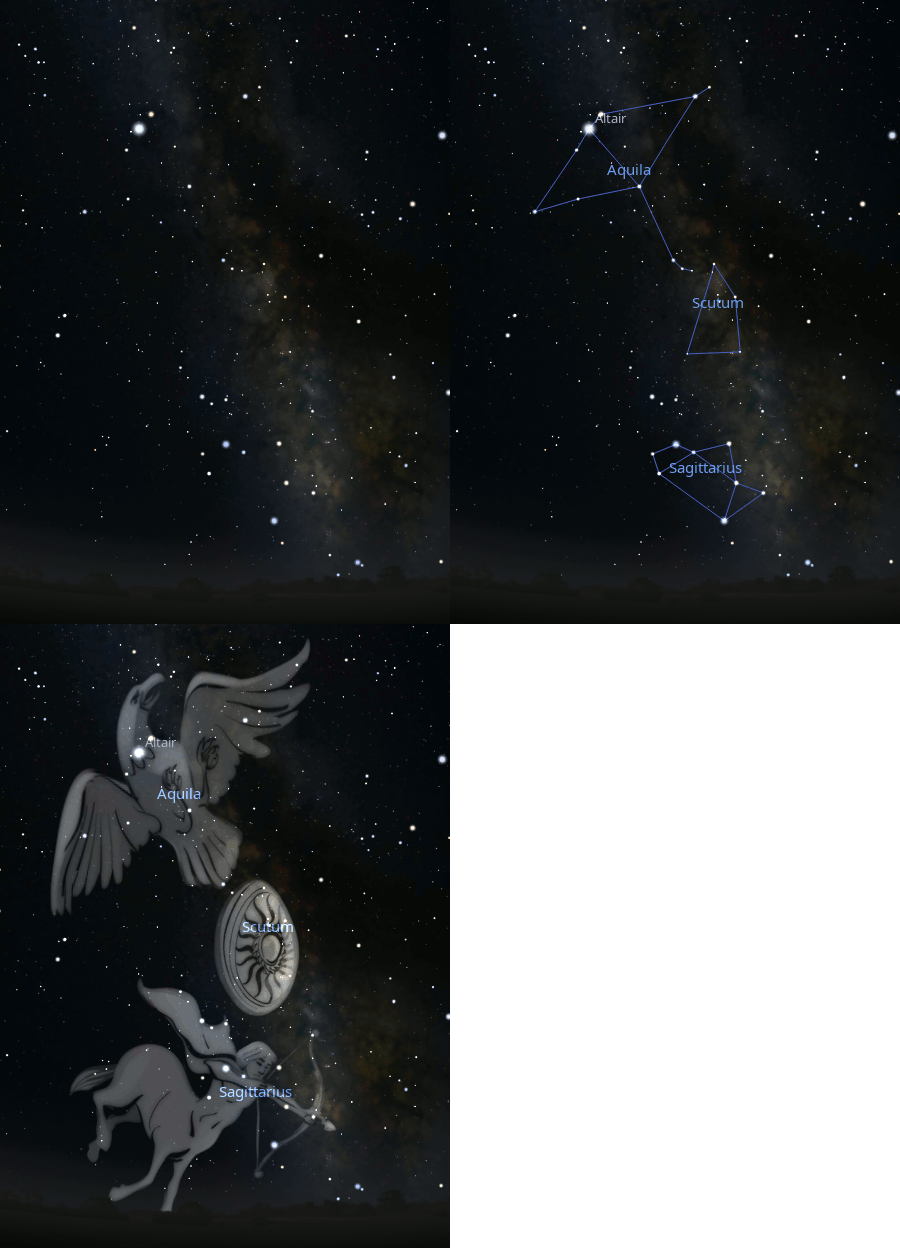
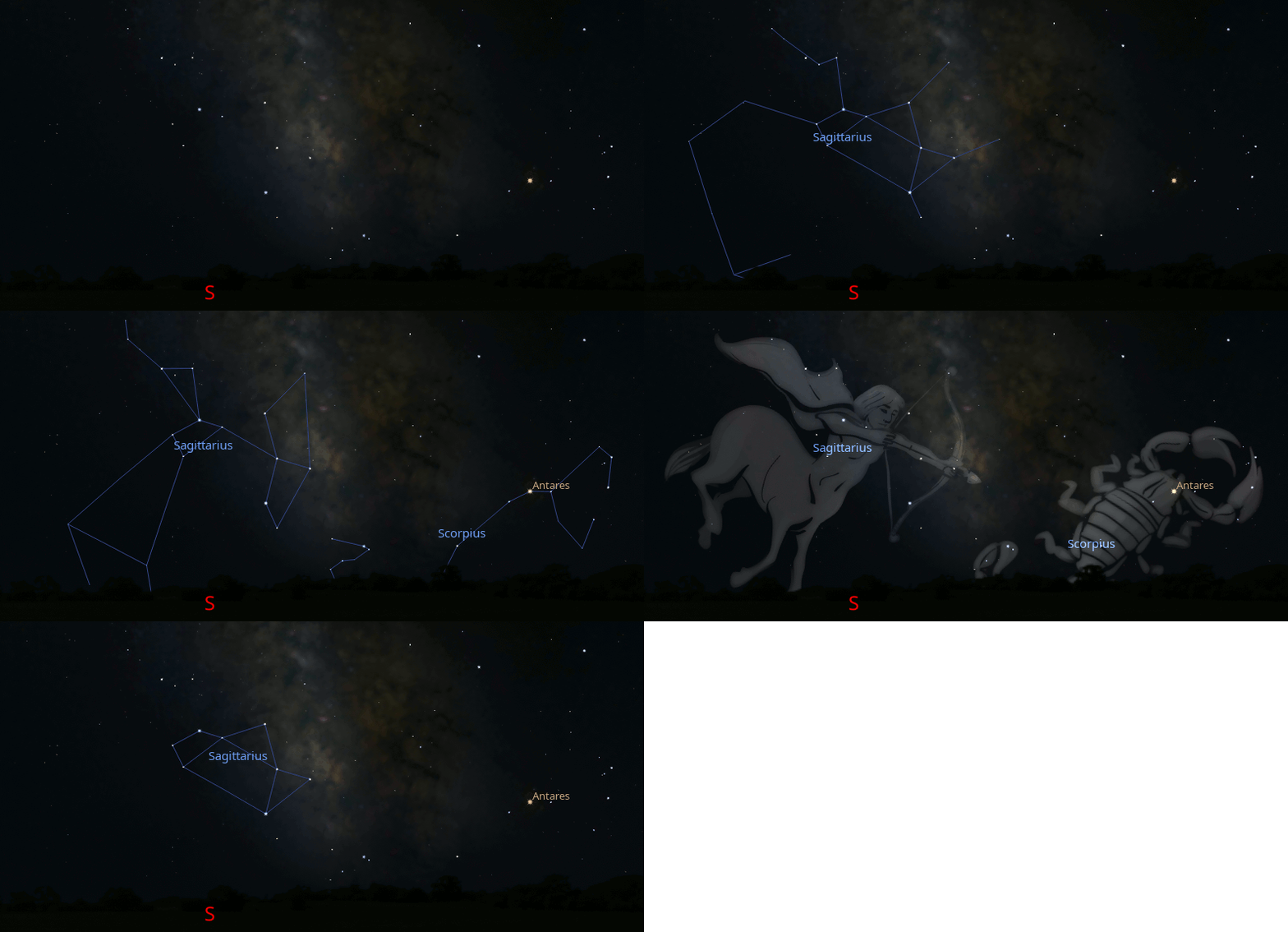
Low in the south at 10 PM shines the heart of summer Milky Way. The constellation that’s seen there is Sagittarius which is supposed to be a centaur with a bow and arrow. We modern folk haven’t seen a centaur outside a Harry Potter movie, so we see its stars looking like a teapot, a short and stout little teapot like in the children’s song. It is tipped to the West with the Milky Way like steam rising from its spout, which is about to pour its tea on the southwestern horizon later tonight. Sagittarius is just begging to be explored with binoculars or a very low power telescope to see its myriad of stars, star clusters and nebulae. As fabulous as all this appears, we cannot see into the heart of the Milky Way for all the clouds of dust and gas in the way.
The astronomical event times given are for the Traverse City/Interlochen area of Michigan (EDT, UT–4 hours). Times will be different for other locations.
Addendum
My first guide to the constellations was Stars by Zim and Baker, a Golden Guide. I checked, it has been revised and is still available. H. A. Rey’s book is also still available.
Ephemeris: 08/05/2024 – Finding Aquila the Eagle
This is Ephemeris for Monday, August 5th. Today the Sun will be up for 14 hours and 28 minutes, setting at 9:02, and it will rise tomorrow at 6:35. The Moon, 1 day past new, will set at 9:58 this evening.
The bright star Altair is seen halfway up the sky in the southeast at 10:30 this evening. It is one of the stars of the Summer Triangle with Vega above it, and Deneb above and left of it. It is the brightest star in the constellation Aquila the eagle which is seen flying northward through the Milky Way, with Altair at its head. Altair is flanked by two stars one above one below. Its wing tips can be seen below, and to the upper right. His tail is almost lost in the Milky Way seen lower in the east southeast. Here in Aquila is where the great rift, the dark band that splits the Milky Way, is most prominent. The Greeks and Romans seemed to have trouble telling vultures and eagles apart. Another name of the constellation was Vultur Volans.
The astronomical event times given are for the Traverse City/Interlochen area of Michigan (EDT, UT–4 hours). They will be different for other locations.
Addendum
Ephemeris: 08/02/2024 – The Northern Cross
This is Ephemeris for Friday, August 2nd. Today the Sun will be up for 14 hours and 35 minutes, setting at 9:06, and it will rise tomorrow at 6:31. The Moon, 2 days before new, will rise at 5:12 tomorrow morning.
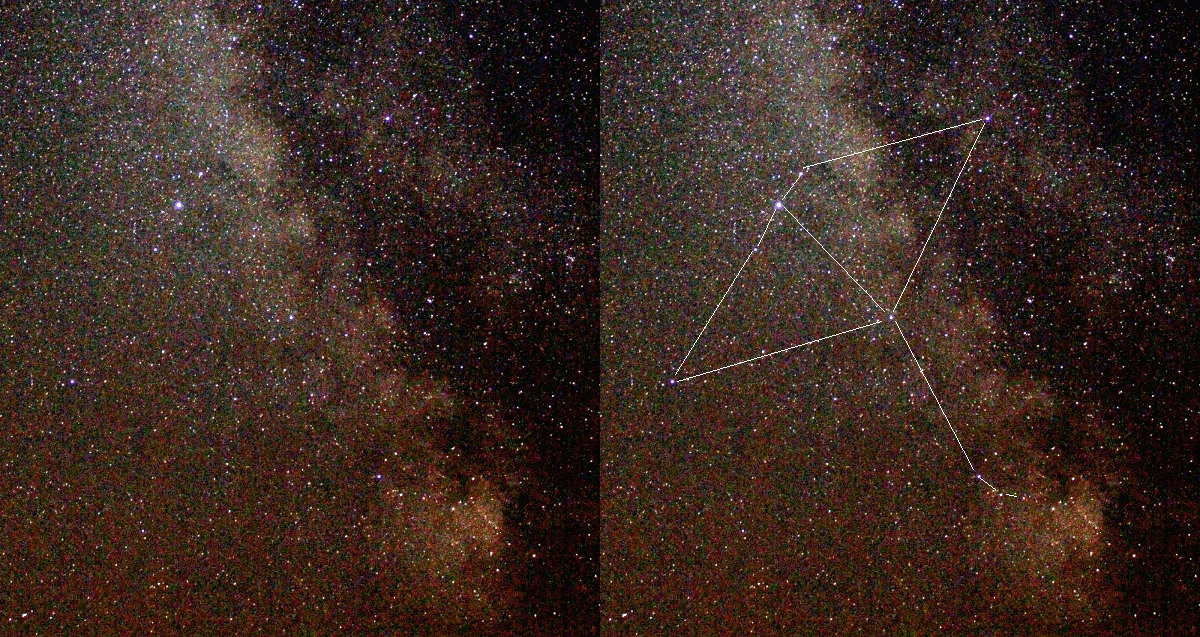
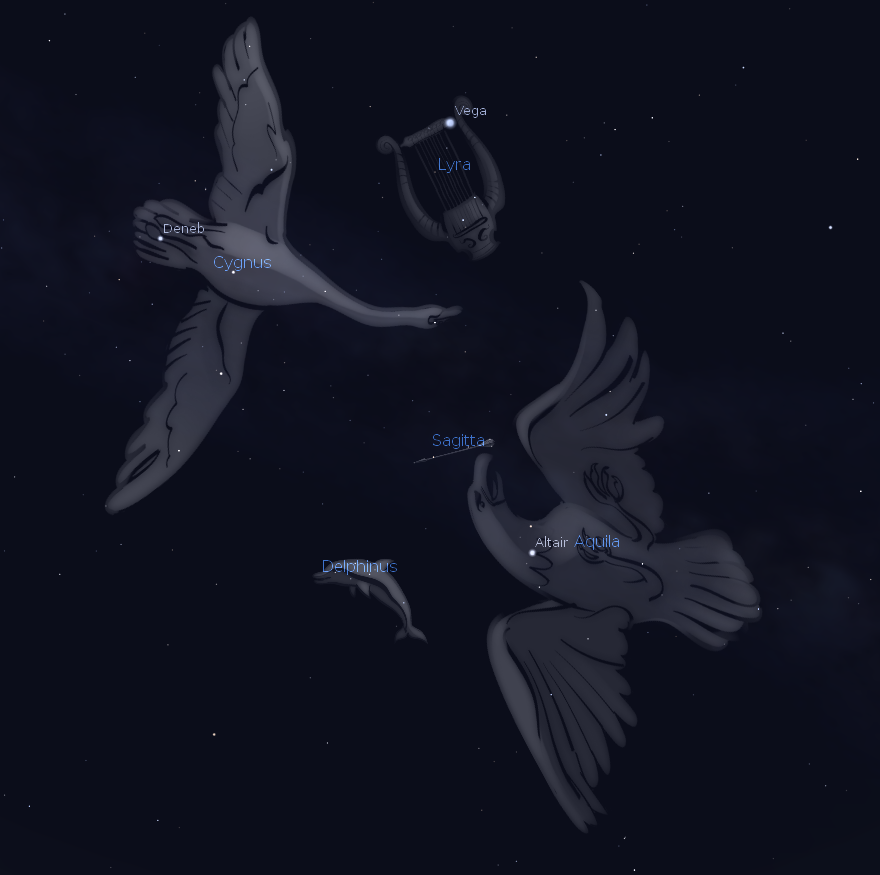
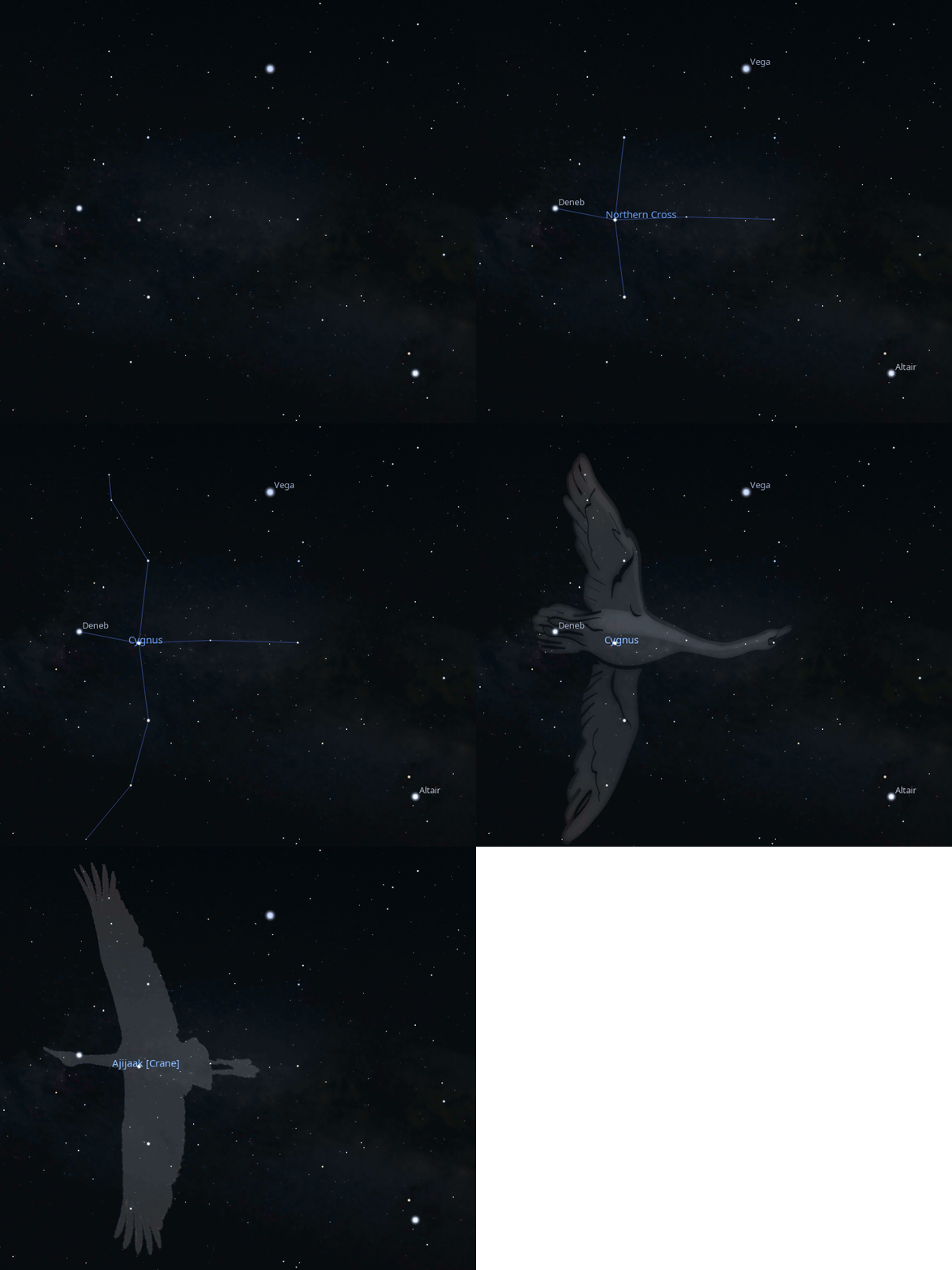
The star Deneb is high in the east-northeast. It is the dimmest of the three stars of the Summer Triangle. It is at the head of the Northern Cross, an informal constellation or asterism. The upright extends to the South. The crossbeam can be seen crossing the star just south of Deneb. There’s also a constellation there. It’s actually Cygnus the swan flying southward along the Milky Way with its neck outstretched. The Anishinaabe natives peoples of our area see Ajijaak the crane, also with a long neck flying north, but also long legs trailing to the south, its wings outstretched. In Greek mythology Cygnus was the guise of the god Zeus when he seduced Leda, whose offspring was Pollux, one of the Gemini twins.
The astronomical event times given are for the Traverse City/Interlochen area of Michigan (EDT, UT–4 hours). They may be different for your location.
Addendum
Ephemeris: 07/30/2024 – The heavenly harp
This is Ephemeris for Tuesday, July 30th. Today the Sun will be up for 14 hours and 42 minutes, setting at 9:10, and it will rise tomorrow at 6:28. The Moon, 3 days past last quarter, will rise at 2:08 tomorrow morning.
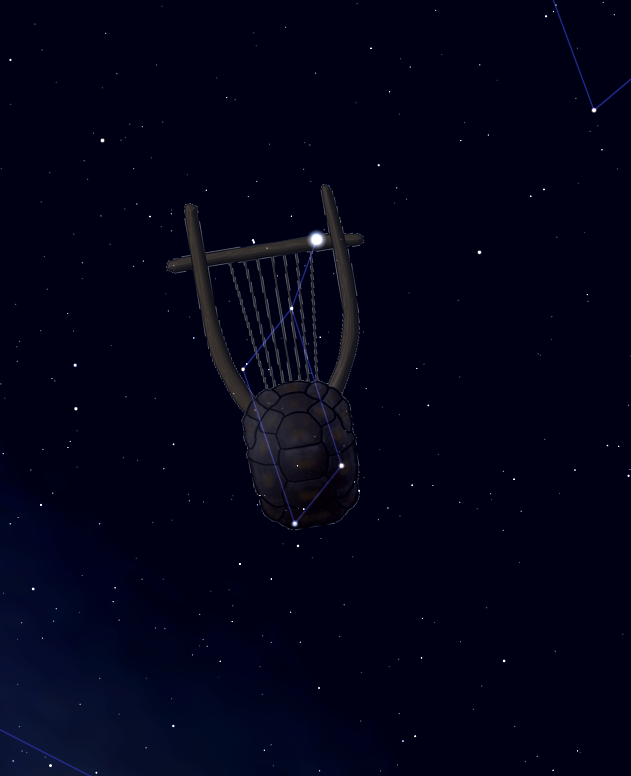
After it gets dark, nearly overhead, appears the bright star Vega, the brightest of the stars of the Summer Triangle. It is part of the constellation called Lyra the harp. The form of the harp is a lyre, which has a U-shaped frame with a bar across the top, the strings are strung from the bar down to the base of the U. According to Greek myth it was invented by the god Hermes who used a tortoise shell as the base of the U. He gave it to Apollo, who in turn gave it to Orpheus. Orpheus had the greatest musical talent. His singing and lyre playing would make animals and even inanimate objects dance. The constellation itself consists of Vega and a parallelogram of four stars which are seen below it.
The astronomical event times given are for the Traverse City/Interlochen area of Michigan (EDT, UT–4 hours). They may be different for your location.
Addendum
 Bob Moler's Ephemeris Blog