Archive
09/16/2021 – Ephemeris – How safe is the Space Launch System (SLS) compared to the Space Shuttle?
This is Ephemeris for Thursday, September 16th. Today the Sun will be up for 12 hours and 27 minutes, setting at 7:51, and it will rise tomorrow at 7:24. The Moon, 3 days past first quarter, will set at 3:10 tomorrow morning.
Tonight, the planet Saturn will appear above the bright gibbous Moon. It might be a bit hard to spot.
The big NASA moon rocket, the Space Launch System or SLS, borrowed a lot of features from the Space Shuttle. Is it any safer? The answer is yes. The Space Shuttle had no abort system for a catastrophic failure, as we saw with the Challenger accident in 1986. However, even though the SLS uses the same type solid rocket boosters that failed Challenger, the Crew in the Orion capsule is on top of the rocket with an escape system to rocket them away from an exploding core stage. With the Orion capsule, the escape tower will be jettisoned at some point before reaching orbit, possibly making escape impossible in the latter stage of powered flight. Both SpaceX’s Dragon and Boeing’s Starliner have escape rockets built in for the entire flight.
Addendum
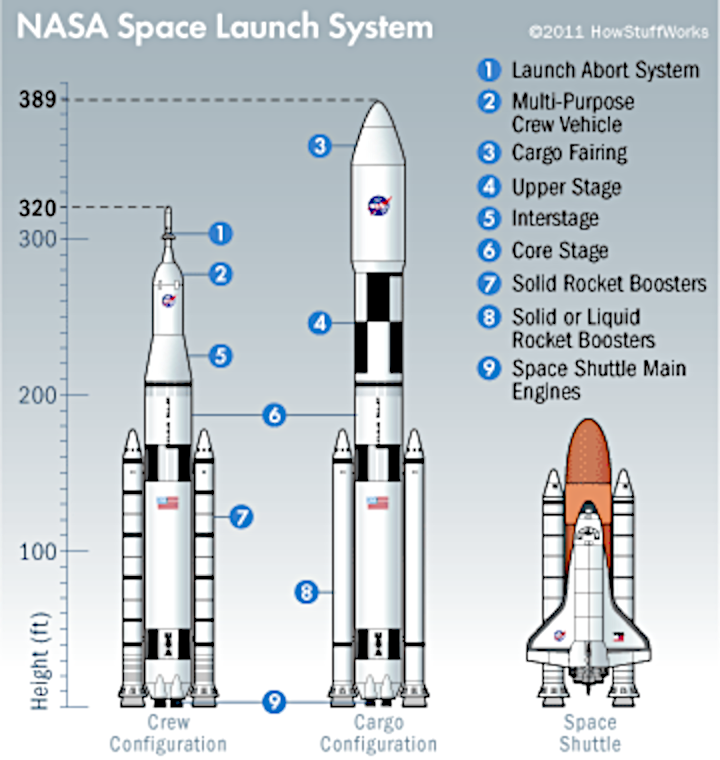
Shuttle-SLS comparisons. Note that this image is 10 years old. The center core stage will, like the external tank on the shuttle, remain unpainted. So far, the cargo version of the is still in the design stage. The Multipurpose Crew Vehicle is now called the Orion Spacecraft. Credit: How Stuff Works.
09/14/2021 – Ephemeris – Lack of spacesuits just one of Artemis problems of getting humans back to the Moon
This is Ephemeris for Tuesday, September 14th. Today the Sun will be up for 12 hours and 33 minutes, setting at 7:54, and it will rise tomorrow at 7:21. The Moon, 1 day past first quarter, will set at 12:53 tomorrow morning.
The bright gibbous Moon is a feast for binoculars or a telescope. However, the speed-up plan to land crews on the Moon in 2024 proposed by the former President is not appearing to pan out. One major item is space suits, which must be more rugged and impervious to the Lunar regolith, or soil, whose grains are tiny, angular and sharp, and get into everything, and can destroy spacesuit joints. NASA has been working on them for 14 years, and by itself could cost a billion dollars. They might be ready by 2025. Besides delays to the SLS rocket, the contract with SpaceX to furnish a lunar lander is now tied up in litigation by one of the contract losers. NASA’s trying to land humans on the Moon on one half of one percent of the Federal budget, plus do everything else it does.
The astronomical event times given are for the Traverse City/Interlochen area of Michigan (EDT, UT – 4 hr). They may be different for your location.
Addendum
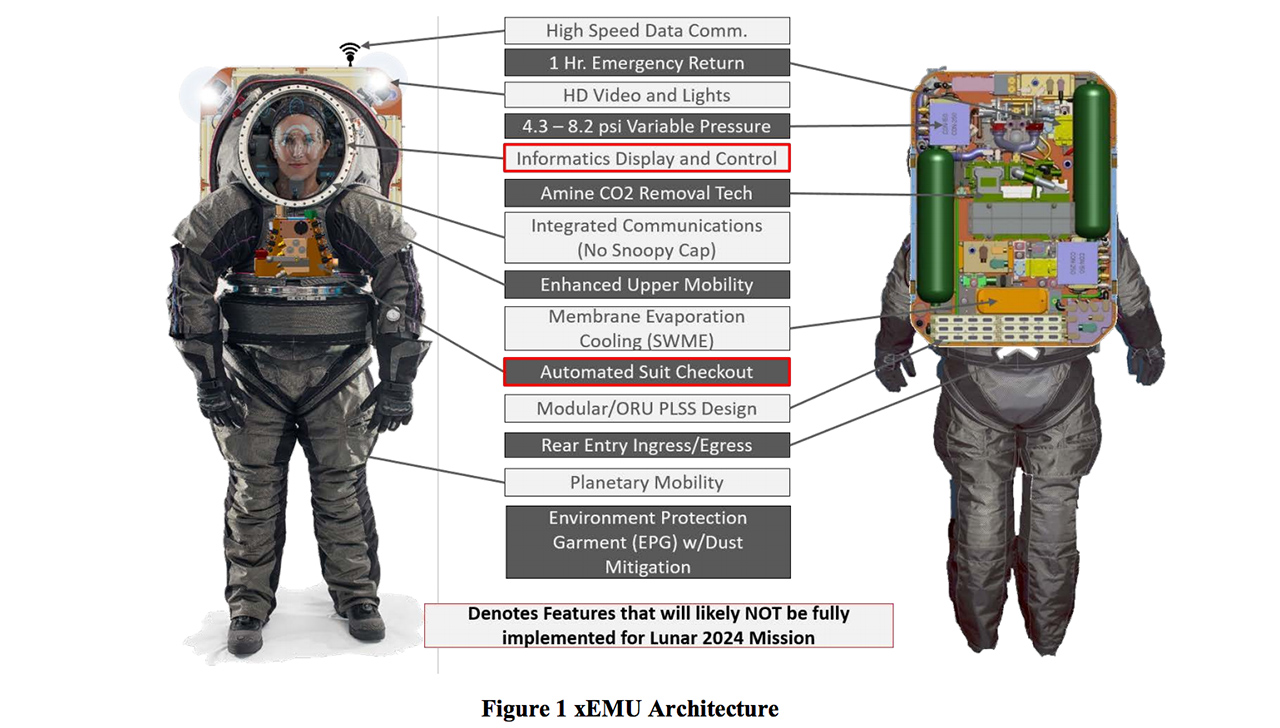
Prototype lunar spacesuit. xEMU stands for Exploration Extravehicular Activity Mobility Unit. Of course. This uncredited image is from slashgear.com in 2019, so I wouldn’t believe the date. These xEMU suits may eventually cost a billion dollars to develop and produce. Click on the image to enlarge it.
08/16/2021 – Ephemeris – The first Artemis mission (maybe) – CAPSTONE
This is Ephemeris for Monday, August 16th. Today the Sun will be up for 13 hours and 59 minutes, setting at 8:46, and it will rise tomorrow at 6:47. The Moon, 1 day past first quarter, will set at 1:13 tomorrow morning.
Tonight’s Moon is a great one to view with a small telescope. Speaking of the Moon, a company called Rocket Lab will be launching the first Artemis program mission, later this year, in preparation to land crews back on the Moon. They are launching a small CubeSat to orbit the Moon in a Near Rectilinear Halo Orbit which always faces the Earth and never goes behind the Moon. To test whether all the mathematical calculations for the orbit actually work in real life. The satellite is called CAPSTONE (another tortured NASA acronym*). It will be launched from New Zealand, Rocket Lab’s main launch site first into a polar orbit before heading to the lunar orbit, taking several months to get there.
The astronomical event times given are for the Traverse City/Interlochen area of Michigan (EDT, UT – 4 hr). They may be different for your location.
* Cislunar Autonomous Positioning System Technology Operations and Navigation Experiment. Told ya. Cislunar space is a spherical volume of space centered on the Earth, whose radius is the Moon’s distance. Beyond that is interplanetary space.
Addendum
Rocket Lab had been planning to launch the CAPSTONE satellite from Wallops Island, Virginia, but approval was taking too long, so they moved the launch to their New Zealand launch site instead.
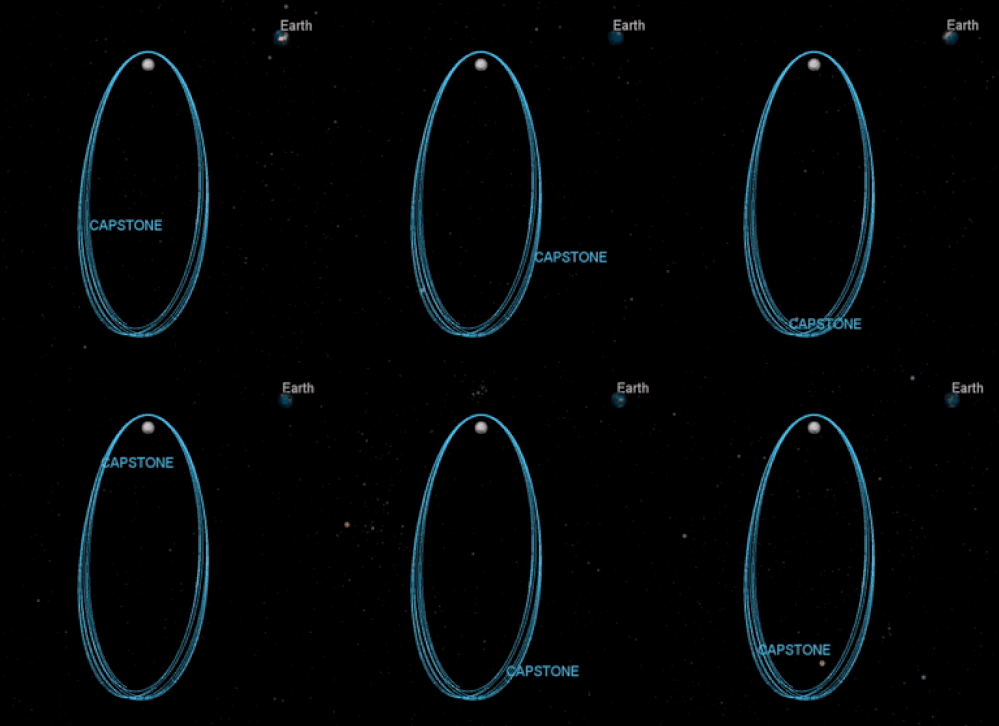
NASA CAPSTONE* pathfinder for gateway orbit is to be launched late this year by Rocket Lab to prove out the near rectilinear orbit for the Lunar Gateway.
07/22/2021 – Ephemeris – Hubble’s trouble is fixed
This is Bob Moler with Ephemeris for Thursday, July 22nd. Today the Sun will be up for 15 hours even, setting at 9:19, and it will rise tomorrow at 6:19. The Moon, 1 day before full, will set at 5:18 tomorrow morning.
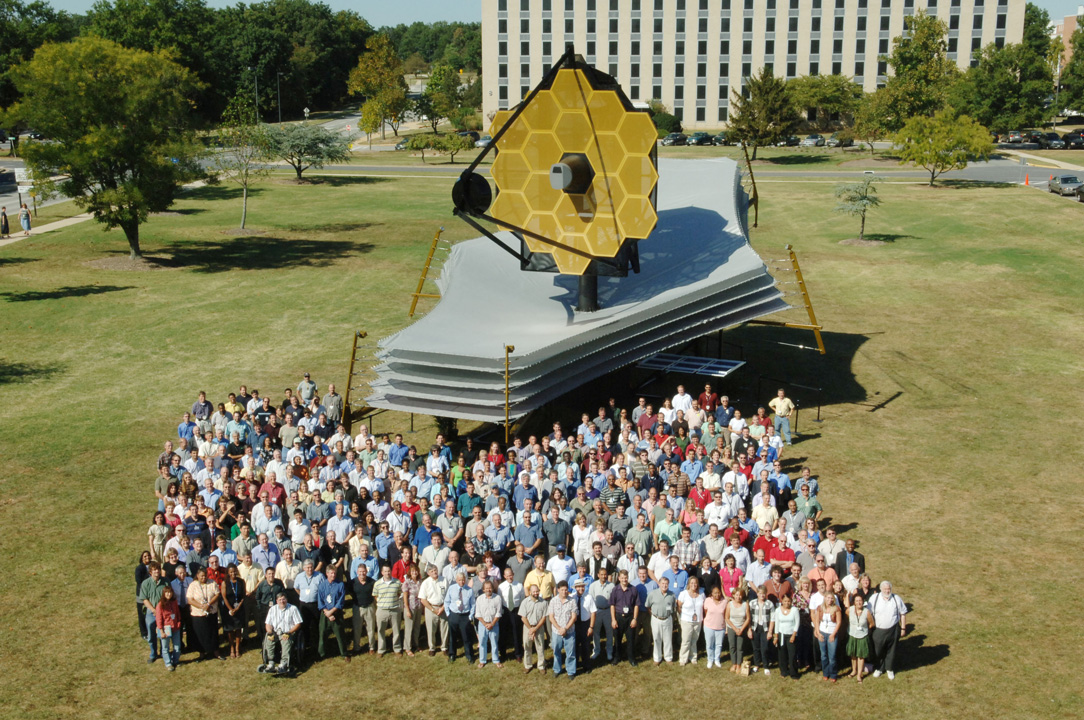
Folks at NASA are breathing a sigh of relief. After a month when one of its computers failed in the Hubble Space Telescope, ground controllers were able to diagnose that the problem was actually in the computer and not somewhere else. They switched to a backup computer. This wasn’t the main computer, but the one that ran the instruments. Hubble resumed operations this past Sunday. Hubble’s more or less replacement, the James Webb Space Telescope is many years overdue to be launched, and is expected to be launched later this year by the European Space Agency from French Guiana, as their contribution to the project. The Webb telescope operates in the infrared, while Hubble operates mostly in visible light.
The astronomical event times given are for the Traverse City/Interlochen area of Michigan (EDT, UT – 4 hr). They may be different for your location.
Addendum
The Hubble Space Telescope after its last servicing mission. Credit: NASA.
Full scale model of the James Webb Space Telescope at Goddard Space Flight Center. Note its scale with the people in front of it.
06/17/2021 – Ephemeris – Congress approves more money for NASA’s lunar lander
This is Bob Moler with Ephemeris for Thursday, June 17th. Today the Sun will be up for 15 hours and 34 minutes, setting at 9:31, and it will rise tomorrow at 5:56. The Moon, at first quarter tonight, will set at 2:18 tomorrow morning. | Tonight’s Moon will be almost exactly cut in half by the sunrise terminator, since the precise moment of first quarter will be at 11:54 this evening. Speaking of the Moon, Congress has approved NASA spending of 10 billion dollars over 5 years on the Human Lander System for the Artemis Moon program. This would allow more than one bidder to win the lander contract. SpaceX’s Lunar Starship was the only one to win a contract. NASA and Congress wanted two to win, but couldn’t afford more than SpaceX. Now comes the rub… Congress will have to appropriate the money out of the budget every year for this. The target date for the first landing is 2024, which I’m pretty sure is already out of reach.
The astronomical event times given are for the Traverse City/Interlochen area of Michigan (EDT, UT-4). They may be different for your location.
Addendum
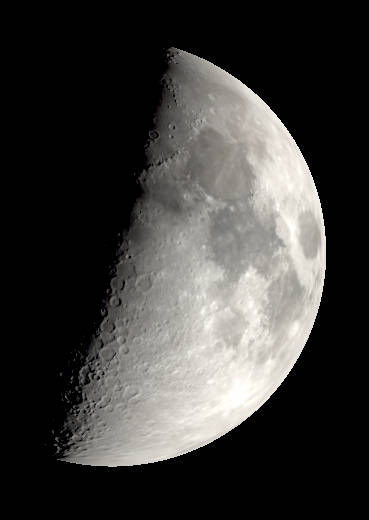
First Quarter Moon with binoculars or low power telescope as it might appear tonight at 11 pm. Created using Stellarium.
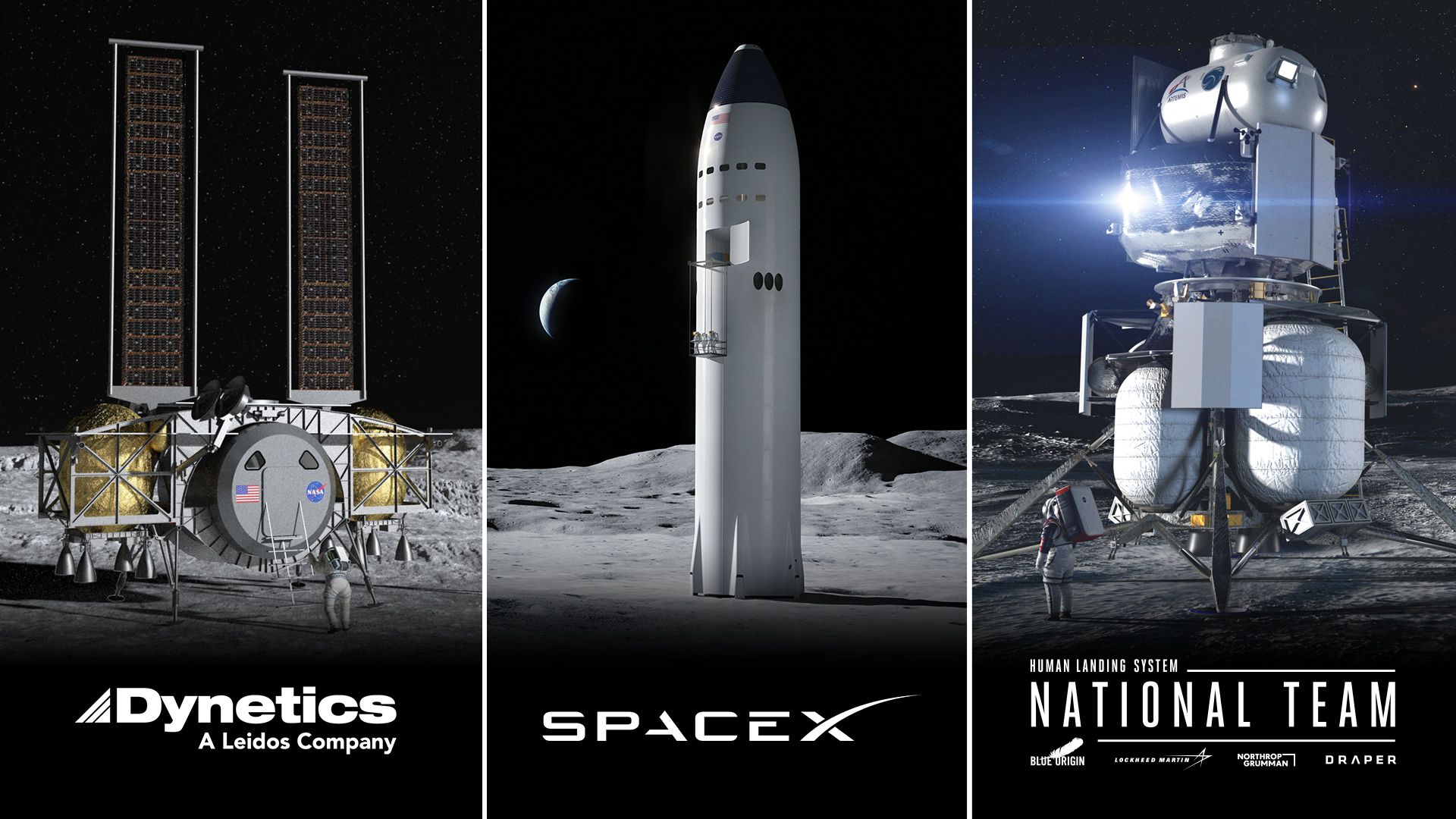
Three Lunar Lander proposals. Credit Dynetics, SpaceX, and Blue Origin. Credit NASA.
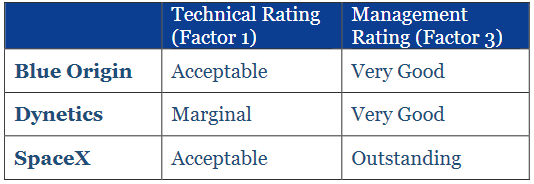
Technical and Management Adjectival Ratings from https://www.nasa.gov/sites/default/files/atoms/files/option-a-source-selection-statement-final.pdf
Also, SpaceX’s bid was the lowest by a wide margin. With the extra funds, it looks like Blue Origin will be the second successful bidder.
04/20/2021 – Ephemeris – SpaceX gets NASA contract for Human Landing System for the Artemis (Moon) Program
This is Bob Moler with Ephemeris for Tuesday, April 20th. Today the Sun will be up for 13 hours and 44 minutes, setting at 8:34, and it will rise tomorrow at 6:47. The Moon, at first quarter today, will set at 4:24 tomorrow morning.
Late last week NASA announced that it had selected SpaceX to provide the Human Lander System for the Artemis program. That lander is the lunar variant of the Starship SpaceX is currently testing near Boca Chica, Texas, just north of the mouth of the Rio Grande. A Starship consists of two stages: a booster called Super Heavy and the Starship upper stage. The Super Heavy returns to the launch site, while the Starship must be refueled several times in orbit to be able to head on out to the Moon. The astronauts would be launched as planned in an Orion capsule with the Space Launch System, then transfer the astronauts to the Starship waiting in lunar orbit or from the Lunar Gateway also in lunar orbit for the trip down to the lunar surface.
The astronomical event times given are for the Traverse City/Interlochen area of Michigan. They may be different for your location.
Addendum
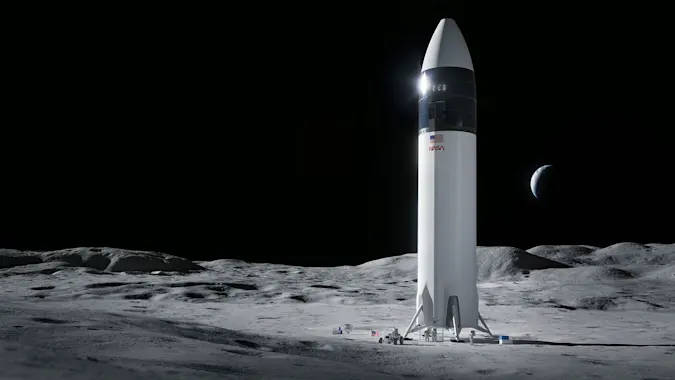
NASA’s Source Selection Document (the rationale for their selection): https://www.nasa.gov/sites/default/files/atoms/files/option-a-source-selection-statement-final.pdf
03/29/2021 – Ephemeris – NASA will fly spacecraft Psyche to asteroid 16 Psyche
This is Ephemeris for Monday, March 29th. Today the Sun will be up for 12 hours and 38 minutes, setting at 8:07, and it will rise tomorrow at 7:26. The Moon, 1 day past full, will rise at 9:28 this evening.
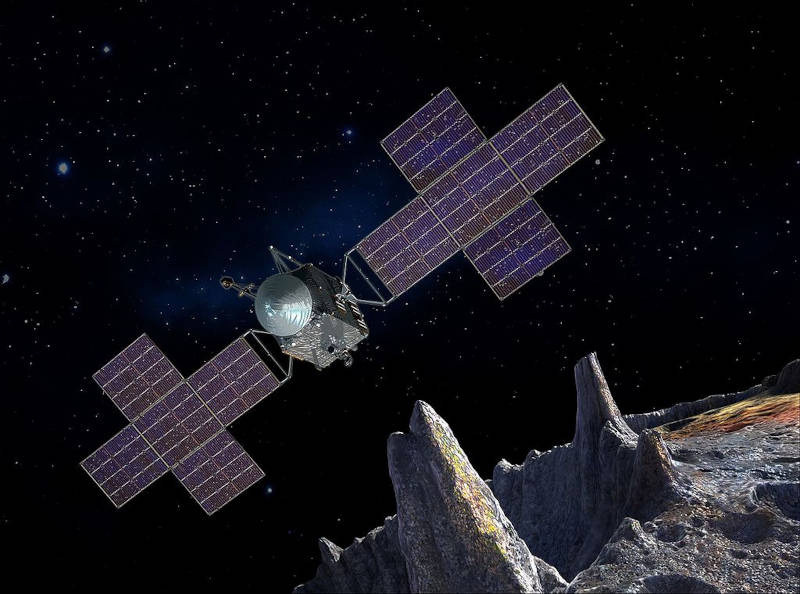
In the summer of 2022, about 15 months from now, NASA will launch a spacecraft called Psyche on a SpaceX Falcon Heavy rocket to 16 Psyche, an asteroid. 16 Psyche is a very special asteroid. It is mostly made of iron and nickel like iron meteorites and the cores of planets like the Earth. The spacecraft will be launched to get a gravity assist from Mars and will be using an ion engine to make its way to 16 Psyche and orbit it at various altitudes to see if it really is the remnant core of a protoplanet that was destroyed by collisions with other large asteroids. It would be of great interest for the future of asteroid mining companies for the precious metals it might contain. It’s big and has an average diameter of 140 miles (225 kilometers).
<p value="<amp-fit-text layout="fixed-height" min-font-size="6" max-font-size="72" height="80">The astronomical event times given are for the Traverse City/Interlochen area of Michigan. They may be different for your location.The astronomical event times given are for the Traverse City/Interlochen area of Michigan. They may be different for your location.Addendum
03/25/2021 – Ephemeris – NASA successfully tests the core stage of the Artemis Moon Rocket
This is Ephemeris for Thursday, March 25th. Today the Sun will be up for 12 hours and 25 minutes, setting at 8:02, and it will rise tomorrow at 7:34. The Moon, 3 days before full, will set at 6:57 tomorrow morning.
Last week’s 8-minute static fire test of the four Shuttle main engines of the core stage of the NASA’s Space Launch System or SLS rocket was an apparent success at the Stennis Space Center in southern Mississippi. This came after a failed test two months ago. The core stage will be refurbished and floated through the Gulf, around the tip of Florida to Cape Canaveral where the solid boosters are waiting to be mated to it in the Vertical Assembly Building. It will be used for the Artemis 1 mission to be launched late this year. That mission will take an uncrewed Orion Crew Capsule and European Service Module to the Moon for several orbits close and more distant from it before returning to the Earth. The entire mission could take nearly a month.
The astronomical event times given are for the Traverse City/Interlochen area of Michigan. They may be different for your location.
Addendum
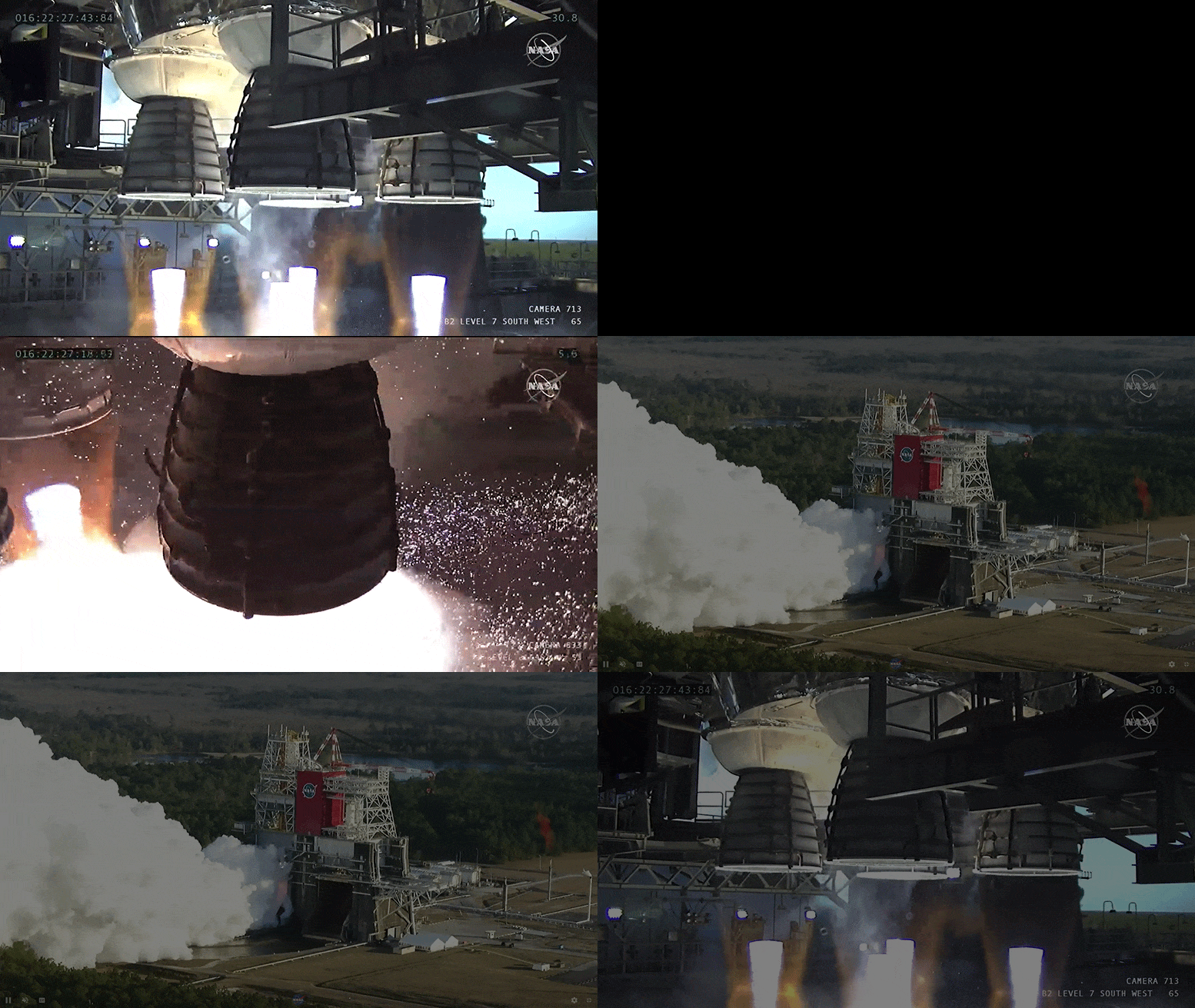
Views of the SLS Core Stage green run test. Credit NASA via scitechdaily.com.
03/18/2021 – Ephemeris – The aging Hubble Space Telescope survived its latest glitch
This is Bob Moler with Ephemeris for Thursday, March 18th. Today the Sun will be up for 12 hours and 4 minutes, setting at 7:53, and it will rise tomorrow at 7:47. The Moon, 3 days before first quarter, will set at 1:21 tomorrow morning.
On Sunday the 7th the Hubble Space Telescope, arguably the most famous telescope there is entered safe mode. Whenever a spacecraft finds an unexpected problem it stops what it is doing, orients itself, so its solar panels face the Sun if it can. It may or may not phone home. And waits for instructions. The last time Hubble experienced a glitch that forced a safe mode was 2018. Then it took 3 weeks to get it back to normal operations. This time it was 4 days. However, the ground controllers are still checking out one of its cameras, while the others are working again. Hubble is over 30 years old. It’s replacement, the James Webb Space Telescope is expected to finally be launched this October on the European Space Agency’s Ariane 5 rocket.
The astronomical event times given are for the Traverse City/Interlochen area of Michigan. They may be different for your location.
Addendum
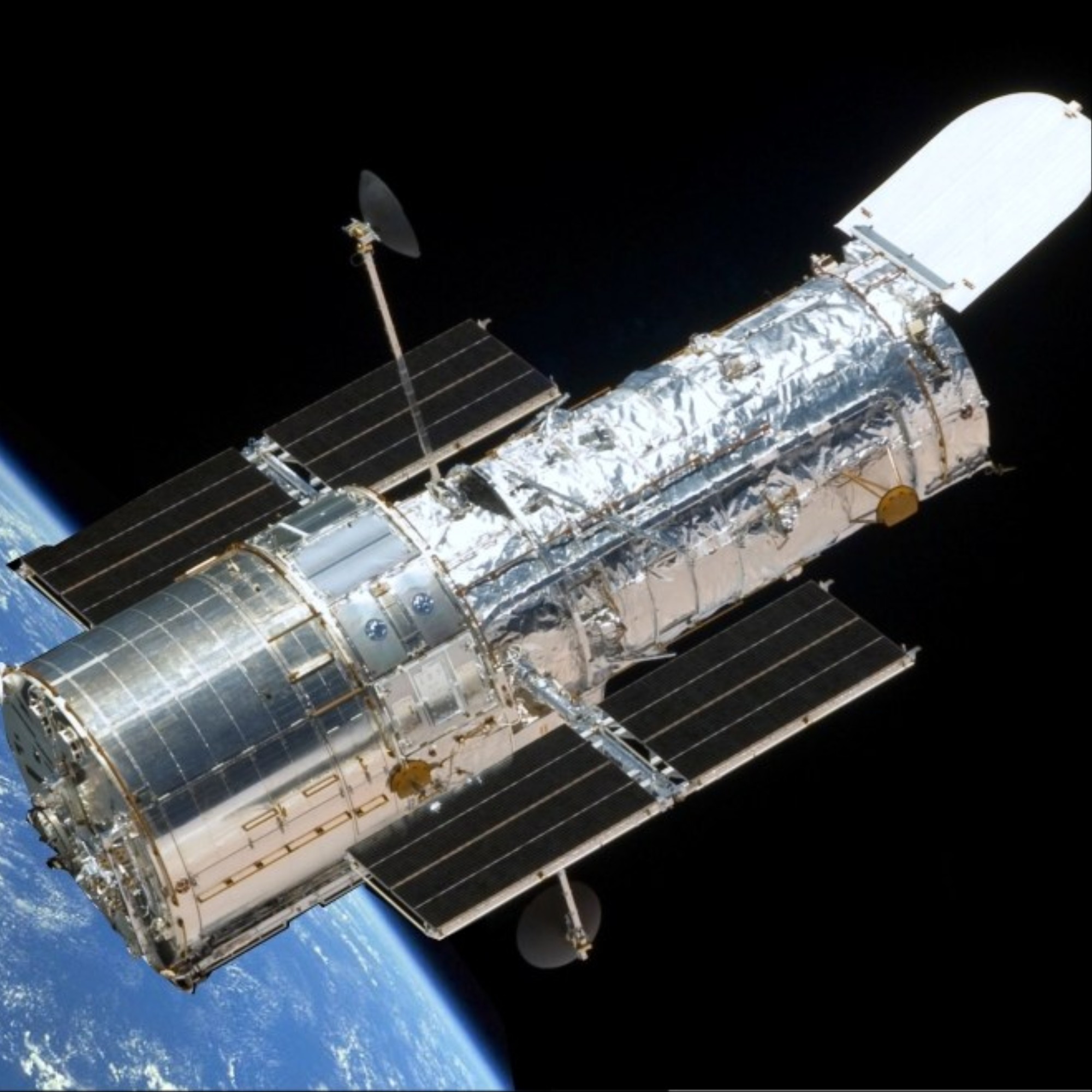
The Hubble Space Telescope after a servicing mission. Credit: NASA.
Full scale model of the James Webb Space Telescope at Goddard Space Flight Center. Note its scale with the people in front of it.
I’ll be covering the James Webb Space Telescope in more detail as we count down to its launch.
02/25/2021 – Ephemeris – Moon Dust, bad stuff
This is Ephemeris for Thursday, February 25th. Today the Sun will be up for 10 hours and 58 minutes, setting at 6:25, and it will rise tomorrow at 7:24. The Moon, 2 days before full, will set at 7:30 tomorrow morning.
One of the big problems that will have to be solved before the Artemis program sets up a permanent base on the Moon is what to do about lunar soil or Moon dust. That stuff gets into everything. The Apollo astronauts said it smelled like gunpowder. Unlike beach sand the particles aren’t rounded, but angular, being produced by rocks being hit by meteoroids large and micro over the eons by space weathering. With no atmosphere small particles can even weld themselves together. Though no studies have been done, any brought into the habitat would do damage to the lungs, like that to miners on Earth. Moon dust has compromised the seals on the containers of soil the Apollo crews brought back from the Moon.
The astronomical event times given are for the Traverse City/Interlochen area of Michigan. They may be different for your location.
Addendum
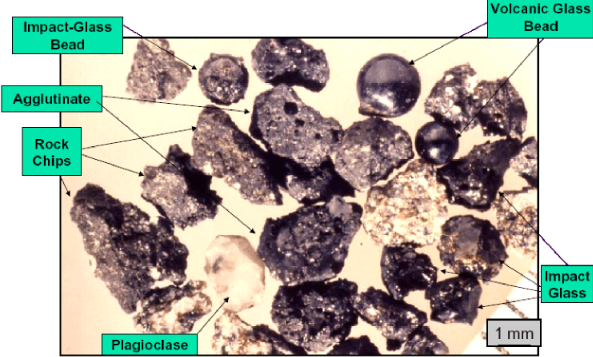
Lunar soil sample. Credit Larry Taylor U of TN Knoxville from https://ntrs.nasa.gov/api/citations/20090026015/downloads/20090026015.pdf
 Bob Moler's Ephemeris Blog