Archive
12/10/2019 – Ephemeris – The Moon’s natural resource more precious than gold
Ephemeris for Tuesday, December 10th. Today the Sun will be up for 8 hours and 53 minutes, setting at 5:02 the earliest sunset, and it will rise tomorrow at 8:09. The Moon, 2 days before full, will set at 7:22 tomorrow morning.
The Moon is attracting the attention of NASA and the Chinese for crewed landings. The attraction is a natural resource the Moon has. It’s water, or rather ice. There are known water reserves in the Moon’s south polar craters, whose floors never see sunlight. That means they’re very cold. Cold traps they’re called. The Moon has a very little axial tilt so the crater floors are forever cold. They would collect water vapor from passing and colliding comets over the millennia. 10 years ago the second stage of the rocket that placed the Lunar Reconnaissance Orbiter in lunar orbit was crashed into one of the south polar craters followed by a satellite to analyze the ejecta. Water vapor was kicked up by the impact in Cabeus crater.
The times given are for the Traverse City/Interlochen area of Michigan. They may be different for your location.
Addendum
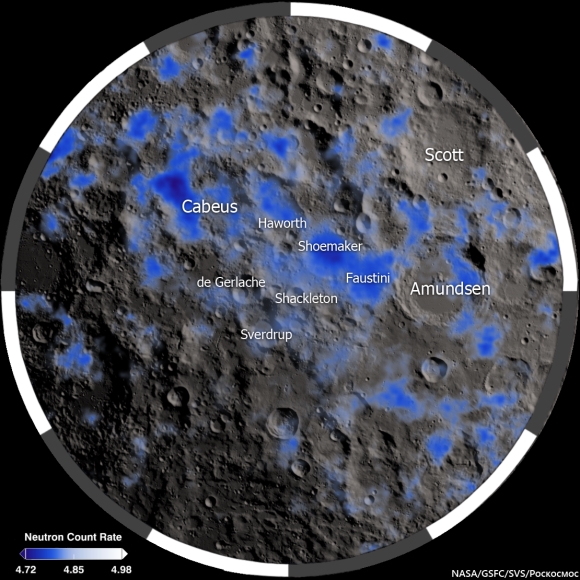
The south pole of the Moon where the presence of water ice is detected by the absorption of neutrons by the hydrogen atoms in the ice. Credit NASA/GSFC/SVS/Roscosmos.
You’ll notice that the craters on the the Moon’s south pole are named for Antarctic explorers. Besides water other volatiles were found: methane, ammonia, hydrogen gas, carbon dioxide and carbon monoxide.
12/05/2019 – Ephemeris – Artemis the new Moon program
Ephemeris for Thursday, December 5th. Today the Sun will be up for 8 hours and 58 minutes, setting at 5:02, and it will rise tomorrow at 8:05. The Moon, 1 day past first quarter, will set at 2:01 tomorrow morning. | NASA has a new program to return to the Moon, perhaps to stay. The program is called Artemis, named after the Greek god Apollo’s twin sister. NASA is building a massive rocket called the Space Launch System, or SLS, and the Orion
, which I’m sure will guarantee European astronauts a ride. This is not going to be an Apollo type one rocket up and back. There will be a space station called the Lunar Gateway of International partners that will orbit the Moon. There the crew of the Orion Spacecraft will transfer to a Lunar Lander for the trip to and from the surface of the Moon. It’s a heavy push to accomplish by 2024.
The times given are for the Traverse City/Interlochen area of Michigan. They may be different for your location.
Addendum
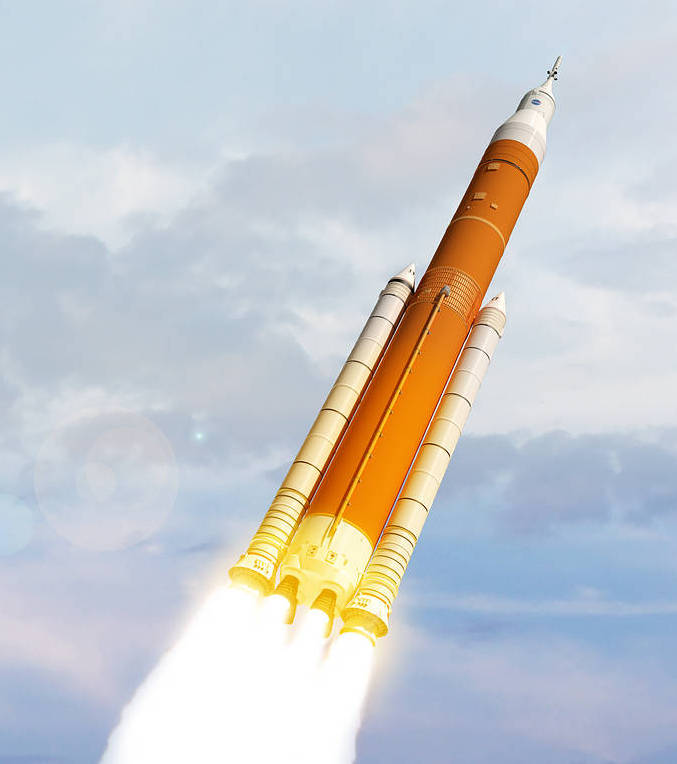
The Block 1b vrsion of the Space Launch System (SLS) which uses elongated Space Shuttle boosters and a core stage with 4 Space Shuttle main engines for the first stage. Credit NASA.
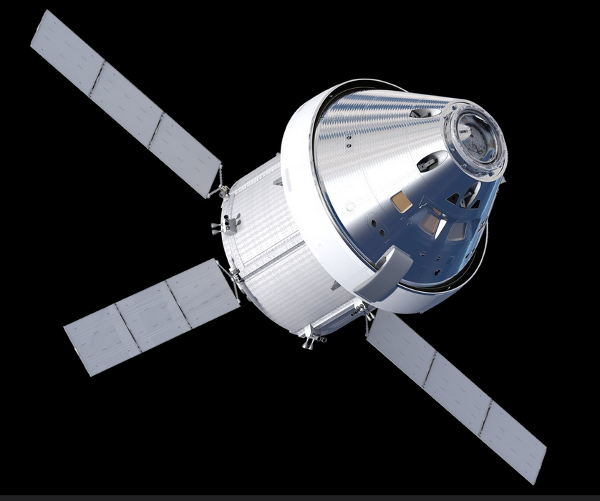
Cone-shaped Orion Multi-Purpose Crew Vehicle with a European Service Module. Credit NASA.
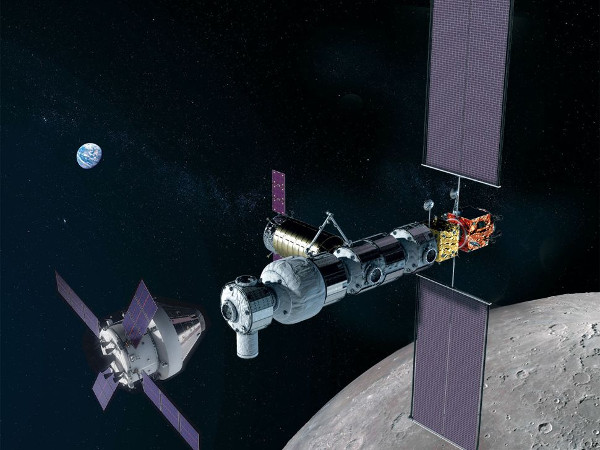
Lunar Gateway supplied by the same partners that built the International Space Station. It will orbit the Moon, Credit NASA.
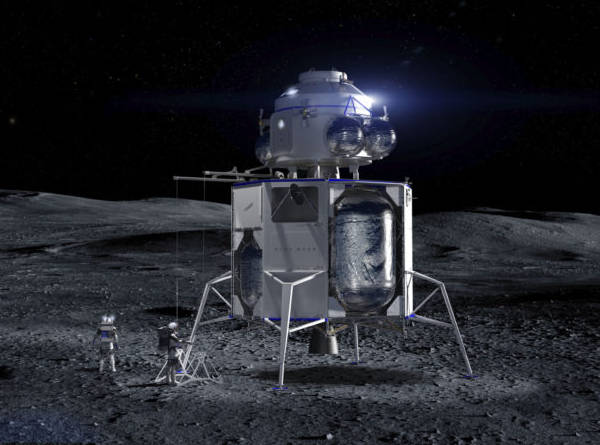
Lunar Lander. This vehicle has not been designed yet. This is Blue Origin’s Ascent Module on top of a yet to be designed propulsion module. Credit Blue Origin.
09/12/2019 – Ephemeris – NASA and the Europeans plan to deflect an asteroid
Ephemeris for Thursday, September 12th. Today the Sun will be up for 12 hours and 41 minutes, setting at 7:59, and it will rise tomorrow at 7:19. The Moon, 2 days before full, will set at 6:30 tomorrow morning.
Meeting now in Rome is the AIDA International Conference. It has nothing to do with the opera, but a tortured acronym for Asteroid Impact Deflection Assessment. NASA and the European Space Agency are going to target the satellite of a binary near Earth asteroid Didymos. NASA will supply DART, the impactor, The Italians, a cube sat to fly along and record the impact. Later the Europeans will launch a probe to assess the asteroid deflection. Didymos itself is a half mile in diameter (2560 ft, 780 m), its satellite, a bit more than 500 feet (525 ft, 160 m). The impact should make a marked change in the small body’s orbit of its parent. DART’s launch should come in the summer of 2021 with impact in 2022.
The times given are for the Traverse City/Interlochen area of Michigan. They may be different for your location.
Addendum
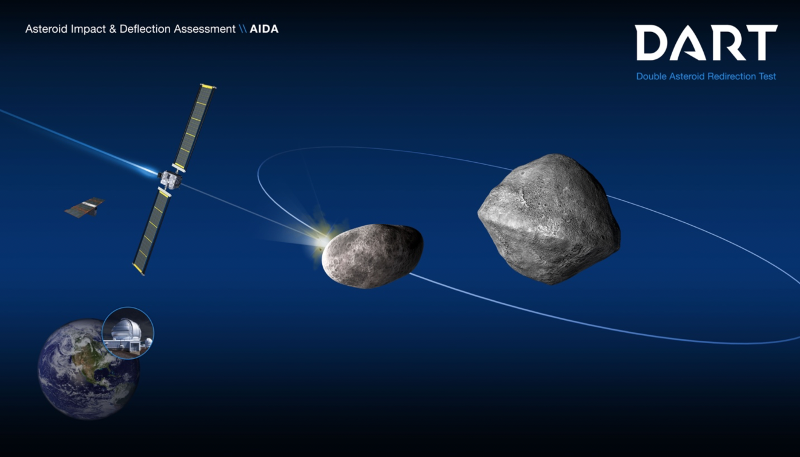
Schematic of the DART mission shows the impact on the moonlet of asteroid (65803) Didymos. Post-impact observations from Earth-based optical telescopes and planetary radar would, in turn, measure the change in the moonlet’s orbit about the parent body. Credits and caption: NASA/Johns Hopkins Applied Physics Lab.
More information: https://www.universetoday.com/143313/europe-and-us-are-going-to-try-and-deflect-an-asteroid/
09/05/2019 – Ephemeris – A contest to name the Mars 2020 Rover
Ephemeris for Thursday, September 5th. Today the Sun will be up for 13 hours and 2 minutes, setting at 8:12, and it will rise tomorrow at 7:10. The Moon, at first quarter today, will set at 12:09 tomorrow morning.
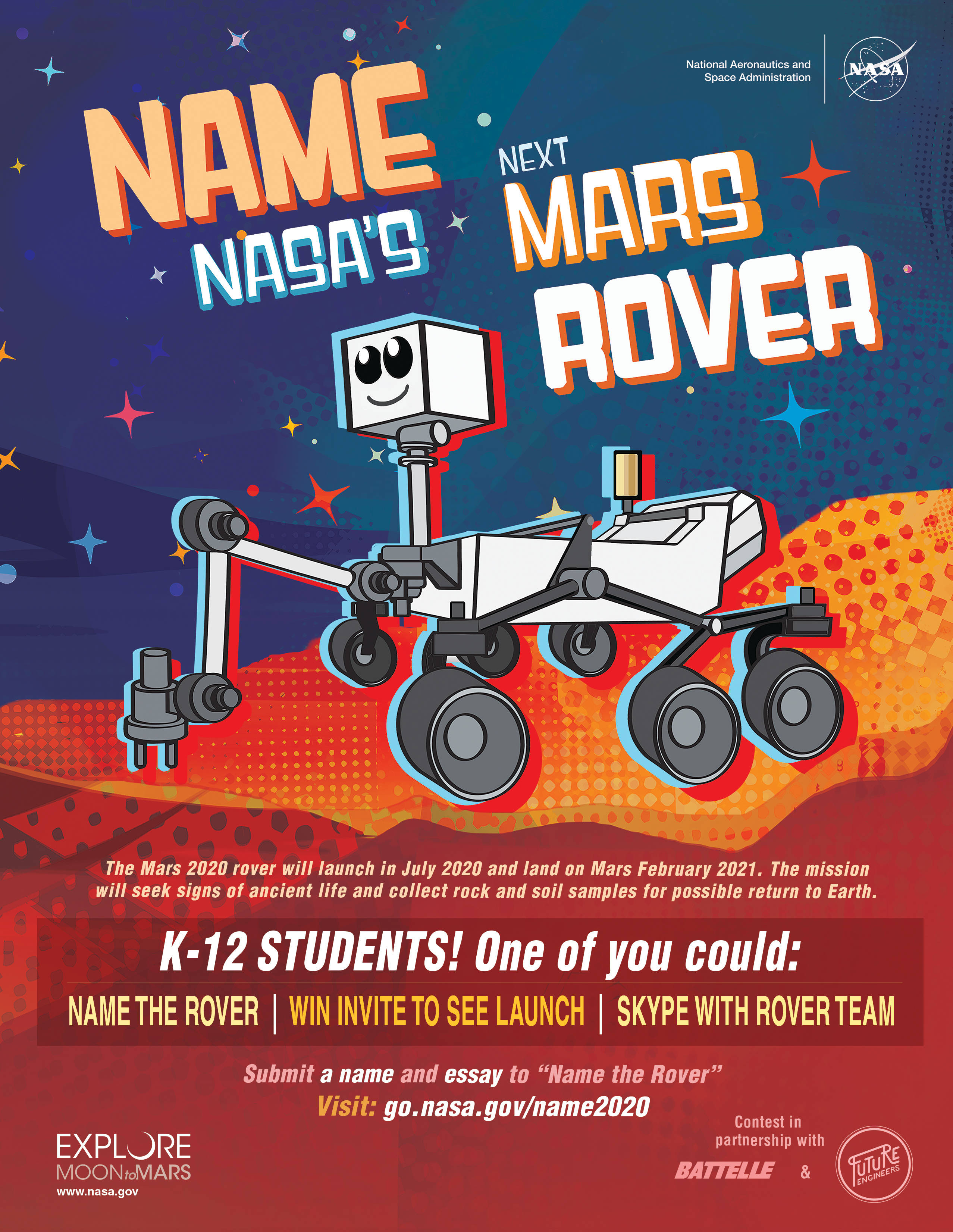
The Mars 2020 Rover is in final preparation to be launched late next year, and its time to give it a name. Prior rover names were Sojourner, Spirit, Opportunity and the currently operating Curiosity rover. NASA is holding a contest open to U.S. K through 12 students in public, Private and Home School, to submit a name with a short essay of up to 150 words why that name should be chosen. Deadline is November 1st. Nine names will be chosen and then the whole world will vote to pick the winner. For contest details use your favorite Internet browser and type in “go (dot) nasa (dot) gov forward slash name2020”. NASA also has a way to have your name sent to Mars with the Rover.
The times given are for the Traverse City/Interlochen area of Michigan. They may be different for your location.
Addendum
From Sarah Marcotte of the JPL Mars team. Please share this contest announcement with any interested K-12 student…
—————
Name NASA’s Next Mars Rover!
NASA’s Mars 2020 rover needs a name! Any K-12 student in U.S. public, private, and home schools has a chance to name the next Mars rover bound for the Red Planet in July 2020.
To enter the contest, students submit their rover name and a short essay (max 150 words) to explain the reasons why their chosen name is the best. The contest closes Nov. 1, 2019. For contest entry and details, visit the Name the Rover site. : https://www.futureengineers.org/nametherover
Interested adults, especially with STEM experience can sign up to be a judge on this page.
Not in the U.S.? In January 2020, people all over the world will have an opportunity to vote on the nine finalist names.
Help us spread the word by downloading and printing an eye-catching flyer for teachers or students!
Read more about the Mars 2020 mission.
visit: go.nasa.gov/name2020
08/12/2019 – Ephemeris – Apollo 8’s giant leap to the Moon
Ephemeris for Monday, August 12th. Today the Sun will be up for 14 hours and 12 minutes, setting at 8:53, and it will rise tomorrow at 6:42. The Moon, 3 days before full, will set at 4:38 tomorrow morning. | On the road to the Apollo 11 landing on the Moon 50 years ago was Apollo 8’s Christmas orbiting of the Moon in 1968. Apollo 7’s shakedown of the Command and service modules in October that year meant that they had a good spacecraft. However on September 28th that year a US spy satellite photographed a giant rocket of approximately the same size as the Saturn V on a launch pad at the Tyuratam Missile Test Center in the Soviet Union. Were they going to get to the Moon before us? Also Grumman was behind schedule with producing the Lunar Module for Apollo 8’s scheduled shakedown of that module in Earth orbit. NASA then decided to send Apollo 8 to the Moon instead and not miss a launch opportunity.
The times given are for the Traverse City/Interlochen area of Michigan. They may be different for your location.
Addendum
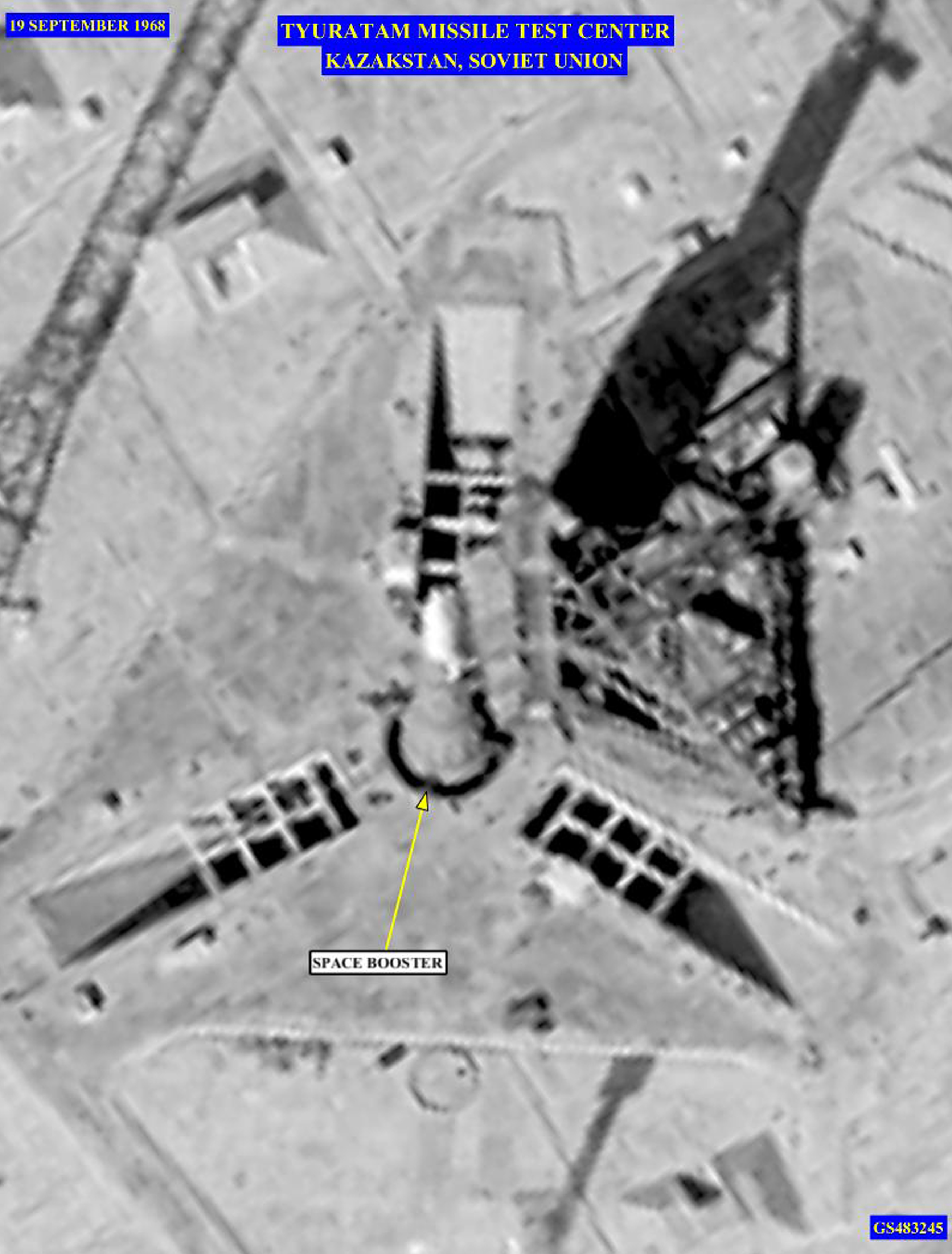
KH-8 spy satellite photo of an N-1 rocket on the launch pad on September 28, 1968.
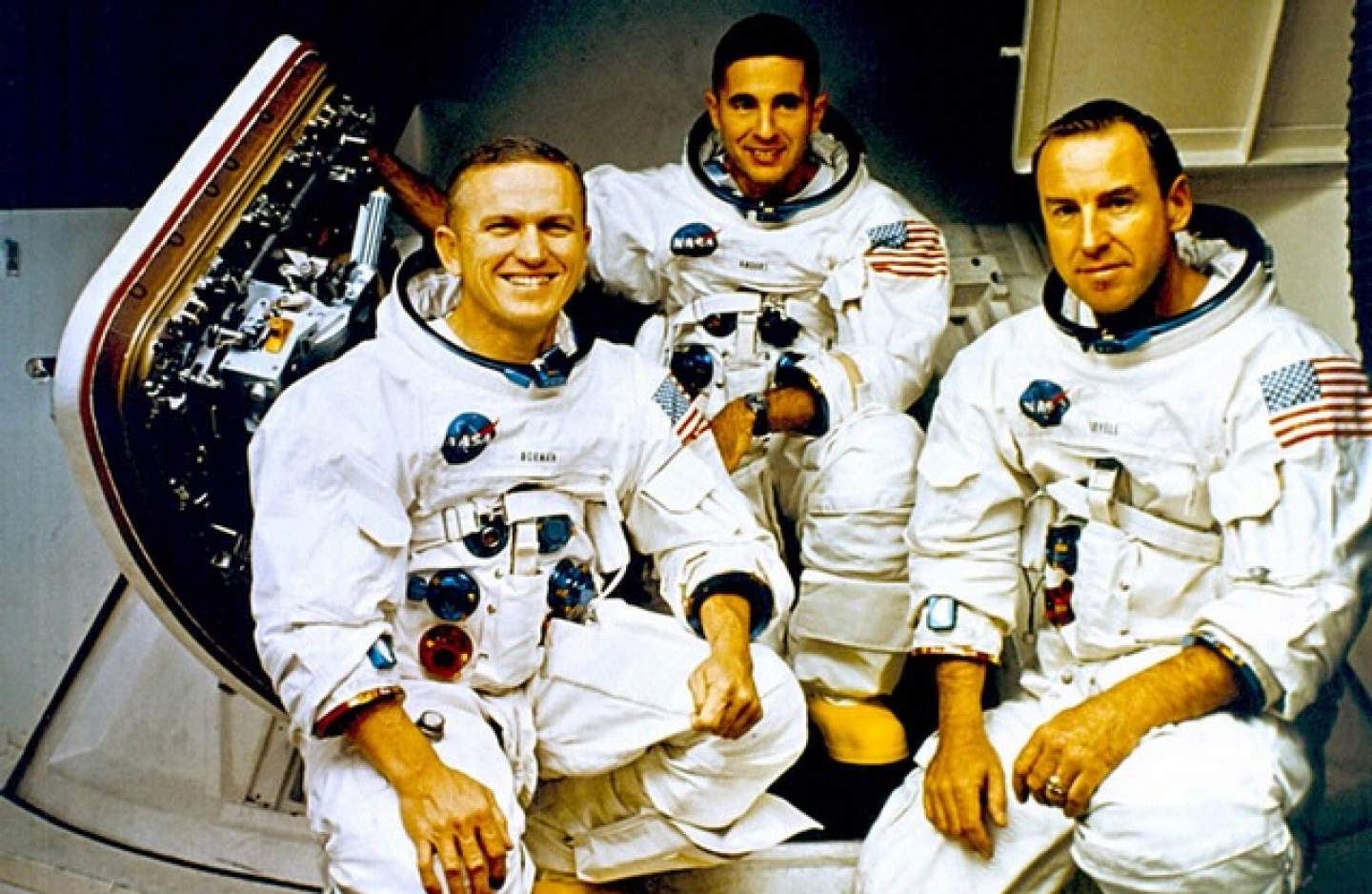
Apollo 8 crew from he left: Frank Borman, Bill Anders, and Jim Lovell.
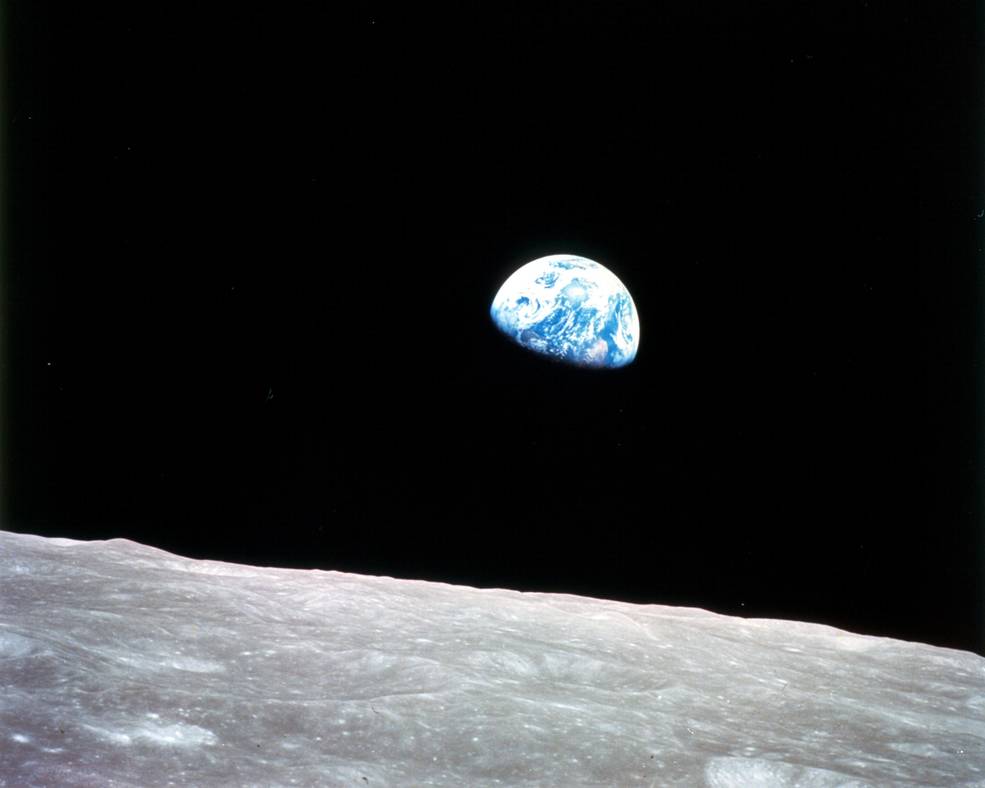
The famous Earthrise photograph: ”We went to the Moon and Discovered the Earth.” Credit NASA/Apollo 8/Bill Anders.
07/16/2019 – Ephemeris – 50 years ago today the Apollo mission left for the Moon
Ephemeris for Tuesday, July 16th. Today the Sun will be up for 15 hours and 12 minutes, setting at 9:25, and it will rise tomorrow at 6:13. The Moon, at full today, will rise at 9:30 this evening.
50 years ago today at 11:32 a.m. Eastern Daylight Time the most powerful rocket ever built roared into life. The Saturn V, a three stage rocket, 363 feet tall, which in turn launched two spacecraft, the Command and Service modules, and the Lunar Module, and three astronauts on their journey to destiny, Neil Armstrong, Edwin (Buzz) Aldrin, and Michael Collins. It was the start of the Apollo 11 mission. It happens that tonight the namesake of the rocket, the planet Saturn is to the right of the Moon. At launch the Moon was two days old, a thin crescent in the west that evening. Four days later they would be orbiting the Moon, and Armstrong and Aldrin would be descending to the Moon’s surface.
The times given are for the Traverse City/Interlochen area of Michigan. They may be different for your location.
Addenda
Apollo 11
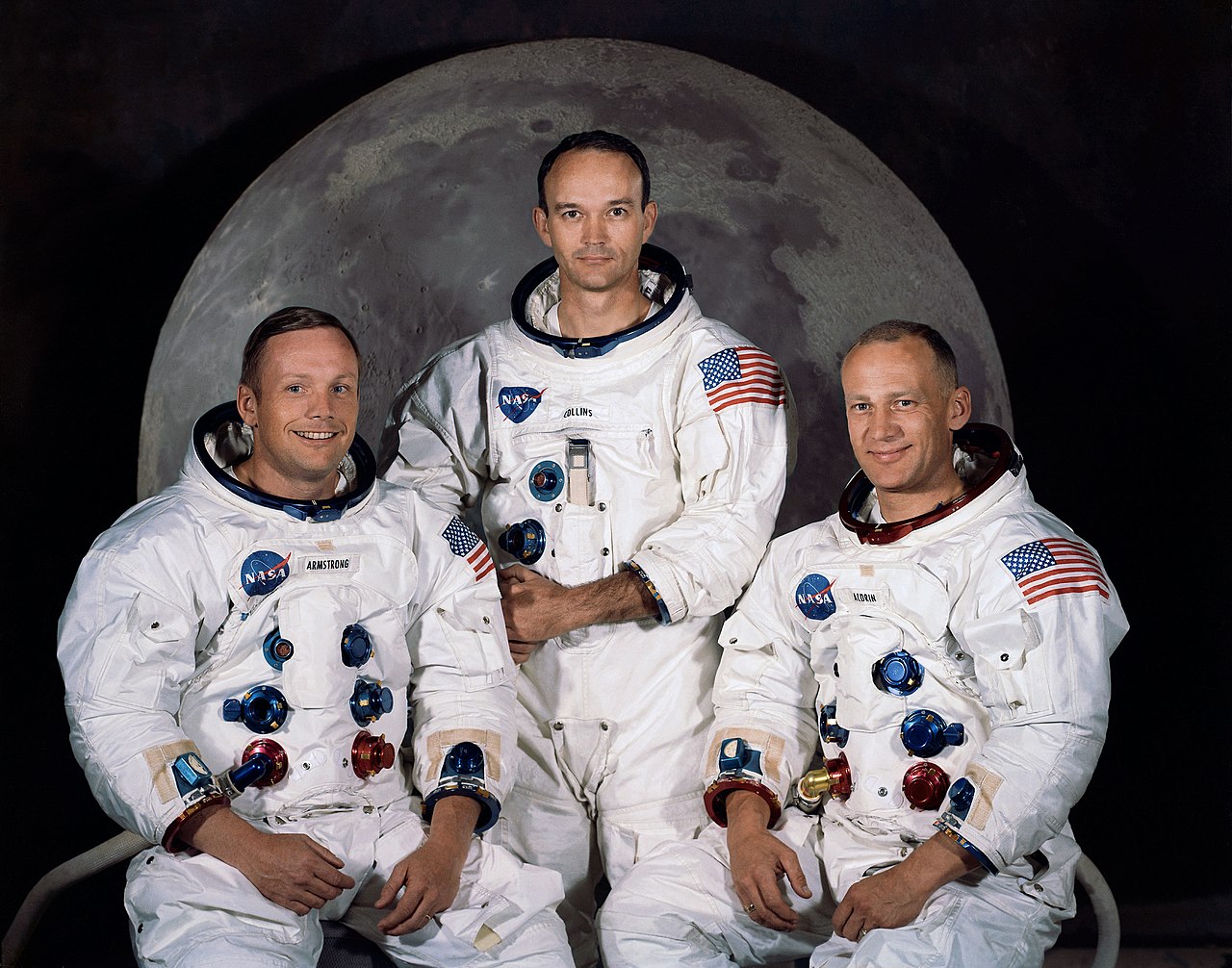
Left to right Neil Armstrong, Mission Commander; Michael Collins, Command Module Pilot; and Buzz Aldrin, Lunar Module Pilot. Credit: NASA.
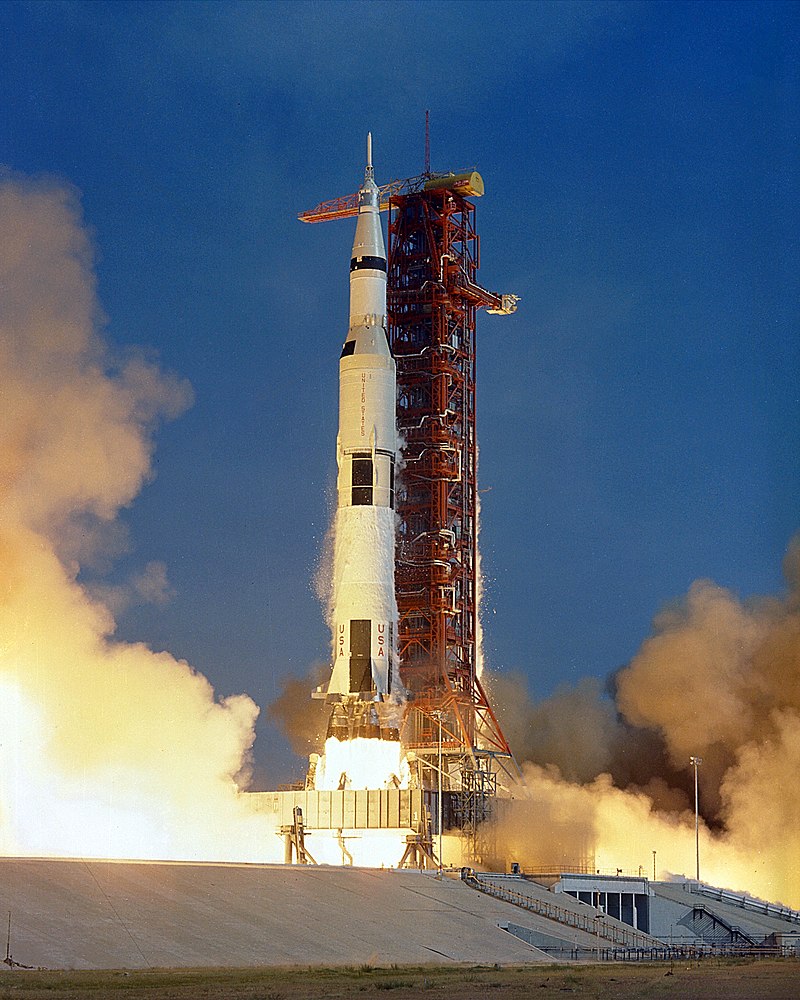
The Saturn V for the Apollo 11 mission lifts of from Pad 39A. Credit: NASA.
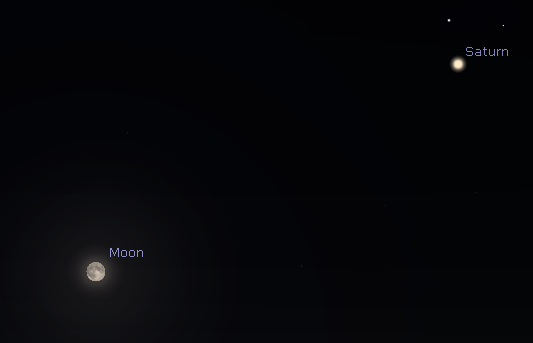
The Moon and Saturn tonight, 11 p.m. July 16, 2019. In reality the Moon will be so bright that Saturn will be almost overwhelmed. Created using Stellarium.
Here’s an excellent podcast series from the BBC: 13 Minutes to the Moon.
Partial Lunar Eclipse
The partial lunar eclipse today is not mentioned in the program because it is not visible locally.
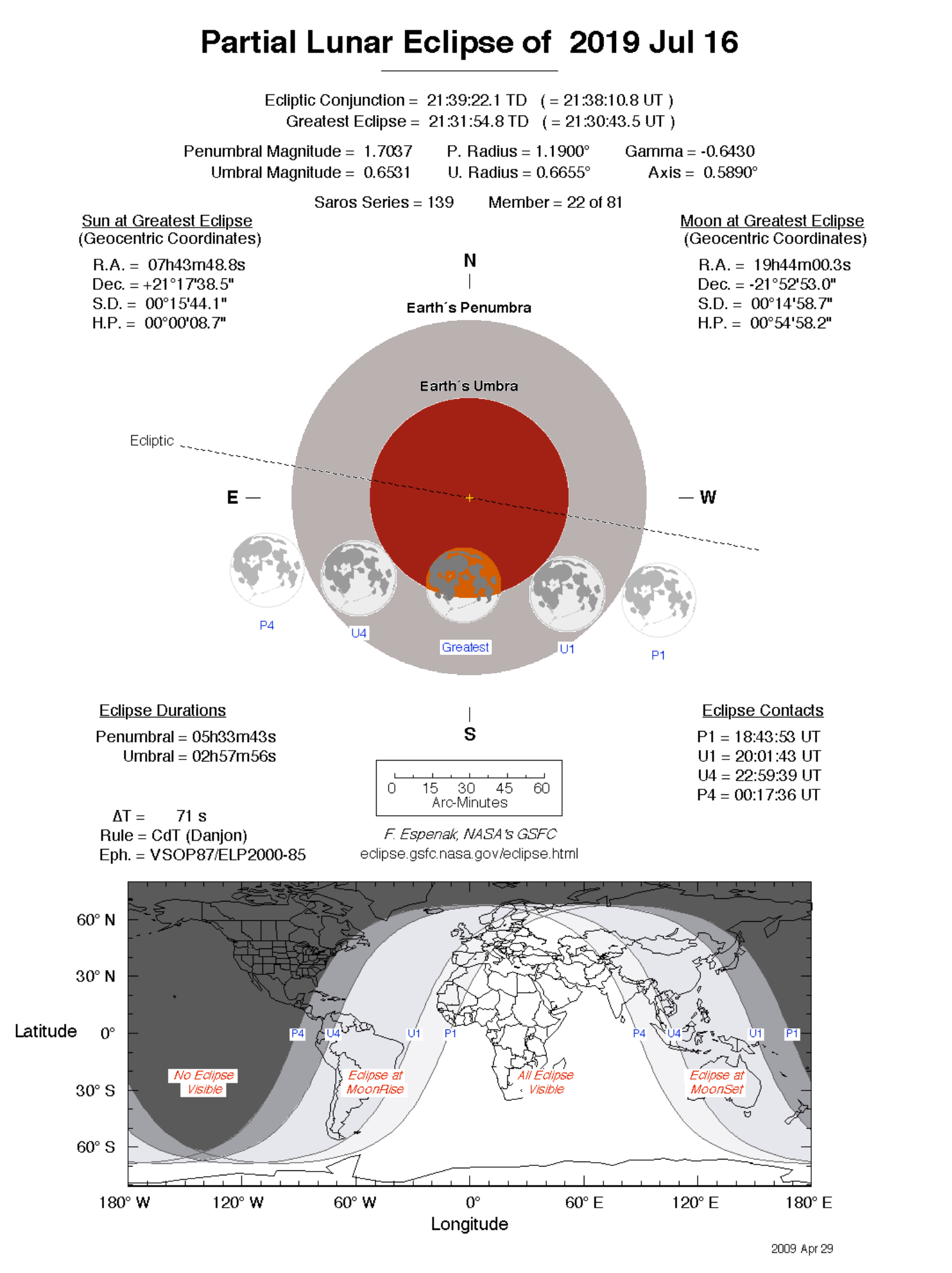
Partial Lunar Eclipse of July 16, 2019. Click on image to enlarge. Credit NASA/GSFC/F. Espenak.
06/17/2019 – Ephemeris – President Kennedy wanted to get us to the Moon… But how?
Ephemeris for Monday, June 17th. Today the Sun will be up for 15 hours and 34 minutes, setting at 9:30, and it will rise tomorrow at 5:56. The Moon, at full today, will rise at 9:56 this evening.
President Kennedy’s Challenge to land “a man on the Moon and returning him safely to the Earth” came only 20 days after Alan Shepard’s sub-orbital flight and 45 days after Yuri Gagarin’s orbital flight. To the NASA designers the question was how! Three scenarios were studied. The Moon direct approach where the spacecraft would be sent intact to the Moon and back which would take a really gigantic rocket. The Earth rendezvous where the spacecraft would be assembled in Earth orbit and then sent to the Moon. And the lunar orbit rendezvous where only part of the craft would be sent down to the lunar surface, while the main craft stayed in orbit of the Moon. After a lot of study the third option was accepted. It was up to project Gemini to develop the skills necessary to rendezvous and dock two spacecraft in orbit.
The times given are for the Traverse City/Interlochen area of Michigan. They may be different for your location.
Addendum
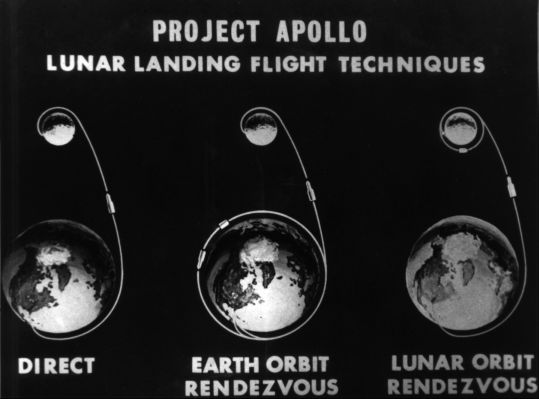
Three flight techniques to land on the Moon. John Houbolt, who came up with the Lunar Orbit Rendezvous went through a lot of grief before his method was accepted in 1962. Credit: NASA.
06/13/2019 – Ephemeris – Project Mercury
Ephemeris for Thursday, June 13th. Today the Sun will be up for 15 hours and 32 minutes, setting at 9:29, and it will rise tomorrow at 5:56. The Moon, 3 days past first quarter, will set at 4:23 tomorrow morning.
Celebrating the 50th anniversary of the Apollo 11 landing on the Moon we’ll look at the first human space mission program, Mercury. It was taken over from the Air Force by the newly organized NASA space agency in 1958. It’s mission to launch a man in orbit, having him survive for at least a day and return him to the Earth. Alan Shepard crewed the first Mercury launch on a suborbital hop on May 5th, 1961, 25 days after the Soviet Union launched Yuri Gagarin on a single orbit of the Earth. On the third Mercury Launch John Glenn was the first American to orbit the Earth in his Friendship 7 capsule. In all there were 6 flights in the Mercury program. Of the seven Mercury astronauts, only Deke Slayton never flew on Mercury for medical reasons buy flew in the Apollo-Soyuz Test Project in 1975.
The times given are for the Traverse City/Interlochen area of Michigan. They may be different for your location.
Addendum
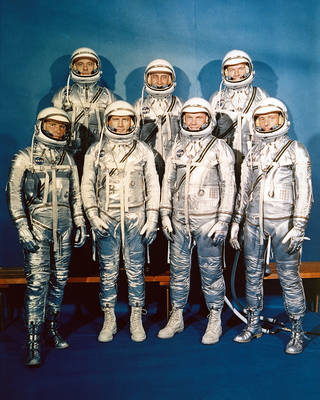
The seven Mercury astronauts were (from left) Wally Schirra, Alan Shepard, Deke Slayton, Gus Grissom, John Glenn, Gordon Cooper and Scott Carpenter. Credits: NASA
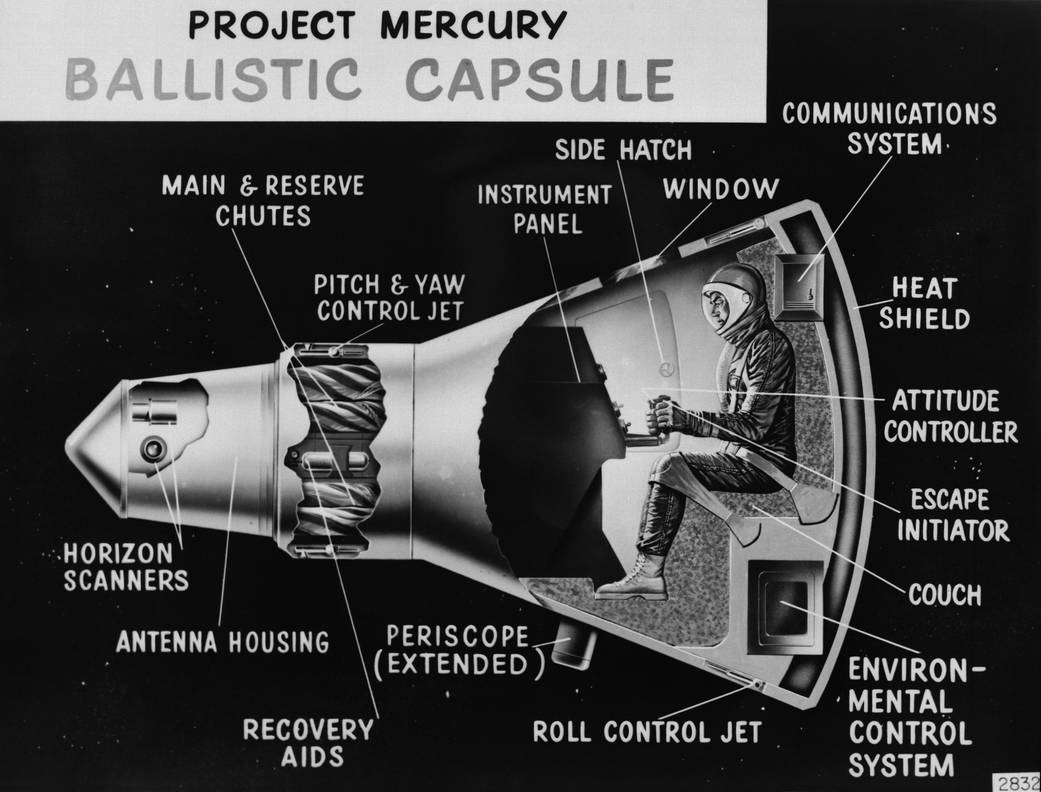
The Mercury Capsule diagram. Not shown is the Retropack on the back of the heat shield held on by straps. The Retropack contained solid rockets to slow the capsule so it can descend from orbit. Credit: NASA.
05/16/2019 – Ephemeris – Looking back at the Ranger program: Getting really close up pictures of the Moon
Ephemeris for Thursday, May 16th. Today the Sun will be up for 14 hours and 51 minutes, setting at 9:05, and it will rise tomorrow at 6:12. The Moon, 2 days before full, will set at 5:51 tomorrow morning.
The reconnaissance missions that had to be accomplished before the United Stated could land on the Moon in 1969 started with the Ranger program. The idea was to send a spacecraft to crash on the Moon taking and transmitting television pictures all the way down. In addition to the camera some Ranger spacecraft had a lunar capsule with a seismometer with a retro rocket to slow that package down and survive the landing. That feature never worked. Nine Rangers were launched. Only the last three were successful in returning images. Each returned thousands of images each returning detail down to 20 inches. One surprise, the rays we see from craters like Copernicus are actually chains of craterlets caused by ejecta from the impact.
The times given are for the Traverse City/Interlochen area of Michigan. They may be different for your location.
Addendum
Here’s a time lapse video of Ranger 9 hitting the crater Alphonsus. 17 minutes collapsed into 13 seconds: https://www.youtube.com/watch?v=hpFifHgZyrg
05/09/2019 – Ephemeris – The USA: Step by step to the Moon
Ephemeris for Thursday, May 9th. Today the Sun will be up for 14 hours and 35 minutes, setting at 8:57, and it will rise tomorrow at 6:20. The Moon, 2 days before first quarter, will set at 1:54 tomorrow morning.
The Apollo 11 manned landing on the Moon 50 years ago was the culmination of a series of incremental steps. The Mercury program was in progress when President Kennedy announce the goal to land on the Moon. Following that was Gemini a two man capsule to test long duration flight, rendezvous and docking of two spacecraft, and EVA’s or spacewalks. There was the Ranger program attempted to photograph the Moon close up by sending probes to crash into the Moon. The Lunar Orbiter program to map the entire Moon, the Surveyor program to soft land on the Moon and test its surface. All this leading up to the three man Apollo program to test out the strategy and equipment and to land humans on the Moon.
The times given are for the Traverse City/Interlochen area of Michigan. They may be different for your location.
Addendum
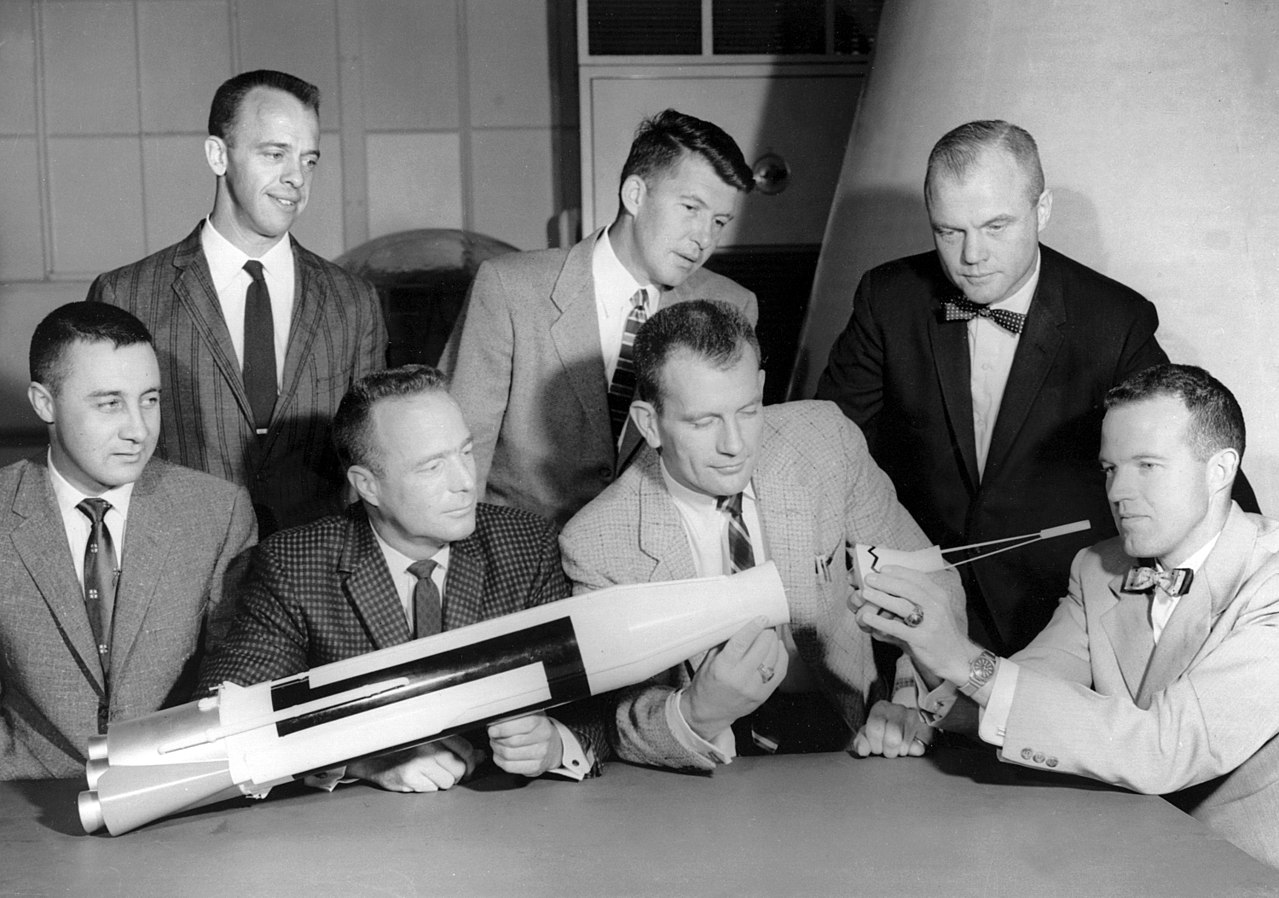
Project Mercury astronauts and a model of the Mercury-Atlas rocket and capsule. Left to right: Grissom, Shepard, Carpenter, Schirra, Slayton, Glenn and Cooper, in 1962. Click on the image to enlarge. Credit NASA.
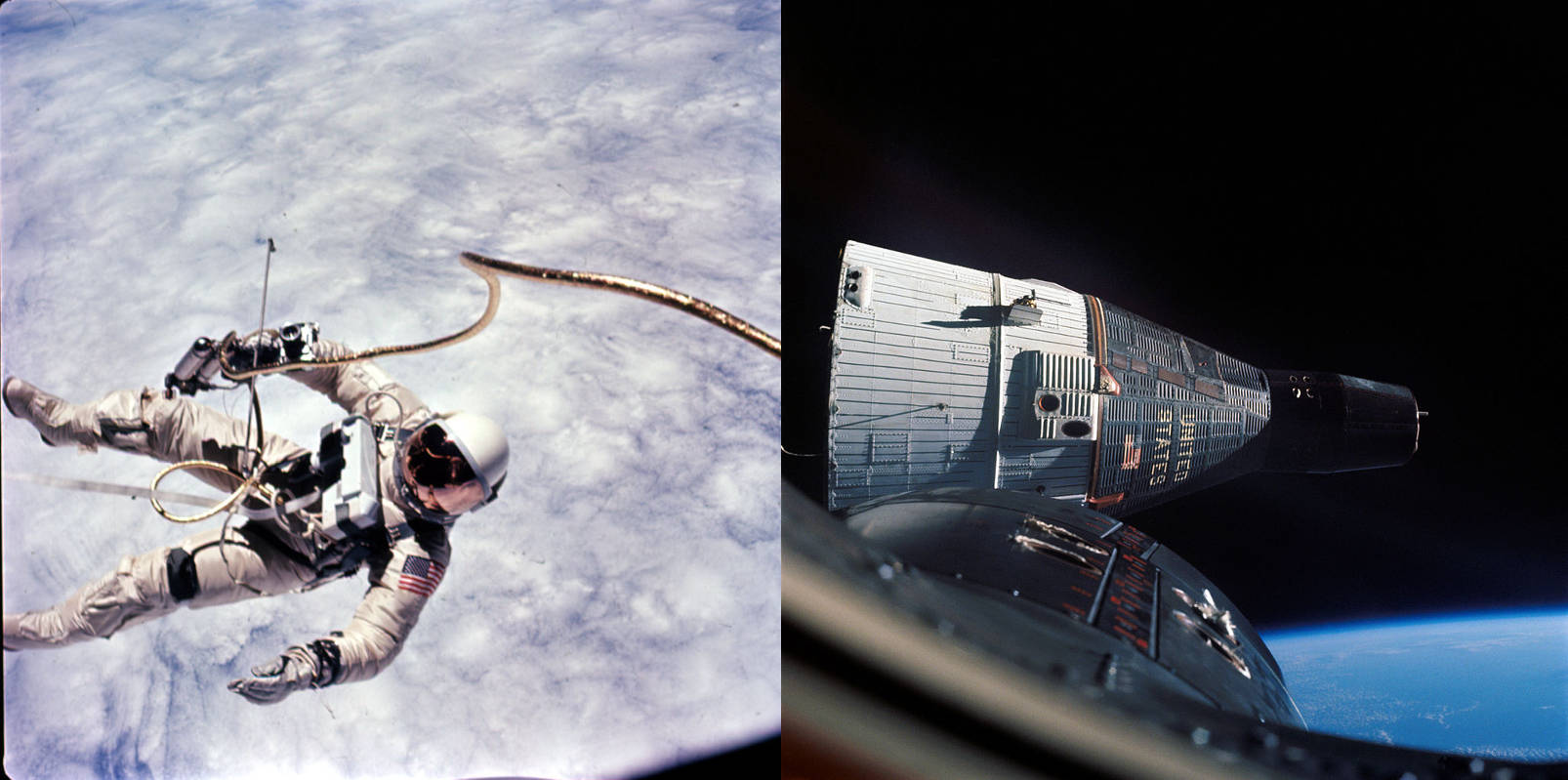
Project Gemini: Left Ed White during the US first space walk during Gemini 4 in June of 1965. Right The rendezvous of Gemini 6 & 7 in December of 1965. Click on the image to enlarge. Credit NASA.
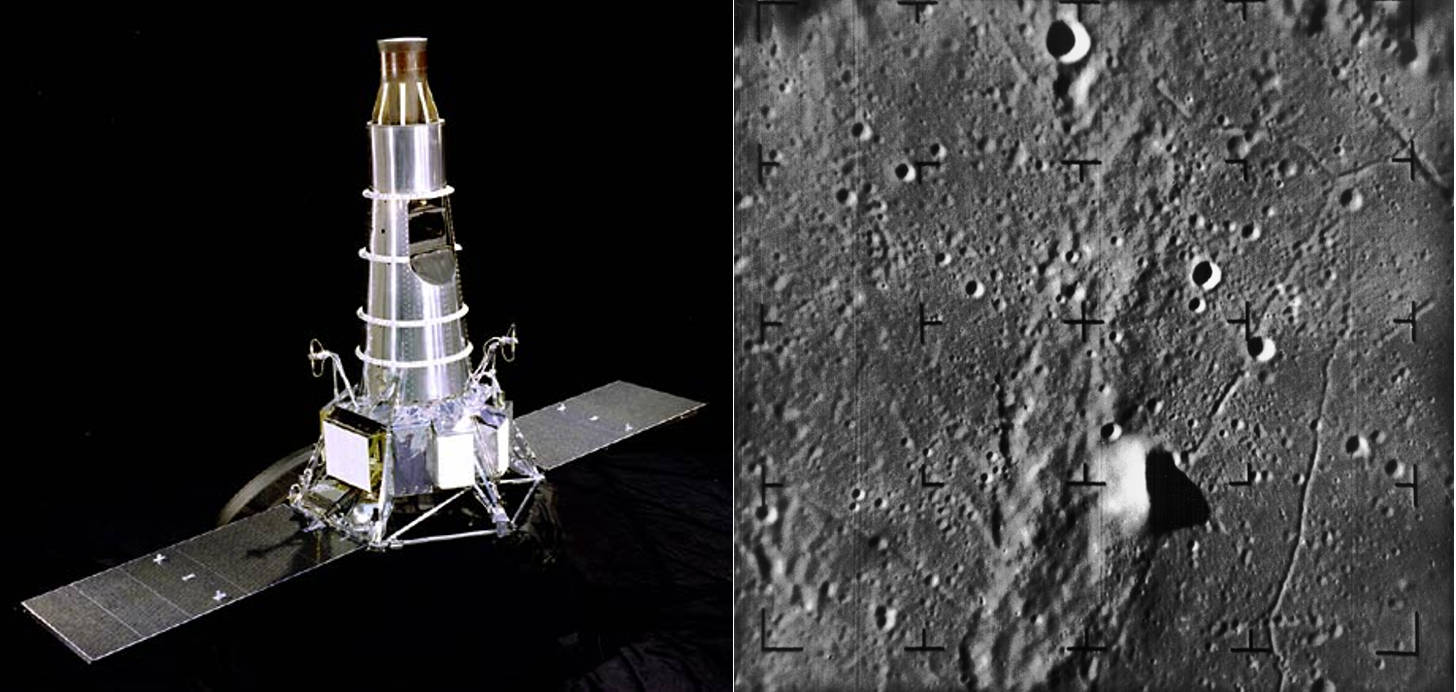
Left: The Ranger spacecraft. Right: The floor of the crater Alphonsus from Ranger 9. Only the last 3 spacecraft were successful. They transmitted images all the way down as they crashed into the Moon. Click on the image to enlarge. Credit NASA.
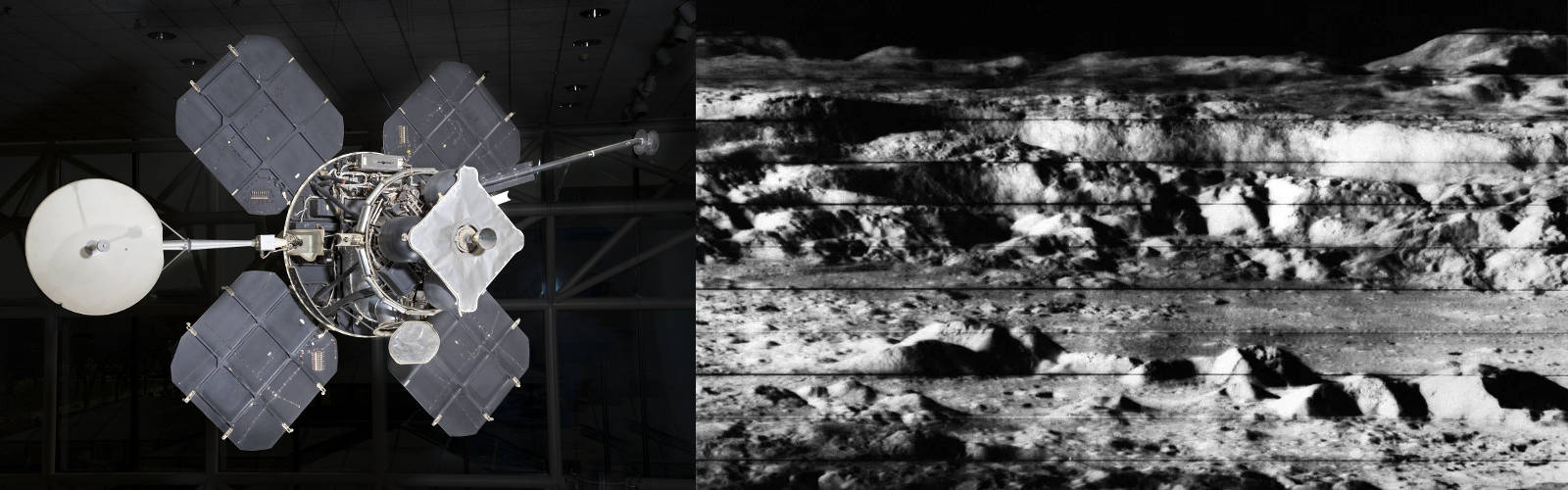
In the most unheralded of the lunar programs the 5 successful Lunar Orbiter satellites photographed 99% of the Moon. from 1966 to 1967. The Moon was photographed on film in strips, developed and the images scanned and transmitted back to Earth. Right: The oblique view of the crater Copernicus was dubbed at the time “The Picture of the Century”. Click on the image to enlarge. Credit NASA.
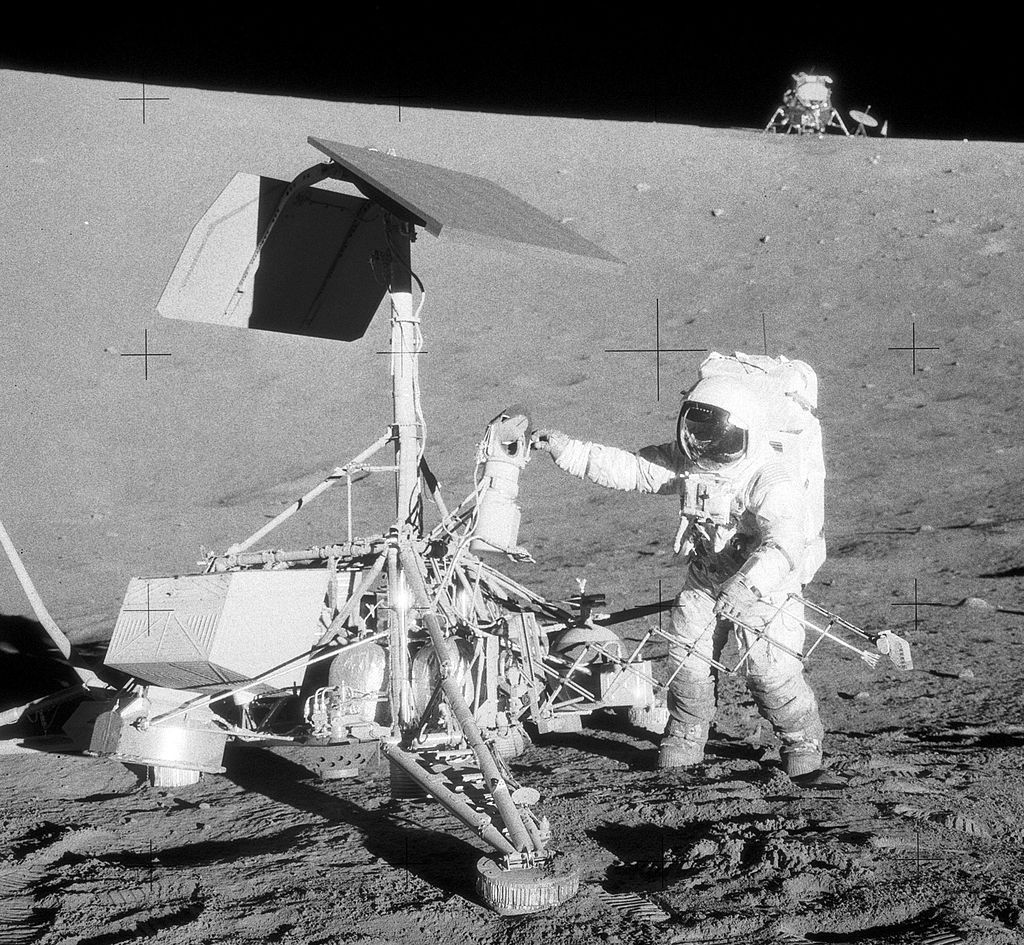
Surveyor 3, visited by astronaut Pete Conrad during the Apollo 12 mission. Click on the image to enlarge. Credit: NASA / Alan Bean.
 Bob Moler's Ephemeris Blog