Archive
Ephemeris:06/02/2026 – Mapping the Moon for Apollo
This is Ephemeris for Tuesday, June 2nd. Today the Sun will be up for 15 hours and 22 minutes, setting at 9:22, and it will rise tomorrow at 5:59. The Moon, 2 days past full, will rise at 11:54 this evening.
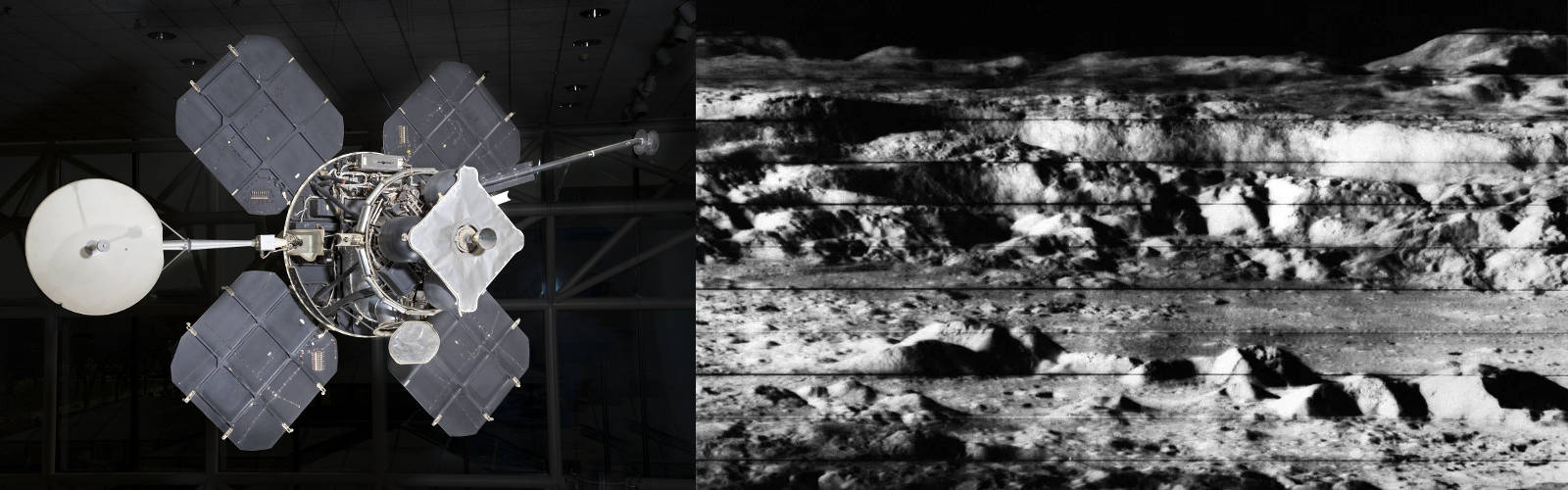
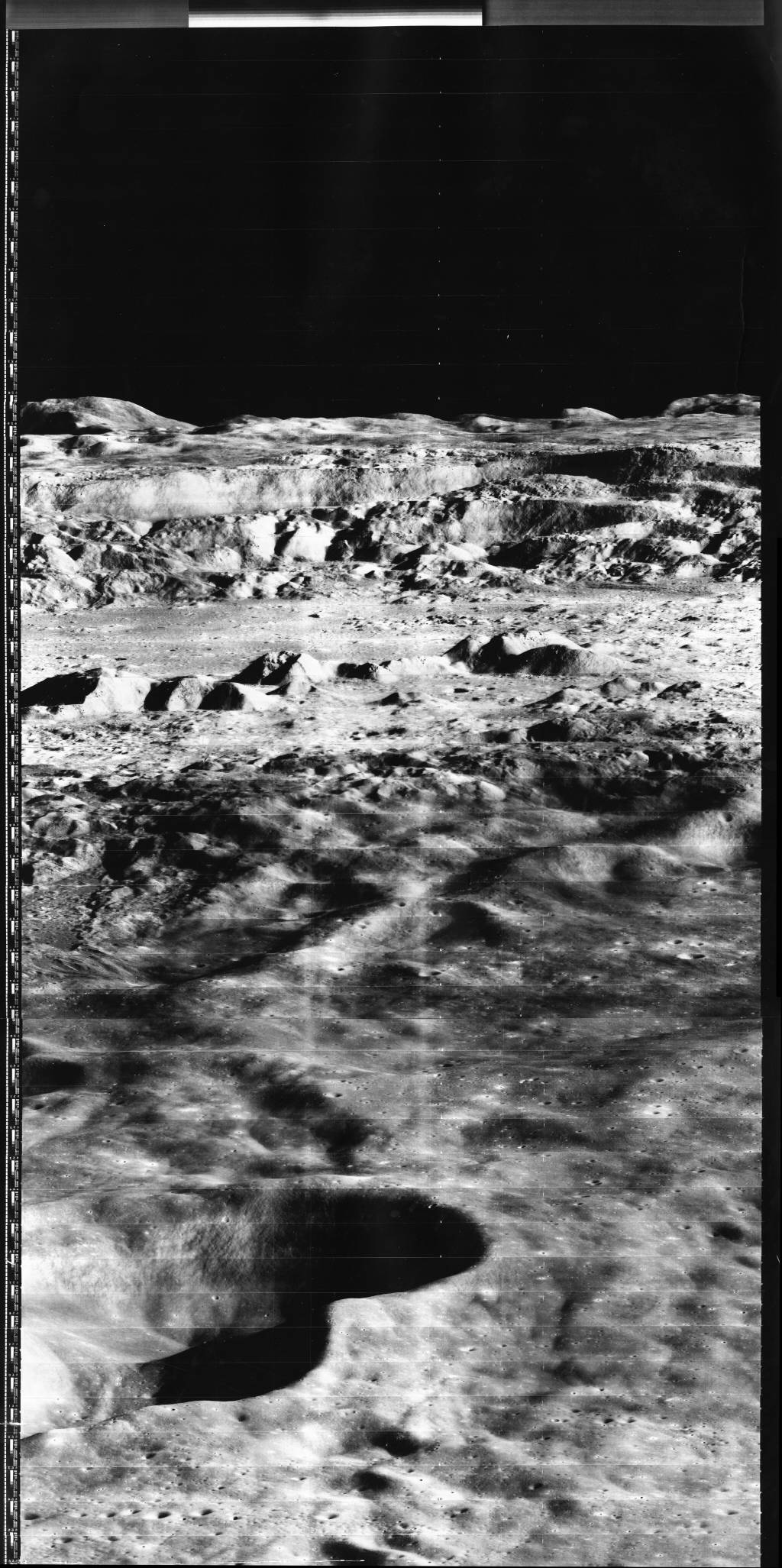
The last unmanned missions to the moon before the Apollo landings was the Lunar Orbiter program. Five spacecraft were sent to the moon to photograph, in great detail, the proposed landing sites for Apollo, and then to map the moon completely. They had 100% coverage of the near side and 95% of the far side. Unmentioned at the time was that the spacecraft used the same camera that was used on the reconnaissance or spy satellites of the era. Five orbiters were launched between 1966 and 1967, and all 5 were able to complete their mission successfully, photographing on film, developing and scanning the images to be radioed back. They then were crashed onto to the moon, so their radio signals would not interfere with Apollo moon communications.
The astronomical event times given in this blog are for the Traverse City/Interlochen area of Michigan (Lat 44.7° N, Long 85.7° W; EDT, UT – 4 hours) unless stated otherwise. Times will be different for other locations.
Addendum
05/09/2019 – Ephemeris – The USA: Step by step to the Moon
Ephemeris for Thursday, May 9th. Today the Sun will be up for 14 hours and 35 minutes, setting at 8:57, and it will rise tomorrow at 6:20. The Moon, 2 days before first quarter, will set at 1:54 tomorrow morning.
The Apollo 11 manned landing on the Moon 50 years ago was the culmination of a series of incremental steps. The Mercury program was in progress when President Kennedy announce the goal to land on the Moon. Following that was Gemini a two man capsule to test long duration flight, rendezvous and docking of two spacecraft, and EVA’s or spacewalks. There was the Ranger program attempted to photograph the Moon close up by sending probes to crash into the Moon. The Lunar Orbiter program to map the entire Moon, the Surveyor program to soft land on the Moon and test its surface. All this leading up to the three man Apollo program to test out the strategy and equipment and to land humans on the Moon.
The times given are for the Traverse City/Interlochen area of Michigan. They may be different for your location.
Addendum
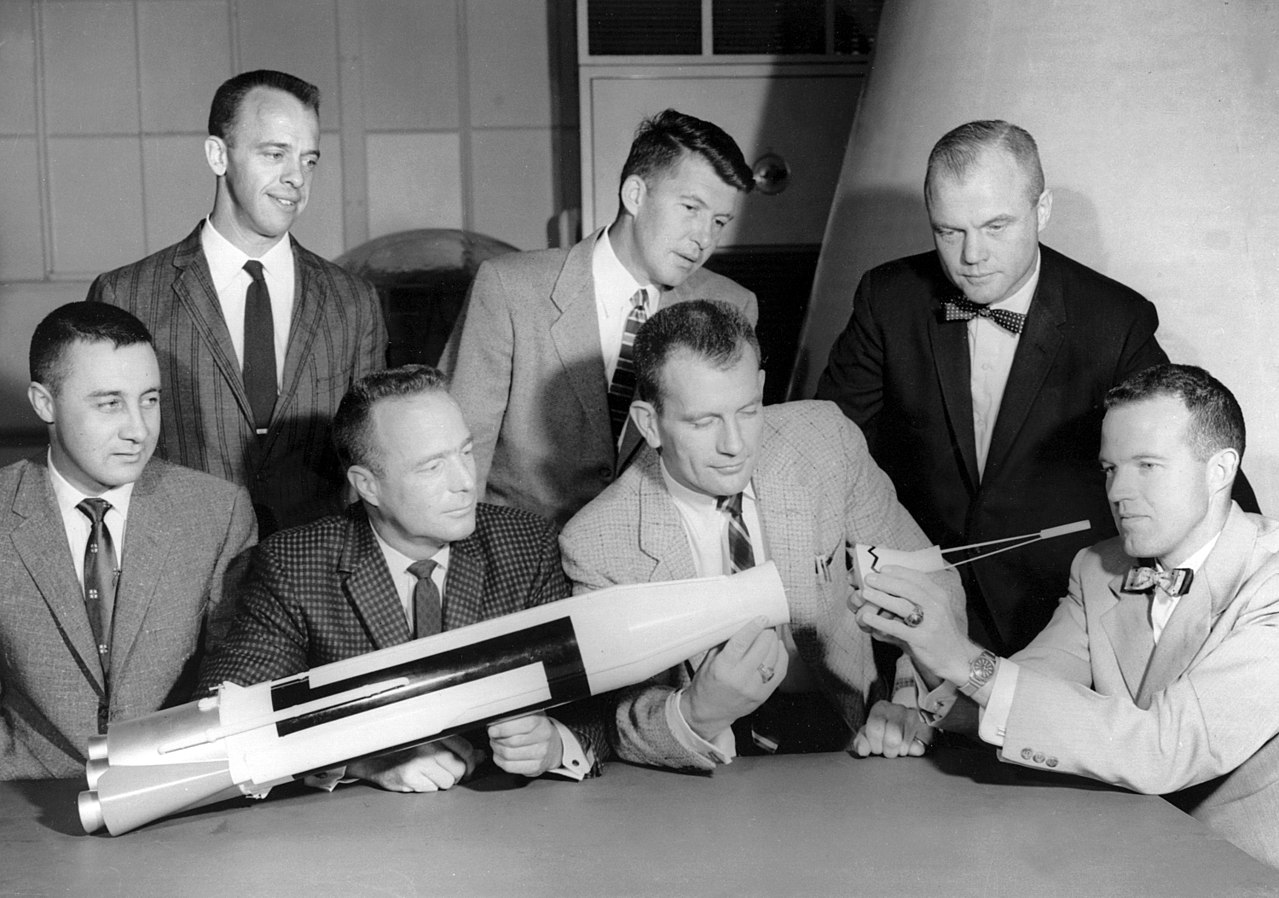
Project Mercury astronauts and a model of the Mercury-Atlas rocket and capsule. Left to right: Grissom, Shepard, Carpenter, Schirra, Slayton, Glenn and Cooper, in 1962. Click on the image to enlarge. Credit NASA.
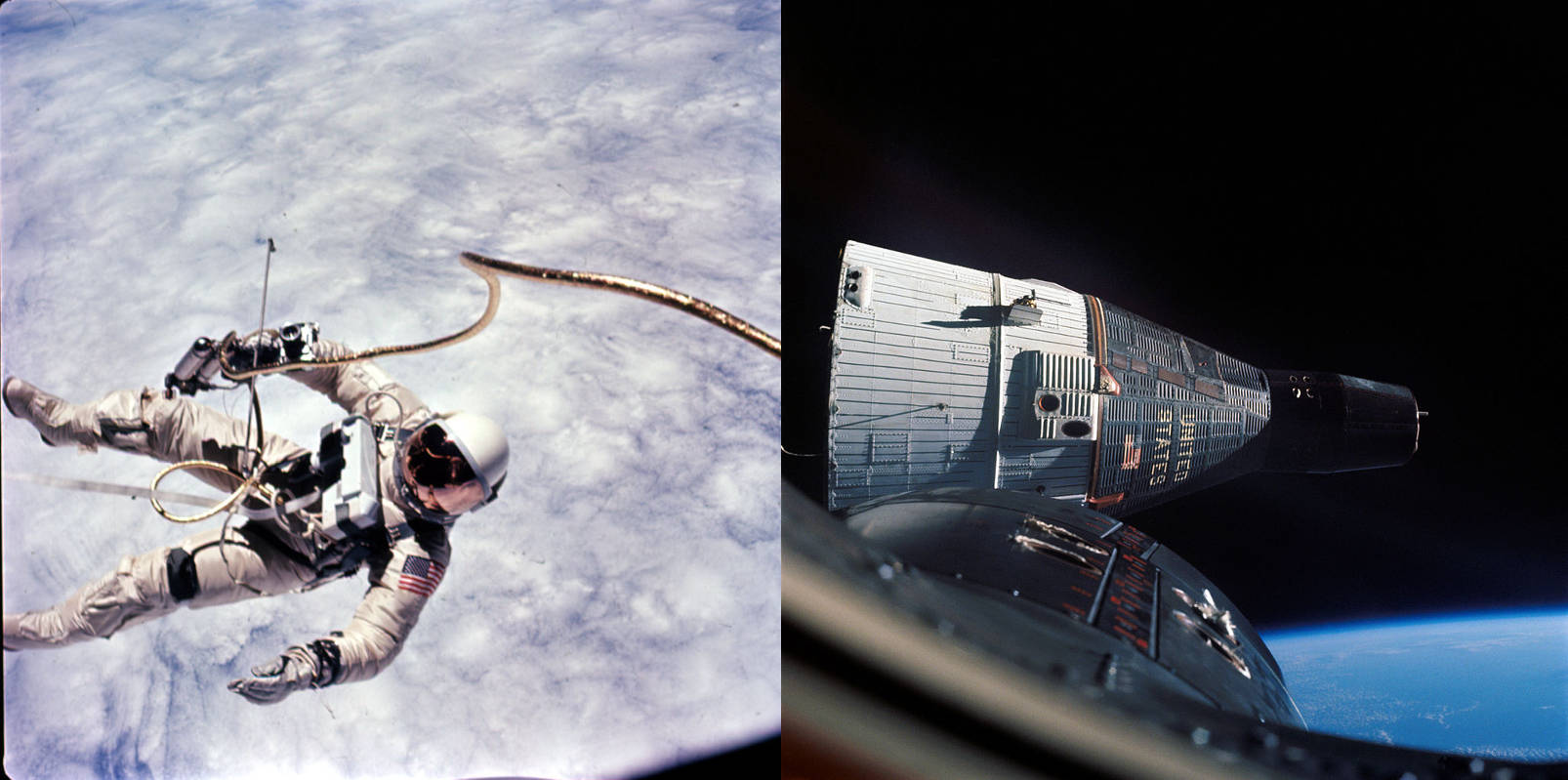
Project Gemini: Left Ed White during the US first space walk during Gemini 4 in June of 1965. Right The rendezvous of Gemini 6 & 7 in December of 1965. Click on the image to enlarge. Credit NASA.
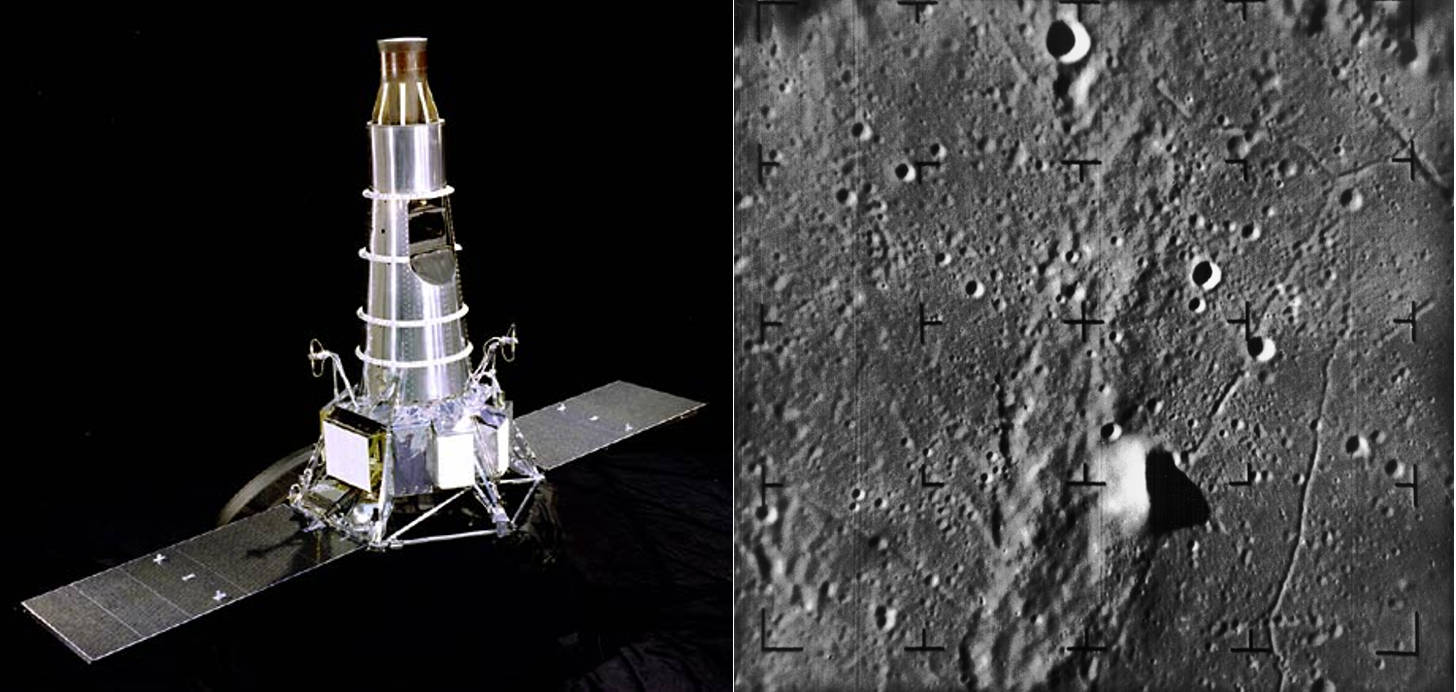
Left: The Ranger spacecraft. Right: The floor of the crater Alphonsus from Ranger 9. Only the last 3 spacecraft were successful. They transmitted images all the way down as they crashed into the Moon. Click on the image to enlarge. Credit NASA.
In the most unheralded of the lunar programs the 5 successful Lunar Orbiter satellites photographed 99% of the Moon. from 1966 to 1967. The Moon was photographed on film in strips, developed and the images scanned and transmitted back to Earth. Right: The oblique view of the crater Copernicus was dubbed at the time “The Picture of the Century”. Click on the image to enlarge. Credit NASA.
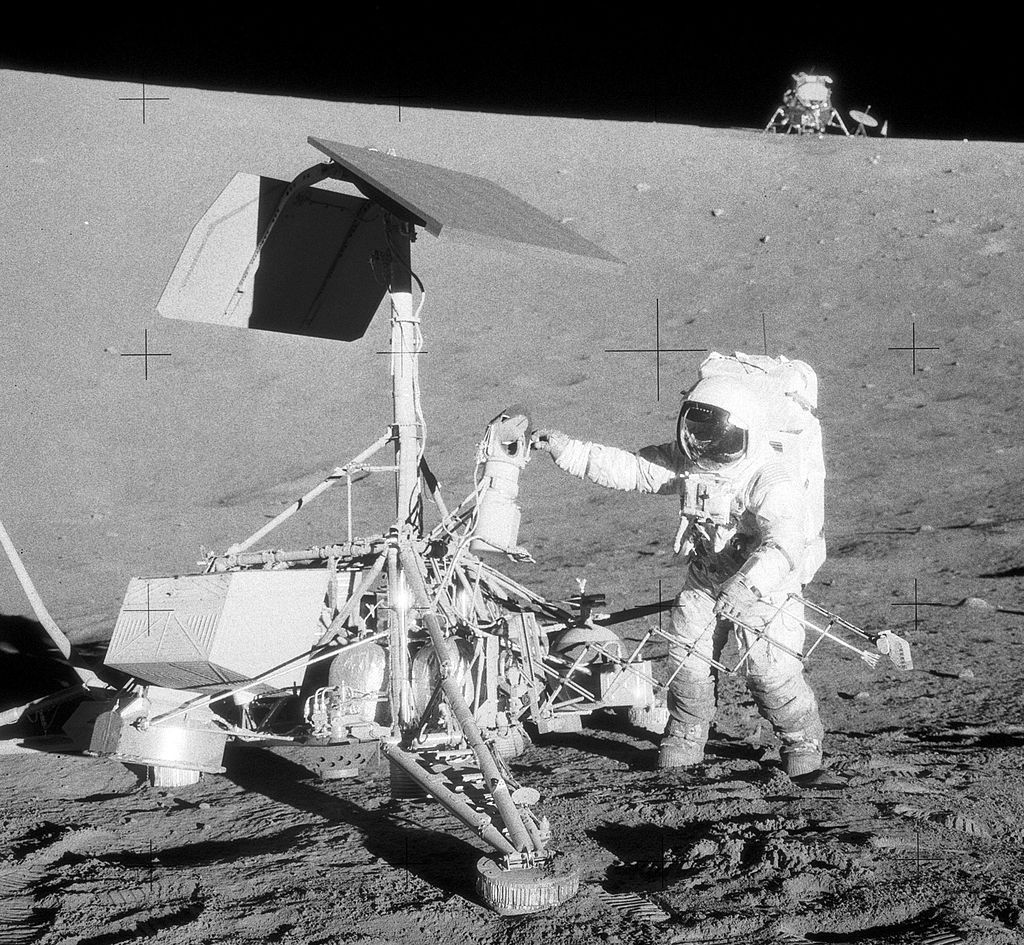
Surveyor 3, visited by astronaut Pete Conrad during the Apollo 12 mission. Click on the image to enlarge. Credit: NASA / Alan Bean.

