Archive
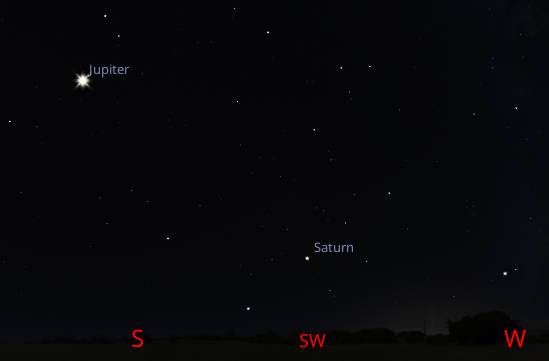
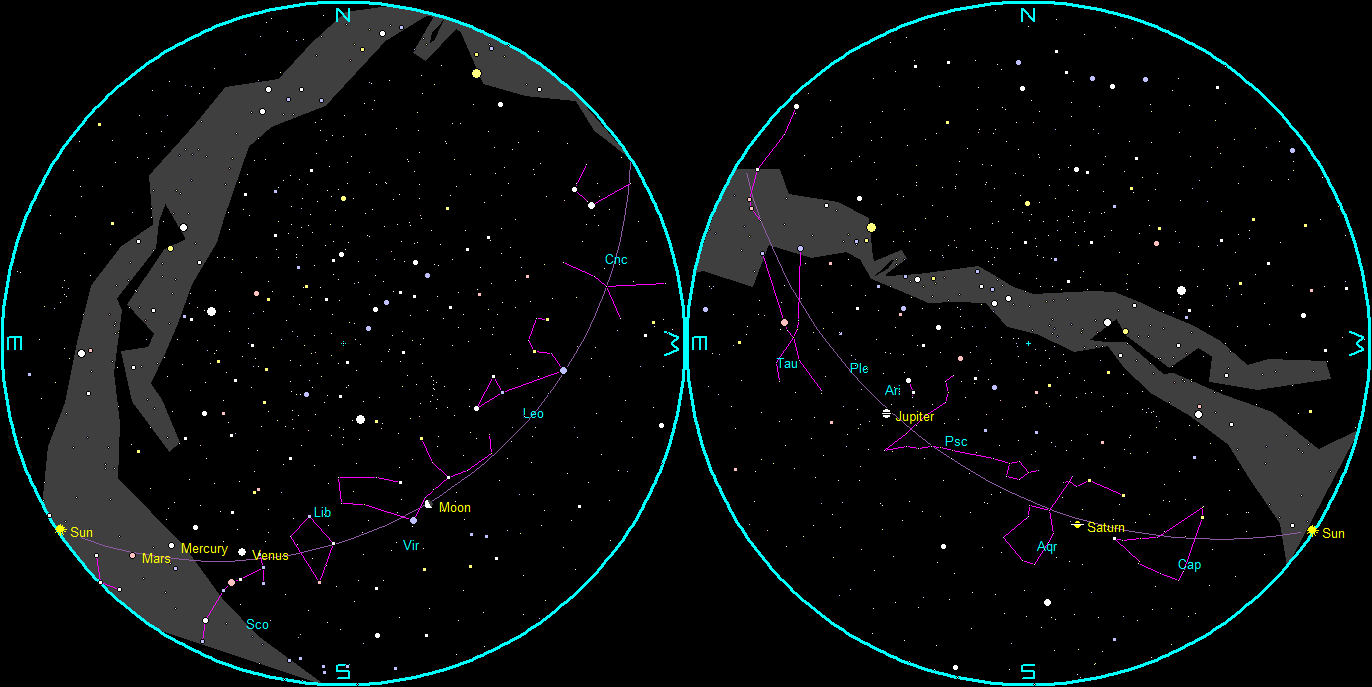
Ephemeris: 01/03/2024 – Where have the naked-eye planets wandered off to this week?
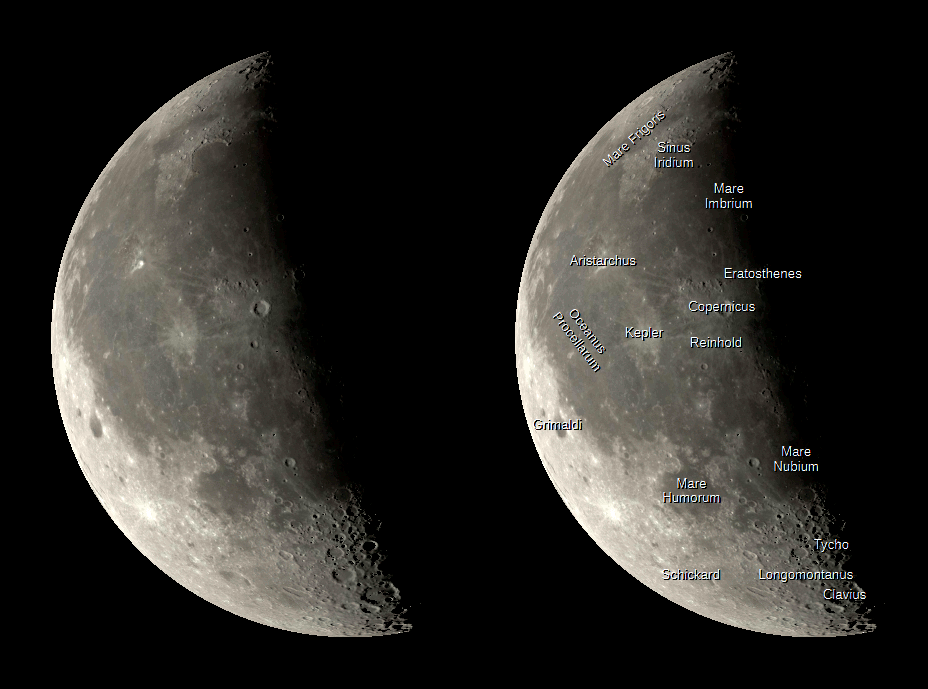
This is Ephemeris for Wednesday, January 3rd. The Sun will rise at 8:20. It’ll be up for 8 hours and 54 minutes, setting at 5:14. The Moon, at last quarter today, will rise at 1:04 tomorrow morning.
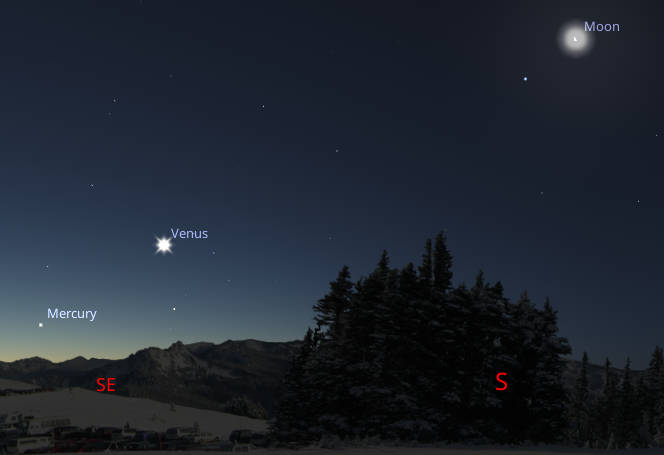
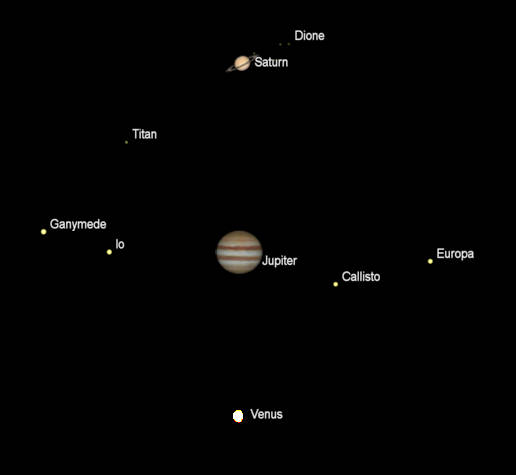
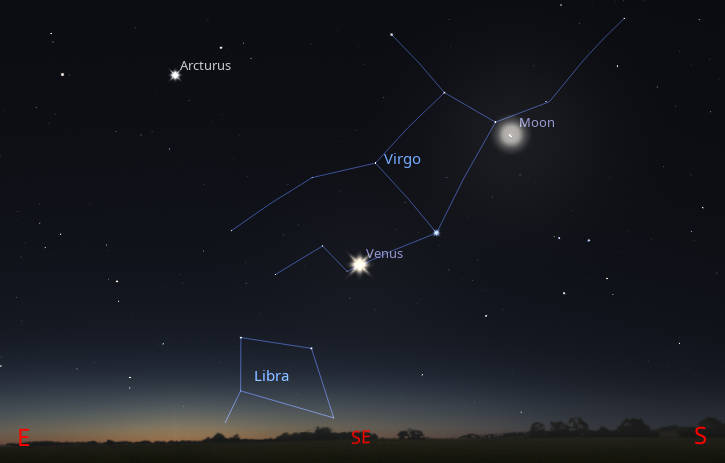
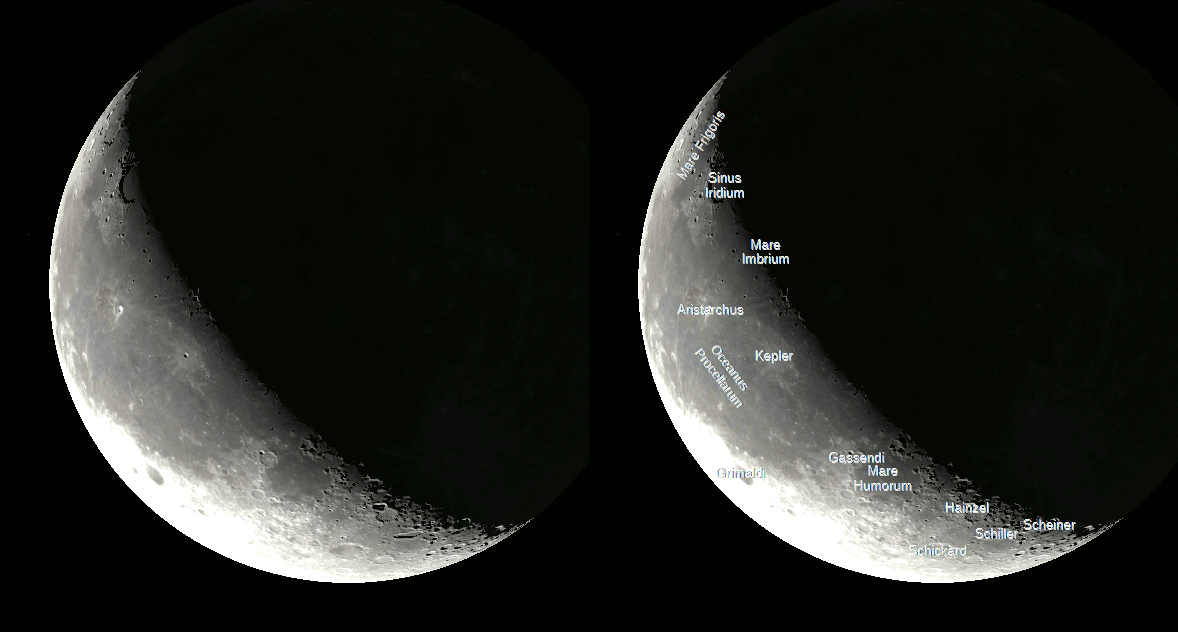
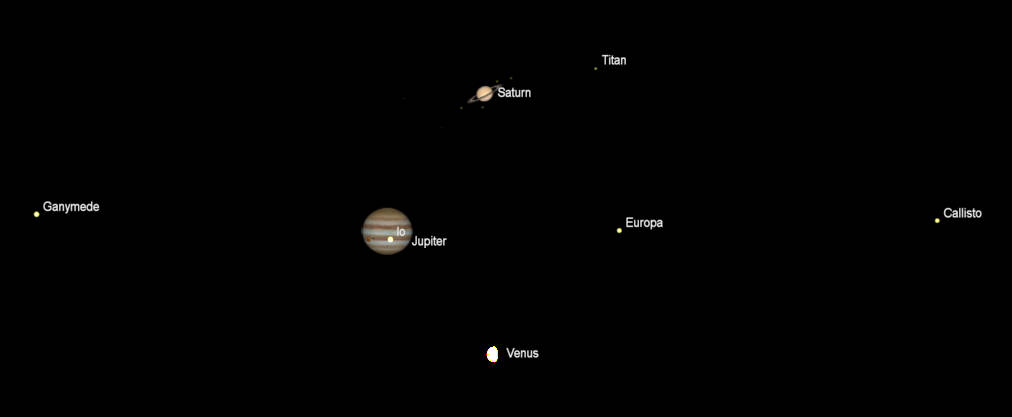
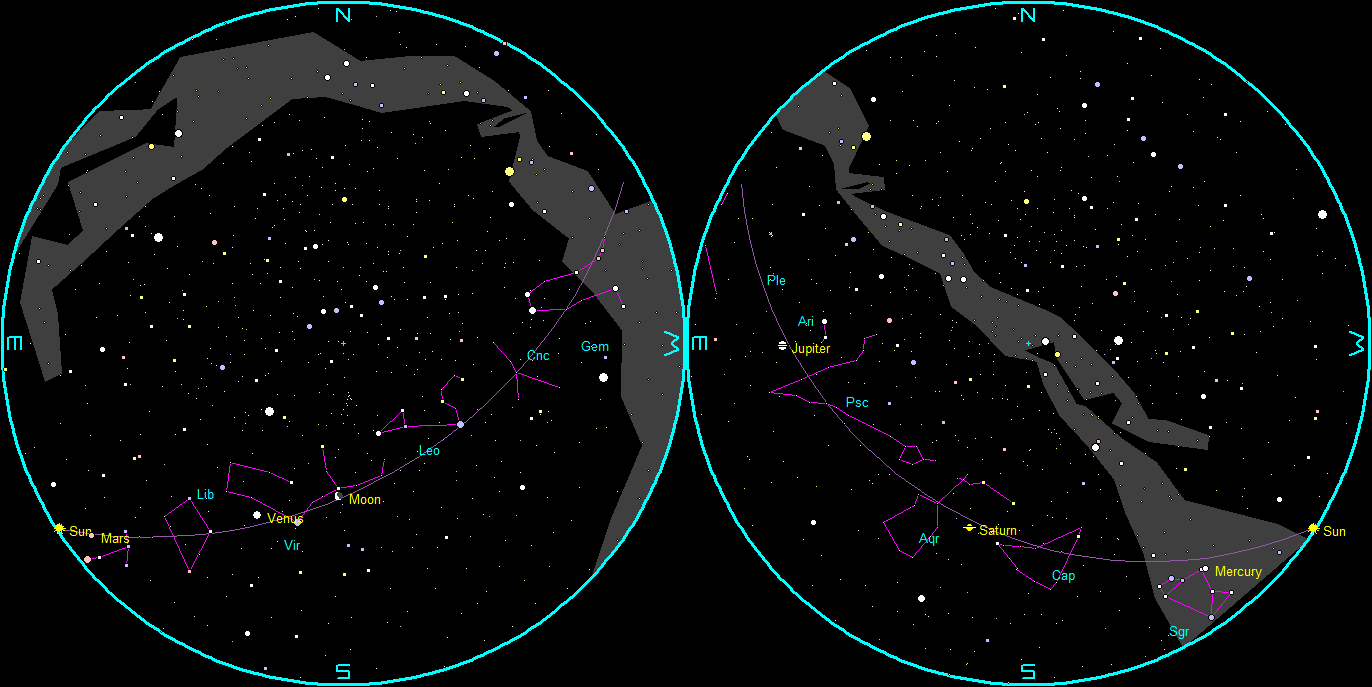
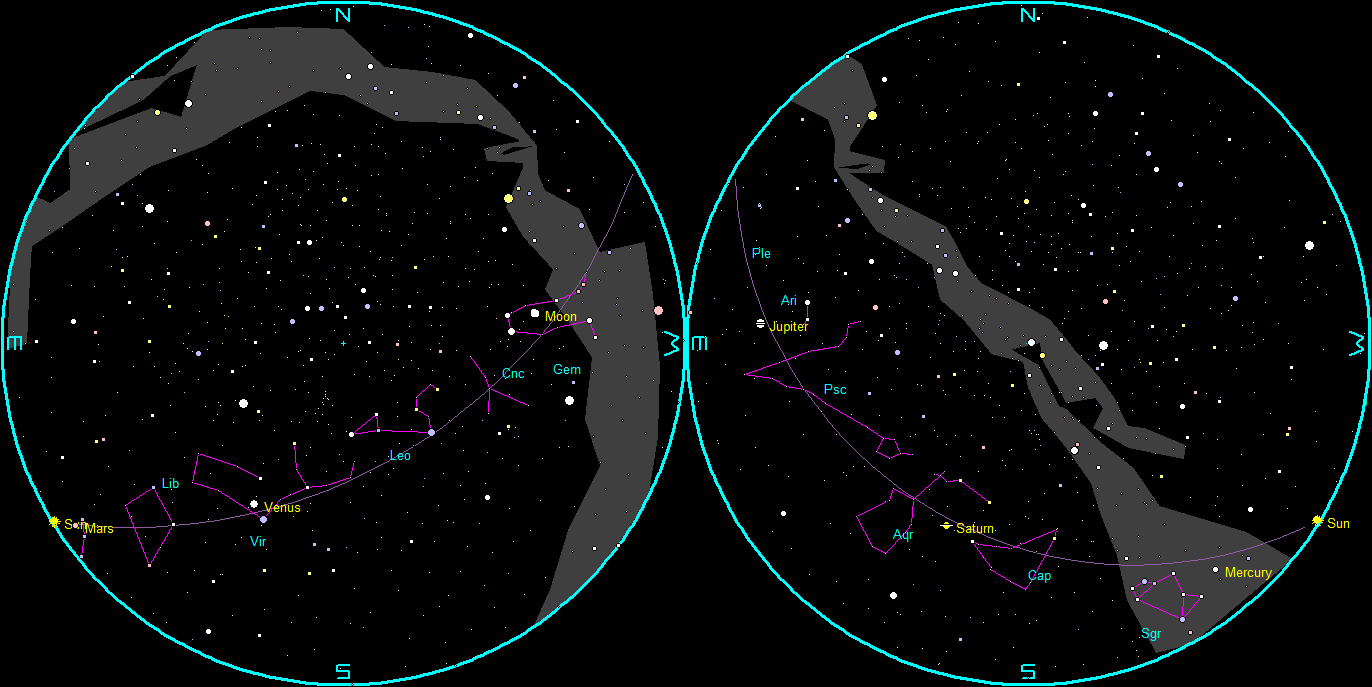
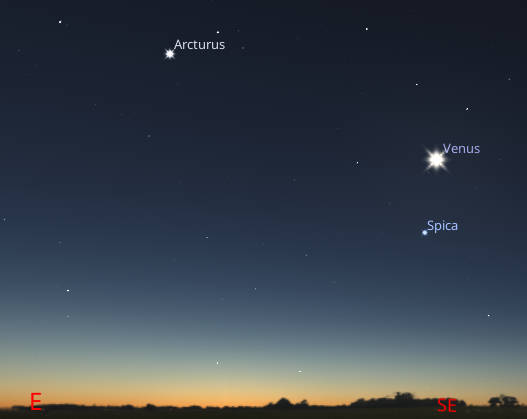
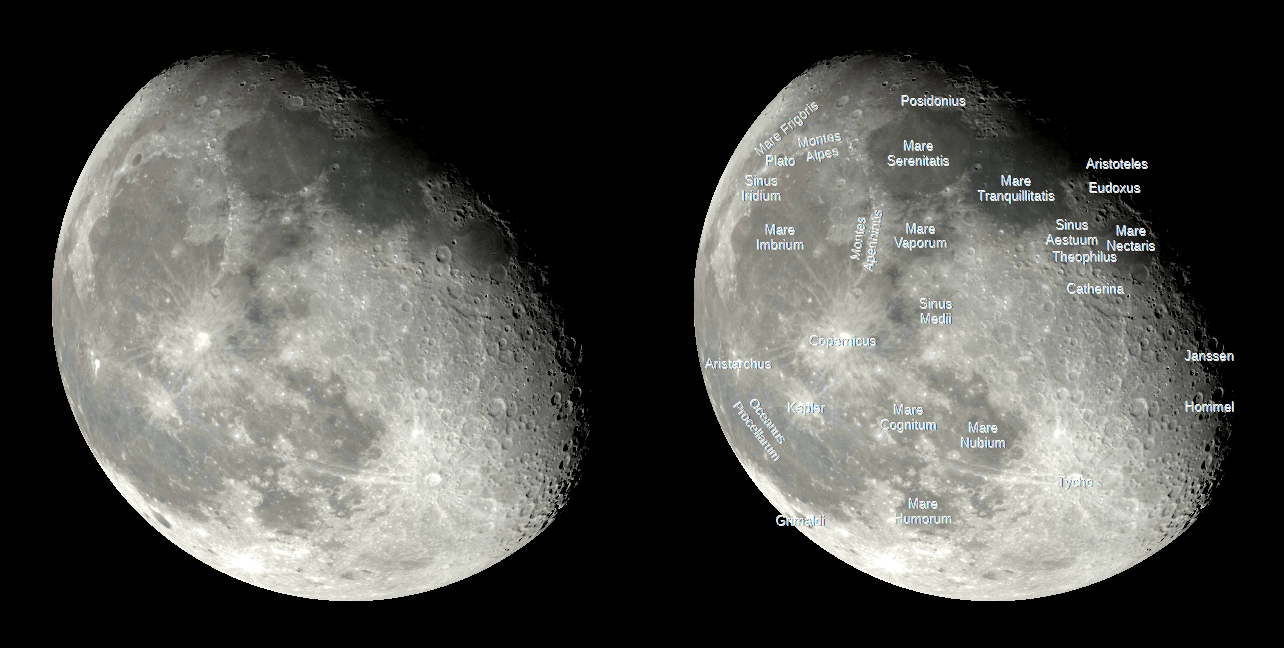
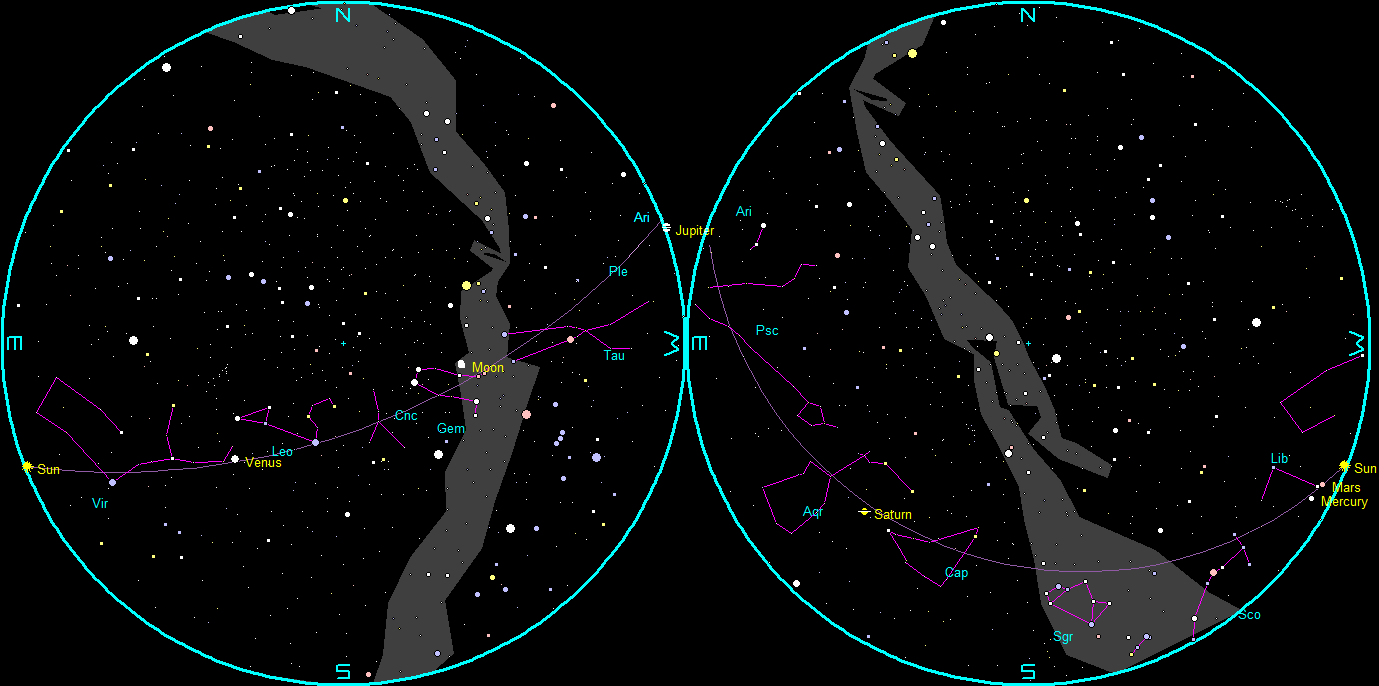
Let’s find out where the naked-eye planets have wandered off to this week. Four of those five planets are now visible. Mars rises too close to sunrise to be seen. Saturn and Jupiter are the only evening planets. Saturn can be seen moving from low in the southwest to setting in the west-southwest at 9:30 pm. Jupiter will be moving from the high in the south-southeast to the west-southwest, by midnight and will set at 2:57 am. The last quarter Moon will be in Virgo tomorrow morning. Venus, the brilliant morning star, will rise in the east-southeast at 5:29 am, and be a brilliant beacon in the morning, shining in the southeast before the bright morning twilight claims it around 8 am. Mercury may be glimpsed below and left of it.
The astronomical event times given are for the Traverse City/Interlochen area of Michigan (EST, UT –5 hours). They may be different for your location.
Addendum
Ephemeris: 12/27/2023 – Our last look at the naked-eye planets for 2023
This is Ephemeris for Wednesday, December 27th. Today the Sun will be up for 8 hours and 49 minutes, setting at 5:08, and it will rise tomorrow at 8:19. The Moon, 1 day past full, will rise at 5:30 this evening.
Let’s find out where the naked-eye planets have wandered off to this week. Three of those five planets are now visible. Mercury and Mars rise too close to sunrise to be seen. Saturn and Jupiter are the only evening planets. Saturn can be seen moving from low in the southwest to setting in the west-southwest at 9:54 pm. Jupiter will be moving from the high in the southeast to the west-southwest, by midnight and will set at 3:24 am. The Moon, the night after it being full, will be in Gemini tonight, not that any of its stars will be visible, making the sky bright. Venus, the brilliant morning star, will rise in the east-southeast at 4:56, am, and be a brilliant beacon in the morning, shining in the southeast by before the bright morning twilight claims it around 8 am.
The astronomical event times given are for the Traverse City/Interlochen area of Michigan (EST, UT –5 hours). They may be different for your location.
Addendum
Ephemeris: 12/20/2023 – Where are the naked-eye planets this week?
This is Bob Moler with Ephemeris for Wednesday, December 20th. Today the Sun will be up for 8 hours and 48 minutes, setting at 5:04, and it will rise tomorrow at 8:16. The Moon, 1 day past first quarter, will set at 2:21 tomorrow morning.
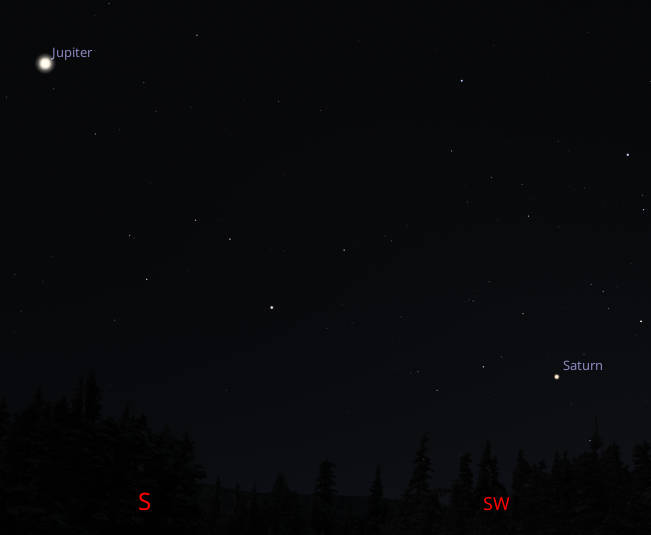
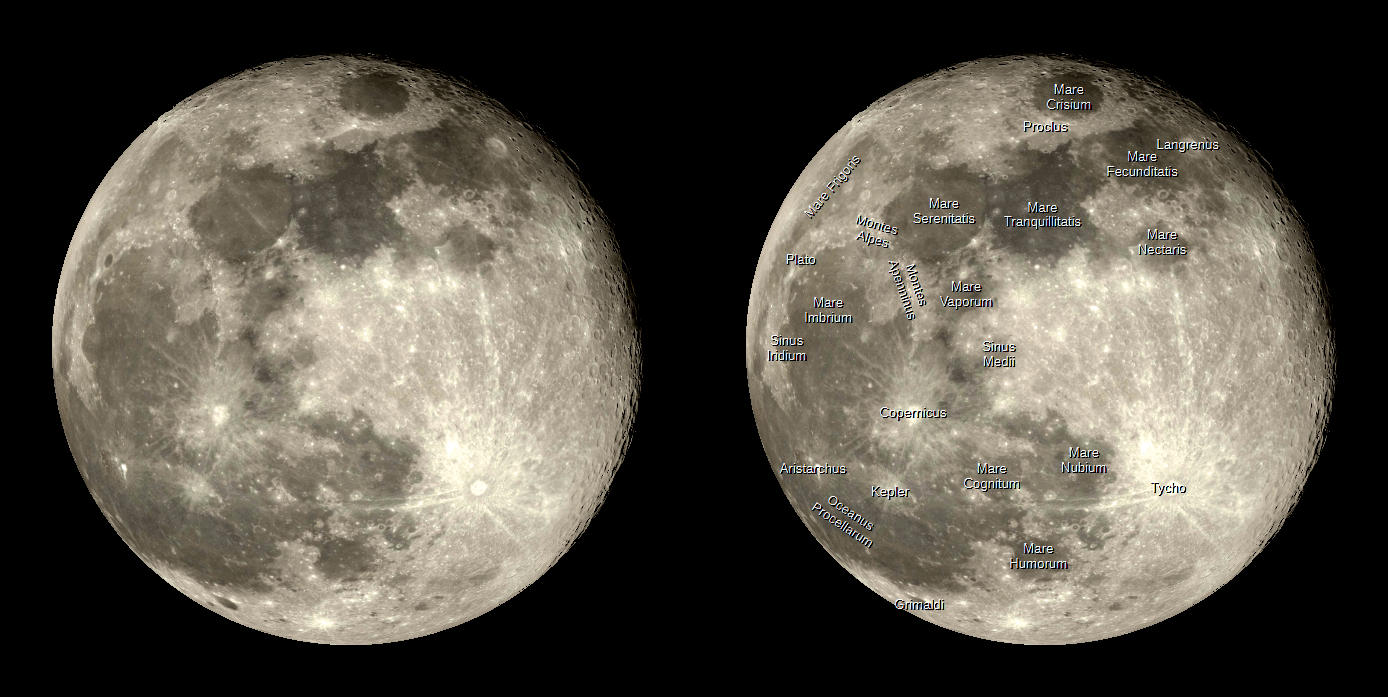
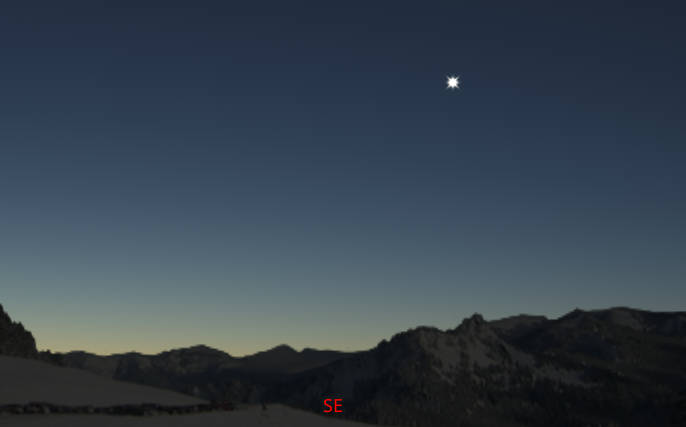
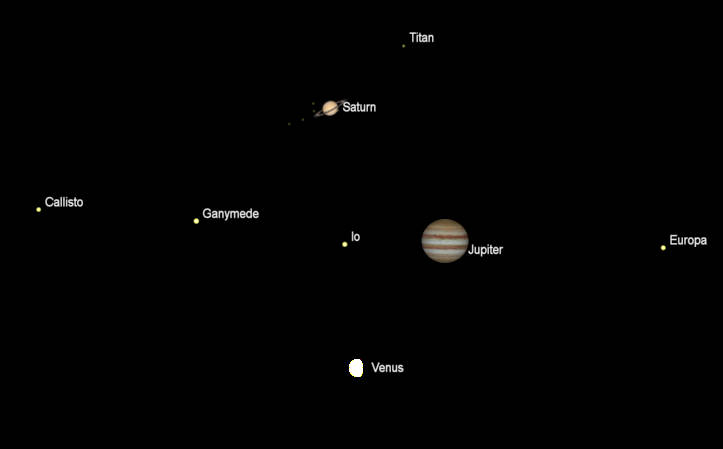
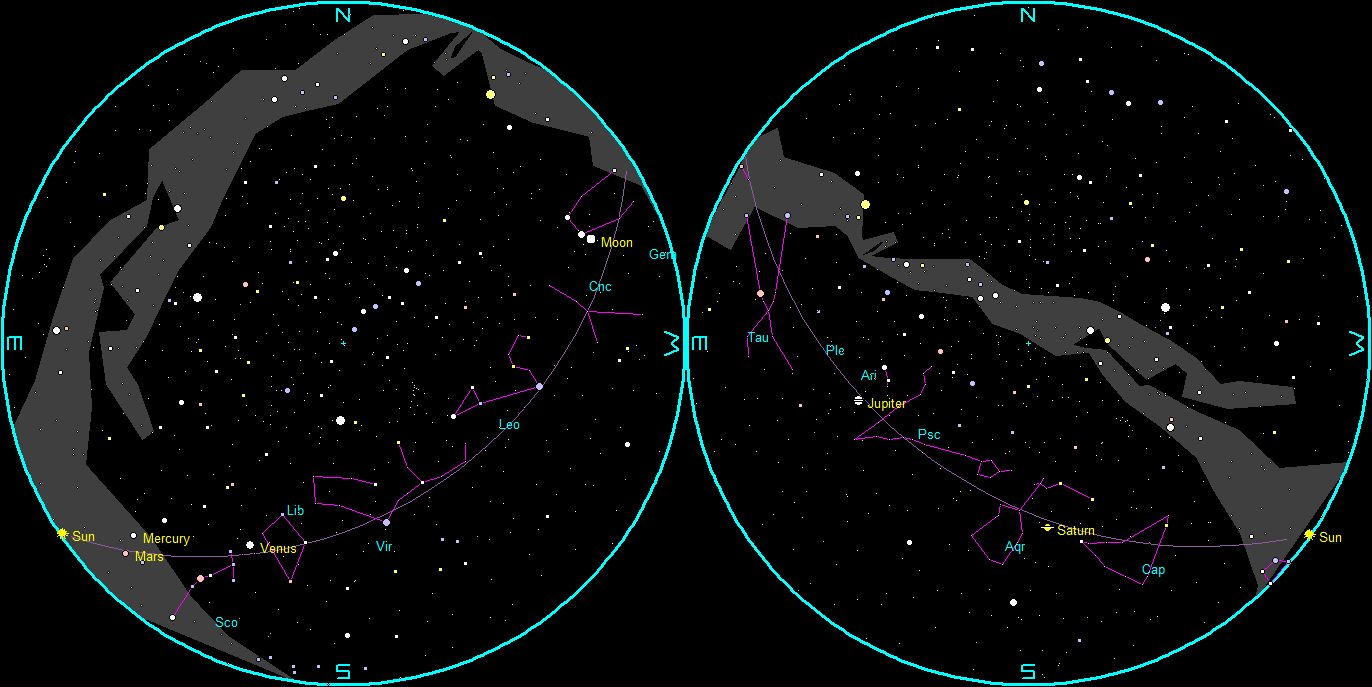
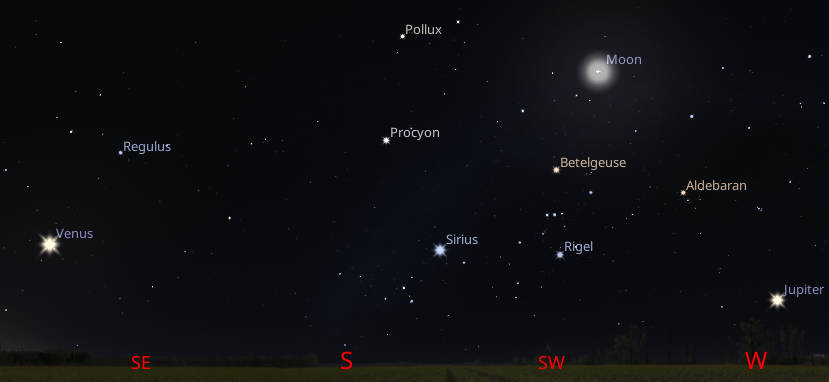
Let’s find out where the naked-eye planets have wandered off to this week. Three of those five planets are now visible, but Mercury sets too close to sunset to be seen. And Mars rises too close to sunrise. Saturn and Jupiter are the only evening planets visible. Saturn can be seen moving from low in the south-southwest to setting in the west-southwest at 10:19 pm. Jupiter will be moving from the high in the southeast to the west-southwest, and will be up most of the night until 3:53 am. The slightly waxing gibbous Moon will be seen to the right of Jupiter tonight. Venus, the brilliant morning star, will rise in the east-southeast at 4:56, am, and be a brilliant beacon in the morning, shining in the southeast by 7 am.
The astronomical event times given are for the Traverse City/Interlochen area of Michigan (EST, UT –5 hours). They may be different for your location.
Addendum
Ephemeris: 12/13/2023 – Where are the naked eye planets this week?
This is Bob Moler with Ephemeris for Wednesday, December 13th. Today the Sun will be up for 8 hours and 50 minutes, setting at 5:02, and it will rise tomorrow at 8:12. The Moon, 1 day past new, will set at 5:22 this evening.
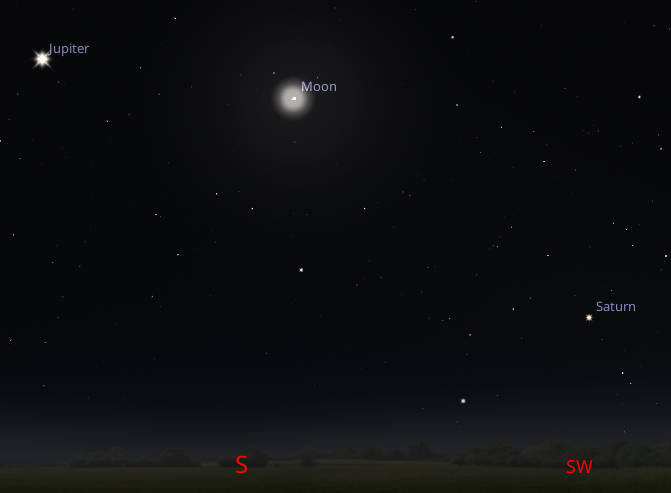
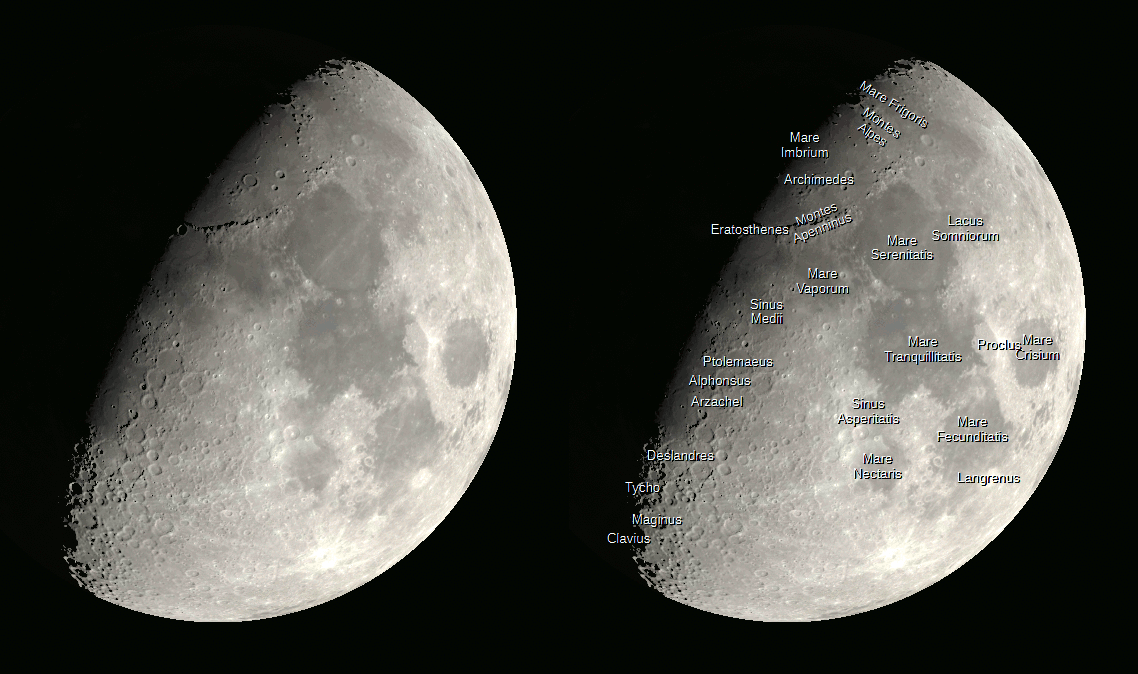
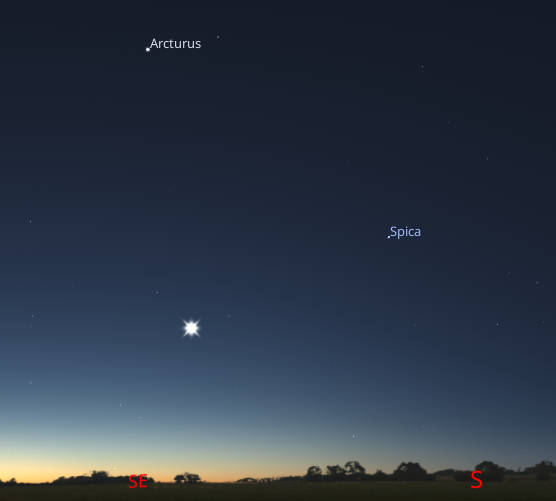
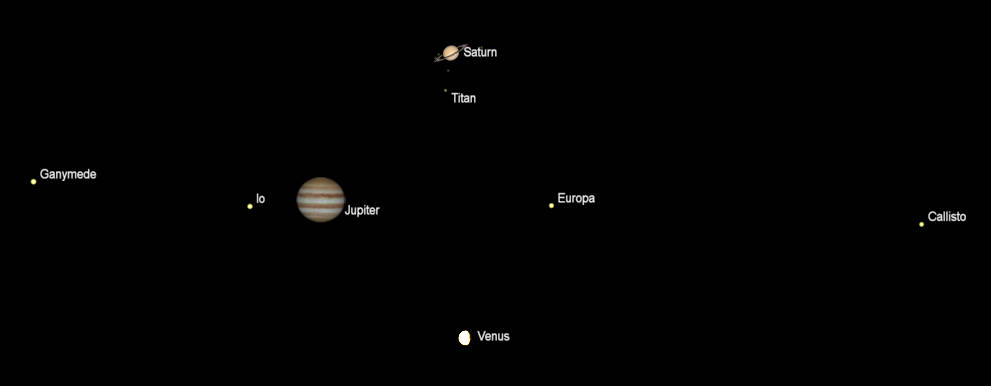
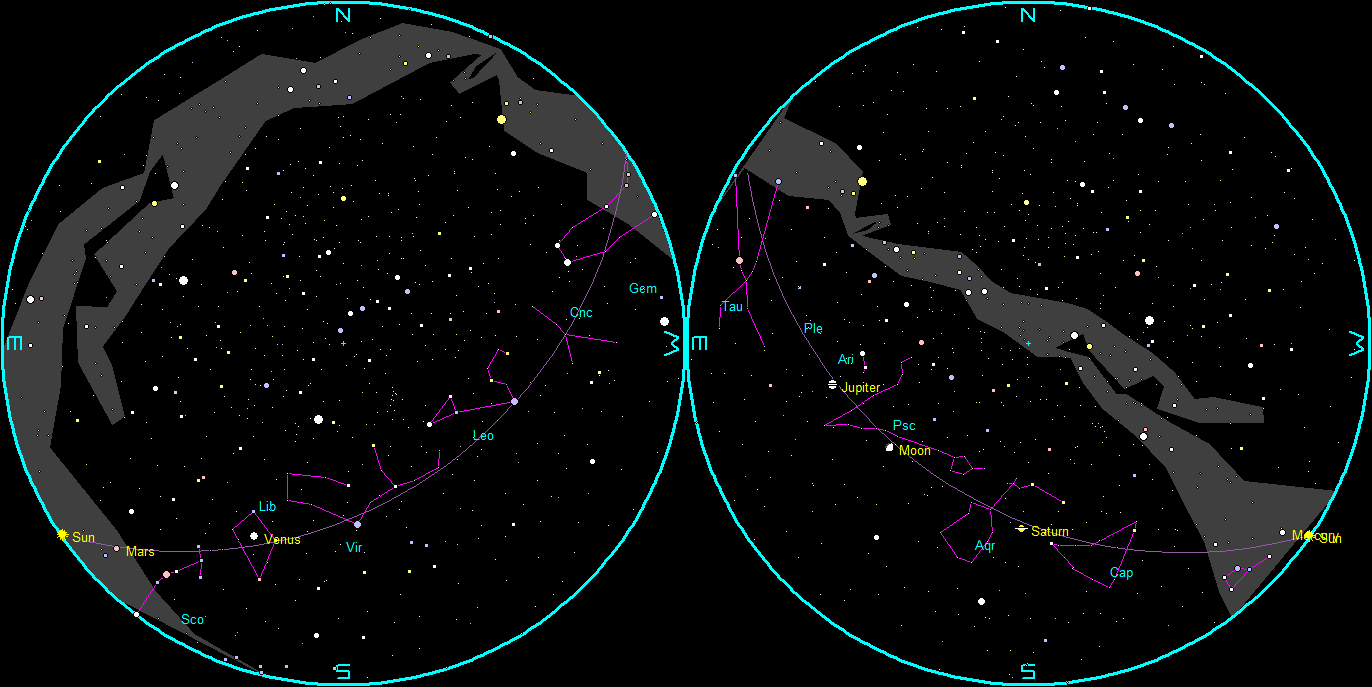
Let’s find out where the naked-eye planets have wandered off to this week. Three of those five planets are now visible, but Mercury sets too close to sunset to be seen. And Mars rises too close to sunrise. Saturn and Jupiter are the only evening planets visible. Saturn can be seen moving from low in the south-southwest to setting in the west-southwest at 10:44 pm. Jupiter will be moving from the high in the southeast to southwest, and will be up most of the night until 4:22 am. Venus, the brilliant morning star, will rise in the east-southeast at 4:40 am, and be a brilliant beacon in the morning, shining in the southeast by 7 am. Tonight is the first of two nights when the Geminid meteor shower will be at its peak.
The astronomical event times given are for the Traverse City/Interlochen area of Michigan (EST, UT –5 hours). They may be different for your location.
Addendum
Ephemeris: 12/06/2023 – Our weekly look at the naked-eye planets
This is Ephemeris for Wednesday, December 6th. Today the Sun will be up for 8 hours and 57 minutes, setting at 5:02, and it will rise tomorrow at 8:06. The Moon, 1 day past last quarter, will rise at 2:15 tomorrow morning.
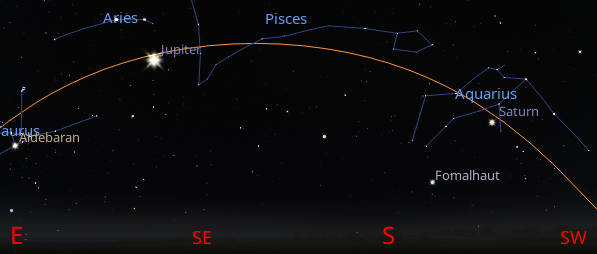
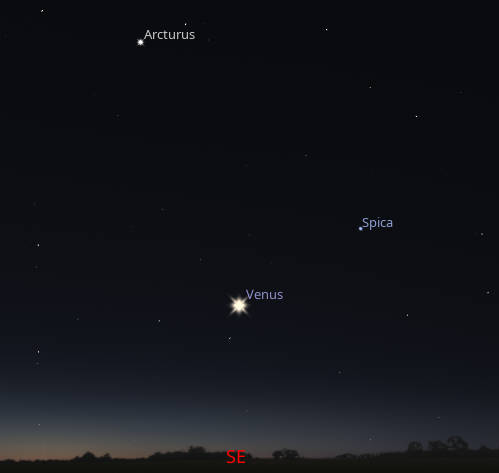
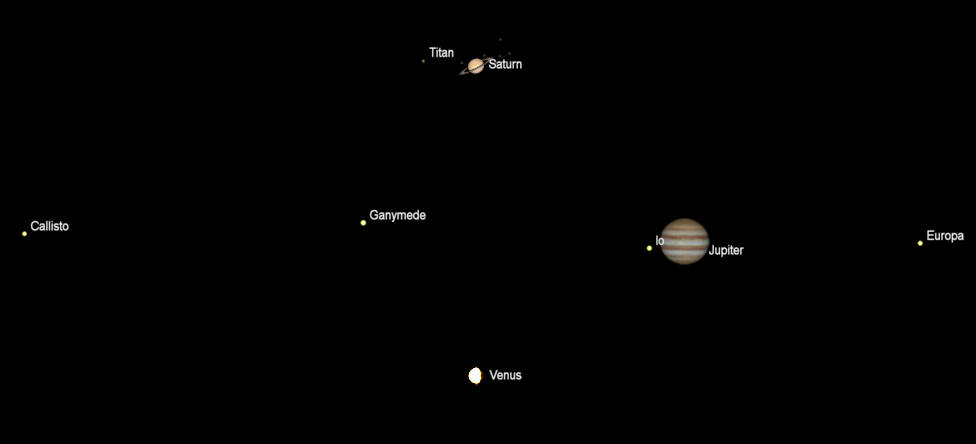
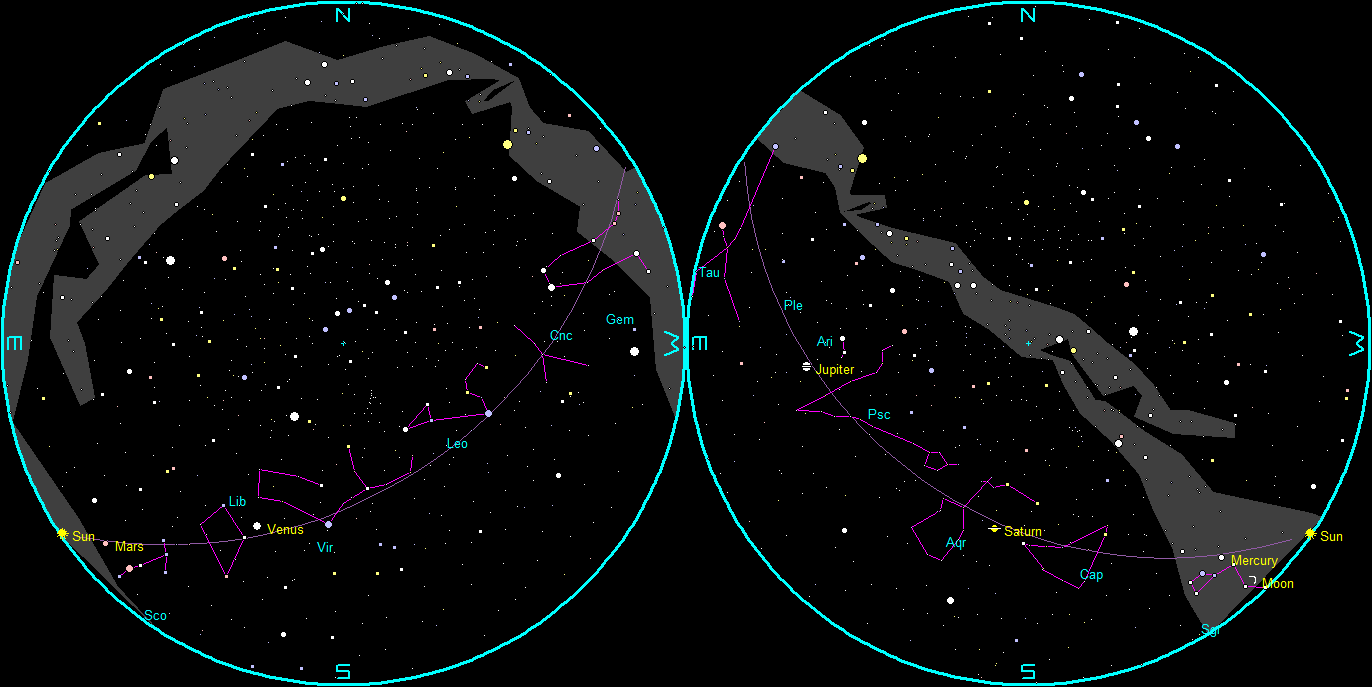
Let’s find out where the naked-eye planets have wandered off to this week. Three of those five planets are now visible, but Mercury sets too close to sunset to be seen. Mars rises too close to sunrise. Saturn and Jupiter are the only evening planets visible. Saturn can be seen moving from the south-southwest to setting in the west-southwest at 11:12 pm. Jupiter will be moving from the southeast to southwest and will be much higher in the sky during the evening hours than Saturn is, and will be up most of the night until 4:56 am. Venus, the brilliant morning star, will rise in the east-southeast at 4:22 am, and be a brilliant beacon in the morning. It will be far below and left of the fat crescent Moon.
The astronomical event times given are for the Traverse City/Interlochen area of Michigan (EST, UT –5 hours). They may be different for your location.
Ephemeris: 11/29/2023 – Where are the naked-eye planets this week?
This is Ephemeris for Wednesday, November 29th. Today the Sun will be up for 9 hours and 7 minutes, setting at 5:04, and it will rise tomorrow at 7:58. The Moon, 2 days past full, will rise at 6:42 this evening.
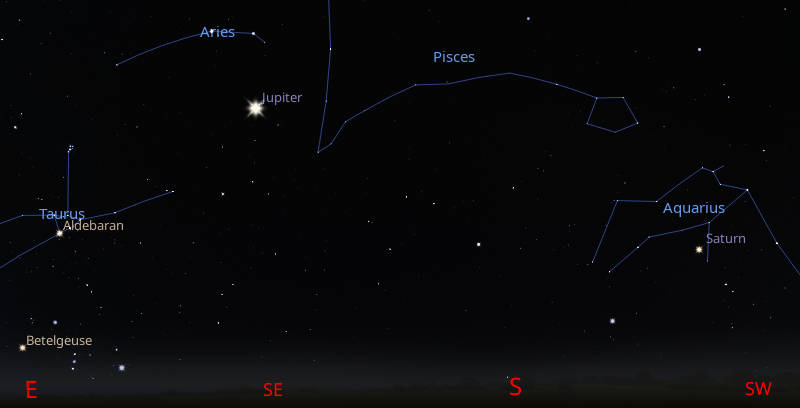
Let’s find out where the naked-eye planets have wandered off to this week. Three of those five planets are now visible, but Mercury sets too close to sunset to be seen, and Mars rises too close to sunrise. Saturn and Jupiter are the only evening planets visible. Saturn can be seen moving from the south-southwest to setting in the west-southwest in the evening. Ringed planet will be setting at 11:34 pm. Jupiter will be moving from the east-southeast to southwest and will be much higher in the sky during the evening hours than Saturn is, and will be up most of the night until 5:22 am. Venus, the brilliant morning star, will rise in the east-northeast at 4:09 am, and be a brilliant beacon in the morning.
The astronomical event times given are for the Traverse City/Interlochen area of Michigan (EST, UT –5 hours). They may be different for your location.
Addendum
Ephemeris: 11/22/2023 – Where have the naked-eye planets wandered off to this week?
This is Ephemeris for Wednesday, November 22nd. Today the Sun will be up for 9 hours and 20 minutes, setting at 5:08, and it will rise tomorrow at 7:50. The Moon, 2 days past first quarter, will set at 3:17 tomorrow morning.
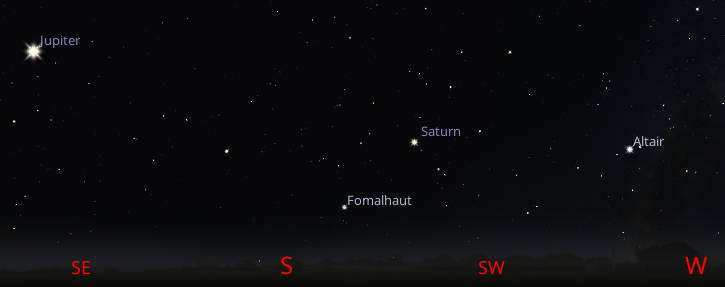
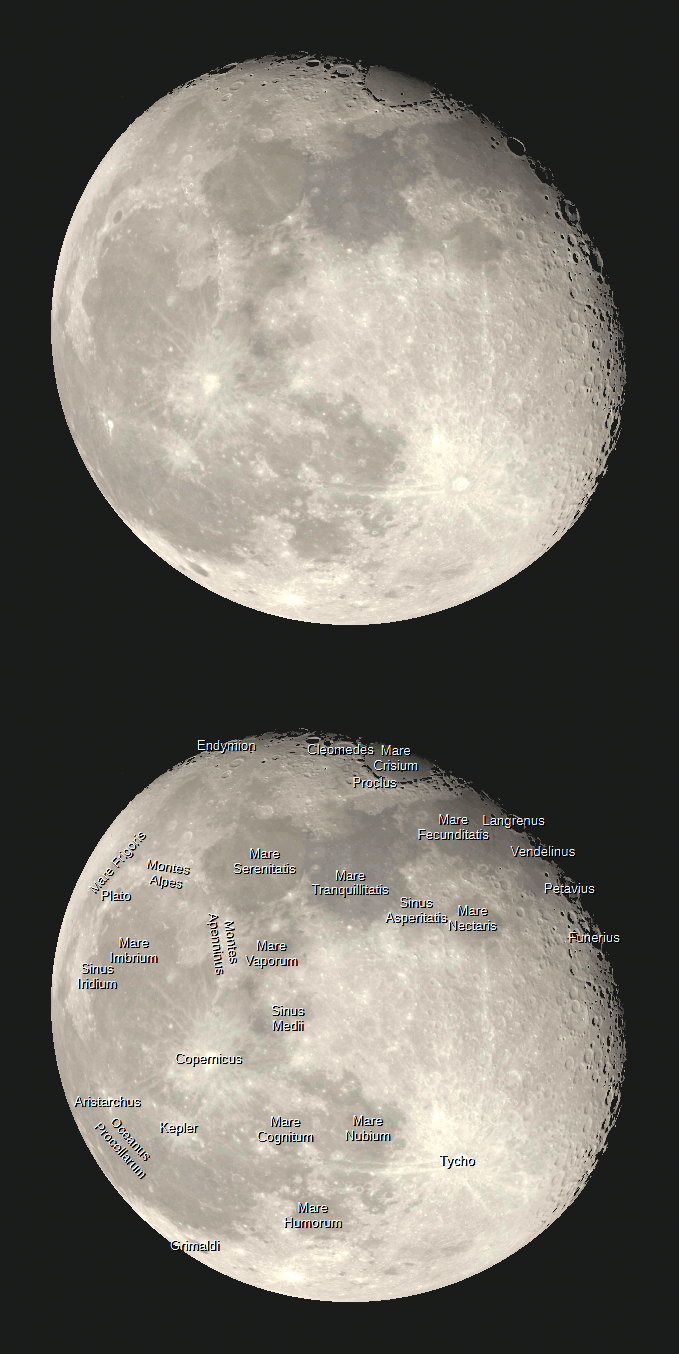
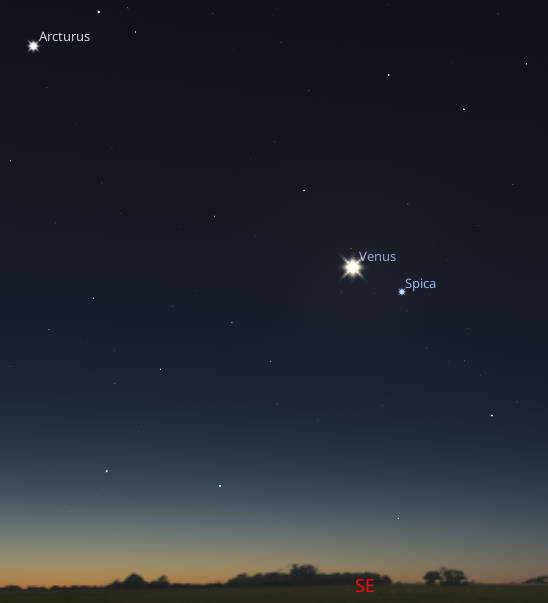
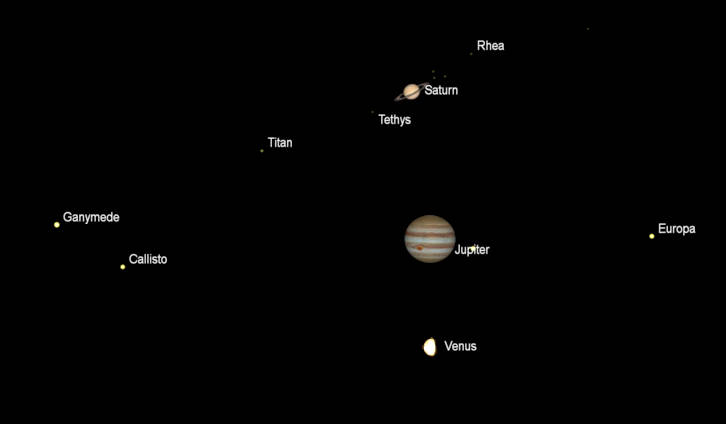
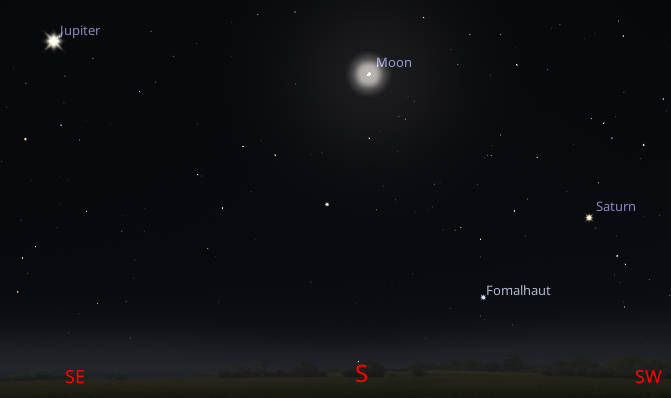
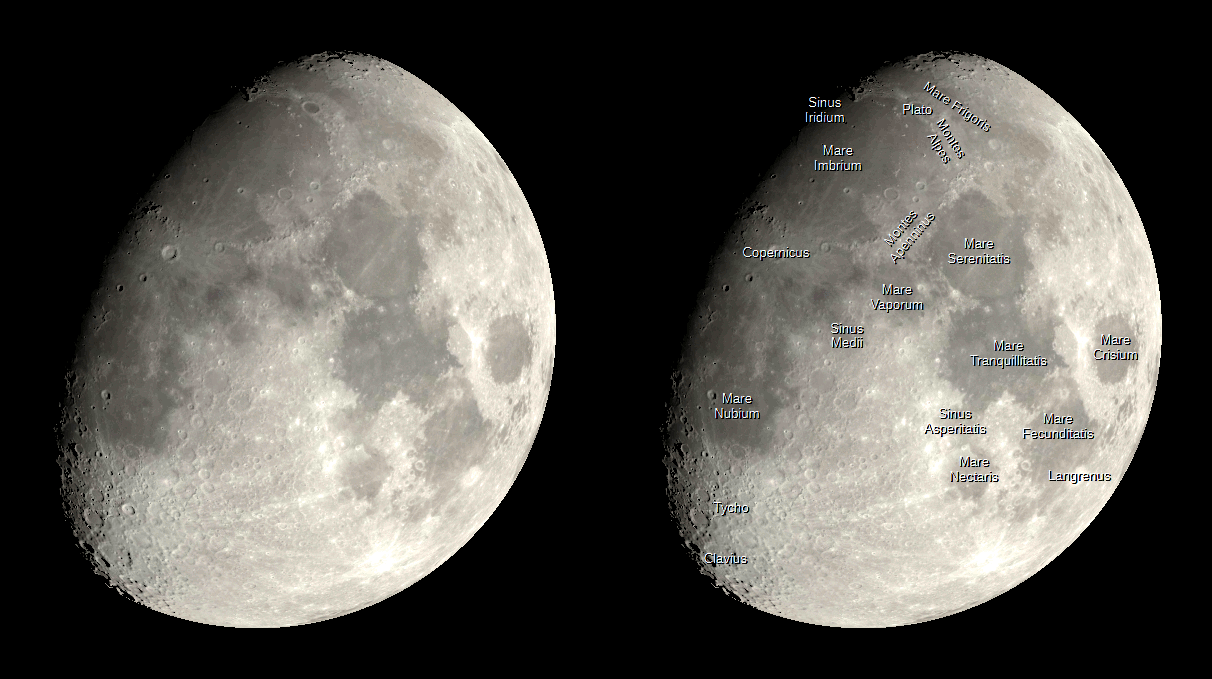
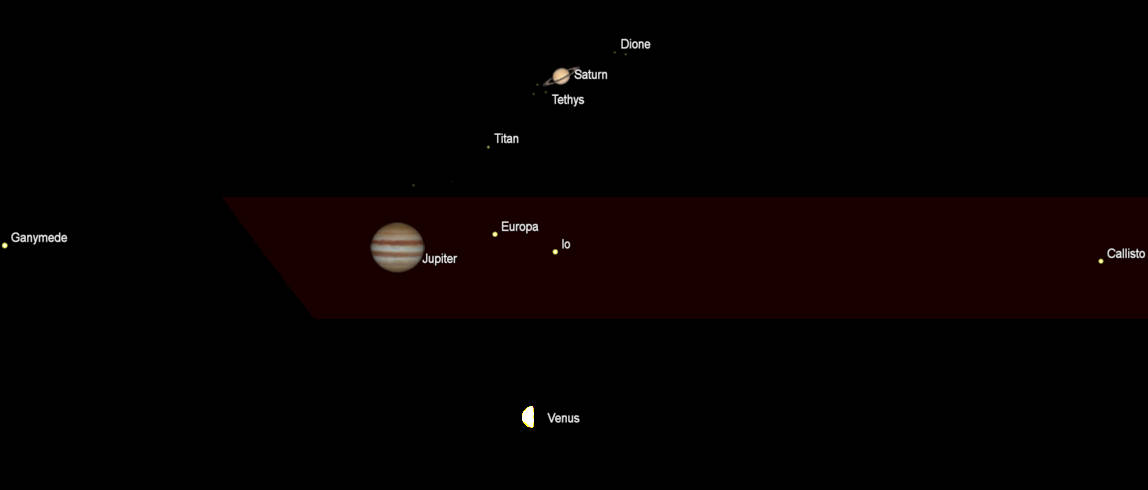
Let’s find out where the naked-eye planets have wandered off to this week. Three of those five planets are now visible, but Mercury sets too close to sunset to be seen. Mars is now a morning planet after passing conjunction with the Sun last Friday. So, Saturn and Jupiter are the only evening planets visible. Saturn can be seen moving from the south to the southwest in the evening. Saturn will be visible until 12:04 am. Jupiter is seen moving from low in the east-southeast to south-southeast in the evening. Only the Moon is brighter in the evening. Jupiter will be up most of the night until 5:54 am. The gibbous Moon is almost exactly centered between Saturn and Jupiter. Venus, the brilliant morning star, will rise in the east-northeast at 3:57 am.
The astronomical event times given are for the Traverse City/Interlochen area of Michigan (EST, UT –5 hours). They may be different for your location.
Addendum
Ephemeris: 11/15/2023 – Where have the naked-eye planets wandered off to this week
This is Ephemeris for Wednesday, November 15th. Today the Sun will be up for 9 hours and 35 minutes, setting at 5:14, and it will rise tomorrow at 7:40. The Moon, 2 days past new, will set at 6:35 this evening.
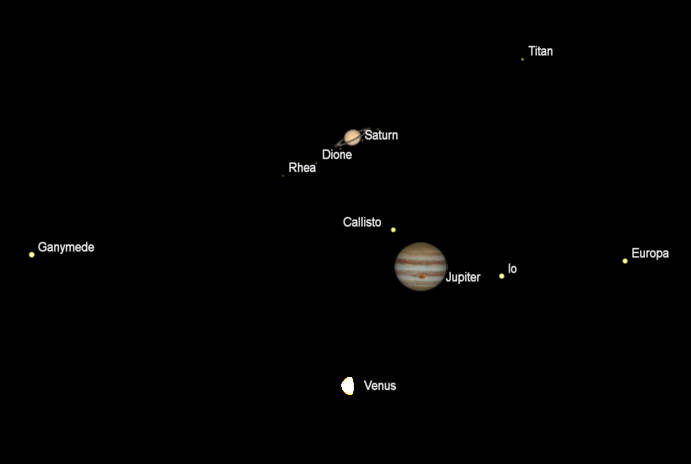
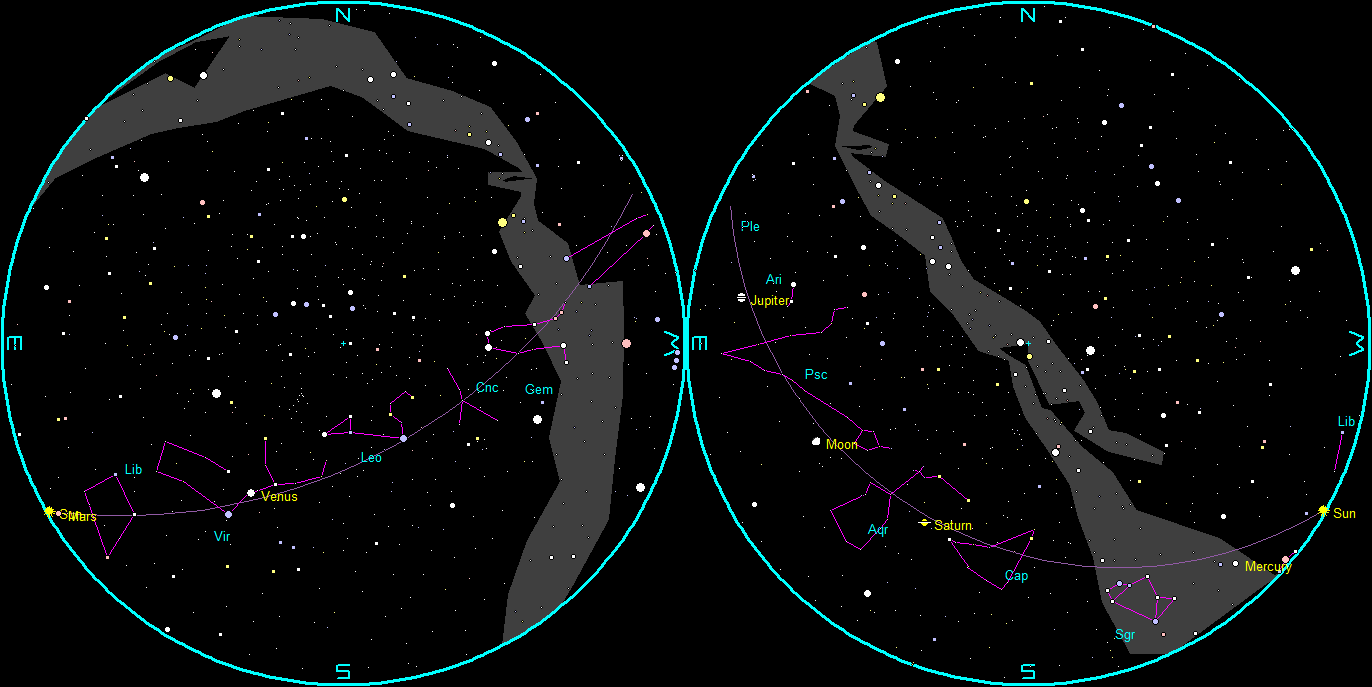
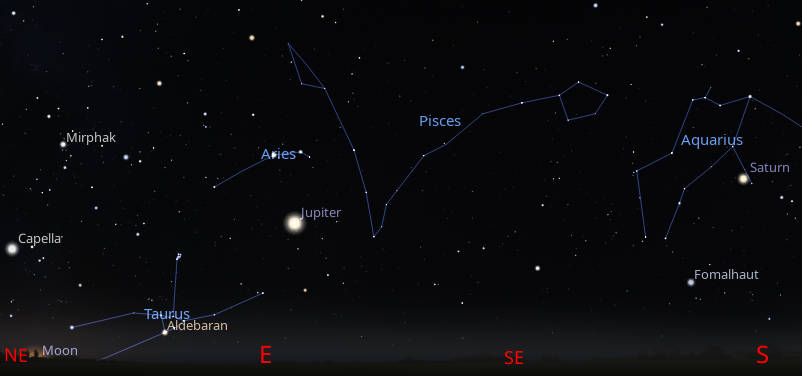
Let’s find out where the naked-eye planets have wandered off to this week. Three of those five planets are now visible but both Mars and Mercury set too close to sunset to be seen. Mars will actually be in conjunction with the Sun Friday and become a morning planet thereafter. So, Saturn and Jupiter are the only evening planets visible. Saturn, seen against the stars of Aquarius, can be seen moving from the south to the southwest in the evening. Saturn will be visible till almost 12:45 am. Jupiter is seen moving from low in the east to the high south in the evening, the brightest object in the sky. In Aries this year, Jupiter will be up most of the night. Venus, the brilliant morning star, will rise in the east-northeast at 3:41 am.
The astronomical event times given are for the Traverse City/Interlochen area of Michigan (EST, UT –5 hours). They may be different for your location.
Addendum
Ephemeris: 11/08/2023 – Where have the naked-eye planets wandered off to this week?
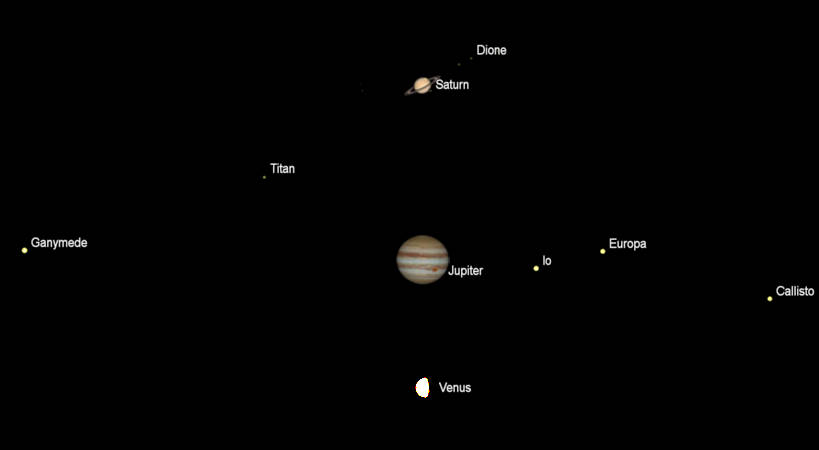
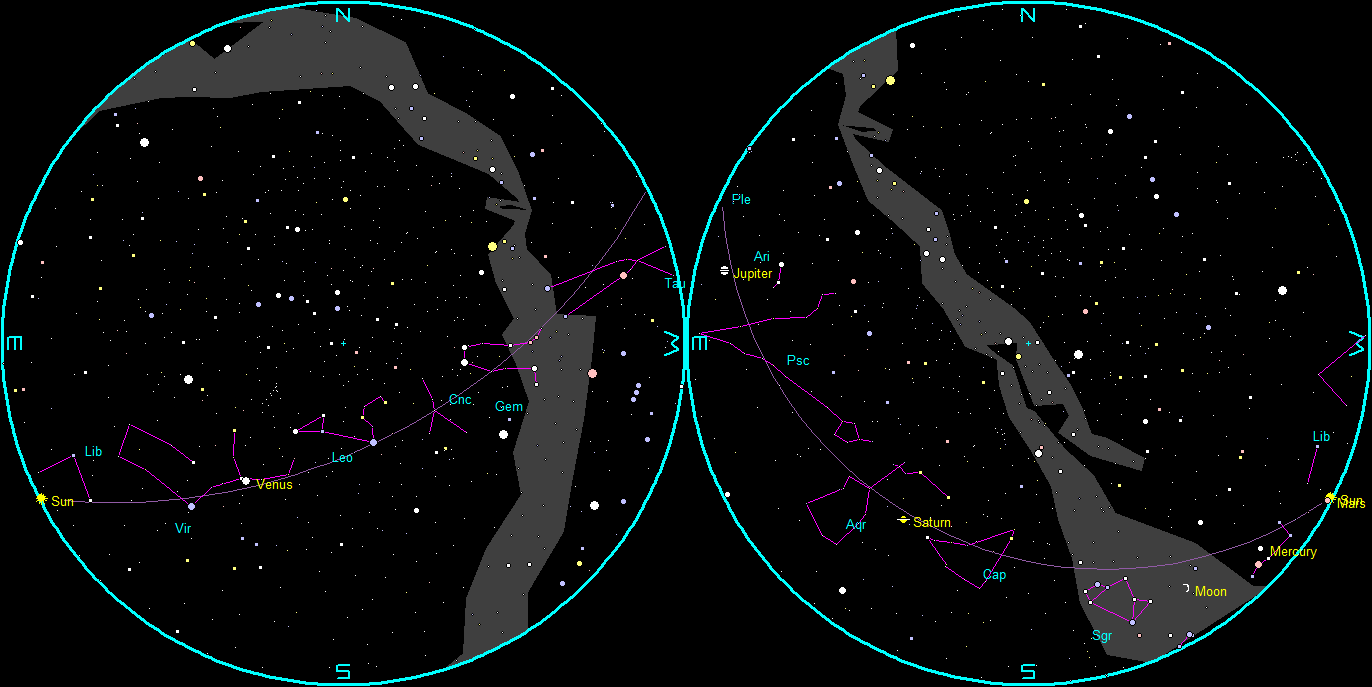
This is Ephemeris for Wednesday, November 8th. Today the Sun will be up for 9 hours and 52 minutes, setting at 5:22, and it will rise tomorrow at 7:31. The Moon, 3 days past last quarter, will rise at 3:26 tomorrow morning.
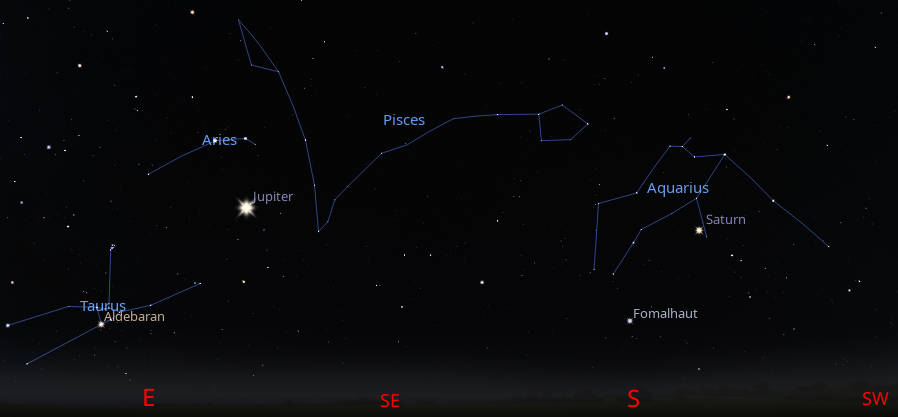
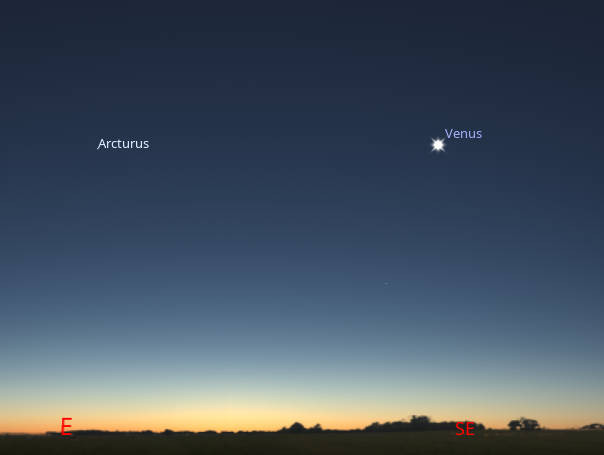
Let’s find out where the naked-eye planets have wandered off to this week. Three of those five planets are now visible but both Mars and Mercury set too close to sunset to be seen. So, Saturn and Jupiter are the only evening planets visible. Saturn, seen against the stars of Aquarius, can be seen in the south in the evening. Saturn will be visible till almost 1 am. Jupiter is seen rising in the eastern sky in the evening, the brightest object in the sky. In Aries this year, Jupiter will be up all night. Venus, the brilliant morning star, will rise in the east-northeast at 3:29 am. It will be seen above the waning crescent Moon. In the southeast at 7 am in the bright morning twilight.
The astronomical event times given are for the Traverse City/Interlochen area of Michigan (EST, UT –5 hours). They may be different for your location.
Addendum
Ephemeris: 11/01/2023 – It’s 11/1, do you know where your naked-eye planets are?
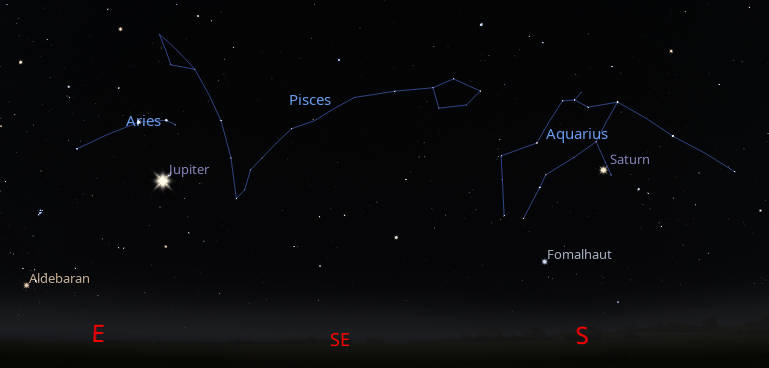
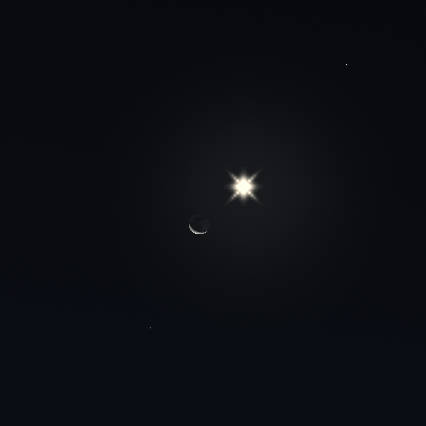
This is Ephemeris for Wednesday, November 1st. The Sun will rise at 8:20. It’ll be up for 10 hours and 11 minutes, setting at 6:31. The Moon, halfway from full to last quarter, will rise at 8:58 this evening.
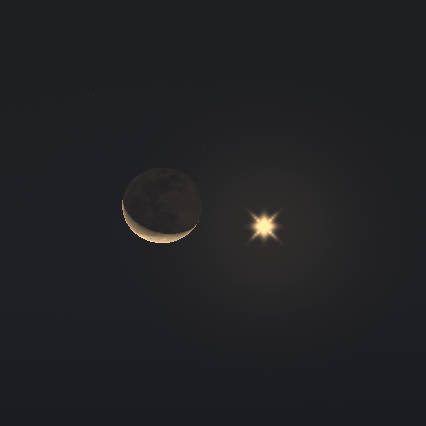
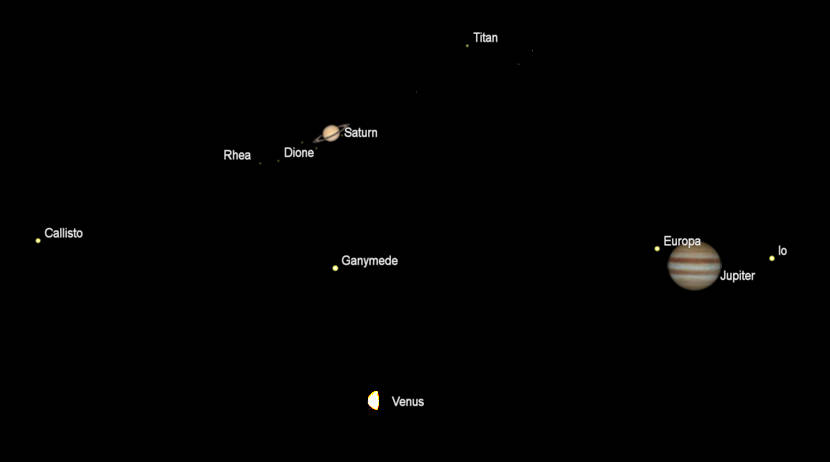
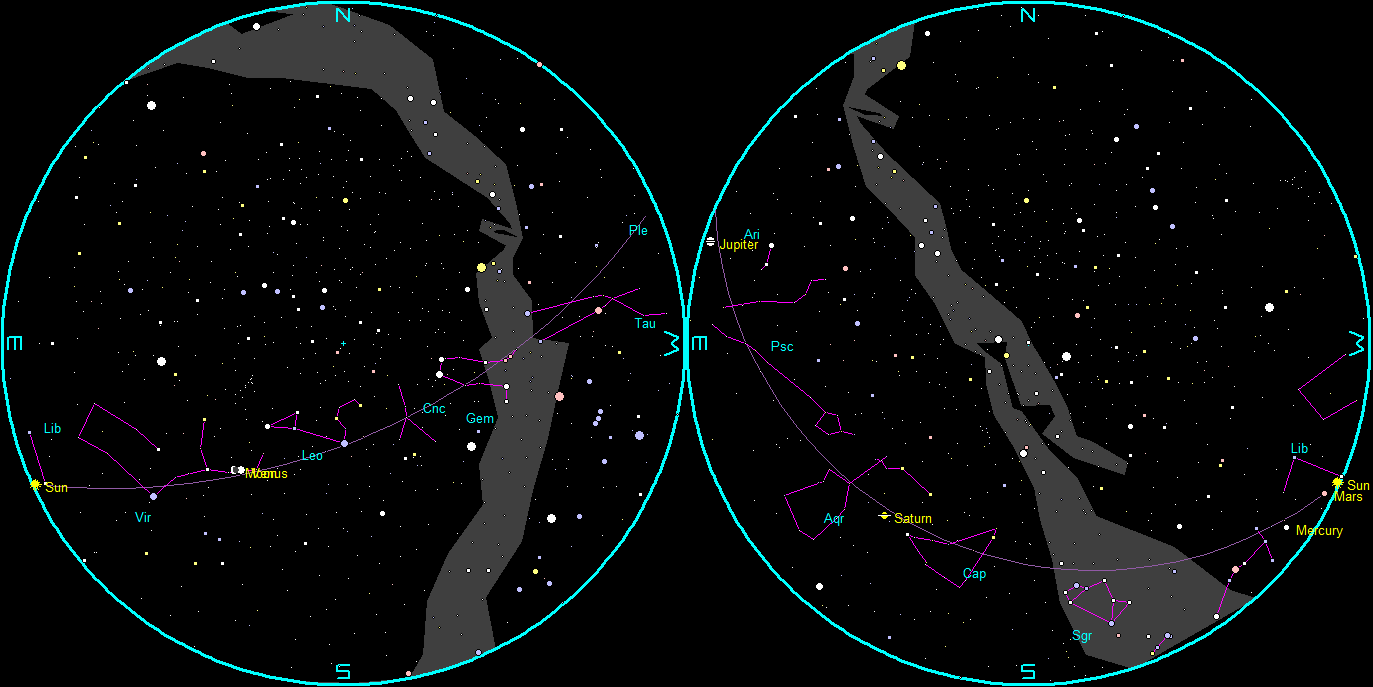
Let’s find out where the naked-eye planets have wandered off to this week. Three of those five planets are now visible, but Mars and Mercury set too close to sunset to be seen. Saturn is the sole official evening planet visible. It can be spotted in the southeast to south in the evening. And it will still be visible in the morning hours until it sets at 2:21 am. Saturn is seen against the stars of Aquarius this year and next. Jupiter and Venus are the visible morning planets. Jupiter, still a morning planet for one more day, will rise at 6:34 pm. It’s in Aries this year. Jupiter has to rise before sunset to be an evening planet. Venus, the brilliant morning star, will rise in the east-northeast at 4:18 am.
The astronomical event times given are for the Traverse City/Interlochen area of Michigan (EDT, UT –4 hours). They may be different for your location.
Addendum
 Bob Moler's Ephemeris Blog