Archive
12/05/2018 – Ephemeris – The bright planets and a comet tonight
Wednesday, December 5th. The Sun will rise at 8:04. It’ll be up for 8 hours and 58 minutes, setting at 5:02. The Moon, 2 days before new, will rise at 7:08 tomorrow morning.
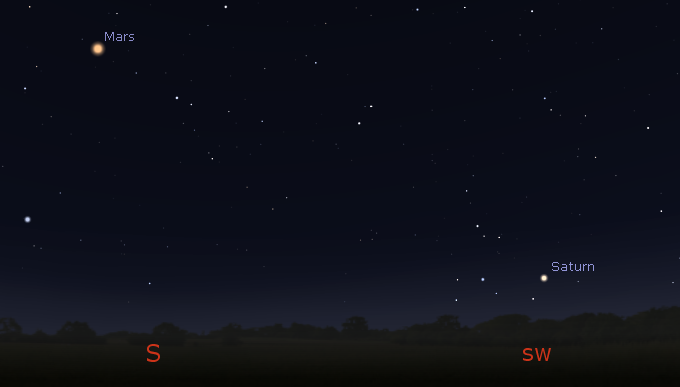
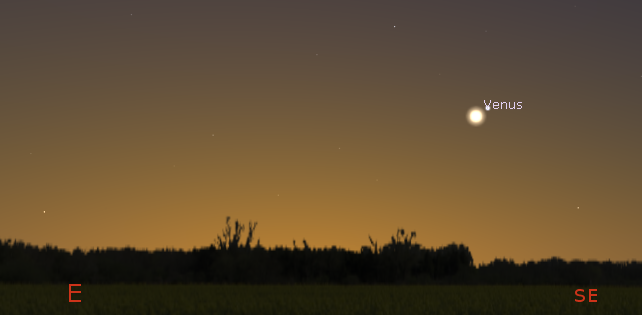
Let’s look at the bright planets for tonight. In the evening sky we have Mars, but are about to lose Saturn. Saturn will be briefly visible very low in the southwestern sky from about 5:45 p.m. until it sets at 6:46 p.m. Mars will be in the south as the skies darken tonight. Mars will be due south at 6:41 p.m., and it will set at 12:13 a.m. Mars is moving eastward, crossing the constellation of Aquarius until the 21st, then it enters Pisces. Comet Wirtanen is moving northward, below and right of the V of stars that’s the head of Taurus the bull, and should be an excellent binocular object. Venus, our brilliant morning star, will rise at 4:24 a.m. in the east-southeast. The blue-white star Spica is still off to the right and a bit above it. Mercury will rise at 6:31 a.m. and might be spotted after that. Jupiter is near the Moon tomorrow morning, rising at 7:24 only 40 minutes before the Sun.
The times given are for the Traverse City/Interlochen area of Michigan. They may be different for your location.
Addenda
The planets
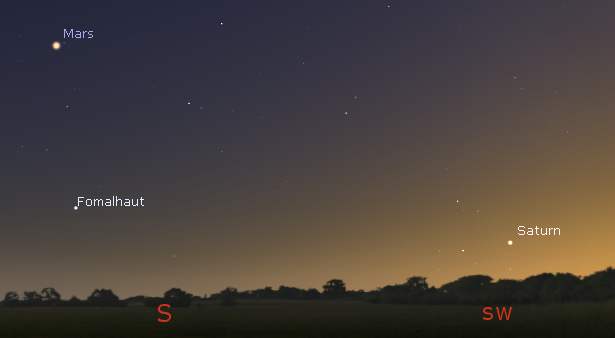
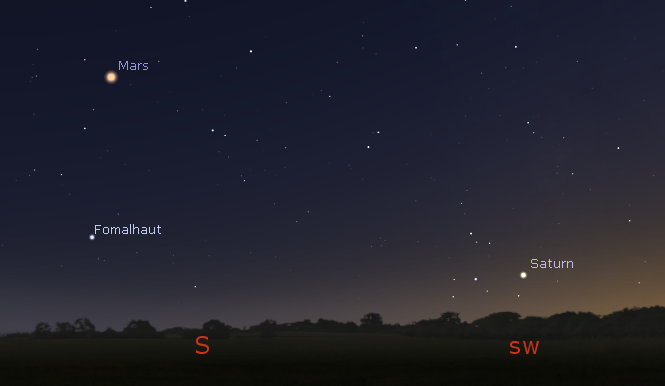
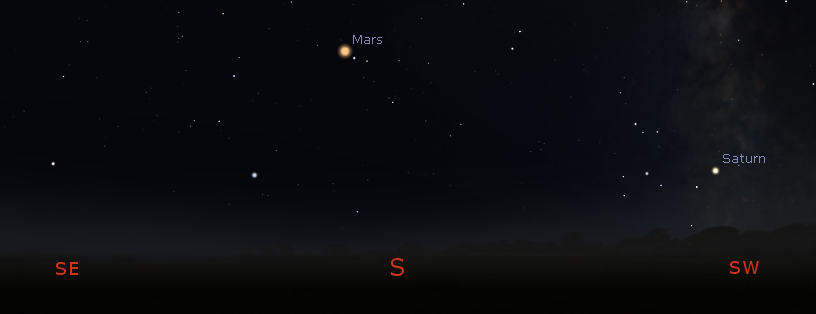
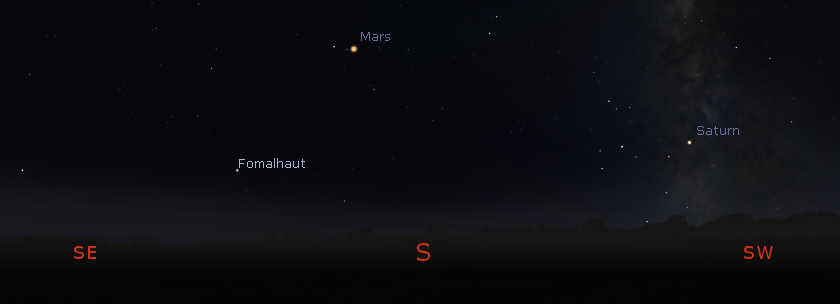
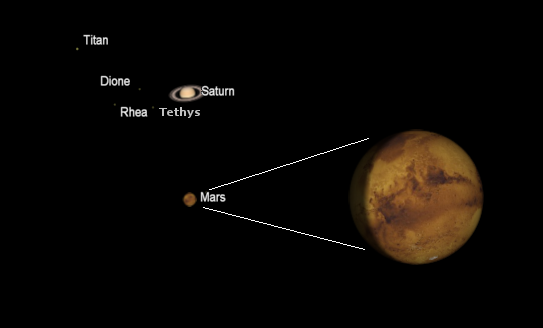
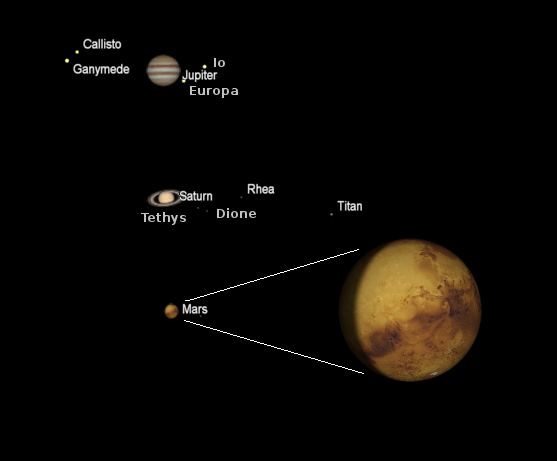
Mars, and Saturn seen at 5:45 p.m. tonight December 5, 2018. Created using Stellarium.
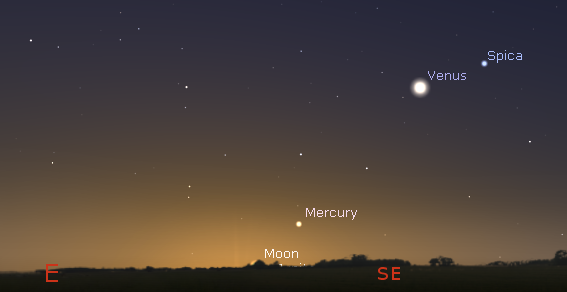
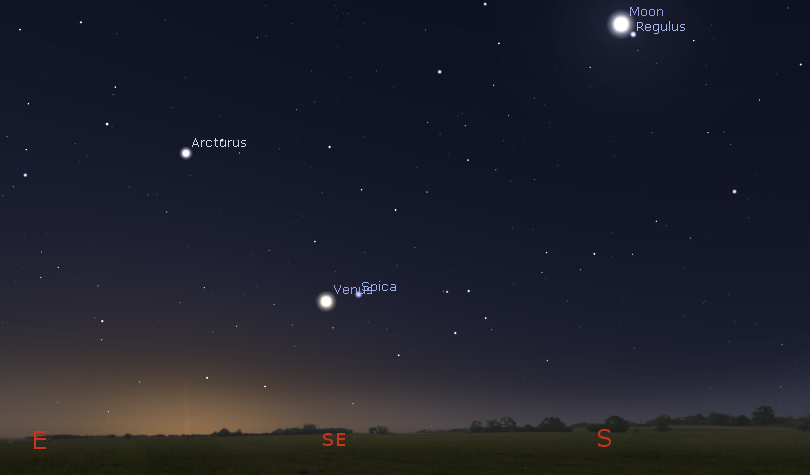
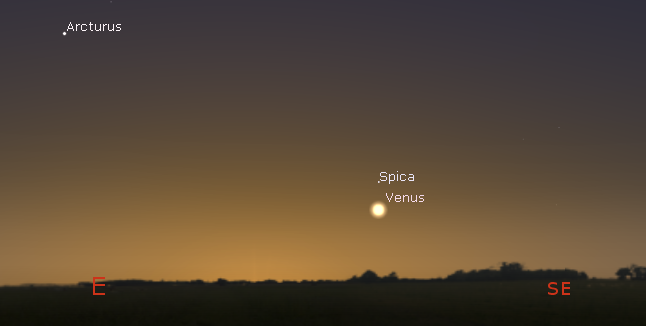
Morning planets Venus and Mercury. Jupiter is about to rise at 7:15 a.m. December 6, 2018. Created using Stellarium.

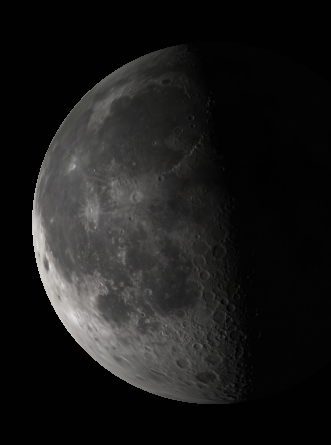
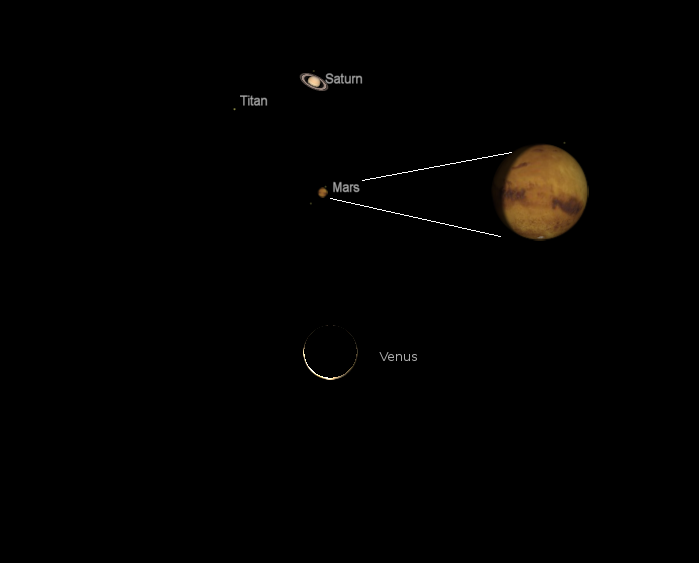
Telescopic view of Venus tomorrow morning December 6, 2018. Created using Stellarium.
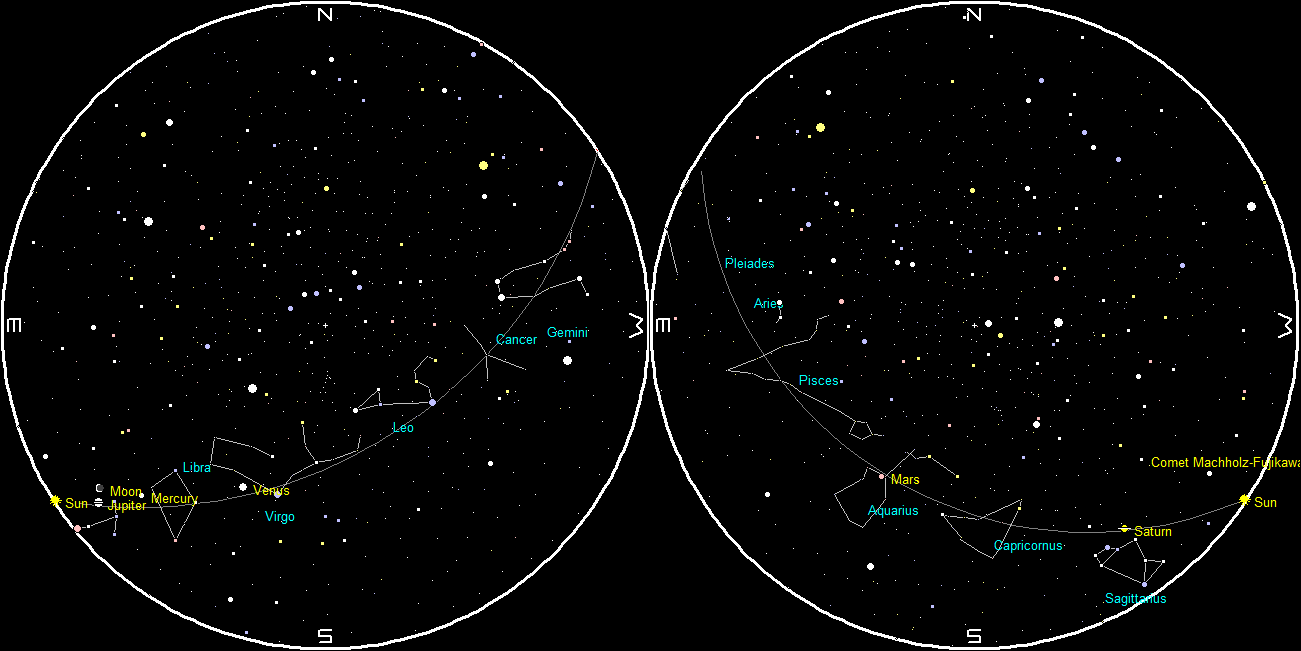
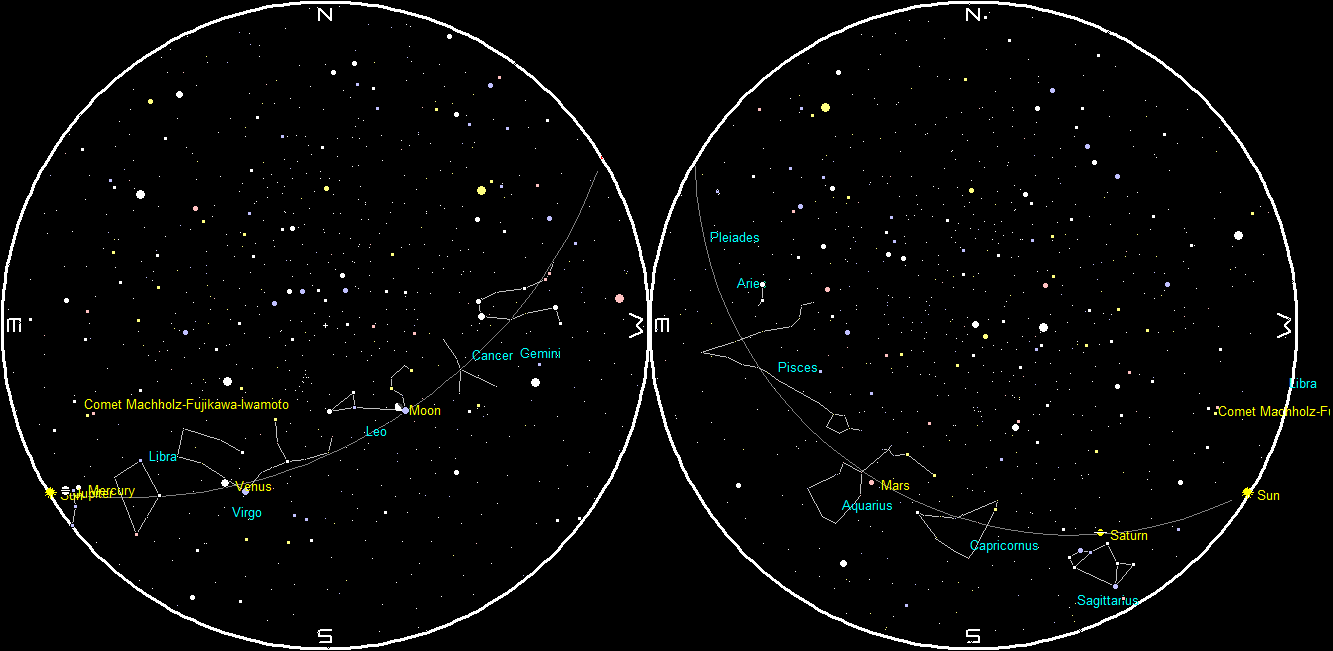
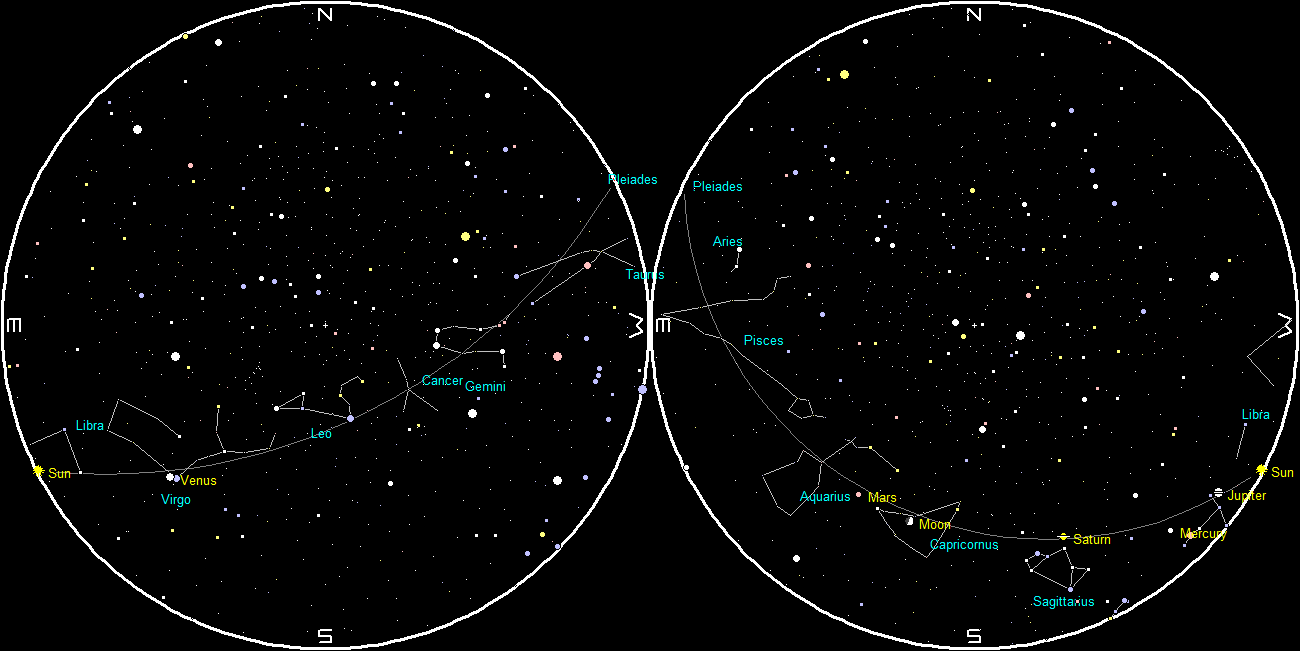
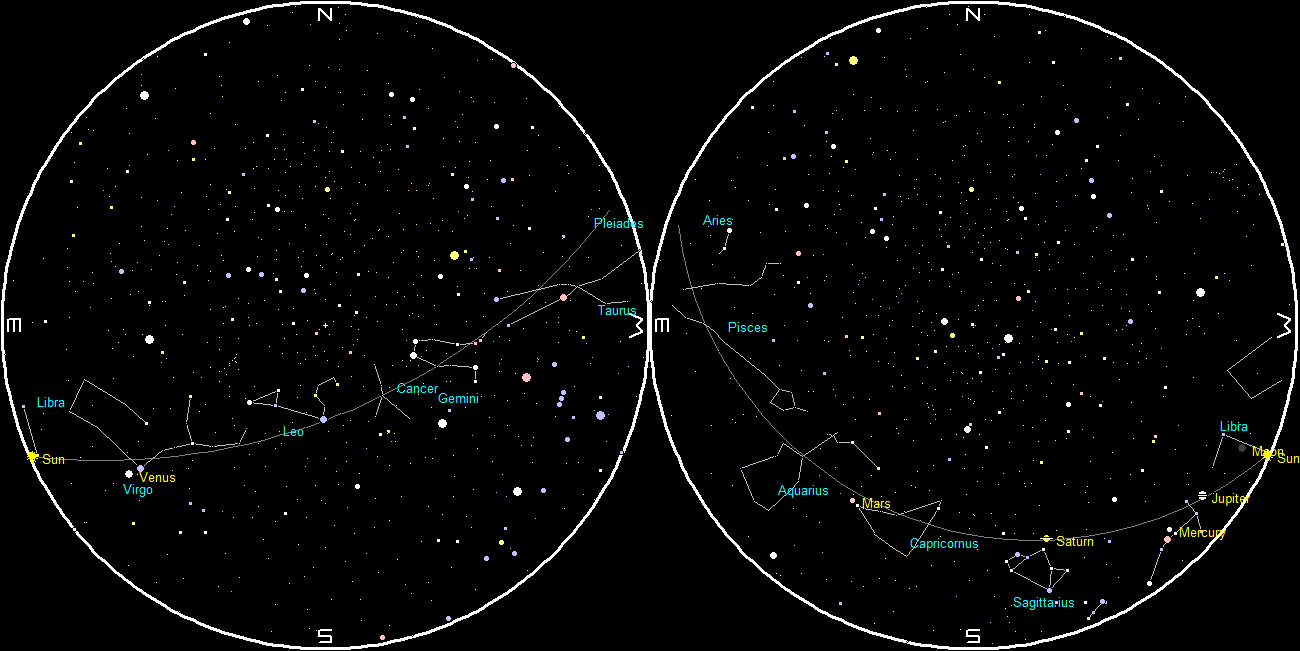
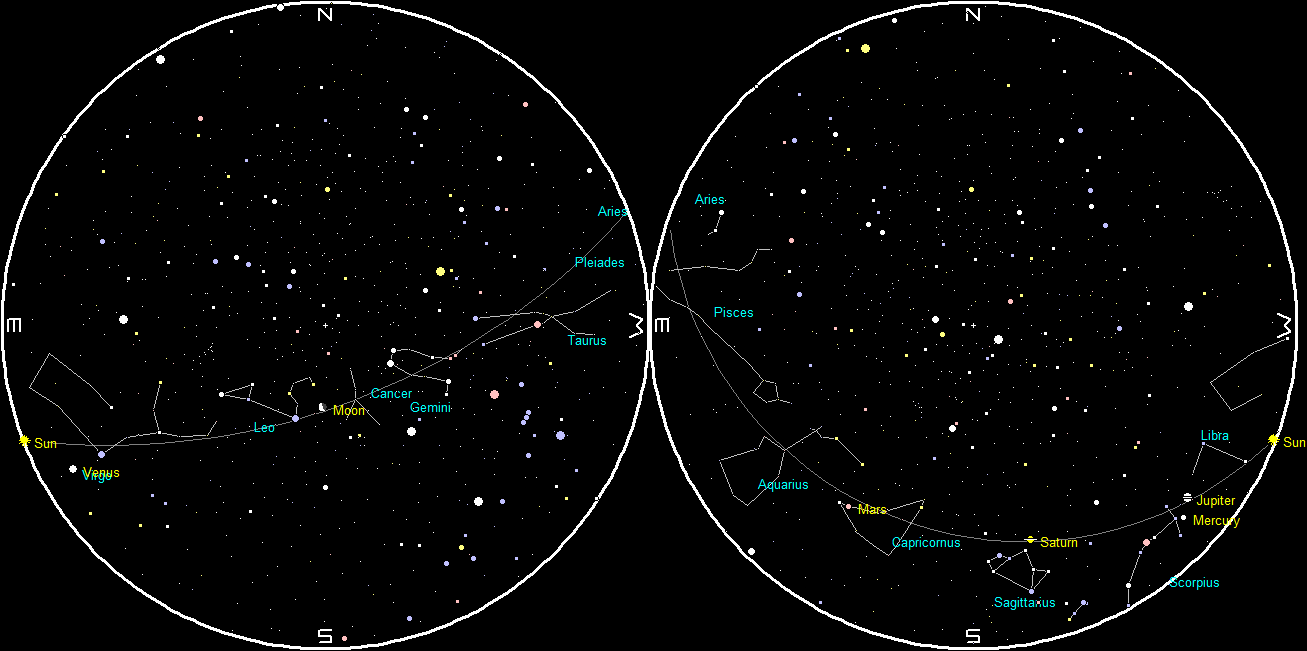
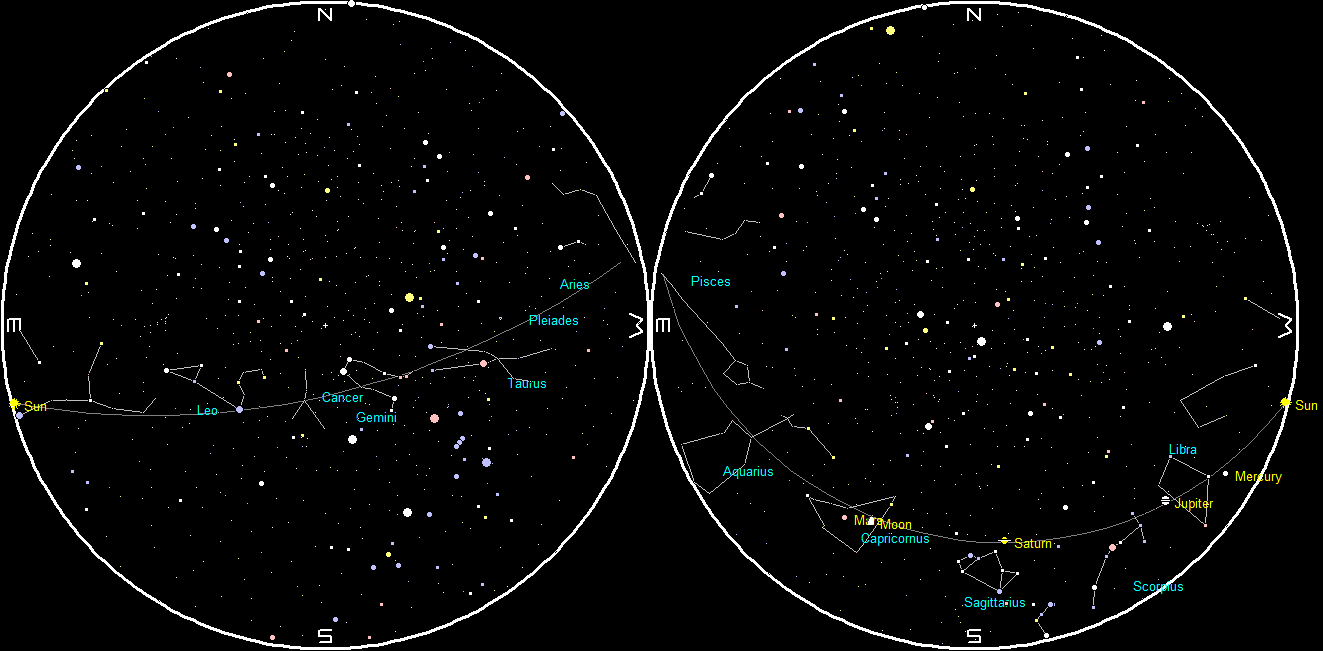
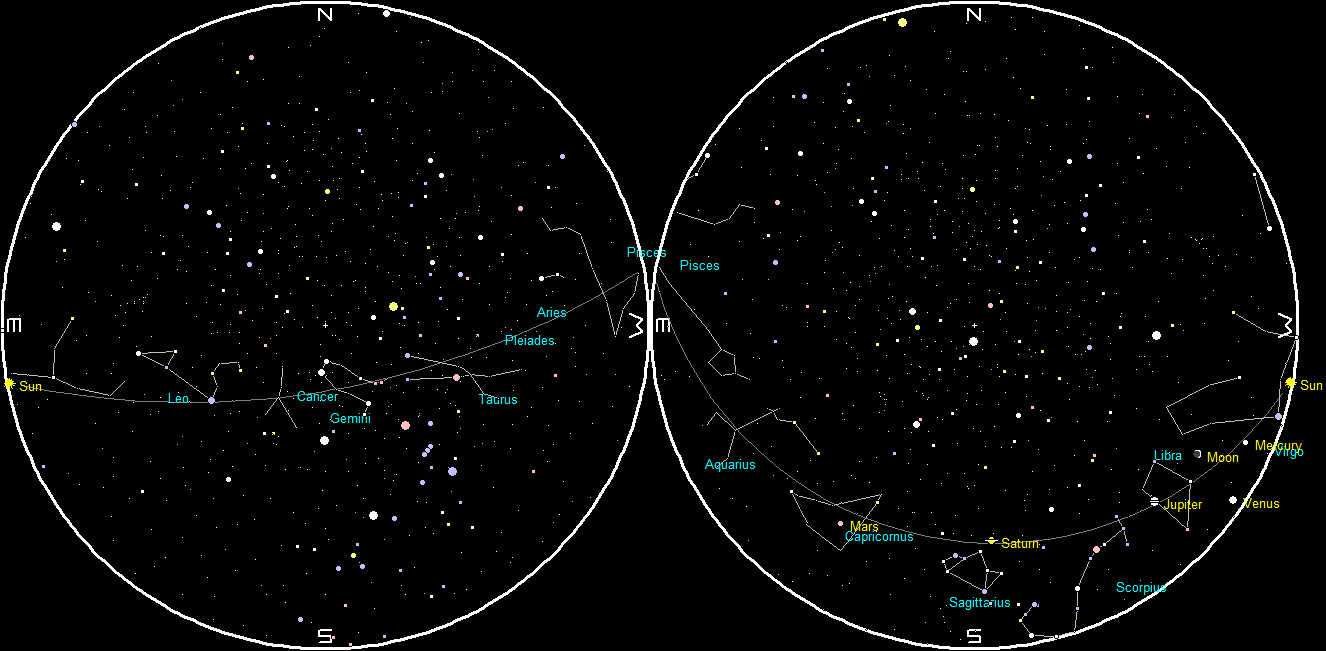
Planets, one comet and the Moon at sunset and sunrise of a single night starting with sunset on the right on December 5, 2018. The night ends on the left with sunrise on the 6th. Click on the image to enlarge. Comet Wirtanen is very close to opposition and to the south, so it rises after sunset and sets before sunrise. Created using my LookingUp program.
Bright comets
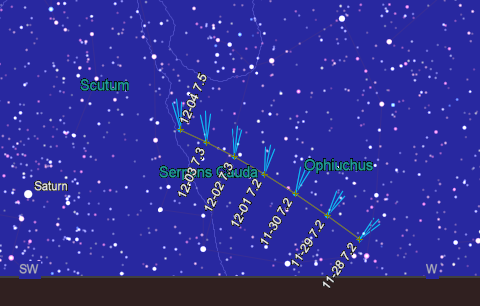
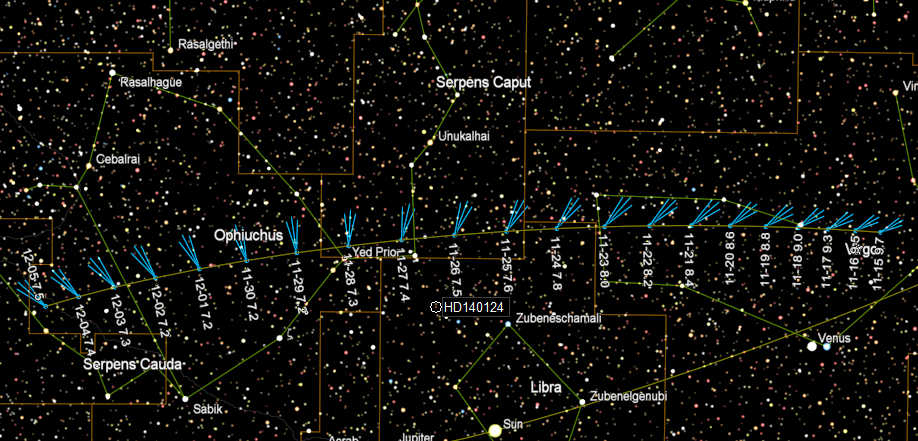
Comet C/2018 V1 (Machholz-Fijikawa-Iwamoto) in twilight starting tonight November 28, 2018. The comet won’t climb that dramatically at 6 p.m. on the rest of the nights because the stars in the field will set 4 minutes earlier each successive evening. The latest magnitude estimate of the comet on December 8 is 5.9, two magnitudes brighter than shown here. Created using Cartes du Ciel (Sky Charts).
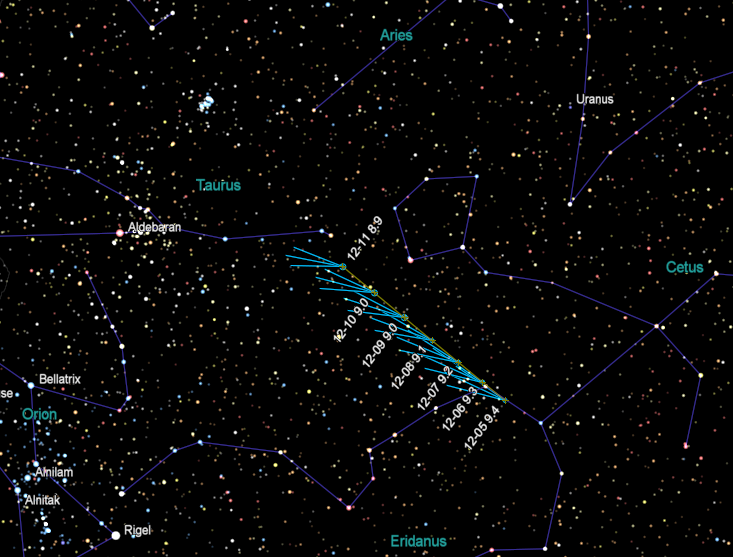
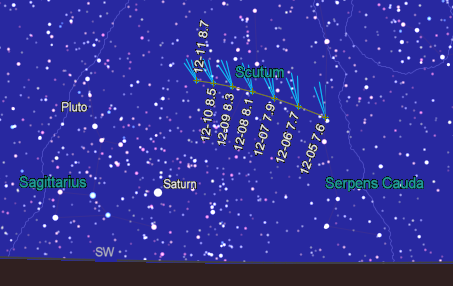
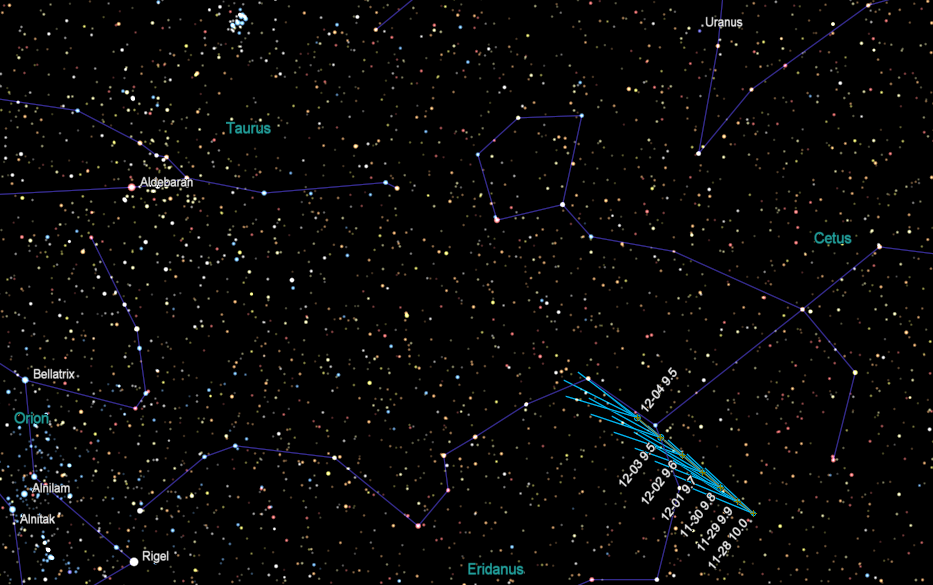
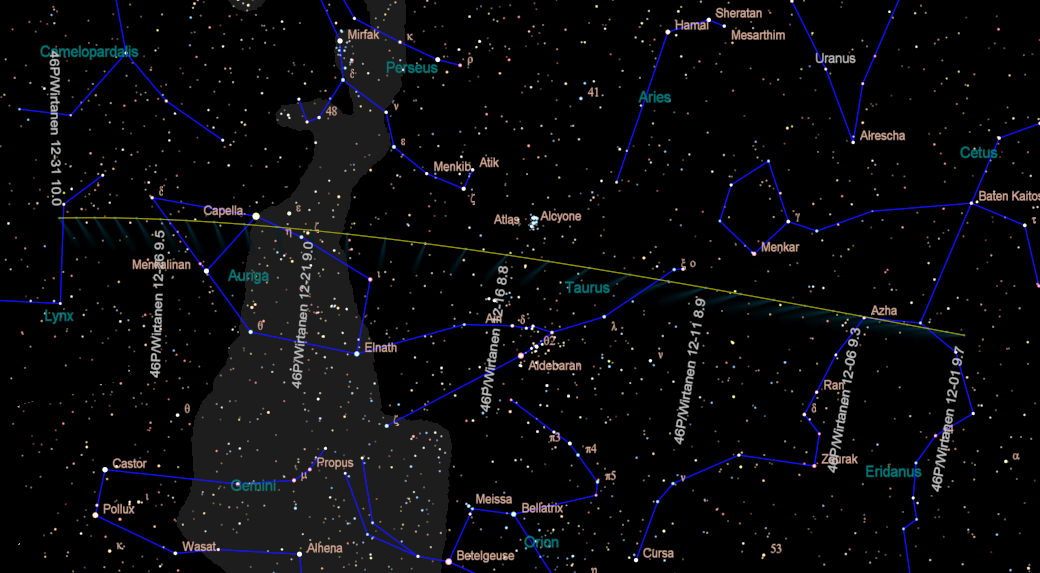
Comet 46P/Wirtanen positions for the next week. Positions are marked with month-date and magnitude. The latest magnitude prediction for December 1st is 3.7, 5.4 magnitudes brighter than shown here. The comet may make magnitude 3 by mid-December. Star field position is for 9 p.m. on the 28th. Click on the image to enlarge. Created using Cartes du Ciel (Sky Charts).
11/28/2018 – Ephemeris – Bright planets and comets tonight
Ephemeris for Wednesday, November 28th. The Sun will rise at 7:56. It’ll be up for 9 hours and 8 minutes, setting at 5:04. The Moon, 1 day before last quarter, will rise at 11:05 this evening.
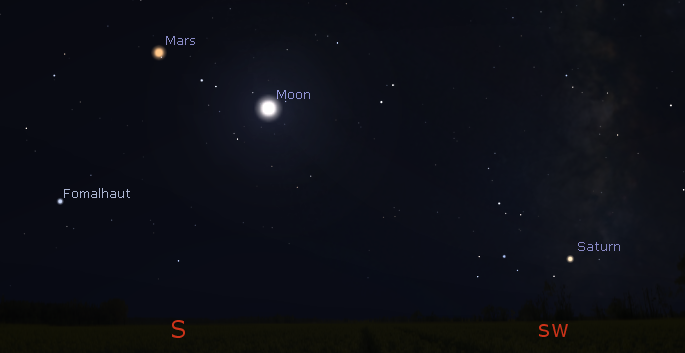
Let’s look at the bright planets for tonight. Two of them are visible in the evening sky. Saturn will be briefly visible very low in the southwestern sky and from about 6 p.m. and will set at 7:10 p.m. Mars will be in the south as the skies darken tonight. Mars will be due south at 6:52 p.m., and it will set at 12:17 a.m. Mars is moving eastward, crossing the constellation of Aquarius this month. It’s currently about midway through Aquarius, moving eastward and northward, so its setting time won’t change much over this month. Venus, our brilliant morning star, will rise at 4:33 a.m. in the east southeast. The blue-white star Spica is still to the right and a bit above it. There are two comets entering our sky. More on that tomorrow.
The times given are for the Traverse City/Interlochen area of Michigan. They may be different for your location.
Addenda
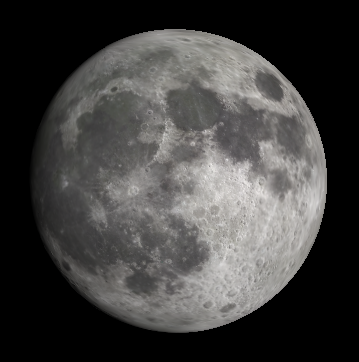
Planets and the Moon

Bright comets
11/21/2018 – Ephemeris – The bright planets and two comets for this week
Ephemeris for Wednesday, November 21st. The Sun will rise at 7:47. It’ll be up for 9 hours and 21 minutes, setting at 5:09. The Moon, 2 days before full, will set at 6:47 tomorrow morning.
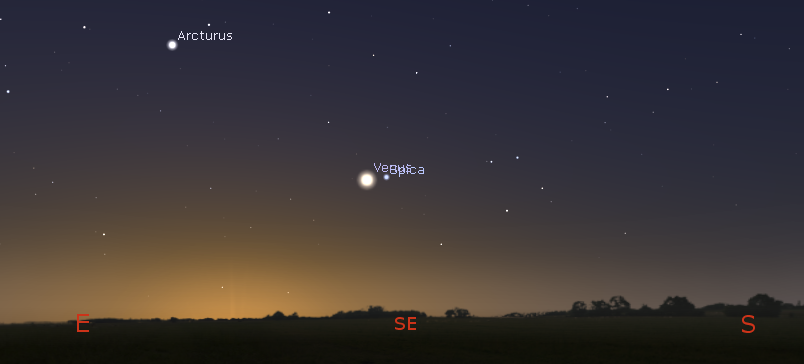
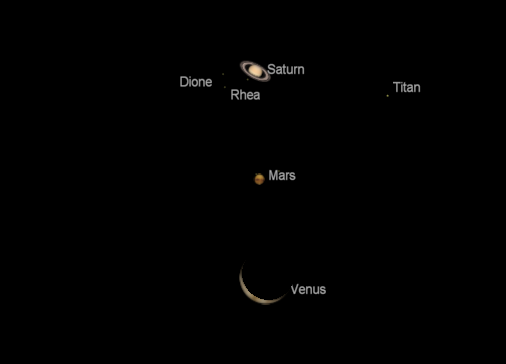
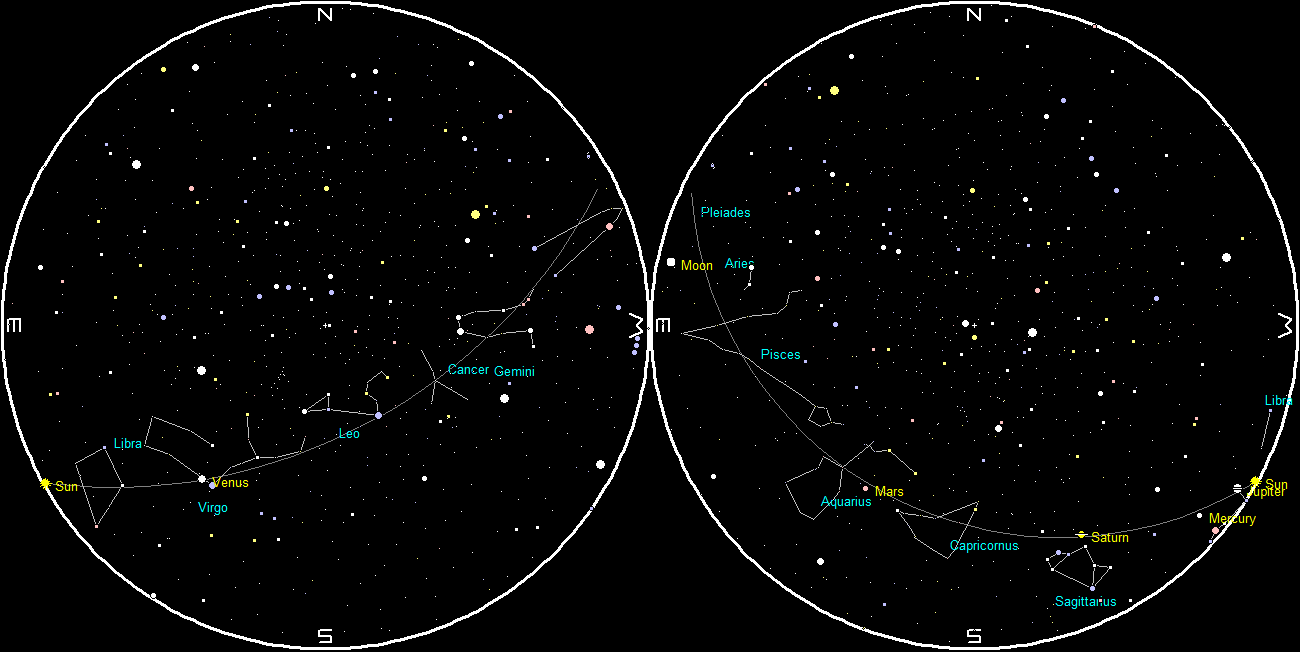
Let’s look at the bright planets for tonight. Two of them are visible in the evening sky. Jupiter is 5 days from passing behind the Sun, and will officially be a morning planet next Monday. Saturn, the ringed planet, will start the evening low in the southwestern sky and will set at 7:35 p.m. Mars will be in the south as the skies darken tonight. Mars will be due south at 7:03 p.m., and it will set at 12:20 a.m. Mars is moving eastward, crossing the constellation of Aquarius this month. It’s currently about midway through Aquarius, moving eastward and northward, so its setting time won’t change much over this month. Venus, our brilliant morning star, will rise at 4:50 a.m. in the east southeast. The blue-white star Spica is to the right and a bit above it.
The times given are for the Traverse City/Interlochen area of Michigan. They may be different for your location.
Addenda
Planets and the Moon
Click on images to enlarge
Current relatively bright comets
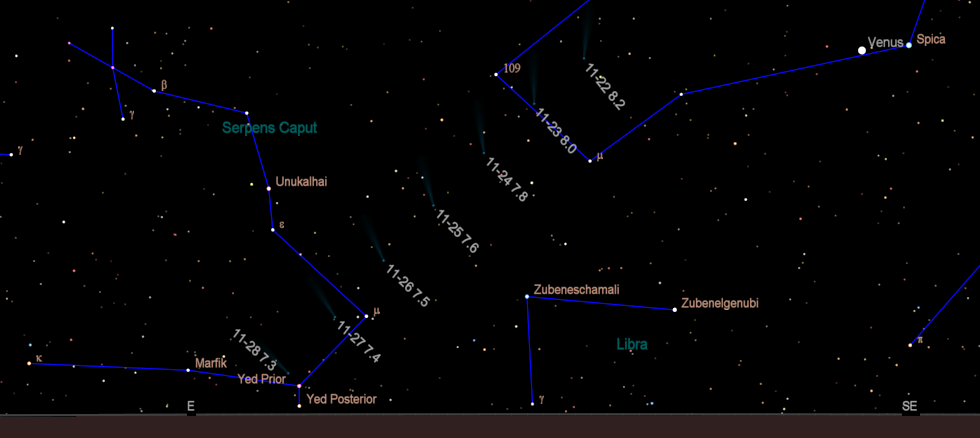
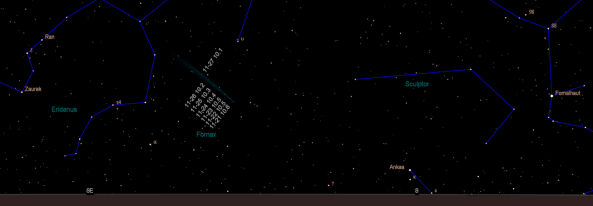
The new magnitude estimates are from Seiichi Yoshida’s website and his Weekly Information about Bright Comets: http://www.aerith.net/comet/weekly/current.html
11/14/2018 – Ephemeris – The bright planets this week
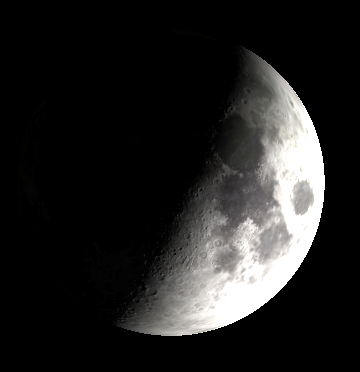
Ephemeris for Wednesday, November 14th. The Sun will rise at 7:38. It’ll be up for 9 hours and 37 minutes, setting at 5:15. The Moon, 1 day before first quarter, will set at 11:18 this evening.
Let’s look at the bright planets for tonight. Two of them are visible in the evening sky. Jupiter will set too soon after sunset to be seen. It will set only 29 minutes after the Sun. Saturn, the ringed planet, will start the evening low in the southwestern sky and will set at 7:59 p.m. Mars will be low in the south as the skies darken tonight. Mars will be due south at 7:15 p.m., and it will set at 12:24 a.m. Mars is moving eastward, crossing the constellation of Aquarius this month. It’s currently at the western edge of Aquarius, moving eastward and northward, so its setting time won’t change much over this month. Venus, our brilliant morning star, will rise at 5:15 a.m. in the east southeast. The blue-white star Spica is just above and right of it now.
The times given are for the Traverse City/Interlochen area of Michigan. They may be different for your location.
Addenda
Comet Notes
Two comets will be flirting with naked eye visibility later this month and next month. Newly discovered C/2018 V1 Machholz-Fujikawa-Iwamoto. It will be a morning object in mid-December and be its brightest at the end of this month or early December when it will be cruising through Ophiuchus.
Periodic comet 46P/Wirtanen is moving up from the south and is an evening object. It will pass close to the Pleiades in mid-December and will appear near the bright star Capella around Christmas time.
11/07/2018 – Ephemeris – Two Two evening planets and a morning planet visible now
Ephemeris for Wednesday, November 7th. The Sun will rise at 7:28. It’ll be up for 9 hours and 54 minutes, setting at 5:23. The Moon is new today, and won’t be visible.
Let’s look at the bright planets for tonight. Two of them are visible in the evening sky. Jupiter will set too soon after sunset to be seen. It will set only 44 minutes after the Sun. Saturn, the ringed planet, will start the evening low in the southwestern sky and will set at 8:24 p.m. Mars will be low in the south as the skies darken tonight. and is now 77.8 million miles (125.2 million km) away. Mars will be due south at 7:26 p.m., and it will set at 12:28 a.m. Mars is moving eastward, crossing the constellation of Aquarius this month. It’s currently at the western edge of Aquarius. Venus, now the brilliant morning star, will rise at 5:57 in the east southeast. It will grace our morning skies through next spring.
The times given are for the Traverse City/Interlochen area of Michigan. They may be different for your location.
Addendum
10/31/2018 – Ephemeris – The bright planets tonight
Ephemeris for Halloween, Wednesday, October 31st. The Sun will rise at 8:19. It’ll be up for 10 hours and 13 minutes, setting at 6:32. The Moon, at last quarter today, will rise at 1:02 tomorrow morning.
Let’s look at the bright planets for tonight. Three of them are visible in the evening sky. Jupiter will be barely visible very low in the west-southwest after sunset. It will set at 7:30 p.m. Saturn, the ringed planet, will start the evening low in the south-southwestern sky and will set at 9:49 p.m. Mars will be low in the south-southeast as the skies darken tonight. and is now 73.2 million miles (117.9 million km) away. Mars will be due south at 8:39 p.m., and it will set at 1:33a.m. Mars is picking up speed moving eastward, crossing the constellation of Capricornus this month. It’s currently in eastern Capricornus. Venus, now a morning planet, will rise at 7:45 tomorrow morning, 34 minutes after the Sun.
The times given are for the Traverse City/Interlochen area of Michigan. They may be different for your location.
Addendum
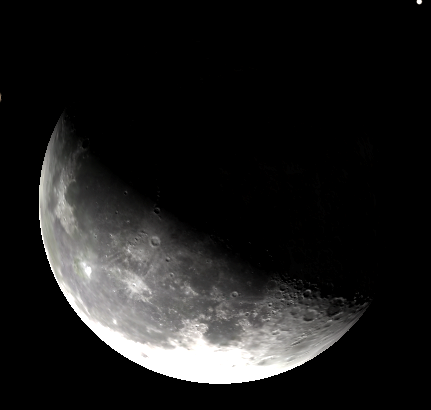
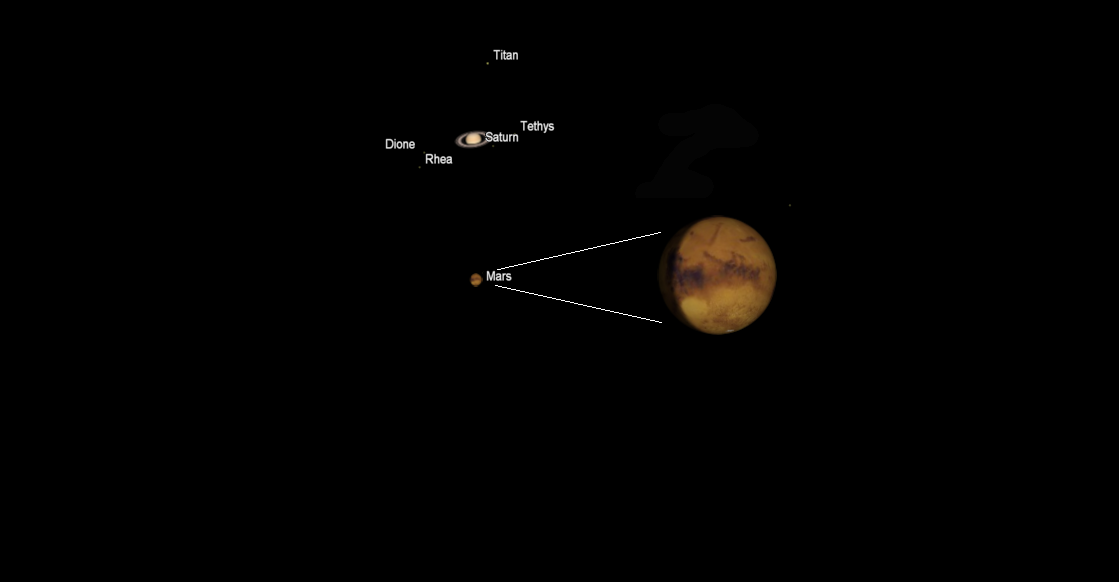
Update
I know, the content above isn’t very spooky for Halloween. However, NASA came to the rescue with their Halloween Special: Universe of Monsters. Fitting with our theme today, it’s about planets… of the Exo variety. Click here!
10/24/2018 – Ephemeris – Looking for the bright planets tonight
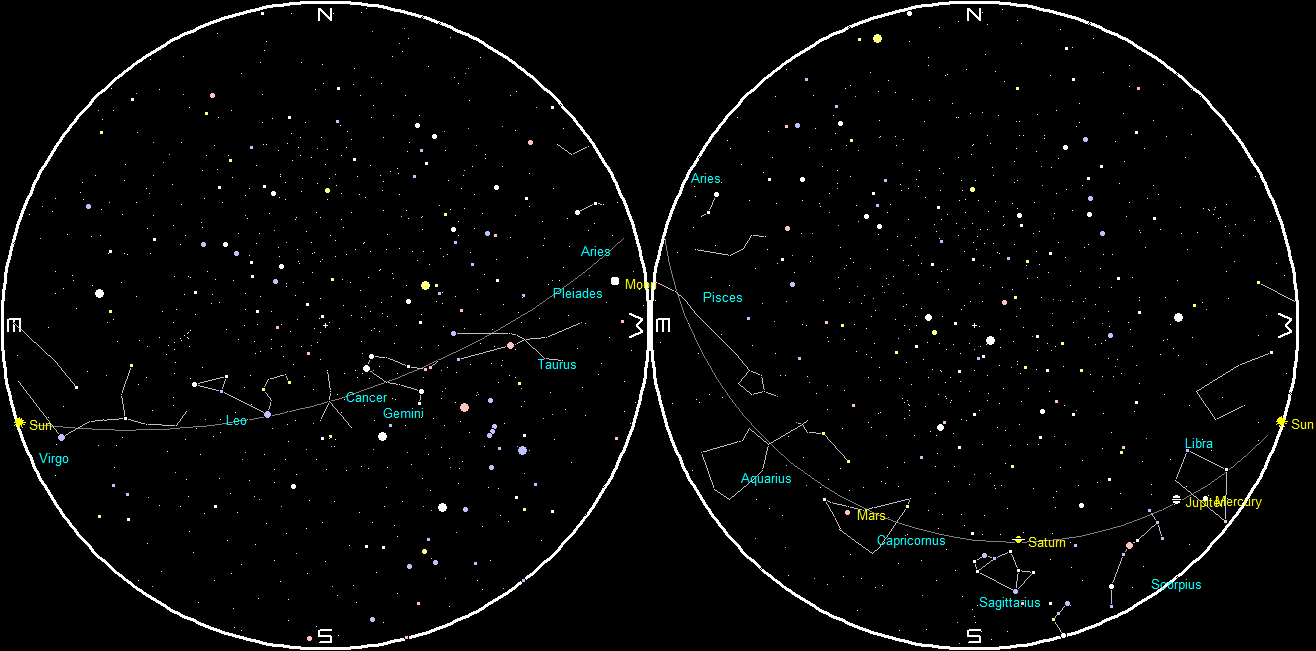
Ephemeris for Wednesday, October 24th. The Sun will rise at 8:10. It’ll be up for 10 hours and 33 minutes, setting at 6:43. The Moon, at full today, will rise at 7:13 this evening.
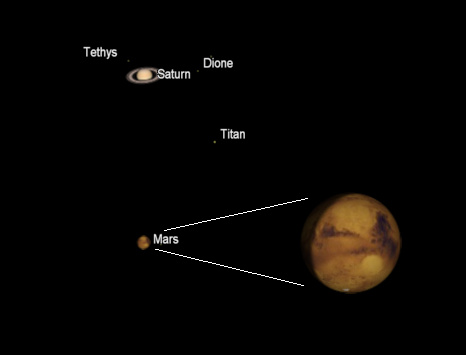
Let’s look at the bright planets for tonight. Three of them are visible in the evening sky. Venus, though still officially an evening planet for two more days sets before the Sun because it is south of the Sun’s path. Jupiter will be very low in the west-southwest after sunset. It will set at 7:53 p.m. Saturn, the ringed planet, will start the evening low in the southwestern sky and will set at 10:14 p.m. Mars will be low in the south as the skies darken tonight. and is now 68.9 million miles (111.0 million km) away. Mars will be due south at 8:51 p.m., and it will set at 1:39 a.m. Mars is picking up speed moving eastward, crossing the constellation of Capricornus this month. It’s currently in eastern Capricornus.
The times given are for the Traverse City/Interlochen area of Michigan. They may be different for your location.
Addendum
10/23/2018 – Ephemeris – Uranus is at opposition from the Sun today
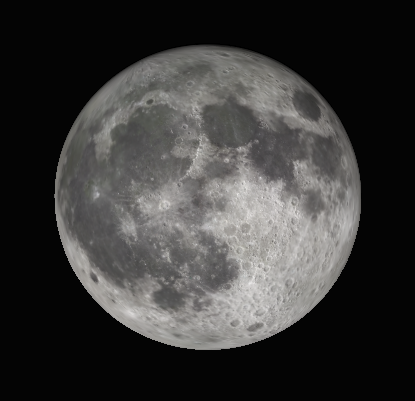
Ephemeris for Tuesday, October 23rd. The Sun will rise at 8:08. It’ll be up for 10 hours and 36 minutes, setting at 6:44. The Moon, 1 day before full, will set at 7:48 tomorrow morning.
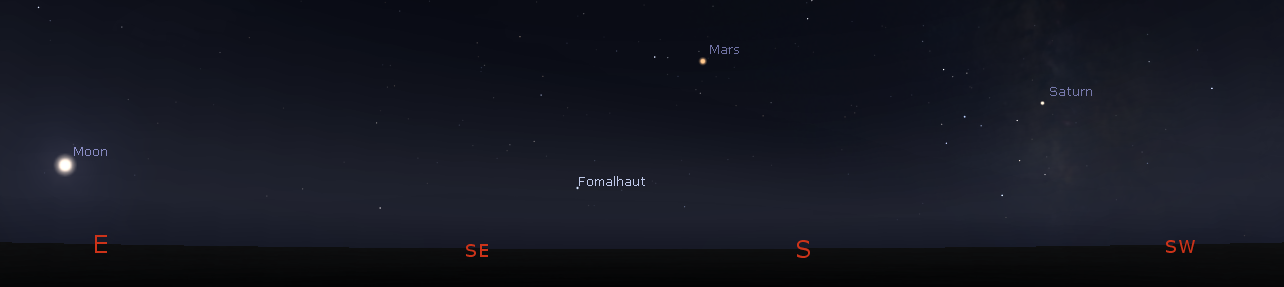
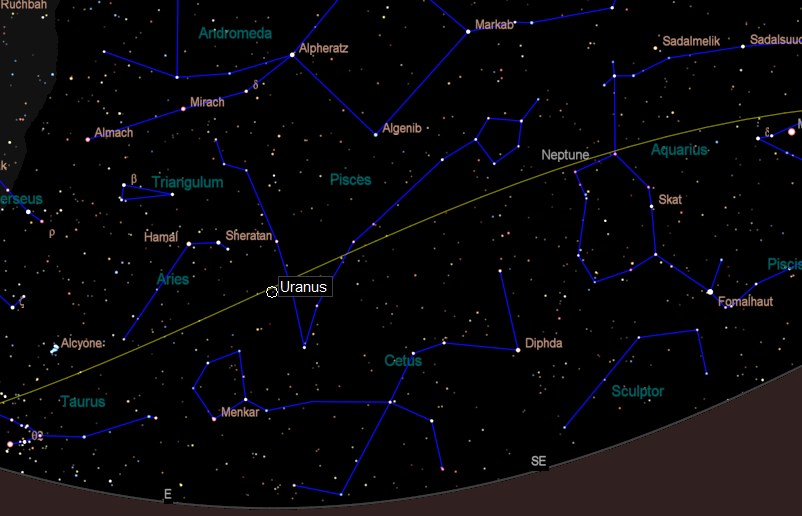
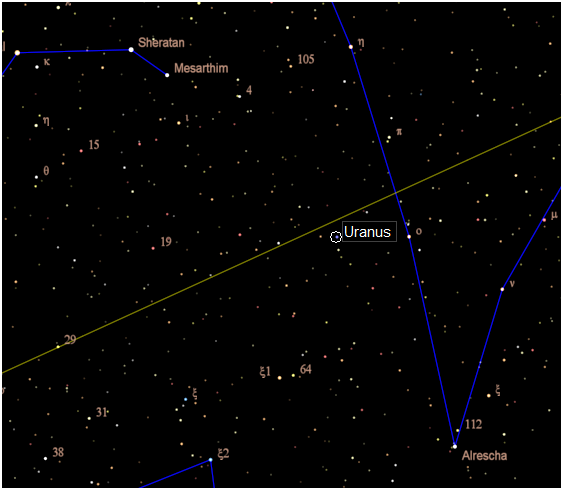
Later tonight the planet Uranus will reach opposition from the Sun. This is also about the time it is closest to the Earth at 18.9 Astronomical Units, or 18.9 times the Earth’s distance from the Sun, or 1.8 billion miles away. Uranus now is just barely visible to the naked eye by those with perfect vision at magnitude 5.7. It is fairly easy to spot in binoculars as a blue-green star. There are no blue-green stars. However it is in a rather star poor part of the sky. It is close to the bright Moon tonight, so I’d wait until Sunday night to try to spot it in dark skies. Then Uranus will be in the east at 9 p.m. below and right of the rightmost star of the three brightest stars of the constellation Aries. About half way from that star to the bottom leftmost star of Pisces. Uranus was the first new planet found since antiquity by William Herschel in 1781.
The times given are for the Traverse City/Interlochen area of Michigan. They may be different for your location.
Addendum
10/17/2018 – Ephemeris – Where are the bright planets tonight?
Ephemeris for Wednesday, October 17th. The Sun will rise at 8:00. It’ll be up for 10 hours and 53 minutes, setting at 6:54. The Moon, 1 day past first quarter, will set at 1:33 tomorrow morning.
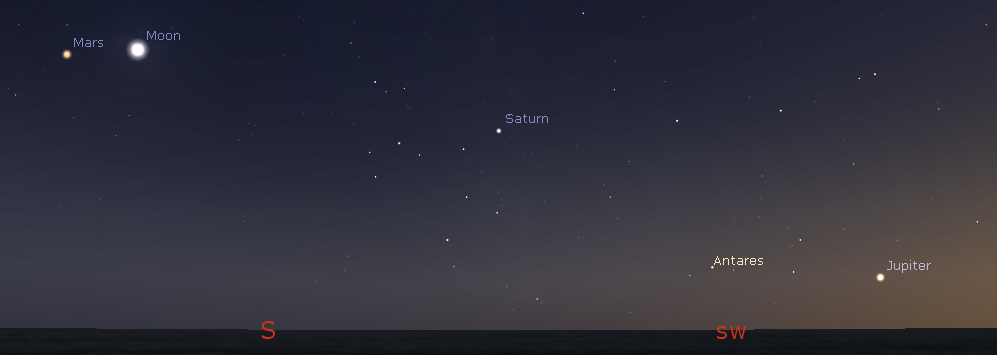
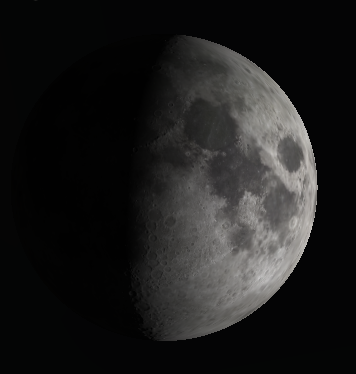
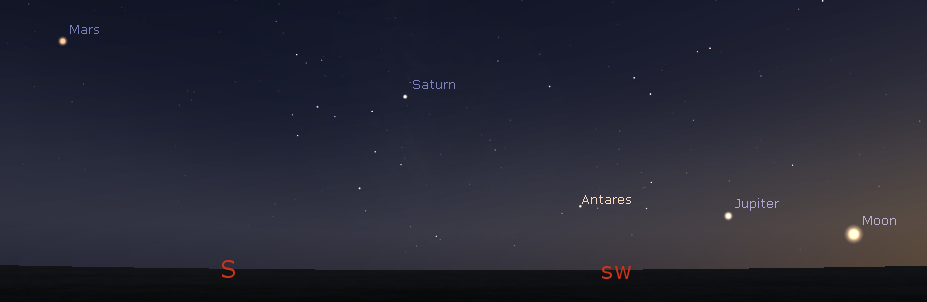
Let’s look at the bright planets for tonight. Three of them are visible in the evening sky. Venus though still officially an evening planet sets before the Sun because it is south of the Sun’s path. Jupiter will be very low in the west-southwest as skies darken. It will set at 8:16 p.m. Saturn, the ringed planet, will start the evening low in the southwestern sky and will set at 10:39 p.m. Mars will be low in the south as the skies darken tonight. and is now 64.6 million miles (104.0 million km) away. Mars will be due south at 9:04 p.m., and it will set at 2:03 a.m. Tonight Mars will be east or left of the waxing gibbous Moon. Mars is picking up speed moving eastward, crossing the constellation of Capricornus this month.
The times given are for the Traverse City/Interlochen area of Michigan. They may be different for your location.
Addendum
10/10/2018 -Ephemeris – Where are the bright planets for this week?
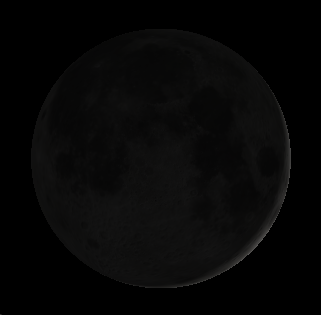
Ephemeris for Wednesday, October 10th. The Sun will rise at 7:51. It’ll be up for 11 hours and 14 minutes, setting at 7:06. The Moon, 2 days past new, will set at 8:23 this evening.
Let’s look at the bright planets today. Three of them are visible in the evening sky. The brilliant Venus will be just too low to spot, setting 9 minutes after the Sun. The problem isn’t its separation from the Sun, but it is also south of the Sun’s path. Jupiter will be in the west-southwest as it gets dark. The big planet will set at 8:40 p.m. Saturn will start the evening low in the southwestern sky and will set at 11:05 p.m. Mars will be low in the south as the skies darken tonight. and is now 60.5 million miles (97.4 million km) away. Mars will be due south at 9:19 p.m., and it will set at 2:03 a.m. Mars is beginning to pick up speed moving eastward, crossing the constellation of Capricornus this month.
The times given are for the Traverse City/Interlochen area of Michigan. They may be different for your location.
Addendum
 Bob Moler's Ephemeris Blog