Archive
10/03/2018 – Ephemeris – This week’s look at the bright planets
Ephemeris for Wednesday, October 3rd. The Sun will rise at 7:43. It’ll be up for 11 hours and 36 minutes, setting at 7:19. The Moon, 1 day past last quarter, will rise at 2:02 tomorrow morning
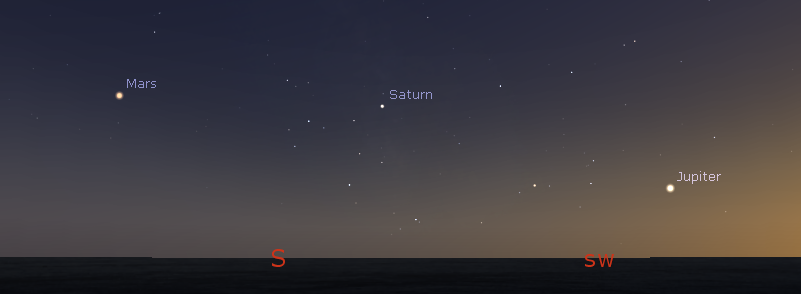
Let’s look at the bright planets today. Three of them are visible in the evening sky. The brilliant Venus will be just too low to spot, setting 29 minutes after the Sun. The problem isn’t its separation from the Sun, but it is also south of the Sun’s path. Jupiter will be in the southwest as it gets dark. The big planet will set at 9:03 p.m. Saturn will start the evening low in the south-southwest sky and will set at 11:31 p.m. I will be giving a talk about Saturn tonight at the Main branch of the library in Traverse City at 7 p.m. Mars will be low in the south-southeast as the skies darken tonight. and is now 56.7 million miles (91.3 million km) away. Mars will be due south at 9:34 p.m., and it will set at 2:03 a.m.
The times given are for the Traverse City/Interlochen area of Michigan. They may be different for your location.
Addendum
09/19/2018 – Ephemeris – Wednesday is bright planet day on Ephemeris
Ephemeris for Talk Like a Pirate Day, Wednesday, September 19th. The Sun will rise at 7:26. It’ll be up for 12 hours and 19 minutes, setting at 7:45. The Moon, 3 days past first quarter, will set at 2:47 tomorrow morning.
Let’s look at the bright planets for this week. Four of them are visible in the evening sky. The brilliant Venus will be visible in the western twilight from about 8 p.m. until it sets at 8:40 p.m. Jupiter will be in the southwest as it gets dark. It is only outshone by Venus, and the Moon. The big planet will set at 9:40 p.m. Saturn will start the evening low in the southern sky and will stay relatively low, above the Teapot of Sagittarius. It will be due south at 7:59 p.m. and will set at 12:24 a.m. Mars will be low in the south-southeast as the skies darken tonight. and is now 49.5 million miles (79.7 million km) away. Mars will be due south at 10:09 p.m., and it will set at 2:27 a.m.
The times given are for the Traverse City/Interlochen area of Michigan. They may be different for your location.
Addendum
09/12/2018 – Ephemeris – Wednesday is bright planet day on Ephemeris
Ephemeris for Wednesday, September 12th. The Sun will rise at 7:18. It’ll be up for 12 hours and 40 minutes, setting at 7:59. The Moon, 3 days past new, will set at 9:56 this evening.
It’s Wednesday again and time to look at the bright planets. Four of them are visible in the evening sky. The brilliant Venus will be visible in the western twilight from about 8:20 p.m. until it sets at 9:03 p.m. Jupiter will be in the southwest as it gets dark. It is only outshone by Venus, and the Moon, and is again brighter than Mars. Jupiter will set at 10:16 p.m. Saturn will start the evening low in the southern sky and will stay relatively low, above the Teapot of Sagittarius. It will be due south at 8:28 p.m. and will set at 12:51 a.m. Mars will be low in the south-southeast as the skies darken tonight. and is now 46.4 million miles (74.6 million km) away. Mars will be due south at 10:29 p.m., and it will set at 2:43 a.m.
The times given are for the Traverse City/Interlochen area of Michigan. They may be different for your location.
Addendum
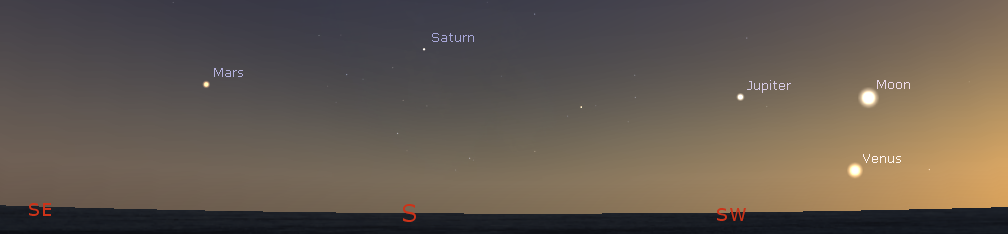
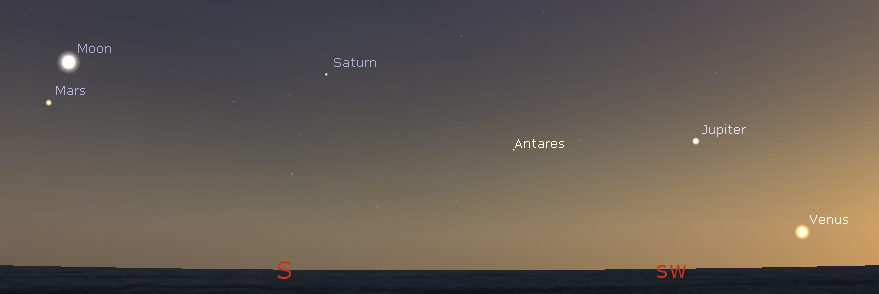
The evening planets at 8:30 p.m. September 12, 2018. Click on image to enlarge. Created using Stellarium.
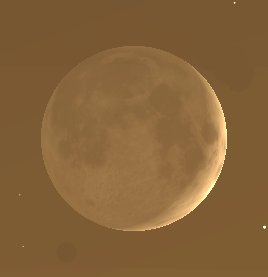
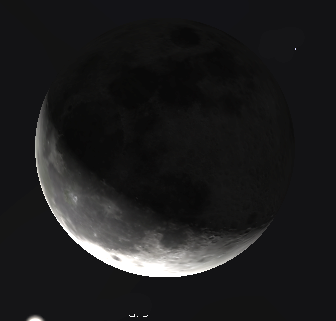
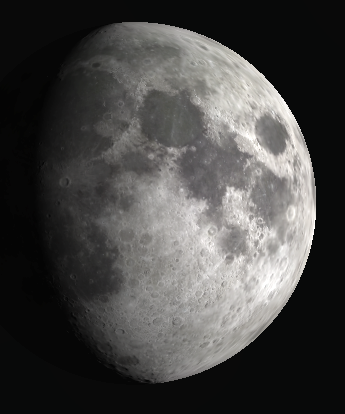
The crescent Moon as it should appear tonight in binoculars. Created using Stellarium.
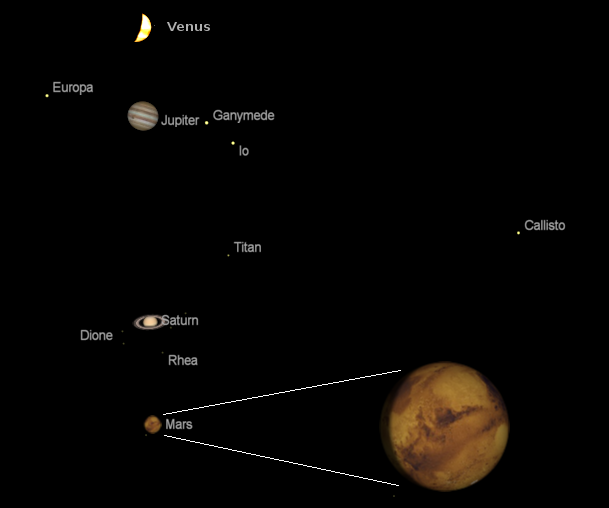
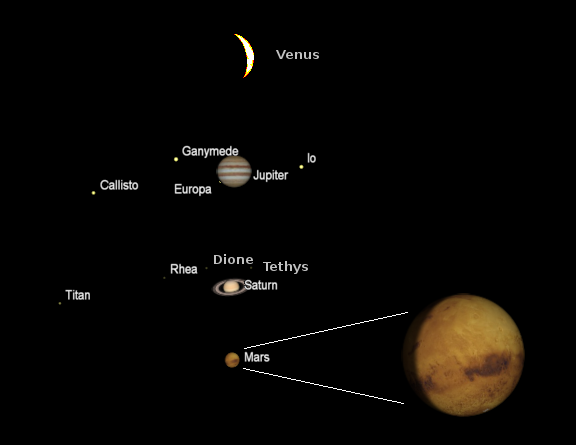
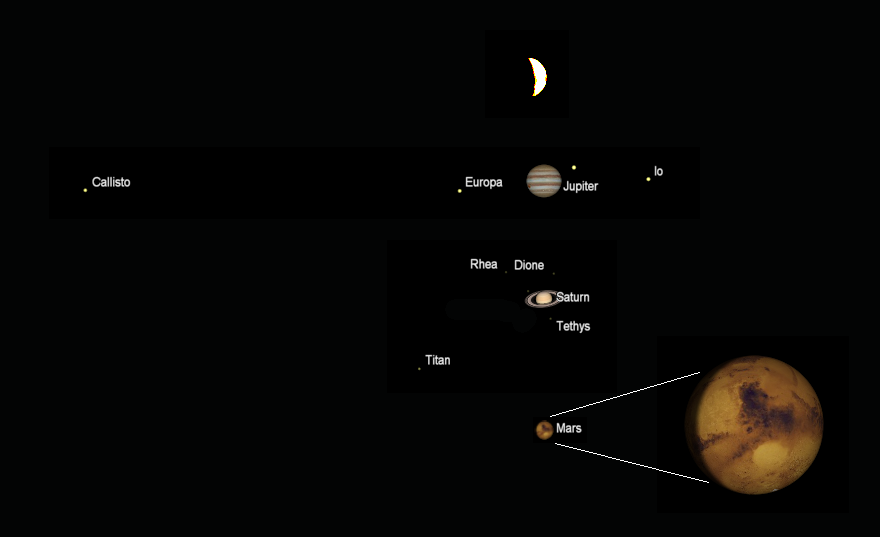
Venus, Jupiter, Saturn and Mars with the same magnification at 8:30 p.m. September 12, 2018. Yes, your eyes don’t deceive you, Venus is larger than Jupiter. Venus is 34.9 ” (seconds of arc) in diameter, while Jupiter is 33.8″. Venus is approaching us, while Jupiter is being left behind by the Earth. Mars is also shown enlarged. The global dust storm is abating, so the albedo features are beginning to be seen. Created using Cartes du Ciel (Sky Charts).
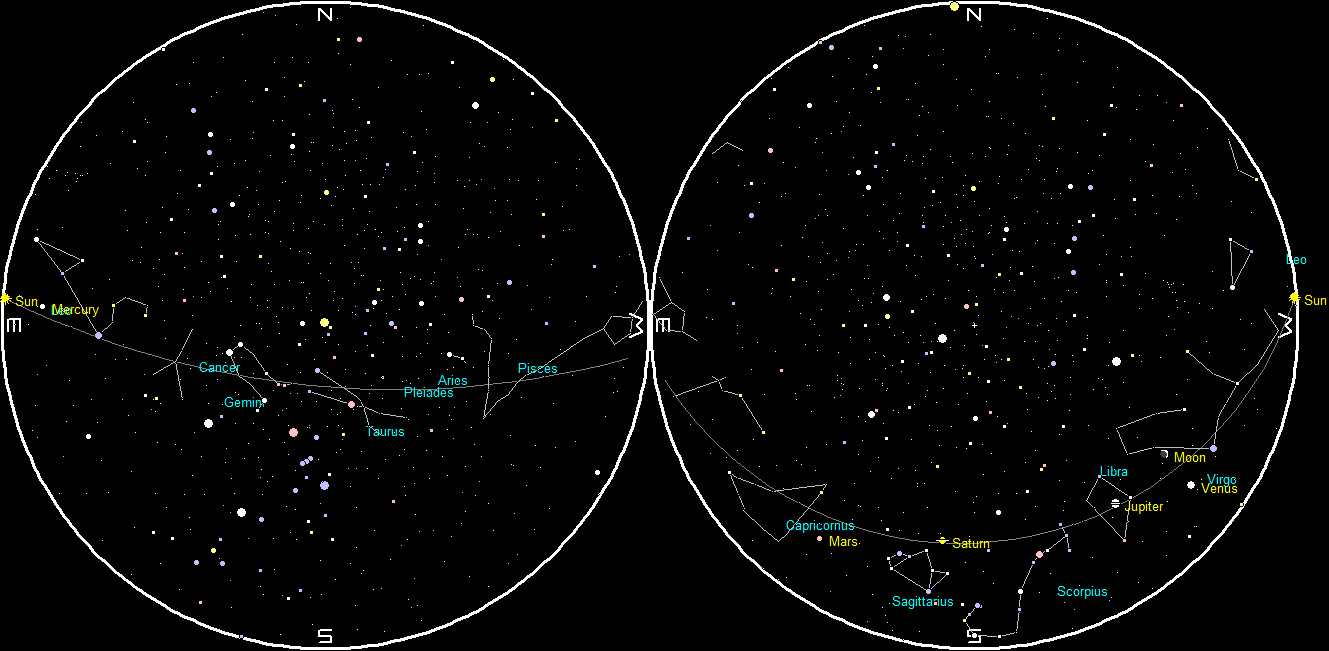
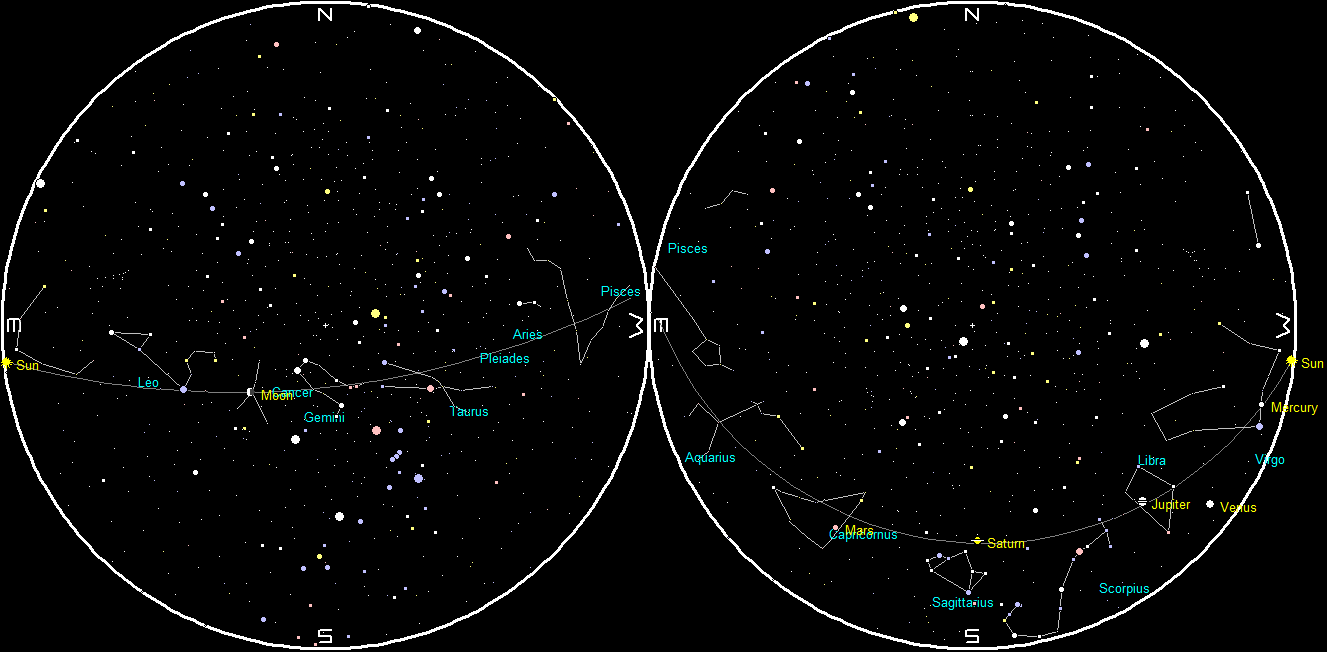
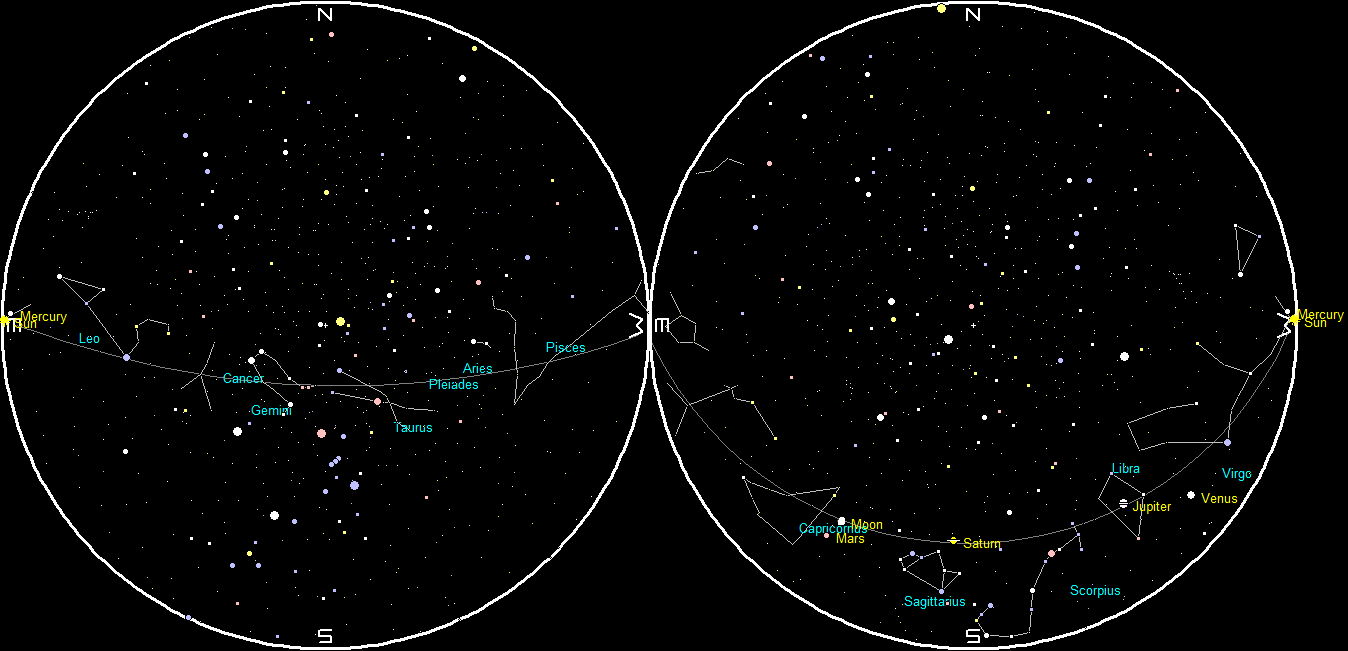
Planets and the Moon at sunset and sunrise of a single night starting with sunset on the right on September 12, 2018. The night ends on the left with sunrise on the 13th. Click on the image to enlarge. Created using my LookingUp program.
09/05/2018 – Ephemeris – It’s Wednesday and time to look at the bright planets
Ephemeris for Wednesday, September 5th. The Sun will rise at 7:09. It’ll be up for 13 hours and 2 minutes, setting at 8:12. The Moon, 3 days past last quarter, will rise at 3:08 tomorrow morning.
It’s Wednesday again and time to look at the bright planets. Four of them are visible in the evening sky. The brilliant Venus will be visible in the western twilight from about 8:30 p.m. until it sets at 9:24 p.m. Jupiter will be in the southwest as it gets dark. It is only outshone by Venus, and the Moon, and is the same brightness as Mars. Jupiter will set at 10:40 p.m. Saturn will start the evening low in the southern sky and will stay relatively low, above the Teapot of Sagittarius. It will be due south at 8:54 p.m. and will set at 1:19 a.m.. Mars will be low in the southeast as the skies darken tonight. and is now 43.6 million miles (70.2 million km) away. Mars will be due south at 10:52 p.m., and it will set at 3:02 a.m. Mercury will rise in the east-northeast at 5:58 a.m. and be visible until about 6:50 tomorrow morning.
The times given are for the Traverse City/Interlochen area of Michigan. They may be different for your location.
Addendum
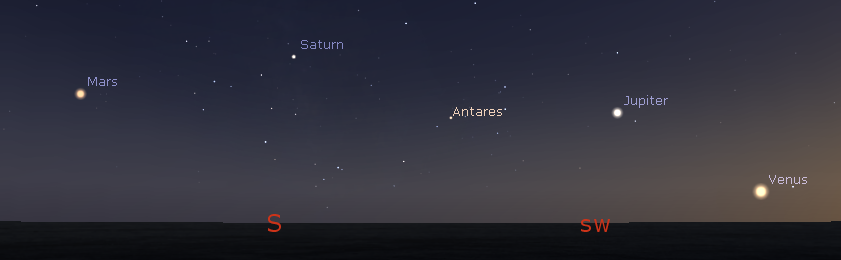
The evening planets at 9 p.m. September 5, 2018. Click on image to enlarge. Created using Stellarium.
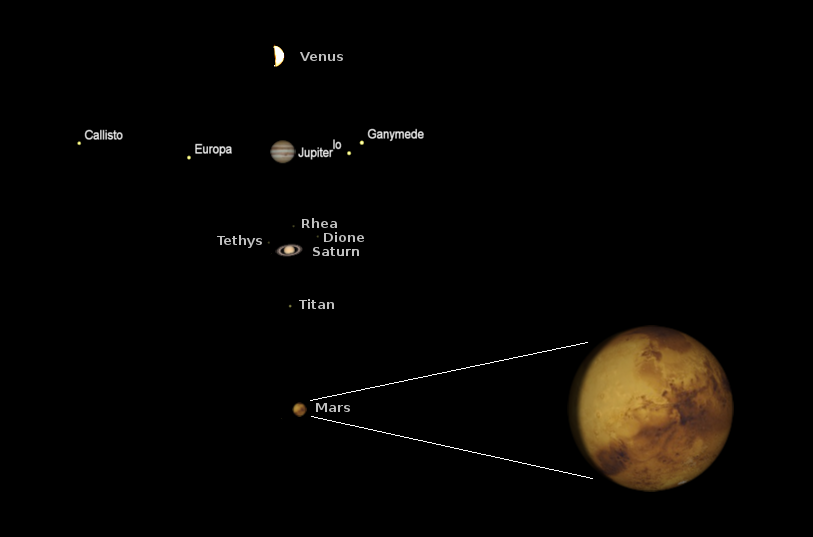
Venus, Jupiter, Saturn and Mars with the same magnification at 9 p.m. September 5, 2018. Mars is also shown enlarged. The global dust storm is abating, so the albedo features are beginning to be seen. Created using Cartes du Ciel (Sky Charts).
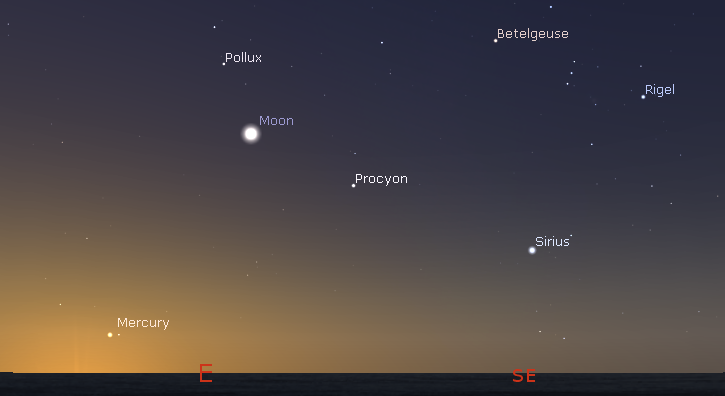
Mercury and Moon in the morning at 6:30 a.m. September 6, 2018. Click on image to enlarge. Created using Stellarium.
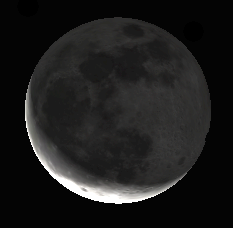
The crescent Moon as it should appear tomorrow morning. Created using Stellarium.
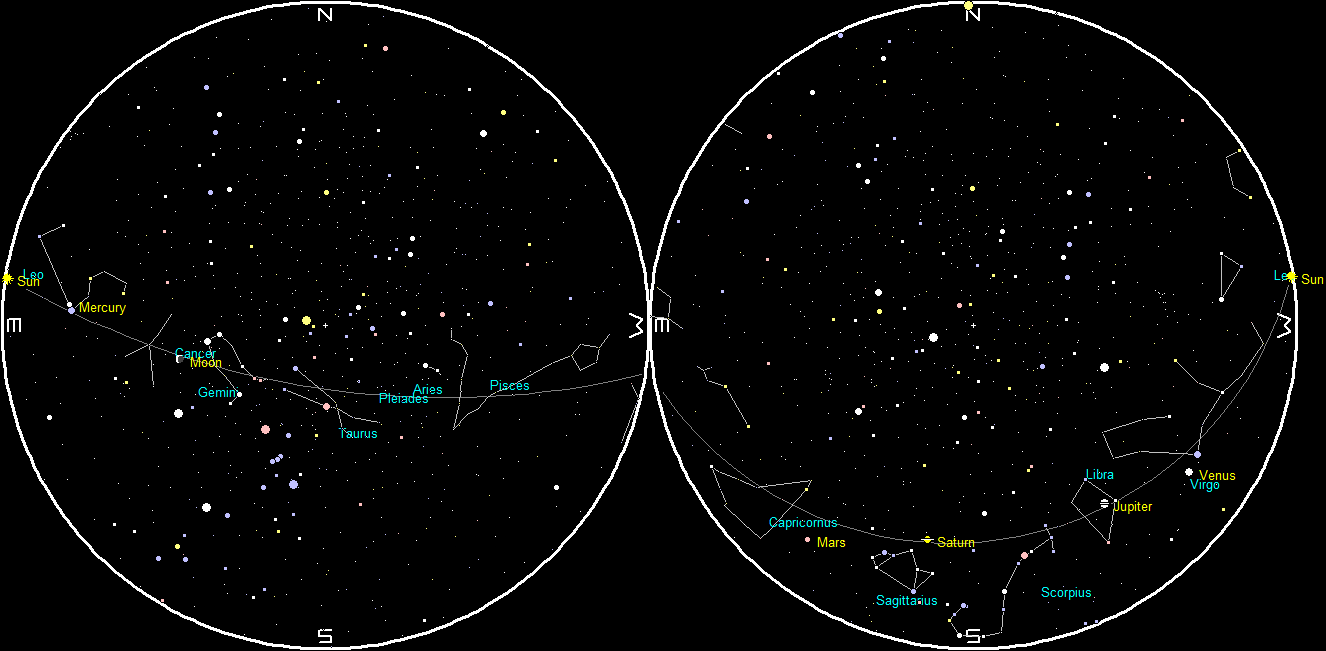
Planets and the Moon at sunset and sunrise of a single night starting with sunset on the right on September 5, 2018. The night ends on the left with sunrise on the 6th. Click on the image to enlarge. Created using my LookingUp program.
08/30/2018 – Ephemeris – Planet controversy again
Ephemeris for Thursday, August 30th. The Sun will rise at 7:02. It’ll be up for 13 hours and 20 minutes, setting at 8:23. The Moon, 3 days before last quarter, will rise at 10:40 this evening.
Back when I was a kid we used to know what a planet was, and there were 9 of them. Back then there was no real definition for a planet, other than it orbited the Sun. You knew it when you saw it. In 2006 the International Astronomical Union voted to define planets by three criteria, which left Pluto out, so now there are 8. Planetary scientists, who may not consider themselves astronomers, balk at that definition. Alan Stern of the New Horizons mission to Pluto wants a new definition. Basically a planet is any body that’s round, or formally has reached hydrostatic equilibrium. That includes all 9 old planets, many moons like ours, Kuiper Belt objects, and the asteroid Ceres. About 115 at last count.
The times given are for the Traverse City/Interlochen area of Michigan. They may be different for your location.
Addendum
For more information go to Ethan Siegel’s Starts with a Bang blog: You Won’t Like The Consequences Of Making Pluto A Planet Again
08/29/2018 – Ephemeris –
Ephemeris for Wednesday, August 29th. The Sun will rise at 7:01. It’ll be up for 13 hours and 23 minutes, setting at 8:24. The Moon, 3 days past full, will rise at 10:13 this evening.
It’s our Wednesday look at the bright planets. Four of them are visible in the evening sky. The brilliant Venus will be visible in the western twilight from about 8:40 p.m. until it sets at 9:44 p.m. Jupiter will be in the southwest as it gets dark. It is only outshone by Venus, the Moon, and currently Mars. Jupiter will set at 11:05 p.m. Saturn will start the evening low in the southern sky and will stay relatively low, above the Teapot of Sagittarius. It will be due south at 9:21 p.m. and will set at 1:47 a.m.. Mars will be low in the southeast as the skies darken tonight. and is now 41.3 million miles (66.6 million km) away. It will set at 3:25 a.m. Mercury will rise in the east-northeast at 5:29 a.m. and be visible until about 6:40 tomorrow morning.
The times given are for the Traverse City/Interlochen area of Michigan. They may be different for your location.
Addendum
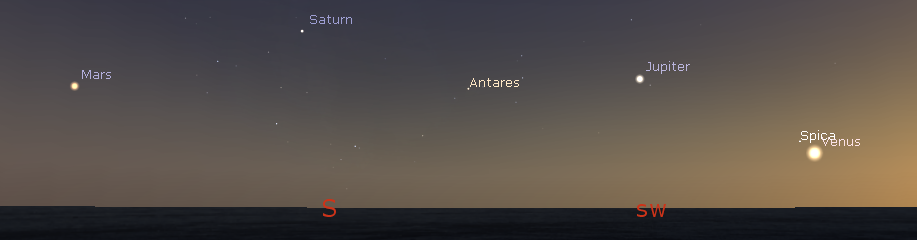
The evening planets visible at 9 p.m., almost an hour after sunset. August 29th, 2018. Click on the image to enlarge. Created using Stellarium.
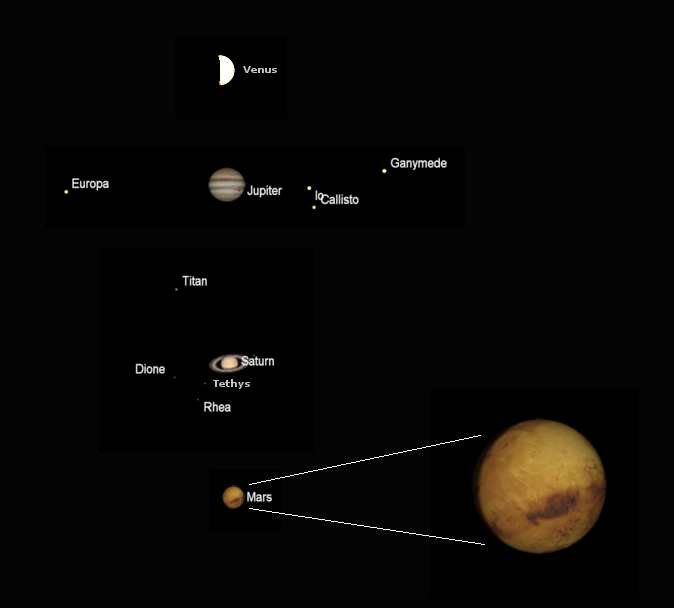
Venus, Jupiter, Saturn and Mars with the same magnification at 9 p.m. August 29, 2018. Mars is also shown enlarged. The global dust storm is abating, so the albedo features are beginning to be seen. Created using Cartes du Ciel (Sky Charts).
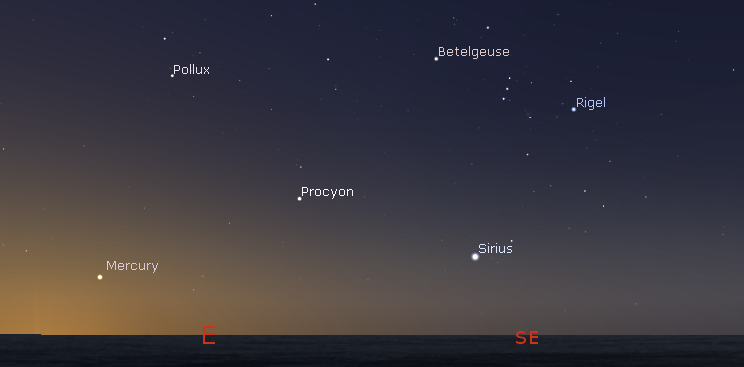
Mercury seen at 6:15 a.m. August 30, 2018, about 45 minutes before sunrise. Bonus Orion appears without the possibility of frostbite. Click on the image to enlarge. Created using Stellarium.
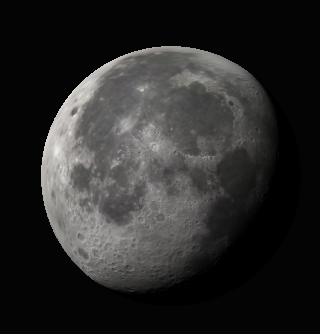
The gibbous Moon as it should appear tomorrow morning. Created using Stellarium.
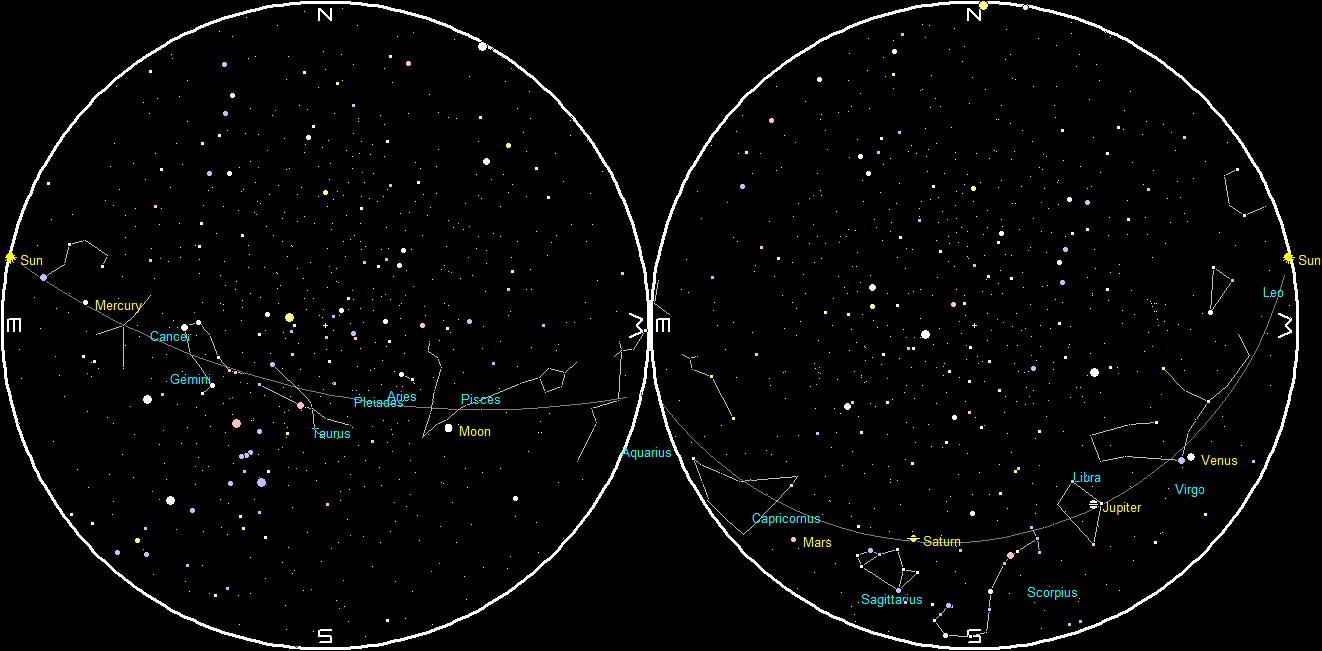
Planets and the Moon at sunset and sunrise of a single night starting with sunset on the right on August 29, 2018. The night ends on the left with sunrise on the 30th. Click on the image to enlarge. Created using my LookingUp program.
08/22/2018 – Ephemeris – All five bright planets visible now
Ephemeris for Wednesday, August 22nd. The Sun rises at 6:53. It’ll be up for 13 hours and 43 minutes, setting at 8:37. The Moon, half way from first quarter to full, will set at 4:00 tomorrow morning.
It’s Wednesday and time to look for and at the bright planets. Four of them are visible in the evening sky. The brilliant Venus will be visible in the western twilight from about 9 p.m. until it sets at 10:02 p.m. Jupiter will be in the southwest as it gets dark. It is only outshone by Venus, the Moon, and currently Mars. Jupiter will set at 11:30 p.m. Saturn will start the evening low in the southern sky and will stay relatively low, above the Teapot of Sagittarius. It will be due south at 9:49 p.m. and will set at 2:15 a.m.. Mars will be low in the southeast as the skies darken tonight. and is now 38.9 million miles (62.7 million km) away. It will set at 3:51 a.m. The fifth planet Mercury will rise at 5:27 a.m. tomorrow morning.
The times given are for the Traverse City/Interlochen area of Michigan. They may be different for your location.
Addendum
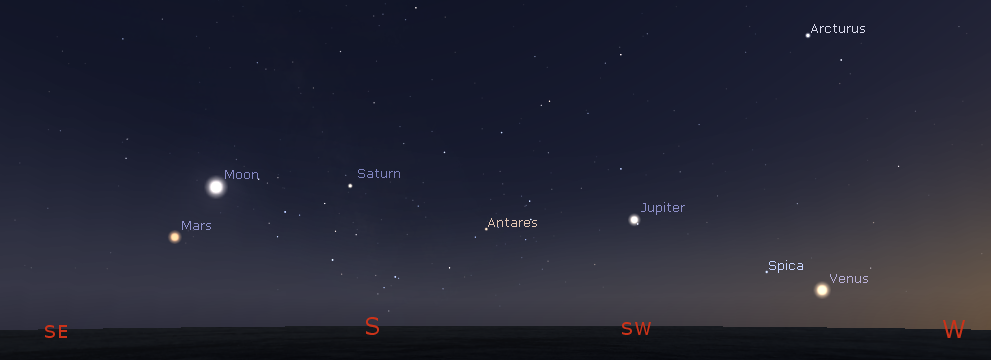
The evening planets visible at 9:30 p.m., almost an hour after sunset. August 22nd, 2018. Also shown is the Moon. Click on the image to enlarge. Created using Stellarium.
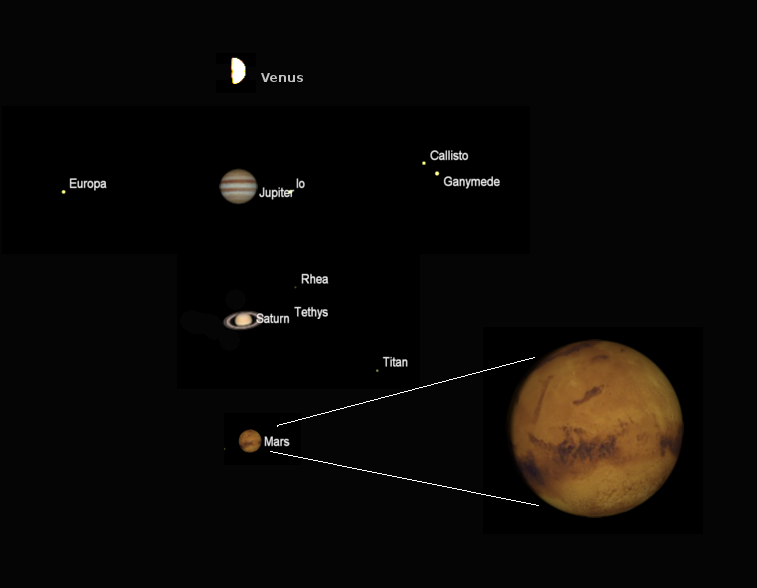
Venus, Jupiter, Saturn and Mars with the same magnification at 9:30 p.m. August 22, 2018. Mars is also shown enlarged. The global dust storm is abating, so the albedo features are beginning to be seen. Created using Cartes du Ciel (Sky Charts).
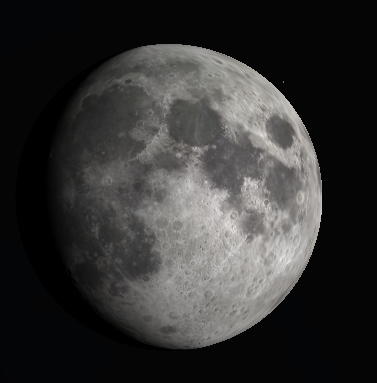
The gibbous Moon as it should appear tonight. Created using Stellarium. Stellarium.
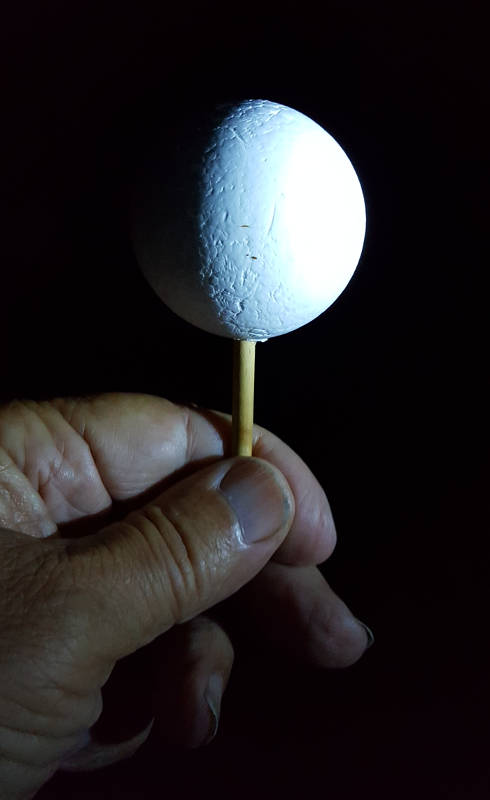
Demonstration of the Moon’s gibbous phase with the Styrofoam moon ball we use for Project Astro held up to a light off frame to the right. The night side of the ball is illuminated a bit by the translucency of the ball, and the reflection off my hand. Note the roughness of the ball is visible only at the terminator.
My program about the Moon’s crescent phase aired last Thursday and a demonstration of it using a moonball is here.
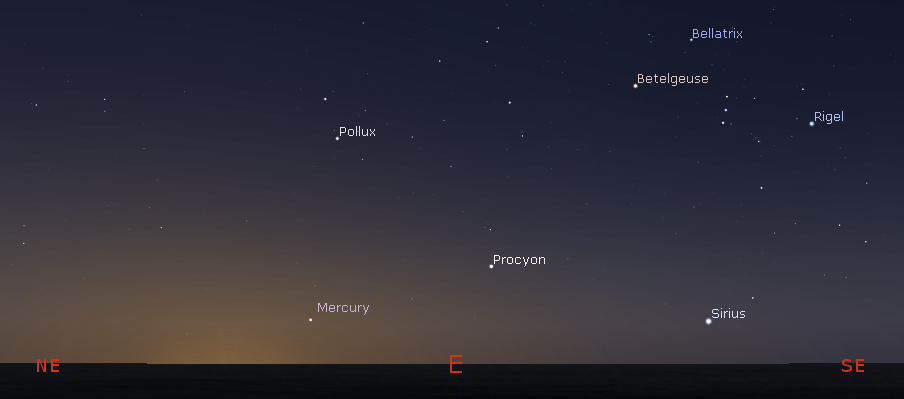
Mercury seen at 6 a.m., about an hour before sunrise. A bonus, the constellation Orion appears without the possibility of frostbite. Click on the image to enlarge. Created using Stellarium.
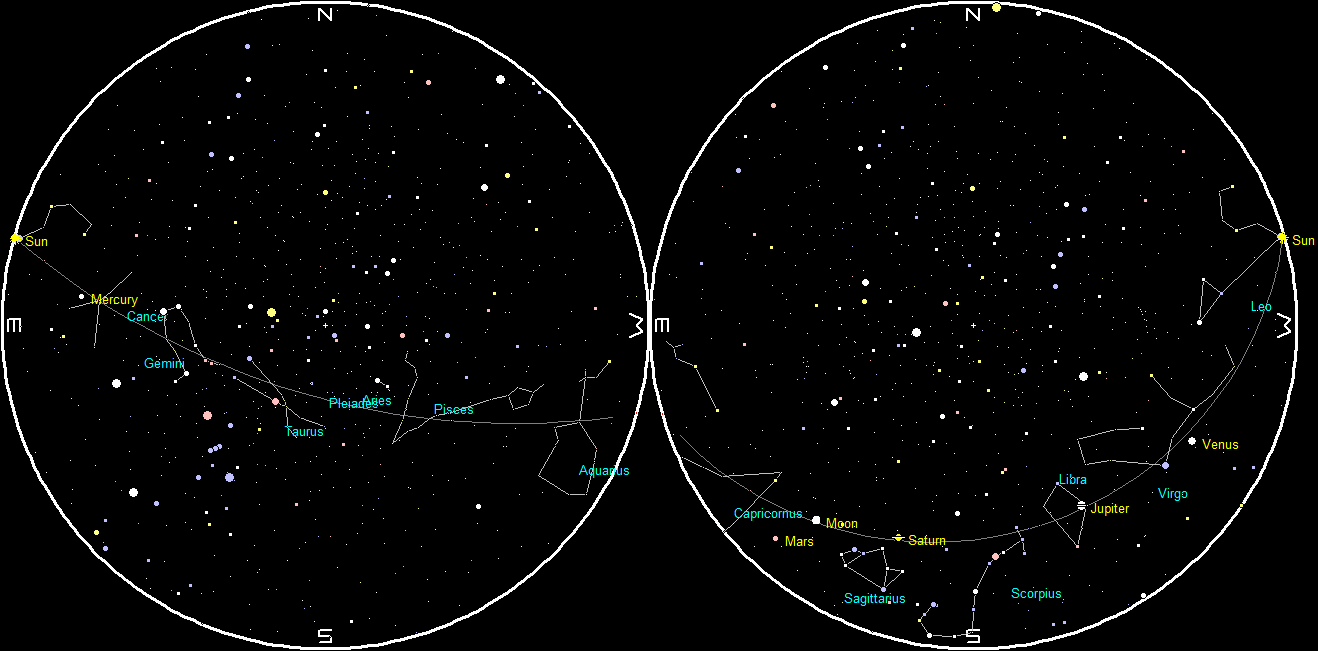
Planets and the Moon at sunset and sunrise of a single night starting with sunset on the right on August 22, 2018. The night ends on the left with sunrise on the 23rd. Click on the image to enlarge. Created using my LookingUp program.
08/15/2018 – Ephemeris – Spotting the bright planets this week
Ephemeris for Wednesday, August 15th. The Sun rises at 6:45. It’ll be up for 14 hours and 3 minutes, setting at 8:48. The Moon, 3 days before first quarter, will set at 11:29 this evening.
It’s Wednesday and time to look for and at the bright planets. Four of them are visible in the evening sky. The brilliant Venus will be visible in the western twilight from about 9:10 p.m. until it sets at 10:20 p.m. Jupiter will be in the southwest as it gets dark. It is only outshone by Venus, the Moon, and currently Mars. Jupiter will set at 11:52 p.m. Saturn will start the evening low in the southern sky and will stay relatively low, above the Teapot of Sagittarius. It will be due south at 10:18 p.m. and will set at 2:43 a.m.. Mars will be low in the southeast as the skies darken tonight. and is now 37.3 million miles (60.1 million km) away. It will set at 4:21 a.m. It is being slowly left behind by the faster moving Earth.
The times given are for the Traverse City/Interlochen area of Michigan. They may be different for your location.
Addendum
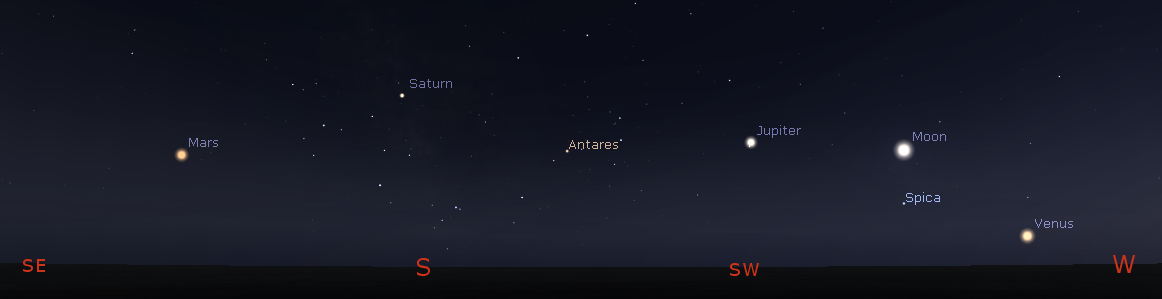
The evening planets and the Moon visible at 10 p.m., one hour after sunset. August 15th, 2018. Also shown are the constellations. Click on the image to enlarge. Created using Stellarium.
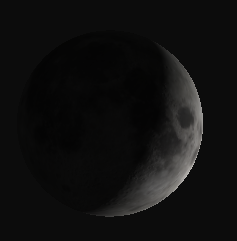
What the Moon might look like at 10 p.m., August 15th, 2018. Created using Stellarium.
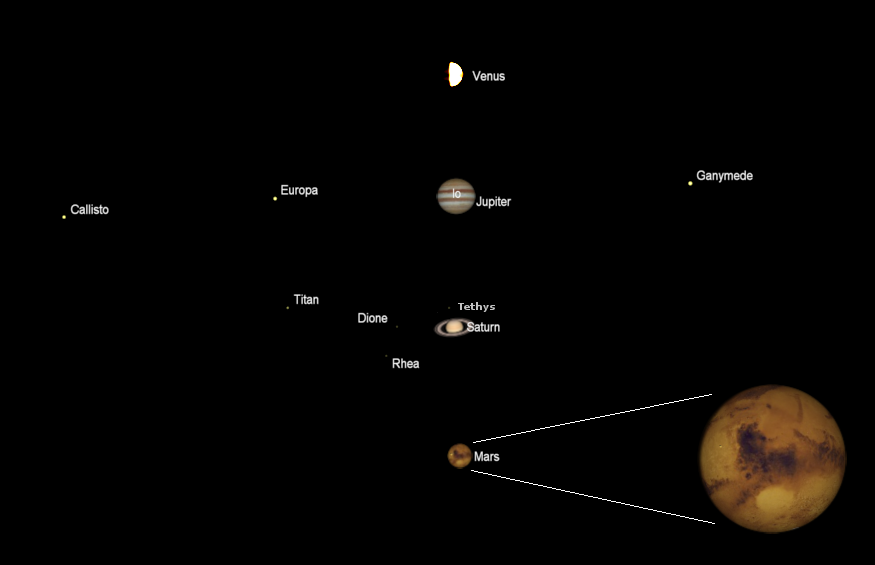
Venus, Jupiter, Saturn and Mars with the same magnification at 10 p.m. August 15, 2018. Jupiter’s satellite label Io is shown. However at 10 p.m. it’s occulted by Jupiter. The occultation began at 9:35 p.m. EDT (01:35 UT the 16th) and will emerge from Jupiter’s shadow at 1:02 a.m. EDT (05:02 UT) after Jupiter sets locally. Mars is also shown enlarged. It seems that the global dust storm is abating, so the albedo features are beginning to be seen. Created using Cartes du Ciel (Sky Charts)
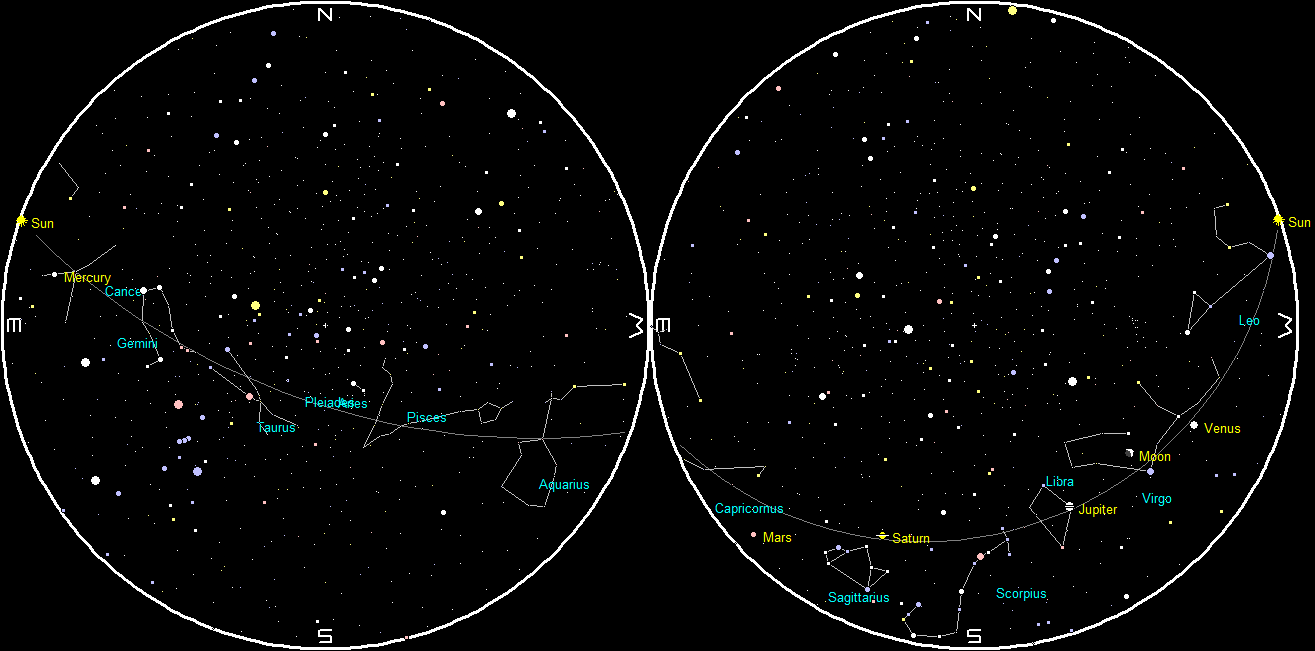
Planets and the Moon at sunset and sunrise of a single night starting with sunset on the right on August 15, 2018. The night ends on the left with sunrise on the 16th. Click on the image to enlarge. Created using my LookingUp program.
08/08/2018 – Ephemeris – Let’s check out the bright planets for the week
Ephemeris for Wednesday, August 8th. The Sun rises at 6:37. It’ll be up for 14 hours and 22 minutes, setting at 8:59. The Moon, 3 days before new, will rise at 4:20 tomorrow morning.
It’s Wednesday and time to look for and at the bright planets. Four of them are visible in the evening sky. The brilliant Venus will be visible in the western twilight from about 9:20 p.m. until it sets at 10:36 p.m. Jupiter will be in the southwest as it gets dark. It is only outshone by Venus, the Moon, and currently Mars. Jupiter will set at 12:26 a.m. Saturn will start the evening low in the southern sky and will stay relatively low, above the Teapot of Sagittarius. It will be due south at 10:46 p.m. and will set at 3:12 a.m.. Mars will be low in the southeast as the skies darken tonight. and is now 36.2 million miles (58.3 million km) away. It is being slowly left behind by the faster moving Earth.
The times given are for the Traverse City/Interlochen area of Michigan. They may be different for your location.
Addendum

The evening planets visible at 10 p.m., one hour after sunset. August 8th, 2018. Also shown are the constellations. Click on the image to enlarge. Created using Stellarium.
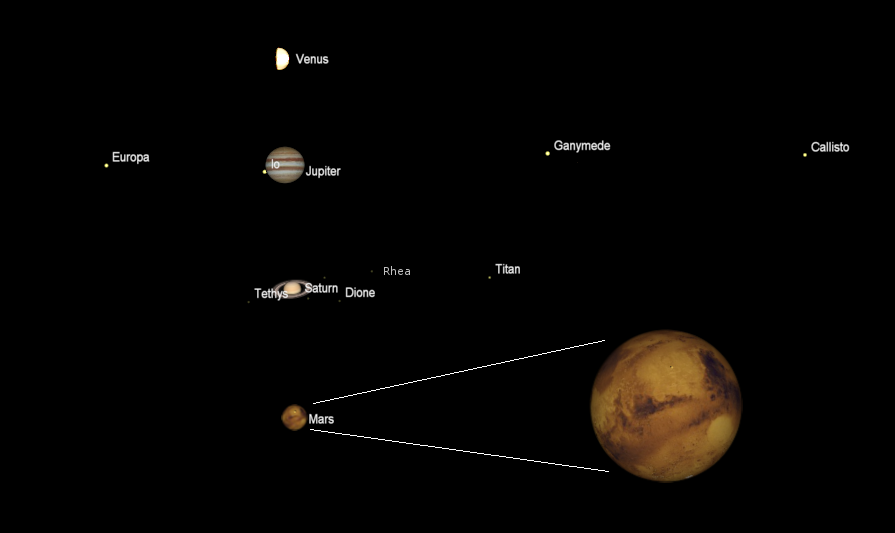
Venus, Jupiter, Saturn and Mars with the same magnification at 10 p.m. August 8, 2018. Jupiter’s satellite Io is shown. However at 10 p.m. Io is still is Jupiter’s shadow and will emerge at 11:07 p.m. Mars is also shown enlarged. It seems that the global dust storm is abating, so the albedo features are beginning to be seen. Created using Cartes du Ciel (Sky Charts) which does not properly show Jovian shadow events with the moons.
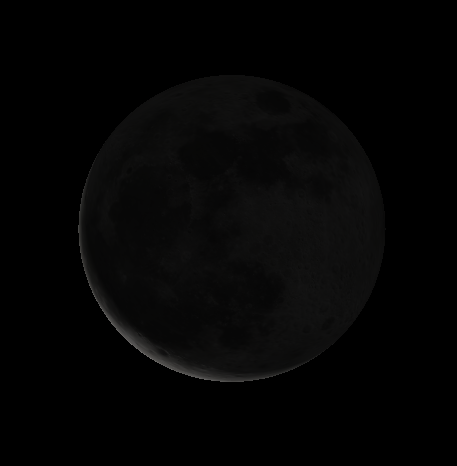
What the Moon might look like at 5:30 a.m., August 9th, 2018 with earthshine. Created using Stellarium.
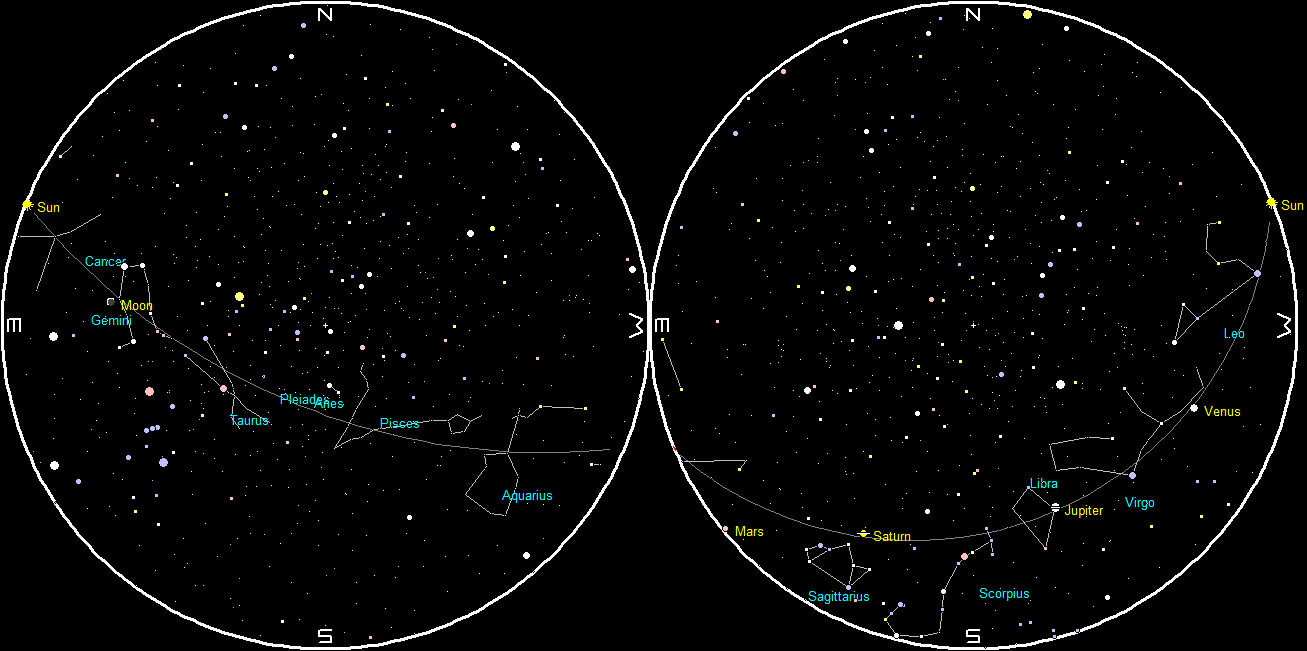
Planets and the Moon at sunset and sunrise of a single night starting with sunset on the right on August 8, 2018. The night ends on the left with sunrise on the 9th. Click on the image to enlarge. Created using my LookingUp program.
08/01/2018 – Ephemeris – The bright planets for the first of August
Ephemeris for Wednesday, August 1st. The Sun rises at 6:29. It’ll be up for 14 hours and 39 minutes, setting at 9:08. The Moon, 3 days before last quarter, will rise at 11:43 this evening.
It’s Wednesday and time to look for and at the bright planets. Four of them are visible in the evening sky. The brilliant beacon of Venus will be visible in the western twilight from about 9:30 p.m. until it sets at 10:52 p.m. Jupiter will be in the southwest as it gets dark. It is only outshone by Venus, the Moon, and currently Mars. Jupiter will set at 12:48 a.m. Saturn will start the evening low in the south-southeast and will stay relatively low, above the Teapot of Sagittarius. It will be due south at 11:15 p.m. and will set at 3:41 a.m.. Mars will be low in the southeast as the skies darken tonight. and is now 35.8 million miles (57.6 million km) away. It is being slowly left behind by the faster moving Earth.
The times given are for the Traverse City/Interlochen area of Michigan. They may be different for your location.
Addendum
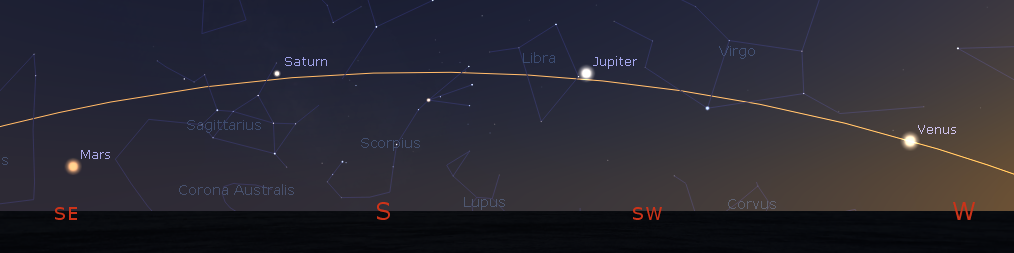
Evening planets visible at 10 p.m. August 1st, 2018. Also shown are the zodiacal constellations and the ecliptic. The ecliptic, which is the plane of the Earth’s orbit and near where than rest of the planets appear because the solar system is pretty flat. Also note that Venus, which will reach greatest eastern elongation from the Sun on the 17th, is not very high above the horizon. That’s because the ecliptic meets the horizon at a shallow angle. In spring Venus would be very high on the west. The projection shows Venus and Mars a bit higher in the sky than they actually are. Click on the image to enlarge. Created using Stellarium.
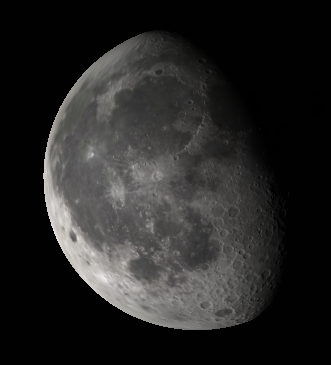
What the Moon might look like in binoculars at 2 a.m., August 2nd, 2018. Created using Stellarium.
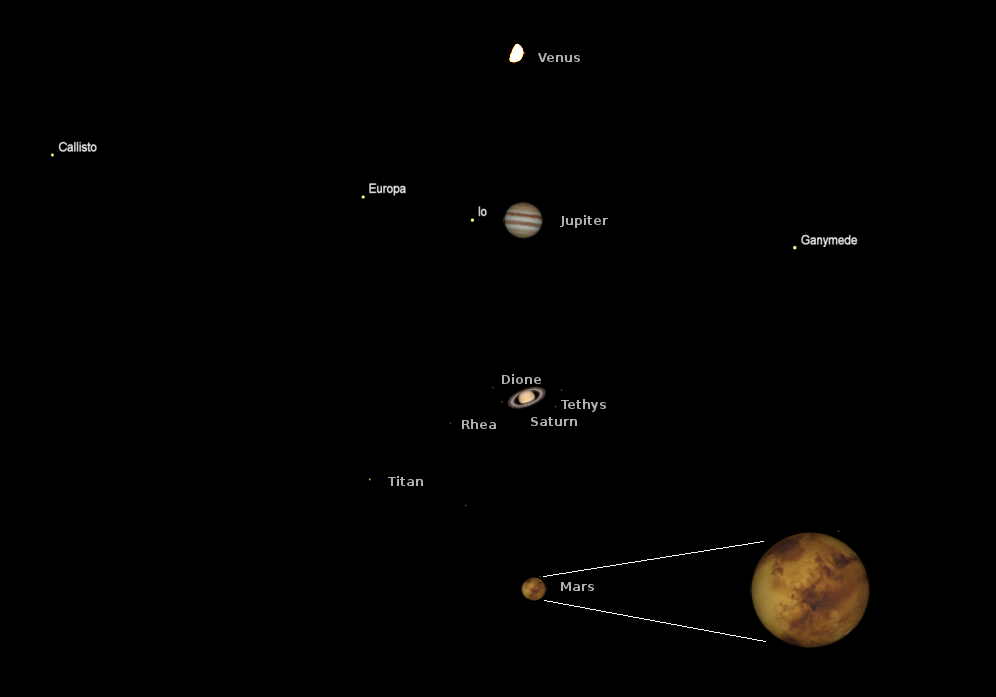
Venus, Jupiter, Saturn and Mars with the same magnification at 10 p.m. August 1, 2018.
Mars is also shown enlarged. It seems that the global dust storm is abating, so the albedo features are beginning to be seen. Created using Cartes du Ciel (Sky Charts).
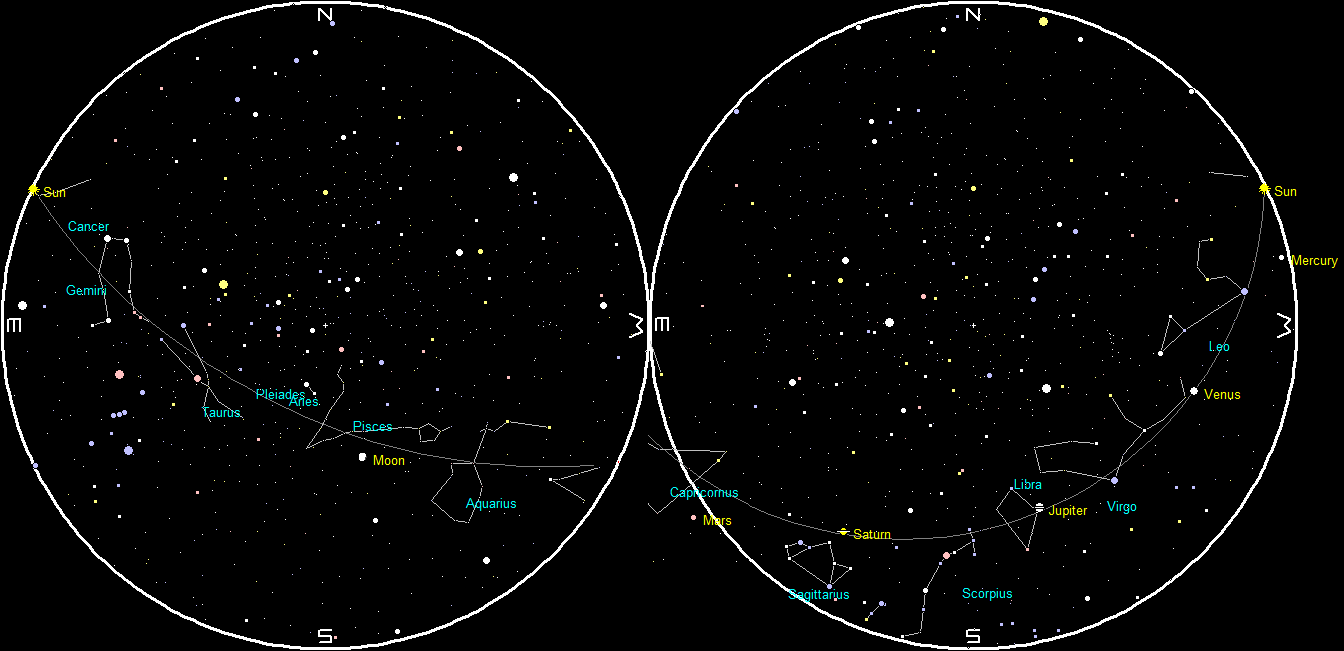
Planets and the Moon at sunset and sunrise of a single night starting with sunset on the right on August 1, 2018. The night ends on the left with sunrise on the 2nd. Mars, being close to opposition and very much south of the ecliptic is not in the sky at either sunrise or sunset, I showed a patch of sky with Mars in it in the at sunset still below the horizon. Click on the image to enlarge. Created using my LookingUp program.
 Bob Moler's Ephemeris Blog