Archive
07/17/2023 – Ephemeris – Arcturus, a look at the Sun’s future
This is Ephemeris for Monday, July 17th. Today the Sun will be up for 15 hours and 11 minutes, setting at 9:24, and it will rise tomorrow at 6:14. The Moon is new today, and won’t be visible.
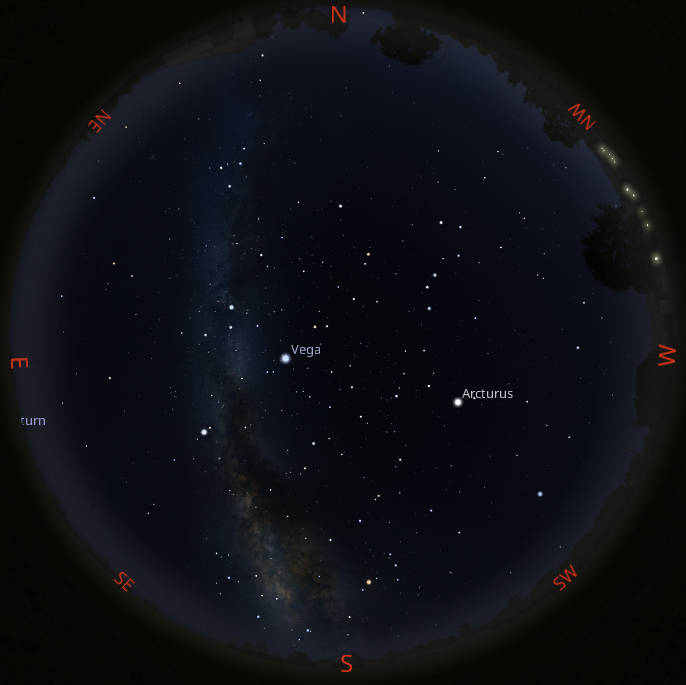
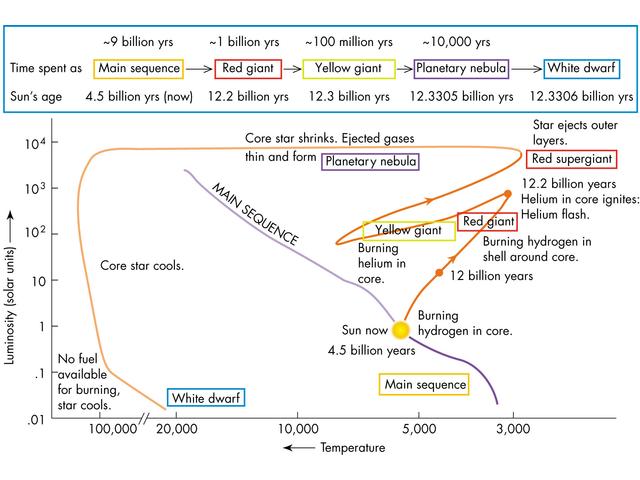
Arcturus, a red giant star, is about two thirds the way up the sky in the southwest at 10:30 or 11 p.m. It’s one of the earliest stars to appear in twilight, being nearly tied in brightness with Vega, a white star about as high in the east. A pointer to Arcturus is the handle of the Big Dipper, following the arc of the handle to Arcturus. Though only 37 light years away, it’s not from around here. It’s passing through the galactic disk from north to south. Arcturus is about 7 billion years old, and is about 8% more massive than our Sun. It appears to be starting its red giant phase, after running out of hydrogen to fuse into helium in its core, and is beginning to fuse the helium. It’s 25 times the size of the Sun and 170 times brighter, and a preview of our Sun when it gets that old.
The astronomical event times given are for the Traverse City/Interlochen area of Michigan (EDT, UT –4 hours). They may be different for your location.
Addendum
06/09/2023 – Ephemeris – How to find Corona Borealis, the Northern Crown
This is Bob Moler with Ephemeris for Friday, June 9th. Today the Sun will be up for 15 hours and 29 minutes, setting at 9:27, and it will rise tomorrow at 5:57. The Moon, 1 day before last quarter, will rise at 2:13 tomorrow morning.
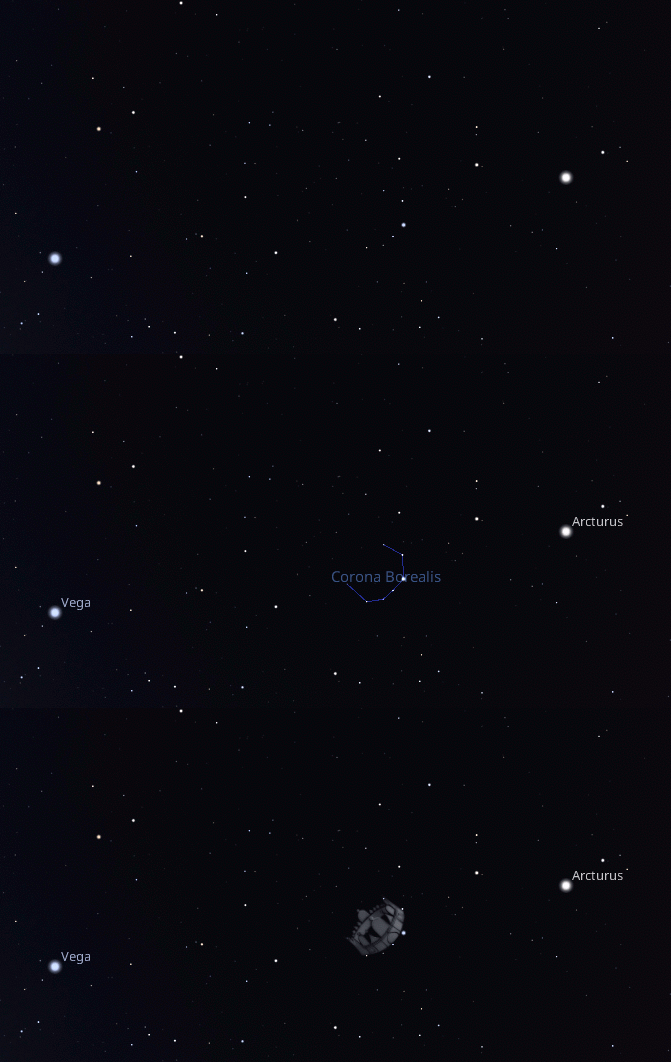
High in the southeast at 11 p.m. can be found a small but easily spotted constellation of Corona Borealis, the Northern Crown. It is located just east or left of the kite shaped constellation of Boötes, with its bright star Arcturus at the bottom. The Northern Crown is a three-quarters circle of stars, like a tiara, with a brighter star Alphecca at the bottom. Alphecca in Arabic means “Bright star of the broken ring of stars”. According to Greek mythology it belonged to Princess Ariadne, daughter of King Minos of Crete who helped Theseus escape from the Labyrinth of the Minotaur, only to be abandoned by him on an island. To the Native Chippewa and Ottawa of our area it is the Sweat Lodge.
The astronomical event times given are for the Traverse City/Interlochen area of Michigan (EDT, UT –4 hours). They may be different for your location.
Addendum
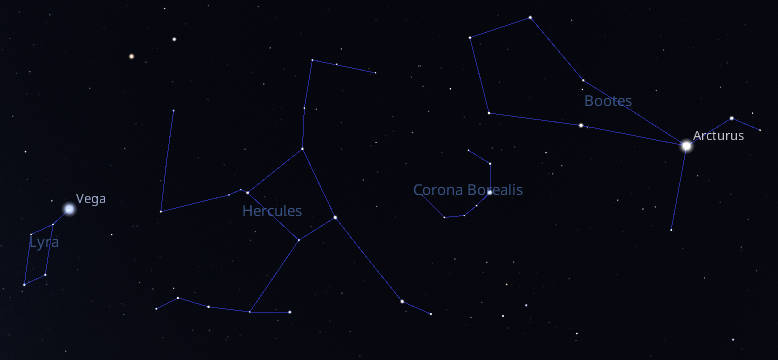
Next Monday I will post about Hercules.
06/08/2023 – Ephemeris – The first stars that appear tonight

Subscribe to continue reading
Subscribe to get access to the rest of this post and other subscriber-only content.
05/12/2023 – Ephemeris – Finding Virgo the virgin in the evening sky
This is Ephemeris for Friday, May 12th. Today the Sun will be up for 14 hours and 42 minutes, setting at 9:00, and it will rise tomorrow at 6:17. The Moon, at last quarter today, will rise at 3:44 tomorrow morning.
One of the large constellations we see in the south at 11 p.m. can be found using the Big Dipper overhead, follow the arc of the handle to the bright star Arcturus, then straighten the arc to a spike to reach Spica, a bright blue-white star in the south. Spica is the brightest star in the constellation Virgo, the virgin. She represents the goddess of the harvest, Virgo is holding a sheaf of wheat in depictions of her, and Spica is placed at the head of the sheaf. In the space between Spica and Leo the lion to her upper right is, a great cluster of thousands of galaxies just below naked eye visibility. The Virgo Cluster. Inside that cluster is galaxy M87, in whose center lies a black hole with the mass of 6.5 billion suns. The center of the cluster is at about 54 million light years away.
The astronomical event times given are for the Traverse City/Interlochen area of Michigan (EDT, UT –4 hours). They may be different for your location.
Addendum
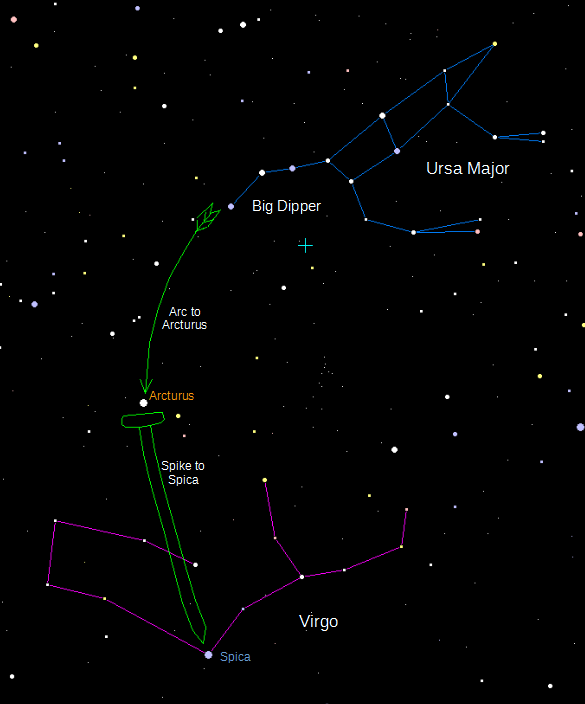
Finding Virgo from the Big Dipper at 11 pm, May 12. There are no planetary interlopers this year. The small + sign marks the zenith, and the image faces south. Created using my LookingUp app, with captions added using LibreOffice Draw.
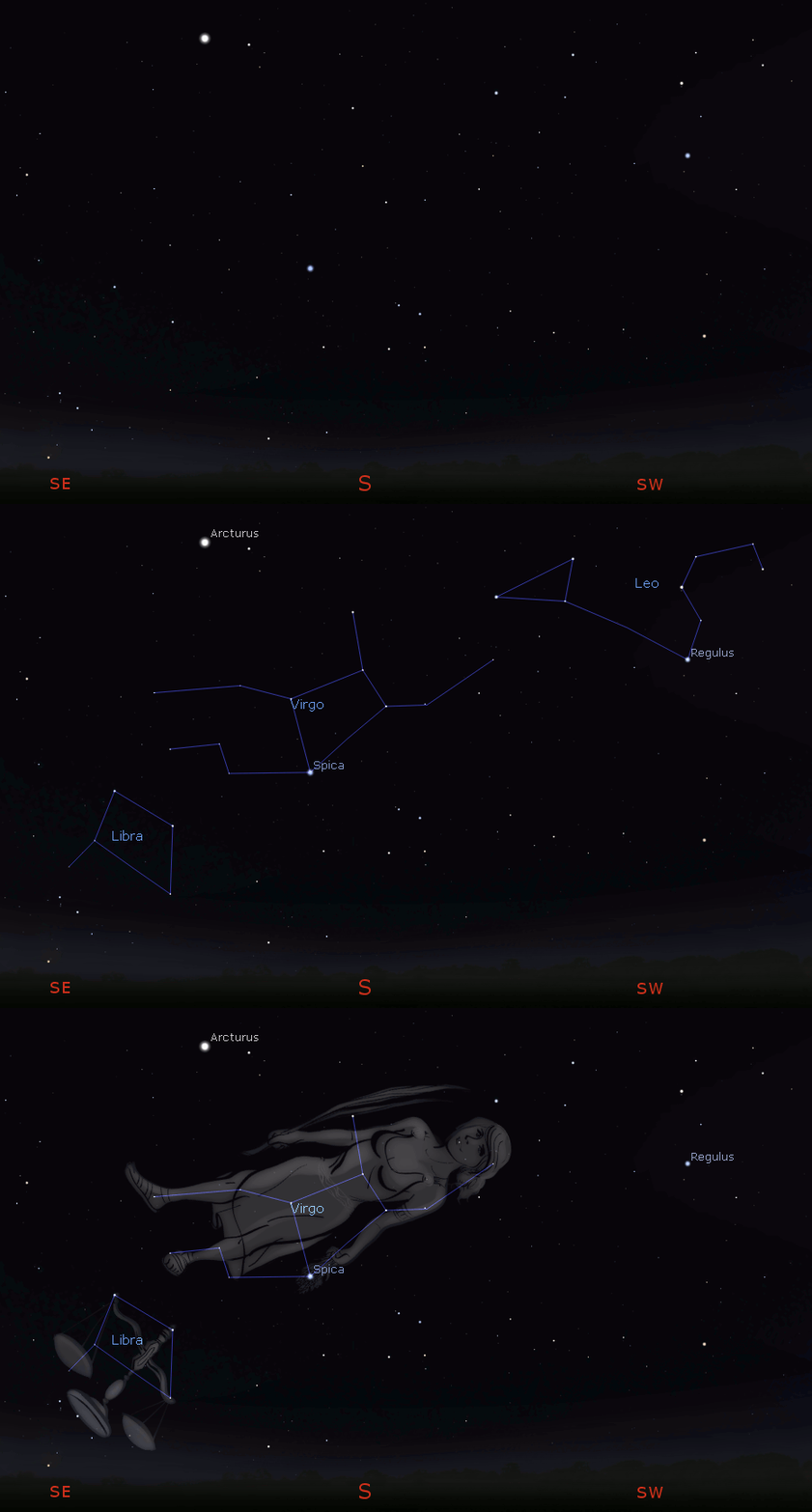
Virgo finder animation with Leo added as an aid for 11 p.m. tonight. Created using Stellarium and GIMP.
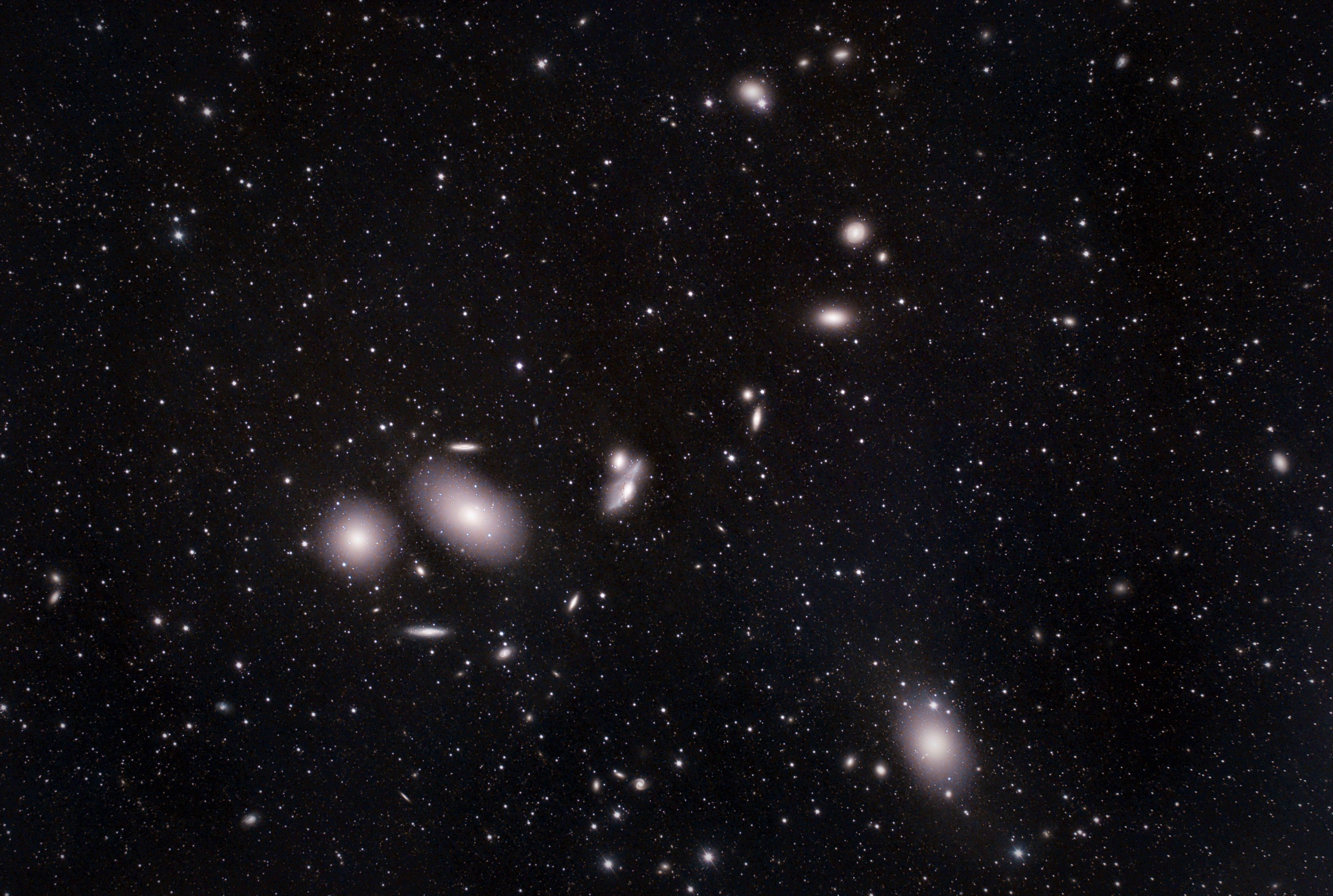
Markarian’s Chain, a small part of the Virgo Cluster of galaxies. Click or tap on the image to enlarge it. Credit: Daniel Dall’Olmo.
06/28/2022 – Ephemeris – Finding the celestial harp
This is Ephemeris for Tuesday, June 28th. Today the Sun will be up for 15 hours and 32 minutes, setting at 9:32, and it will rise tomorrow at 6:00. The Moon is new today, and won’t be visible.
High in the east at 11 p.m. can be found a bright star just above a small, narrow, but very distinctive parallelogram of stars. They are the stars of the constellation Lyra the harp. The bright star is Vega, the 4th or 5th brightest nighttime star*, and currently the topmost star of the Summer Triangle. To the Romans, the star Vega represented a falling eagle or vulture. Apparently they never made the distinction between the two species. It is a pure white star and serves as a calibration star for color and brightness. In the evening, it is the top-most star of the Summer Triangle. The harp, according to Greek mythology, was invented by the god Hermes. The form of the harp, in the sky, is as he had invented it: by stretching strings across a tortoise shell. Hermes gave it to his half-brother Apollo, who in turn gave it to the legendary musician Orpheus.
The astronomical event times given are for the Traverse City/Interlochen area of Michigan (EDT, UT – 4 hours). They may be different for your location.
*Vega’s rival for the fourth spot on the brightness list is Arcturus to it’s west. Wikipedia’s source says that Arcturus is slightly brighter. Stellarium’s source says Vega is brighter. The difference is a few hundredths of a magnitude. However, they are of different colors. Vega is pure white, while Arcturus is yellow-orange because it has a cooler surface temperature than Vega. Check them out for yourself.
Addendum
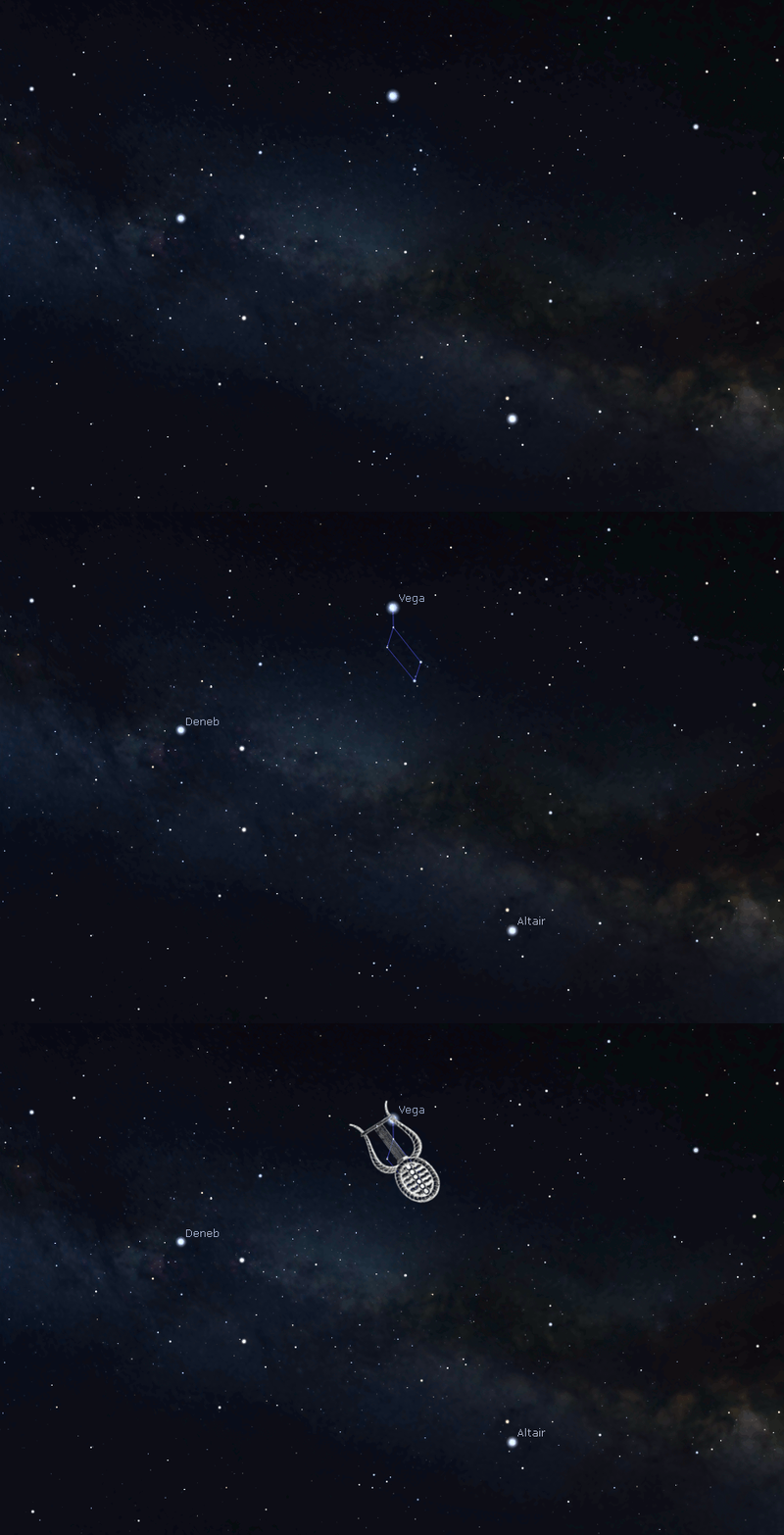
Animated Lyra finder chart. The lyre image not supplied by Stellarium but is from The World’s Earliest Music by Hermann Smith, Figure 60, A Project Gutenberg E-Book, and captioned “The Chelys or Greek Tortoiseshell Lyre”. The three names stars are the stars of the Summer Triangle in the eastern sky these evenings of late June. Created using Stellarium.
04/28/2022 – Ephemeris – The story of Arcas and Callisto
This is Bob Moler with Ephemeris for Thursday, April 28th. Today the Sun will be up for 14 hours and 6 minutes, setting at 8:44, and it will rise tomorrow at 6:35. The Moon, 2 days before new, will rise at 6:16 tomorrow morning.
Appearing in the eastern sky at 10 p.m. tonight is the kite shaped constellation of Boötes the herdsman. The bright star Arcturus is at the bottom of the kite which is horizontal to the left, pointed to by the arc of the handle of the Big Dipper, higher in the east. The Big Dipper is the hind end of the constellation Ursa Major, the Great Bear. In one story, Boötes represents a young hunter named Arcas, son of Callisto, a beautiful young woman who had the misfortune of being loved by god Zeus. Zeus’ wife, Hera, found out about the affair, and since she couldn’t punish Zeus, turned the poor woman into a bear. Arcas, many years later, unaware of why his mother disappeared, was about to kill the bear when Zeus intervened and placed them both in the sky, where he continues to chase her across the sky nightly.
The astronomical event times given are for the Traverse City/Interlochen area of Michigan (EDT, UT – 4 hours). They may be different for your location.
Addendum
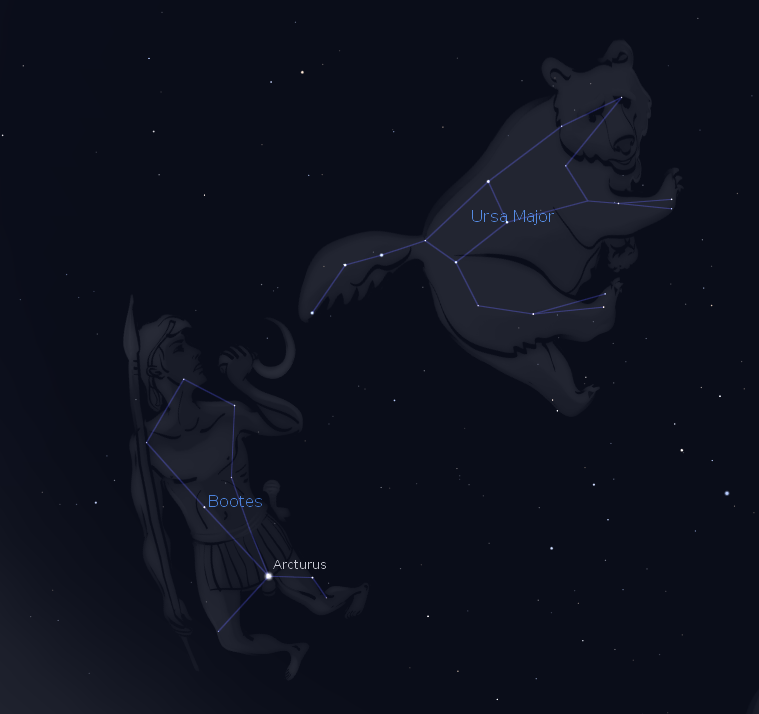
Boötes and Ursa Major aka Arcas chasing Callisto around the pole of the sky. Created using Stellarium.
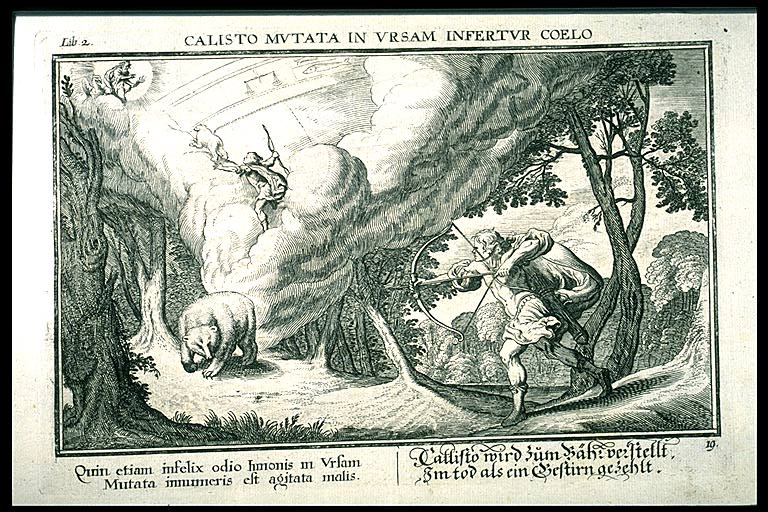
Arcas about to slay the bear by the 17th century artist Baur. Source: University of Virginia Electronic Text Center
04/18/2022 – Ephemeris – Arcturus, the fourth-brightest nighttime star*
This is Ephemeris for Monday, April 18th. Today the Sun will be up for 13 hours and 38 minutes, setting at 8:31, and it will rise tomorrow at 6:51. The Moon, 2 days past full, will rise at 11:17 this evening.
The fourth-brightest nighttime star* is now up in the east these evenings. It is Arcturus, a bright star with an orange hue. It can be found otherwise by finding the Big Dipper and tracing out and extending the curve of the handle and saying the phrase “Follow the arc of the handle to Arcturus”, to remember the name of the star and how to find it. Arcturus is about 37 light years from us and is moving quite rapidly across the sky, compared to most stars, but one would not notice it to the naked eye in one’s lifetime. Arcturus is slightly more massive than our Sun, and about 7 billion years old, and is entering its red giant stage of life after using all the hydrogen fuel in its core. Our Sun, being slightly less massive, will survive on hydrogen a bit longer.
The astronomical event times given are for the Traverse City/Interlochen area of Michigan (EDT, UT – 4 hours). They may be different for your location.
*Or 5th brightest star, depending on which list you look at. Arcturus and Vega, which is just above the horizon in the northeast at 10 pm, are nearly the same brightness, however Vega is white while Arcturus is orange, making brightness comparisons difficult visually. Stellarium, however, reports Vega is a slightly brighter magnitude 0.00, while Arcturus is 0.15. My older lists say Arcturus is the 4th brightest star. I’m an older guy, so I’m sticking with it.
Addendum
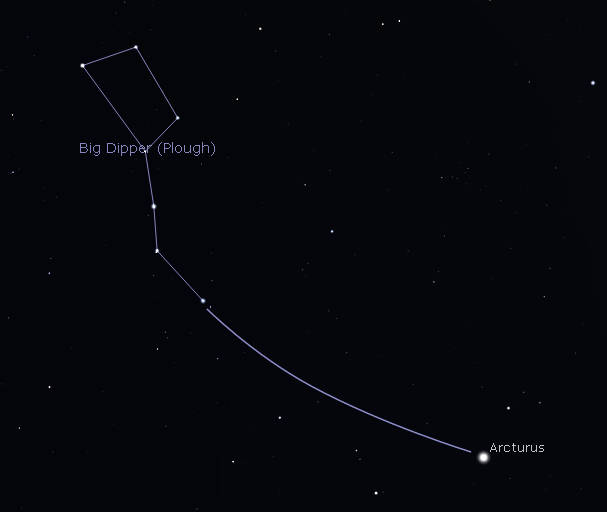
How to find Arcturus nearly a month into spring. Arcturus is in the east in the evening. The Big Dipper is high in the northeast standing on its handle. To find and remember the name of this star, simply follow the arc of the handle to Arcturus. Created using Stellarium and GIMP.
I’ll have more tidbits about this remarkable star throughout the spring and summer. Can’t wait? Search for Arcturus on this blog.
06/03/2021 – Ephemeris – Arcturus in the Bible.
This is Ephemeris for Thursday, June 3rd. Today the Sun will be up for 15 hours and 23 minutes, setting at 9:23, and it will rise tomorrow at 5:58. The Moon, 1 day past last quarter, will rise at 3:30 tomorrow morning.
Arcturus is a bright orangish star that’s high in the south at 11 pm. It’s also found by following the arc of the handle of the Big Dipper, which is the ridiculous tail of Ursa Major the Great Bear. It was considered the “Guardian of the Bear”, It is in the base of the kite shaped constellation of Boötes, the herdsman or the Bear Chaser. The latter story I recounted earlier this year. The name from the Greek has been confused with the bear itself. Thus, in the King James version of the Bible Arcturus, not the Bear, meaning the Great Bear, is mentioned in the 38th chapter of Job. This has been corrected in the newer versions I’ve seen. Arcturus has a rich history in literature, mostly by being confused with the Great Bear.
The astronomical event times given are for the Traverse City/Interlochen area of Michigan. They may be different for your location.
Addendum
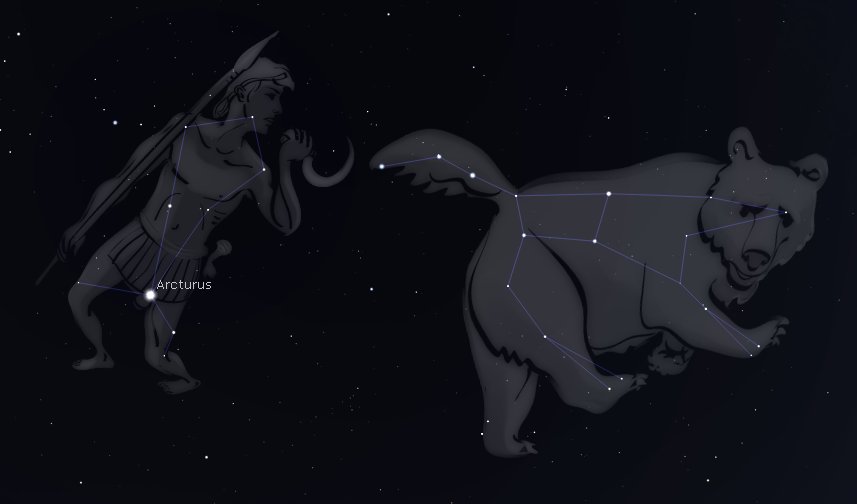
Arcturus, Boötes and Ursa Major can be seen by looking overhead while facing the west-southwest at 11 pm in early June. Created using Stellarium. Lines and figures not included.
Biblical translations
King James Version of Job 38:31-32
31 Canst thou bind the sweet influences of Pleiades,
   or loose the bands of Orion?

32 Canst thou bring forth Mazzaroth in his season?
   or canst thou guide Arcturus with his sons?
New International Version of Job 38:31-32
31
“Can you bind the chains of the Pleiades?
Can you loosen Orion’s belt?
32
Can you bring forth the constellations in their seasons
or lead out the Bear with its cubs?
No one is sure what a Mazzaroth is.
04/09/2021 – Ephemeris – Follow the arc to Arcturus
This is Bob Moler with Ephemeris for Friday, April 9th. Today the Sun will be up for 13 hours and 12 minutes, setting at 8:20, and it will rise tomorrow at 7:06. The Moon, 2 days before new, will rise at 6:57 tomorrow morning.
The fourth or fifth brightest night-time star, depending on whose list you see, is now up in the east in the evening. It is Arcturus, a bright star with an orange hue. It can be found otherwise by finding the Big Dipper and tracing out and extending the curve of the handle and “Follow the arc of the handle to Arcturus”, to remember the name of the star and how to find it. Arcturus is about 37 light years from us and is moving quite rapidly across the sky, compared to most stars, though one would not notice it to the naked eye in one’s lifetime. Arcturus is slightly more massive than our Sun, and about 7 billion years old, and is entering its red giant stage of life after using all the hydrogen fuel in its core. Our Sun, being slightly less massive will survive on hydrogen a bit longer.
The astronomical event times given are for the Traverse City/Interlochen area of Michigan. They may be different for your location.
Addendum
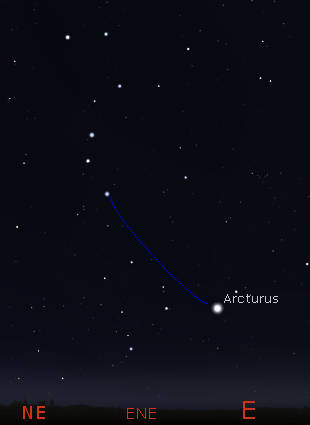
I’ll be talking more about Arcturus and the constellation it’s in Boötes the herdsman, a kite shaped constellation that’s currently laying on its side. He’s not herding, but chasing the Great Bear. But that’s another story.
03/11/2021 – Ephemeris – The Guardian of the Bear is rising
This is Ephemeris for Thursday, March 11th. Today the Sun will be up for 11 hours and 42 minutes, setting at 6:44, and it will rise tomorrow at 7:00. The Moon, 2 days before new, will rise at 7:09 tomorrow morning.
The brightest star of spring is Arcturus which will be visible by 9 pm low in the east-northeast. Arcturus can most famously be found by following the arc of the handle of the Big Dipper, which resides fairly high in the northeastern sky to it. “Follow the arc of the handle to Arcturus.” It’s the fourth or fifth brightest star in the sky, depending on the list. It was regarded as the “Guardian of the Bear”, meaning the Great Bear, Ursa Major, of which the Big Dipper is its hind end. Apparently it’s guarding its rear. Arcturus will stay in our evening sky until the end of summer and has a fascinating story of its own aside from its ancient mythology, which I’ll talk about when it’s higher in the sky. It’s located at the base of a kite shaped constellation called Boötes, which is now horizontal and too close to the horizon to be appreciated.
The astronomical event times given are for the Traverse City/Interlochen area of Michigan. They may be different for your location.
Addendum
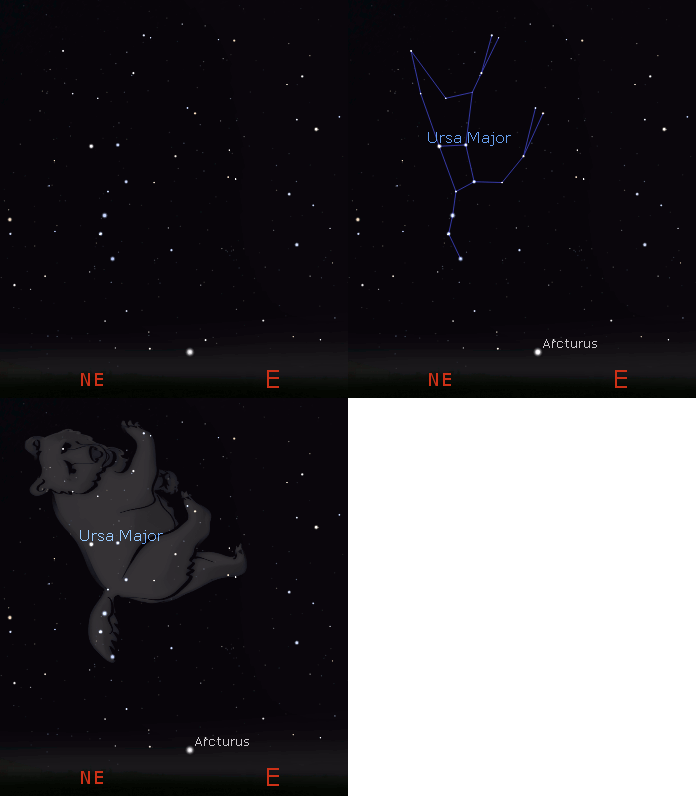
Arcturus rising finder animation for 9 pm tonight, March 11, 2021. Created using Stellarium and GIMP.
 Bob Moler's Ephemeris Blog