Archive
Ephemeris: 03/06/2026 – The Fisher announces the coming of the maple sugaring season
This is Ephemeris for Friday, March 6th. Today the Sun will be up for 11 hours and 25 minutes, setting at 6:37, and it will rise tomorrow at 7:09. The Moon, 3 days past full, will rise at 10:30 this evening.
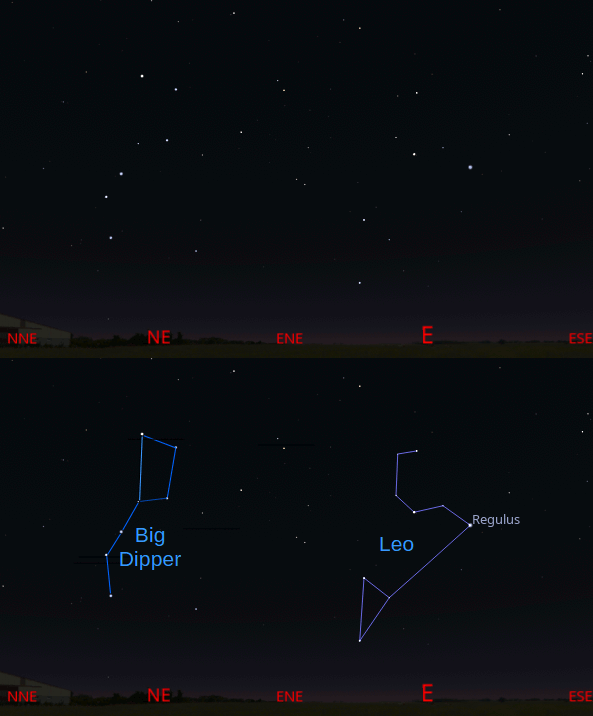
March is a month of transitions. The stars of the winter skies, that is Orion and his merry band of bright stars, move to the west as those of spring rise in the east. The Big Dipper is ascending in the northeastern sky, after lying low in the north during the long dark evenings in the heart of winter. The dipper is the hind end of the Great Bear, officially Ursa Major. The Anishinaabe peoples of the Great Lakes region saw the Big Dipper as the hind end and tail of a magical creature called Fisher, or in their language Ojiig, who brought summer to the Earth. Its position in the sky around the pole announces the seasons. The Fisher’s ascension high into the northeastern sky signals the start of the maple sugaring season later this month.
The astronomical event times given in this blog are for the Traverse City/Interlochen area of Michigan (Lat 44.7° N, Long 85.7° W; EST, UT – 5 hours) unless stated otherwise. Times will be different for other locations.
Addendum
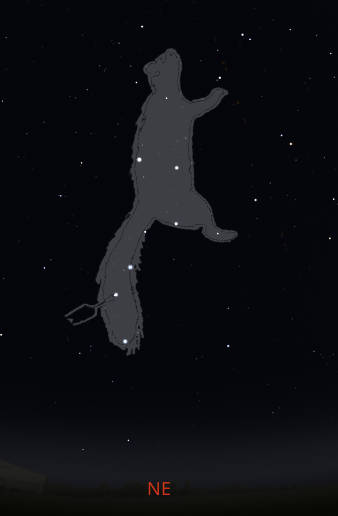
For the story of the Fisher, and how he got that arrow stuck in his tail, check out The story of the Fisher Star.
Ephemeris: 06/23/2025 – The Big Dipper is tearing itself apart
This is Ephemeris for Monday, June 23rd. Today the Sun will be up for 15 hours and 34 minutes, setting at 9:32, and it will rise tomorrow at 5:58. The Moon, 2 days before new, will rise at 4:33 tomorrow morning.
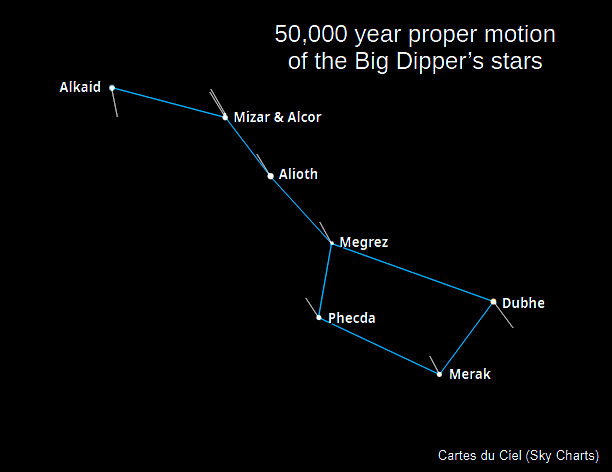
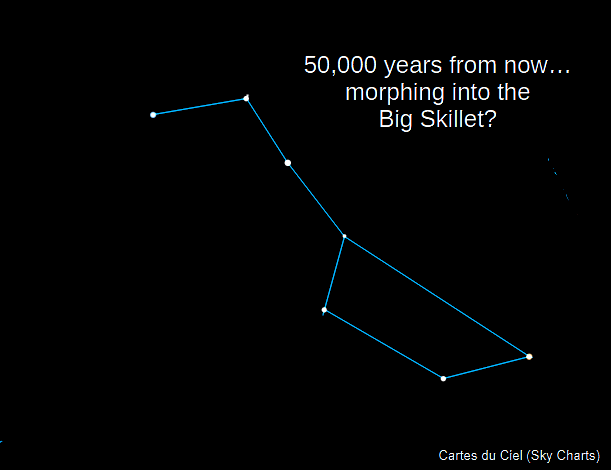
The usual impression is to think that the stars of a constellation are actually located close together. This is usually not true. The stars of a constellation can be at vastly different distances. The Big Dipper is different. The five stars, excepting the two end stars of the dipper and 12 other dimmer stars in the general area are of similar distance and have the same motion through space. The group is called the Ursa Major Moving Cluster or Ursa Major Association, and is moving about 9 miles per second relative to the solar system to the east. An association is a rather loose, sparse star cluster. This association lies about 80 light years away. If it were five and a half times farther away, it would be the same distance as the Pleiades.
The astronomical event times given in this blog are for the Traverse City/Interlochen area of Michigan (Lat 44.7° N, Long 85.7° W; EDT, UT – 4 hours) unless stated otherwise. Times will be different for other locations.
Addendum
Ephemeris: 06/17/2025 – Finding the naked-eye double star Mizar and Alcor
This is Ephemeris for Tuesday, June 17th. Today the Sun will be up for 15 hours and 34 minutes, setting at 9:31, and it will rise tomorrow at 5:56. The Moon, 1 day before last quarter, will rise at 1:36 tomorrow morning.
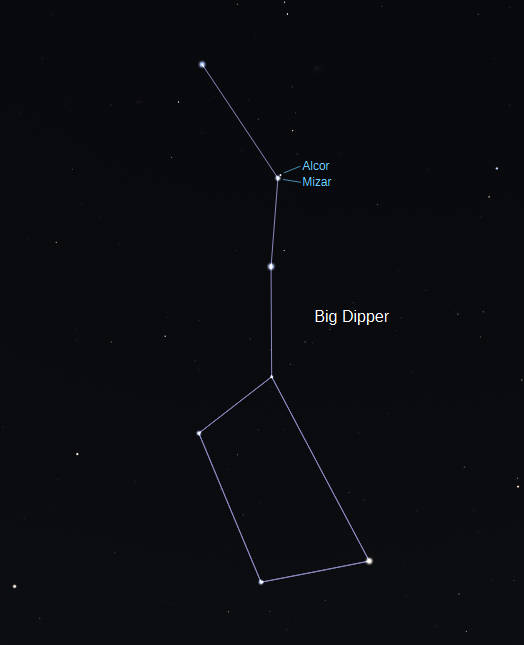
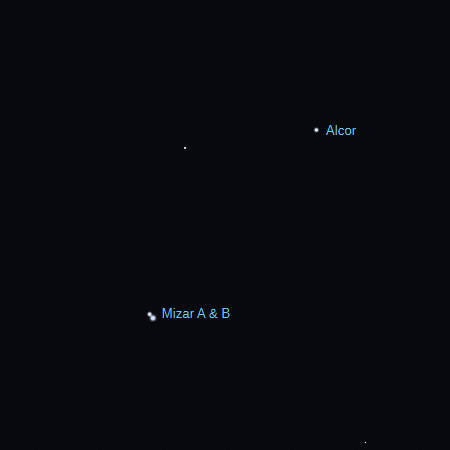
In tonight’s sky, the Big Dipper is high in the northwest hanging from its handle. In its handle is a star or two that are fascinating. It’s the star at the bend in the handle. It’s called Mizar. Next to it, for those with good eyesight, is a dimmer star, called Alcor. The name Mizar is from the Arabic, meaning apron or cover, while Alcor means the forgotten one. In ancient times the ability to actually see both stars was a test for good eyesight, especially for Arabic warriors. The pair is also known as the “Horse and the Rider”. Some Native American tribes saw the handle stars as hunters tracking the Great Bear, Ursa Major, of which the Big Dipper is a part, rather than its very unnatural tail. Dim Alcor became a hunting dog.
The astronomical event times given in this blog are for the Traverse City/Interlochen area of Michigan (Lat 44.7° N, Long 85.7° W; EDT, UT – 4 hours) unless stated otherwise. Times will be different for other locations.
Addendum
Ephemeris: 05/27/2025 – The many faces of the Big Dipper
This is Ephemeris for Tuesday, May 27th. Today the Sun will be up for 15 hours and 13 minutes, setting at 9:17, and it will rise tomorrow at 6:02. The Moon, 1 day past new, will set at 10:44 this evening.
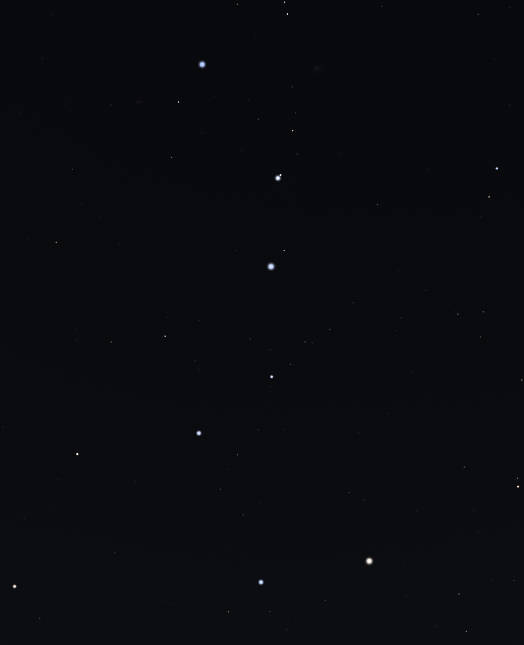
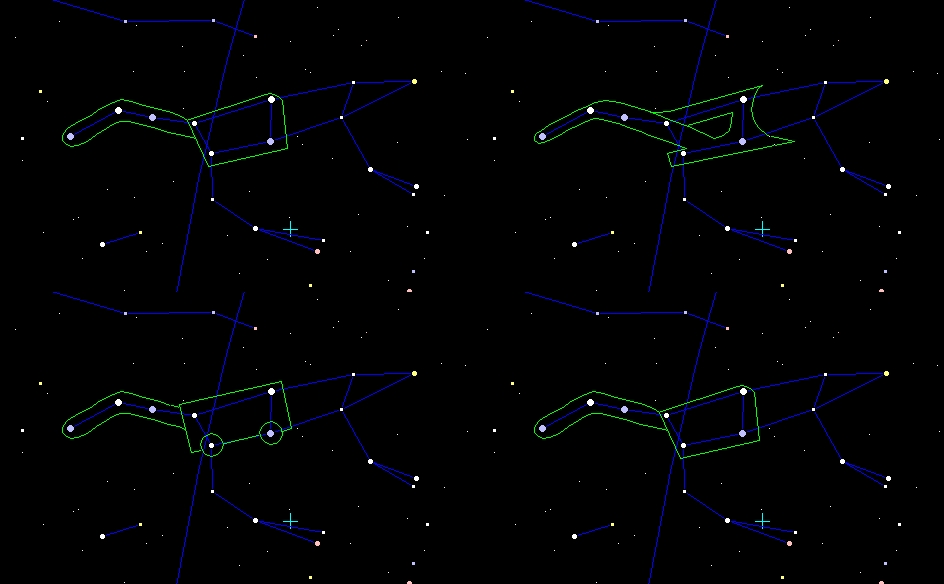
The Big Dipper is overhead, actually north of overhead this evening when it gets dark for us in Michigan, it’s seven stars shining brightly. The Big Dipper is not an actual constellation, recognized internationally. It’s part, the hind part, of Ursa Major, the great bear. The Big Dipper is an asterism or informal constellation. It is a distinctly North American constellation. For fugitive slaves, fleeing the southern states in the days before the Civil War, the Drinking Gourd, as they called it, showed the direction north to freedom. In England the dipper stars become the Plough (plow), or Charles’ Wain (Charlemagne’s Wagon). In France, known for culinary delights it is the saucepan, or the cleaver. Many cultures saw what was familiar to them in these seven bright stars.
The astronomical event times given in this blog are for the Traverse City/Interlochen area of Michigan (Lat 44.7° N, Long 85.7° W; EDT, UT – 4 hours) unless stated otherwise. Times will be different for other locations.
Addendum
Ephemeris: 04/21/2025 – Follow the spike to Spica
This is Ephemeris for Monday, April 21st. Today the Sun will be up for 13 hours and 47 minutes, setting at 8:35, and it will rise tomorrow at 6:46. The Moon, 1 day past last quarter, will rise at 4:25 tomorrow morning.
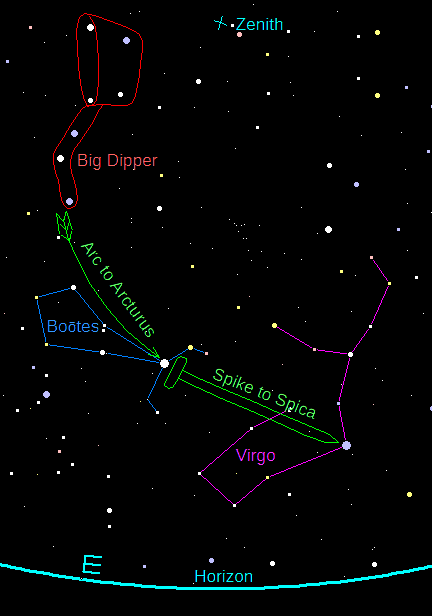
In the south-southeast at 10:30 p.m. is the bright star Spica, which can be found from all the way back overhead to the Big Dipper. Follow the arc of the handle of the Big Dipper to the bright star Arcturus below it in the east-southeast. Then straighten the curve of the arc to a straight spike which points to Spica, the brightest star in Virgo the virgin. Arcturus is much brighter than Spica and has an orange tint to Spica’s bluish hue. In fact, Spica is the bluest of the 21 first magnitude stars. That means that it has a really hot surface temperature. Actually, Spica is really two blue-white stars orbiting each other in 4 days. Spica is 250 light years away. It also was an important star to the ancient Greeks. One temple was built and aligned to its setting point. The astronomical event times given are for the Traverse City/Interlochen area of Michigan (EDT, UT – 4 hours). Times will be different for other locations.
The astronomical event times given are for the Traverse City/Interlochen area of Michigan (EDT, UT – 4 hours). Times will be different for other locations.
Addendum

Ephemeris: 04/14/2025 – Follow the arc to Arcturus
This is Ephemeris for Monday, April 14th. Today the Sun will be up for 13 hours and 27 minutes, setting at 8:27, and it will rise tomorrow at 6:57. The Moon, 2 days past full, will rise at 10:36 this evening.
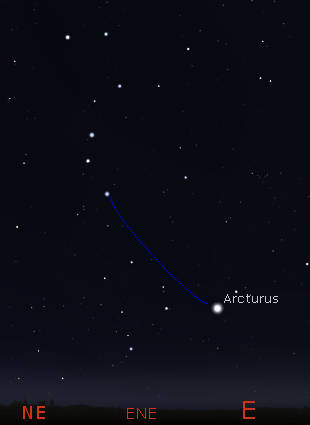
The fourth or fifth-brightest nighttime star, depending on whose list you see, is now up in the east in the evening. It is Arcturus, a bright star with an orange hue. It can be found otherwise by finding the Big Dipper and tracing out and extending the curve of the handle and “Follow the arc of the handle to Arcturus”, to remember the name of the star and how to find it. Arcturus is about 37 light years from us and is moving quite rapidly across the sky, compared to most stars, though one would not notice it to the naked eye in one’s lifetime. Arcturus is slightly more massive than our Sun, and about 7 billion years old, and is entering its red giant stage of life after using all the hydrogen fuel in its core. Our Sun, being slightly less massive will survive on hydrogen a bit longer.
The astronomical event times given are for the Traverse City/Interlochen area of Michigan (EDT, UT – 4 hours). Times will be different for other locations.
Addendum

Ephemeris: 03/31/2025 – Finding Leo, the celestial lion
This is Ephemeris for Monday, March 31st. Today the Sun will be up for 12 hours and 44 minutes, setting at 8:09, and it will rise tomorrow at 7:23. The Moon, 2 days past new, will set at 11:39 this evening.
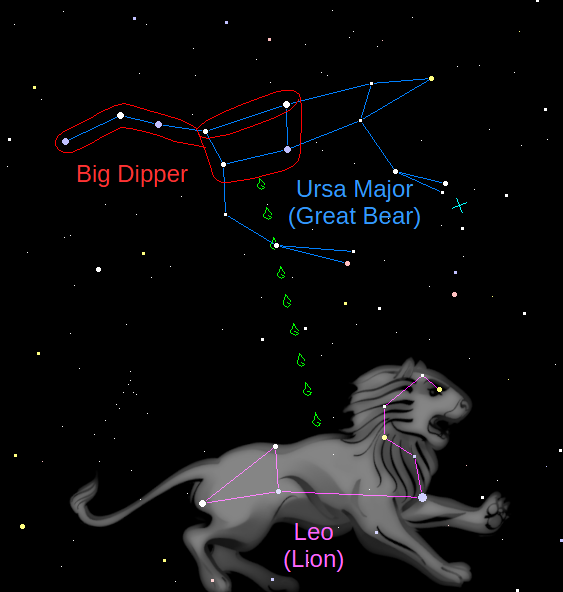
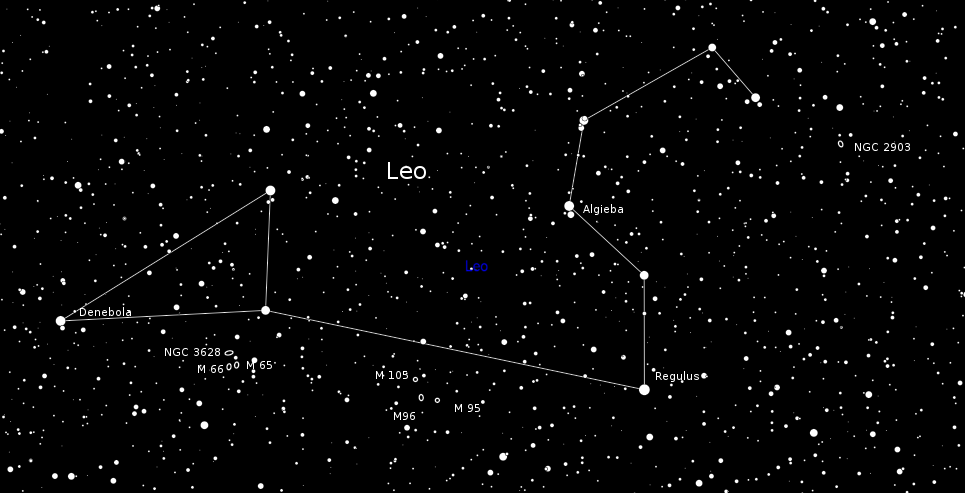
At 10 p.m. the spring constellation of Leo the lion will be high in the south-southeast. It can be found by locating the Big Dipper high in the northeast and imagining that a hole were drilled in the bowl to let the water leak out. It would drip on the back of this giant cat. The Lion is standing or lying facing westward. His head and mane are seen in the stars as a backwards question mark. This group of stars is also called the sickle. The bright star Regulus is at the bottom, the dot at the bottom of the question mark. A triangle of stars, to the left of Regulus, is the lion’s haunches. Leo contains some nice galaxies visible in moderate sized telescopes. The stars in Leo’s part of the sky are fewer than those in the winter sky.
The astronomical event times given are for the Traverse City/Interlochen area of Michigan (EDT, UT – 4 hours). Times will be different for other locations.
Addendum
Ephemeris: 02/27/2025 – The spring constellations are rising
This is Ephemeris for Thursday, February 27th. Today the Sun will be up for 11 hours and 5 minutes, setting at 6:28, and it will rise tomorrow at 7:21. The Moon is new today, and won’t be visible.
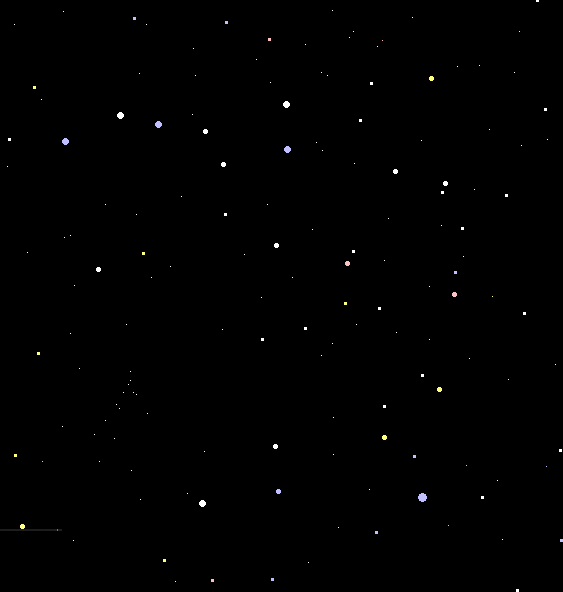
Today, we are exactly 3 weeks from the start of spring. The temperatures this week are rising. Even though at 8:00 PM Orion is high in the south, looking off to the east the spring constellation of Leo the lion has risen, and the Big Dipper is standing on its handle in the northeast. To the Anishinaabe native peoples of this area the Big Dipper is part of Ojiig, the Fisher, who brought summer to the Earth and when he’s in this position in the northeastern skies standing on his tail it is a sign of the spring to come and the start of the maple sugaring season. This next week or so is especially the best time, all year, to see the planet Mercury in the evening twilight due west, shortly after sunset. Its greatest separation from the Sun will come March 8th.
The astronomical event times given are for the Traverse City/Interlochen area of Michigan (EST, UT – 5 hours). Times will be different for other locations.
Addendum
Ephemeris: 02/17/2025 – Follow the Drinking Gourd
This is Ephemeris for President’s Day, Monday, February 17th. Today the Sun will be up for 10 hours and 35 minutes, setting at 6:14, and it will rise tomorrow at 7:38. The Moon, 3 days before last quarter, will rise at 11:47 this evening.
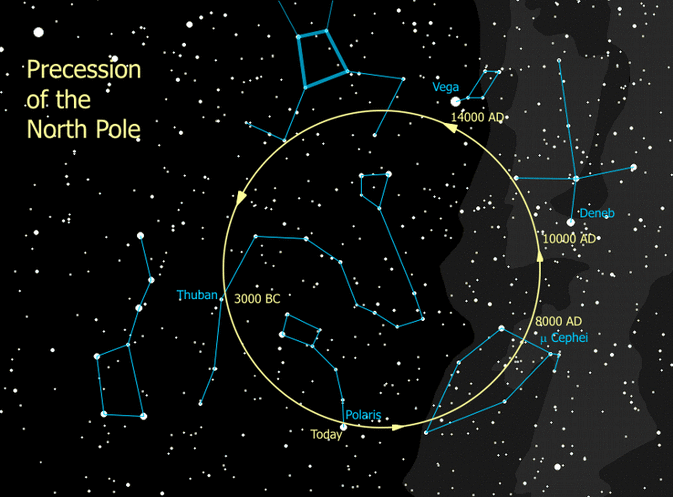
In the decades before the Civil War, runaway slaves would travel, often at night, northward from the slave states in the south to the northern free states and Canada over the metaphorical Underground Railroad following the Drinking Gourd, the Big Dipper as their compass. For millennia, the North Pole of the sky had been passing near the handle of the Big Dipper or Great Bear’s tail and now up to the star Polaris in the Little Dipper. As an amateur astronomer, who loves the dark, starlit skies, I’ve noticed that everyone is the same color in the dark! This year the Grand Traverse Astronomical Society will, once again, team with the Sleeping Bear Dunes for more Sun and star parties.
The astronomical event times given are for the Traverse City/Interlochen area of Michigan (EST, UT – 5 hours). Times will be different for other locations.
Addendum

Ephemeris: 06/10/2024 – Finding Draco the Dragon
This is Ephemeris for Monday, June 10th. Today the Sun will be up for 15 hours and 31 minutes, setting at 9:28, and it will rise tomorrow at 5:56. The Moon, halfway from new to first quarter, will set at 1:09 tomorrow morning.
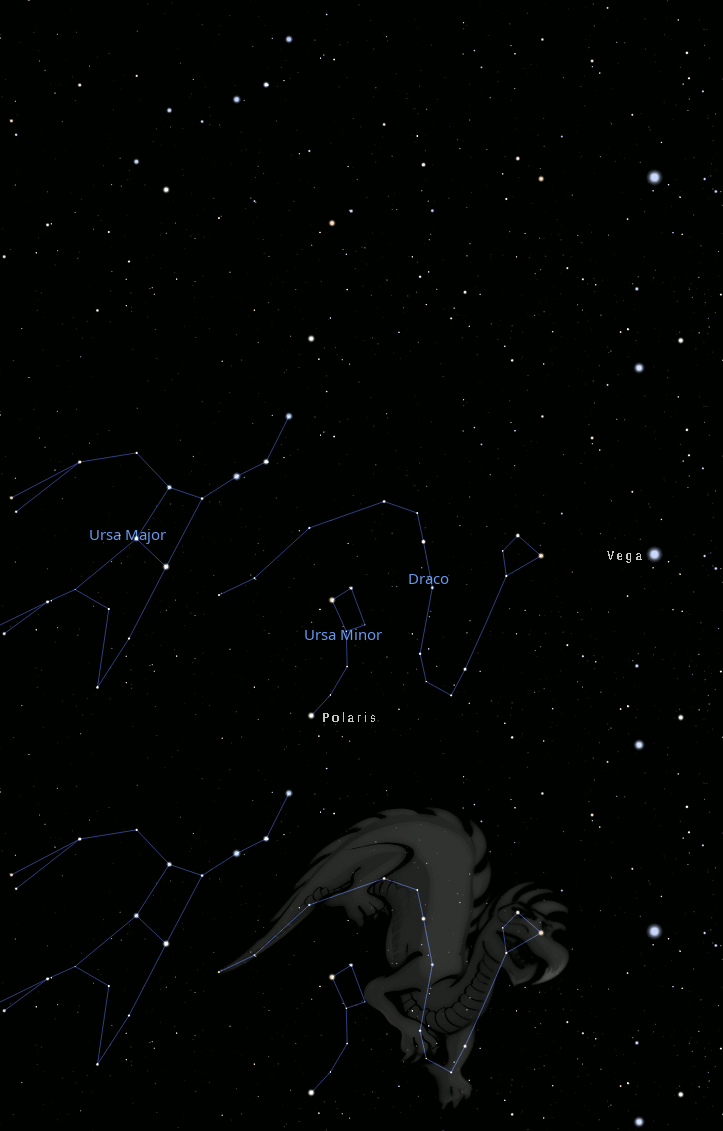
High in the northern sky at 11 p.m. lies the twisted constellation, that of Draco the dragon. This dragon is more like the snakelike Chinese dragon than the dinosaur-like dragon of European legend. I find it better to start at the tail of Draco, to trace him out in the stars. Draco’s tail starts, or ends, between the bowl of the Big Dipper and the Little Dipper high in the north-northwest. The Dragon is seen in a line of stars that extends parallel to the handle of the Big Dipper before curving around the bowl of the Little Dipper then bends back down to the level of Polaris in the north-northeast before turning toward the east. The head of Draco is an odd box of stars near the bright star Vega, high in the east. Though not made up of very bright stars, Draco has an easy shape to trace.
The astronomical event times given are for the Traverse City/Interlochen area of Michigan (EDT, UT–4 hours). They may be different for your location.
Addendum
 Bob Moler's Ephemeris Blog