Archive
Ephemeris: 12/12/2025 – The most active meteor shower of the year will peak Sunday morning
This is Ephemeris for Friday, December 12th. Today the Sun will be up for 8 hours and 51 minutes, setting at 5:02, and it will rise tomorrow at 8:11. The Moon, 1 day past last quarter, will rise at 1:58 tomorrow morning.
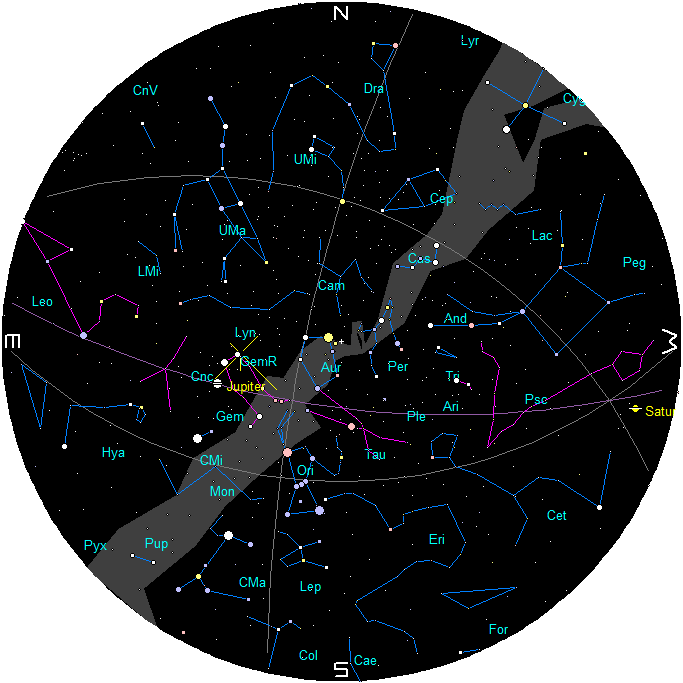
We are ramping up to the most active meteor shower of the year, the Geminid meteor shower. And it has been getting more active over the years. The peak will be about 2 AM Sunday morning with a 30% Moon rising shortly after 3. The radiant is the point in space where the meteors seem to come from, which is near the star Castor in the constellation Gemini from which the shower gets its name. Unlike most meteor showers, the Geminids will be visible all night. The meteors will be seen all over the sky, but they all can be traced back to the radiant. The body responsible for this meteor shower is an asteroid rather than a comet with the name 3200 Phaethon, which comes very close to the Sun.
The astronomical event times given in this blog are for the Traverse City/Interlochen area of Michigan (Lat 44.7° N, Long 85.7° W; EST, UT – 5 hours) unless stated otherwise. Times will be different for other locations.
Addendum
Ephemeris: 12/14/2023 – The Geminids will still be near peak tonight
This is Ephemeris for Thursday, December 14th. Today the Sun will be up for 8 hours and 50 minutes, setting at 5:02, and it will rise tomorrow at 8:13. The Moon, 2 days past new, will set at 6:31 this evening.
The Earth will pass through the heart of the Geminid meteoroid stream at about 2 this afternoon, so this evening is probably the best time to be able to see these meteors. They will appear to come from the northeastern to eastern sky in the evening. The Geminids are now the most active annual shower. This hasn’t always been the case, but the meteor rate has been increasing in recent years. Our problem with it is that it happens in December when, number one it’s cold, and number 2 it’s pretty cloudy. I must admit I’ve never seen a Geminid for those reasons. This year, it seems to have been clearer than previous years, so maybe we might get a glimpse at them. Stragglers of the Geminids can be seen until almost Christmas.
The astronomical event times given are for the Traverse City/Interlochen area of Michigan (EST, UT –5 hours). They may be different for your location.
Addendum
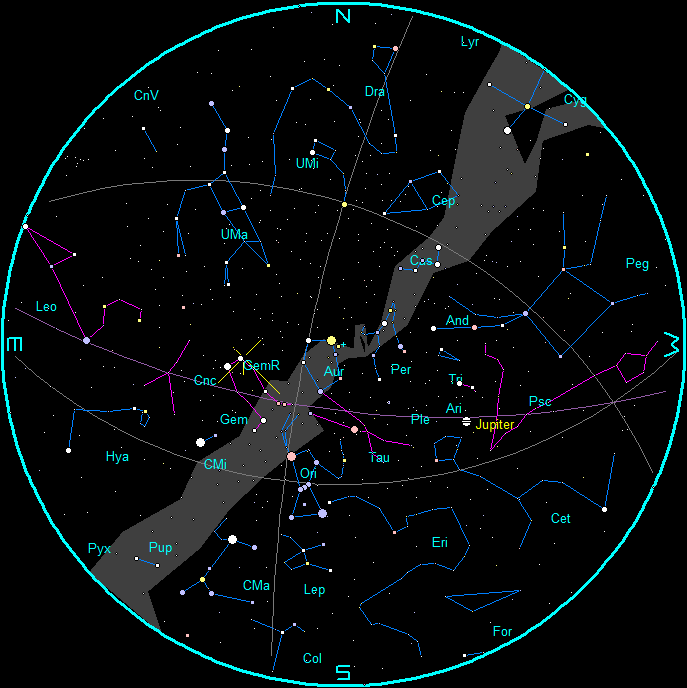
The Geminids are supposed to reach about 120 an hour at peak which would be at one or two in the morning which is about 12 hours after their actual peak. So that we won’t get the 120, but there’s an equal chance to spot them on the night of the 13/14th or 14/15th. Click or tap on the image to enlarge it. Image created using my Looking Up app.
Ephemeris: 12/12/2023 – The source of the Geminid meteor shower
This is Bob Moler with Ephemeris for Tuesday, December 12th. Today the Sun will be up for 8 hours and 51 minutes, setting at 5:02, and it will rise tomorrow at 8:11. The Moon is new today, and won’t be visible.
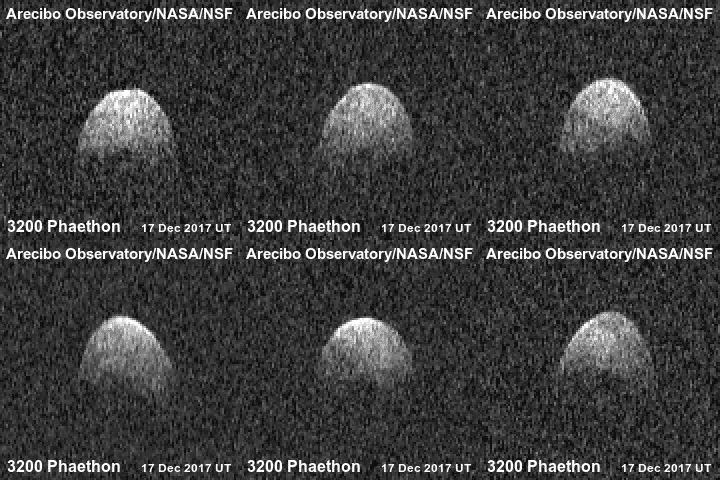
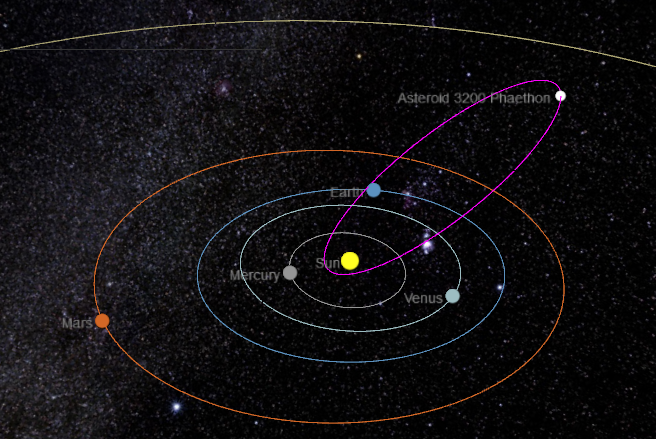
The Geminid meteor shower, which will peak this Thursday, is caused by a small body called 3200 Phaethon which looks like an asteroid but has the orbit of a comet, coming close to the Sun and back out to the asteroid belt. It’s probably a dead comet, with all the volatiles sublimated away leaving only the rocky bits. It is named Phaethon, because at the time it was the asteroid that came closest to the Sun. In Greek mythology Phaethon, the son of Helios the Sun god borrowed his father’s chariot that carried the Sun to take it out for a spin one day with disastrous results. The Geminid meteor shower was first recognized in 1862. The hourly rates of the Geminids have increased every year since then. The meteor stream has completely filled in the orbit of Phaethon, and they’re being pushed around by the gravitational effect of the planets and the pressure of sunlight.
The astronomical event times given are for the Traverse City/Interlochen area of Michigan (EST, UT –5 hours). They may be different for your location.
Addendum
Ephemeris: 12/11/2023 – This is the week of the Geminid meteor shower
This is Bob Moler with Ephemeris for Monday, December 11th. Today the Sun will be up for 8 hours and 52 minutes, setting at 5:02, and it will rise tomorrow at 8:10. The Moon, 1 day before new, will rise at 8:09 tomorrow morning.
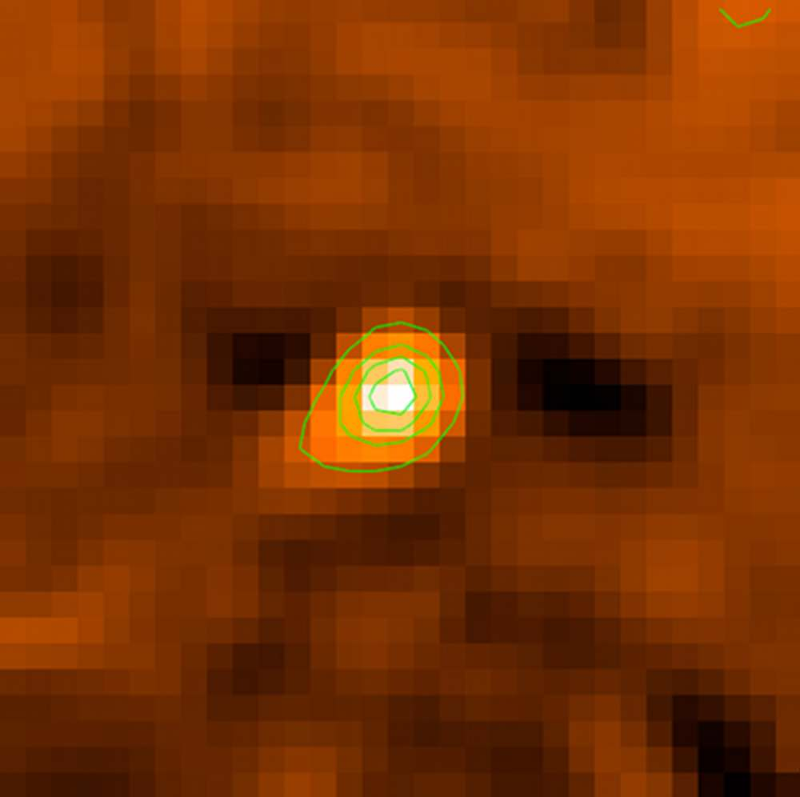
The Geminid meteor shower will reach its peak this week, well Thursday afternoon, actually. I’m talking about this early hoping that we might get a clear night this week to see them. The Geminids are the most active annual meteor shower. Up to 120 meteors may be visible per hour at its peak when it’s the radiant in Gemini is directly overhead which would be on Wednesday or Thursday mornings this week. At those times it will be about half a day before or after the peak, but with such a high number of meteors it should be a spectacular show anyway. The Geminids are produced by a rock comet called Phaethon, which was discovered in 1983 by the Infrared Astronomy Satellite, the first to perform an infrared survey of the entire sky.
The astronomical event times given are for the Traverse City/Interlochen area of Michigan (EST, UT –5 hours). They may be different for your location.
Addendum
The Geminids are supposed to reach about 120 an hour at peak which would be at one or two in the morning which is about 12 hours after their actual peak. So that we won’t get the 120, but there’s an equal chance to spot them on the night of the 13/14th or 14/15th. Click or tap on the image to enlarge it. Image created using my Looking Up app.
12/14/2022 – Ephemeris – Let’s see where the naked-eye planets have wandered off to this week, and a second look at the Geminid meteor shower near its peak
This is Ephemeris for Wednesday, December 14th. Today the Sun will be up for 8 hours and 50 minutes, setting at 5:02, and it will rise tomorrow at 8:13. The Moon, 2 days before last quarter, will rise at 11:10 this evening.
Let’s see where the naked-eye planets have wandered off to this week. The Geminid meteor shower will be near peak again this evening, and the Moon will not interfere with it until just after 11 pm. The meteors will appear all over the sky, but will be seen to come from the constellation Gemini, high above Orion the hunter. Mars, Jupiter and Saturn will be visible from east to south-southwest this evening by 6 pm. Jupiter is the brightest of the three in the southeast, while dimmer Saturn is in the south-southwest at that hour. Mars will end up being above and to the right of Orion later on this evening. They will be shifting westward throughout the evening. Saturn, the westernmost of the bright planets, will set around 9:41 this evening. Venus and Mercury are also in the evening sky, but too close to the setting Sun to be easily spotted.
The astronomical event times given are for the Traverse City/Interlochen area of Michigan (EST, UT –5 hours). They may be different for your location.
Addendum
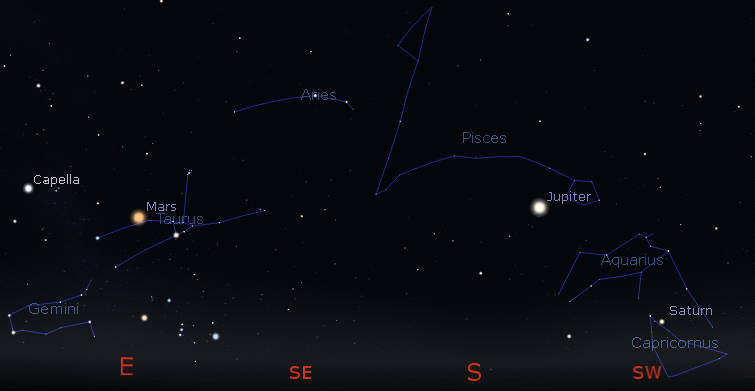
Evening planets at 8 pm in this panorama from east to southwest with the zodiacal constellations. Click on the image to enlarge. Created using Stellarium.
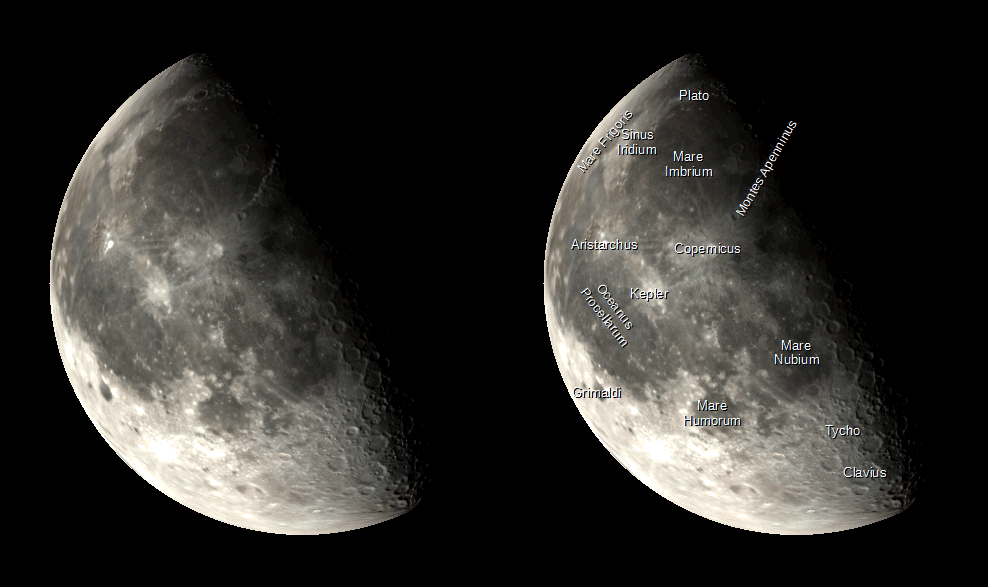
The waning gibbous Moon in as it might look like in binoculars or a telescope at low power at 6 am, Thursday, December 15, 2022. Created using Stellarium, LibreOffice Draw and GIMP.
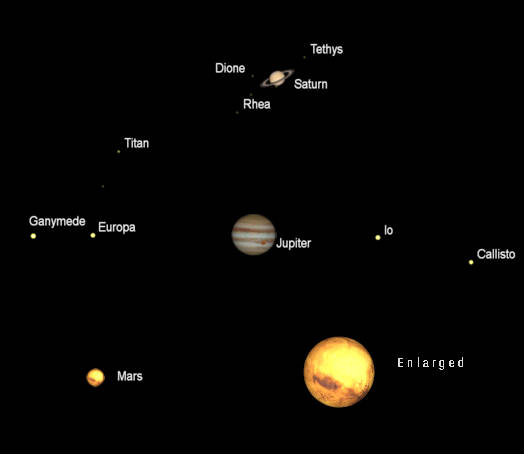
Telescopic views of Saturn Jupiter and Mars (north up) as they would be seen in a small telescope, with the same magnification. The image of Mars doesn’t show it, but the white north polar cap will appear at the top or north limb of Mars. The planets are shown at 8 pm tonight, December 14, 2022. Apparent diameters: Saturn 16.09″, its rings 37.49″; Jupiter 41.58″. Mars 16.61″. Mars’ distance is 52.4 million miles (84.4 million kilometers). The ” symbol means seconds of arc (1/3600th of a degree.) Click on the image to enlarge it. Created using Cartes du Ciel (Sky Charts).
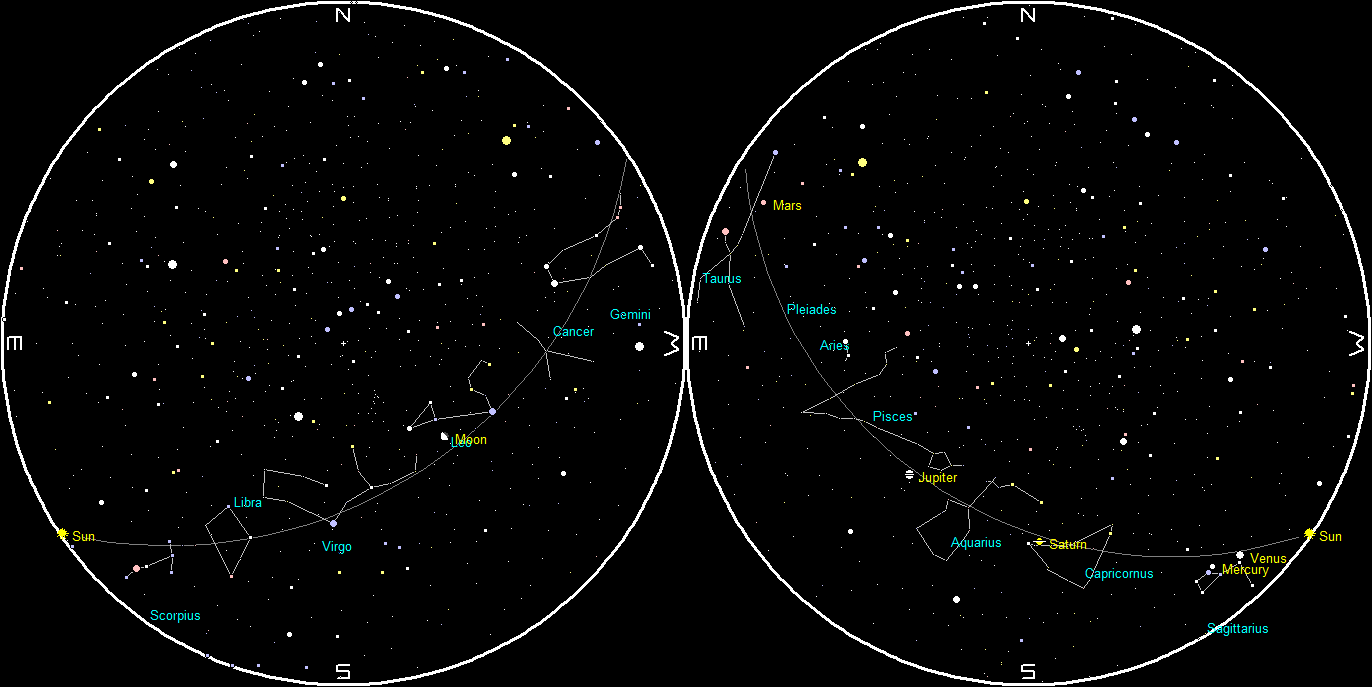
The naked-eye planets and the Moon at sunset and sunrise on a single night, starting with sunset on the right on December 14, 2022. The night ends on the left with sunrise on the 15th. Click on the image to enlarge it. Created using my LookingUp app and GIMP.
12/13/2019 – Ephemeris – Tonight is the first night that straddles the peak of the Geminid meteor shower
Ephemeris for Friday, December 13th. Today the Sun will be up for 8 hours and 50 minutes, setting at 5:02, and it will rise tomorrow at 8:12. The Moon, 1 day past full, will rise at 6:33 this evening.
Tonight and tomorrow nights will straddle the peak of the Geminid meteor shower. It is the best meteor shower of the year and it is getting more active over the years. The Moon will interfere with all but the brightest meteors. The radiant is the point in space where the meteors seem to come from, which is near the star Castor in the constellation Gemini from which the shower gets its name. The meteors will be seen all over the sky, but they all can be traced back to the radiant. The body responsible for this meteor shower is an asteroid rather than a comet with the name 3200 Phaethon. It comes very close to the sun, So it may shed bits of itself due to heat stress. I suppose I can’t resist this: That’s how the asteroid crumbles.
The times given are for the Traverse City/Interlochen area of Michigan. They may be different for your location.
Addendum
3200 Phaethon a rock comet showing a tail as it nears the Sun. Credit NASA/STEREO
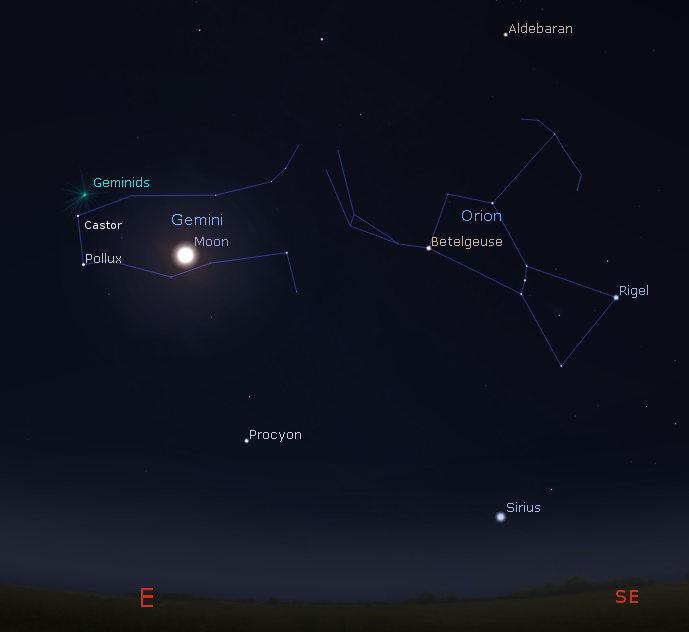
Eastern sky for Geminids at 10 p.m. December 13, 2019. On the 14th the Moon will be the same distance from Pollux but below it. Remember that the Geminid meteors will be seen all over the sky. It might help to hide the moon behind a building so as to better see the brighter meteors. Created using Stellarium.
Orbit of 3200 Phaethon with the Earth and Phaethon at 10:02 p.m. December 12, 2019. (03:02 UT Dec 13) Credit TheSkyLive.com.
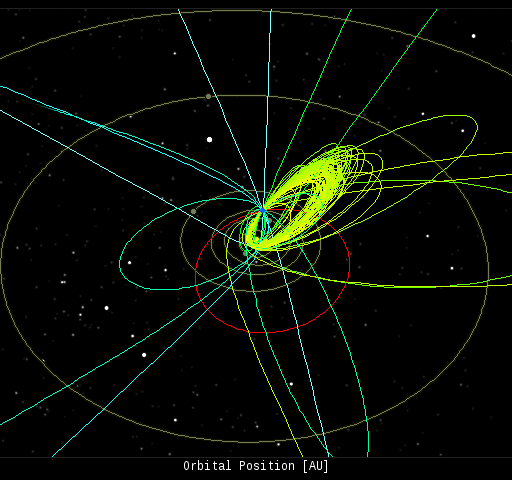
Orbits of Fireballs on the night of December 13-14 as recorded by NASA’s All Sky Cameras six years ago. The preponderance of fireballs (bright meteors) are Geminids. These are published daily on Spaceweather.com. Credit: NASA and Spaceweather.com.
Eastern sky for Geminids at 10 p.m. December 13, 2019. On the 14th the Moon will be the same distance from Pollux but below it. Remember that the Geminid meteors will be seen all over the sky. It might help to hide the moon behind a building so as to better see the brighter meteors. Created using Stellarium.
From the International Meteor Organization: Observing proposal: Geminids and Full Moon
12/13/2018 – Ephemeris – The Geminid meteors will reach their peak numbers overnight
Ephemeris for Thursday, December 13th. The Sun will rise at 8:11. It’ll be up for 8 hours and 50 minutes, setting at 5:02. The Moon, 2 days before first quarter, will set at 11:05 this evening.
Tonight through the morning hours we will have the chance to see the peak of the Geminid meteor shower. The meteors will be most numerous tomorrow morning. This shower is currently besting the Perseid meteor shower of August with a predicted 120 meteors per hour at the peak. The problems for us in viewing this fabulous shower are the cold temperatures and usually cloudy skies. However the Moon will be a problem until it sets after 11 p.m. The source of the Geminids was discovered in 1983. It is a burnt out comet with the asteroid designation (3200) Phaethon which swoops down to only 13 million miles of the Sun, but last year passed only 6.4 million miles from Earth. The Geminids were first seen in 1862.
The times given are for the Traverse City/Interlochen area of Michigan. They may be different for your location.
Addendum
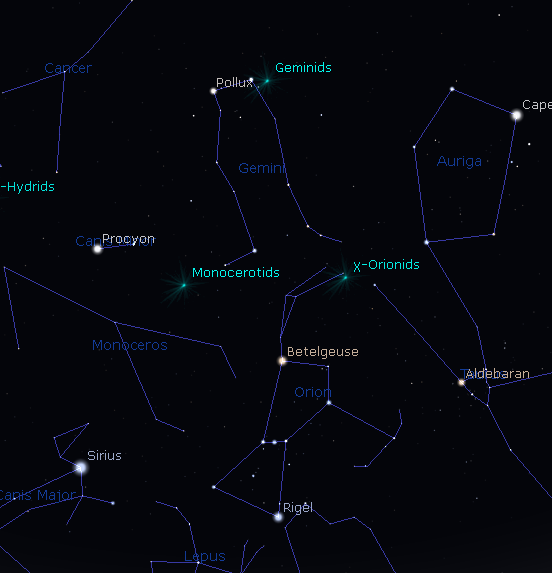
The area of the Geminid meteor shower radiant near the star Castor at 4 a.m. December 14, 2018. There are other very minor radiants that provide only a handful of meteors per hour. The Geminids will provide up to 120 meteors per hour. Created using Stellarium.
12/12/2017 – Ephemeris – The Geminids are coming!
Ephemeris for Tuesday, December 12th. The Sun will rise at 8:10. It’ll be up for 8 hours and 52 minutes, setting at 5:02. The Moon, 2 days past last quarter, will rise at 3:25 tomorrow morning.
Tomorrow evening through Thursday morning we will have the chance to see the peak of the Geminid meteor shower. Some of its members can be seen tonight, but the meteors will be most numerous on the morning of Thursday the 14th. This shower is currently besting the Perseid meteor shower of August with a predicted 120 meteors per hour Thursday morning. The problems for us in viewing this fabulous shower are the cold temperatures and usually cloudy skies. However the Moon won’t be a problem. The source of the Geminids was discovered in 1983. It is a burnt out comet with the asteroid designation 3200 Phaethon which swoops down to only 13 million miles of the Sun, but will is near Earth this time around. The Geminids were first seen in 1862
The times given are for the Traverse City/Interlochen area of Michigan. They may be different for your location.
Addendum
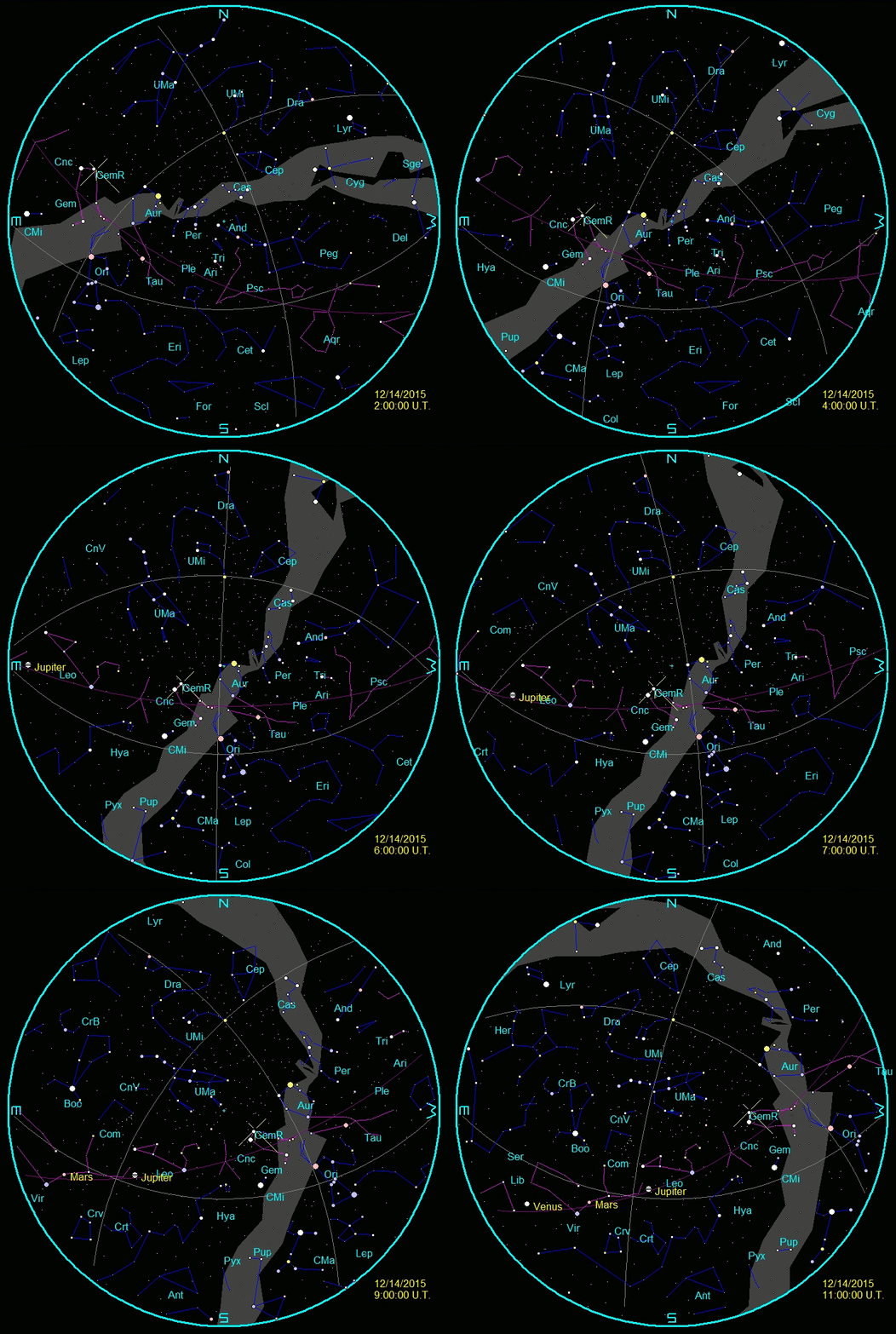
All sky view one hour intervals for The Geminid meteor shower the night of December 13-14, 2015.. Note the radiant “GemR”. Created with my LookingUp program and GIMP.
This is an animation from two years ago, so ignore the planet positions. Times are in Universal time for the Grand Traverse Region and Eastern Time. So subtract 5 hours from UT. The sequence starts at 9 p.m. EST and ends at 6 a.m.
12/13/2016 – Ephemeris – The Geminid meteor shower will reach its peak tonight
Ephemeris for Tuesday, December 13th. The Sun will rise at 8:12. It’ll be up for 8 hours and 50 minutes, setting at 5:02. The Moon, at full today, will rise at 5:18 this evening.
The great meteor shower of December will reach its peak 7 p.m. The shower is called the Geminids because they seem to come from the constellation of Gemini the twins. Unlike most meteor showers which have their highest numbers just before dawn, the normal highest numbers of meteors, when the radiant point is highest in the sky is between 2 and 3 a.m. The radiant point, near the star Castor, the higher of the twin’s namesake stars will rise before 8 p.m. tonight. In the last few years the Geminids have bested the Perseid shower of August for numbers of meteors. The Geminids are caused by bits of rock that orbit the sun in a rather small but elongated orbit. Unfortunately this year the Moon is full, so all but the brightest meteors will be drowned out by moonlight.
Times are for the Traverse City/Interlochen area of Michigan. They may be different for your location.
Addendum
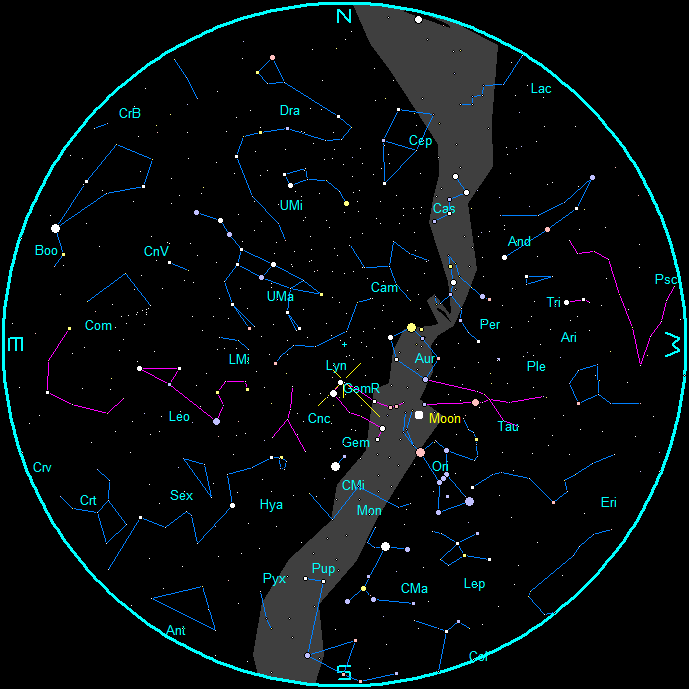
The entire sky at the time the radiant (GemR) is at its highest. That’s actually 2:37 a.m. December 14th, 2016. The radiant’s altitude is 78º. Also shown is the Moon’s position. Created using my LookingUp program. Click on the image to enlarge.
12/14/2015 – Ephemeris – The Geminids reach peak today – See ’em morning or evening
Ephemeris for Monday, December 14th. The Sun will rise at 8:12. It’ll be up for 8 hours and 50 minutes, setting at 5:02. The Moon, 3 days past new, will set at 8:42 this evening.
The Geminid meteor shower is ongoing right now. The peak is expected to be near 1 p.m. today. So the numbers seen this morning while it’s still dark should be about the same as will be seen this evening. Not peak numbers, but it should be a good show nonetheless if it’s clear tonight. The radiant is in the constellation of Gemini above Orion. The source of this shower is an asteroid rather than a comet. It may be a burnt out comet which lost all its frozen gasses. It has a definite highly elliptical orbit of a comet and comes very close to the Sun, where one of the STEREO Sun monitoring spacecraft saw it ejecting a cloud of dust. It may be classed as a rock comet for that reason, blurring the line between comets and asteroids.
Times are for the Traverse City/Interlochen area of Michigan. They may be different for your location.
Addendum
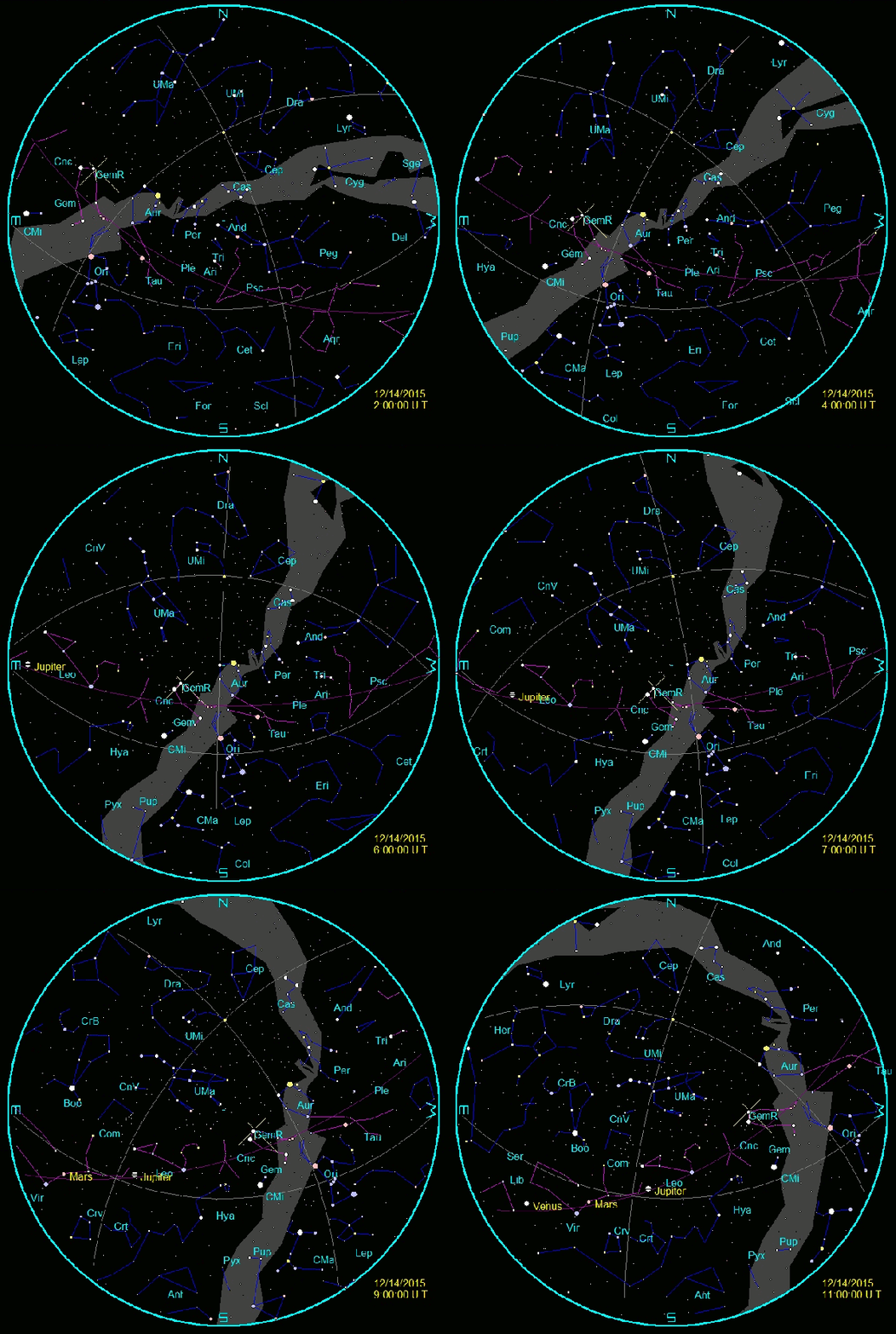
All Sky view one hour intervals for The Geminid meteor shower the night of December 13-14, 2015.. Note the radiant “GemR”. Created with my LookingUp program and GIMP.
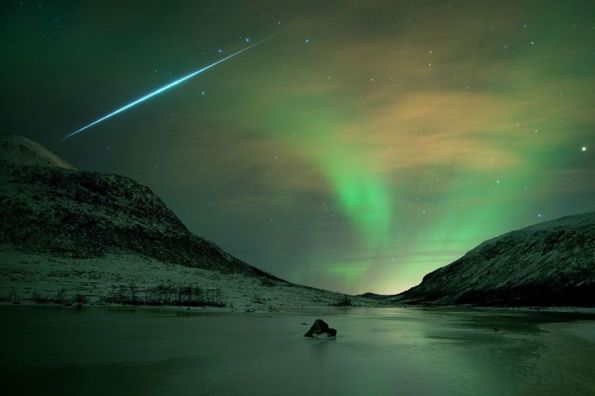
A Geminid and the aurora borealis from Norway. Found this in a NASA blog (link below) uncredited). However I was able to find the credit: Image Credit & Copyright: Bjørnar G. Hansen.
The image above was also an Astronomy Picture of the Day. Here’s a link to the NASA blog dated December 9, 2015 about live tweeting the Geminids.
 Bob Moler's Ephemeris Blog