Archive
Ephemeris: 05/26/2025 – About globular star clusters
This is Ephemeris for Memorial Day, Monday, May 26th. Today the Sun will be up for 15 hours and 12 minutes, setting at 9:16, and it will rise tomorrow at 6:03. The Moon is new today, and won’t be visible.
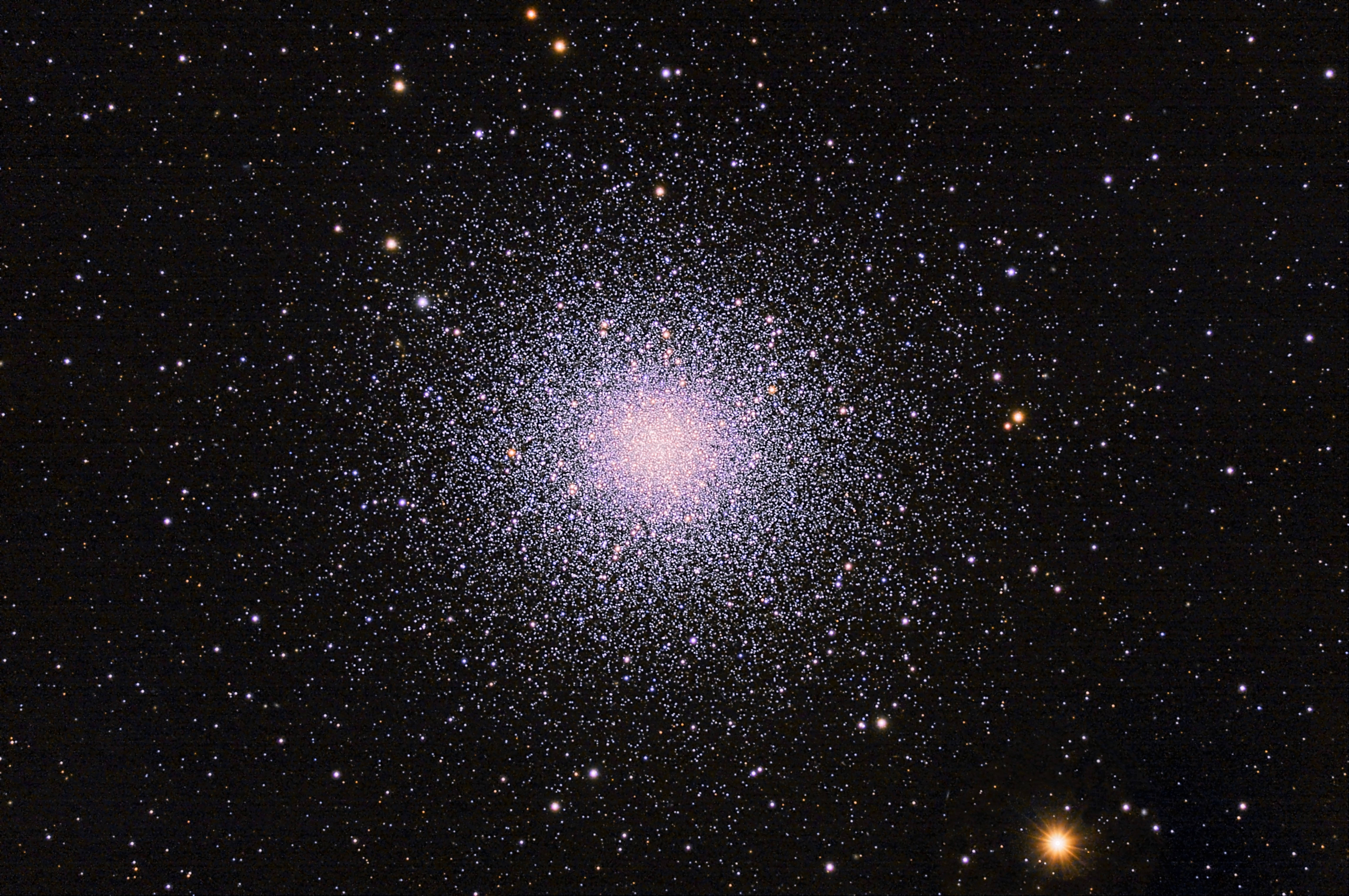
The constellation Hercules, out in the evening sky now, contains the brightest globular star cluster in the northern sky. A globular star cluster, about 25 thousand light years away. It’s an ancient assemblage of hundreds of thousands to millions of stars in a big ball. About 150 of these star clusters, that we know of, exist in the Milky Way. They form a spherical distribution around the Milky Way concentrated towards the center. The ages of these clusters runs to over 10 billion years. It is thought that they formed first out of the gas of the Milky Way and so did not participate in the collapse of the gas into the disk of the Milky Way we know today from which later stars were formed. We see them in other galaxies.
The astronomical event times given in this blog are for the Traverse City/Interlochen area of Michigan (Lat 44.7° N, Long 85.7° W; EDT, UT – 4 hours) unless stated otherwise. Times will be different for other locations.
Addendum
07/07/223 – Ephemeris – GTAS meeting and presentation: Observing the summer skies with the naked-eye
This is Ephemeris for Friday, July 7th. Today the Sun will be up for 15 hours and 25 minutes, setting at 9:30, and it will rise tomorrow at 6:05. The Moon, 2 days before last quarter, will rise at 12:38 tomorrow morning.
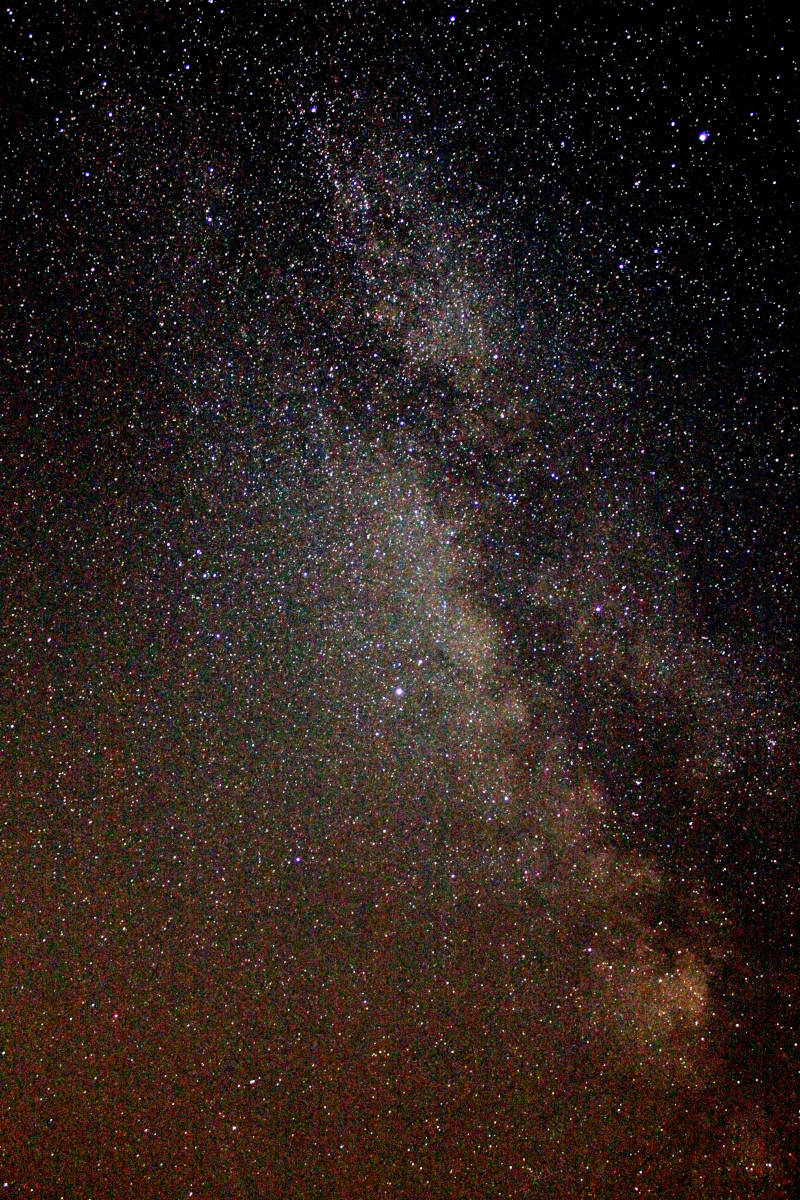
Viewing Summer skies with just your Eyes will be the presentation by Robert Carroll at tonight’s meeting of the Grand Traverse Astronomical Society at Northwestern Michigan College’s Rogers Observatory at 9 pm. Bob is one of the charter members of the society. He will show artist’s interpretation of the heavens. Then, focusing on Hercules, the Summer Triangle, and the Milky Way. Hopefully, he “will inspire young parents, and their children, to go OUTSIDE, leave the screens and tablets behind, and LOOK UP to see the night sky.” There are two ways to attend: In person at the observatory, south of Traverse City on Birmley Road, or via Zoom with a link provided by the society’s website gtastro.org just prior to the meeting.
The astronomical event times given are for the Traverse City/Interlochen area of Michigan (EDT, UT –4 hours). They may be different for your location.
Addendum
06/12/2023 – Ephemeris -Finding Hercules among the stars
This is Ephemeris for Monday, June 12th. Today the Sun will be up for 15 hours and 31 minutes, setting at 9:28, and it will rise tomorrow at 5:56. The Moon, 2 days past last quarter, will rise at 3:13 tomorrow morning.
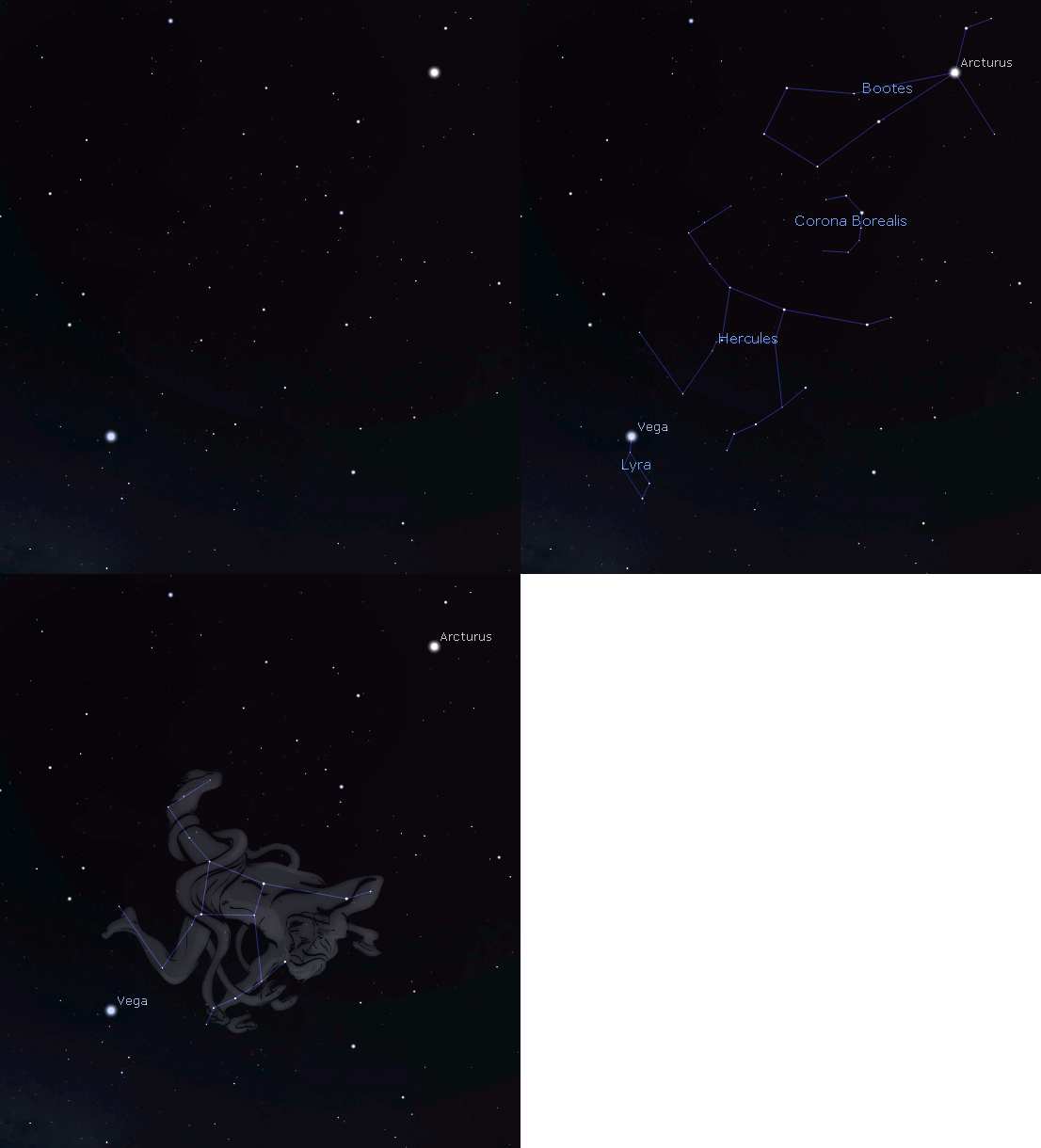
Orion, the hard luck mythical Greek hunter, gets a splashy constellation in the winter sky, but the greatest hero of all, Hercules, gets a dim group of stars on the border between the spring and summer stars. At 11 p.m. Hercules is high in the east-southeast. It is located above and right of the bright star Vega, in the east. Hercules’ central feature is a keystone shaped box of stars, called, of course, the Keystone of Hercules tilted to the left, which represents the old boy’s shorts. From the top and left corner stars extend lines of stars that are his legs, from the bottom and right stars, the rest of his torso and arms extend. So in one final indignity, he’s upside down in our sky. For those with a telescope, Hercules contains the beautiful globular star cluster Messier 13.
The astronomical event times given are for the Traverse City/Interlochen area of Michigan (EDT, UT –4 hours). They may be different for your location.
Addendum

07/05/2016 – Ephemeris – Poor Hercules
Ephemeris for Tuesday, July 5th. Today the Sun will be up for 15 hours and 26 minutes, setting at 9:30, and it will rise tomorrow at 6:04. The Moon, 1 day past new, will set at 10:17 this evening.
Orion, an obscure Greek hero gets a splashy constellation in the winter sky, but the greatest hero of all, Hercules, gets a dim group of stars on the border between the spring and summer stars. At 11 p.m. Hercules is high and nearly overhead. It’s located above and right of the bright star, Vega, high in the east. Hercules’ central feature is a keystone shaped box of stars, called the Keystone, which represents the old boy’s shorts. From each top corner extend lines of stars that are his legs, from the bottom stars, the rest of his torso and arms extend. So in one final indignity he’s upside down in our sky. Some see him crouched down, club upraised holding the multi-headed Hydra about to throttle it.
Times are for the Traverse City/Interlochen area of Michigan. They may be different for your location.
Addendum
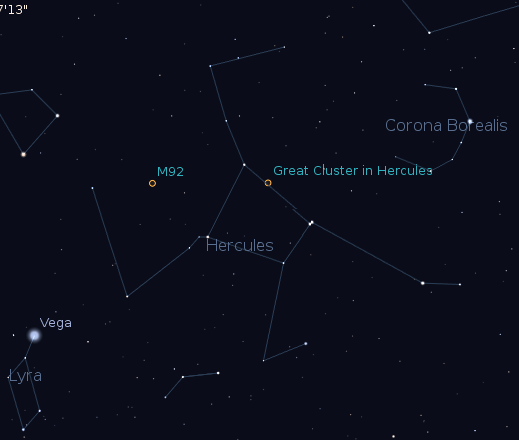
The constellation Hercules and his neighbors. Created with Stellarium.
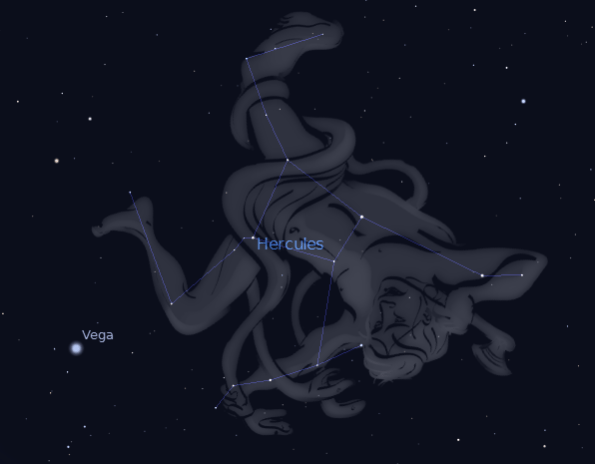
Hercules, visualized by Johan Meuris of the Stellarium development team.
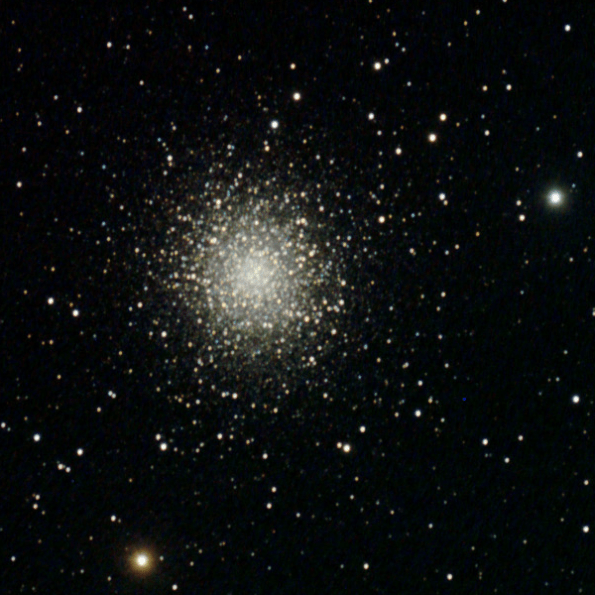
M13, the Great Globular Star Cluster in Hercules. Credit: Scott Anttila.
06/08/2012 – Ephemeris – The constellation of Hercules
Ephemeris for Friday, June 8th. Today the sun will be up for 15 hours and 28 minutes, setting at 9:26. The moon, 3 days before last quarter, will rise at 12:38 tomorrow morning. Tomorrow the sun will rise at 5:57.
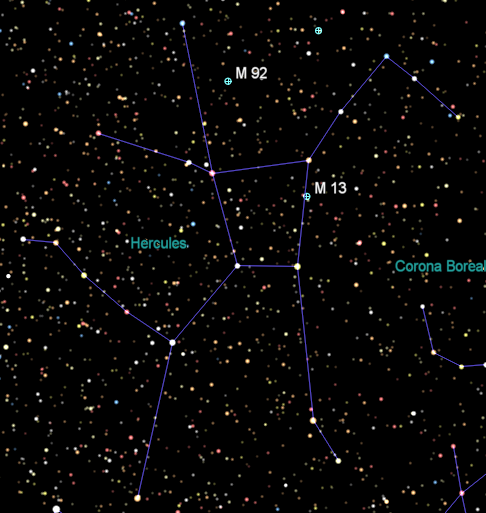
High in the east is the dim and reasonably large constellation of Hercules. Here is the greatest of the Greek heroes, dim and upside down even, while the comparative nobody Orion gets a great constellation to his name in the winter. Anyway, Hercules can be spotted by the distinctive keystone shape of stars that mark the old boy’s kilt. Stars connected to the four corners show his body and limbs. Check a constellation book for where all the stars lead to. On the west side of the keystone can be spotted with binoculars a fuzzy star. Investigations with larger and larger telescopes will reveal a huge assembly of stars called a globular star cluster. There’s perhaps a million stars there. The finest in the northern heavens.
Times are for the Traverse City/Interlochen area of Michigan. They may be different for your location.
Addendum
The constellation Hercules and his neighbors. Created with Stellarium.
M92 is also a globular star cluster but more distant. The Great Globular Cluster in Hercules is also designated M13.
 Bob Moler's Ephemeris Blog