Archive
08/21/2019 – Ephemeris – Where are all the bright planets?
Ephemeris for Wednesday, August 21st. Today the Sun will be up for 13 hours and 47 minutes, setting at 8:39, and it will rise tomorrow at 6:53. The Moon, 2 days before last quarter, will rise at 11:41 this evening.
Let’s look at the planets for this week. Mars and Venus are too close to the Sun to be seen. Mars is still on the evening or east side of the Sun, as is Venus which passed superior conjunction with the Sun a week ago. Bright Jupiter will be in the southern sky as it gets dark. With steadily held binoculars a few of the 4 largest satellites of Jupiter can be seen. Four of Jupiter’s largest satellites can be spotted in telescopes tonight. Jupiter will set at 1:04 a.m. Saturn, the ringed planet, will be in the southern sky in the evening. It will pass the meridian, due south at 10:45 p.m. and will set at 3:12 a.m. Mercury will rise at 5:44 a.m. in the east-northeast.
The times given are for the Traverse City/Interlochen area of Michigan. They may be different for your location.
Addendum
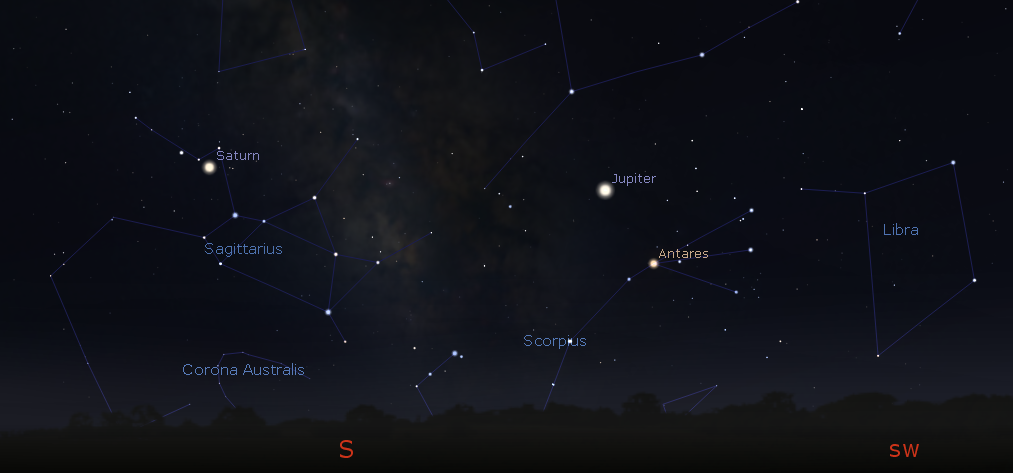
Jupiter, Saturn and the Moon with the bright stars of the southern summer sky at 10 p.m. August 21, 2019. Click on the image to enlarge. Created using Stellarium.
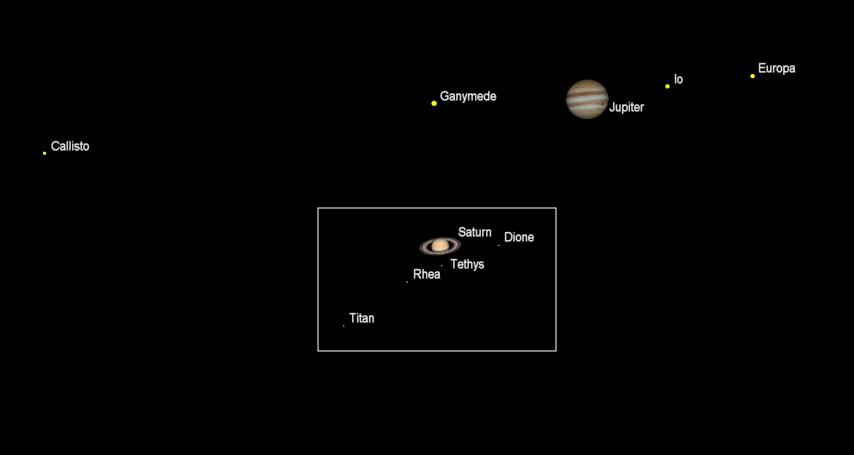
Telescopic views of Jupiter and Saturn with the same magnification at 10 p.m.August 21, 2019. Created using Cartes du Ciel (Sky Charts).
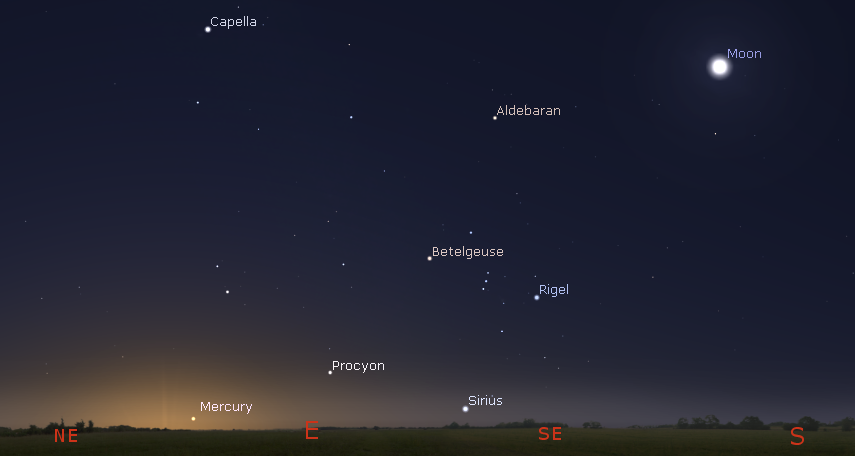
The Moon, Mercury and bright stars in the morning twilight at 6 a.m. August 22, 2019. Created using Stellarium.
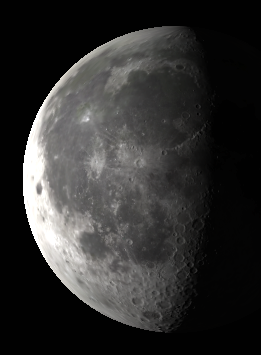
The waning gibbous Moon at 6 a.m. August 22, 2019. Created using Stellarium.
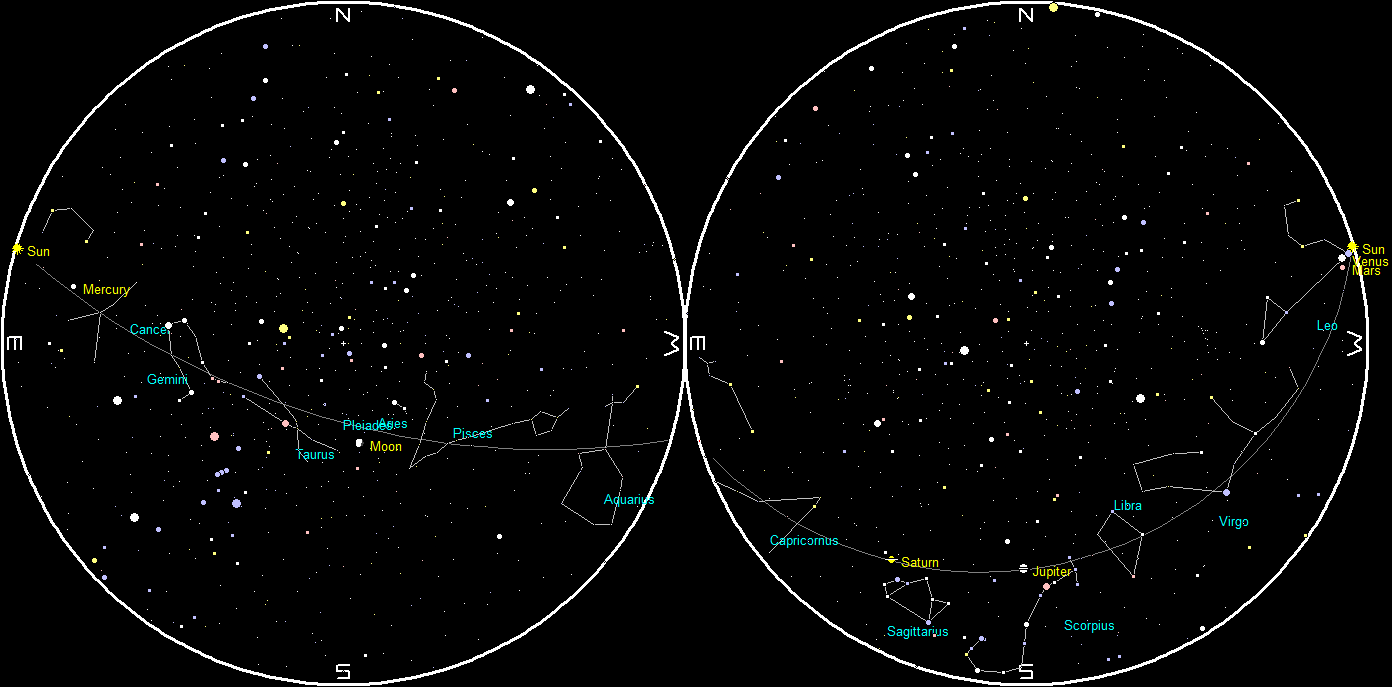
Planets and the Moon at sunset and sunrise of a single night starting with sunset on the right on August 21, 2019. The night ends on the left with sunrise on the 22nd. Click on the image to enlarge. Created using my LookingUp program.
08/14/2019 – Ephemeris – Looking for the bright planets this week
Ephemeris for Wednesday, August 14th. Today the Sun will be up for 14 hours and 6 minutes, setting at 8:50, and it will rise tomorrow at 6:44. The Moon, 1 day before full, will set at 6:36 tomorrow morning.
Let’s look at the planets for This week. Mars, Mercury and Venus are all too close to the Sun to be seen. Mars is still on the evening or east side of the Sun, as is Venus which passed superior conjunction with the Sun a few hours ago. Mercury is on the west or morning side of the Sun. Bright Jupiter will be in the southern sky as it gets dark. It will pass the meridian, due south at 9:03 p.m. With steadily held binoculars a few of the 4 largest satellites of Jupiter can be seen. Four of Jupiter’s largest satellites can be spotted in telescopes tonight. Three, on the west and one east of the planet. Jupiter will set at 1:31 a.m. Saturn, the ringed planet, will be in the south-southeast in the evening. It will set at 3:41 a.m.
The times given are for the Traverse City/Interlochen area of Michigan. They may be different for your location.
Addendum
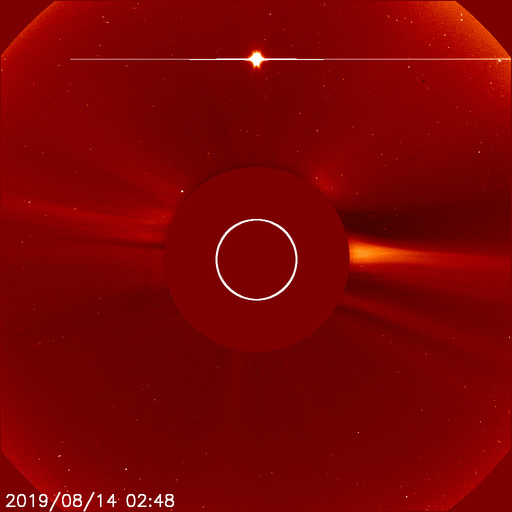
Venus and the Sun’s corona at 10:48 p.m. August 13, 2019 in the LASCO C2 coronagraph on the SOHO satellite stationed a million miles sunward of the Earth. Venus is beyond the Sun in superior conjunction. Credit ESA/NASA.
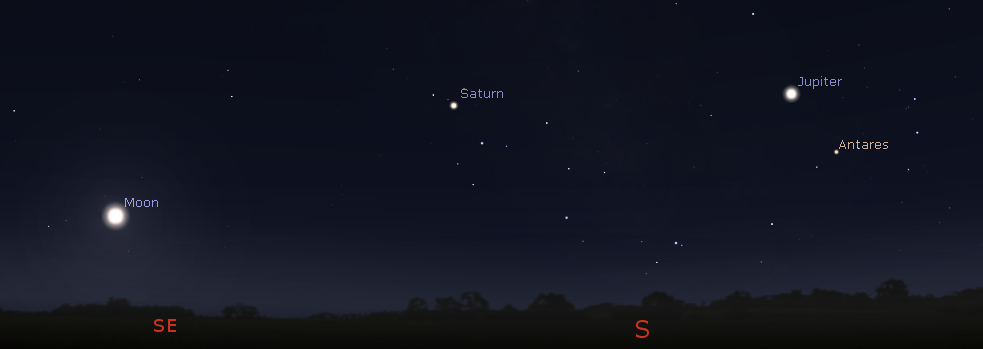
Jupiter, Saturn and the Moon with the bright stars of the southern summer sky at 10 p.m. August 14, 2019. Click on the image to enlarge. Created using Stellarium.
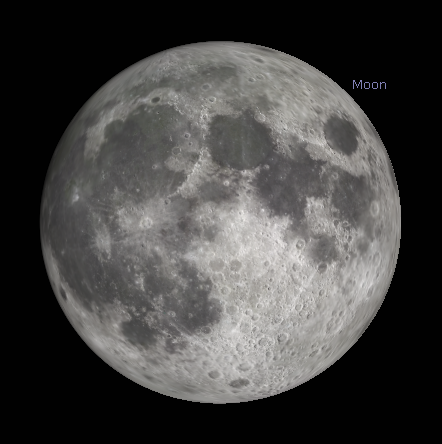
The Moon as it might appear in binoculars about 6 hours before full at 10 p.m. August 14, 2019. Created using Stellarium.
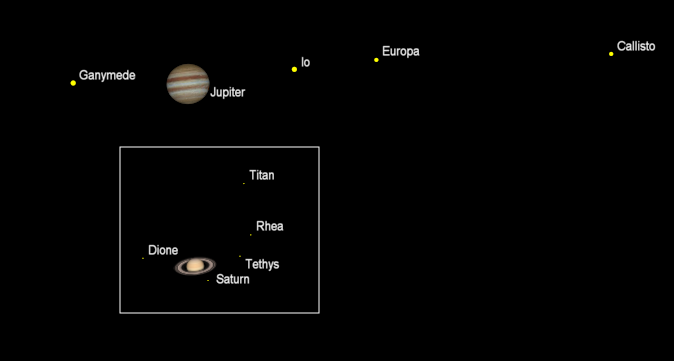
Jupiter and Saturn with the same magnification at 10 p.m. August 14, 2019. Created using Cartes du Ciel (Sky Charts).
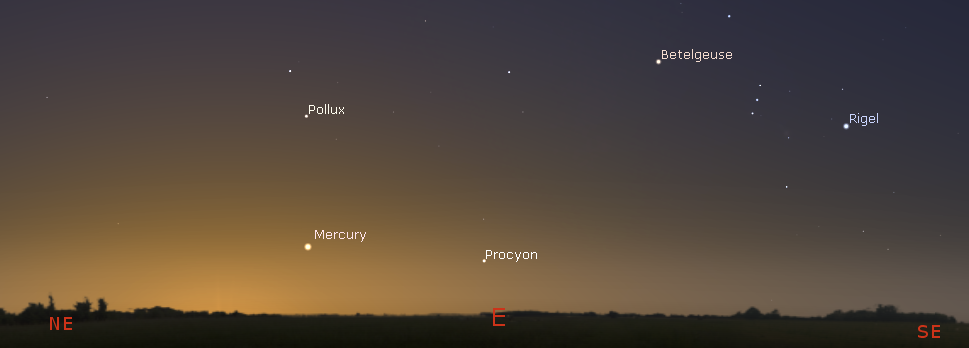
Mercury and bright stars in the morning twilight at 6 a.m. August 15, 2019. Created using Stellarium.
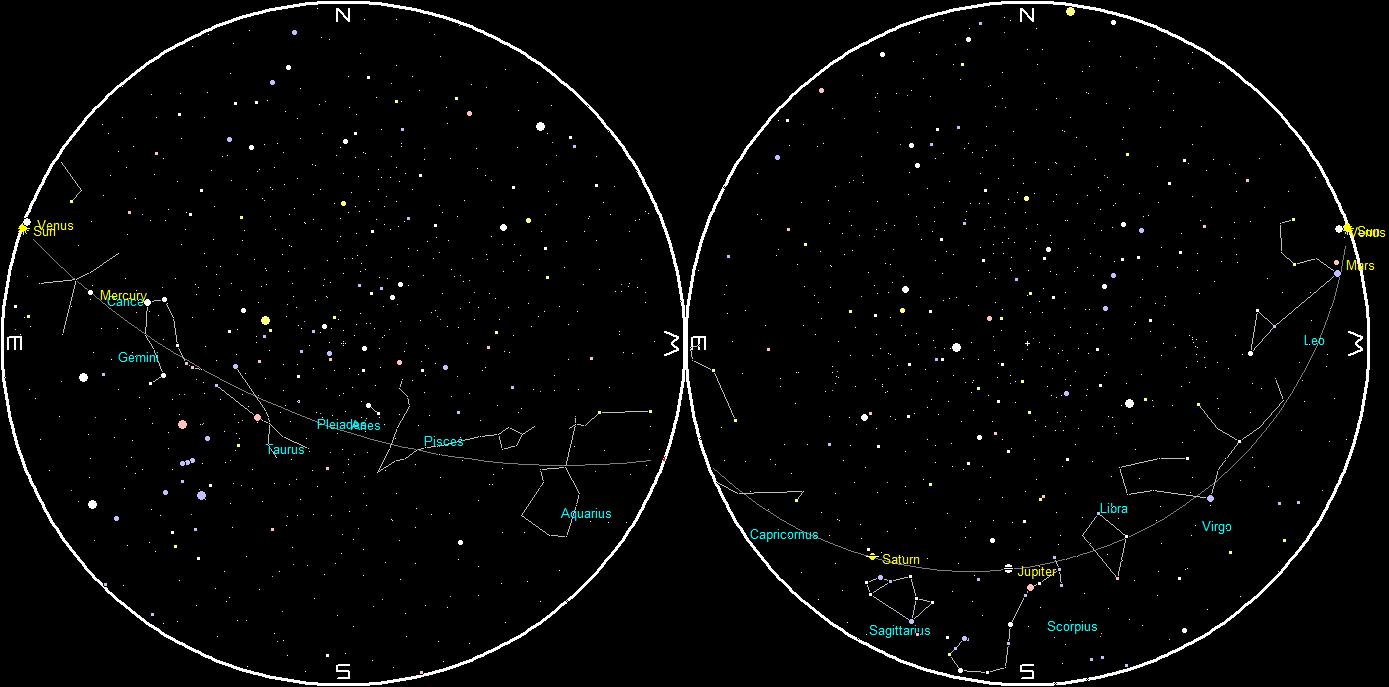
Planets and the Moon at sunset and sunrise of a single night starting with sunset on the right on August 14, 2019. The night ends on the left with sunrise on the 15th. Click on the image to enlarge. Created using my LookingUp program.
08/07/2019 – Ephemeris – Let’s check out the bright planets for this week
Ephemeris for Wednesday, August 7th. Today the Sun will be up for 14 hours and 25 minutes, setting at 9:00, and it will rise tomorrow at 6:36. The Moon, at first quarter today, will set at 1:00 tomorrow morning.
Let’s look at the planets for the first full week in August. Mars, Mercury and Venus are all too close to the Sun to be seen. Mars is still on the evening or east side of the Sun. Mercury and Venus are on the west or morning side of the Sun. Bright Jupiter will be in the southern sky as it gets dark. It will pass the meridian, due south at 9:30 p.m. With steadily held binoculars a few of the 4 largest satellites of Jupiter can be seen. Four of Jupiter’s largest satellites can be spotted in telescopes tonight. Two, on the east and two west of Jupiter. Jupiter will set at 1:58 a.m. Saturn, the ringed planet, will be in the south-southeast in the evening, the brightest star-like object in that direction, but significantly dimmer than Jupiter. It will set at 4:10 a.m.
The times given are for the Traverse City/Interlochen area of Michigan. They may be different for your location.
Addendum
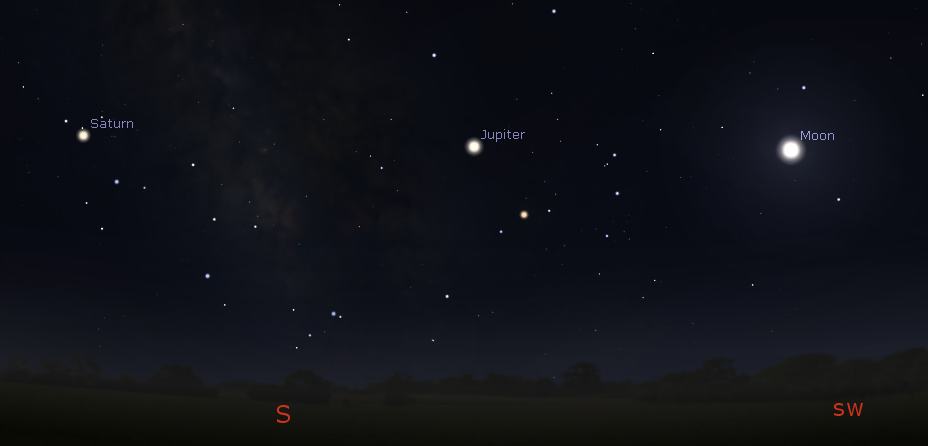
Jupiter, Saturn and the Moon with the bright stars of the southern summer sky at 10:30 p.m. August 7, 2019. Click on the image to enlarge. Created using Stellarium.
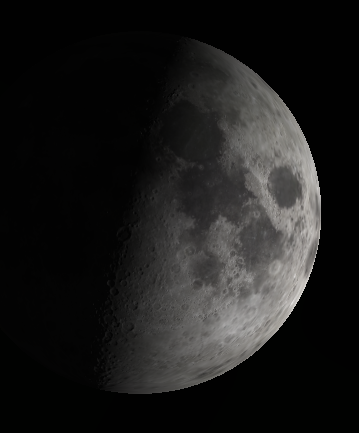
The first quarter Moon as it might appear in binoculars or a small telescope tonight at 10:30 p.m. August 7, 2019. Created using Stellarium.
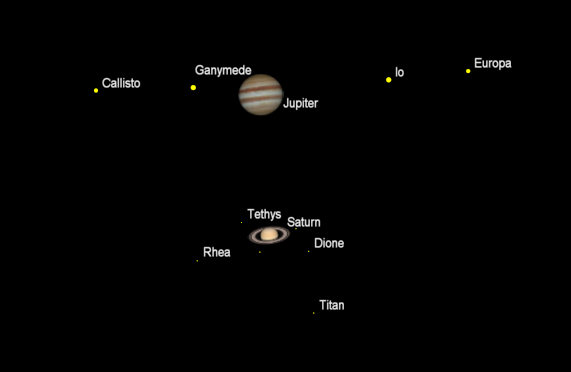
Jupiter and Saturn with the same magnification at 1o:30 p.m.August 7, 2019. Created using Cartes du Ciel (Sky Charts).
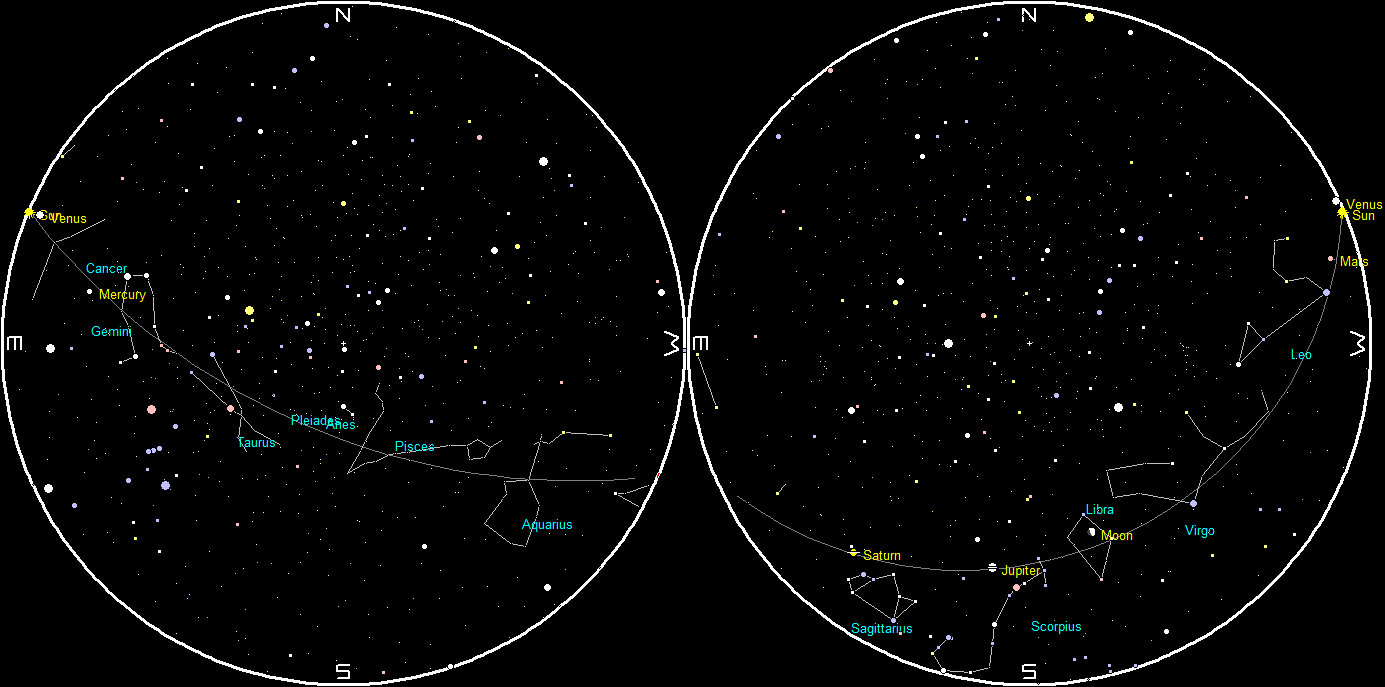
Planets and the Moon at sunset and sunrise of a single night starting with sunset on the right on August 7, 2019. The night ends on the left with sunrise on the 8th. Click on the image to enlarge. Created using my LookingUp program.
07/31/2019 – Ephemeris – Looking at the bright planets on this last day of July
Ephemeris for Wednesday, July 31st. Today the Sun will be up for 14 hours and 42 minutes, setting at 9:10, and it will rise tomorrow at 6:28. The Moon is new today, and won’t be visible.
Let’s look at the planets for the last day of July. Mars, Mercury and Venus are all too close to the Sun to be seen. Mars is still on the evening or east side of the Sun. Mercury and Venus are on the west or morning side of the Sun. Bright Jupiter will be in the southern sky as it gets dark. It will pass the meridian, due south at 9:58 p.m. With steadily held binoculars a few of the 4 largest satellites of Jupiter can be seen. Three of Jupiter’s largest satellites can be spotted in telescopes tonight. One, Ganymede will be passing in front of the planet tonight. Jupiter will set at 2:26 a.m. Saturn, the ringed planet, will be lower down in the southeast in the evening, the brightest star-like object in that direction, but significantly dimmer than Jupiter. It will set at 4:40 a.m.
The times given are for the Traverse City/Interlochen area of Michigan. They may be different for your location.
Addendum
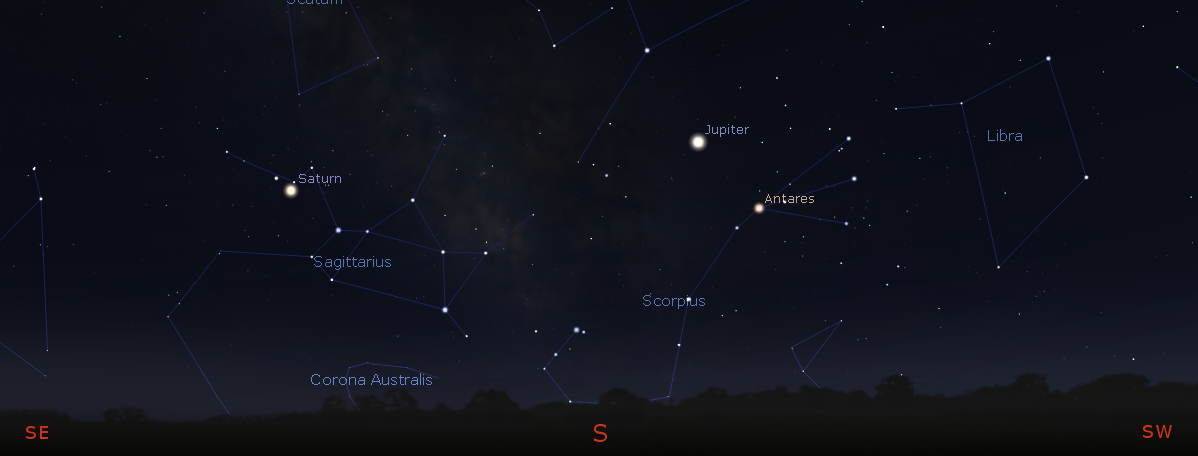
Jupiter and Saturn with the constellations of the southern summer sky at 10:30 p.m. July 31, 2019. Click on the image to enlarge. Created using Stellarium.
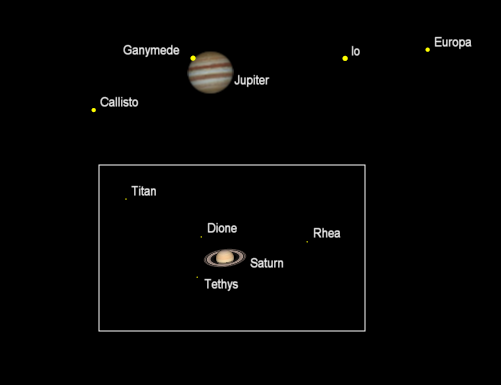
Jupiter and Saturn with the same magnification at 11p.m. July 31, 2019. Jupiter’s moon Ganymede is about to transit the face of Jupiter. The transit starts at 11:11 p.m. and ends at 1:32 a.m. Despite how they appear here Jupiter’s moons are dimmer than the planet. The same is true for Saturn’s moons, however Titan is much brighter than the other moons. Created using Cartes du Ciel (Sky Charts).
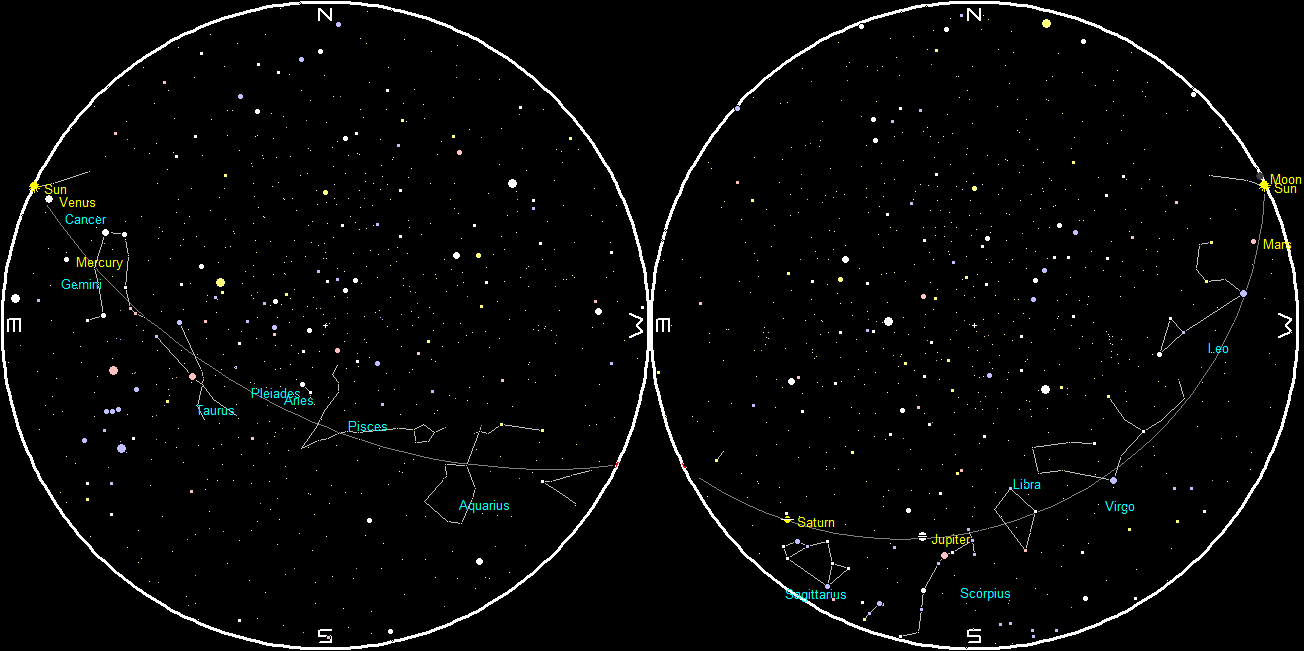
Planets and the Moon at sunset and sunrise of a single night starting with sunset on the right on July 31, 2019. The night ends on the left with sunrise on August 1st. Click on the image to enlarge. Created using my LookingUp program.
07/26/2019 – Ephemeris – Scorpius the starry scorpion crawls over the southern horizon
Ephemeris for Friday, July 26th. Today the Sun will be up for 14 hours and 53 minutes, setting at 9:15, and it will rise tomorrow at 6:23. The Moon, 2 days past last quarter, will rise at 2:11 tomorrow morning.
There’s a large constellation located low in the south at about about 11 tonight. It’s Scorpius the scorpion. Its brightest star is Antares in its heart, a red giant star, that I get calls about from time to time as being a UFO. With bright Jupiter above and left of it, it won’t be as noticeable. From Antares to the right is a star then a vertical arc of three stars that is its head. The Scorpion’s tail is a line of stars running down to the left of Antares swooping to the horizon before coming back up and ending in a pair of stars that portray his poisonous stinger. There is a beautiful star cluster seen in binoculars at that first bend in the tail that is unfortunately too low to appreciate from this far north. I was very impressed with it when spotting it from the Florida Keys when I was down there in 1986 observing Halley’s Comet.
The times given are for the Traverse City/Interlochen area of Michigan. They may be different for your location.
Addendum
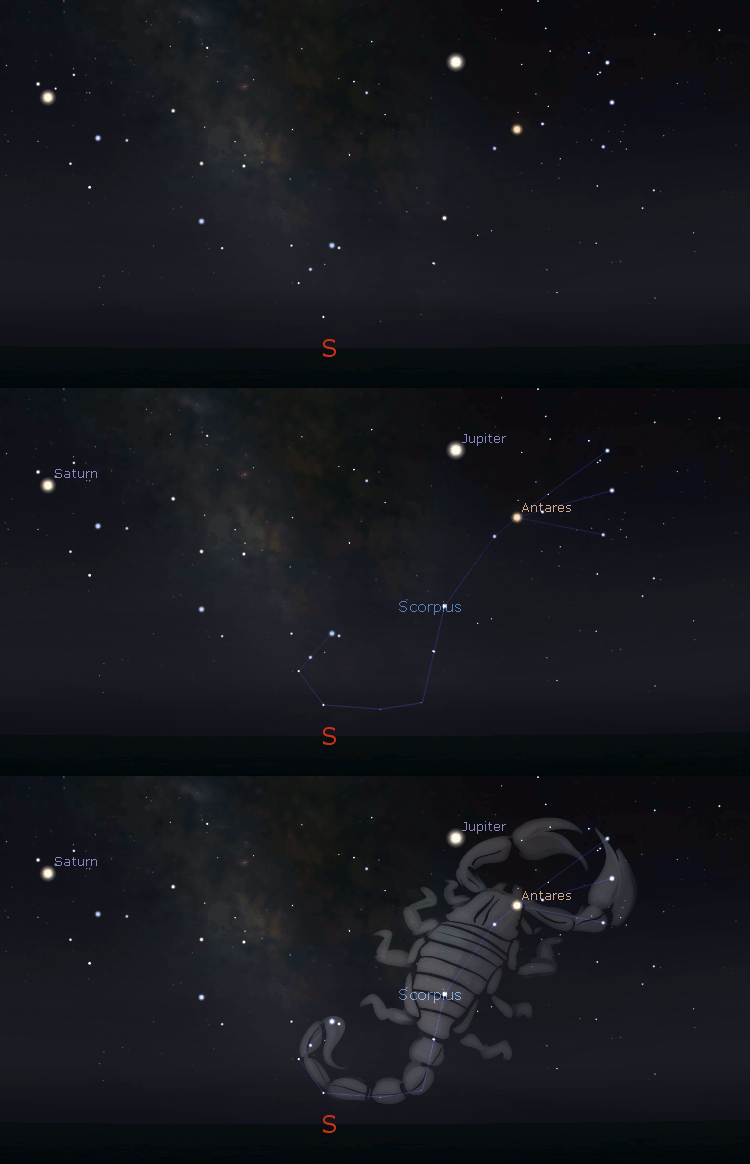
Animated finder chart for Scorpius the scorpion for 11 p.m. July 26, 2019. A year from now Jupiter will be just pass where Saturn is, and Saturn will be just off the frame of this image. Also note the “Teapot” asterism of Sagittarius just left of the scorpion with the Milky Way as steam rising from its spout.
07/24/2019 – Ephemeris – Jupiter and Saturn dominate the evening sky
Ephemeris for Wednesday, July 24th. Today the Sun will be up for 14 hours and 57 minutes, setting at 9:17, and it will rise tomorrow at 6:21. The Moon, at last quarter today, will rise at 1:14 tomorrow morning.
Let’s look at the planets for this week. Mars, Mercury and Venus are all too close to the Sun to be seen. Mars is still on the evening or east side of the Sun. Mercury has crossed over and has joined Venus on the west or morning side of the Sun. Bright Jupiter will be in the southern sky as it gets dark. It will pass the meridian, due south at 10:27 p.m. With steadily held binoculars a few of the 4 largest satellites of Jupiter can be seen. All four of Jupiter’s largest satellites can be spotted in telescopes. Jupiter will set at 2:55 a.m. Saturn, the ringed planet, will be lower down in the southeast in the evening, the brightest star-like object in that direction, but significantly dimmer than Jupiter. It will set at 5:10 a.m.
The times given are for the Traverse City/Interlochen area of Michigan. They may be different for your location.
Addendum
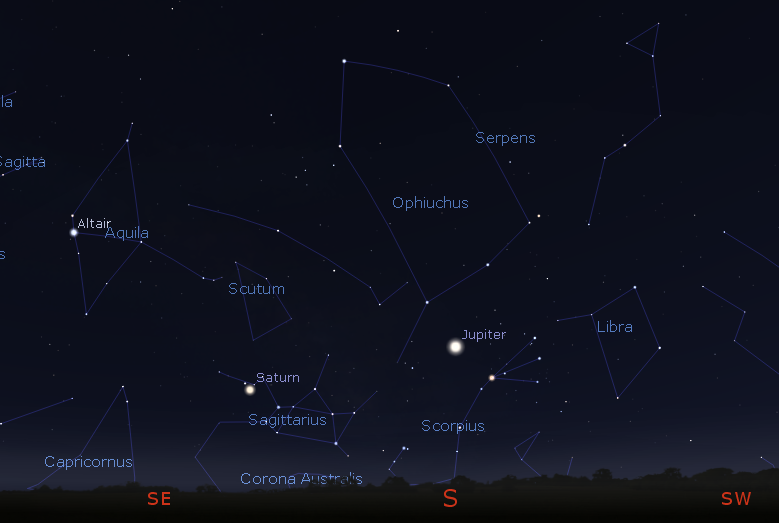
Jupiter and Saturn with the constellations of the southern summer sky at 10:30 p.m. July 24, 2019. Click on the image to enlarge. Created using Stellarium.
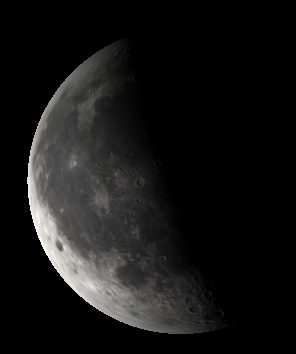
The waning Moon one day past last quarter at 5 a.m. July 25, 2019. Created using Stellarium.
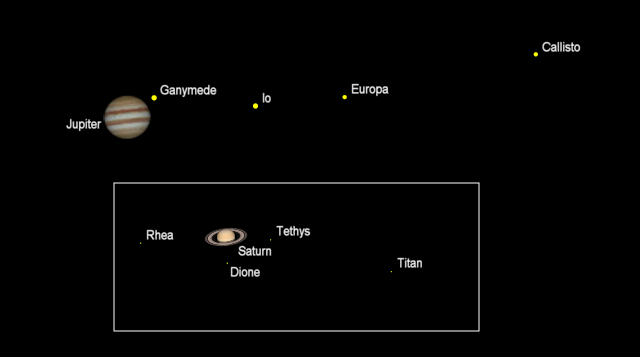
Jupiter and Saturn with the same magnification at 11p.m. July 24, 2019. Jupiter’s moon Ganymede transited the planet earlier in the evening, but its shadow will cross the face of Jupiter from 11:25 p.m. to 1:53 a.m. Created using Cartes du Ciel (Sky Charts).
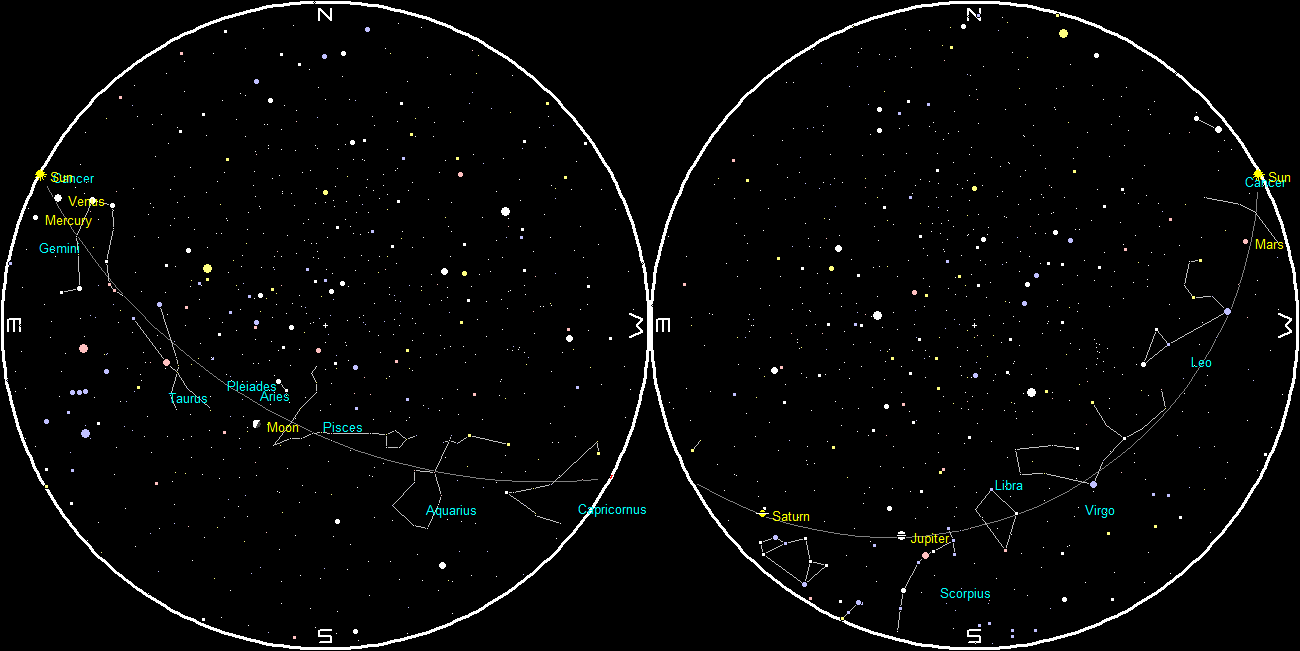
Planets and the Moon at sunset and sunrise of a single night starting with sunset on the right on July 24, 2019. The night ends on the left with sunrise on the 25th. Click on the image to enlarge. Created using my LookingUp program.
07/17/2019 – Ephemeris – Only two bright planets are visible
Ephemeris for Wednesday, July 17th. Today the Sun will be up for 15 hours and 11 minutes, setting at 9:24, and it will rise tomorrow at 6:14. The Moon, 1 day past full, will rise at 10:10 this evening.
Let’s look at the planets for this Apollo 11 anniversary week. Both Mercury and Mars are too close to the Sun to be seen. They’re still on the evening or east side of the Sun. Venus is on the west or morning side of the Sun and also too close to it to be visible. Bright Jupiter will be in the south-southeastern as it gets dark. It will pass the meridian, due south at 10:57 p.m. With steadily held binoculars a few of the 4 largest satellites of Jupiter can be seen. All four of Jupiter’s largest satellites can be spotted in telescopes. Jupiter will set at 3:29 a.m. Saturn will be lower down in the southeast in the evening, the brightest star-like object in that direction, but significantly dimmer than Jupiter.
The times given are for the Traverse City/Interlochen area of Michigan. They may be different for your location.
Addendum
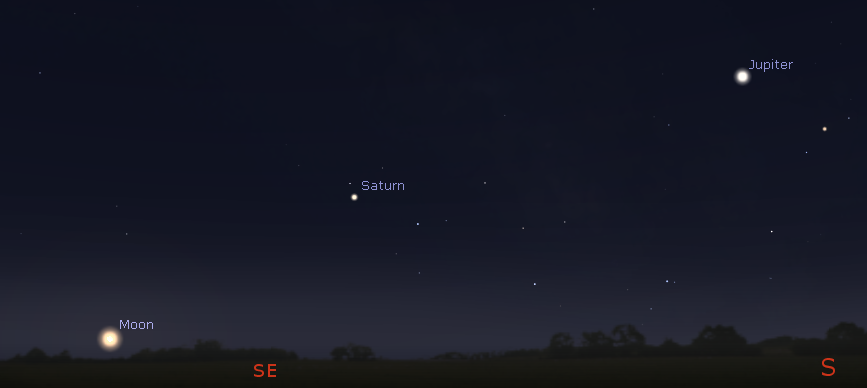
The evening planets and the Moon at 10:30 p.m. July 17, 2019. Click on the image to enlarge. Created using Stellarium.
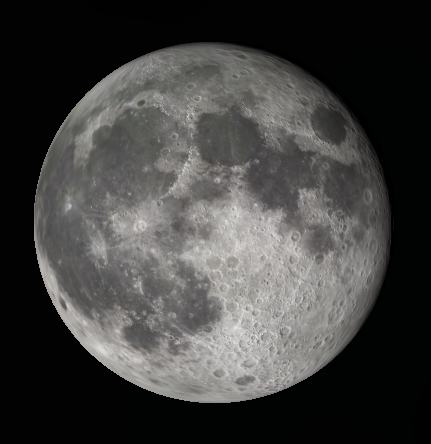
The Moon as it might appear in binoculars or a small telescope at 11 p.m. July Created using Stellarium.Stellarium.
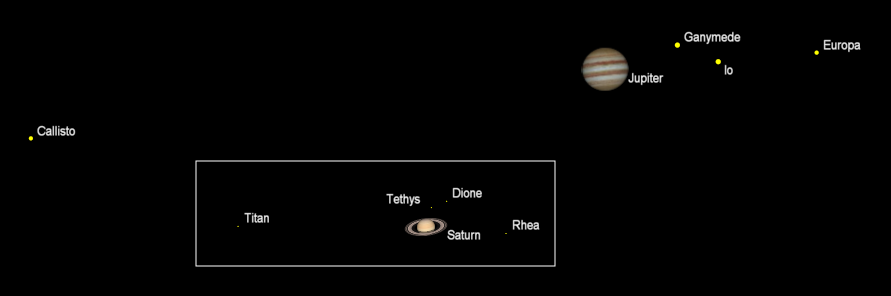
Jupiter and Saturn with the same magnification at 11p.m. July 17, 2019. Created using Cartes du Ciel (Sky Charts).
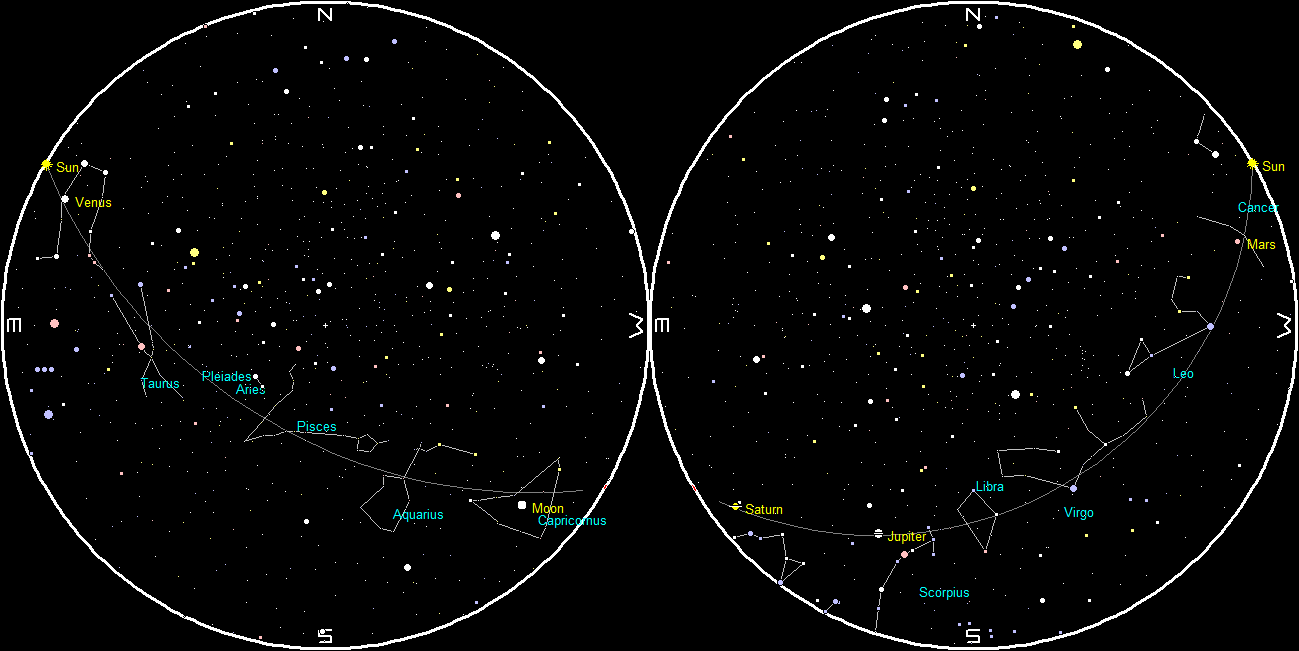
Planets and the Moon at sunset and sunrise of a single night starting with sunset on the right on July 17, 2019. The night ends on the left with sunrise on the 18th. Click on the image to enlarge. Created using my LookingUp program.
Mercury is not visible on the above chart. It will pass inferior conjunction of the Sun on the 21st, and is too far south of the Sun to be above the horizon at either sunrise or sunset.
07/10/2019 – Ephemeris – A look at the bright planets for this week
Ephemeris for Wednesday, July 10th. Today the Sun will be up for 15 hours and 21 minutes, setting at 9:28, and it will rise tomorrow at 6:07. The Moon, 1 day past first quarter, will set at 2:26 tomorrow morning.
Let’s look at the planets for this week. Mercury is now too close to the Sun to be seen. Mars itself is difficult to spot low in the west-northwest, setting at 10:29 p.m. Bright Jupiter will be in the southern sky by 10:30 p.m. With steadily held binoculars a few of the 4 largest satellites of Jupiter can be seen. All four of Jupiter’s largest satellites can be spotted in telescopes. Tonight they will be all arrayed on one side of the planet. Also at 10:30 Saturn will be lower down in the southeast, the brightest star-like object in that direction, but significantly dimmer than Jupiter. The only bright planet left in the morning sky is Venus, which is too close to the Sun to be spotted.
The times given are for the Traverse City/Interlochen area of Michigan. They may be different for your location.
Addendum
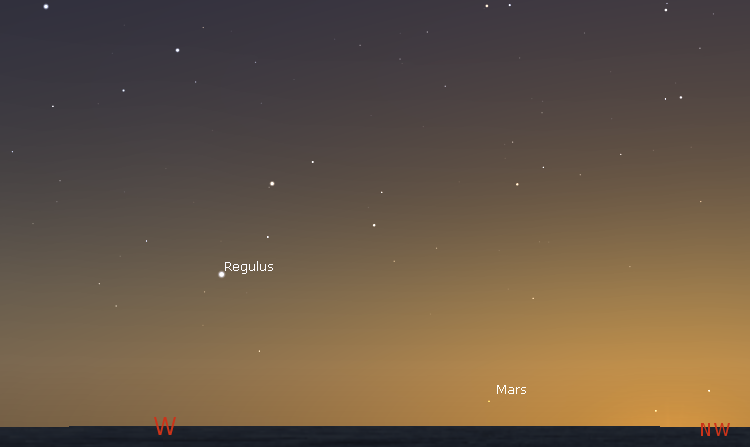
Mars about to set, seen at 10:15 p.m. July 10, 2019. Mars and the stars have been brightened. Created by Stellarium.
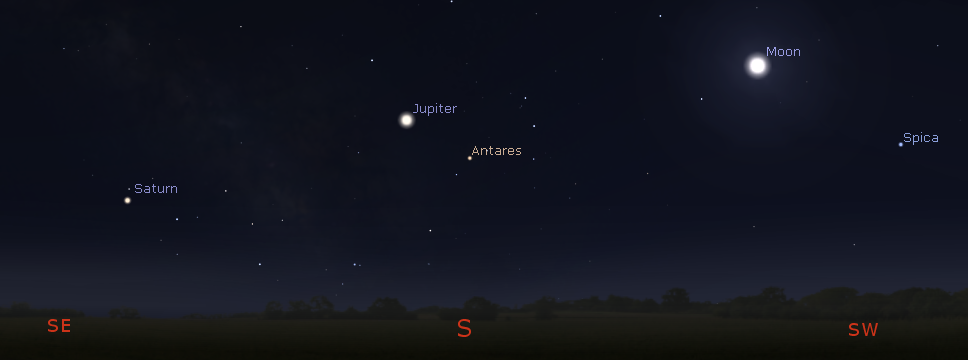
The Moon, Jupiter and Saturn in the southern sky at 11 p.m., July 10, 2019. Click on the image to enlarge. Created using Stellarium.
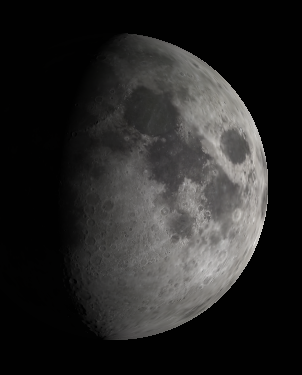
The gibbous Moon as it might appear in binoculars or a small telescope tonight at 11 p.m. July 10, 2019. Created using Stellarium.
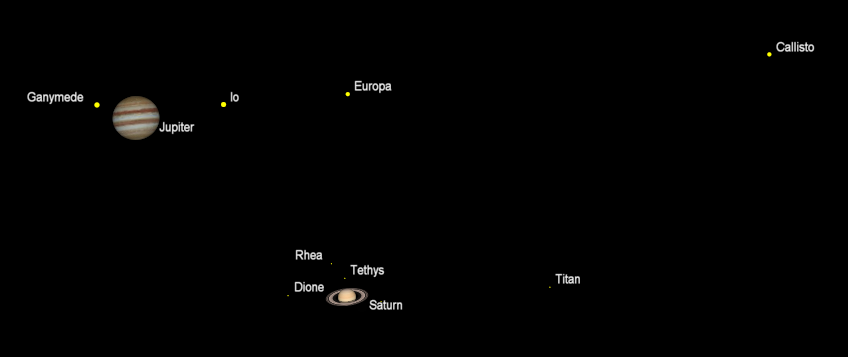
Jupiter and Saturn with the same magnification at 11p.m. July 10, 2019. Created using Cartes du Ciel (Sky Charts).
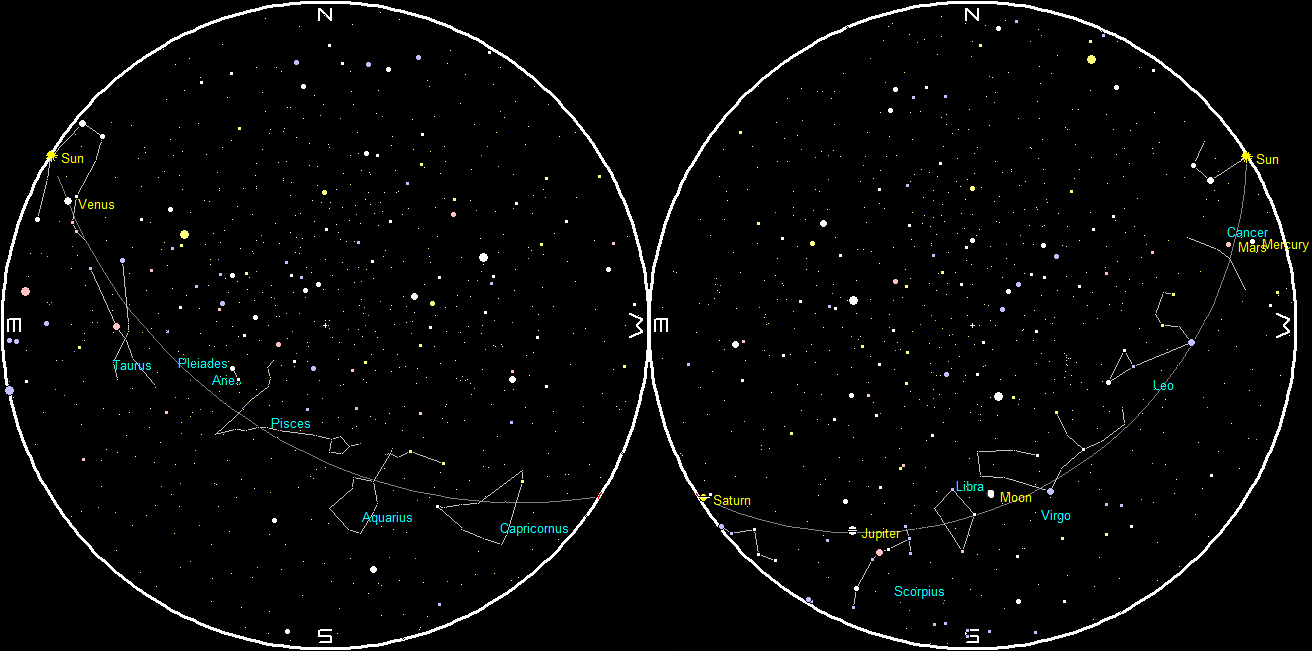
Planets and the Moon at sunset and sunrise of a single night starting with sunset on the right on July 10, 2019. The night ends on the left with sunrise on the 11th. Click on the image to enlarge. Created using my LookingUp program.
07/03/2019 – Ephemeris – Our weekly look at the bright planets
Ephemeris for Wednesday, July 3rd. Today the Sun will be up for 15 hours and 29 minutes, setting at 9:31, and it will rise tomorrow at 6:02. The Moon, 1 day past new, will set at 10:33 this evening.
Let’s look at the planets for this week. Mars, Mercury and the Moon will be low in the west-northwestern sky to the left of the star Pollux. Mercury and Mars are now slightly dimmer than Pollux tonight. Mercury is moving below Mars now. Mercury will set at 10:35 p.m., with Mars following 9 minutes later. Jupiter will start the evening low in the southeast. It’s far brighter than any star and will be visible just about all night, setting at 4:24 a.m. It’s in Ophiuchus the serpent bearer now, just above Scorpius the scorpion. Though still officially a morning planet, Saturn will rise at 9:42 p.m., in the east-southeast. It will be up the rest of the night. It’s in Sagittarius the archer. Venus remains too close to the Sun to be seen.
The times given are for the Traverse City/Interlochen area of Michigan. They may be different for your location.
Addendum
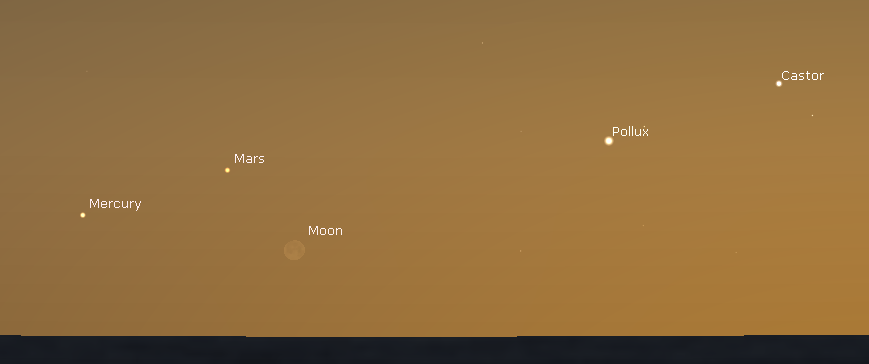
Mars, Mercury and the Moon near the west-northwestern horizon at 10:15 p.m., July 3, 2019. Click on the image to enlarge. Created using Stellarium. Stellarium cannot render the crescent on the day old Moon.
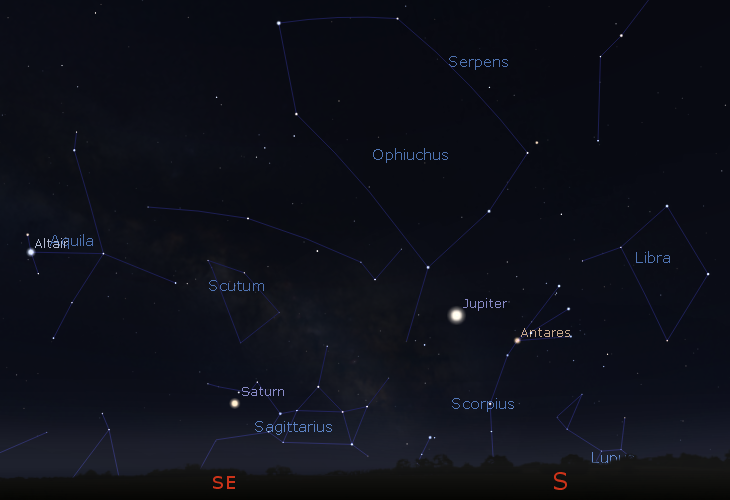
Jupiter Saturn and evening constellations for 11 p.m. July 3, 2019. Created using Stellarium.
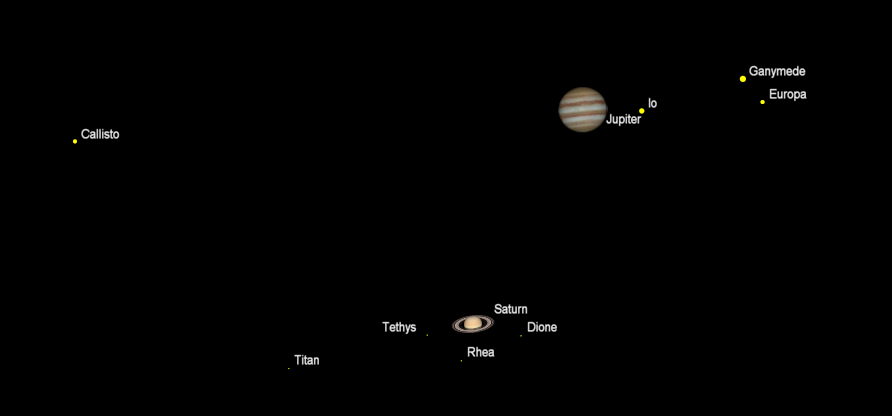
Jupiter and Saturn with the same magnification at 11p.m. (3:00 UT), July 3, 2019. Io will disappear behind Jupiter at 12:42 a.m. (4:42 UT) and will reappear from Jupiter’s shadow on the other side at 3:26 a.m. (7:26 UT). Created using Cartes du Ciel (Sky Charts).
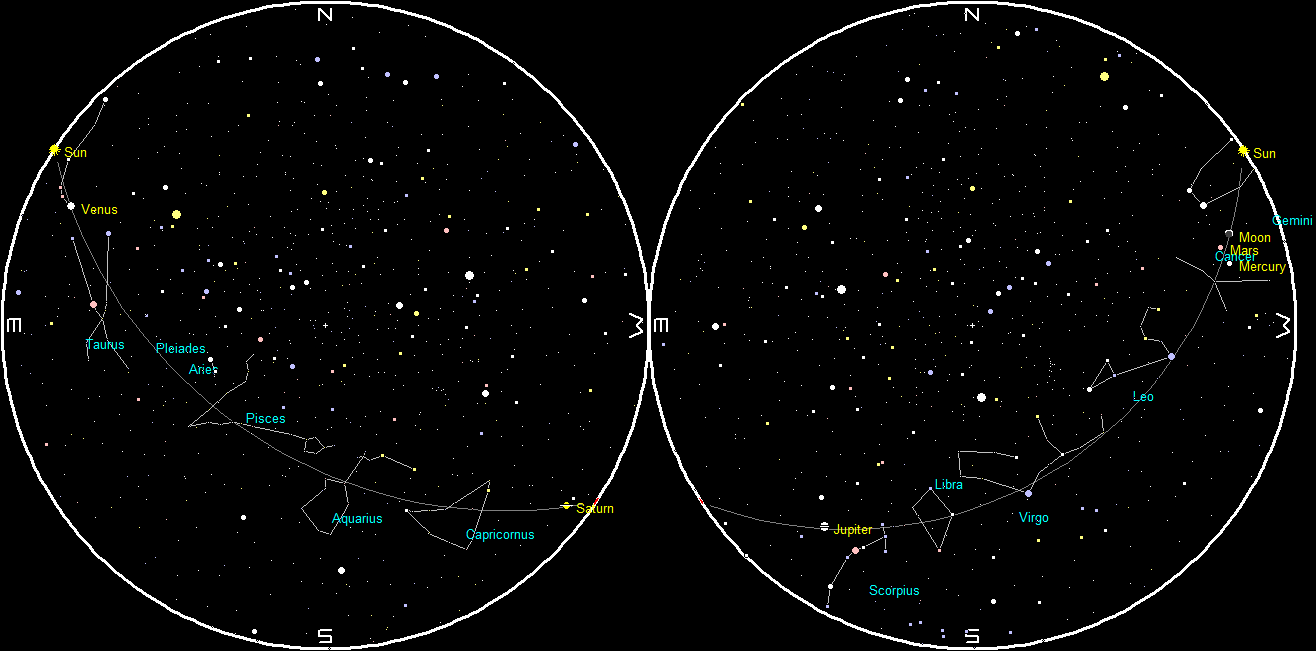
Planets and the Moon at sunset and sunrise of a single night starting with sunset on the right on July 3, 2019. The night ends on the left with sunrise on the 4th. Click on the image to enlarge. Created using my LookingUp program.
06/26/2019 – Ephemeris – Checking out the locations of the bright planets for this week
Ephemeris for Wednesday, June 26th. Today the Sun will be up for 15 hours and 33 minutes, setting at 9:32, latest sunset of the year, and it will rise tomorrow at 5:59. The Moon, 1 day past last quarter, will rise at 2:47 tomorrow morning.
Let’s look at the planets for this week. Mars and Mercury will be low in the west-northwestern sky to the left of the star Pollux. Mercury is somewhat brighter than Pollux tonight with dimmer Mars to the right of Mercury. Mercury is separating from Mars rapidly, It’s not named for the messenger of the gods for nothing. Mercury will set at 11 p.m., three minutes after Mars. Jupiter will start the evening low in the southeast. It’s far brighter than any star and will be visible just about all night, setting at 4:55 a.m. It’s in Ophiuchus the serpent bearer now, just above Scorpius the scorpion. In the morning sky we have Saturn which will rise at 10:11 p.m., in the east-southeast. It’s in Sagittarius the archer. Venus is too close to the Sun to be seen.
The times given are for the Traverse City/Interlochen area of Michigan. They may be different for your location.
Addendum
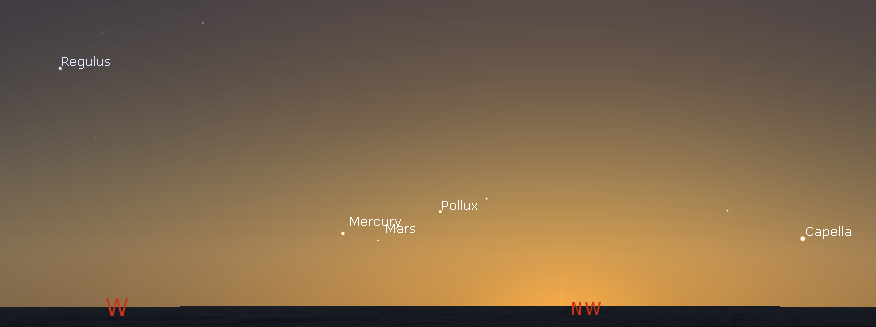
Mercury and Mars with the brighter stars at 10:15 p.m., June 26, 2019. Click on the image to enlarge. Created using Stellarium.
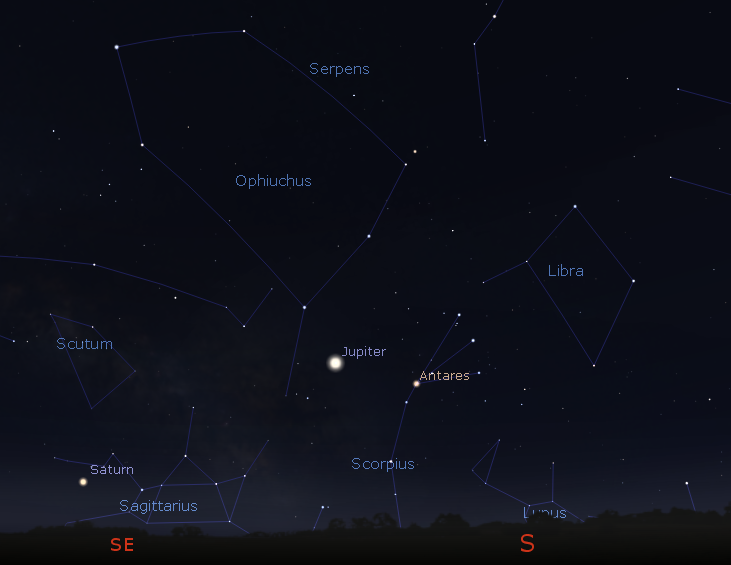
Jupiter and Saturn at 11 p.m. June 26, 2019. Click on the image to enlarge. Created using Stellarium.
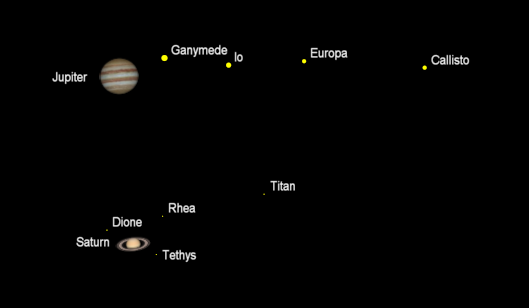
Jupiter and Saturn with the same magnification at 11:30 p.m., June 26, 2019. Created using Cartes du Ciel (Sky Charts).
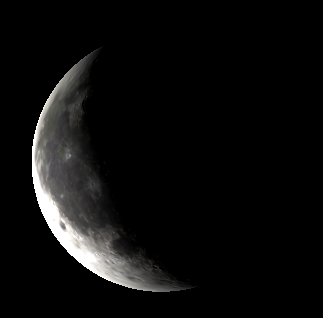
The waning crescent Moon at 4:30 a.m. June 27, 2019. Created using Stellarium.
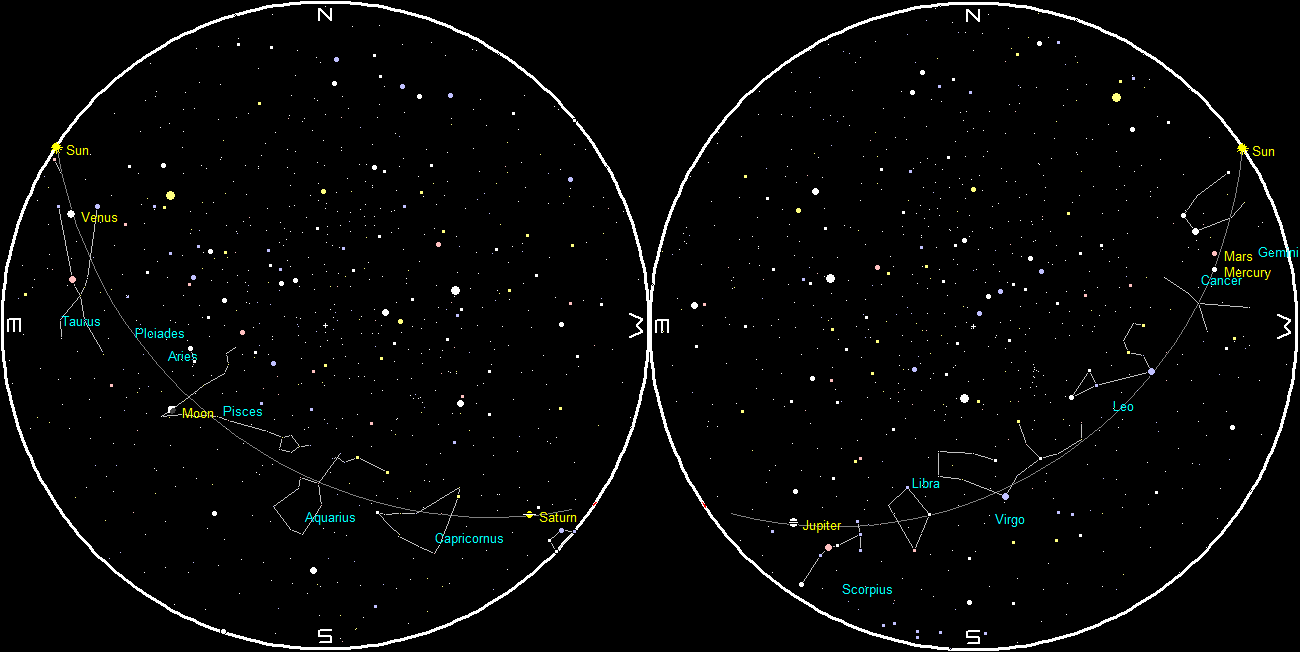
Planets and the Moon at sunset and sunrise of a single night starting with sunset on the right on June 26, 2019. The night ends on the left with sunrise on the 27th. Click on the image to enlarge. Created using my LookingUp program.
 Bob Moler's Ephemeris Blog