Archive
10/29/2014 – Ephemeris – A last look at the bright planets for October
Ephemeris for Wednesday, October 29th. The sun will rise at 8:16. It’ll be up for 10 hours and 19 minutes, setting at 6:35. The moon, 1 day before first quarter, will set at 11:41 this evening.
Tonight Mars will be low in the southwest at 8 p.m. below and right of the Moon in the constellation of Sagittarius, and will set at 9:35 p.m. The sky will stay devoid of bright planets until Jupiter rises at 1:33 a.m. Jupiter is visible this morning in twilight in the south-southeast along with the brighter stars of winter, a preview of colder evenings to come. The planet Mercury makes its autumn morning appearance for the next week or so, rising in the east-southeast at 6:38. By 7:20 or so it should be visible low in the sky. It’s greatest western elongation will be this Saturday, and it will pass perihelion, its closest to the Sun, this Sunday, so despite its greatest elongation, it’s less than a 19 degree angle from the Sun.
Times are for the Traverse City/Interlochen area of Michigan. They may be different for your location.
Ephemeris
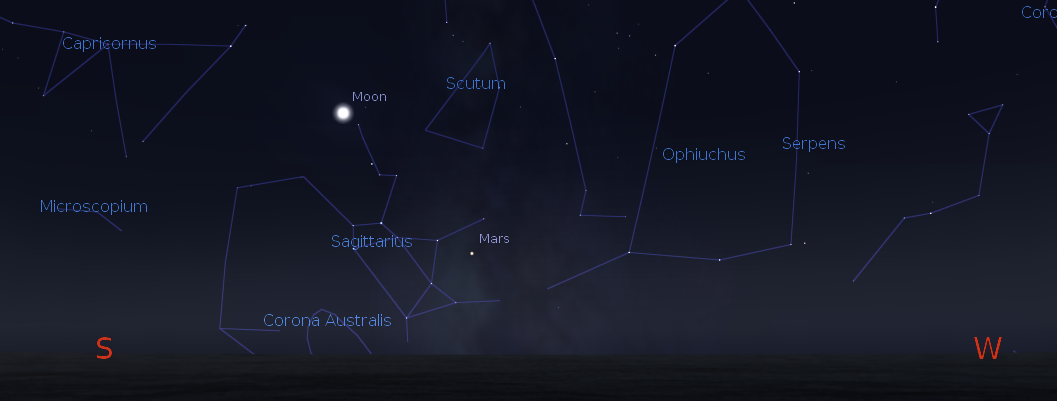
Mars, the Moon and the setting stars of summer at 8 p.m. on October 29, 2014. Created using Stellarium.
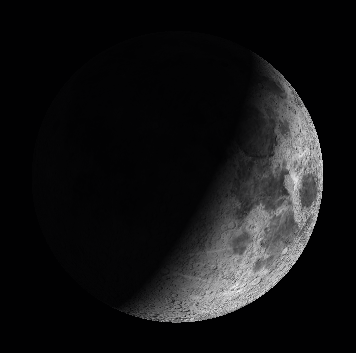
The Moon as it would appear in binoculars at 8 p.m. October 29, 2014. Created using Stellarium.
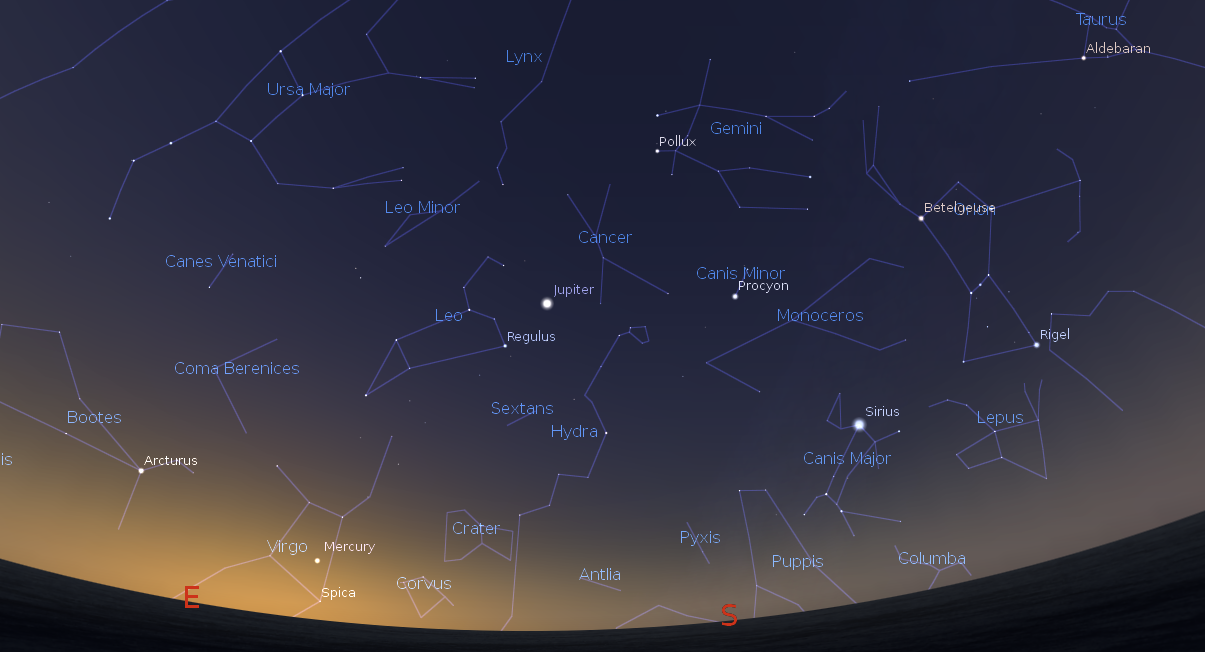
The morning planets and constellations at 7:30 a.m. October 30, 2014. Created using Stellarium.
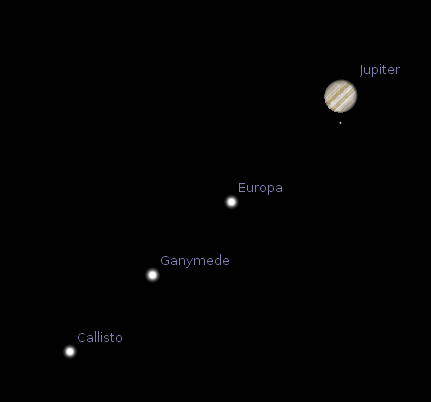
Jupiter and its moons as seen in a telescope at 7:30 a.m. October 30, 2014. Io is behind Jupiter. Created using Stellarium.
10/22/2014 – Ephemeris – The bright planets this week plus a preview of Thursday’s partial solar eclipse
Ephemeris for Wednesday, October 22nd. The sun will rise at 8:06. It’ll be up for 10 hours and 39 minutes, setting at 6:46. The moon, 1 day before new, will rise at 7:46 tomorrow morning.
Tonight Saturn will be low in the west-southwest before it sets at 7:56 p.m. Mars will be low in the southwest at 9 p.m. and will set at 9:40 p.m. The sky will stay devoid of bright planets until Jupiter rises at 1:56 a.m. tomorrow morning. Jupiter is visible this morning in twilight in the south-southeast along with the brighter stars of winter visible, a preview of colder evenings to come. Tomorrow evening, weather permitting, we will get to see part of a partial solar eclipse. The exact times depend on your location, though shouldn’t deviate from these by a few minutes for the Interlochen Public Radio listening area (northwestern lower Michigan). The eclipse will start around 5:32 p.m. and will continue till sunset around 6:44 p.m. Use proper eye protection or use pinhole projection.
Times are for the Traverse City/Interlochen area of Michigan. They may be different for your location.
Addendum
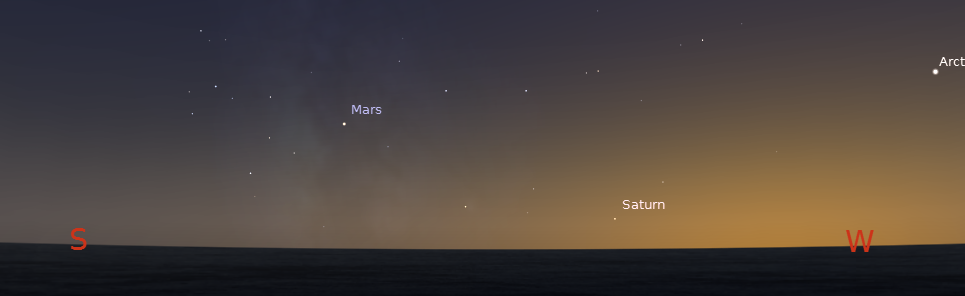
Saturn and Mars at 7:30 p.m. on October 22, 2014. Created using Stellarium.
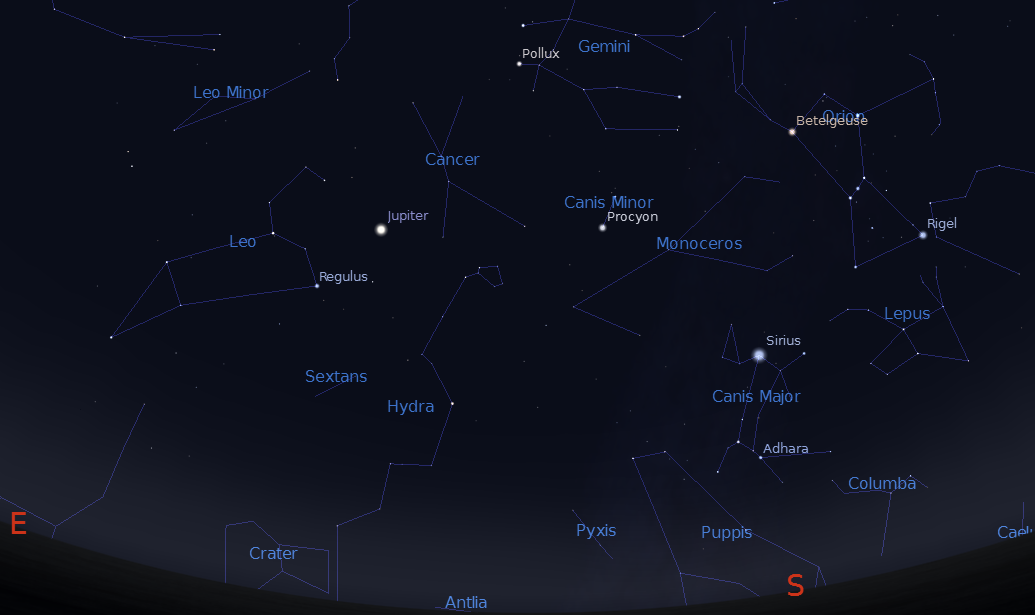
Jupiter and the morning constellations at 6:30 a.m., October 23, 2014. Created using Stellarium.
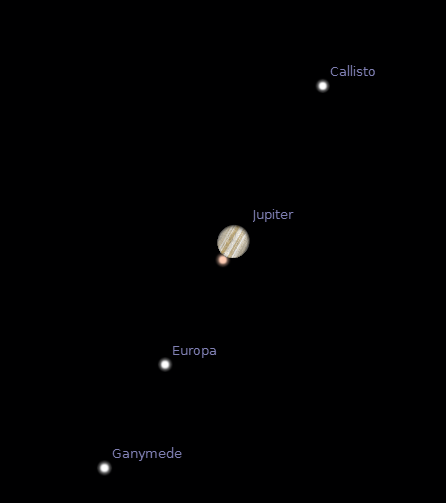
Jupiter through a telescope at 6:30 a.m. October 23, 2014. The unnamed moon is Io. Created using Stellarium.
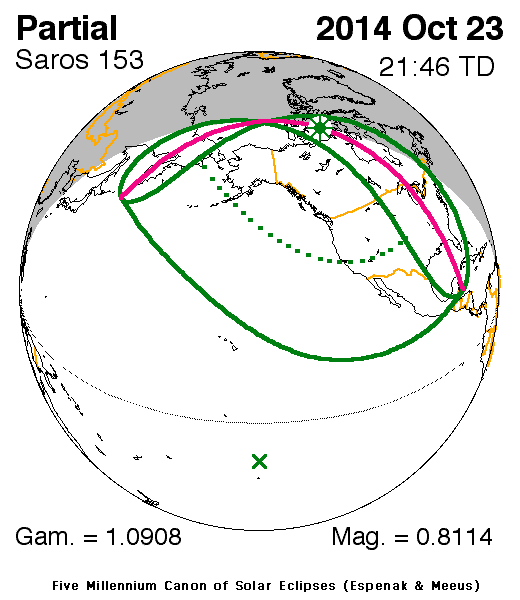
Coverage of the partial solar eclipse of October 23, 2014. Credit: NASA. Click image for more information.

The setting partially eclipsed sun from Traverse City. Created using Stellarium.
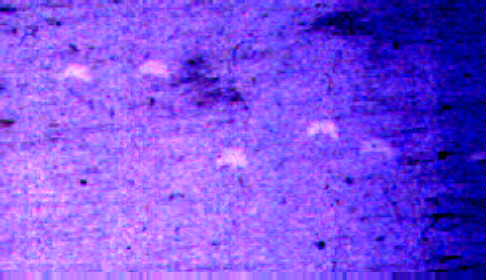
Partially eclipsed sun using a series of pinholes projected on a reasonably white surface.
10/15/2014 – Ephemeris – Looking for the bright planets this week
Ephemeris for Wednesday, October 15th. The sun will rise at 7:57. It’ll be up for exactly 11 hours, setting at 6:57. The moon, at last quarter today, will rise at 12:53 tomorrow morning.
Let’s check out the bright planets for this week. Saturn is very low in the west-southwestern sky at 8 p.m. and difficult to spot. It will set at 8:22 p.m. Mars is right of the spout of the Teapot of Sagittarius low in the southwest. Mars is in the constellation of Ophiuchus as astronomers draw constellation boundaries, it will set at 9:46. Comet Siding Spring will pass close to Mars this coming Sunday the 19th. More on that tomorrow. In the morning sky brilliant Jupiter will rise in the east-northeast at 2:18 a.m. It’s moving from Cancer to Leo now. Venus is too close to the sun to be seen. On the 25th of this month Venus will be in superior conjunction with the sun, that is it will move behind the sun, and will enter the evening sky.
Times are for the Traverse City/Interlochen area of Michigan. They may be different for your location.
Addendum
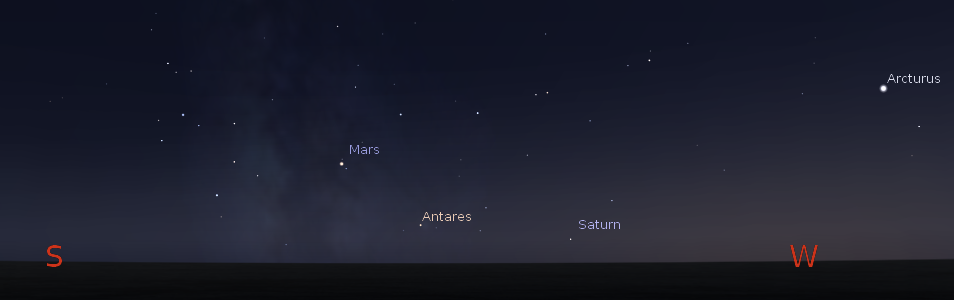
Saturn and Mars low near the setting southern summer stars at 8 p.m. October 15, 2014. Created using Stellarium.
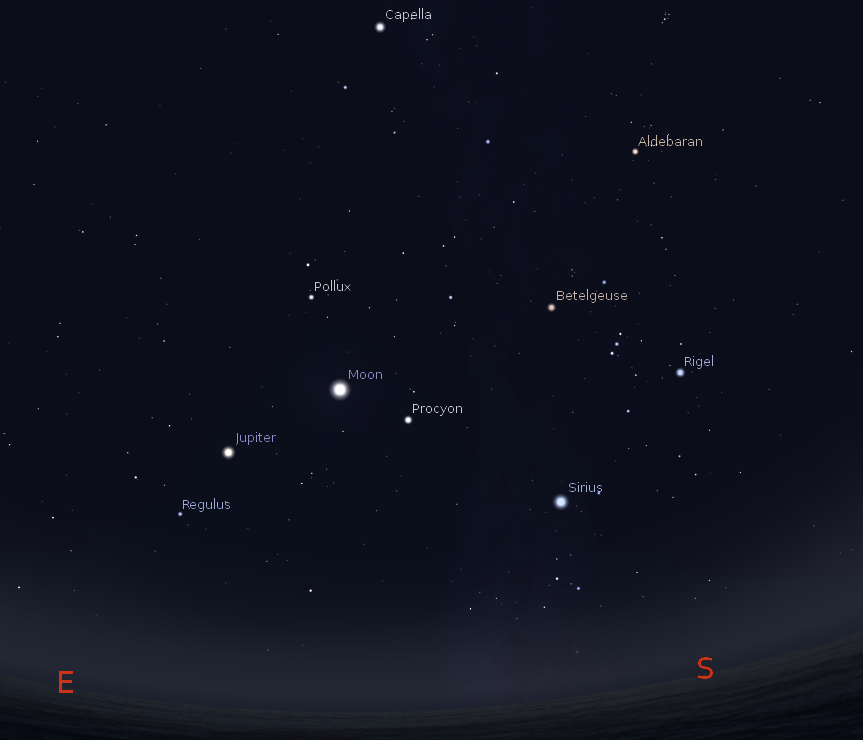
Jupiter and the Moon among the stars of winter at 6 a.m. October 16, 2014. Created using Stellarium.
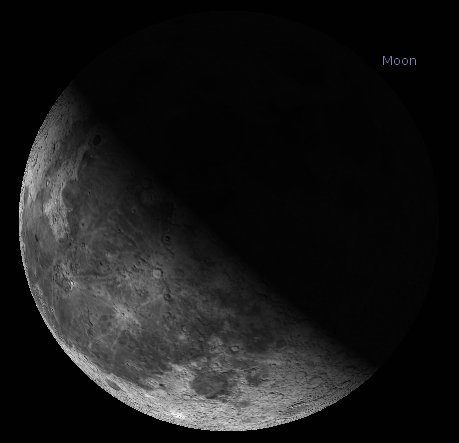
The Moon slightly after last quarter as seen in binoculars at 6 a.m. October 16, 2014. Created using Stellarium.
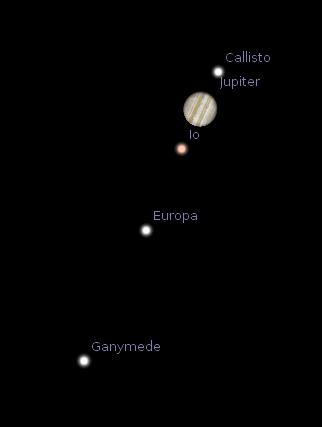
A telescopic view of Jupiter and its moons as they would be seen at 6 a.m. October 16, 2014. Created using Stellarium.
10/08/2014 – Ephemeris – The ongoing lunar eclipse and a peek at the planets
Note: This program is scheduled to be aired at two points during the total lunar eclipse. The first airing occurs at6:19 a.m., six minutes before totality starts. The second airing will occur at 7:59 a.m. during totality.
Ephemeris for Wednesday, October 8th. The sun will rise at 7:48. It’ll be up for 11 hours and 21 minutes, setting at 7:10. The moon, at full today, will rise at 7:23 this evening.
There is a lunar eclipse occurring right now. Totality is either about to start or the moon is in totality with an orange or reddish hue, depending on when you hear this. You can see it right now in the west, if it’s reasonably clear. Totality will end at 7:24. The ending partial phase will be interrupted by moon setting near 8 a.m. Tonight Saturn will be low in the west-southwest before it sets at 8:47 p.m. Mars will be low in the southwest at 9 p.m. and will set at 9:54 p.m. The sky will stay devoid of bright planets until Jupiter rises, which it will do at 2:40 a.m. tomorrow morning. Jupiter is visible this morning in twilight in the south-southeast along with the brighter stars of winter visible, a preview of colder evenings to come.
Times are for the Traverse City/Interlochen area of Michigan. They may be different for your location.
Addendum
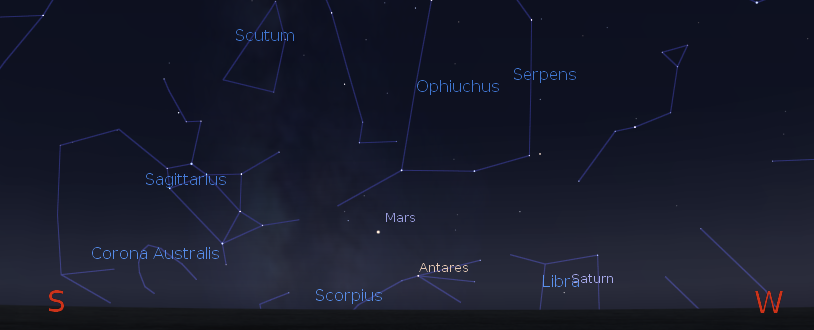
Saturn, Mars and the setting stars of summer at 8:30 p.m. on October 8, 2014.
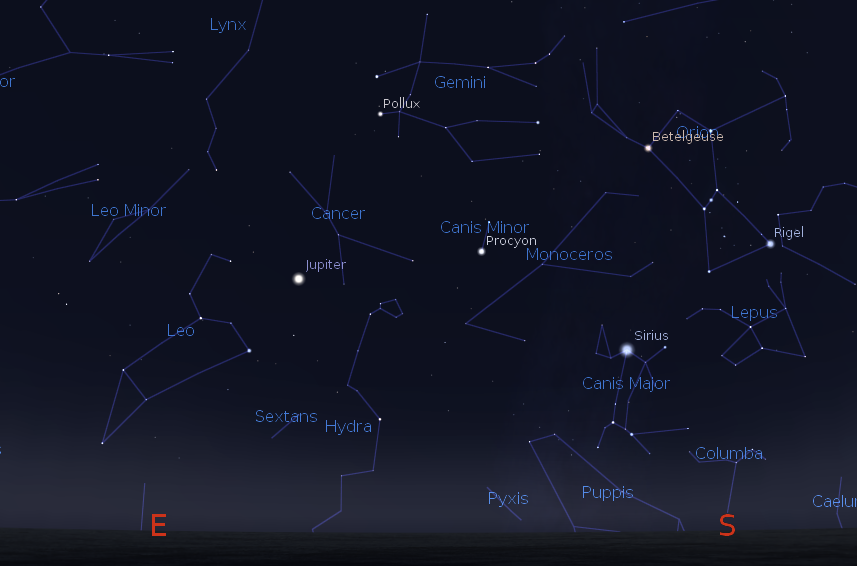
Jupiter and a preview of the stars of winter at 6:30 a.m. on October 9, 2014.
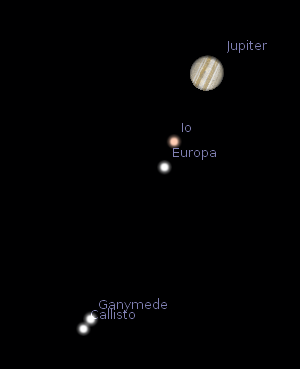
Jupiter and its moons as seen through a telescope at 6:30 a.m. October 9, 2014.
10/01/2014 – Ephemeris – Let’s start off the month with a look at the bright planets
Ephemeris for Wednesday, October 1st. The sun will rise at 7:40. It’ll be up for 11 hours and 42 minutes, setting at 7:23. The moon, at first quarter today, will set at 12:43 tomorrow morning.
Let’s check out the bright planets for this week. Mars and Saturn are in the southwestern sky at 8:30 p.m. with Mars above the equally bright and red star Antares with Saturn a ways right of them and as high in the sky as Antares. Saturn will set at 9:16 p.m. Mars is in the constellation of Ophiuchus as astronomers draw constellation boundaries, though it looks to be in Scorpius. Mars will set at 10:04. In the morning sky brilliant Jupiter will rise in the east-northeast at 3:02 a.m. Venus will rise about a half hour before the sun, so it will not be visible. On the 25th of this month Venus will be in superior conjunction with the sun, that is it will move behind the sun, and will then enter the evening sky.
Times are for the Traverse City/Interlochen area of Michigan. They may be different for your location.
Addendum
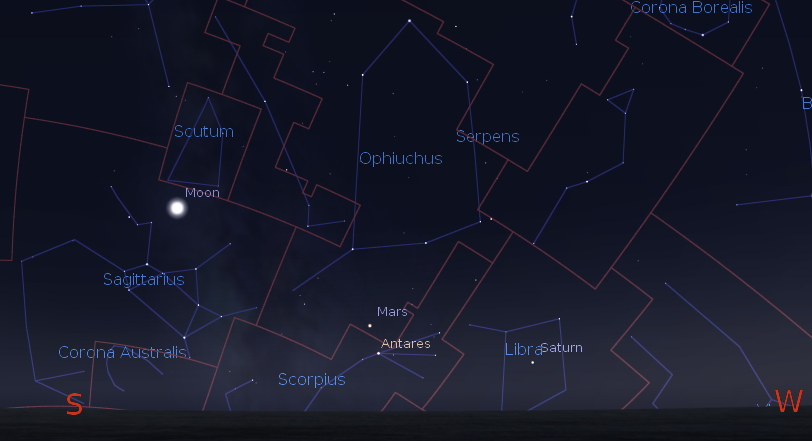
Saturn and Mars with the evening constellations, showing constellation boundaries in red at 8:30 p.m. on October 1, 2014. Created using Stellarium.
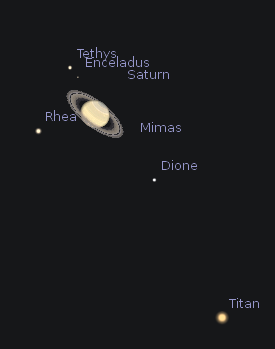
Saturn through a telescope. Of the satellites only Titan should be visible with Saturn so low in the sky at 8:30 p.m. Created using Stellarium.
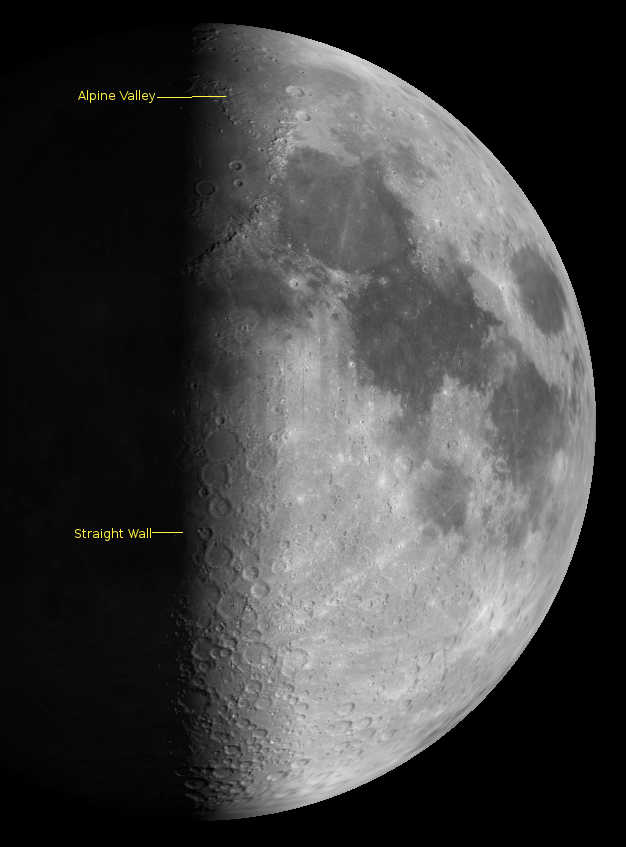
The first quarter Moon tonight at 8:30 p.m. with some interesting locations. Created using Virtual Moon Atlas.
Points of interest on the moon tonight:
- Alpine Valley – This is a fault valley some 79 miles (130 km) long and 7 miles (11 km) wide through the lunar Alps.
- Straight Wall – This is a fault that runs north-south on the moon and is only seen either one day after first quarter or one day after last quarter. It is 67 miles (110 km) long and 900 feet (300 meters) high. But instead of being a wall, it has only a 7 degree slope, which explains its brief appearance. Tonight it will cast a shadow. One day after last quarter the sun will shine directly on the slope, which is covered by lighter material and will show as a bright line.
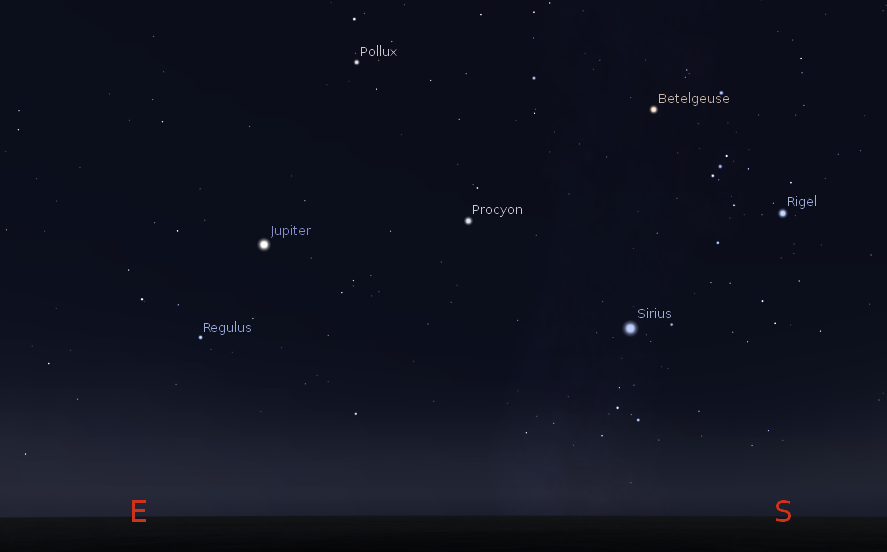
Jupiter and the winter stars at 6:30 a.m. on October 2, 2014. Created using Stellarium.
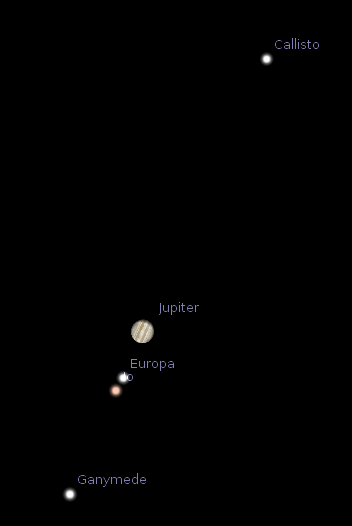
Jupiter and its satellites as seen through a telescope at 6:30 a.m. October 2, 2014. Created using Stellarium.
09/24/2014 – Ephemeris – Where are the bright planets this week?
Ephemeris for Wednesday, September 24th. The sun will rise at 7:31. It’ll be up for 12 hours and 4 minutes, setting at 7:36. The moon is new today, and won’t be visible.
Let’s take our weekly look at the bright planets. Mars and Saturn are in the southwestern sky at 9 p.m. with Saturn to the right and a bit below Mars by 17 degrees, about the two widths of your fist held at arm’s length. Saturn will set at 9:38 p.m. Saturn is in Libra, while Mars is in Scorpius. Mars is closing in on a star that has the identical color, and this year the same brightness, its rival Antares. Indeed that’s what the star’s name means: Ant as in anti, Ares the Greek god of war, and the counterpart of the Roman Mars. They will be closest Saturday. Mars will set at 10:13.. In the morning sky brilliant Jupiter will rise in the east-northeast at 3:23 a.m., while Venus, will rise in the east at 6:51 a.m. only 42 minutes before the sun. I’m not sure you’ll see it.
Times are for the Traverse City/Interlochen area of Michigan. They may be different for your location.
Addendum
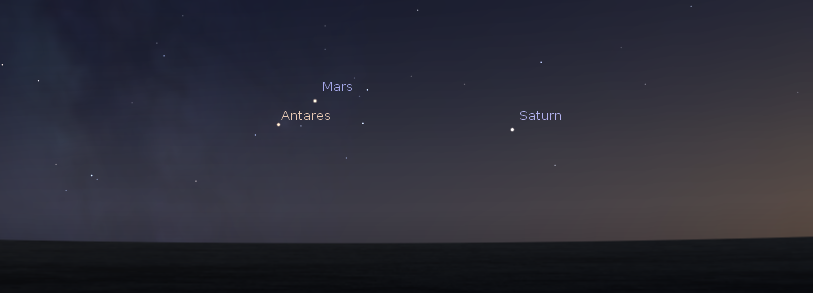
Saturn with Mars approaching Antares low in the southwest at 8:30 p.m. on September 24, 2014. Created using Stellarium.
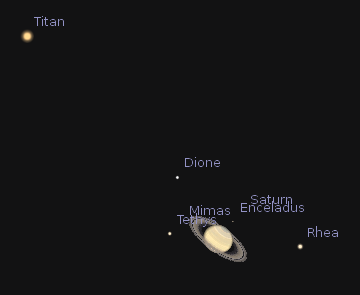
Saturn in a telescope on September 24, 2014. Of the satellites, only Titan should be visible. Created using Stellarium.
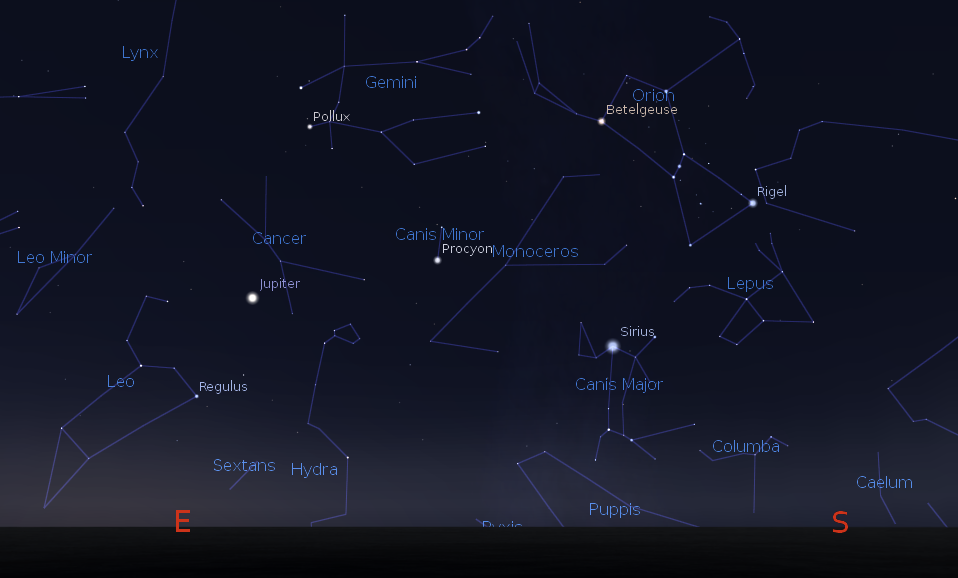
Jupiter and the winter and the western most spring constellations at 6:30 a.m. on September 25, 2014. Created using Stellarium.
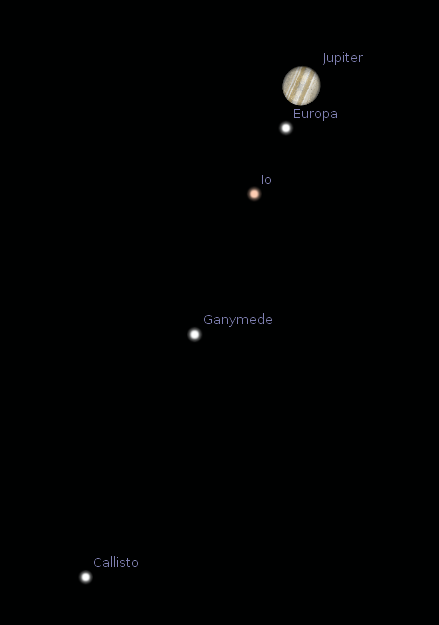
Jupiter and its moon through a telescope at 6:30 a.m. on September 25, 2014. Created using Stellarium.
09/19/2014 – Ephemeris – Astronomical events for Saturday local and far off
Ephemeris for Friday, September 19th. The sun will rise at 7:26. It’ll be up for 12 hours and 19 minutes, setting at 7:45. The moon, 4 days past last quarter, will rise at 3:59 tomorrow morning.
Saturday will be a big day for astronomical viewing, if it’s clear. Tomorrow’s events start early with the planet Jupiter just above and right of the thin crescent moon. They will be visible by 6 a.m. During the day the Grand Traverse Astronomical Society will be at the Leland Heritage Celebration. That runs from 9 a.m. to 5 p.m. on River Street in Leland. Weather permitting the Sun will be in view with some giveaway items for the kids even if it’s cloudy. At night starting at 9 p.m. will be a star party at Northwestern Michigan’s Rogers Observatory. Being the dark of the moon the wonders of the summer Milky Way will be in view if it’s clear. An alternate program will be presented if it’s cloudy.
Times are for the Traverse City/Interlochen area of Michigan. They may be different for your location.
Addendum
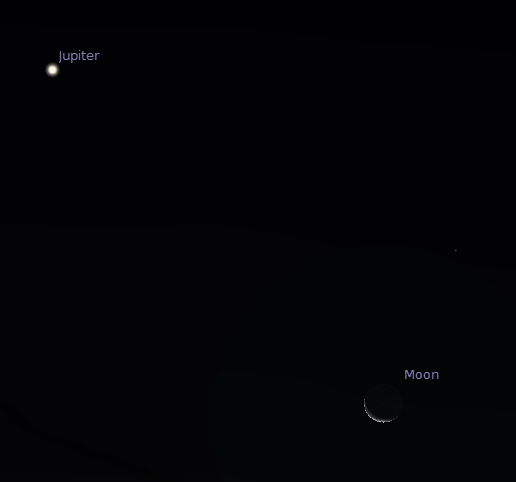
Jupiter and the moon at 6 a.m. Saturday September 20, 2014. Created using Stellarium.
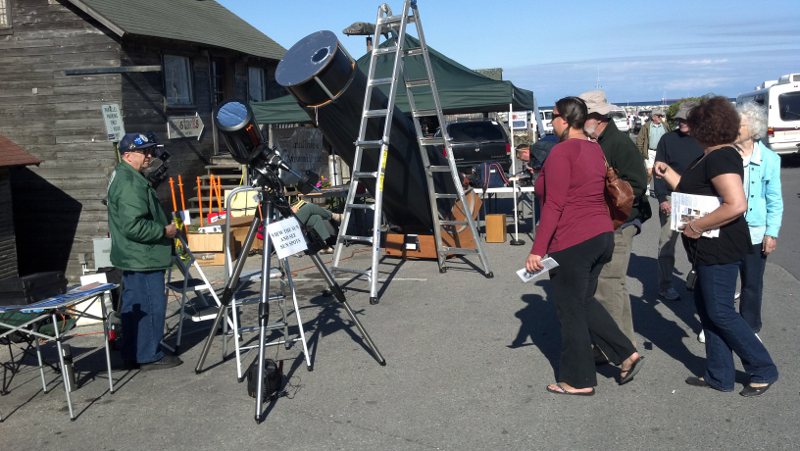
GTAS telescopes at Leland Heritage Celebration in 2011.
Arrrr! Today is Talk Like a Pirate Day mateys. Just in time for the Schooner tall ship Festival in Traverse City this weekend.
09/17/2014 – Ephemeris – It’s Wednesday, do you know where the bright planets are?
Ephemeris for Wednesday, September 17th. The sun will rise at 7:23. It’ll be up for 12 hours and 25 minutes, setting at 7:49. The moon, 2 days past last quarter, will rise at 2:06 tomorrow morning.
Let’s take our weekly look at the bright planets. Mars and Saturn are now nearly side by side with Saturn to the right by 15 degrees, about the width of your fist and a half held at arm’s length. Saturn will set at 10:04 p.m. Saturn is in Libra, while Mars is entering Scorpius just above the star tonight called Dschubba. Mars is closing in to a star that has the identical hue, and this year the same brightness, its rival Antares. Indeed that’s what the star’s name means: Ant as in anti, Ares the Greek god of war, and the counterpart of the Roman Mars. They will be closest next week. Mars will set at 10:25. In the morning sky brilliant Jupiter will rise in the east-northeast at 3:43 a.m., while Venus, will rise at 6:30 a.m.
Times are for the Traverse City/Interlochen area of Michigan. They may be different for your location.
Addendum
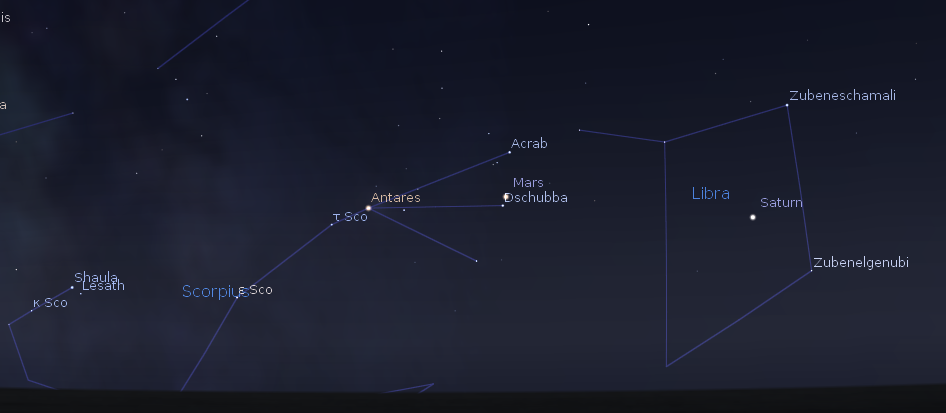
Looking southwest at Saturn and Mars with the stars of Scorpius and Libra at 9 p.m. on September 17, 2014. Created using Stellarium.
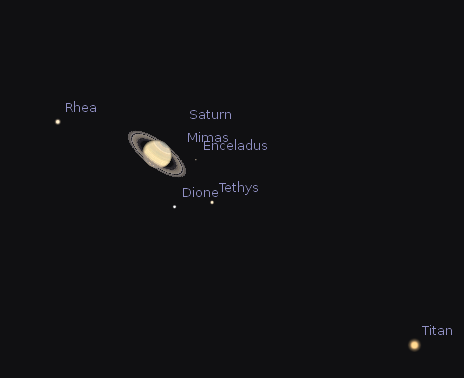
Saturn through a telescope. However being so low in the sky even the moon Titan might be hard to see. September 17, 2014. Created using Stellarium.
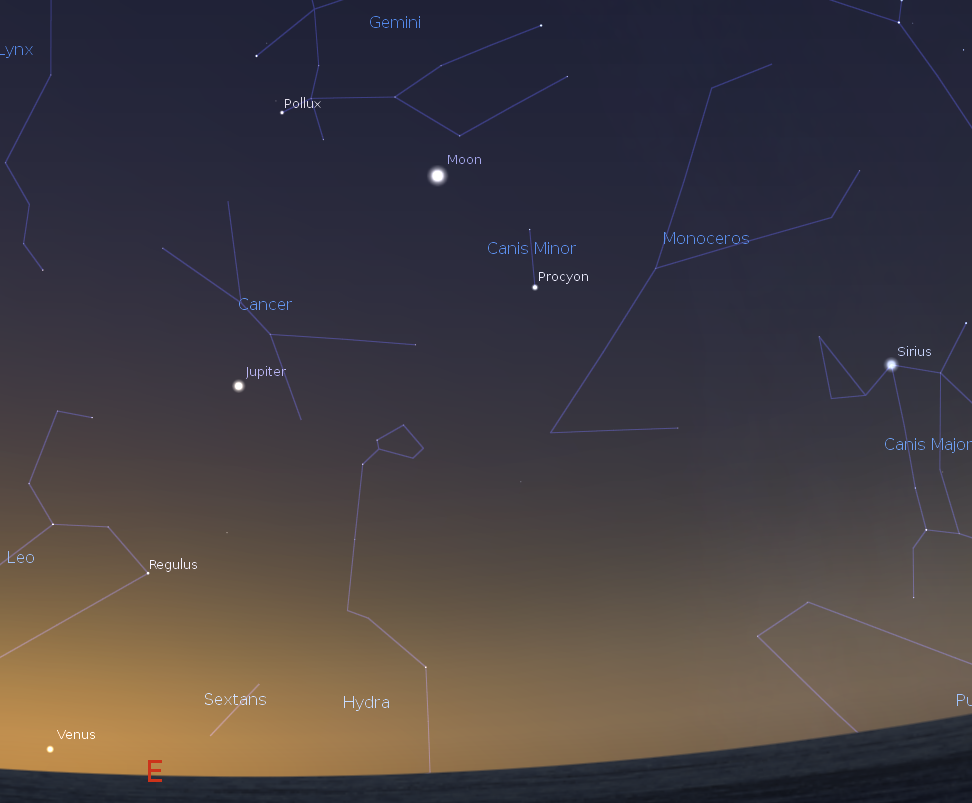
The Moon, Jupiter and Venus with some of the bright stars of winter and spring at 6:45 a.m. on September 18, 2014. Created using Stellarium.
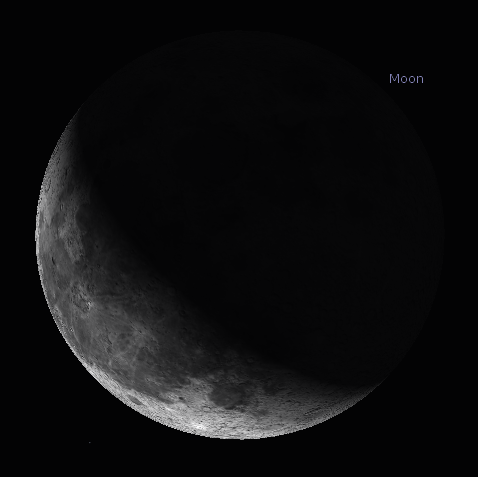
The Moon at 6:45 a.m. on September 18, 2014. I doubt you’d see Earth shine (the rest of the Moon like this) with the crescent this wide. Created using Stellarium.
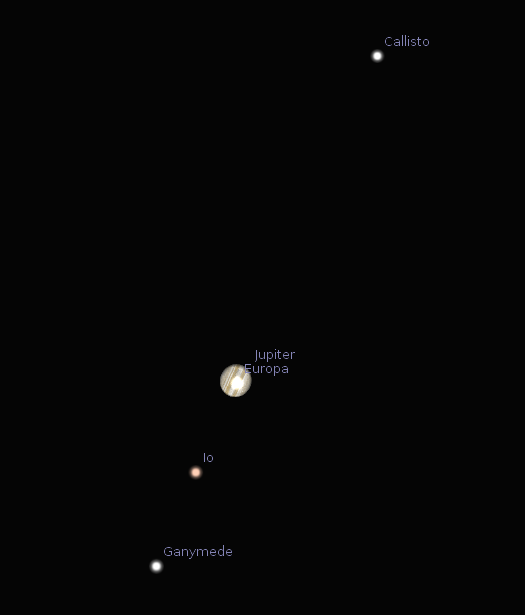
Jupiter through a telescope. Europa is transiting in front of Jupiter at 6:45 a.m. and will be very difficult or impossible to spot. Stellarium shows that the shadow of Europa is just about directly behind the moon. Created using Stellarium.
09/10/2014 – Ephemeris – Where are the bright planets this week?
Ephemeris for Wednesday, September 10th. The sun will rise at 7:15. It’ll be up for 12 hours and 46 minutes, setting at 8:02. The moon, 2 days past full, will rise at 8:54 this evening.
Let’s take our weekly look at the bright planets. Mars and Saturn are now nearly side by side with Saturn to the right by 10 degrees, about the width of your fist held at arm’s length. Saturn will set at 10:30 p.m. Saturn in a telescope will suffer because it’s getting close to the horizon but it’s still possible to see those rings and its large moon Titan. Reddish Mars is leaving Saturn in the dusk, leaving Libra, where Saturn is and will be entering Scorpius on Saturday. Mars will set at 10:38 p.m., 8 minutes after Saturn. In the morning sky brilliant Jupiter will rise in the east-northeast at 4:04 a.m., while the brighter Venus, will rise at 6:14 a.m. Jupiter is increasing its distance from the sun, while Venus is retreating toward the Sun from our point of view.
Times are for the Traverse City/Interlochen area of Michigan. They may be different for your location.
Addendum
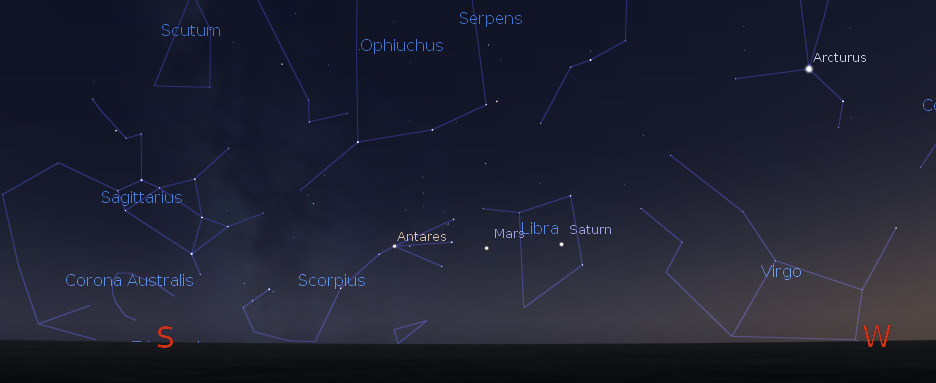
Saturn and Mars with the evening summer constellations at 9:30 p.m. September 10, 2014. Created using Stellarium.
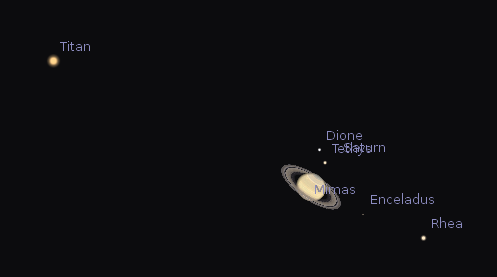
Saturn through the telescope at 9:30 p.m. September 10, 2014. Created using Stellarium.
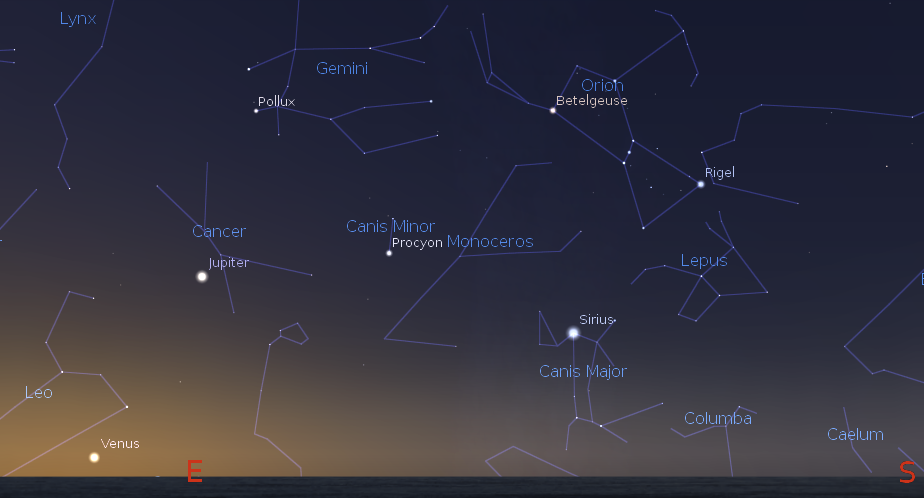
Jupiter and Venus with the Winter constellations at 6:30 a.m. September 11, 2014. Created using Stellarium.
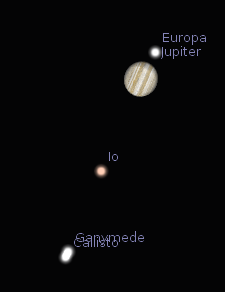
Telescopic view of Jupiter and its 4 Galilean moons at 6:30 a.m. on September 11, 2014. Created using Stellarium.
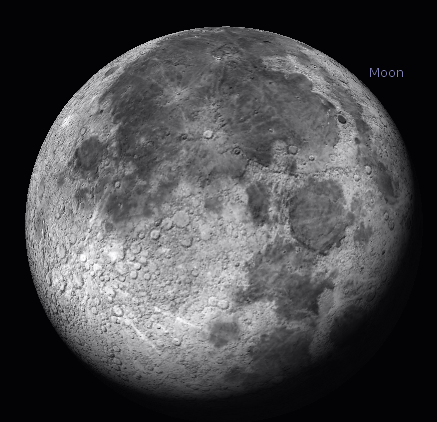
The waning gibbous Moon at 6:30 a.m. September 11, 2014. Created using Stellarium. Tomorrow the program will be about the moon and its features that will be visible late in the evening. The terminator will advance by a small bit between tomorrow morning and tomorrow evening.
09/03/2014 – Ephemeris – This week’s bright planets
Ephemeris for Wednesday, September 3rd. The sun will rise at 7:07. It’ll be up for 13 hours and 8 minutes, setting at 8:15. The moon, 1 day past first quarter, will set at 1:50 tomorrow morning.
Let’s take our weekly look at the bright planets. Mars and Saturn are now nearly side by side with Saturn to the right by six and a half degrees of about 13 moon widths of the red planet. Saturn will set at 10:57 p.m. Viewing Saturn with a telescope will suffer because it’s getting close to the horizon but it’s still possible to see those fabulous rings and its large moon Titan. Reddish Mars is also in the constellation of Libra the scales and will set at 10:52 p.m. because it is slightly lower than Saturn. In the morning sky brilliant Jupiter will rise in the east-northeast at 4:24 a.m., while the brighter Venus, will rise at 5:53 a.m. Jupiter is increasing its distance from the sun, while Venus is retreating toward the Sun from our point of view.
Times are for the Traverse City/Interlochen area of Michigan. They may be different for your location.
Addendum
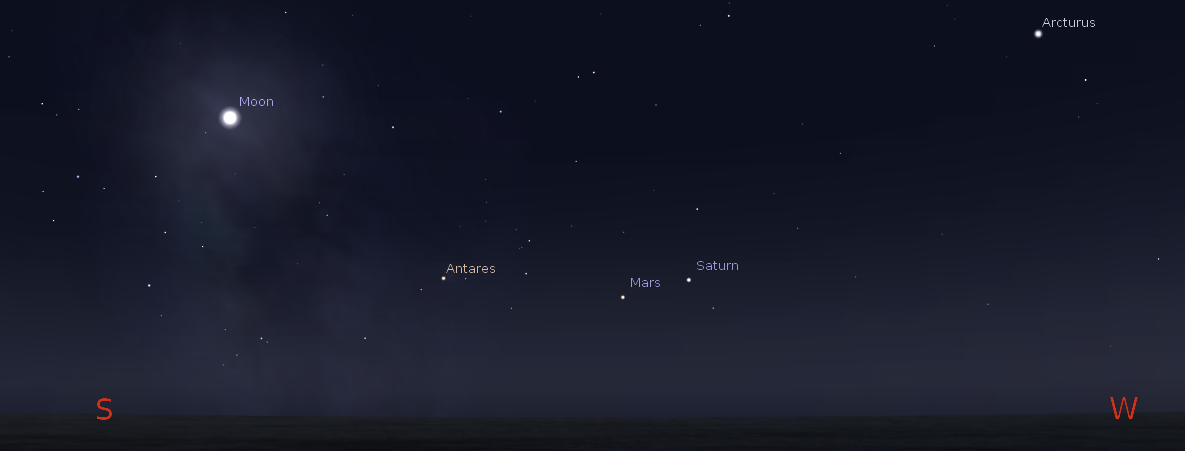
Saturn, Mars and the Moon at 9:30 p.m. September 3, 2014. Created using Stellarium.
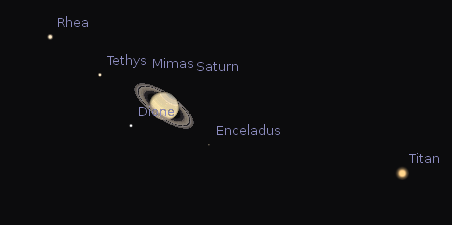
Saturn through the telescope at 9:30 p.m. September 3, 2014. Created using Stellarium.
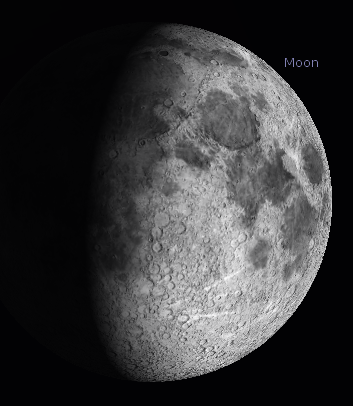
The Moon through binoculars at 9:30 p.m. September 3, 2014. Created using Stellarium.
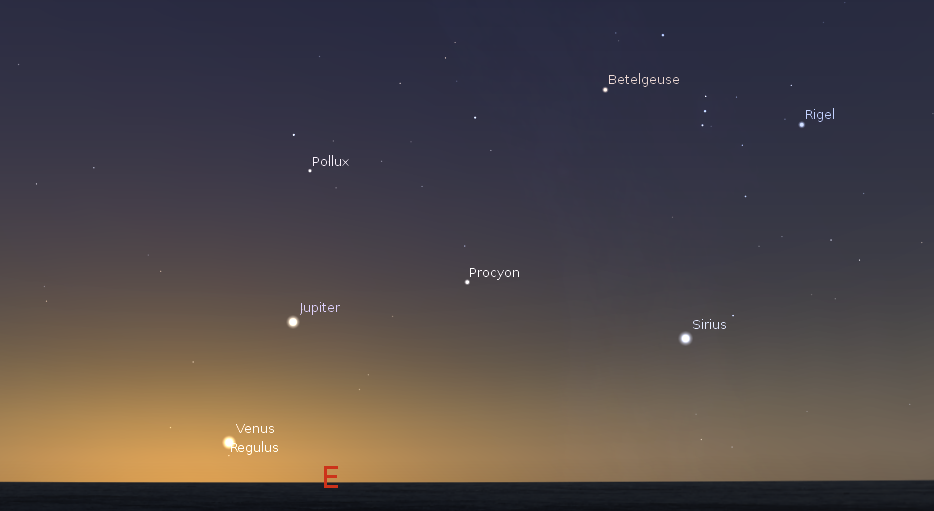
Jupiter, Venus and the rising stars of winter at 6:30 a.m. September 4, 2014. Created using Stellarium.
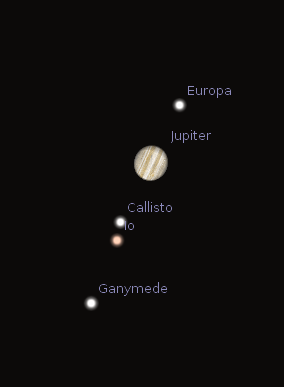
Jupiter and moons through the telescope at 6:30 a.m. September 4, 2014. Created using Stellarium.
 Bob Moler's Ephemeris Blog