Archive
03/04/2015 – Ephemeris – Our weekly look at the bright planets
Ephemeris for Wednesday, March 4th. The Sun will rise at 7:15. It’ll be up for 11 hours and 18 minutes, setting at 6:34. The Moon, 1 day before full, will set at 6:59 tomorrow morning.
Lets take a look at the bright planets for this week. Brilliant Venus is in the west by 7:30 p.m. It will set at 9:13 p.m. It’s separating from Mars which appears below and right of it. The Red Planet will set tonight at 8:47 p.m. Jupiter will appear In the southeastern sky in the evening. It will be up just about all night, and will set at 6:16 a.m. It’s near the sickle-shaped head of Leo the lion, and it’s the brightest star-like object in the sky. In telescopes tonight the moon Io will be behind Jupiter and will pop into sunlight a bit away from the planet at 9:39 p.m. Tomorrow night the 5th the moon Europa will duck behind Jupiter at 8:48 p.m. After that only 3 of the moons will be visible, until 12:57 a.m. when Europa will appear on the other side.* Early risers will be able to spot Saturn which will rise in the east-southeast at 1:25 a.m. It’s in the south at 6 a.m.
Times are for the Traverse City/Interlochen area of Michigan. They may be different for your location.
* Due to a date mix up the radio program may be incorrect. The occultation of Europa on the 5th being set on the 4th. The Io occultation is since added.
Addendum
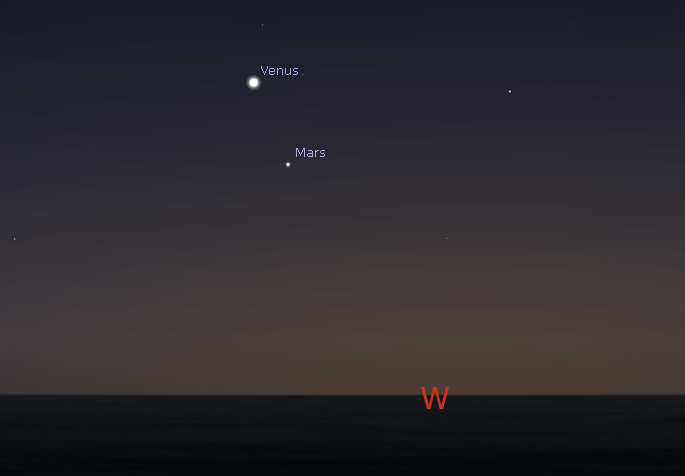
Venus and Mars in the west at 7:30 p.m. on March 4, 2015. Created using Stellarium.
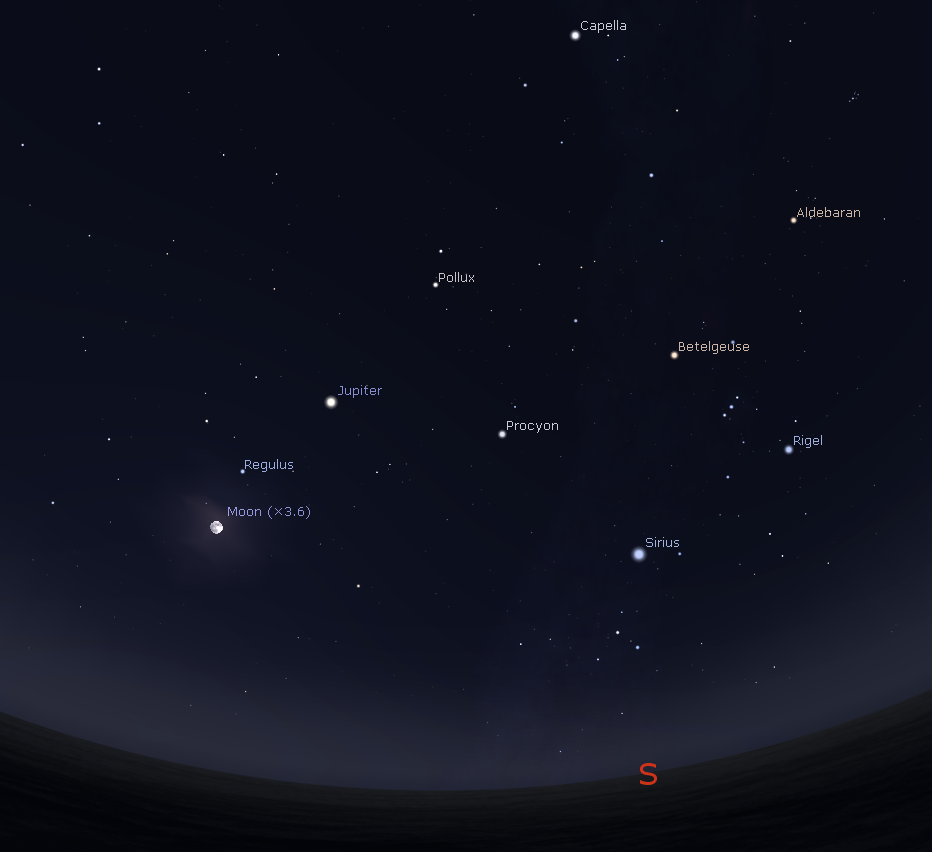
Jupiter, the full Moon and the winter stars at 9 p.m. on March 4, 2014. Created using Stellarium.
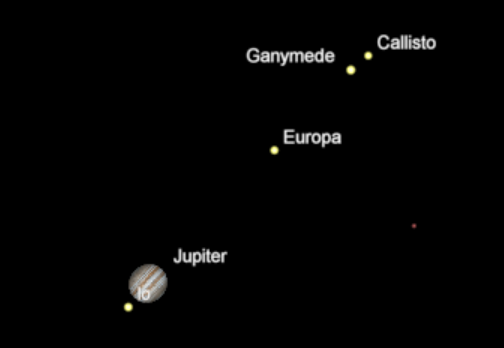
Jupiter and moons at 9:39 p.m., when Io leaves Jupiter’s shadow on March 4, 2015. Created using Cartes du Ceil (Sky Charts).
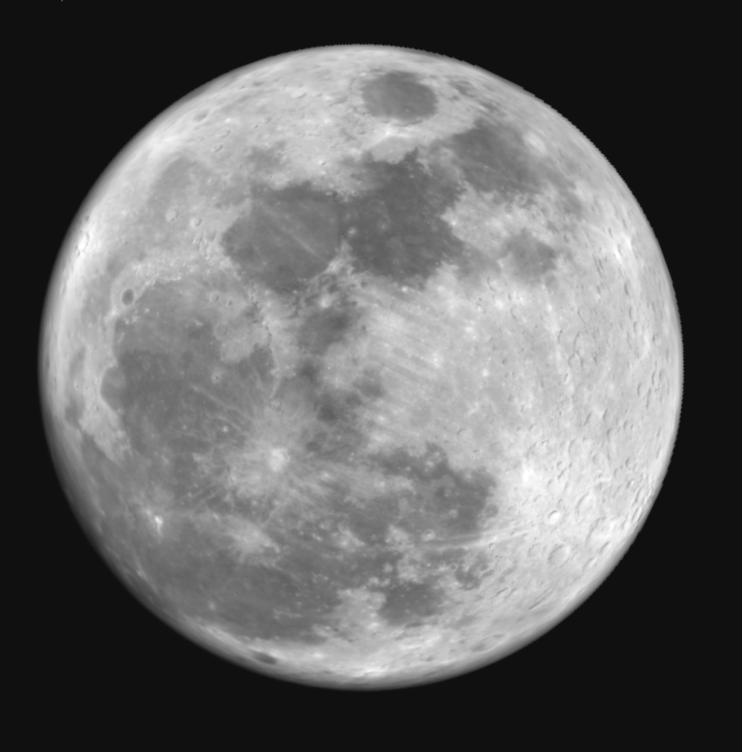
The nearly full moon at 9 p.m. on March 4, 2015. Created using Virtual Moon Atlas.
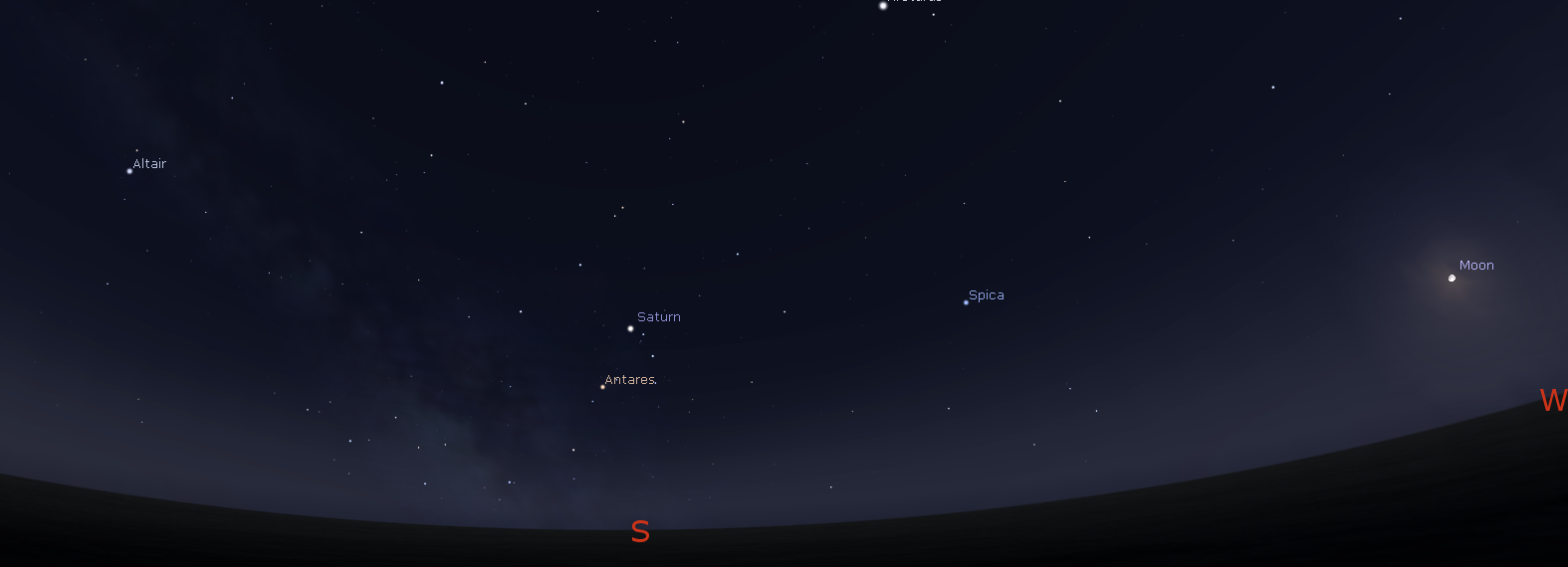
Looking south toward Saturn along with the summer stars and the setting Moon in the west at 6 a.m. March 5, 2015. Created using Stellarium.
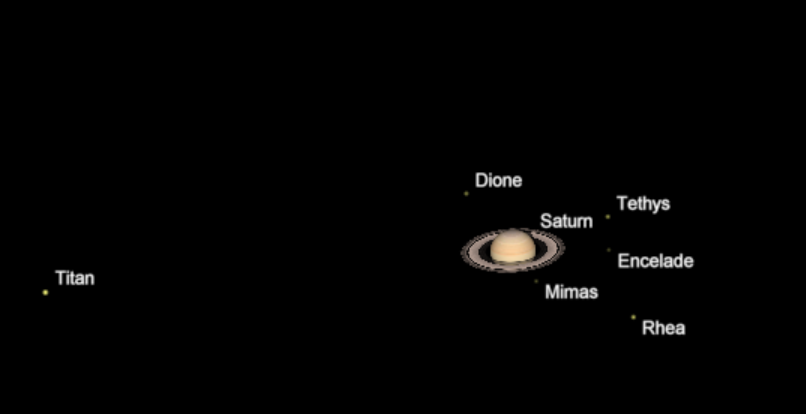
What Saturn and its moons might appear like in a telescope at 6 a.m., March 5, 2015. Small telescopes will show only the moon Titan. Created using Cartes du Ceil (Sky Charts).
02/25/2015 – Ephemeris – It’s planet day on Ephemeris
Ephemeris for Wednesday, February 25th. The sun will rise at 7:27. It’ll be up for 10 hours and 57 minutes, setting at 6:24. The moon, at first quarter today, will set at 2:28 tomorrow morning.
Lets take a look at the bright planets and a fading binocular comet for this week. Brilliant Venus is in the west-southwest by 7 p.m. It will set at 8:55 p.m. It’s separating from Mars which appears below and right of it. The Red Planet will set tonight at 8:46 p.m. Jupiter will appear In the southeastern sky in the evening. It will be up just about all night, and will set at 6:44 a.m. It’s near the sickle-shaped head of Leo the lion, and it’s the brightest star-like object in the sky. Early risers will be able to spot Saturn which will rise in the east-southeast at 1:48 a.m. It’s in the south at 6 a.m. Comet Lovejoy, visible in binoculars, is about half way from the star at the end of Andromeda, called Almaak and the “W” of Cassiopeia.
Times are for the Traverse City/Interlochen area of Michigan. They may be different for your location.
Addendum
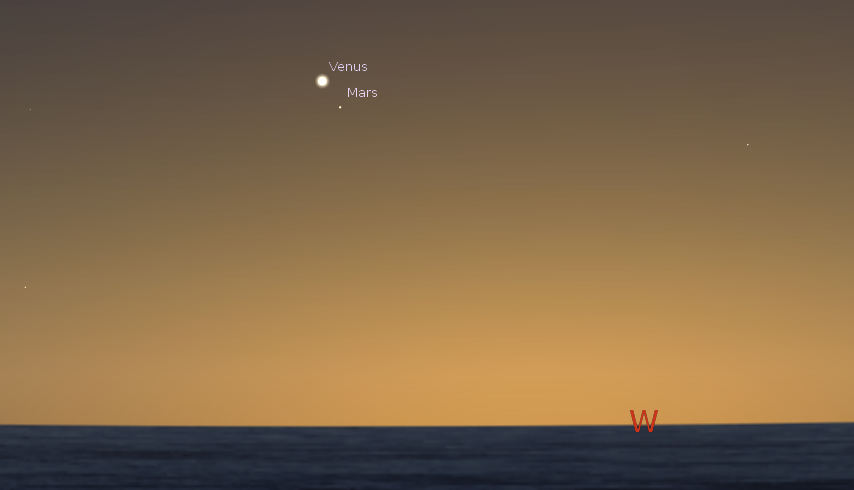
Venus and Mars low in the west after sunset. This is 7 p.m., February 25, 2015. Created using Stellarium.
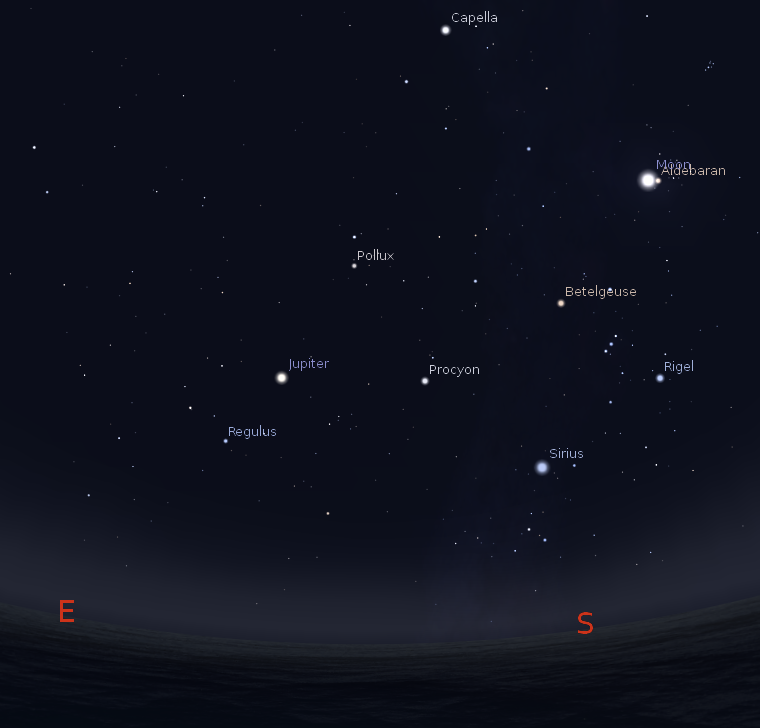
Jupiter with the first quarter moon and the winter stars at 9 p.m., February 25, 2015. Created using Stellarium.
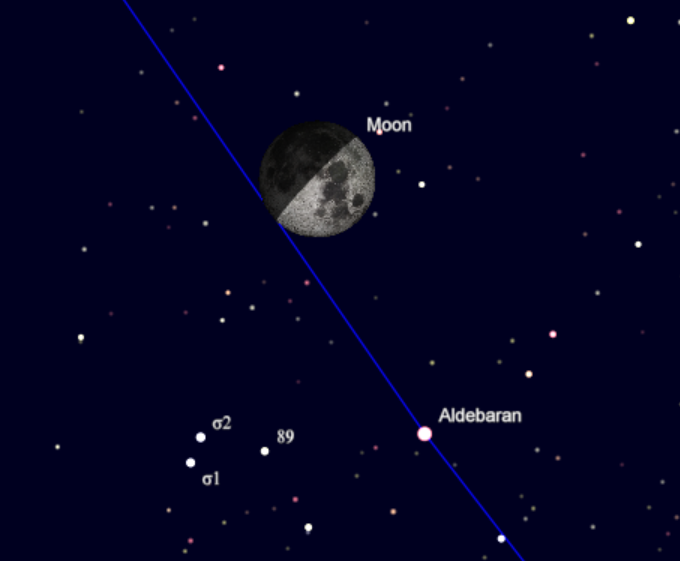
Closeup of the Moon and Aldebaran at 9 p.m. on February 25, 2015. They appeared their closest at 6 p.m. They might be glimpsed with binoculars or a small telescope at that time.
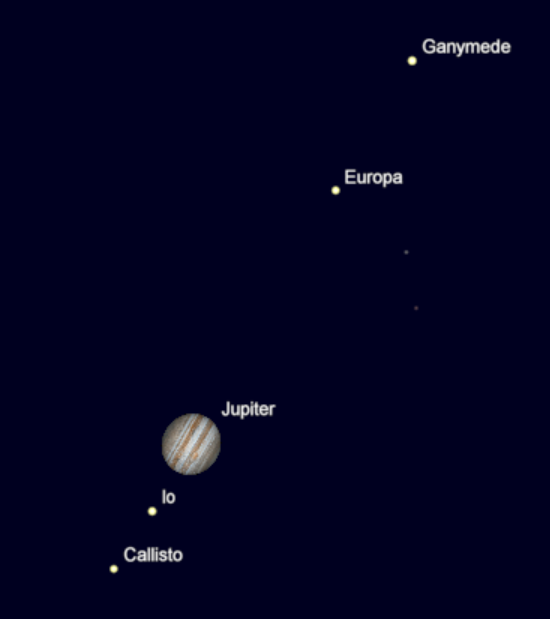
Jupiter and it’s moons at 9 p.m. February 25, 2015. Note that at this time the Great Red Spot is on the face if Jupiter. Created using Cartes du Ciel (Sky Charts).
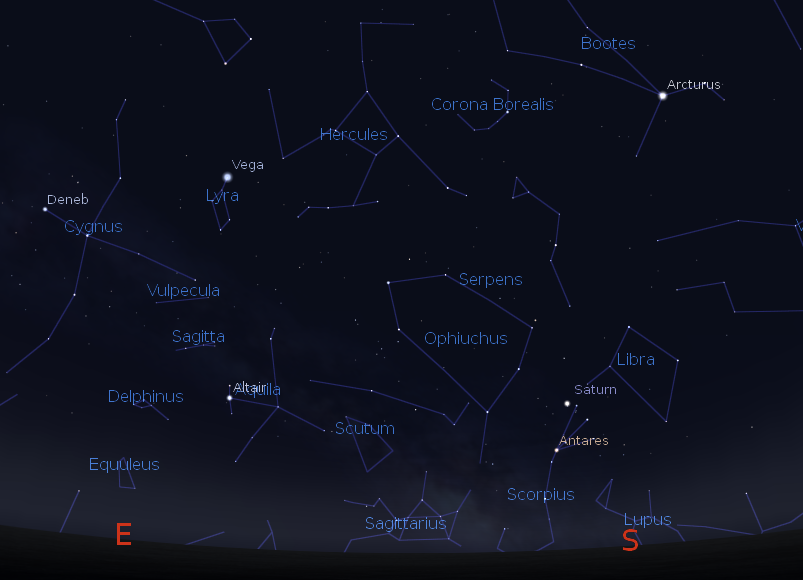
Looking southward at Saturn and a preview of the summer constellations at 6 a.m. February 26, 2015. Created using Stellarium.
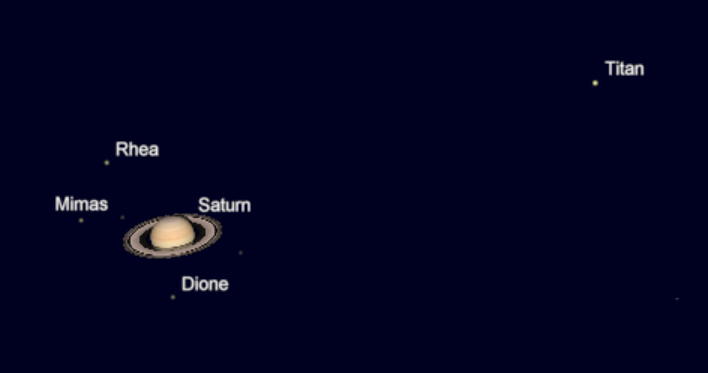
What Saturn and its moons might appear like in a telescope at 6 a.m., February 26, 2015. Small telescopes will show only the moon Titan. Created using Cartes du Ceil (Sky Charts).
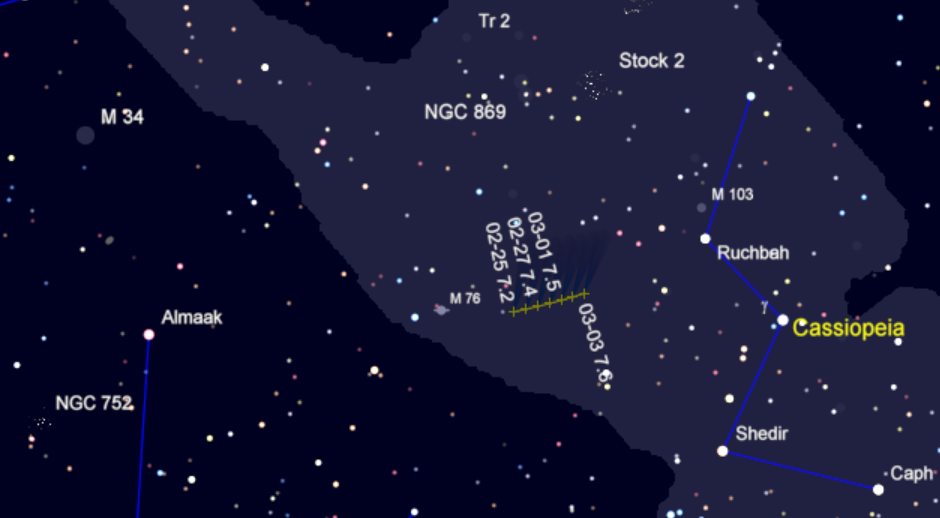
The track of Comet 2014 Q2 (Lovejoy) from 2/25/15 to 03/03/15 which will appear high in the west at 9 p.m. The comet is approaching Cassiopeia. The comet is dropping below binocular visibility, so this is the last time I will cover it on this blog. Created using Cartes du Ceil (Sky Charts).
02/18/2015 – Ephemeris – Wednesday is bright planet day (or night) on Ephemeris
Ephemeris for Ash Wednesday, Wednesday, February 18th. The sun will rise at 7:38. It’ll be up for 10 hours and 36 minutes, setting at 6:15. The moon is new today, and won’t be visible.
Lets take a look at the bright planets and a fading binocular comet for this week. Brilliant Venus is in the west-southwest by 7 p.m. It will set at 8:37 p.m. It’s nearing Mars which appears above and left of it. They will be at their closest on the 22nd. The Red Planet will set tonight at 8:45 p.m. Jupiter will appear In the southeastern sky in the evening. It will be up all night, and will set at 7:14 a.m. It’s near the sickle-shaped head of Leo the lion, and it’s the brightest star-like object in the sky. Early risers will be able to spot Saturn which will rise in the east-southeast at 2:15 a.m. Comet Lovejoy, visible in binoculars, is about half way from the star at the end of Andromeda, called Almaak and the “W” of Cassiopeia.
Times are for the Traverse City/Interlochen area of Michigan. They may be different for your location.
Addendum
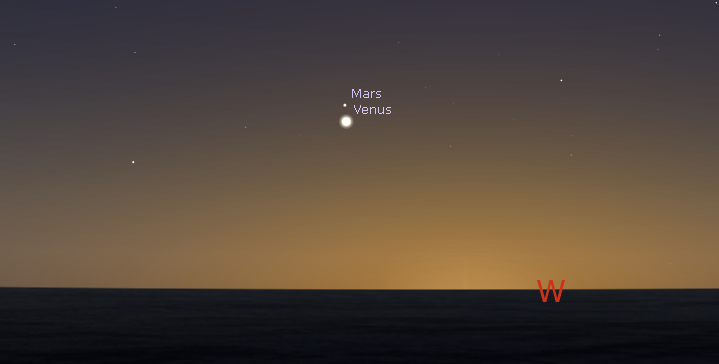
Venus and Mars low in the west after sunset. This is 7 p.m., February 18, 2015. Created using Stellarium.
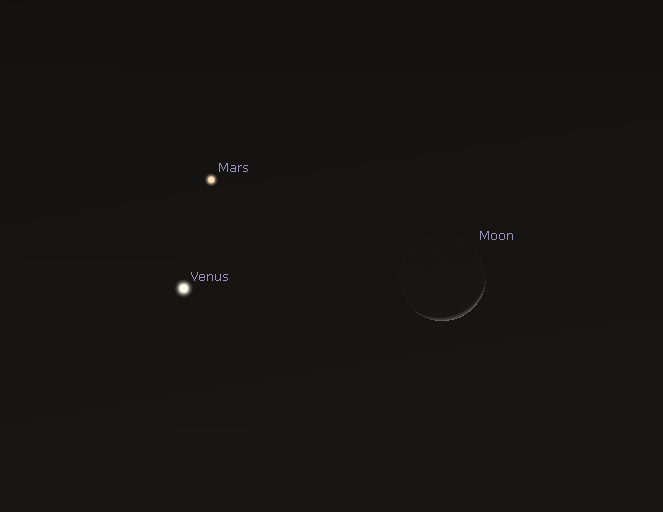
Venus, Mars and the moon on Friday night at 7 p.m. (2/20/15). Created using Stellarium.
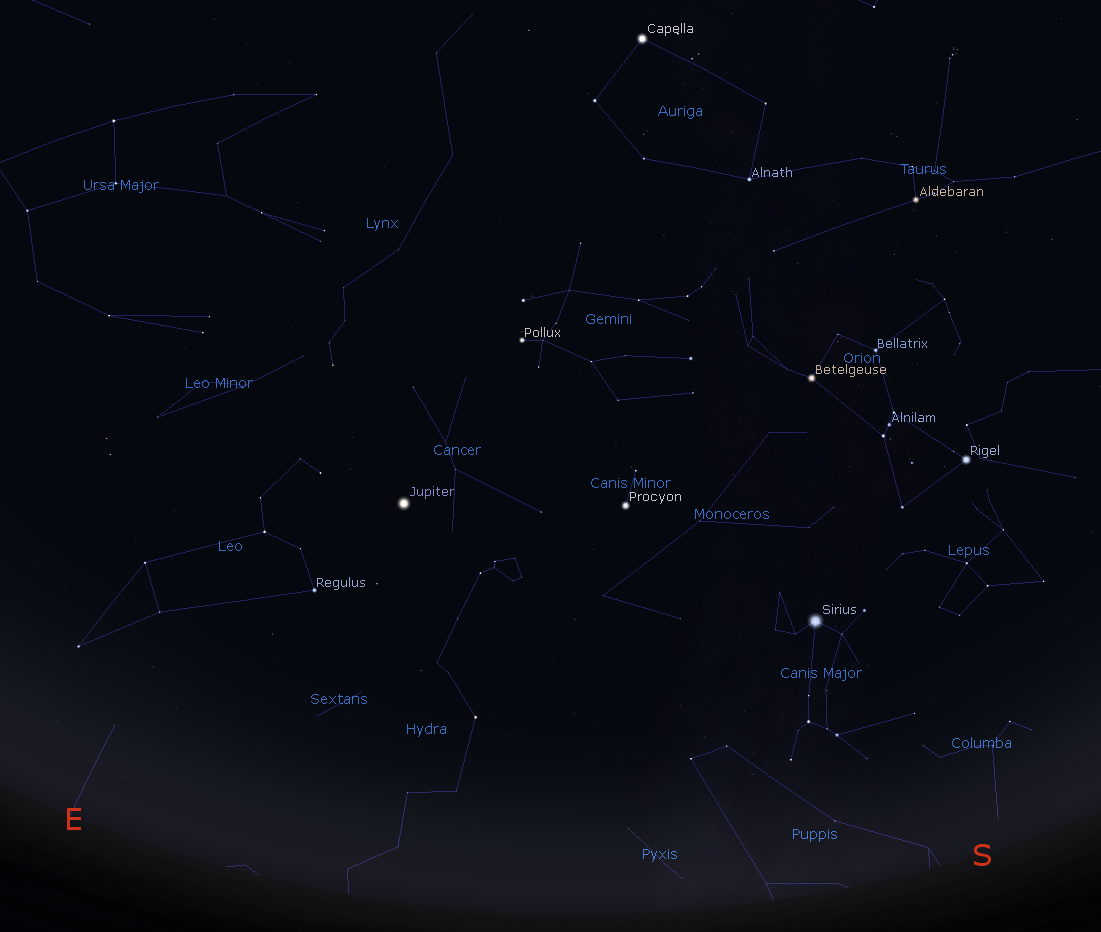
Jupiter with the winter constellations at 9 p.m., February 18, 2015. Created using Stellarium.
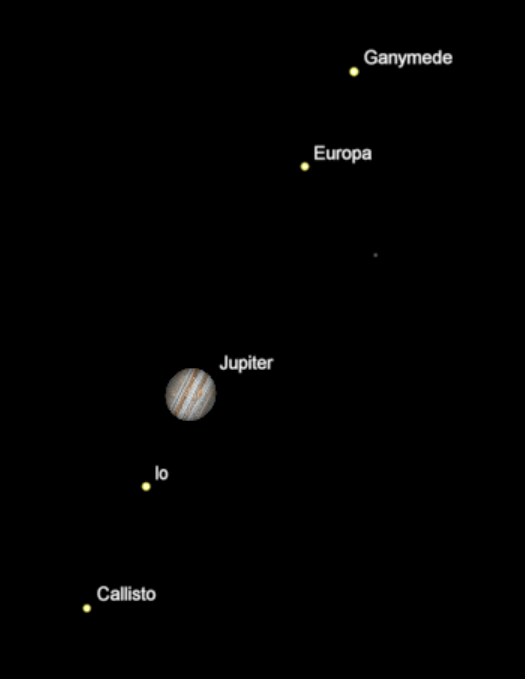
Jupiter and it’s moons at 9 p.m. February 18, 2015. Note that at this time the Great Red Spot is on the face if Jupiter. Created using Cartes du Ciel (Sky Charts).
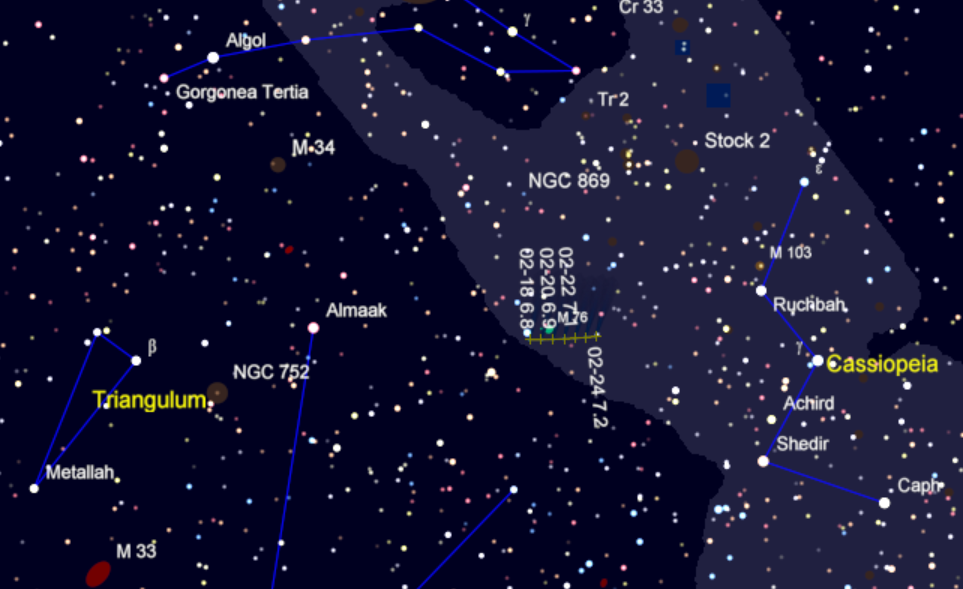
The track of Comet 2014 Q2 (Lovejoy) from 2/18/15 to 02/24/15 which will appear high in the west at 9 p.m. On the 20th the comet will pass near M76, a 10th magnitude planetary nebula. It will be much dimmer than the comet. Created using Cartes du Ceil (Sky Charts).
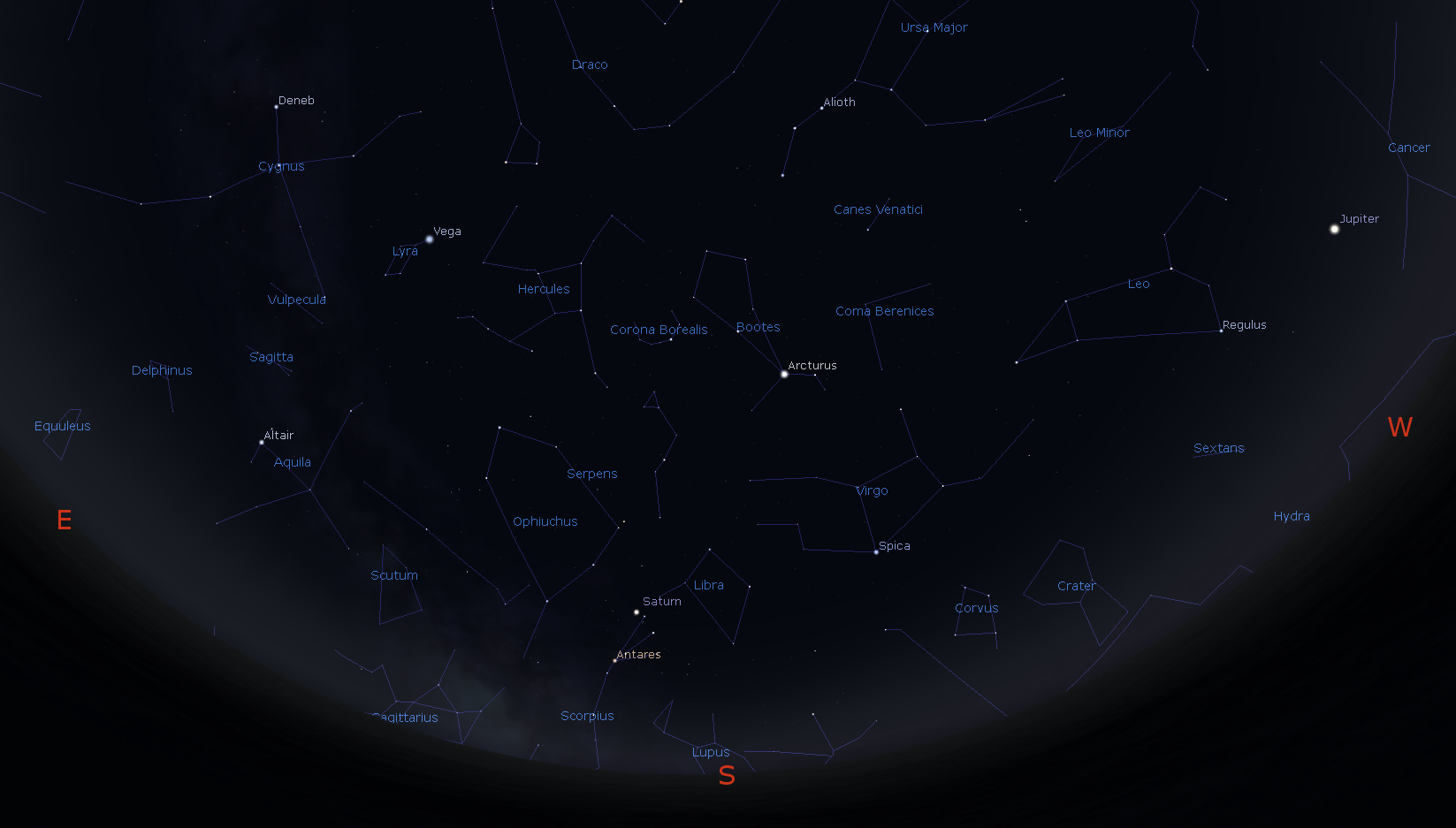
Looking southward at 6 a.m. February 19, 2015 to a preview of the constellations of summer with Saturn in the south and Jupiter setting in the west. Click to enlarge.
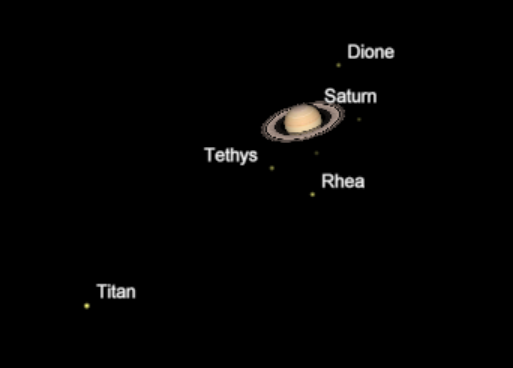
What Saturn and its moons might appear like in a telescope at 6 a.m., February 19, 2015. Small telescopes will show only the moon Titan. Created using Cartes du Ceil (Sky Charts).
02/11/2015 – Ephemeris – Wednesday is bright planet day around here
Ephemeris for Wednesday, February 11th. The sun will rise at 7:49. It’ll be up for 10 hours and 16 minutes, setting at 6:05. The moon, at last quarter today, will rise at 1:52 tomorrow morning.
Lets take a look at the bright planets and a binocular comet for this week. Brilliant Venus is in the west-southwest by 7 p.m. It will set at 8:19 p.m. Mars appears above and left of Venus in the southwest. Venus is approaching Mars and they will be at their closest on the 22nd. The Red Planet will set tonight at 8:44 p.m. Jupiter will appear In the southeastern sky in the evening. It will be up all night, and will set just before sunrise. It’s near the sickle-shaped head of Leo the lion, and it’s the brightest star-like object in the sky. Early risers will be able to spot Saturn which will rise in the east-southeast at 2:41a.m. Comet Lovejoy, visible in binoculars, is about the width of a binocular field to the right of the star at the end of Andromeda, called Almaak.
Times are for the Traverse City/Interlochen area of Michigan. They may be different for your location.
Addendum
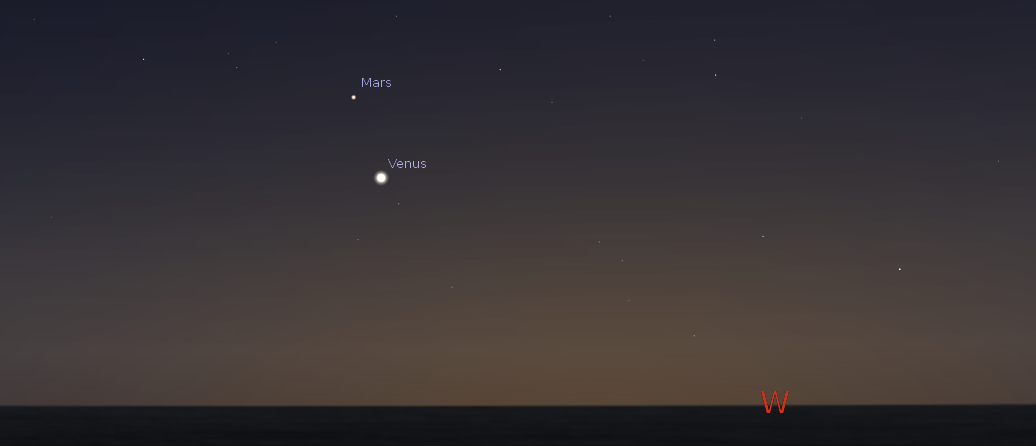
Venus and Mars low in the west at 7 p.m. on February 11, 2015. The crescent moon will be seen with the two planets on the evening of the 20th, and they will be in conjunction on the 22nd. Created using Stellarium.
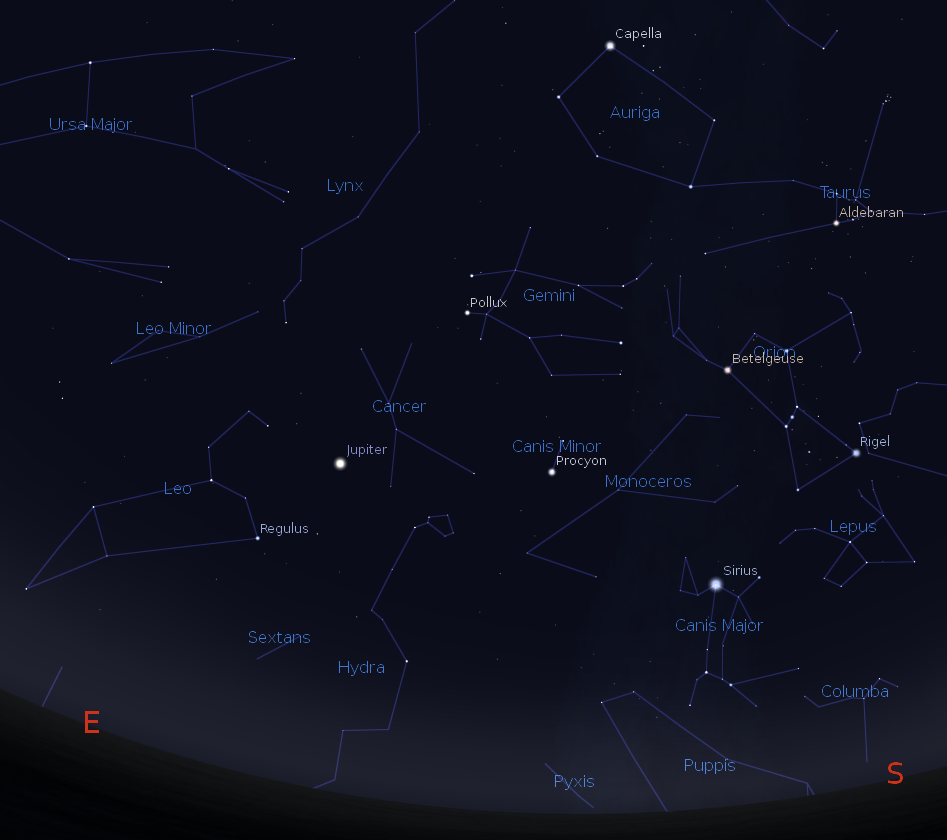
Jupiter and the bright winter stars at 9 p.m. on February 11, 2015. Created using Stellarium.
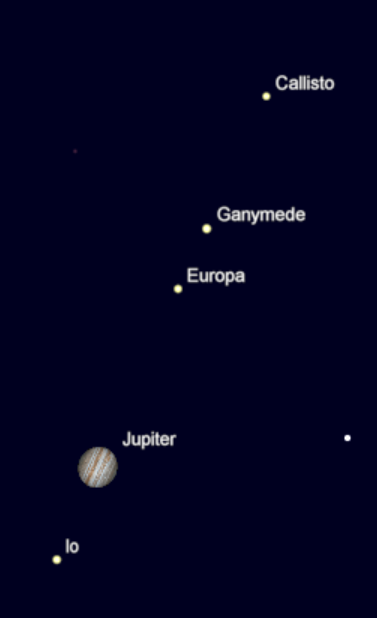
Jupiter and its moons as they might appear in a telescope tonight. Created using Cartes du Ceil (Sky Charts).
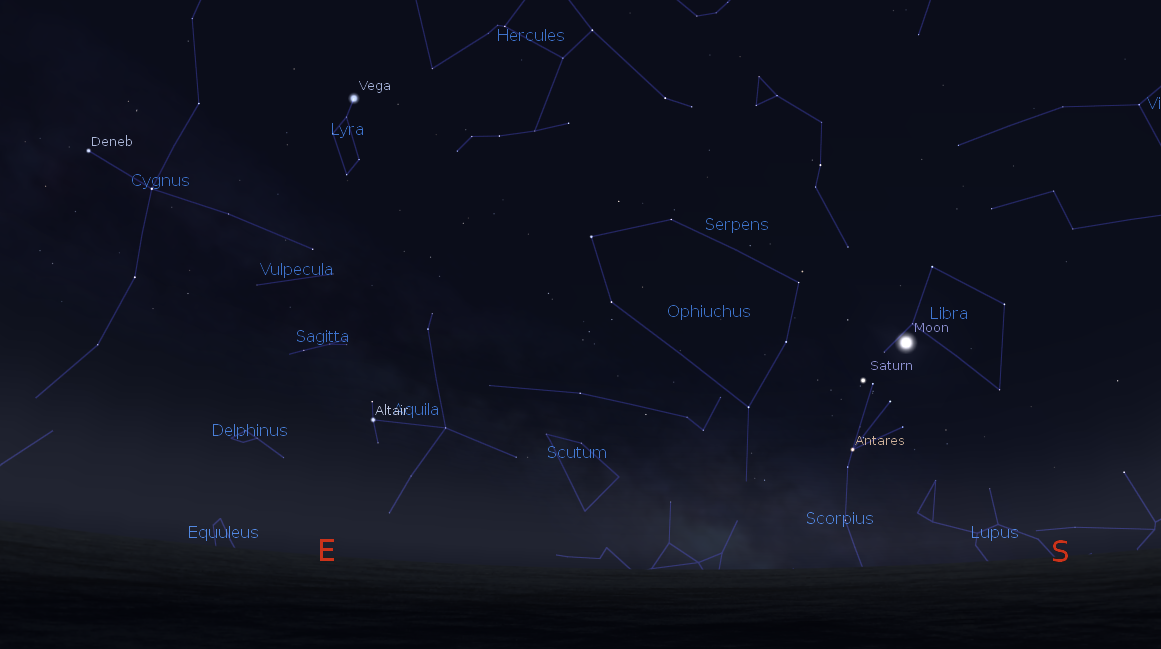
The Moon will appear near Saturn at 6 a.m. February 12, 2015. Created using Stellarium.
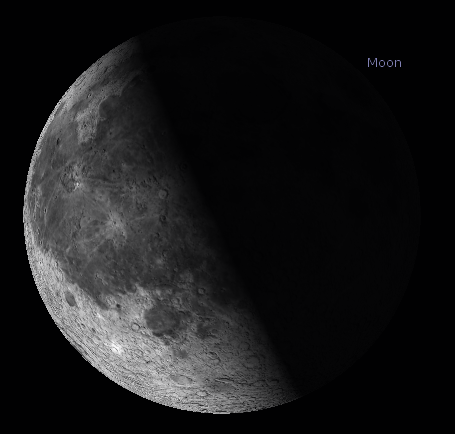
The Moon as it might appear in binoculars at 6 a.m. on February 12, 2015. Created using Stellarium.
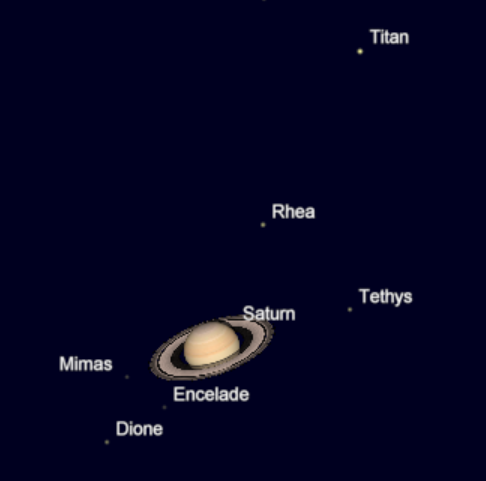
What Saturn and its moons might appear like in a telescope at 6 a.m., February 12, 2015. Small telescopes will show only the moon Titan. Created using Cartes du Ceil (Sky Charts).
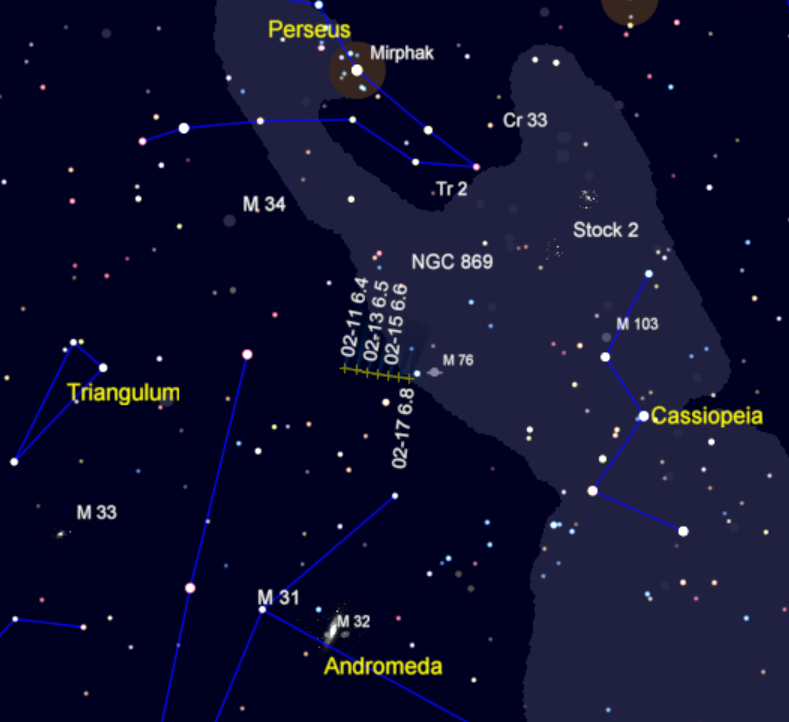
The track of Comet 2014 Q2 (Lovejoy) from 2/11/15 to 02/17/15 which will appear high in the west at 9 p.m. Toward the end of the period the comet will pass near M76, a 10th magnitude planetary nebula. It will be much dimmer than the comet. Created using Cartes du Ceil (Sky Charts).
02/09/2015 – Ephemeris – How to find the constellation of Cancer the crab
Ephemeris for Monday, February 9th. The sun will rise at 7:52. It’ll be up for 10 hours and 10 minutes, setting at 6:02. The moon, 2 days before last quarter, will rise at 11:51 this evening.
A small, dim member of the zodiac is Cancer the crab. It’s dim stars make to my eyes and upside down letter Y. It lies between Gemini to the upper right and Leo to the lower left, especially as it is still rising in the southeastern sky at 9 p.m. Right now the bright planet Jupiter is about half way between it and Leo. It does have a relatively bright fuzzy object to the naked eye amongst it’s stars, positioned roughly in the center. It was discovered as a fuzzy spot before the invention of the telescope and called Praesepe, the manger. With the invention of the telescope it was discovered to be a loose group of stars in an open or galactic star cluster. This easy binocular object is best known now as the Beehive cluster or M44.
Times are for the Traverse City/Interlochen area of Michigan. They may be different for your location.
Addendum
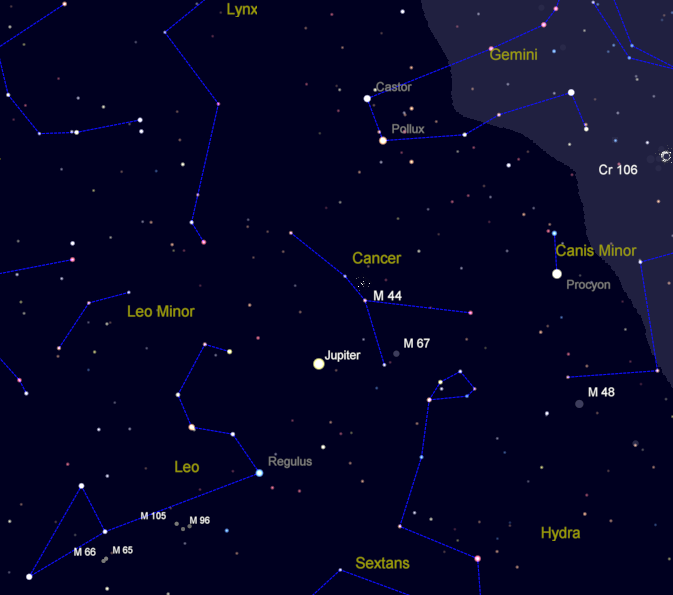
The zodiacal constellation Cancer with Jupiter nearby in the southeast at 9 p.m. February 9, 2015. Created using Cartes du Ceil (Sky Charts).
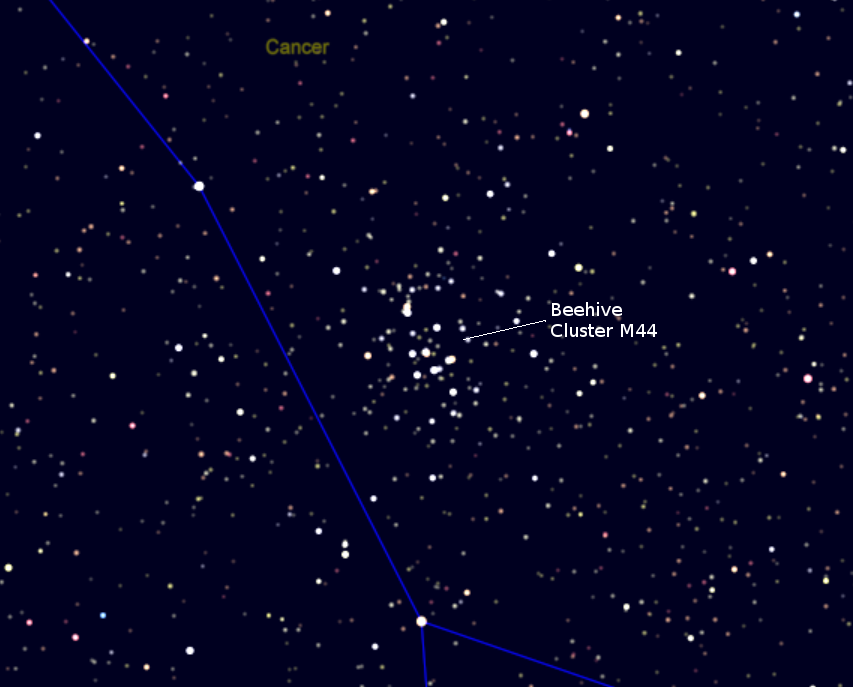
The Beehive star cluster, M44. Its ancient name was the Praesepe or manger when glimpsed by the naked eye. Created using Cartes du Ciel (Sky Charts).
M44 is a young star cluster, perhaps 600-700 million years old and only 577 light years away. It is an open or galactic star cluster. It only appears outside the band of the Milky Way because it’s close to us. The same cannot be said for M67.
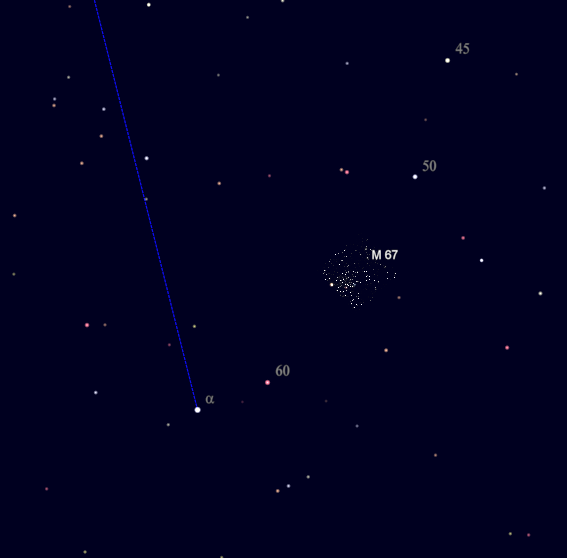
Finder Chart for open cluster M67, found just west of α Cancri, or Acubens. Created using Cartes du Ceil (Sky Charts).
M67 is a fuzzy spot in binoculars but really shows its beauty in telescopes. M67 is pretty old for an open star cluster, one of the oldest known, at about the age of the Sun or a bit younger. It’s nearly 3,000 light years away, so it really is out of the plane of the galaxy.
02/06/2015 – Ephemeris – The GTAS will entertain the NMC Students in a Star Bowl Quiz tonight
Ephemeris for Friday, February 6th. The sun will rise at 7:56. It’ll be up for 10 hours and 2 minutes, setting at 5:58. The moon, 3 days past full, will rise at 8:55 this evening.
Tonight the Grand Traverse Astronomical Society will have for its meeting at 8 p.m. at Northwestern Michigan College’s Rogers Observatory its nearly annual Star Bowl contest with The Northwestern Michigan College astronomy students, and NMC Astronomy Club members facing the returning champions, the GTAS. This Jeopardy style game will be hosted by NMC Professor Jerry Dobek. Come and watch or even take part if you’d like. At 9 p.m. the society will host a star party at the observatory with the Moon and Jupiter as featured objects. Folks can still bring in their telescopes for help during this time. The observatory is located south of Traverse City on Birmley Road between Garfield and Keystone roads.
Times are for the Traverse City/Interlochen area of Michigan. They may be different for your location.
Addendum
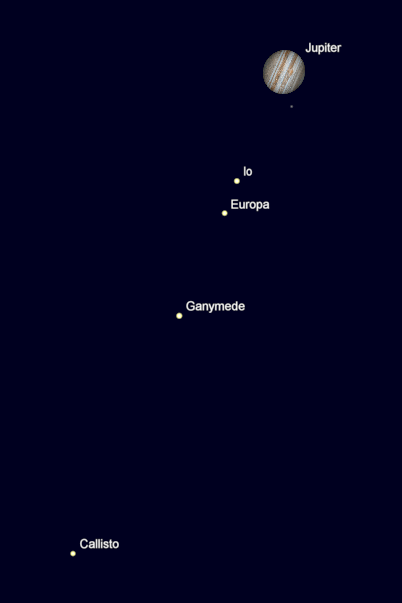
Jupiter through a telescope at 9 p.m. (EST), on February 6, 2015. The four Galilean moon will be stretched out on one side of Jupiter in order of their actual distances from the planet. Created using Cartes du Ceil (Sky Charts).
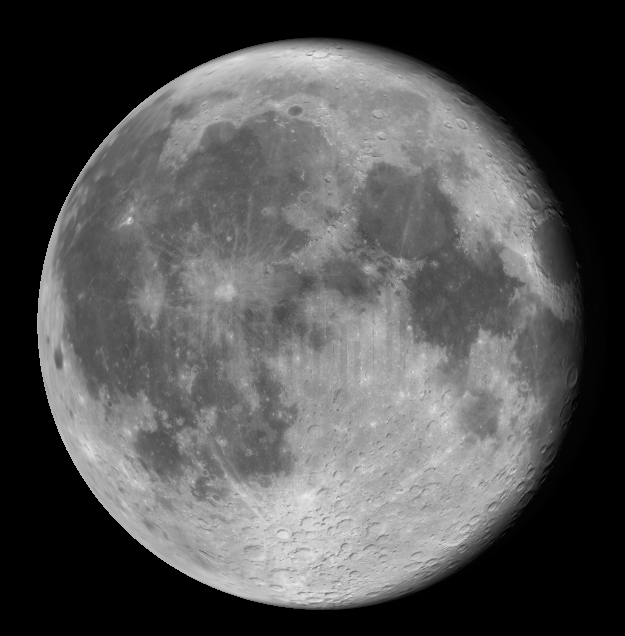
The Moon tonight (February 6, 2015). The Moon will rise shortly before the start of the Star Party. Created using Virtual Moon Atlas.
02/05/2015 – Ephemeris more about Jupiter it’s motion and mass
Thursday, February 5th. The sun will rise at 7:57. It’ll be up for 9 hours and 59 minutes, setting at 5:56. The moon, 2 days past full, will rise at 7:57 this evening.
Tomorrow the planet Jupiter will reach opposition from the Sun being about 180 degrees opposite the Sun in the sky. At opposition Jupiter is it’s closest to the earth, and appears its largest in a telescope, except for Venus when it is at its very closest to the Earth. This second brightest planet was named for the chief of the Roman gods, and takes a majestic 12 years to circumnavigate the sky staying in each zodiacal constellation for a year. It is currently between Cancer on the right and Leo on the left. In fact it crossed the astronomical boundary back into Cancer. Since we view all the other planets from our own moving planet, their apparent paths back up westward from their normal eastward motion when we are nearest them.
Times are for the Traverse City/Interlochen area of Michigan. They may be different for your location.
Addendum
I published this track of Jupiter’s motion for this Jovian viewing season a week ago, showing it’s backward or retrograde motion as we pass it.
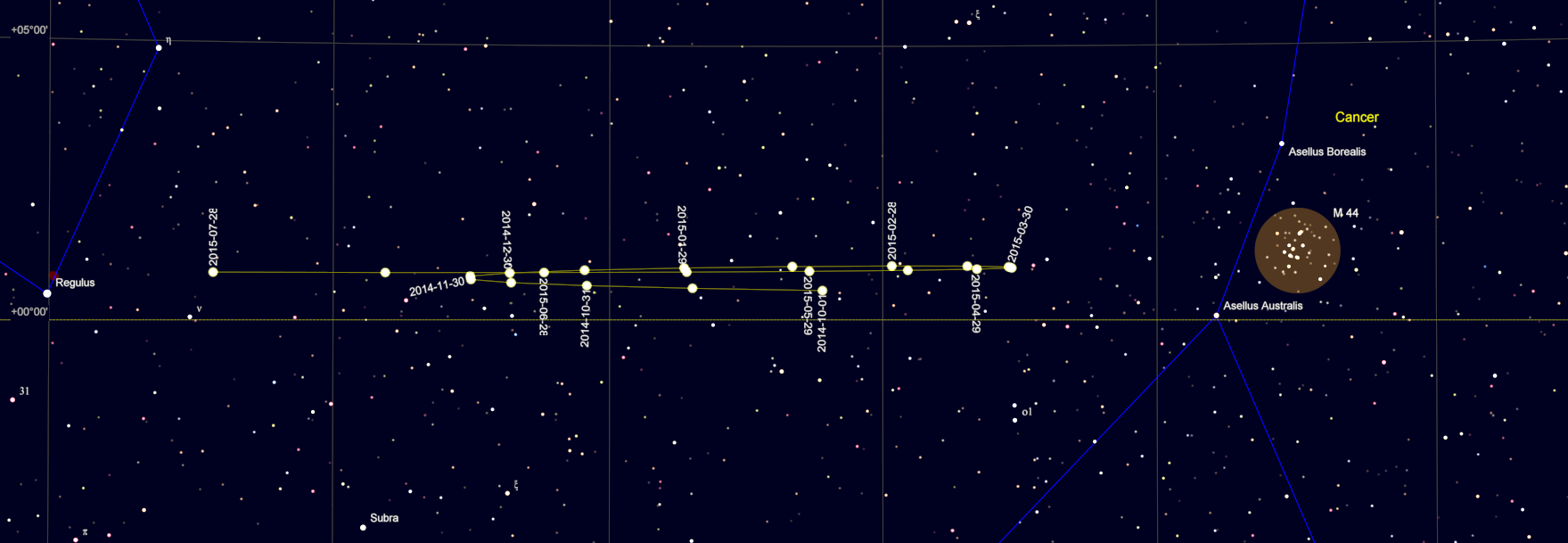
Jupiter’s retrograde path against the stars between Cancer and Leo October 2014 to July 2015. Created using Cartes du Ceil (Sky Charts). Click on the image to enlarge.
The planet Jupiter is the largest planet and also most massive. In fact Jupiter contains more mass than all the other planets of the solar system combined times 2.
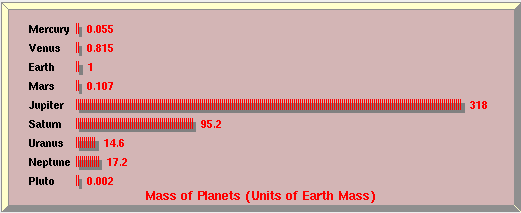
Masses of all the planets including the dwarf planet Pluto in terms of the Earth’s mass. Credit: University of Tennessee.
Or as the late great science and science fiction writer Isaac Asimov wrote: “The solar system is composed of the Sun, Jupiter and debris.”
Feeling small yet?
02/04/2015 – Ephemeris – We have 4 bright planets and a fading comet
Ephemeris for Wednesday, February 4th. The sun will rise at 7:58. It’ll be up for 9 hours and 56 minutes, setting at 5:55. The moon, 1 day past full, will rise at 6:59 this evening.
Lets take a look at the bright planets and a reasonably bright comet for this week. Brilliant Venus is in the west-southwest by 6:30 p.m. It will set at 8 p.m. Mars appears above and left of Venus in the southwest. Both of them are in the constellation of Aquarius. The Red Planet will set tonight at 8:43 p.m. Jupiter, 2 days from being in opposition from the sun, and opposite the sun in the sky, when it will be rising at sunset and setting at sunrise will rise tonight in the east at 5:49 p.m. It’s near the sickle-shaped head of Leo the lion. It will be seen above the Moon at 9 p.m. Early risers will be able to spot Saturn which will rise in the east-southeast at 3:06 a.m. Comet Lovejoy, visible in binoculars, is near the star at the end of Andromeda, called Almaak.
Times are for the Traverse City/Interlochen area of Michigan. They may be different for your location.
Addendum
Evening
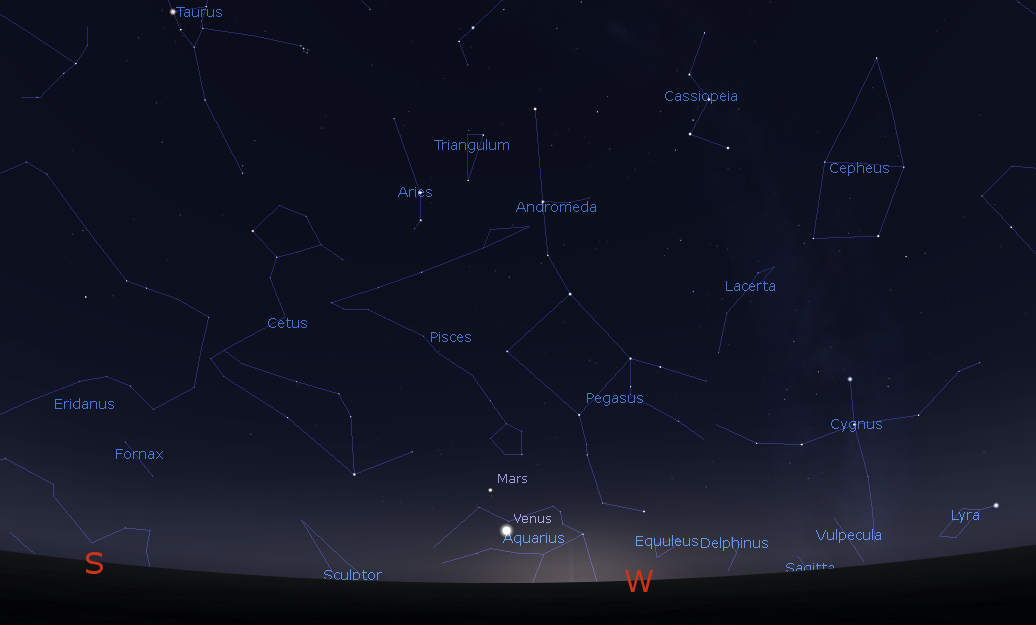
Venus and Mars low in the west with the setting autumn constellations and a few northern summer stars at 7 p.m. on February 4, 2015. Created using Stellarium.
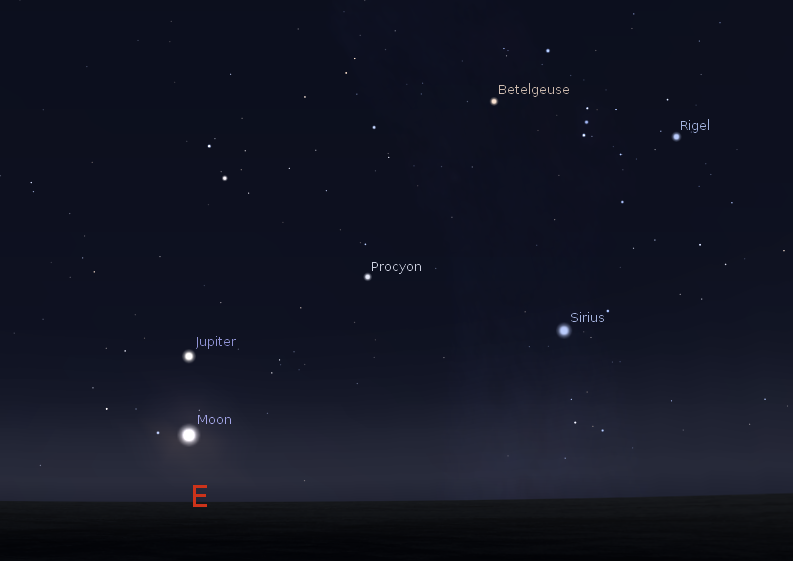
Jupiter the Moon and the bright winter stars at 8 p.m. on February 4, 2015. Created using Stellarium.
Jupiter and its Galilean moons as they might appear in a telescope. Created using Cartes du Ceil (Sky Charts).
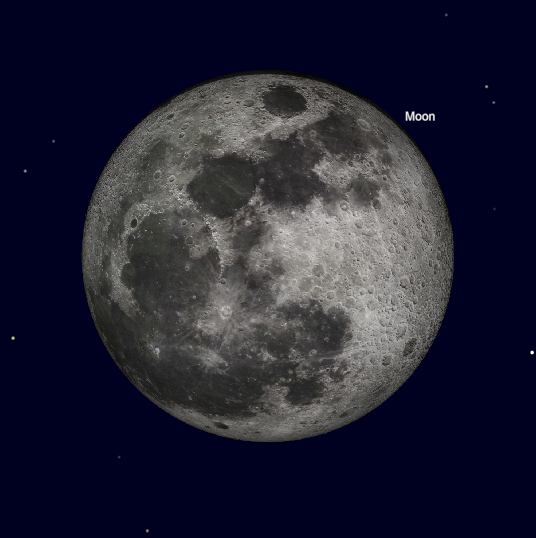
The Moon as it might appear in binoculars at 8 p.m. on February 4, 2015. Created using Cartes du Ceil (Sky Charts).
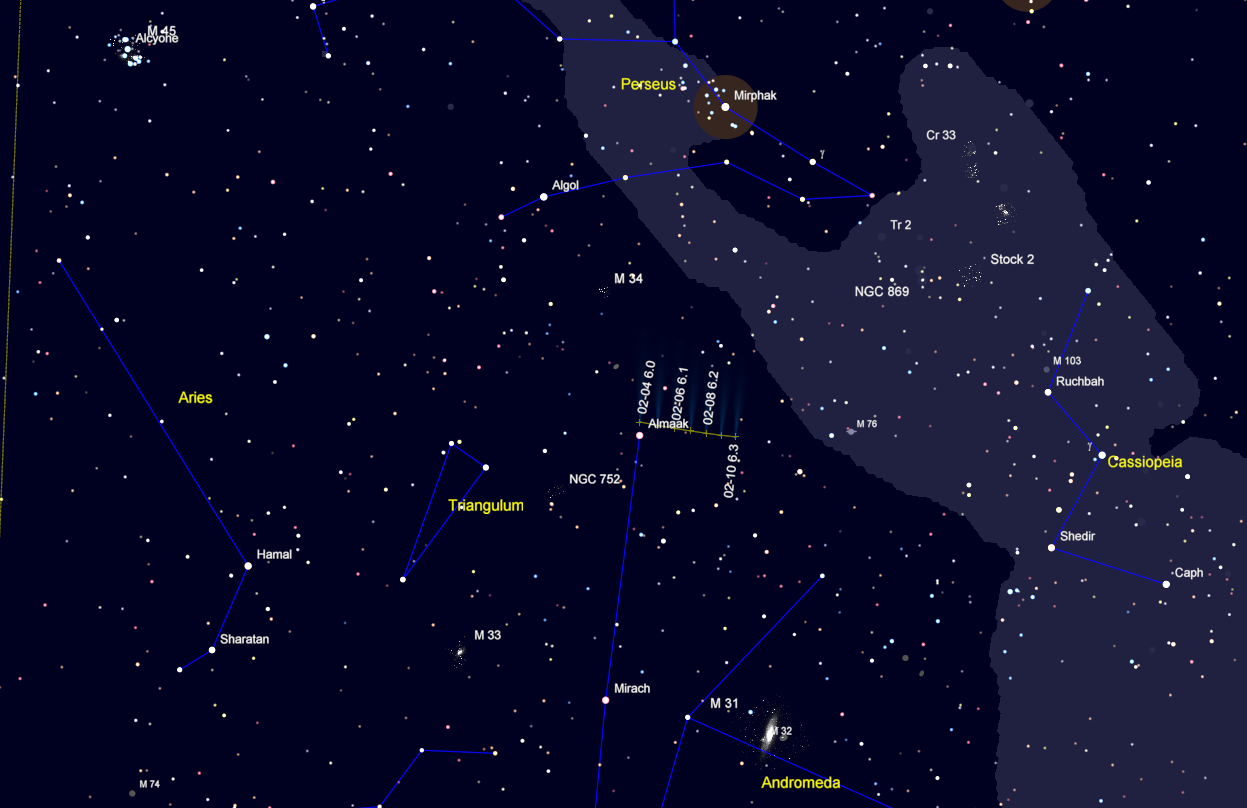
The track of Comet 2014 Q2 (Lovejoy) from 2/04/15 to 02/10/15 which will appear high in the west at 9 p.m. Created using Cartes du Ceil (Sky Charts).
Morning
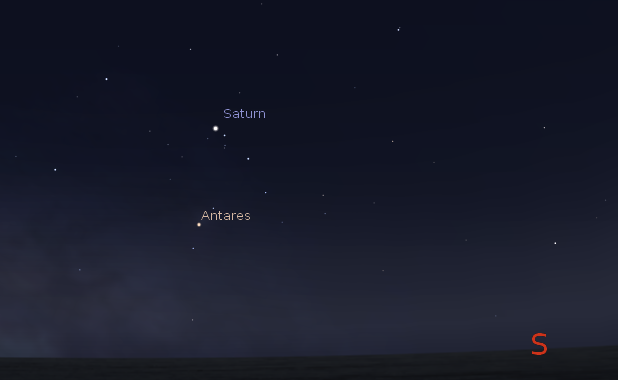
Saturn will appear above the red giant star Antares at 6 a.m. February 5, 2015. At this time Jupiter and the Moon will appear above the western horizon. Created using Cartes du Ceil (Sky Charts).
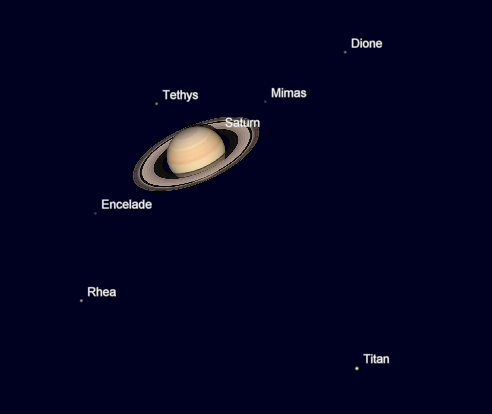
What Saturn and its moons might appear like in a telescope at 6 a.m., February 5, 2015. Small telescopes will show only the moon Titan. Created using Cartes du Ceil (Sky Charts).
02/03/2015 – Ephemeris – Jupiter is really big and spins really fast
Ephemeris for Tuesday, February 3rd. The sun will rise at 7:59. It’ll be up for 9 hours and 54 minutes, setting at 5:53. The moon, at full today, will rise at 6:01 this evening.
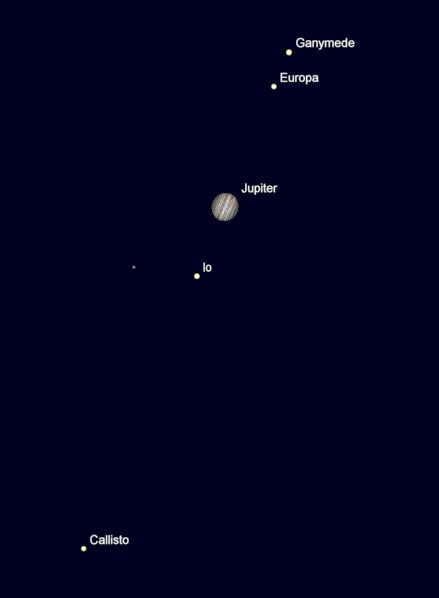
Jupiter will appear to the left of the full moon tonight. The Galilean moons will be spread out with Callisto by its lonesome on one side then Europa, Io and Ganymede spaced out on the other. Jupiter’s cloud bands show the great planet’s rotation, and that the moon’s orbit over Jupiter’s equator, like most of the moons of the other planets. The clouds are whipped into parallel bands by Jupiter’s rapid rotation. Here’s a planet 11 times the diameter of the Earth, thirteen hundred times the volume, and over 300 times the mass of the Earth, rotating nearly two and a half times faster than the Earth. The equatorial rotation is 9 hours 50 minutes. The rapid rotation squishes the planet noticeably, which the cloud stripes visually enhance.
Times are for the Traverse City/Interlochen area of Michigan. They may be different for your location.
Addendum
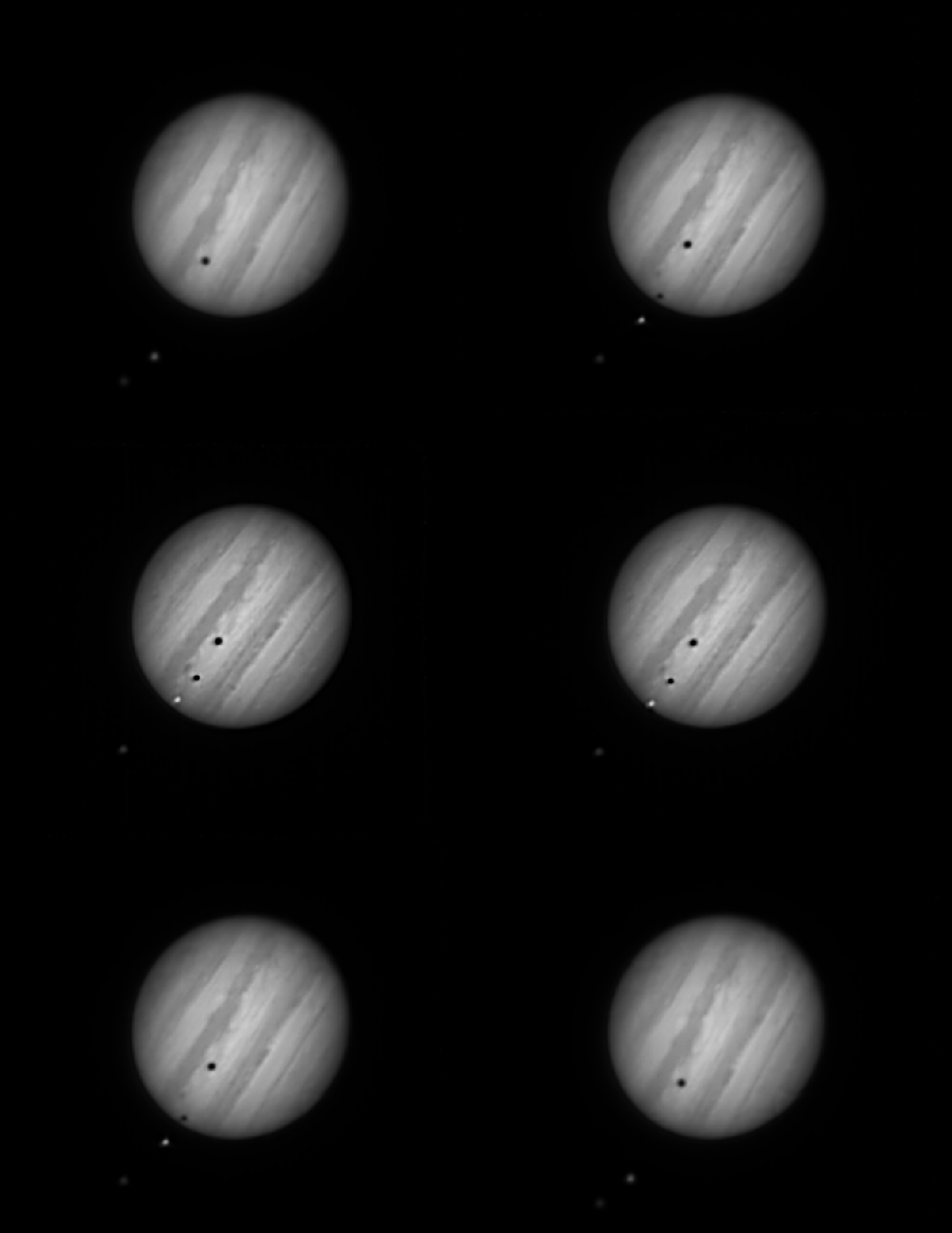
Rocking animation of the early stages of the shadow show on Jupiter. Callisto’s shadow already on the planet while Io’s shadow is just entering. Also Io’s transit is starting., following its shadow on the planet. Credit: Scott Anttila.
The above animation which I first posted last week demonstrates three of my points about Jupiter. The planet rotates rapidly, it’s polar diameter is shorter by about 7% than the equatorial diameter, and the satellites orbit over its equator. Jupiter also has a small axial tilt of 3º compared to the Earth’s 23 1/2º. As an aside we’re in the “season” where the satellites occult and eclipse each other.
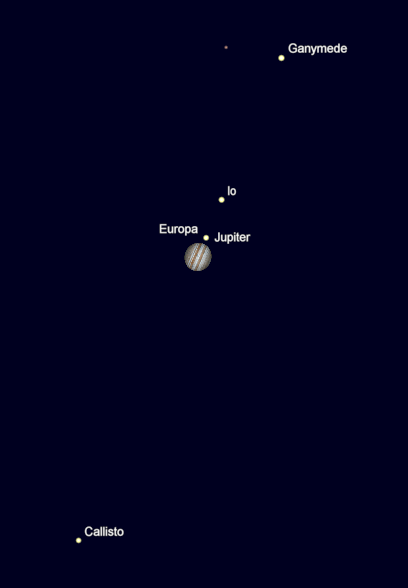
Telescopic Jupiter tonight (9 p.m. February 3, 2015) as described in the text of the program. Created using Cartes du Ceil (Sky Charts).
01/29/2015 – Ephemeris – The first thing noticed about Jupiter in a telescope
Ephemeris for Thursday, January 29th. The sun will rise at 8:05. It’ll be up for 9 hours and 41 minutes, setting at 5:46. The moon, 3 days past first quarter, will set at 4:33 tomorrow morning.
If it’s clear tonight dress up warmly and take the telescope out to look Jupiter. Jupiter is the brightest star-like object out tonight. It outshines Sirius the brightest night-time star lower in the sky and to its right. Jupiter, being the largest planet most of the time is the biggest planet in the telescope, It’s only challenger is Venus for a couple of months when its closest to us. The first thing one notices about Jupiter in a telescope is that it has companions, up to 4, strung out on either side of the planet. Those are the four moons or satellites discovered by Galileo in 1610. They will shift position from night to night and even as you watch. They can hide behind Jupiter or in its shadow or in front of the planet.
Times are for the Traverse City/Interlochen area of Michigan. They may be different for your location.
Addendum
Jupiter’s retrograde path against the stars between Cancer and Leo October 2014 to July 2015. Created using Cartes du Ceil (Sky Charts). Click to enlarge.
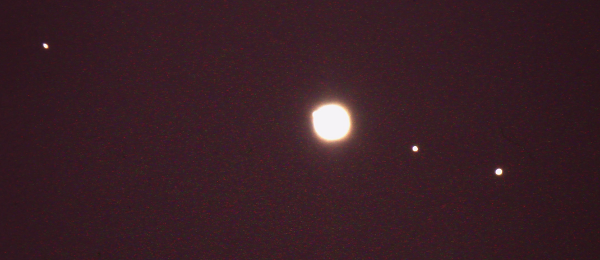
Jupiter and its four Galilean moons. The planet has to be over exposed to pick up the moons. But the eye can handle the brightness difference with no problem. This is one of my old pictures back in the days of film.
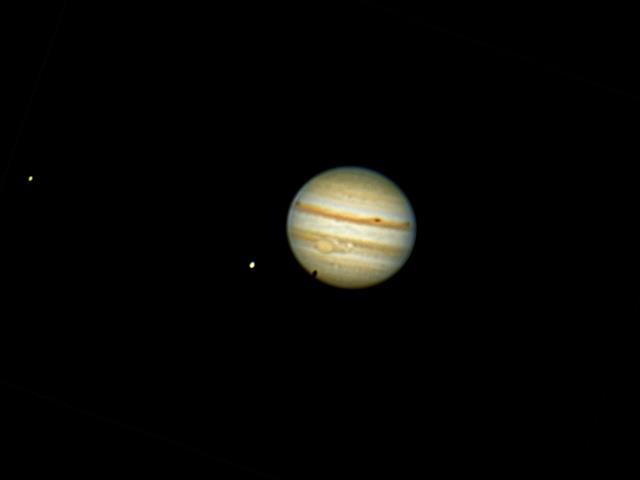
Jupiter with a solar eclipse in progress as Ganymede, lower left, casts its shadow on Jupiter on November 14, 2011. Credit: Scott Anttila.
Check out the Great Red Spot (GRS) above Ganymede’s shadow. It’s not really red. When I first aimed my telescope toward Jupiter back in the late 1950’s the GRS was indeed very red. Nowadays the GRS is very hard to find.

