Archive
11/29/2017 – Ephemeris – The Bright planets this week
Ephemeris for Wednesday, November 29th. The Sun will rise at 7:57. It’ll be up for 9 hours and 7 minutes, setting at 5:04. The Moon, 3 days past first quarter, will set at 3:54 tomorrow morning.
Let’s take our weekly look at the bright planets. Mercury is dropping back to the Sun and is fading as its phase changes to a crescent It will be below and left of Saturn tonight and actually brighter than Saturn. Saturn is sinking low in the southwestern sky. It is becoming harder to spot each evening. Tonight it will set at 6:24 p.m. The morning sky is now host to three planets, though Venus, the brightest will rise at 7:03 this morning and will be fighting twilight as it rises. It’s way on the other side of the Sun, and very tiny in telescopes, though nearly fully illuminated. It’s 156 million miles (251 million km) away. First to rise in the morning is Mars which will rise in the east at 4:07 a.m. tomorrow, Jupiter, will follow and rise at 5:34 a.m. tomorrow.
The times given are for the Traverse City/Interlochen area of Michigan. They may be different for your location.
Addendum
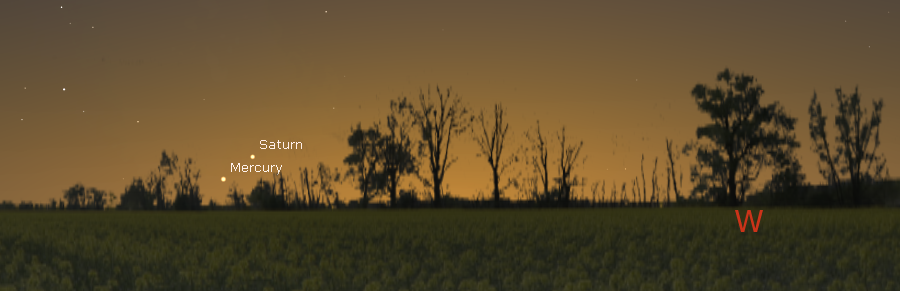
Mercury and Saturn at 5:45 p.m., about 45 minutes after sunset, November 29, 2017. Click on the image to enlarge. Created using Stellarium.
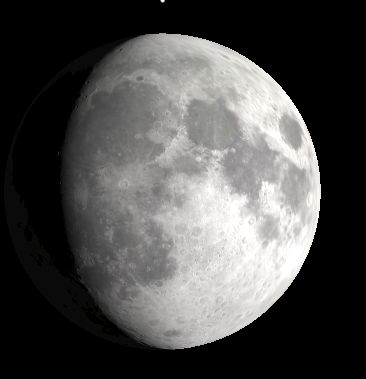
The Moon as it might be seen in binoculars at 7 p.m., November 29, 2017. Created using Stellarium.
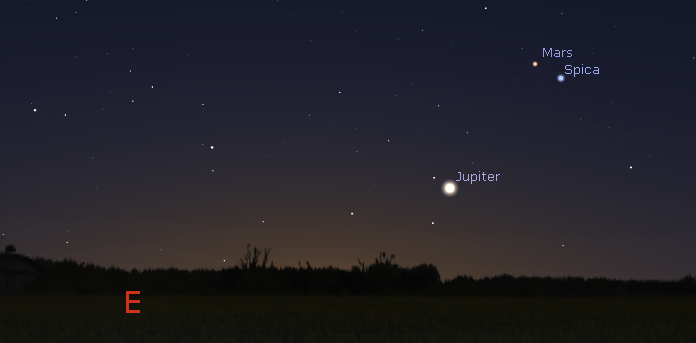
Mars and Jupiter at 7 a.m., November 30, 2017. Created using Stellarium.
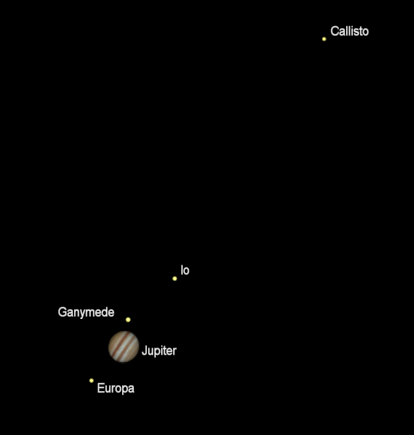
Jupiter and its 4 Galilean moons as they might be seen in a telescope at 7 a.m. November 30, 2017. Created using Cartes du Ciel (Sky Charts).
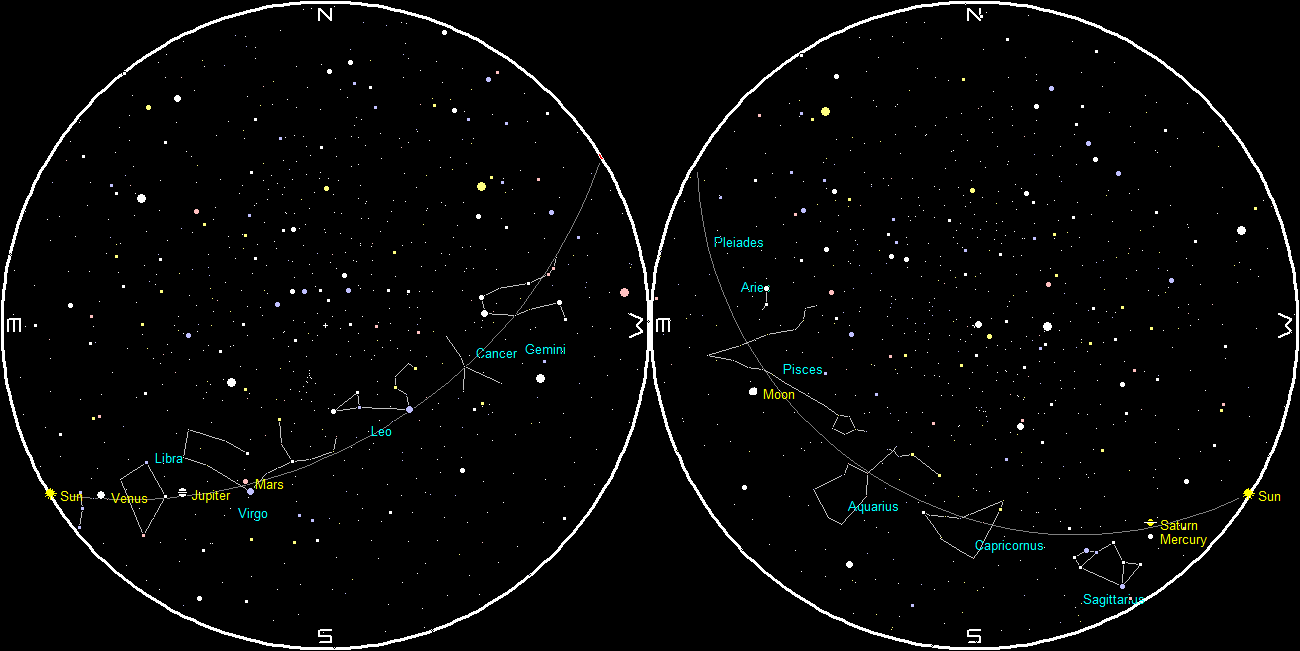
Planets at sunset and sunrise of a single night starting with sunset on the right on November 29, 2017. The night ends on the left with sunrise on the 30th. Click on the image to enlarge. Created using my LookingUp program.
11/22/2017 – Ephemeris – A look at the bright planets for Thanksgiving week
Ephemeris for Wednesday, November 22nd. The Sun will rise at 7:48. It’ll be up for 9 hours and 19 minutes, setting at 5:08. The Moon, half way from new to first quarter, will set at 8:39 this evening.
Let’s take our weekly look at the bright planets. Mercury is briefly visible in binoculars in the southwest in the evening, setting at 6:11 p.m., and will reach it’s greatest elongation from the Sun tomorrow evening. Saturn is sinking low in the southwestern sky. Saturn’s rings are still spectacular in telescopes, but since Saturn is so low in the sky the thick atmosphere makes Saturn fuzzy and seemingly to go in and out of focus. Saturn will set at 6:49 p.m. Tomorrow in the morning sky, Mars, heading away from the Sun will rise in the east at 4:11 a.m., Jupiter, also moving away from the Sun, will rise at in the east-southeast at 5:54 a.m., leaving Venus behind after their conjunction 9 days ago, which will rise at 6:47 a.m..
The times given are for the Traverse City/Interlochen area of Michigan. They may be different for your location.
Addendum
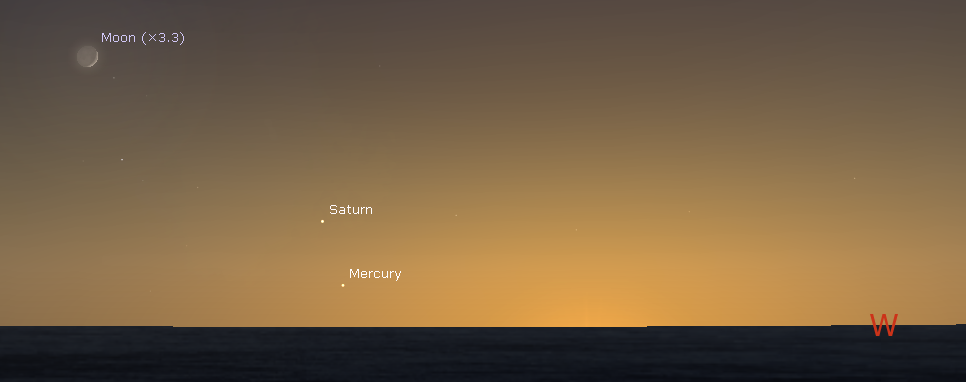
Mercury, Saturn and the Moon at 5:45 p.m., a bit more than a half hour after sunset, November 22, 2017. Click on the image to enlarge. Created using Stellarium.
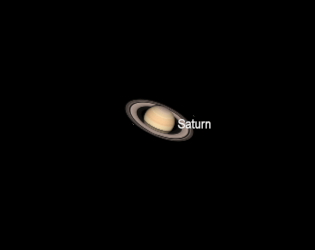
Saturn as it might be seen in a telescope tonight. Created using Cartes du Ciel (Star Charts).
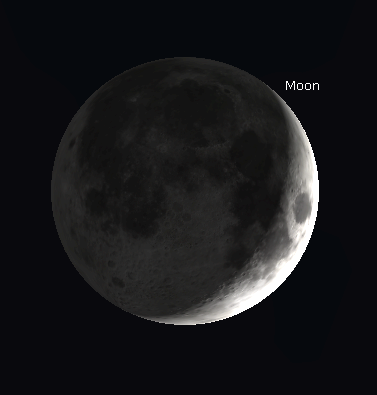
The Moon as it might be seen tonight. Created using Stellarium.
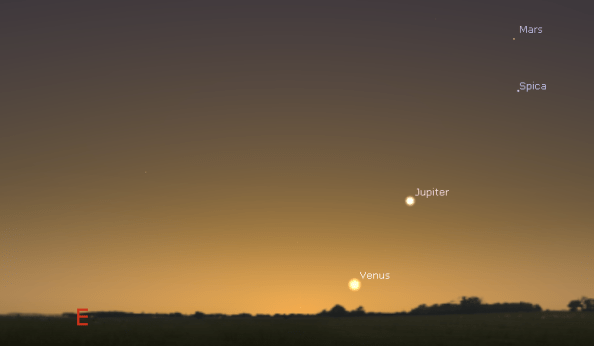
The morning planets Mars, Jupiter and Venus at 7:15 a.m. November 23, 2017, about a half hour before sunrise on a really flat horizon. Created using Stellarium.
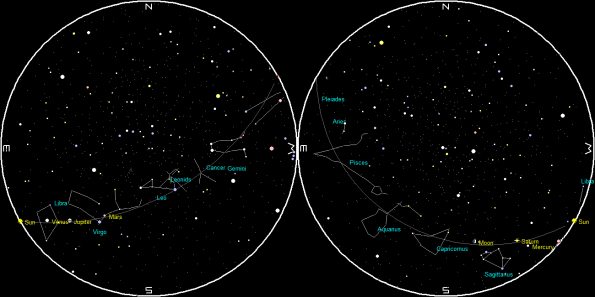
Planets at sunset and sunrise of a single night starting with sunset on the right on November 22, 2017. The night ends on the left with sunrise on the 22nd. Click on the image to enlarge. Created using my LookingUp program.
11/15/2017 – Ephemeris – All the bright planets are visible for observers at both dusk and dawn
Ephemeris for Wednesday, November 15th. The Sun will rise at 7:39. It’ll be up for 9 hours and 34 minutes, setting at 5:14. The Moon, 3 days before new, will rise at 5:32 tomorrow morning.
Let’s take our weekly look at the bright planets. Mercury is briefly visible in binoculars in the southwest in the evening, setting at 6:06 p.m., and will reach it’s greatest elongation from the Sun in 8 days. Saturn is sinking low in the southwestern sky. Saturn’s rings are still spectacular in telescopes, but since Saturn is so low in the sky the thick atmosphere makes Saturn fuzzy and seemingly to go in and out of focus. Saturn will set at 7:12 p.m. Tomorrow in the morning sky, Mars, heading away from the Sun will rise in the east at 4:16 a.m., Jupiter, also moving away from the Sun, will rise at in the east-southeast at 6:14, leaving Venus behind after their conjunction two days ago, which will rise at 6:30.
The times given are for the Traverse City/Interlochen area of Michigan. They may be different for your location.
Addendum
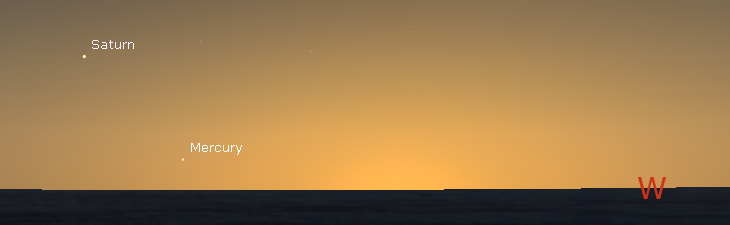
Saturn and Mercury very low in the southwest at 6:45p.m. November 15, 2017. That’s about half an hour after sunset. Click on the image to enlarge. Created using Stellarium.
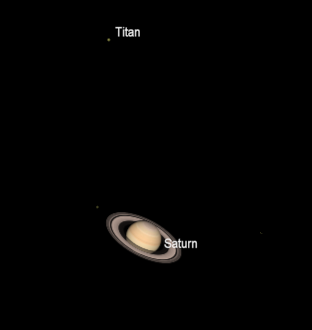
Saturn and its brightest moon Titan in the evening November 15, 2017. Created using Cartes du Ciel (Sky Charts).
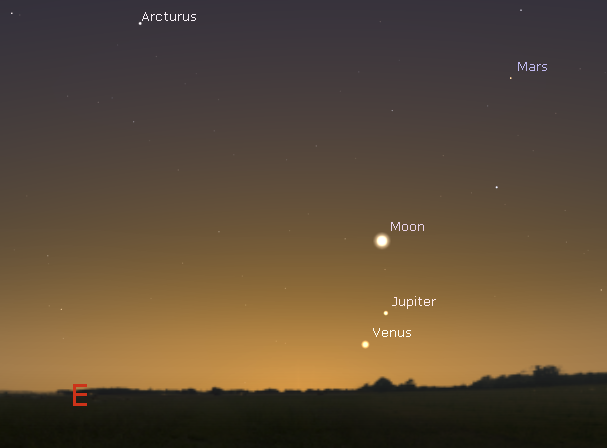
Mars Jupiter Venus and the Moon at 7 a.m., November 16, 2017. The Moon is actually a thin crescent as seen below. Created using Stellarium.
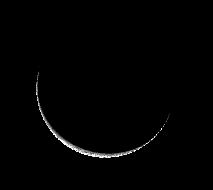
The Moon as it might be seen in binoculars. This was created using Hallo Northern Sky. However it doesn’t show earth shine that should easily be seen in binoculars.
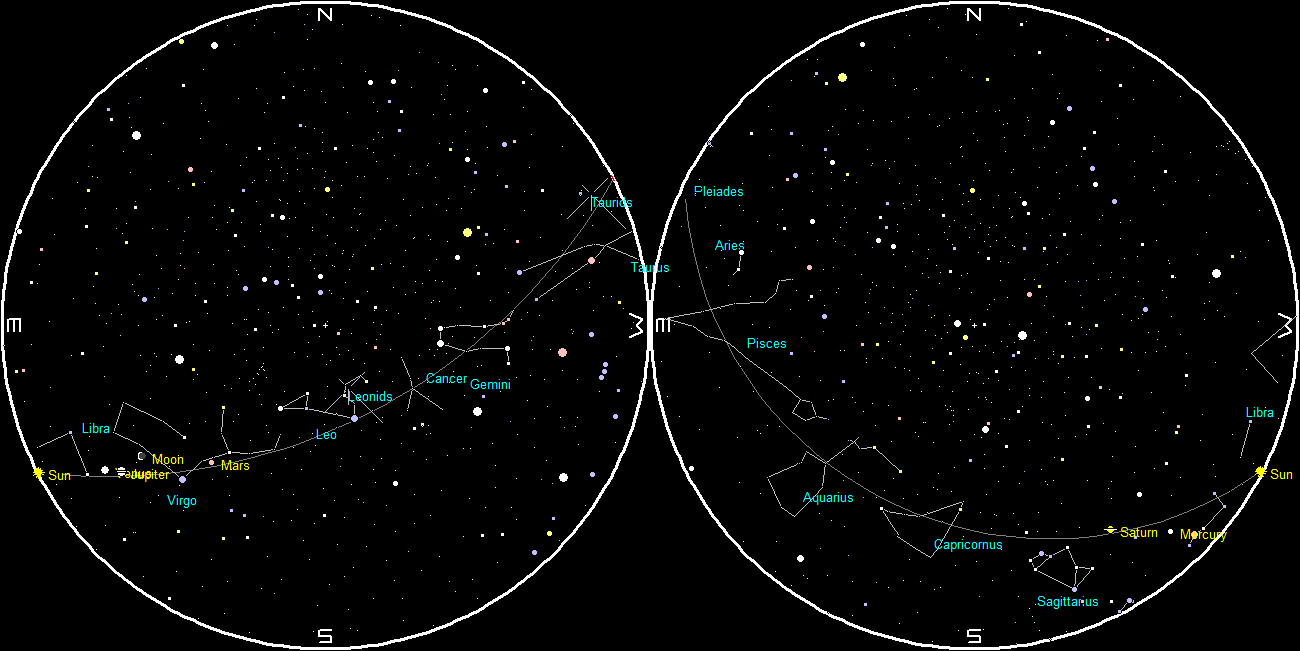
Planets at sunset and sunrise of a single night starting with sunset on the right on November 15, 2017. The night ends on the left with sunrise on the 16th. Click on the image to enlarge. Created using my LookingUp program.
11/08/2017 – Ephemeris – Jupiter becomes visible in the morning (The bright planets this week)
Ephemeris for Wednesday, November 8th. The Sun will rise at 7:30. It’ll be up for 9 hours and 51 minutes, setting at 5:21. The Moon, 2 days before last quarter, will rise at 9:52 this evening.
Let’s take our weekly look at the bright planets. Saturn is sinking low in the southwestern sky in the evening. Saturn’s rings are still spectacular in telescopes, but since Saturn is so low in the sky the turbulence of the thick atmosphere makes Saturn fuzzy and seemingly to go in and out of focus. Saturn will set at 7:37 p.m. Tomorrow in the morning sky, Mars, heading away from the Sun will rise in the east at 4:20 a.m., Venus, is heading closer to the Sun, will rise at 6:11 in the east-southeast. Jupiter is in the morning sky but lower than Venus, rising in the east-southeast at 6:33. Mercury has moved into the evening sky and will reach it’s greatest elongation from the Sun in 15 days, but will not be easily visible even then.
The times given are for the Traverse City/Interlochen area of Michigan. They may be different for your location.
Addendum
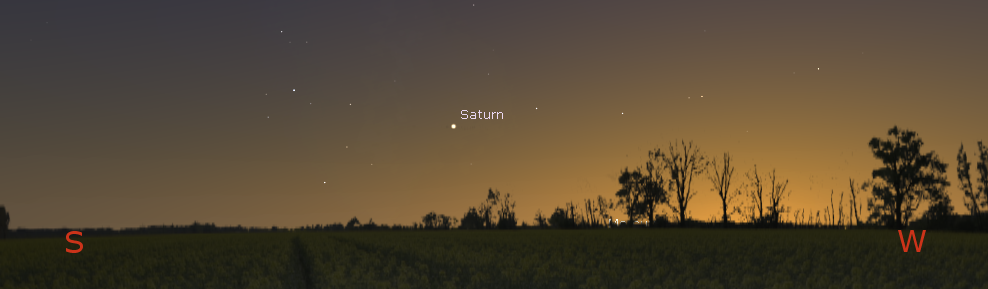
Saturn with Mercury (unlabeled) at the horizon at 6 p.m., November 8, 2017. Click on the image to enlarge. Create using Stellarium.
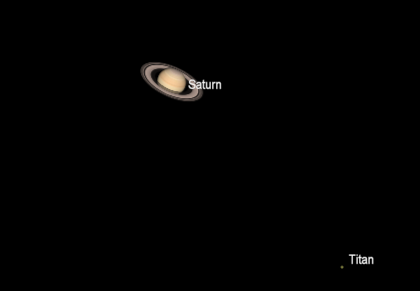
Saturn and its brightest moon Titan in the evening November 8, 2017. Created using Cartes du Ciel (Sky Charts).
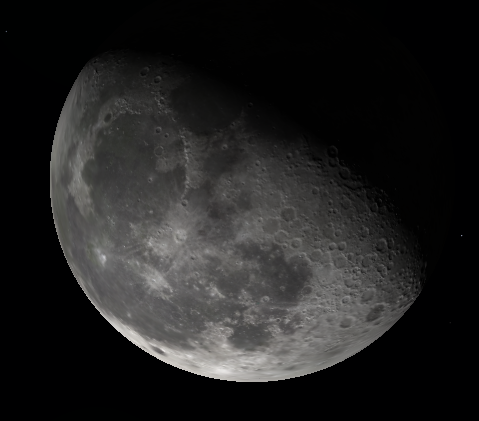
The Moon as it might be seen in binoculars at 10:30 p.m., November 8, 2017. Created using Stellarium.
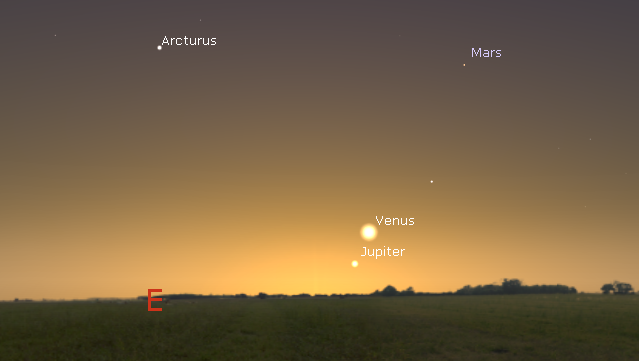
Mars, Venus and Jupiter at 7 a.m., November 9, 2017. Jupiter will come abreast of Venus on the morning of the 13th. when they will be less than the width of the Moon apart. Created using Stellarium.
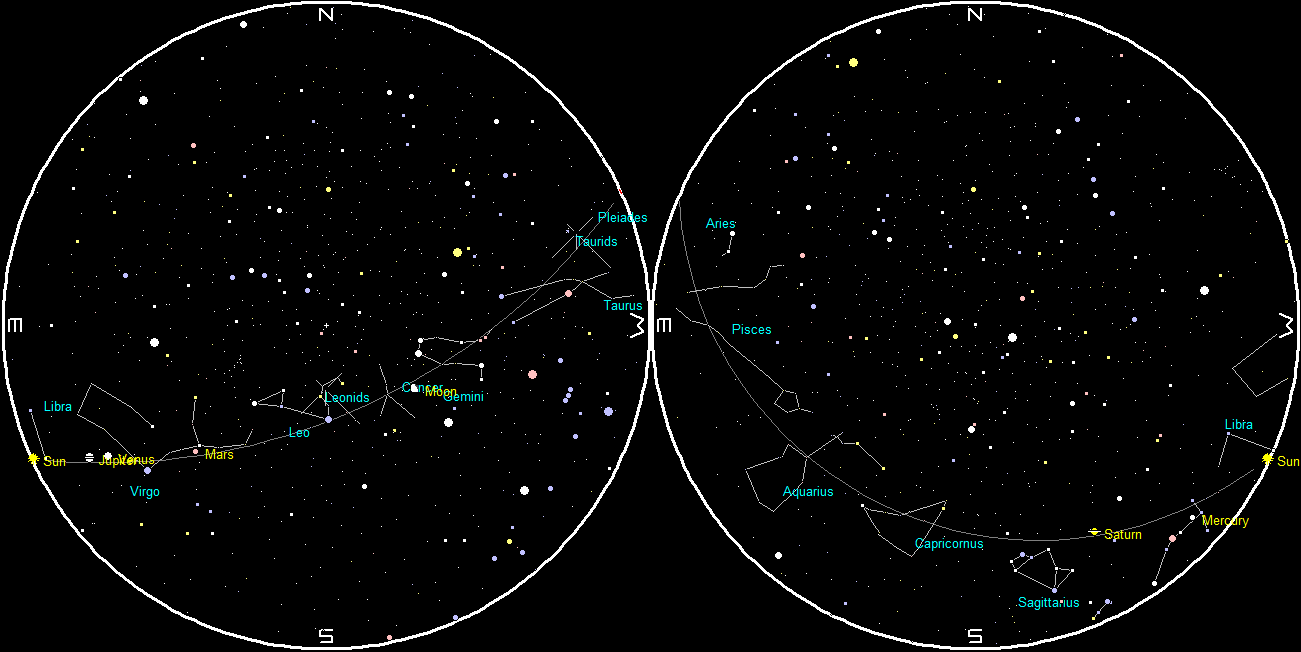
Planets at sunset and sunrise of a single night starting with sunset on the right on November 8, 2017. The night ends on the left with sunrise on the 9th. Click on the image to enlarge. Created using my LookingUp program.
11/01/2017 – Ephemeris – Looking at the bright planets for November 1st
Ephemeris for Wednesday, November 1st. The Sun will rise at 8:20. It’ll be up for 10 hours and 10 minutes, setting at 6:30. The Moon, 3 days before full, will set at 6:08 tomorrow morning.
Let’s take our weekly look at the bright planets for this first day of November. Saturn is sinking low in the southwestern sky in the evening. Saturn’s rings are still spectacular in telescopes, but since Saturn is so low in the sky the turbulence of the thick atmosphere makes Saturn fuzzy and seemingly to go in and out of focus. Saturn will set at 9:02 p.m.
Tomorrow in the morning sky, Mars, heading away from the Sun will rise in the east at 5:25 a.m., Venus, is heading closer to the Sun, will rise at 6:53 in the east. Jupiter is in the morning sky but too close to the direction of the Sun to be seen. Mercury has moved into the evening sky and will reach it’s greatest elongation from the Sun in 22 days, but will not be easily visible even then.
The times given are for the Traverse City/Interlochen area of Michigan. They may be different for your location.
Addendum
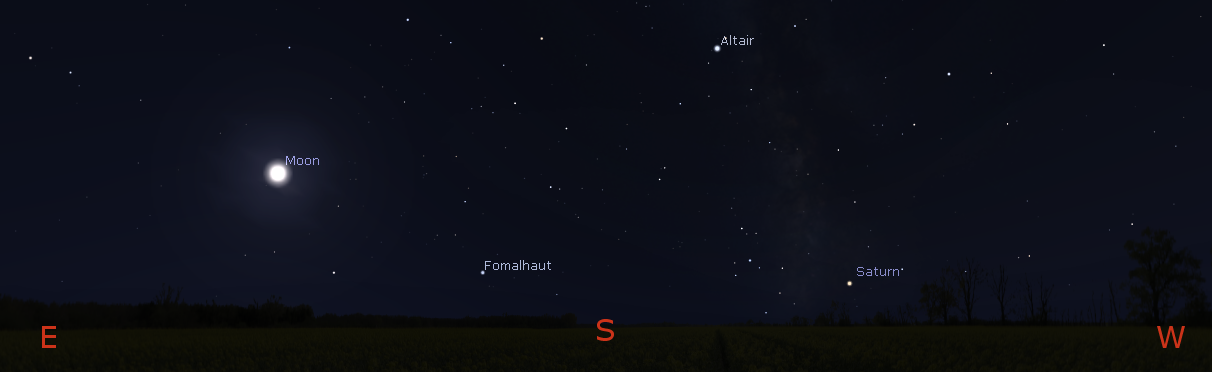
Saturn and the Moon at 8 p.m. November 1, 2017. Click on the image to enlarge. Create using Stellarium.
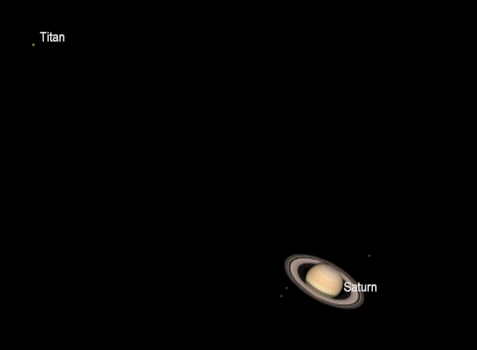
Saturn and its brightest moon Titan in the evening of November 1, 2017. Created using Cartes du Ciel (Sky Charts).
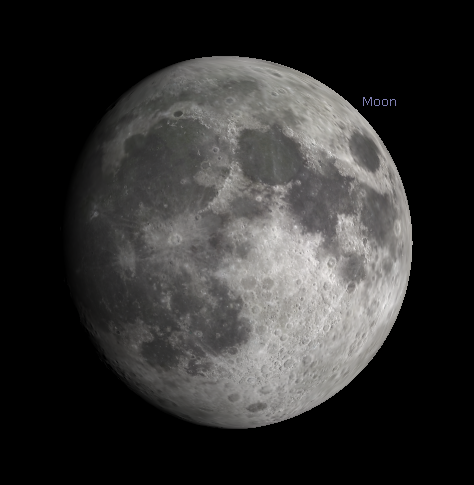
The Moon as it might be seen in binoculars at 8 p.m., November 1, 2017. Created using Stellarium.
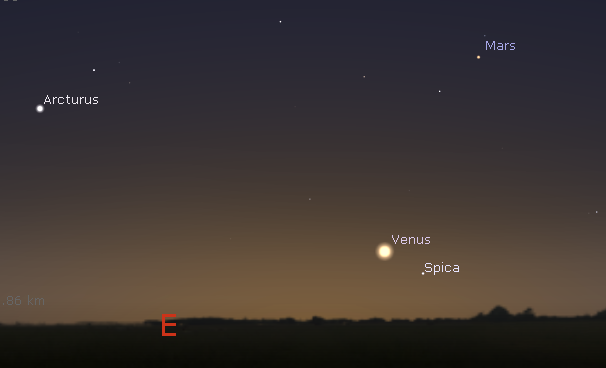
Mars and Venus at 7:30 a.m. November 2, 2017. Created using Stellarium.
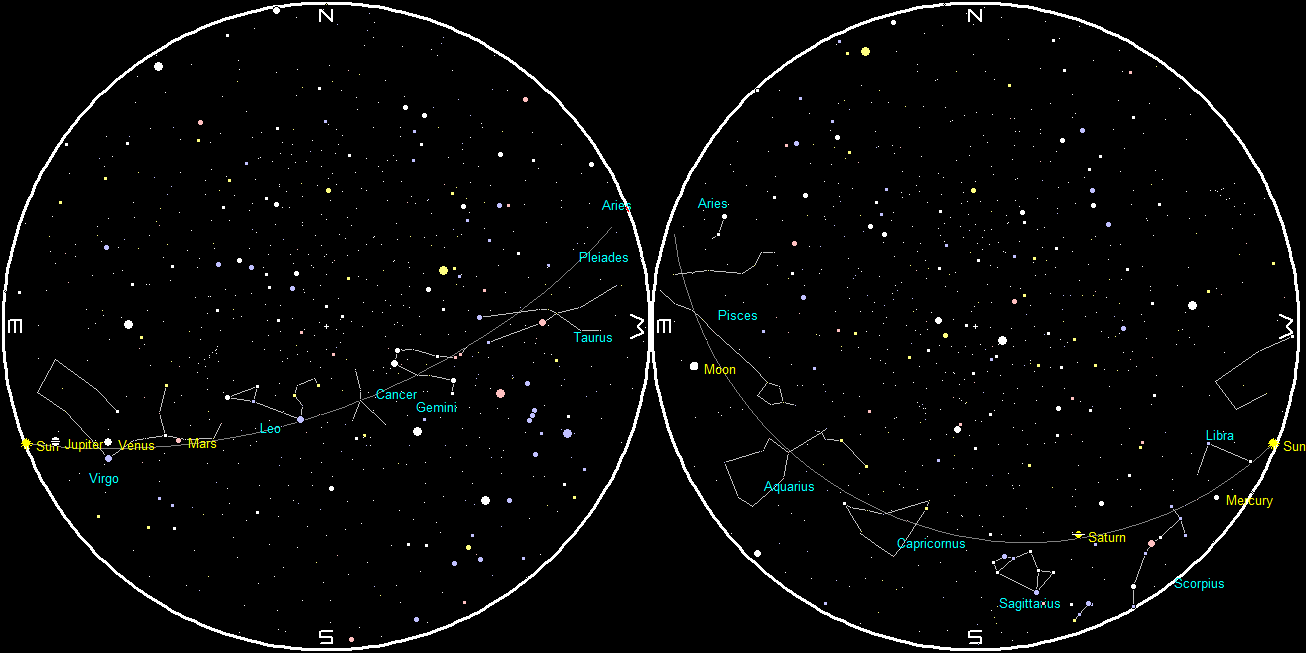
Planets at sunset and sunrise of a single night starting with sunset on the right on November 1, 2017. The night ends on the left with sunrise on the 2nd. Click on the image to enlarge. Created using my LookingUp program.
10/25/2017 – Ephemeris – Looking for the bright planets
Ephemeris for Wednesday, October 25th. The Sun will rise at 8:11. It’ll be up for 10 hours and 30 minutes, setting at 6:41. The Moon, 2 days before first quarter, will set at 10:56 this evening.
Let’s take our weekly look at the bright planets. Jupiter, will leave the evening sky and enter the morning sky tomorrow as it moves behind the Sun though not directly behind. Saturn is sinking lower in the southwestern sky in the evening. Saturn’s rings are still spectacular in telescopes, but since Saturn is so low in the sky the turbulence of the thick atmosphere makes Saturn fuzzy and seemingly to go in and out of focus. Saturn will set at 9:27 p.m.
Tomorrow in the morning sky, Mars, heading away from the Sun will rise in the east at 5:29 a.m., Venus, is heading closer to the Sun, will rise at 6:34 in the east. Mercury has moved into the evening sky 10 days ago, but will not be easily visible even at its greatest elongation a month from now.
The times given are for the Traverse City/Interlochen area of Michigan. They may be different for your location.
Addendum
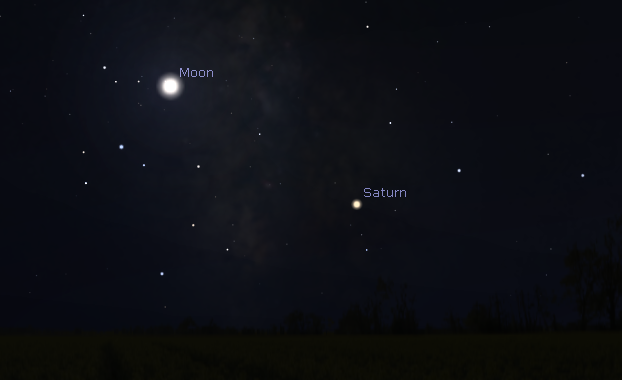
Saturn and the Moon at 8 p.m., October 25, 2017. Created using Stellarium
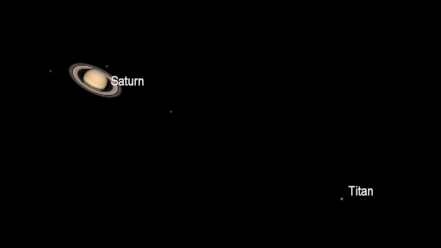
Saturn and Titan as it might be seen in a telescope. October 25, 2017. Created using Cartes du Ciel (Sky Charts).
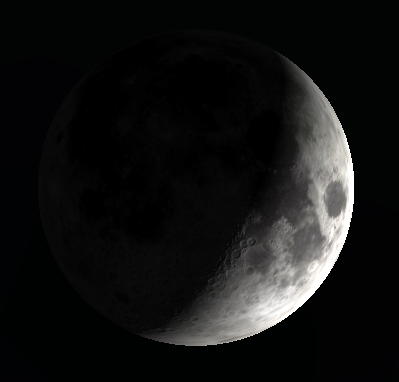
The Moon as it might be seen in binoculars at 8 p.m., October 25, 2017. Created using Stellarium.
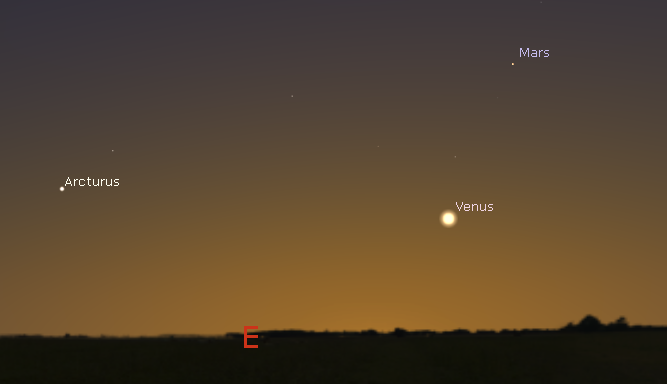
Mars and Venus at 7:30 a.m. October 26, 2017. Create using Stellarium.
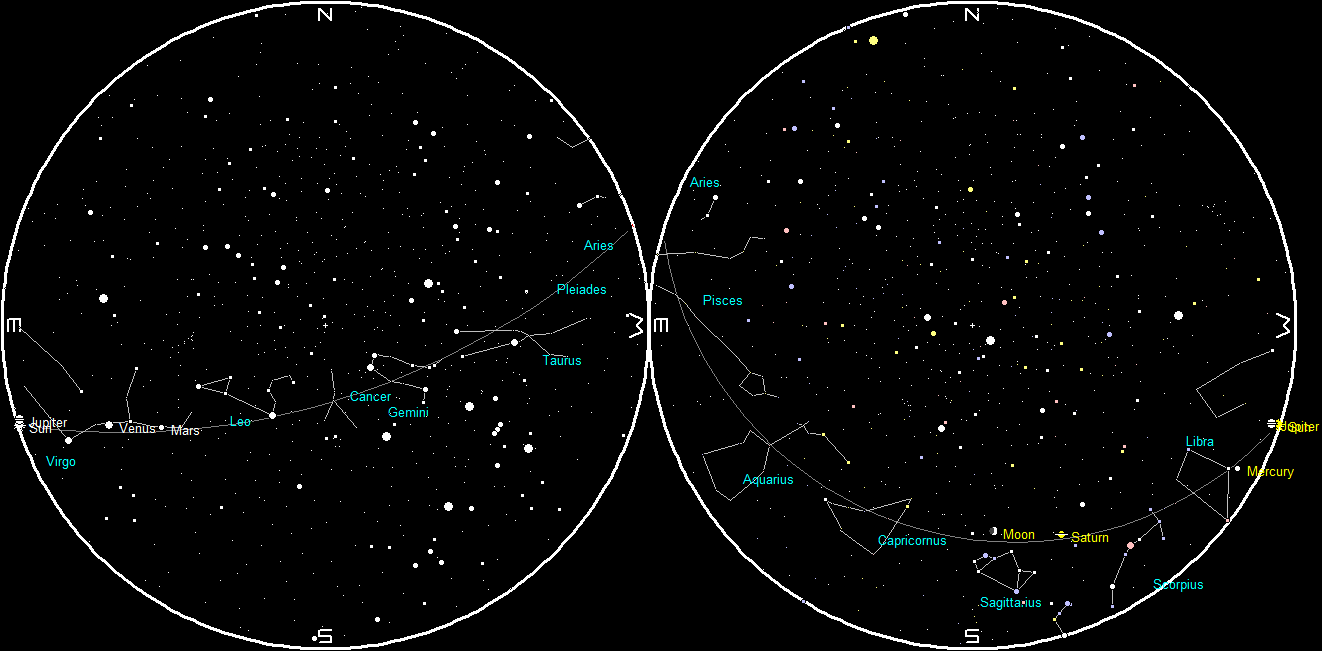
Planets at sunset and sunrise of a single night starting with sunset on the right on October 25, 2017. The night ends on the left with sunrise on the 26th. Click on the image to enlarge. Created using my LookingUp program.
10/18/2017 – Ephemeris – Our weekly look at the naked eye planets
Ephemeris for Wednesday, October 18th. The Sun will rise at 8:01. It’ll be up for 10 hours and 50 minutes, setting at 6:52. The Moon, 1 day before new, will rise at 7:39 tomorrow morning.
Let’s take our weekly look at the bright planets. Jupiter, for all intents and purposes is gone from the evening sky. It will cross into the morning sky next week Thursday. Saturn too is sinking lower in the southwestern sky in the evening. Saturn’s rings are still spectacular in telescopes, but since Saturn is so low in the sky the turbulence of the thick atmosphere makes Saturn fuzzy and seemingly to go in and out of focus. Saturn will set at 9:52 p.m.
Tomorrow in the morning sky, Mars, heading away from the Sun will rise in the east at 5:33 a.m., Venus, is heading closer to the Sun, will rise at 6:16 in the east. Mercury has moved into the evening sky 10 days ago, but will not be easily visible even at its greatest elongation a month from now.
The times given are for the Traverse City/Interlochen area of Michigan. They may be different for your location.
Addendum
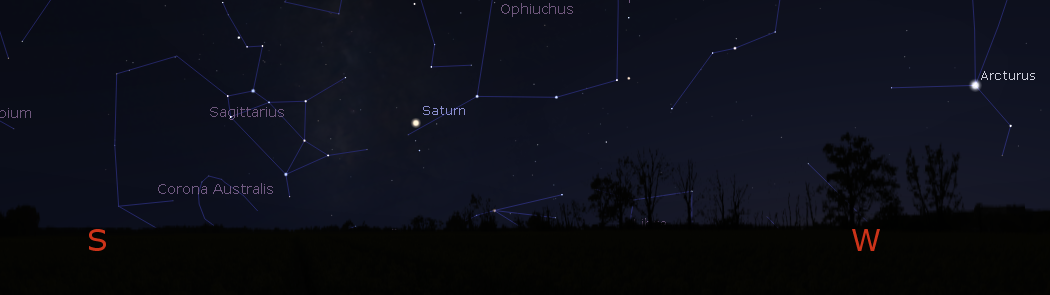
Saturn and the constellations of the evening tonight at 8:00 p.m., October 18, 2017. Click on the image to enlarge. Created using Stellarium.
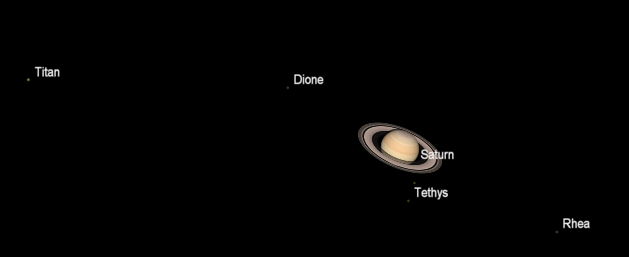
Saturn and its brightest moons on the evening of October 18, 2017. Created using Cartes du Ciel (Sky Charts).
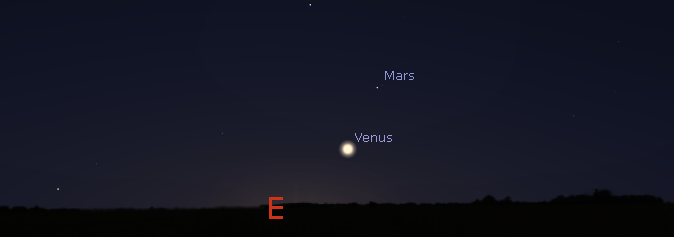
Mars and Venus at 7 a.m. October 19, 2017. Create using Stellarium.
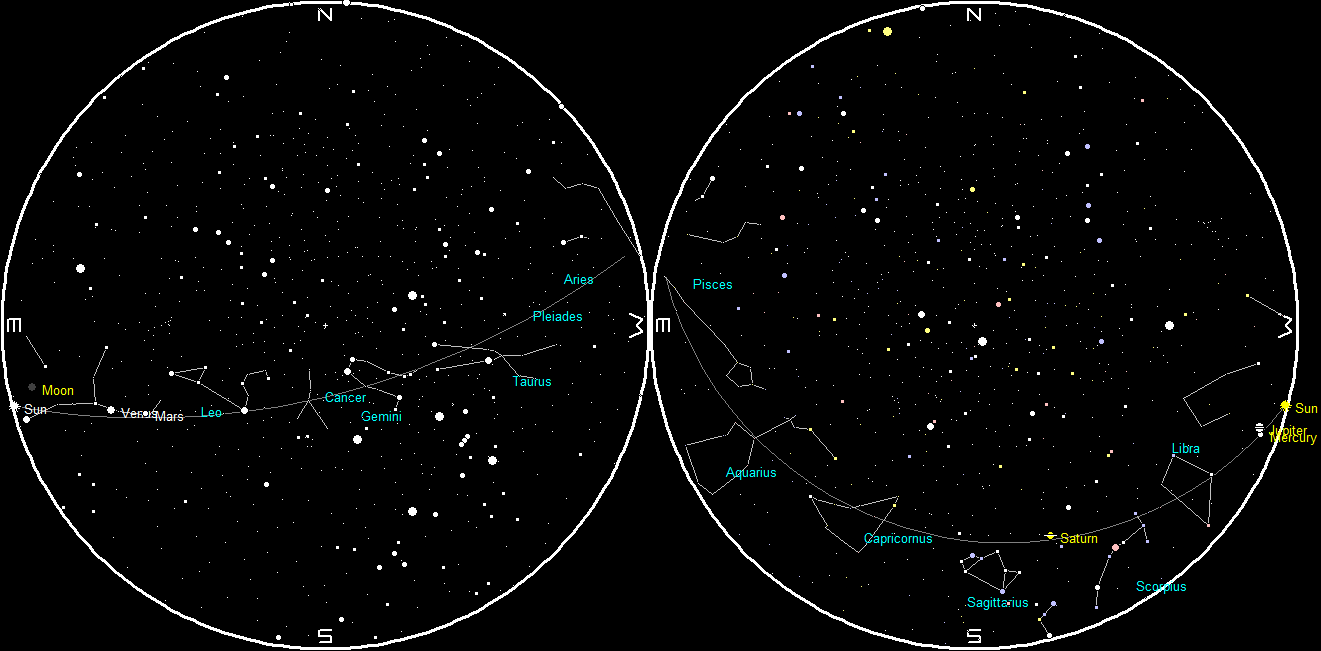
Planets at sunset and sunrise of a single night starting with sunset on the right on October 18, 2017. The night ends on the left with sunrise on the 19th. Click on the image to enlarge. Created using my LookingUp program.
10/11/2017 – Ephemeris – Lets find the bright planets tonight
Ephemeris for Wednesday, October 11th. The Sun will rise at 7:53. It’ll be up for 11 hours and 11 minutes, setting at 7:04. The Moon, 1 day before last quarter, will rise at 11:59 this evening.
Let’s take our weekly look at the bright planets. Jupiter, for all intents and purposes is gone from the evening sky. It will cross into the morning sky later this month. Saturn too is sinking lower in the southwestern sky in the evening. Saturn’s rings are still spectacular in telescopes, but since Saturn is so low in the sky the turbulence of the thick atmosphere makes Saturn fuzzy and seemingly to go in and out of focus. Saturn will set at 10:17 p.m. In the morning sky, Mars will rise in the east at 5:38 a.m., ahead of Venus. In the week since their conjunction Mars has gained 20 minutes on Venus, which will rise at 5:58 in the east. Mars is less than 100th the brightness of Venus, so catch it early, before twilight overpowers it..
The times given are for the Traverse City/Interlochen area of Michigan. They may be different for your location.
Addendum
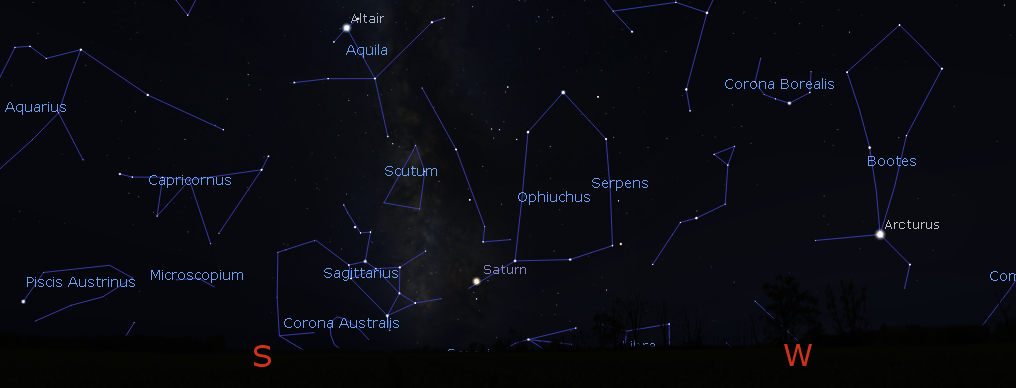
Saturn and the constellations of the evening tonight at 8:30 p.m., October 11, 2017. Click on the image to enlarge. Created using Stellarium.
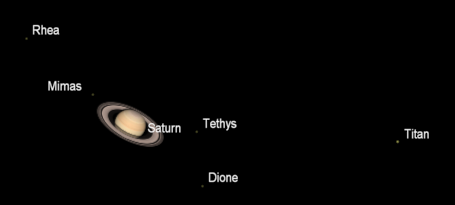
Saturn and its brightest moons overnight October 11/12, 2017. Created using Cartes du Ciel (Sky Charts).
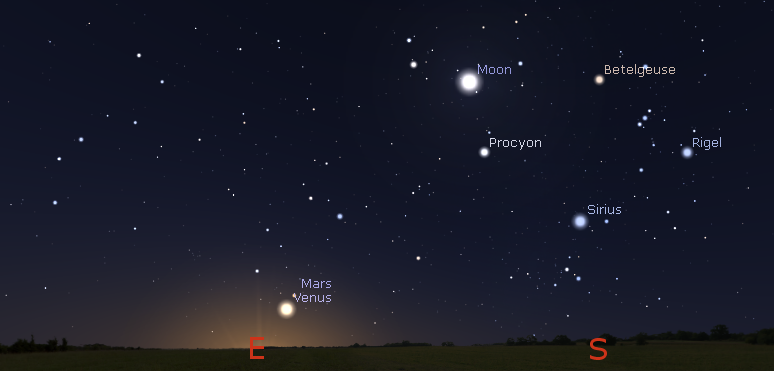
Venus, Mars and the Moon at 7 a.m. October 12, 2017. Created using Stellarium.
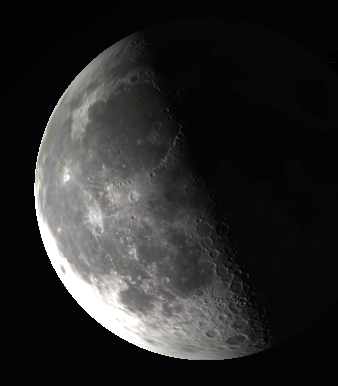
The Moon as it might be seen in binoculars, 7 a.m. October 12, 2017. Created using Stellarium.
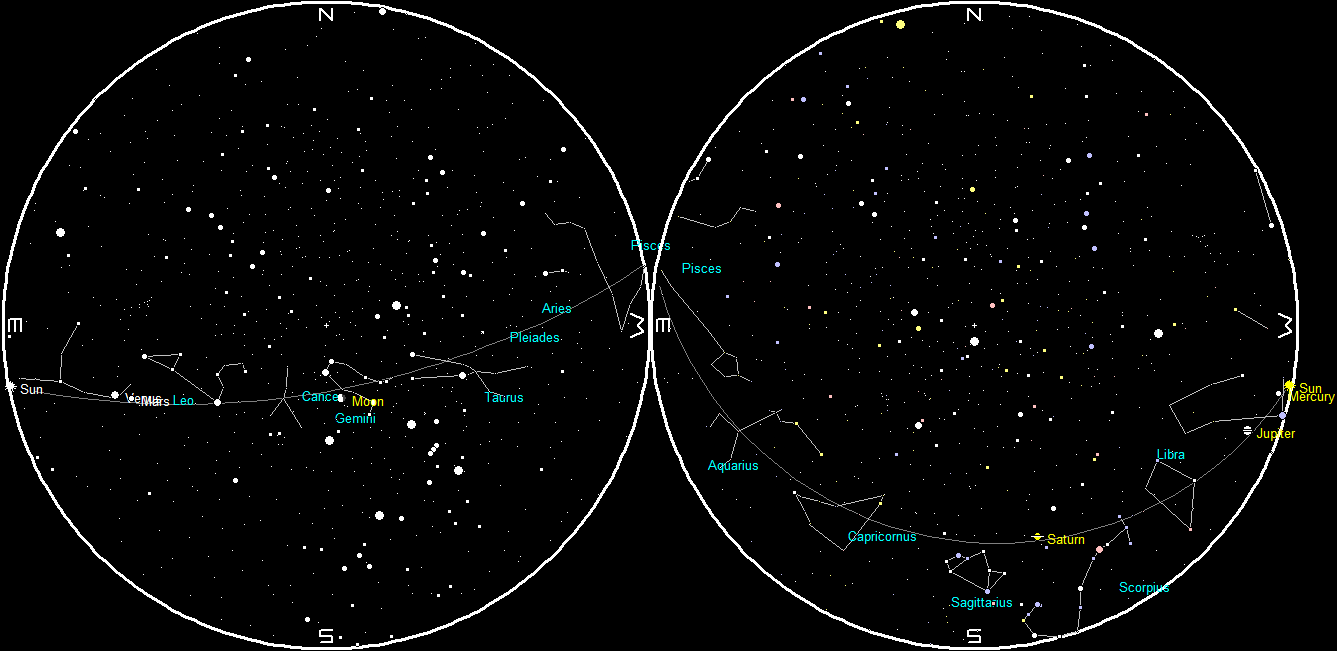
Planets at sunset and sunrise of a single night starting with sunset on the right on October 11, 2017. The night ends on the left with sunrise on the 12th. Click on the image to enlarge. Created using my LookingUp program.
10/04/2017 – Ephemeris – Where are the bright planets tonight?
Ephemeris for Wednesday, October 4th. The Sun will rise at 7:44. It’ll be up for 11 hours and 32 minutes, setting at 7:17. The Moon, 1 day before full, will set at 7:21 tomorrow morning.
Let’s take our weekly look at the bright planets. Jupiter, for all intents and purposes is gone from the evening sky. It will cross into the morning sky later this month. Saturn too is sinking lower in the southwestern sky in the evening. Saturn’s rings are still spectacular in telescopes, but since Saturn is so low in the sky the turbulence of the thick atmosphere makes Saturn fuzzy and seemingly to go in and out of focus. Saturn will set at 10:43 p.m.
In the morning sky, brilliant Venus will rise at 5:11 a.m. in the east with much dimmer Mars below and right of it by half the width of the Moon. Mars is less than 100th the brightness of Venus, and will probably require binoculars to locate. (need a few words more)
The times given are for the Traverse City/Interlochen area of Michigan. They may be different for your location.
Addendum
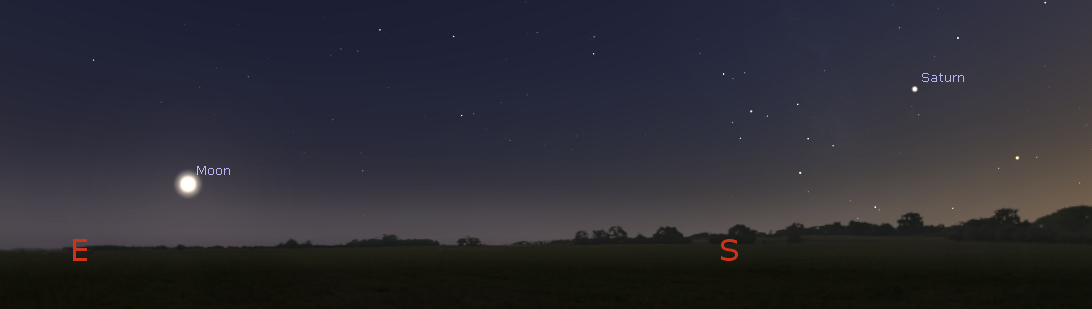
Saturn and the Moon in the evening at 8 p.m. October 4, 2017. Created using Stellarium.
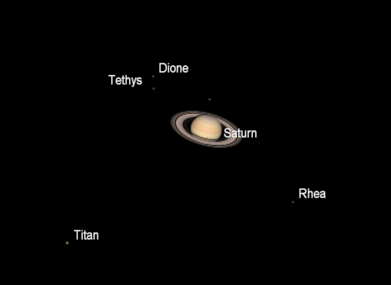
Saturn and its brightest moons overnight October 4/5, 2017. Created using Cartes du Ciel (Sky Charts).
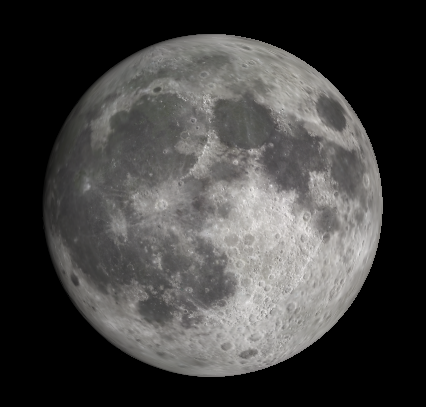
The Moon as it might be seen in binoculars, 8 p.m. October 4, 2017. Created using Stellarium.
Members of the Grand Traverse Astronomical Society and I are invited to the Chinese Mid-Autumn Festival being held for the Chinese exchange students in the Traverse City school system. Its held on the 15th day of the 8th month of the Chinese lunar calendar, the full moon, which works out to be October 4th this year. They will be having Chinese food and viewing the Moon afterward.
One of the legends celebrated then will be the Jade Rabbit pounding medicine. Jade Rabbit (Yutu) is the name of the Chinese rover that’s on the Moon. And the Jade Rabbit can actually be seen on the Moon:
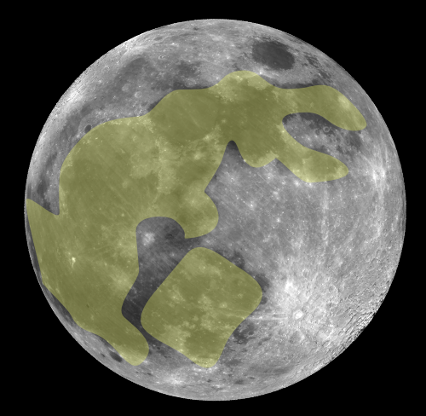
Jade Rabbit and Mortar on the Moon. Credit: Zeimusu, Creative Commons.
I hope they have Moon Cakes. They sound yummy.
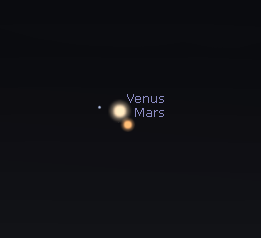
A closeup of Venus and Mars at 6:30 a.m. October 5, 2017. Created using Stellarium.
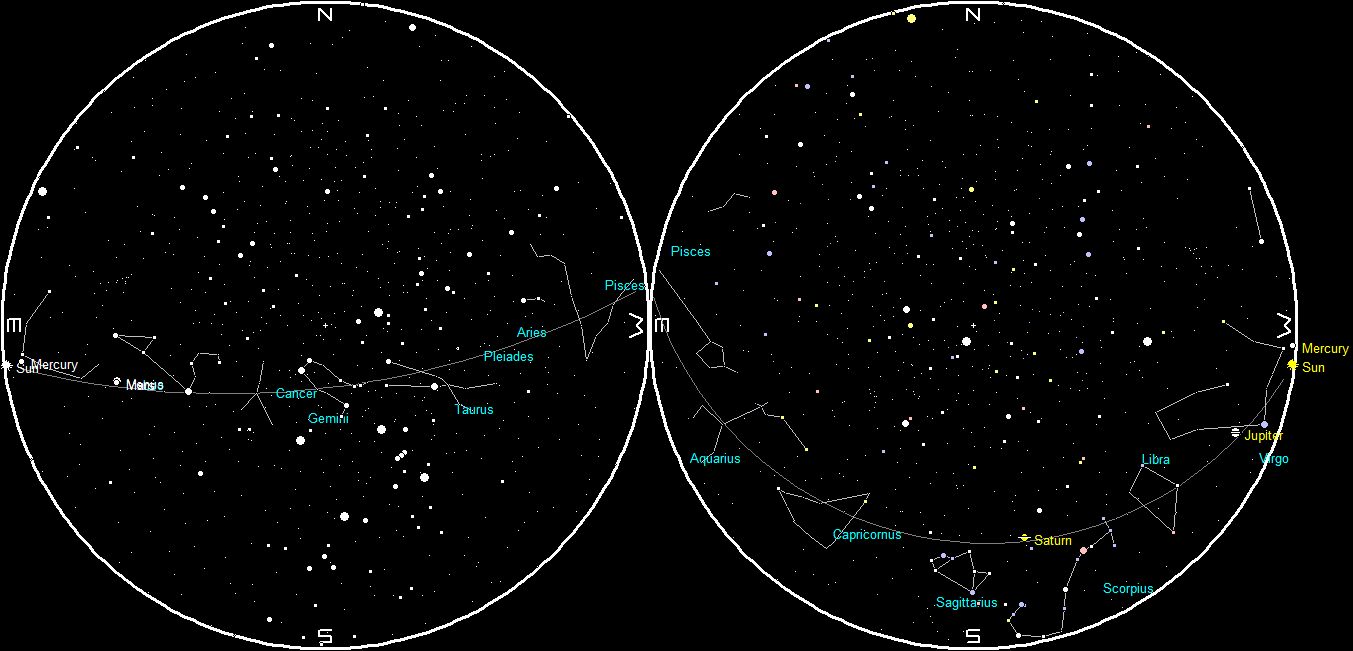
Planets at sunset and sunrise of a single night starting with sunset on the right on October 4, 2017. The night ends on the left with sunrise on the 5th. The full Moon has fallen in the cracks between the sunset and sunrise charts due to its position south of the ecliptic. Click on the image to enlarge. Created using my LookingUp program.
09/27/2017 – Ephemeris – Where are the naked eye planets tonight
Ephemeris for Wednesday, September 27th. The Sun will rise at 7:35. It’ll be up for 11 hours and 54 minutes, setting at 7:29. The Moon, at first quarter today, will set at 12:16 tomorrow morning.
Let’s take our weekly look at the bright planets. Jupiter is really low in the west-southwest after sunset setting in bright twilight at 8:22 p.m. Saturn can be seen low in the southwest tonight. The reddish star Antares is below and right of Saturn before it sets at 9:50 p.m. Saturn’s rings are spectacular in telescopes. With the demise of the Cassini spacecraft orbiting Saturn for the last 13 years, there is no telescope closer to Saturn than yours. The planet will set at 11:09 p.m. In the morning sky, brilliant Venus will rise at 5:23 a.m. in the east-northeast. Much dimmer Mars will rise in the east-northeast at 5:46 a.m. Mars will brighten greatly as it approaches us in the next 10 months. Mercury is too close to the glare of the Sun to be spotted.
The times given are for the Traverse City/Interlochen area of Michigan. They may be different for your location.
Addendum
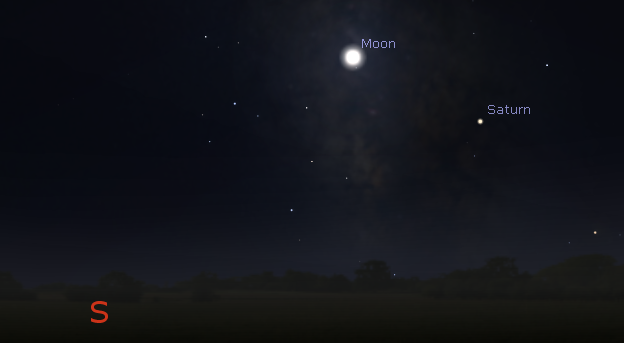
Saturn and the Moon tonight at 9 p.m., September 27, 2017. Created using Stellarium.
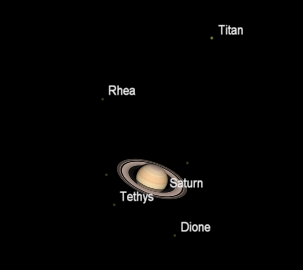
Saturn and its brightest moons overnight September 27/28, 2017. Created using Cartes du Ciel (Sky Charts).
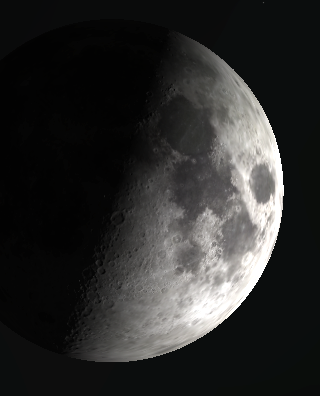
The Moon as it might be seen in binoculars, 9 p.m. September 27, 2017. Created using Stellarium.
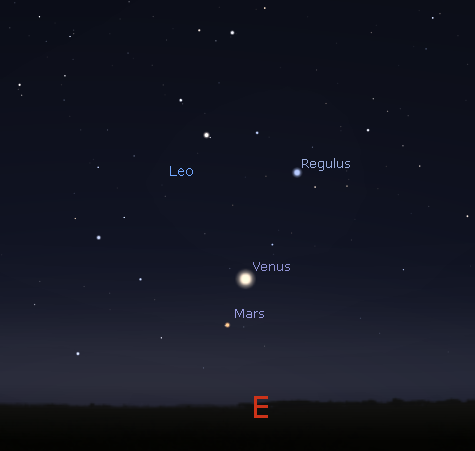
Venus and Mars close up at 6:30 a.m. September 27, 2017. Created using Stellarium.
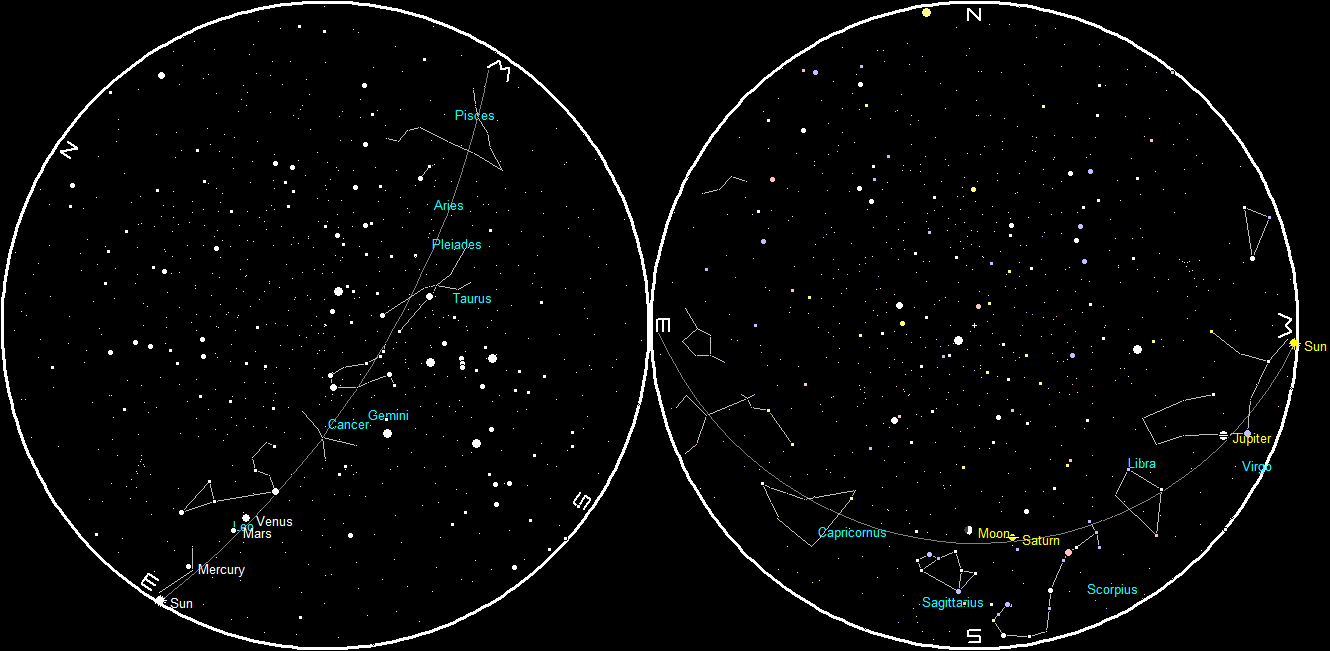
Planets at sunset and sunrise of a single night starting with sunset on the right on September 27, 2017. The night ends on the left with sunrise on the 28th. I’ve rotated the sunrise plot so the planet labels wouldn’t overlap. Click on the image to enlarge. Created using my LookingUp program.
 Bob Moler's Ephemeris Blog