Archive
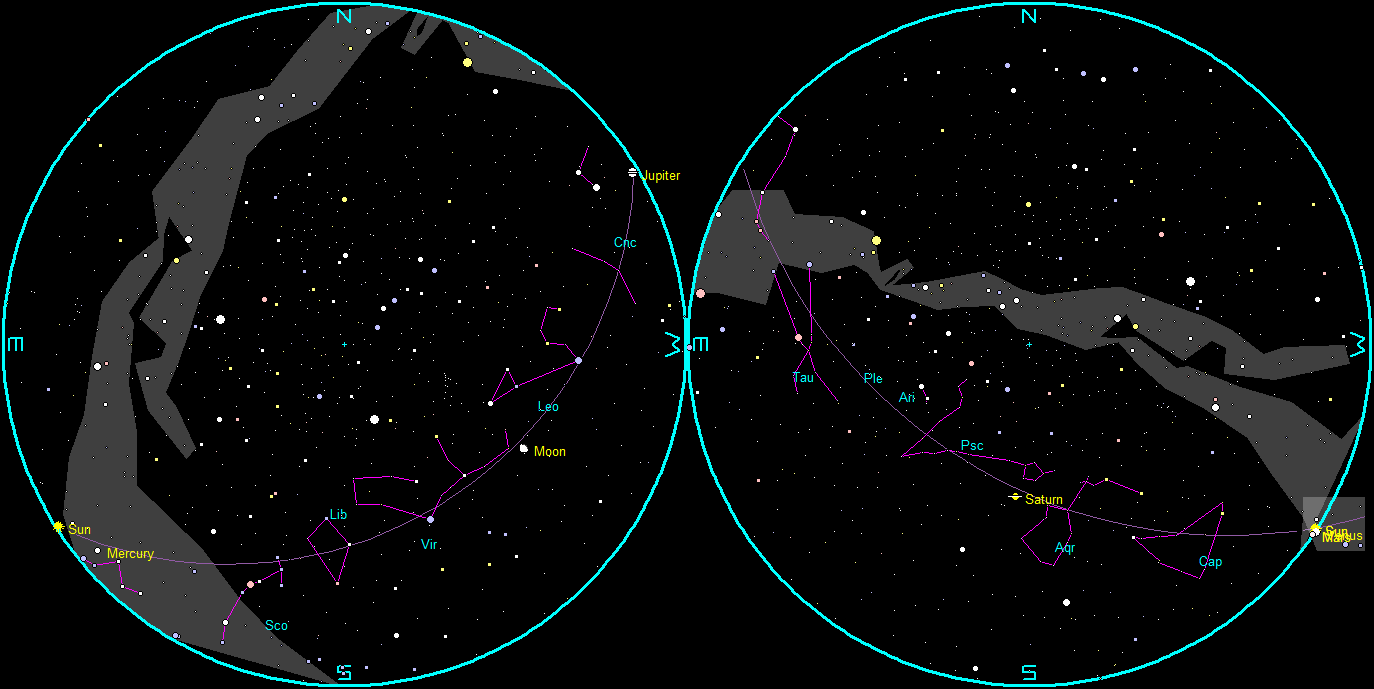
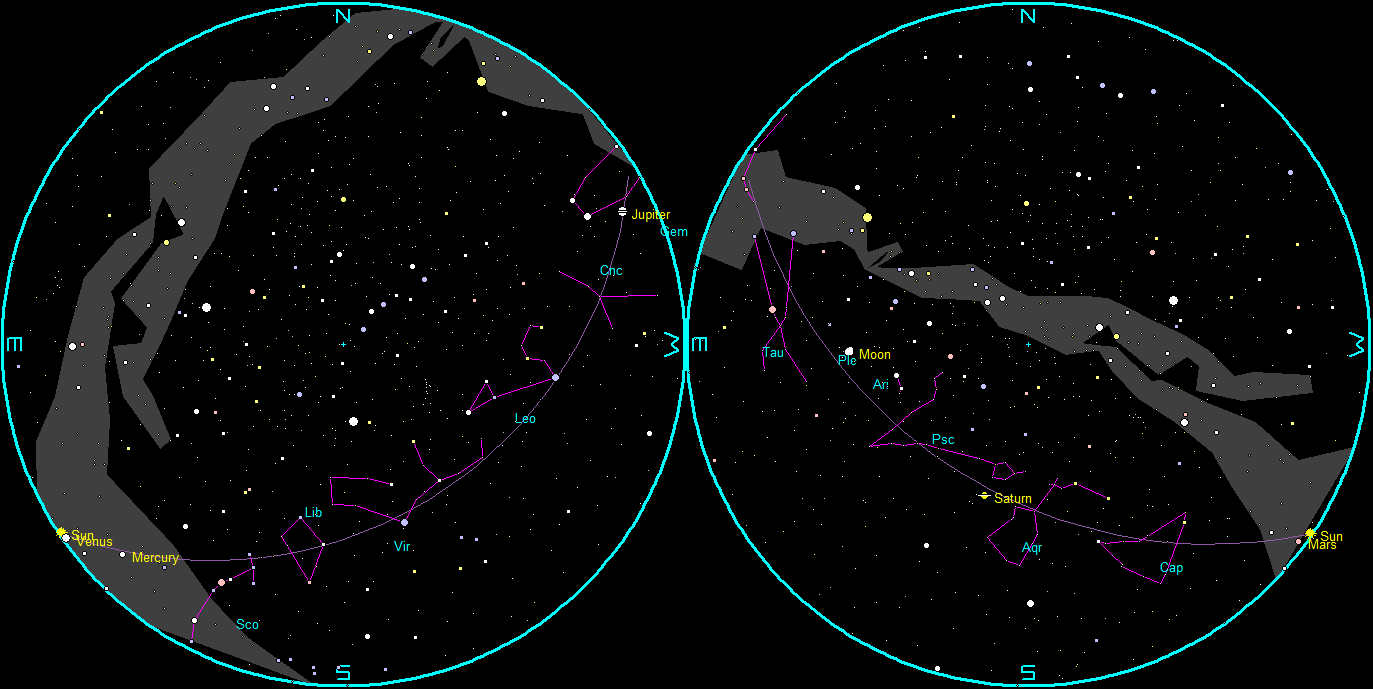
Ephemeris: 01/09/2026 – Mars is behind the Sun today
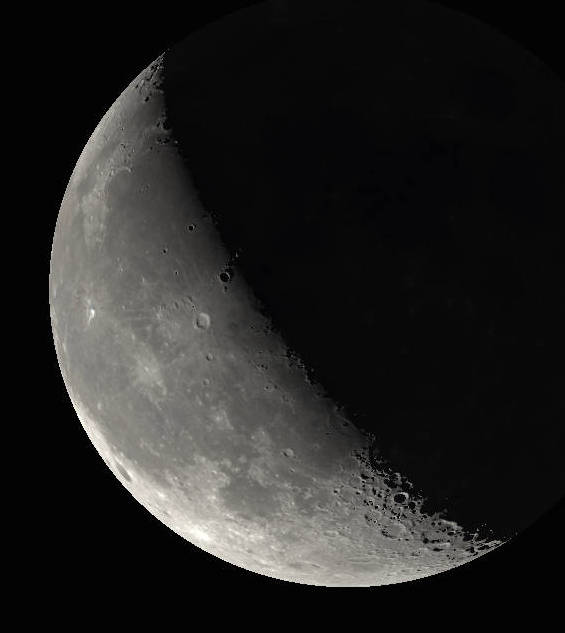
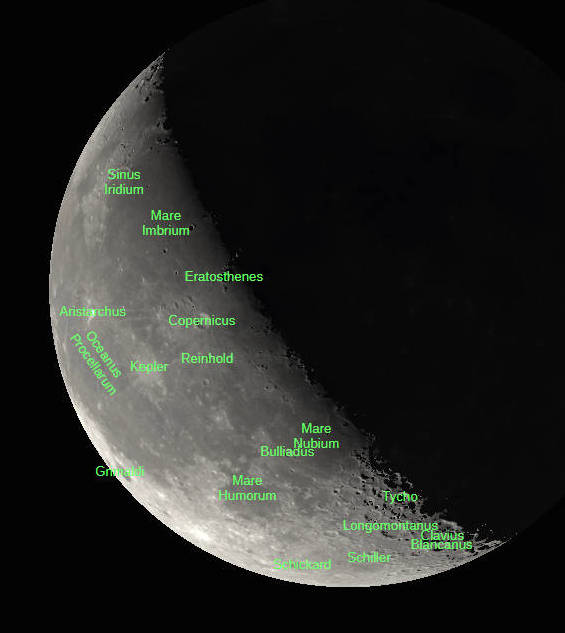
This is Bob Moler with Ephemeris for Friday, January 9th. Today the Sun will be up for 9 hours and 2 minutes, setting at 5:21, and it will rise tomorrow at 8:18. The Moon, 1 day before last quarter, will rise at 12:51 tomorrow morning.
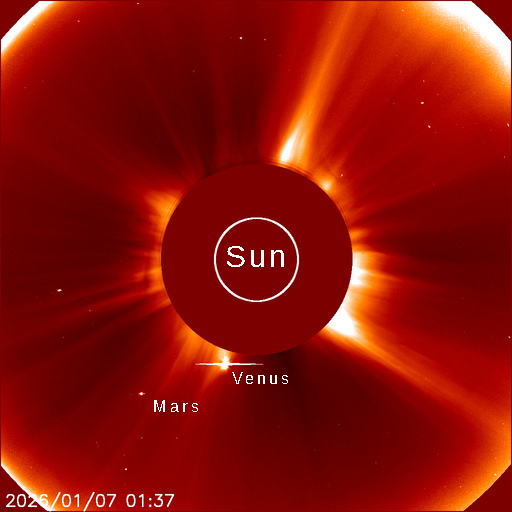
Mars is in conjunction with the Sun today. That means that it is behind the Sun, and it will enter our morning sky so that the Earth can be in an approximately 13 month pursuit of Mars for the next opposition. This is the center of a two-week period where communication with our satellites and Rovers on Mars is disrupted by the Sun which is a great generator of radio noise. Our radio telescopes on the Earth can hear transmissions from these assets on Mars a lot better than they can hear transmissions from the Earth. Just before conjunction we apparently have lost the Maven satellite that investigated the atmosphere of Mars, and helped relay communications from the rovers Perseverance and Curiosity.
The astronomical event times given in this blog are for the Traverse City/Interlochen area of Michigan (Lat 44.7° N, Long 85.7° W; EST, UT – 5 hours) unless stated otherwise. Times will be different for other locations.
Addendum
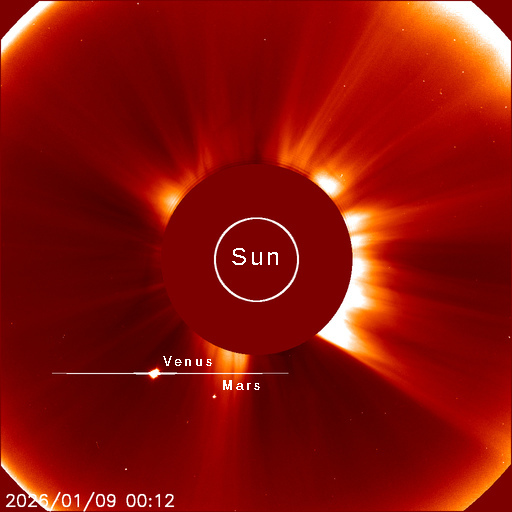
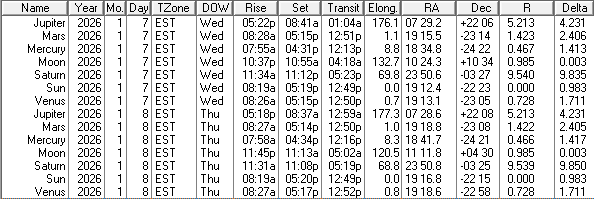
Distances to the solar system objects above
The Sun: 91.3 million miles, 147.1 million kilometers
Venus: 159.0 million miles, 255.0 million kilometers
Mars 223.3 million miles, 360.0 million kilometers
Ephemeris: 01/07/2026 – Taking our first weekly look at the whereabouts of the naked-eye planets for 2026
This is Ephemeris for Wednesday, January 7th. Today the Sun will be up for 8 hours and 59 minutes, setting at 5:19, and it will rise tomorrow at 8:19. The Moon, 3 days before last quarter, will rise at 10:37 this evening.
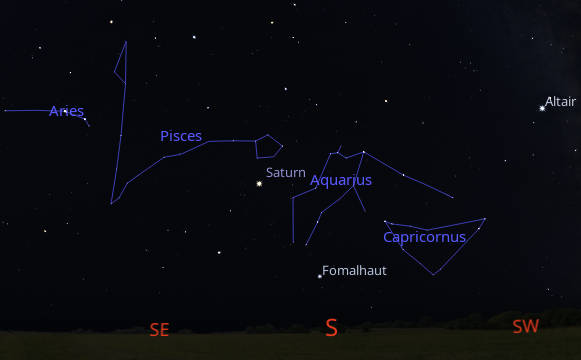
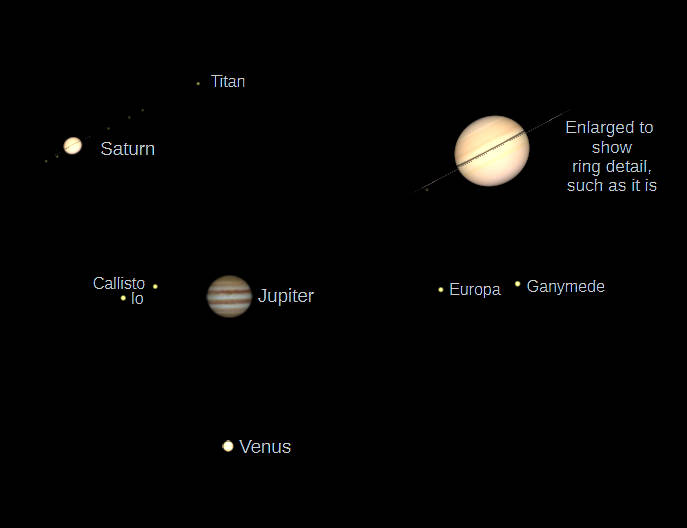
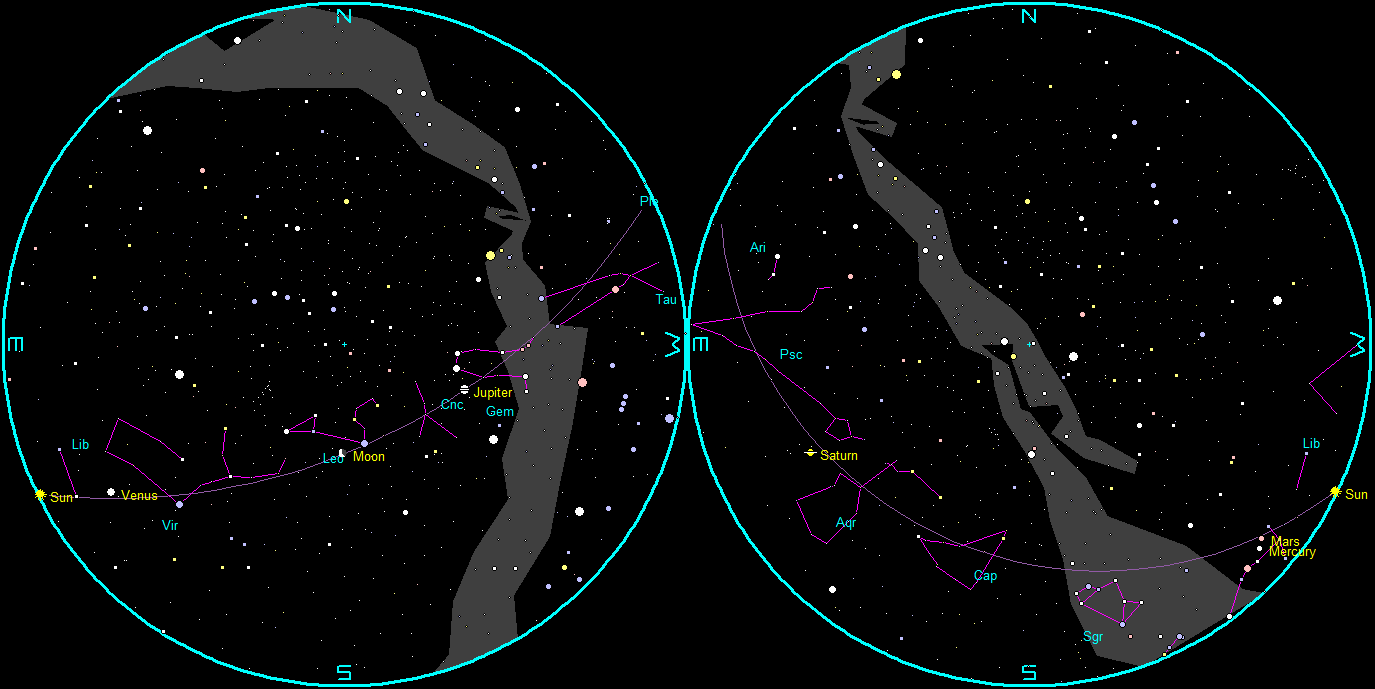
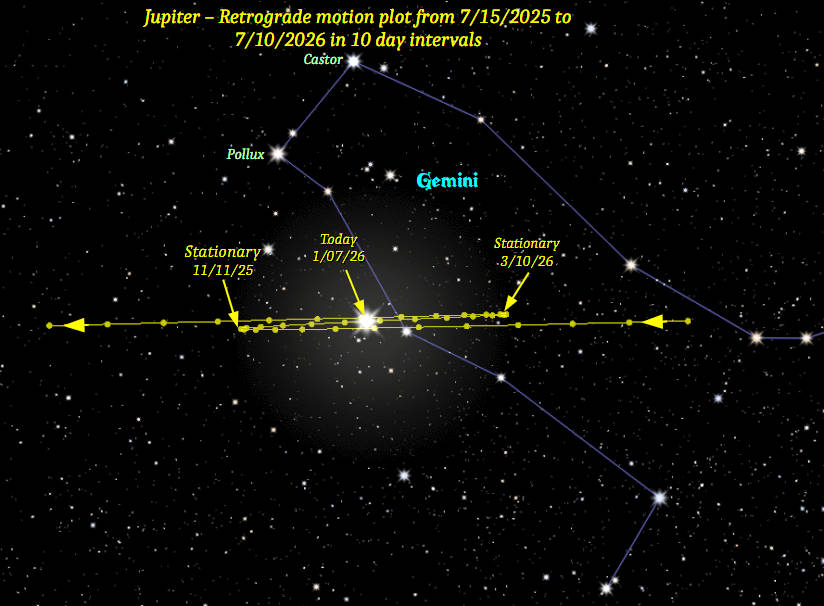
Let’s take our first weekly look at the whereabouts of the naked-eye planets for 2026. Saturn is the brightest star-like object in the southwestern sky as soon as it gets dark. In a telescope Saturn sports a very thin ring, 1.2 degrees from being edge on and is slowly opening. Jupiter will rise just after sunset. It is seen in the evening right of Pollux in the pair Castor and Pollux, the bright stars of Gemini. The giant planet is slowly moving westward with its retrograde motion. Jupiter’s 4 brightest moons can be seen even in binoculars, and shift position night to night. In the morning sky, only Jupiter can be seen. It will leave the morning sky, become an official evening planet Saturday. Venus crossed behind the Sun yesterday to become an evening planet. Mars will also cross behind the Sun Friday to become a morning planet.
The astronomical event times given in this blog are for the Traverse City/Interlochen area of Michigan (Lat 44.7° N, Long 85.7° W; EST, UT – 5 hours) unless stated otherwise. Times will be different for other locations.
Addendum
Ephemeris: 12/31/2025 – A last look at the naked-eye planets for 2025
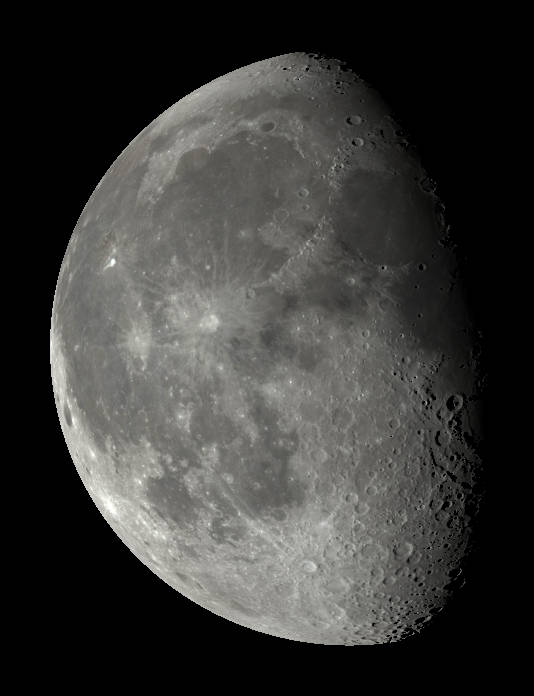
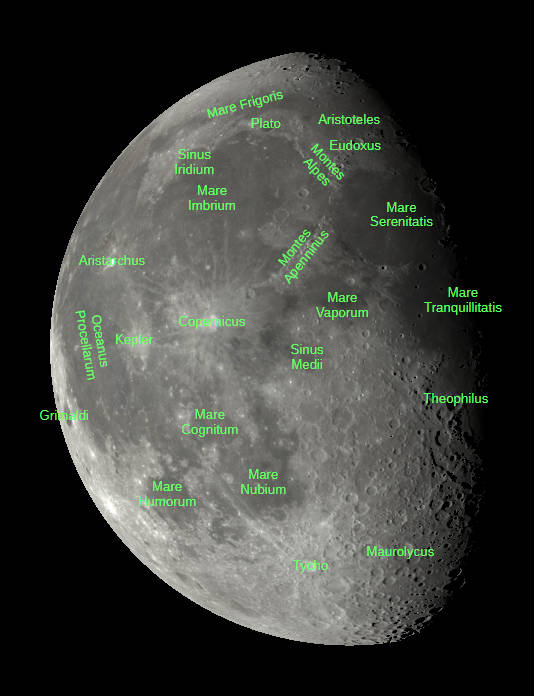
This is Ephemeris for New Year’s Eve, Wednesday, December 31st. The Sun will rise at 8:20. It’ll be up for 8 hours and 52 minutes, setting at 5:12. The Moon, 3 days before full, will set at 6:49 tomorrow morning.
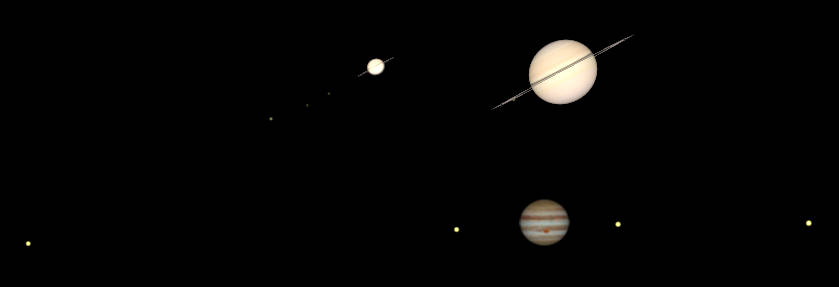
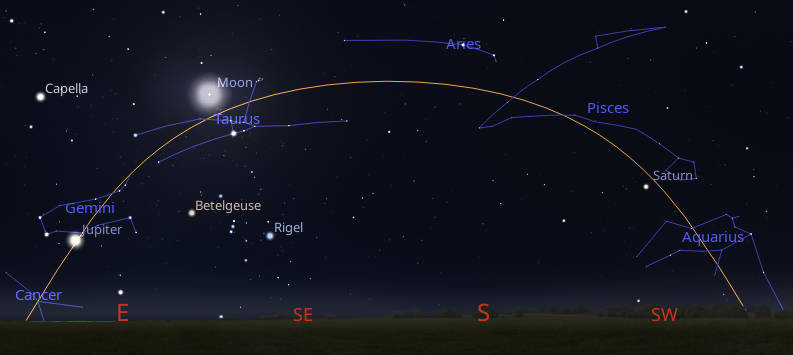
Let’s take our last weekly look at the whereabouts of the naked-eye planets for 2025. Saturn is the brightest star-like object in the southwestern sky as soon as it gets dark. In a telescope Saturn sports a very thin ring, one degree from being edge on and is slowly opening. Jupiter will rise at 5:54 PM in the east-northeast, below and right of Castor and Pollux, the bright stars of Gemini. The giant planet is slowly moving westward with its retrograde motion. Jupiter’s 4 brightest moons can be seen even in binoculars, and shift position night to night. In the morning sky, only Jupiter can be seen, descending in the western sky. It will leave the morning sky, officially on January 10th, as it reaches opposition with the Sun.
The astronomical event times given in this blog are for the Traverse City/Interlochen area of Michigan (Lat 44.7° N, Long 85.7° W; EST, UT – 5 hours) unless stated otherwise. Times will be different for other locations.
Addendum
Ephemeris: 12/24/2025 – Taking our weekly look at the whereabouts of the naked-eye planets
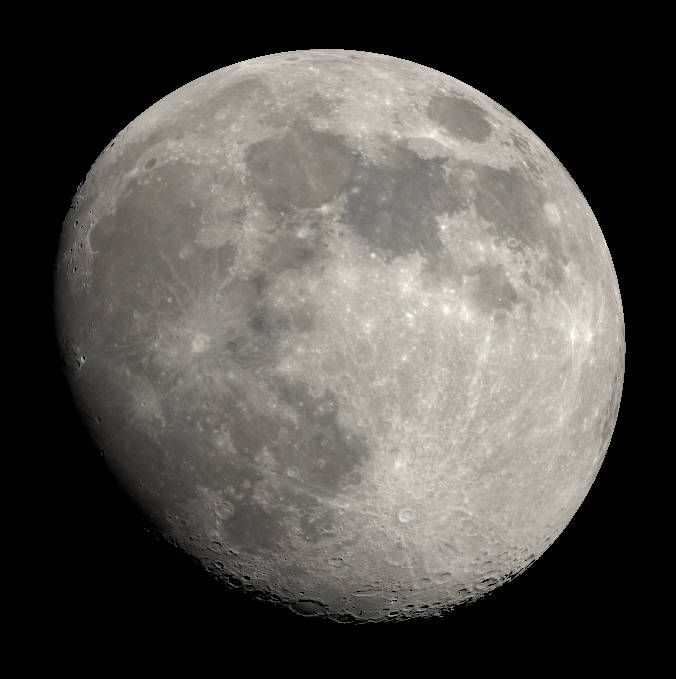
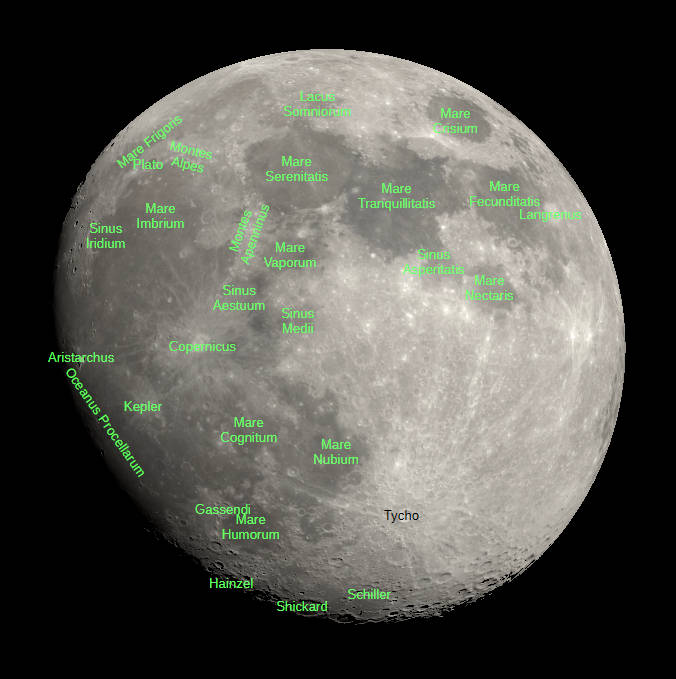
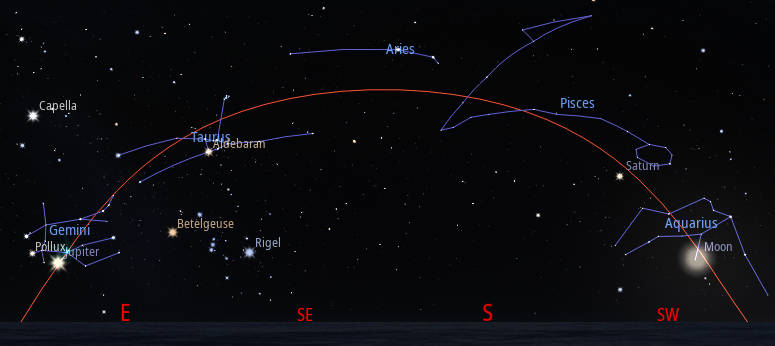
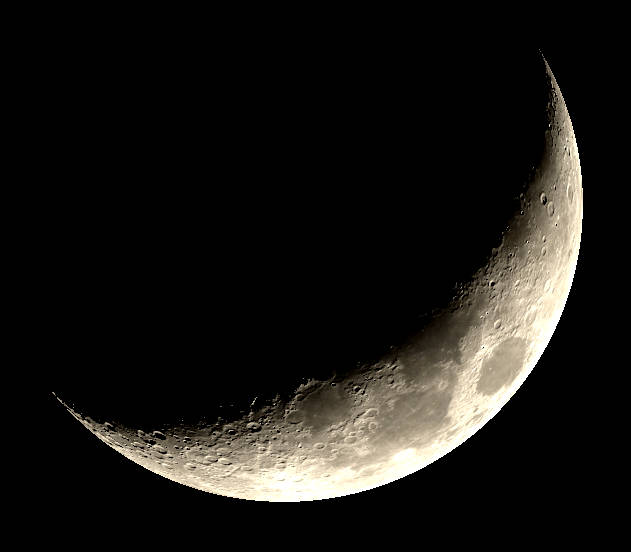
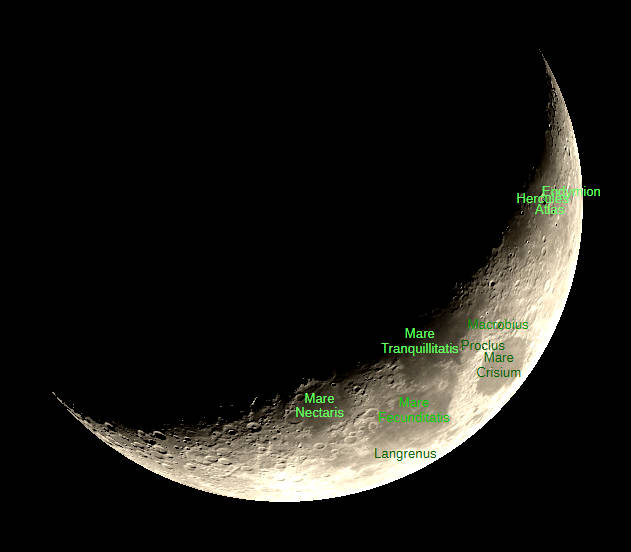
This is Ephemeris for Christmas Eve, Wednesday, December 24th. Today the Sun will be up for 8 hours and 48 minutes, setting at 5:06, and it will rise tomorrow at 8:18. The Moon, 3 days before first quarter, will set at 9:51 this evening.
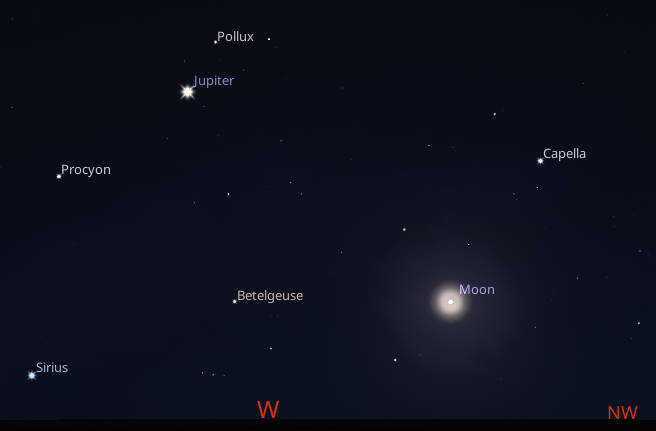
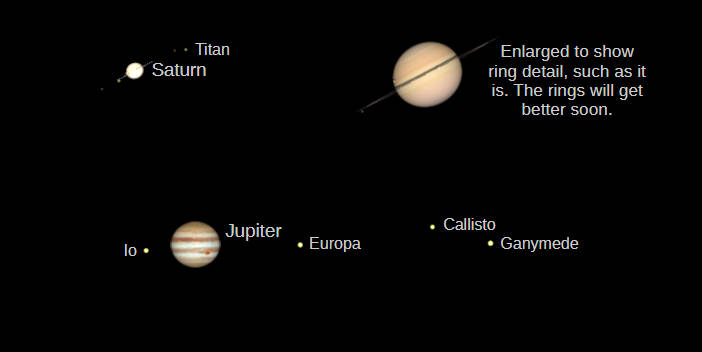
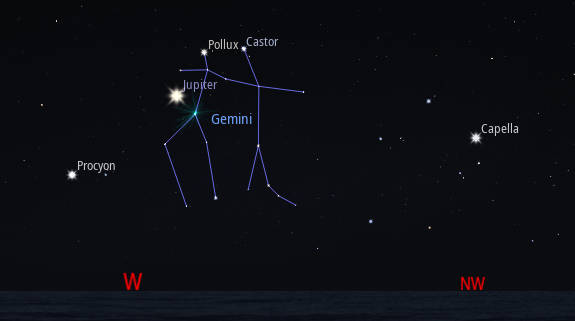
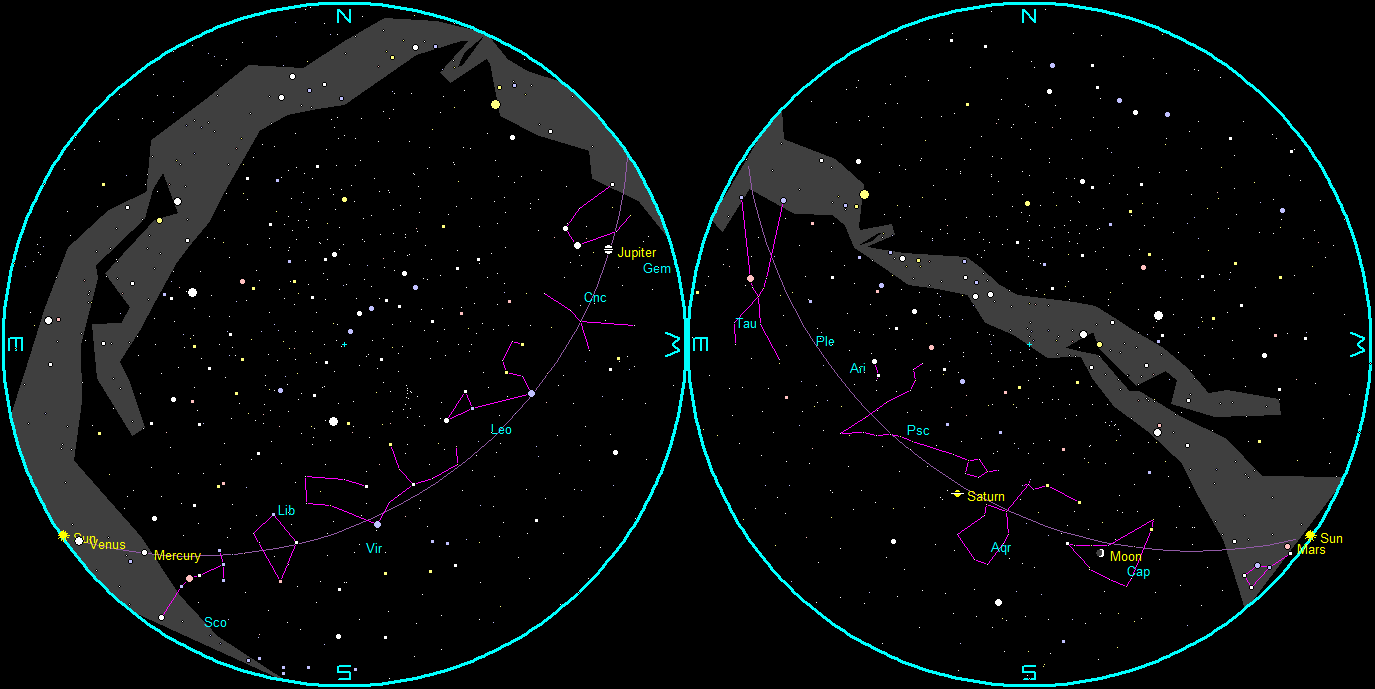
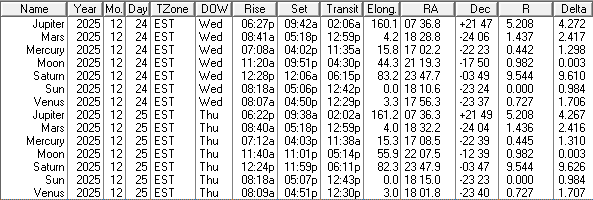
Let’s take our weekly look at the whereabouts of the naked-eye planets. Saturn is the brightest star-like object in the southwestern sky as soon as it gets dark. In a telescope Saturn sports a very thin ring, eight tenths of a degree from being edge on and slowly opening. Jupiter will rise at 6:26 PM in the east-northeast, below Castor and Pollux, the bright stars of Gemini. The giant planet is slowly moving westward with its retrograde motion. Jupiter’s 4 brightest moons can be seen even in binoculars, and shift position night to night. In the morning sky, only Jupiter can be seen, descending in the western sky. It will leave the morning sky, officially on January 10th, as it reaches opposition to the Sun.
The astronomical event times given in this blog are for the Traverse City/Interlochen area of Michigan (Lat 44.7° N, Long 85.7° W; EST, UT – 5 hours) unless stated otherwise. Times will be different for other locations.
Addendum
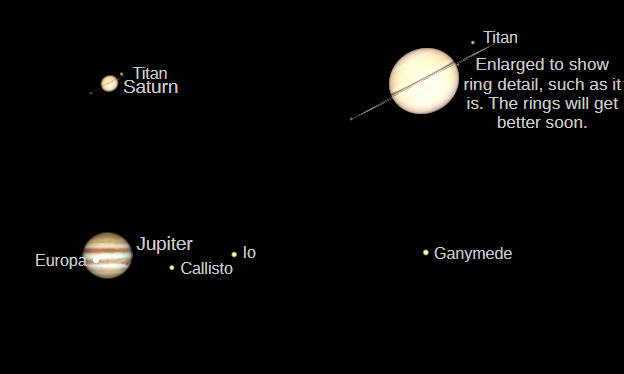
A note about transits of Jovian moons: A transiting moon is extremely difficult to pick up, however the moon’s shadow falling on the planet is much more easily spotted.
Ephemeris: 12/17/2025 – Taking our weekly look at the whereabouts of the naked-eye planets
This is Ephemeris for Wednesday, December 17th. Today the Sun will be up for 8 hours and 48 minutes, setting at 5:03, and it will rise tomorrow at 8:15. The Moon, 2 days before new, will rise at 7:26 tomorrow morning.
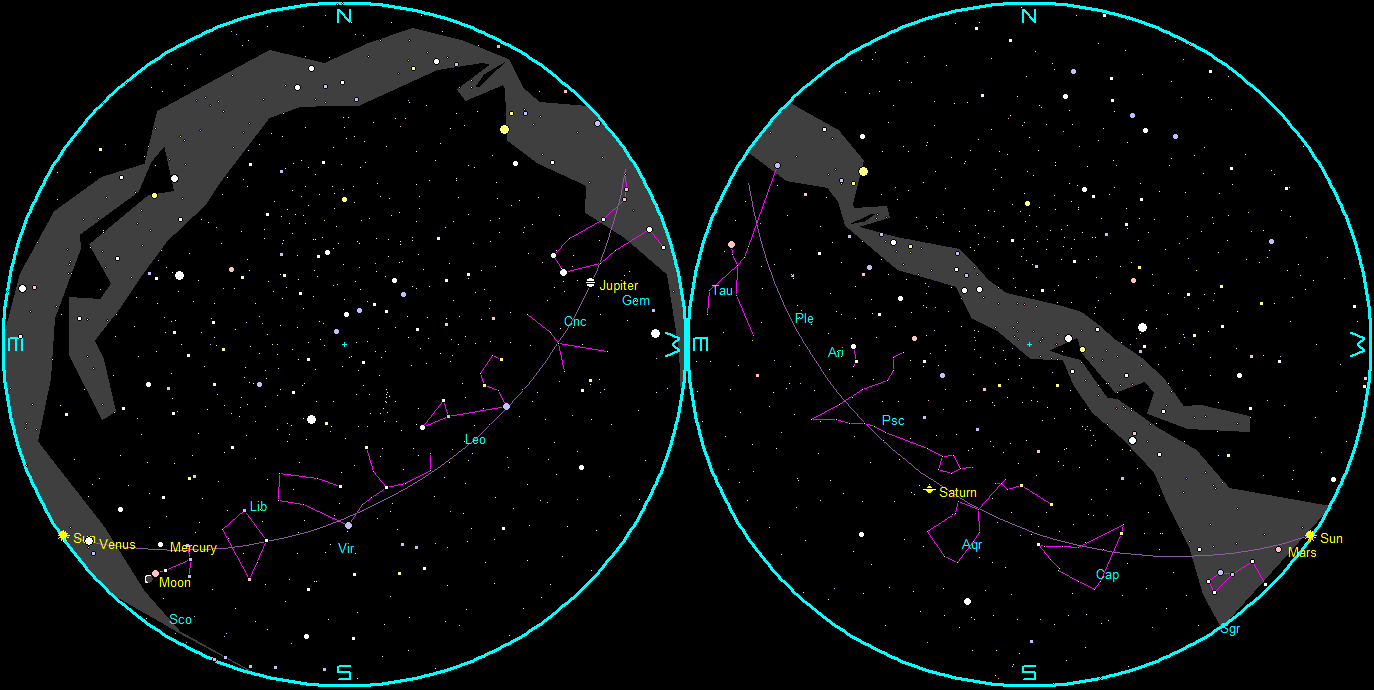
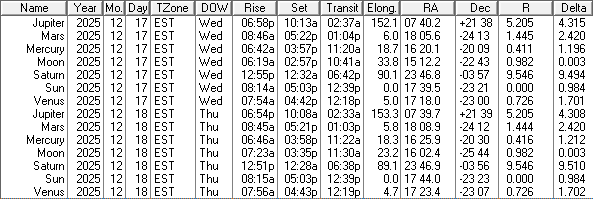
Let’s take our weekly look at the whereabouts of the naked-eye planets. Saturn is the brightest star-like object in the southern sky as soon as it gets dark. In a telescope Saturn sports a very thin ring, six tenths of a degree from being edge on and slowly opening. In a couple of months the rings will be much more visible in telescopes. Jupiter will rise at 7:02 PM in the east-northeast, below Castor and Pollux, the bright stars of Gemini. Jupiter’s 4 brightest moons can be seen even in binoculars, and shift position night to night. In the morning sky, Mercury just might be spotted very low in the east-southeast by 7:30. The next opportunity to spot Mercury will be in the evening in mid-February.
The astronomical event times given in this blog are for the Traverse City/Interlochen area of Michigan (Lat 44.7° N, Long 85.7° W; EST, UT – 5 hours) unless stated otherwise. Times will be different for other locations.
Addendum
Ephemeris: 12/10/2025 – Taking a look at the whereabouts of the naked-eye planets
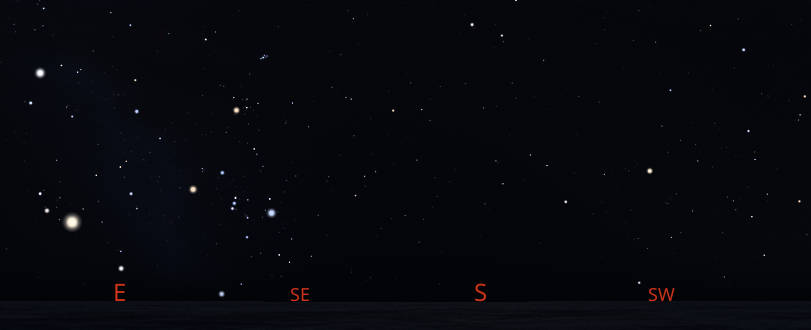
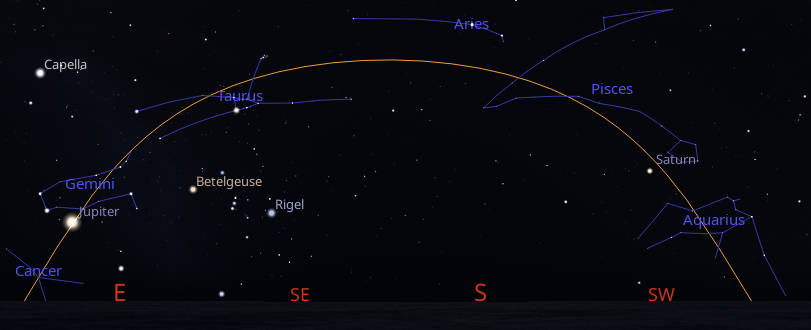
This is Ephemeris for Wednesday, December 10th. Today the Sun will be up for 8 hours and 52 minutes, setting at 5:02, and it will rise tomorrow at 8:10. The Moon, 1 day before last quarter, will rise at 11:45 this evening.
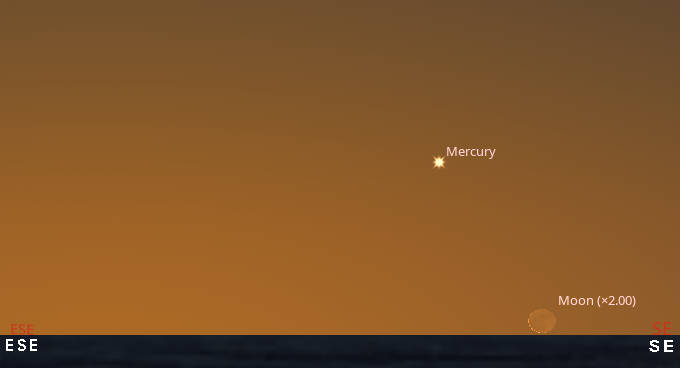
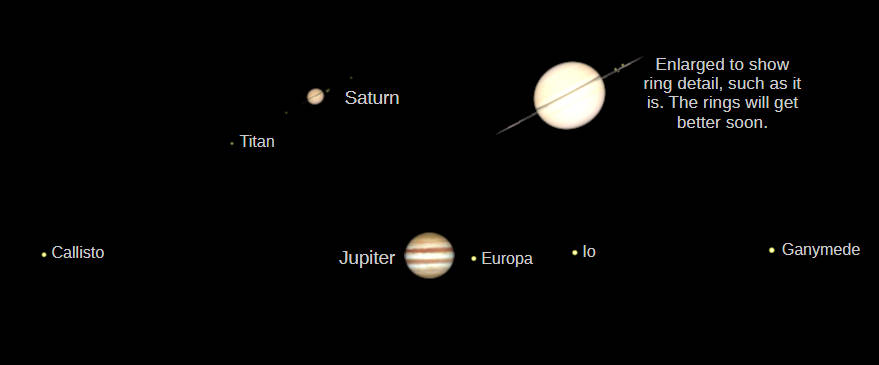
Let’s take our weekly look at the whereabouts of the naked-eye planets. Saturn is the brightest star-like object in the southern sky as soon as it gets dark. In a telescope Saturn sports a very thin ring, half a degree from being edge on and slowly opening. Normally, I’d say that Saturn’s rings are easy to see in a telescope. In a couple of months the rings will be much more visible in telescopes. Jupiter will rise at 7:29 PM in the east-northeast, beneath Castor and Pollux, the bright stars of Gemini. Jupiter’s 4 brightest moons can be seen even in binoculars, and shift position night to night. Tonight they will all be in line on one side of the planet. Mercury might be spotted very low in the east-southeast by 7 AM tomorrow morning.
The astronomical event times given in this blog are for the Traverse City/Interlochen area of Michigan (Lat 44.7° N, Long 85.7° W; EDT, UT – 4 hours) unless stated otherwise. Times will be different for other locations.
Addendum
Ephemeris: 12/03/2025 – Taking our weekly look at the whereabouts of the naked-eye planets
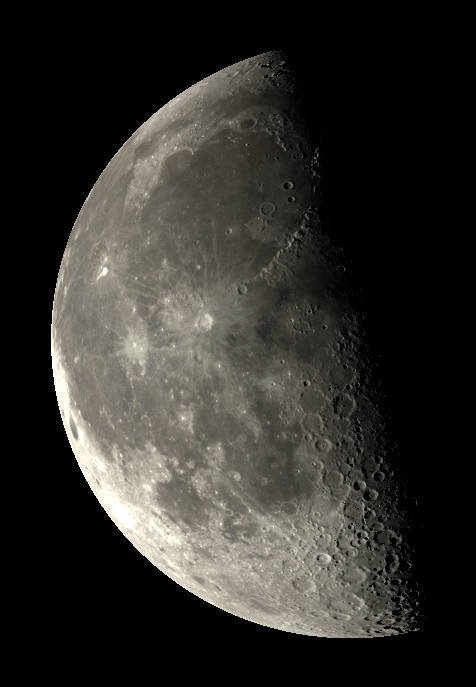
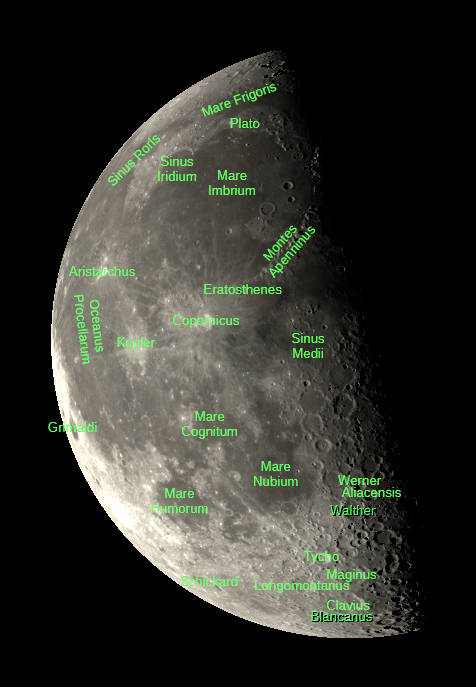
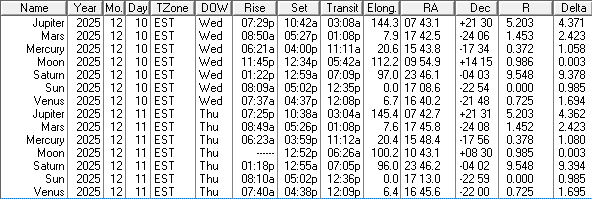
This is Bob Moler with Ephemeris for Wednesday, December 3rd. Today the Sun will be up for 9 hours, setting at 5:02, and it will rise tomorrow at 8:03. The Moon, 1 day before full, will set at 7:59 tomorrow morning.
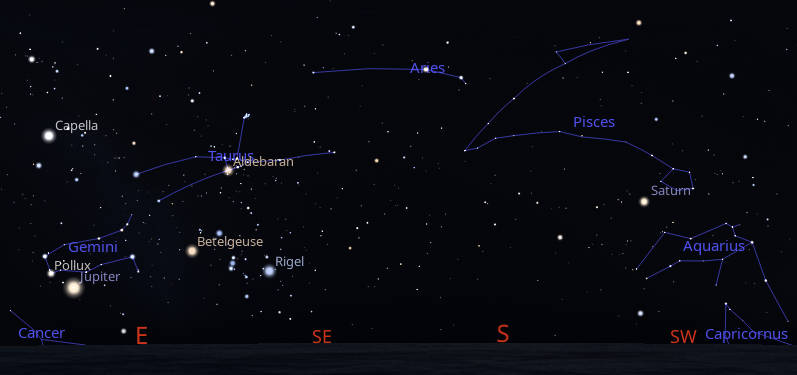
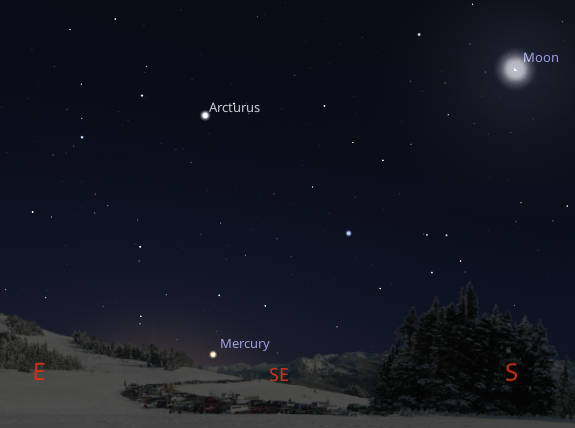
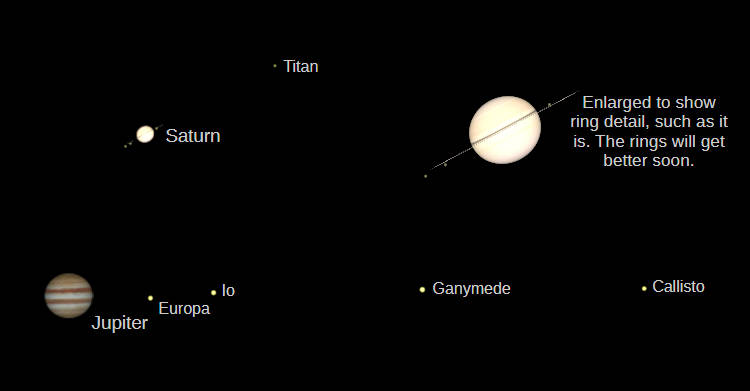
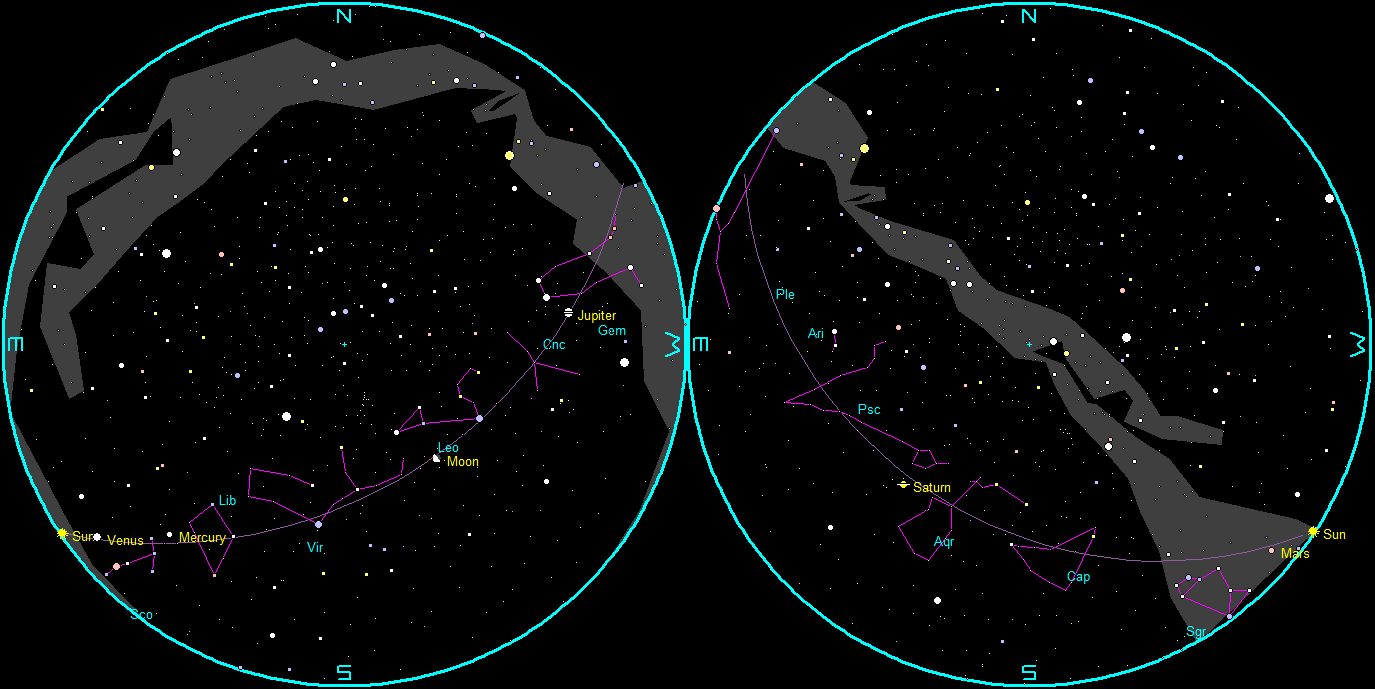
Let’s take our weekly look at the whereabouts of the naked-eye planets. Saturn is the brightest star-like object in the southern sky as soon as it gets dark. In a telescope Saturn sports a very thin ring, 4/10ths of a degree from being edge on. The rings are slowly opening up. Normally, I’d say that Saturn’s rings are easy to see in a telescope. In a couple of months the rings will be much more visible in telescopes. Jupiter will rise at 8 PM in the east-northeast, beneath Castor and Pollux, the bright stars of Gemini. Jupiter’s 4 brightest moons can even be seen in binoculars, and shift position night to night. Mercury might be spotted low in the east-southeast by 7 AM tomorrow morning, having risen 45 minutes earlier.
The astronomical event times given in this blog are for the Traverse City/Interlochen area of Michigan (Lat 44.7° N, Long 85.7° W; EDT, UT – 4 hours) unless stated otherwise. Times will be different for other locations.
Addendum
Ephemeris: 11/26/2025 – Checking out the naked eye planets
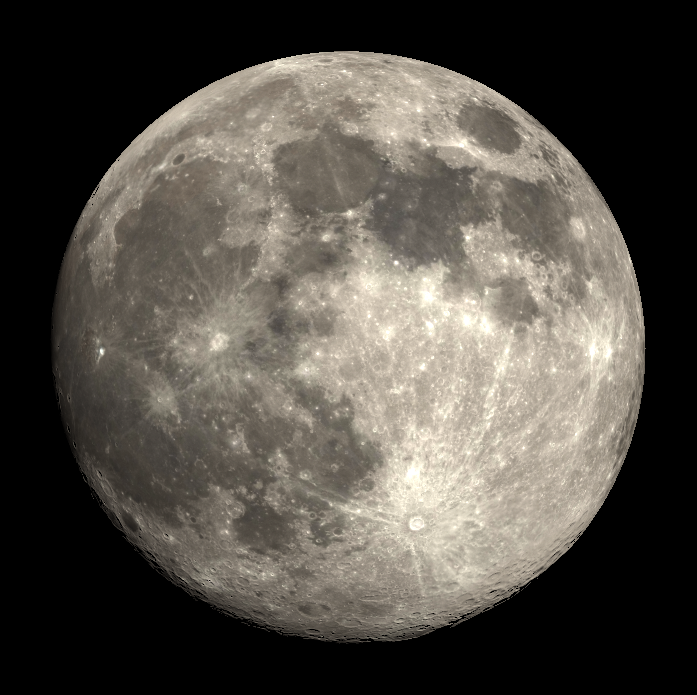
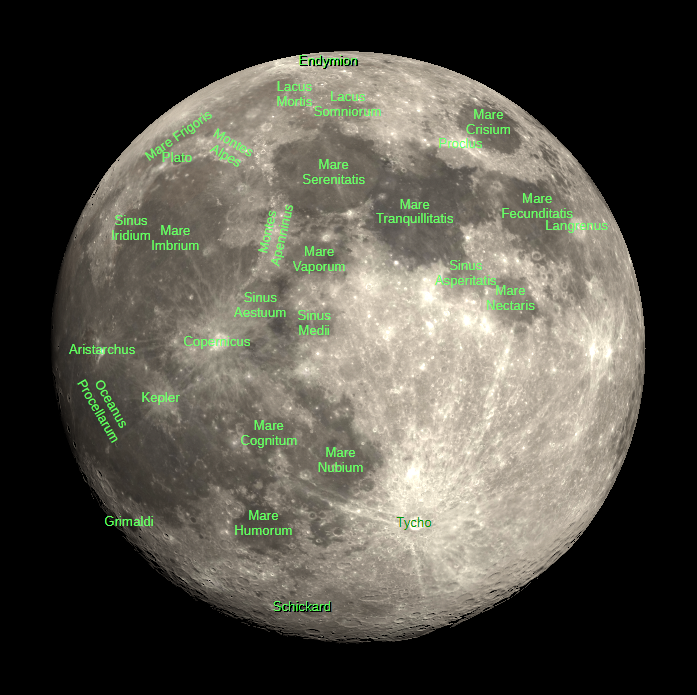
This is Ephemeris for Wednesday, November 26th. Today the Sun will be up for 9 hours and 11 minutes, setting at 5:05, and it will rise tomorrow at 7:55. The Moon, 2 days before first quarter, will set at 10:49 this evening.
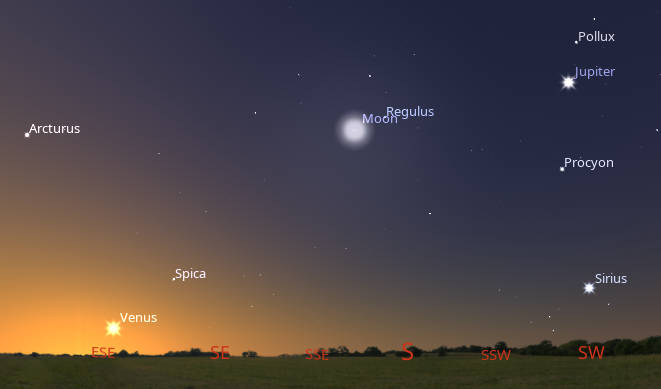
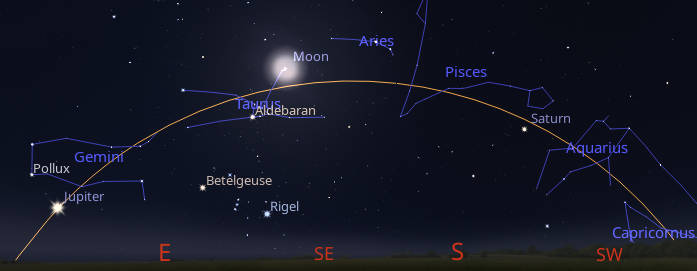
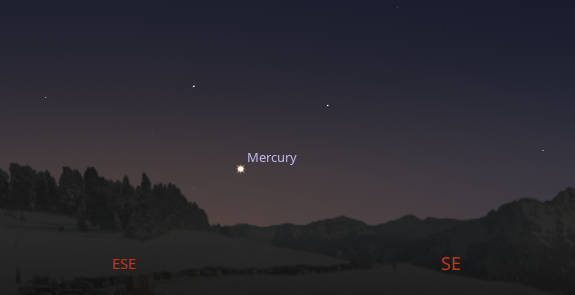
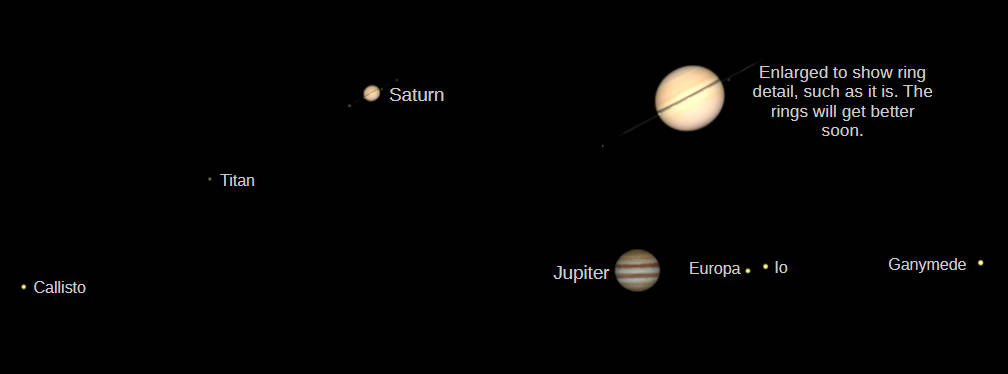
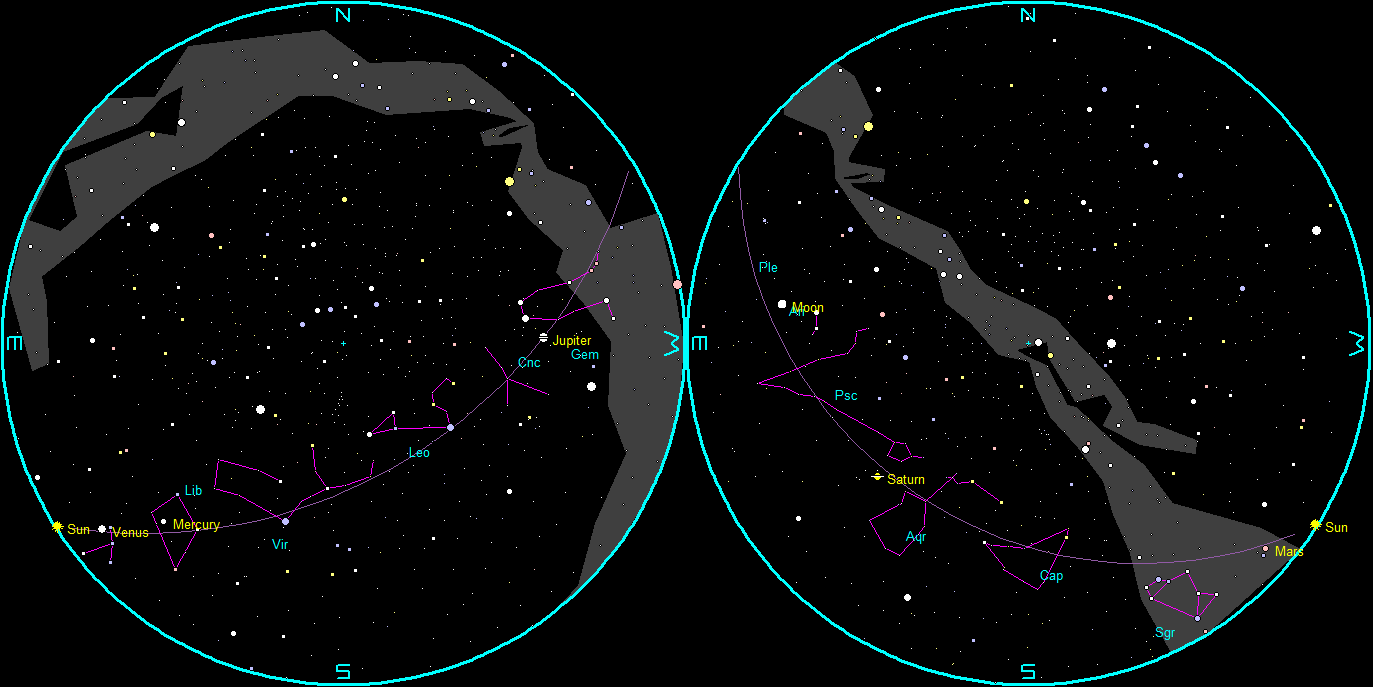
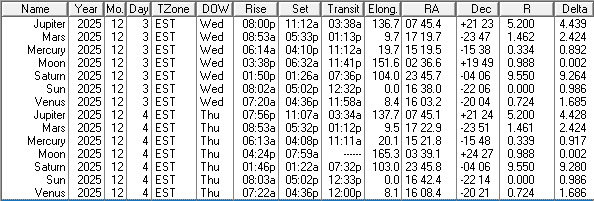
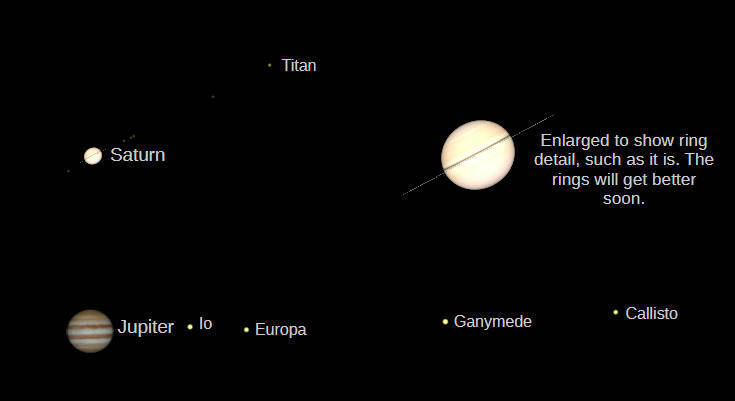
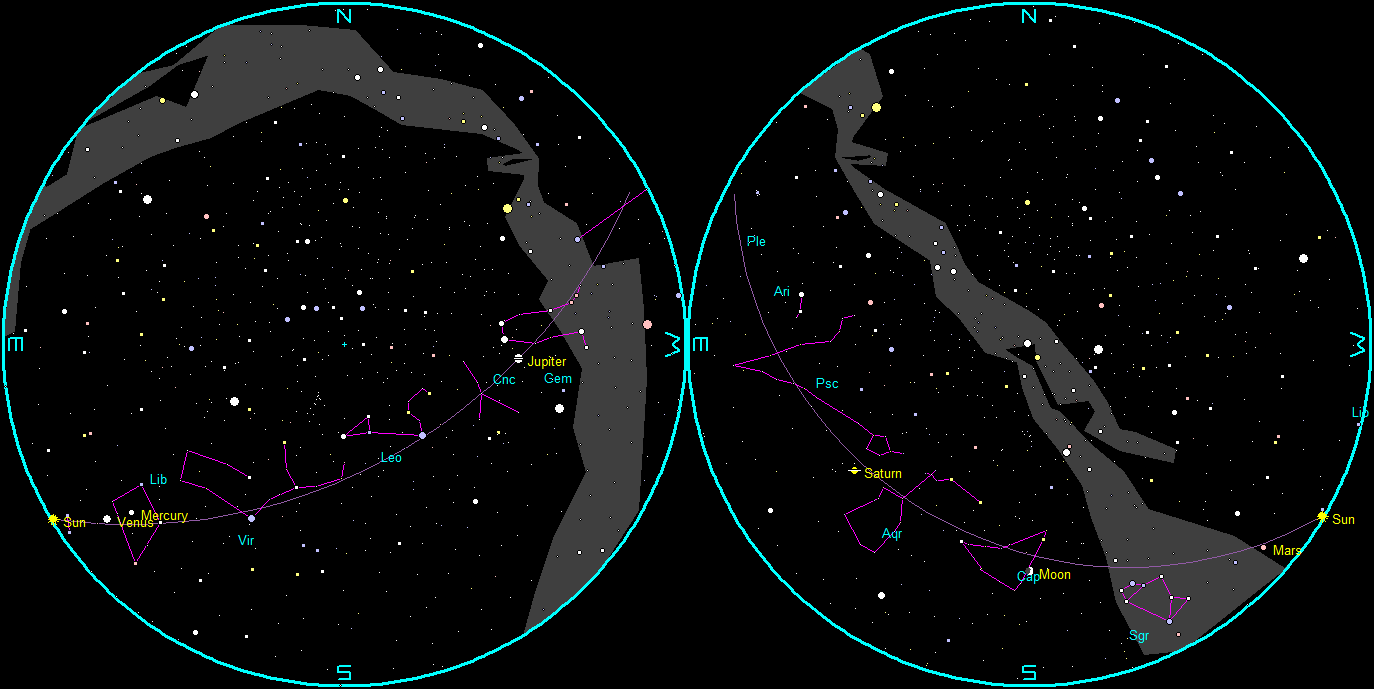
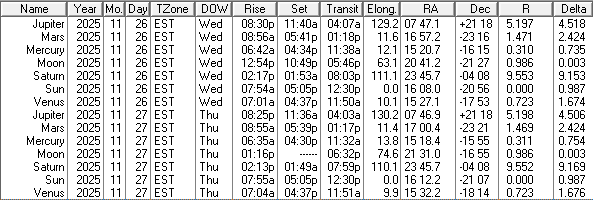
Pausing my exploration of AI to check out the naked eye planets this week. Mars and Mercury are too close to the Sun to be seen. Saturn is the brightest star like object in the southeastern sky as soon as it gets dark. In a telescope Saturn sports a very thin ring, 4/10ths of a degree from being edge on. In 4 days the rings will slowly start to open up. Normally, I’d say that Saturn’s rings are easy to see in a telescope. Currently, the rings appear extremely thin and can be difficult to pick up. Jupiter will rise at 8:29 PM in the east-northeast. Beneath Castor and Pollux, the bright stars of Gemini. By 7 AM, it will appear high in the west southwest, above the stars Procyon below and Sirius, near the horizon. Venus will rise at 7:04 in the east southeast and will probably not be visible.
The astronomical event times given in this blog are for the Traverse City/Interlochen area of Michigan (Lat 44.7° N, Long 85.7° W; EDT, UT – 4 hours) unless stated otherwise. Times will be different for other locations.
Addendum
Ephemeris: 11/19/2025 – Taking our weekly look at the whereabouts of the naked-eye planets
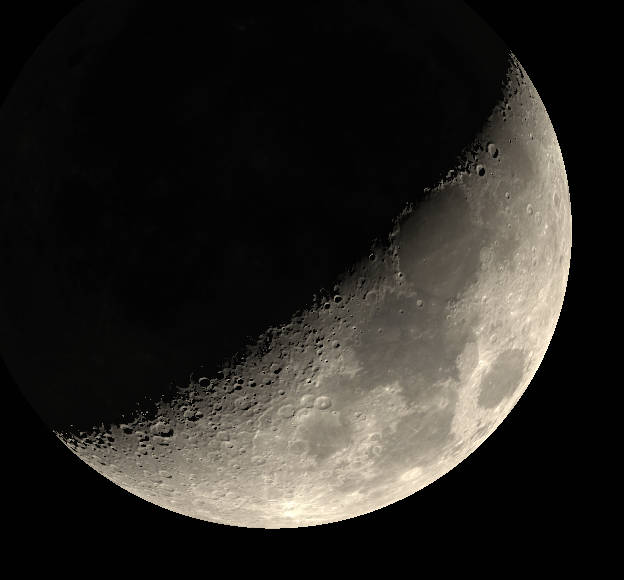
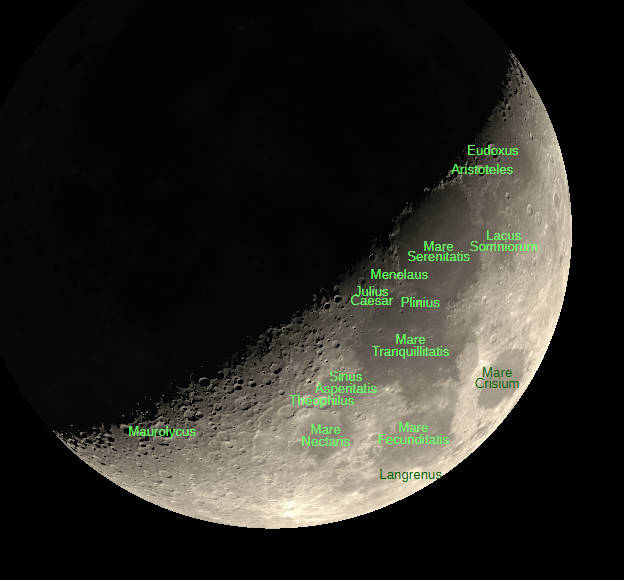
This is Ephemeris for Wednesday, November 19th. Today the Sun will be up for 9 hours and 25 minutes, setting at 5:10, and it will rise tomorrow at 7:46. The Moon, 1 day before new, will rise at 8:28 tomorrow morning.
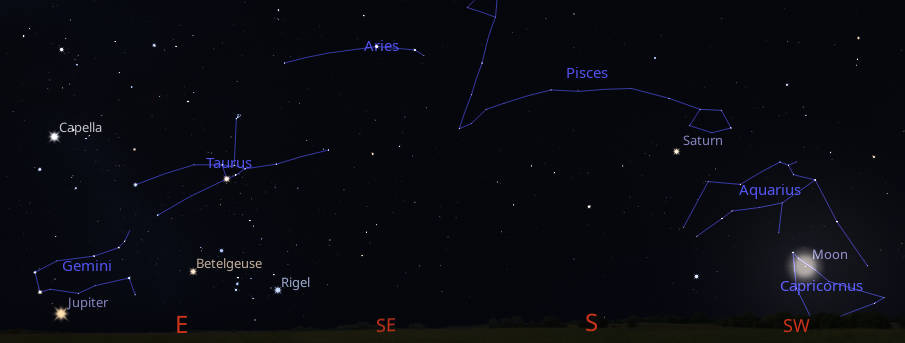
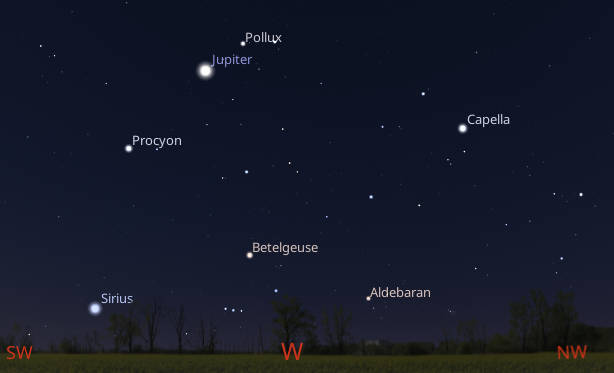
Let’s take our weekly look at the whereabouts of the naked-eye planets. Saturn is the brightest star like object in the southeastern sky as soon as it gets dark. In a telescope Saturn sports a very thin ring, 4/10ths of a degree from being edge on. In 4 days the rings will slowly start to open up. Normally, I’d say that Saturn’s rings are easy to see in a telescope. Currently, the rings appear extremely thin and can be difficult to pick up. Jupiter will rise at 8:58 PM in the east-northeast. By 6:30 AM, it will appear high in the southwest, near the stars of Gemini, with Orion and the other bright stars of winter in the southwest. Venus, which will rise at 6:48 AM will be difficult to spot in the morning twilight.
The astronomical event times given in this blog are for the Traverse City/Interlochen area of Michigan (Lat 44.7° N, Long 85.7° W; EDT, UT – 4 hours) unless stated otherwise. Times will be different for other locations.
Addendum
Ephemeris: 11/12/2025 – Taking our weekly look at the whereabouts of the naked-eye planets
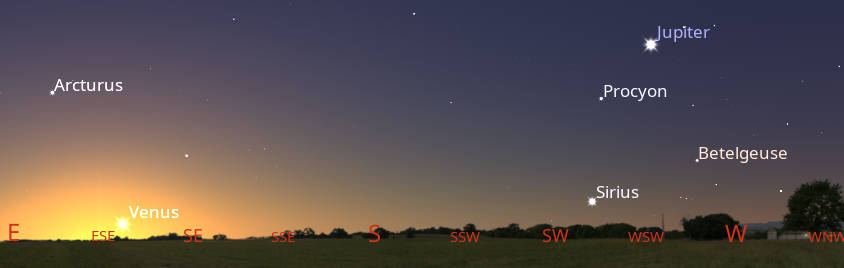
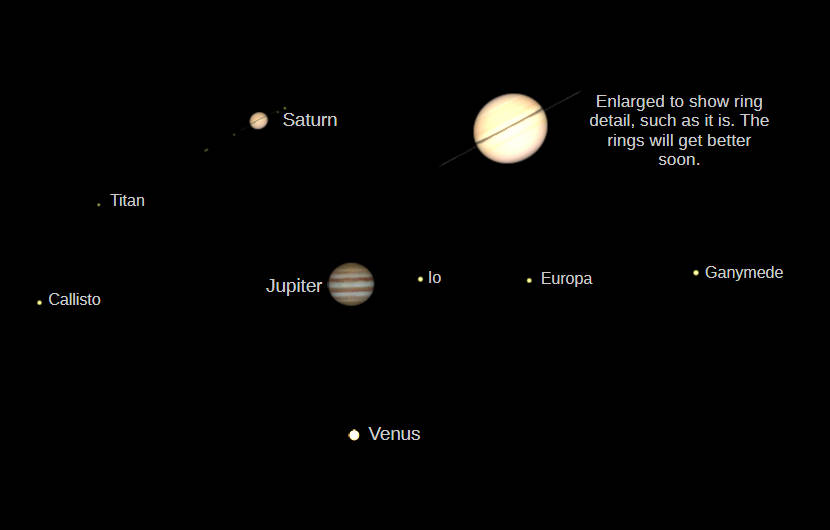
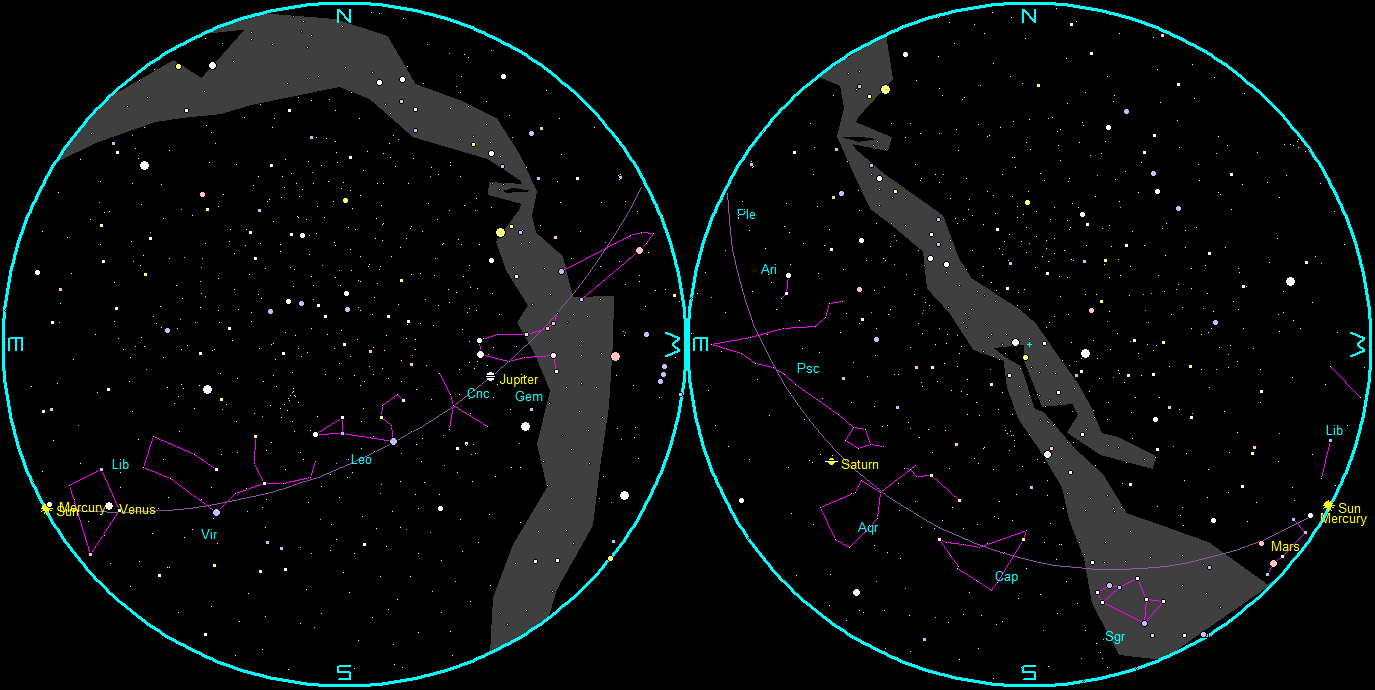
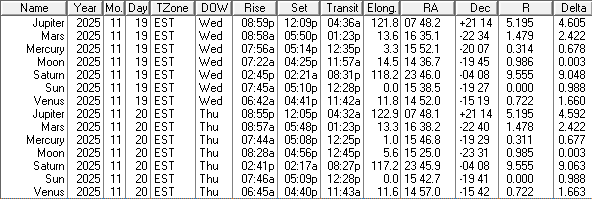
This is Bob Moler with Ephemeris for Wednesday, November 12th. Today the Sun will be up for 9 hours and 41 minutes, setting at 5:17, and it will rise tomorrow at 7:37. The Moon, at last quarter today, will rise at 12:48 tomorrow morning.
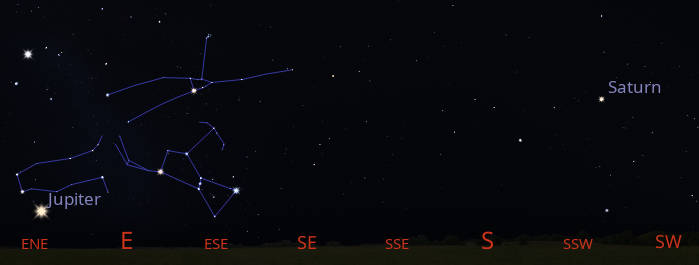
Let’s take our weekly look at the whereabouts of the naked-eye planets. Saturn is the brightest star like object in the east southeastern sky as soon as it gets dark. In a telescope Saturn sports a very thin ring, 4/10ths of a degree from being edge on. Normally, I’d say that Saturn’s rings are easy to see in a telescope. Currently, the rings appear extremely thin and can be difficult to pick up. Jupiter will rise at 9:27 PM in the east-northeast. By 6:30 AM, it will appear high in the southwest, below the stars of Gemini, with Orion and the other bright stars of winter in the southwest. Venus, which will rise at 6:26 AM will be difficult to spot in the morning twilight.
The astronomical event times given in this blog are for the Traverse City/Interlochen area of Michigan (Lat 44.7° N, Long 85.7° W; EDT, UT – 4 hours) unless stated otherwise. Times will be different for other locations.
Addendum