Archive
10/27/2021 – Ephemeris – Let’s search for the naked-eye planets for this week
This is Bob Moler with Ephemeris for Wednesday, October 27th. Today the Sun will be up for 10 hours and 23 minutes, setting at 6:38, and it will rise tomorrow at 8:15. The Moon, 1 day before last quarter, will rise at 11:27 this evening.
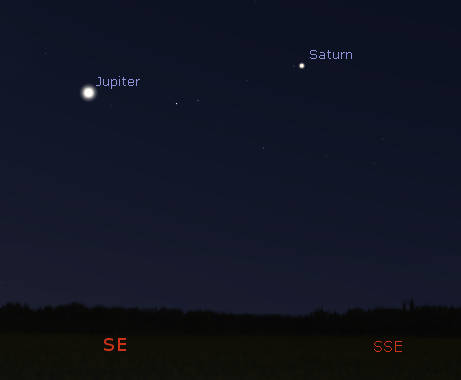
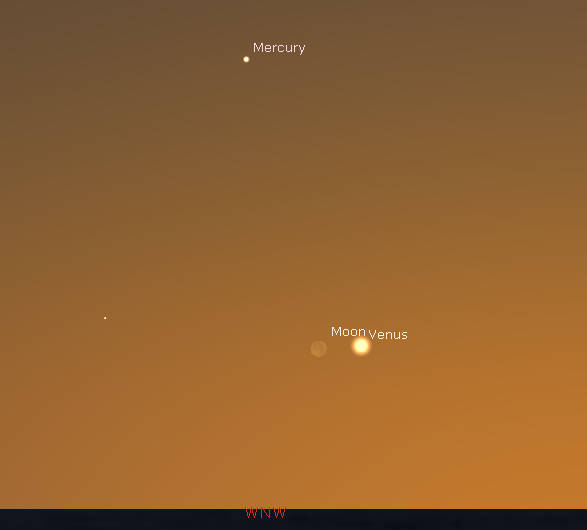
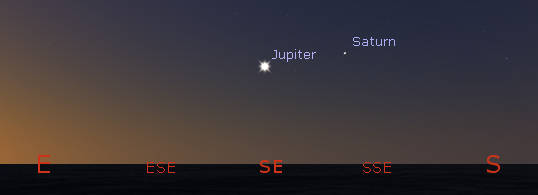
Let’s search for the naked-eye planets for this week. Venus should be visible in the southwestern evening twilight by 7 tonight. It will set at 8:43 pm. By 7:15 pm, Jupiter will be spotted in the south-southeastern sky. Jupiter should be easy to spot at that hour. Saturn will be dimmer, and to its right. They will be visible for a while after midnight in the southwest, with Saturn setting first at 12:37 am, and Jupiter following at 1:57. Saturn’s rings are a beautiful sight in a telescope of even modest power, but the planet will appear tiny. In the morning sky, Mercury will be visible and low in the east-southeast for most of the 7 am hour. All four of Jupiter’s brightest moons will be visible in binoculars early in the evening tonight.
The astronomical event times given are for the Traverse City/Interlochen area of Michigan (EDT, UT – 4 hours). They may be different for your location.
Addendum
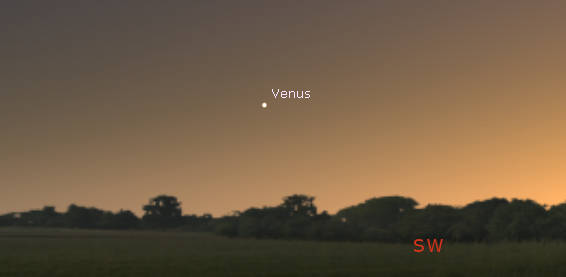
Venus will appear low in the southwest by 7 pm tonight, October 27, 2021. Created using Stellarium.
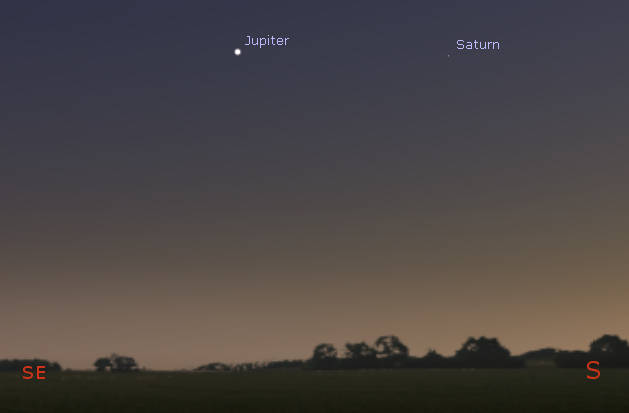
Jupiter and Saturn in evening twilight at 7:15 pm tonight, October 27, 2021. Created using Stellarium.
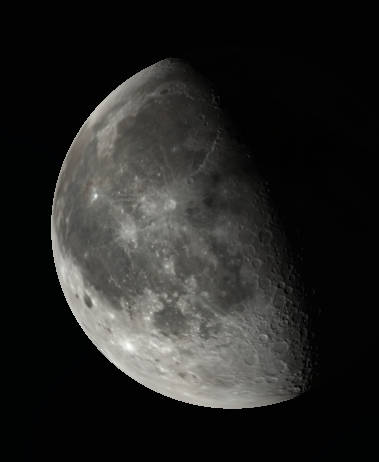
The Moon as it might appear in binoculars or a small telescope tomorrow morning, October 28, 2021. Created using Stellarium.
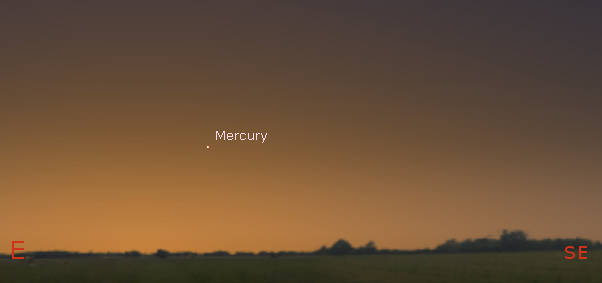
Mercury in morning twilight finder for 7:30 am tomorrow, October 28, 2021. Created using Stellarium.
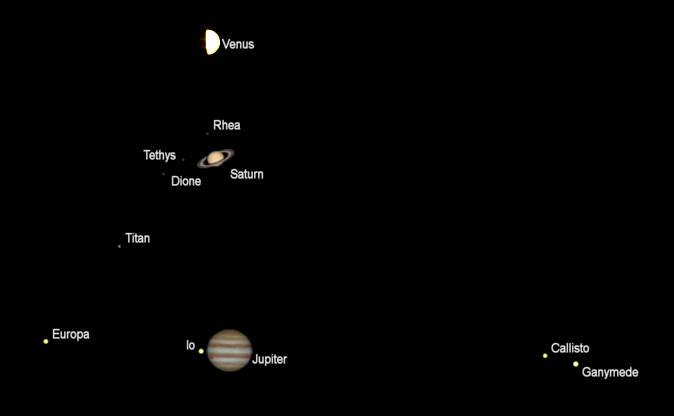
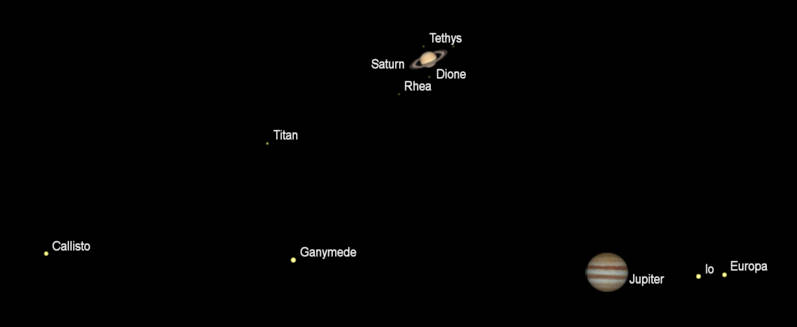
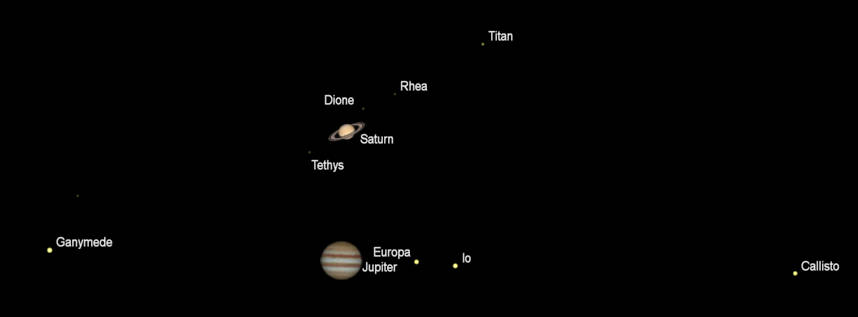
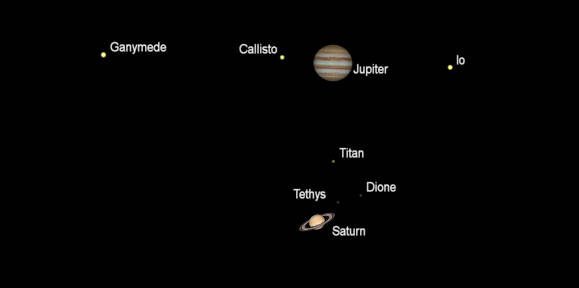
Telescopic views of the bright planets (north up) as they would be seen in a small telescope, with the same magnification, this evening at 9 pm, October 27, 2021. Apparent diameters: Venus at 7 pm, 24.19″, 50.8% illuminated; Saturn 16.92″, its rings 39.41″; Jupiter, 42.87″. Mercury at 7:30 am on the 28th and not plotted, 6.47″, 64.9% illuminated. The Jovian moon Io will begin transiting the face of the planet at 9:20 pm. Its shadow will start to cross at 10:37 pm. Io’s transit will end at 11:37 pm. The ” symbol means seconds of arc (1/3600th of a degree.) Click on the image to enlarge it. Created using Cartes du Ciel (Sky Charts).
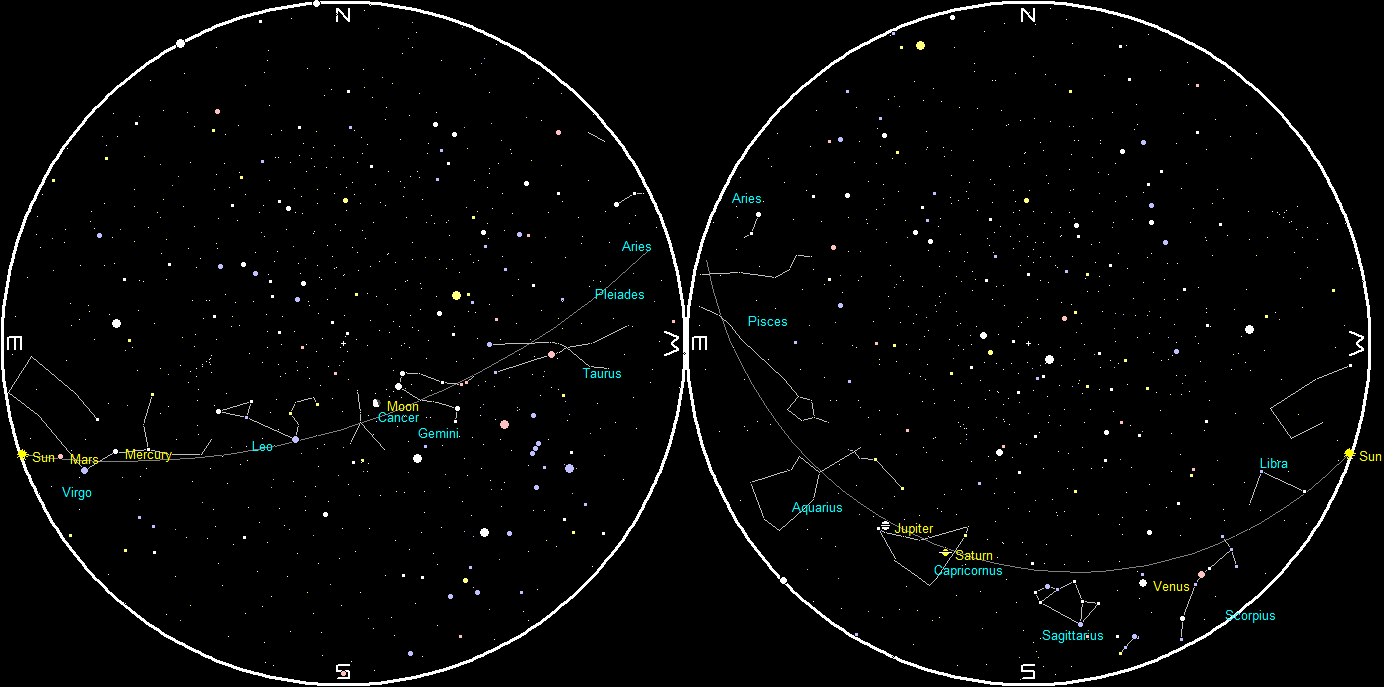
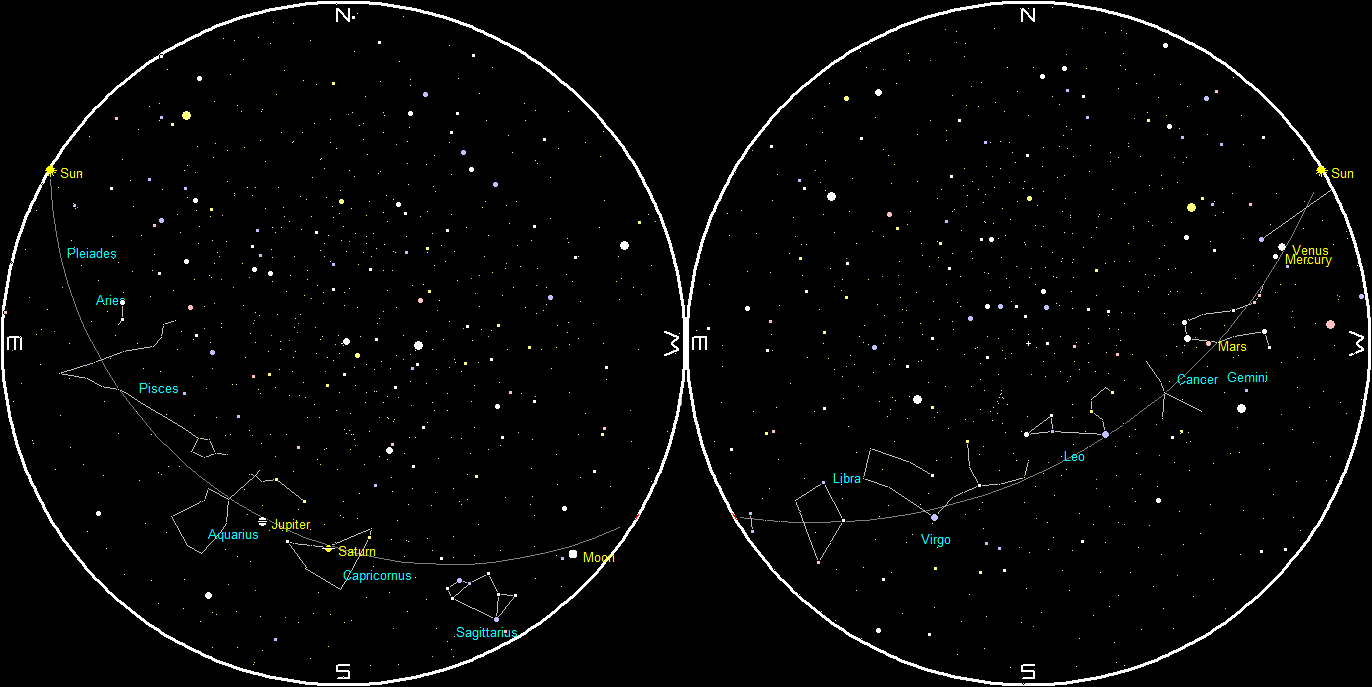
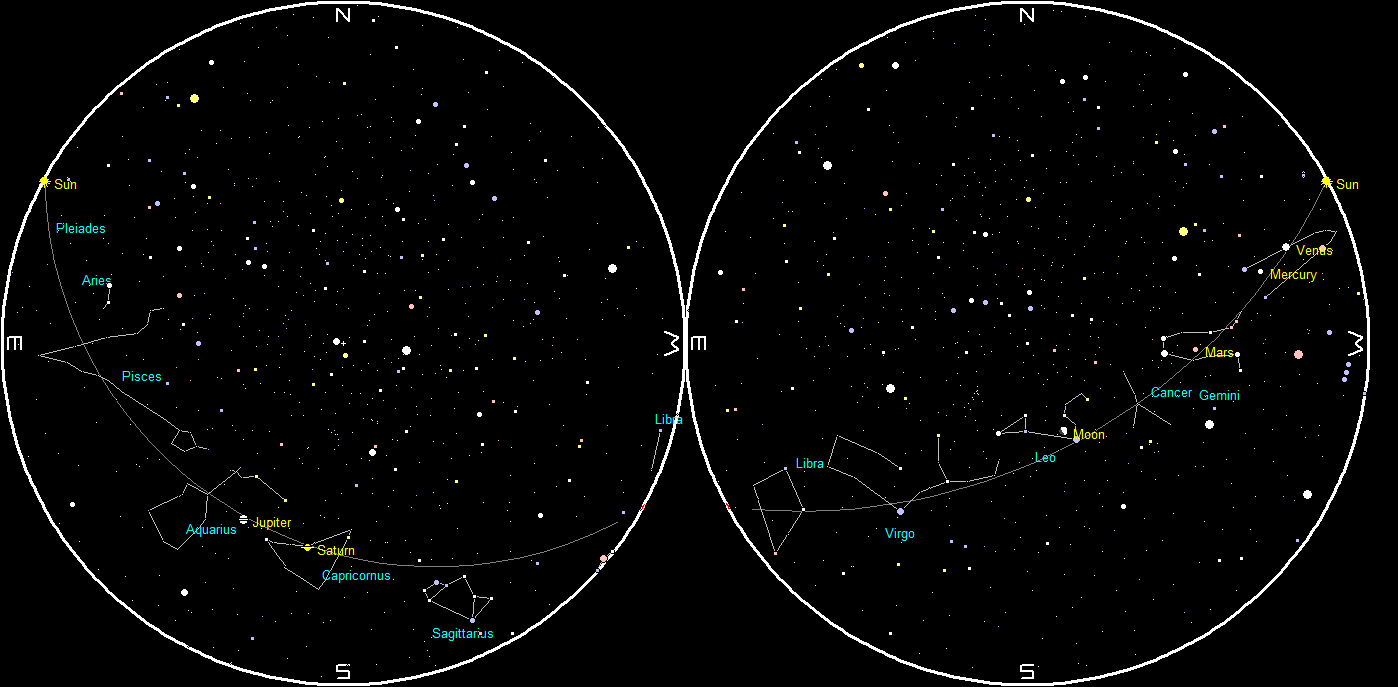
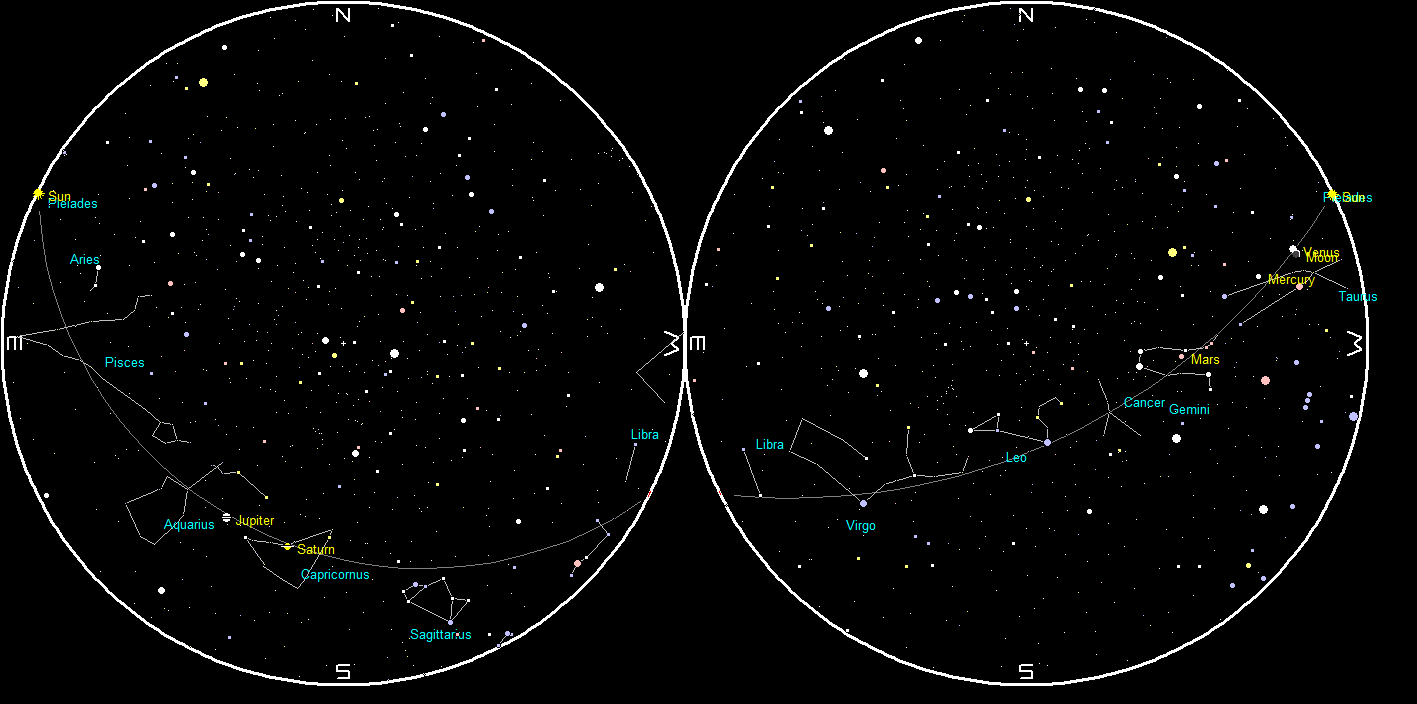
The naked-eye planets and the Moon at sunset and sunrise on a single night, starting with sunset on the right on October 27, 2021. The night ends on the left with sunrise on the 28th. Click on the image to enlarge it. Created using my LookingUp program.
10/20/2021 – Ephemeris – Let’s search for the naked-eye planets for this week
This is Bob Moler with Ephemeris for Wednesday, October 20th. Today the Sun will be up for 10 hours and 44 minutes, setting at 6:49, and it will rise tomorrow at 8:06. The Moon, is full today, the Hunter’s Moon, and will rise at 7:07 this evening.
Let’s search for the naked-eye planets for this week. Venus should be visible in the southwestern evening twilight by 7:10 tonight. It will set at 8:44 pm. By 7:30 pm, Jupiter will be spotted in the south-southeastern sky. Jupiter should be easy to spot at that hour. Saturn will be dimmer, and to its right. They will be visible for a while after midnight in the southwest, with Saturn setting first at 1:04 am, and Jupiter following at 2:24. Saturn’s rings are a beautiful sight in a telescope of even modest power, but the planet will appear tiny. In the morning sky, Mercury will be visible and low in the east-southeast by 7:15 am. It will reach its greatest separation from the Sun in six days.
The astronomical event times given are for the Traverse City/Interlochen area of Michigan (EDT, UT-4 hours). They may be different for your location.
Addendum
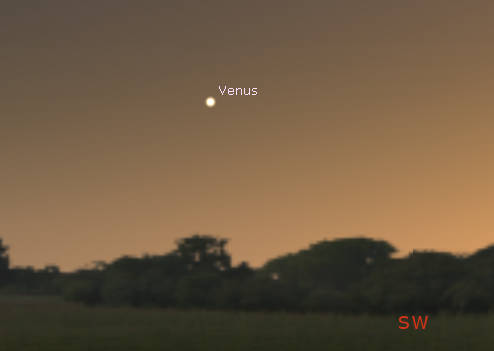
Venus seen in twilight at 7:10 pm, about 20 minutes after sunset tonight, October 20, 2021. Created using Stellarium.
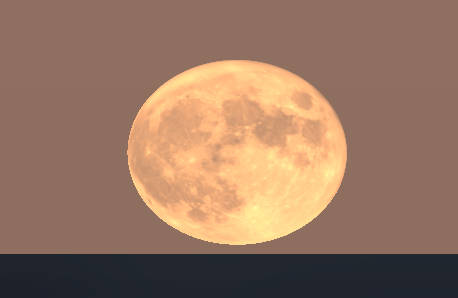
Full Hunter’s Moon rising at 7:11 this evening, October 20, 2021. Created using Stellarium.
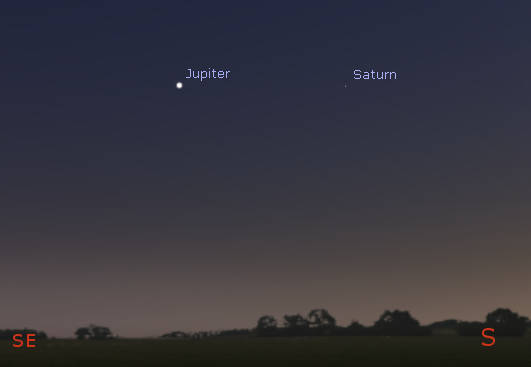
Jupiter, Saturn and the Moon at 7:30, about 40 minutes after sunset tonight, October 20, 2021. Created using Stellarium.
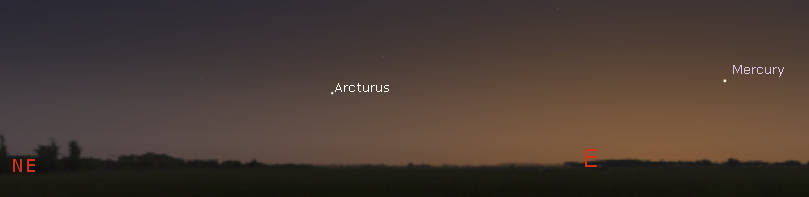
Mercury and the star Arcturus in the morning twilight at 7:15 am, about 50 minutes before sunrise tomorrow morning, October 21, 2021. Don’t confuse the two. Click on the image to enlarge it. Created using Stellarium.
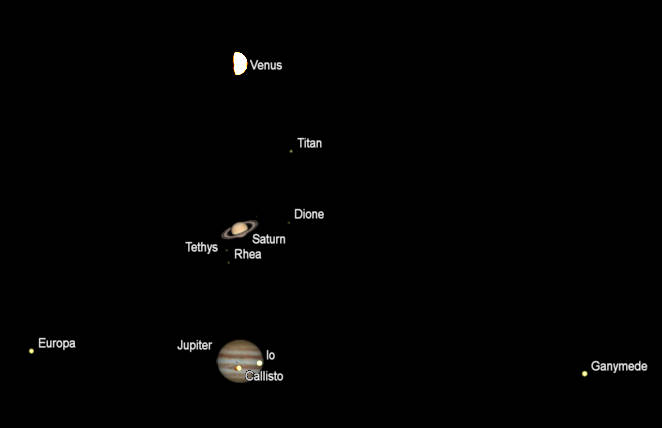
Telescopic views of the bright planets (north up) as they would be seen in a small telescope, with the same magnification, this evening at 8 pm, October 20, 2021. Apparent diameters: Venus, 22.70″, 53.7% illuminated; Saturn 17.08″, its rings 39.80″; Jupiter, 43.68″. Mercury at 7:15 am on the 21st and not plotted, 7.68″, 38.1% illuminated. The two Jovian moons transiting the face of the planet are usually not visible, though their shadows can be spotted. The ” symbol means seconds of arc (1/3600th of a degree.) Click on the image to enlarge it. Created using Cartes du Ciel (Sky Charts).
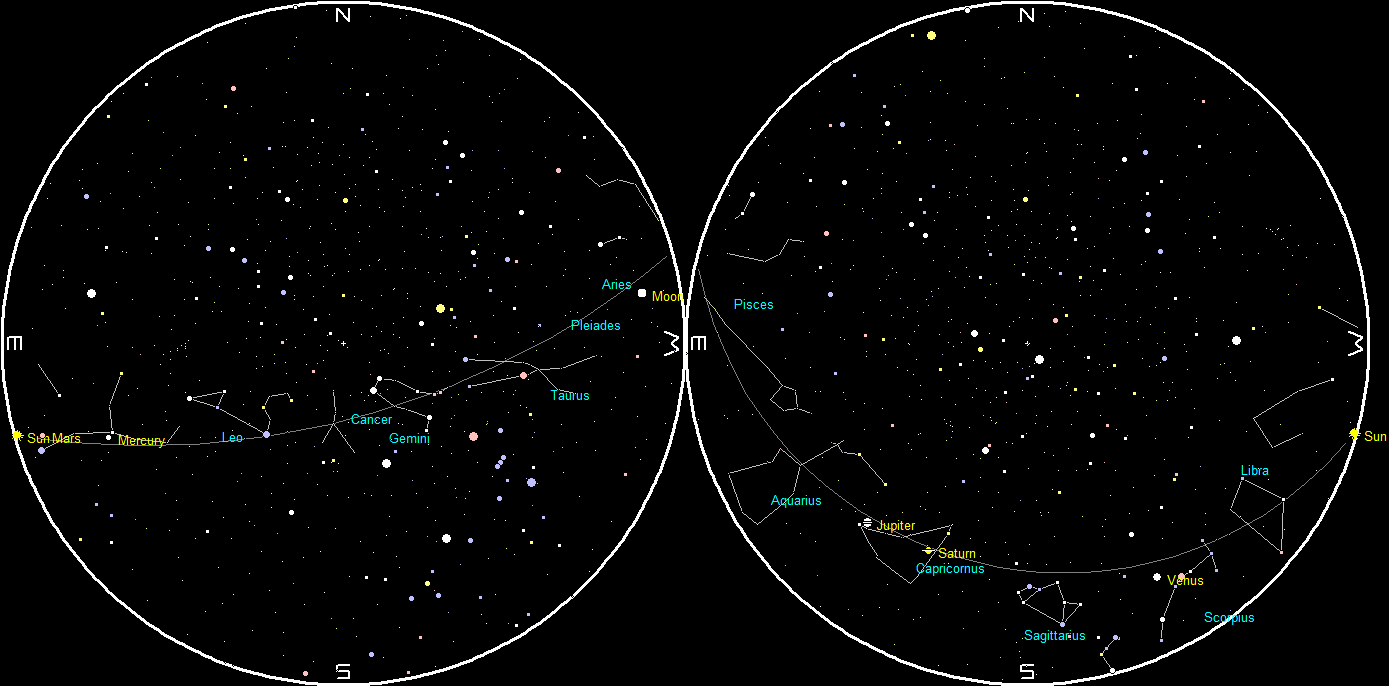
The naked-eye planets and the Moon at sunset and sunrise on a single night, starting with sunset on the right on October 20, 2021. The night ends on the left with sunrise on the 21st. Click on the image to enlarge it. Created using my LookingUp program.
08/18/2021 – Ephemeris – Let’s search for the naked-eye planets for this week
This is Bob Moler with Ephemeris for Wednesday, August 18th. Today the Sun will be up for 13 hours and 54 minutes, setting at 8:43, and it will rise tomorrow at 6:50. The Moon, 3 days past first quarter, will set at 3:02 tomorrow morning.
Let’s search for the naked-eye planets for this week. Venus should be visible in the western evening twilight by 9:15 tonight. It will set at 10:04 pm. By 9:30 pm, Jupiter and Saturn will be seen low in the southeastern sky. The brighter Jupiter will be easy to spot at that hour. Saturn will be dimmer, but a bit higher and to its right. Jupiter, just a day from opposition from the Sun, will be at its brightest and closest to us. It’s now 373 million miles (600 million km) from us. It won’t change much by tomorrow. Actually it’s a closer approach than average, so it’s brighter than at an average opposition and larger appearing than normal in telescopes. Jupiter and four of its largest moons always provide for a great show.
The astronomical event times given are for the Traverse City/Interlochen area of Michigan (EDT, UT – 4 hr). They may be different for your location.
Addendum
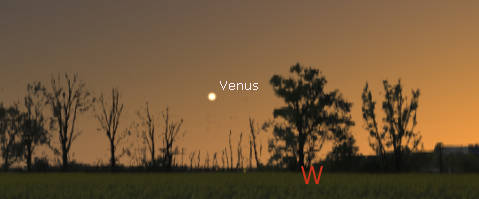
Venus low in the west, tonight at 9:15, about a half hour after sunset, August 18, 2021. Created using Stellarium.
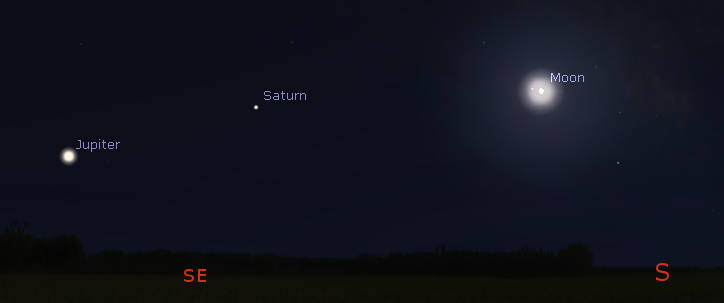
Jupiter, Saturn and the Moon at 10 pm, about an hour and a quarter after sunset tonight, August 18, 2021. Click on the image to enlarge it. Created using Stellarium.
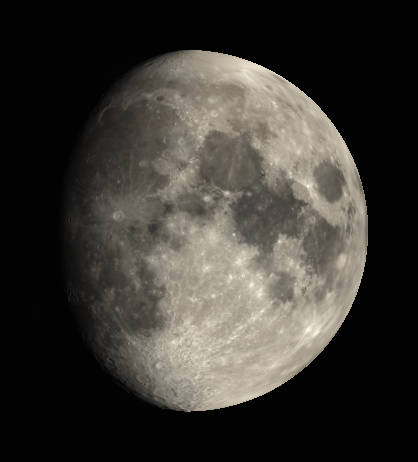
The waxing gibbous Moon as it might appear tonight in binoculars or a small telescope. Created using Stellarium.
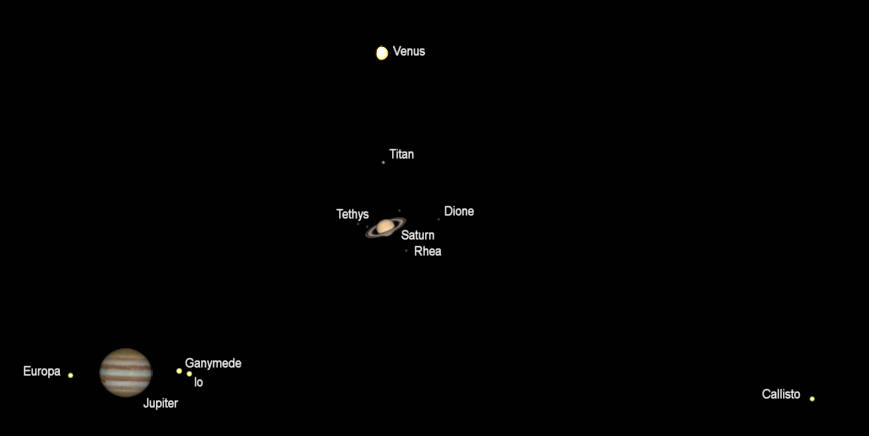
Telescopic view of the bright planets (north up) as they would be seen in a small telescope, with the same magnification, this evening. Venus at 10 pm, and the other two at 11 pm, August 18, 2021. Apparent diameters: Venus, 13.93″; Saturn 18.51″, its rings 43.13″; Jupiter, 49.12″. Jupiter’s moon have a cluster of events in the am hours. See below. The ” symbol means seconds of arc (1/3600th of a degree.) Click on the image to enlarge it. Created using Cartes du Ciel (Sky Charts).
Satellite  Event             EDT (UT-4)   UT
Europa     Shadow start      12:34 am     04:34
Europa	   Transit start     12:37 am     04:37
Io         Occultation start 12:37 am     04:37
Ganymede   Eclipse start     12:43 am     04:43
Io         Occultation end    2:55 am     06:55
Europa     Shadow end         3:25 am     07:25
Europa     Transit end        3:27 am     07:27
Ganymede   Occultation end    4:24 am     08:24

From 12:43 to 2:55 am, only Callisto of the four Galilean moons will be visible.
The above times were determined using Stellarium, and may be off by several minutes.
Shadow events are when a satellite’s shadow is cast onto the face of the planet
Transit events are when the satellite passes in front of the planet. The satellite is usually not visible
Eclipse events are when a satellite passes through the planet’s shadow
Occultation events are when the satellite passes behind the planet
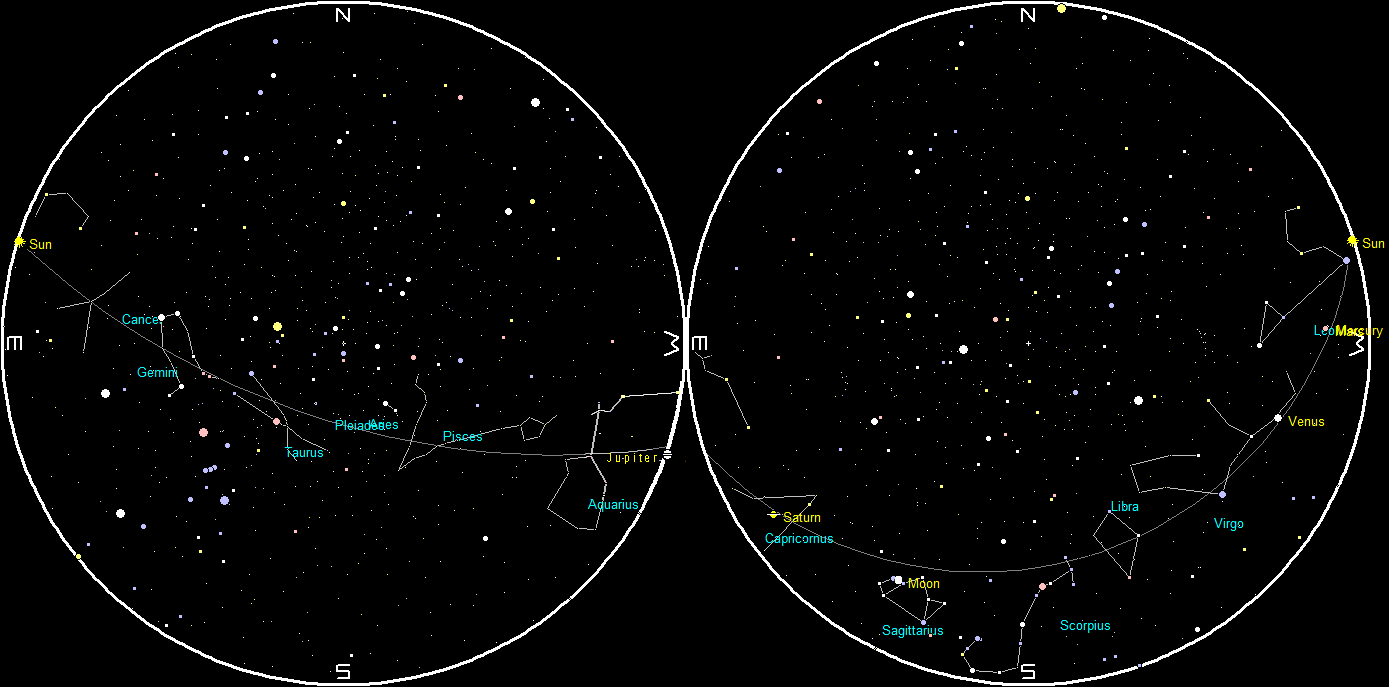
The naked-eye planets and the Moon are shown at sunset and sunrise of a single night, starting with sunset on the right on August 18, 2021. The night ends on the left with sunrise on the 19th. Mars and Mercury will be in conjunction in Leo that evening, so their labels overlap. Click on the image to enlarge. Created using my LookingUp program.
07/07/2021 – Ephemeris – Let’s search for the naked-eye planets for this week
This is Ephemeris for Wednesday, July 7th. Today the Sun will be up for 15 hours and 24 minutes, setting at 9:30, and it will rise tomorrow at 6:05. The Moon, 2 days before new, will rise at 4:36 tomorrow morning.
Let’s search for the naked-eye planets for this week. Venus can be spotted low in the west-northwest twilight by 10 pm or a little after. It will set at 11:03 pm. Venus will be spending the rest of summer low in the western sky, and not be as conspicuous as it usually is as the Evening Star. Mars’ visibility is getting to be a real problem. It can be found to the left and a bit above Venus at 10:30 pm, and will set at 11:06 pm. Saturn and Jupiter, are seen best in the morning sky. Saturn will rise before midnight at 10:47 pm. It’s seen with the stars of Capricornus. Brighter Jupiter, to the left of Saturn, will rise at 11:34 pm. By 5 am, these two planets will be in the southern sky in the morning twilight.
The astronomical event times given are for the Traverse City/Interlochen area of Michigan (EDT, UT-4 hr). They may be different for your location.
Addendum
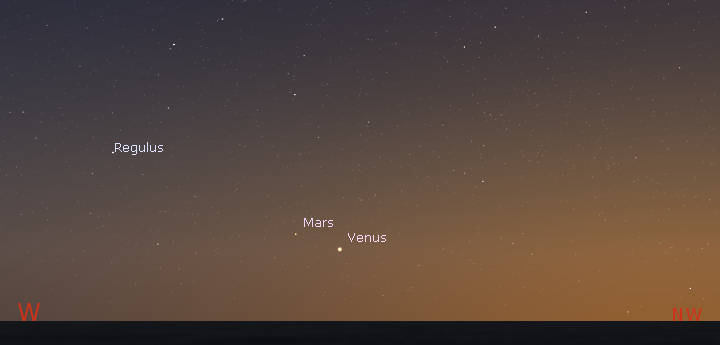
Venus and Mars in the evening twilight at 10:30 pm tonight, July 7, 2021. I’m not promising that Mars will be visible, since it’s now down to second magnitude. Created using Stellarium.
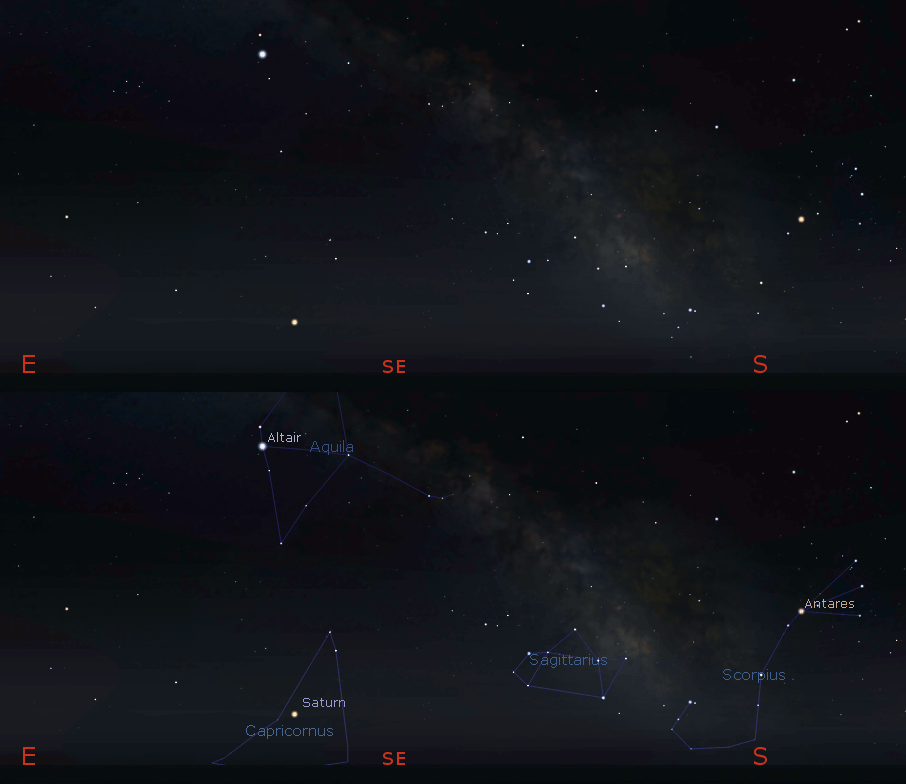
Saturn finder animation for 11:30 pm tonight, July 7, 2021. Click on the image to enlarge it. Created using Stellarium and GIMP.
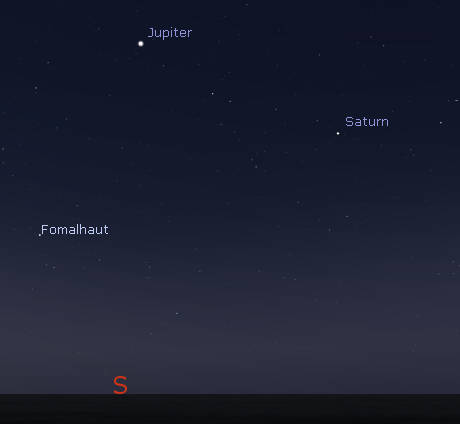
Jupiter and Saturn at 5 am tomorrow morning, July 8, 2021. Created using Stellarium.
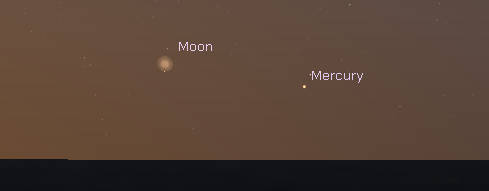
Mercury and the Moon at 5:15 am tomorrow morning, July 8, 2021. Created using Stellarium.
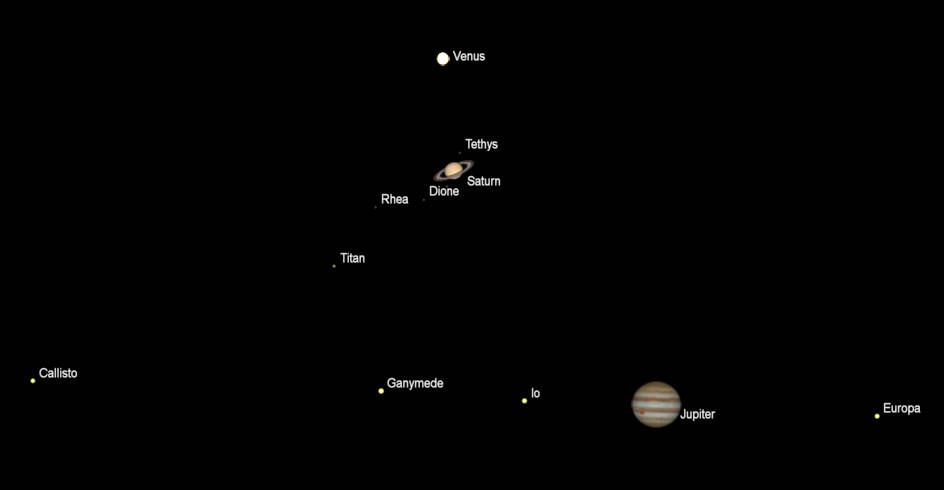
The planets as seen in a telescope (north up) with the same magnification for the night of July 7/8, 2021. Times of the display are: Venus, 10:30 pm; Saturn and Jupiter, 5 am. Apparent diameters: Venus, 11.46″; Saturn 18.41″, its rings 42.88″; Jupiter, 46.18″. Mars has an apparent diameter of only 3.80″, and Mercury of 7.32 and are not represented. The ” symbol means seconds of arc (1/3600th of a degree.) Click on the image to enlarge it. Created using Cartes du Ciel (Sky Charts).
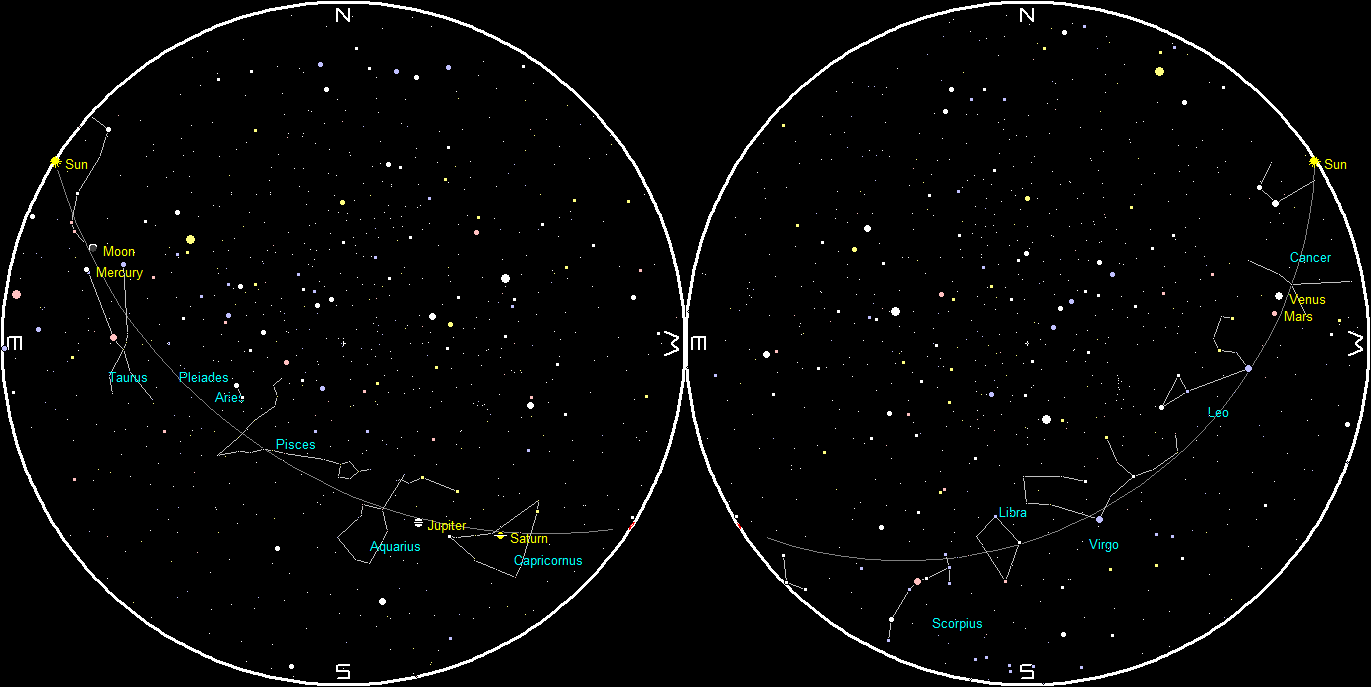
Planets and the Moon at sunset and sunrise of a single night, starting with sunset on the right on July 7, 2021. The night ends on the left with sunrise on the 8th. Click on the image to enlarge. Created using my LookingUp program.
05/26/2021 – Ephemeris – Let’s search for the naked-eye planets for this week
There is a lunar eclipse this morning. See https://bobmoler.wordpress.com/2021/05/25/05-25-2021-ephemeris-viewing-the-lunar-eclipse-tomorrow-morning/
This is Ephemeris for Wednesday, May 26th. Today the Sun will be up for 15 hours and 12 minutes, setting at 9:16, and it will rise tomorrow at 6:03. The Moon, at full today, will rise at 9:57 this evening.
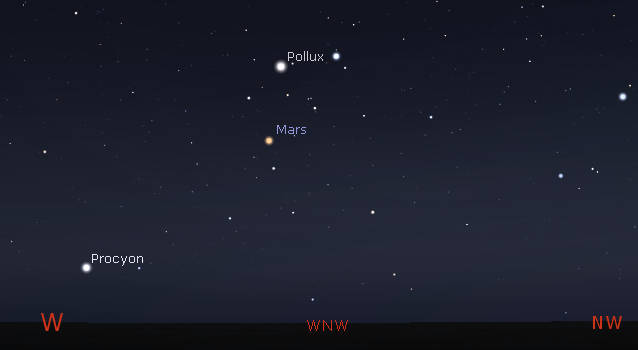
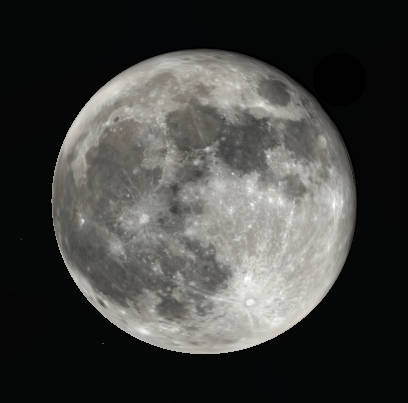
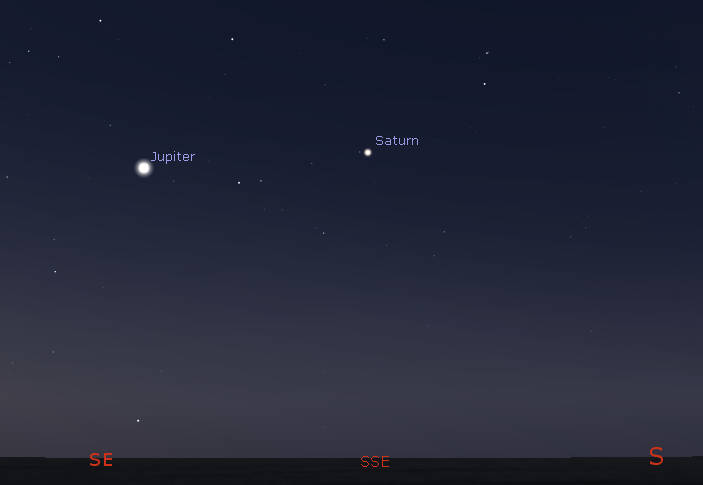
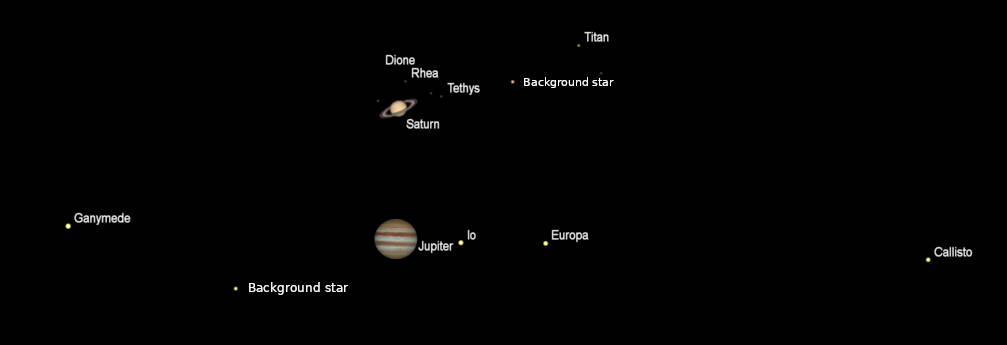
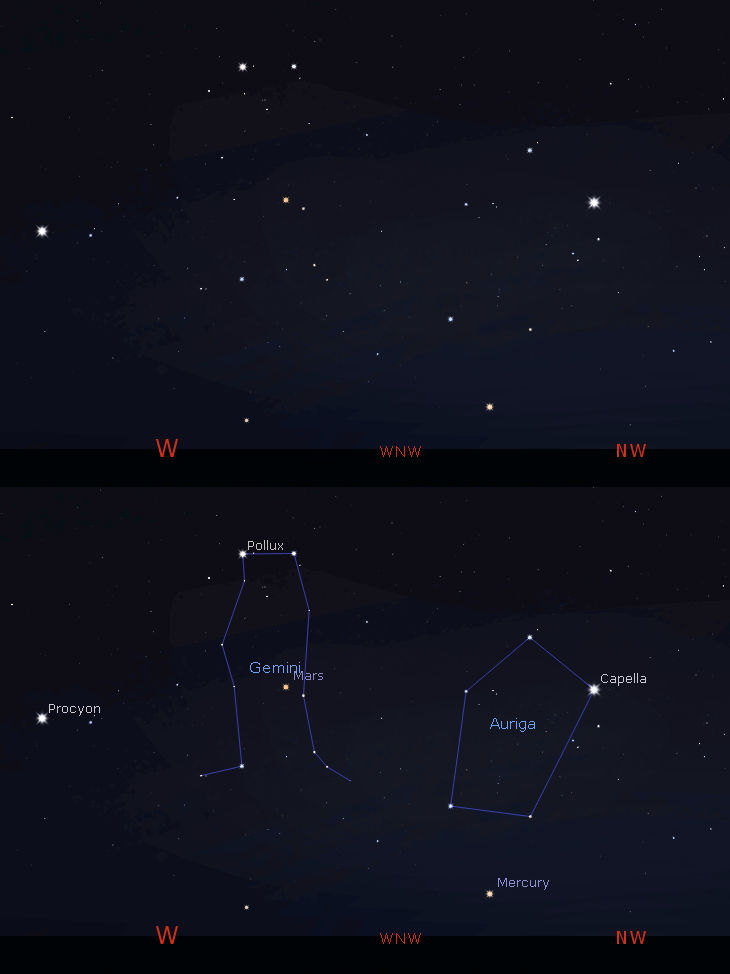
Let’s search for the naked-eye planets for this week. Venus might be spotted low in the west-northwest twilight by 10 pm. Mercury will be a bit above and left of Venus, but is now too dim to spot. Venus will set at 10:36 pm. Mars can be found in the west at 10:30 tonight, in the constellation of Gemini the twins. Tonight it’s on the left side of the constellation, below Gemini’s brightest star, Pollux. Mars will set at 12:37 am. Jupiter and Saturn, are in the morning sky. Saturn will rise at 1:36 am. It’s seen with the stars of Capricornus. Brighter Jupiter, now within the boundaries of Aquarius, will rise at 2:21 am. By 5 am they will be in the southeast in the morning twilight.
The astronomical event times given are for the Traverse City/Interlochen area of Michigan. They may be different for your location.
Addendum
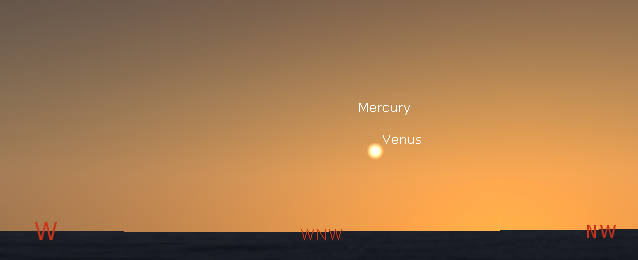
05/19/2021 – Ephemeris – Let’s search for the naked-eye planets for this week
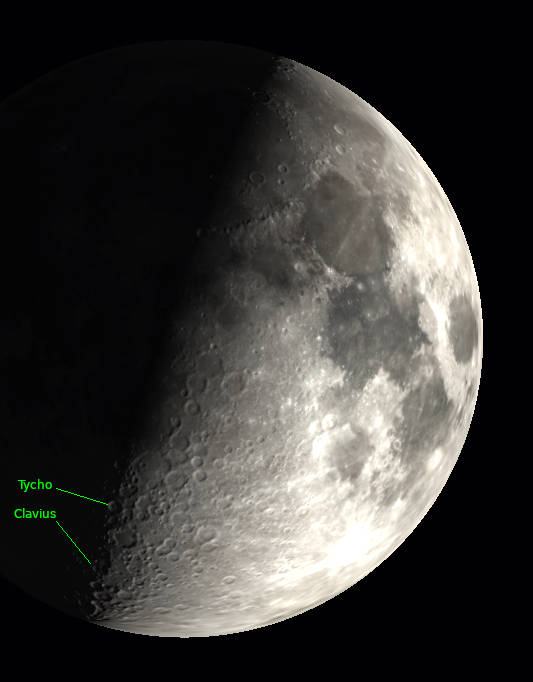
This is Bob Moler with Ephemeris for Wednesday, May 19th. Today the Sun will be up for 14 hours and 59 minutes, setting at 9:09, and it will rise tomorrow at 6:09. The Moon, at first quarter today, will set at 3:26 tomorrow morning.
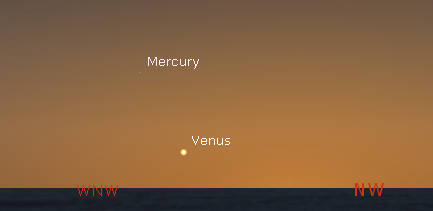
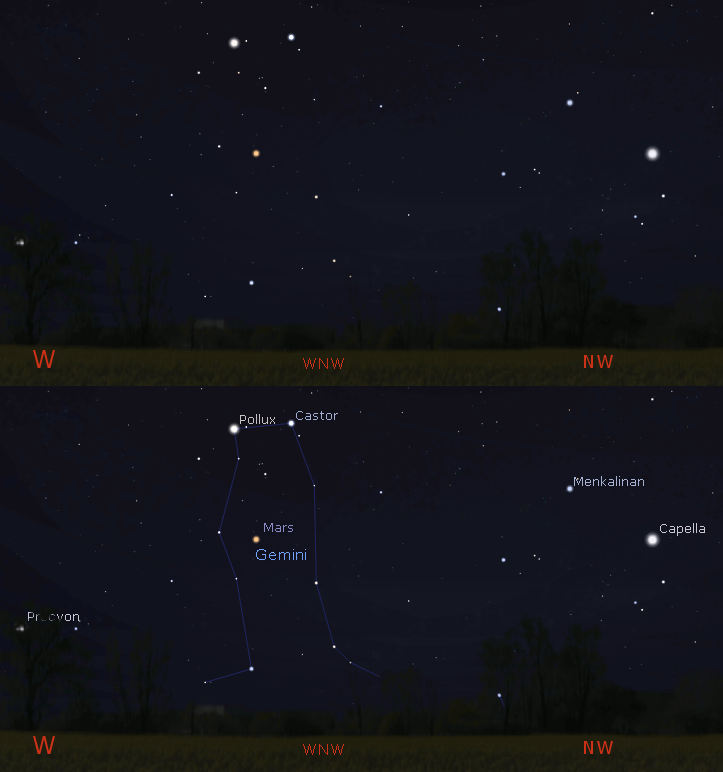
Let’s search for the naked-eye planets for this week. Mars will be joined by two more planets seen in twilight. Both Mercury and Venus are now just above where the Sun set. By 10 pm Mercury should be able to be spotted low in the west-northwest. Venus might be spotted lower and somewhat earlier, it’s a lot brighter than Mercury. Venus will be setting at 10:21 pm with Mercury following at 11:04. Mars can be found in the west at 10:30 tonight, in the constellation of Gemini the twins. Tonight it’s in the middle of the constellation. Mars will set at 12:42 am. Jupiter and Saturn, are in the morning sky. Saturn will rise at 2:03 am, with brighter Jupiter rising at 2:43 am. By 5 am they will be in the southeast in the morning twilight.
The astronomical event times given are for the Traverse City/Interlochen area of Michigan. They may be different for your location.
Addendum
05/12/2021 – Ephemeris – Searching for the naked-eye planets for this week
This is Ephemeris for Wednesday, May 12th. Today the Sun will be up for 14 hours and 43 minutes, setting at 9:01, and it will rise tomorrow at 6:16. The Moon, 1 day past new, will set at 10:06 this evening.
Let’s search for the naked-eye planets for this week. Mars will be joined by two more planets seen in twilight. Both Mercury and Venus are now just above where the Sun set. By 9:30 pm Mercury should be able to be spotted low in the west-northwest. Venus might be spotted lower and somewhat earlier. Venus will be setting at 10:02 pm with Mercury following at 11 pm. Mars can be found in the west at 10 pm tonight, in the constellation of Gemini the twins. Tonight it’s in the middle of the constellation. Mars will set at 1:02 am. Jupiter and Saturn, are in the morning sky. Saturn will rise at 2:30 am, with brighter Jupiter rising at 3:13 am. By 5:30 am they will be low in the southeast in the morning twilight.
The astronomical event times given are for the Traverse City/Interlochen area of Michigan. They may be different for your location.
Addendum
04/28/2021 – Ephemeris – Searching for the naked-eye planets for this week
This is Ephemeris for Wednesday, April 28th. Today the Sun will be up for 14 hours and 7 minutes, setting at 8:44, and it will rise tomorrow at 6:35. The Moon, 2 days past full, will rise at 11:06 this evening.
Let’s search for the naked-eye planets for this week. Unfortunately the only one you’ll find in the evening is Mars. It can be found in the west at 10 pm tonight, in the constellation of Gemini the twins. Tonight it’s just above Castor’s foot. Mars will set at 1:21 am. Both Venus and Mercury are now just east of the Sun and to close to it to be spotted. Venus will be setting 43 minutes after sunset, with Mercury setting 27 minutes later. We should start spotting Mercury next week. It will be late May or early June before Venus will be easily seen. Jupiter and Saturn, are west of the Sun in the morning twilight. Saturn will rise at 3:24 am, with Jupiter rising at 4:03 am. By 6 am they will be low in the southeast. Jupiter, on the left, is the brighter of the two.
The astronomical event times given are for the Traverse City/Interlochen area of Michigan. They may be different for your location.
01/27/2021 – Ephemeris – Let’s have a lookout for the naked-eye planets for this week
This is Ephemeris for Wednesday, January 27th. Today the Sun will be up for 9 hours and 37 minutes, setting at 5:44, and it will rise tomorrow at 8:05. The Moon, 1 day before full, will set at 8:23 tomorrow morning.
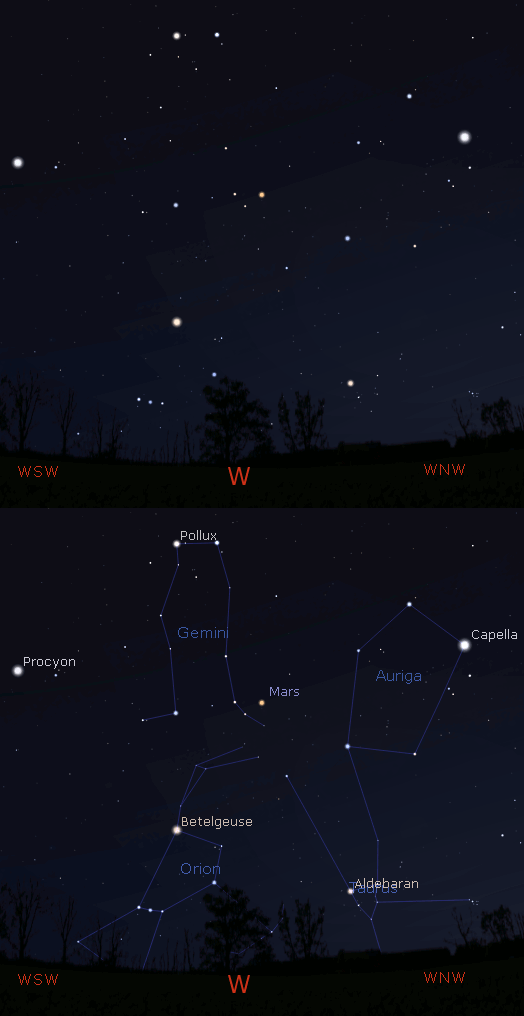
Let’s have a lookout for the naked-eye planets for this week. Mercury will be low in the west-southwestern sky around 6:15 pm or about a half hour after sunset. It will set at 7:18 pm. Saturn and Jupiter are too close to the direction of the Sun to be seen. Saturn has passed into the morning sky, while Jupiter will pass behind the Sun tomorrow. Neither of these planets are visible. It will be a month or more before even Saturn will be visible in the morning twilight. Mars can be found quite high in the south at 7 pm. It will actually be due south at 6:43 tonight. Mars is increasing its speed eastward through the constellation of Aries the ram and will set at 1:52 am. Venus will be hard to spot in the morning twilight after it rises at 7:26 am tomorrow.
The event times given are for the Traverse City/Interlochen area of Michigan. They may be different for your location.
Addendum
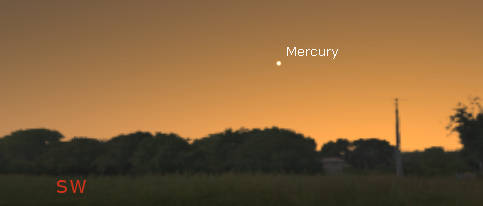
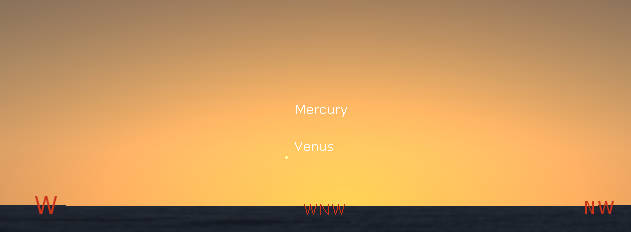
Mercury in evening twilight at 6:15 pm tonight January 27, 2021. Created using Stellarium.
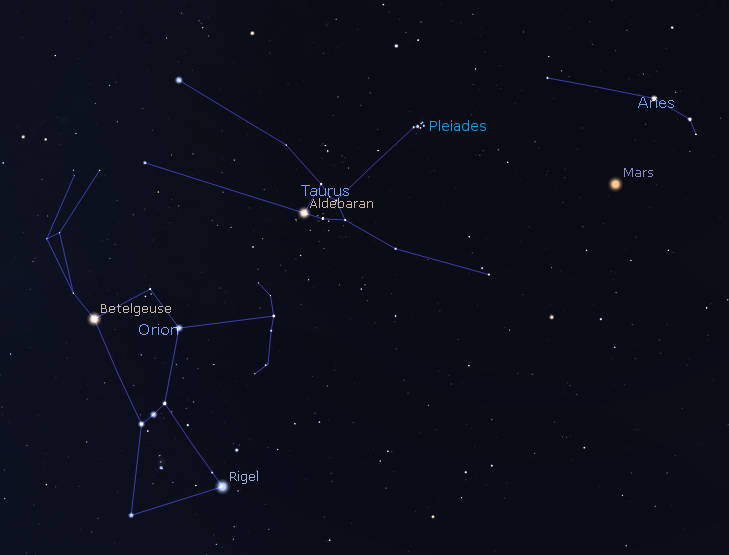
Mars and neighboring constellations for 7 pm tonight, January 27, 2021. Created using Stellarium.

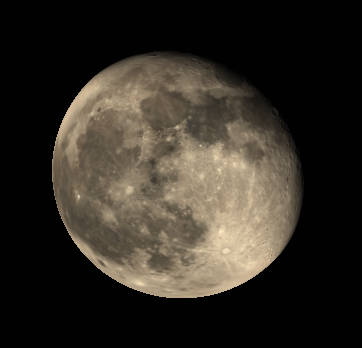
The Moon as it might be seen in binoculars or low power telescope tonight at 7 pm, January 27, 2021. Created using Stellarium.
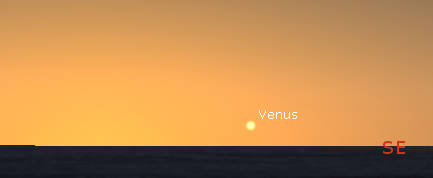
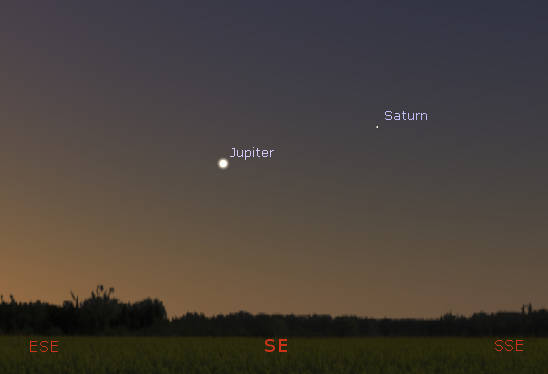
Venus in morning twilight over a water horizon. Around here that would be Lake Huron shortly after 7:30 am tomorrow January 28, 2021. Created using Stellarium.
The graphic illustrating the planets as seen in a telescope is on hiatus until Jupiter and Saturn clear the Sun in the morning sky in a couple of months. Mars appears too small to show any detail in a small telescope.
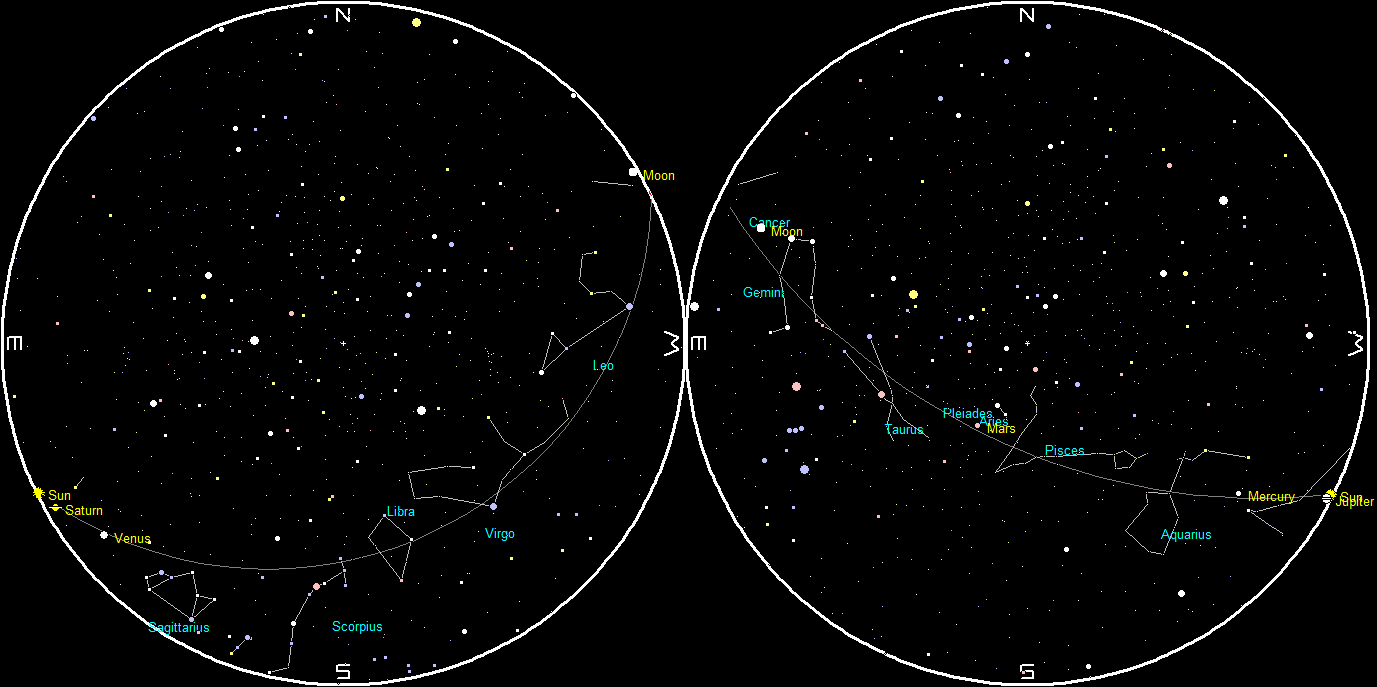
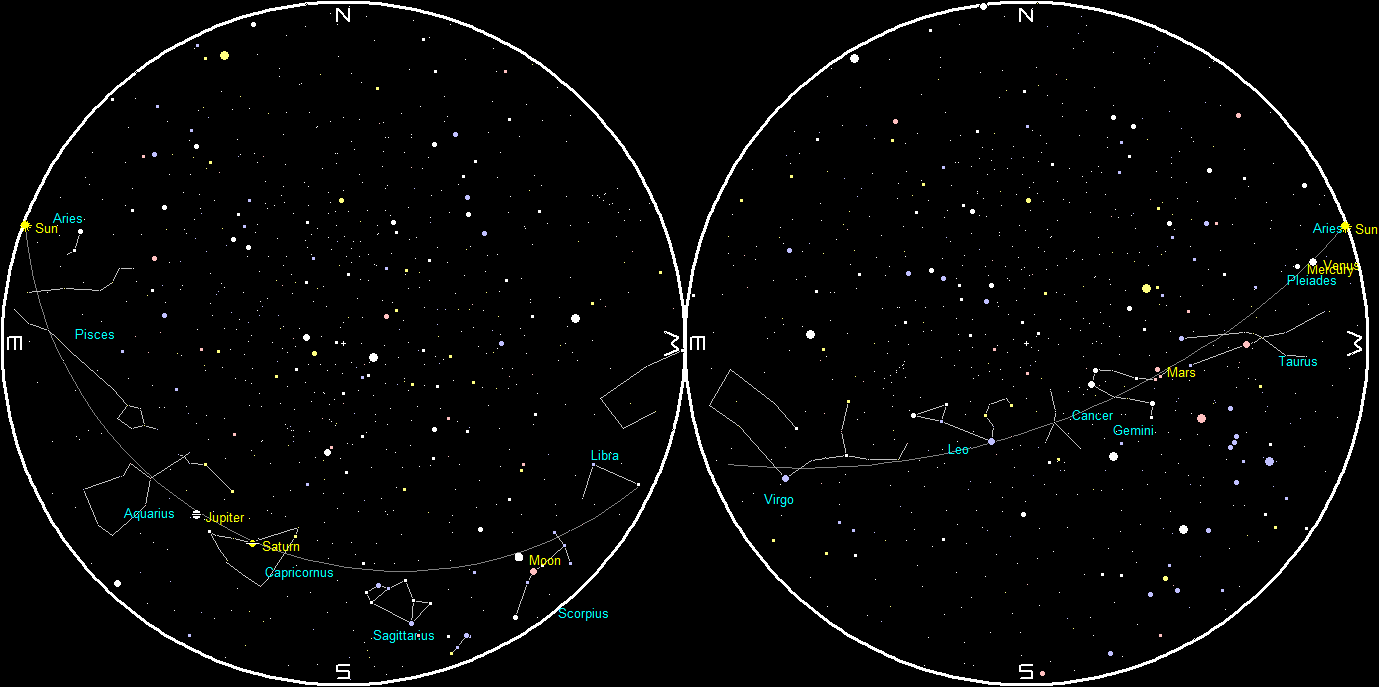
Planets and the Moon at sunset and sunrise of a single night starting with sunset on the right on January 27, 2021. The night ends on the left with sunrise on the 28th. I’m afraid that the labels for Jupiter and the Sun overlap, since the planets and Sun are very close. Click on the image to enlarge. Created using my LookingUp program.
01/13/2021 – Ephemeris – Let’s take a look for the naked-eye planets for this week
This is Bob Moler with Ephemeris for Wednesday, January 13th. Today the Sun will be up for 9 hours and 8 minutes, setting at 5:26, and it will rise tomorrow at 8:16. The Moon is new today, and won’t be visible.
Let’s take a look for the naked-eye planets for this week. Mercury has joined Jupiter and Saturn extremely low in the southwestern sky. I’m afraid Saturn will be lost in the twilight, but Jupiter, with Mercury above it might be visible. They are both extremely low in the southwestern sky around 6 pm. Jupiter will set at 6:20 pm with Mercury following 20 minutes later. Quite high in the south at 7 pm Mars can be found. It will be actually due south on the meridian at 7:10 pm tonight. The meridian is an imaginary line that runs from the north compass point on one’s horizon, through the zenith to the south compass point. Mars is beginning to increase its speed eastward and will set at 2:09 am. Venus, our brilliant morning star will rise at 7:15 am in the east-southeast.
Addendum
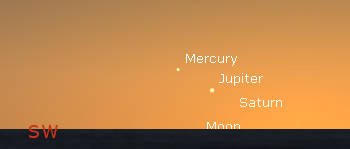
Jupiter and Mercury in evening twilight st 6 pm, about a half hour after sunset over the Lake Michigan horizon. Saturn, though present can’t compete with the bright twilight. The less than one day old moon is setting. Created using Stellarium.
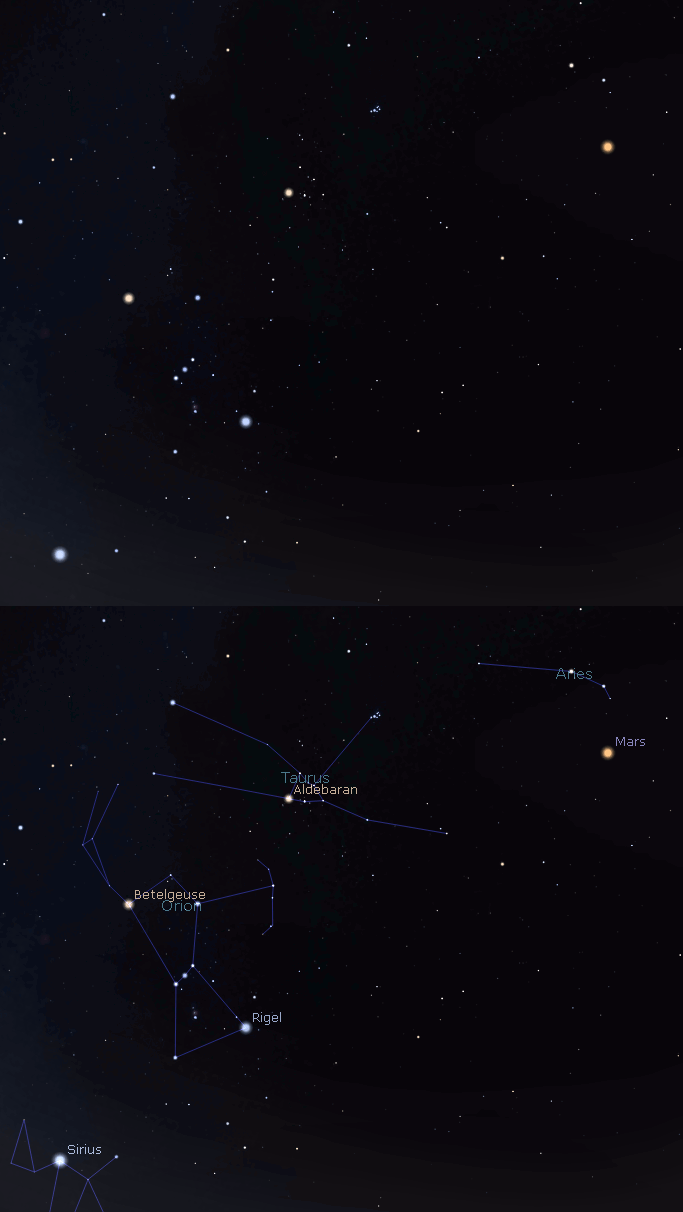
Mars finder animation for 8 pm tonight, January 13, 2021 (about 2 1/2 hours after sunset. Looking southward. Created using Stellarium and GIMP.
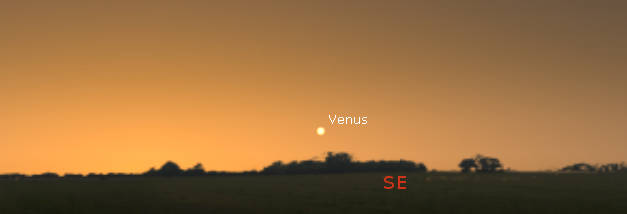
Venus in the morning twilight at 7:45 am tomorrow morning January 14, 2021 (about 1/2 hour before sunrise). Created using Stellarium.
The graphic that shows the planets as seen in small telescopes has been discontinued because Jupiter and Saturn are too close to the horizon and Venus and Mars are too small (less than 10 seconds of arc in diameter). It will be resumed in a couple of months when Jupiter and Saturn become visible in the morning sky.
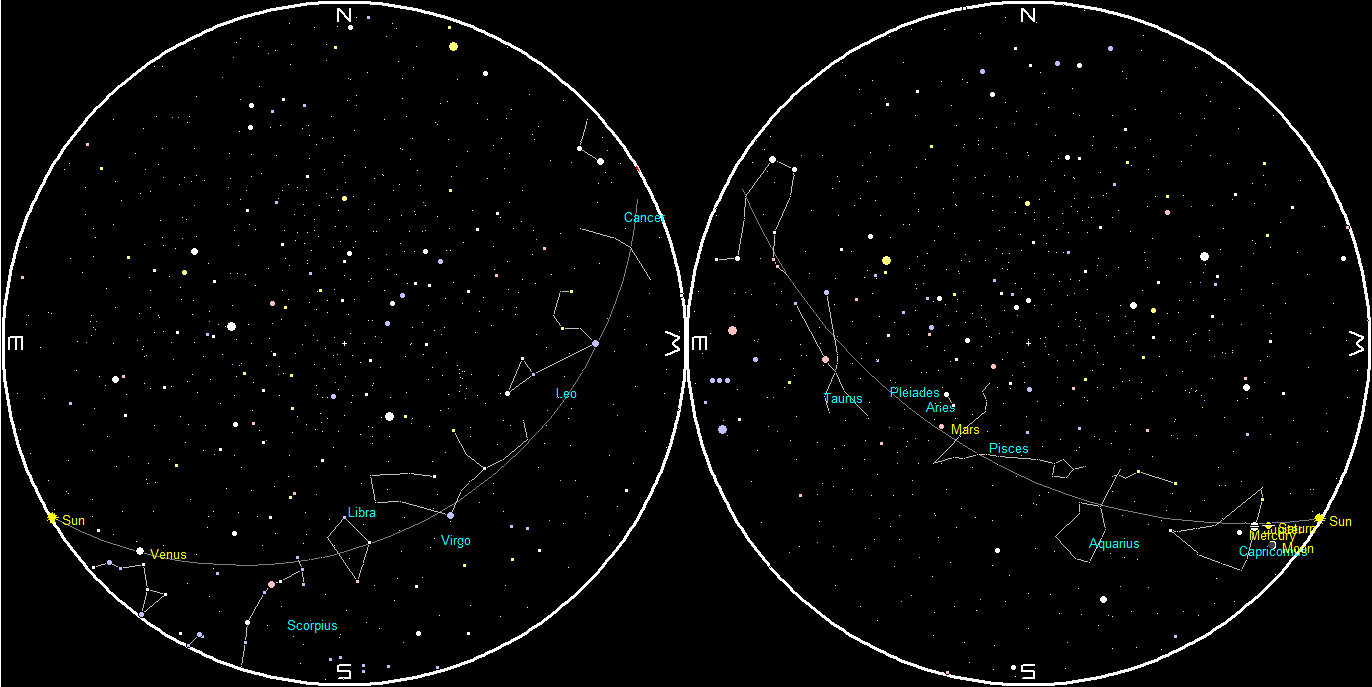
Planets and the Moon at sunset and sunrise of a single night starting with sunset on the right on January 13, 2021. The night ends on the left with sunrise on the 14th. I’m afraid that the labels for Jupiter and Saturn will overlap, since the planets are very close. Click on the image to enlarge. Created using my LookingUp program.

