Archive
04/10/2019 – Ephemeris – Looking for the bright planets for this week
Ephemeris for Wednesday, April 10th. Today the Sun will be up for 13 hours and 13 minutes, setting at 8:21, and it will rise tomorrow at 7:05. The Moon, 2 days before first quarter, will set at 2:04 tomorrow morning.
Let’s look at the planets for this week. Mars will be in the western sky this evening, to the right of the V-shaped stars of the face of Taurus the bull. It will set at 12:27 a.m. In the morning sky we have Jupiter which will rise tomorrow at 1:35 a.m. in the east-southeast. It is second to Venus in brightness. Saturn will be next to rise at 3:21 a.m., also in the east-southeast. Venus will rise at 6:05 a.m. again in the east-southeast. By 6:30 in the morning they will be strung out from the southeast to the south. Venus will remain in our morning sky until August when it passes behind the Sun. Tiny Mercury may be glimpsed a bit left and just below Venus in the bright twilight.
The times given are for the Traverse City/Interlochen area of Michigan. They may be different for your location.
Addendum
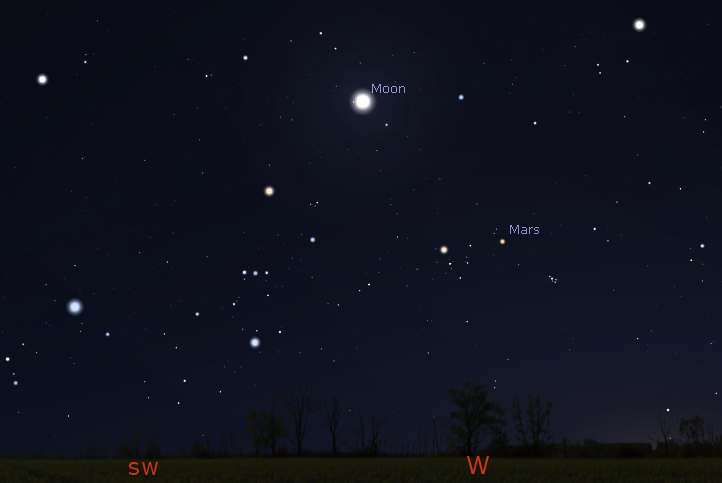
Mars and the Moon in the evening at 9:30 p.m. April 10, 2019. Click on the image to enlarge. Created using Stellarium.
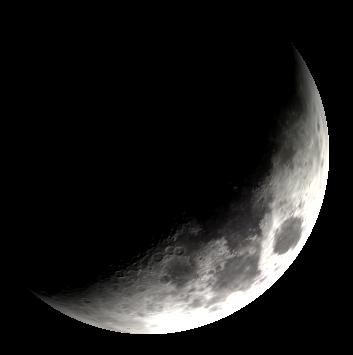
The Moon as it might appear in binoculars or a small telescope tonight at 9 p.m. April 10, 2019. Created using Stellarium.
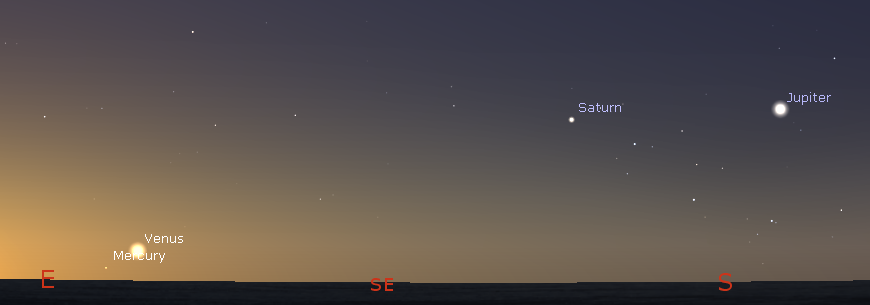
Morning planets at 6:30 a.m. April 11, 2019. Click on the image to enlarge. Created using Stellarium.
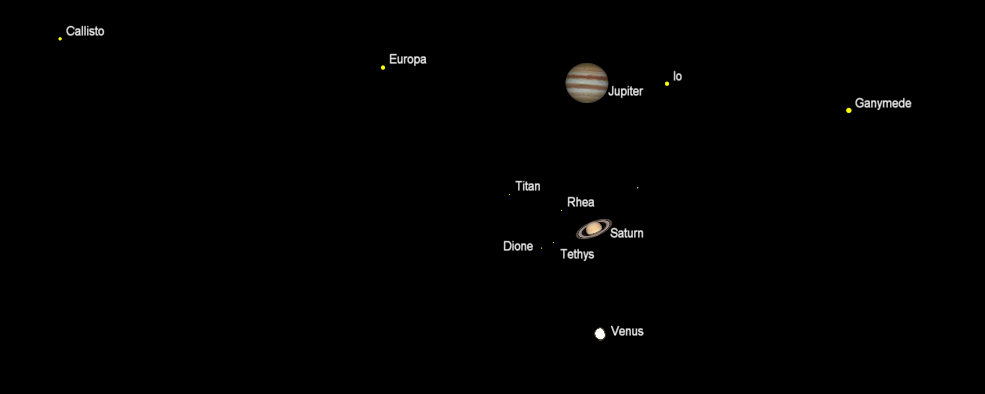
Jupiter, Saturn and Venus with the same magnification at 6:30 a.m. tomorrow morning April 11, 2019. Created using Cartes du Ciel (Sky Charts).
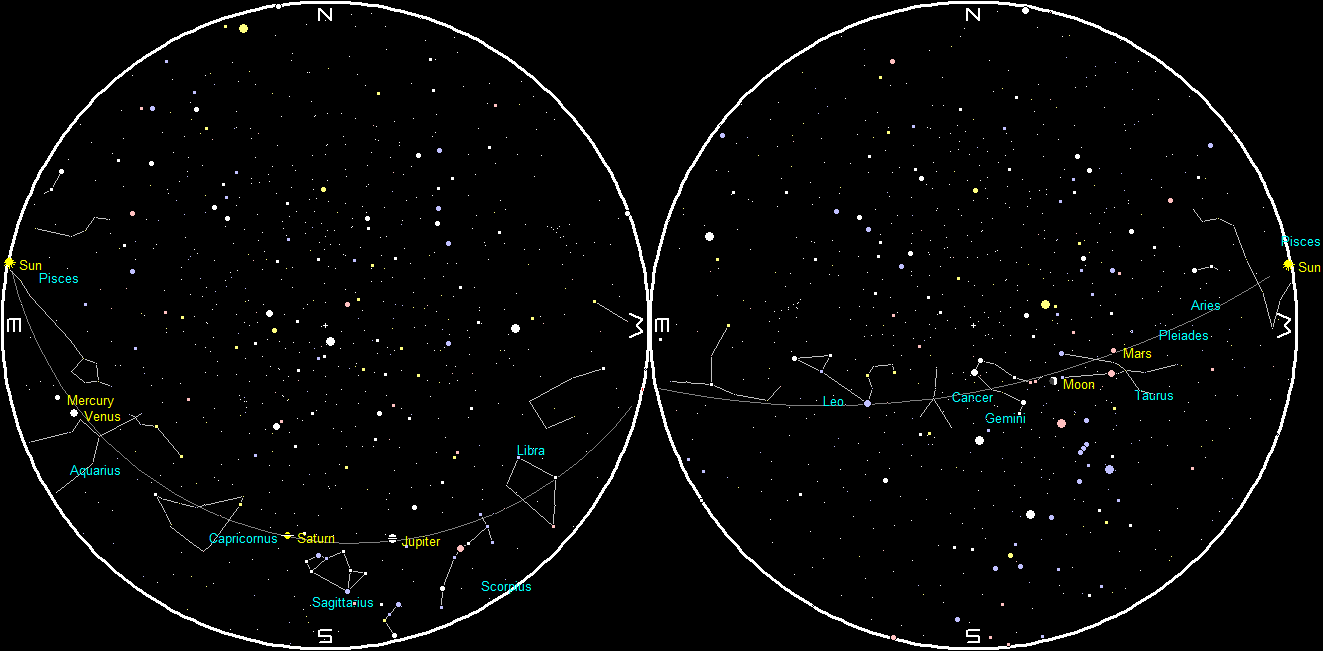
Planets and the Moon at sunset and sunrise of a single night starting with sunset on the right on April 10, 2019. The night ends on the left with sunrise on the 11th. Click on the image to enlarge. Created using my LookingUp program.
04/03/2019 – Ephemeris – Let’s check out the bright planets for this week
Ephemeris for Wednesday, April 3rd. Today the Sun will be up for 12 hours and 52 minutes, setting at 8:12, and it will rise tomorrow at 7:18. The Moon, 2 days before new, will rise at 7:27 tomorrow morning.
Let’s look at the planets for this week. Mars will be in the western sky this evening, to the right of the V shaped stars of the face of Taurus the bull. It will set at 12:31 a.m. In the morning sky we have Jupiter which will rise tomorrow at 2:02 a.m. in the east-southeast. It is second to Venus in brightness. Saturn will be next to rise at 3:48 a.m., also in the east-southeast. Venus will rise at 6:13 a.m. again in the east-southeast. By 7 in the morning they will be strung out from the southeast to the south. Venus will remain in our morning sky until August when it passes behind the Sun. It will emerge to become a bright addition to our winter and spring evening skies later this year and next. Mercury will be
The times given are for the Traverse City/Interlochen area of Michigan. They may be different for your location.
Addendum
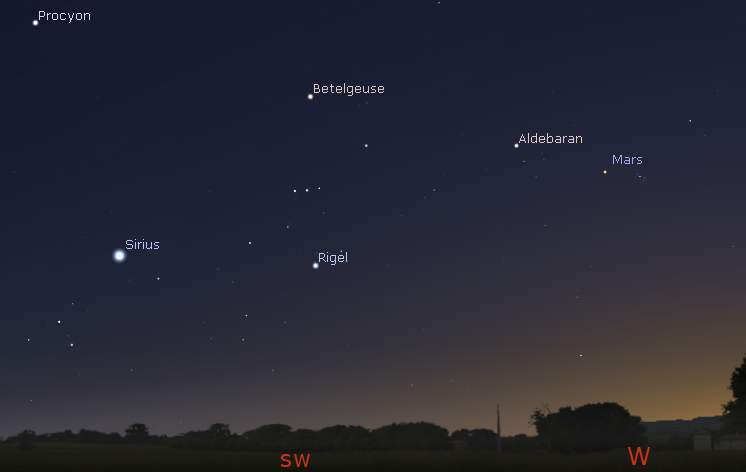
Mars in the evening at 9 p.m. April 3, 2019. Click on the image to enlarge. Created using Stellarium.
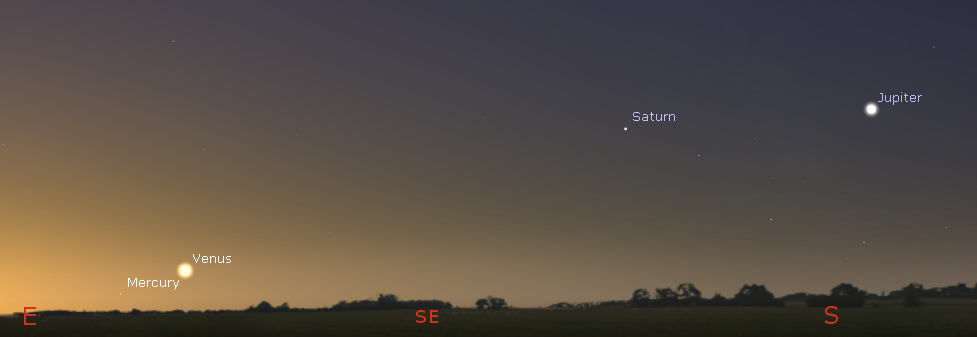
Morning planets at 6:45 a.m. April 4, 2019. Click on the image to enlarge. Created using Stellarium.
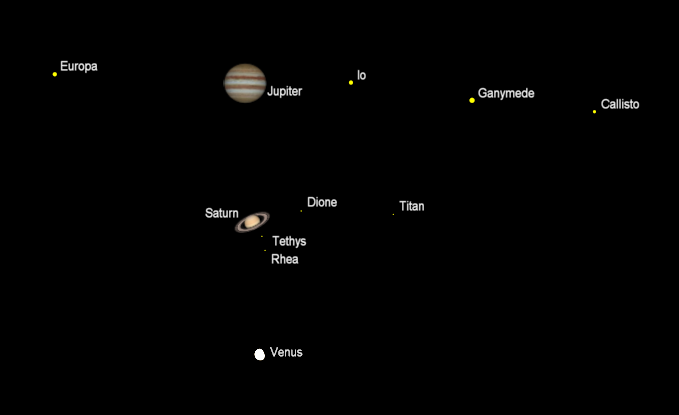
Jupiter, Saturn and Venus with the same magnification at 6:45 a.m. tomorrow morning April 4, 2019. Created using Cartes du Ciel (Sky Charts).
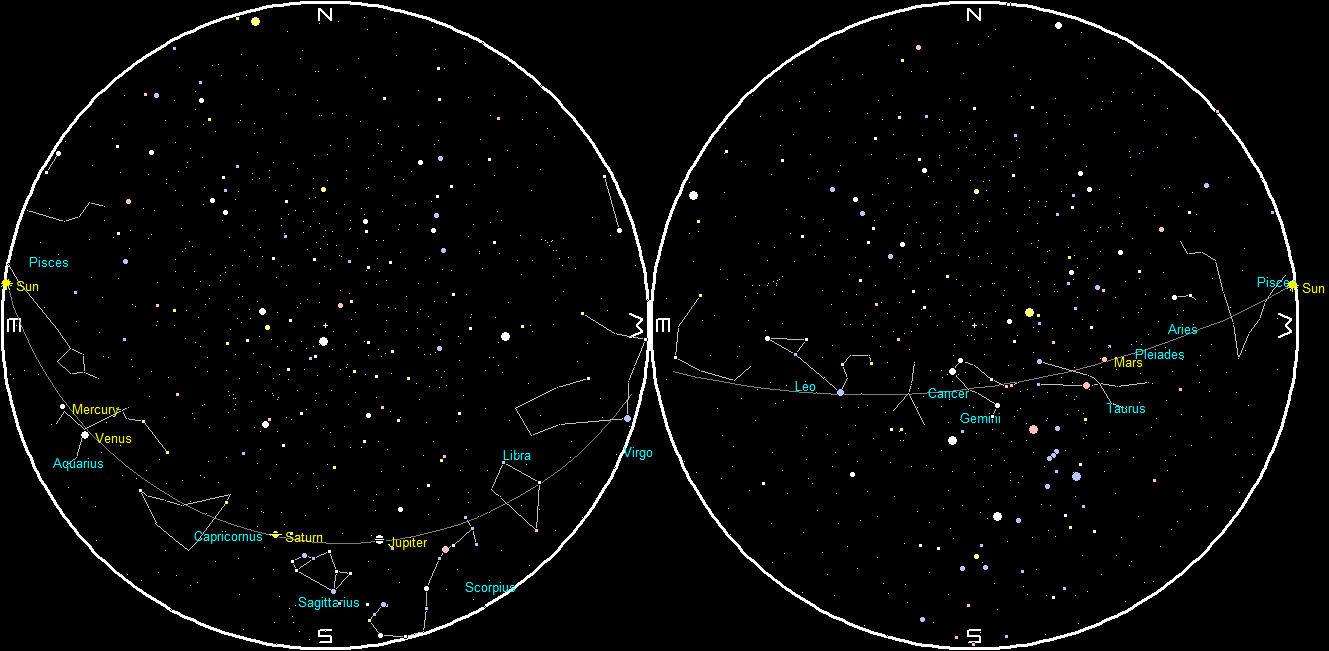
Planets and the Moon at sunset and sunrise of a single night starting with sunset on the right on April 3, 2019. The night ends on the left with sunrise on the 4th. Click on the image to enlarge. Created using my LookingUp program.
03/06/2019 – Ephemeris – Looking at the bright naked eye planets for this week
Ephemeris for Ash Wednesday, March 6th. Today the Sun will be up for 11 hours and 25 minutes, setting at 6:36, and it will rise tomorrow at 7:10. The Moon is new today, and won’t be visible.
Let’s look at the planets for this week. We have two evening planets visible now. Tiny and elusive Mercury is really hard to spot low in the west from about 7 p.m. until it sets at 7:52 p.m. It is fading fast. Binoculars are the only way to spot it now. Mars will be in the west-southwestern sky this evening and will set at 11:42 p.m. Mars too is fading. In the morning sky we have Jupiter which will rise tomorrow at 2:45 a.m. It is second to Venus in brightness. Saturn will be next to rise at 4:32 a.m. It will be to the upper right of Venus which will rise at 5:32 a.m. tomorrow. By 6 in the morning they will be string out from the southeast to the south. They will be a beautiful sight as morning twilight advances.
The times given are for the Traverse City/Interlochen area of Michigan. They may be different for your location.
Addendum
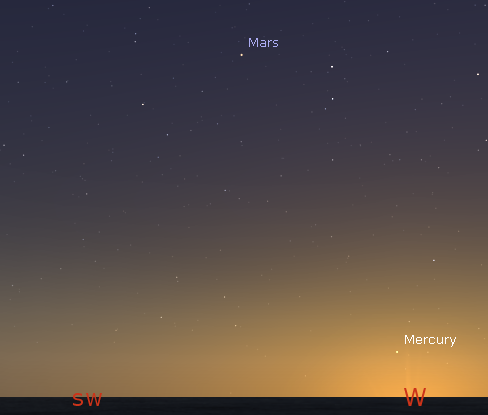
Mars and Mercury at 7:15 p.m. tonight March 6, 2019. I had to increase the star and planet brightness to make Mercury appear in the bright twilight because it has dropped to second magnitude. Created using Stellarium.
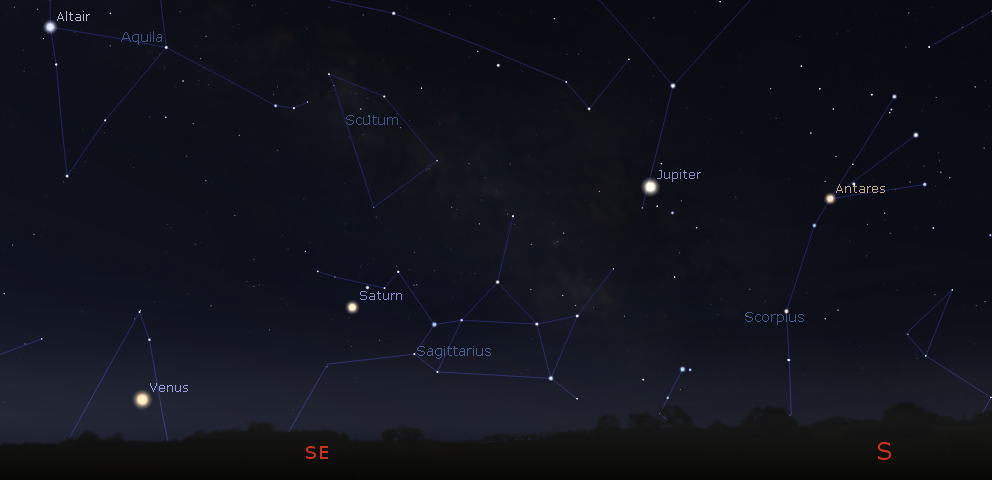
Morning planets and the constellations at 6 a.m. Tomorrow March 7, 2019. Click on image to enlarge. Created using Stellarium.
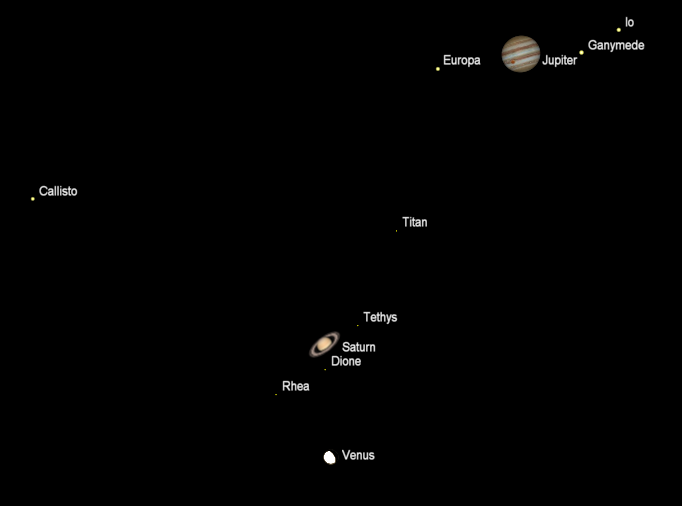
Jupiter, Saturn and Venus with the same magnification at 6 a.m. tomorrow morning March 7, 2019. Created using Cartes du Ciel (Sky Charts).
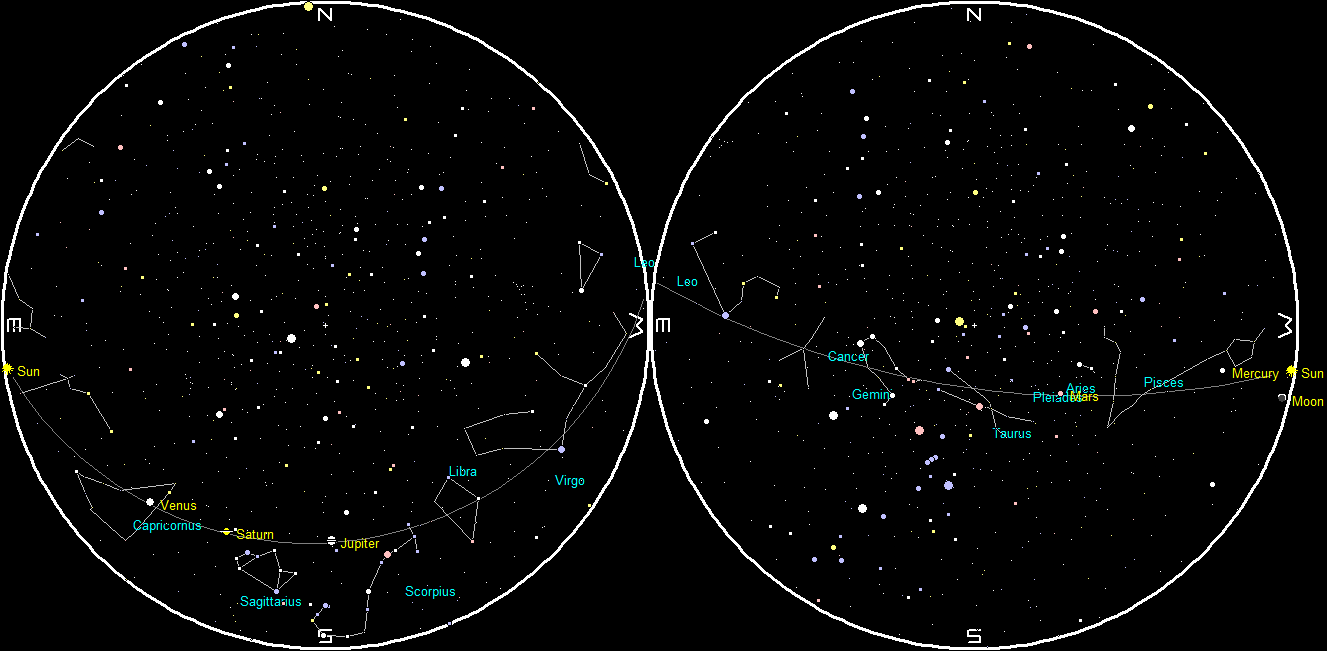
Planets and the Moon at sunset and sunrise of a single night starting with sunset on the right on March 6, 2019. The night ends on the left with sunrise on the 7th. Click on the image to enlarge. Created using my LookingUp program.
02/27/2019 – Ephemeris – All the classical planets from antiquity are now visible
Ephemeris for Wednesday, February 27th. Today the Sun will be up for 11 hours and 3 minutes, setting at 6:27, and it will rise tomorrow at 7:22. The Moon, 1 day past last quarter, will rise at 3:46 tomorrow morning.
Let’s look at the planets for this week. We have two evening planets visible now. Tiny and elusive Mercury should be visible low in the west from about 7 p.m. to about 7:45 p.m. It should be visible for the next few days. Binoculars are a big help in spotting it. Mars will be in the west-southwestern sky this evening and will set at 11:44 p.m. In the morning sky we have Jupiter which will rise tomorrow at 3:05 a.m. It is second to Venus in brightness. Saturn will be next to rise at 4:57 a.m. It will be to the upper right of Venus which will rise at 5:31 a.m. tomorrow. In small telescopes Saturn will show its rings and Venus will show a small slightly gibbous moon shape which will shrink and grow more full over the next months
The times given are for the Traverse City/Interlochen area of Michigan. They may be different for your location.
Addendum
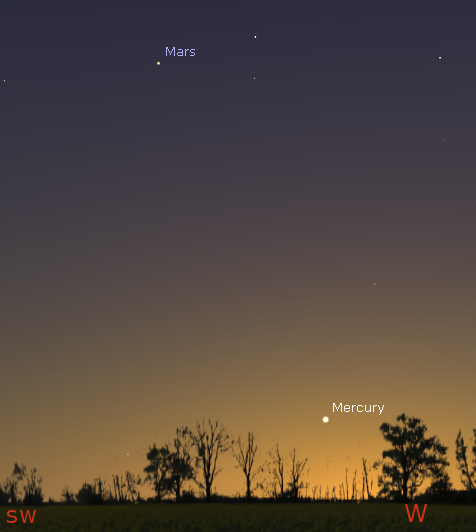
Mars and Mercury at 7 p.m. tonight February 17, 2019. Created using Stellarium.
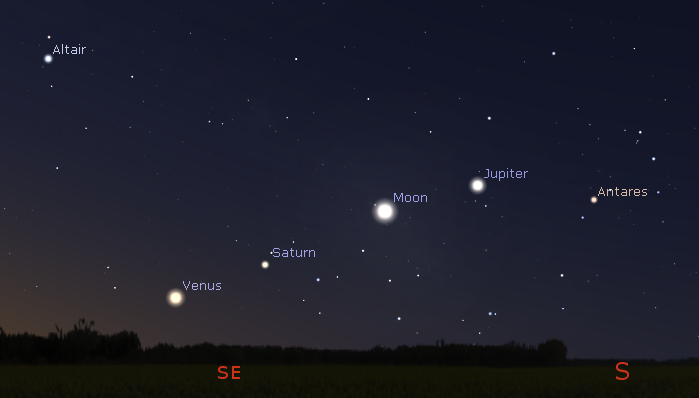
Morning planets and the Moon at 6:30 a.m. Tomorrow February 28, 2019. The actual Moon image is below. Created using Stellarium.
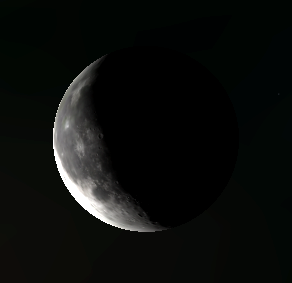
The moon as it might appear in binoculars tomorrow morning, February 28, 2019. Created using Stellarium.
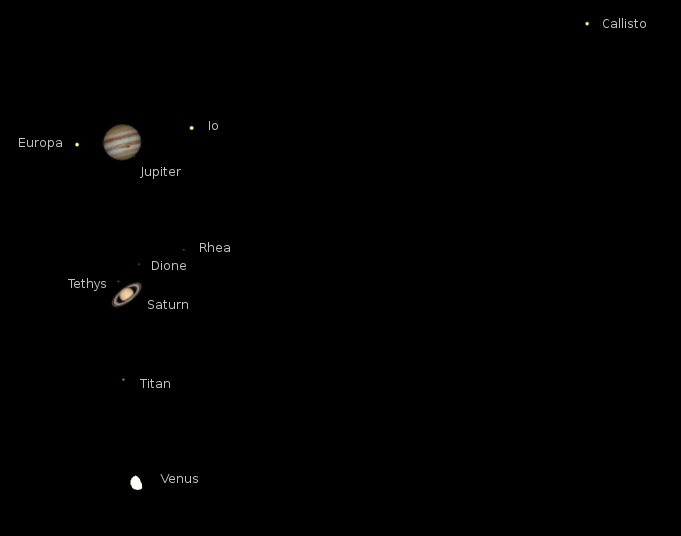
Jupiter, Saturn and Venus with the same magnification at 6:30 a.m. tomorrow morning February 28, 2019. Ganymede is behind Jupiter at that hour. See the table of Jupiter moon events tomorrow morning. Created using Cartes du Ciel (Sky Charts).
| Satellite | Event | Date | UT | EST |
| Ganymede | Eclipse start | 28 Feb 2019 | 06:16 | — |
| Ganymede | Eclipse end | 28 Feb 2019 | 08:21 | 3:21 a.m. |
| Europa | Shadow start | 28 Feb 2019 | 11:09 | 6:09 a.m. |
| Ganymede | Occultation start | 28 Feb 2019 | 11:13 | 6:13 a.m. |
| Ganymede | Occultation end | 28 Feb 2019 | 13:23 | — |
| Europa | Shadow end | 28 Feb 2019 | 13:31 | — |
| Europa | Transit start | 28 Feb 2019 | 13:34 | — |
| Io | Eclipse start | 28 Feb 2019 | 13:42 | — |
| Europa | Transit end | 28 Feb 2019 | 15:58 | — |
| Io | Occultation end | 28 Feb 2019 | 17:06 | — |
Jupiter satellites will have a busy morning. Events with EST times are visible from Northern Michigan. Events with UT only times are visible in other longitudes in the western hemisphere.
Times are provided by the Project Pluto: https://www.projectpluto.com/jevent.htm.
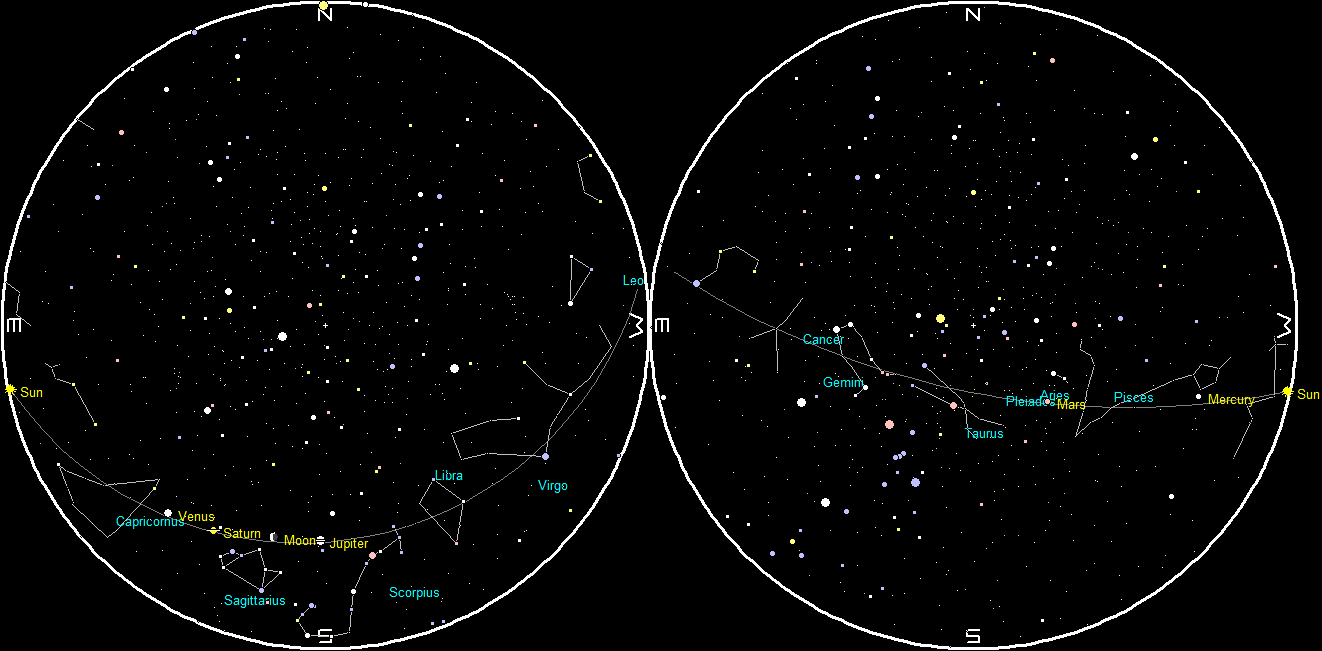
Planets and the Moon at sunset and sunrise of a single night starting with sunset on the right on February 27, 2019. The night ends on the left with sunrise on the 28th. Click on the image to enlarge. Created using my LookingUp program.
02/26/2019 – Ephemeris – Mercury at greatest eastern elongation from the Sun tonight
Ephemeris for Tuesday, February 26th. Today the Sun will be up for 11 hours even, setting at 6:26, and it will rise tomorrow at 7:24. The Moon, at last quarter today, will rise at 2:49 tomorrow morning.
This evening the planet Mercury is at its greatest distance from the Sun to the east by an angle of 18 degrees. It’s called greatest eastern elongation from the Sun. Mercury has a very elliptical orbit of the Sun, and right now it’s near its closest to the Sun called perihelion, of 28.6 million miles (46.1 million km). In late winter and spring the ecliptic, the path in the sky that the planets appear near, meets the horizon at a steep angle near sunset, which allows us to see planets near and east of the Sun more easily. The same is true for the planets west of the Sun in the morning in the fall. Southern hemisphere observers see Mercury best when its is at aphelion, farthest from the Sun, 66 percent farther away.
The times given are for the Traverse City/Interlochen area of Michigan. They may be different for your location.
Addendum
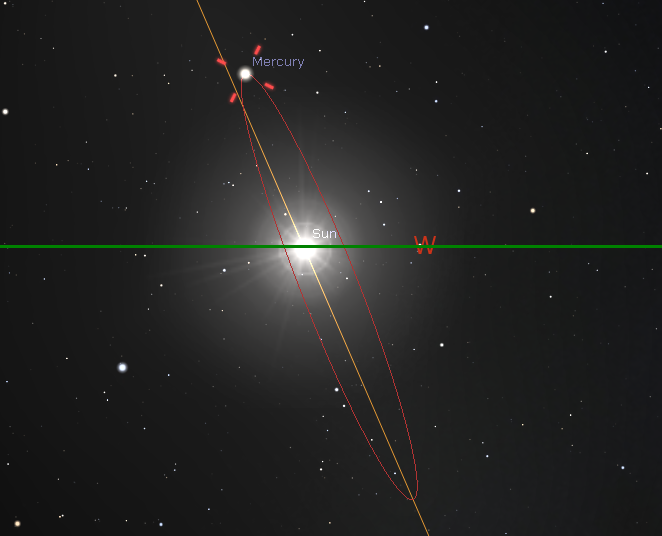
Looking at Mercury at greatest eastern elongation tonight February 26, 2019 from Northern Michigan displaying its orbit with a transparent horizon at sunset. Notice how lopsided the orbit appears, extending farther below the horizon (green line) than above. The yellow line is the ecliptic. Created using Stellarium and GIMP.
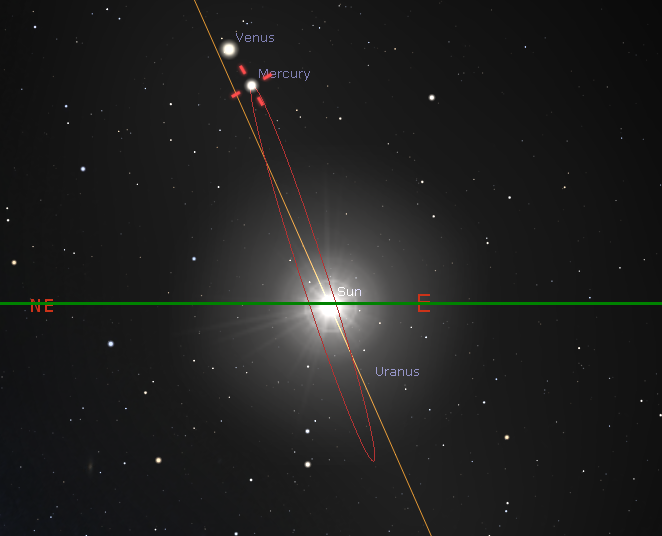
The next greatest elongation of Mercury is the western elongation on April 11, 2019. Here we are looking at it from the southern hemisphere, where it’s autumn displaying its orbit with a transparent horizon at sunrise. Notice how lopsided the orbit appears, extending farther above the horizon (green line) than below. The yellow line is the ecliptic. Created using Stellarium and GIMP.
Note the same is true for both northern and southern hemispheres:
Late winter and spring – planets near and east of the Sun are seen more easily after sunset.
Late summer and autumn – planets near and west of the Sun are seen more easily before sunrise.
02/20/2019 – Ephemeris – Theoretical all 5 bright planets are now visible
Ephemeris for Wednesday, February 20th. Today the Sun will be up for 10 hours and 42 minutes, setting at 6:18, and it will rise tomorrow at 7:34. The Moon, 1 day past full, will rise at 7:47 this evening.
Let’s look at the planets for this week. We have two evening planets visible now. Tiny and elusive Mercury should be visible low in the west for about a half hour after 7 p.m. It should be visible for a little over a week. Binoculars are a big help in spotting it. Mars will be in the southwestern sky this evening and will set at 11:46 p.m. In the morning sky we have Jupiter which will rise tomorrow at 3:32 a.m. It is second to Venus in brightness. Saturn will be next to rise at 5:22 a.m. It is just to the right of Venus which will rise at 5:29 a.m. tomorrow. In small telescopes Saturn will show its rings and Venus will show a small slightly gibbous moon shape which will shrink and grow more full over the next months
The times given are for the Traverse City/Interlochen area of Michigan. They may be different for your location.
Addendum
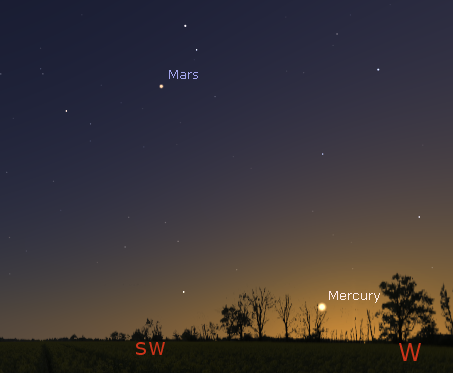
Mars, Mercury and bright stars in twilight at 7 p.m. February 20, 2019. Created using Stellarium.
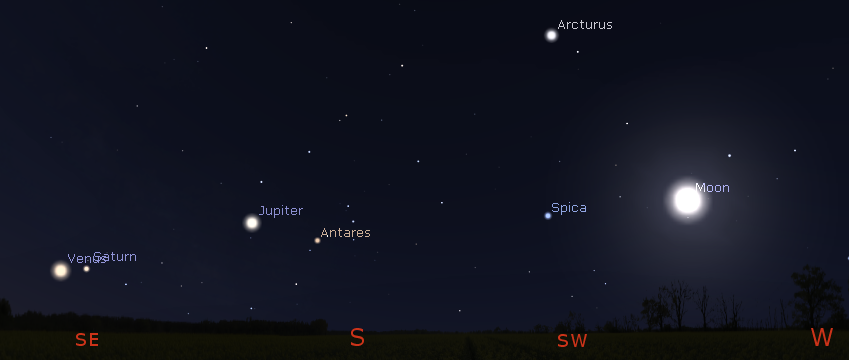
Morning planets and the Moon at 6:30 a.m. February 21, 2019. Click on the image to enlarge. created using Stellarium.
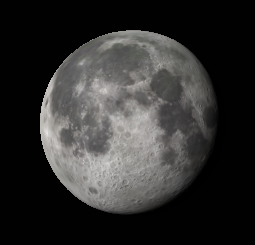
The waning gibbous Moon as it should appear tomorrow morning with binoculars. Created using Stellarium.
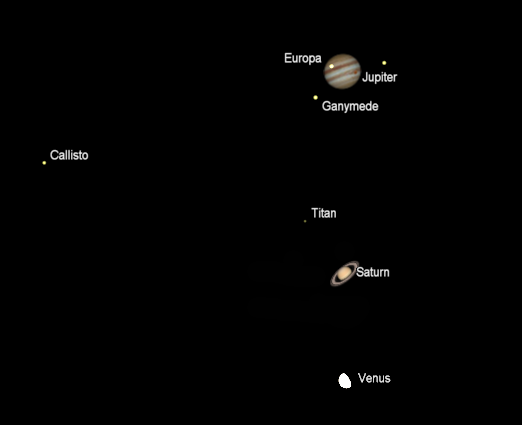
Jupiter, Saturn and Venus with the same magnification at 6:30 a.m. tomorrow morning February 21, 2019. See the table of Jupiter moon events tomorrow morning. Created using Cartes du Ciel (Sky Charts).
| Satellite | Event | Date | UT | EST | Notes |
| Ganymede | Occultation start | 21 Feb 2019 | 07:05:00 AM | 2:05 a.m. | Not visible from Michigan |
| Europa | Shadow start | 21 Feb 2019 | 08:36:00 AM | 3:36 a.m. | |
| Ganymede | Occultation end | 21 Feb 2019 | 09:15:00 AM | 4:15 a.m. | |
| Europa | Transit start | 21 Feb 2019 | 10:57:00 AM | 5:57 a.m. | |
| Europa | Shadow end | 21 Feb 2019 | 10:58:00 AM | 5:58 a.m. | |
| Io | Eclipse start | 21 Feb 2019 | 11:49:00 AM | 6:49 a.m. | |
| Europa | Transit end | 21 Feb 2019 | 01:21:00 PM | 8:27 a.m. | Not visible from Michigan |
Jupiter satellite events are from https://www.projectpluto.com/jevent.htm
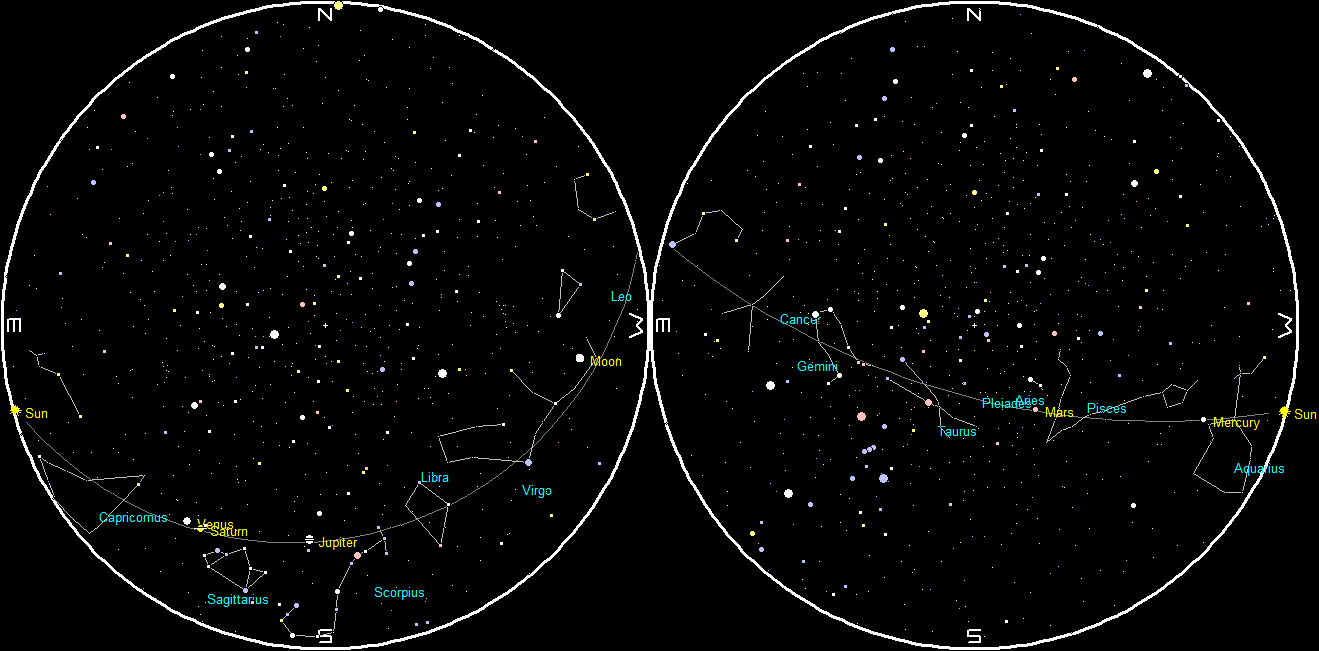
Planets and the Moon at sunset and sunrise of a single night starting with sunset on the right on February 20, 2019. The night ends on the left with sunrise on the 21st. Click on the image to enlarge. Created using my LookingUp program.
12/19/2018 -Ephemeris – The Bright planets and a departing comet for this week
Ephemeris for Wednesday, December 19th. The Sun will rise at 8:15. It’ll be up for 8 hours and 48 minutes, setting at 5:04. The Moon, 3 days before full, will set at 5:34 tomorrow morning.
Let’s look at the bright planets for tonight. In the evening sky we have Mars still visible, but Saturn is lost in the bright twilight. It will pass conjunction with the Sun on New Years day. Mars will be due south at 6:19 p.m., and it will set at 12:08 a.m. Mars is moving eastward, crossing the constellation of Aquarius until the 21st, when it enters Pisces. Comet Wirtanen is moving northward, to the left of the Pleiades and fading as the moonlight gets brighter. On the 23rd at 9 p.m. it will be a degree and a half, that’s 3 moon widths below and a bit left of the star Capella. Venus, our brilliant morning star, will rise at 4:20 a.m. in the east-southeast. The planets Jupiter and Mercury will be low on the southeastern horizon by 7 a.m. tomorrow..
The times given are for the Traverse City/Interlochen area of Michigan. They may be different for your location.
Addenda
Bright planets and the Moon
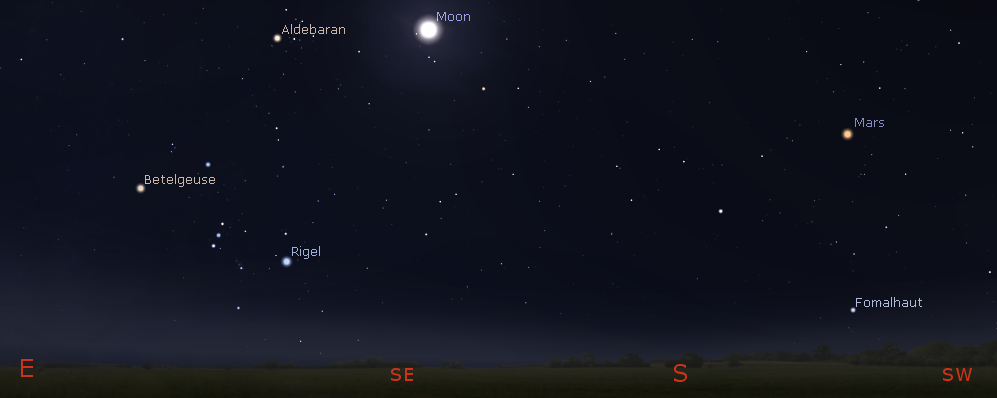
Mars, and the Moon at 8 p.m. tonight December 19, 2018. Click on image to enlarge. Created using Stellarium.
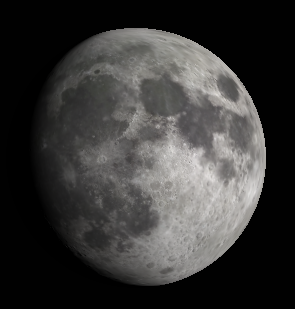
The waxing gibbous Moon as it should appear tonight in binoculars. Created using Stellarium.
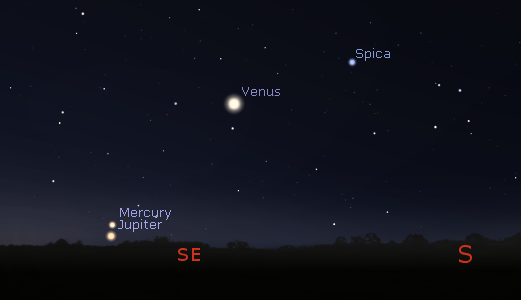
Morning planets Venus, Mercury and Jupiter on December 20, 2018, 7 a.m.. Created using Stellarium.

Telescopic view of Venus tomorrow morning December 20, 2018. Created using Stellarium.
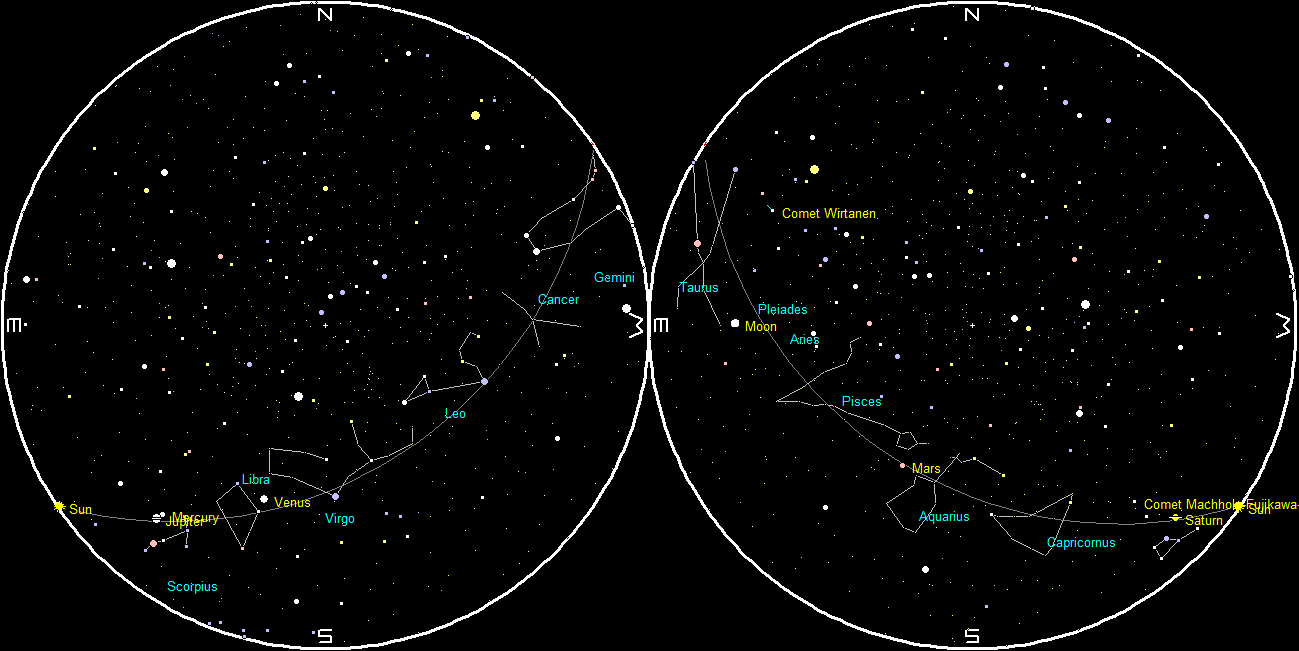
Planets, two comets and the Moon at sunset and sunrise of a single night starting with sunset on the right on December 19, 2018. The night ends on the left with sunrise on the 20th. Click on the image to enlarge. Created using my LookingUp program.
Comets
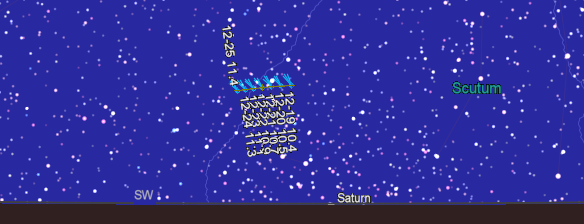
Comet C/2018 V1 (Machholz-Fijikawa-Iwamoto) in twilight starting tonight December 19, 2018. This comet is basically invisible in the evening twilight of 6 p.m. on the rest of the nights because the stars in the field will set 4 minutes earlier each successive evening. The latest magnitude observed is two magnitudes brighter than shown here. Created using Cartes du Ciel (Sky Charts).
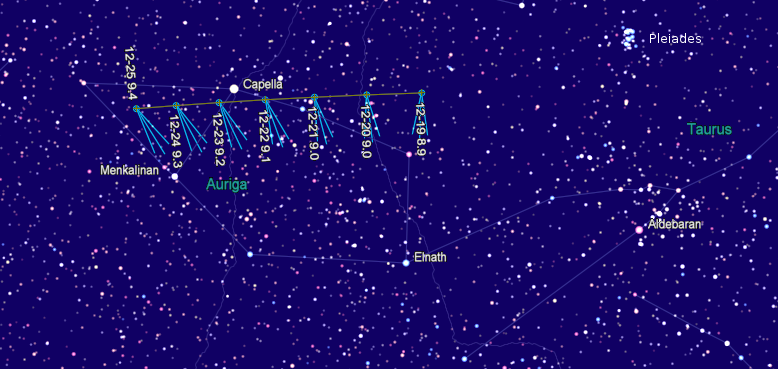
Comet 46P/Wirtanen positions for the next week in a bright moonlit sky. Positions are marked with month-date and magnitude. The observations are about 5.5 magnitudes brighter than shown here. Star field position is for 9 p.m. on the 19th. Click on the image to enlarge. Created using Cartes du Ciel (Sky Charts).
12/12/2018 – Ephemeris – The bright planets and a comet this week
Ephemeris for Wednesday, December 12th. The Sun will rise at 8:10. It’ll be up for 8 hours and 51 minutes, setting at 5:02. The Moon, 3 days before first quarter, will set at 10:05 this evening.
Let’s look at the bright planets for tonight. In the evening sky we have Mars still visible, but Saturn is all but lost in the bright twilight, setting at 6:22 p.m. It will pass conjunction with the Sun on New Years day. Mars will be due south at 6:30 p.m., and it will set at 12:10 a.m. Mars is moving eastward, crossing the constellation of Aquarius until the 21st, when it enters Pisces. Comet Wirtanen is moving northward, to the right of the V of stars that’s the head of Taurus the bull, and should be an excellent binocular object. On the 15th and 16th it will pass to the left of the Pleiades or Seven Sisters. Venus, our brilliant morning star, will rise at 4:19 a.m. in the east-southeast. The elusive planet Mercury will be seen below and left of Venus after it rises at 6:20 a.m.
The times given are for the Traverse City/Interlochen area of Michigan. They may be different for your location.
Addenda
Planets and the Moon
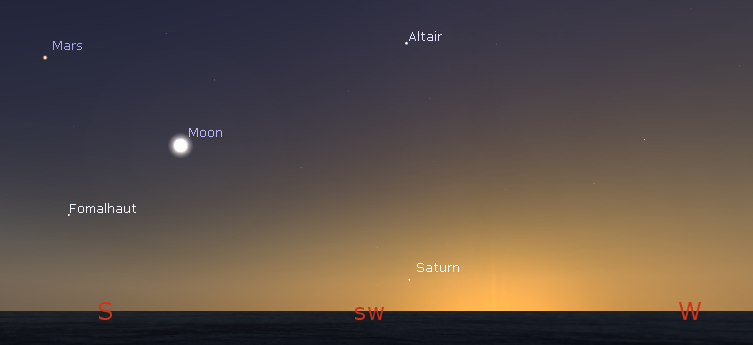
Mars, and Saturn over a Lake Michigan horizon seen at 5:45 p.m. tonight December 12, 2018. Created using Stellarium.
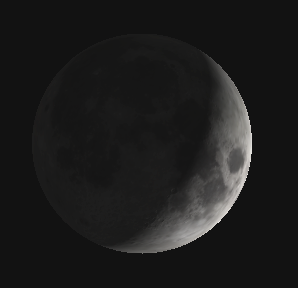
The waxing crescent Moon as it should appear tonight in binoculars. Created using Stellarium.
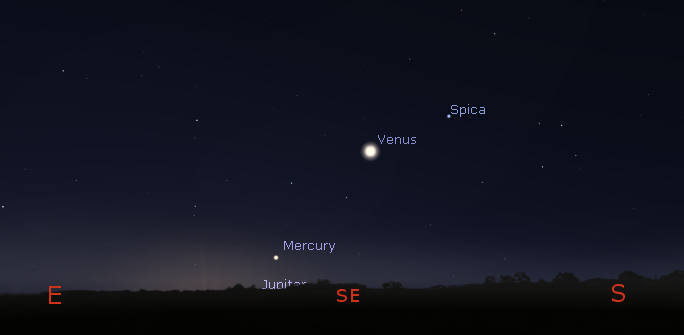
Morning planets Venus and Mercury. Jupiter is rising. December 13, 2018, 7:15 a.m.. Created using Stellarium.
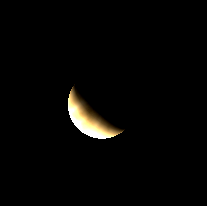
Telescopic view of Venus tomorrow morning December 13, 2018. Created using Stellarium.
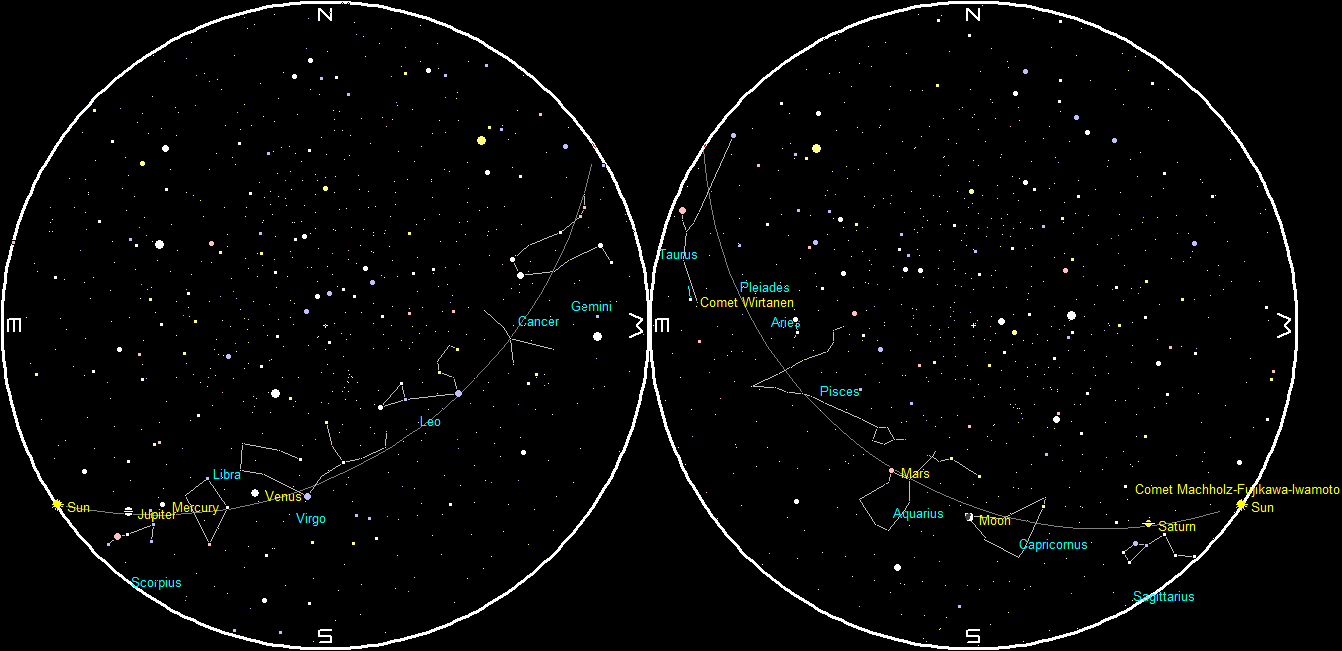
Planets, two comets and the Moon at sunset and sunrise of a single night starting with sunset on the right on December 12, 2018. The night ends on the left with sunrise on the 13th. Click on the image to enlarge. Comet Wirtanen is very close to opposition and to the south, so it rises after sunset and sets before sunrise. Created using my LookingUp program.
Two comets
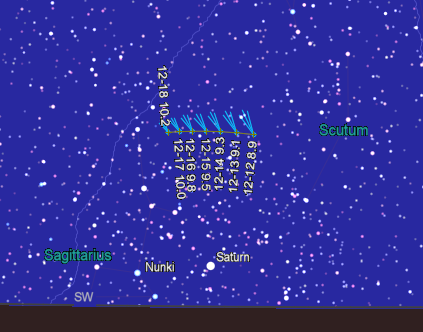
Comet C/2018 V1 (Machholz-Fijikawa-Iwamoto) in twilight starting tonight December 12, 2018. The comet won’t climb that dramatically at 6 p.m. on the rest of the nights because the stars in the field will set 4 minutes earlier each successive evening. The latest magnitude estimate of the comet on December 15 is 7.3, two magnitudes brighter than shown here. It is just about impossible to spot in twilight. Created using Cartes du Ciel (Sky Charts).
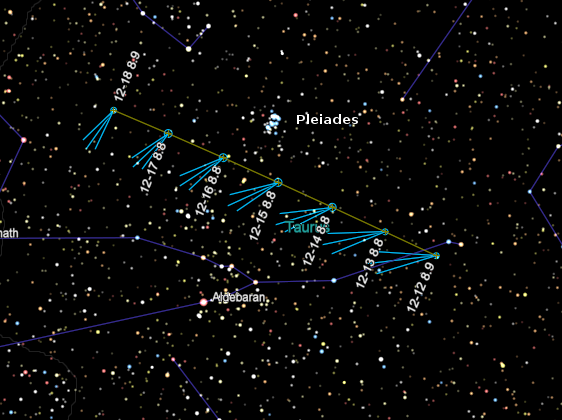
Comet 46P/Wirtanen positions for the next week. Positions are marked with month-date and magnitude. The latest magnitude prediction for December 15th is 3.3, 5.5 magnitudes brighter than shown here. Star field position is for 9 p.m. on the 12th. Click on the image to enlarge. Created using Cartes du Ciel (Sky Charts).
08/29/2018 – Ephemeris –
Ephemeris for Wednesday, August 29th. The Sun will rise at 7:01. It’ll be up for 13 hours and 23 minutes, setting at 8:24. The Moon, 3 days past full, will rise at 10:13 this evening.
It’s our Wednesday look at the bright planets. Four of them are visible in the evening sky. The brilliant Venus will be visible in the western twilight from about 8:40 p.m. until it sets at 9:44 p.m. Jupiter will be in the southwest as it gets dark. It is only outshone by Venus, the Moon, and currently Mars. Jupiter will set at 11:05 p.m. Saturn will start the evening low in the southern sky and will stay relatively low, above the Teapot of Sagittarius. It will be due south at 9:21 p.m. and will set at 1:47 a.m.. Mars will be low in the southeast as the skies darken tonight. and is now 41.3 million miles (66.6 million km) away. It will set at 3:25 a.m. Mercury will rise in the east-northeast at 5:29 a.m. and be visible until about 6:40 tomorrow morning.
The times given are for the Traverse City/Interlochen area of Michigan. They may be different for your location.
Addendum
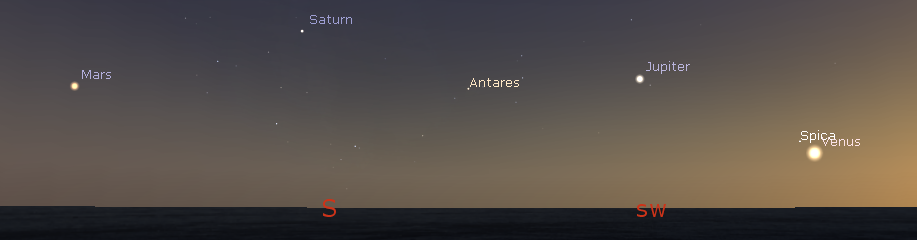
The evening planets visible at 9 p.m., almost an hour after sunset. August 29th, 2018. Click on the image to enlarge. Created using Stellarium.
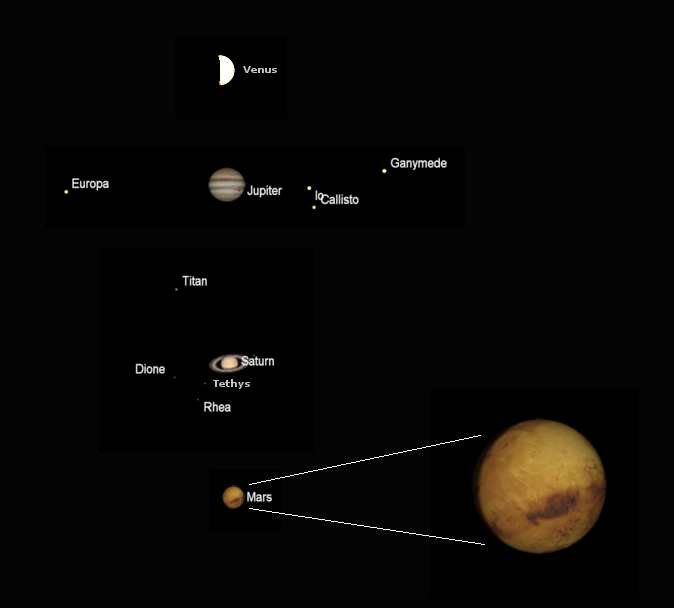
Venus, Jupiter, Saturn and Mars with the same magnification at 9 p.m. August 29, 2018. Mars is also shown enlarged. The global dust storm is abating, so the albedo features are beginning to be seen. Created using Cartes du Ciel (Sky Charts).
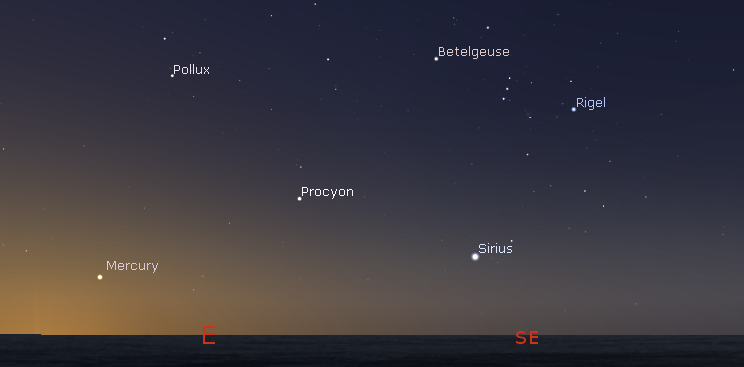
Mercury seen at 6:15 a.m. August 30, 2018, about 45 minutes before sunrise. Bonus Orion appears without the possibility of frostbite. Click on the image to enlarge. Created using Stellarium.
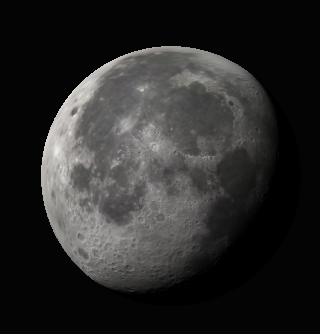
The gibbous Moon as it should appear tomorrow morning. Created using Stellarium.
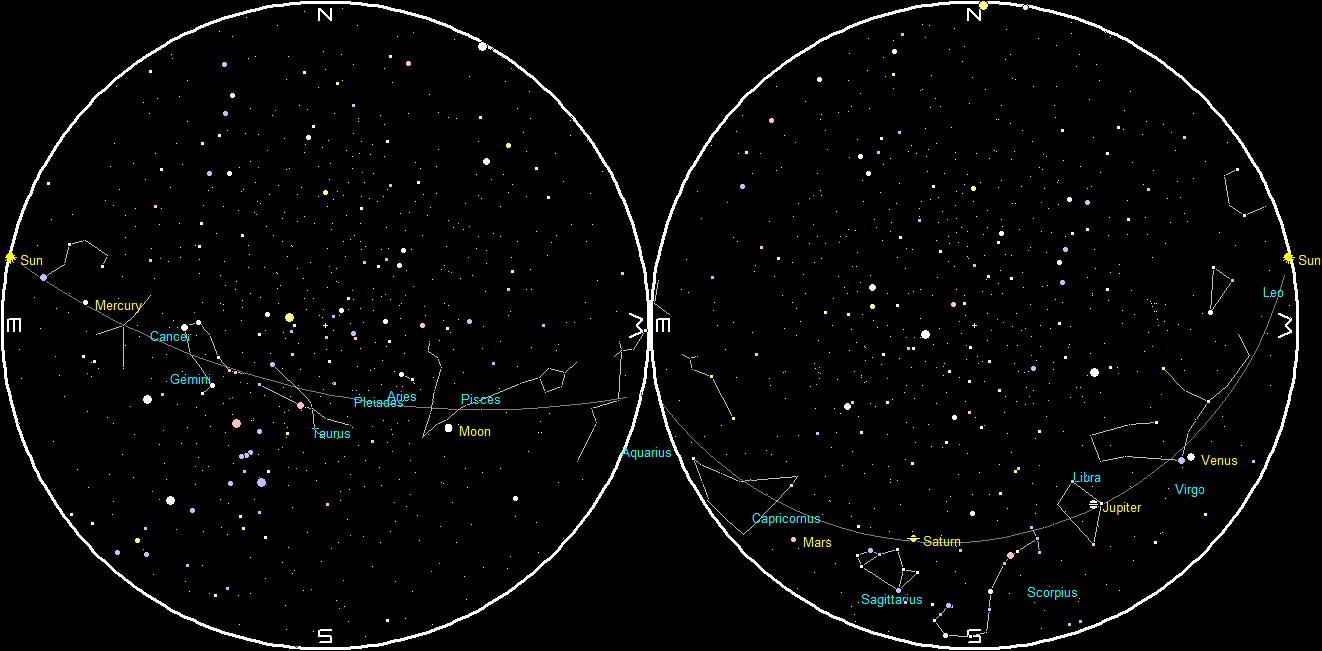
Planets and the Moon at sunset and sunrise of a single night starting with sunset on the right on August 29, 2018. The night ends on the left with sunrise on the 30th. Click on the image to enlarge. Created using my LookingUp program.
08/22/2018 – Ephemeris – All five bright planets visible now
Ephemeris for Wednesday, August 22nd. The Sun rises at 6:53. It’ll be up for 13 hours and 43 minutes, setting at 8:37. The Moon, half way from first quarter to full, will set at 4:00 tomorrow morning.
It’s Wednesday and time to look for and at the bright planets. Four of them are visible in the evening sky. The brilliant Venus will be visible in the western twilight from about 9 p.m. until it sets at 10:02 p.m. Jupiter will be in the southwest as it gets dark. It is only outshone by Venus, the Moon, and currently Mars. Jupiter will set at 11:30 p.m. Saturn will start the evening low in the southern sky and will stay relatively low, above the Teapot of Sagittarius. It will be due south at 9:49 p.m. and will set at 2:15 a.m.. Mars will be low in the southeast as the skies darken tonight. and is now 38.9 million miles (62.7 million km) away. It will set at 3:51 a.m. The fifth planet Mercury will rise at 5:27 a.m. tomorrow morning.
The times given are for the Traverse City/Interlochen area of Michigan. They may be different for your location.
Addendum
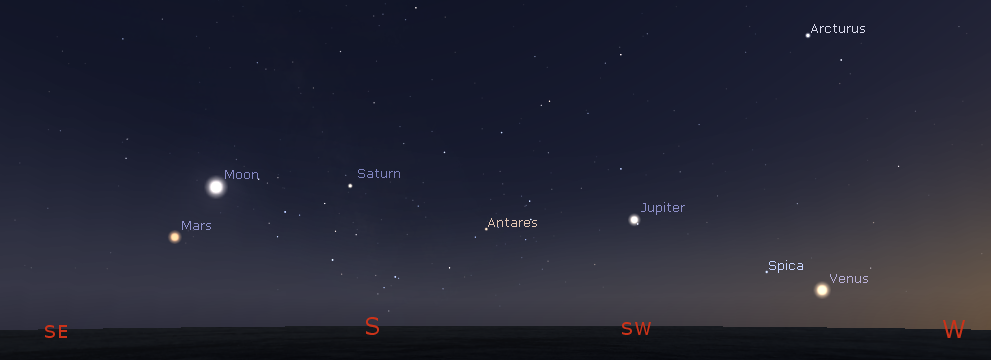
The evening planets visible at 9:30 p.m., almost an hour after sunset. August 22nd, 2018. Also shown is the Moon. Click on the image to enlarge. Created using Stellarium.
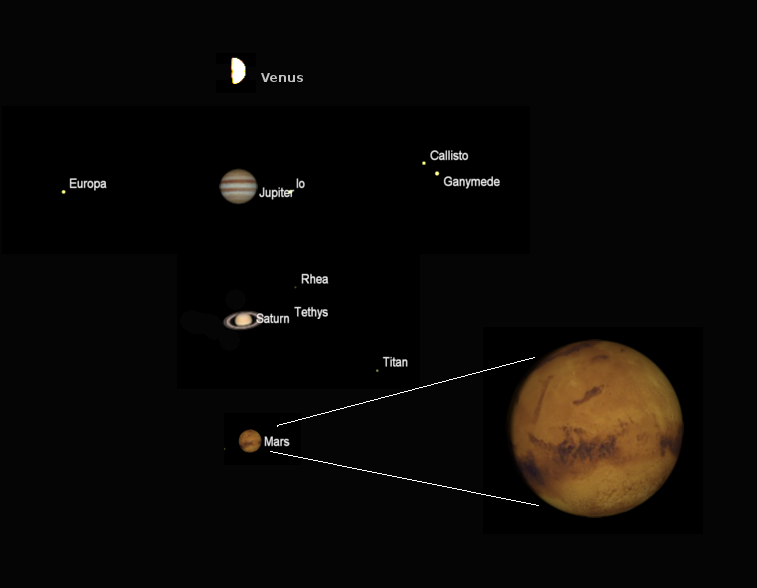
Venus, Jupiter, Saturn and Mars with the same magnification at 9:30 p.m. August 22, 2018. Mars is also shown enlarged. The global dust storm is abating, so the albedo features are beginning to be seen. Created using Cartes du Ciel (Sky Charts).
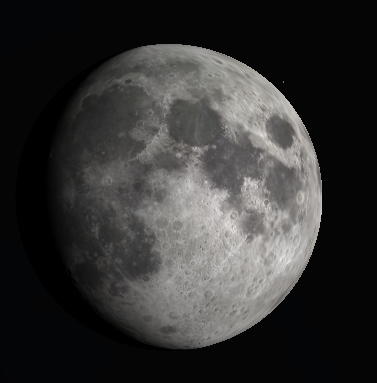
The gibbous Moon as it should appear tonight. Created using Stellarium. Stellarium.
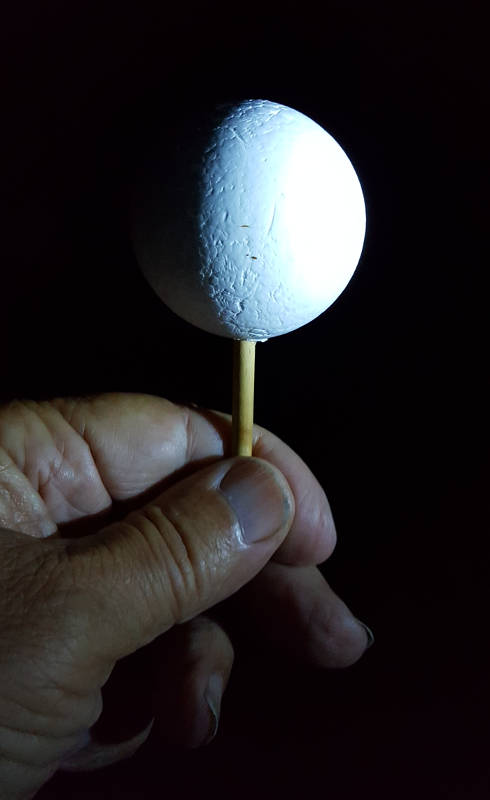
Demonstration of the Moon’s gibbous phase with the Styrofoam moon ball we use for Project Astro held up to a light off frame to the right. The night side of the ball is illuminated a bit by the translucency of the ball, and the reflection off my hand. Note the roughness of the ball is visible only at the terminator.
My program about the Moon’s crescent phase aired last Thursday and a demonstration of it using a moonball is here.
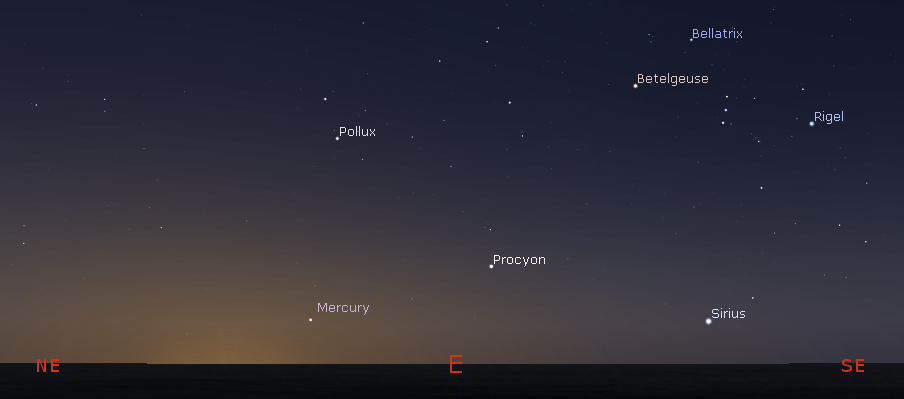
Mercury seen at 6 a.m., about an hour before sunrise. A bonus, the constellation Orion appears without the possibility of frostbite. Click on the image to enlarge. Created using Stellarium.
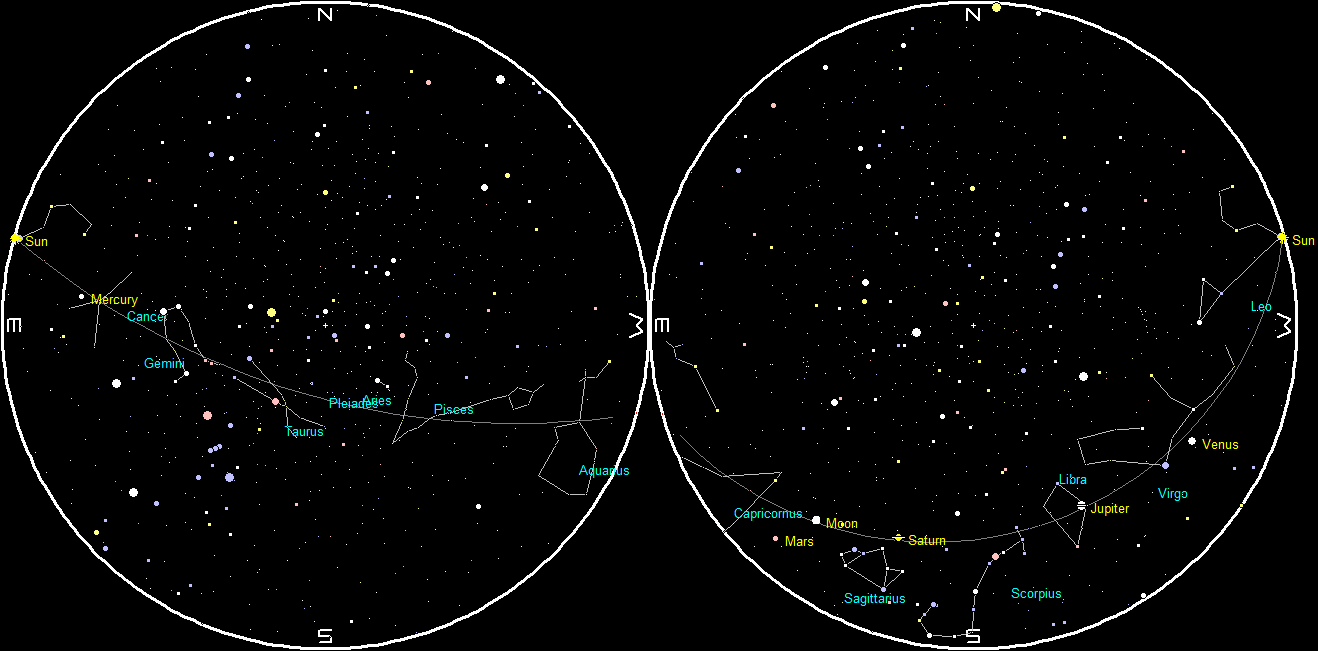
Planets and the Moon at sunset and sunrise of a single night starting with sunset on the right on August 22, 2018. The night ends on the left with sunrise on the 23rd. Click on the image to enlarge. Created using my LookingUp program.
 Bob Moler's Ephemeris Blog