Archive
09/08/2017 – Ephemeris – Dance of the planets in the morning
Ephemeris for Friday, September 8th. The Sun will rise at 7:13. It’ll be up for 12 hours and 52 minutes, setting at 8:05. The Moon, 2 days past full, will rise at 9:39 this evening.
In clear skies after 6:15 or so in the morning two planets and a star can be spotted below Venus in the east. This may take binoculars to spot. Brightest of the two highest stars will be the planet Mercury, which will reach its greatest elongation from the Sun next Tuesday. The star Regulus is a bit to the left of it, and dimmer. Hardest of all to spot will be Mars, below, left of them. On the 16th Mercury and Mars will be in a very close conjunction, about one fifth of the Moon’s diameter apart. Mars, now is very far away, and is as dim as a Big Dipper star, which though bright, fares poorly in twilight. Next July when Mars is close to us, it will be brighter than Jupiter. The positions of Mercury, Regulus and Mars will change rapidly in the next week or so.
The times given are for the Traverse City/Interlochen area of Michigan. They may be different for your location.
Addendum
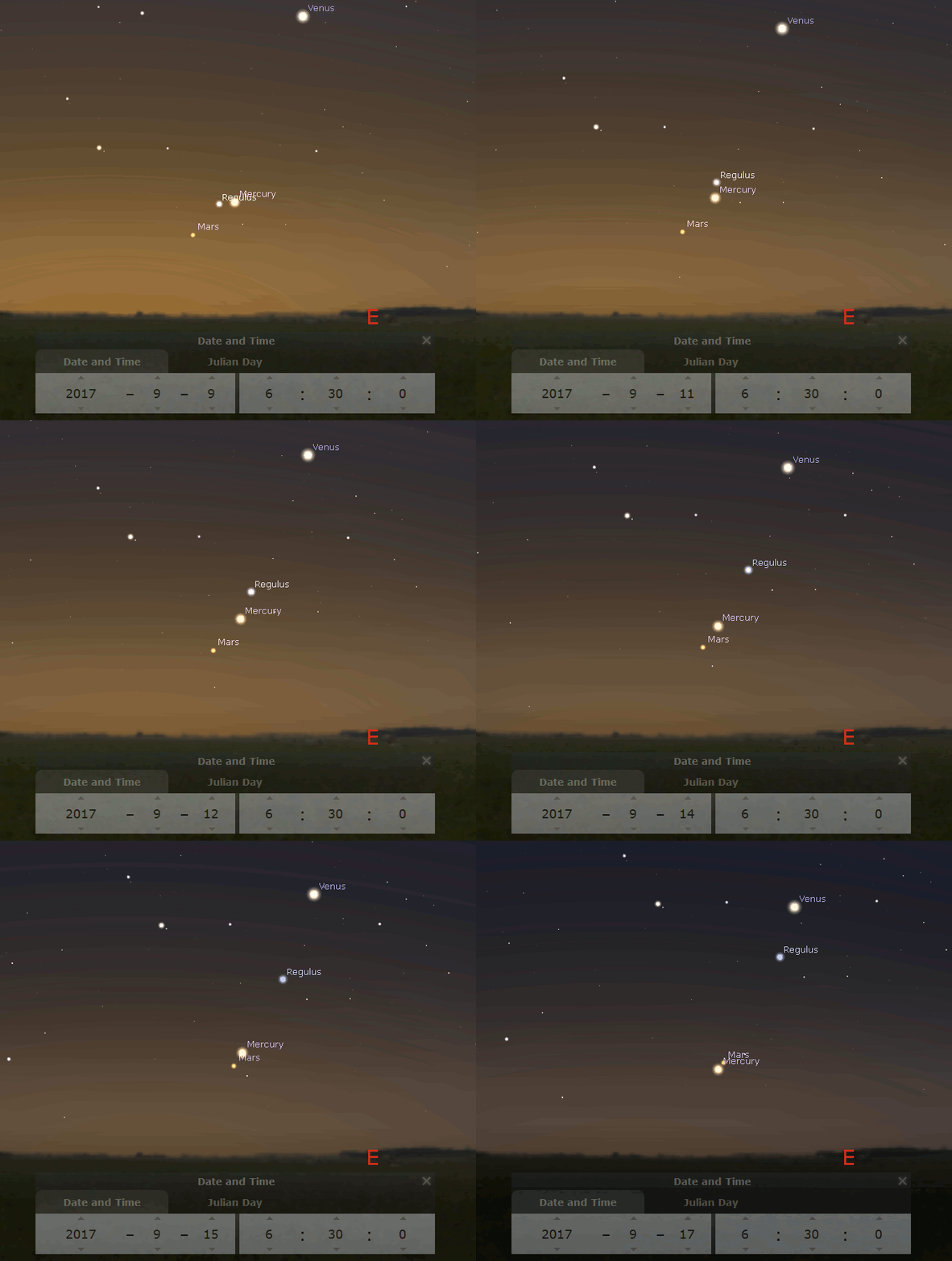
Dance of the morning planets Mercury, Mars, Venus with the star Regulus at 6:30 a.m. (about 45 minutes before sunrise) on the mornings of September 9 through 17, 2017. Created using Stellarium and GIMP.
09/06/2017 – Ephemeris – A look at the bright planets known from antiquity
Wednesday, September 6th. The Sun will rise at 7:11. It’ll be up for 12 hours and 58 minutes, setting at 8:09. The Moon, at full today, will rise at 8:38 this evening.
Let’s take our weekly look at the bright planets. Jupiter is sinking really low in the west-southwest setting before the end of twilight. The bright blue-white star Spica, which pales in comparison to Jupiter, is seen below it dimly in the twilight. It will pass north of Spica on September 11th. Jupiter will set at 9:36 p.m. Saturn can be seen moving from the south-southwest to the southwest tonight. The reddish star Antares is below and right of Saturn. Saturn’s rings are spectacular in telescopes. The planet will set at 12:29 a.m. In the morning sky, brilliant Venus will rise at 4:31 a.m. and be visible until about 6:45 tomorrow morning. Mars and Mercury follow Venus up in the east rising just before 6 a.m.
The times given are for the Traverse City/Interlochen area of Michigan. They may be different for your location.
Addendum
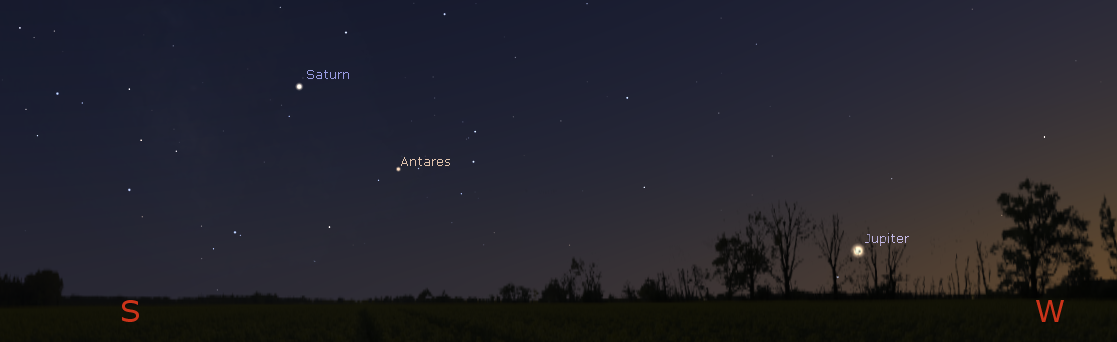
The setting Jupiter and Saturn near the Moon at 9 p.m., September 6, 2017. Created using Stellarium. Click on image to enlarge.
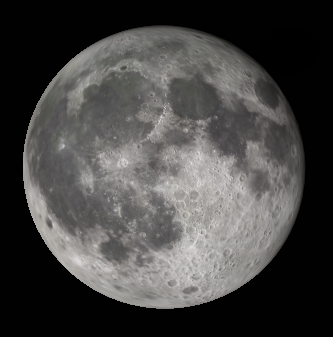
The moon as it might be seen in binoculars at 10 p.m.. Created using Stellarium.
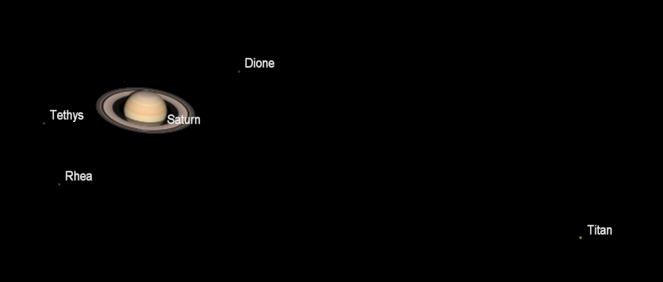
Saturn and its brightest moons overnight September 6/7, 2017. Created using Cartes du Ciel (Sky Charts).
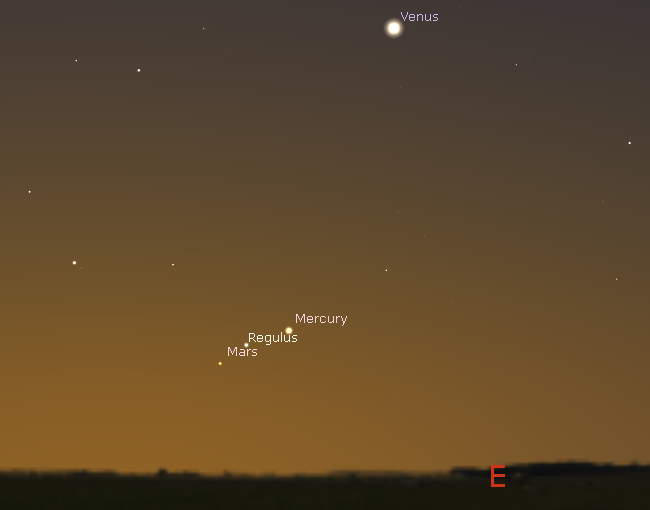
Venus with Mercury and Mars at 6:30 a.m. September 7, 2017. Created using Stellarium.
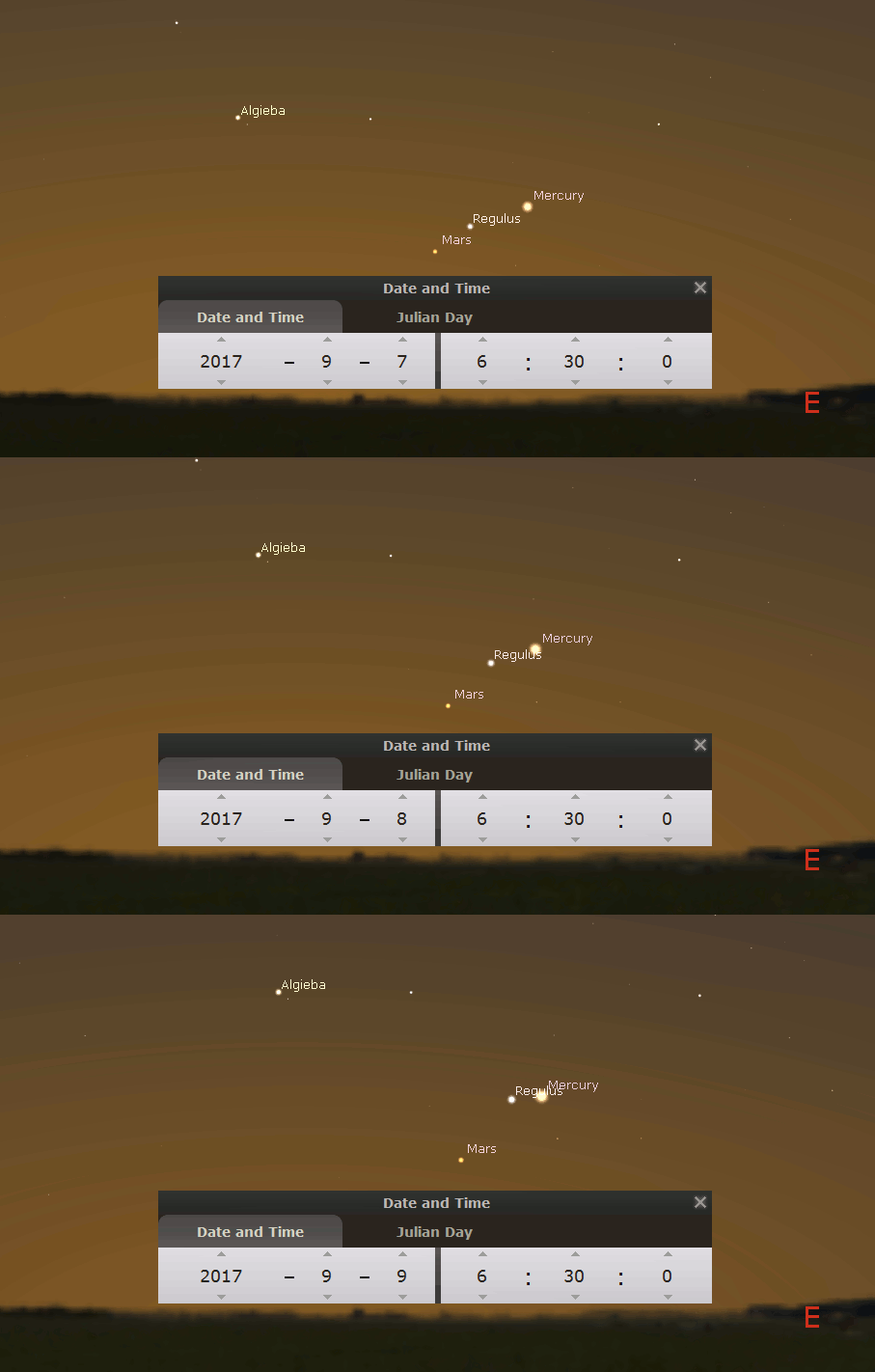
A 3 day animation od Mercury, te star Regulus and Mars starting September 7, 2017 at 6:30 a.m. Created using Stellarium and GIMP. Click on image to enlarge.
On Friday I’ll have an animation that will take these planets further.
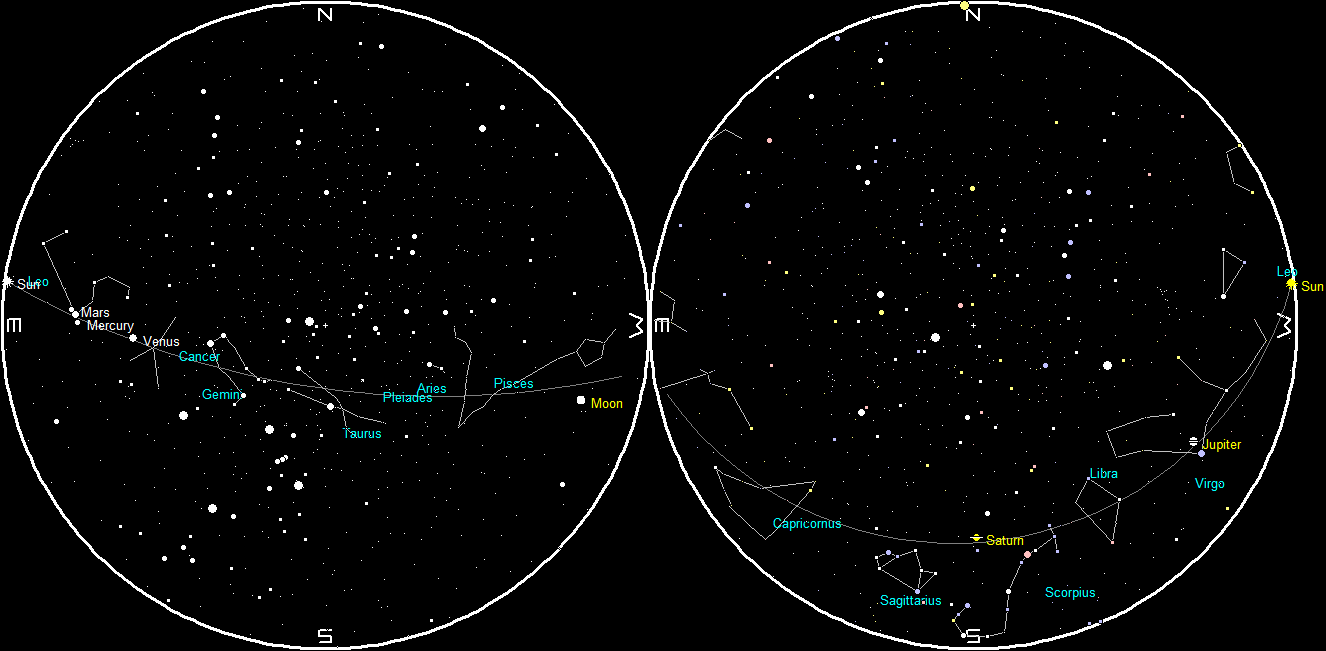
Planets at sunset and sunrise of a single night starting with sunset on the right on September 6, 2017. The night ends on the left with sunrise on the 7th. Click on the image to enlarge. Created using my LookingUp program.
08/09/2017 – Ephemeris – Where are the bright planets tonight?
Ephemeris for Wednesday, August 9th. The Sun rises at 6:38. It’ll be up for 14 hours and 18 minutes, setting at 8:56. The Moon, 2 days past full, will rise at 10:06 this evening.
Let’s take our weekly look at the bright planets. Jupiter is sinking in the west-southwest as it gets dark in the evening. The bright blue-white star Spica, which pales in comparison to Jupiter, is seen left of it. In even the smallest telescopes Jupiter’s four largest moons can be seen. They shift positions from night to night. Jupiter will set at 11:15 p.m. Saturn can now be seen in the south as evening as twilight fades. The reddish star Antares is off to the right of Saturn. Saturn’s rings are spectacular in telescopes. It will set at 2:20 a.m. In the morning sky, brilliant Venus will rise at 3:38 a.m. and be visible until about 6 tomorrow morning. Mars and Mercury are now too close to the Sun for us to see.
The times given are for the Traverse City/Interlochen area of Michigan. They may be different for your location.
Addendum
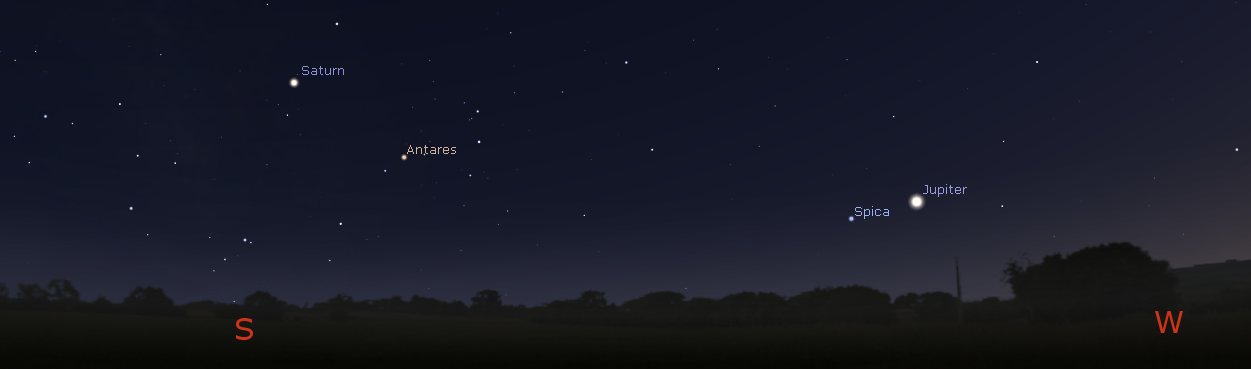
Jupiter and Saturn at 10 p.m. August 9, 2017. Jupiter is slowly approaching Saturn in our skies and will pass Saturn on December 21, 2020, and every 20 years for the rest of this century. Created using Stellarium. Click on the image to enlarge.
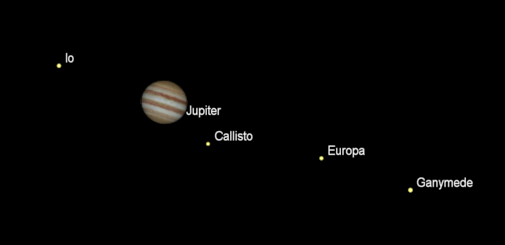
Jupiter and its moons at 10 p.m. August 9, 2017. Created using Cartes du Ciel (Sky Charts).
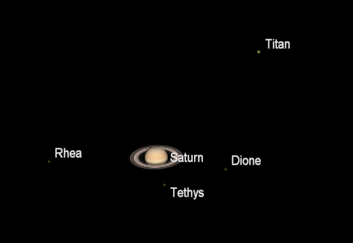
Saturn and its brightest moons overnight August 9/10, 2017. Created using Cartes du Ciel (Sky Charts).
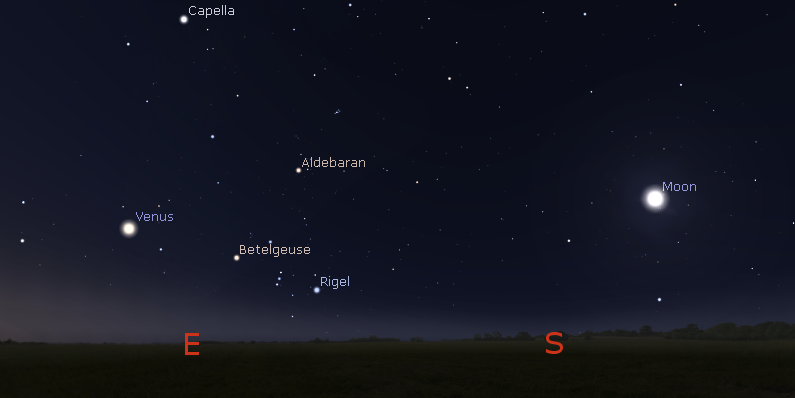
The Moon and Venus at 5:30 a.m. August 10, 2017. Created using Stellarium.
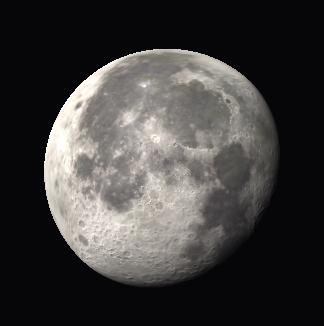
The Moon as it might be seen in binoculars at 5:30 p.m. August 10, 2017. Created using Stellarium.
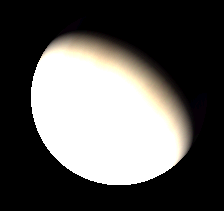
Venus in a telescope on the morning of August 10, 2017. It is greatly enlarged here to show its phase. Created using Stellarium.
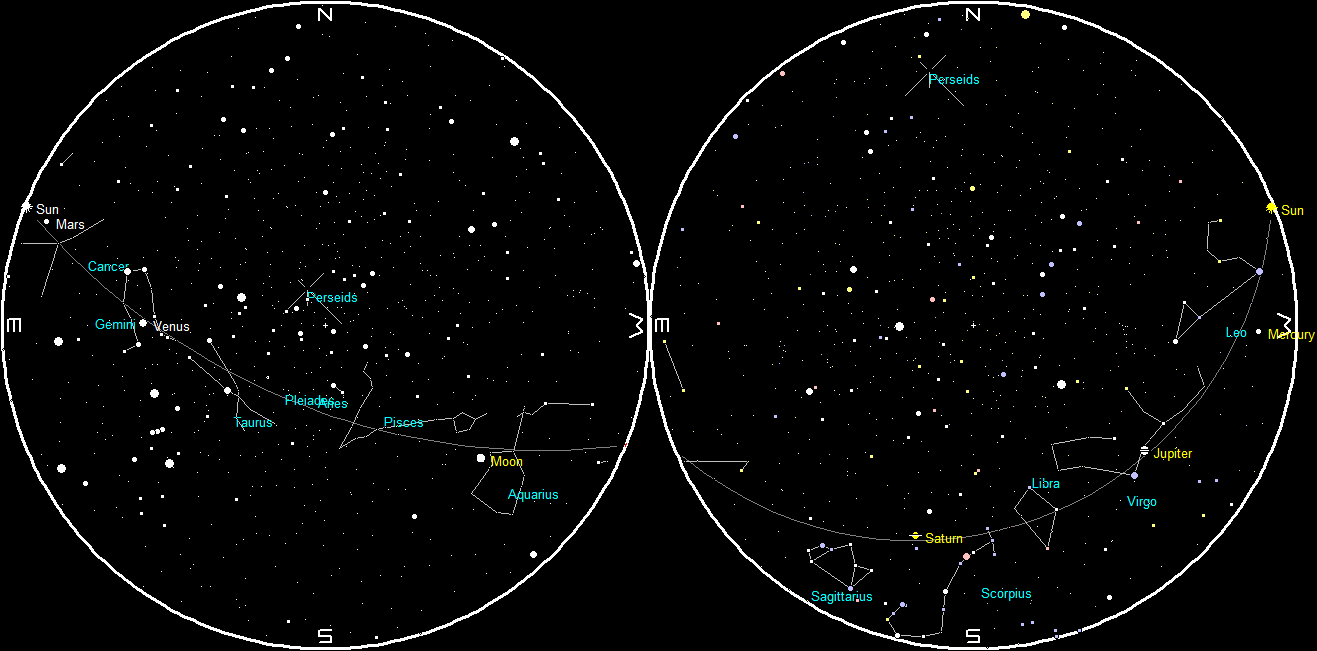
Planets at sunset and sunrise of a single night starting with sunset on the right on August 9, 2017. The night ends on the left with sunrise on August 10. Click on the image to enlarge. Created using my LookingUp program.
05/17/2017 – Ephemeris – Let’s look at the bright planets for this week
Ephemeris for Wednesday, May 17th. Today the Sun will be up for 14 hours and 54 minutes, setting at 9:06, and it will rise tomorrow at 6:11. The Moon, 1 day before last quarter, will rise at 2:20 tomorrow morning.
Let’s take our weekly look at the bright planets. Mars is still in the west-northwest after sunset and fading. It appears under the left edge of the constellation Auriga. It will set at 10:54 p.m. Dominating the evening sky now is Jupiter in the south-southeast. The bright blue-white star Spica is seen below and left of it. In even the smallest telescopes Jupiter’s four largest moons can be seen. They shift positions night from to night and sometimes even as you watch. Jupiter will set at 4:42 a.m. At 5:30 a.m. both Saturn and Venus will be in the morning twilight. Saturn will be low in the south-southwest. It will rise in the east-southeast at 11:14 p.m. Brilliant Venus will be low in the east tomorrow morning after rising at 4:27 a.m.
For us Mercury, at greatest western elongation of 25.8°will be on the horizon at 5:30, but those south of the equator it will be well placed for viewing in the morning.
The times given are for the Traverse City/Interlochen area of Michigan. They may be different for your location.
Addendum
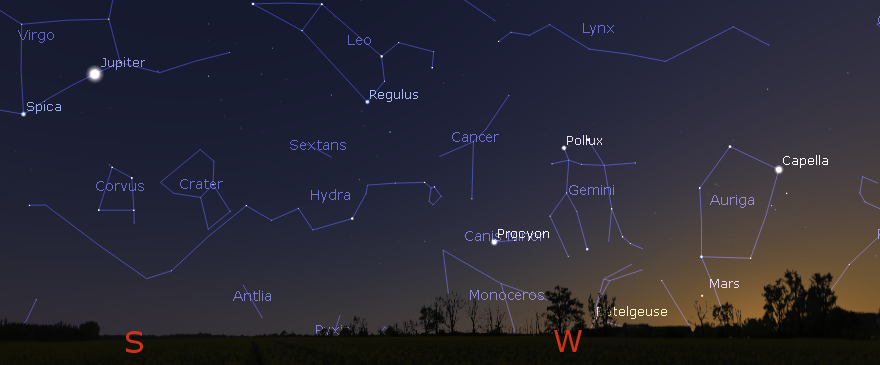
Mars and Jupiter with the spring constellations in the fading twilight at 10 p.m., May 17, 2017. Created using Stellarium.
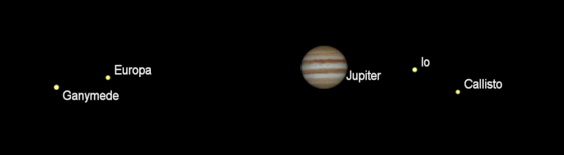
Jupiter and its four Galilean moons as they might be seen in a telescope at 10 p.,. May 17, 2017. Created using Cartes du Ciel (Sky Charts).
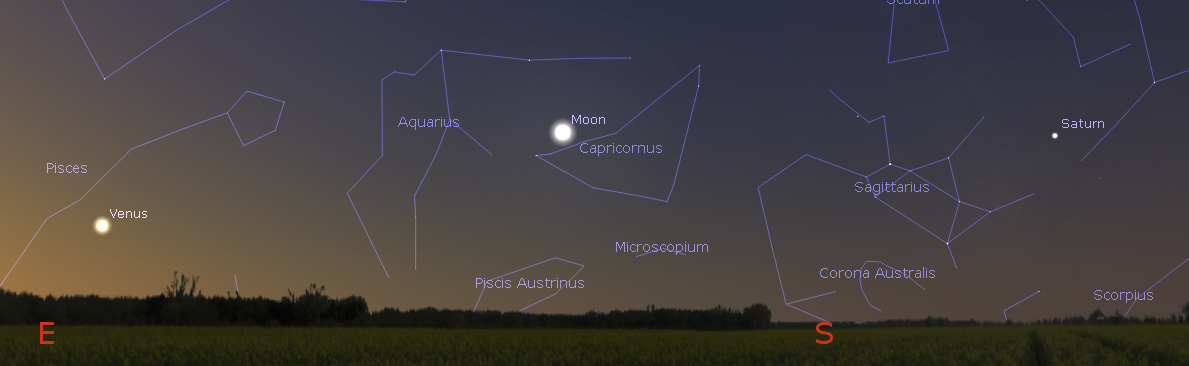
Venus, Saturn and the Moon at 5:30 a.m. May 18, 2017. Created using Stellarium. Click on the image to expand.
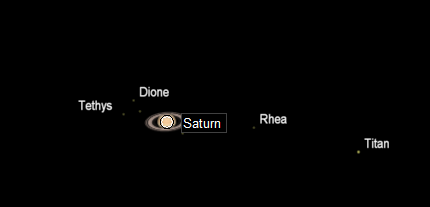
Saturn and its brightest moons at 5:30 a.m. May 18, 2017. This is displayed at the same scale/magnification as the Jupiter image above. Created using Cartes du Ciel (Sky Charts).
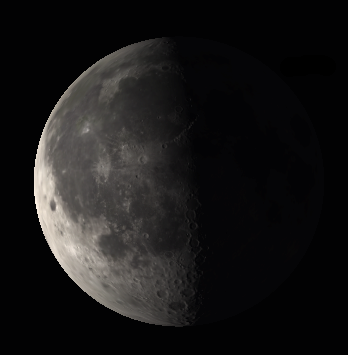
The Moon as it might be seen in binoculars at 5:30 a.m., May 18, 2017. Created using Stellarium.
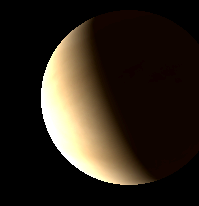
Venus as seen through a telescope at 5:30 a.m. May 18, 2017. This is displayed at a larger scale/magnification than the Jupiter and Saturn images above. Created using Stellarium.
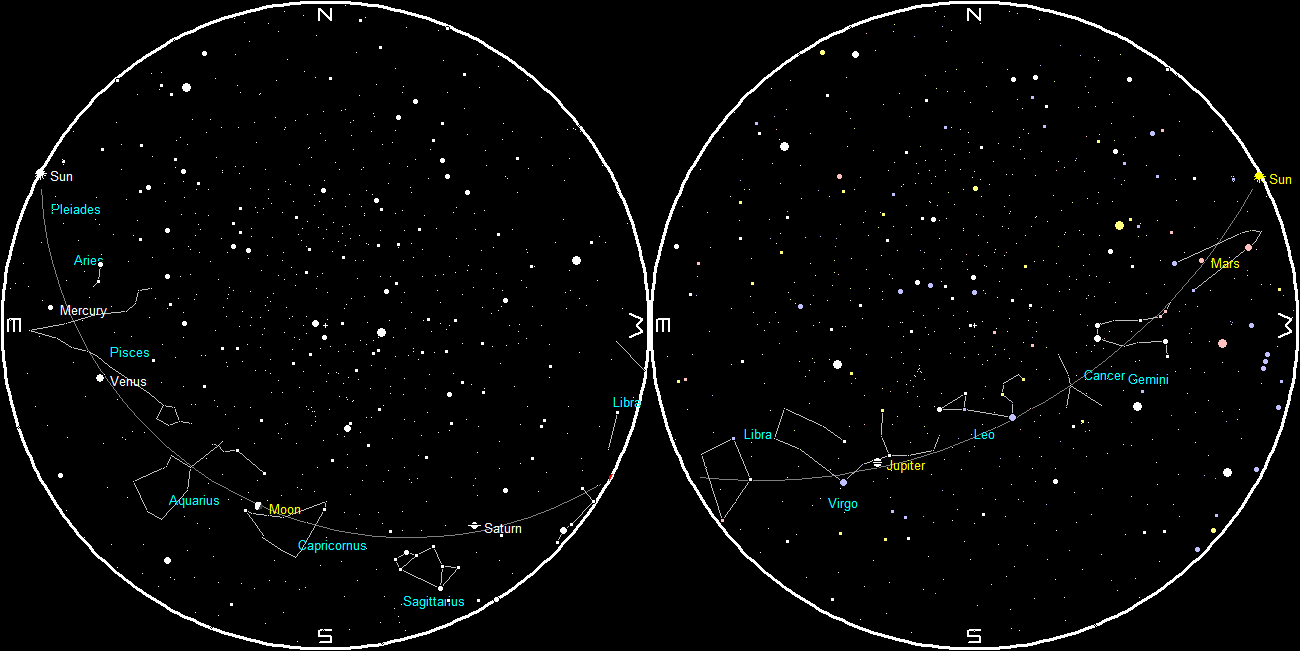
Planets and the Moon at sunset and sunrise of a single night starting with sunset on the right on May 17, 2017. The night ends on the left with sunrise on May 18. Click on the image to enlarge. Created using my LookingUp program.
05/03/2017 – Ephemeris – First look at the bright planets for May
Ephemeris for Wednesday, May 3rd. The Sun rises at 6:29. It’ll be up for 14 hours and 20 minutes, setting at 8:49. The Moon, 1 day past first quarter, will set at 3:43 tomorrow morning.
Let’s take our weekly look at the bright planets. Mars is still in the west after sunset and fading. It’s approaching the star Aldebaran in Taurus now. It will set at 11:01 p.m. Not quite dominating the evening sky now due to the Moon is Jupiter in the southeast. It’s seen above the bright blue-white star Spica. In even the smallest telescopes Jupiter’s four largest moons can be seen. They shift positions night to night and even as you watch. Tonight early in the evening all 4 bright moons can be seen, but the one closest to Jupiter will disappear behind the planet at 10:11 p.m. It will reappear on the other side at 12:48 a.m. Jupiter will set at 5:36 a.m. At 6 a.m. both Saturn and Venus will be in the morning twilight. At 6 a.m. Saturn will appear to be a bit to the west of south compass point. It will rise in the east-southeast at 12:13 a.m. tomorrow. Venus will be low in the east at 6 a.m. tomorrow morning after rising at 4:52.
The times given are for the Traverse City/Interlochen area of Michigan. They may be different for your location.
Addendum
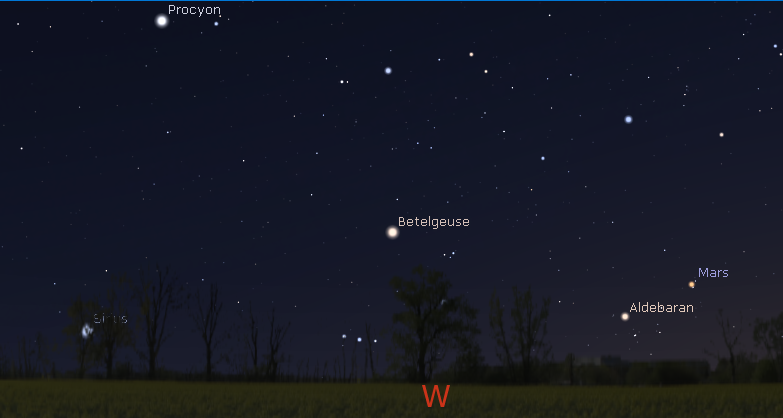
Mars in the west with bright stars at 10 p.m. May 3, 2017. Created using Stellarium.
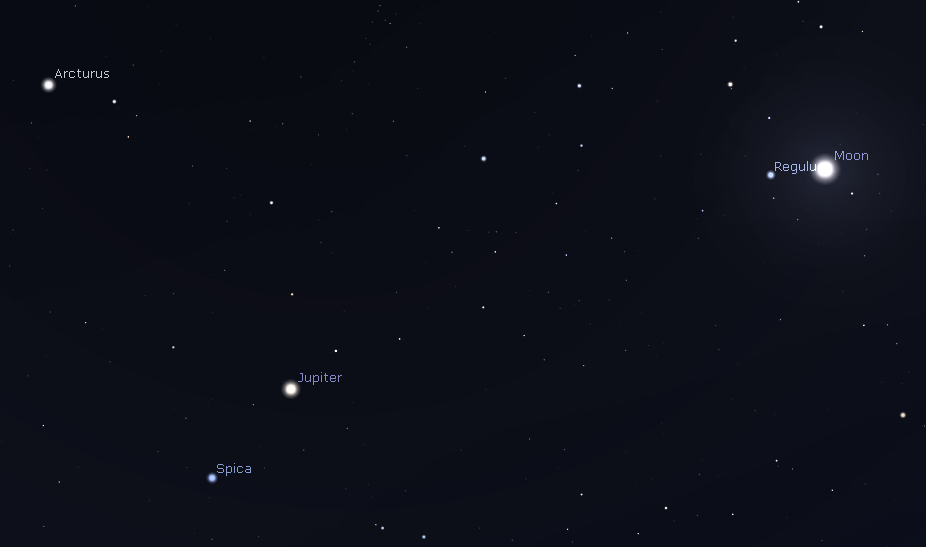
Jupiter above Spica and the Moon with the bright stars 10 p.m. May 3, 2017. Created using Stellarium.
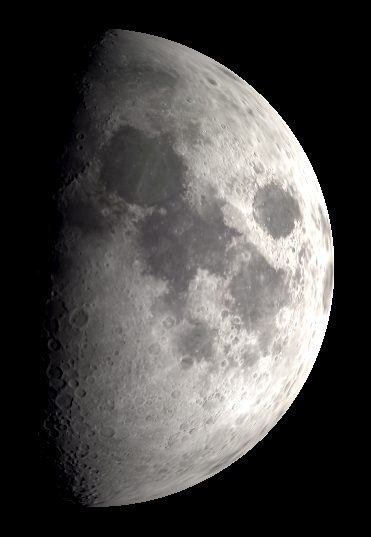
The Moon as it might be seen in binoculars at 10 p.m. May 3, 2016. Created using Stellarium.
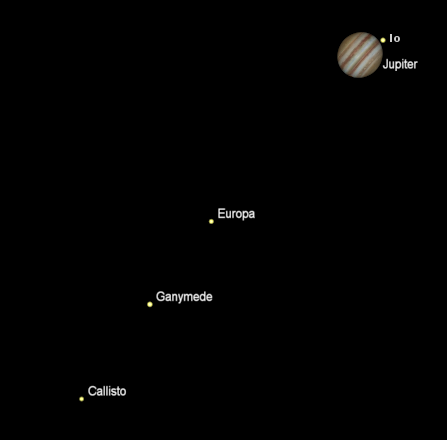
Jupiter and its moons at 10 p.m. May 3, 2017. The moon Io here is about to be occulted, that is pass behind Jupiter, which it will do at 10:11 p.m. (2:11 UT the 4th) It will reappear at 12:58 a.m. (4:58 UT). Created using Cartes du Ciel (Sky Charts).
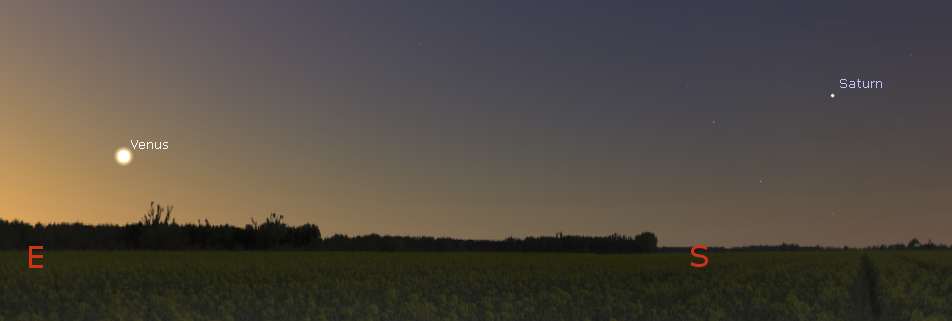
Saturn and Venus at 6 a.m. May 4, 2017 in morning twilight. Created using Stellarium.
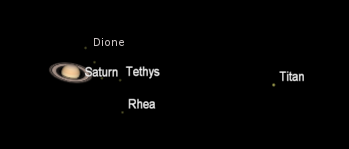
Saturn and its moons at 6 a.m. May 4, 2017. Created using Cartes du Ciel (Sky Charts).
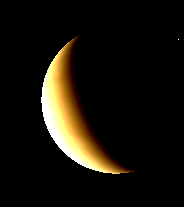
Venus as seen in a telescope at 6 a.m., May 4, 2017. Magnified much more than the other planet images seen here. Created using Stellarium.
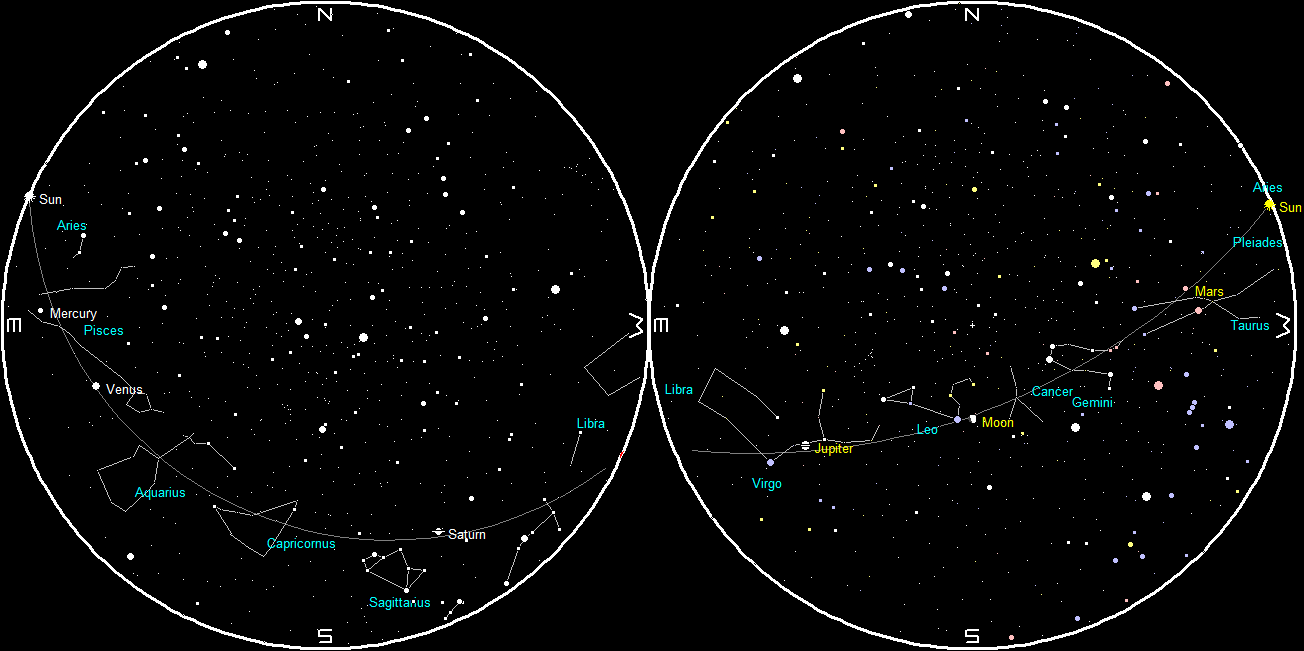
Planets and the Moon at sunset and sunrise of a single night starting with sunset on the right on May 3, 2017. The night ends on the left with sunrise on May 4. Click on the image to enlarge. Created using my LookingUp program.
04/05/2017 – Ephemeris – It’s Wednesday, do you know where your bright planets are?
Ephemeris for Wednesday, April 5th. The Sun will rise at 7:15. It’ll be up for 12 hours and 59 minutes, setting at 8:15. The Moon, 2 days past first quarter, will set at 5:04 tomorrow morning.
In the evening twilit sky tonight will feature the elusive planet Mercury. This tiny planet might be seen to the upper right of the Sun’s setting point starting about 9 p.m. It will set at 9:55 p.m. Mercury is getting rapidly fainter because it’s now exhibiting a diminishing crescent to us. It takes a good telescope and very steady skies to spot Mercury’s phase. Mars is still hanging on, in the west above and left of Mercury, and will set at 11:09 p.m. Jupiter will rise about sunset a half hour before the star Spica, which it will be seen to hang out with this year. Jupiter will be still seen in the morning sky low in the southwest at 6 a.m. Saturn then is in the south above the Teapot figure of Sagittarius. It will rise at 2:06 a.m. in the east-southeast.
Times are for the Traverse City/Interlochen area of Michigan. They may be different for your location.
Addendum
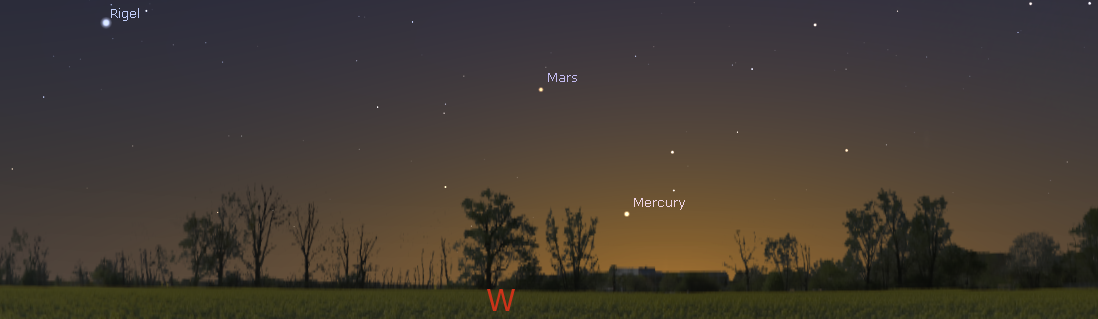
Mercury and Mars low in the west at 9 p.m. April 5, 2017. Created using Stellarium.
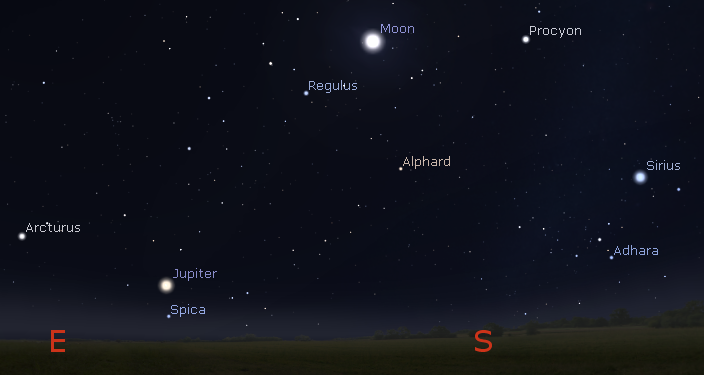
Jupiter and the Moon at 9:30 p.m. Created using Stellarium.
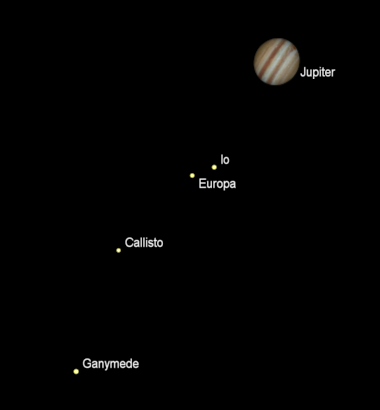
Jupiter and its moons as they might be seen in a telescope at 11 p.m. April 5, 2017. It is usually best to let planets rise a bit to minimize the atmospheric effects on the image. Created using Cartes du Ciel.
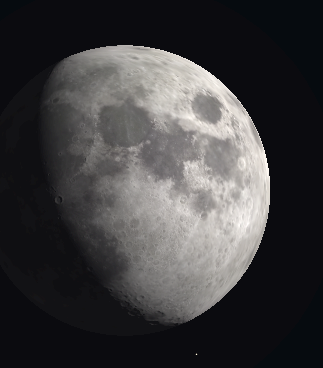
The Moon as it might be seen in binoculars at 9:30 p.m. April 5, 2016. Note the prominent crater Copernicus emerging into sunlight on the left of the Moon. Created using Stellarium.
If you’d like to check out the Moon in a telescope tonight, check out this posting : https://bobmoler.wordpress.com/2014/03/10/03102014-ephemeris-observibg-the-moon-tonight-and-the-crater-copernicus/
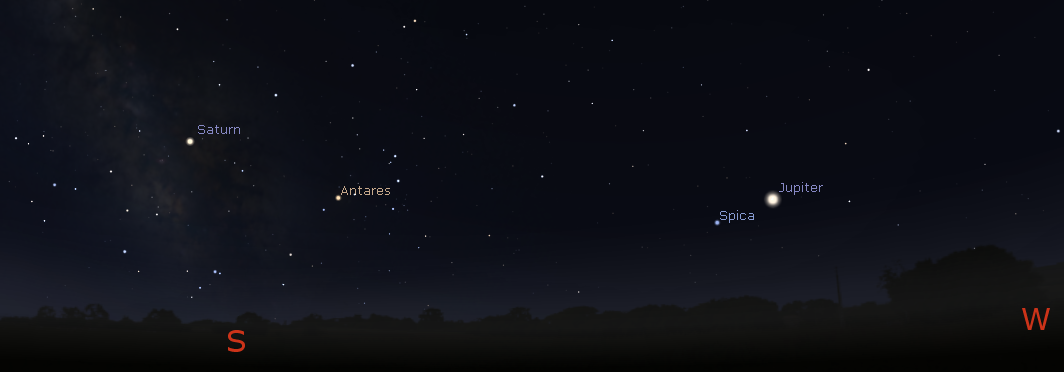
The planets visible at 6 a.m. April 6, 2017 Venus is just below the eastern horizon at this hour. Created using Stellarium.
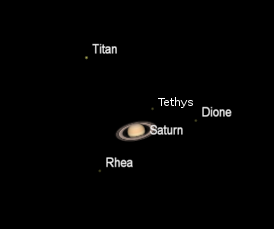
Saturn and its moons at 6 a.m. April 6th, 2017. Created using Cartes du Ciel (Sky Charts).
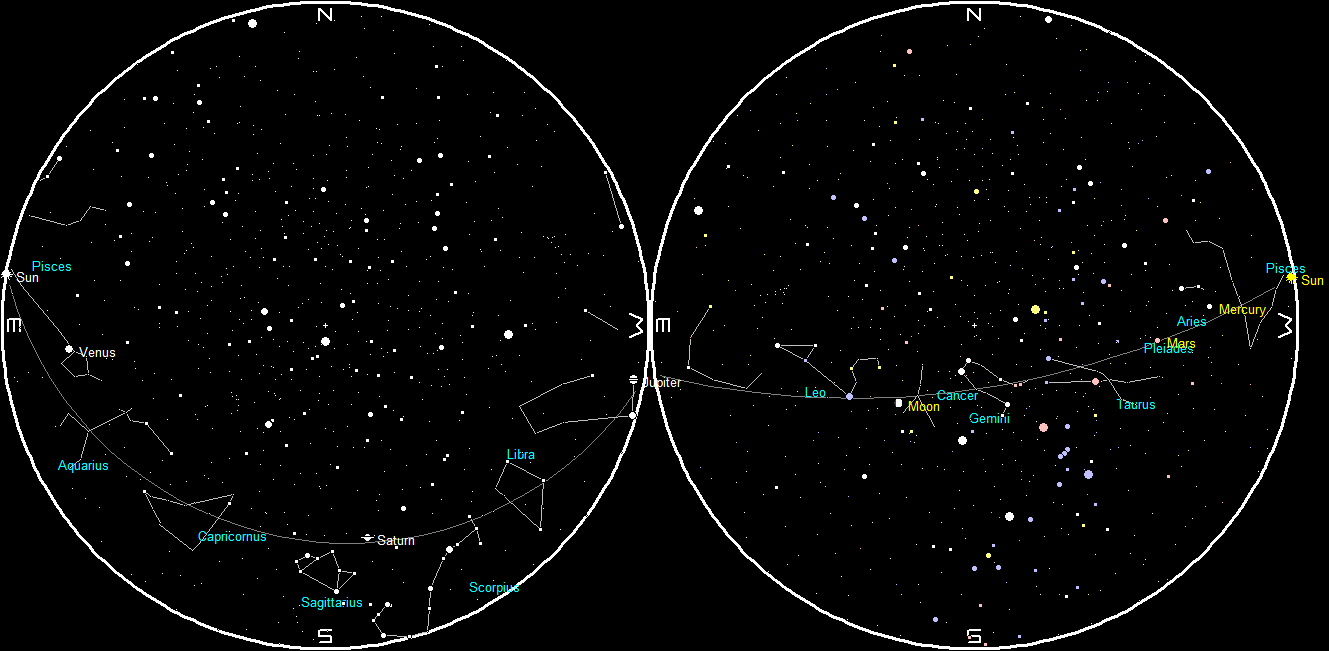
Planets and the Moon at sunset and sunrise of a single night starting with sunset on the right on April 5, 2017. The night ends on the left with sunrise on April 6. Click on the image to enlarge. Created using my LookingUp program.
A comet dramatically brightens
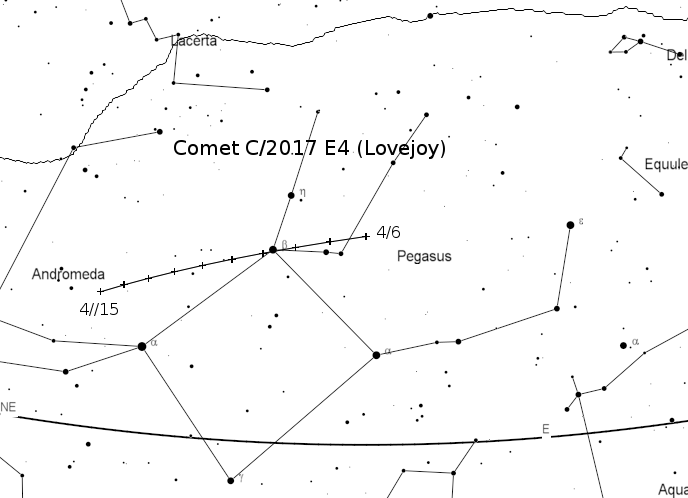
Here is the track for Comet 2017 E4 Lovejoy. This comet was expected to be 14th magnitude, but it’s brightness shot up to around 6.5, within range of binoculars. I’m only plotting 10 days. It should be brightest about mid-month, but is poorly placed for observation, plus we’re fighting a bright Moon. The curved horizontal line near the bottom is the Horizon on April 4, 2017. Created using Cartes du Ciel.
Universe today has lots more on the new Comet Lovejoy here: https://www.universetoday.com/134848/surprise-comet-e4-lovejoy-brightens/
03/29/2017 – Ephemeris – It’s Wednesday, do you know where your bright planets are?
Ephemeris for Wednesday, March 29th. The Sun will rise at 7:28. It’ll be up for 12 hours and 38 minutes, setting at 8:06. The Moon, 2 days past new, will set at 10:10 this evening.
In the evening sky tonight, replacing Venus will be the elusive planet Mercury. This tiny planet might be seen to the upper right of the Sun’s setting point starting about 9 p.m. It will set at 9:49 p.m. Mars is still hanging on, in the west, and will set at 11:10 p.m. The thin sliver of a crescent Moon is seen left of and above Mercury and Below Mars tonight. This might be a good time to spot Earth shine on it’s night side. Jupiter will rise in the east at 8:47 p.m. a half hour before the star Spica, which it will be seen to hang out with this year. Jupiter will be still seen in the morning sky low in the southwest at 6 a.m. Saturn at the same time is in the south above the Teapot figure of Sagittarius. It will rise tomorrow at 2:33 a.m. in the east-southeast.
Times are for the Traverse City/Interlochen area of Michigan. They may be different for your location.
Addendum
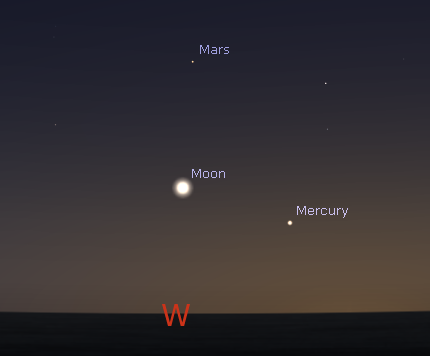
Mercury, Mars and the Moon low in the west at 9 p.m. March 29, 2017. Note the Moon as seen below is a thin crescent which cannot be displayed properly at this scale. Created using Stellarium.
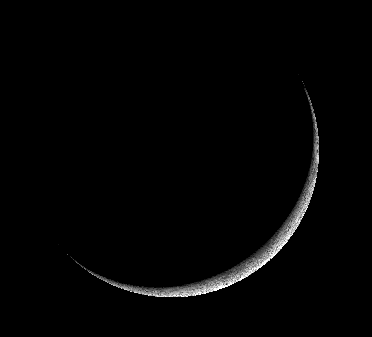
The thin crescent Moon at 9 p.m. March 29, 2017. Created using Hallo Northern Sky. The program does not have the capability to show earth shine to fill out the rest of the sphere which may be detected with the naked eye or in binoculars.
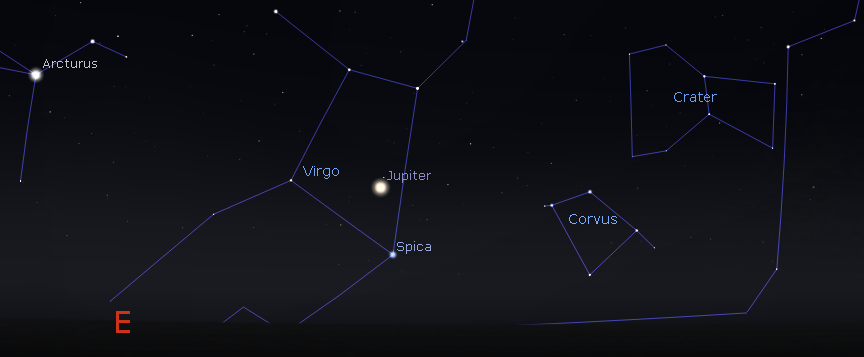
Jupiter low in the east-southeast at 10 p.m. tonight, March 28, 2017. Created using Stellarium.
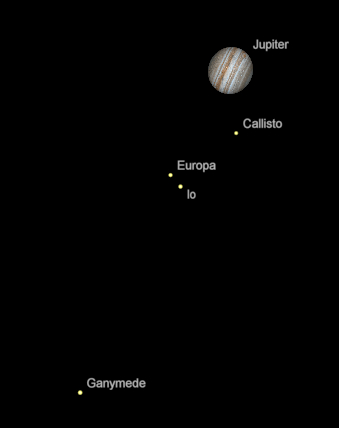
Jupiter and its moons tonight March 29, 2017 at 10 p.m. Created using Cartes du Ciel (Sky Charts).
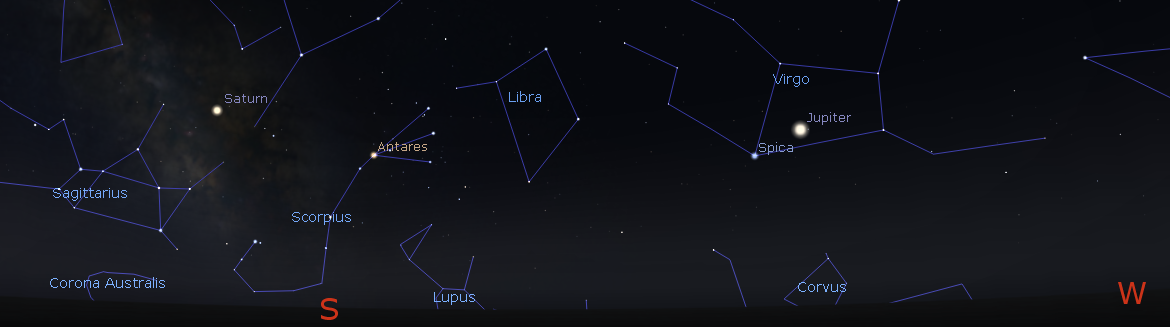
Jupiter and Saturn with the morning constellations of summer at 6 a.m. tomorrow morning March 30, 2017. Created using Stellarium.
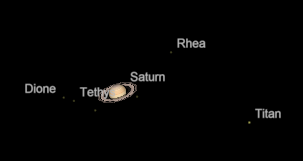
Saturn and its moons at 6 a.m. March 30, 2017. It is shown at the same scale as Jupiter above. Created using Cartes du Ciel (Sky Charts).
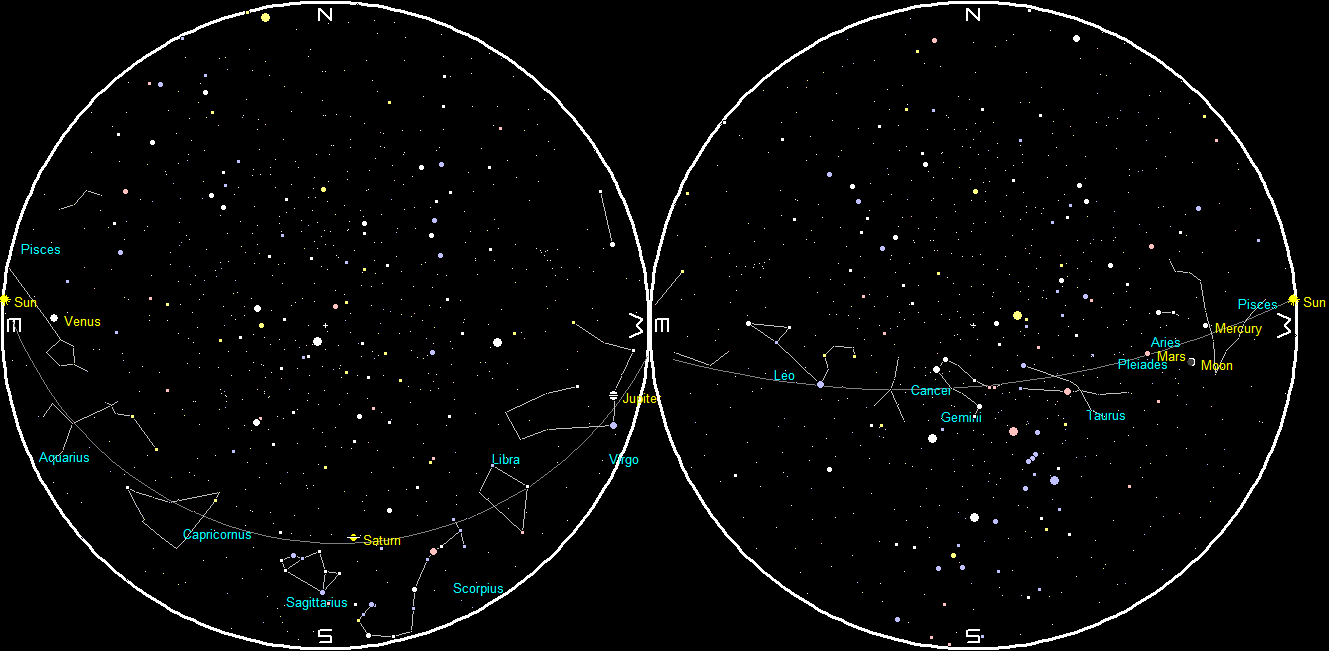
Planets and the Moon at sunset and sunrise of a single night starting with sunset on the right on March 29, 2017. The night ends on the left with sunrise on March 30. Click on the image to enlarge. Created using my LookingUp program.
03/22/2017 – Ephemeris – Wednesday is bright planet day but we seem to be missing one of them
Ephemeris for Wednesday, March 22nd. The Sun will rise at 7:41. It’ll be up for 12 hours and 16 minutes, setting at 7:57. The Moon, 2 days past last quarter, will rise at 5:09 tomorrow morning.
It’s still dark enough to see the morning planets again during these Ephemeris play times. But it won’t last. Jupiter will be seen in the morning in the southwest above the star Spica. It will rise tonight at 9:19 p.m. in the East. Saturn can be glimpsed this morning above the Teapot figure of Sagittarius in the south. It will rise tomorrow at 3 a.m. in the east-southeast. The crescent Moon will be in the east-southeast. In the evening sky tonight Venus is essentially gone, just 3 days from passing inferior conjunction, it might be seen to the upper right of the Sun’s setting point. I once spotted it this close to conjunction in the bright twilight. It will set at 8:35 p.m. Mars is still hanging on, in the west, and will set at 11:11 p.m.
Times are for the Traverse City/Interlochen area of Michigan. They may be different for your location.
Addendum
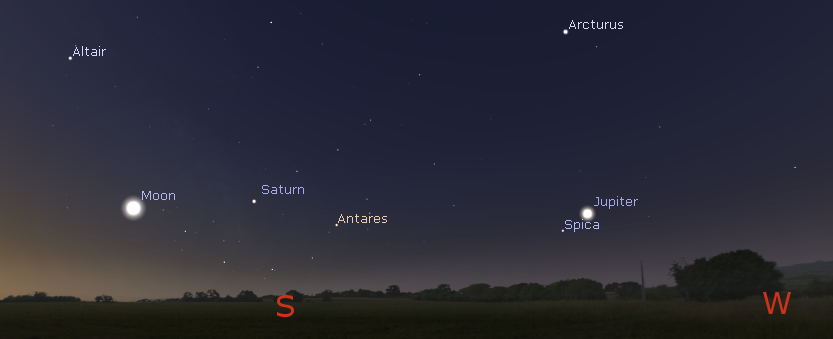
Jupiter, Saturn and the crescent Moon at 7 a.m. this morning March 22, 2017. Created using Stellarium.
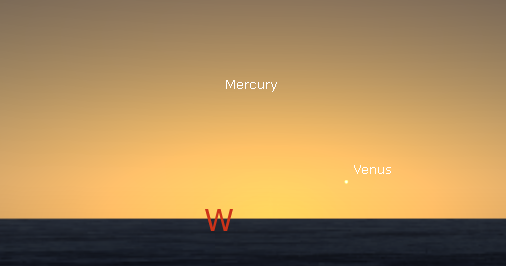
Venus at 15 minutes after sunset on a flat horizon 3 days before inferior conjunction from 45 degrees north latitude. Venus is seen at 3 degrees, 24 minutes above the horizon and practically invisible. Mercury is getting ready for its appearance in the west next week. We will visit it in more detail on Friday. Created using Stellarium.
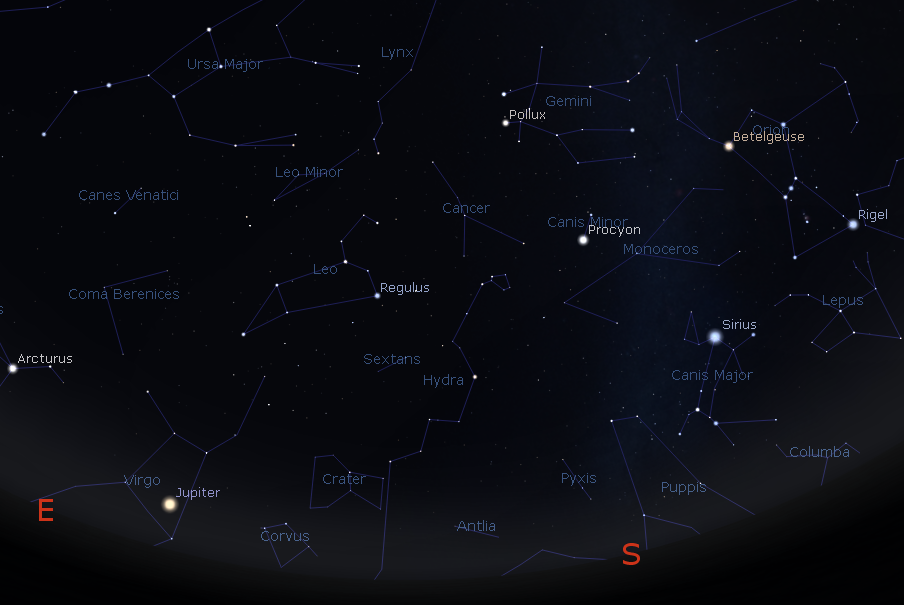
Jupiter rising and the constellations of winter and spring at 10 p.m. this evening March 22, 2017. Created using Stellarium.
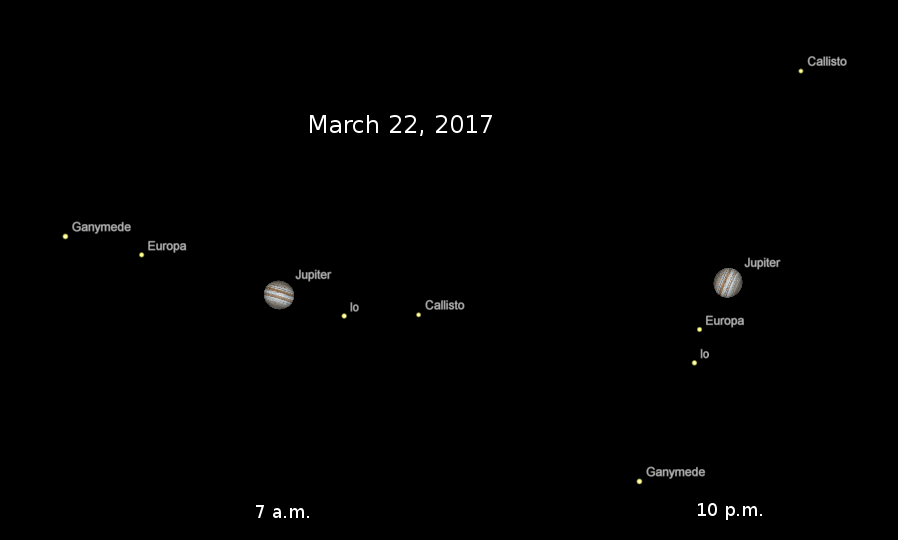
Jupiter and its moons at 7 a.m. and 10 p.m. today, March 22, 2017. orientation of Jupiter is as it appears on the sky at those times. Created using Cartes du Ciel (Sky Charts).
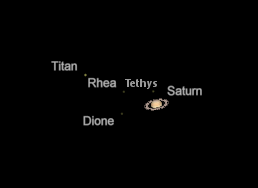
Saturn and its moons at 7 a.m. March 22, 2017. It is shown at the same scale as Jupiter above. Created using Cartes du Ciel (Sky Charts).
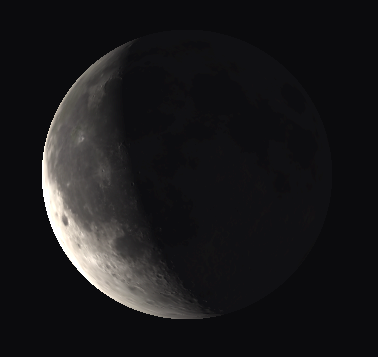
The waning crescent Moon at 7 a.m. as it might be seen in binoculars. Created using Stellarium.
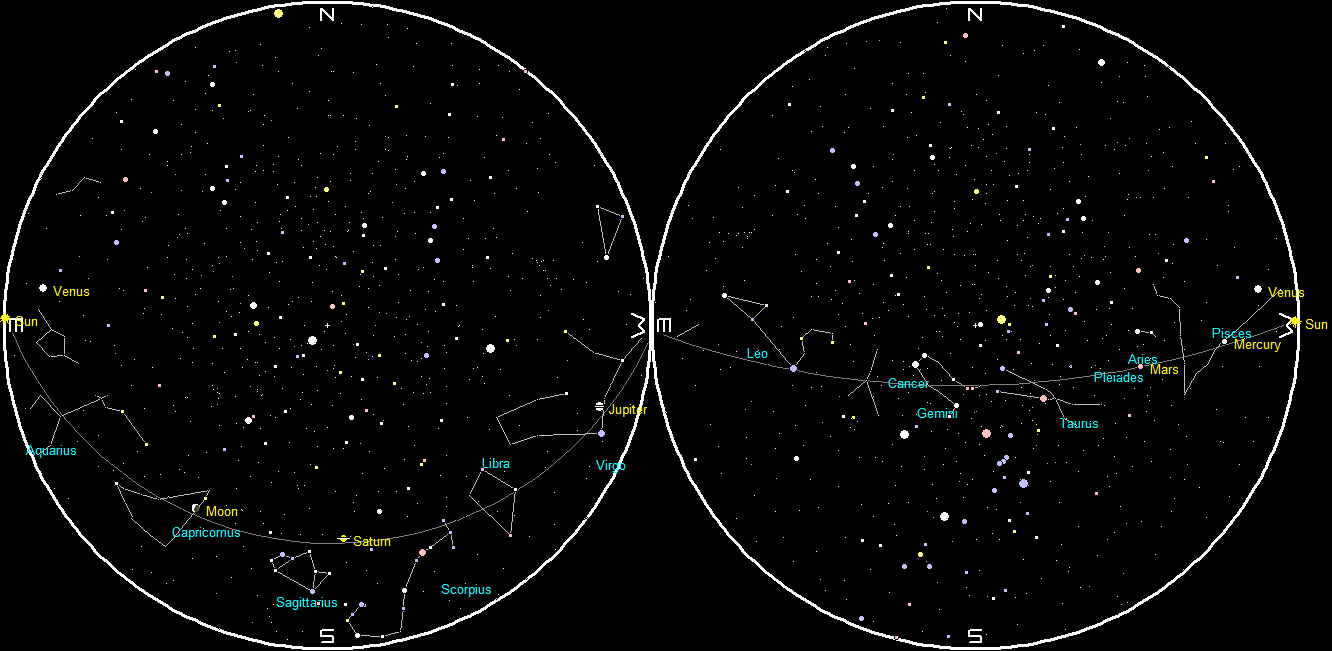
Planets and the Moon at sunset and sunrise of a single night starting with sunset on the right on March 22, 2017. The night ends on the left with sunrise on March 23. Note that Venus is visible at both sunrise and sunset at least on these charts. Click on image to enlarge. Created using my LookingUp program.
01/25/2017 – Ephemeris – Two planets on the morning and two in the evening
Ephemeris for Wednesday, January 25th. The Sun will rise at 8:08. It’ll be up for 9 hours and 33 minutes, setting at 5:42. The Moon, 2 days before new, will rise at 6:56 tomorrow morning.
Let’s check out the bright planets for this week. Saturn can be glimpsed this morning at 7 a.m. It will rise tomorrow at 5:25 in the east-southeast. Jupiter can be seen in the south-southwest this morning above the star Spica in Virgo. Jupiter will rise tomorrow at 12:14 a.m. Venus and Mars are in the evening sky. At 6:30 p.m. these planets will be seen in the southwestern sky. Venus is unmistakable as the brilliant evening star, Mars will be above and left of it and much dimmer and will set at 10:14. Venus itself will set at 9:47 p.m. Venus exhibits a dazzling fat crescent in small telescopes now, but a month from now as it gets closer to Earth the thinning crescent will be big enough to be seen in binoculars.
Times are for the Traverse City/Interlochen area of Michigan. They may be different for your location.
Addendum
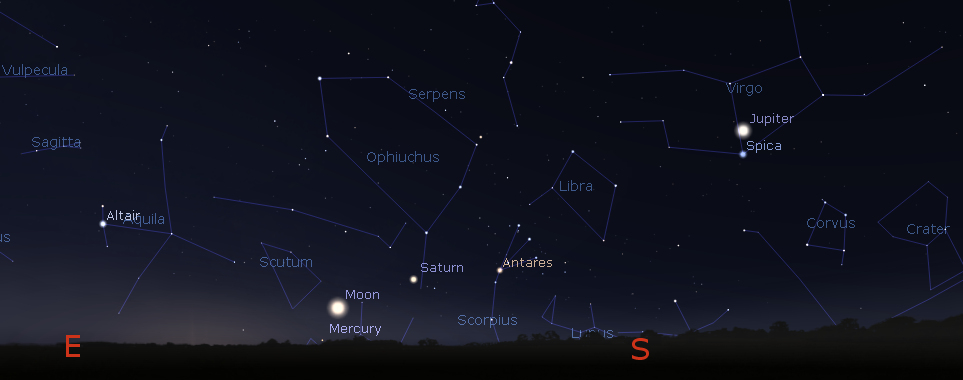
Jupiter in the south above the star Spica with Saturn and Mercury peeking over the horizon in the southeast at 7 a.m. this morning, January 25, 2017. The Moon shows as a big blob when it’s really a very thin crescent. Click on image to enlarge. Created using Stellarium.
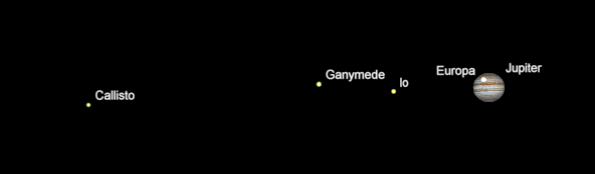
Jupiter and its moons as they might be seen in a telescope at 7 a.m. this morning January 25, 2016. Though Europa is transiting the face of Jupiter it will not really be visible against the face of Jupiter. Created using Cartes du Ciel (Sky Charts).
Jupiter satellite events for 2017 can be fund here: http://www.projectpluto.com/jevent.htm.
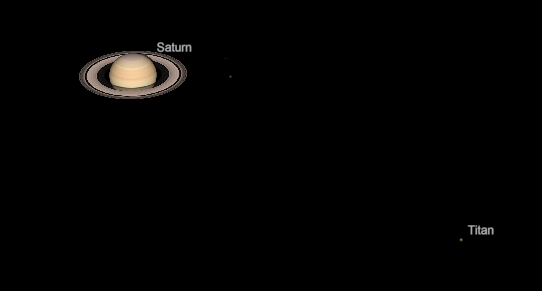
Saturn and its moon Titan as they might be seen in a telescope at 7 a.m. this morning, January 25, 2016. Created using Cartes du Ciel (Sky Charts).
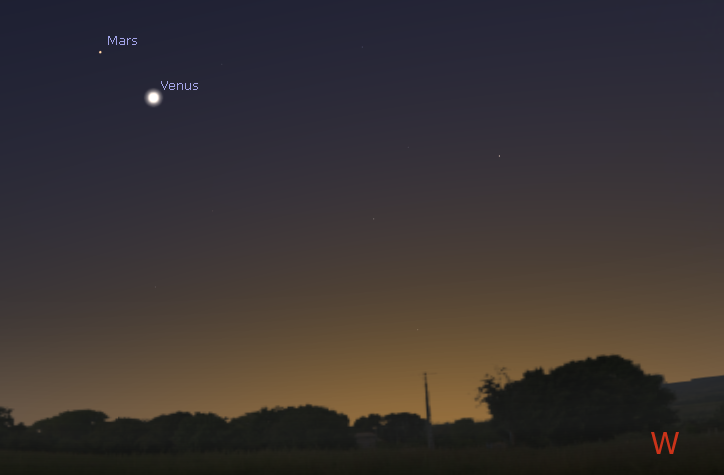
Venus, and Mars in the evening twilight of about 50 minutes after sunset. 6:30 p.m. January 25, 2017. Click on image to enlarge. Created using Stellarium.
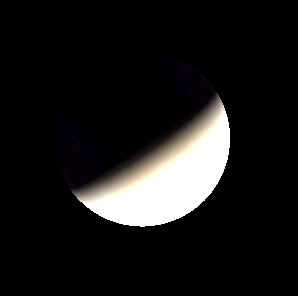
Venus as it might appear in a telescope tonight January 25, 2016. I processed the image to overexpose it as it would appear in a telescope. Created using Stellarium.
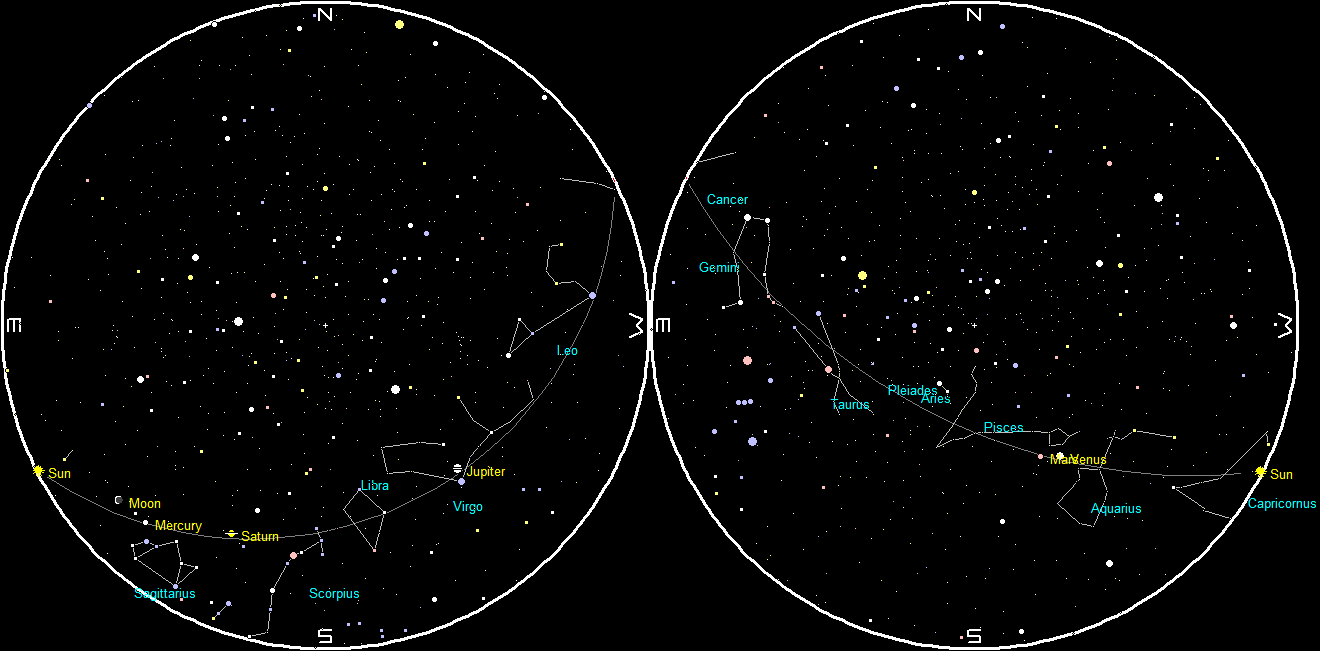
Planets and Moon at sunset and sunrise of a single night starting with sunset on the right on January 25, 2017. The night ends on the left with sunrise on January 26. Click on image to enlarge. Created using my LookingUp program.
01/18/2017 – Ephemeris – Where are the bright planets this week?
Ephemeris for Wednesday, January 18th. The Sun will rise at 8:13. It’ll be up for 9 hours and 18 minutes, setting at 5:32. The Moon, 1 day before last quarter, will rise at 12:32 tomorrow morning.
Let’s check out the bright planets for this week. Saturn can be glimpsed this morning at 7 a.m. It will rise tomorrow at 5:49 in the east-southeast. Jupiter can be seen in the south-southwest this morning above the star Spica in Virgo. Jupiter will rise tomorrow at 12:40 a.m. Tomorrow the last quarter Moon will appear near Jupiter. Venus and Mars are in the evening sky. At 6:30 p.m. these planets will be seen in the southwestern sky. Venus is unmistakable as the brilliant evening star, Mars will be above and left of it and much dimmer and will set at 10:14. Venus itself will set at 9:39 p.m. Venus exhibits a fat crescent in small telescopes now, but next month as it gets closer the thinning crescent will be big enough to be seen in binoculars.
Times are for the Traverse City/Interlochen area of Michigan. They may be different for your location.
Addendum
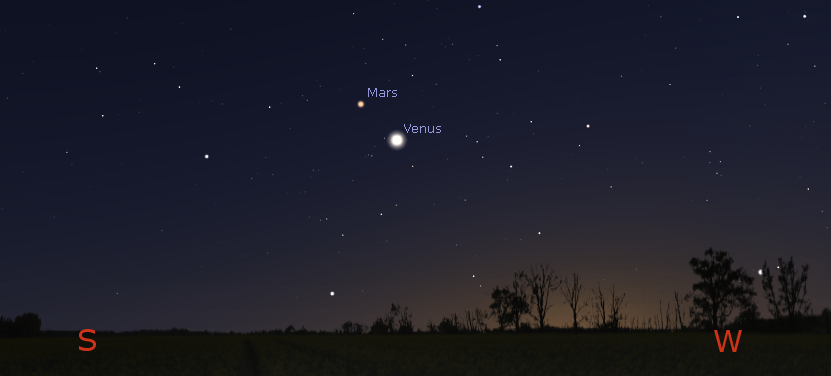
Venus, and Mars in the evening twilight of about an hour after sunset. 6:30 p.m. January 18, 2017. Created using Stellarium. Click image to enlarge.
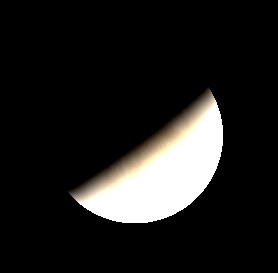
Venus as it might appear in a telescope tonight January 18, 2016. I processed the image to overexpose it as it would appear in a telescope. Created using Stellarium.
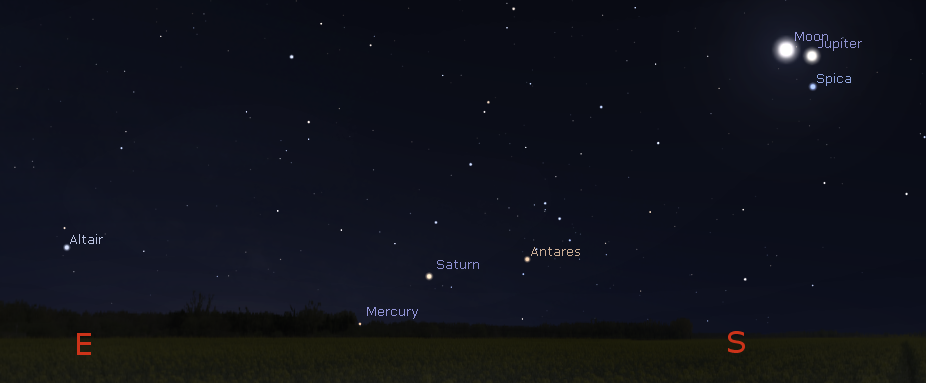
The Moon and Jupiter in the south above the star Spica with Saturn and Mercury peeking over the horizon in the southeast at 7 a.m. tomorrow morning, January 19, 2017. Created using Stellarium. Click image to enlarge.
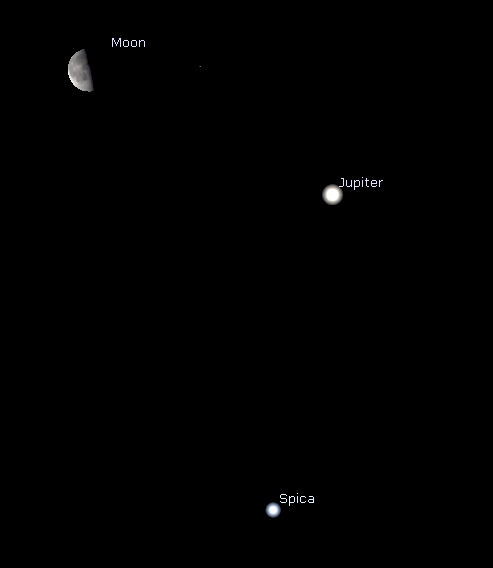
The Moon, Jupiter, and the star Spica tomorrow at 7 a.m., January 19, 2017. Created using Stellarium.
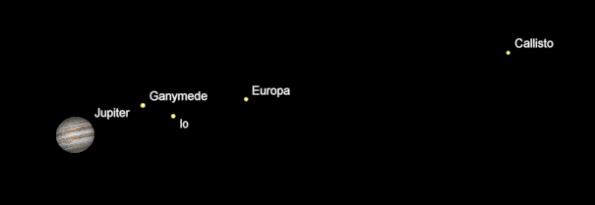
Jupiter and its moons tomorrow morning at 7 a.m., January 19, 2017. Created using Stellarium.
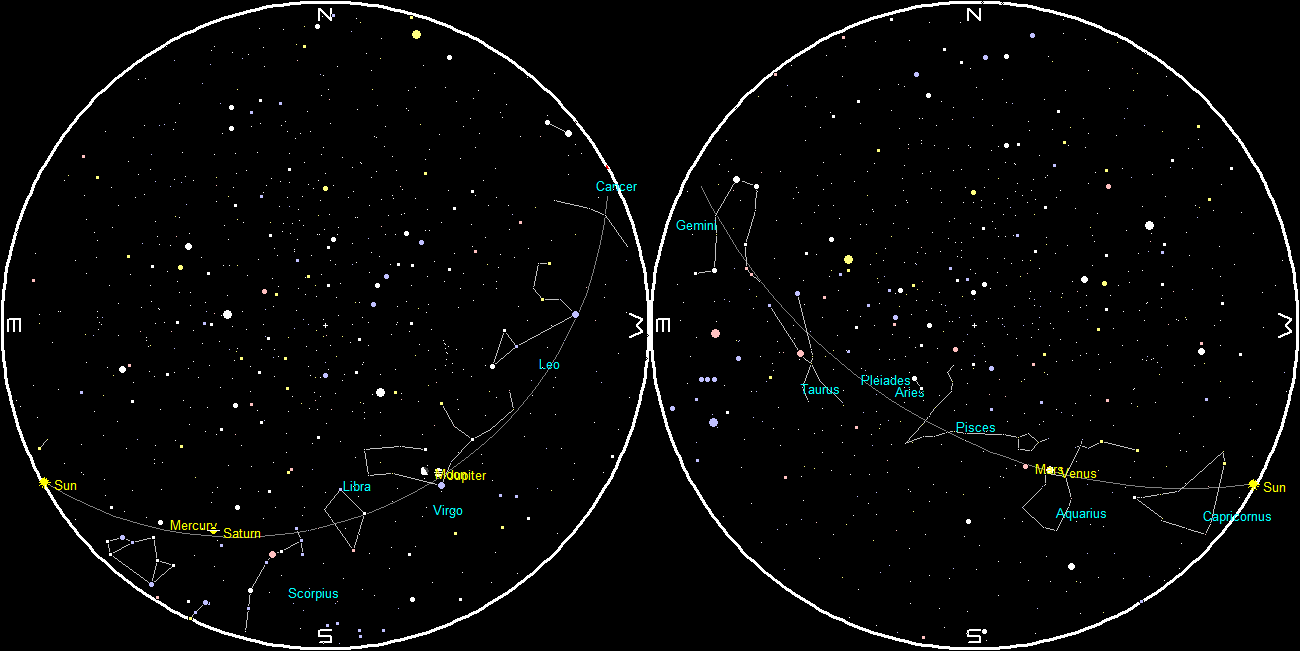
Planets and Moon at sunset and sunrise of a single night starting with sunset on the right on January 18, 2017. The night ends on the left with sunrise on January 19. Click on image to enlarge. Created using my LookingUp program.
In Memorium
Yesterday we lost the 11th man to set foot on the Moon and the last one to leave it. Eugene Cernan, the commander of Apollo 17 hated the title of “The last man to walk on the Moon”, and hoped before he died that another would walk on the Moon, lifting that title from his shoulders. Of the 12 men who walked on the Moon, half are now gone. The way things are going the next person to walk on the Moon will probably be Chinese. Godspeed Eugene Cernan.
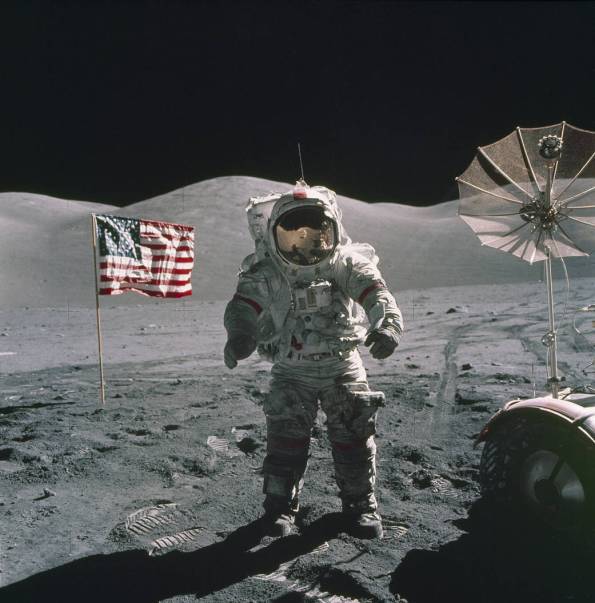
Eugene Cernan with the American Flag and the lunar rover. Credit: NASA/Harrison Schmitt

The first and last men on the Moon. Neil Armstrong, left and Eugene Cernan. File photo.

