Archive
Ephemeris: 07/31/2024 – Where are the naked-eye planets this week?
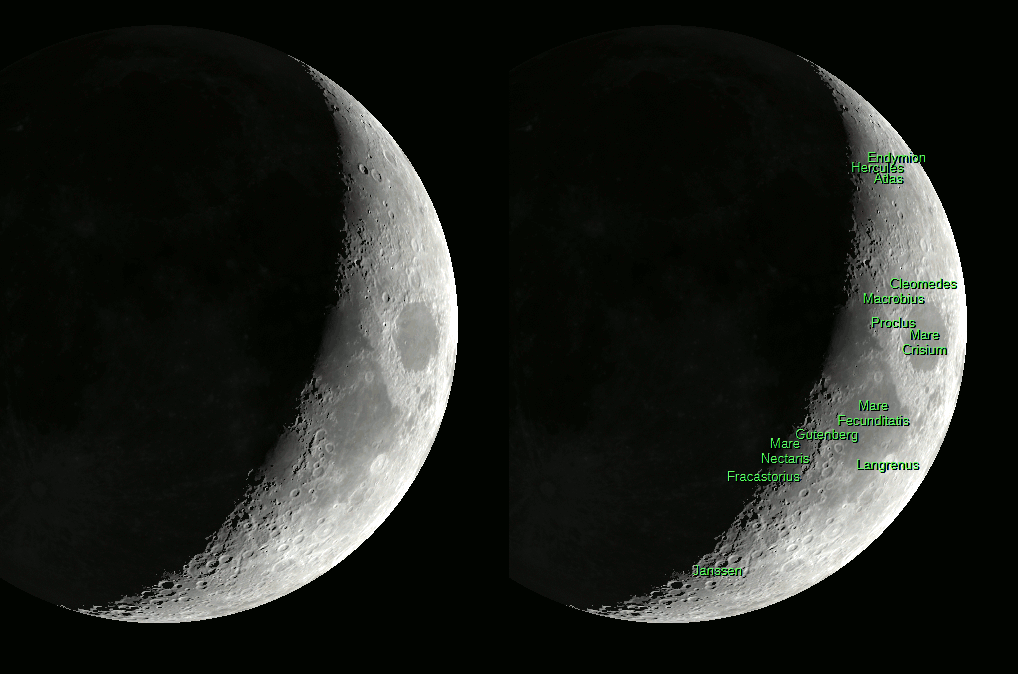
This is Ephemeris for Wednesday, July 31st. Today the Sun will be up for 14 hours and 40 minutes, setting at 9:09, and it will rise tomorrow at 6:29. The Moon, halfway from last quarter to new, will rise at 3:01 tomorrow morning.
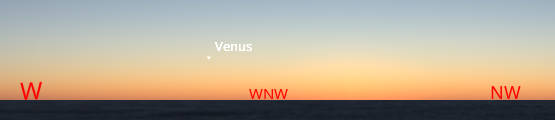
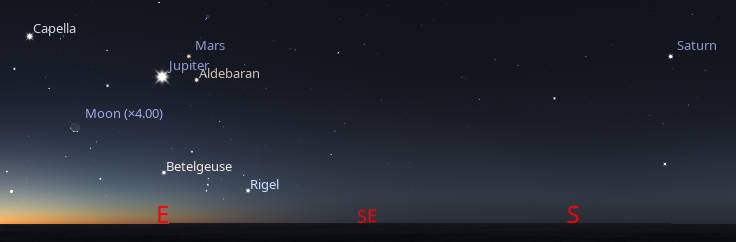
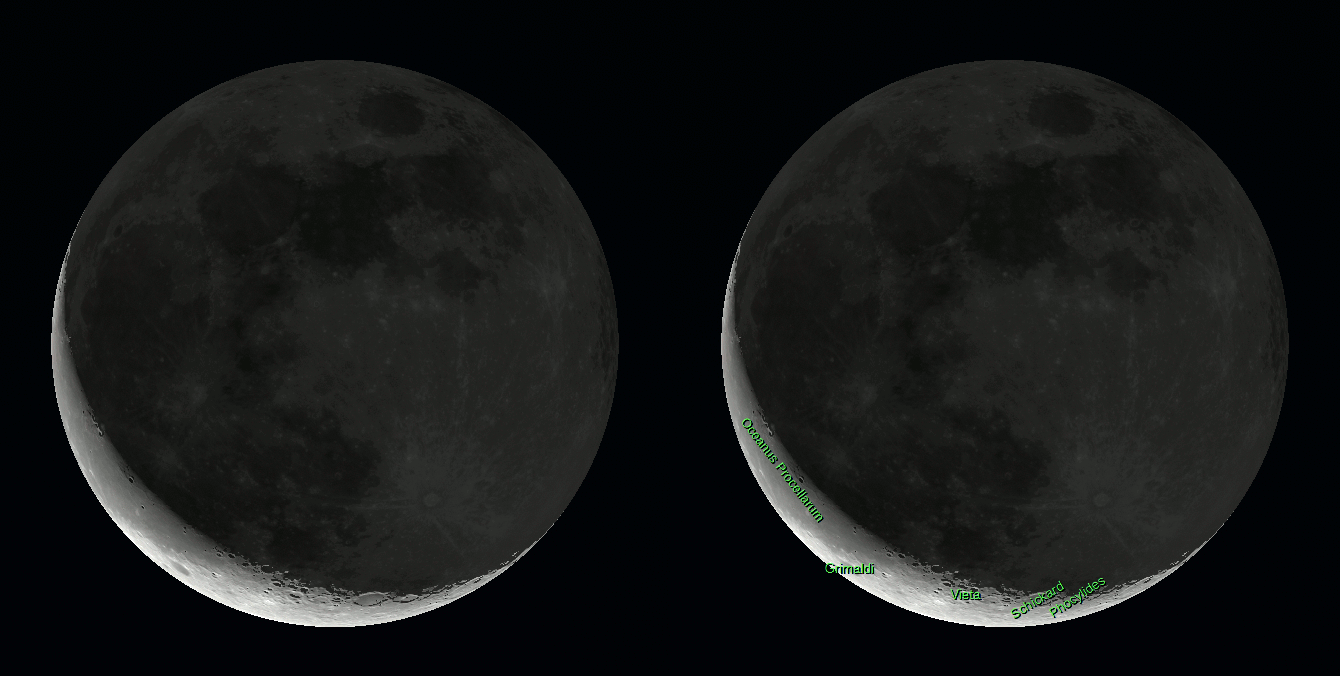
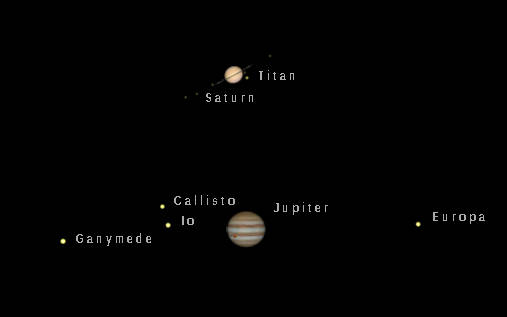
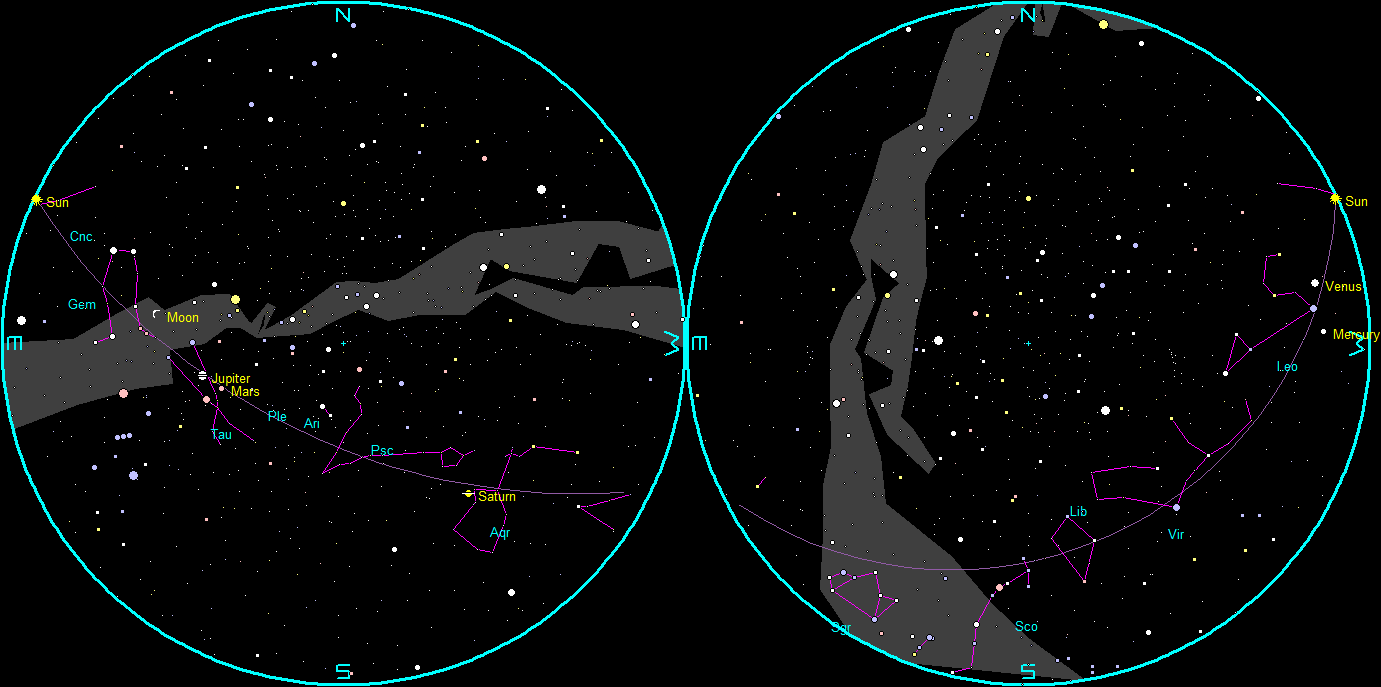
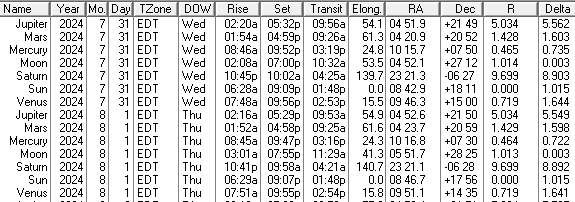
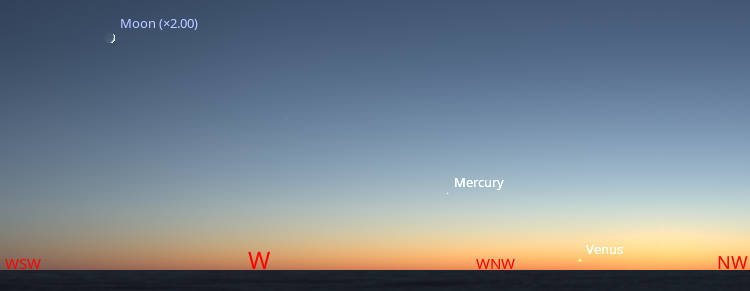
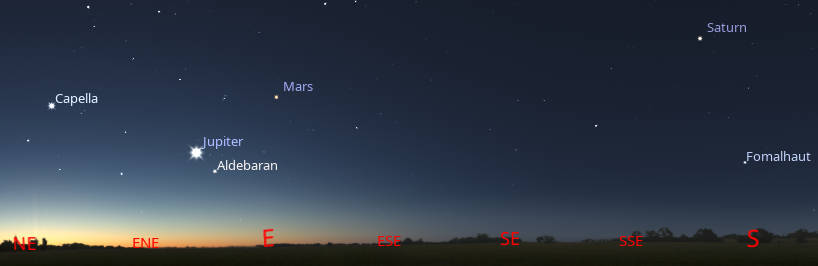
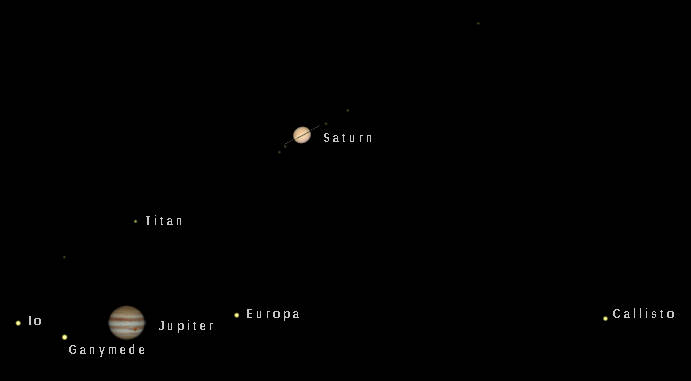
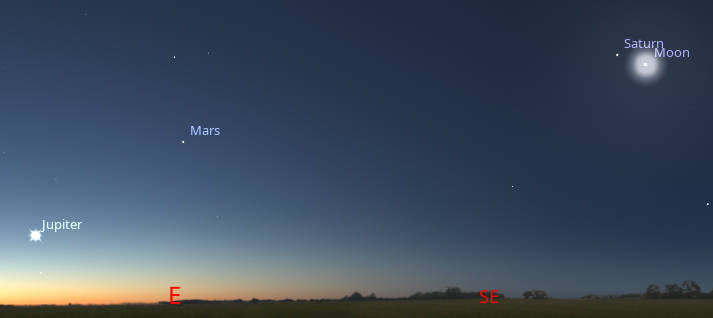
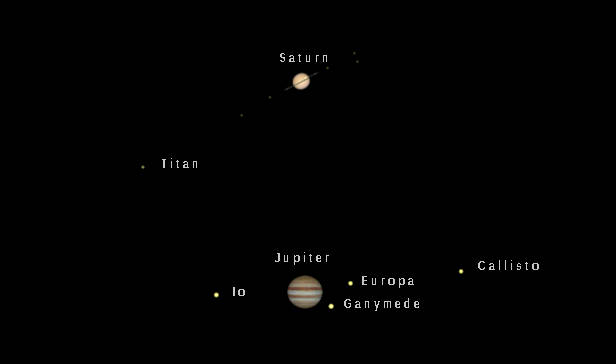
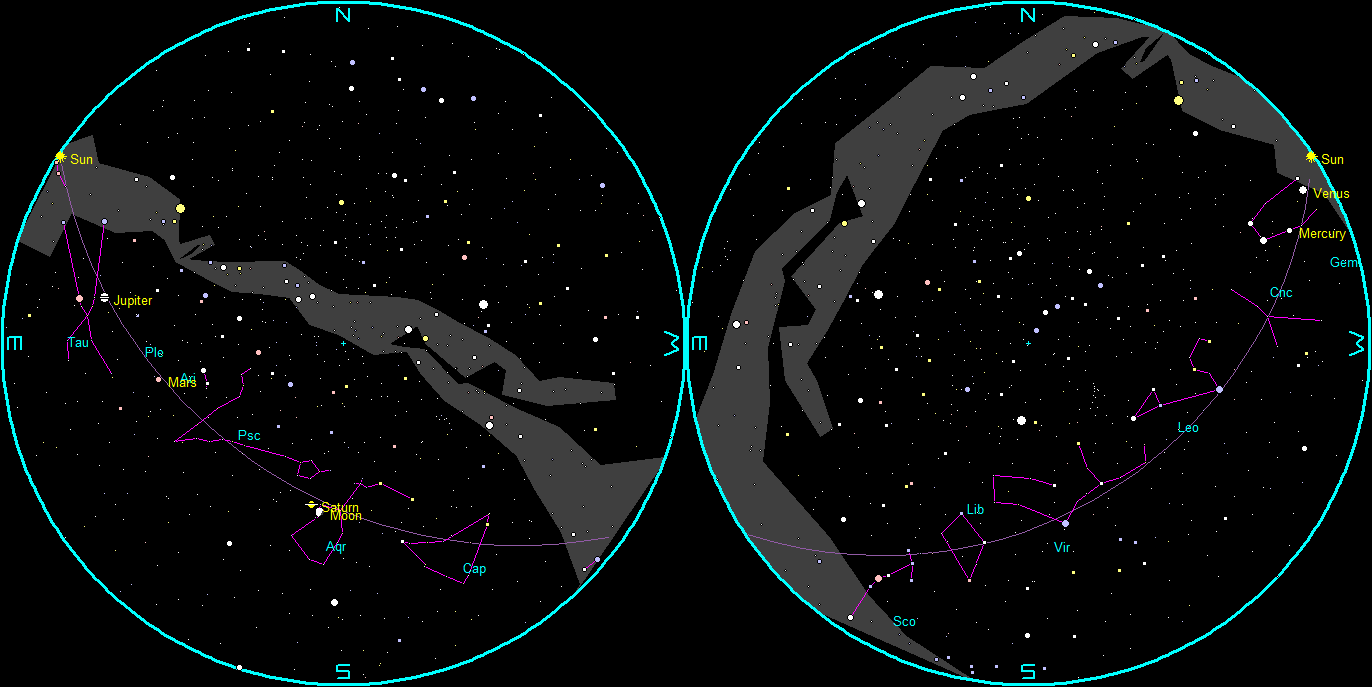
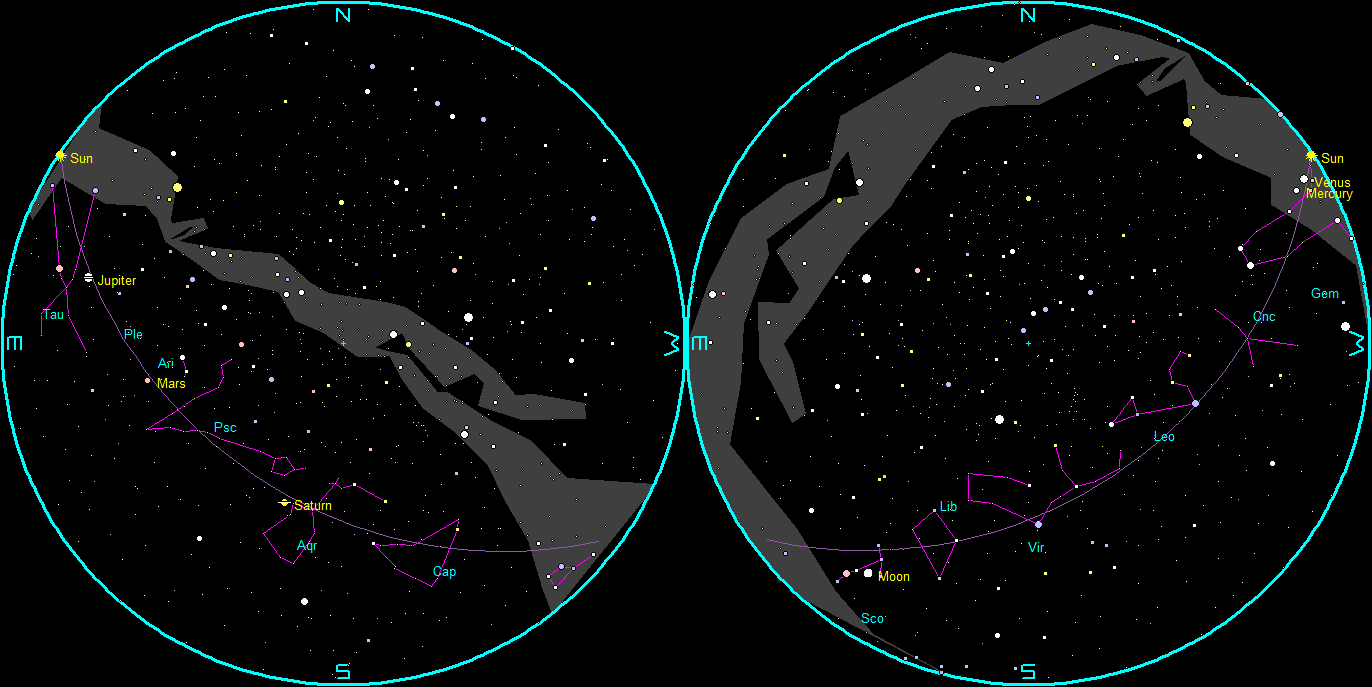
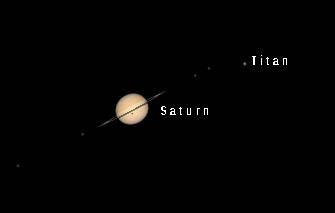
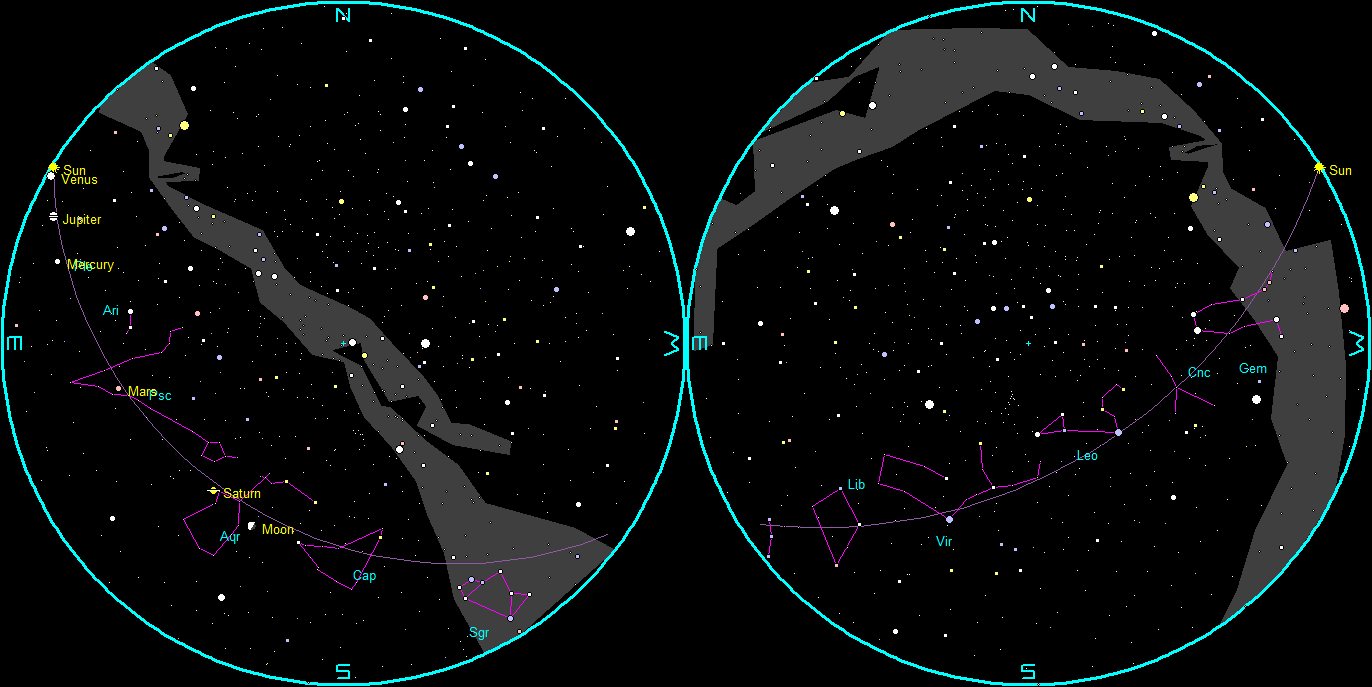
Let’s take our weekly look at the whereabouts of the naked-eye planets. Venus may still be too close to the direction of the Sun to be easily seen, it will set at 9:56 pm in the west-northwest. The best time to spot it will start about 9:30 pm or so, looking over a Lake Michigan horizon. Mercury now is too low and faint to be seen at that time. The rest of the planets are in the morning sky. By 5:30 tomorrow morning, or an hour before sunrise, Saturn will be in the south-southwest, Mars and Jupiter will make a small triangle with the bright star Aldebaran in the east with Mars on top and Jupiter on the left. Below and left of Jupiter will be the crescent Moon. Saturn may look disappointing in telescopes this year since rings are nearly edge on and appear almost as a line through the planet. Saturn will rise at 10:45 pm, Mars will rise at 1:56 am, and finally Jupiter at 2:20 am.
The astronomical event times given are for the Traverse City/Interlochen area of Michigan (EDT, UT–4 hours). They may be different for your location.
Addendum
Ephemeris: 07/24/2024 – Where are the naked-eye planets this week?
This is Ephemeris for Wednesday, July 24th. Today the Sun will be up for 14 hours and 56 minutes, setting at 9:17, and it will rise tomorrow at 6:21. The Moon, halfway from full to last quarter, will rise at 11:23 this evening.
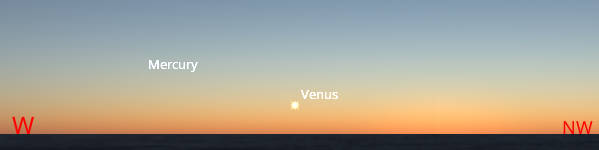
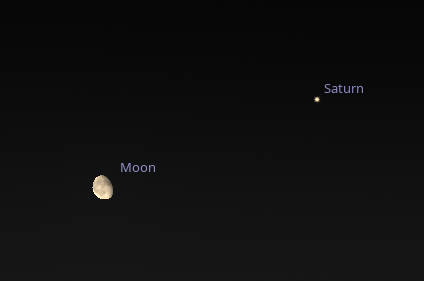
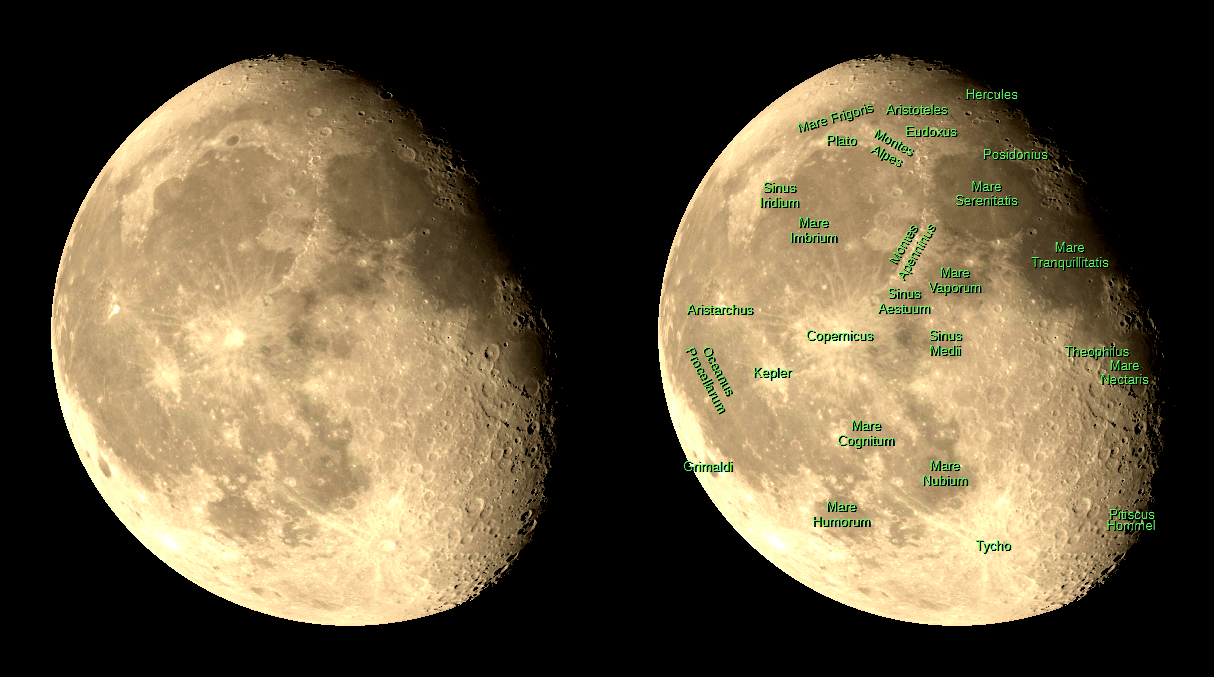
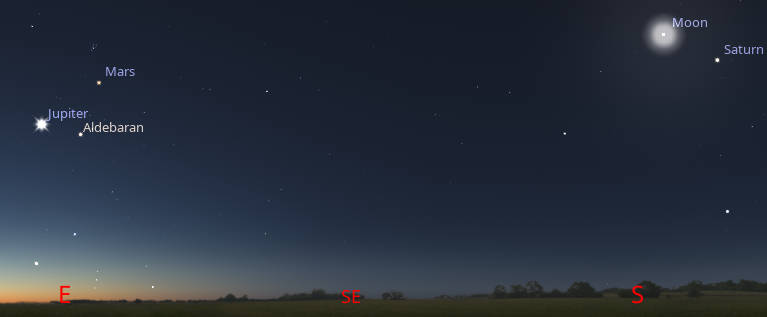
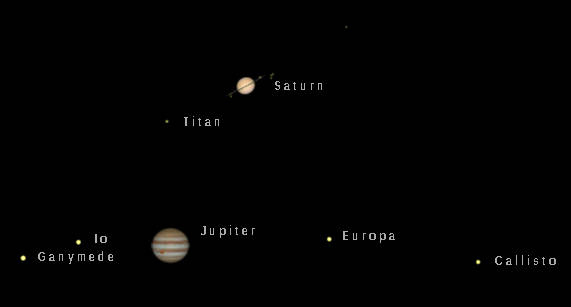
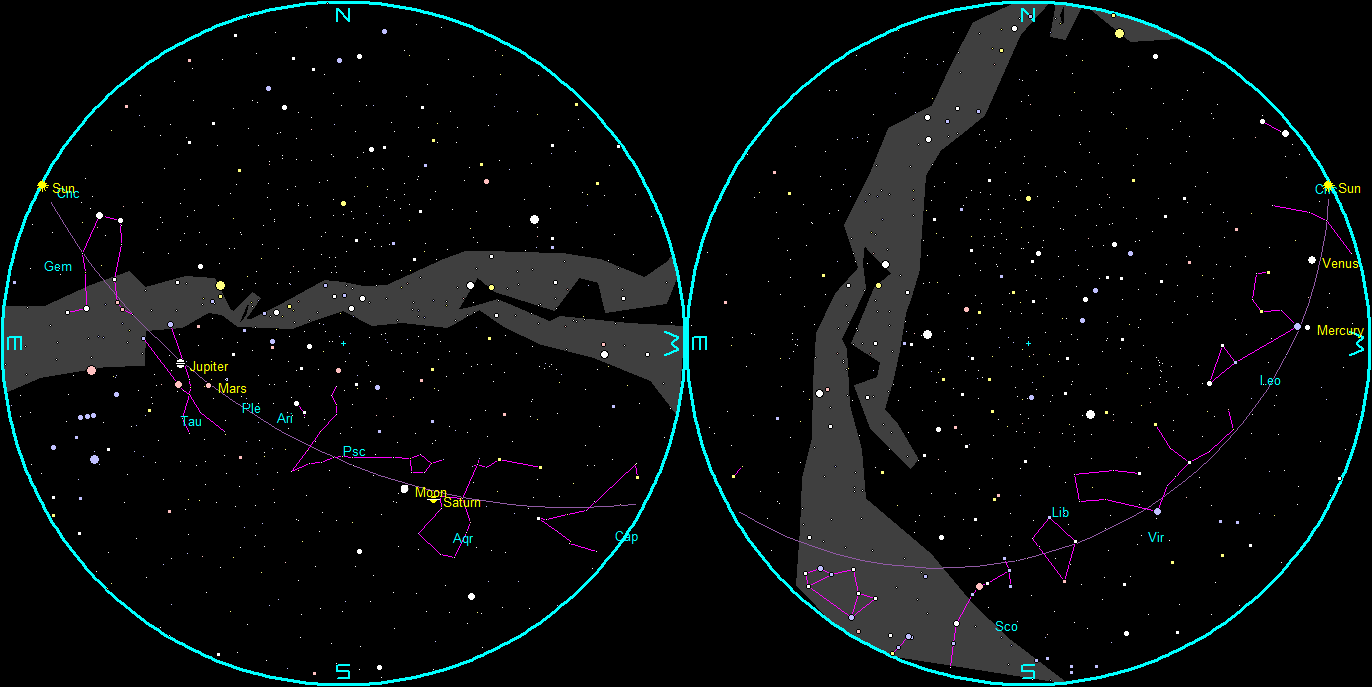
Let’s take our weekly look at the whereabouts of the naked-eye planets. Venus may still be too close to the direction of the Sun to be easily seen, it will set at 10:02 pm in the west-northwest. The best time to spot it will start about 9:40 pm or so. Mercury has been fading as its phase has become a crescent, as it’s heading back to the direction of the Sun. By 5:30 tomorrow morning, or about 50 minutes before sunrise, Saturn will be in the south below and right of the waning gibbous Moon, Mars and Jupiter will make a right triangle with the bright star Aldebaran in the east with Mars on top and Jupiter on the left. Saturn may look disappointing in telescopes this year since rings are nearly edge on and appear almost as a line through the planet. Saturn will rise at 11:14 pm, Mars will rise at 2:04 am, and finally Jupiter at 2:39 am.
The astronomical event times given are for the Traverse City/Interlochen area of Michigan (EDT, UT–4 hours). They may be different for your location.
Addendum
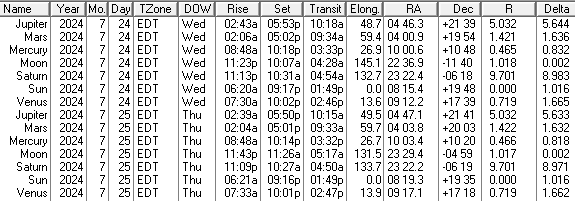
Ephemeris: 07/17/2024 – Where are the naked-eye planets this week?
This is Ephemeris for Wednesday, July 17th. Today the Sun will be up for 15 hours and 9 minutes, setting at 9:23, and it will rise tomorrow at 6:14. The Moon, halfway from first quarter to full, will set at 2:49 tomorrow morning.
Let’s take our weekly look at the whereabouts of the naked-eye planets. Venus is still too close to the direction of the Sun to be easily seen, it will set at 10:04 pm in the west-northwest. It is below and right of Mercury. That elusive planet just might be seen very low in the west-northwest by 10 pm or so. By 5:30 tomorrow morning, or about 45 minutes before sunrise, Saturn will be in the south, Mars will be lower in the east, and Jupiter will below it in the east-northeast. Mars is closing in on Jupiter and will pass it on August 14th. Saturn may look disappointing in telescopes this year since the rings are nearly edge on and appear almost as a line through the planet. It will rise before midnight tonight, at 11:45 pm.
The astronomical event times given are for the Traverse City/Interlochen area of Michigan (EDT, UT–4 hours). They may be different for your location.
Addendum
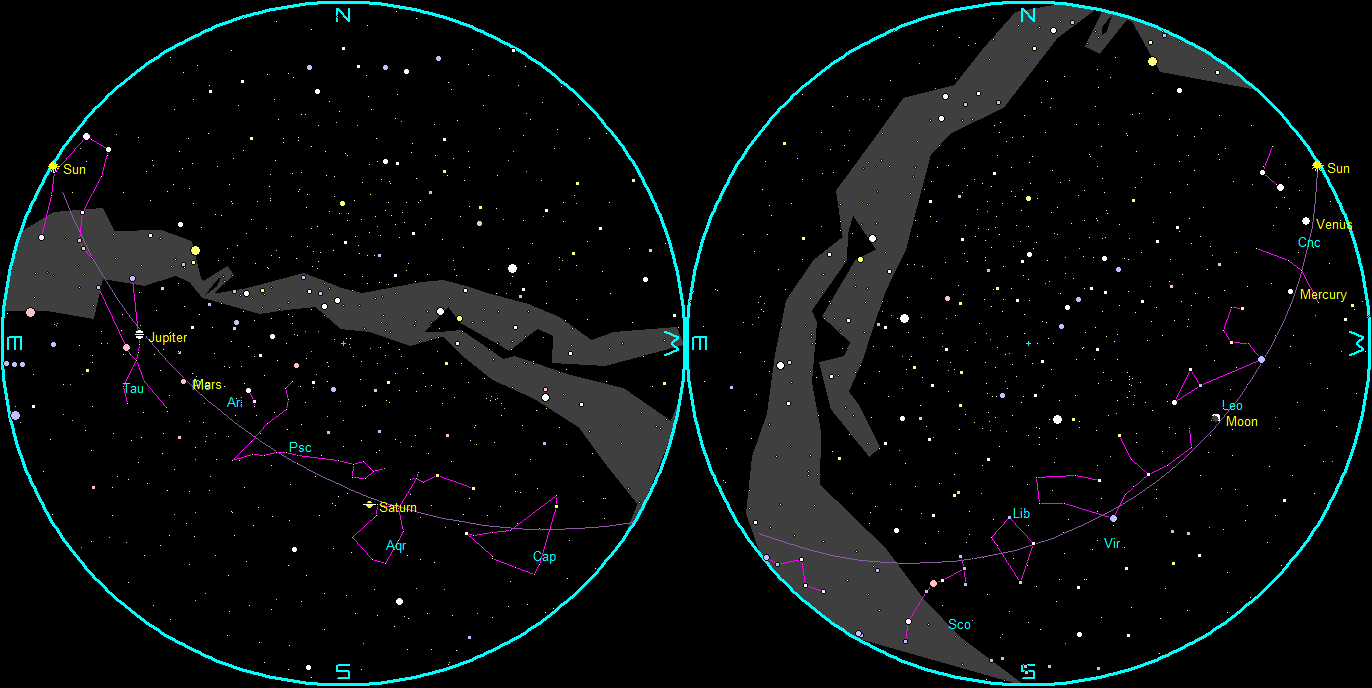
Ephemeris: 07/10/2024 – Where are the naked-eye planets this week?
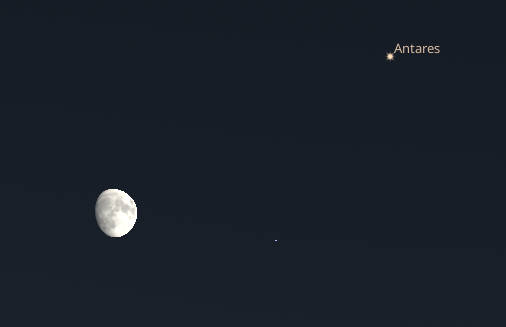
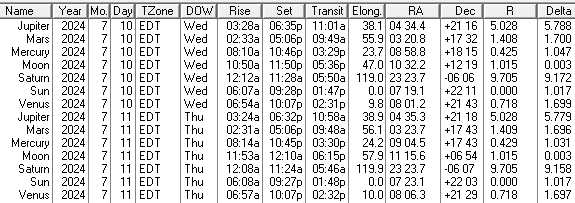
This is Ephemeris for Wednesday, July 10th. Today the Sun will be up for 15 hours and 20 minutes, setting at 9:28, and it will rise tomorrow at 6:08. The Moon, 3 days before first quarter, will set at 12:10 tomorrow morning.
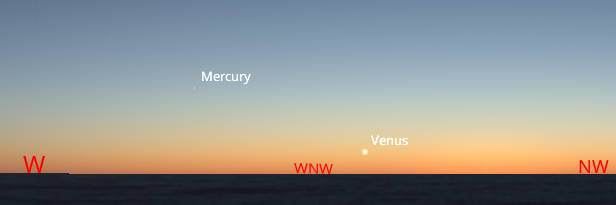
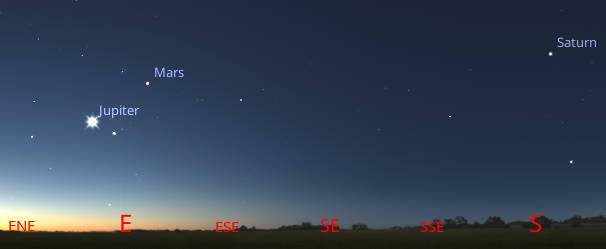
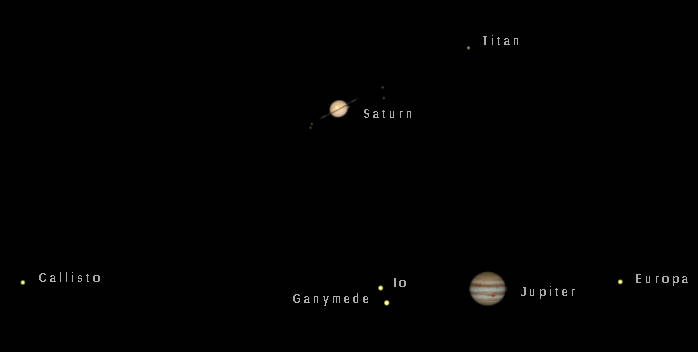
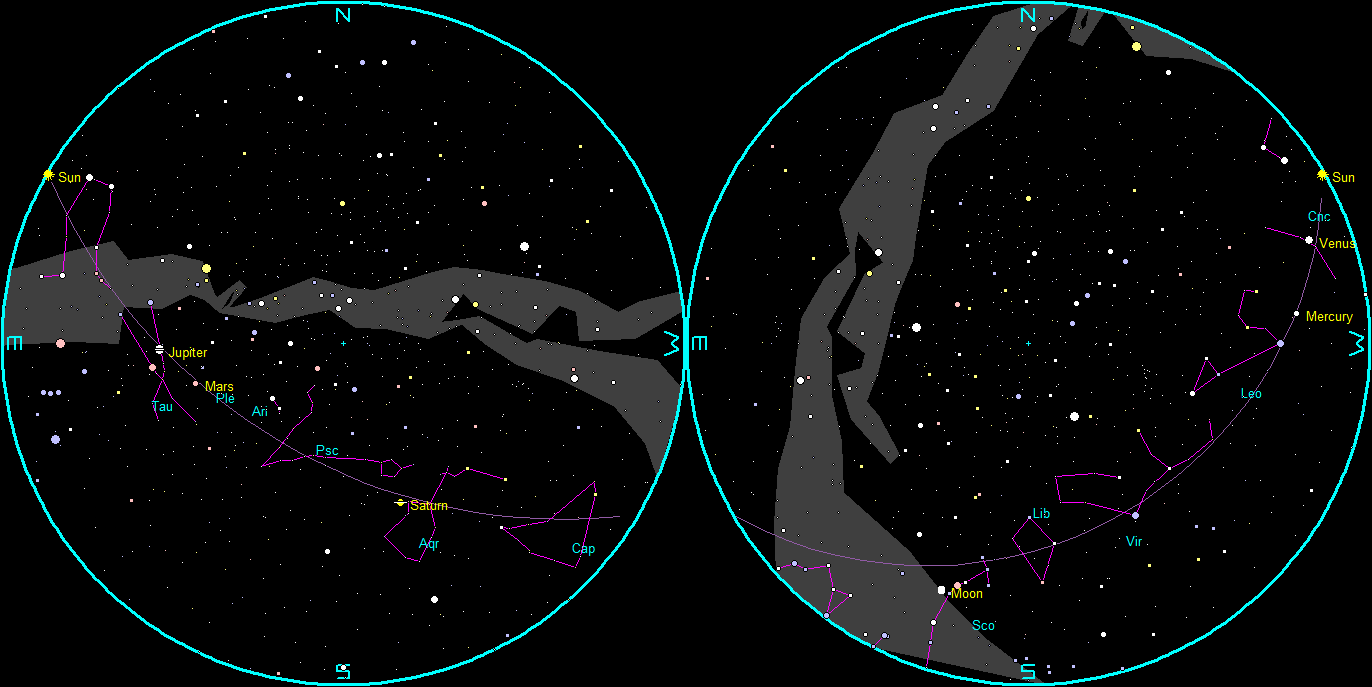
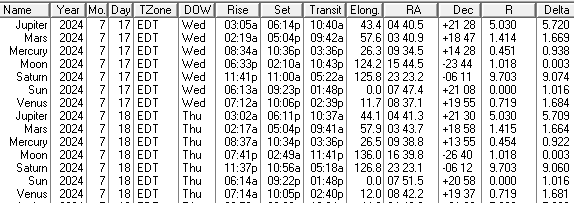
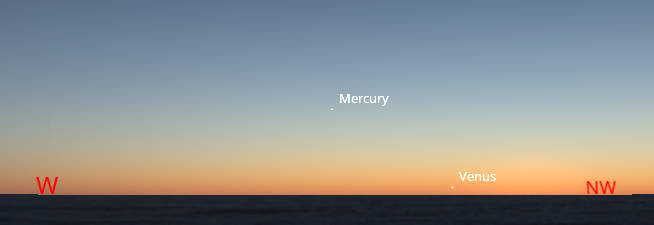
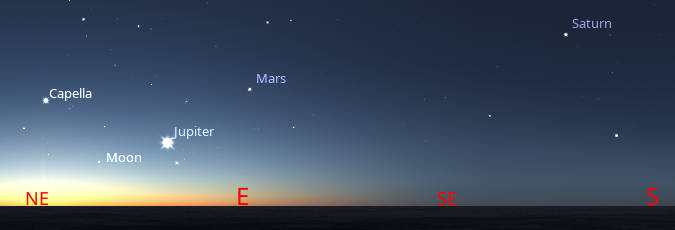
Let’s find out where the naked-eye planets have wandered off to this week. Venus is too close to the direction of the Sun to be easily seen, it will set at 10:07 pm in the west-northwest below and right of Mercury. That elusive planet just might be seen very low in the west-northwest by 10 pm or so. By 5:15 tomorrow morning, or about 50 minutes before sunrise, Saturn will be in the south, Mars will be lower in the east, and Jupiter will below it in the east-northeast. Mars is closing in on Jupiter and will pass it on August 14th. Saturn may look disappointing in telescopes this year since rings are nearly edge on and appear almost as a line through the planet. It will rise at 12:09 am, Mars at 2:34 am, and Jupiter at 3:28 am.
The astronomical event times given are for the Traverse City/Interlochen area of Michigan (EDT, UT–4 hours). They may be different for your location.
Addendum
Ephemeris: 07/03/2024 – Where have the naked-eye planets wandered off to this week?
This is Ephemeris for Wednesday, July 3rd. Today the Sun will be up for 15 hours and 28 minutes, setting at 9:31, and it will rise tomorrow at 6:03. The Moon, 2 days before new, will rise at 4:13 tomorrow morning.
Let’s find out where the naked-eye planets have wandered off to this week,. Venus is too close to the direction of the Sun to be seen. Mercury just might be seen very low in the west-northwest by 10 pm or so. Venus will appear in the evening sky next month. By 5:15 tomorrow morning, or about 45 minutes before sunrise, Saturn will be in the south-southeast and Mars will be lower in the east, and Jupiter will be low in the east-northeast. The skinny waning crescent Moon may be seen halfway between Jupiter and the northeastern horizon. Saturn will be a bit dimmer this year and next due to its rings being nearly edge on to us and not reflecting as much light. Saturn will rise at 12:40 am, Mars at 2:48 am, and Jupiter at 3:51 am.
The astronomical event times given are for the Traverse City/Interlochen area of Michigan (EDT, UT–4 hours). They may be different for your location.
Addendum
Ephemeris: 06/26/2024 – Where are the naked-eye planets this week?
This is Bob Moler with Ephemeris for Wednesday, June 26th. Today the Sun will be up for 15 hours and 33 minutes, setting at 9:32, and it will rise tomorrow at 5:59. The Moon, 2 days before last quarter, will rise at 12:58 tomorrow morning.
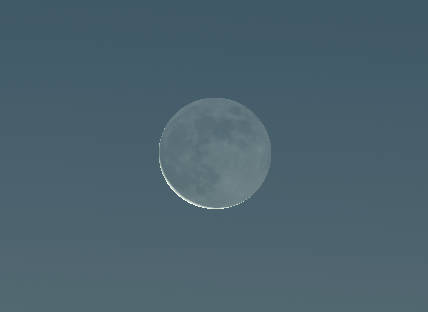
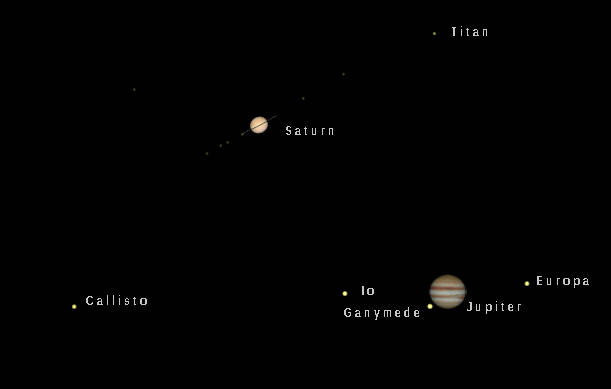
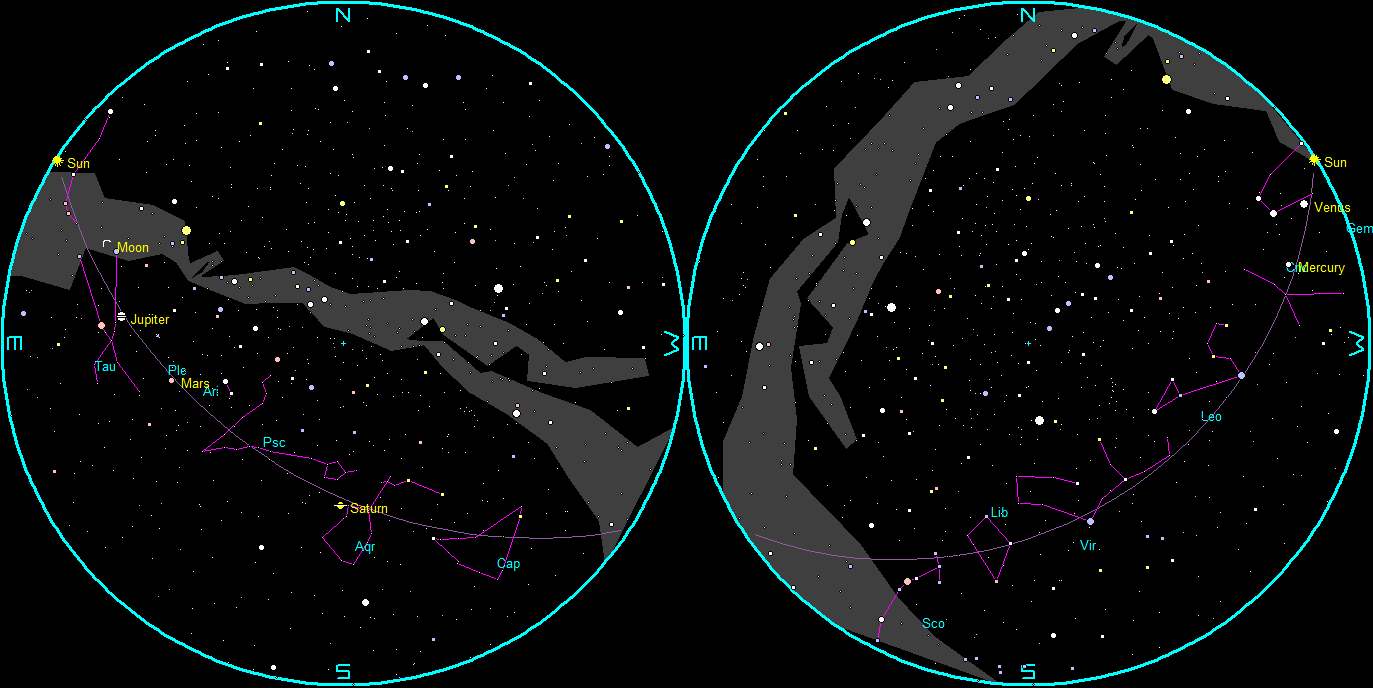
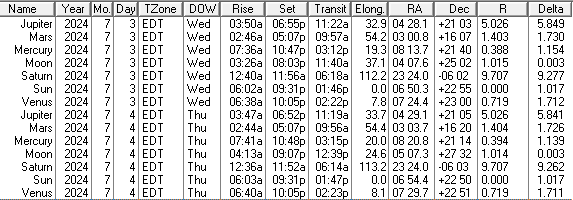
Let’s find out where the naked-eye planets have wandered off to this week. Venus and Mercury are too close to the direction of the Sun to be seen. Both are on the evening side of the Sun, but lost in its glare. Venus will appear in the evening sky next month. By 5:15 tomorrow morning, or about 45 minutes before sunrise, Saturn will be in the southeast just above and left of the Moon, and Mars will be lower in the east, and Jupiter will be very low in the east-northeast. Saturn will be a bit dimmer this year and next due to its rings being nearly edge on to us and not reflecting as much light. Saturn will rise at 1:15 am, Mars at 3:07 am, and Jupiter at 4:19 am.
The astronomical event times given are for the Traverse City/Interlochen area of Michigan (EDT, UT–4 hours). They may be different for your location.
Addendum
Ephemeris: 06/19/2024 – Where have the naked-eye planets wandered off to this week?
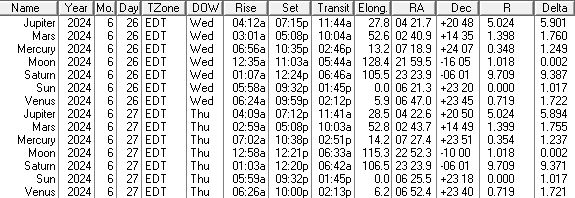
This is Ephemeris for Juneteenth, Wednesday, June 19th. Today the Sun will be up for 15 hours and 34 minutes, setting at 9:31, and it will rise tomorrow at 5:57. The Moon, 2 days before full, will set at 4:15 tomorrow morning.
Let’s find out where the naked-eye planets have wandered off to this week, and see what planets are left. Venus and Mercury are too close to the direction of the Sun to be seen. Both are on the evening side of the Sun, but lost in its glare. It will appear in the evening sky next month. By 5:15 tomorrow morning, or about 45 minutes before sunrise, Saturn will be in the southeast and Mars will be lower in the east, and Jupiter will be very low in the east-northeast. In telescopes, Saturn will look fairly different this year and next with its rings nearly edge on to us. Saturn will rise at 1:35 am, Mars at 3:19 am, and Jupiter, making its first morning appearance, will rise at 4:38 am.
The astronomical event times given are for the Traverse City/Interlochen area of Michigan (EDT, UT–4 hours). They may be different for your location.
Addendum
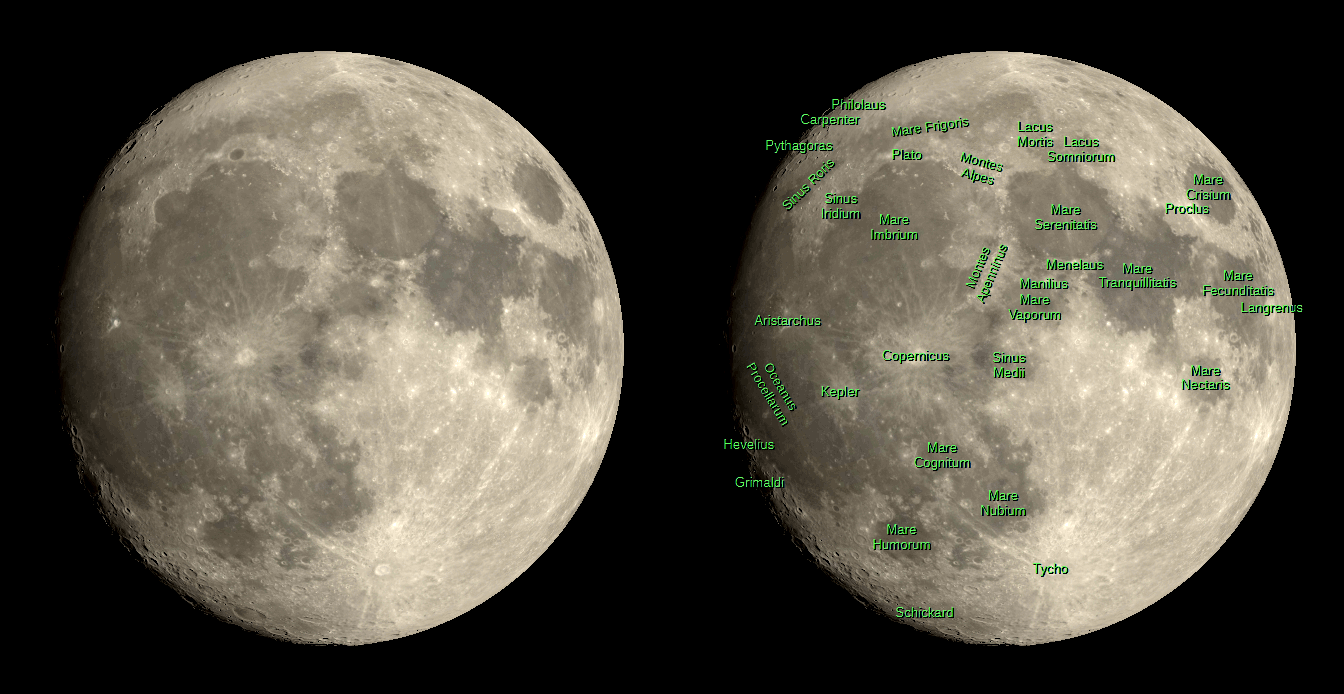
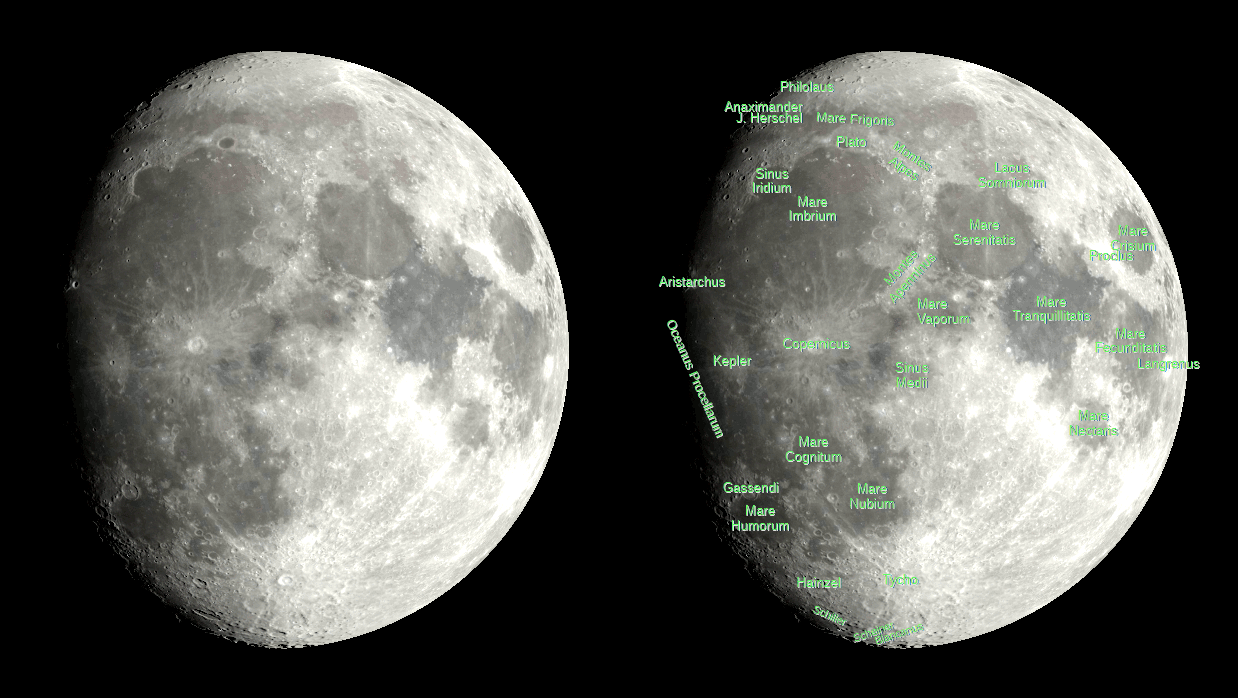
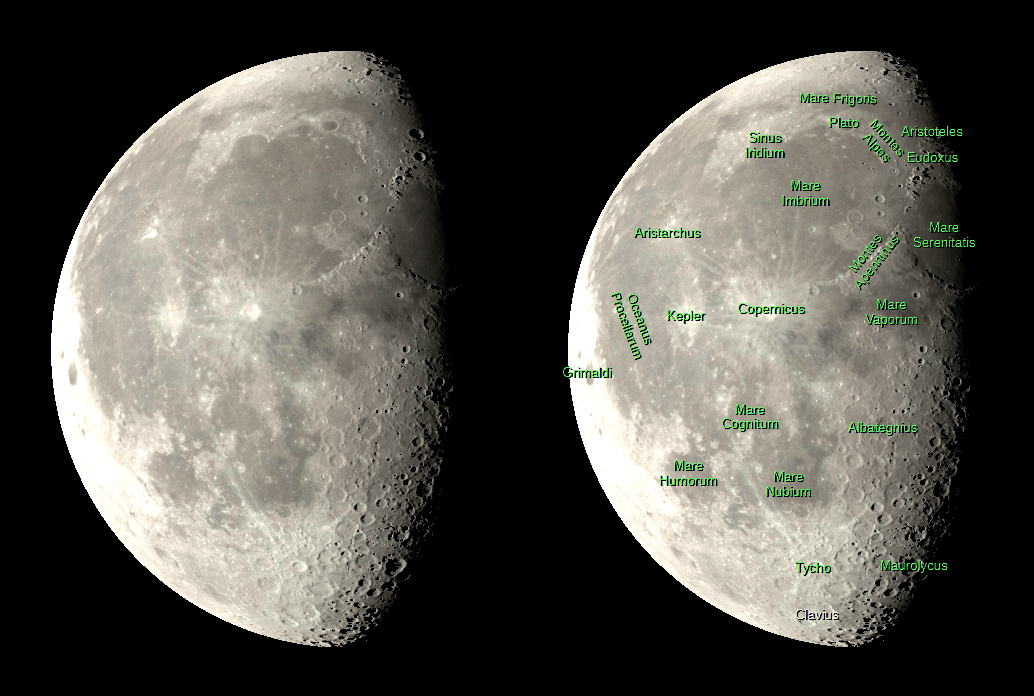
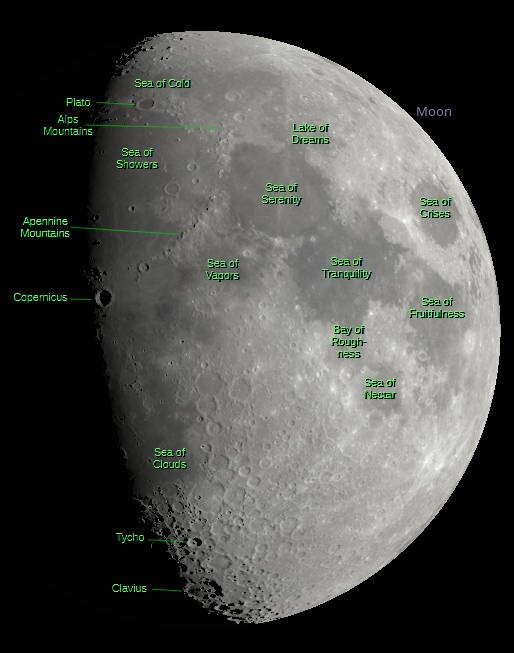
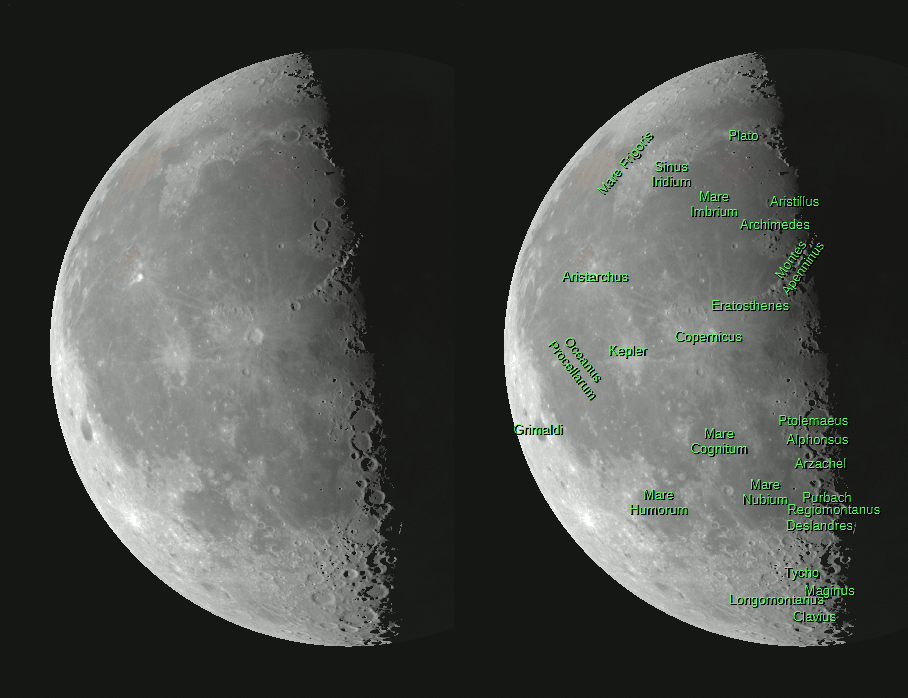
Translations of some lunar feature names according to Virtual Moon Atlas
Lacus Mortis – Lake of Death
Lacus Somniorum – Lake of Dreams
Mare Cognitum – Sea of Knowledge
Mare Crisium – Sea of Crises
Mare Fecunditatis – Sea of Fruitfulness
Mare Frigoris – Sea of Cold
Mare Humorum – Sea of Moisture
Mare Imbrium – Sea of Showers
Mare Nectaris – Sea of Nectar
Mare Nubium – Sea of Clouds
Mare Serenitatis – Sea of Serenity
Mare Tranquillitatis – Sea of Tranquility
Mare Vaporum – Sea of Vapors
Montes Alpes – Alps Mountains
Montes Apenninus – Apennines Mountains
Oceanus Procellarum – Ocean of Storms
Sinus Iridium – Bay of Rainbows
Sinus Medii – Central Bay
Sinus Roris – Bay of Moisture
Craters are named for persons, real or otherwise.
Ephemeris: 06/14/2024 – Star Party at the Sleeping Bear Dunes tomorrow night*
* if it’s clear or mostly clear.
This is Bob Moler with Ephemeris for Flag Day, Friday, June 14th. Today the Sun will be up for 15 hours and 33 minutes, setting at 9:30, and it will rise tomorrow at 5:56. The Moon, at first quarter today, will set at 2:22 tomorrow morning.
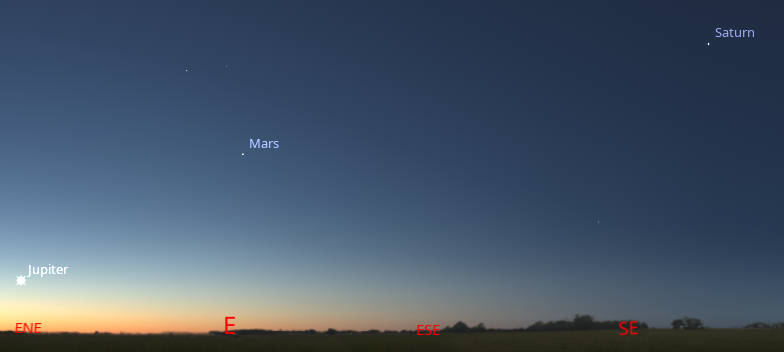
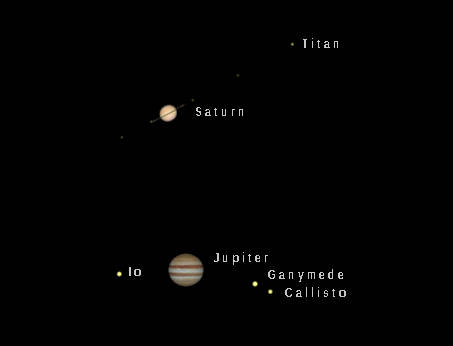
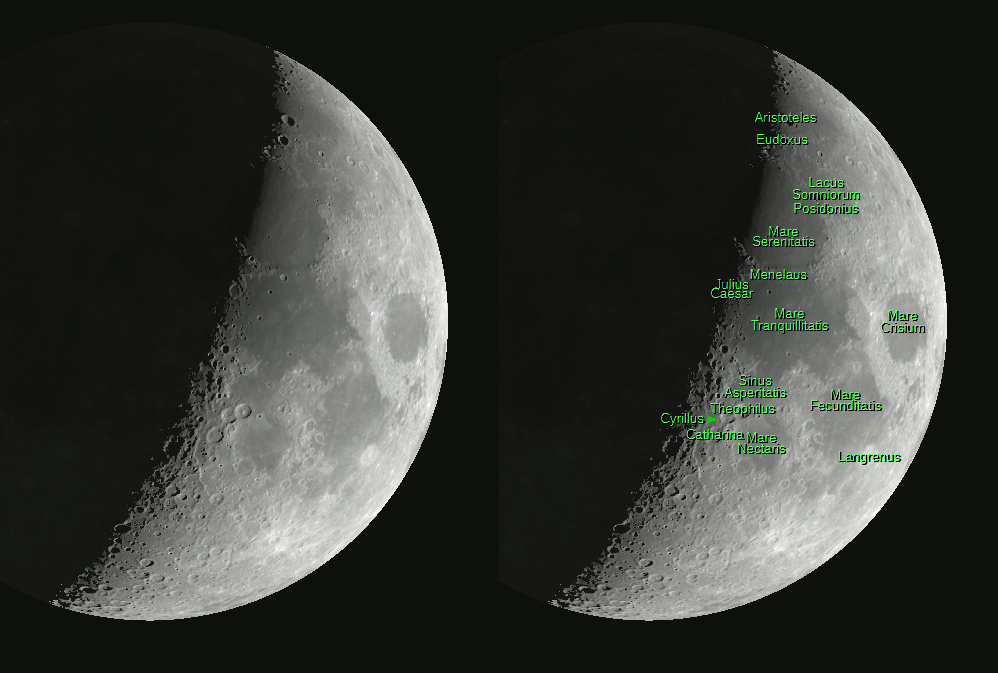
Tomorrow night, Saturday, June 15th, the Sleeping Bear Dunes National Lakeshore will team up with the Grand Traverse Astronomical Society to host a star party at the Dune Climb from 9 to 11 PM. It won’t be a star party exactly, because the featured attraction will be the Moon, nearly two days after first quarter. To my mind, this is about the best time to view the Moon showing its craters with deep shadows near the terminator or sunrise line which crosses the moon slowly over the month. There are no planets out in the evening, but we do have some interesting stars to look at besides the Moon. The fairly bright Chinese Tiangong Space Station will pass below the position of the Moon at 10:22 that evening.**
The astronomical event times given are for the Traverse City/Interlochen area of Michigan (EDT, UT–4 hours). They may be different for your location.
Addendum
** The information of the Tiangong space station pass came from heavens-above.com. The space station was also displayed in Stellarium when set to the proper time. Tiangong was predicted to be first magnitude by both sources, but Heavens-Above predicted a magnitude twice as bright as Stellarium.
Ephemeris: 06/12/2024 – Where are the naked-eye planets this week?
This is Ephemeris for Wednesday, June 12th. Today the Sun will be up for 15 hours and 32 minutes, setting at 9:29, and it will rise tomorrow at 5:56. The Moon, 2 days before first quarter, will set at 1:49 tomorrow morning.
Let’s find out where the naked-eye planets have wandered off to this week, and see what planets are left. Venus and Mercury are too close to the direction of the Sun to be seen. Venus just entered the evening sky last week when it passed behind the Sun in conjunction. It will appear in the evening sky next month. Jupiter, the second-brightest planet still is a week or so from being spotted in the morning, since it rises about an hour before the Sun. By 5 tomorrow morning, or about an hour before sunrise, Saturn will be in the southeast and Mars will be lower in the east. In telescopes, Saturn will look fairly different this year and next with its rings nearly edge on to us. They will open up a bit through October before closing again. They are only 2 degrees from being edge on to us.
The astronomical event times given are for the Traverse City/Interlochen area of Michigan (EDT, UT–4 hours). They may be different for your location.
Addendum
Ephemeris: 05/29/2024 – Where have the naked-eye planets wandered off to this week?
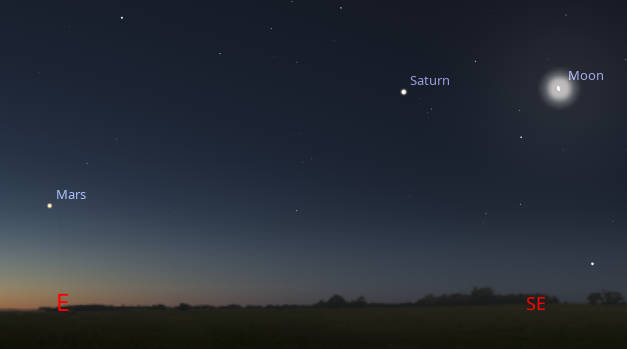
This is Ephemeris for Wednesday, May 29th. Today the Sun will be up for 15 hours and 17 minutes, setting at 9:19, and it will rise tomorrow at 6:01. The Moon, 1 day before last quarter, will rise at 2:31 tomorrow morning.
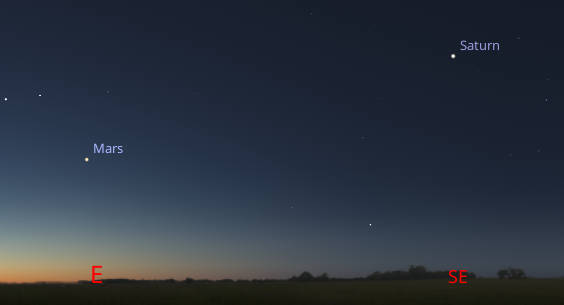
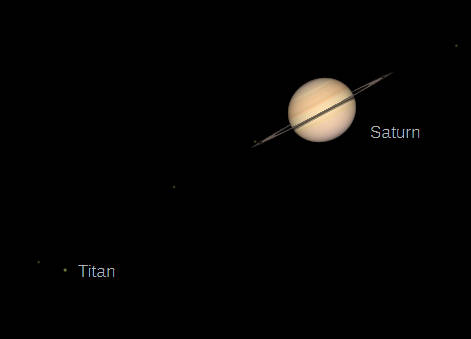
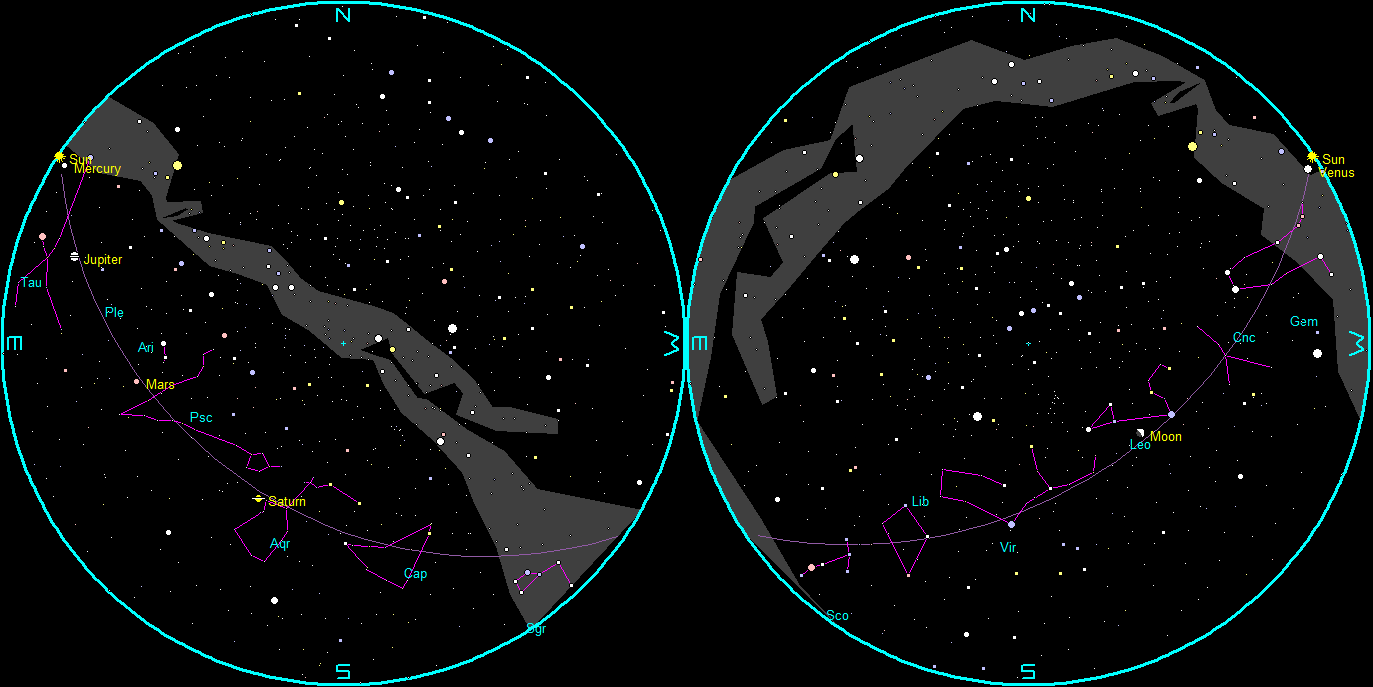
Let’s find out where the naked-eye planets have wandered off to this week, and see what planets are left. Venus, Mercury and Jupiter are now too close to the direction of the Sun to be seen. Venus will appear in the evening sky by July, while Jupiter may be visible in the morning in late June. By 5:15 tomorrow morning, or about 45 minutes before sunrise, Saturn will be low in the southeast and Mars will be lower still in the east. In telescopes, Saturn will look fairly different this year and next with its rings nearly edge on to us. They will open up a bit through October before closing again. We won’t see the rings go exactly edge on because Saturn will be too close to the Sun in the sky on March 23rd next year. After that, the rings will open up again.
The astronomical event times given are for the Traverse City/Interlochen area of Michigan (EDT, UT–4 hours). They may be different for your location.
Addendum
 Bob Moler's Ephemeris Blog