Archive
Ephemeris: 05/28/2026 – NASA’s first Moon program
This is Ephemeris for Thursday, May 28th. Today the Sun will be up for 15 hours and 15 minutes, setting at 9:17, and it will rise tomorrow at 6:02. The Moon, 3 days before full, will set at 4:32 tomorrow morning.
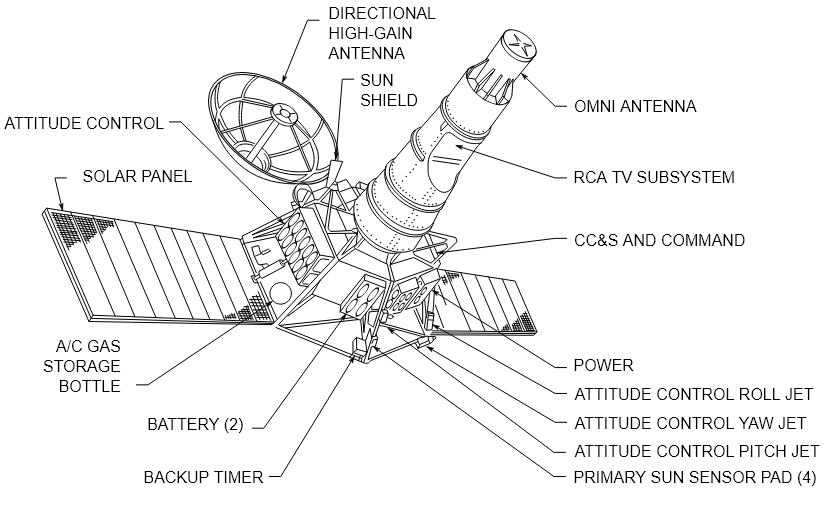
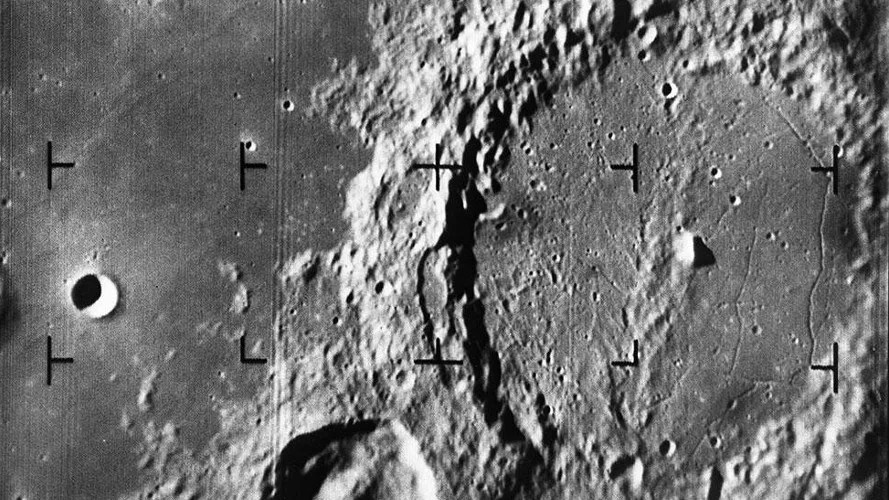
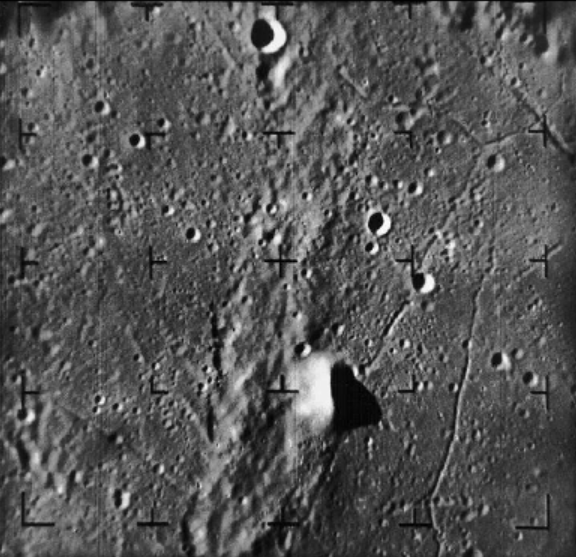
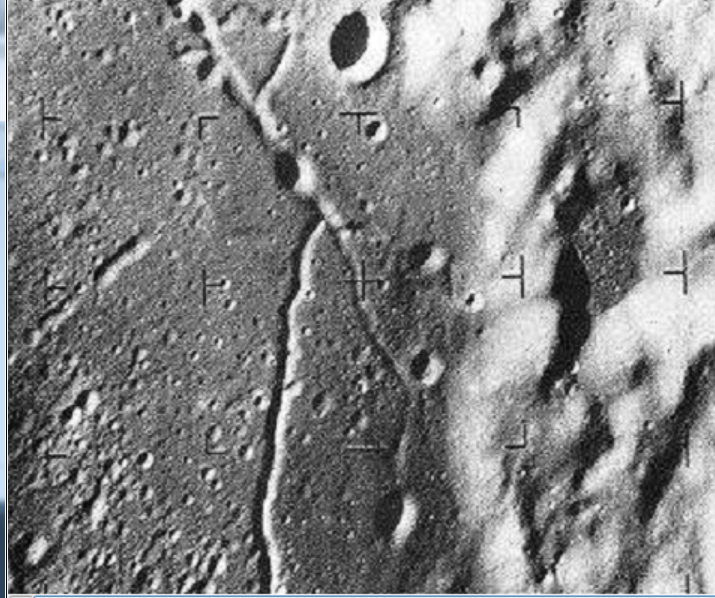
The United States first lunar mission to the moon was the Ranger Program of moon impactors, to televise pictures all the way to impact to see what the moon looked like up close and personal, so to speak. The program actually started before President Kennedy announced plans to send humans to the moon, although the first launch was made several months after that announcement. The program consisted of nine launches of three different variations of the spacecraft. The first two launches failed Then in the next four launches, the spacecraft either missed the moon or were dead on arrival. However, the last three were successful, showing that the moon was indeed mostly smooth enough to land a spacecraft.
The astronomical event times given in this blog are for the Traverse City/Interlochen area of Michigan (Lat 44.7° N, Long 85.7° W; EDT, UT – 4 hours) unless stated otherwise. Times will be different for other locations.
Addendum
Ephemeris: 05/27/2026 – Taking our weekly look at the whereabouts of the naked-eye planets
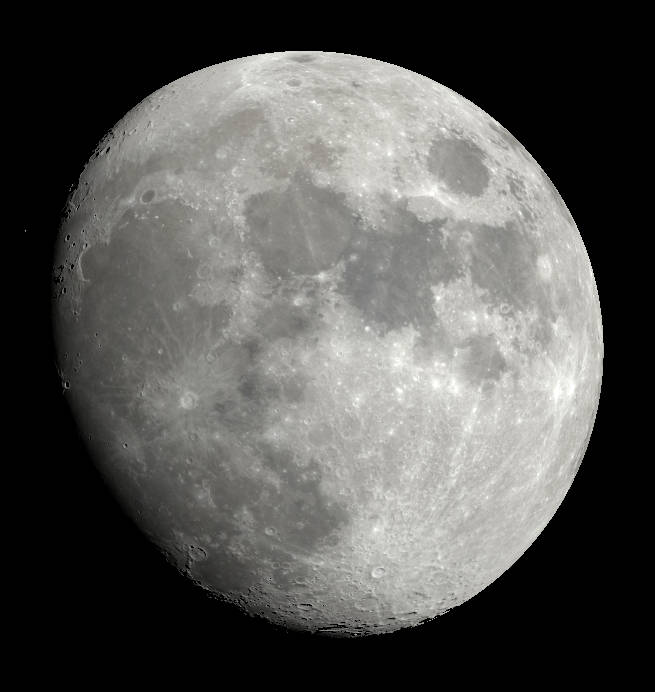
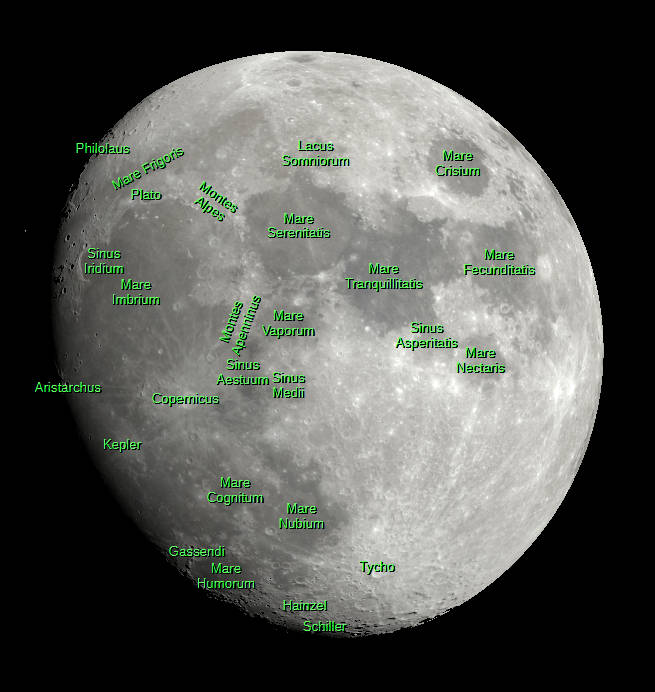
This is Bob Moler with Ephemeris for Wednesday, May 27th. Today the Sun will be up for 15 hours and 13 minutes, setting at 9:17, and it will rise tomorrow at 6:02. The Moon, halfway from first quarter to full, will set at 4:08 tomorrow morning.
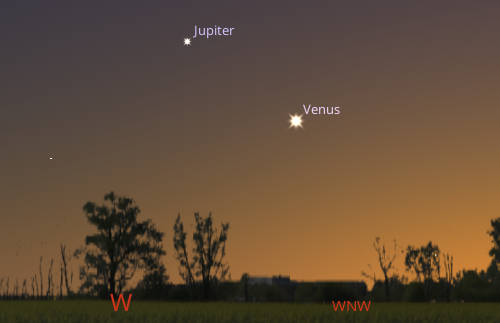
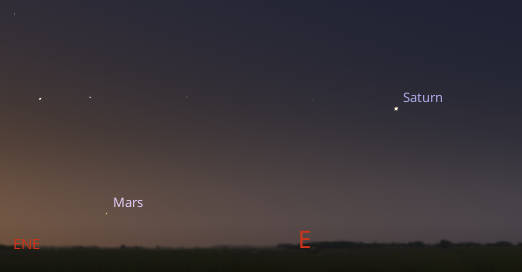
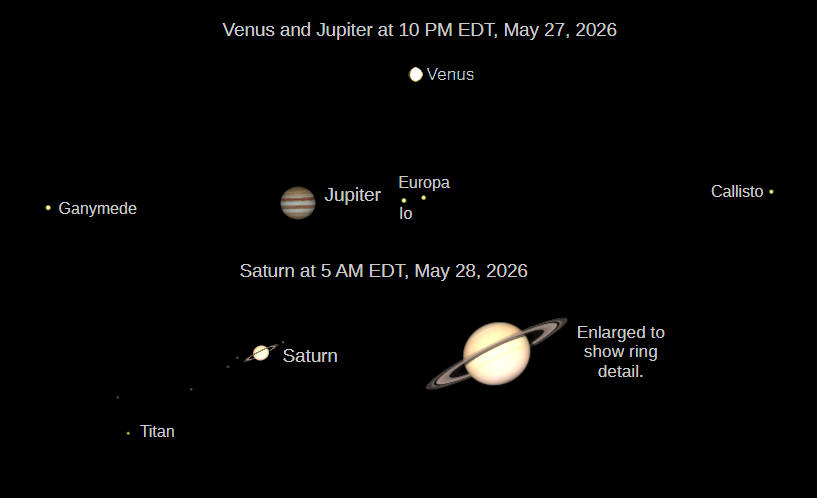
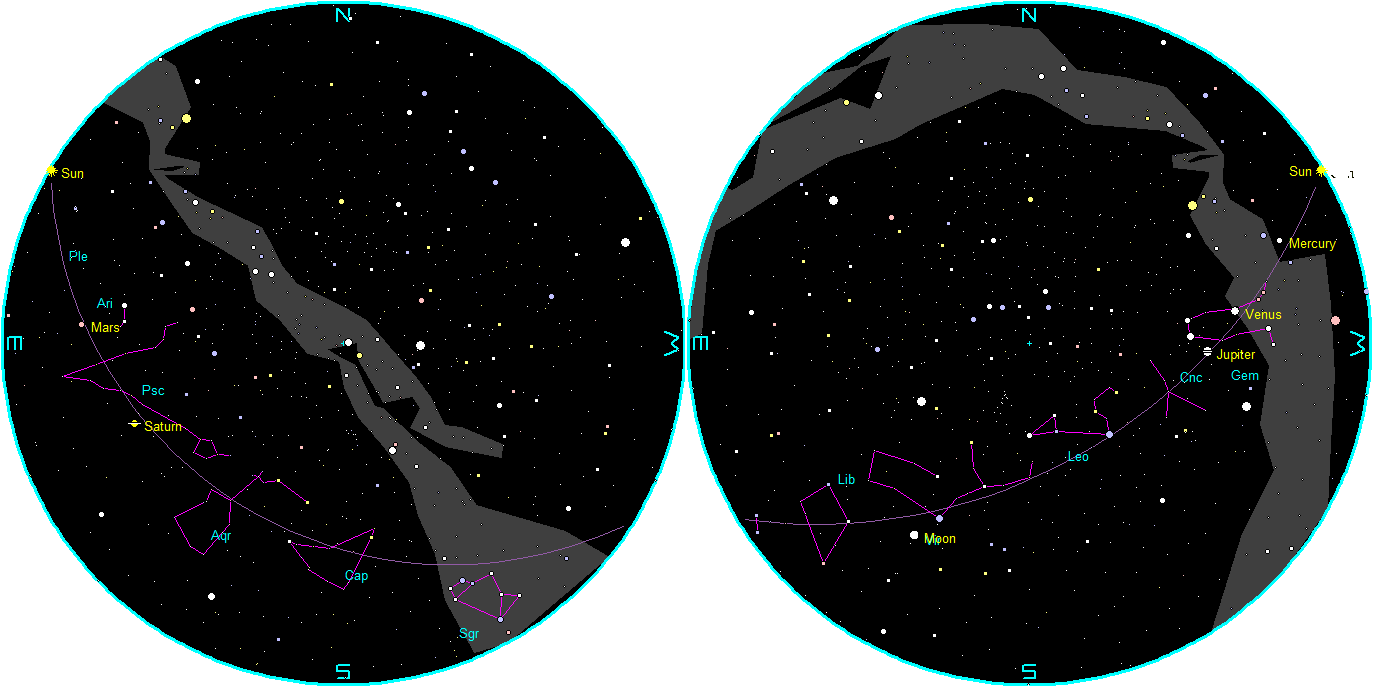
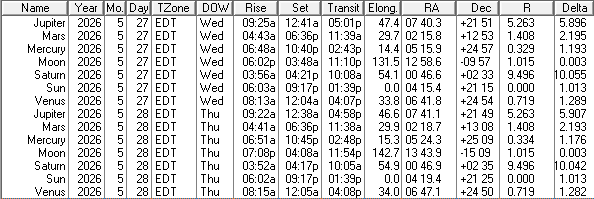
Let’s take our weekly look at the whereabouts of the naked-eye planets. By 10 PM tonight, about 40 minutes after sunset, Venus may be seen in the western sky. A telescope will show a very tiny disc on Venus, because it is still pretty much beyond the Sun, 120 million miles (193 million km) away from us. Over the next 5 months it will be moving closer to us and becoming much larger. Jupiter is the second-brightest star-like object in the western sky seen before 10 PM. It is above and left of Venus tonight. Venus will set at 12:04 AM, while Jupiter will hold out until 12:41 AM. Saturn rises in the east at 3:52 AM, followed by dimmer Mars at 4:42 AM.
The astronomical event times given in this blog are for the Traverse City/Interlochen area of Michigan (Lat 44.7° N, Long 85.7° W; EDT, UT – 4 hours) unless stated otherwise. Times will be different for other locations.
Addendum
Ephemeris: 05/26/2026 – The Soviet Union’s Luna 3 provided first look at the far side of the Moon
This is Bob Moler with Ephemeris for Tuesday, May 26th. Today the Sun will be up for 15 hours and 11 minutes, setting at 9:16, and it will rise tomorrow at 6:03. The Moon, 3 days past first quarter, will set at 3:48 tomorrow morning.
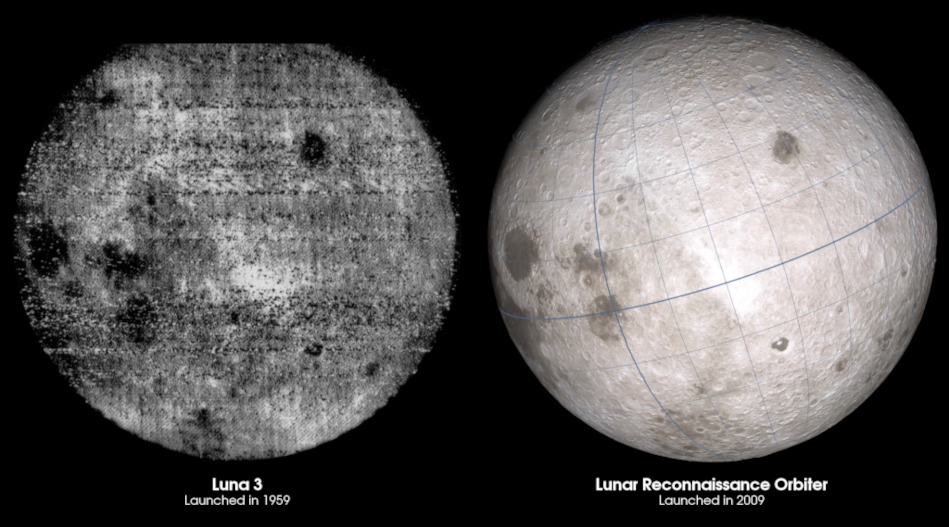
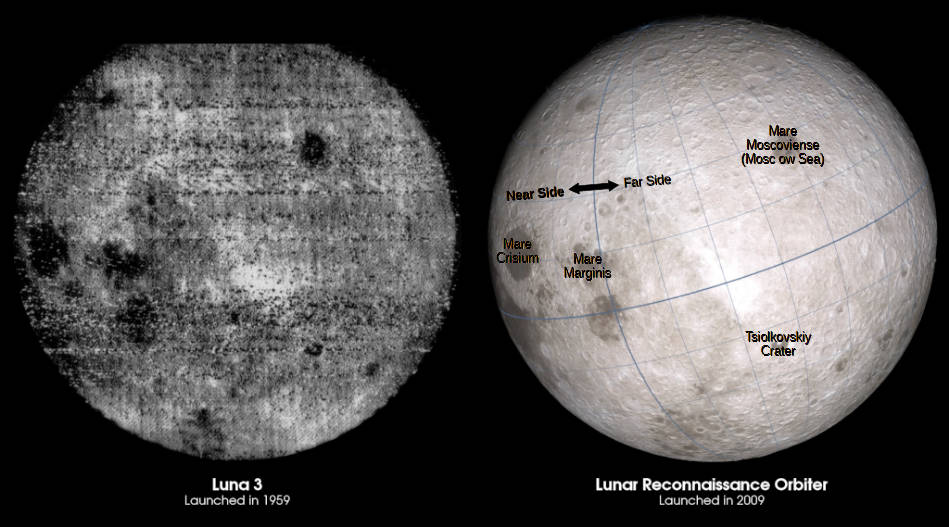
The space race with the Soviet Union started with the launch of Sputnik one in October 1957. The Soviets won the early milestones of the race, including less than two years after Sputnik 1, a flyby of Luna 3 around the moon, and taking the first photographs of the far side. Back then before CCDs, the best quality images from space were photographed onto film and then developed, then scanned on the satellite and the data is sent down to the earth. The images were rather crude and grainy. I was a senior in high school at the time and as interested in astronomy as I am today. We thought that the Far Side of the moon would be more of the same. The Far Side was completely different.
The astronomical event times given in this blog are for the Traverse City/Interlochen area of Michigan (Lat 44.7° N, Long 85.7° W; EDT, UT – 4 hours) unless stated otherwise. Times will be different for other locations.
Addendum
Ephemeris: 05/20/2026 – Taking our weekly look at the whereabouts of the naked-eye planets
This is Ephemeris for Wednesday, May 20th. Today the Sun will be up for 15 hours exactly, setting at 9:09, and it will rise tomorrow at 6:08. The Moon, 3 days before first quarter, will set at 1:41 tomorrow morning.
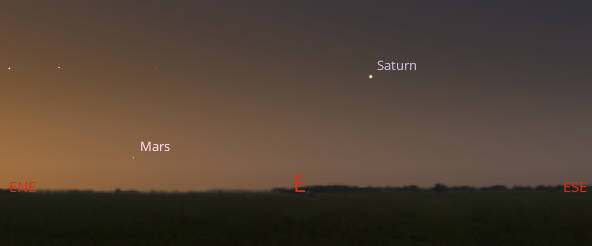
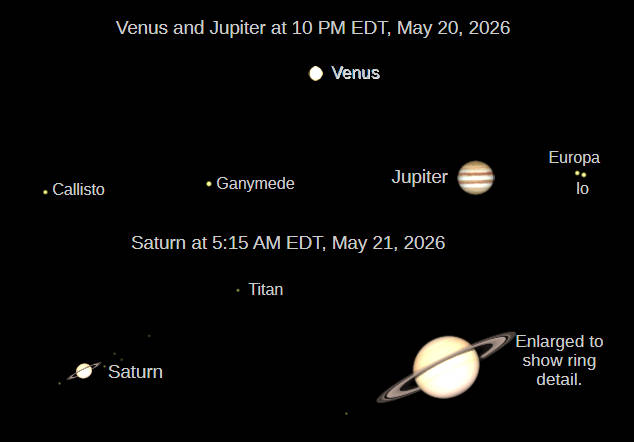
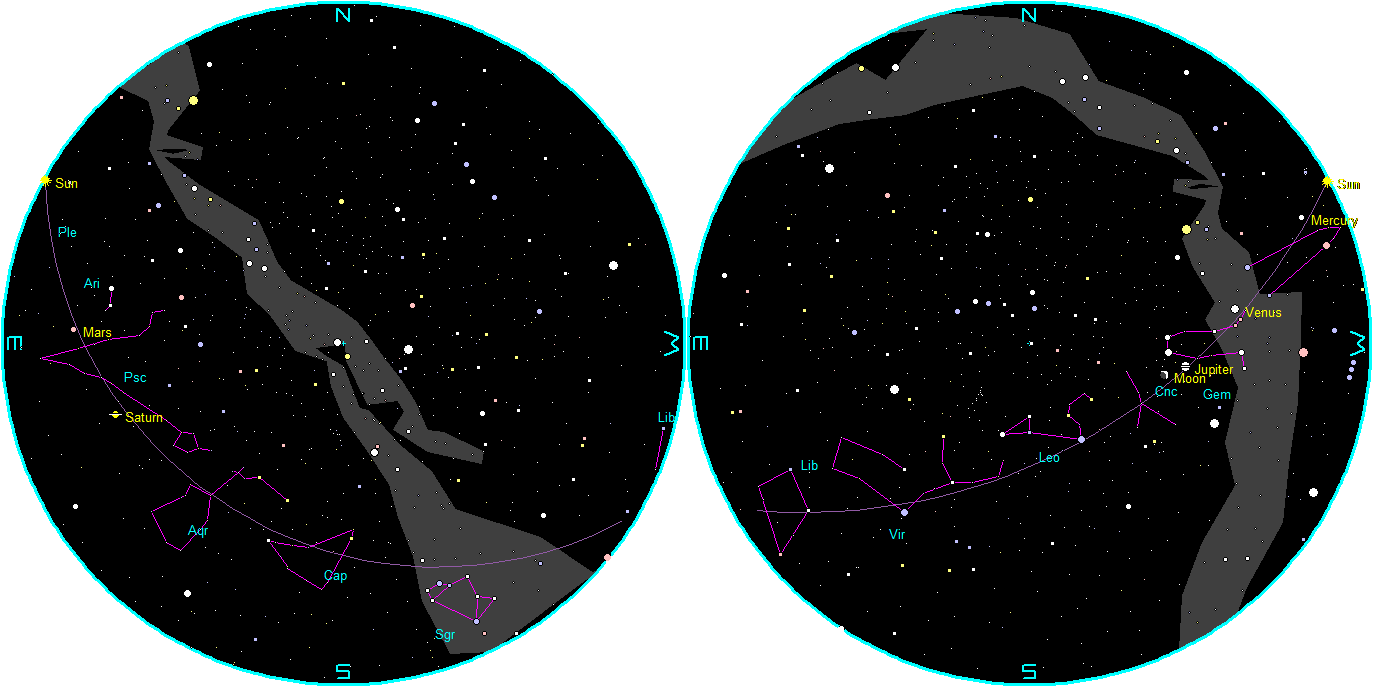
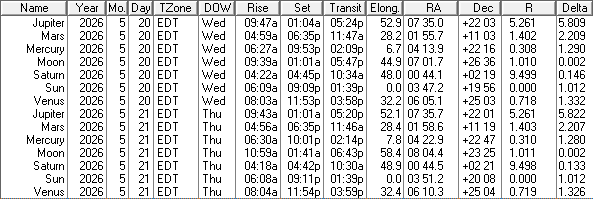
Let’s take our weekly look at the whereabouts of the naked-eye planets. By 9:30 PM tonight, about 20 minutes after sunset, Venus may be seen in the western sky. A telescope will show a very tiny disc on Venus, because it is still pretty much beyond the Sun, 124 million miles (199 million kilometers) away from us. Over the next 5 months it will be moving closer to us and becoming much larger. Jupiter is the second-brightest star-like object in the western sky seen before 10 PM. It is below and right of the Moon tonight. Venus will set at 11:53 PM, while Jupiter will hold out until 1:01 AM. Saturn may be first glimpsed just after it rises in the east at 4:18 AM, before morning twilight overwhelms it later on.
The astronomical event times given in this blog are for the Traverse City/Interlochen area of Michigan (Lat 44.7° N, Long 85.7° W; EDT, UT – 4 hours) unless stated otherwise. Times will be different for other locations.
Addendum
Ephemeris: 05/13/2026 – Where are the naked-eye planets this week?
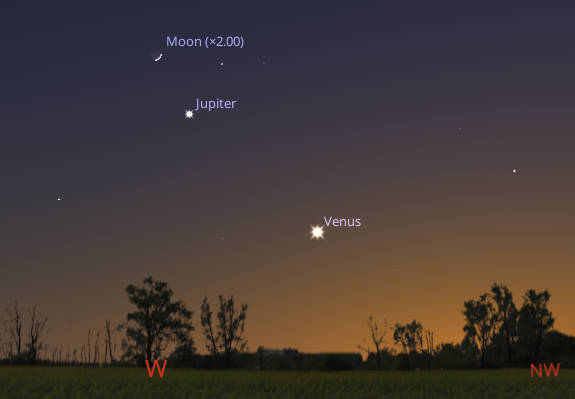
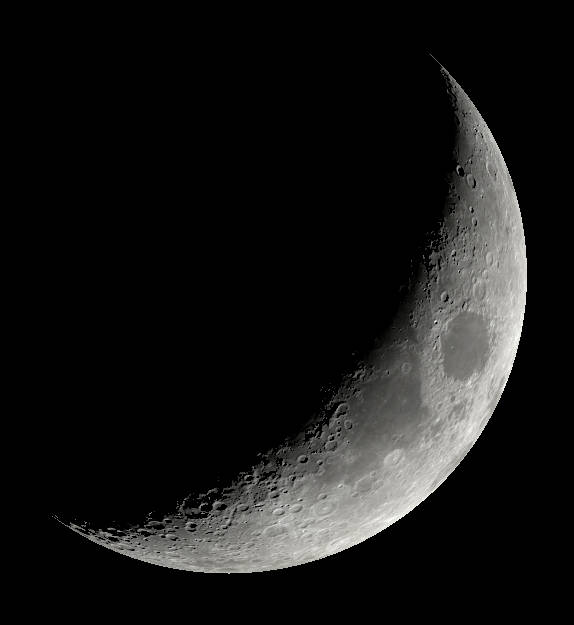
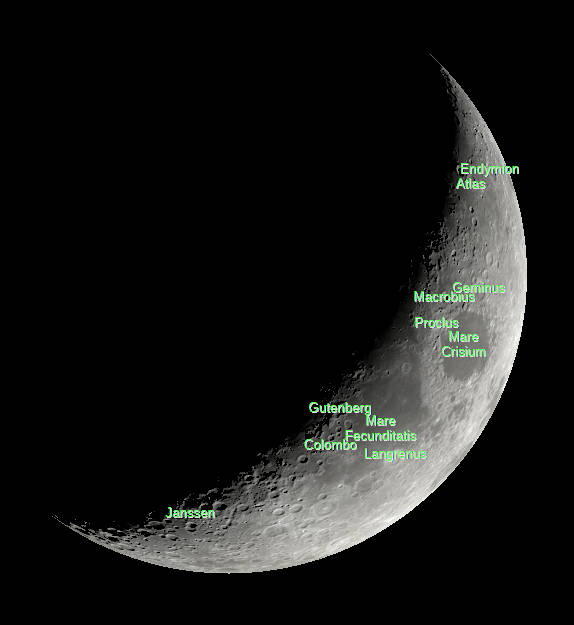
This is Ephemeris for Wednesday, May 13th. Today the Sun will be up for 14 hours and 45 minutes, setting at 9:02, and it will rise tomorrow at 6:15. The Moon, 3 days before new, will rise at 4:37 tomorrow morning.
Let’s take our weekly look at the whereabouts of the naked-eye planets. By 9:30 PM tonight, about a half hour after sunset, Venus may be seen in the western sky. A telescope will show a very tiny disc on Venus, because it is still pretty much beyond the Sun, 128 million miles (205 million kilometers) away from us. Over the next 5 months it will be moving closer to us and becoming much larger. Jupiter is the second-brightest star-like object in the western sky seen before 10 PM. It is above and left of the brighter Venus. Venus will set at 11:38 PM, while Jupiter will hold out until 1:21 AM. Saturn may be glimpsed just after it rises in the east at 4:48 AM, before morning twilight overwhelms it sometime later.
The astronomical event times given in this blog are for the Traverse City/Interlochen area of Michigan (Lat 44.7° N, Long 85.7° W; EDT, UT – 4 hours) unless stated otherwise. Times will be different for other locations.
Addendum
Ephemeris: 05/06/2026 – Taking our weekly look at the whereabouts of the naked-eye planets
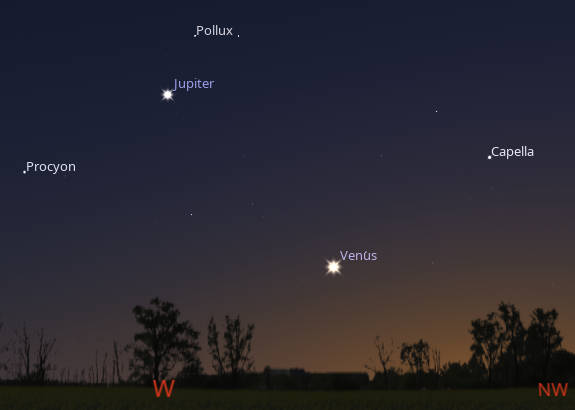
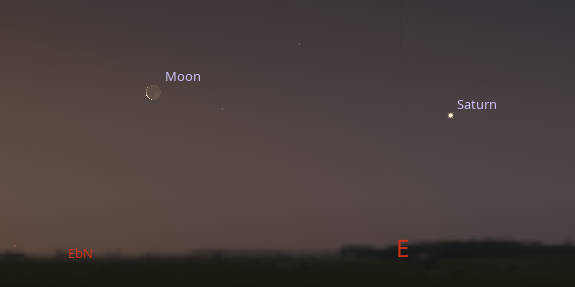
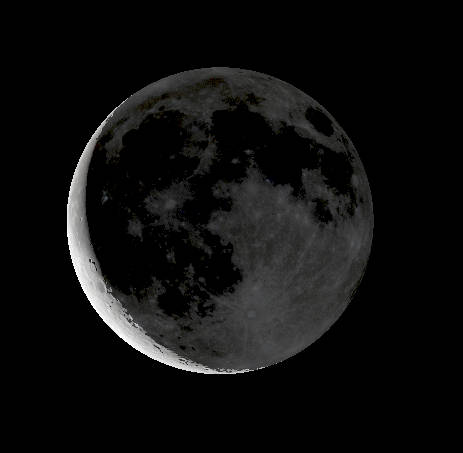
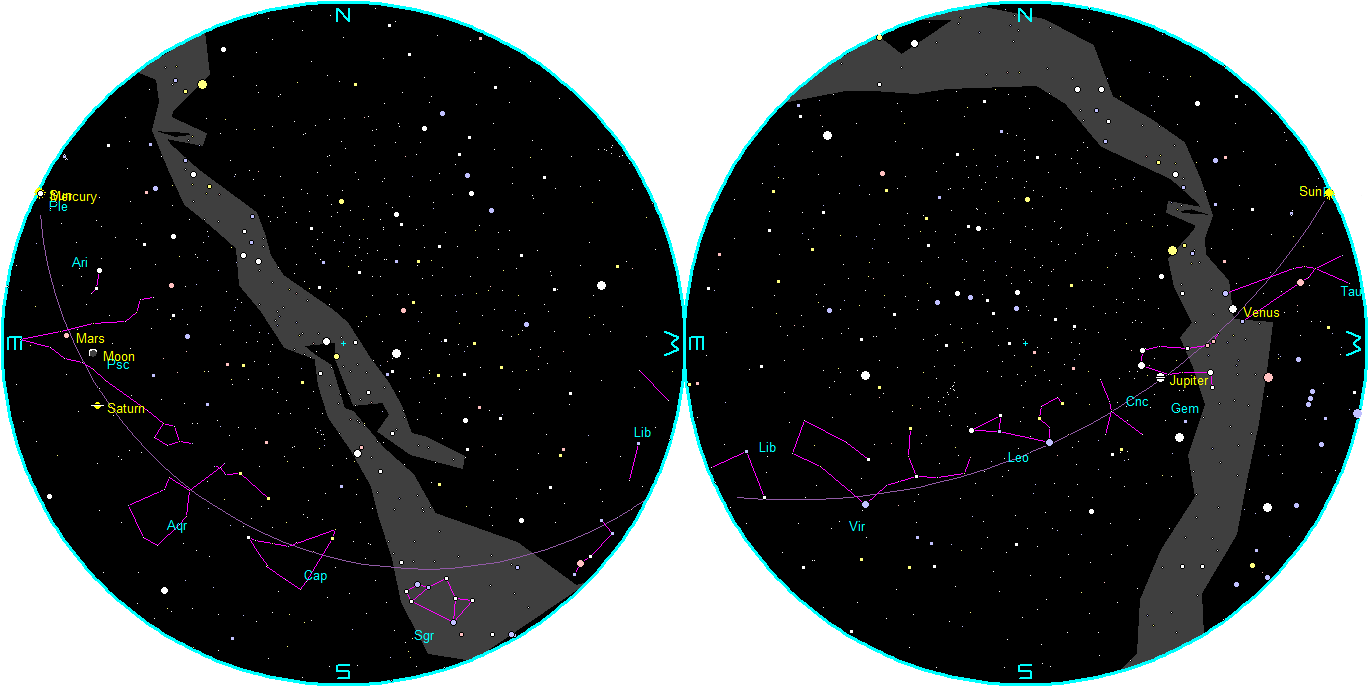
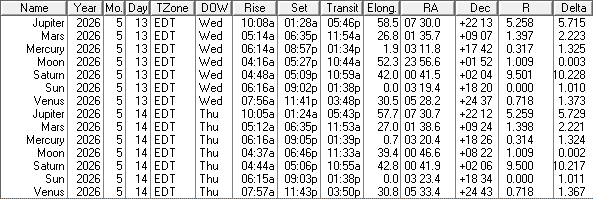
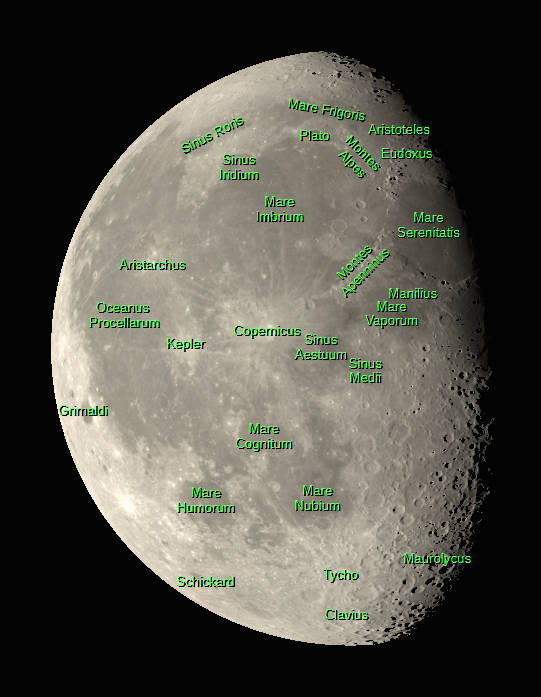
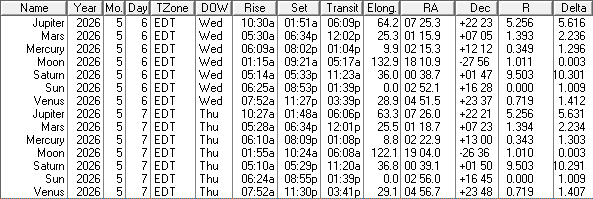
This is Ephemeris for Wednesday, May 6th. Today the Sun will be up for 14 hours and 28 minutes, setting at 8:53, and it will rise tomorrow at 6:24. The Moon, 3 days before last quarter, will rise at 1:55 tomorrow morning.
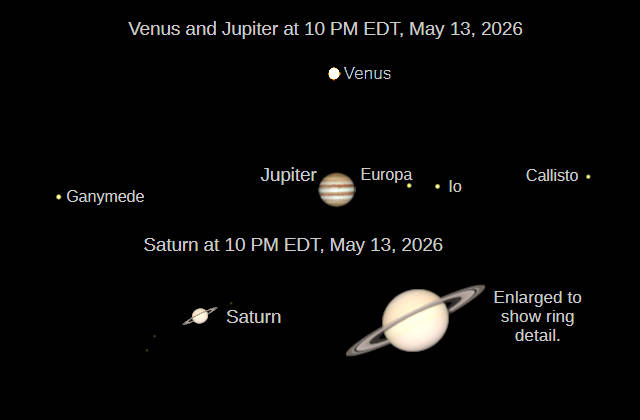
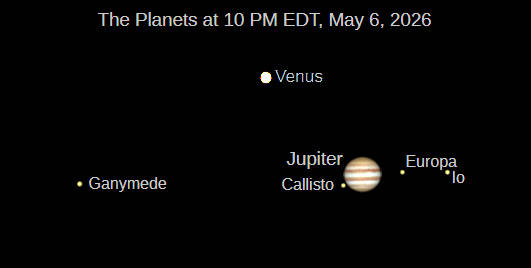
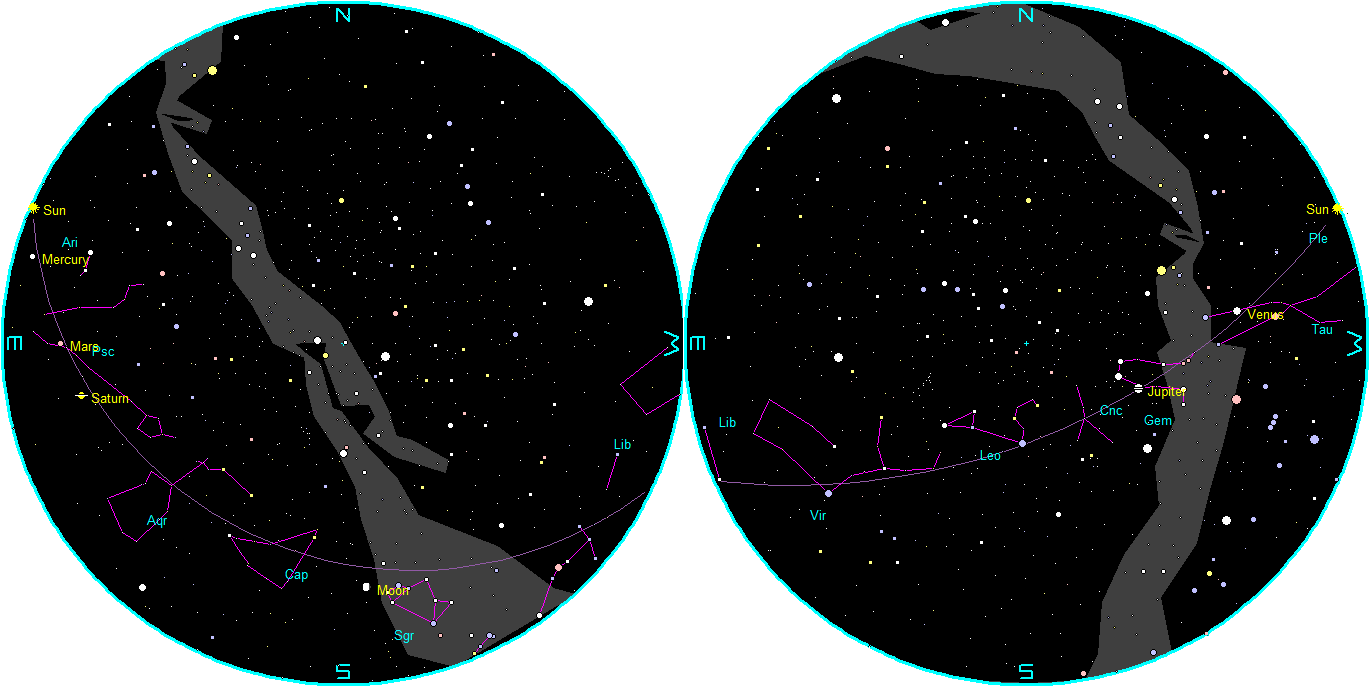
Let’s take our weekly look at the whereabouts of the naked-eye planets. By 9:30 PM tonight or about 35 minutes or so after sunset, Venus may be seen very low in the West. A telescope will show a very tiny disc on Venus, because it is still pretty much beyond the Sun, 131 million miles (211 million kilometers) away from us. Over the next 5½ months it will be moving closer to us and becoming much larger. Jupiter is the brilliant star-like object in the western before 10 PM. It is above and left of the brighter Venus. Venus will set at 11:26 PM, while Jupiter will hold out until 1:40 AM. Saturn may be glimpsed starting about next Monday just after it rises in the east around 5:15 AM, and before morning twilight overwhelms it sometime later.
The astronomical event times given in this blog are for the Traverse City/Interlochen area of Michigan (Lat 44.7° N, Long 85.7° W; EDT, UT – 4 hours) unless stated otherwise. Times will be different for other locations.
Addendum
Ephemeris: 04/29/2026 – Taking our weekly look at the whereabouts of the naked-eye planets
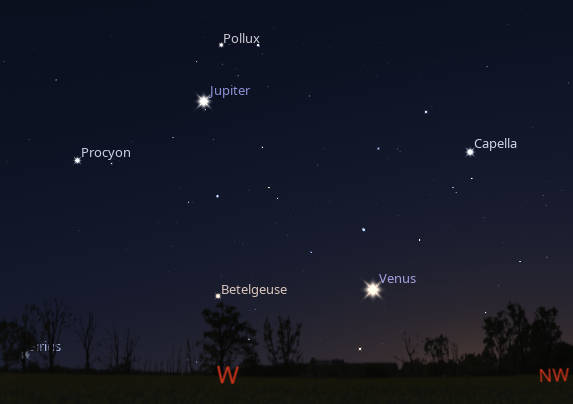
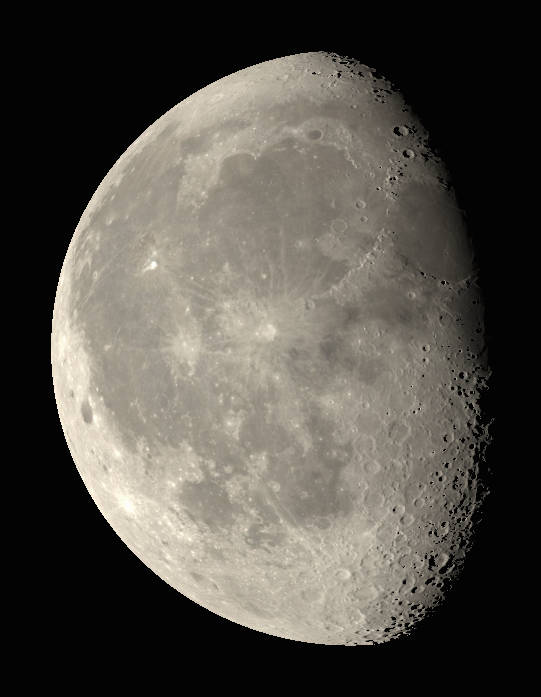
This is Ephemeris for Wednesday, April 29th. Today the Sun will be up for 14 hours and 9 minutes, setting at 8:45, and it will rise tomorrow at 6:34. The Moon, 2 days before full, will set at 5:42 tomorrow morning.
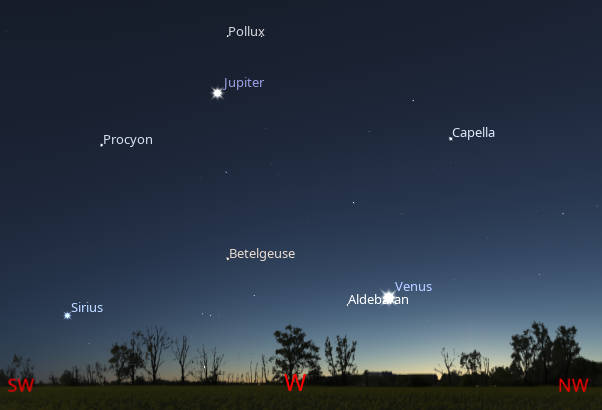
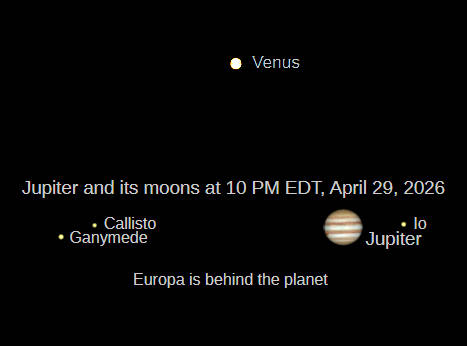
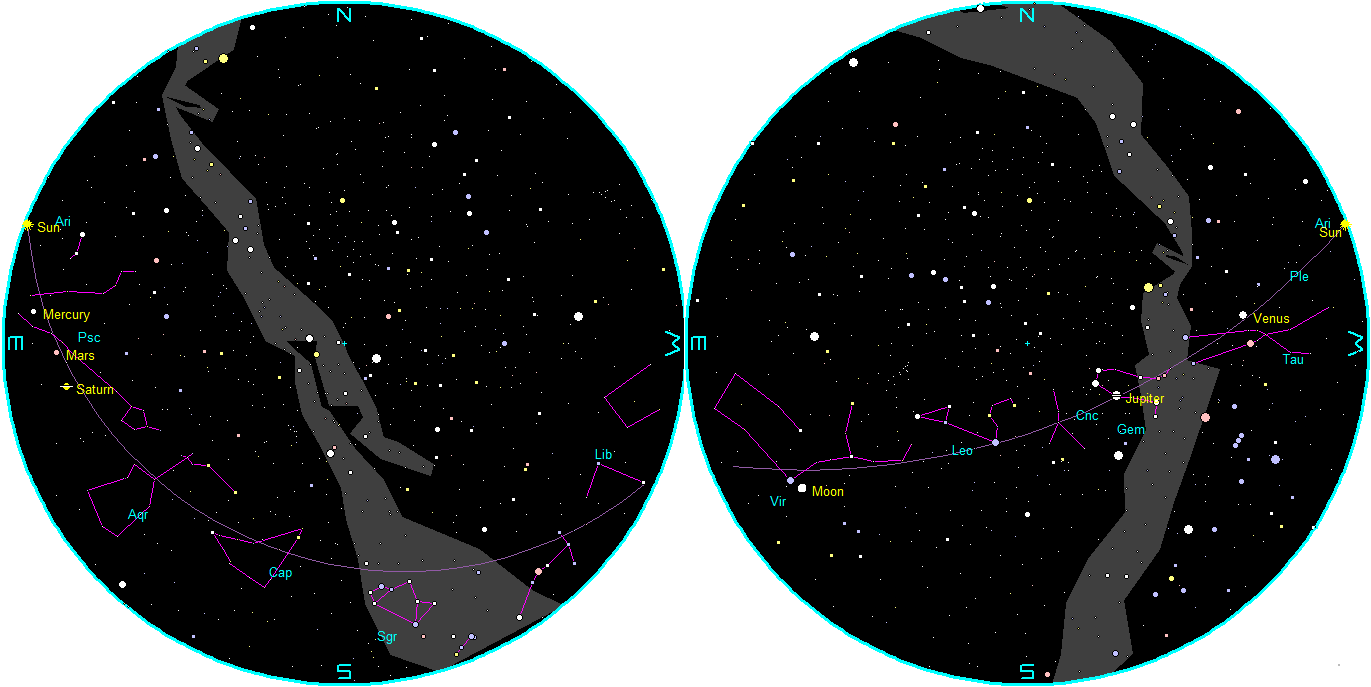
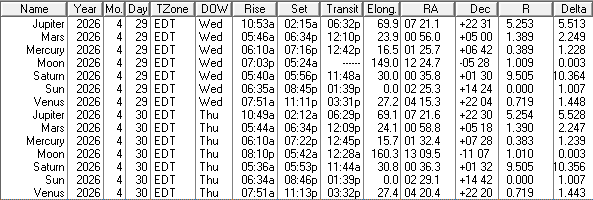
Let’s take our weekly look at the whereabouts of the naked-eye planets. By 9:30 PM tonight or about 45 minutes or so after sunset, Venus may be seen very low in the West. A telescope will show a very tiny disc on Venus, because it is still pretty much beyond the Sun, 136 million miles (217 million kilometers) away from us. Over the next 6 months it will be moving closer to us and becoming much larger. Jupiter is the brilliant star-like object in the western before 10 PM. It is above and left of the brighter Venus. Venus will set at 11:11 PM, while Jupiter will hold out until 2:12 AM. Meanwhile, Mercury, Mars and Saturn are breaking up just west of the Sun, but are still overwhelmed by bright morning twilight.
The astronomical event times given in this blog are for the Traverse City/Interlochen area of Michigan (Lat 44.7° N, Long 85.7° W; EDT, UT – 4 hours) unless stated otherwise. Times will be different for other locations.
Addendum
Ephemeris: 04/23/2026 – Where did the Moon come from?
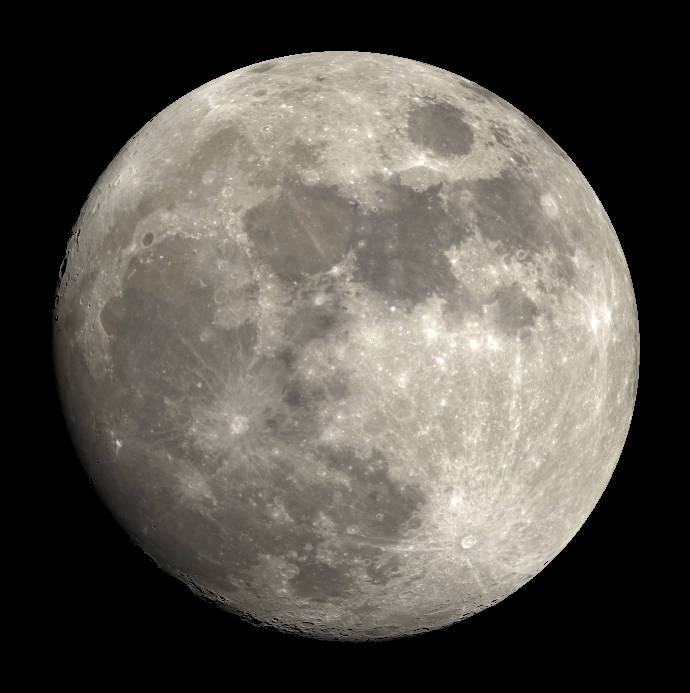
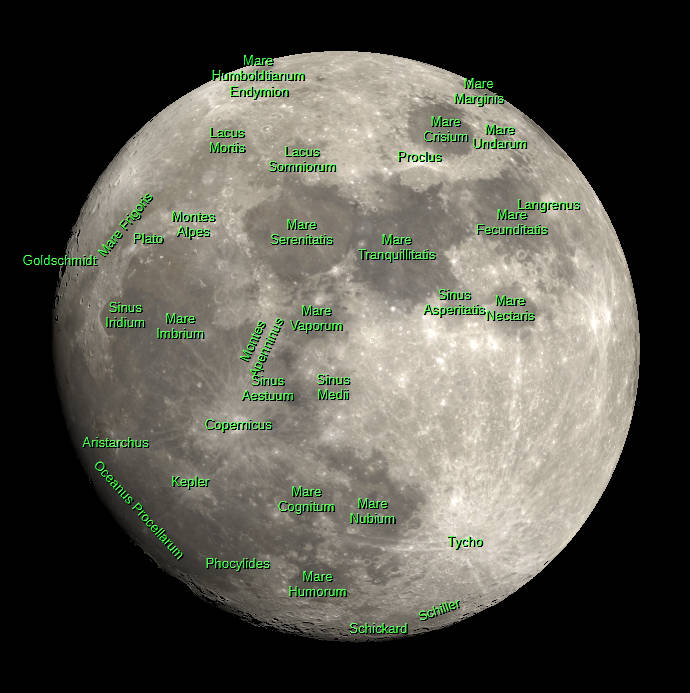
This is Ephemeris for Thursday, April 23rd. Today the Sun will be up for 13 hours and 52 minutes, setting at 8:37, and it will rise tomorrow at 6:43. The Moon, at first quarter today, will set at 3:42 tomorrow morning.
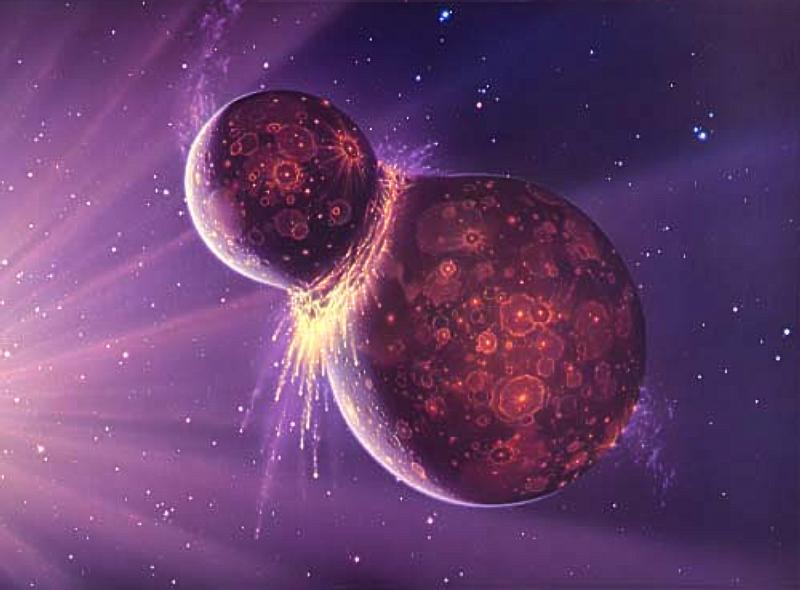
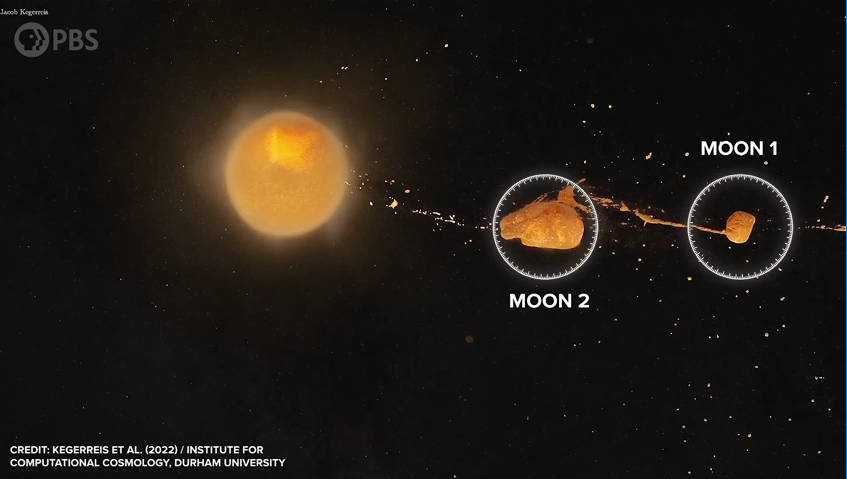
When one gazes upon the moon tonight the thought of where the moon came from might come to mind. Did it form with the Earth? Was it captured by the Earth? The latest thinking on the origin of the moon centers around a grazing collision with the Earth of a Mars sized body that has been given the name Theia, the mother of Selene, the goddess of the Moon, shortly after the Earth was formed. This is based on Apollo mission discoveries that the composition of the rocks on the moon are approximately the same as those of Earth’s crust. It’s been known for a while that there are two dense masses within the Earth about halfway to the center. One geologist has put forth that these masses could have been the core of Theia that sank into the Earth.
The astronomical event times given in this blog are for the Traverse City/Interlochen area of Michigan (Lat 44.7° N, Long 85.7° W; EDT, UT – 4 hours) unless stated otherwise. Times will be different for other locations.
Addendum
Ephemeris: 04/22/2026 – Taking our weekly look at the whereabouts of the naked-eye planets
This is Ephemeris for Earth Day, Wednesday, April 22nd. Today the Sun will be up for 13 hours and 50 minutes, setting at 8:36, and it will rise tomorrow at 6:45. The Moon, 1 day before first quarter, will set at 3:07 tomorrow morning.
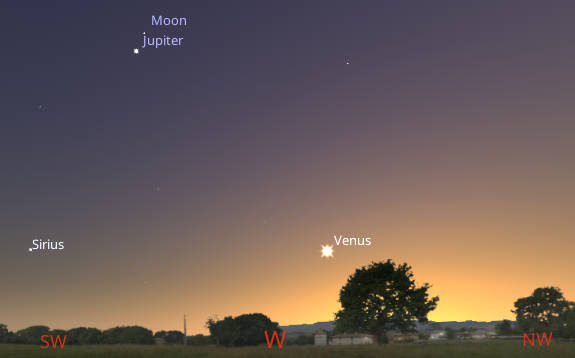
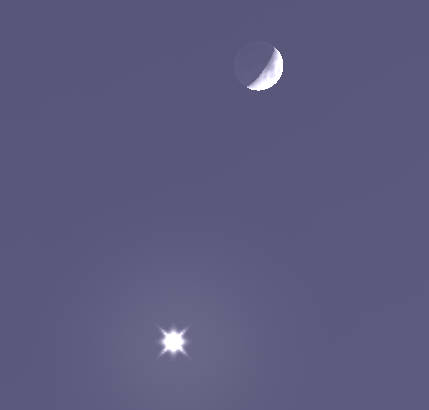
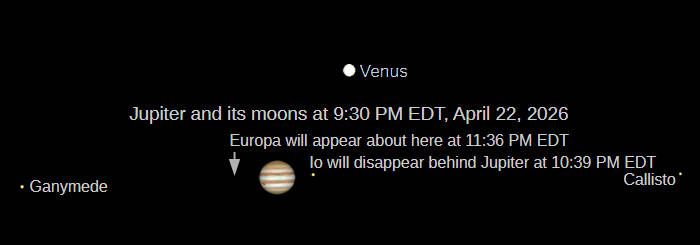
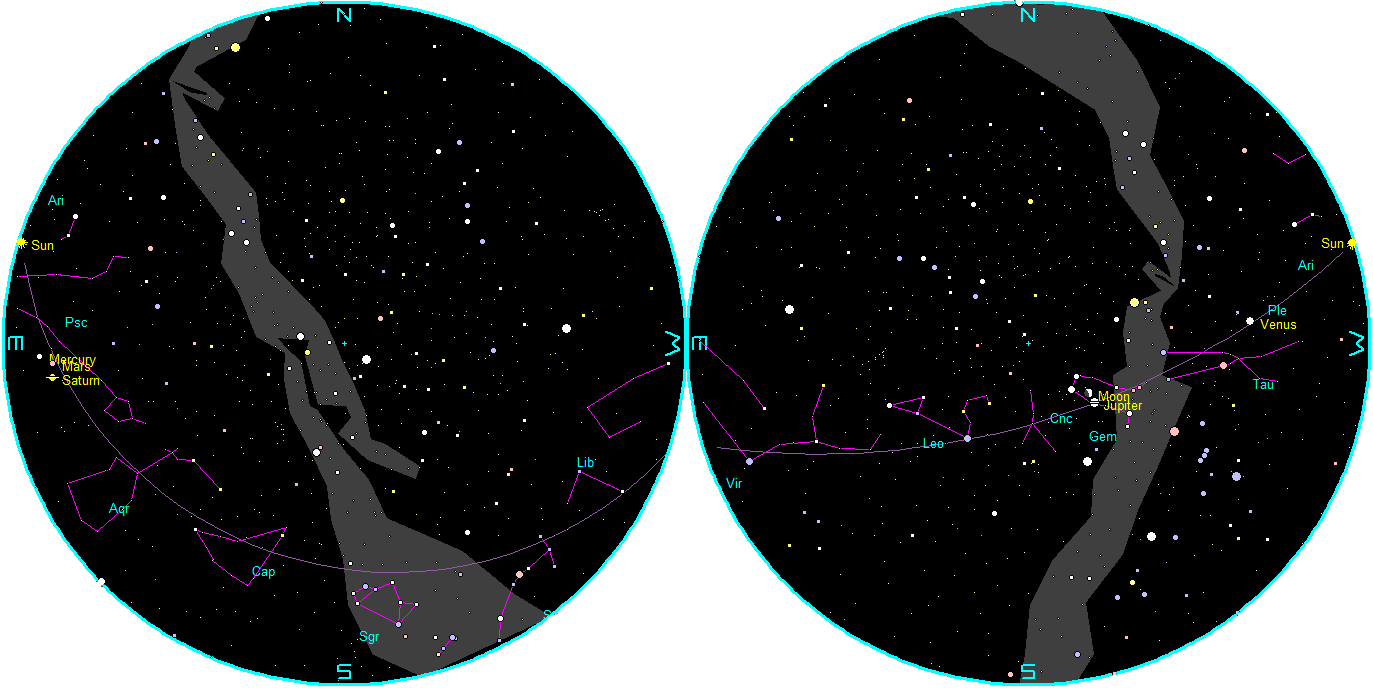
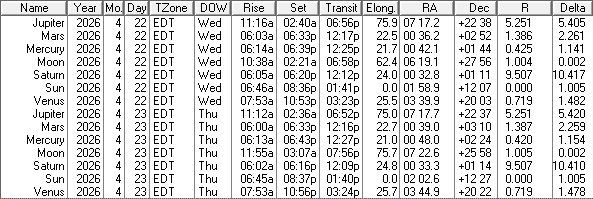
Let’s take our weekly look at the whereabouts of the naked-eye planets. By 9 PM tonight or about 30 minutes or so after sunset, Venus may be seen very low in the West. A telescope will show a very tiny disc on Venus, because it is still pretty much beyond the Sun, 138 million miles (222 million kilometers) away from us. Over the next 6 months it will be moving closer to us and becoming much larger. Jupiter is the brilliant star-like object high in the west-southwestern sky before 10 PM. It will appear just below the crescent Moon tonight. Venus will set at 10:54, while Jupiter will hold out until 2:30 AM. Meanwhile, Mercury, Mars and Saturn are still bunched up just west of the Sun, but are overwhelmed by bright morning twilight.
The astronomical event times given in this blog are for the Traverse City/Interlochen area of Michigan (Lat 44.7° N, Long 85.7° W; EDT, UT – 4 hours) unless stated otherwise. Times will be different for other locations.
Addendum
Ephemeris: 04/15/2026 – Taking our weekly look at the whereabouts of the naked-eye planets
This is Ephemeris for Wednesday, April 15th. Today the Sun will be up for 13 hours and 29 minutes, setting at 8:28, and it will rise tomorrow at 6:56. The Moon, 2 days before new, will rise at 6:15 tomorrow morning.
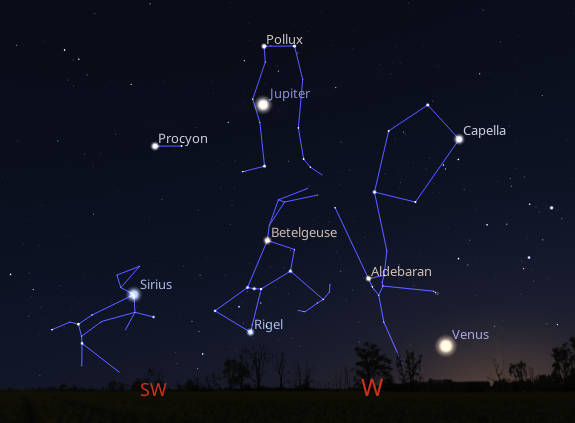
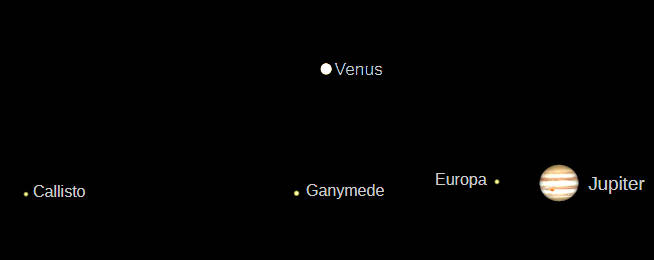
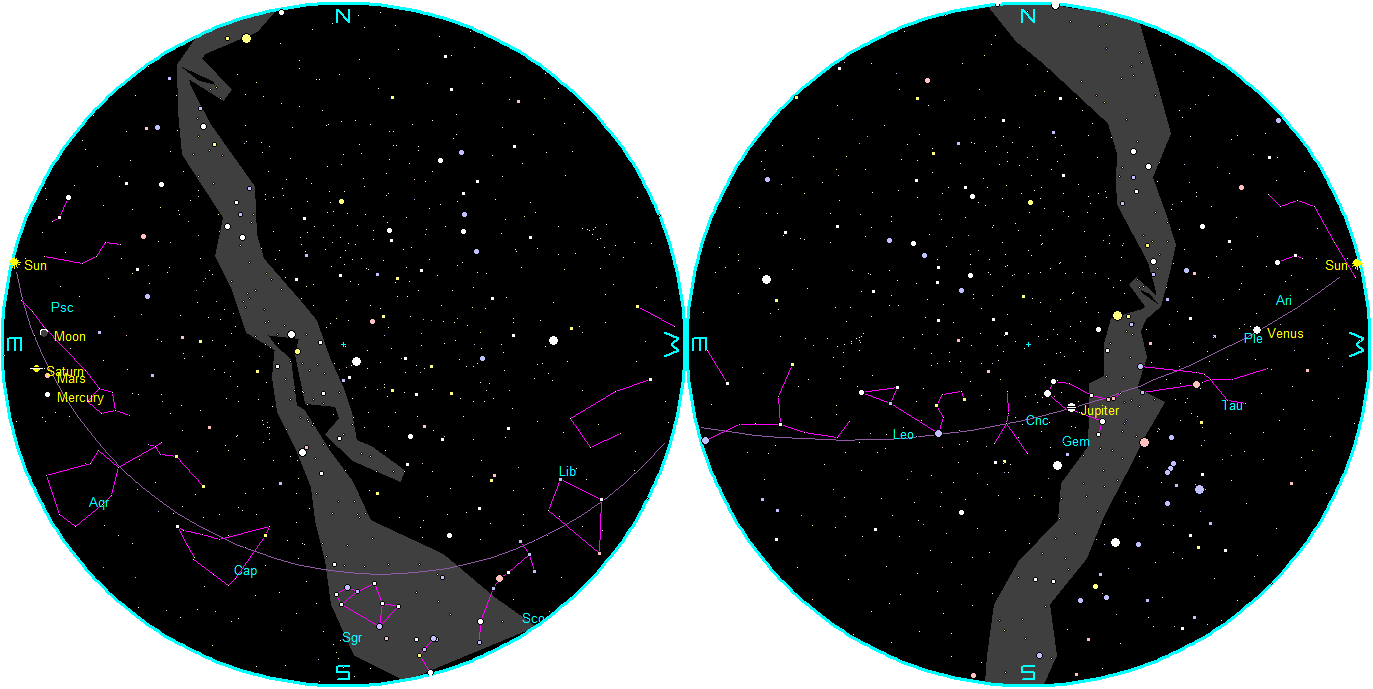
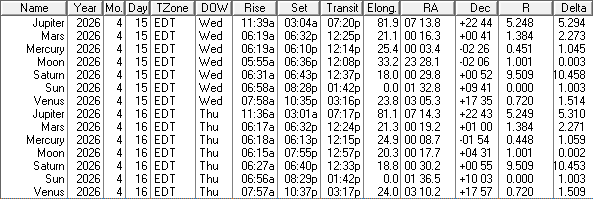
Let’s take our weekly look at the whereabouts of the naked-eye planets. By 9:15 PM tonight or about 45 minutes or so after sunset, Venus may be seen very low in the West. A telescope will show a very tiny disc on Venus, because it is still pretty much beyond the Sun, 141 million miles (226 million kilometers) away from us. Over the next 6 months it will be moving closer to us and becoming much larger. Jupiter is the brilliant star-like object high in the southwestern sky at the same time. Venus will set at 10:35, while Jupiter will hold out to 3 AM. Meanwhile, Mercury, Mars and Saturn are lined up just west of the Sun, but unfortunately are overwhelmed by bright morning twilight. Southern Hemisphere observers will them bunched up next week.
The astronomical event times given in this blog are for the Traverse City/Interlochen area of Michigan (Lat 44.7° N, Long 85.7° W; EDT, UT – 4 hours) unless stated otherwise. Times will be different for other locations.
Addendum