Archive
Ephemeris: 06/19/2025 – Finding the Serpent Bearer in the heavens
This is Ephemeris for Juneteenth, Thursday, June 19th. Today the Sun will be up for 15 hours and 34 minutes, setting at 9:31, and it will rise tomorrow at 5:57. The Moon, 1 day past last quarter, will rise at 2:15 tomorrow morning.
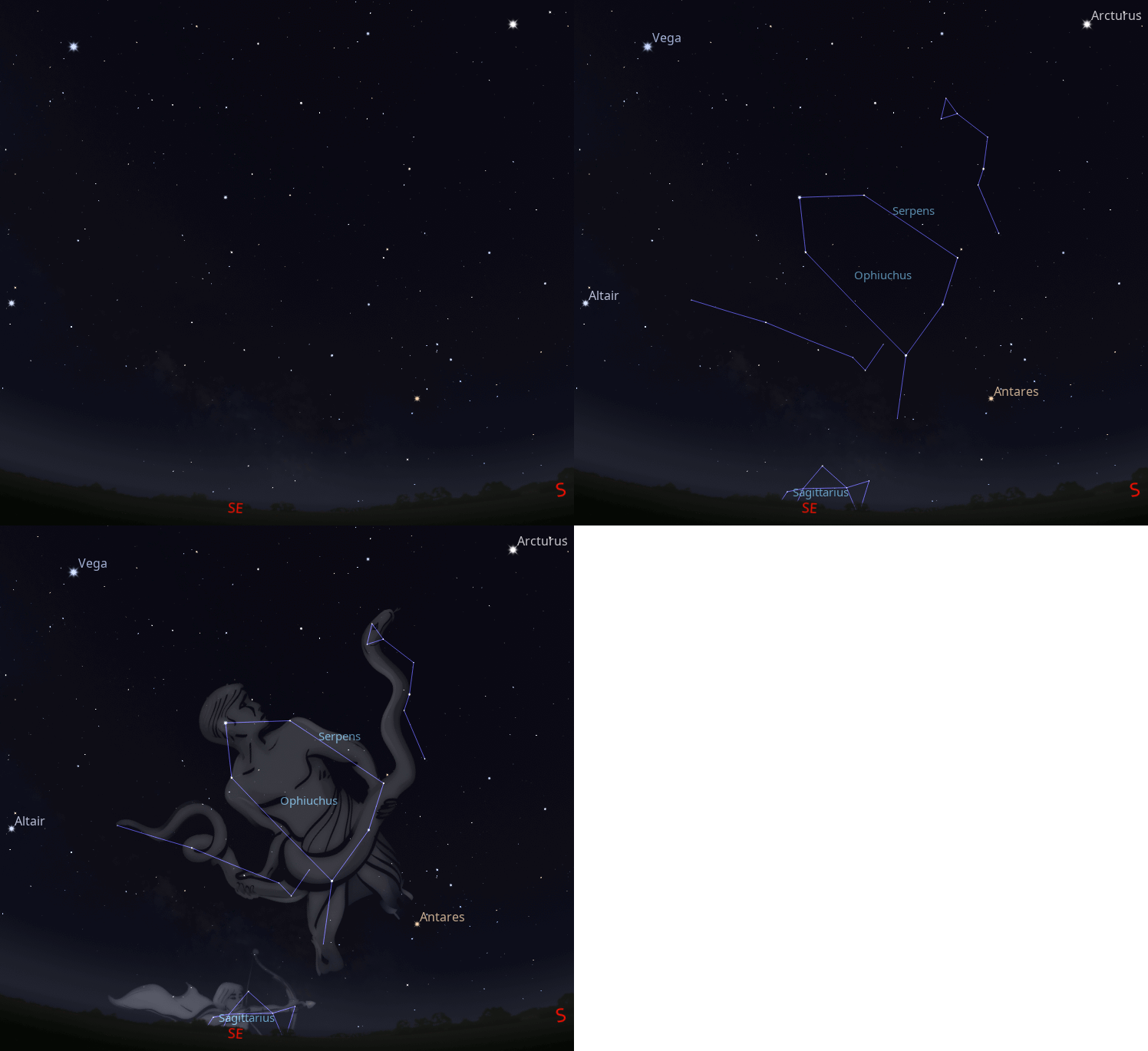
The red star Antares shines low in the south-southeast at 11 PM in the constellation of Scorpius. In the area of sky above and to the left lies a large constellation of faint stars called Ophiuchus, the serpent bearer. The constellation shape is like a large bell, which reminds me of the head, shoulders and arms of a fellow that’s holding the snake stretched out across his body. The serpent he’s holding is Serpens, the only two-part constellation in the heavens. The head rises to Ophiuchus’ right, and the tail extends up to the left. In Greek myth, Ophiuchus represents the great physician Aesculapius, educated by the god Apollo, and the centaur Chiron, who is found in the stars as Sagittarius, just rising below him.
The astronomical event times given in this blog are for the Traverse City/Interlochen area of Michigan (Lat 44.7° N, Long 85.7° W; EDT, UT – 4 hours) unless stated otherwise. Times will be different for other locations.
Addendum
07/13/2023 – Ephemeris – How to find Ophiuchus the serpent bearer
This is Ephemeris for Thursday, July 13th. Today the Sun will be up for 15 hours and 17 minutes, setting at 9:27, and it will rise tomorrow at 6:10. The Moon, halfway from last quarter to new, will rise at 3:04 tomorrow morning.
The red star Antares shines in the south at 11 p.m. In the constellation of Scorpius. In the area of sky above and a little to the left lies a large constellation of faint stars called Ophiuchus, the serpent bearer. The constellation shape is like a large bell, which reminds me of the head, shoulders and arms of a fellow that’s holding the snake-like a weight lifter pulling up a heavy barbell. The serpent he’s holding is Serpens, the only two-part constellation in the heavens. The head rises to Ophiuchus’ right, and the tail extends up to the left. In Greek myth, Ophiuchus represents the great physician Aesculapius, educated by the god Apollo, and the centaur Chiron, who is found in the stars as Sagittarius, now rising below and left of him.
The astronomical event times given are for the Traverse City/Interlochen area of Michigan (EDT, UT –4 hours). They may be different for your location.
Addendum
Ephemeris Extra – Wandering through Sagittarius
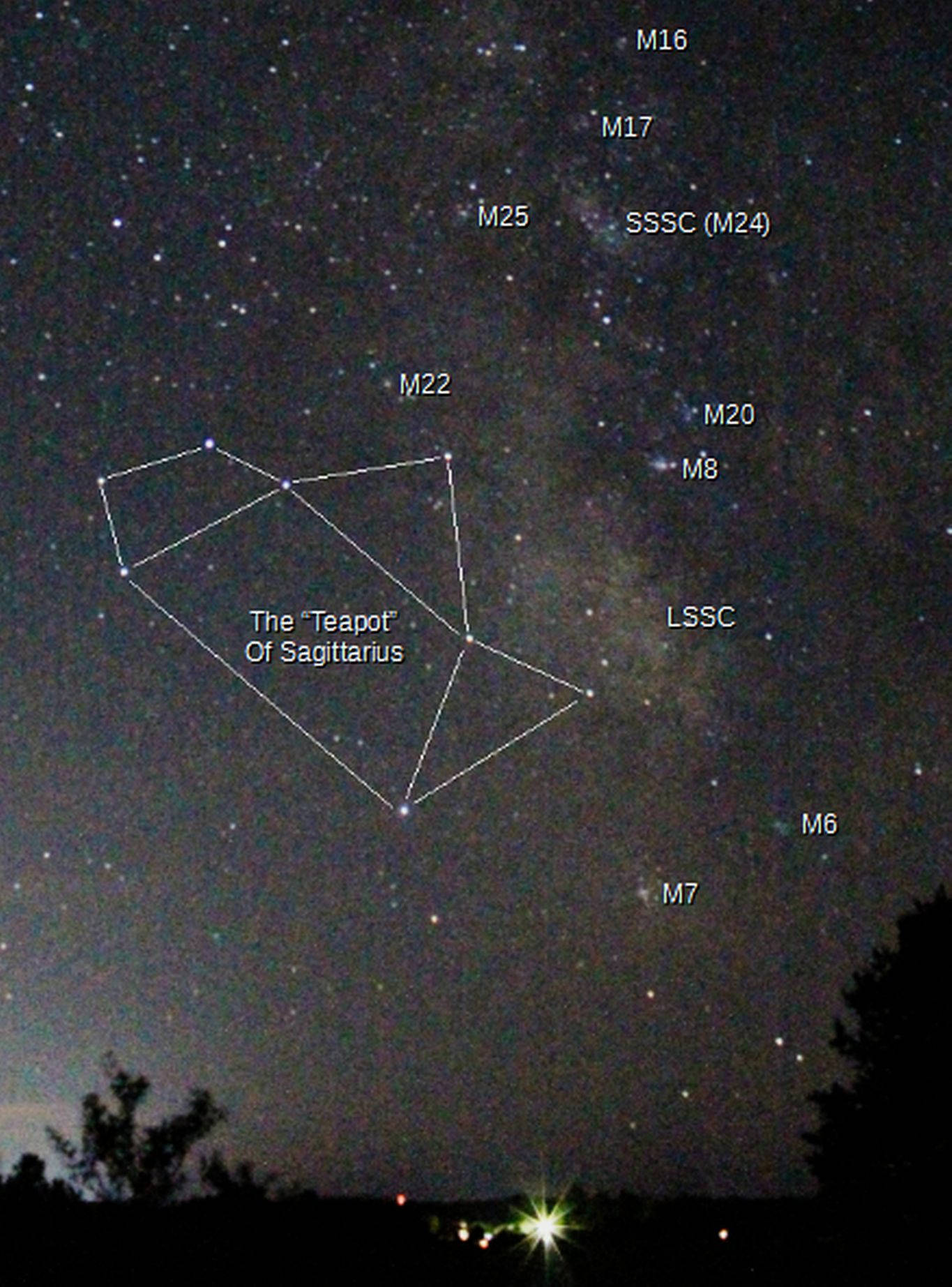
Sagittarius in a short time exposure with added annotations. The “M” designations are objects in Charles Messier’s catalog created in the latter half of the 18th century. LSSC is the Large Sagittarius Star Cloud, SSSC is the Small Sagittarius Star Cloud. Credit Bob Moler.
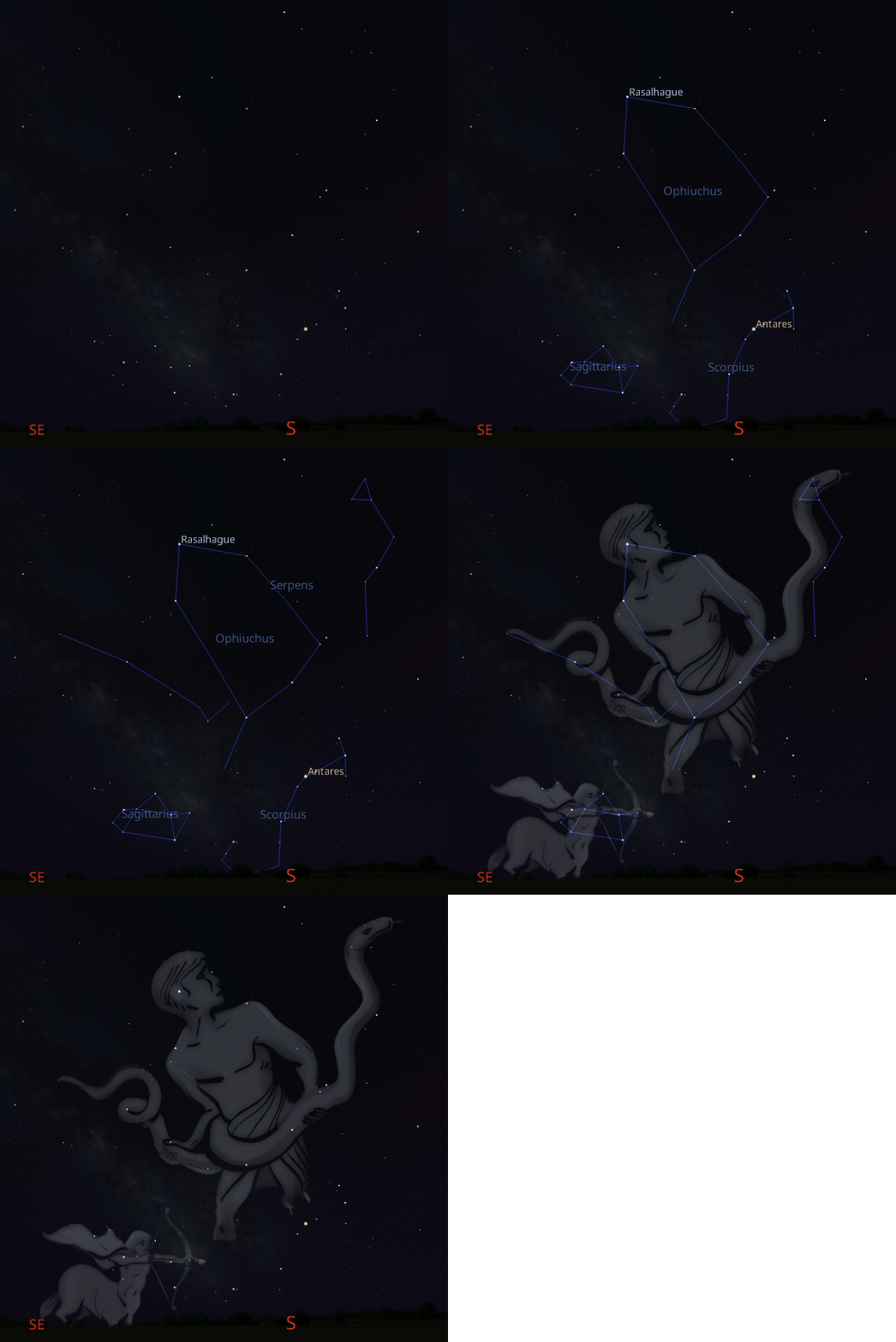
Sagittarius is seen low in the south in August. It’s between Scorpius to the west, and Capricornus, rising in the southeast. The name Sagittarius simply means archer. It doesn’t describe the fact that the archer isn’t just any old bloke with a bow and arrow, but is, indeed, a centaur, one of the two in the list of constellations. The other, Centaurus, is too far south to be seen from Michigan. And whose brightest star, Alpha Centauri, is in the closest star system to our solar system.
Centaurs, as a rule, were a rowdy bunch, the ancient Greek equivalent to a modern motorcycle gang. However, the centaur depicted by Sagittarius can be thought to be Chiron, though it can also be ascribed to Centaurus. Chiron was learned, a teacher and physician. I’ve noticed that in some artist’s depictions of Chiron, he is teaching Achilles how to use the bow and arrow. He also taught medicine to Asclepius, the great physician, who is seen in the heavens as the constellation Ophiuchus, above and right of Sagittarius.
What most of us see in the stars here is maybe a bow drawn to shoot at the heart of Scorpius, or a stout little teapot as in the children’s song. It even has the Milky Way seeming to rise from the spout like steam. The teapot rises in the southeast as if standing upright, and as the night wears on, it rises and move westward, slowly tilting to pour out its tea on the southwestern horizon.
The area of Sagittarius and the Milky Way is a fantastic part of the sky to explore with binoculars or a low power telescope on moonless nights. At the head of this post is a photograph of Sagittarius and the Milky Way taken from my home, with lines and labels. It’s somewhat spoiled by the sky glow from Chum’s Corner, a small commercial center 3.6 miles away, from the lower left. Most binoculars will show open or galactic star clusters as fuzzy spots like nebulae, which are fuzzy because they are clouds. The older globular star clusters require larger amateur telescopes to resolve.
I’ve only pointed out one in the image, that’s M22, whose designation, we have fun with at star parties at the Sleeping Bear Dunes National Lakeshore, since the road M22 runs through the park. Which came first? That’s easy, Charles Messier cataloged his 22nd object before Michigan was a state or even had roads. Well, maybe there were a few, around Detroit and Sault Ste. Marie, back when the major “roads” were the Great Lakes, and the rest Indian trails.
A telescope, even a small one, will resolve open clusters, showing individual stars. Telescopes will show the shapes of nebulae if they are bright enough.
One nebula with a distinctive shape is M17. The descriptive name I first knew it as was the Omega Nebula, and also the Horseshoe Nebula. To me, it never looked like either. It looked like a check mark, or a somewhat short necked swan. And it also goes by those names too. The planetarium program I use a lot, Stellarium, also calls it the Lobster nebula. I’m not much for seafood, but it doesn’t look like a lobster, or maybe I’m not hungry enough.
M16, is the Eagle Nebula. It has an associated star cluster. My eyes are drawn to the star cluster. The nebulosity is very faint, and I usually can’t see it. Part of the nebula was famously photographed by the Hubble Space Telescope and called the Pillars of Creation. In actuality, they are the Pillars of Destruction as they are being blown away by the stellar winds of the star cluster.
M8 is the Lagoon Nebula, it also has an associated star cluster. In telescopes, it is crossed by a narrow dust cloud suggestive of a lagoon. Nearby M20 is the Trifid nebula, which has a low surface brightness and can easily be missed. It is crossed by three narrow dust clouds dividing it into three, or on closer inspection, four wedges.
These just scratch the surface. So with or without optical aid wander through the celestial wonders and star clouds of Sagittarius. You have August and September to do it in the evening before they set for another year.
Based on an article I wrote for the August 2022 issue of the Stellar Sentinel, the Newsletter of the Grand Traverse Astronomical Society.
07/19/2022 – Ephemeris – How to find the constellations of the man with the snake
This is Ephemeris for Tuesday, July 19th. Today the Sun will be up for 15 hours and 7 minutes, setting at 9:22, and it will rise tomorrow at 6:16. The Moon, 1 day before last quarter, will rise at 12:52 tomorrow morning.
The red star Antares shines in the south at 11 pm, in the constellation of Scorpius. In the area of sky above lies a large constellation of faint stars called Ophiuchus, the serpent bearer. The constellation shape is like a large tilted bell, which reminds me of the head, shoulders and arms of a fellow that’s holding the snake, like a weight lifter pulling up a heavy barbell. The serpent he’s holding is Serpens, the only two-part constellation in the heavens. The head rises to Ophiuchus’ right, and the tail extends up to the left. In Greek legend Ophiuchus represents a great physician, educated by the god Apollo, and the centaur Chiron, who is also found in the stars as Sagittarius, now rising in the south-southeast below and left of him.
The astronomical event times given are for the Traverse City/Interlochen area of Michigan (EDT, UT – 4 hours). They may be different for your location.
Addendum
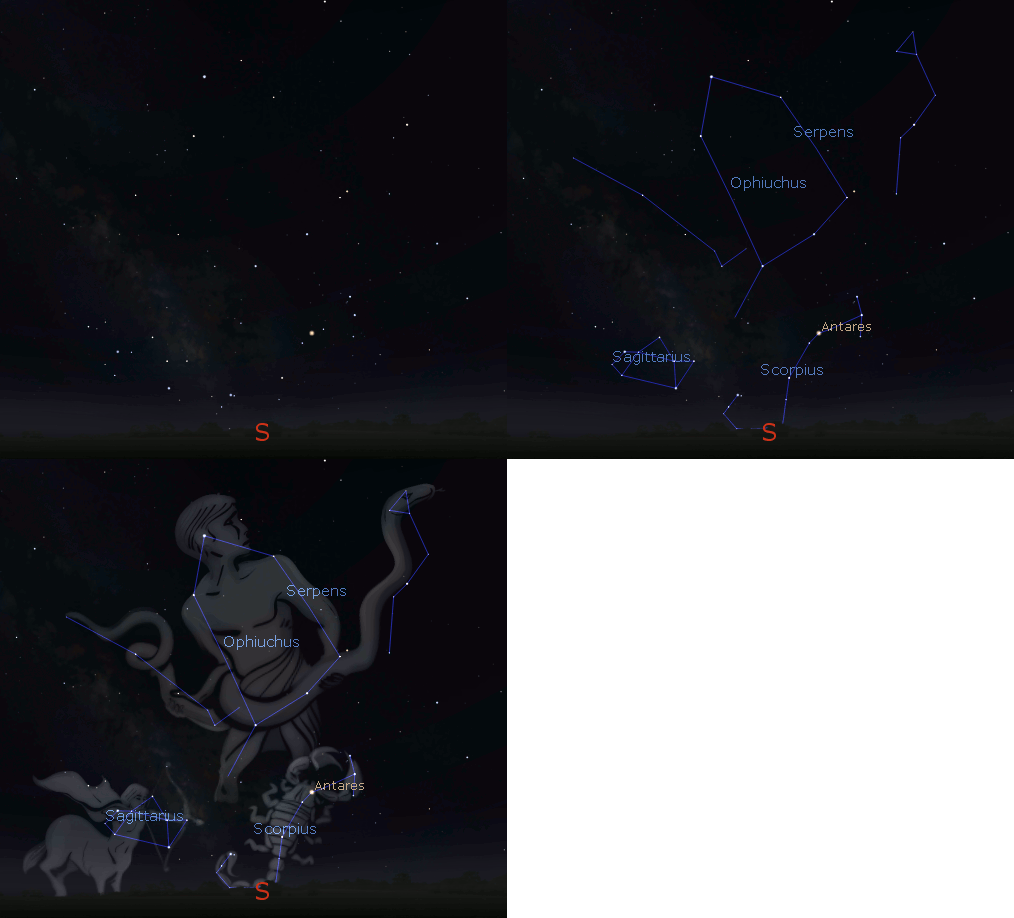
Ophiuchus finder animation for mid-July at 11 pm. Created using Stellarium and GIMP.
06/24/2019 – Ephemeris – Ophiuchus the serpent bearer
Ephemeris for Monday, June 24th. Today the Sun will be up for 15 hours and 34 minutes, setting at 9:32, and it will rise tomorrow at 5:58. The Moon, 1 day before last quarter, will rise at 2 tomorrow morning.
The planet Jupiter shines brightly in the south-southeast at 11 p.m. In the area of sky above it lies a large constellation of faint stars called Ophiuchus, the serpent bearer. Ophiuchus represents the legendary physician Aesculapius. The constellation shape is like a large bell, which reminds me of the head, shoulders and arms of a fellow that’s holding the snake like a weight lifter struggling to pull up a heavy barbell. Serpens, the constellation of the serpent is in the sky in two sections. The front end lies to the right as Serpens Caput, and wends its way up towards Corona Borealis, the Northern Crown. Serpens Cauda, the tail rises to the left of Ophiuchus. It’s a rewarding sight, and not that hard to spot.
The times given are for the Traverse City/Interlochen area of Michigan. They may be different for your location.
Addendum
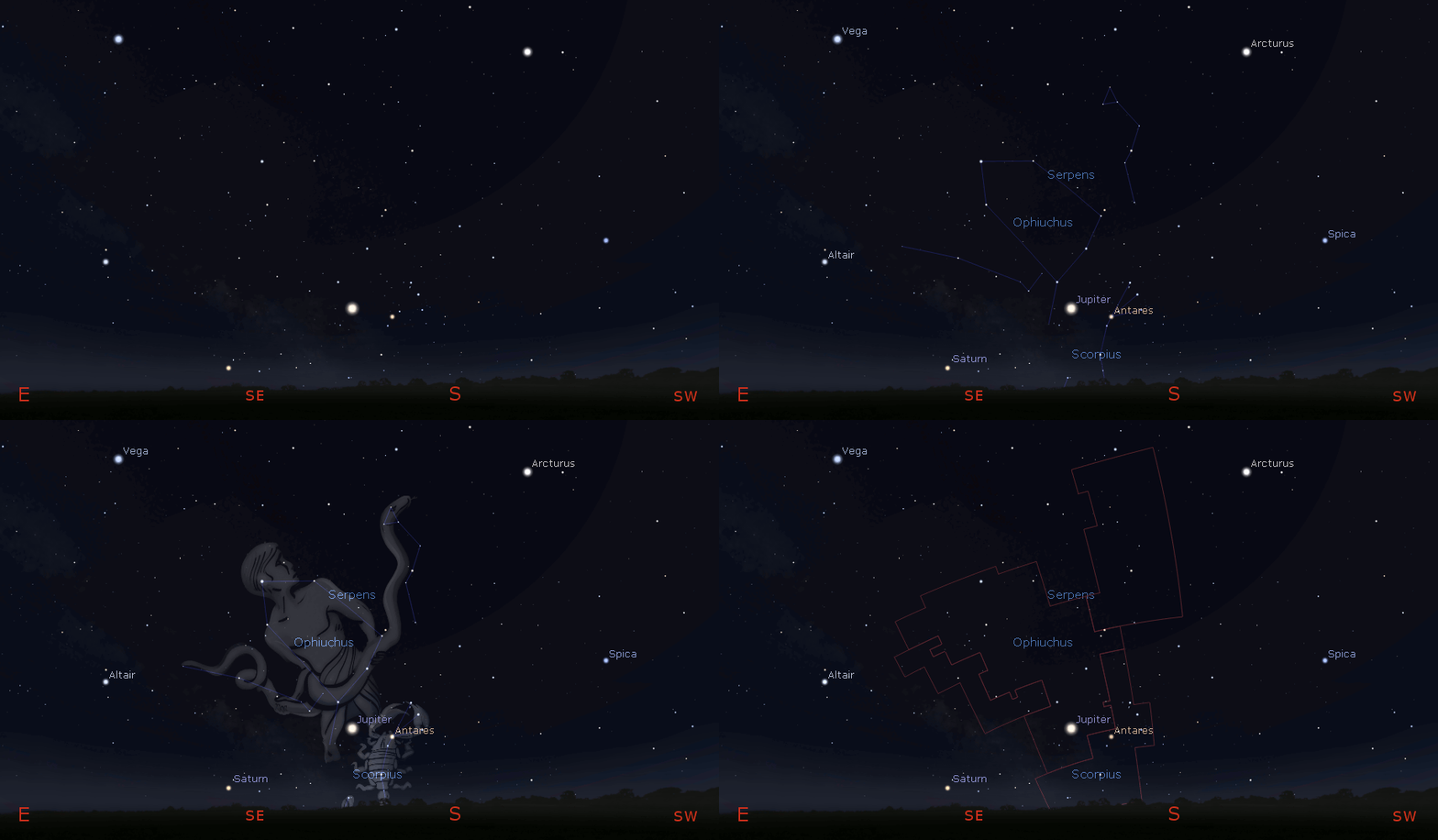
Ophiuchus finder animation for 11 p.m. June 24, 2019. Also showing the constellation boundaries. Click on the image to enlarge. Created using Stellarium and GIMP.
07/09/2018 – Ephemeris – Ophiuchus. the serpent bearer in the sky
Ephemeris for Monday, July 9th. Today the Sun will be up for 15 hours and 22 minutes, setting at 9:29, and it will rise tomorrow at 6:07. The Moon, half way from last quarter to new, will rise at 3:50 tomorrow morning.
The red star Antares shines in the south at 11 p.m. In the constellation of Scorpius. In the area of sky above and a little to the left lies a large constellation of faint stars called Ophiuchus, the serpent bearer. The constellation shape is like a large bell, which reminds me of the head, shoulders and arms of a fellow that’s holding the snake-like a weight lifter pulling up a heavy barbell. The serpent he’s holding is Serpens, the only two-part constellation in the heavens. The head rises to Ophiuchus’ right and the tail extends up to the left. In Greek legend Ophiuchus was a great physician, educated by the god Apollo, and the centaur Chiron, also found in the stars as Sagittarius, now rising below and left of him.
The times given are for the Traverse City/Interlochen area of Michigan. They may be different for your location.
Addendum
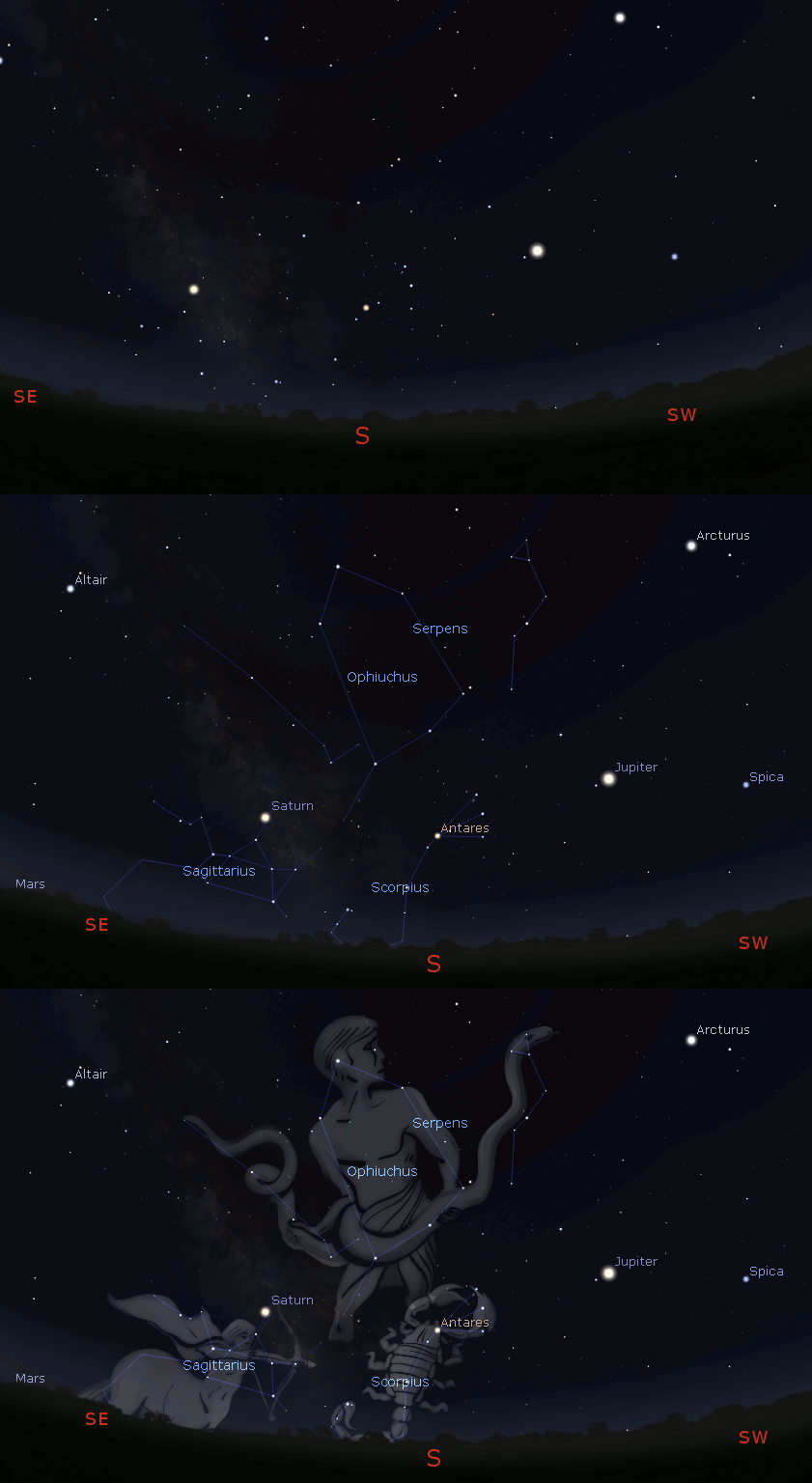
Ophiuchus finder animation plus constellations discussed. Created using Stellarium and GIMP.
03/09/2018 – Ephemeris – The good ship Argo
Ephemeris for Friday, March 9th. The Sun will rise at 7:06. It’ll be up for 11 hours and 35 minutes, setting at 6:41. The Moon, at last quarter today, will rise at 2:50 tomorrow morning.
Located south and east of Canis Major, the great hunting dog of Orion and it brilliant star Sirius in the south is a dim constellation of Puppis, the poop deck of the old constellation Argo Navis, the constellation that depicts the ship Jason and the Argonauts used in their search for the Golden Fleece. This huge constellation has been subdivided. Only Puppis and Pyxis the ship’s compass are visible from Michigan. The other parts of the ship are Carina the keel, and Vela the sails require traveling south at least to the southern most of the United States. Three other constellations also related to this expedition are Gemini with Castor, who died on the expedition and Pollux. Hercules was also aboard as was the physician of the constellation Ophiuchus.
The times given are for the Traverse City/Interlochen area of Michigan. They may be different for your location.
Addendum
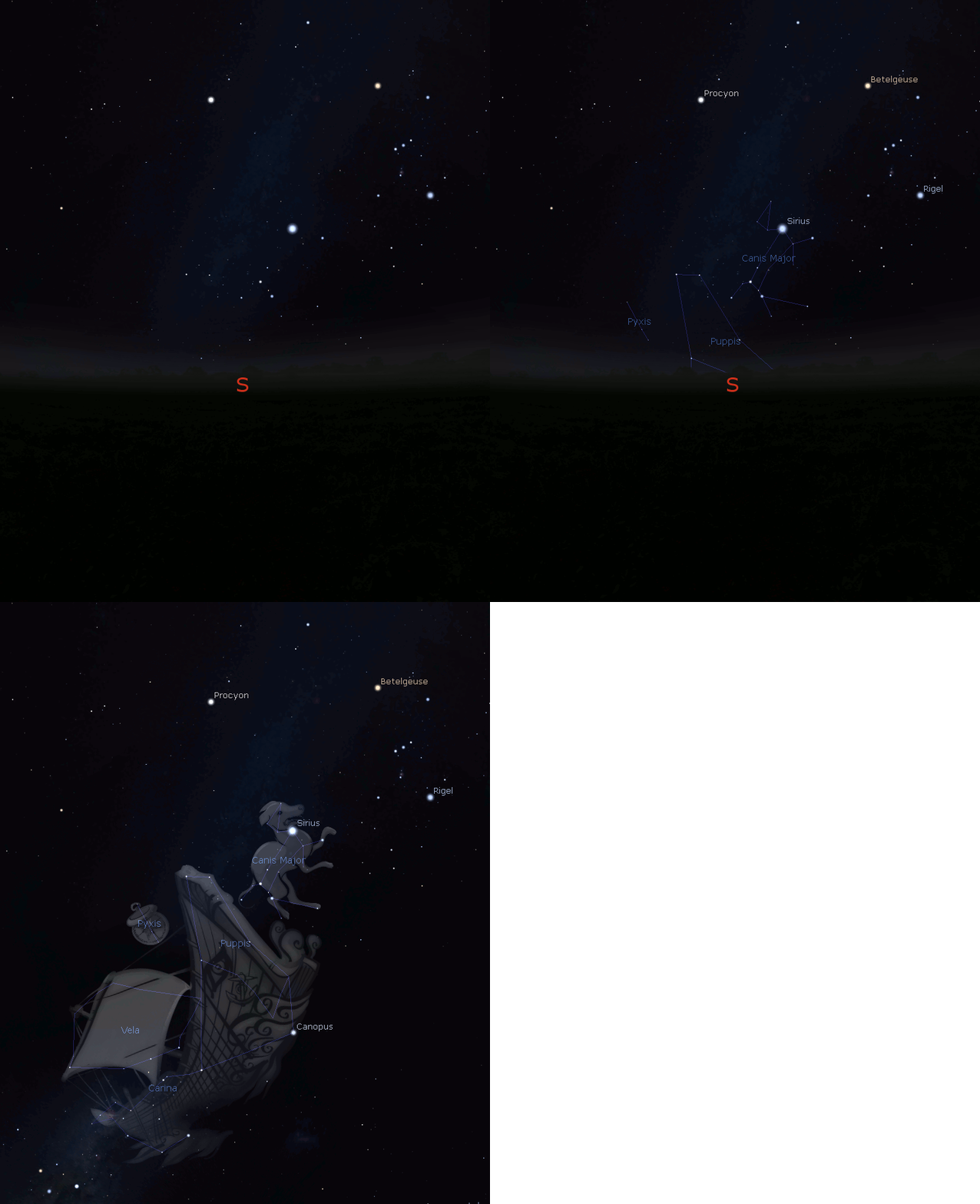
Puppis ans Pyxis; what we can see from Michigan, plus the rest of Argo Navis at 9 p.m., March 9, 2018. The Stellarium artist has the ship reversed. Puppis is the rear end, not the bow. Note that the Crux, the Southern Cross is below the ship. Click on the image to enlarge. Created using Stellarium and GIMP.
07/18/2017 – Ephemeris – The constellation of Ophiuchus the serpent bearer
Ephemeris for Tuesday, July 18th. Today the Sun will be up for 15 hours and 7 minutes, setting at 9:22, and it will rise tomorrow at 6:15. The Moon, 2 days past last quarter, will rise at 2:47 tomorrow morning.
Saturn and the red star Antares shine in the south at 11 p.m. In the area of sky above them lies a large constellation of faint stars called Ophiuchus, the serpent bearer. Ophiuchus represent the legendary physician Aesculapius. The constellation shape is like a large bell, which reminds me of the head, shoulders and arms of a fellow that’s holding the snake like a weight lifter struggling to pull up a heavy barbell. Serpens, the constellation of the serpent is in the sky in two sections. The front end lies to the right as Serpens Caput, and wends its way up the right side of Ophiuchus. Serpens Cauda, the tail rises to the left of Ophiuchus. It’s a rewarding sight, and not that hard to spot.
The times given are for the Traverse City/Interlochen area of Michigan. They may be different for your location.
Addendum
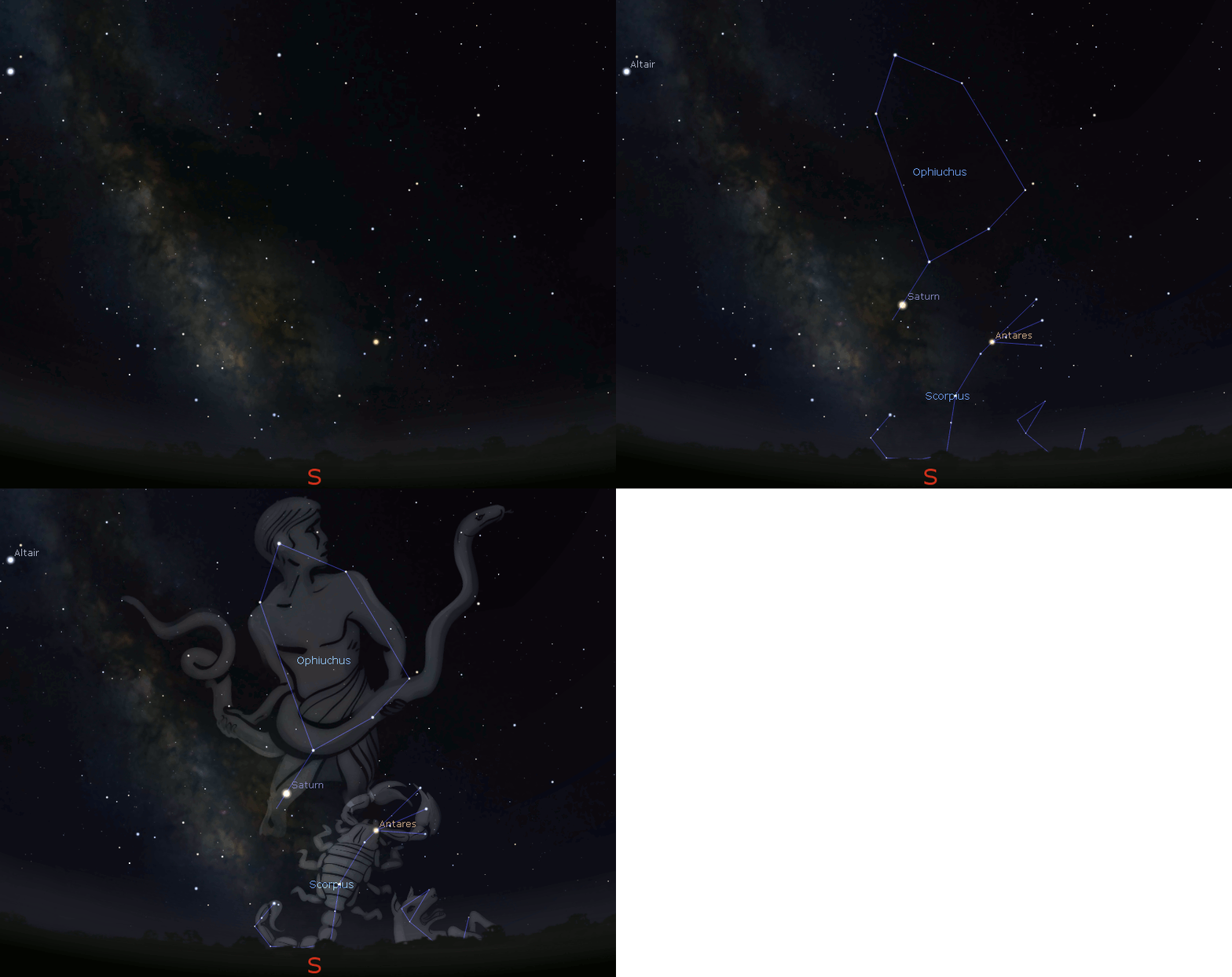
Animated Ophiuchus finder chart. Unfortunately the program doesn’t isolate Ophiuchus and Serpens, but also displays Scorpius and Lupus the wolf peeking over the horizon. Created using Stellarium. Click on the image to enlarge.
07/07/2016 – Ephemeris – The snake handler in the sky
Ephemeris for Thursday, July 7th. Today the Sun will be up for 15 hours and 24 minutes, setting at 9:30, and it will rise tomorrow at 6:06. The Moon, 3 days past new, will set at 11:31 this evening.
Saturn and the red star Antares shine in the south at 11 p.m. In the area of sky above it lies a large constellation of faint stars called Ophiuchus, the serpent bearer. Ophiuchus represent the legendary physician Aesculapius. The constellation shape is like a large bell, which reminds me of the head, shoulders and arms of a fellow that’s holding the snake-like a weight lifter struggling to pull up a heavy barbell. Serpens, the constellation of the serpent is in the sky in two sections. The front end lies to the right as Serpens Caput, and wends its way up towards Corona Borealis, the Northern Crown. Serpens Cauda, the tail rises to the left of Ophiuchus. It’s a rewarding sight, and not that hard to spot.
Times are for the Traverse City/Interlochen area of Michigan. They may be different for your location.
Addendum
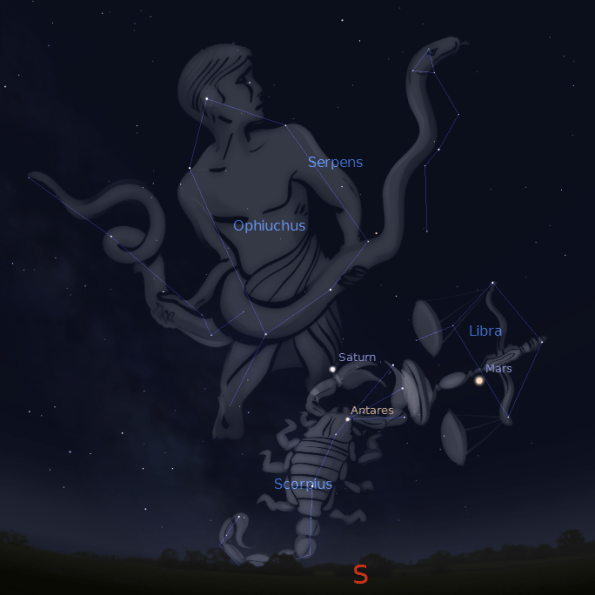
The figure of Ophiuchus with Saturn and Mars nearby at 11 p.m. July 7, 2016. Created using Stellarium.
08/17/2015 – Ephemeris – The celestial snake handler
Ephemeris for Monday, August 17th. The Sun rises at 6:47. It’ll be up for 13 hours and 58 minutes, setting at 8:45. The Moon, 3 days past new, will set at 10:04 this evening.
The planet Saturn and the red star Antares shine in the south-southwest at 10:30 p.m. In the and around constellation of Scorpius. In the area of sky above it lies a large constellation of faint stars called Ophiuchus, the serpent bearer. The constellation shape is like a large bell, which reminds me of the head, shoulders and arms of a fellow that’s holding the snake-like a weight lifter pulling up a heavy bar bell. The serpent he’s holding is Serpens, the only two part constellation in the heavens. The head rises to Ophiuchus’ right and the tail extends up to the left. In legend Ophiuchus was a great physician, educated by the god Apollo, and the centaur Chiron, also found in the stars as Sagittarius, below and left of him.
Times are for the Traverse City/Interlochen area of Michigan. They may be different for your location.
Addendum
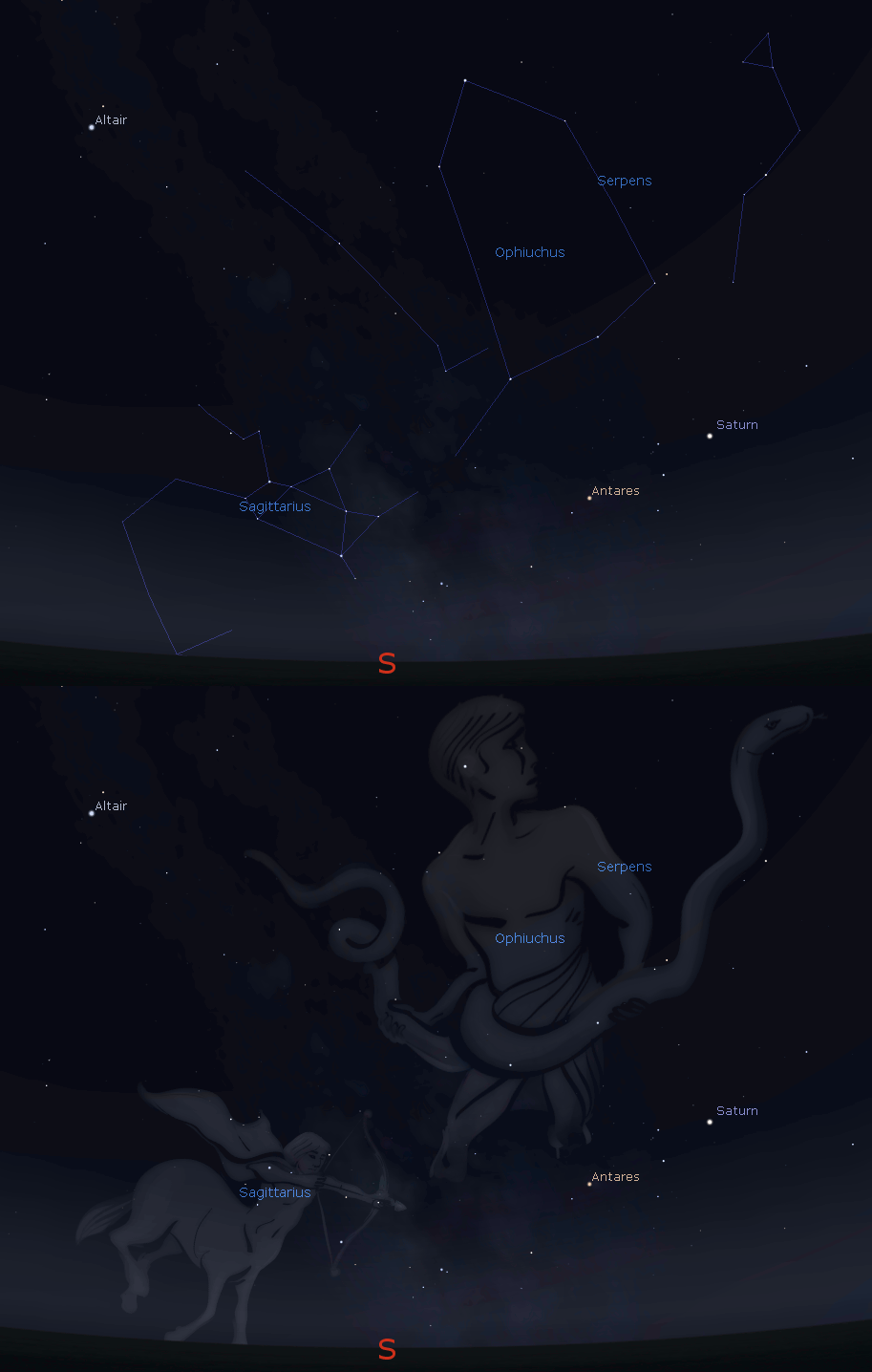
Ophiuchus, Serpens and Sagittarius with Saturn and Antares on August 17, at 10 p.m. Created using Stellarium.
 Bob Moler's Ephemeris Blog