Archive
Ephemeris: 03/04/2024 – The evening skies are a-changing
This is Ephemeris for Monday, March 4th. Today the Sun will be up for 11 hours and 21 minutes, setting at 6:35, and it will rise tomorrow at 7:12. The Moon, 1 day past last quarter, will rise at 4:30 tomorrow morning.
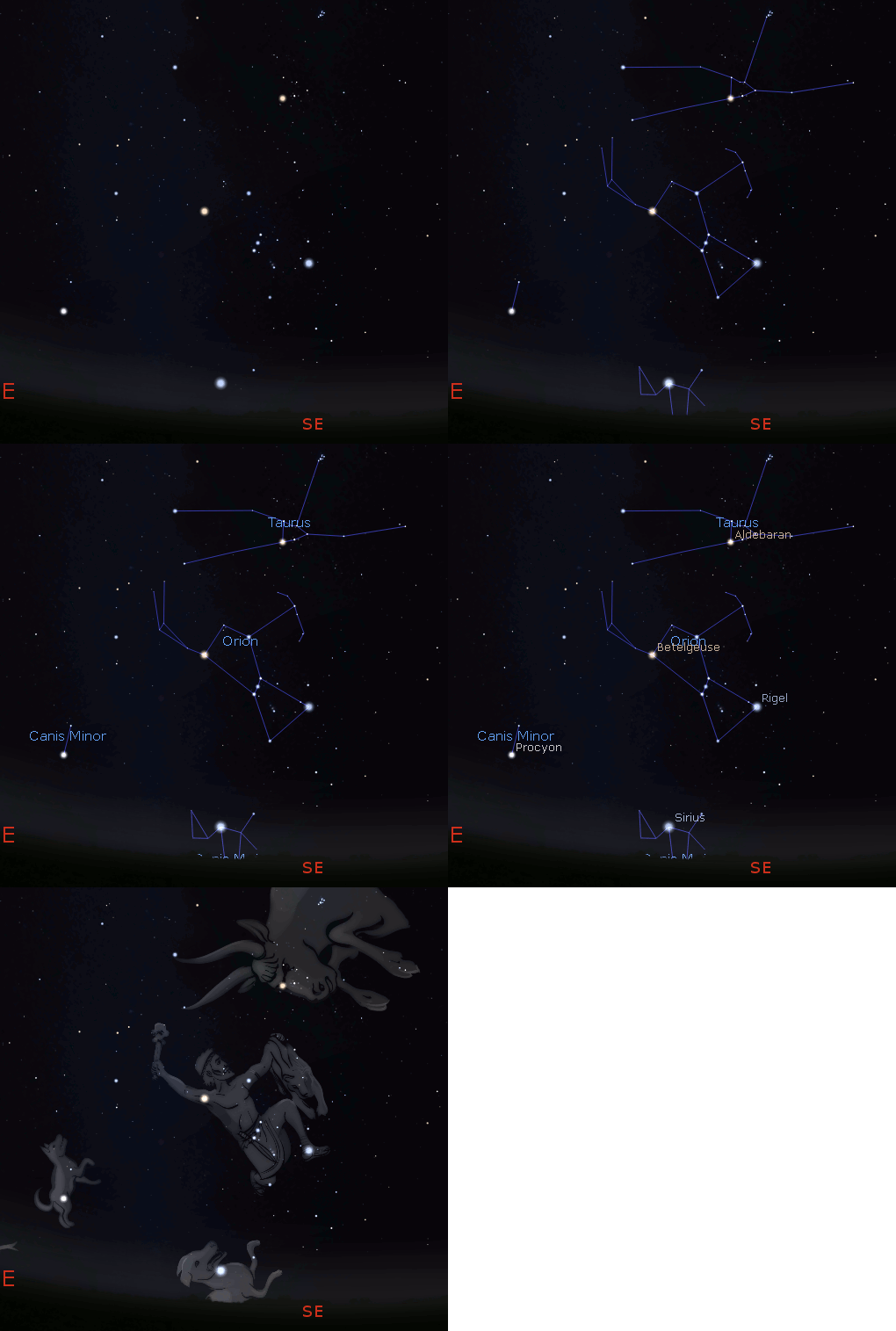
Tonight at 8 pm Orion is in the south. This will be the last month that we will be able to enjoy Orion in the evening sky, because by month’s end he will begin to dip low in the west in the evening twilight. Even though it’s not quite spring, the central constellation of that season, Leo the lion, is already rising in the east. It has cleared the horizon at 8 this evening. The backwards question mark of Leo’s head, mane and front part of his body is easily spotted in the east now with the bright star Regulus at the bottom. The Big Dipper is in the northeast, also rising higher, and signaling via the Anishinaabek constellation there of the Fisher Star, announcing the maple sugaring season.
The astronomical event times given are for the Traverse City/Interlochen area of Michigan (EST, UT –5 hours). They may be different for your location.
Addendum
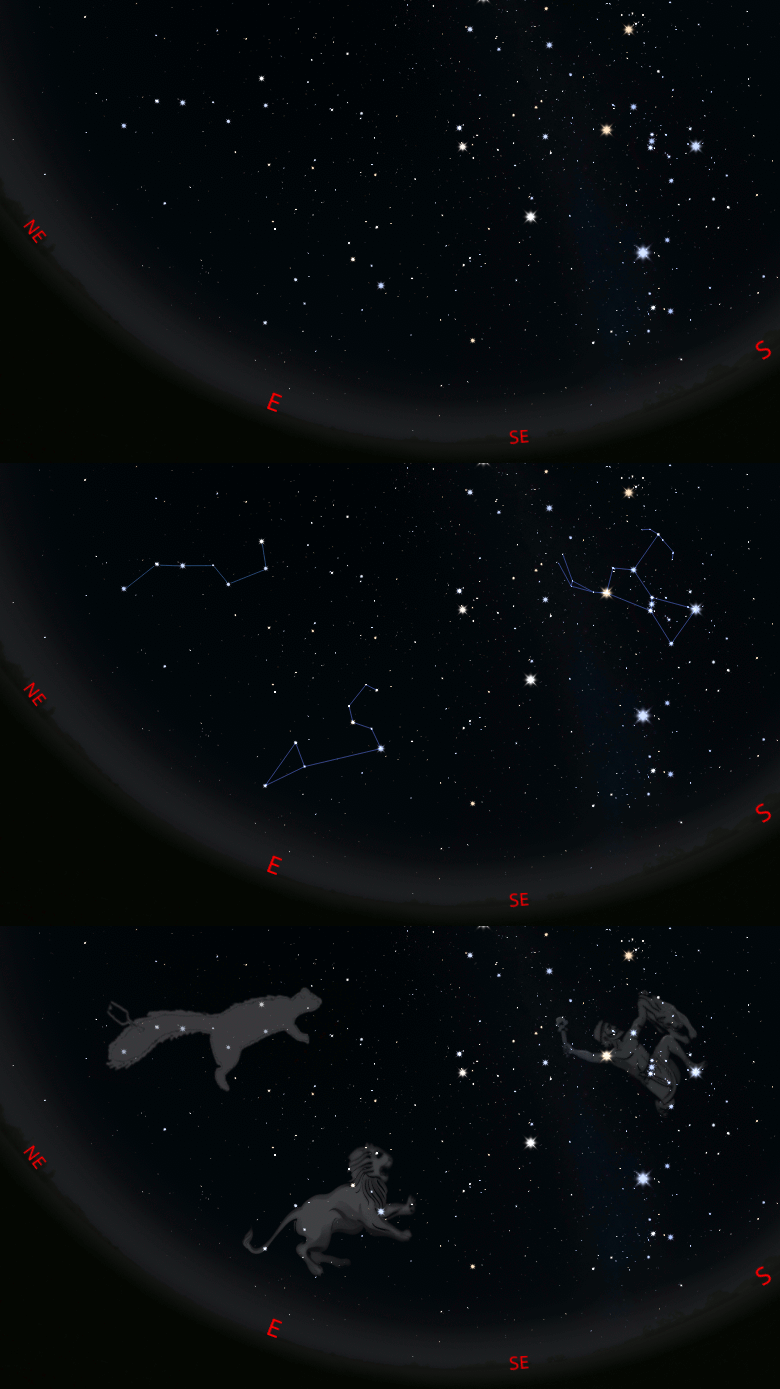
Looking to the east-southeast at 8 pm we look at three star groups or constellations. From left to right we have the Big Dipper and the Fisher Star in the northeast. Centered in the east we have Leo the lion. And on the right, just west of south, we have Orion the central winter constellation. Click or tap on the image to enlarge it. Credit: Stellarium, and using LibreOffice Draw, and GIMP.
Ephemeris: 02/08/2024 – Up the river
This is Ephemeris for Thursday, February 8th. Today the Sun will be up for 10 hours and 7 minutes, setting at 6:00, and it will rise tomorrow at 7:52. The Moon, 1 day before new, will rise at 8:09 tomorrow morning.
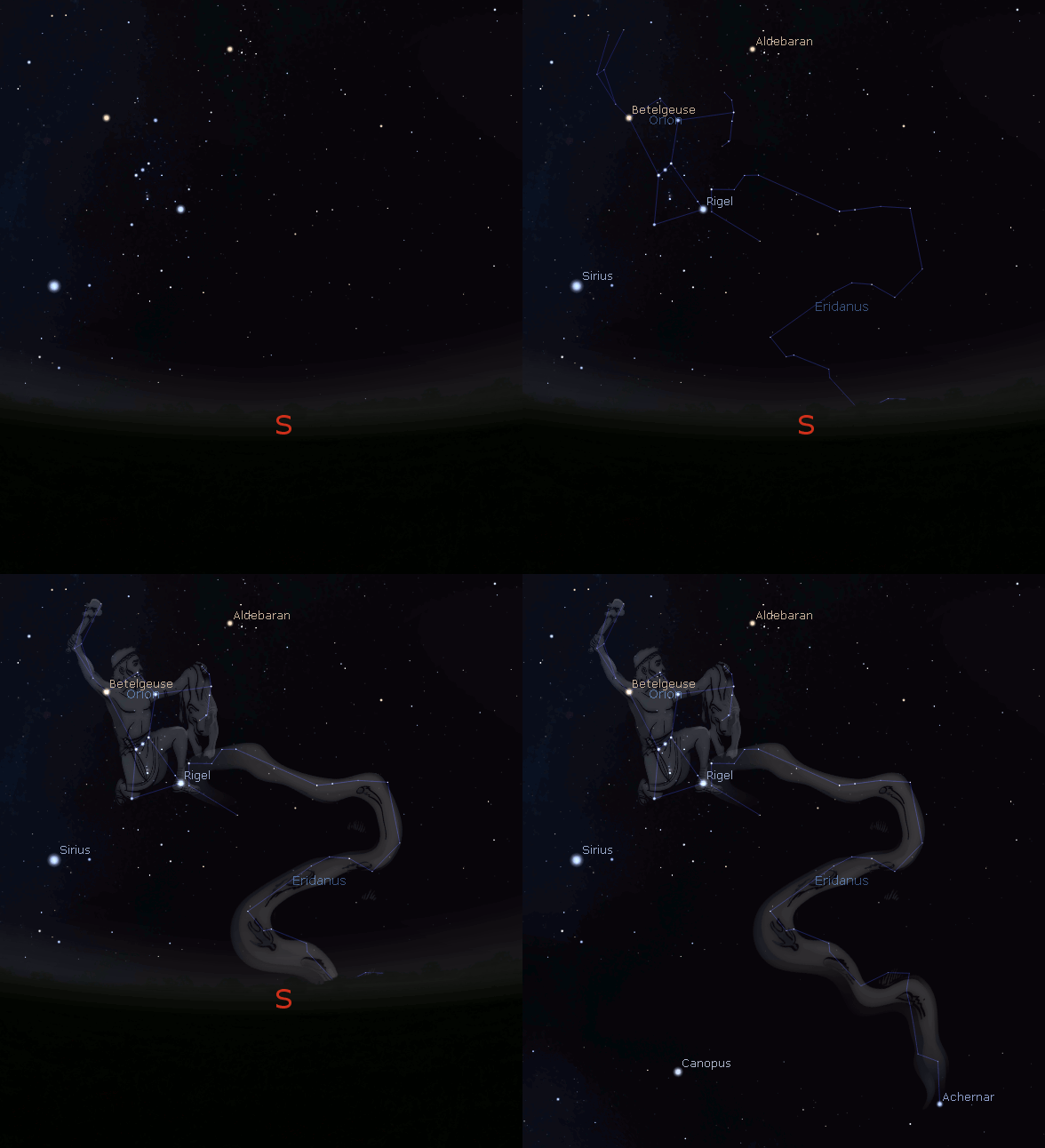
One of the more obscure constellations around is Eridanus, which depicts a river. The river starts near the lower right corner of Orion, near the bright star Rigel and flows to the right then down near the southwestern horizon, then it meanders along the horizon to the south before turning below the horizon. One has to travel to the far south to see the southern terminus of the river, the bright star Achernar. Writers over the ages have seen here the Nile and the Earth circling river Ocean of the flat earth days. Achernar is actually two stars, the brightest was discovered to be the flattest star known, due to its rapid spin. The dimensions of Achernar A has been determined to be twice as wide across its equator than from pole to pole. It’s 139 light years away.
The astronomical event times given are for the Traverse City/Interlochen area of Michigan (EST, UT –5 hours). They may be different for your location.
Addendum
Ephemeris: 02/04/2024 – The rabbit at the feet of Orion
This is Ephemeris for Tuesday, February 6th. Today the Sun will be up for 10 hours and 1 minute, setting at 5:57, and it will rise tomorrow at 7:55. The Moon, 3 days before new, will rise at 6:44 tomorrow morning.
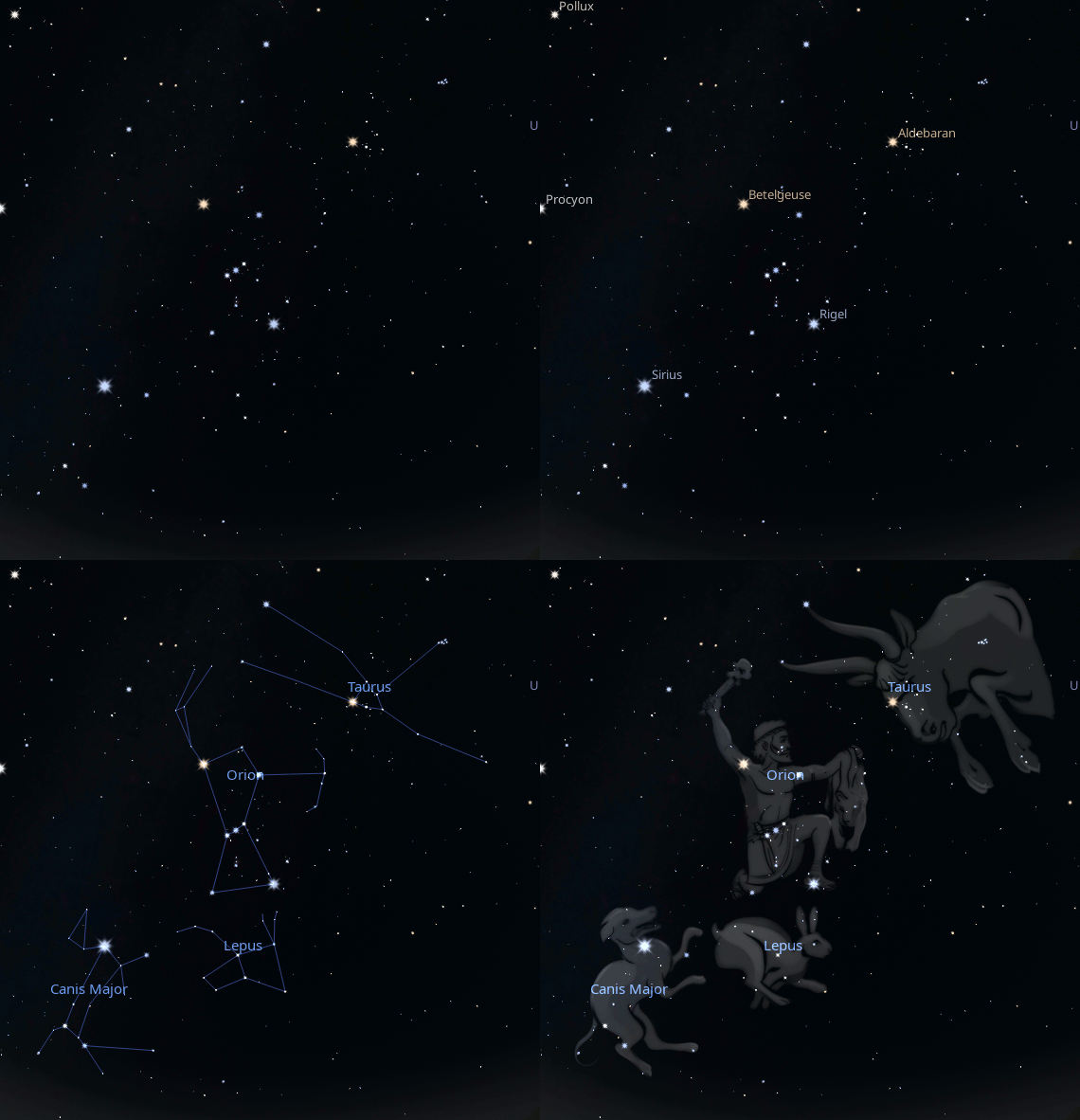
The constellation of Orion the hunter is in the south in the evening, and he seems to be preoccupied with the charge of Taurus the bull to his upper right. Unnoticed by him and below him is a small constellation called Lepus the hare, made of very dim stars. Good luck trying to make a rabbit out of those stars. In the constellation art that comes with the free application Stellarium. It displays the sky like a planetarium. The artistic constellation of the figure of Canis Major, Orion’s large hunting dog seems to be taking notice of Lepus and is beginning to chase it Lepus the hare is a nice addition to the tableau presented in the winter sky. Stellarium-web.org is a web based version of Stellarium that doesn’t have to be installed on your device.
The astronomical event times given are for the Traverse City/Interlochen area of Michigan (EST, UT –5 hours). They may be different for your location.
Addendum
Ephemeris: 02/05/2024 – Looking at the star Procyon
This is Ephemeris for Monday, February 5th. Today the Sun will be up for 9 hours and 59 minutes, setting at 5:56, and it will rise tomorrow at 7:56. The Moon, 3 days past last quarter, will rise at 5:44 tomorrow morning.
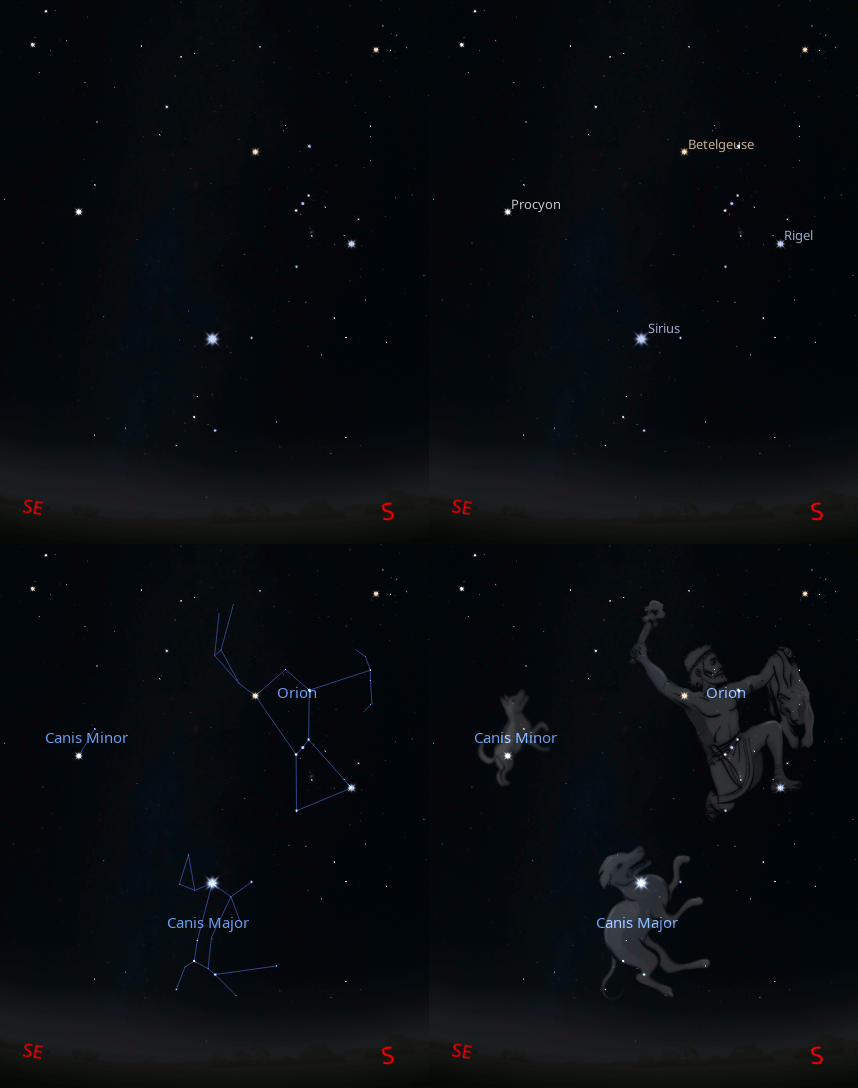
The star Procyon is in Orion’s little hunting dog Canis Minor, which contains only one other star. It can be found by using the shoulder stars of Orion, Bellatrix and Betelgeuse, pointing to the left and down a bit to Procyon in the evening. The word Procyon appears to mean “Before the Dog” meaning that rises before the Dog Star, Sirius, even though it is east of it. Procyon is also north of Sirius, which for observers above 30° north latitude does indeed rise before the Dog Star. It is a star like Sirius, though it’s not as bright, or white. Procyon is 11.5 light years away while Sirius is 8.4 light years away. Both have tiny white dwarf companion stars.
The astronomical event times given are for the Traverse City/Interlochen area of Michigan (EST, UT –5 hours). They may be different for your location.
Addendum
Ephemeris: 01/30/2024 – The Winter Maker moves to center stage at midwinter
This is Bob Moler with Ephemeris for Tuesday, January 30th. Today the Sun will be up for 9 hours and 43 minutes, setting at 5:48, and it will rise tomorrow at 8:03. The Moon, 3 days before last quarter, will rise at 10:53 this evening.
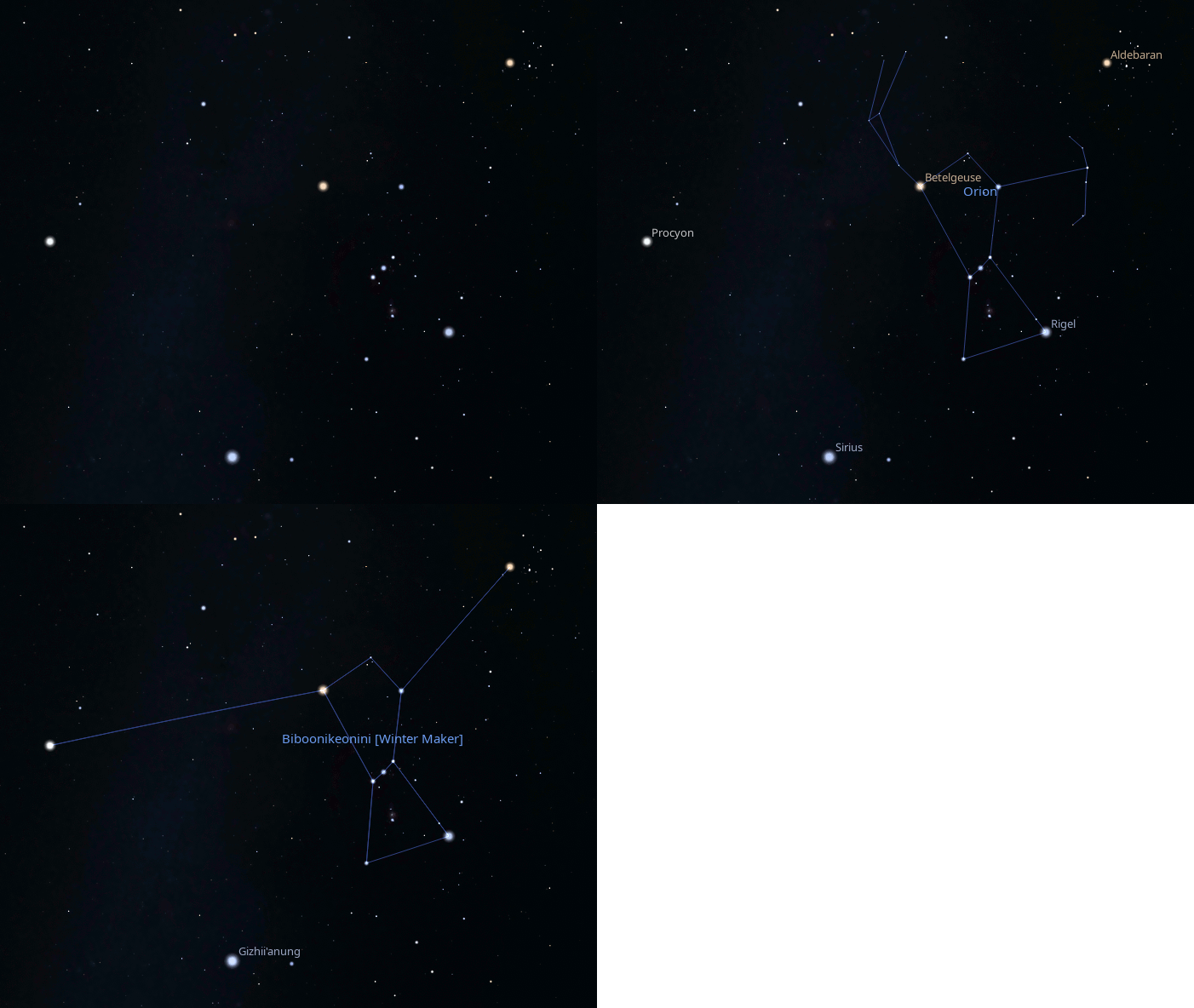
As we approach midwinter looking in the south at about 9 pm we see the great constellation of Orion the hunter. For the Anishinaabek people, who are native to our Great Lakes area, that constellation is the Wintermaker. Instead of holding a club and a shield, as Orion does, he has his arms outstretched from Aldebaran in Taurus to Procyon in Canis Minor embracing all the winter constellations. I’ve first seen him as morning twilight started when I’ve stayed up all night to watch the Perseid meteor shower in August. We begin to see him on late November evenings, rising in the east, to herald the coming of winter, and we will lose him in April when he descends into the West in the evening twilight.
The astronomical event times given are for the Traverse City/Interlochen area of Michigan (EST, UT –5 hours). They may be different for your location.
Addendum
Ephemeris: 01/29/2024 – Canis Major, Orion’s larger hunting dog
This is Ephemeris for Monday, January 29th. Today the Sun will be up for 9 hours and 41 minutes, setting at 5:46, and it will rise tomorrow at 8:04. The Moon, halfway from full to last quarter, will rise at 9:50 this evening.
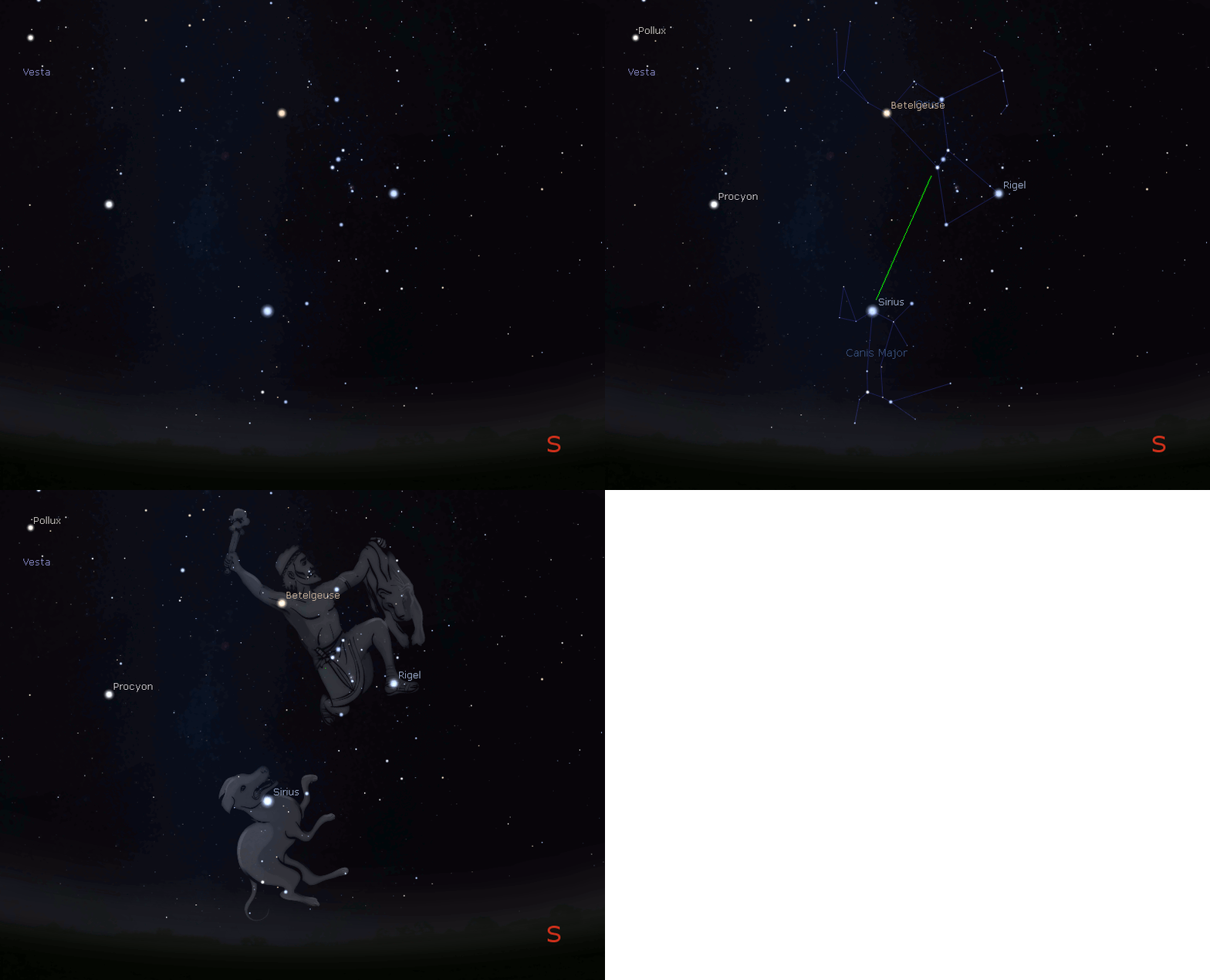
The great winter constellation or star group, Orion the hunter, is located in the south-southeastern sky at 9 p.m. His elongated rectangle of a torso is nearly vertical. In the center of the rectangle are three stars in a line that make his belt. As a hunter, especially one of old, he has two hunting dogs. The larger, Canis Major, can be found by following the three belt stars of Orion down and to the left. They point to Sirius, the brightest nighttime star, also known as the Dog Star. It’s in the heart of a stick figure dog low in the southeast facing Orion that appears to be begging. There’s a fine star cluster, called Messier 41, or M41, the Little Beehive Cluster, at the 5 o’clock position from Sirius. It’s easily visible in binoculars or a small telescope.
The astronomical event times given are for the Traverse City/Interlochen area of Michigan (EST, UT –5 hours). They may be different for your location.
Addendum
Ephemeris: 01/11/2024 – Rigel, the star in Orion’s knee or is it his foot?
This is Bob Moler with Ephemeris for Thursday, January 11th. Today the Sun will be up for 9 hours and 4 minutes, setting at 5:23, and it will rise tomorrow at 8:18. The Moon is new today, and won’t be visible.
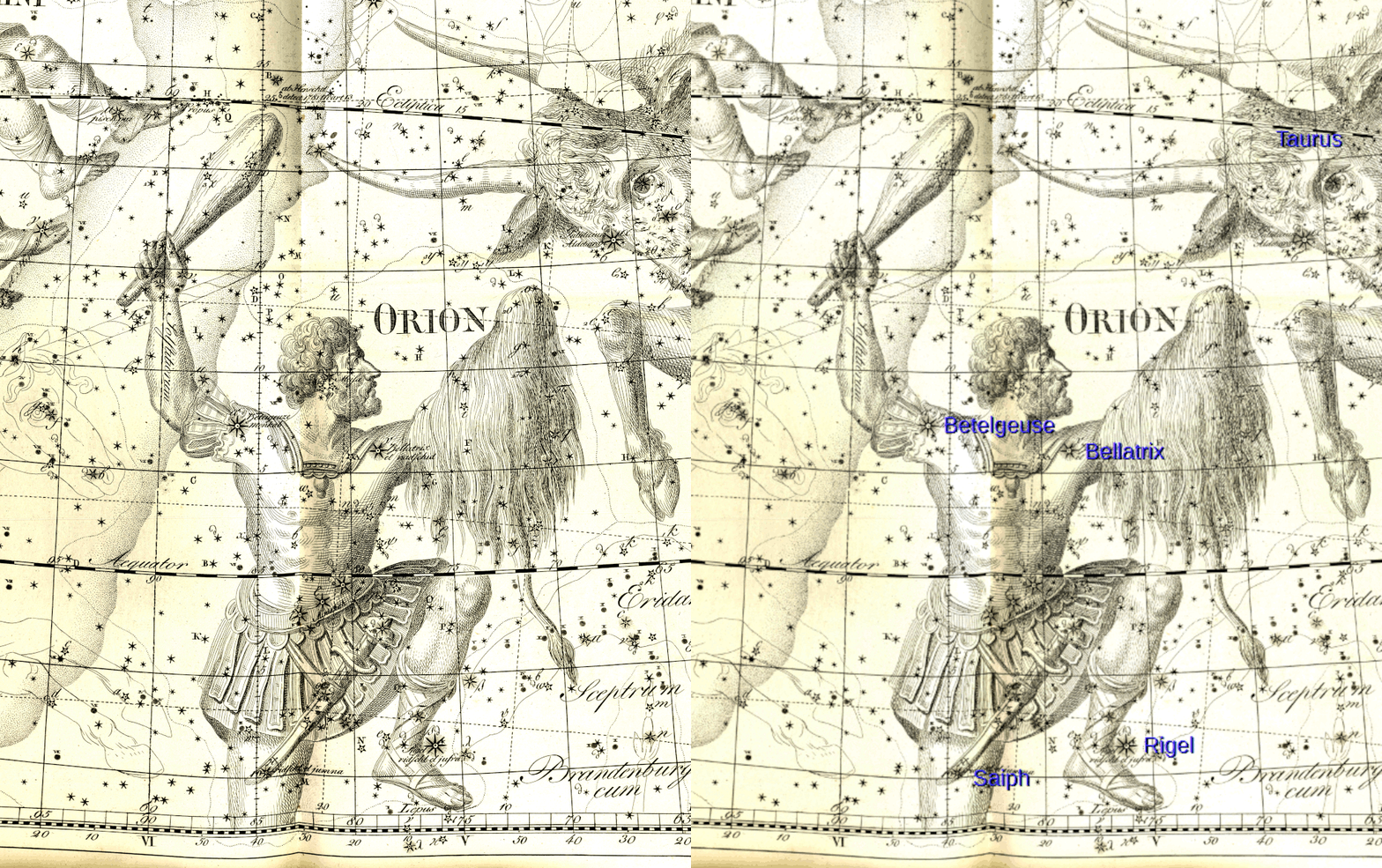
Orion’s second first magnitude star is Rigel in the lower right corner of the constellation this is a blue-white star in contrast to Betelgeuse which is a reddish star. The name Rigel is part of a phrase that means Left foot of Jauzah. Jauzah being the old name of the constellation Orion. It’s where we place Orion’s left knee now. In older drawings of the constellation, Orion has his left foot raised as if charging towards Taurus who’s charging at him. Rigel is about the same mass as Betelgeuse, though it’s nearly twice as far away at nearly 900 light years. Rigel is a quadruple star system. The bright Rigel A itself has what looks like a companion in small telescopes. That companion is actually three stars orbiting each other.
The astronomical event times given are for the Traverse City/Interlochen area of Michigan (EST, UT –5 hours). They may be different for your location.
Addendum
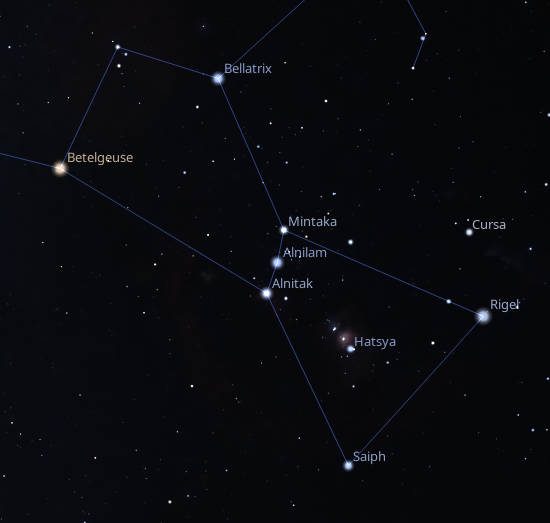
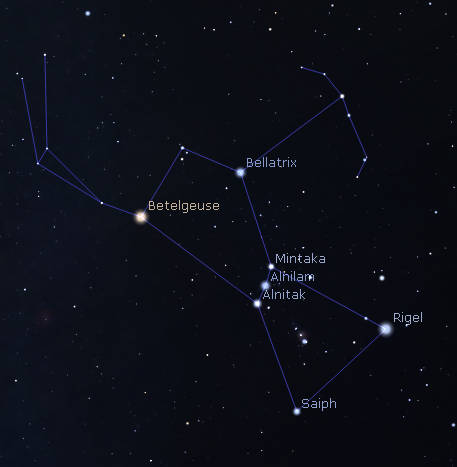
right-most bright star Is Rigel, a bluish white star, in contrast to Betelgeuse which has a ruddy glow. Here it looks like Betelgeuse and Bellatrix are in Orion’s shoulders and Saiph and Rigel are in his knees, with the belt star halfway in between. The word Rigel, however, means foot, and Saiph means sword. Check out the star chart below. Created using Stellarium.
Ephemeris: 01/09/2024 – Betelgeuse, Betelgeuse, nope I’m not saying it again
Jan 9. This is Ephemeris for Tuesday, January 9th. Today the Sun will be up for 9 hours and 1 minute, setting at 5:20, and it will rise tomorrow at 8:18. The Moon, 2 days before new, will rise at 8:04 tomorrow morning.
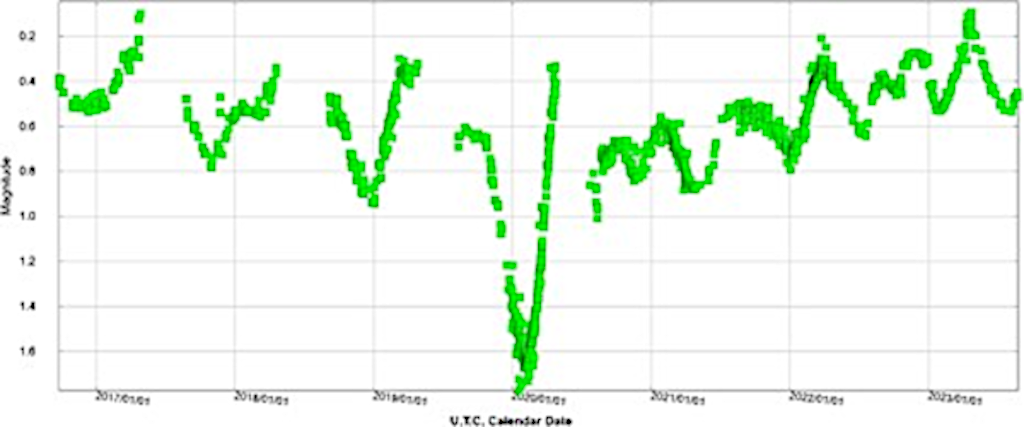
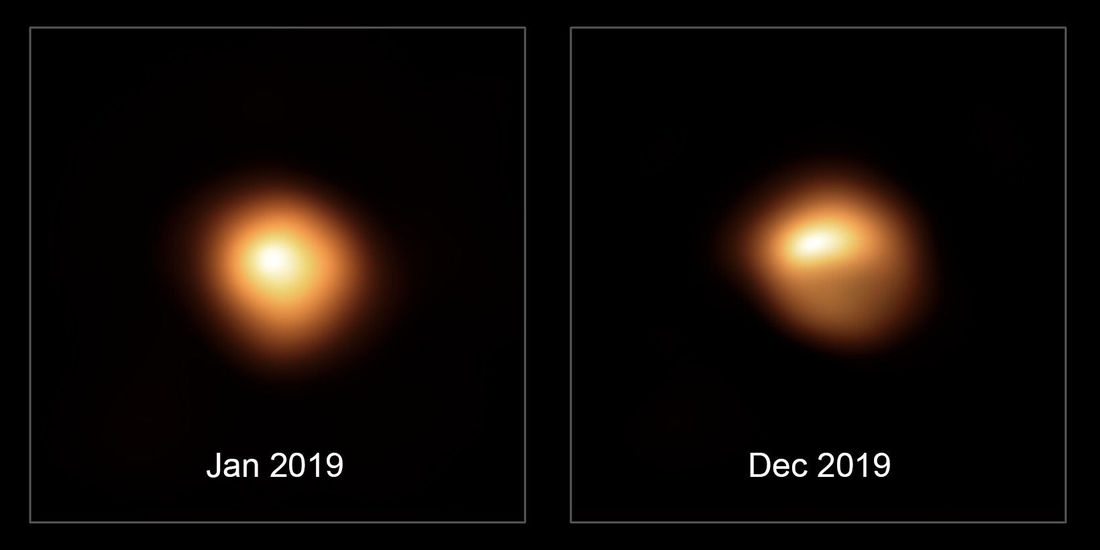
The constellation Orion has two first magnitude stars, the most famous of these is Betelgeuse. It is a red supergiant star in Orion’s shoulder. Its name actually means Armpit of the Central One. Betelgeuse is about 500 light years away, and it is many hundreds of thousands of times brighter than the Sun, and it’s thought to be almost as big as the orbit of Jupiter. For all its size it’s only about 20 times the mass of the Sun. Some call it a red-hot vacuum. Betelgeuse has been interesting lately, first dimming for a period of time and now somewhat brighter than normal. Astronomers are wondering what’s going on with it. Betelgeuse is a type of star that will end with the supernova explosion. The question is when. Perhaps sometime in the next 100,000 years.
The astronomical event times given are for the Traverse City/Interlochen area of Michigan (EST, UT –5 hours). They may be different for your location.
Addendum
Ephemeris: 01/08/2024 – Orion vs Taurus: conflict for the ages
This is Ephemeris for Monday, January 8th. Today the Sun will be up for 9 hours even, setting at 5:19, and it will rise tomorrow at 8:19. The Moon, 3 days before new, will rise at 6:58 tomorrow morning.
There are several instances in the Greek heavens where constellations appear to interact with one another. This is true with Orion the hunter and Taurus the bull. Taurus, whose face is the letter V of stars with orangish Aldebaran as his angry bloodshot eye is charging down on Orion, who has raised a lion skin shield on one arm and an upraised club in the other, ready to strike. They have been frozen in this pose for millennia. Stars below and right of the letter V of the Bull’s face suggest the front part of his body and his front legs charging at Orion. Orion also has two hunting dogs, Canis Major and Canis Minor. Canis Major with its dazzling star Sirius will rise around 7:30 on a line extended down from Orion’s belt.
The astronomical event times given are for the Traverse City/Interlochen area of Michigan (EST, UT –5 hours). They may be different for your location.
Addendum
Ephemeris: 01/05/2024 – The Great Orion Nebula
This is Ephemeris for Friday, January 5th. The Sun will rise at 8:20. It’ll be up for 8 hours and 56 minutes, setting at 5:16. The Moon, 2 days past last quarter, will rise at 3:18 tomorrow morning.
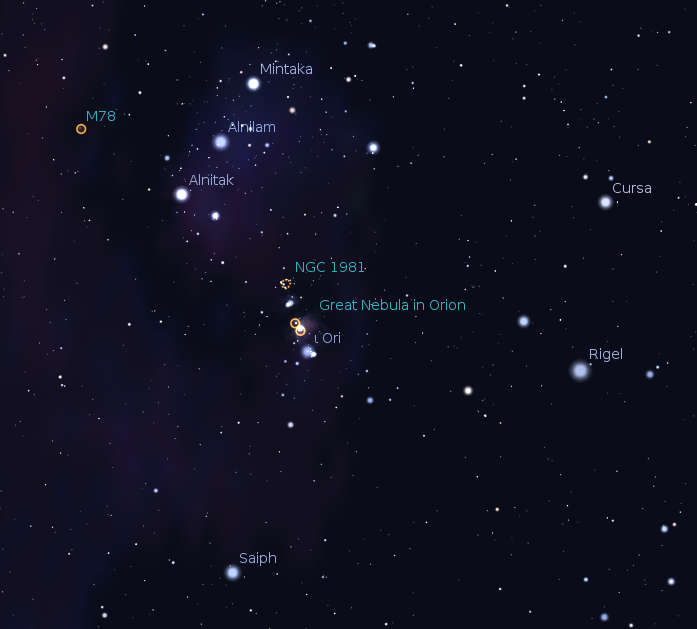
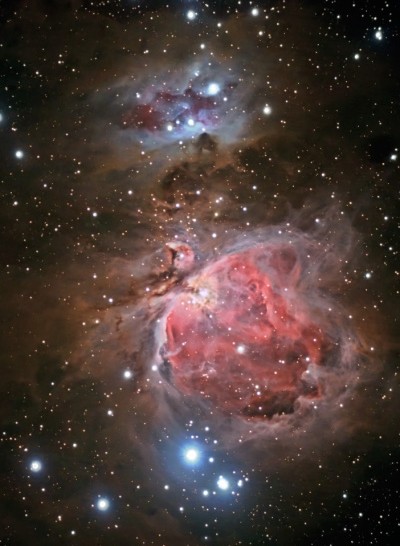
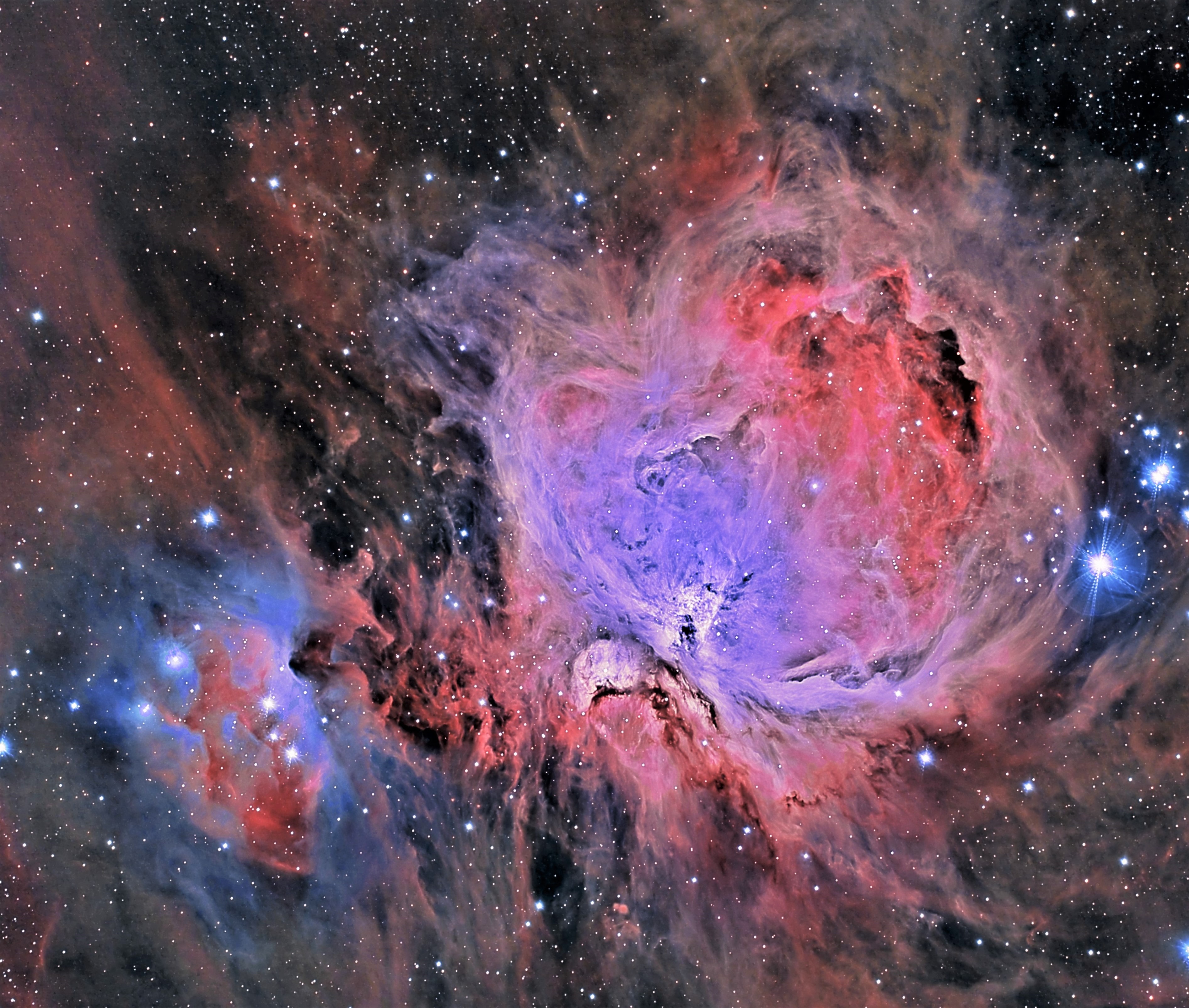
The constellation Orion the hunter is in the south-southeast at 9 p.m. Its upright rectangle of four stars frame his belt of three stars in a straight line and still tilt a bit to the left. Below the belt is what appear to the unaided eye as three more stars arranged vertically, his sword. Binoculars aimed at the middle stars of the sword will find a glowing haze around those stars. That is the Great Orion Nebula, also known as Messier 42 or M42. It is the birthplace of stars, and is even illuminated by a clutch of four hot young stars. Besides stars and protostars being born in the nebula, there are also many double planets not belonging to stars discovered by the James Webb Space Telescope. The planets are only detectable in the infrared, Webb’s specialty.
The astronomical event times given are for the Traverse City/Interlochen area of Michigan (EST, UT –5 hours). They may be different for your location.
Addendum
 Bob Moler's Ephemeris Blog