Archive
07/27/2016 – Ephemeris – All the bright planets are now in the evening sky
Note: Mercury and Venus are in the evening sky but too low to be easily spotted, even with a Lake Michigan horizon, so I did not cover them in the program below but see the addendum.
Ephemeris for Wednesday, July 27th. The Sun rises at 6:24. It’ll be up for 14 hours and 49 minutes, setting at 9:13. The Moon, 1 day past last quarter, will rise at 1:48 tomorrow morning.
Our evening planets are moving with the stars to the west, and setting almost a half hour earlier each week. Jupiter is in the west in the evening. It will set at 11:08 p.m. Binoculars can make out some of Jupiter’s moons, but a telescope is required to see all four bright moons and Jupiter’s cloud features. Mars starts the evening in the southern sky, moving to the southwest. It’s above and right of its dimmer look-a-like star Antares, whose name means Rival of Mars. The planet will set at 1:24 a.m. The Earth is pulling ahead of Mars so it’s now 65 million miles away and tiny in telescopes. The ringed planet Saturn is low in the south. It’s to the left of Mars. Saturn will pass due south at 9:53 p.m. and will set at 2:30 a.m.
Times are for the Traverse City/Interlochen area of Michigan. They may be different for your location.
Addendum
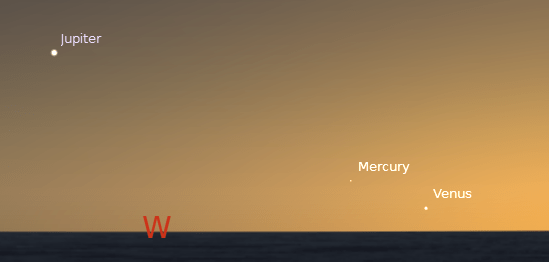
Venus, Mercury and Jupiter at 9:45 p.m. a half hour after sunset. Venus is 2 degrees above the horizon, and Mercury is 4 degrees. Created using Stellarium.
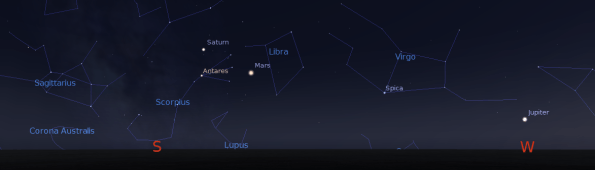
Jupiter, Mars and Saturn with the southern summer constellations at 10:30 p.m., July 27, 2016. Created using Stellarium.
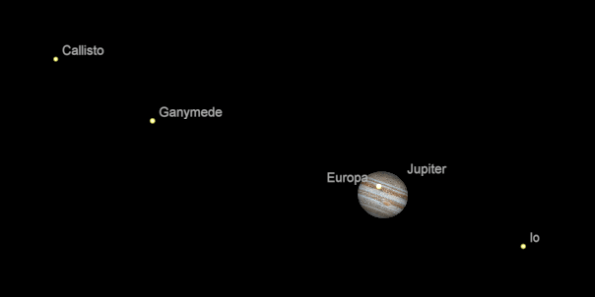
Jupiter and its Galilean moons at 10:30 p.m. July 27, 2016. Jupiter’s apparent diameter will be 32.3″. Europa will be transiting the planet, and will probably not visible. Created using Cartes du Ciel (Sky Charts).
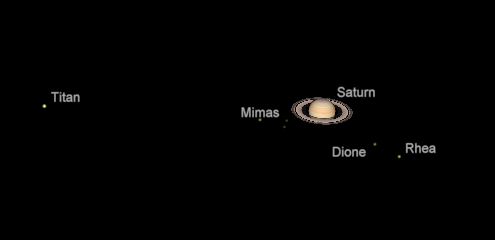
Saturn and its moons at 10:30 p.m. July 27, 2016. The apparent diameter of the planet will be 17.6″, larger than Mars’ disk. The rings span 41.1″, larger than the apparent diameter of Jupiter. Created using Cartes du Ciel (Sky Charts).
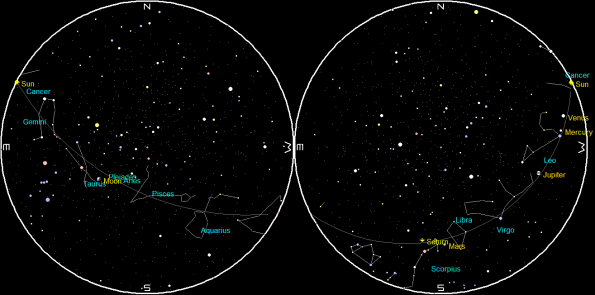
Planets at sunset and sunrise of a single night starting with sunset on the right on July 27, 2016. The night ends on the left with sunrise on July 28. If you are using Firefox right-click on the image and select View Image to enlarge the image. That goes for all the large images.
07/20/2016 – Ephemeris – The evening planets are moving with the stars to the west
Ephemeris for Wednesday, July 20th. Today the Sun will be up for 15 hours and 4 minutes, setting at 9:21, and it will rise tomorrow at 6:17. The Moon, 1 day past full, will rise at 9:42 this evening.
Our evening planets are moving with the stars to the west, and setting almost a half hour earlier each week. Jupiter is in the west in the evening. It will set at 11:33 p.m. Binoculars can make out some of Jupiter’s moons, but a telescope is required to see all four bright moons and Jupiter’s cloud features. Mars starts the evening in the southern sky, moving to the southwest. It’s above and right of its dimmer look-a-like star Antares, whose name means Rival of Mars. The planet will set at 1:46 a.m. The Earth is pulling ahead of Mars so it’s now 61 million miles away and tiny in telescopes. The ringed planet Saturn is low in the south. It’s to the left of Mars. Saturn will pass due south at 10:21 p.m. and will set at 2:58 a.m.
Times are for the Traverse City/Interlochen area of Michigan. They may be different for your location.
Addendum
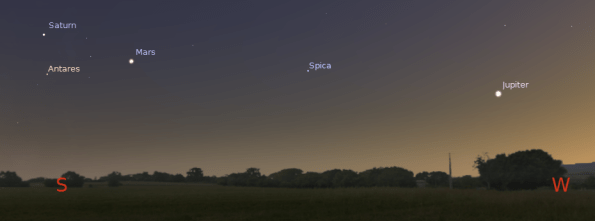
The evening planets at 10 p.m., July 20, 2016. Created using Stellarium.
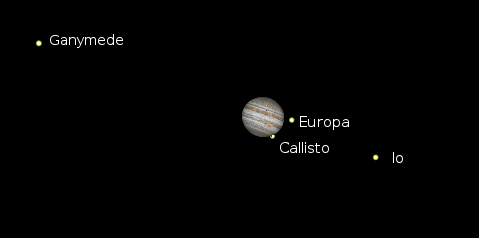
Jupiter and its Galilean moons at 10 p.m. July 20, 2016. Jupiter’s apparent diameter will be 32.7″. Callisto is about to be occulted by Jupiter at 10:08 p.m. (2:08 UT, July 21st). Created using Cartes du Ciel (Sky Charts).
Mars as it might be seen in a large telescope with high power at 10 p.m. July 20, 2016. Mars’ apparent diameter is 14.1″. The central meridian will be 25.04 degrees. Created using Cartes du Ciel (Sky Charts).
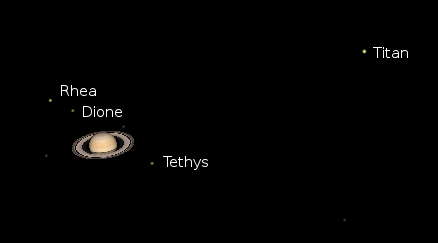
Saturn and its moons at 10 p.m. July 20, 2016. The apparent diameter of the planet will be 17.8″, larger than Mars’ disk. The rings span 41.5″, larger than the apparent diameter of Jupiter. Created using Cartes du Ciel (Sky Charts).
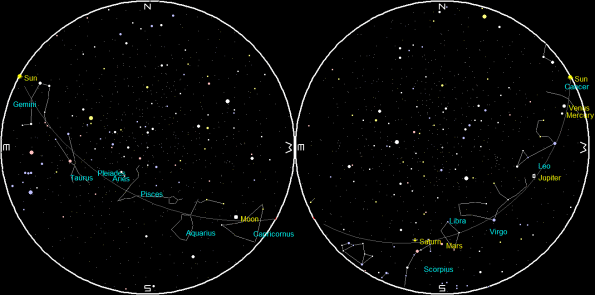
Planets at sunset and sunrise of a single night starting with sunset on the right on July 20, 2016. The night ends on the left with sunrise on July 21. If you are using Firefox right-click on the image and select View Image to enlarge the image. That goes for all the large images.
07/13/2016 – Ephemeris – The evening planets continue to march westward
Ephemeris for Wednesday, July 13th. Today the Sun will be up for 15 hours and 16 minutes, setting at 9:26, and it will rise tomorrow at 6:11. The Moon, 2 days past first quarter, will set at 2:23 tomorrow morning.
Let’s check out the bright naked eye planets tonight. Jupiter is in the west in the evening. It will set at 11:59 p.m. It’s below-left of the stars of Leo this year. Binoculars can make out some of Jupiter’s moons, but a telescope is required to see all four bright moons and Jupiter’s cloud features. Mars starts the evening in the southern sky. It’s above and right of its dimmer look-a-like star Antares, whose name means Rival of Mars. Mars will be due south at 9:30 p.m. and will set at 2:09 a.m. The Earth is pulling ahead of Mars so it’s now 58 million miles away and tiny in telescopes. Saturn is low in the south-southeast. It’s left of Mars. Saturn will pass due south at 10:50 p.m. and will set at 3:27 a.m. It’s a wonderful telescopic sight.
Times are for the Traverse City/Interlochen area of Michigan. They may be different for your location.
Addendum

Evening planets and the Moon at 10:30 p.m. July 13, 2016. Created using Stellarium.
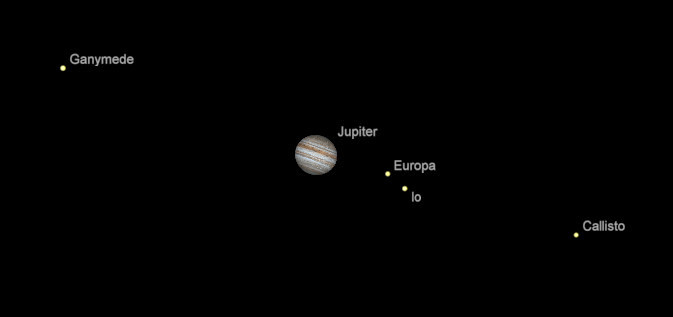
Jupiter and moons at 10:30 p.m. on July 13, 2016. Jupiter’s apparent diameter will be 33.2″. Created using Cartes du Ciel.

The Moon as seen in a pair of binoculars or small telescope with some prominent craters labeled at 10:30 p.m. on July 13, 2016. Created using Virtual Moon.Atlas.

Mars as seen in a large telescope. Note the decidedly gibbous phase at 10:30 p.m. on July 13, 2016. Mars’ apparent diameter will be 14.8″. Created using Cartes du Ciel.

Saturn and its larger moonsat 10:30 p.m. on July 13, 2016. Saturn’s apparent diameter wil be 18.0″ and the rings 41.9″ Created using Cartes du Ciel.

All the planets and the Moon from sunset July 13, 2016 to sunrise on the 14th. Created using my Looking up program.
Extra
I noticed Venus and Mercury near each other but very low in the sky, so I investigated. They are too low to be easily seen.

Venus and Mercury at 9:45 p.m., about 20 minutes after sunset tonight. Venus is 2.5 degrees above a flat horizon, and Mercury is 2 degrees.

Saturday night, same time, Venus will be 3 degrees up with Mercury above it in conjunction. Created using Stellarium. Give it a go. Good luck!
Note: The images and captions were uploaded via my phone after a storm too out the WiFi in the condo we’re staying in on vacation.
07/06/2016 – Ephemeris – The three bright evening planets are heading westward
Jul 6. This is Bob Moler with Ephemeris for Wednesday, July 6th. Today the Sun will be up for 15 hours and 25 minutes, setting at 9:30, and it will rise tomorrow at 6:05. The Moon, 2 days past new, will set at 10:56 this evening.
Let’s see what the bright naked eye planets are up to. Jupiter is in the west in the evening. It will set at 12:24 a.m. It’s below the stars of Leo this year. Binoculars can make out some of Jupiter’s moons, but a telescope is required to see all four bright moons and Jupiter’s cloud features. Mars starts the evening in the southern sky. It’s above and right of its dimmer look-a-like star Antares, whose name means Rival of Mars. Mars will move due south at 10:01 p.m. and will set at 2:34 a.m. The Earth is pulling ahead of Mars so it’s now 55 million miles away and very small in telescopes. Saturn is low in the south-southeast. It’s left of Mars. Saturn will pass due south at 11:19 p.m. and will set at 3:56 a.m. It’s a wonderful telescopic sight.
Times are for the Traverse City/Interlochen area of Michigan. They may be different for your location.
Addendum
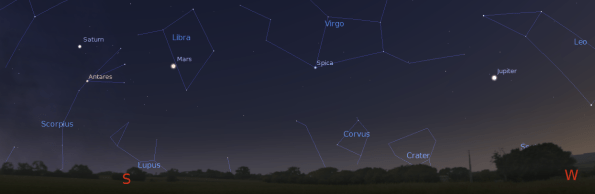
The evening planets and constellations at 10:30 p.m., July 6, 2016. Created using Stellarium.
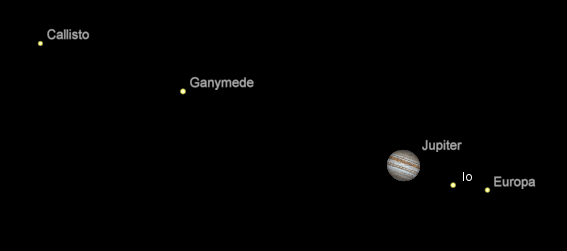
Jupiter and its Galilean moons at 10:30 p.m. July 6, 2016. Jupiter’s apparent diameter will be 33.8″. Created using Cartes du Ciel (Sky Charts).
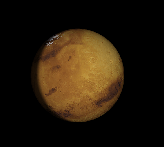
Mars as it might be seen in a large telescope with high power at 10:30 p.m. July 6, 2016. Mars apparent diameter is 15.7″. The central meridian will be 162.44 degrees. Created using Cartes du Ciel (Sky Charts).
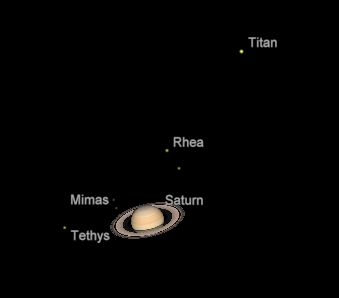
Saturn and its moons at 10:30 p.m. July 6, 2016. The apparent diameter of the planet will be 18.1″, larger than Mars’ disk. The rings span 42.2″, larger than the apparent diameter of Jupiter. Created using Cartes du Ciel (Sky Charts).
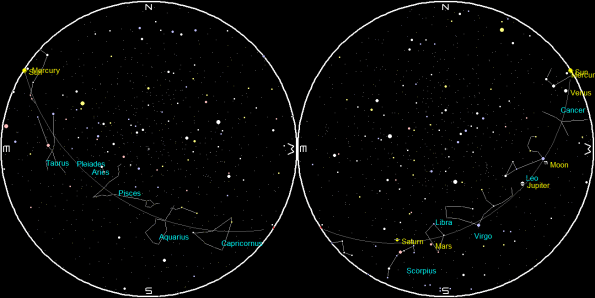
Planets at sunset and sunrise of a single night starting with sunset on the right on July 6, 2016. The night ends on the left with sunrise on July 7. If you are using Firefox right-click on the image and select View Image to enlarge the image. That goes for all the large images.
06/29/2016 – Ephemeris – Three planets of the evening
Ephemeris for Wednesday, June 29th. Today the Sun will be up for 15 hours and 32 minutes, setting at 9:32, and it will rise tomorrow at 6:00. The Moon, 2 days past last quarter, will rise at 3:08 tomorrow morning.
Let’s see what the bright naked eye planets are up to. Jupiter is in the west in the evening. It will set at 12:50 a.m. It’s below the stars of Leo this year. Binoculars can make out some of Jupiter’s moons, but a telescope is required to see all four bright moons and Jupiter’s cloud features. The moon Io on the western edge of Jupiter will disappear behind the planet at 11:09 p.m. (3:09 UT, the 30th) tonight. Mars starts the evening in the southern sky. It’s above and right of its dimmer look-a-like star Antares, whose name means Rival of Mars. Mars will move due south at 10:28 p.m. and will set at 3:01 a.m. Saturn is low in the south-southeast. It’s left of Mars. Saturn will pass due south at 11:48 p.m. and will set at 4:25 a.m. It’s a wonderful telescopic sight.
Times are for the Traverse City/Interlochen area of Michigan. They may be different for your location.
Addendum
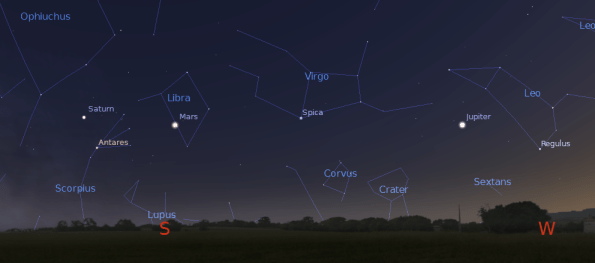
The evening planets and constellations at 10:30 p.m., June 29, 2016. Created using Stellarium.
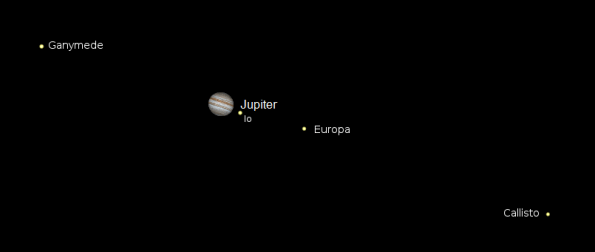
Jupiter and its Galilean moons at 10:30 p.m. June 22, 2016. Jupiter’s apparent diameter will be 34.4″. Io is about to be occulted by Jupiter at 11:09 p.m. a.m. (3:09 UT, June 30th). Created using Cartes du Ciel (Sky Charts).
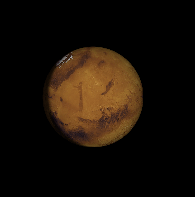
Mars as it might be seen in a large telescope with high power at 10:30 p.m. June 29, 2016. Mars apparent diameter is 16.5″. The central meridian will be 226.63 degrees. Created using Cartes du Ciel (Sky Charts).
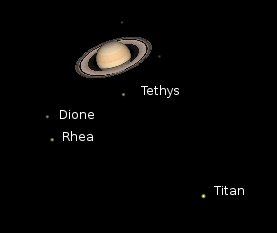
Saturn and its moons at 10:30 p.m. June 29, 2016. The apparent diameter of the planet will be 18.2″, larger than Mars’ disk. The rings span 42.5″, larger than the apparent diameter of Jupiter. Created using Cartes du Ciel (Sky Charts).
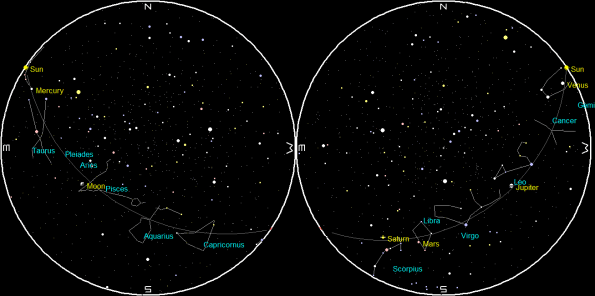
Planets at sunset and sunrise of a single night starting with sunset on the right on June 29, 2016. The night ends on the left with sunrise on June 30. If you are using Firefox right-click on the image and select View Image to enlarge the image. That goes for all the large images.
06/22/2016 – Ephemeris – The evening planet parade
Ephemeris for Wednesday, June 22nd. Today the Sun will be up for 15 hours and 34 minutes, setting at 9:32, and it will rise tomorrow at 5:57. The Moon, 2 days past full, will rise at 11:03 this evening.
Let’s see what the bright naked eye planets are up to. Jupiter is in the southwest in the early evening, moving to the west-southwest. It will set at 1:15 a.m. It’s below the stars of Leo this year. Binoculars can make out some of Jupiter’s moons, but a telescope is required to see all four bright moons and Jupiter’s cloud features. Mars starts the evening in the southeast. It’s above and right of its look-a-like star Antares, whose name means Rival of Mars. Mars will move due south at 10:53 p.m. and will set at 3:30 a.m. Saturn is low in the east-southeast. It’s below and to the left of Mars. Saturn will pass due south at 12:18 a.m. and will set at 4:54 a.m. It’s a wonderful telescopic sight.
Times are for the Traverse City/Interlochen area of Michigan. They may be different for your location.
Addendum
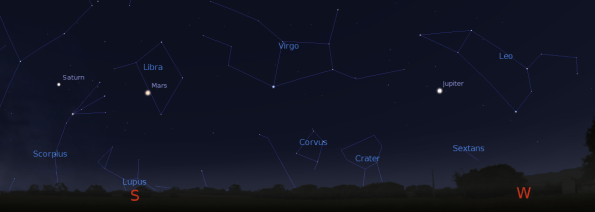
The evening planets and constellations at 11 p.m., June 22, 2016. Created using Stellarium.

Jupiter and its Galilean moons at 11 p.m. June 22, 2016. Jupiter’s apparent diameter will be 35.0″. Io is eclipsed in Jupiter’s shadow until 12:40 a.m. (4:40 UT) where it will reappear a small distance away from the planet on Ganymede’s side. Created using Cartes du Ciel (Sky Charts).
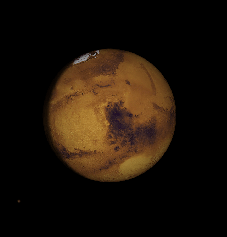
Mars as it might be seen in a large telescope with high power at 11 p.m. June 22, 2016. Mars apparent diameter is 17.2″. The central meridian will be 297.51 degrees. The large feature visible is Syrtis Major. Created using Cartes du Ciel (Sky Charts).
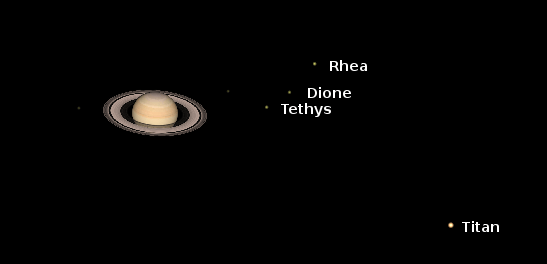
Saturn and its moons at 11 p.m. June 22, 2016. The apparent diameter of the planet will be 18.3″. The rings span 42.7″, larger than the apparent diameter of Jupiter. Created using Cartes du Ciel (Sky Charts).
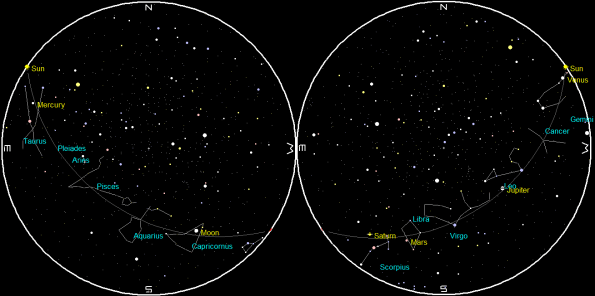
Planets at sunset and sunrise of a single night starting with sunset on the right on June 22, 2016. The night ends on the left with sunrise on June 23. If you are using Firefox right-click on the image and select View Image to enlarge the image. That goes for all the large images.
06/15/2016 – Ephemeris – Three bright planets still reign in the evening sky
Ephemeris for Wednesday, June 15th. Today the Sun will be up for 15 hours and 33 minutes, setting at 9:30, and it will rise tomorrow at 5:56. The Moon, 3 days past first quarter, will set at 3:51 tomorrow morning.
Let’s see what the bright naked eye planets are up to. Jupiter is in the southwest in the early evening, moving to the west-southwest. It will set at 1:41 a.m. It’s below the stars of Leo this year. Binoculars can make out some of Jupiter’s moons, but a telescope is required to see all four bright moons and Jupiter’s cloud features. Mars starts the evening in the southeast. It’s above and right of its look-a-like star Antares, whose name means Rival of Mars. Mars will move due south at 11:29 p.m. and will set at 4:02 a.m. Saturn is low in the east-southeast. It’s below and to the left of Mars. Saturn will pass due south at 12:47 a.m. and will set at 5:23 a.m. It’s a wonderful telescopic sight.
Times are for the Traverse City/Interlochen area of Michigan. They may be different for your location.
Addendum
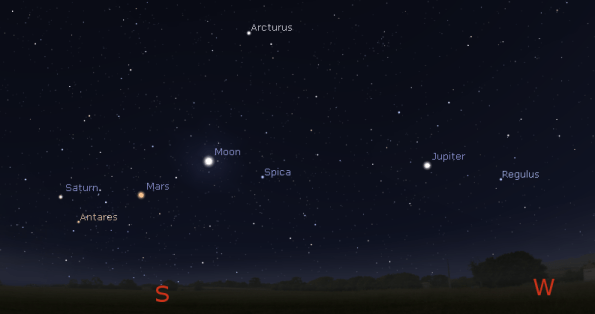
The Moon and the evening planets at 11 p.m., June 15, 2016. The Moon is too small to show the crescent, but see below. Created using Stellarium.
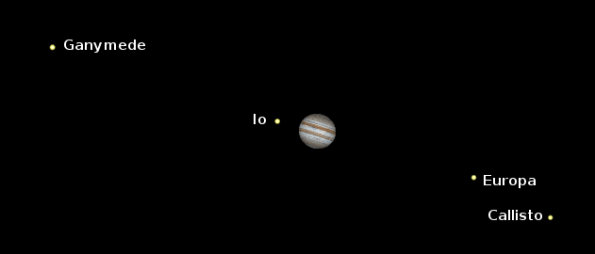
Jupiter and its Galilean moons at 11 p.m. June 15, 2016. Jupiter’s apparent diameter will be 35.7″. Created using Cartes du Ciel (Sky Charts).
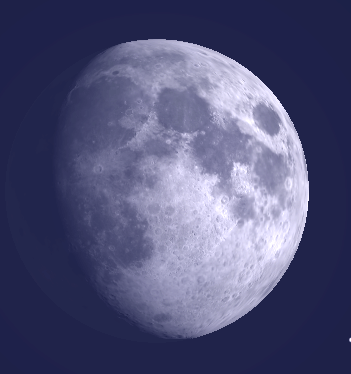
The Moon as it might appear in binoculars tonight, June 15, 2016 at 11 p.m. Created using Stellarium.
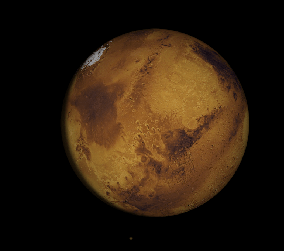
Mars as it might be seen in a large telescope with high power at 11 p.m. June 15, 2016. Mars apparent diameter is 17.9″. The central meridian will be 0.45 degrees. Created using Cartes du Ciel (Sky Charts).
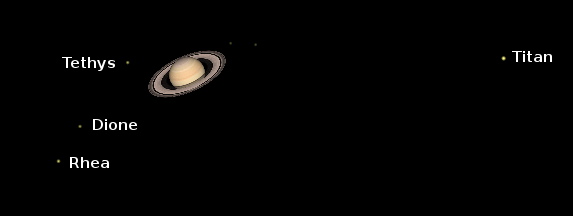
Saturn and its moons at 11 p.m. June 15, 2016. The apparent diameter of the planet will be 18.4″. The rings span 42.8″, larger than the apparent diameter of Jupiter. Created using Cartes du Ciel (Sky Charts).
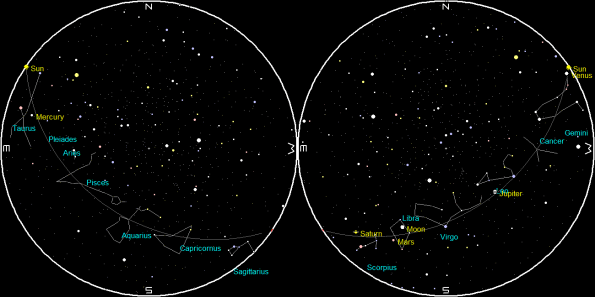
Planets at sunset and sunrise of a single night starting with sunset on the right on June 15, 2016. The night ends on the left with sunrise on June 16. If you are using Firefox right-click on the image and select View Image to enlarge the image. That goes for all the large images.
06/09/2016 – Ephemeris – Waiting for the first stars to appear
Ephemeris for Thursday, June 9th. Today the Sun will be up for 15 hours and 30 minutes, setting at 9:27, and it will rise tomorrow at 5:56. The Moon, 3 days before first quarter, will set at 12:59 tomorrow morning.
Lets look at the first stars and planets to appear tonight as it gets dark. The first object to appear will be the fat crescent Moon in the southwest. The planet Jupiter will be the next to appear after sunset left and above the Moon. Mars, low in the southeast will appear reddish, shortly thereafter. Looking very high in the southeast, the fourth brightest nighttime star will appear. This will be Arcturus with an orange hue. Saturn should appear to the left and below Mars. Soon other stars will appear including the Big Dipper overhead. Other bright stars will appear, the summer star Vega low in the northeast. Regulus between Jupiter and the Moon and Spica between Jupiter and Mars.
Times are for the Traverse City/Interlochen area of Michigan. They may be different for your location.
Addendum
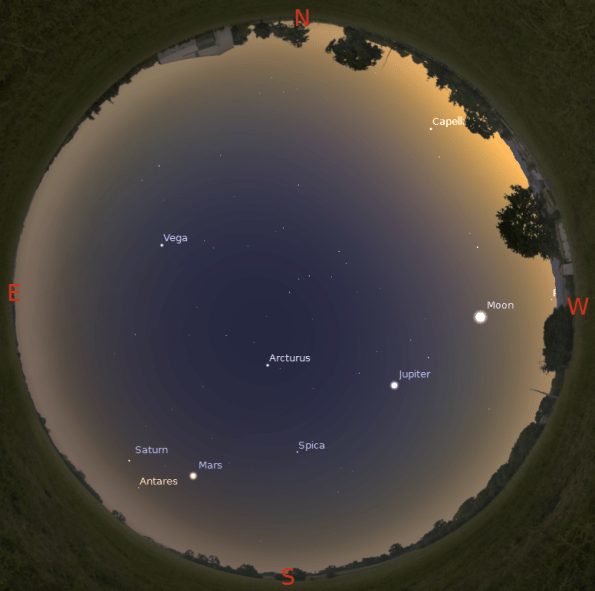
The sky at about 10 p.m. or a little later, watching the first stars and planets appear. Created using Stellarium. If viewing using Firefox right-click on the image and select View Image to enlarge.
06/08/2016 – Ephemeris – Jupiter, Mars and Saturn rule the evening sky
Ephemeris for Wednesday, June 8th. Today the Sun will be up for 15 hours and 29 minutes, setting at 9:26, and it will rise tomorrow at 5:57. The Moon, half way from new to first quarter, will set at 12:23 tomorrow morning.
Let’s see what the bright naked eye planets are up to. Jupiter is in the south-southwest in the early evening, moving to the west-southwest. It will set at 2:07 a.m. It’s below the stars of Leo this year. Binoculars can make out some of Jupiter’s moons, but a telescope is required to see all four bright moons and Jupiter’s cloud features. Mars starts the evening in the southeast. It’s above and right of its look-a-like star Antares, whose name means Rival of Mars. Mars will move due south at 11:58 p.m. and will set at 4:35 a.m. Saturn is low in the east-southeast. It’s below and to the left of Mars.
Times are for the Traverse City/Interlochen area of Michigan. They may be different for your location.
Addendum
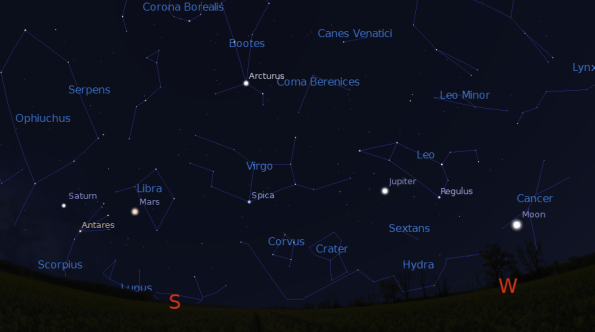
The Moon and the evening planets with the stars and constellations at 11 p.m., June 8, 2016. The Moon is too small to show the crescent, but see below. Created using Stellarium.
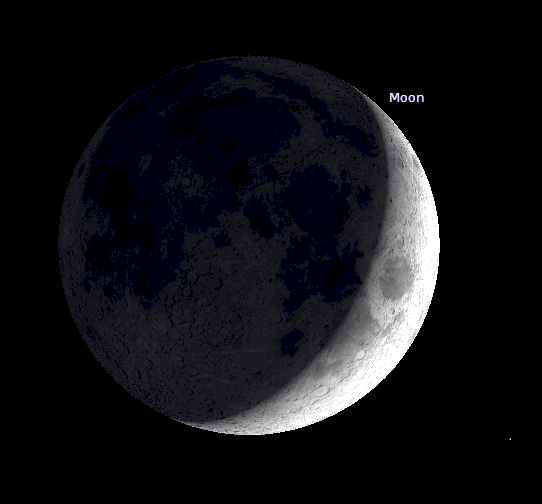
The Moon as it might appear in binoculars tonight, June 8, 2016 at 11 p.m. Created using Stellarium.
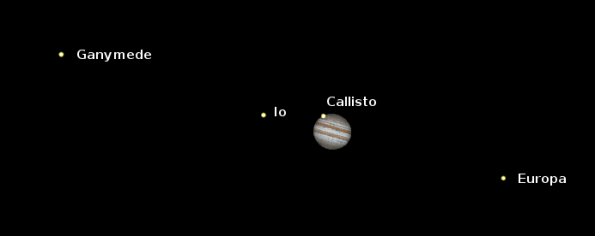
Jupiter and its Galilean moons at 11 p.m. June 8, 2016. Jupiter’s apparent diameter will be 36.3″. Note that Callisto began a transit across the face of Jupiter at 10:59 p.m. (02:59 UT) It will be hard to spot since the satellites appear here much brighter in relation to the planet than they actually are. The transit will end at 2:14 a.m. (06:14 UT) just after it sets here. Created using Cartes du Ciel (Sky Charts).
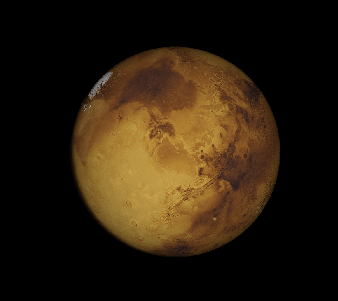
Mars as it might be seen in a large telescope with high power at 11 p.m. June 8, 2016. Mars apparent diameter is 18.3″. The central meridian will be 62.82 degrees. Created using Cartes du Ciel (Sky Charts).
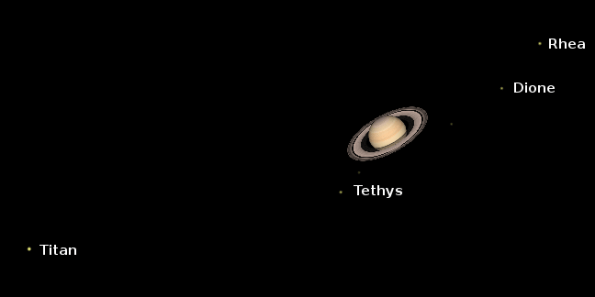
Saturn and its moons at 11 p.m. June 8, 2016. The apparent diameter of the planet will be 18.4″. The rings span 42.9″, larger than the apparent diameter of Jupiter. Created using Cartes du Ciel (Sky Charts).
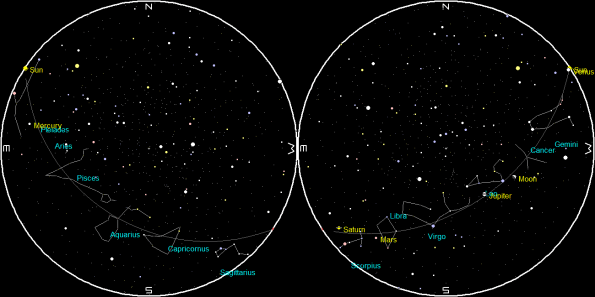
Planets at sunset and sunrise of a single night starting with sunset on the right on June 8, 2016. The night ends on the left with sunrise on June 9. If you are using Firefox right-click on the image and select View Image to enlarge the image. That goes for all the large images.
06/01/2016 – Ephemeris – There’s about to be 3 official evening planets
Ephemeris for Wednesday, June 1st. Today the Sun will be up for 15 hours and 21 minutes, setting at 9:21, and it will rise tomorrow at 5:59. The Moon, half way from last quarter to new, will rise at 4:31 tomorrow morning.
Let’s see what the bright naked eye planets are up to. Jupiter is in the south in the early evening, moving to the southwest. It will set at 2:34 a.m. It’s below the stars of Leo this year. Binoculars can make out some of Jupiter’s moons, but a telescope is required to see all four bright moons and Jupiter’s cloud features. Mars starts the evening low in the southeast. It’s above and right of its look-a-like star Antares, whose name means Rival of Mars. Mars will move due south at 12:40 a.m. and will set at 5:11 a.m. Saturn will rise at 9:11 p.m. in the east-southeast. It’s to the left of Mars. It will be in opposition from the Sun Friday, something I’ll explore tomorrow.
Times are for the Traverse City/Interlochen area of Michigan. They may be different for your location.
Addenda
Looking at the planets
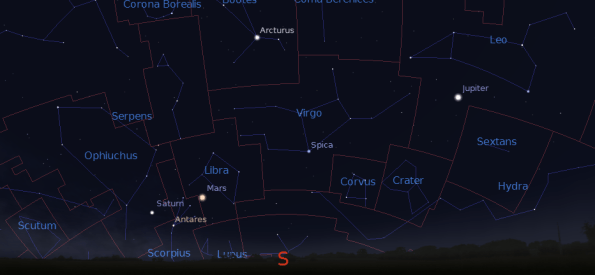
The Planets and constellations, with their boundaries for 11 p.m., June 1, 2016. Note that Mars is back in Libra. Created using Stellarium.
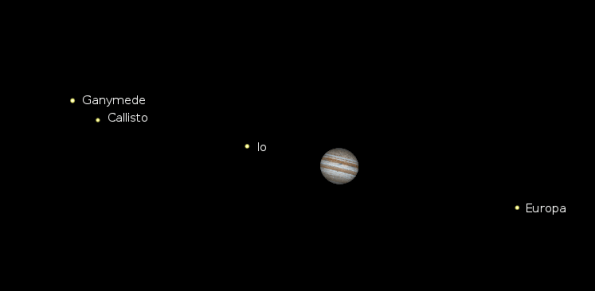
Jupiter and its Galilean moons at 11 p.m. June 1, 2016. Jupiter’s apparent diameter will be 37.1″. Created using Cartes du Ciel (Sky Charts).
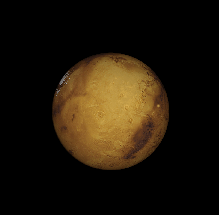
Mars as it might be seen in a large telescope with high power at 11 p.m. June 1, 2016. Mars apparent diameter is 18.6″. The central meridian will be 124.75 degrees. Created using Cartes du Ciel (Sky Charts).
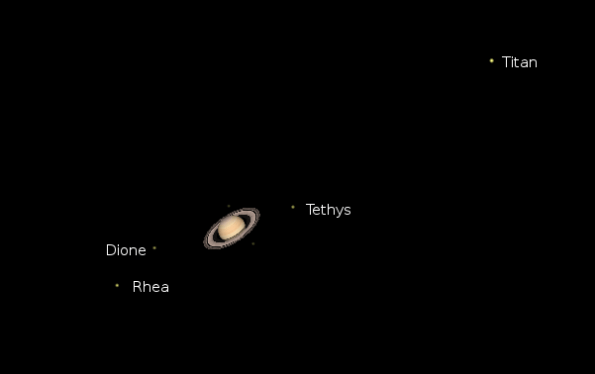
Saturn and its moons at 11 p.m. June 1, 2016. The apparent diameter of the planet will be 18.4″. The rings span 42.8″, larger than the apparent diameter of Jupiter. Created using Cartes du Ciel (Sky Charts).
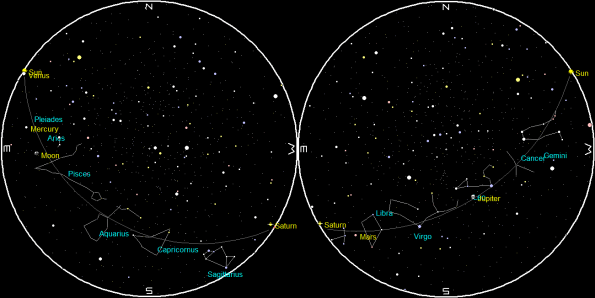
Planets at sunset and sunrise of a single night starting with sunset on the right on June 1, 2016. The night ends on the left with sunrise on June 2. If you are using Firefox right-click on the image and select View Image to enlarge the image. That goes for all the large images.
Forty first anniversary program
Being Planet Wednesday I was too busy to acknowledge it, but Ephemeris is 41 years old today. Astronomically speaking this program starts Ephemeris’ forty second trip around the Sun. What wonders await this go round?

