Archive
08/02/2013 – Ephemeris – Star Party tonight!
Ephemeris for Friday, August 2nd. The sun rises at 6:30. It’ll be up for 14 hours and 35 minutes, setting at 9:06. The moon, half way from last quarter to new, will rise at 3:38 tomorrow morning.
Tonight the Grand Traverse Astronomical Society and the NMC Astronomy Club will host a star party at Northwestern Michigan College’s Rogers Observatory starting at 9 p.m. featuring, if it’s clear, the planets Venus and Saturn. Some of the wonders of the summer sky can be seen as it gets darker. There are sparkling binary stars and star clusters including the Great Globular Star Cluster in Hercules, the Wild Duck Cluster, the Ring Nebula, the expanding gasses of a dying star. There are also other wonders of the Milky Way to be seen. There will be a program if the skies are too cloudy to observe. The observatory is located south of Traverse City, on Birmley Road between Garfield and Keystone roads.
Times are for the Traverse City/Interlochen area of Michigan. They may be different for your location.
07/31/2013 – Ephemeris – All 5 bright planets are visible now
Ephemeris for Wednesday, July 24th. The sun rises at 6:20. It’ll be up for 14 hours and 56 minutes, setting at 9:16. The moon, 2 days past full, will rise at 10:12 this evening.
Lets check out the planets visible now. Venus is now low in the west northwestern sky in evening twilight, Venus will set at 10:44 p.m. Holding forth in the southwest will be Saturn this evening, the brightest star-like object in the constellation Virgo appearing yellowish to the left of the extremely blue-white star Spica. Saturn is a wonderful sight in a telescope of 20 power or more. In telescopes Saturn’s large moon Titan can be easily seen. Saturn will set at 1:04 tomorrow morning. Jupiter and Mars will rise close together at 4:14 and 4:17 a.m. Respectively in the east northeast in morning twilight. The much dimmer Mars will appear to the lower left of the brighter Jupiter, and may take binoculars to locate.
Times are for the Traverse City/Interlochen area of Michigan. They may be different for your location.
Addendum
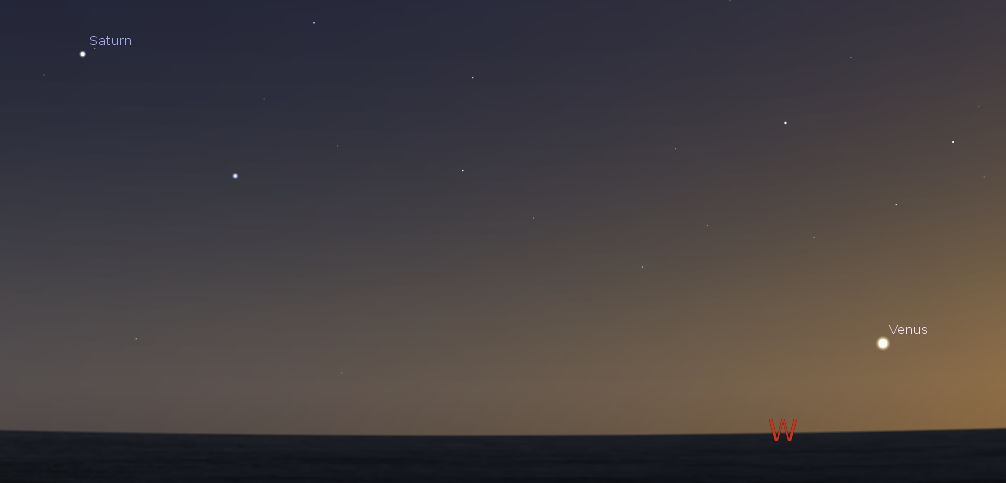
Venus and Saturn at 10 p.m. on July 31, 2013. Created using Stellarium
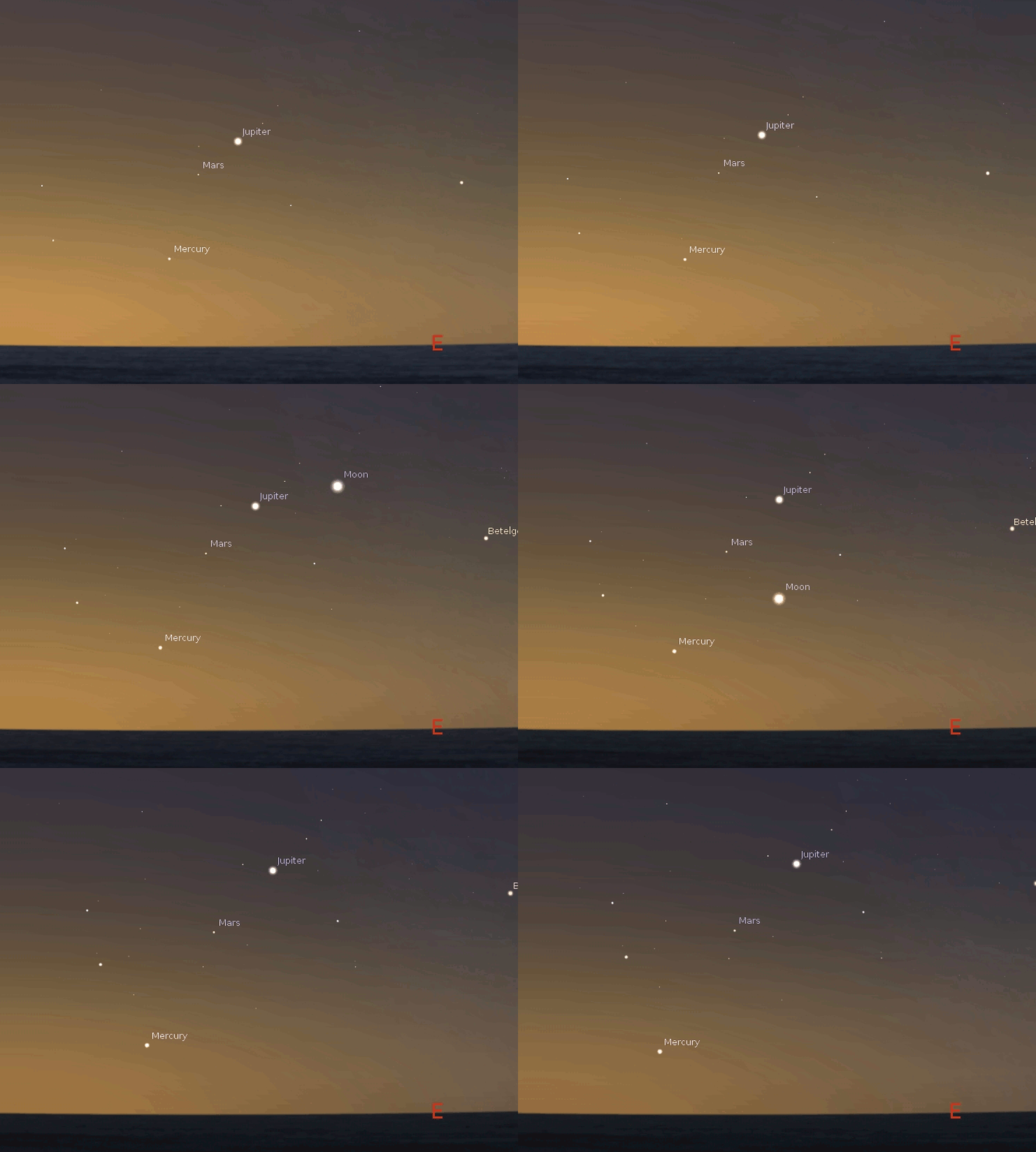
Animation of Mercury, Mars and Jupiter at one day intervals from July 31 to August 7, 2013 at 5:45 a.m. Created using Stellarium and the GIMP.
07/24/2013 – Ephemeris – Where are the bright planets in the sky this week?
Ephemeris for Wednesday, July 24th. The sun rises at 6:20. It’ll be up for 14 hours and 56 minutes, setting at 9:16. The moon, 2 days past full, will rise at 10:12 this evening.
Lets check out the planets visible now. Venus is now low in the west northwestern sky in evening twilight, Venus will set at 10:44 p.m. Holding forth in the southwest will be Saturn this evening, the brightest star-like object in the constellation Virgo appearing yellowish to the left of the extremely blue-white star Spica. Saturn is a wonderful sight in a telescope of 20 power or more. In telescopes Saturn’s large moon Titan can be easily seen. Saturn will set at 1:04 tomorrow morning. Jupiter and Mars will rise close together at 4:14 and 4:17 a.m. Respectively in the east northeast in morning twilight. The much dimmer Mars will appear to the lower left of the brighter Jupiter, and may take binoculars to locate.
Times are for the Traverse City/Interlochen area of Michigan. They may be different for your location.
Addendum
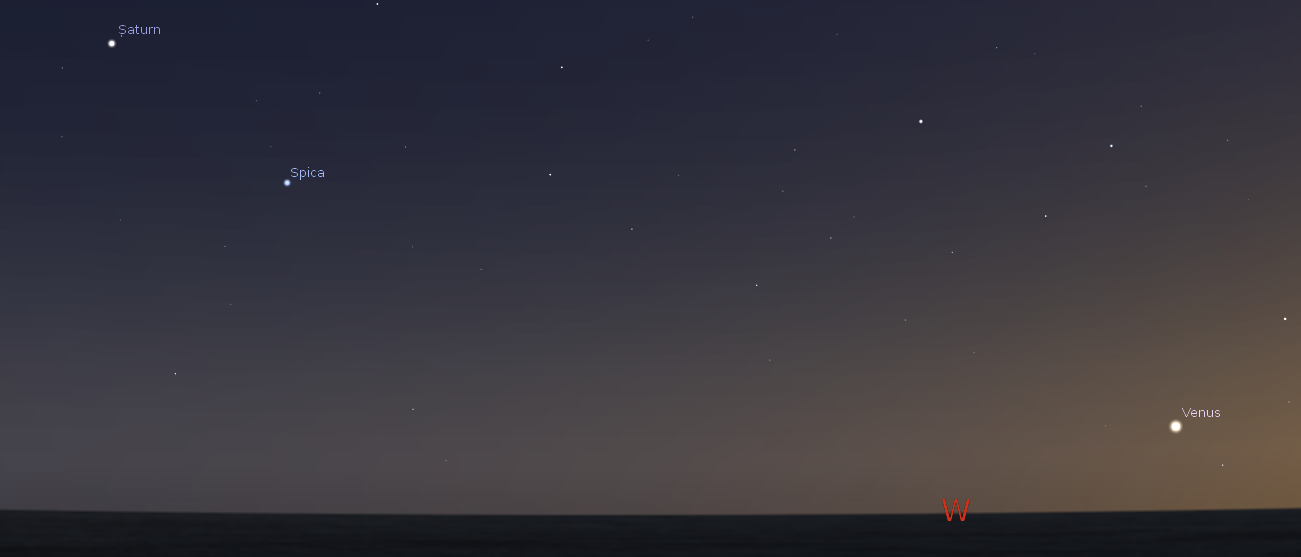
Venus and Saturn at 10:15 p.m. on July 24, 2013. Created using Stellarium. Click on Image to enlarge.
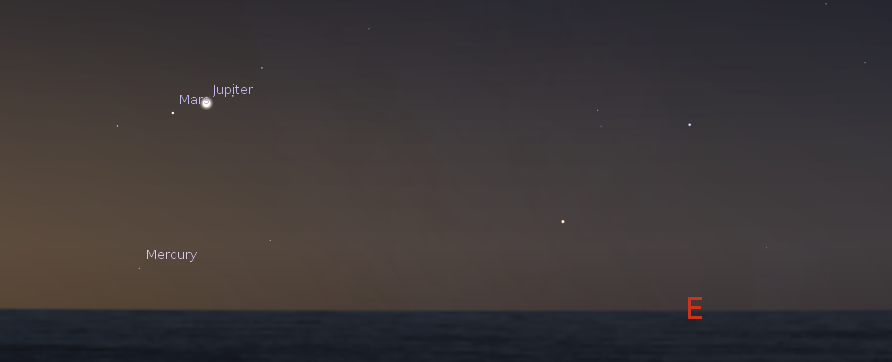
Jupiter, Mars and Mercury in morning twilight at 5:20 a.m. on July 25, 2013. I didn’t mention Mercury on the program because it’s very difficult to spot. Created using Stellarium.
07/19/2013 – Ephemeris – Smile you’re on Candid Cassini Camera
Ephemeris for Friday, July 19th. Today the sun will be up for 15 hours and 6 minutes, setting at 9:21. The moon, 3 days before full, will set at 3:55 tomorrow morning. Tomorrow the sun will rise at 6:16.
Between 5:27 and 5:42 p.m. today go outside and look to the southeast and smile. An hour and a half later when the light arrives the Cassini spacecraft, hiding from the sun behind Saturn will take a series of photographs that will include the Earth in the background. All of us, the Earth included will fit into one pixel in Cassini’s camera. This is a reprise of the famous back-lit photograph of Saturn taken earlier in its mission. Closer to home members of the Grand Traverse Astronomical Society will be part of Kingsley Heritage Days Saturday and Sunday to view the sun if it’s clear. Also the society will host a star party at the NMC’s Rogers Observatory starting at 9 p.m. tomorrow night.
Times are for the Traverse City/Interlochen area of Michigan. They may be different for your location.
Addendum
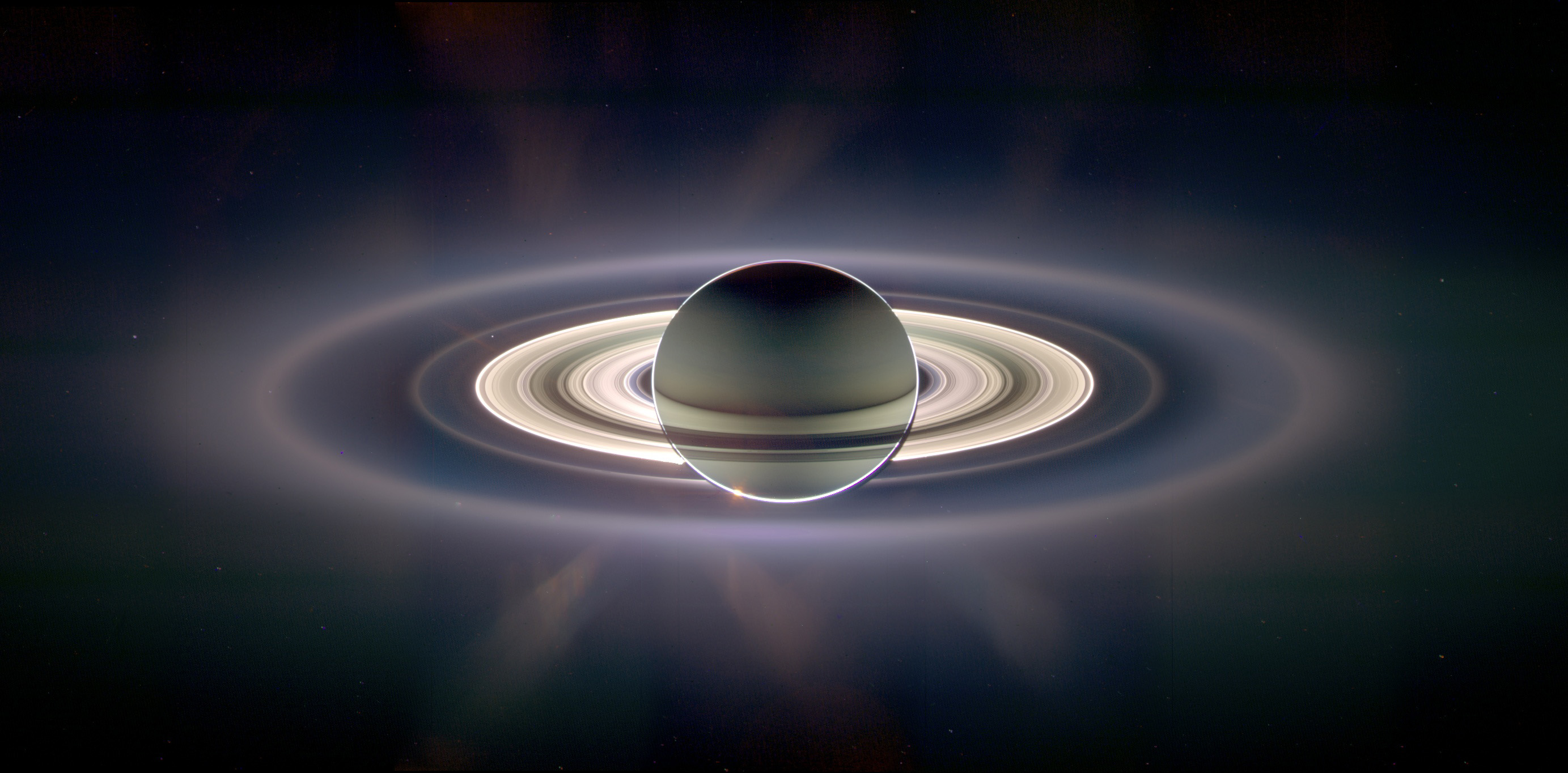
Saturn night side mosaic taken early in the mission. Note the pale blue dot at the 9:30 position outside the main rings and just inside the next fuzzy ring out. That’s Earth. Credit: NASA. Click on the image to enlarge.
07/17/2013 – Ephemeris – Where are the bright planets this week?
Ephemeris for Wednesday, July 17th. Today the sun will be up for 15 hours and 9 minutes, setting at 9:23. The moon, 2 days past first quarter, will set at 2:06 tomorrow morning. Tomorrow the sun will rise at 6:14.
Lets check out the planets visible now. Venus is now low in the west northwestern sky in evening twilight, Venus will set at 10:52 p.m. Holding forth in the southwest will be Saturn this evening, the brightest star-like object in the constellation Virgo appearing yellowish to the left of the extremely blue-white star Spica. Saturn is a wonderful sight in a telescope of 20 power or more. Saturn will set at 1:31 tomorrow morning. Mars and Jupiter will rise close together at 4:23 and 4:35 a.m. Respectively in the east northeast in morning twilight. The much dimmer Mars will appear about 4 moon diameters to the upper right of the brighter Jupiter, and may take binoculars to locate.
Times are for the Traverse City/Interlochen area of Michigan. They may be different for your location.
Addendum
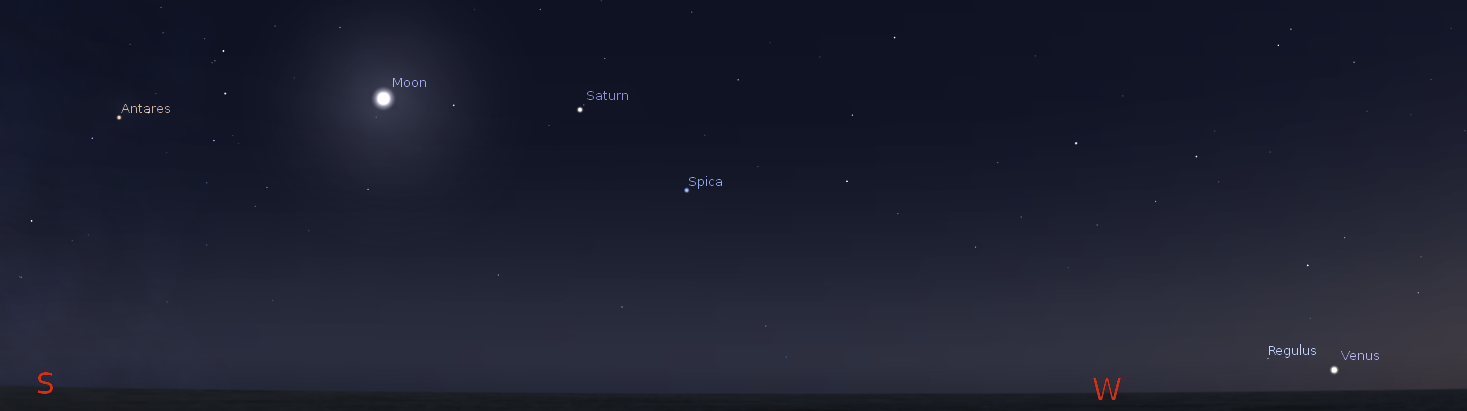
Venus, Saturn, Moon and stars at 10:40 on July 17, 2013. Created using Stellarium.
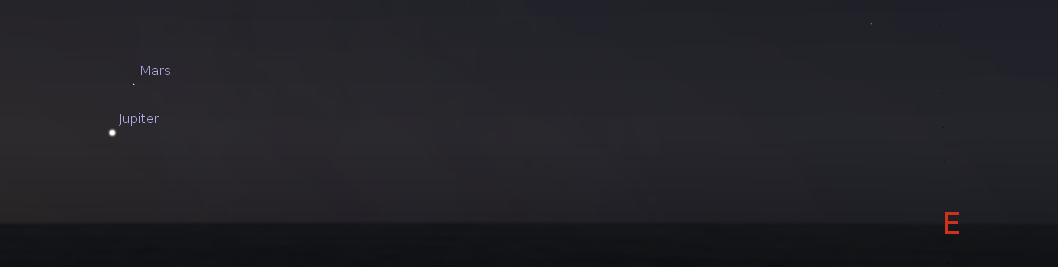
Jupiter and Mars at 5 a.m. on July 18, 2013. Created using Stellarium.
07/10/2013 – Ephemeris – Where are the bright planets this week?
Ephemeris for Wednesday, July 10th. Today the sun will be up for 15 hours and 20 minutes, setting at 9:27. The moon, 2 days past new, will set at 10:28 this evening. Tomorrow the sun will rise at 6:08.
Lets check out the planets visible now. Venus is now low in the west northwestern sky in evening twilight, Venus will set at 10:59 p.m. Holding forth in the south southwest will be Saturn this evening, the brightest star-like object in the constellation Virgo appearing yellowish to the left of the extremely blue-white star Spica. Saturn is a wonderful sight in a telescope of 20 power or more. Small telescopes can also spot Saturn’s moon Titan as a dim star off a ways along the extent of the rings. Saturn will set at 1:59 tomorrow morning. Jupiter, Mars and Mercury are too close to the direction of the sun to be seen. I’ll check out Jupiter and Mars when they emerge later this month.
Times are for the Traverse City/Interlochen area of Michigan. They may be different for your location.
Addendum
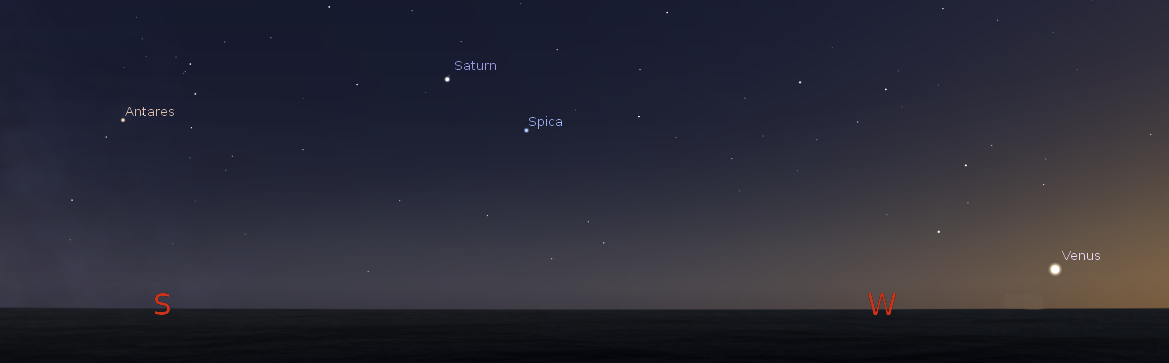
Venus, Saturn and the bright stars at 10:30 p.m. on July 10, 2013. Created using Stellarium.
07/03/2013 – Ephemeris – Where are the bright planets this week?
Ephemeris for Wednesday, July 3rd. Today the sun will be up for 15 hours and 28 minutes, setting at 9:30. The moon, 3 days past last quarter, will rise at 3:22 tomorrow morning. Tomorrow the sun will rise at 6:03.
Lets check out the planets visible now. Venus is now low in the west northwestern sky in evening twilight, Venus will set at 11:03 p.m. Holding forth in the south southwest will be Saturn this evening, the brightest star-like object in the constellation Virgo appearing yellowish to the left of the extremely blue-white star Spica. Saturn is a wonderful sight in a telescope of 20 power or more. Small telescopes can also spot Saturn’s moon Titan as a dim star off a ways along the extent of the rings. Saturn will set at 2:27 tomorrow morning. Jupiter, Mars and Mercury are too close to the direction of the sun to be seen. I’ll cover Jupiter and Mars when they emerge later this month.
Times are for the Traverse City/Interlochen area of Michigan. They may be different for your location.
Ephemeris
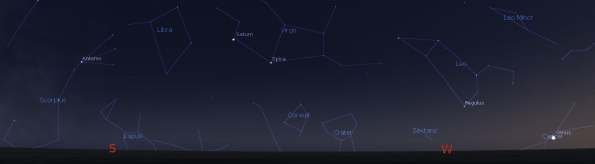
- Looking from west to south at Venus, Saturn and some constellations low in the sky at 10:45 p.m. on July 3, 2013. Created using Stellarium. Click on the image to enlarge.
06/26/2013 – Ephemeris – Then there was one
Wednesday, June 26th. Today the sun will be up for 15 hours and 32 minutes, setting at 9:31. The moon, 3 days past full, will rise at 11:42 this evening. Tomorrow the sun will rise at 5:59.
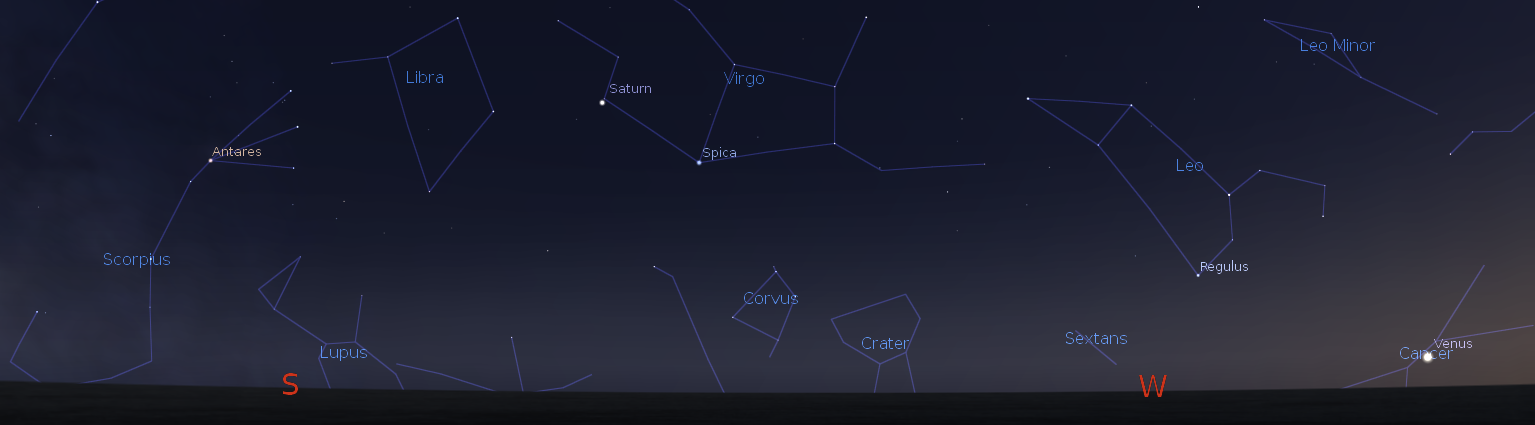
Venus is now all alone in the evening twilight low in the west northwest, Mercury having sunk closer to the sun. Venus will set at 11:05 p.m. Holding forth in the south southwest will be Saturn this evening, the brightest star-like object in the constellation Virgo appearing yellowish to the left of the extremely blue-white star Spica. Saturn is a wonderful sight in a telescope of 20 power or more. Saturn will pass due south at 9:36 p.m., and will set at 2:54 tomorrow morning. Jupiter and Mars are along with Mercury too close to the direction of the sun to be seen. I will cover Jupiter and Mars emerging into the morning sky late next month when they’ll appear together.
Times are for the Traverse City/Interlochen area of Michigan. They may be different for your location.
Addendum
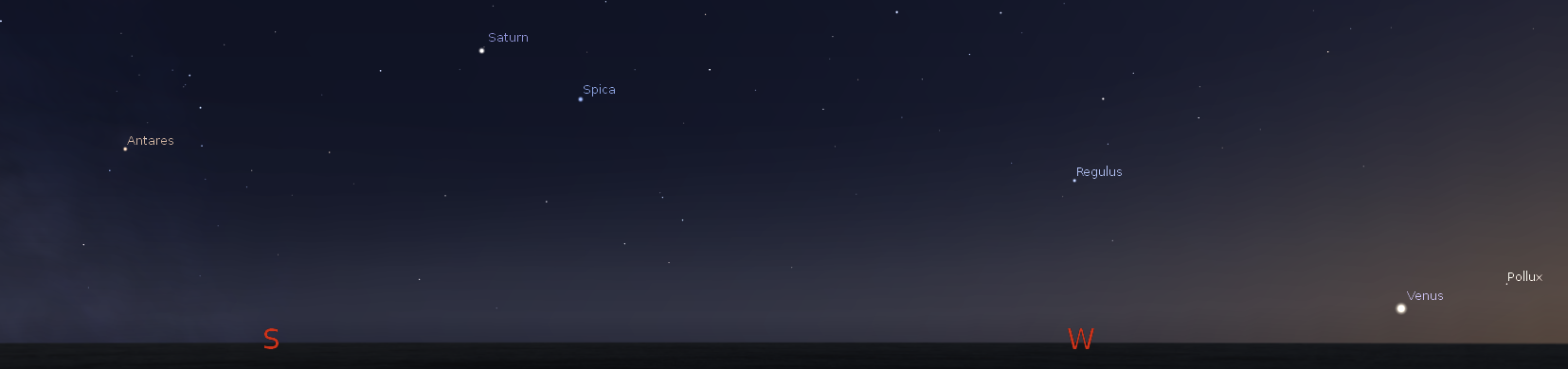
Panorama from Antares to Saturn to Venus at 10:45 p.m. on June 26, 2013. Created using Stellarium. Click on image to expand.
06/19/2013 – Ephemeris – Mercury and Venus one last time
Ephemeris for Wednesday, June 19th. Today the sun will be up for 15 hours and 33 minutes, setting at 9:30. The moon, 3 days past first quarter, will set at 3:28 tomorrow morning. Tomorrow the sun will rise at 5:57.
The early evening will still be taken up with Venus and faint Mercury low in the west northwest at about 10:15 p.m. Mercury is below and left of Venus by 2 degrees, about 4 times the width of the moon. Mercury has dropped greatly in brightness as its phase is now a crescent, moving between the sun and the earth. Mercury will set at 10:56, and Venus will set at 11:03 p.m. Holding forth in the south will be Saturn this evening, the brightest star-like object in the constellation Virgo appearing yellowish to the left of the extremely blue-white star Spica. Saturn is a wonderful sight in a telescope of 20 power or more. Saturn will pass due south at 10:04 p.m., and will set at 3:23 tomorrow morning.
Times are for the Traverse City/Interlochen area of Michigan. They may be different for your location.
Addendum
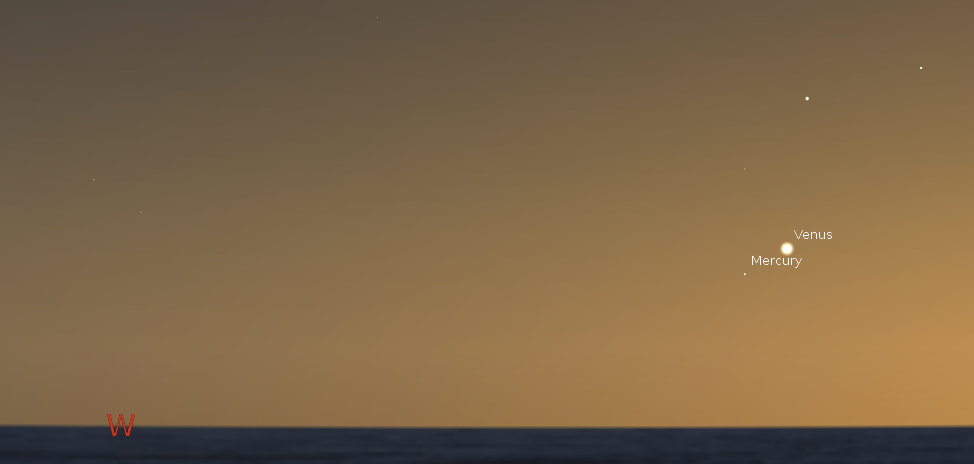
Venus and Mercury conjunction seen at 10:15 p.m. June 19 2013. Created using Stellarium.
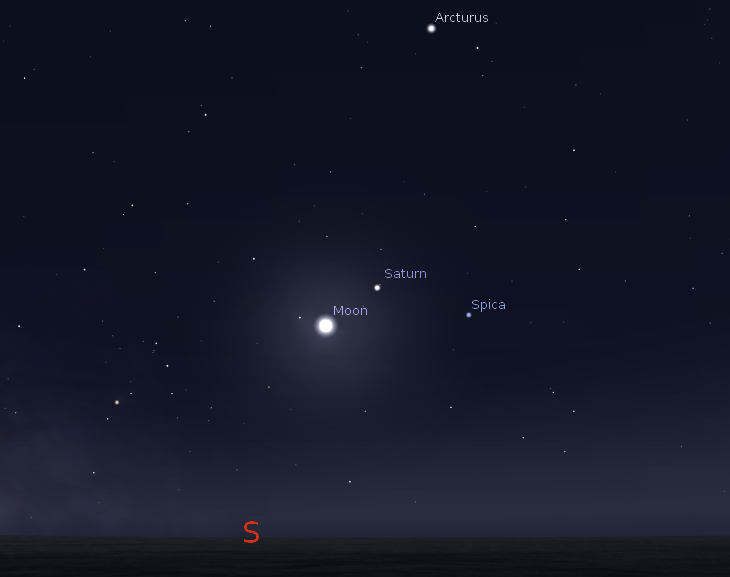
Saturn, the moon and bright stars at 11 p.m. June 19, 2013. Created using Stellarium.
06/12/2012 – Ephemeris – Three planets still in the evening sky
Ephemeris for Wednesday, June 12th. Today the sun will be up for 15 hours and 31 minutes, setting at 9:28. The moon, half way from new to first quarter, will set at 11:55 this evening. Tomorrow the sun will rise at 5:56.
The early evening will be taken up with Venus and faint Mercury low in the west northwest at about 10:15 p.m. The crescent moon is nearby to the left. Mercury is above and left of Venus by about 5 degrees, about half the width of your fist at arm’s length. Mercury is at its greatest separation or elongation from the sun today of 24 degrees angle. Venus will set at 10:59, and Mercury will set at 11:14 p.m. Holding forth in the south will be Saturn this evening, the brightest star-like object in the constellation Virgo appearing yellowish to the left of the extremely blue-white star Spica. Saturn is a wonderful sight in a telescope of 20 power or more. Saturn will pass due south at 10:33 p.m., and will set at 3:51 tomorrow morning.
Times are for the Traverse City/Interlochen area of Michigan. They may be different for your location.
Addendum
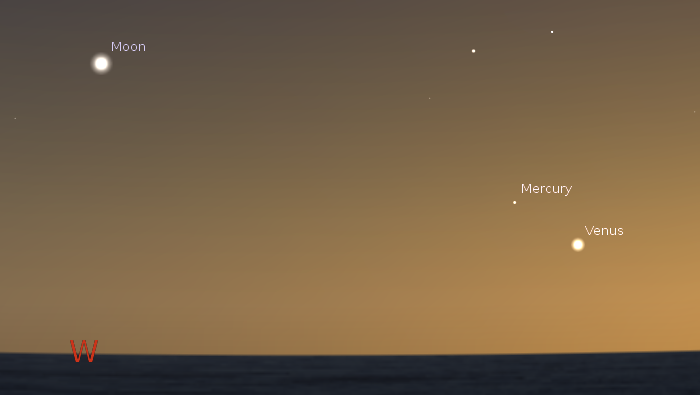
Mercury, Venus and the moon at 10:15 p.m. on June 12, 2013. Created using Stellarium. Note that the moon at this phase (thin crescent) doesn’t show at this scale, so the moon’s position is shown as full.
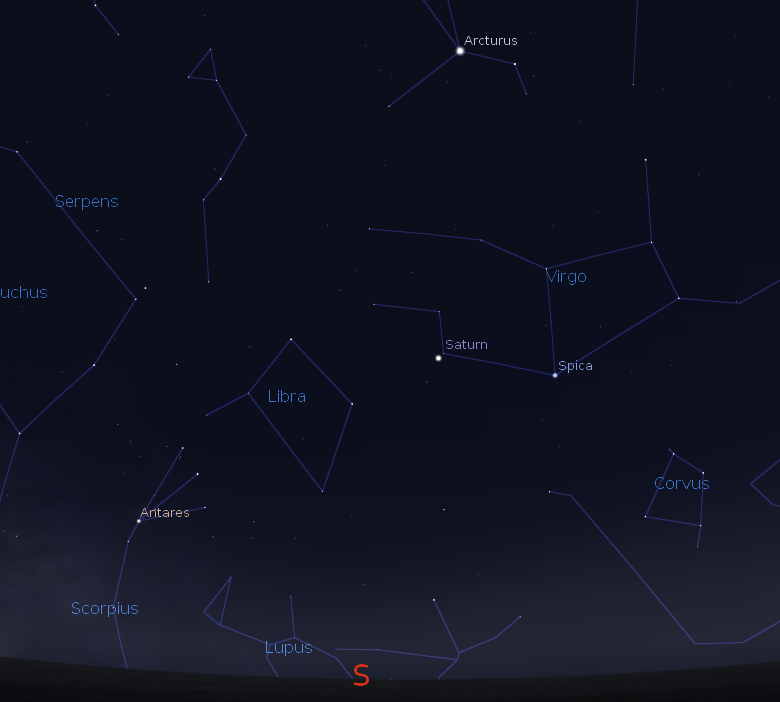
Saturn and constellations at 11 p.m. on June 12, 2013. Note Scorpius rising to the left. Created using Stellarium.

