Archive
06/16/2021 – Ephemeris – Let’s search for the naked-eye planets for this week
This is Bob Moler with Ephemeris for Wednesday, June 16th. Today the Sun will be up for 15 hours and 34 minutes, setting at 9:30, and it will rise tomorrow at 5:56. The Moon, 1 day before first quarter, will set at 1:55 tomorrow morning.
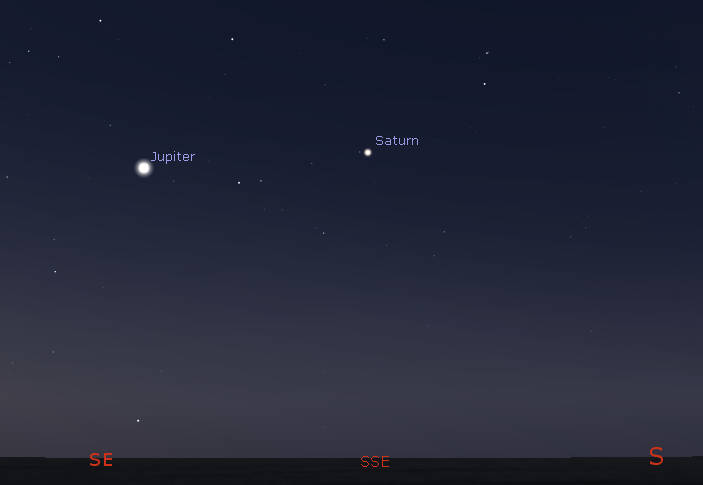
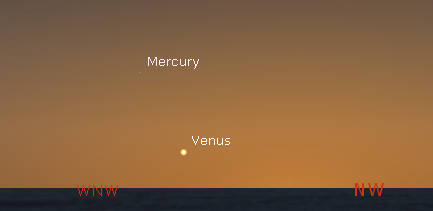
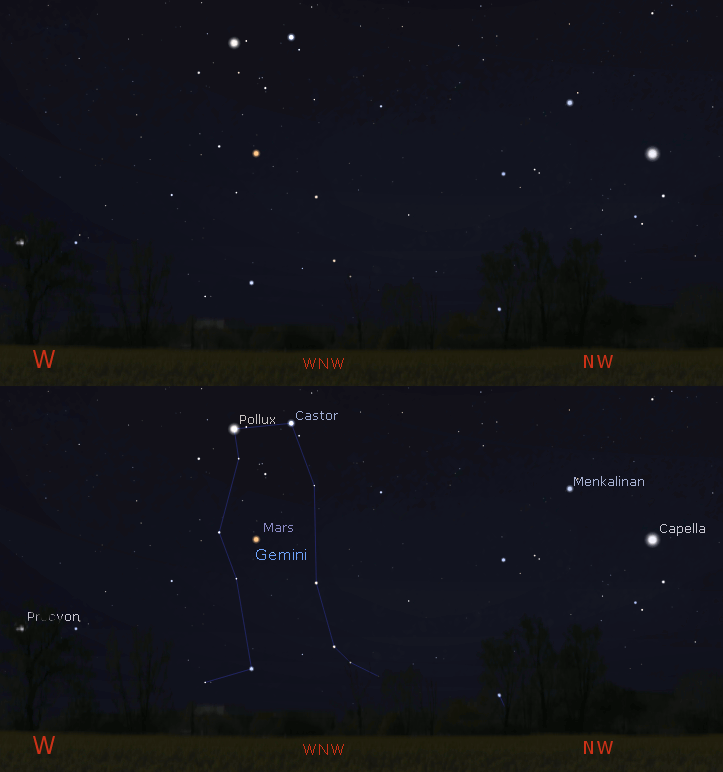
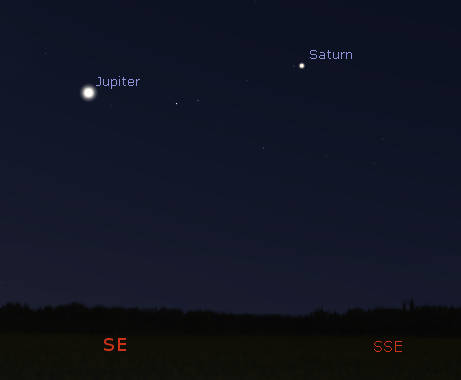
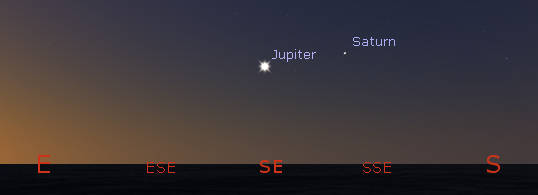
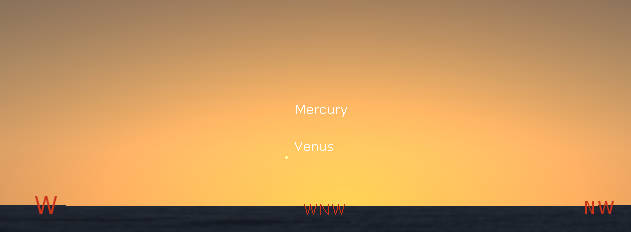
Let’s search for the naked-eye planets for this week. Venus can be spotted low in the west-northwest twilight by 10 pm or a little after. Venus will set at 11:04 pm. Mars can be found in the west-northwest at 10:30 tonight, It’s in Cancer and by next Wednesday will pass in front of the Beehive star cluster which can be easily seen in a pair of binoculars. Check it out each night before then and watch Mars approach the cluster, now to its upper left. Mars will set at 11:55 pm. Jupiter and Saturn, are in the morning sky. Saturn will rise at 12:12 am. It’s seen with the stars of Capricornus. Brighter Jupiter, to the left of Saturn, will rise at 1:01 am. By 5 am, these two planets will be in the south-southeast in the morning twilight.
The astronomical event times given are for the Traverse City/Interlochen area of Michigan. They may be different for your location.
Addendum
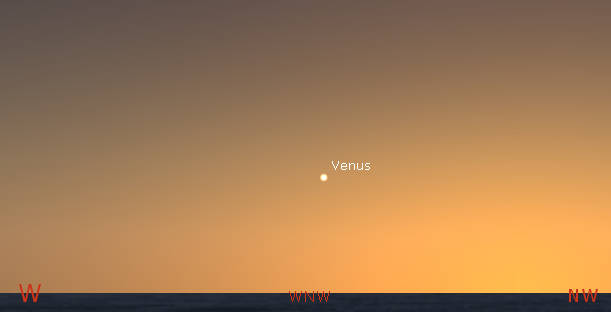
Venus in evening twilight at 10 pm or a half hour after sunset tonight over a sea or Lake Michigan horizon. Venus is a bit less than 10 degrees altitude. Created using Stellarium.
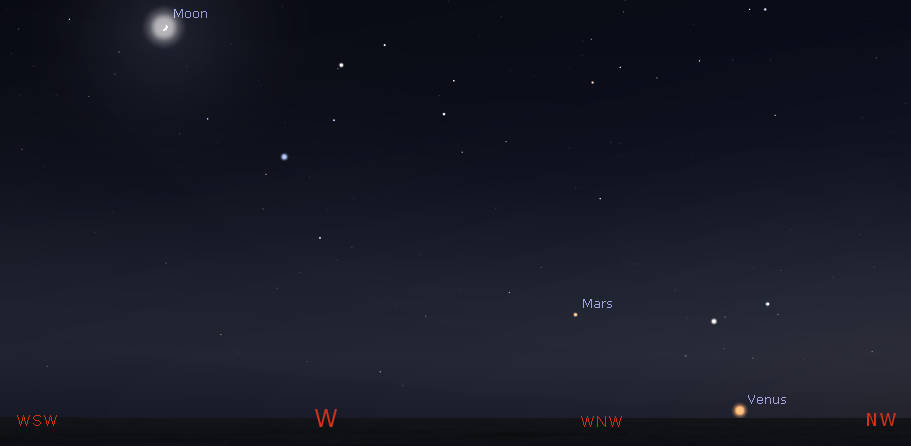
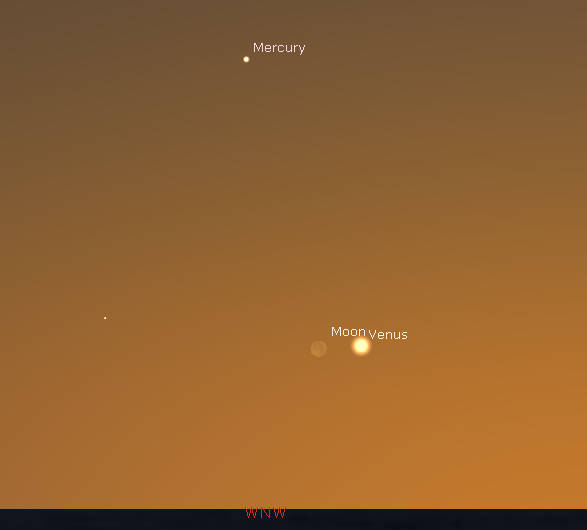
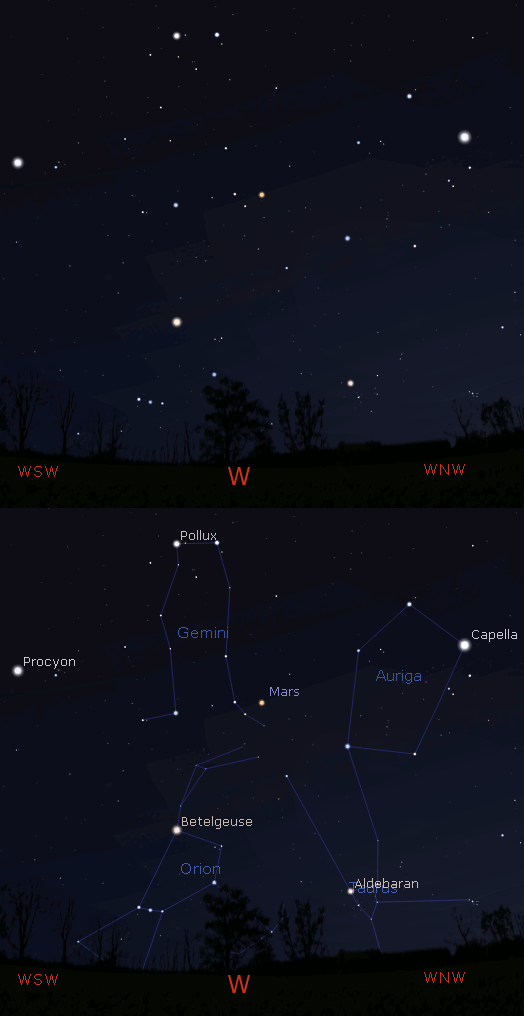
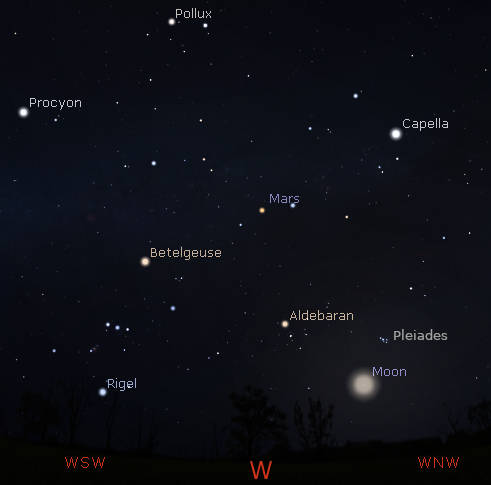
The Moon, Mars and Venus at 11 pm or an hour and a half after sunset tonight over a sea or Lake Michigan horizon. Click on the image to enlarge. Created using Stellarium.
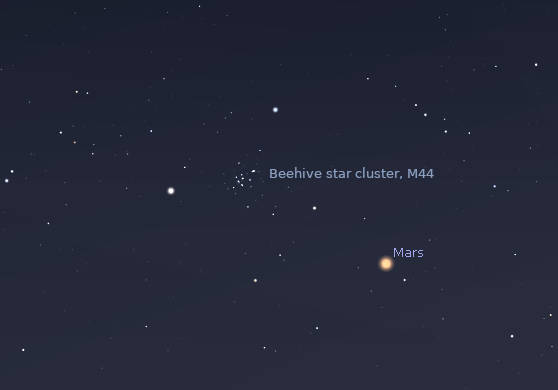
Mars and the Beehive star cluster at 11 pm tonight as they might be seen in binoculars. Created using Stellarium.
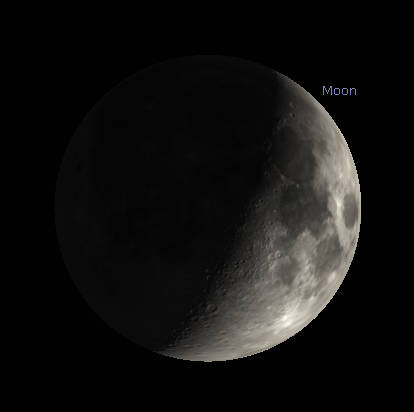
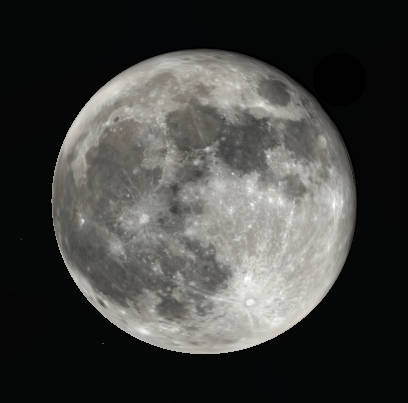
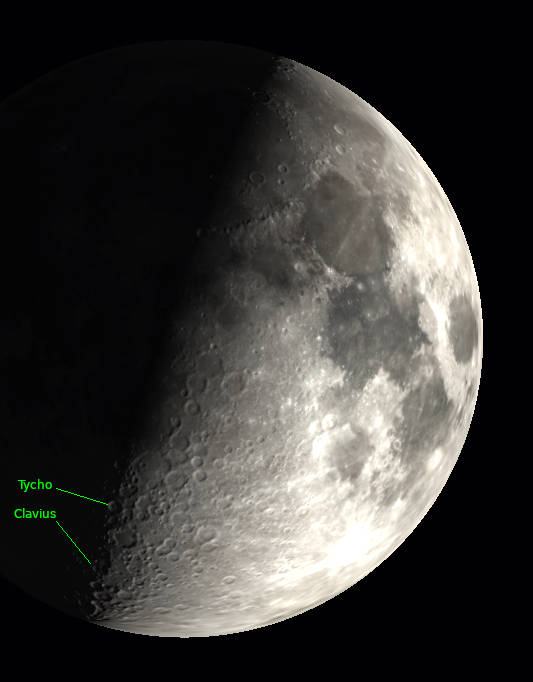
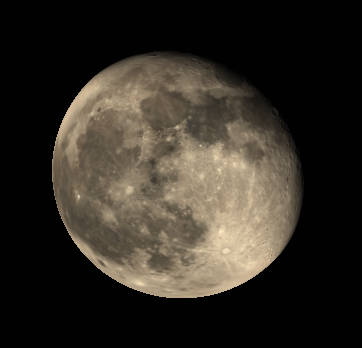
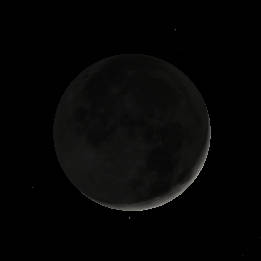
The Moon as it might appear tonight in binoculars or small telescope tonight. Created using Stellarium.
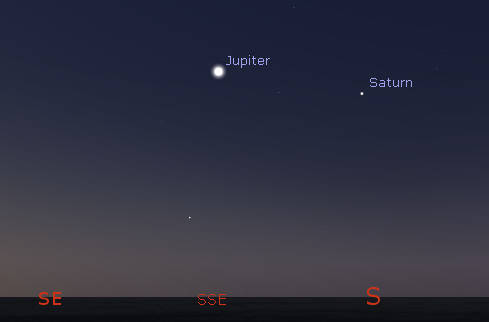
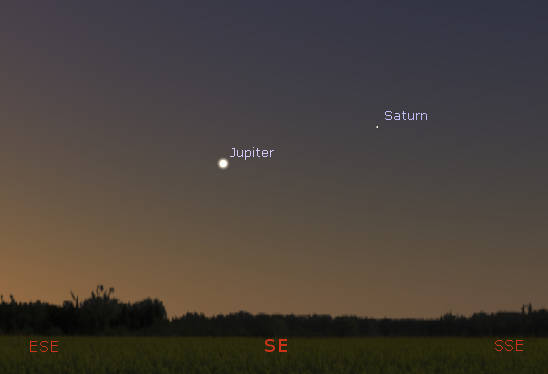
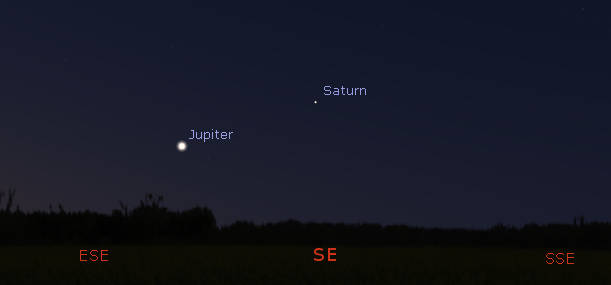
Jupiter and Saturn at 5 am or an hour before sunrise tomorrow morning. Created using Stellarium.
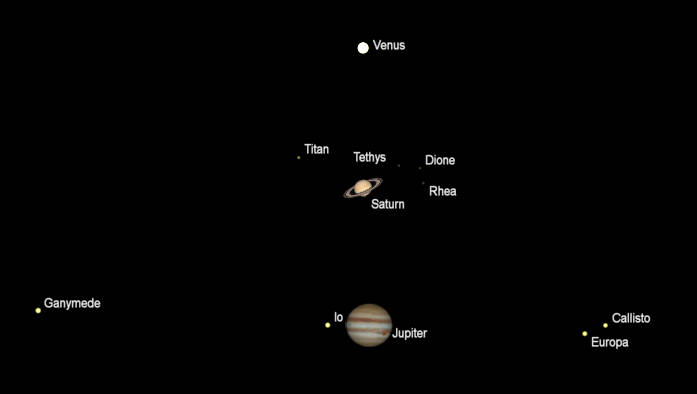
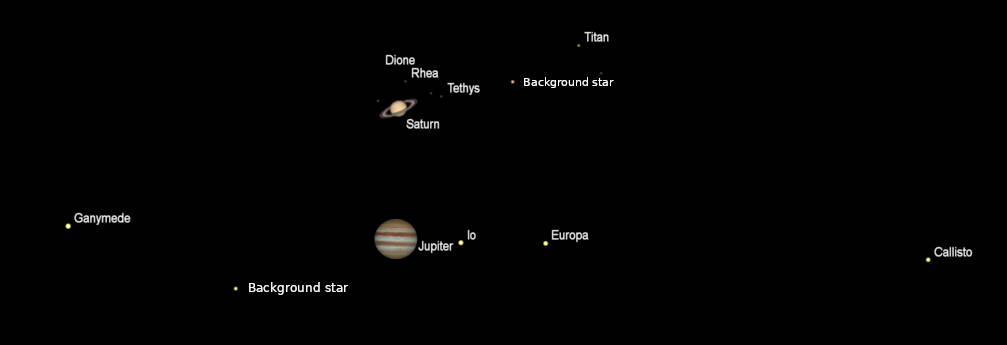
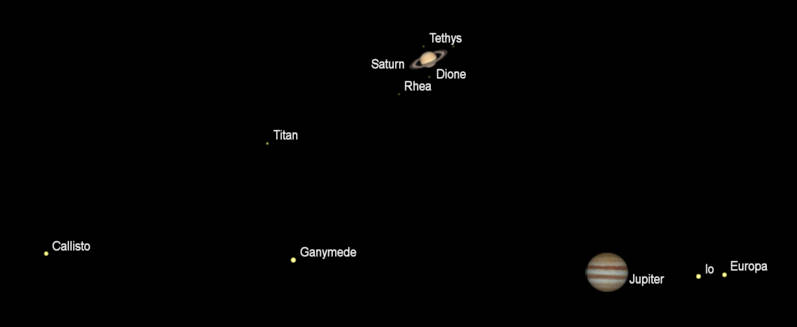
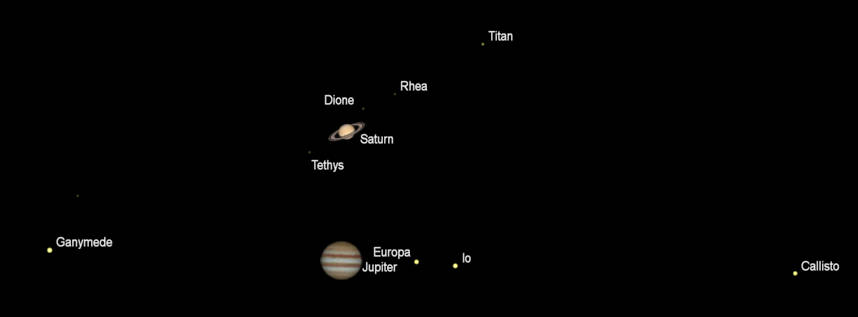
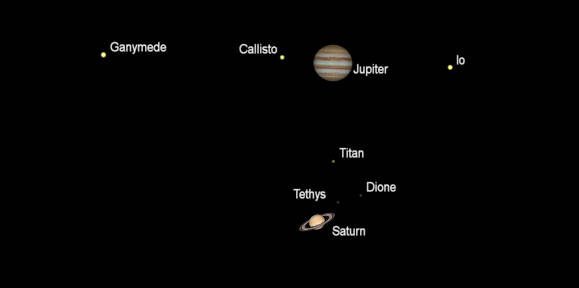
Telescopic views of Venus, Saturn and Jupiter. Venus at the same magnification. Venus, seen at 10 pm, will be 10.72″ in diameter. Saturn at 5 am will be 18.00″ in diameter, its rings 44.43″ in extent. And Jupiter will be 43.43″. The normal cutoff for whether to show a planet here is an apparent diameter of 10″ or greater. Mars doesn’t make the cut, its apparent diameter will be 3.98″ tonight. The ” symbol means seconds of arc (1/3600th of a degree). Created using Cartes du Ciel (Sky Charts).
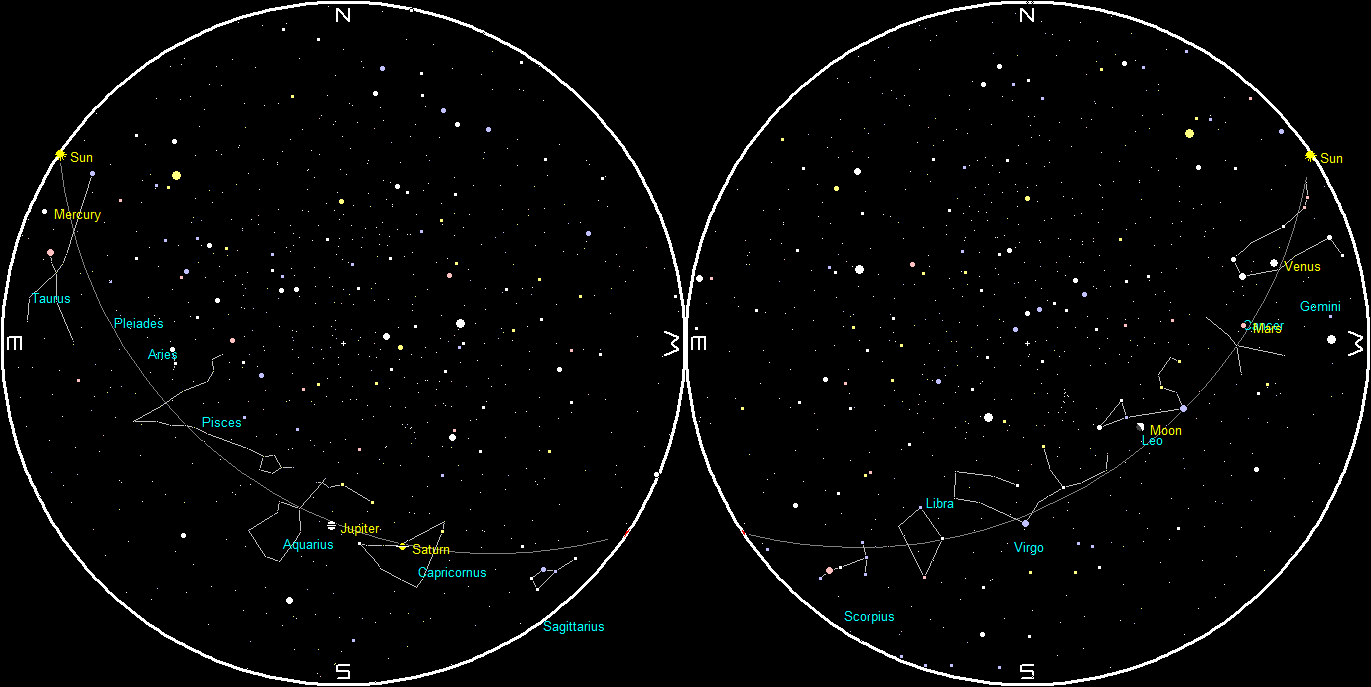
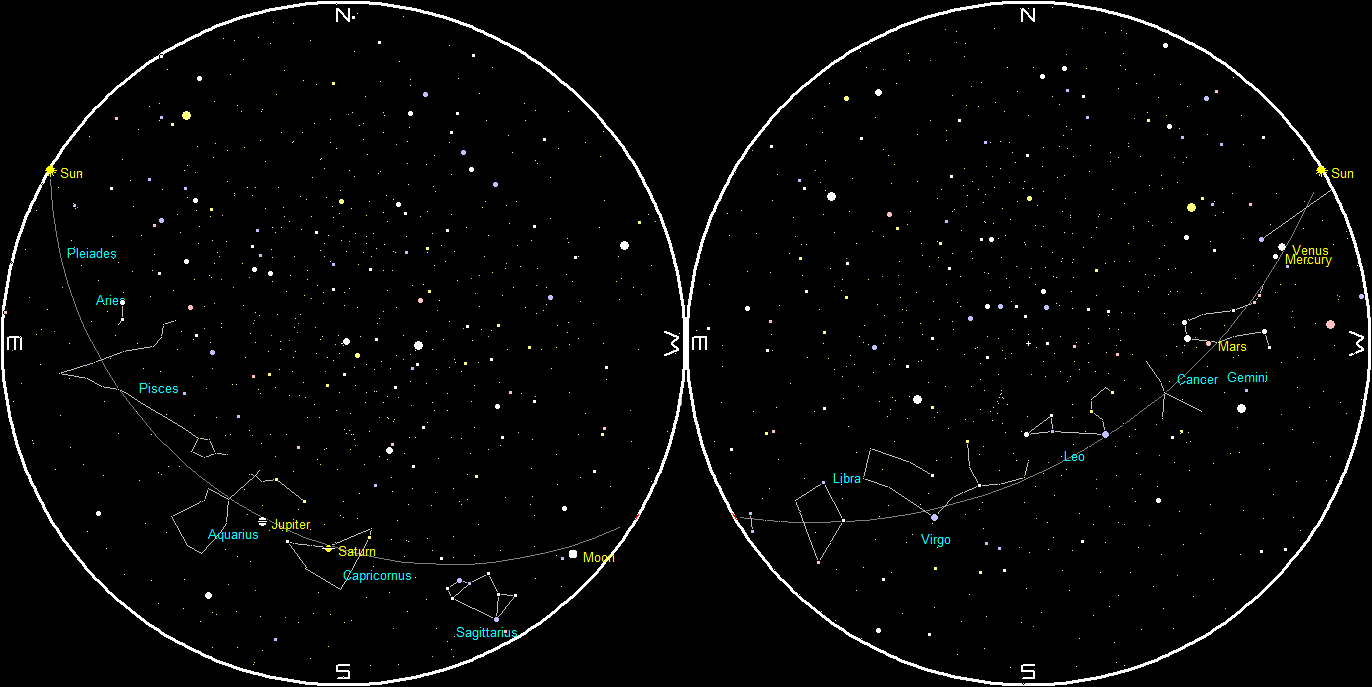
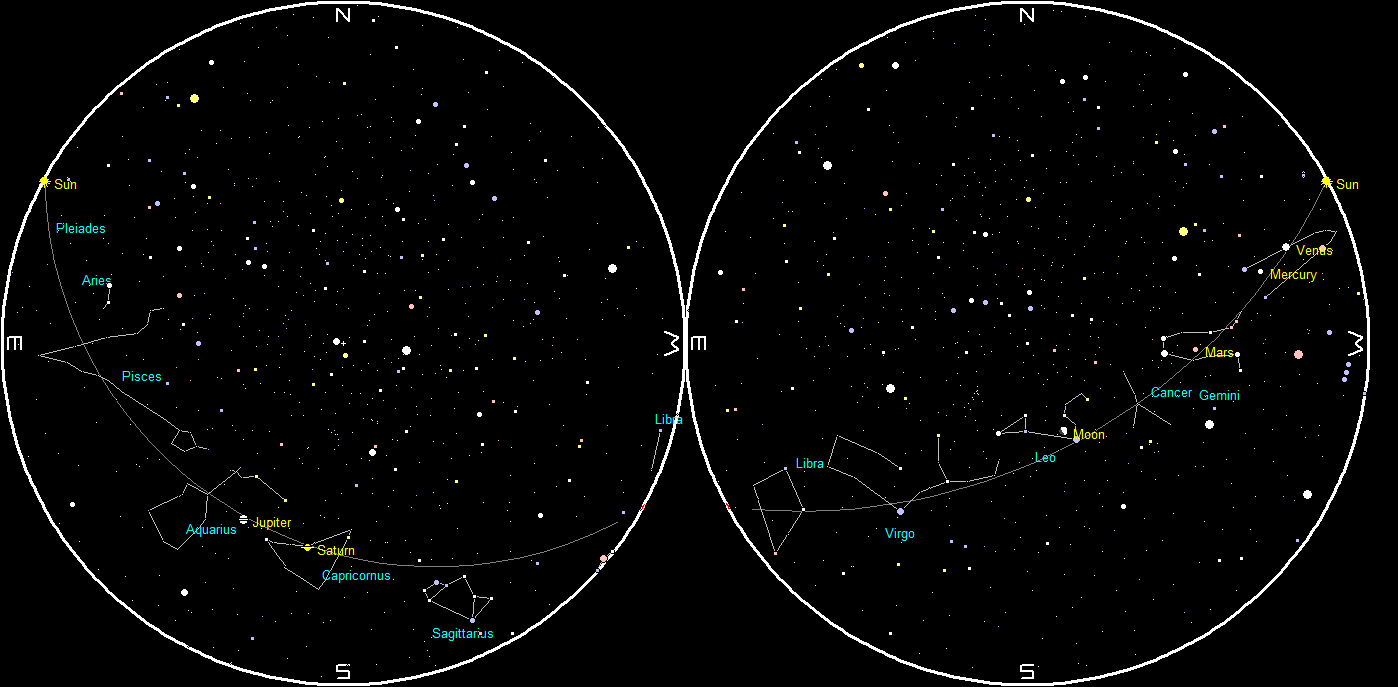
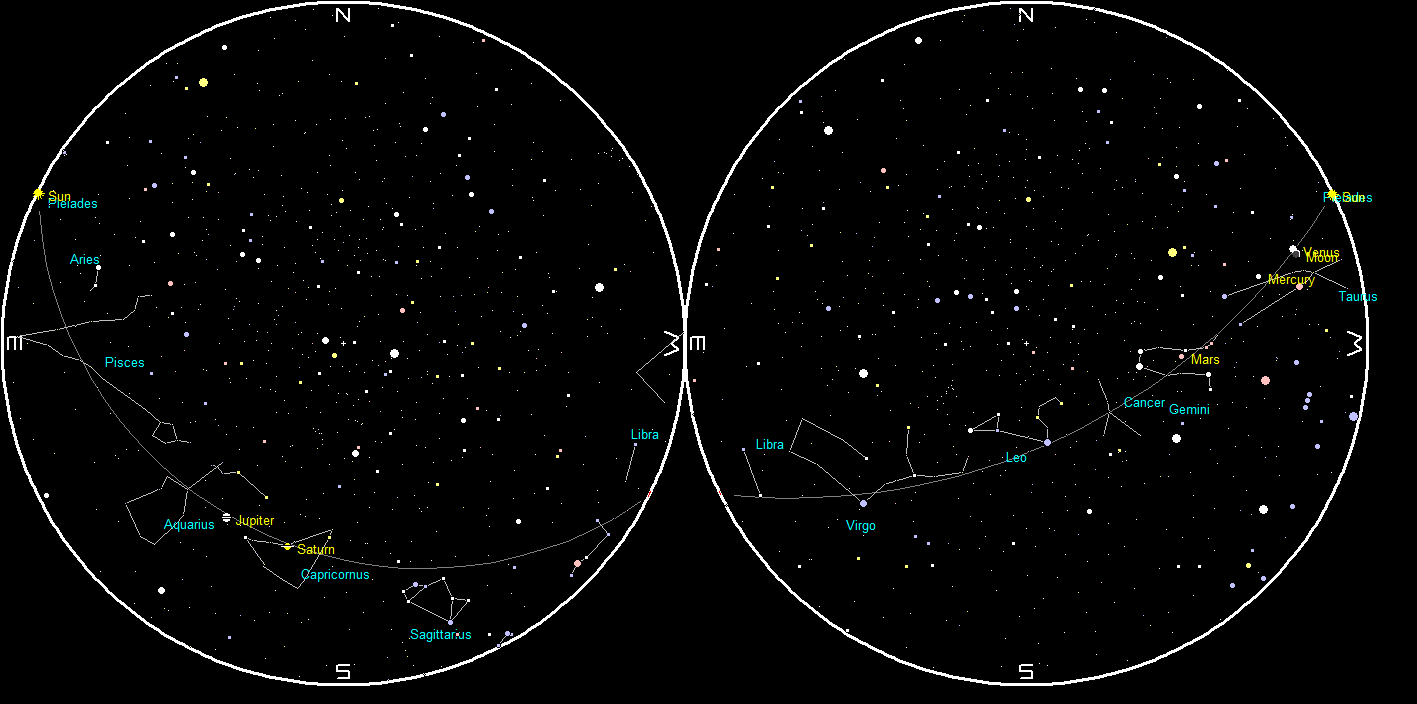
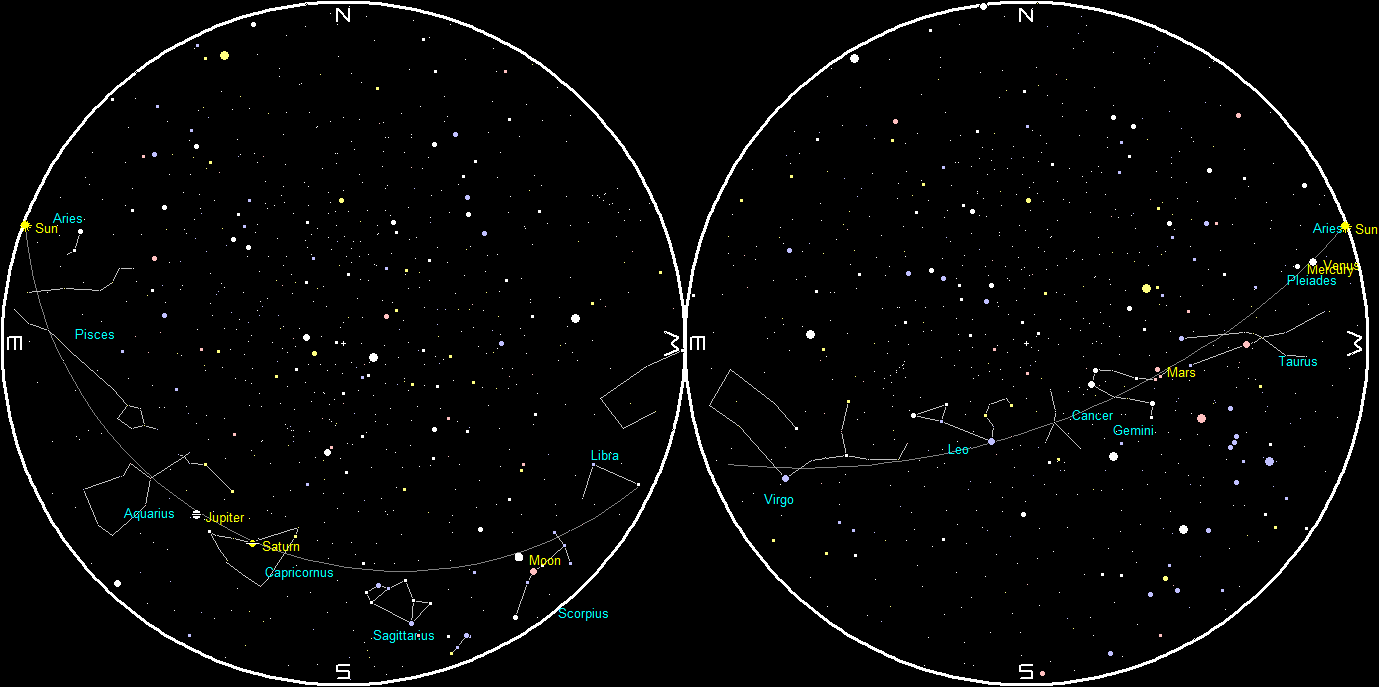
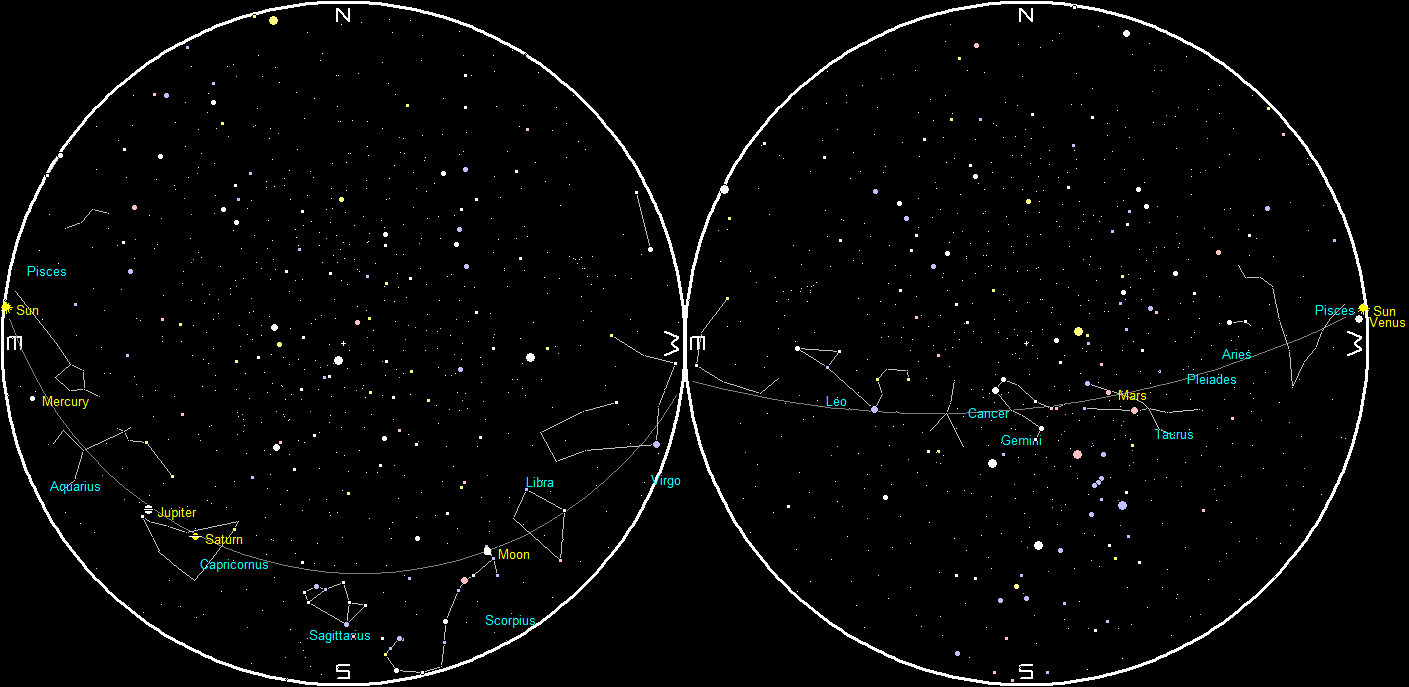
Planets and the Moon at sunset and sunrise of a single night, starting with sunset on the right on June 16, 2021. The night ends on the left with sunrise on the 17th. Click on the image to enlarge. Created using my LookingUp program.
06/10/2021 – Ephemeris – Let’s take a belated search for the naked-eye planets for this week
This is Ephemeris for Thursday, June 10th. Today the Sun will be up for 15 hours and 30 minutes, setting at 9:27, and it will rise tomorrow at 5:56. The Moon is new today, and won’t be visible.
Let’s take a belated look at the naked-eye planets for this week. Venus can be spotted low in the west-northwest twilight by 10 pm or a little after. Venus will set at 10:58 pm. Mars can be found in the west at 10:30 tonight, and about to leave the constellation of Gemini, the twins. Tonight it’s below and left of Gemini’s brightest star, Pollux. Mars will set at 12:10 am. Jupiter and Saturn, are in the morning sky. Saturn will rise at 12:40 am. It’s seen with the stars of Capricornus. It has begun its retrograde or westward motion caused by the fact that we are viewing it from another moving planet. Brighter Jupiter, is now in Aquarius, and will rise at 1:28 am. By 5 am, these two planets will be in the south-southeast in the morning twilight.
The astronomical event times given are for the Traverse City/Interlochen area of Michigan. They may be different for your location.
Addendum
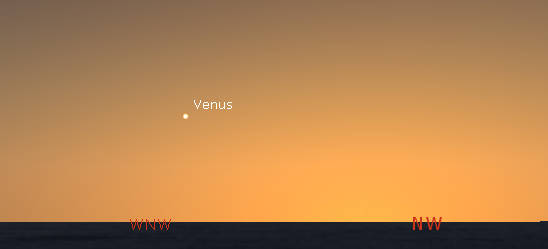
Venus in the evening twilight at 10 pm or a half hour after sunset tonight, June 10, 2021. Created using Stellarium.
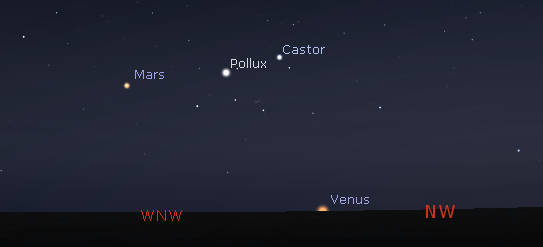
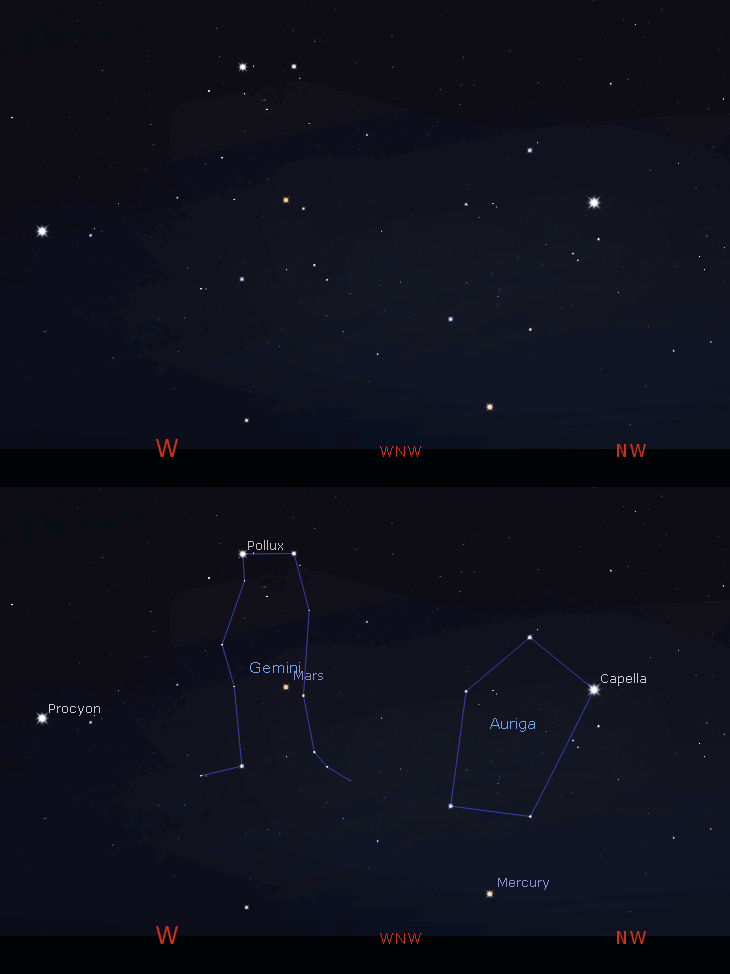
Mars in the evening with Castor and Pollux at 11 pm or about an hour and a half after sunset. Created using Stellarium.
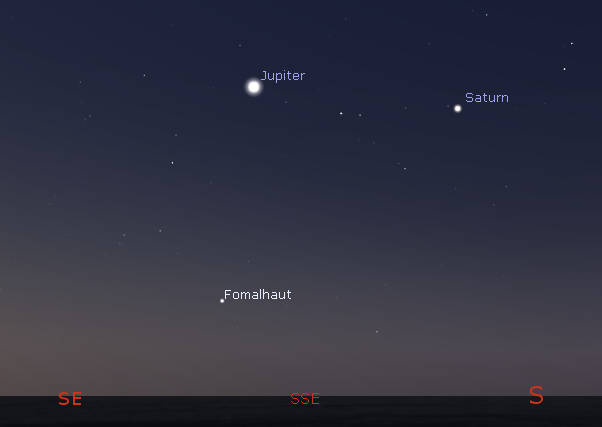
Jupiter and Saturn at 5 am, one hour before sunrise. Created using Stellarium.
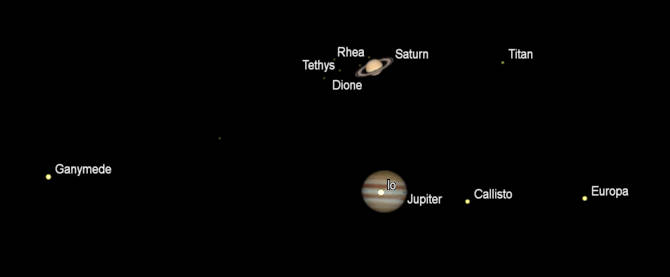
Saturn and Jupiter as seen in a small telescope at the same magnification at 5 am June 11, 2021. Apparent diameters: Saturn, 17.85″, rings, 41.58″; Jupiter, 42.60″. Mars is too far away to make out detail on its surface, except maybe a polar cap. Its apparent diameter is 4.04″. Venus’ apparent diameter is 10.55″ and will be added when it gets far enough from the Sun to be easily seen. The normal cutoff for whether to show a planet here is an apparent diameter of 10″ or greater. The ” symbol means seconds of arc (1/3600th of a degree). Note that Io is transiting the face of Jupiter. It would normally not be visible, but its shadow on Jupiter might be. Created using Cartes du Ciel (Sky Charts).
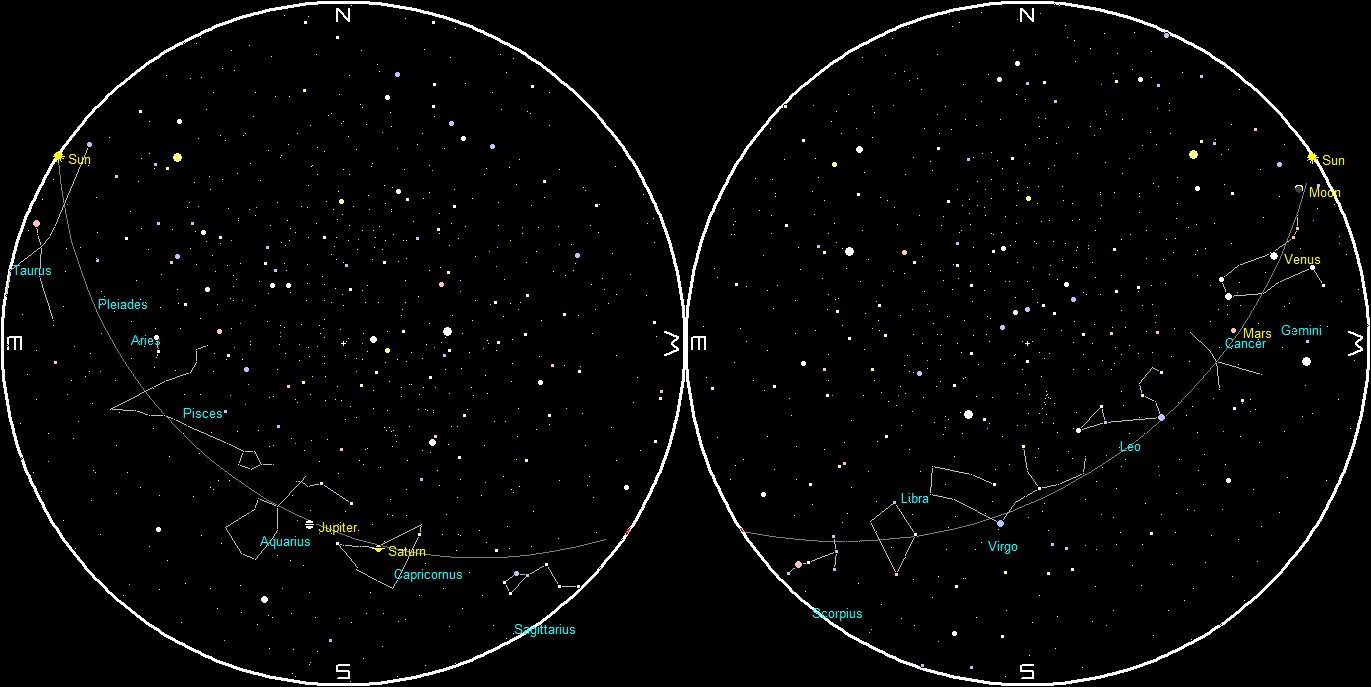
Planets and the Moon at sunset and sunrise of a single night, starting with sunset on the right on June 10, 2021. The night ends on the left with sunrise on the 11th. Click on the image to enlarge. Created using my LookingUp program.
06/02/2021 – Ephemeris – Let’s look for the naked-eye planets for this week
This is Bob Moler with Ephemeris for Wednesday, June 2nd. Today the Sun will be up for 15 hours and 22 minutes, setting at 9:22, and it will rise tomorrow at 5:59. The Moon, at last quarter today, will rise at 3:10 tomorrow morning.
Let’s look for the naked-eye planets for this week. Venus can be spotted low in the west-northwest twilight by 10 pm. Venus will set at 10:49 pm. Mars can be found in the west at 10:30 tonight, and about to leave the constellation of Gemini, the twins. Tonight it’s below and left of Gemini’s brightest star, Pollux. Mars will set at 12:34 am. Jupiter and Saturn, are in the morning sky. Saturn will rise at 1:08 am. It’s seen with the stars of Capricornus. It has begun its retrograde or westward motion caused by the fact that we are viewing it from another moving planet. Brighter Jupiter, is now within the boundaries of Aquarius, and will rise at 1:55 am. By 5 am these two planets will be in the south-southeast in the morning twilight.
The astronomical event times given are for the Traverse City/Interlochen area of Michigan. They may be different for your location.
Addendum
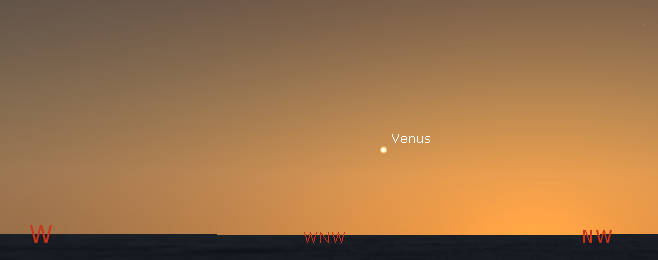
Venus on a flat lake horizon at 10 pm (38 minutes after sunset), June 2, 2021. Created using Stellarium.
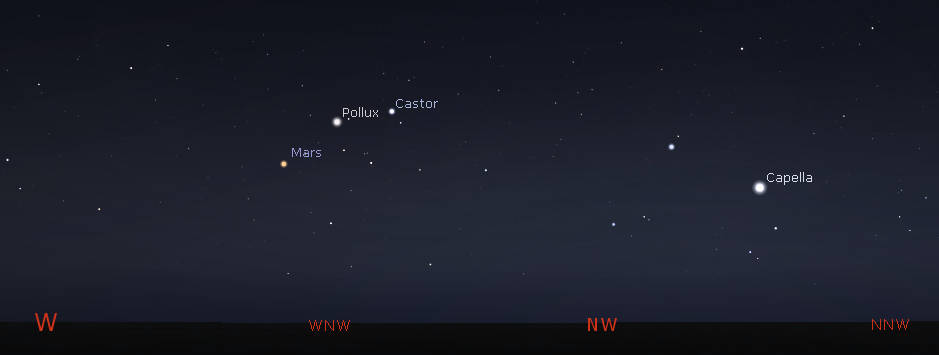
Mars finder chart for 11 pm, June 2, 2021. Created using Stellarium.
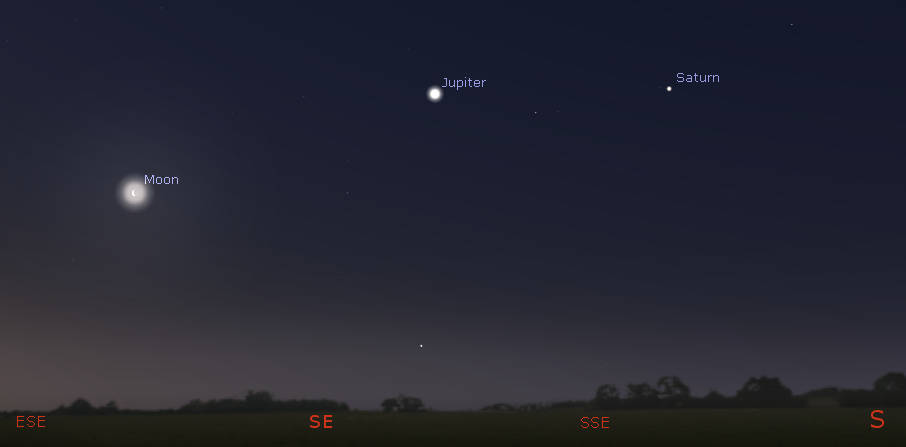
Saturn Jupiter and the crescent Moon at 5 am, about an hour before sunrise. Click on the image to enlarge. Created using Stellarium.
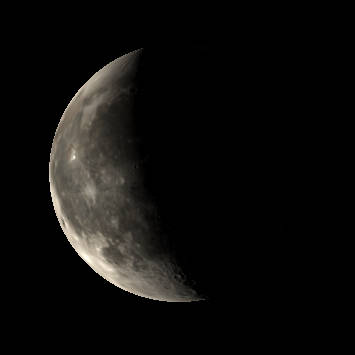
The waning crescent Moon as it should appear in binoculars, tomorrow morning at 5 am, June 3, 2021.
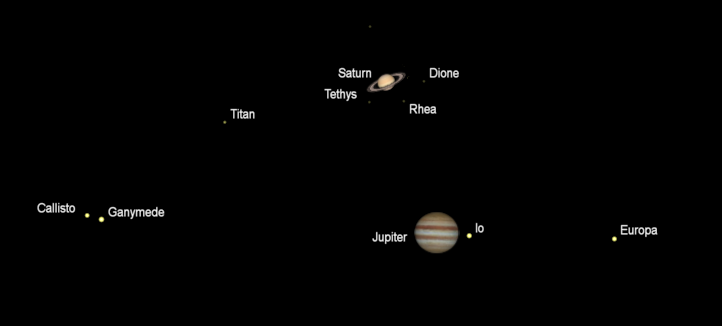
Saturn and Jupiter as seen in a small telescope at the same magnification at 5 am June 3, 2021. Apparent diameters: Saturn, 17.64″, rings, 41.09″; Jupiter, 41.51″. Mars is too far away to make out detail on its surface, except maybe a polar cap. Its apparent diameter is 4.13″. Venus’ apparent diameter is 10.35″ and will be added when it gets far enough from the Sun to be easily seen. The normal cutoff for whether to show a planet here is an apparent diameter of 10″ or greater. The symbol means seconds of arc (1/3600th of a degree). Created using Cartes du Ciel (Sky Charts).
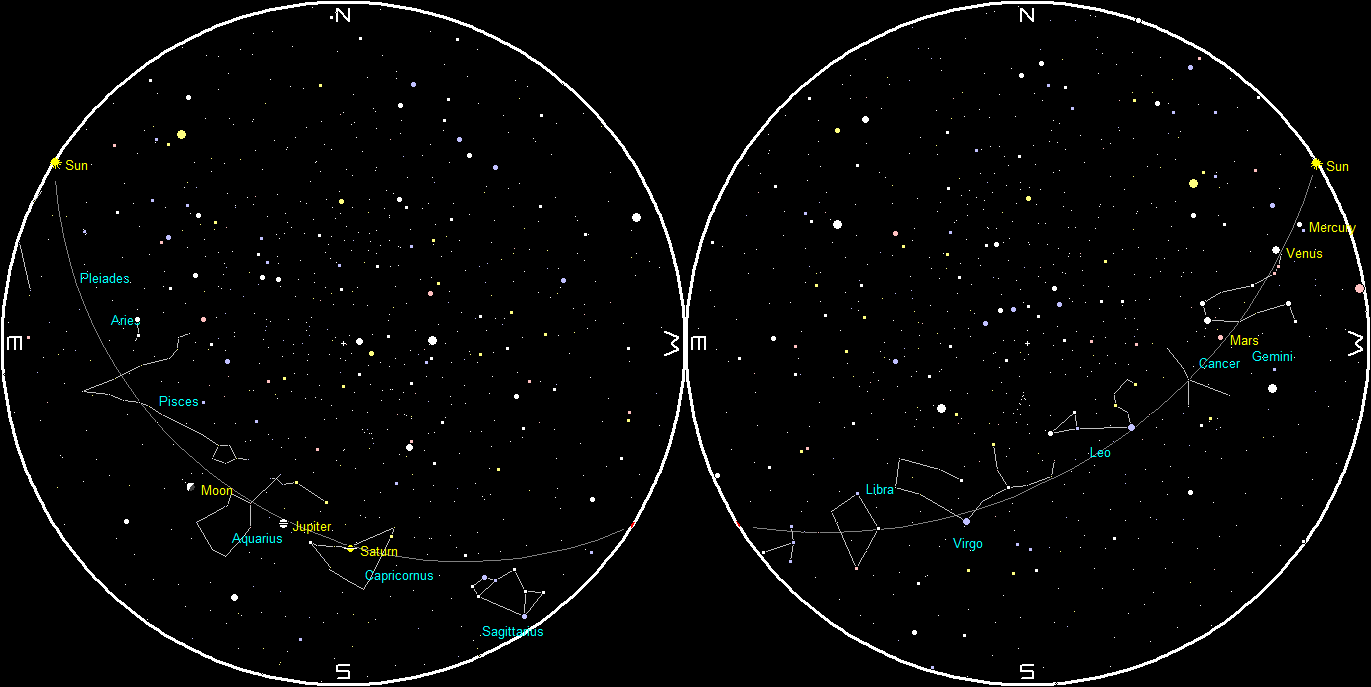
Planets and the Moon at sunset and sunrise of a single night starting with sunset on the right on June 2, 2021. The night ends on the left with sunrise on the 3rd. Click on the image to enlarge. Created using my LookingUp program.
05/26/2021 – Ephemeris – Let’s search for the naked-eye planets for this week
There is a lunar eclipse this morning. See https://bobmoler.wordpress.com/2021/05/25/05-25-2021-ephemeris-viewing-the-lunar-eclipse-tomorrow-morning/
This is Ephemeris for Wednesday, May 26th. Today the Sun will be up for 15 hours and 12 minutes, setting at 9:16, and it will rise tomorrow at 6:03. The Moon, at full today, will rise at 9:57 this evening.
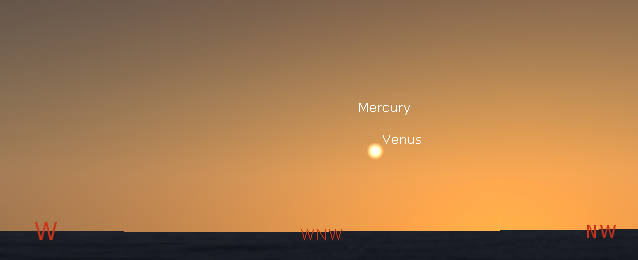
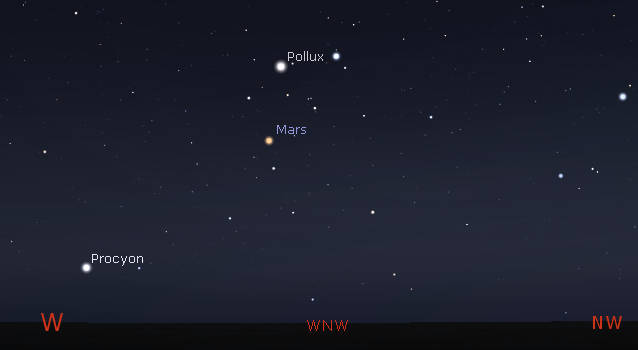
Let’s search for the naked-eye planets for this week. Venus might be spotted low in the west-northwest twilight by 10 pm. Mercury will be a bit above and left of Venus, but is now too dim to spot. Venus will set at 10:36 pm. Mars can be found in the west at 10:30 tonight, in the constellation of Gemini the twins. Tonight it’s on the left side of the constellation, below Gemini’s brightest star, Pollux. Mars will set at 12:37 am. Jupiter and Saturn, are in the morning sky. Saturn will rise at 1:36 am. It’s seen with the stars of Capricornus. Brighter Jupiter, now within the boundaries of Aquarius, will rise at 2:21 am. By 5 am they will be in the southeast in the morning twilight.
The astronomical event times given are for the Traverse City/Interlochen area of Michigan. They may be different for your location.
Addendum
05/19/2021 – Ephemeris – Let’s search for the naked-eye planets for this week
This is Bob Moler with Ephemeris for Wednesday, May 19th. Today the Sun will be up for 14 hours and 59 minutes, setting at 9:09, and it will rise tomorrow at 6:09. The Moon, at first quarter today, will set at 3:26 tomorrow morning.
Let’s search for the naked-eye planets for this week. Mars will be joined by two more planets seen in twilight. Both Mercury and Venus are now just above where the Sun set. By 10 pm Mercury should be able to be spotted low in the west-northwest. Venus might be spotted lower and somewhat earlier, it’s a lot brighter than Mercury. Venus will be setting at 10:21 pm with Mercury following at 11:04. Mars can be found in the west at 10:30 tonight, in the constellation of Gemini the twins. Tonight it’s in the middle of the constellation. Mars will set at 12:42 am. Jupiter and Saturn, are in the morning sky. Saturn will rise at 2:03 am, with brighter Jupiter rising at 2:43 am. By 5 am they will be in the southeast in the morning twilight.
The astronomical event times given are for the Traverse City/Interlochen area of Michigan. They may be different for your location.
Addendum
05/12/2021 – Ephemeris – Searching for the naked-eye planets for this week
This is Ephemeris for Wednesday, May 12th. Today the Sun will be up for 14 hours and 43 minutes, setting at 9:01, and it will rise tomorrow at 6:16. The Moon, 1 day past new, will set at 10:06 this evening.
Let’s search for the naked-eye planets for this week. Mars will be joined by two more planets seen in twilight. Both Mercury and Venus are now just above where the Sun set. By 9:30 pm Mercury should be able to be spotted low in the west-northwest. Venus might be spotted lower and somewhat earlier. Venus will be setting at 10:02 pm with Mercury following at 11 pm. Mars can be found in the west at 10 pm tonight, in the constellation of Gemini the twins. Tonight it’s in the middle of the constellation. Mars will set at 1:02 am. Jupiter and Saturn, are in the morning sky. Saturn will rise at 2:30 am, with brighter Jupiter rising at 3:13 am. By 5:30 am they will be low in the southeast in the morning twilight.
The astronomical event times given are for the Traverse City/Interlochen area of Michigan. They may be different for your location.
Addendum
04/28/2021 – Ephemeris – Searching for the naked-eye planets for this week
This is Ephemeris for Wednesday, April 28th. Today the Sun will be up for 14 hours and 7 minutes, setting at 8:44, and it will rise tomorrow at 6:35. The Moon, 2 days past full, will rise at 11:06 this evening.
Let’s search for the naked-eye planets for this week. Unfortunately the only one you’ll find in the evening is Mars. It can be found in the west at 10 pm tonight, in the constellation of Gemini the twins. Tonight it’s just above Castor’s foot. Mars will set at 1:21 am. Both Venus and Mercury are now just east of the Sun and to close to it to be spotted. Venus will be setting 43 minutes after sunset, with Mercury setting 27 minutes later. We should start spotting Mercury next week. It will be late May or early June before Venus will be easily seen. Jupiter and Saturn, are west of the Sun in the morning twilight. Saturn will rise at 3:24 am, with Jupiter rising at 4:03 am. By 6 am they will be low in the southeast. Jupiter, on the left, is the brighter of the two.
The astronomical event times given are for the Traverse City/Interlochen area of Michigan. They may be different for your location.
04/14/2021 – Ephemeris – Let’s search for the naked-eye planets for this week
This is Bob Moler with Ephemeris for Wednesday, April 14th. Today the Sun will be up for 13 hours and 27 minutes, setting at 8:27, and it will rise tomorrow at 6:58. The Moon, 3 days past new, will set at 11:11 this evening.
Let’s search for the naked-eye planets for this week. Unfortunately the only one you’ll find in the evening is Mars. It can be found in the west at 10 pm tonight, between the constellations of Taurus the bull below and Gemini the twins above. Mars will set at 1:39 am. Venus is now just east of the Sun, setting 23 minutes after sunset. It will be late May or early June before it will be easily spotted in the evening twilight. The other three naked-eye planets are west of the Sun in the morning sky. Only Saturn and Jupiter are at a far enough angle from the Sun to be spotted in the morning twilight. Saturn will rise at 4:17 am, with Jupiter rising at 4:53 am. By 6 am they will be low in the southeast.
The astronomical event times given are for the Traverse City/Interlochen area of Michigan. They may be different for your location.
Addendum
04/07/2021 – Ephemeris – Three naked-eye planets are visible overnight
This is Bob Moler with Ephemeris for Wednesday, April 7th. Today the Sun will be up for 13 hours and 6 minutes, setting at 8:18, and it will rise tomorrow at 7:10. The Moon, 3 days past last quarter, will rise at 6:14 tomorrow morning.
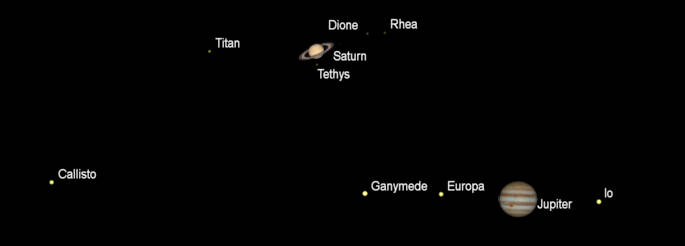
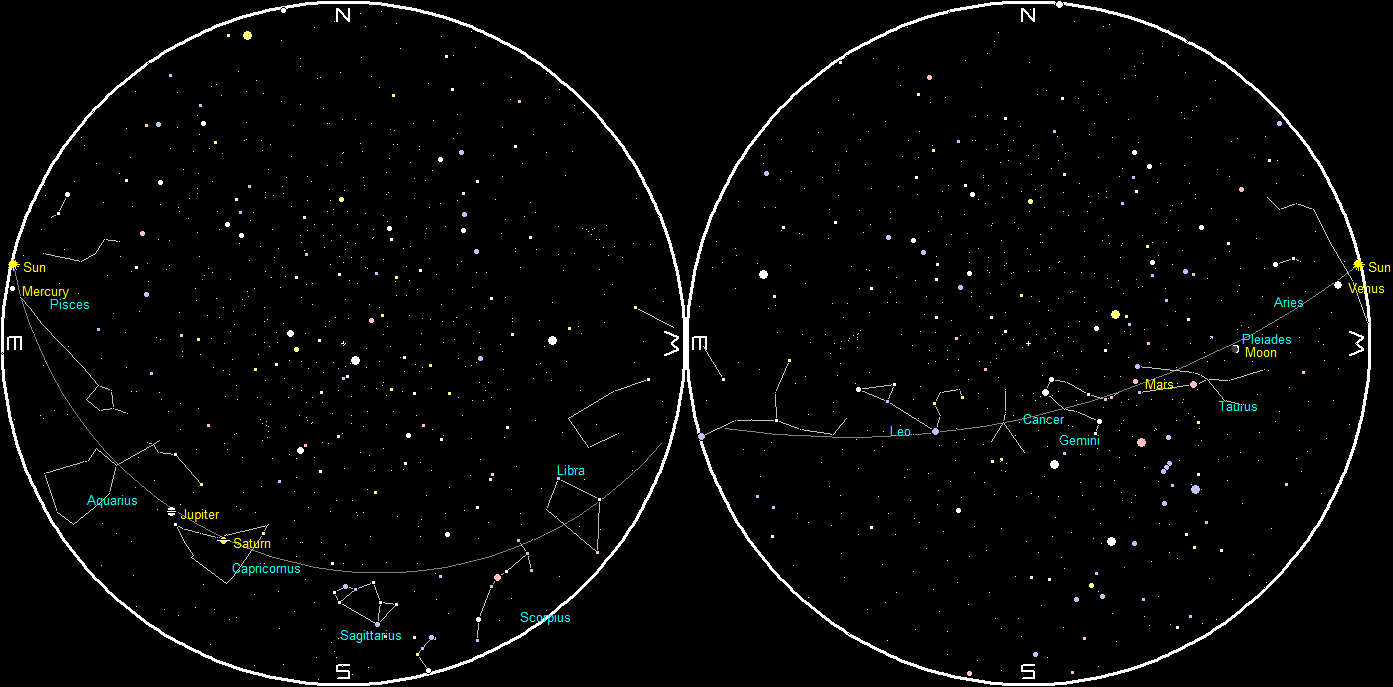
Let’s search for the naked-eye planets for this week. Unfortunately, the only one you’ll find in the evening is Mars. It can be found in the west at 10 pm tonight, above the orange star Aldebaran in the face of Taurus the bull. Mars will set at 1:47 am. Venus is now just a bit east of the Sun, setting fourteen minutes after sunset. It will be late May or early June before it will be easily spotted in the evening twilight. The other three naked-eye planets are just west of the Sun in the Morning sky. Only Saturn and Jupiter are at a far enough angle from the Sun to be spotted in the morning twilight. Saturn will rise at 4:43 am, with Jupiter rising 34 minutes later. By 6:30 am they will be low in the southeast.
The astronomical event times given are for the Traverse City/Interlochen area of Michigan. They may be different for your location.
Addendum
03/31/2021 – Ephemeris – Let’s search for the naked-eye planets for this week
This is Bob Moler with Ephemeris for Wednesday, March 31st. Today the Sun will be up for 12 hours and 44 minutes, setting at 8:09, and it will rise tomorrow at 7:23. The Moon, 3 days past full, will rise at 12:11 tomorrow morning.
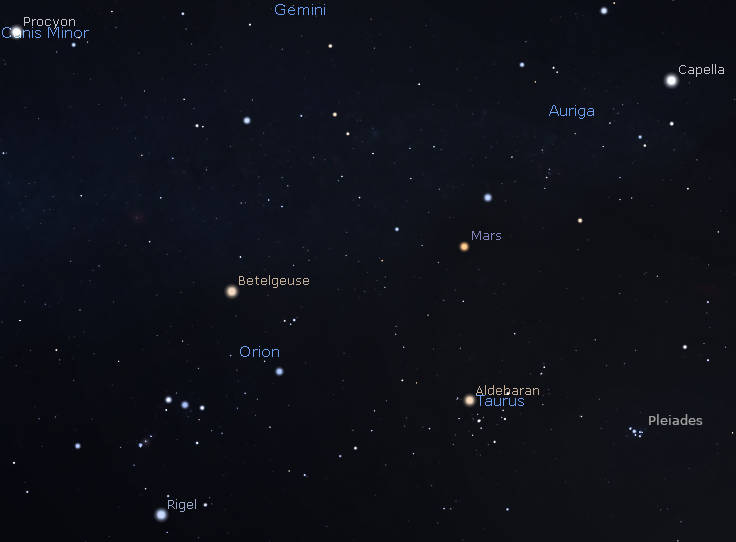
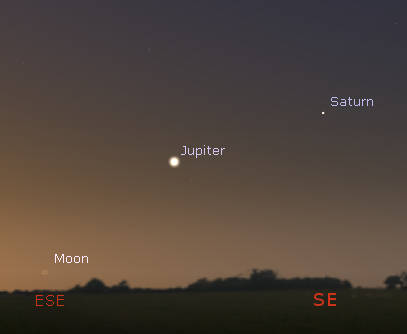
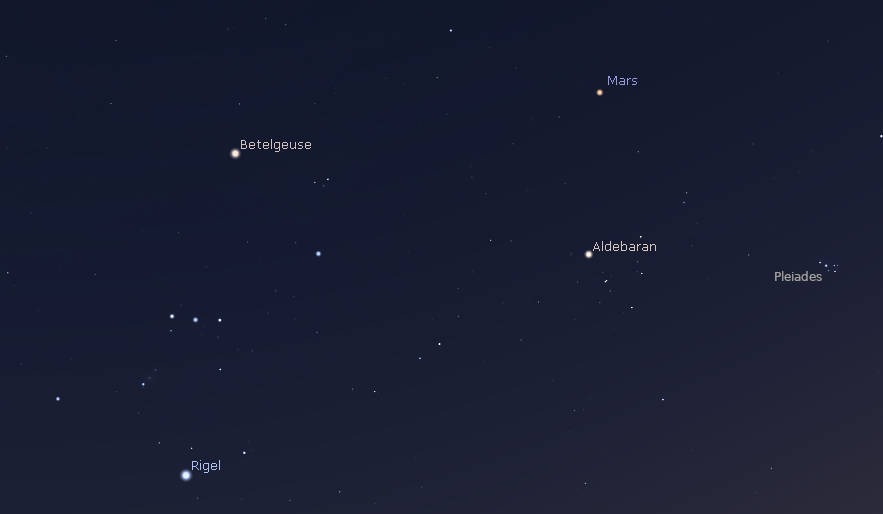
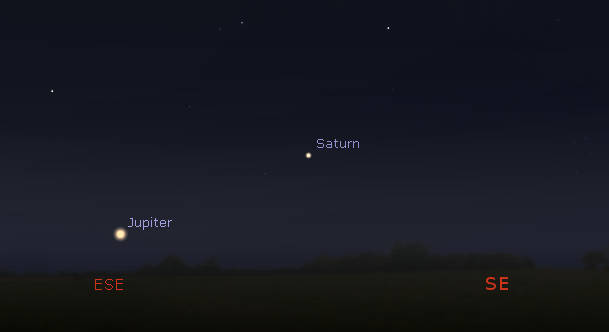
Let’s search for the naked-eye planets for this week. Unfortunately the only one you’ll find in the evening is Mars. It can be found in the west-southwest at 9 pm tonight, above the orange star Aldebaran in the face of Taurus the bull. Mars will set at 1:54 am. Right now three of the other four naked eye planets are just west of the Sun in the Morning sky. Venus is now below and just a bit east of the Sun, setting four minutes after sunset. Only Saturn and Jupiter are at a far enough angle from the Sun to be just spotted in the morning twilight. Saturn will rise at 5:10 am, with Jupiter rising 31 minutes later. By 6:30 am they will be low in the southeast. The Sun is rising earlier by 2 minutes a day now, while sunset is nearly matching that pace in the opposite direction.
The astronomical event times given are for the Traverse City/Interlochen area of Michigan. They may be different for your location.
Addendum
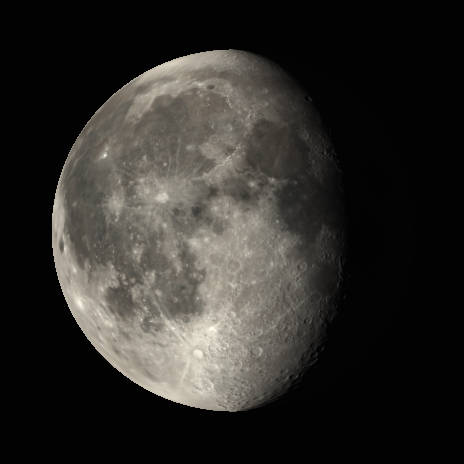
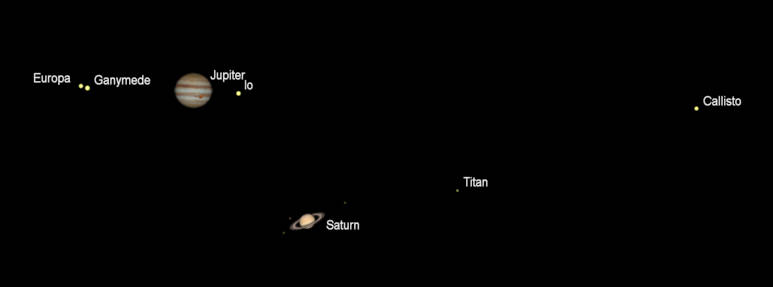
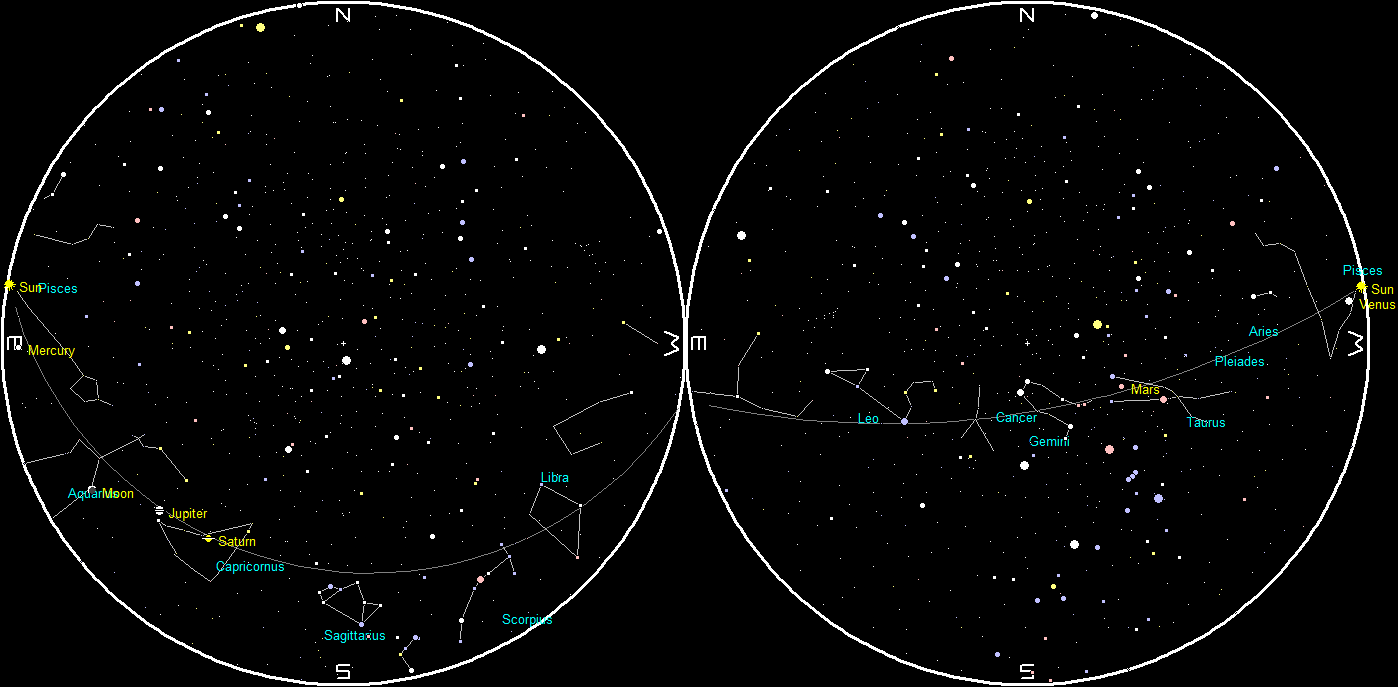
The new version of Stellarium I’m using, 0.21.0, has new textures for the Moon that are more realistic and show finer detail than earlier versions. If the Moon is enlarged to fill the window, clicking on a feature will reveal its name.
 Bob Moler's Ephemeris Blog