Archive
09/03/2014 – Ephemeris – This week’s bright planets
Ephemeris for Wednesday, September 3rd. The sun will rise at 7:07. It’ll be up for 13 hours and 8 minutes, setting at 8:15. The moon, 1 day past first quarter, will set at 1:50 tomorrow morning.
Let’s take our weekly look at the bright planets. Mars and Saturn are now nearly side by side with Saturn to the right by six and a half degrees of about 13 moon widths of the red planet. Saturn will set at 10:57 p.m. Viewing Saturn with a telescope will suffer because it’s getting close to the horizon but it’s still possible to see those fabulous rings and its large moon Titan. Reddish Mars is also in the constellation of Libra the scales and will set at 10:52 p.m. because it is slightly lower than Saturn. In the morning sky brilliant Jupiter will rise in the east-northeast at 4:24 a.m., while the brighter Venus, will rise at 5:53 a.m. Jupiter is increasing its distance from the sun, while Venus is retreating toward the Sun from our point of view.
Times are for the Traverse City/Interlochen area of Michigan. They may be different for your location.
Addendum
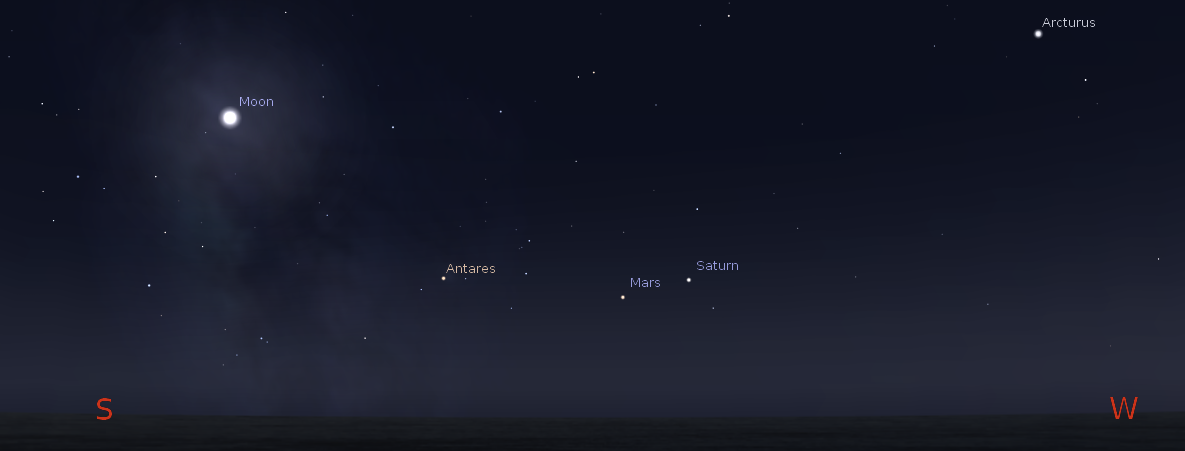
Saturn, Mars and the Moon at 9:30 p.m. September 3, 2014. Created using Stellarium.
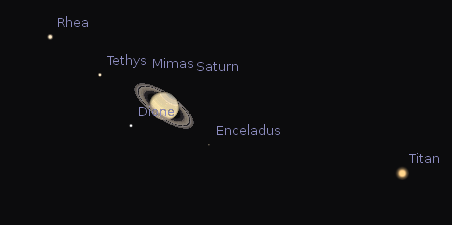
Saturn through the telescope at 9:30 p.m. September 3, 2014. Created using Stellarium.
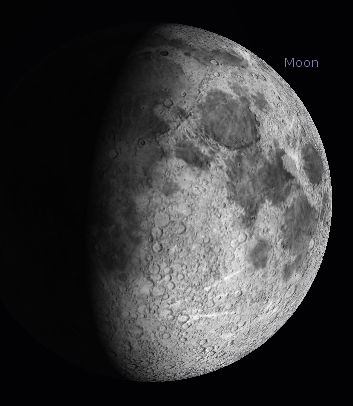
The Moon through binoculars at 9:30 p.m. September 3, 2014. Created using Stellarium.
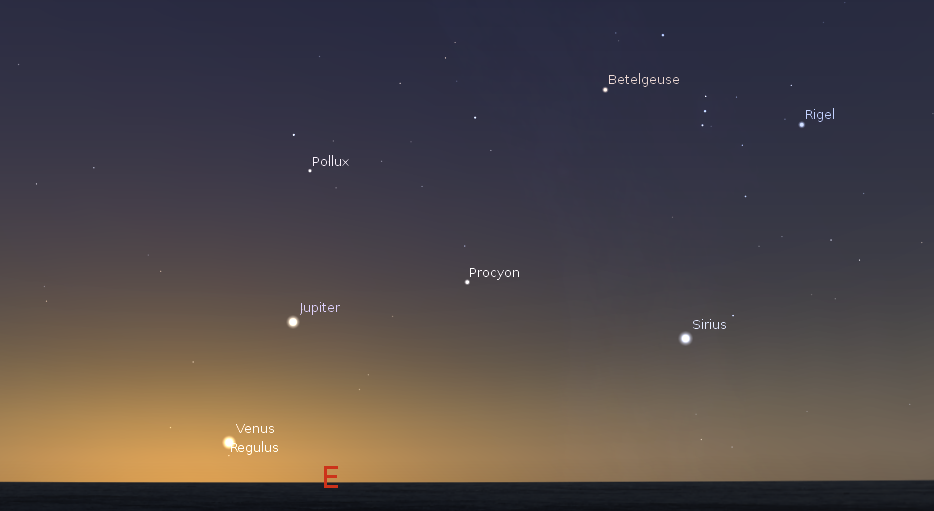
Jupiter, Venus and the rising stars of winter at 6:30 a.m. September 4, 2014. Created using Stellarium.
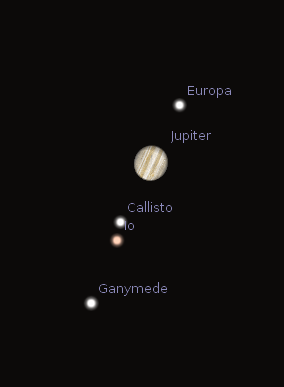
Jupiter and moons through the telescope at 6:30 a.m. September 4, 2014. Created using Stellarium.
08/27/2014 – Ephemeris – Where are the bright planets for this week?
Ephemeris for Wednesday, August 27th. The sun will rise at 6:59. It’ll be up for 13 hours and 28 minutes, setting at 8:27. The moon, 2 days past new, will set at 9:12 this evening.
Let’s take our weekly look at the bright planets. Reddish Mars is in the constellation of Libra the scales, skirting below, left of Saturn in the southwest as darkness falls. It is in conjunction with Saturn today, as it passes due south of the ringed planet. Mars will set at 11:07 p.m. Saturn will set at 11:23 p.m. Saturn viewing with a telescope will suffer because it’s getting close to the horizon but it’s still possible to see those fabulous rings and its large moon Titan. Brilliant Jupiter will rise in the east-northeast at 4:44 a.m. tomorrow, followed by the brighter Venus, which will rise at 5:37 a.m. Jupiter is increasing its distance from the sun, while Venus is retreating toward the Sun from our point of view.
Times are for the Traverse City/Interlochen area of Michigan. They may be different for your location.
Addendum
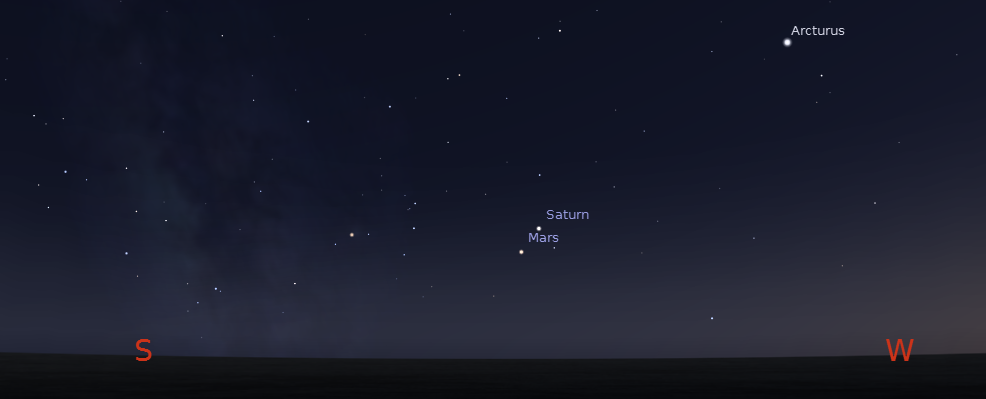
Saturn and Mars in conjunction at 9:30 p.m., August 27, 2014. Created using Stellarium.
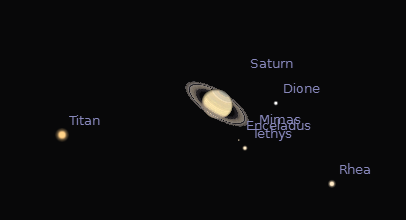
Telescopic Saturn. Do not expect to spot any other of Saturn’s moon other than Titan. 9:30 p.m., August 27, 2014. Created using Stellarium.
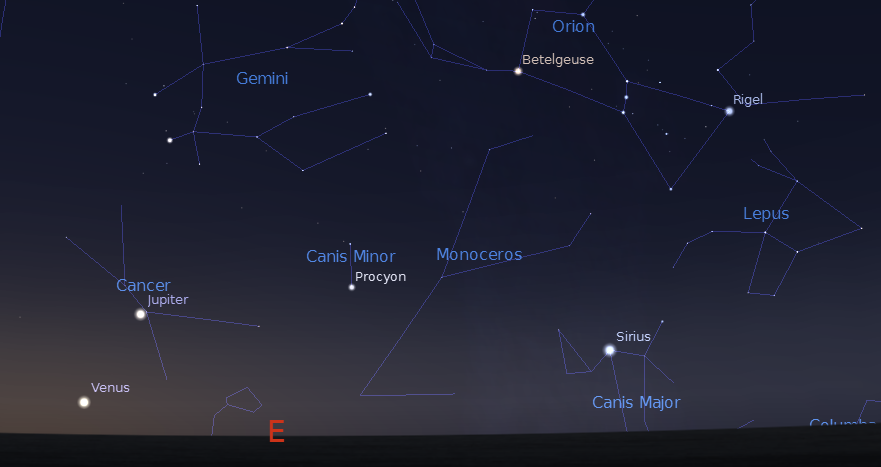
Jupiter and Venus and the rising winter constellations at 6 a.m. August 28, 2014. Created using Stellarium.
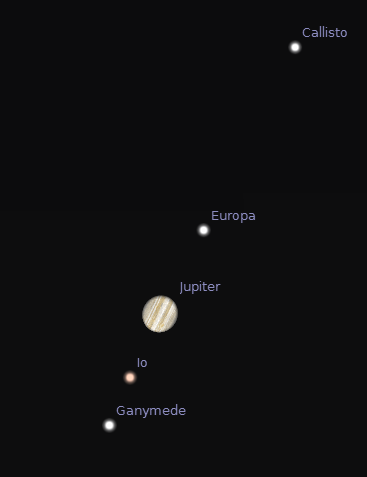
Telescopic view of Jupiter and its 4 Galilean moons at 6 a.m. on August 28, 2014. Created using Stellarium.
08/20/2014 – Ephemeris – Where are the bright planets for this week?
Ephemeris for Wednesday, August 20th. The sun rises at 6:50. It’ll be up for 13 hours and 48 minutes, setting at 8:39. The moon, 3 days past last quarter, will rise at 3:17 tomorrow morning.
Wednesday is bright planet day on Ephemeris. Reddish Mars is on the western edge of Libra the scales, skirting below Saturn in the southwest as darkness falls. It will set at 11:23 p.m. Saturn will be in the southwest, above and left of Mars as darkness falls. It will set at 11:50 p.m. Saturn’s is still great viewing with small or large telescopes to see those fabulous rings and its large moon Titan. Mars will pass Saturn traveling eastward next Wednesday. Brilliant Jupiter will rise in the east-northeast at 5:03 a.m. in morning twilight, followed by the brighter Venus, which will rise 17 minutes later. Jupiter is increasing its distance from the sun, while Venus is retreating toward the Sun from our point of view
Times are for the Traverse City/Interlochen area of Michigan. They may be different for your location.
Addendum
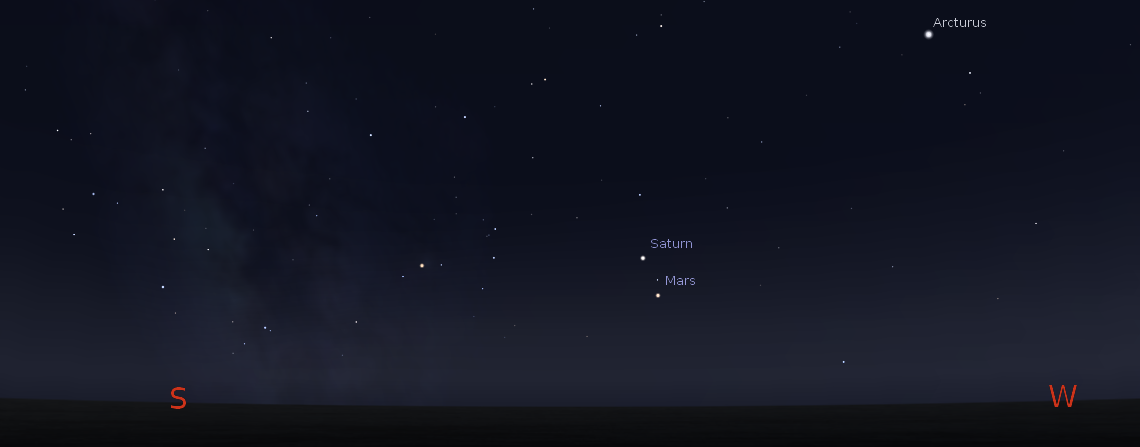
Mars and Saturn with the stars of the zodiac from Virgo to Sagittarius at 10 p.m. August 20, 2014. Created with Stellarium.
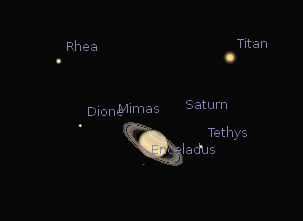
Saturn and moons through a telescope on August 20, 2014. Created using Stellarium.
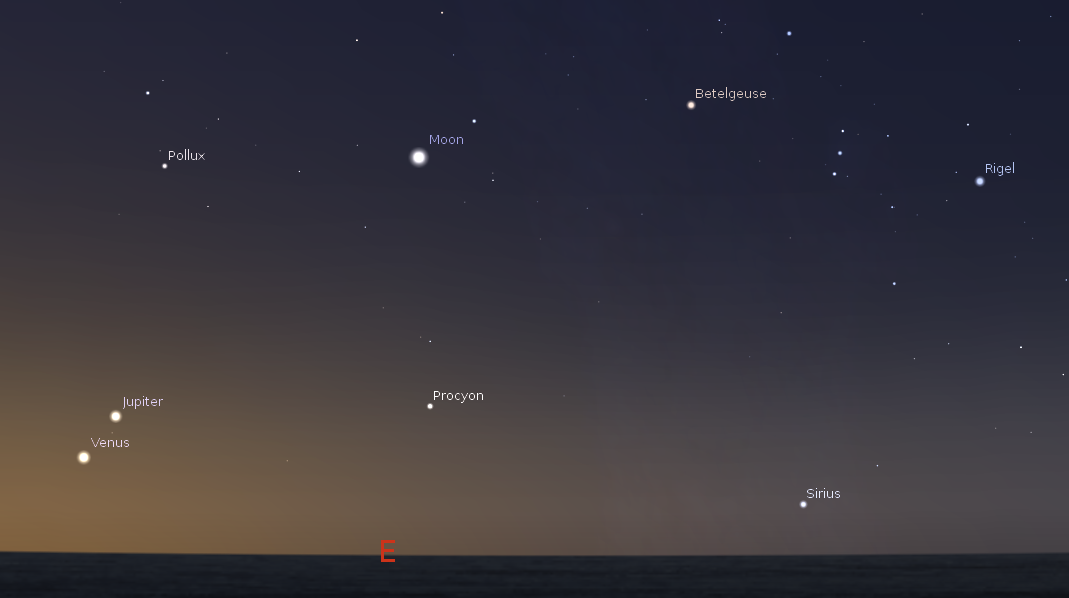
Jupiter, Venus and the Moon and winter stars at 6 a.m. August 21, 2014. Created using Stellarium.
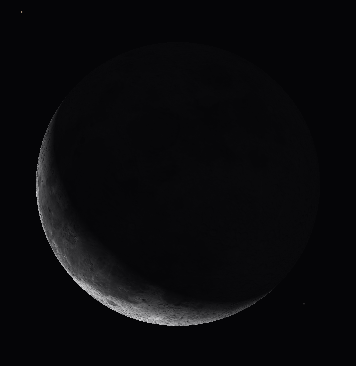
The crescent Moon as seen in binoculars at 6 a.m., August 21, 2014. Created using Stellarium.
08/15/2014 – Ephemeris – Jupiter and Venus will appear to cross paths Monday morning
Ephemeris for Friday, August 15th. The sun rises at 6:45. It’ll be up for 14 hours and 2 minutes, setting at 8:47. The moon, 2 days before last quarter, will rise at 11:33 this evening.
Over this weekend the planets Venus and Jupiter will be seen to approach each other. In reality Jupiter is five times the Earth’s distance behind the sun, while Venus is about 70 percent of Earth’s distance behind the sun. Most of the motion against what stars can be seen after 5:30 a.m. will be Venus, being dragged by the sun plus its own orbital motion toward the east. Jupiter is moving eastward too, but is taking its sweet time of 12 years to orbit the sun. The planets will cross, or be in conjunction at about midnight Monday morning, before they rise. By the time they will rise around 5:12 a.m. the two planets will be half the width of the Moon apart, slightly farther apart than they were at midnight.
Times are for the Traverse City/Interlochen area of Michigan. They may be different for your location.
Addendum
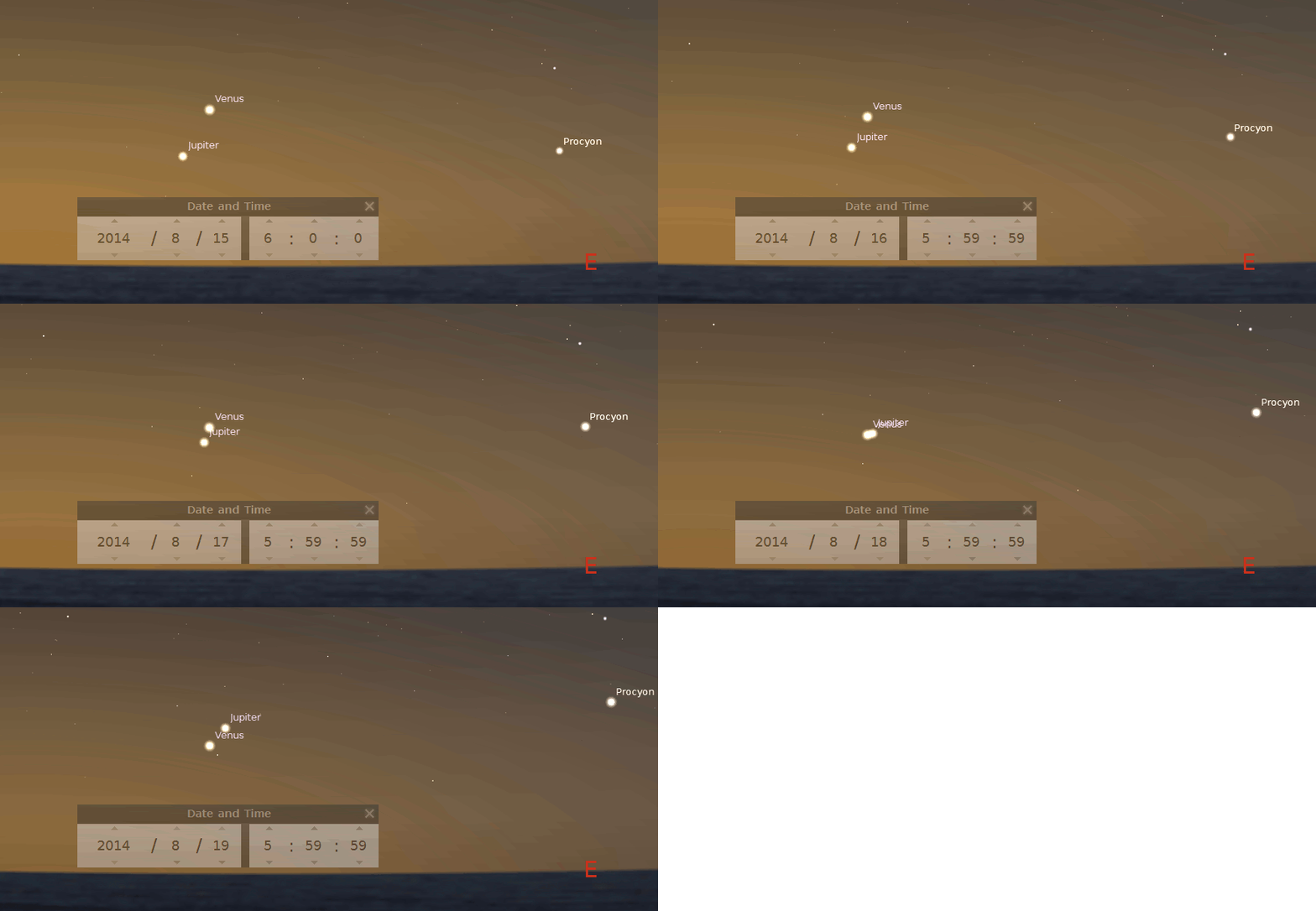
Watch Jupiter and Venus approach each other and separate. From August 15 to August 18, 2018. Created using Stellarium and GIMP.
08/13/2014 – Ephemeris – This week’s parade of the bright planets
Ephemeris for Wednesday, August 13th. The sun rises at 6:42. It’ll be up for 14 hours and 8 minutes, setting at 8:51. The moon, 3 days past full, will rise at 10:24 this evening.
Wednesday is bright planet day on Ephemeris. Reddish Mars is between the constellations of Virgo and Libra, approaching Saturn in the southwest as darkness falls. It will set at 11:40 p.m. Saturn will be in the southwest, above and left of Mars as darkness falls, in the Libra the scales. It will set at 12:16 a.m. Saturn’s is still great viewing with small or large telescopes to see those fabulous rings and its large moon Titan. Mars will pass Saturn traveling eastward later this month on the 27th. Brilliant Venus will rise in the east-northeast at 5:03 a.m. in morning twilight. Below left of Venus, we welcome back Jupiter which will rise at 5:23 tomorrow morning. Jupiter and Venus will appear to cross paths on the 18th.
Times are for the Traverse City/Interlochen area of Michigan. They may be different for your location.
Addendum
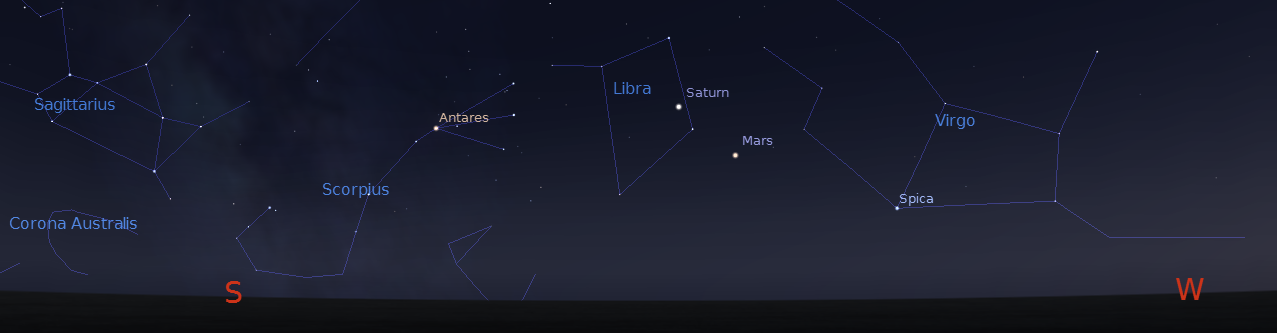
Mars and Saturn with the zodiacal constellations Virgo, Libra, Scorpius and Sagittarius at 10 p.m. August 13, 2014. Created using Stellarium.
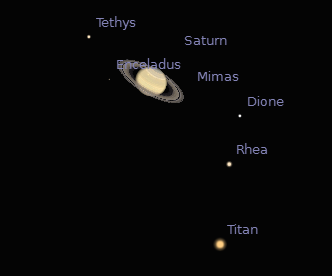
Saturn and its moons. Small telescopes will reveal only Saturn and Titan. Created using Stellarium.
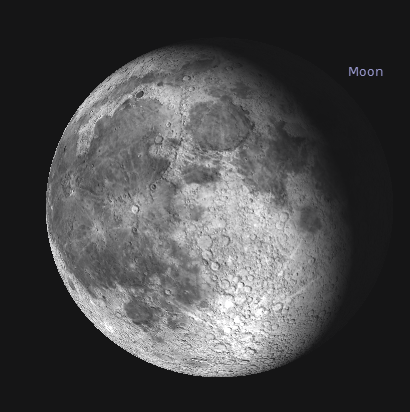
The Moon low in the east at 11 p.m. Created using Stellarium.
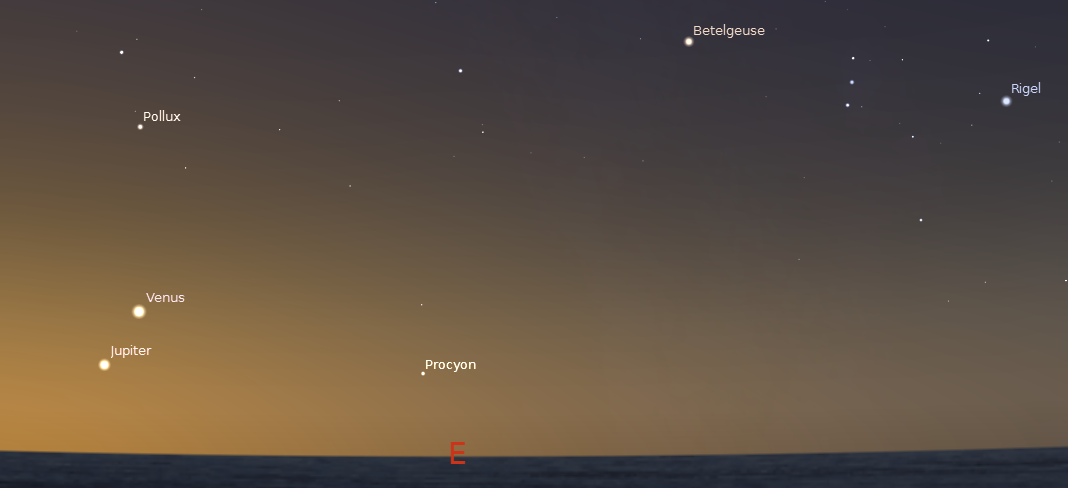
Venus and Jupiter at 6 a.m. in the bright morning twilight with the rising stars of winter. Created using Stellarium.
08/06/2014 – Ephemeris – Wednesday is bright planet day on Ephemeris
Ephemeris for Wednesday, August 6th. The sun rises at 6:34. It’ll be up for 14 hours and 26 minutes, setting at 9:01. The moon, 3 days past first quarter, will set at 3:03 tomorrow morning. | Wednesday is bright planet day on Ephemeris. Reddish Mars is in Virgo in the southwest as darkness falls. It’s 113 million miles (183 million km) away now, over twice as far as it was last April, and will set at 11:58 p.m. Saturn will be low in the south-southwest as darkness falls, in the faint constellation of Libra the scales. It will set at 12:43 a.m. Saturn’s great viewing with small or large telescopes to see those fabulous rings and its large moon Titan. Somewhat larger telescopes can spot some smaller moons closer in. Brilliant Venus will rise in the east northeast at 4:47 a.m. in morning twilight. Dark skies for the Perseid meteor shower will run from 3:03 a.m. to 4:34 a.m. Bright meteors will be visible all night.
Times are for the Traverse City/Interlochen area of Michigan. They may be different for your location.
Addendum
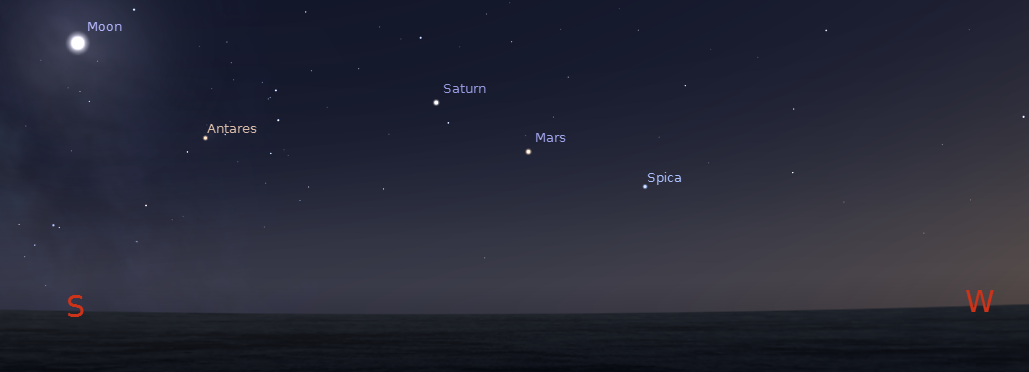
The planets Mars and Saturn with the bright stars and the Moon at 10 p.m., August 6, 2014. Created using Stellarium.
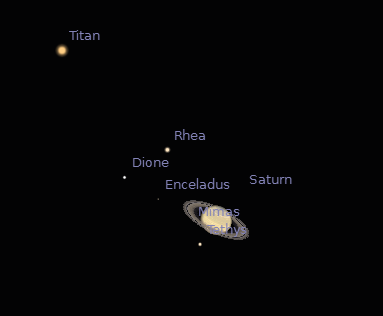
Saturn and its satellites through a telescope as seen on the evening of August 6, 2014. Created using Stellarium.
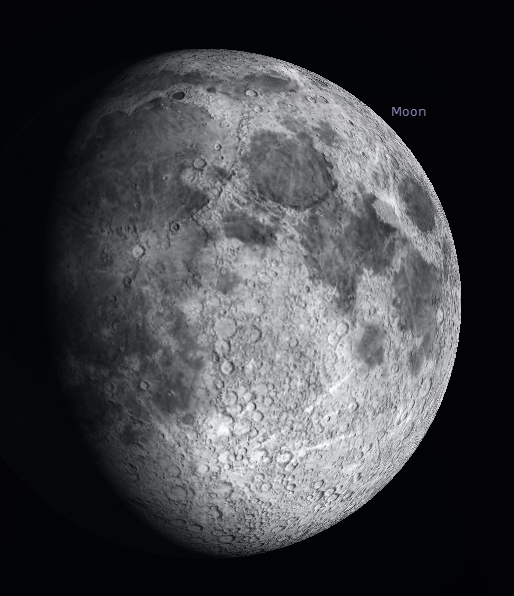
The Moon as it would be seen in binoculars at 10 p.m. , August 7, 2014. Created using Stellarium.
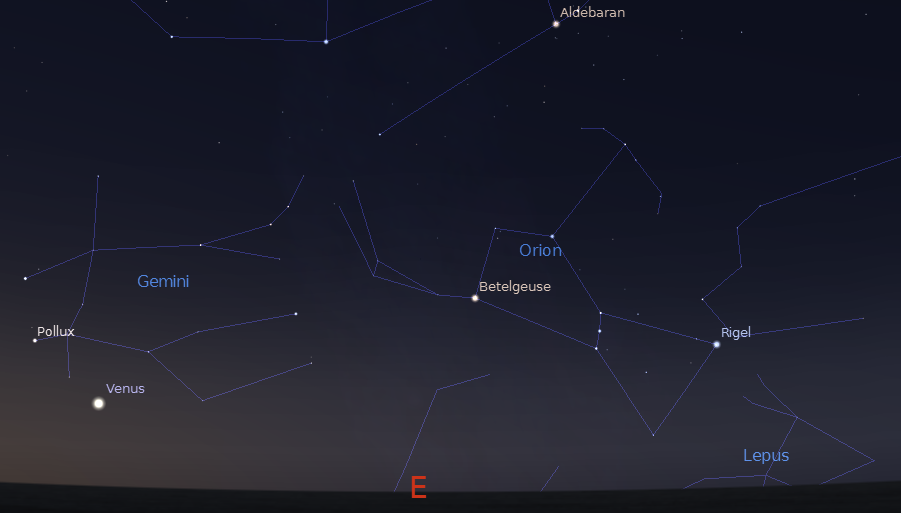
Venus and the constellations of winter rising in morning twilight at 5:30 a.m., August 7, 2014.
07/30/2014 – Ephemeris – Wednesday is classic planet day on Ephemeris
Ephemeris for Wednesday, July 30th. The sun rises at 6:26. It’ll be up for 14 hours and 43 minutes, setting at 9:10. The moon, half way from new to first quarter, will set at 10:40 this evening.
It’s Wednesday and once again time to look at the bright planets for this week. Reddish Mars is in Virgo in the southwest as darkness falls. It’s 109 million miles (176 million km) away now, over twice as far as it was last April, and will set at 12:17 a.m. Saturn will be low in the south-southwest as darkness falls, in the faint constellation of Libra the scales. It will set at 1:11 a.m. Saturn’s in perfect position for viewing with a small or large telescopes to see those fabulous rings and its large moon Titan. Somewhat larger telescopes can spot some smaller moons closer in. Brilliant Venus will rise in the east northeast
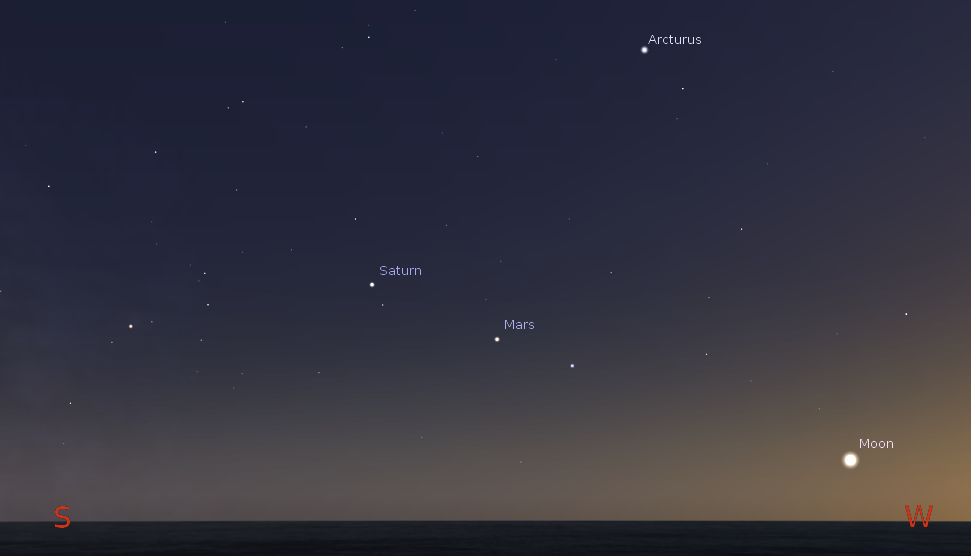
The Moon, Mars and Saturn at 10 p.m. on July 30, 2014. The bright star right of Mars is Spica, and the bright star left of Saturn is Antares. Created using Stellarium.
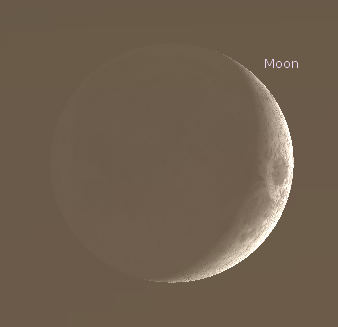
The Moon as seen in binoculars at 10 p.m. on July 30, 2014. Created using Stellarium.
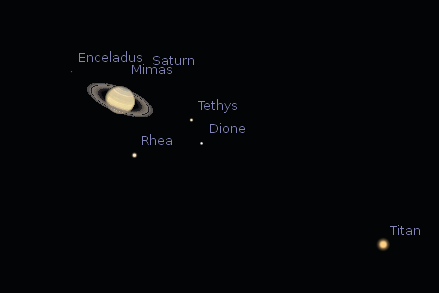
Saturn and its moons on the evening of July 30, 2014. Created using Stellarium.
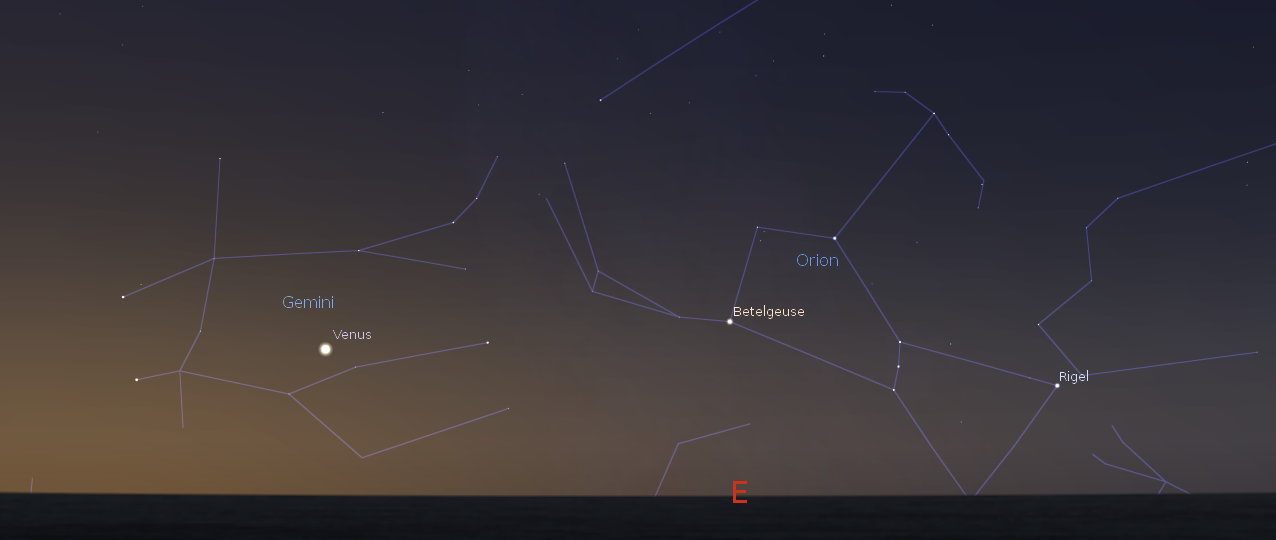
Venus and the winter constellations rising at 5:30 a.m. on July 31, 2014. Created using Stellarium.
at 4:33 a.m. in morning twilight. Mercury will rise at 5:36 and be nearly impossible to spot below Venus.
Times are for the Traverse City/Interlochen area of Michigan. They may be different for your location.
Addendum
07/23/2014 – Ephemeris – It’s Wednesday. Do you know where the bright planets are?
Ephemeris for Wednesday, July 23rd. The sun rises at 6:19. It’ll be up for 14 hours and 58 minutes, setting at 9:18. The moon, 3 days before new, will rise at 4:28 tomorrow morning.
It’s Wednesday and once again time to locate the bright planets for this week. Reddish Mars is in Virgo in the southwest as darkness falls. It’s 105 million miles (169 million km) away now, nearly 3 times farther away than it was last April, and will set at 12:39 a.m. Saturn will be low in the south-southwest as darkness falls, in the faint constellation of Libra the scales. It will set at 1:38 a.m. Saturn’s in perfect position for viewing with a small or large telescopes to see those fabulous rings and its large moon Titan. Somewhat larger telescopes can spot some smaller moons closer in. Brilliant Venus will rise in the east at 4:22 a.m. in morning twilight. Mercury will rise at 4:46 and be barely visible below Venus. The crescent moon will be right of Venus tomorrow morning.
Times are for the Traverse City/Interlochen area of Michigan. They may be different for your location.
Addendum
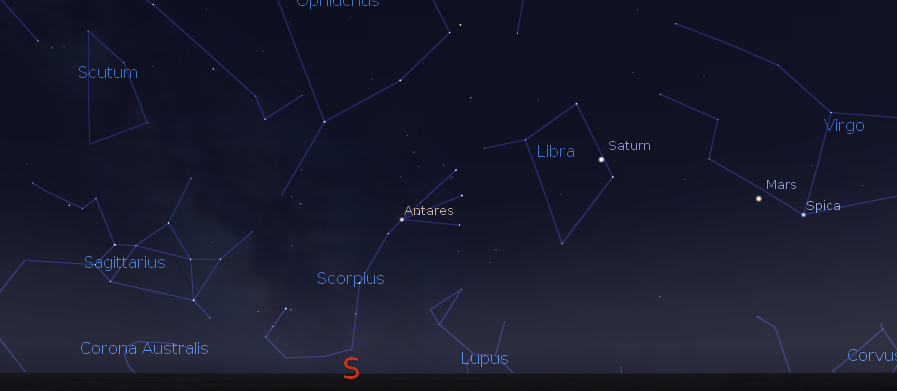
The evening planets Mars and Saturn with the zodiacal constellations at 10:30 p.m. on July 23, 2014. Created using Stellarium.
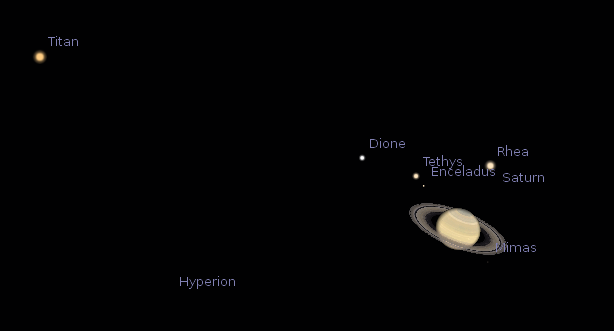
Saturn through a telescope. In small telescopes of the moons only Titan will be visible. July 23, 2014. Created using Stellarium.
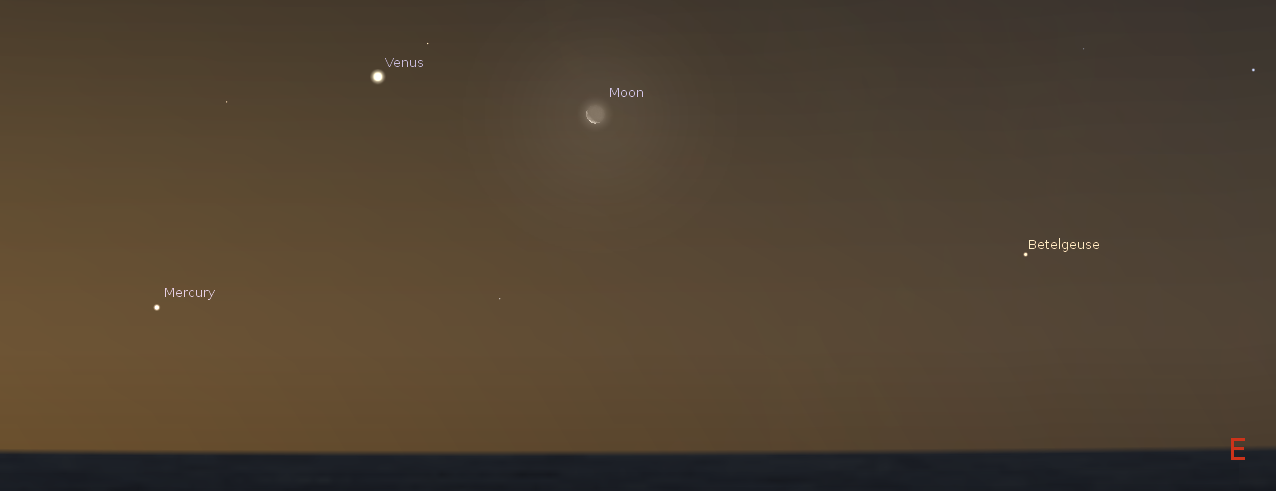
Venus, Mercury, and the crescent Moon at 5:30 a.m. on July 24, 2014. Created using Stellarium.
07/16/2014 – Ephemeris – A late post for the planet day
Ephemeris for Wednesday, July 16th. Today the sun will be up for 15 hours and 11 minutes, setting at 9:24. The moon, 2 days before last quarter, will rise at 11:52 this evening. Tomorrow the sun will rise at 6:13.
It’s Wednesday and once again time to locate the bright planets for this week. Reddish Mars is in Virgo in the southwest as darkness falls. It’s 101 million miles (163 million km) away now, nearly 2 and a half times farther away than last April, and will set at 12:56 a.m. Saturn will be low in the south-southwest as darkness falls, in the faint constellation of Libra the scales. It will set at 2:06 a.m. Saturn’s in perfect position for viewing with a small or large telescopes to see those fabulous rings and its large moon Titan. Somewhat larger telescopes can spot some smaller moons closer in. Brilliant Venus will rise in the east at 4:14 a.m. in morning twilight. Mercury will rise at 4:46 and be barely visible below Venus.
Times are for the Traverse City/Interlochen area of Michigan. They may be different for your location.
Addendum
I’m late on this one, so the planet positions below are for Thursday evening and Friday Morning.
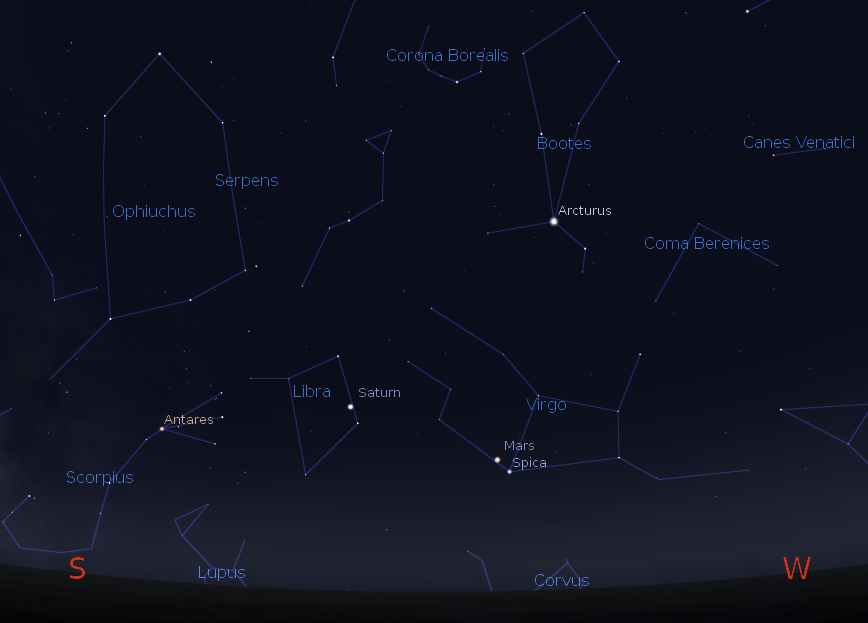
Mars and Saturn with the evening stars and constellations at 11 p.m. Thursday July 17, 2014. Created using Stellarium.
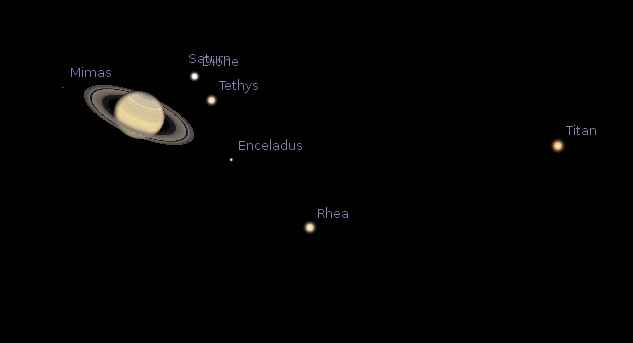
Saturn through a telescope. In small telescopes of the moons only Titan will be visible. July 17, 2014. Created using Stellarium.
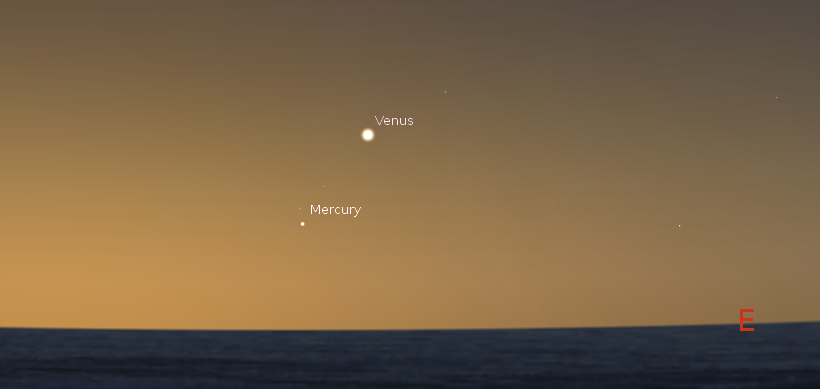
Venus and Mercury at 5:30 a.m. July 18, 2014. Created using Stellarium.
07/09/2014 – Ephemeris – Where are the bright planets this week?
Ephemeris for Wednesday, July 9th. Today the sun will be up for 15 hours and 22 minutes, setting at 9:28. The Moon, 3 days before full, will set at 4:20 tomorrow morning. Tomorrow the sun will rise at 6:07.
It’s Wednesday and once again time to locate the bright planets for this week. Jupiter sets less than a half hour after the sun, so it’s gone for us until September mornings. Reddish Mars is in Virgo in the southwest as darkness falls. It’s 97 million miles (156 million km) away now, nearly 2 and a half times farther away than last April, and will set at 1:17 a.m. Saturn will be low in the south-southwest as darkness falls, in the faint constellation of Libra the scales. It will set at 2:34 a.m. Saturn’s in perfect position for viewing with a small or large telescope to see those fabulous rings and its large moon Titan. Somewhat larger telescopes can spot some smaller moons closer in. Brilliant Venus will rise in the east at 4:09 a.m. in morning twilight.
Times are for the Traverse City/Interlochen area of Michigan. They may be different for your location.
Addendum
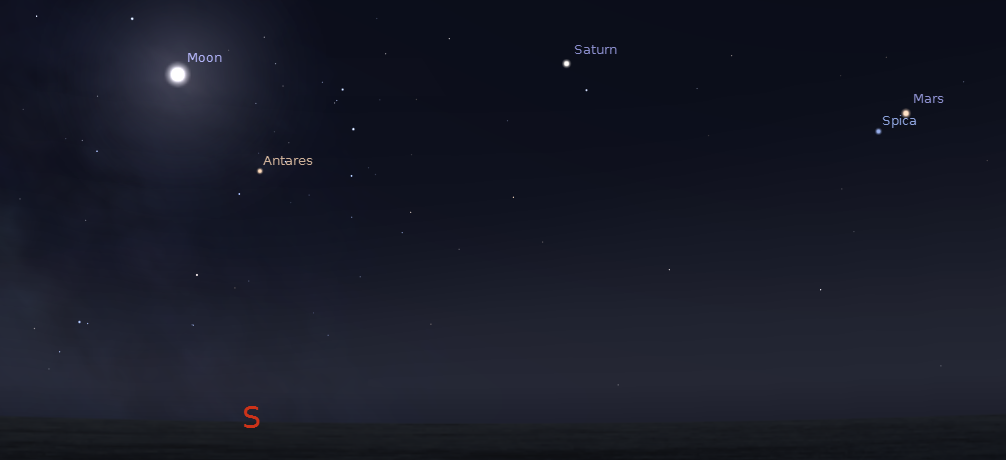
Mars, Saturn and the Moon will appear along with the brighter stars of summer at 11 p.m. on July 9, 2014. Created using Stellarium.
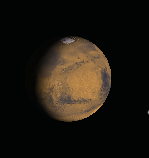
Mars as seen through a large telescope. It appears really tiny in any other telescope. Time: 11 p.m. on July 9, 2014. Created using Stellarium.
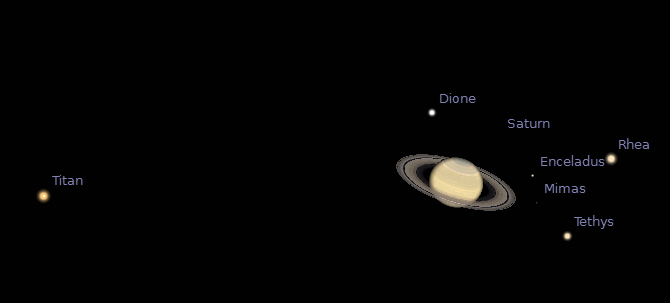
Saturn and some of its moons. Smaller telescopes will see only Titan, but see how many moon you can see. July 9, 11 p.m. Created using Stellarium.
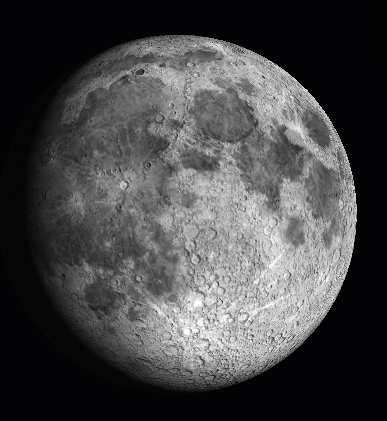
A binocular view of the gibbous Moon on July 9, 2014 at 11 p.m. Created using Stellarium.
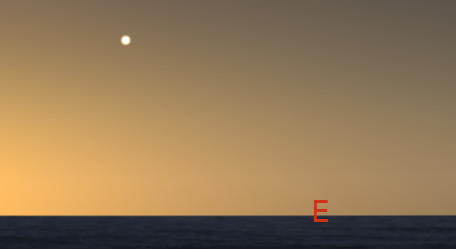
Venus low in the east at 5:45 a.m. July 11, 2014; roughly a half hour before sunrise. Created using Stellarium.
Venus low in the east at 5:45 a.m. July 11, 2014; roughly a half hour before sunrise. Created using Stellarium.

Bright gibbous disk of Venus as seen through a telescope on July 10, 2014. Created using Stellarium.

