Archive
12/18/2013 – Ephemeris – Where are the bright planets and Comet Lovejoy?
Ephemeris for Wednesday, December 18th. The sun will rise at 8:14. It’ll be up for 8 hours and 49 minutes, setting at 5:03. The moon, 1 day past full, will rise at 6:38 this evening.
This is our weekly look at the planets. Venus is brilliant in the southwest after sunset. It will set at 7:30 p.m. Venus us beginning to noticeably close with the sun. It will be gone from our evening sky in a month. Venus is a crescent, and we’re coming to the point where the crescent can be visible in binoculars. The giant planet Jupiter will rise at 6:28 p.m. in the east northeast. It’s cruising against the stars of Gemini now. It will pass due south at 2:07 a.m. Mars will rise at 1:13 a.m. in the east. Reddish Mars is closer to Spica in Virgo than to Regulus in Leo. Saturn will rise at 5 a.m. in the east southeast. There is a comet visible in binoculars in the morning sky. It’s Comet Lovejoy. A finder chart for the next week will be at bobmoler.wordpress.com with today’s transcript.
Times are for the Traverse City/Interlochen area of Michigan. They may be different for your location.
Addendum
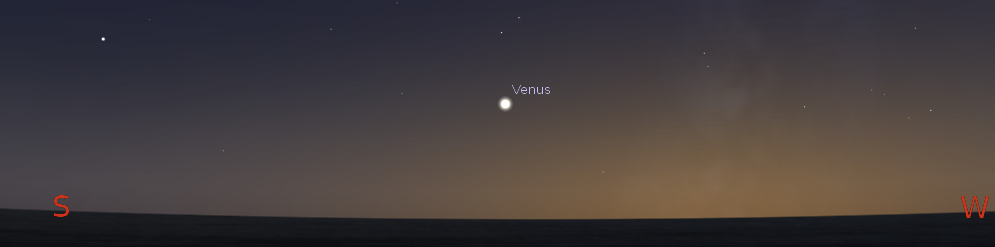
Venus in the southwest at 6 p.m. on December 18, 2013. Created using Stellarium.
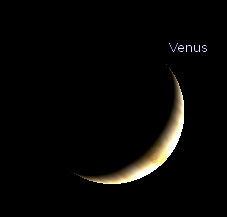
Venus as seen in a telescope at 6 p.m. December 18, 2013. The disk will be blindingly bright with no detail. Created using Stellarium.
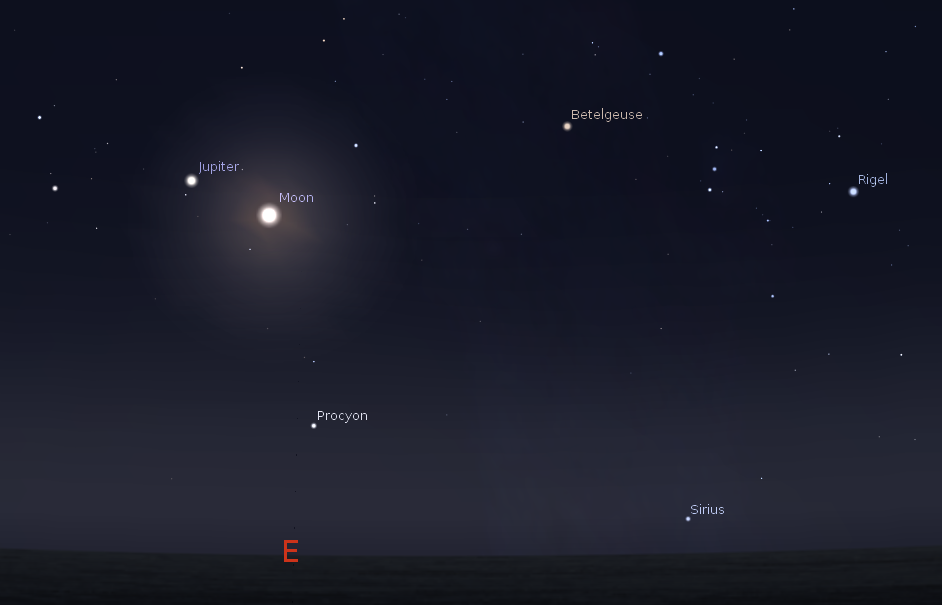
Jupiter and the Moon at 9 p.m. on December 18, 2013. Created using Stellarium.
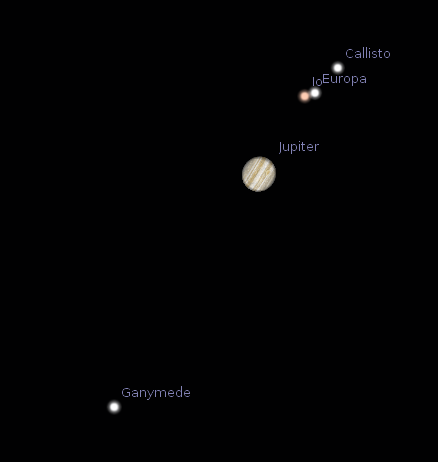
Jupiter and its moons as seen in a telescope at 9 p.m. December 18, 2013. The orientation may be rotated or even mirror image. Created using Stellarium.
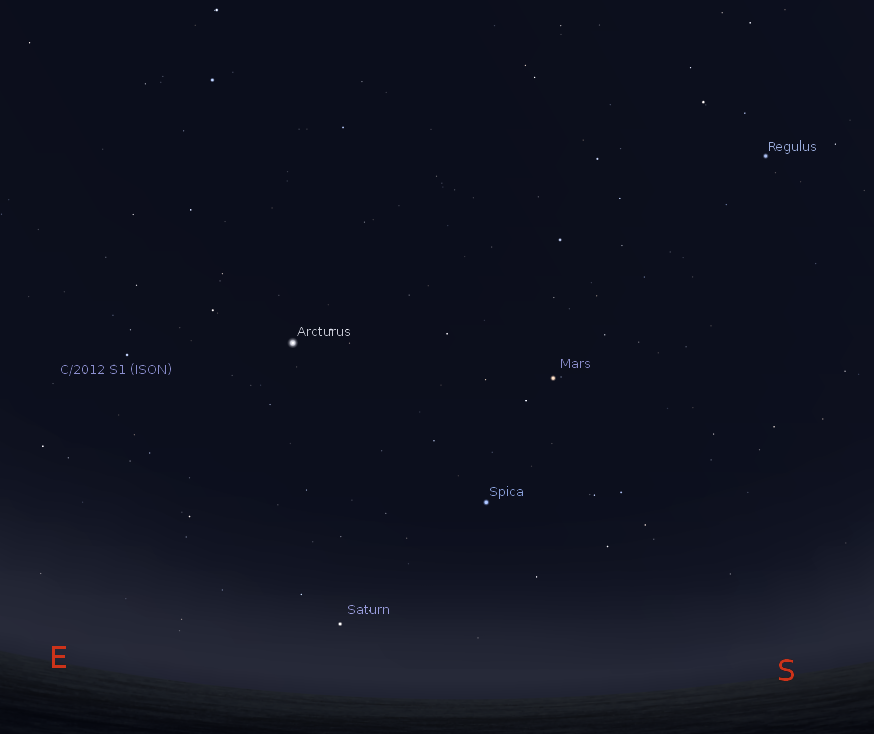
Mars, Saturn and the ghost of Comet ISON at 6 a.m. on December 19, 2013. Created using Stellarium.
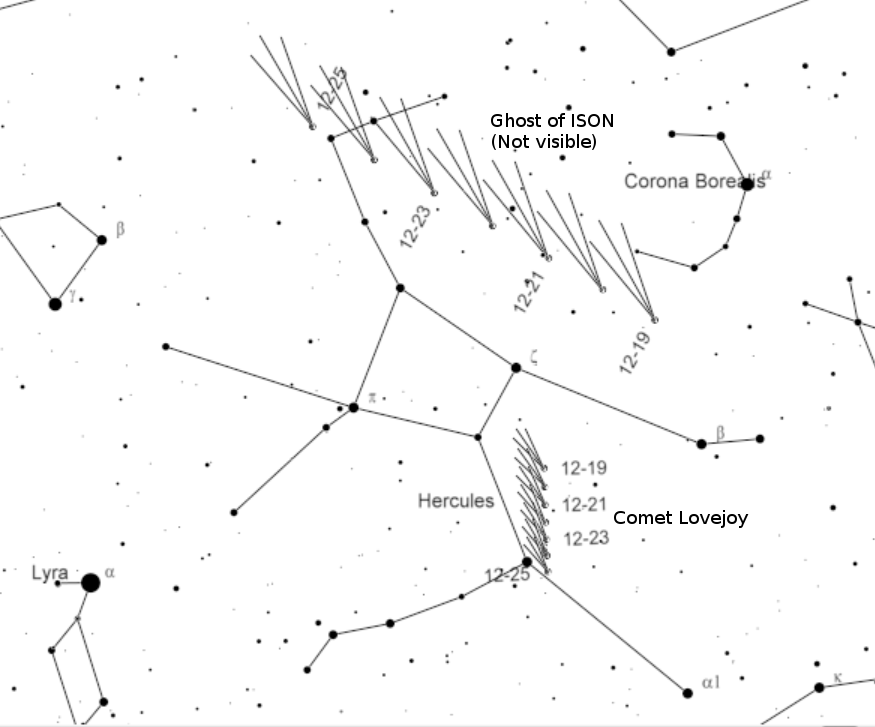
Comet Lovejoy finder chart for the next week at 6 a.m. We’re stuck also with the ghost of Comet ISON. Look in the northeast at the constellation Hercules. Created using Cartes du Ciel.
12/11/2013 – Ephemeris – Where are the bright planets this week, plus a consolation comet
Ephemeris for Wednesday, December 11th. The sun will rise at 8:09. It’ll be up for 8 hours and 52 minutes, setting at 5:02. The moon, 2 days past first quarter, will set at 3:23 tomorrow morning.
Let’s see where the bright planets are this week. Venus is brilliant in the southwest after sunset. It will set at 7:44 p.m. Venus has a crescent appearance because it is between the Earth and Sun which is easily seen in telescopes and can be detected in binoculars now. Venus is 57 million kilometers away from us now or 35.4 million miles. The giant planet Jupiter will rise at 7 p.m.. in the east northeast. It’s cruising against the stars of Gemini now. It will pass due south at 2:37 a.m. Mars will rise at 1:22 a.m. in the east. Mars is a bit closer to Spica in Virgo than Regulus in Leo, and can be distinguished by its yellow-orange color. Saturn will rise at 5:24 a.m. and should be visible low in the east south east by 6 a.m.
Times are for the Traverse City/Interlochen area of Michigan. They may be different for your location.
Addendum
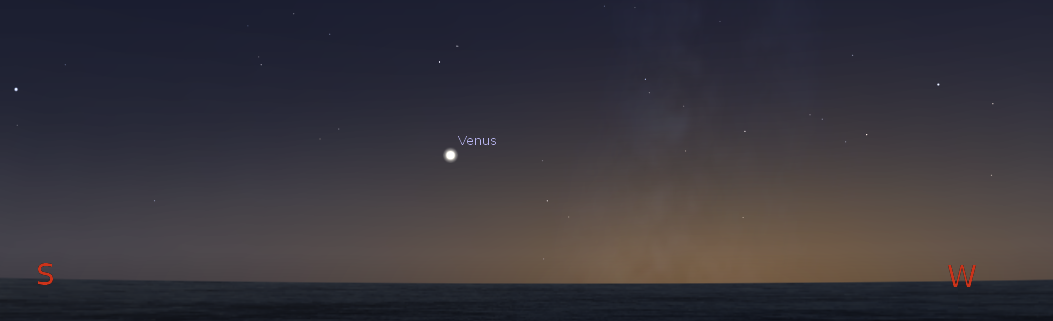
Venus in the southwest at 6 p.m. on December 11, 2013. Created using Stellarium.
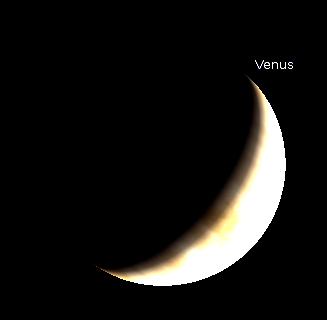
Venus as seen in a telescope at 6 p.m. December 11, 2013. The disk will be blindingly bright with no detail. Created using Stellarium.
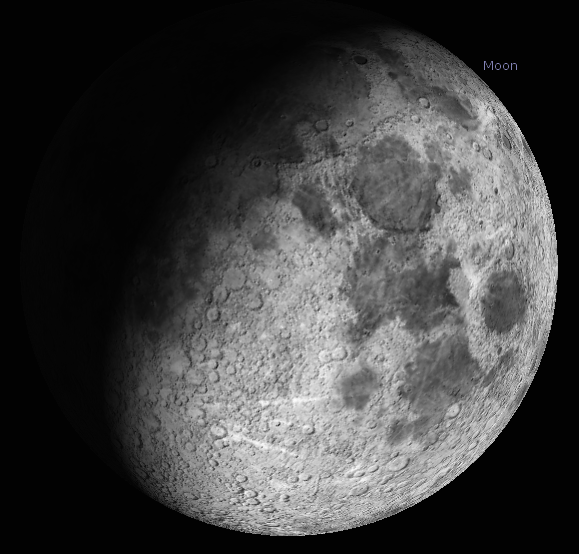
The gibbous Moon magnified at 9 p.m. on December 11, 2013. Created using Stellarium.
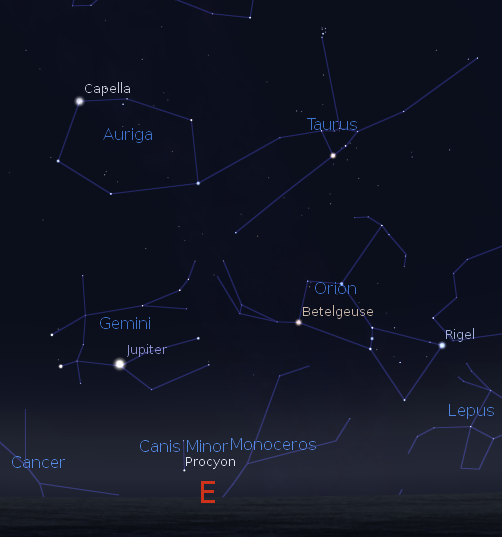
Jupiter and some winter constellations at 9 p.m. on December 11, 2013. Created using Stellarium.
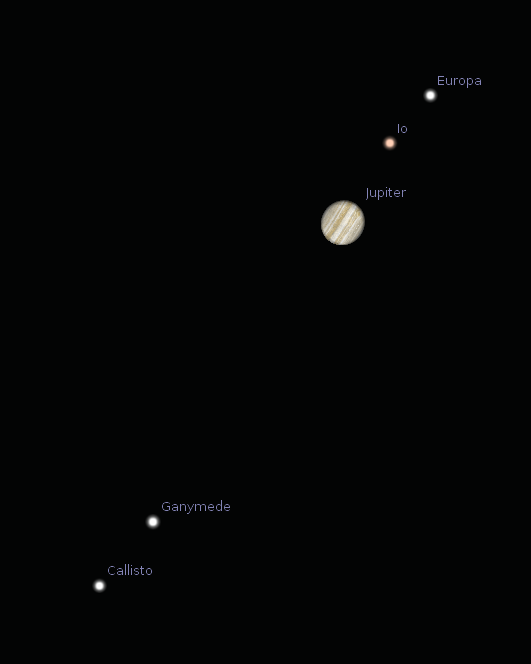
Jupiter and its moons as seen in a telescope at 9 p.m. December 11, 2013. The orientation may be rotated or even mirror image. Created using Stellarium.
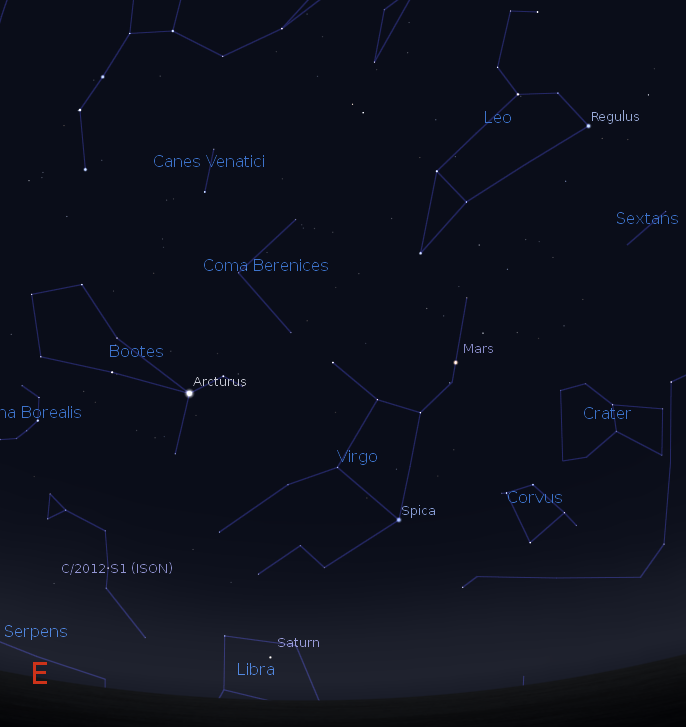
Mars, Saturn and the ghost of Comet ISON at 6 a.m. on December 12, 2013. Created using Stellarium.
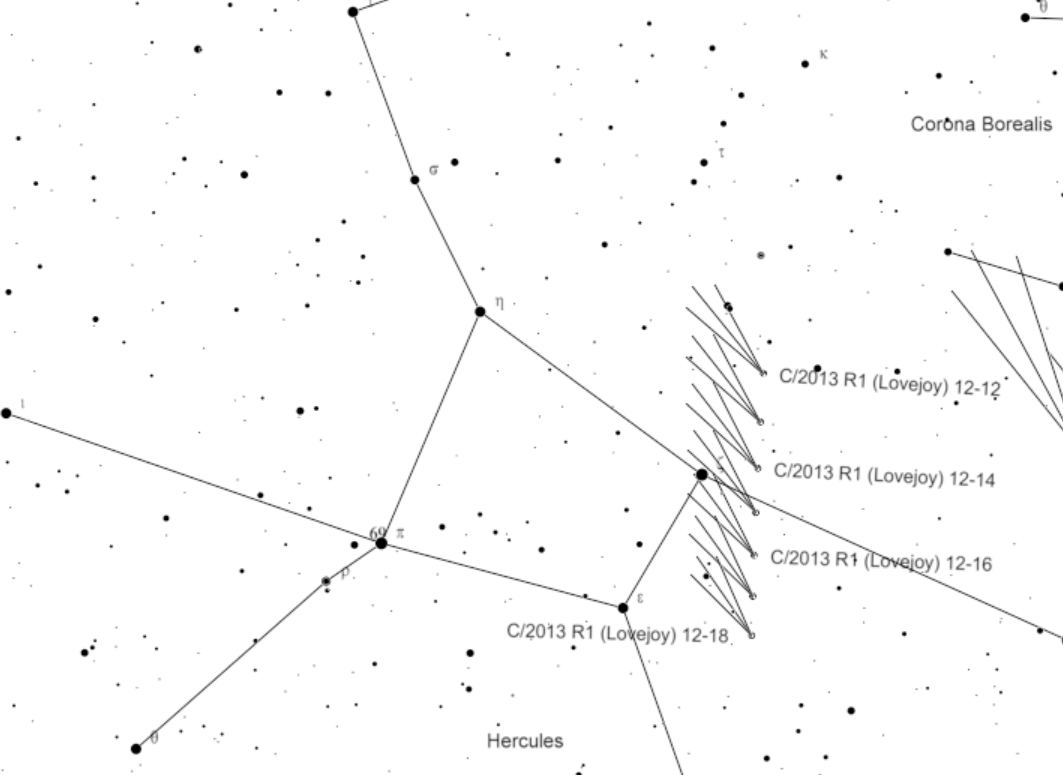
Comet Lovejoy finder chart for the next week at 6 a.m. There a bit of a tail at the right edge from the ghost of ISON (It’s not visible). Look in the northeast at the constellation Hercules with binoculars. Created using Cartes du Ciel.
Comet Lovejoy is an easy binocular object. It’s brighter than Comet ISON was in dark skies.
12/04/2013 – Ephemeris – Where are the bright planets this week?
Ephemeris for Wednesday, December 4th. The sun will rise at 8:02. It’ll be up for 9 hours even, setting at 5:02. The moon, 2 days past new, will set at 7:15 this evening.
Let’s see where the bright planets are this week. Venus is brilliant in the southwest after sunset. It will set at 7:51 p.m. The thin crescent moon will be to the right and a bit below Venus tonight. Venus is itself a crescent, and we’re coming to the point where the crescent can be visible in binoculars. Venus is as close to us now as the debris from Comet ISON will ever get to us. The giant planet Jupiter will rise at 7:31 p.m. in the east northeast. It’s cruising against the stars of Gemini now. It will pass due south at 3:08 a.m. Mars will rise at 1:31 a.m. in the east. Reddish Mars is midway between Regulus in Leo and Spica in Virgo. Saturn will rise at 5:47 a.m. and should be visible low in the east south east by 6:30.
Times are for the Traverse City/Interlochen area of Michigan. They may be different for your location.
Addendum
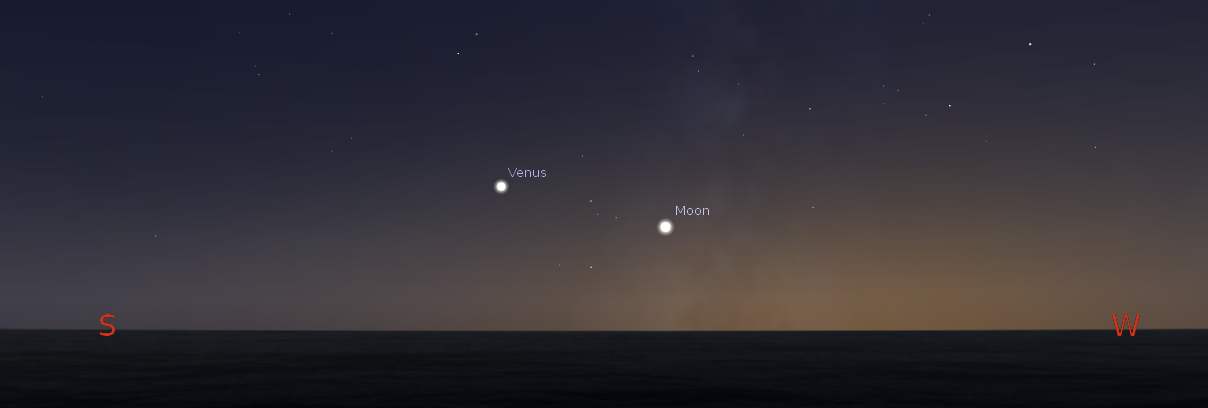
Venus and the Moon in the southwest at 6 p.m. on December 4, 2013. Created using Stellarium.
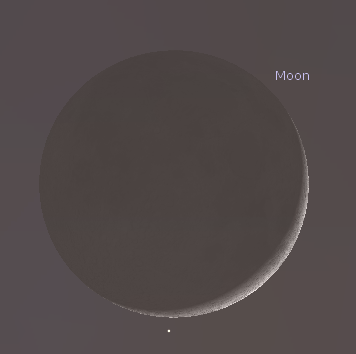
The Moon magnified at 6 p.m. on December 4, 2013. Created using Stellarium.
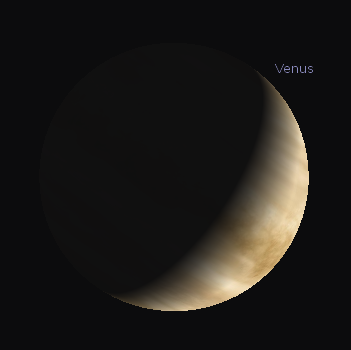
Venus as seen in a telescope at 6 p.m. December 4, 2013. The crescent will be blindingly bright with no detail. Created using Stellarium.
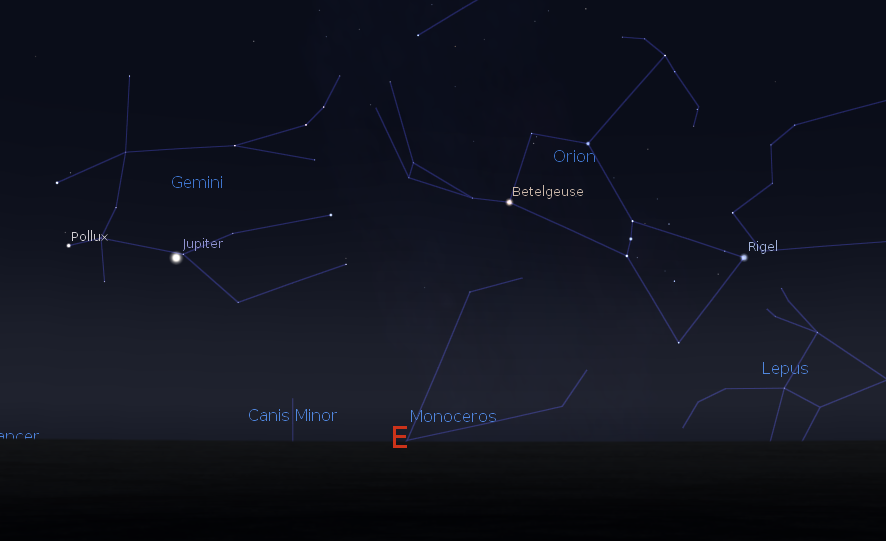
Jupiter and some winter constellations at 9 p.m. on December 4, 2013. Created using Stellarium.
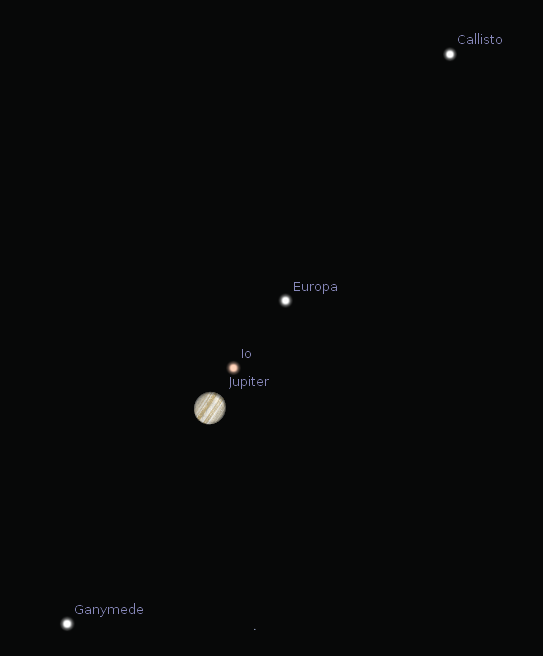
Jupiter and its moons as seen in a telescope at 9 p.m. December 4, 2013. The orientation may be rotated or even mirror image. Created using Stellarium.
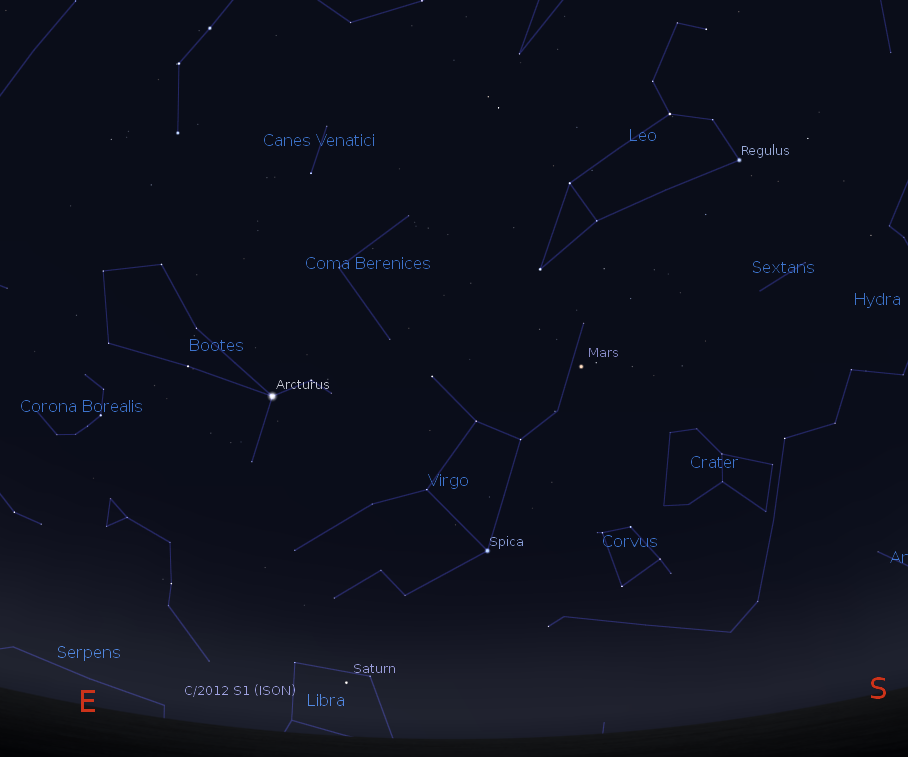
Mars, Saturn and the ghost of Comet ISON at 6:30 a.m. on December 5, 2013. Created using Stellarium.
11/27/2013 – Ephemeris – Where are the bright planets and what’s up with Comet ISON?
Ephemeris for Wednesday, November 27th. The sun will rise at 7:54. It’ll be up for 9 hours and 10 minutes, setting at 5:05. The moon, 2 days past last quarter, will rise at 2:46 tomorrow morning.
Let’s see where the bright planets are this eventful week. Venus is brilliant in the southwest after sunset. It will set at 7:53 p.m. The giant planet Jupiter will rise at 8:01 p.m. in the east northeast. It’s cruising against the stars of Gemini now. It will pass due south at 3:38 a.m. Mars will rise at 1:47 a.m. also in the east northeast. Reddish Mars is midway between Regulus in Leo and Spica in Virgo and tomorrow morning will be about 12 moon diameters above left of the moon. Mercury and Saturn will be together in the east southeast by 7 a.m. Mercury is the lower and brighter of the two. Comet ISON is now too close to the sun to be seen. Check bobmoler.wordpress.com (see below) for how to view Comet ISON near the sun.
Times are for the Traverse City/Interlochen area of Michigan. They may be different for your location.
Addendum
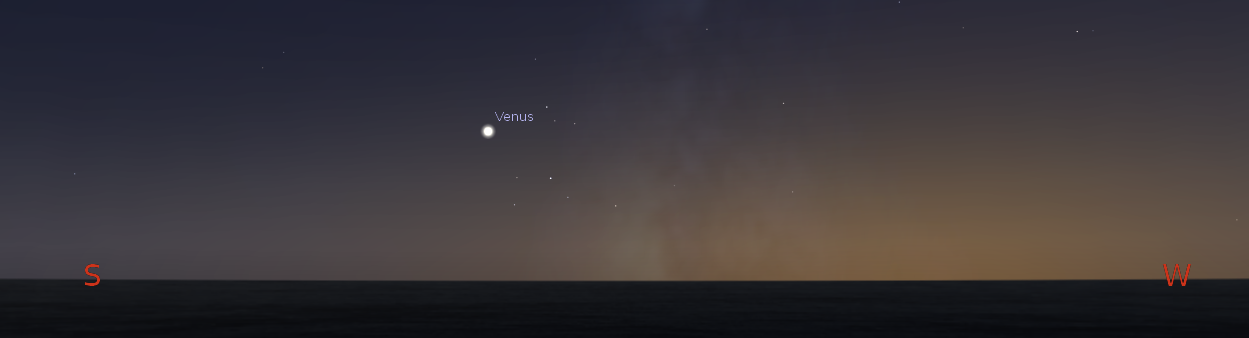
Venus as it should appear at 6 p.m. on 11/27/2013. Created using Stellarium.
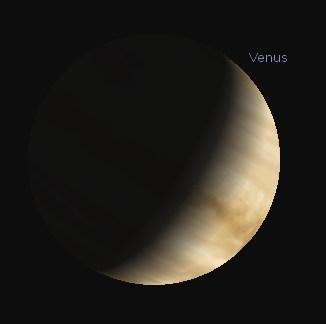
Telescopic view of Venus as it should appear at 6 p.m. on 11/27/2013. Created using Stellarium.
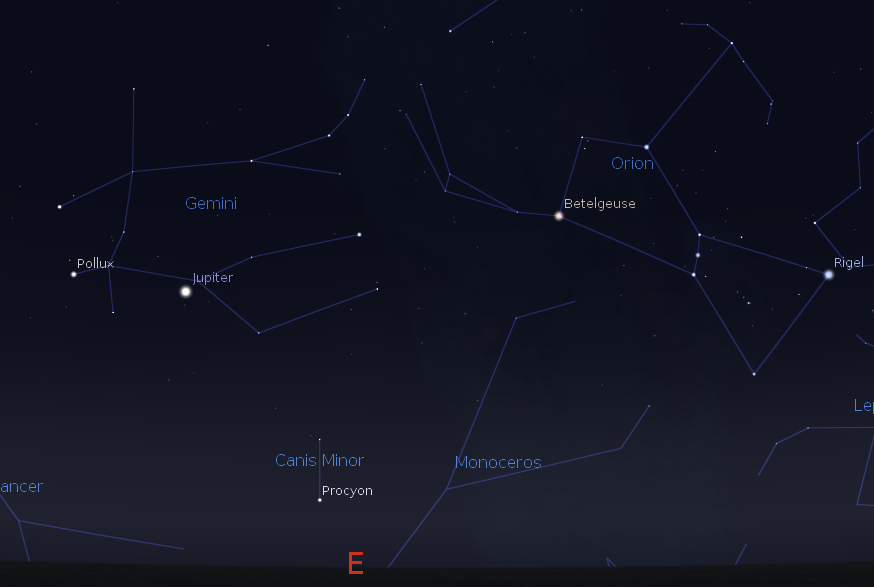
Jupiter and some winter constellations as they should appear at 10 p.m. on 11/27/2013. Created using Stellarium.
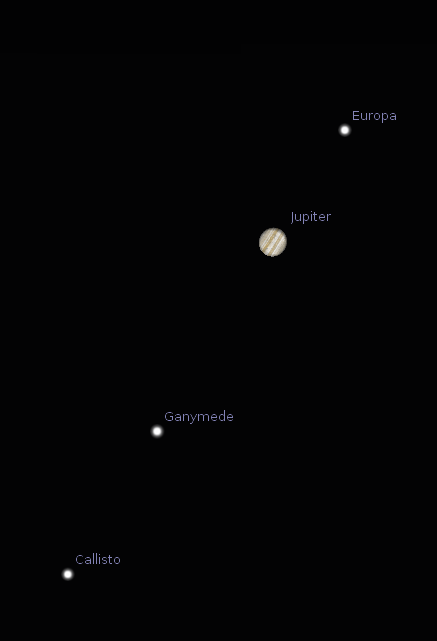
Telescopic view of Jupiter and its satellites as they should appear at 10 p.m. on 11/27/2013. The satellite Io is behind the planet and won’t appear until after midnight. Created using Stellarium.
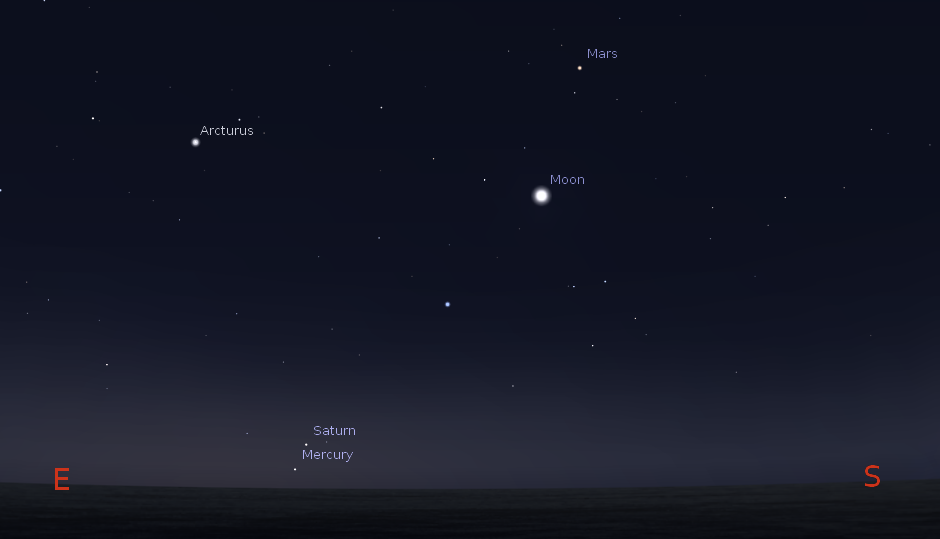
The morning planets Mars, Saturn and Mercury plus the Moon at 6:45 a.m. November 28, 2013. Created using Stellarium
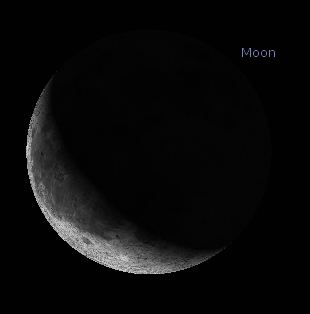
The Moon at 6:45 a.m. November 28, 2013. Created using Stellarium.
Comet ISON
Phil Plait the Bad Astronomer reported Monday that Comet ISON had suddenly decreased the amount of ices that it was emitting and pretty much simultaneously greatly increased the amount of dust it was producing. One of the possible explanations was that its nucleus had been disrupted. The comet’s nucleus is the small, maybe 2 km diameter, solid part of the comet. All the other parts of the comet are the thin ejected gas and dust from that nucleus. The head and tail of the comet is still a pretty good vacuum by earthly standards. There is still questions about it today. Here’s a YouTube video posted by the Planetary Society’s Emily Lakdawalla created by Emily from images taken by the STEREO Ahead spacecraft. It seems to be holding its own:
Here is the Planetary Society Blog entry that discusses Comet ISON’s then current status.
At the time of this posting (10 p.m. 11/26) the STEREO Behind COR 2 image shows Comet ISON entering on the lower left. Also SOHO’s LASCO C3 imager shows Comet ISON entering the view from the lower right. There’s also a coronal mass ejection (CME) erupting toward the comet. It could pass behind it, in front of it or actually toward it. It should be interesting.
Live programming of NASA-TV Thanksgiving Day
November 28, Thursday
1 – 3:30 p.m. – NASA Google+ Hangout: Comet ISON – GSFC (All Channels)
Here’s a link to NASA-TV: http://www.nasa.gov/multimedia/nasatv/
11/20/2013 – Ephemeris – Where are the bright planets and Comet ISON this week?
Ephemeris for Wednesday, November 20th. The sun will rise at 7:46. It’ll be up for 9 hours and 23 minutes, setting at 5:09. The moon, 3 days past full, will rise at 7:52 this evening.
Let’s see where the bright planets are this week. Venus is brilliant in the southwest after sunset. It will set at 7:52 p.m. The giant planet Jupiter will rise at 8:31 p.m. in the east northeast. It’s cruising against the stars of Gemini now. It will pass due south at 7:47 a.m. Mars will rise at 1:47 a.m. also in the east northeast. Reddish Mars is two widths of a fist held at arm’s length below and left of the bright star Regulus in Leo now. Comet ISON is now about magnitude 5, now meeting current brightness predictions, Officially naked eye, you’ll probably still need binoculars to spot it. Comet ISON is below and left of the star Spica low in the east southeast and will rise about 5:50 a.m. and be visible until around 6:30 a.m. above the planet Mercury.
Times are for the Traverse City/Interlochen area of Michigan. They may be different for your location.
Addendum
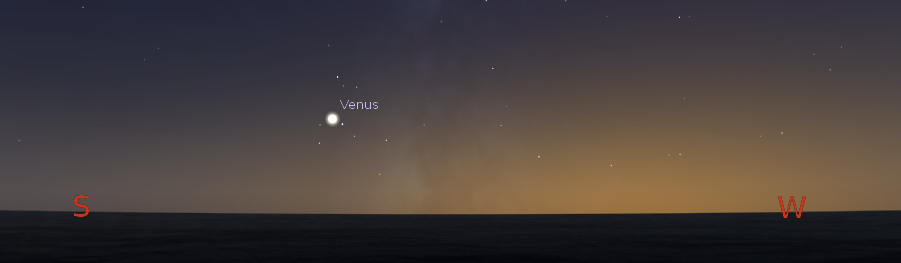
Venus low in the southwest at 6 p.m., November 20, 2013. Created using Stellarium.
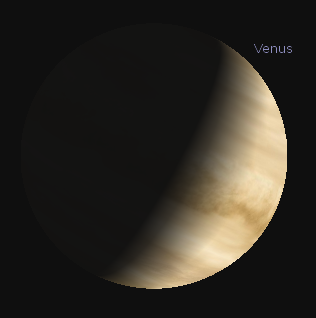
Telescopic view of Venus on November 20, 2013. The cloud banding will not be visible. Created using Stellarium.
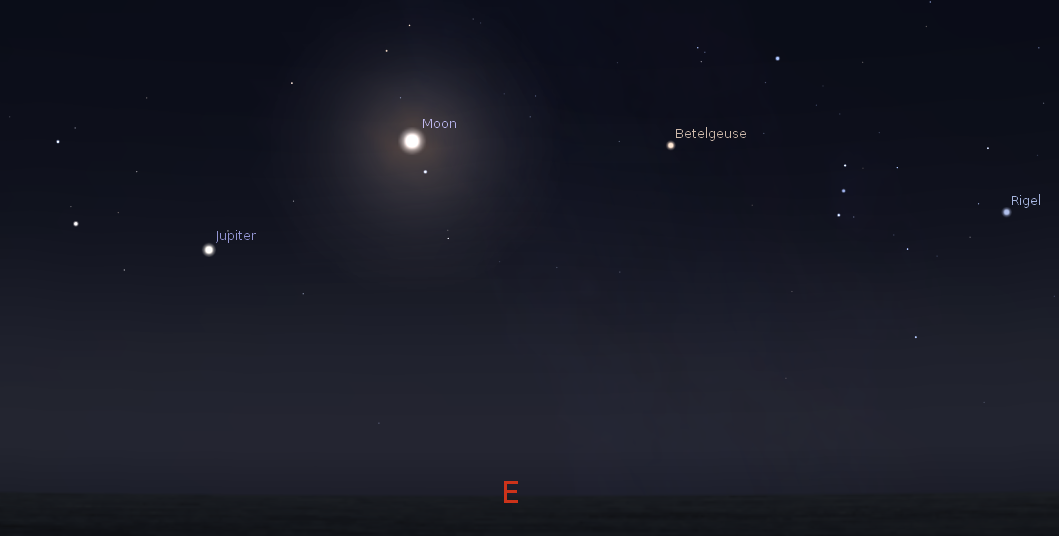
Jupiter in the east at 10 p.m. on November 20, 2013. Created using Stellarium.
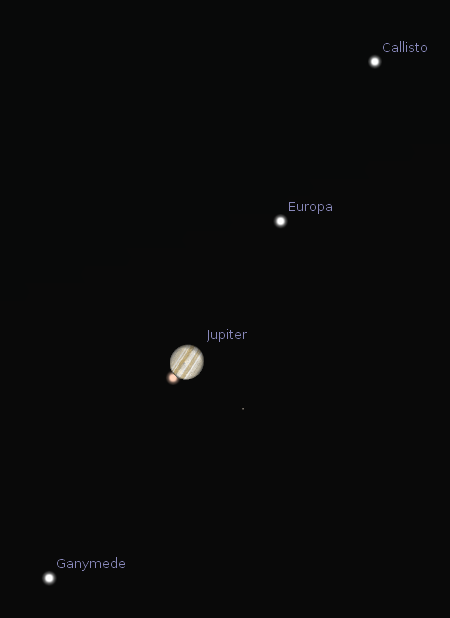
A telescopic view of Jupiter at 10 p.m. The moon Io is peeking around Jupiter. Up is to the top. The view in your telescope may vary. Created using Stellarium.
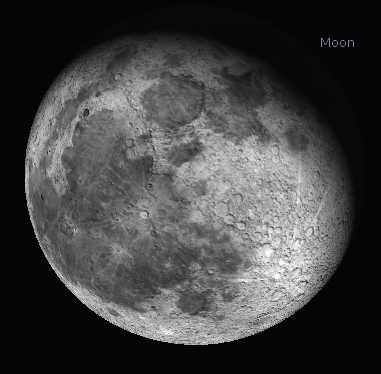
The magnified Moon. Created using Stellarium.
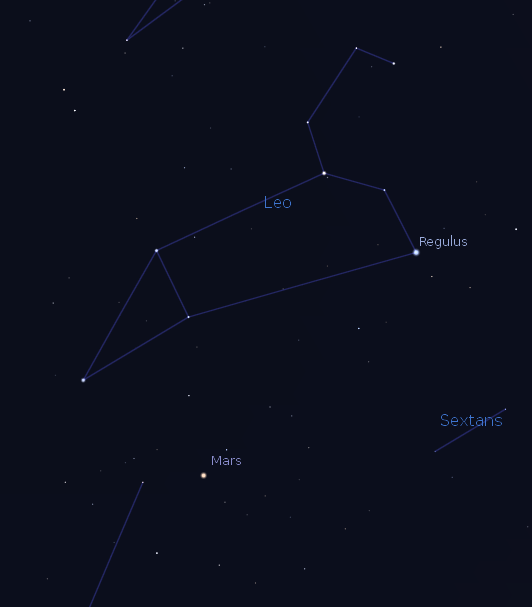
Mars and Leo at 6 a.m. November 21, 2013. Created using Stellarium.
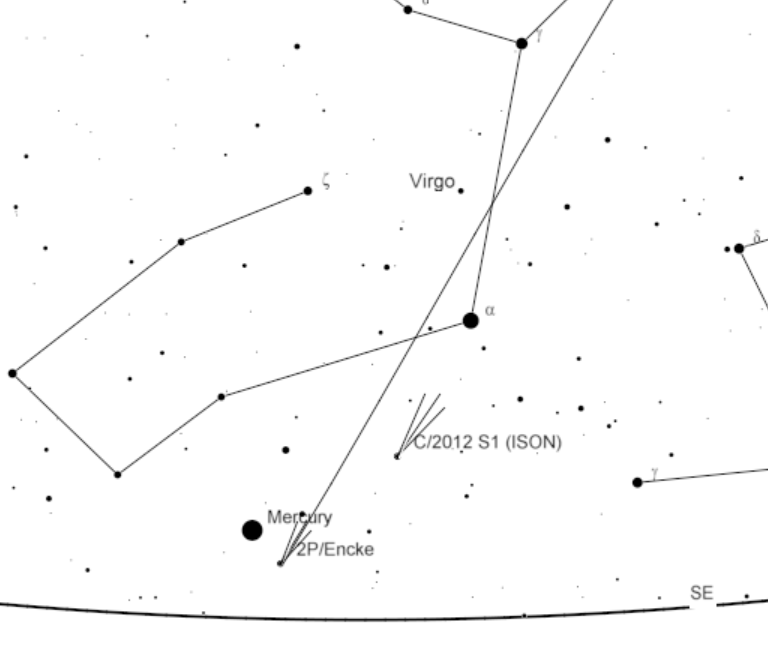
Chart for finding Comet ISON this morning (November 20, 2013 at 6:30 a.m.). Chart created using Cartes du Ciel.
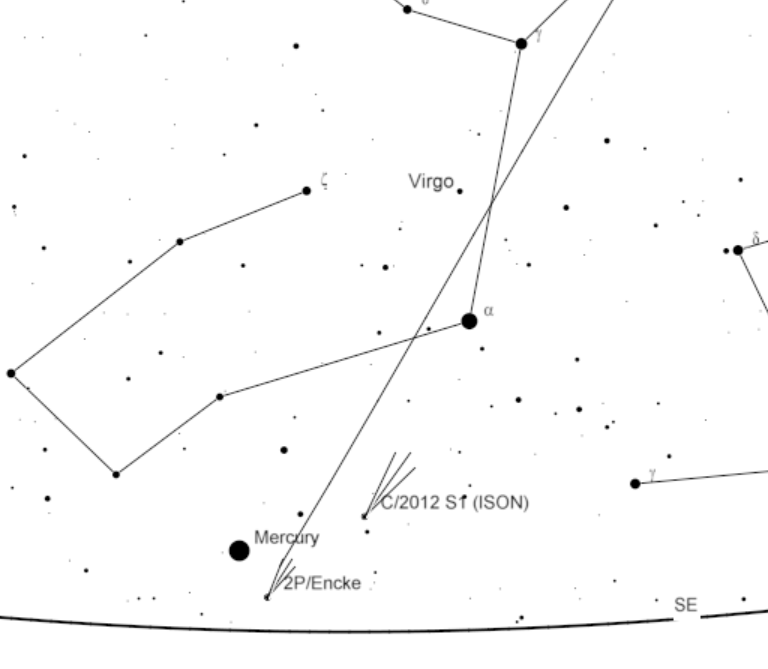
Chart for finding Comet ISON this morning (November 21, 2013 at 6:30 a.m.). Chart created using Cartes du Ciel.
11/13/2013 – Ephemeris – Where are the bright planets and comets out this week?
Ephemeris for Wednesday, November 13th. The sun will rise at 7:36. It’ll be up for 9 hours and 39 minutes, setting at 5:16. The moon, 3 days past first quarter, will set at 4:26 tomorrow morning.
Let’s see where the bright planets are this week. Venus is brilliant in the west southwest after sunset. It will set at 7:49 p.m. The giant planet Jupiter will rise at 8:59 p.m. in the east northeast. It’s cruising against the stars of Gemini now. It will pass due south at 4:36 a.m. Mars will rise at 1:55 a.m. also in the east northeast. Reddish Mars is nearly two widths of a fist held at arm’s length below and left of the bright star Regulus in Leo now. Comet ISON is approaching the bright star Spica and will pass it Monday morning. ISON has been hanging around magnitude 8, about half as bright as current predictions, but probably visible in small telescopes. Comet ISON will rise about 4:16 a.m. and be visible until around 6:15 a.m.
Times are for the Traverse City/Interlochen area of Michigan. They may be different for your location.
Addendum
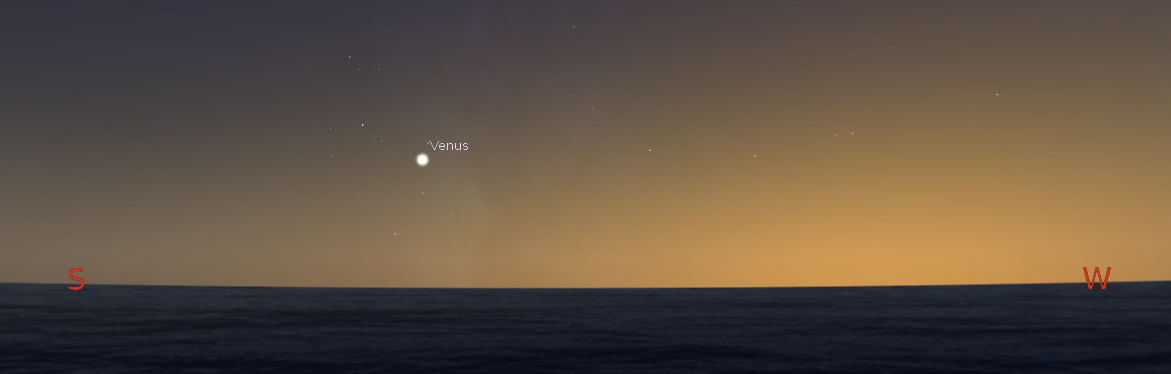
Venus low in the southwest at 6 p.m. on November 13, 2013. Created using Stellarium.
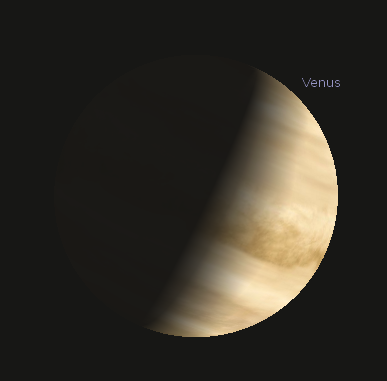
Venus through the telescope. (Note the bands are only visible in UV, not visible light). Created using Stellarium.
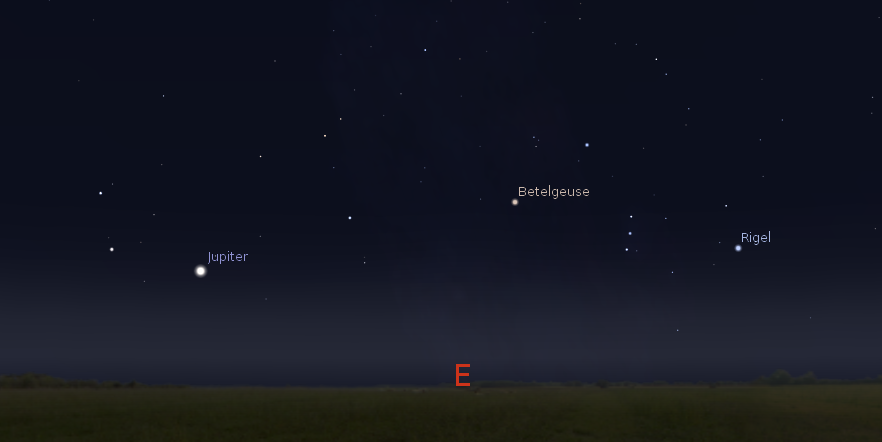
Jupiter rising at 10 p.m. with some of the winter stars. Created using Stellarium.
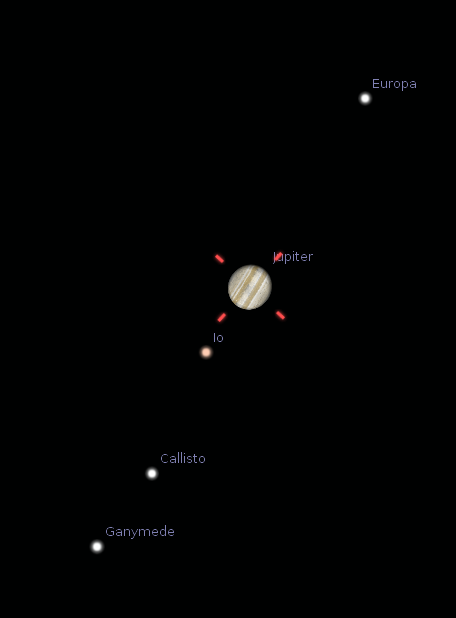
Telescopic Jupiter and its moons at 11 p.m. Created using Stellarium.
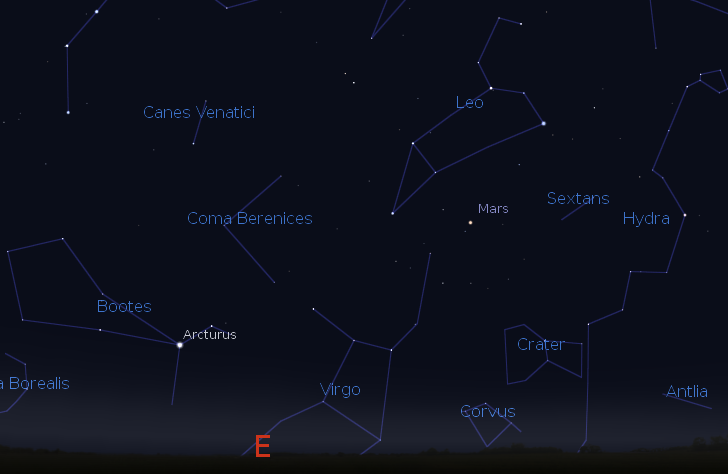
Mars and the spring constellations at 5:30 a.m. November 14, 2013. Created using Stellarium.
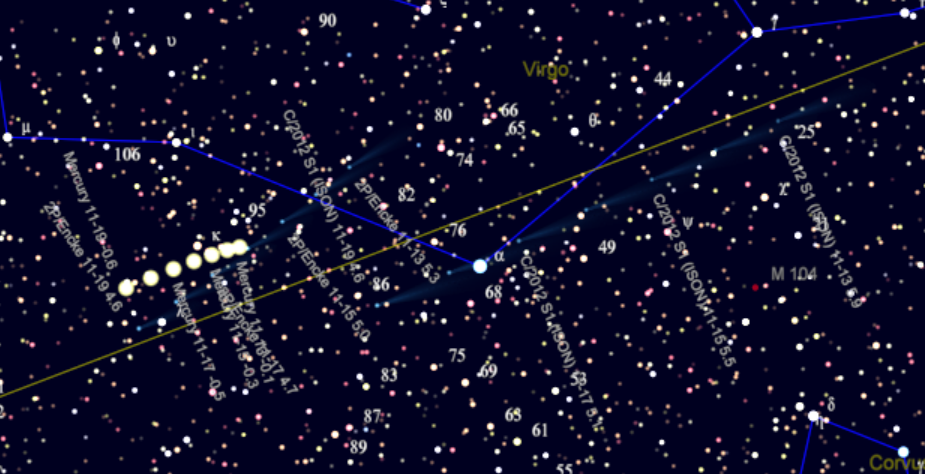
This is a busy chart with Comets ISON and Encke and Mercury for the period November 13th through 19th of November 2013 at 6 a.m. Created using Carts du Ciel.
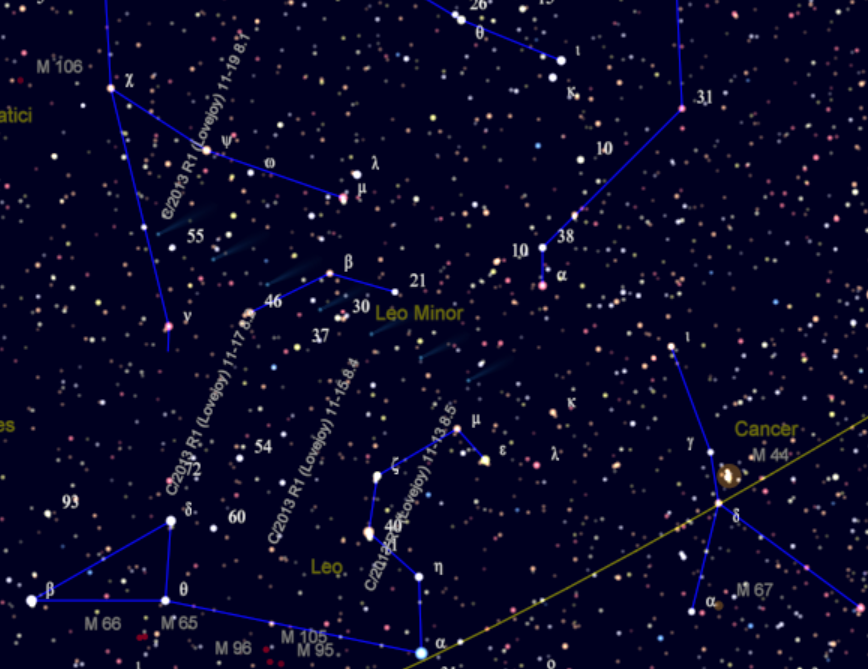
Comet Lovejoy and the constellation Leo for November 13th through 19th, 2013 at 6 a.m. Created using Cartes du Ciel.
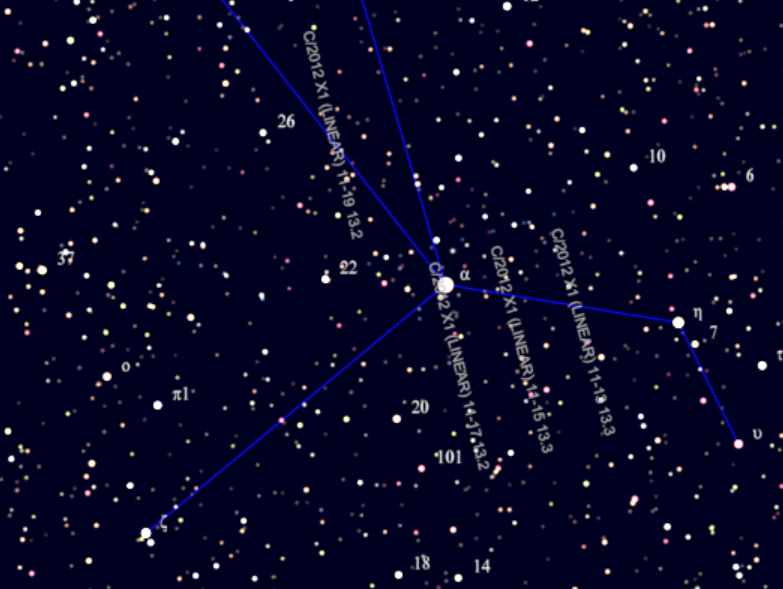
Comet LINEAR track for November 13th through 19th 2013. Created using Cartes du Ciel.
The following are the latest magnitudes (brightnesses) recorded for these comets:
Comet               Magnitude
C/2012 S1 (ISON)    8  (1 magnitude dimmer than predicted)
P2 (Encke)          8
C/2013 R1 (Lovejoy) 6  (2.5 magnitudes brighter than predicted)
C/2012 X1 (LINEAR)  8  (5 magnitudes* brighter than predicted)
* 5 magnitudes brighter = 100 times brighter!

Source is http://www.icq.eps.harvard.edu/CometMags.html.
Search page using the C/???? ?? instead of name.
Comets Lovejoy and LINEAR have multiple entries.
11/06/2013 – Ephemeris – Where’s the bright planets and comets this week?
Ephemeris for Wednesday, November 6th. The sun will rise at 7:27. It’ll be up for 9 hours and 57 minutes, setting at 5:24. The moon, 3 days past new, will set at 8:25 this evening.
Let’s check out the bright planets. Venus is brilliant in the west southwest after sunset. It will set at 7:46 p.m. The giant planet Jupiter will rise at 9:27 p.m. in the east northeast. It’s cruising against the stars of Gemini now. It will pass due south at 5:04 a.m. Mars will rise at 2:01 a.m. also in the east northeast. Reddish Mars is below and left of the slightly brighter star Regulus in Leo now. It’s in the east at 5 a.m. Comet ISON is nearly the distance below Mars that Mars is below Regulus and nearly in line with the two. My guesstimate for magnitude is about 8, about half as bright as current predictions, but probably visible in small telescopes. Comet ISON will rise about 3:30 a.m. and be visible before the sky begins to brighten around 6 a.m.
Times are for the Traverse City/Interlochen area of Michigan. They may be different for your location.
Addendum
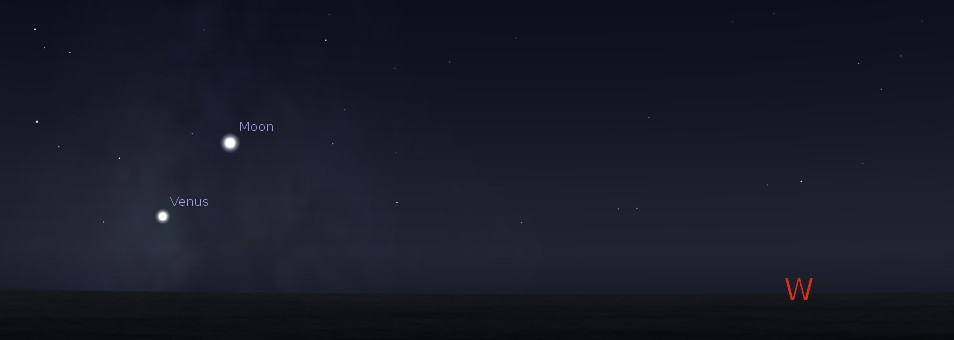
Venus and the Moon at 7 p.m. November 6, 2013. Created using Stellarium.
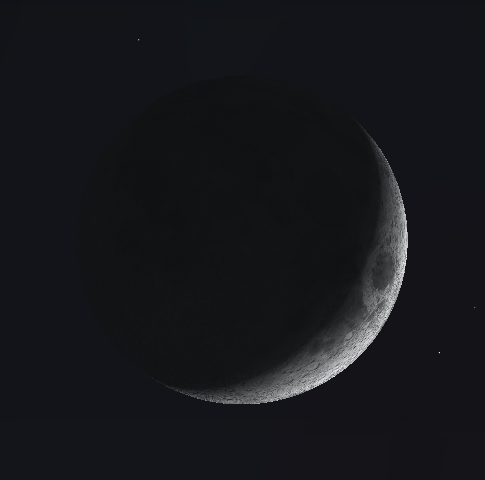
Closeup of the Moon at 7 p.m. November 6, 2013. Created using Stellarium.
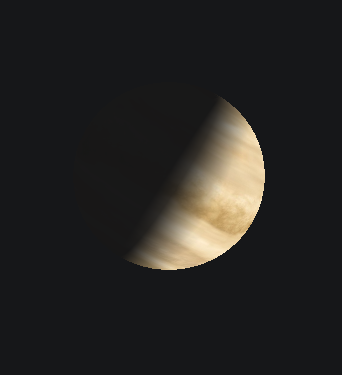
Telescopic view of Venus at 7 p.m. November 6, 2013. Created using Stellarium. The faint stripes are not seen in visible light.
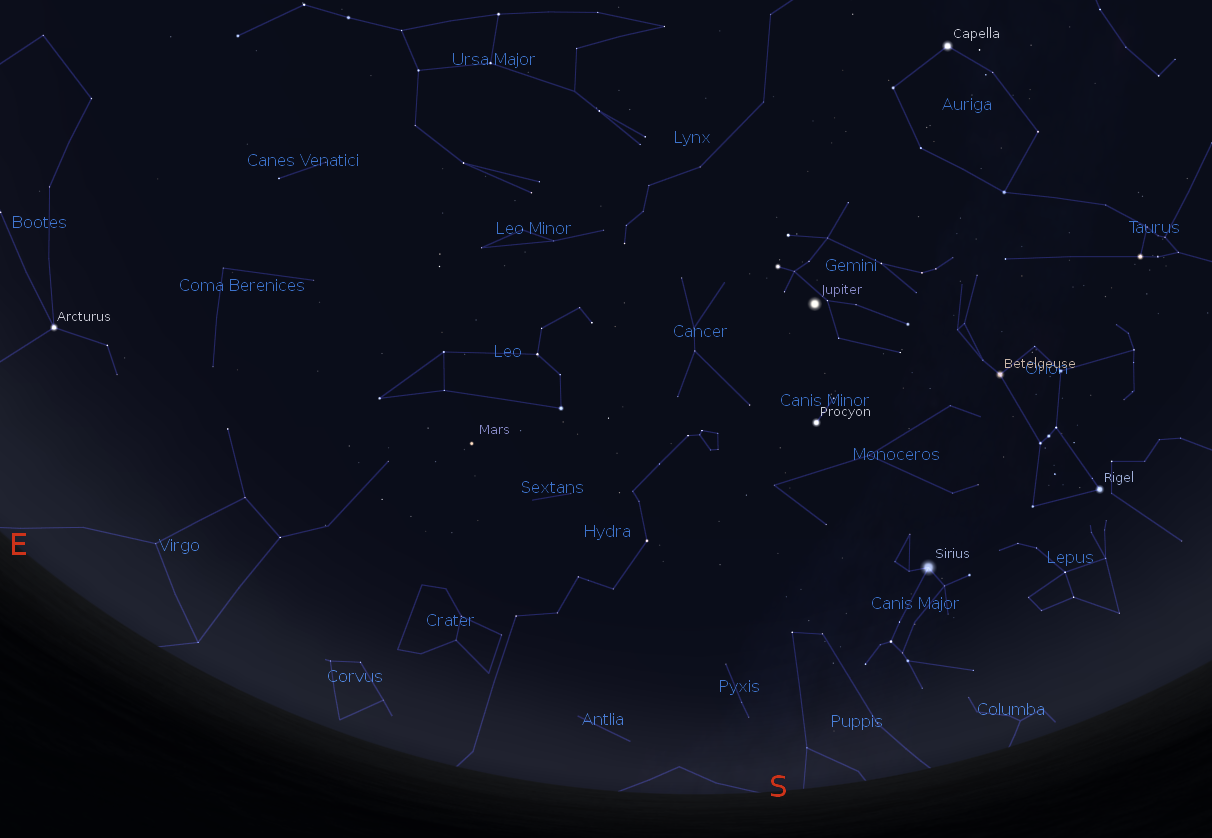
Jupiter and Mars with the winter and spring constellations at 6 a.m. November 7, 2013. Created using Stellarium.
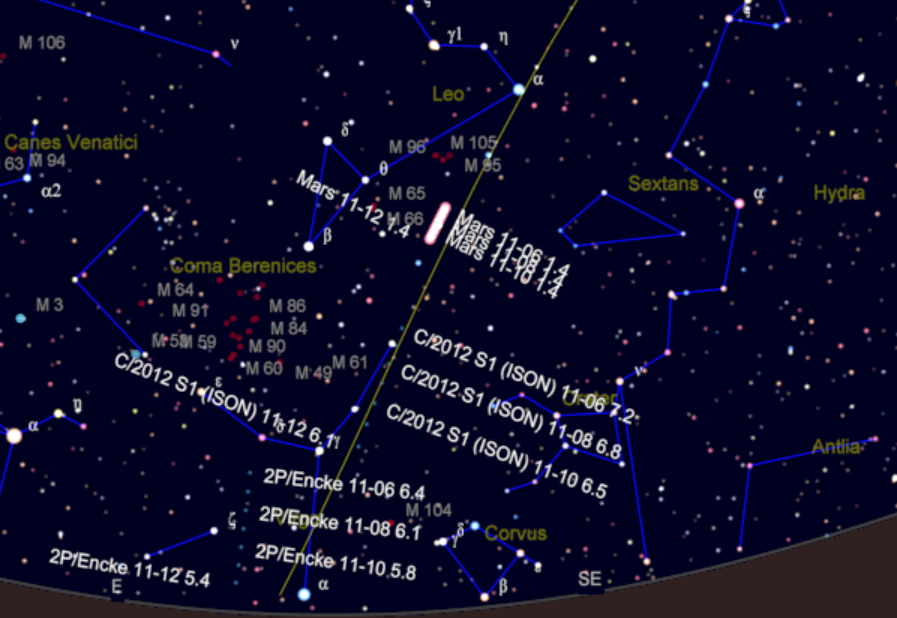
Comets ISON and Encke and Mars at 6 a.m. from November 5 to 12, 2013. Created with Cartes du Ciel.
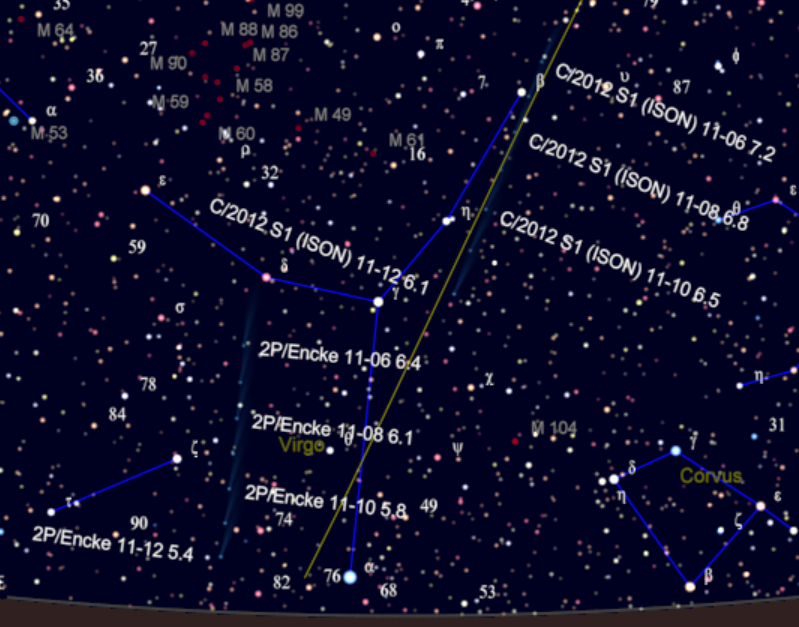
Closeup charts of comets ISON and Encke at 6 a.m. for November 6 through 12, 2013. Created using Cartes du Ciel.
10/30/2013 – Ephemeris – Where are the bright planets and Comet ISON now?
Ephemeris for Wednesday, October 30th. The sun will rise at 8:17. It’ll be up for 10 hours and 16 minutes, setting at 6:33. The moon, half way from last quarter to new, will rise at 5:01 tomorrow morning.
Let’s check out the bright planets. Venus is brilliant in the west southwest after sunset. Friday it will be at its greatest separation or elongation from the sun. Venus will set at 8:44 p.m. The giant planet Jupiter will rise at 10:55 p.m. in the east northeast. It’s cruising against the stars of Gemini now. It will pass due south at 6:31 a.m. Mars will rise at 3:08 a.m. also in the east northeast. Reddish Mars is below and left of the slightly brighter star Regulus in Leo now. It’s in the east at 6 a.m. Comet ISON is two-thirds the distance below Mars that Mars is below Regulus and nearly in line with the two. My guesstimate for magnitude is about 9, probably visible in telescopes. I haven’t seen it since earlier this month.
Times are for the Traverse City/Interlochen area of Michigan. They may be different for your location.
Addendum
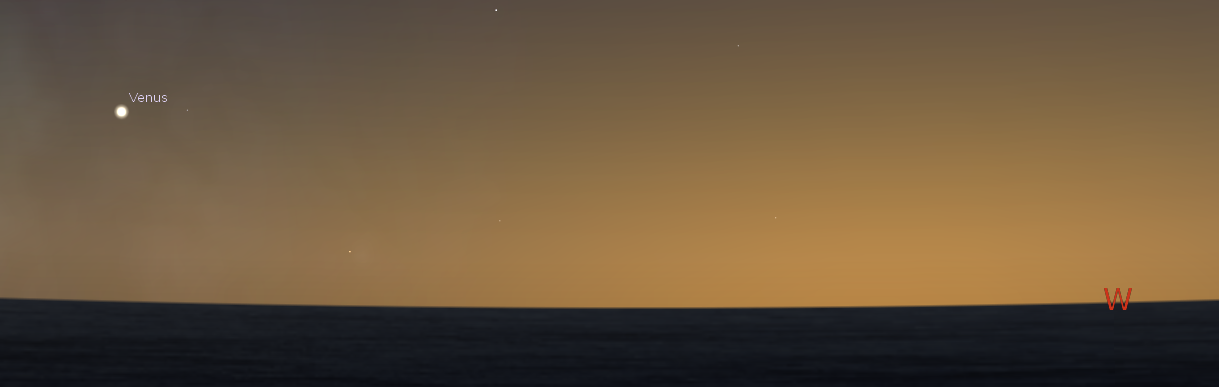
Venus in twilight at 7:15 p.m. on October 30, 2013. Created using Stellarium.
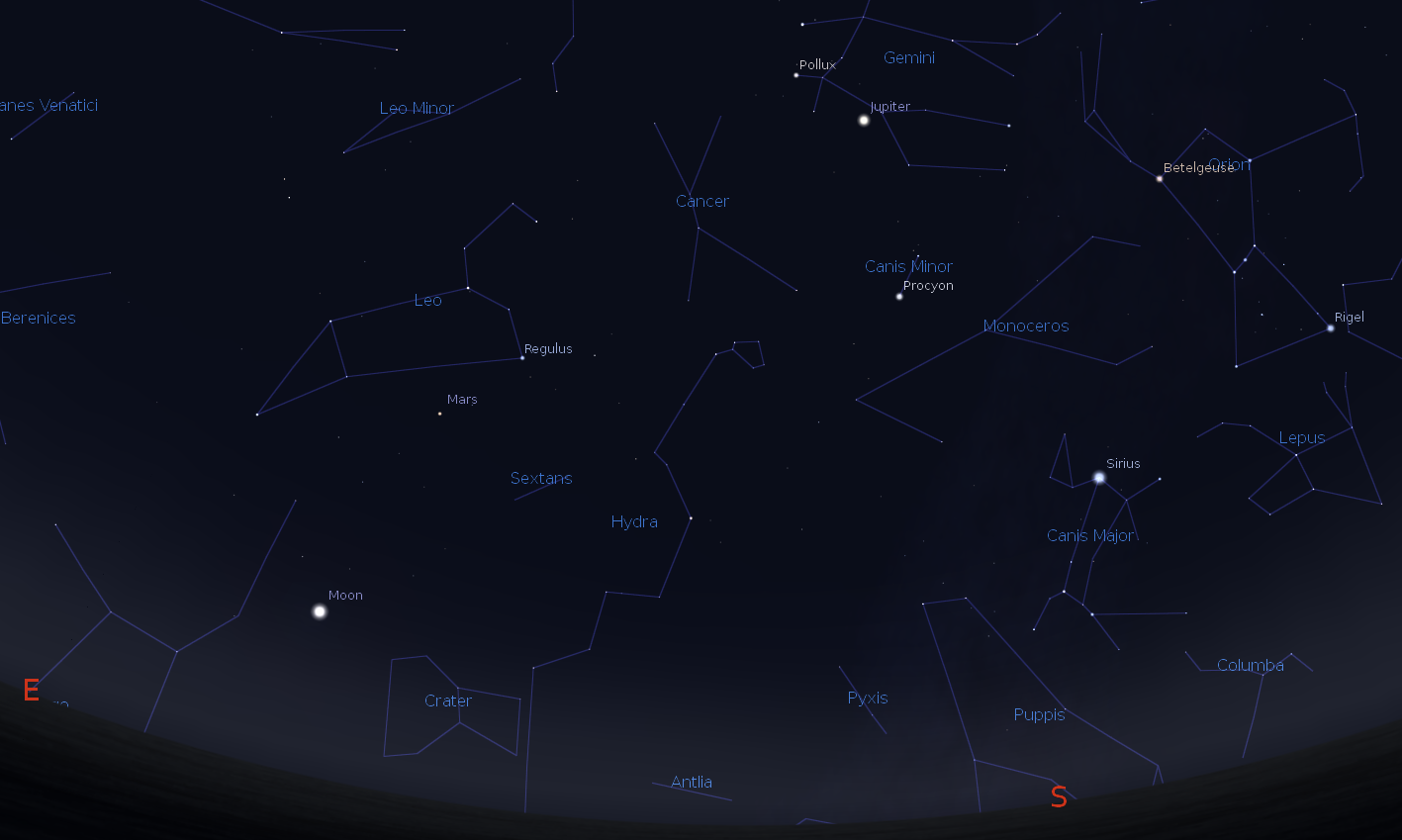
Jupiter and Mars at 6:30 a.m. October 31, 2013. Created using Stellarium.
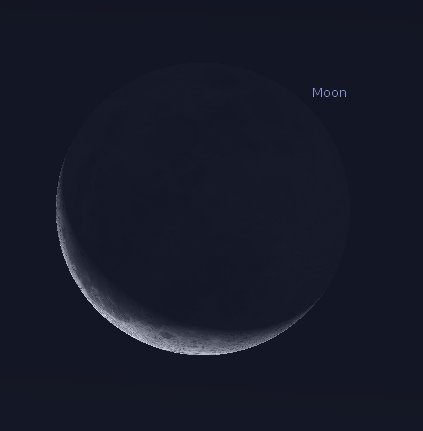
Closeup of the Moon at 6:30 a.m. on October 31, 2013. Created using Stellarium.
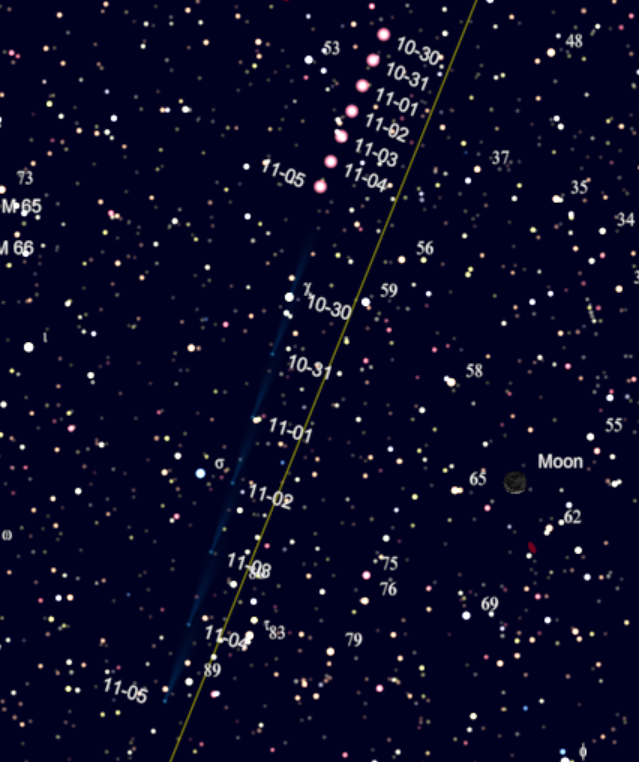
Comet ISON for October 30 to November 5, 2013. Created using Cartes du Ciel.
Click on the images to enlarge.
10/23/2013 – Ephemeris – Where are the bright planets and Comet ISON for this week?
Ephemeris for Wednesday, October 23rd. The sun will rise at 8:08. It’ll be up for 10 hours and 35 minutes, setting at 6:44. The moon, 3 days before last quarter, will rise at 10:08 this evening.
Time again to check out the bright planets. Venus is brilliant in the west southwest after sunset. It will set at 8:44 p.m. The next planetary action will have to wait till after 11 p.m. The giant planet Jupiter will rise at 11:21 p.m. in the east northeast. It’s cruising against the stars of Gemini now. It will pass due south at 6:57 a.m. Mars will rise at 3:14 a.m. also in the east northeast. Reddish Mars is below and left of the slightly brighter star Regulus in Leo now. It’s in the east at 6 a.m. Comet ISON is a bit less than half the distance below Mars that Mars is below Regulus and in line with the two. The bright moon will interfere with spotting it. My guesstimate for magnitude is about 9.5, probably visible in telescopes if the moon wasn’t out.
Times are for the Traverse City/Interlochen area of Michigan. They may be different for your location.
Addendum:
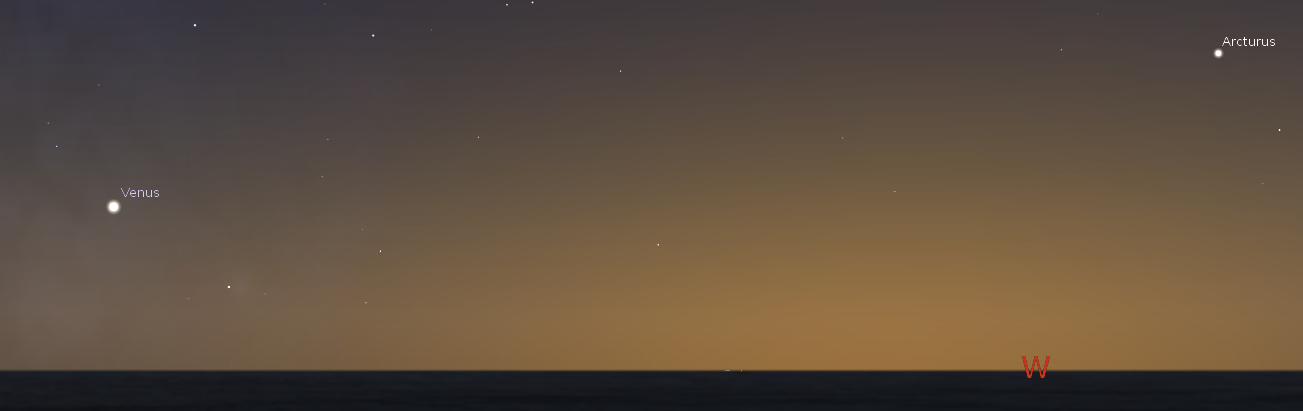
Venus low in the west southwest at 7:30 p.m. on October 23, 2013. Created using Stellarium
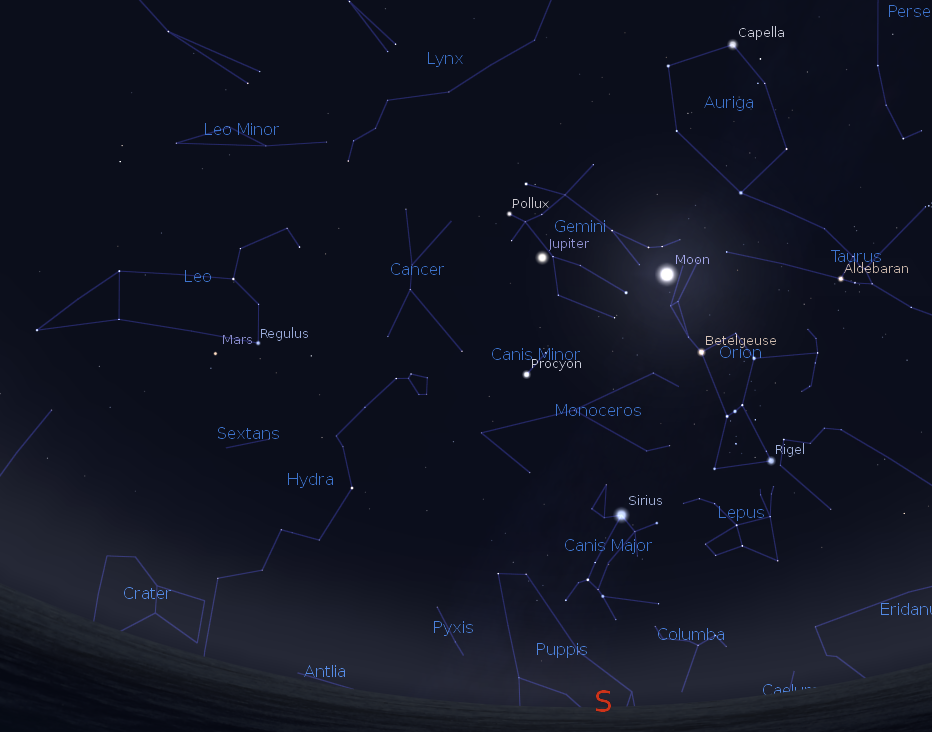
Jupiter, Mars and the Moon with the Winter and some spring constellations at 6:30 a.m. on October 24, 2013. Created using Stellarium.
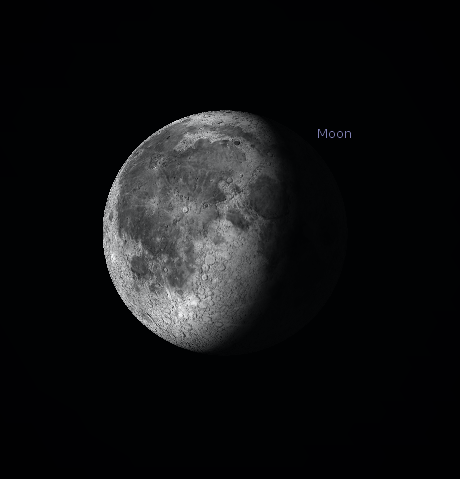
The moon’s phase the morning of October 24, 2013. Created using Stellarium.
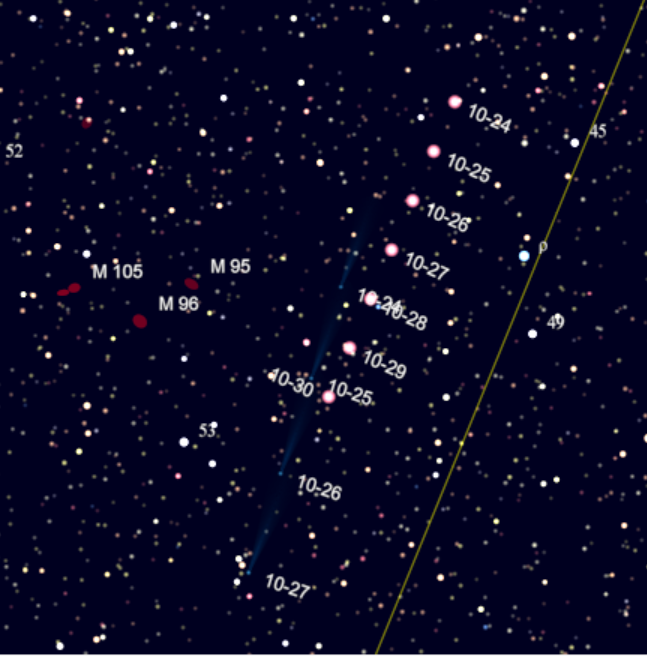
Mars and Comet ISON daily track from October 24th to the 30th, 2013. Be sure to match Mars dates with the comet dates. Created using Cartes du Ciel (Sky Charts).
10/16/2013 – Ephemeris – Where are the bright planets and Comet ISON this week
Ephemeris for Wednesday, October 16th. The sun will rise at 7:59. It’ll be up for 10 hours and 56 minutes, setting at 6:55. The moon, 2 days before full, will set at 6:30 tomorrow morning.
Time again to check out the bright planets. Venus is brilliant in the west southwest after sunset it will set at 8:46 p.m.. We are losing Saturn in the sun’s glare for a few months. The rest of the planetary action will be in the morning sky, though the giant planet Jupiter will rise before midnight at 11:47 a.m. in the east northeast. It’s cruising against the stars of Gemini now. By 6 a.m it will be high in the southeast, the brightest object in that direction. Mars will rise at 3:19 a.m. also in the east northeast. It’s near Leo’s brightest star Regulus at the bottom of the constellation’s backward question mark. It’s in the east at 6 a.m. Comet ISON is about two moon width’s to the upper left of Mars, but the bright moon will interfere with spotting it.
Times are for the Traverse City/Interlochen area of Michigan. They may be different for your location.
Addendum
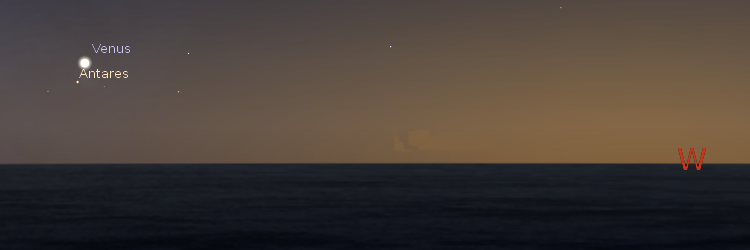
Venus low in the west southwest at 7:45 p.m. on October 16, 2013. Created using Stellarium.
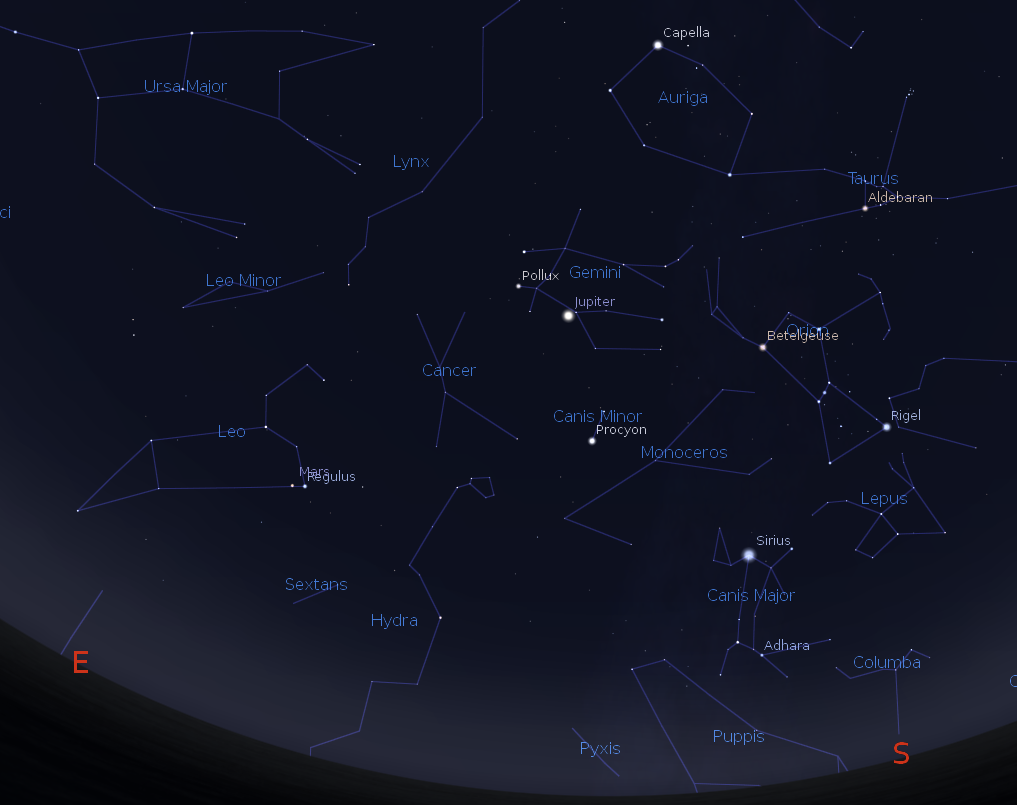
Jupiter and Mars with the winter stars and constellations at 6 a.m., October 17, 2013. Created using Stellarium.
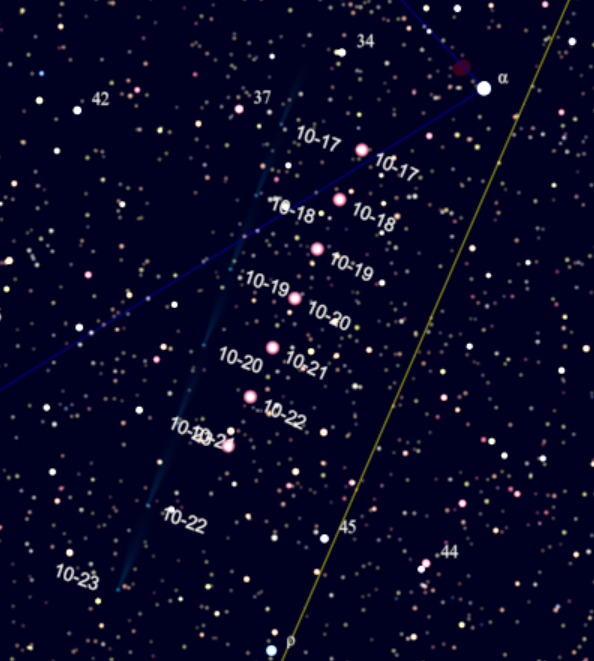
Mars and Comet ISON at 6 a.m. from October 17 to October 23, 2013. Star magnitude limit is 12. Created using Sky Charts (Cartes du Ciel)

