Archive
05/15/2013 – Ephemeris – Where are the bright planets this week?
Ephemeris for Wednesday, May 15th. Today the sun will be up for 14 hours and 49 minutes, setting at 9:03. The moon, 3 days before first quarter, will set at 1:21 tomorrow morning. Tomorrow the sun will rise at 6:13.
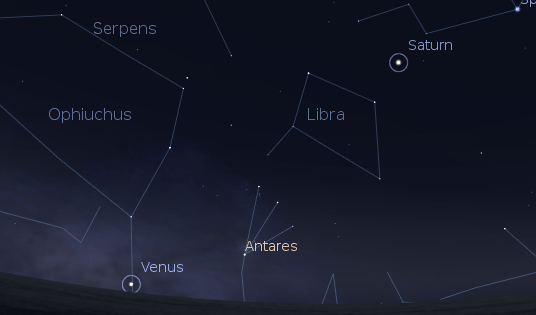
It’s time to check out the bright planets for this week. Venus is starting to make an appearance in the western sky after sunset, competing with the bright twilight glow. It will set in the west northwest at 10:08 p.m.. Jupiter is located in the constellation of Taurus, above the V shape of stars, the face of the bull and is in the west during the evening. It will set at 11:05 p.m. In the west northwest. Jupiter is still high enough as it gets dark to get a very good view of its cloud bands and satellites. Saturn will be low in the east southeast when it gets dark in the evening. It’s located in eastern Virgo, but is moving back a bit toward the bright star Spica to its right. Saturn will move past due south at 12:29 a.m., and set at 5:45 a.m.
Times are for the Traverse City/Interlochen area of Michigan. They may be different for your location.
Addendum
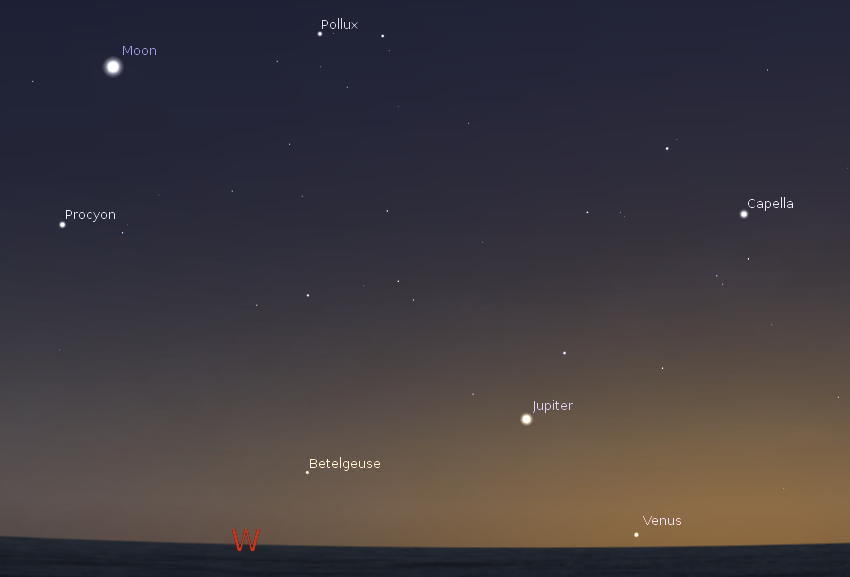
Jupiter and Venus with the fading stars of winter at 10 p.m. May 15, 2013. Created using Stellarium.
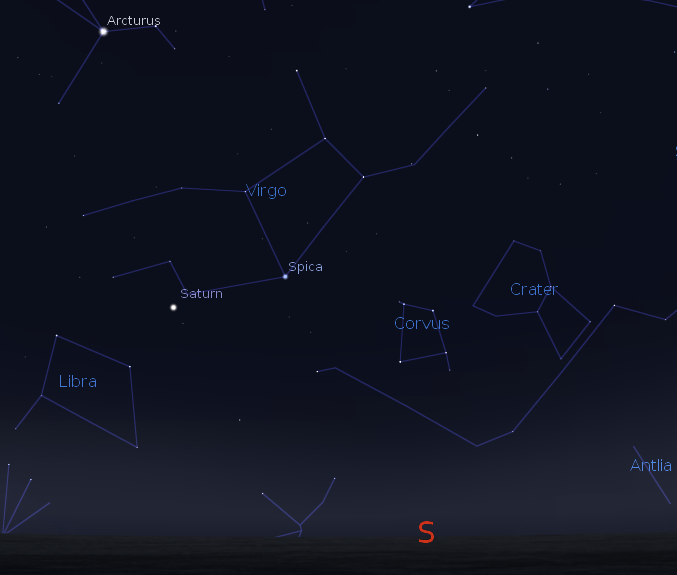
Saturn surrounded by the spring constellations at 10:30 p.m. May 15, 2013. Created using Stellarium.
05/13/2013 – Ephemeris – Evening viewing prospects for the planet Venus
Ephemeris for Monday, May 13th. Today the sun will be up for 14 hours and 45 minutes, setting at 9:01. The moon, 4 days past new, will set at 12:10 tomorrow morning. Tomorrow the sun will rise at 6:15.
For the rest of the year Venus will be in our evening sky. However it will not appear high in the west. It is making its appearance just when the path of the planets will begin to lie down south of the sun. The best time to see planets in the west after sunset is generally between December to June. The other six months they are best seen in the morning sky in the east. Since Venus lies between the earth and the sun, it never strays far from it. Right now Venus is emerging from behind the sun, and is nearly fully illuminated by the sun and far from us. The last two months of this year Venus will be close to us and exhibiting a crescent phase as it approaches and is about to pass between the earth and the sun.
05/08/2013 – Ephemeris – Where are the bright planets tonight?
Ephemeris for Wednesday, May 8th. The sun rises at 6:22. It’ll be up for 14 hours and 33 minutes, setting at 8:55. The moon, 1 day before new, will rise at 6:06 tomorrow morning.
It’s time to check out the bright planets for this week. Venus is starting to make an appearance in the western twilit sky after sunset, competing with the bright twilight glow. It will set in the west northwest at 9:48. Jupiter is located in the constellation of Taurus, above the V shape of stars, the face of the bull and is in the west during the evening. It will set at 11:28 p. m. In the west northwest. Jupiter is still high enough as it gets dark to get a very good view of its cloud bands and satellites. Saturn will be low in the east southeast when it gets dark in the evening. It’s located in eastern Virgo, but is moving back a bit toward the bright star Spica to its right. Saturn will move past due south at 12:58 a.m., and set at 6:14 a.m.
Times are for the Traverse City/Interlochen area of Michigan. They may be different for your location.
Addendum
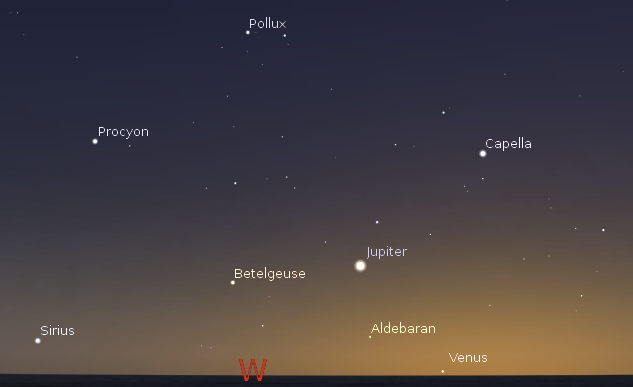
Venus, Jupiter and the fading stars of winter at 9:45 p.m. May 8, 2013. Created using Stellarium.
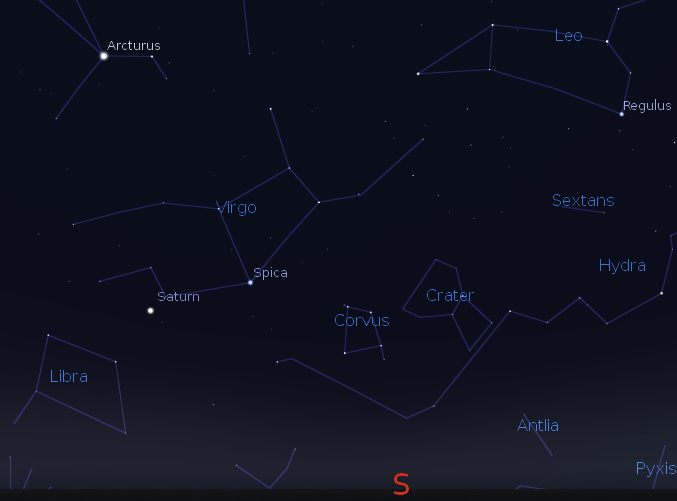
Saturn and the constellations of spring at 10:30 p.m. May 8, 2013. Created using Stellarium.
05/01/2013 – Ephemeris – Where are the bright planets this week?
Ephemeris for Wednesday, May 1st. The sun rises at 6:32. It’ll be up for 14 hours and 15 minutes, setting at 8:47. The moon, 1 day before last quarter, will rise at 2:35 tomorrow morning.
It’s time to check out the two remaining bright planets for this week. Jupiter is located in the constellation of Taurus, above the V shape of stars, the face of the bull and is in the west during the evening. It will set at 11:49 p. m. In the west northwest. Jupiter is still high enough as it gets dark to get a very good view of its cloud bands and satellites. The four moons that Galileo found are easy targets for small telescopes or even sharp eyed binocular observers. The other bright planet Saturn will be low in the east southeast when it gets dark in the evening. It’s located in eastern Virgo, but us moving back a bit toward the bright star Spica to its right. Saturn will move past due south at 1:28 a.m. An event called transiting the meridian.
Times are for the Traverse City/Interlochen area of Michigan. They may be different for your location.
Addendum
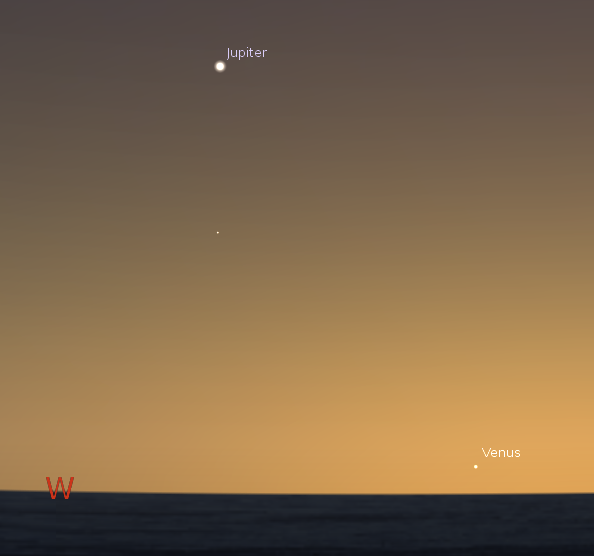
I’m including Venus in this image at 9:20 p.m., May 1, 2013. I’ll start talking about it on the program next week. Created using Stellarium.
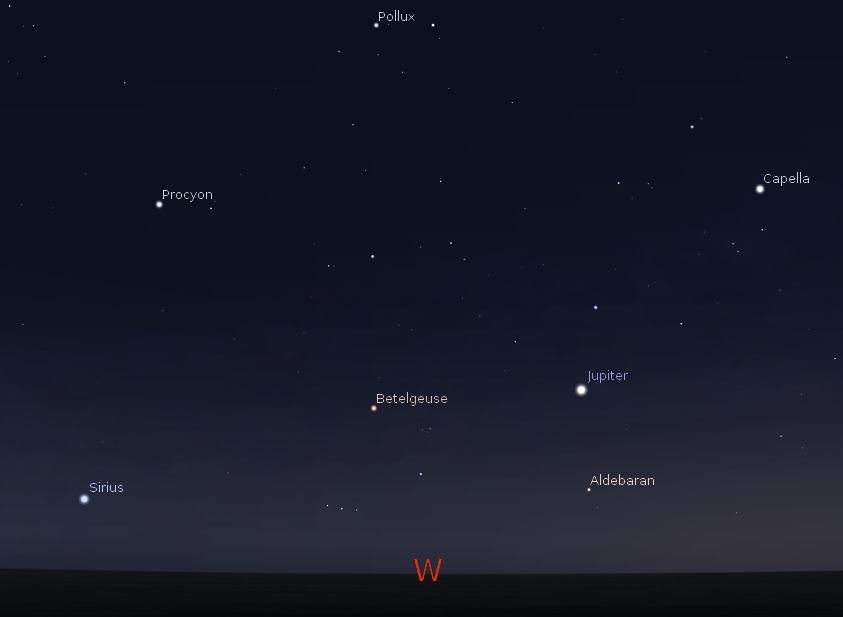
Jupiter and the setting stars of winter at 10 p.m. on may 1, 2013. Created using Stellarium.
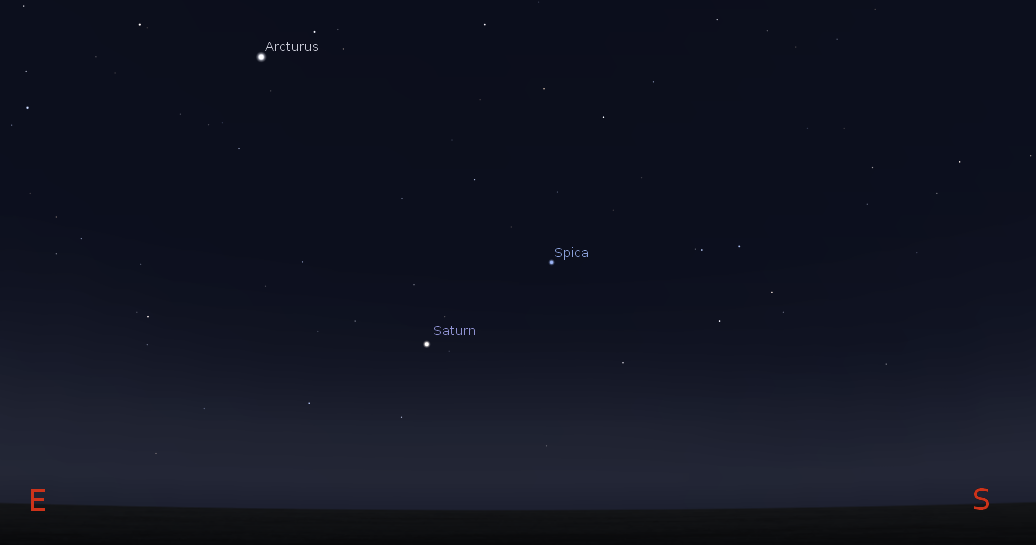
Saturn is seen low in the southeast at 10 p.m. on May 1, 2013. Created using Stellarium.
03/29/2013 – Ephemeris –
Ephemeris for Thursday, March 28th. The sun will rise at 7:30. It’ll be up for 12 hours and 34 minutes, setting at 8:05. The moon, 1 day past full, will rise at 10:01 this evening.
Venus is passing superior conjunction with the sun today. Superior means Venus is passing behind, thought not directly behind the Sun. You can see it only in the images of the SOHO spacecraft. On the Internet google soho nasa to find the site. Our last inferior conjunction of Venus was the transit of Venus last June, when Venus crossed the face of the sun. Mars is about to pass in conjunction with the sun. All its conjunctions are superior. For about a month, starting April 4th. the satellites and rovers cannot receive transmissions from the earth due to the sun’s radio noise, so they are put into a passive state. The Deep Space Network on the earth can pick up their transmissions, though not well during this period due to its greater sensitivity.
Times are for the Traverse City/Interlochen area of Michigan. They may be different for your location.
Addendum
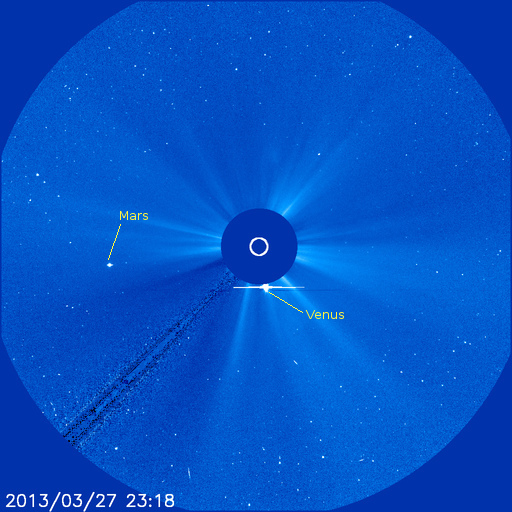
Annotated SOHO LASCO C3 image of the sun, behind the occulting disk with Venus and Mars. Image: ESA, NASA
01/16/2013 – Ephemeris – Where are the bright planets this week?
Ephemeris for Wednesday, January 16th. The sun will rise at 8:15. It’ll be up for 9 hours and 14 minutes, setting at 5:30. The moon, 2 days before first quarter, will set at 11:37 this evening.
Let’s check out the planets for this week. Mars can be seen low in the southwest. It will set at 7:11 p.m, two minutes later than last week because Mars is moving northward. The sun will eventually catch up with it in mid April. Even before you can spot Mars, bright Jupiter will be visible in the southeast. Jupiter is located in the constellation of Taurus and moves from the southeast to the high south southwest during the evening. It will transit or pass due south at 9:15 p.m, and will set at 4:46 a.m. Jupiter is a wonderful sight in telescopes with its cloud bands and its moons which change positions each night. Saturn will be the next planet to rise at 2:20 a.m. in the east southeast. It’s located in eastern Virgo. Venus will rise at 7:15.
Times are for the Traverse City/Interlochen area of Michigan. They may be different for your location.
Addendum
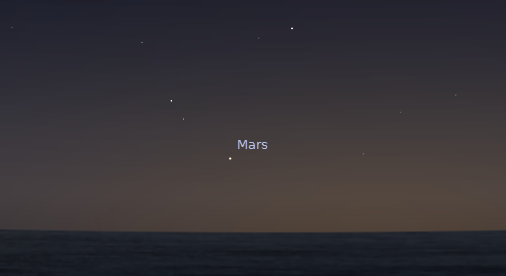
Mars, now becoming more visible as it moves northward is shown at 6:30 p.m. on January 16, 2013. Created using Stellarium.
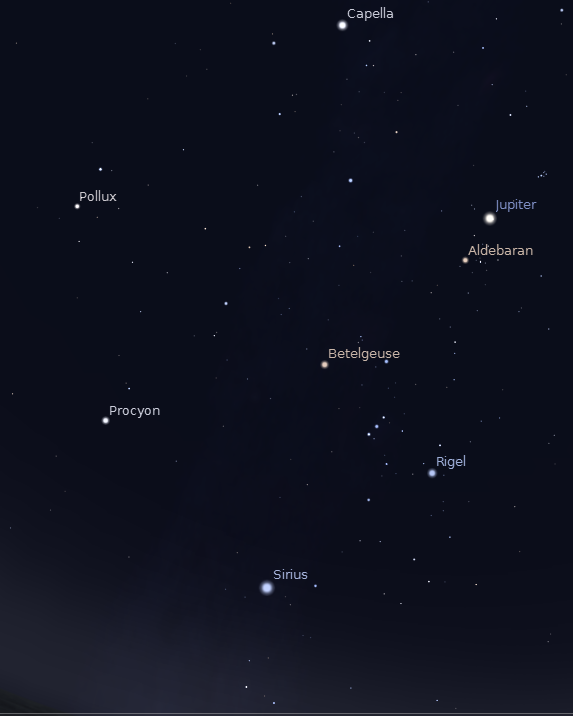
Jupiter and the winter circle of bright winter stars at 9 p.m. January 16, 2013. Created using Stellarium.
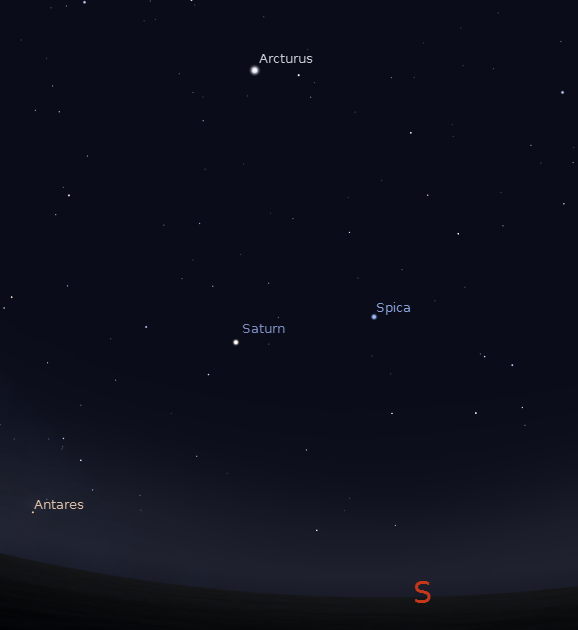
Saturn with the late spring and early summer stars at 6 a.m January 17, 2013.
01/02/2013 – Ephemeris – Where are the bright planets this week?
Ephemeris for Wednesday, January 2nd. The sun will rise at 8:19. It’ll be up for 8 hours and 54 minutes, setting at 5:14. The moon, 2 days before last quarter, will rise at 11:00 this evening.
Let’s check out the planets for this week. Mars can be seen low in the southwest. It will set at 7:07 p.m, two minutes later than last week because sunset times are increasing and Mars is starting to move northward. The sun will eventually catch up with it. Even before you can spot Mars, bright Jupiter will be visible in the east. Jupiter is located in the constellation of Taurus in the southeast in the evening. It will transit or pass due south at 10:14 p.m, and will set at 5:45 a.m. Jupiter is a wonderful sight in telescopes with its cloud bands and its moons which change positions each night. Saturn will be the next planet to rise at 3:10 a.m. in the east southeast. It’s located in eastern Virgo. Venus will rise at 6:52.
Times are for the Traverse City/Interlochen area of Michigan. They may be different for your location.
Note: The Quadrantid meteor shower will reach peak tomorrow morning. I will release tomorrow’s program about the meteor shower at noon today.
Addendum
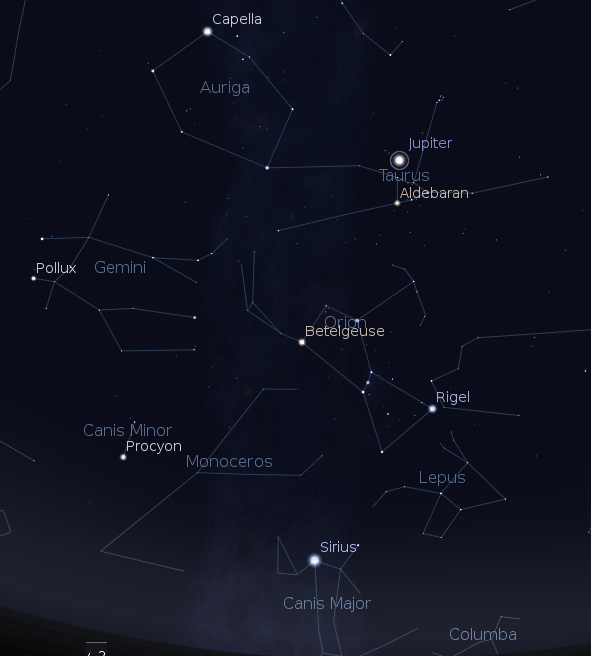
Jupiter and the winter stars and constellations as seen at 9 p.m. on January 2, 2013. Created using Stellarium.
Jupiter and the winter stars and constellations at 7 a.m. on January 3, 2013. Created using Stellarium.
12/26/2012 – Ephemeris – Where are the bright planets this week?
Ephemeris for Wednesday, December 26th. The sun will rise at 8:18. It’ll be up for 8 hours and 50 minutes, setting at 5:08. The moon, 2 days before full, will set at 7:27 tomorrow morning.
Let’s check out the planets for this week. Mars can be seen low in the southwest. It will set at 7:05 p.m, one minute later than last week because sunset times are increasing and Mars is starting to move northward. The sun will eventually catch up with it. Even before you can spot Mars, bright Jupiter will be visible in the east. Jupiter is located in the constellation of Taurus in the southeast in the evening. It will transit or pass due south at 10:44 p.m, and will set at 6:16 a.m. Jupiter is a wonderful sight in telescopes with its cloud bands and its moons which change positions each night. Saturn will be the next planet to rise at 3:35 a.m. in the east southeast. It’s located in eastern Virgo. Venus will rise at 6:37 and is below and left of Saturn.
Times are for the Traverse City/Interlochen area of Michigan. They may be different for your location.
Addendum
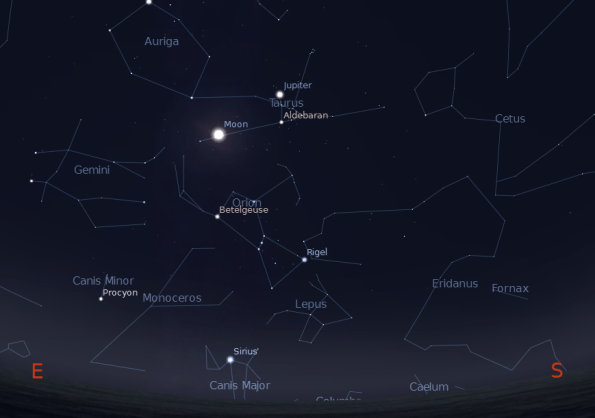
Jupiter, the bright moon and the winter stars and constellations at 9 p.m. on December 26, 2012. Created using Stellarium.
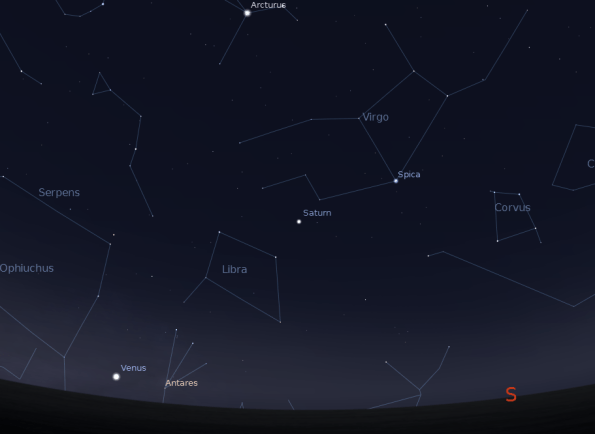
Saturn, Venus and the constellations of morning at 7 a.m. on December 27, 2012. Created using Stellarium.
12/19/2012 – Ephemeris – Where are the bright planets this week?
Ephemeris for Wednesday, December 19th. The sun will rise at 8:15. It’ll be up for 8 hours and 49 minutes, setting at 5:04. The moon, 1 day before first quarter, will set at 12:48 tomorrow morning.
Let’s check out the planets for this week. Mars can be seen low in the southwest. It will set at 7:04 p.m. The same as last week because sunrise times are increasing and Mars is starting to move northward. The sun will eventually catch up with it. Even before you can spot Mars, bright Jupiter will be visible in the east. Jupiter is located in the constellation of Taurus in the southeast in the evening. It will transit or pass due south at 11:15 p.m, and will set at 6:47 a.m. Jupiter is a wonderful sight in telescopes with its cloud bands and its moons which change positions each night. Saturn will be the next planet to rise at 4 a.m. in the east southeast. It’s located in eastern Virgo. Venus will rise at 6:20 and is below and left of Saturn.
Times are for the Traverse City/Interlochen area of Michigan. They may be different for your location.
Addendum
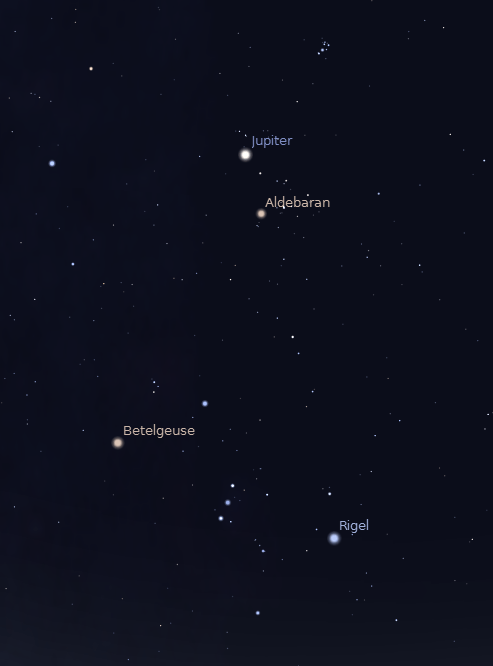
Jupiter and the winter stars in the east southeast at 9 p.m. December 19, 2012. Created using Stellarium.
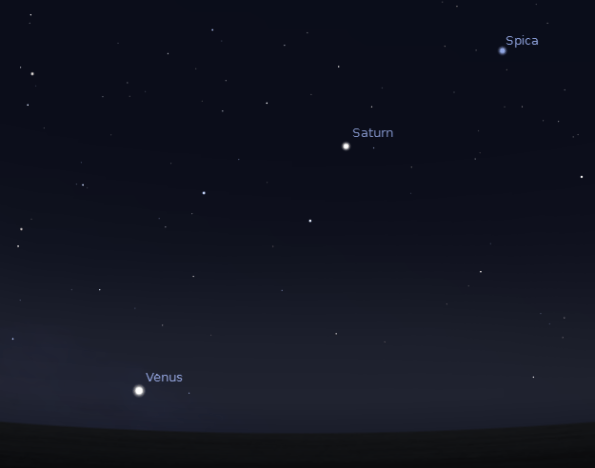
Saturn, Venus and the star Spica low in the east southeast at 6:45 a.m., December 20, 2012. Created using Stellarium.
12/17/2012 – Ephemeris – Were the planetary conjunctions of 3 and 2 BC the Star of Bethlehem?
Ephemeris for Tuesday, December 18th. The sun will rise at 8:14. It’ll be up for 8 hours and 49 minutes, setting at 5:03. The moon, 2 days before first quarter, will set at 11:43 this evening. | For over 400 years astronomers have wondered and looked through ancient Chinese records, ran the positions of planets back 2000 years, and still no one knows for sure what the Star of Bethlehem really was, but here’s my favorite scenario. On August 13th of 3 BC Jupiter and Venus briefly merged in the pre-dawn skies against the constellation of Leo the lion. A month later Jupiter was in conjunction with Regulus the bright star in Leo, the little king star. Then 9 months later, after sunset on June 16th of 2 BC the two planets again joined as one in Leo. The king of the planets twice mating with Venus as Ishtar, the Babylonian goddess of fertility, against the constellation of the lion signifying Judah from Genesis? The Magi not being Jewish might have found meaning in all that.
Times are for the Traverse City/Interlochen area of Michigan. They may be different for your location.
Addendum
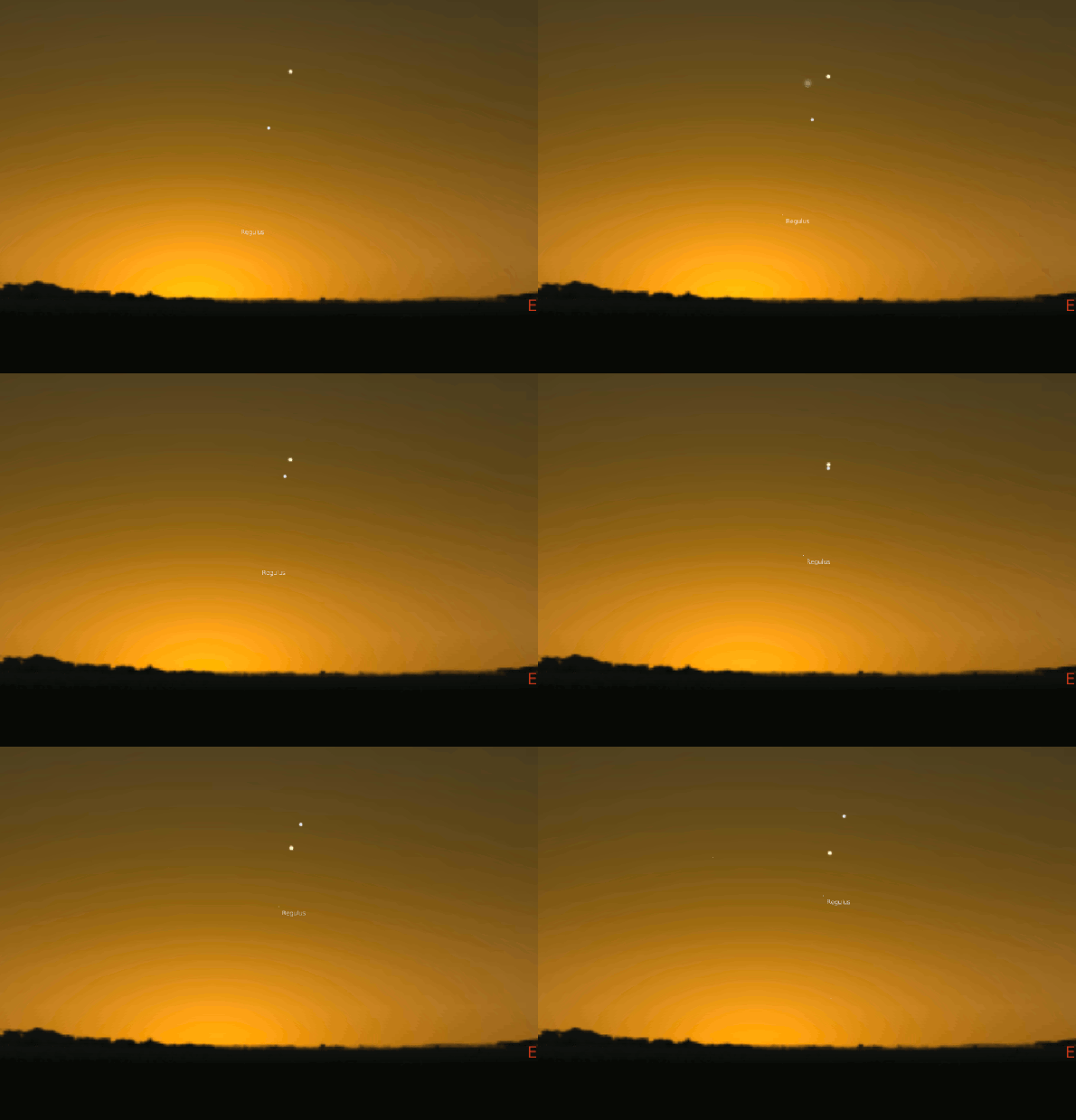
Animation of the Jupiter-Venus conjunction of August 3, 3 BC. in the morning twilight. Created using Stellarium.
Click on the image to enlarge and show the animation. Jupiter is rising while Venus, the brighter one, is heading back to the sun. Jupiter will seem to mate with Venus. 9 months later, the human gestation period their paths seem to cross again.
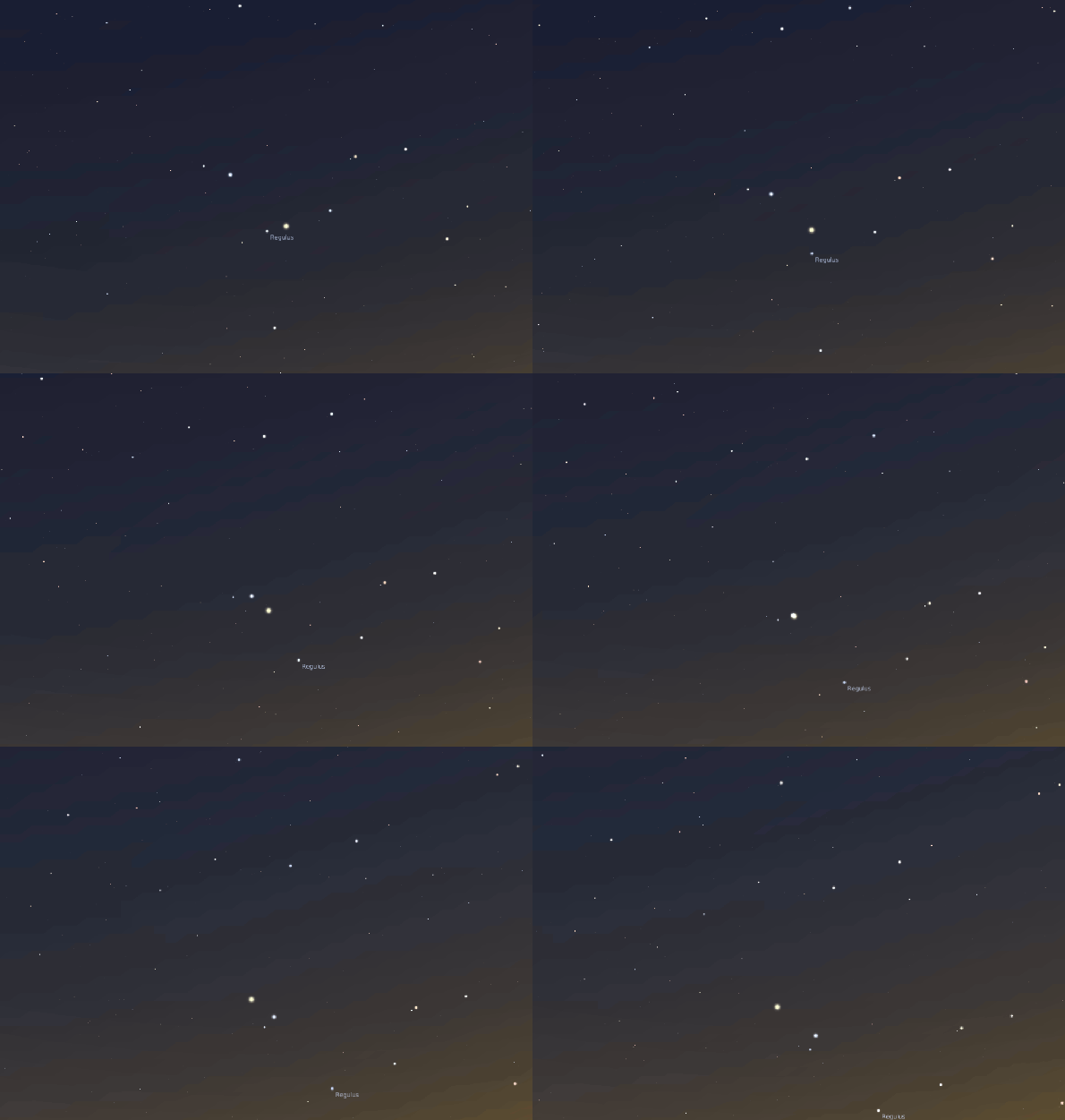
June of 2 BC just after sunset Jupiter and Venus again cross paths. Created using Stellarium.
Click on the image to enlarge and show the animation.

