Archive
10/17/2012 – Ephemeris – Autumn wonders for binoculars or small telescope: The Alpha Persei Association
Ephemeris for Wednesday, October 17th. The sun will rise at 8:00. It’ll be up for 10 hours and 52 minutes, setting at 6:53. The moon, 2 days past new, will set at 8:21 this evening.
Let’s see how many bright planets we can find this week. At 8 p.m. Mars can be seen low in the southwest approaching another red star Antares, whose name means rival of Mars. They will be closest in a few days. The moon will be nearby too. Mars will set at 8:45. The planetary action moves to later in the evening and the morning. Jupiter, will rise at 9:17 p.m. in the east northeast. It is located in the constellation of Taurus. It will transit or pass due south at 4:52 a.m. The last bright planet of the night is the morning star Venus which will rise at 4:44 a.m. also in the east. Venus is now below the hind end of Leo. The planets Venus and Jupiter and the winter constellations are a great sight for early risers. You can enjoy for a few more weeks without danger of frost bite.
Times are for the Traverse City/Interlochen area of Michigan. They may be different for your location.
Addendum
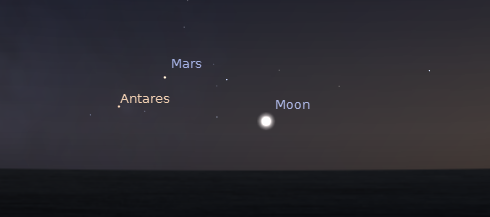
Mars, Antares, and the moon at 7:50 p.m. on October 17, 2012. Created using Stellarium.
The moon at this scale is over exposed.
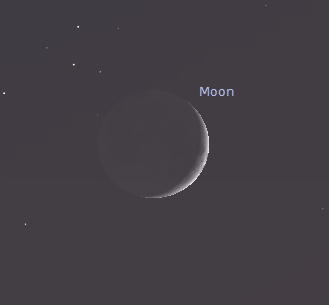
The actual phase of the moon in the chart above. Created using Stellarium.
The morning sky.
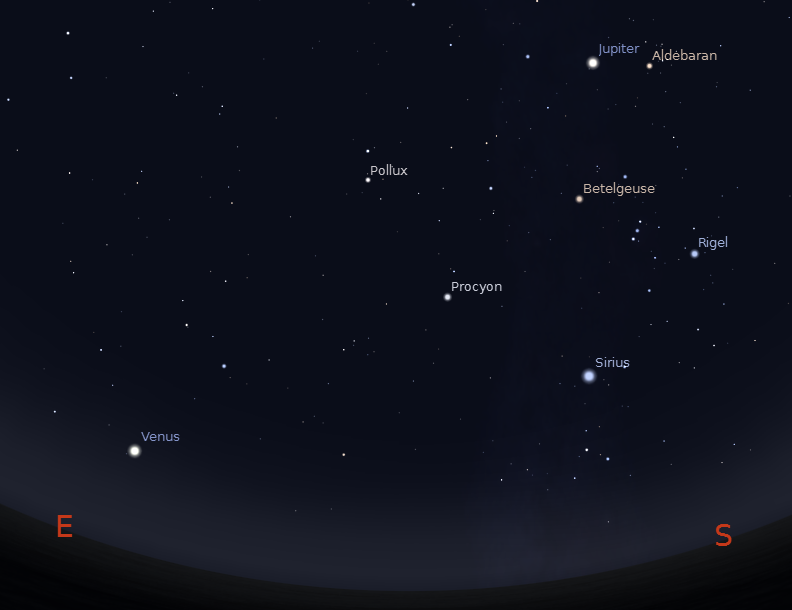
The morning skies including Jupiter and Venus at 6 a.m. on October 18, 2012. Created using Stellarium.
10/10/2012 – Ephemeris – Where are the bright planets this week?
Oct 10. This is Bob Moler with Ephemeris for Wednesday, October 10th. The sun will rise at 7:52. It’ll be up for 11 hours and 13 minutes, setting at 7:05. The moon, 2 days past last quarter, will rise at 3:22 tomorrow morning.
Let’s see how many bright planets we can find this week. Mars and Saturn now set too close to the sun to be easily seen in the evening sky. Both are in the west southwestern sky and very low in twilight. Saturn will set at 7:45 p.m., while Mars will set at 8:56. The planetary action moves to later in the evening and the morning. Jupiter, will rise at 9:45 p.m. in the east northeast. It is located in the constellation of Taurus. The last bright planet of the night is the morning star Venus which will rise at 4:28 a.m. also in the east northeast. Venus is now in Leo outshining the star Regulus next to it. The planets Venus and Jupiter and the winter constellations are a great sight for early risers. You can enjoy for a few more weeks without danger of frost bite.
Times are for the Traverse City/Interlochen area of Michigan. They may be different for your location.
Addendum
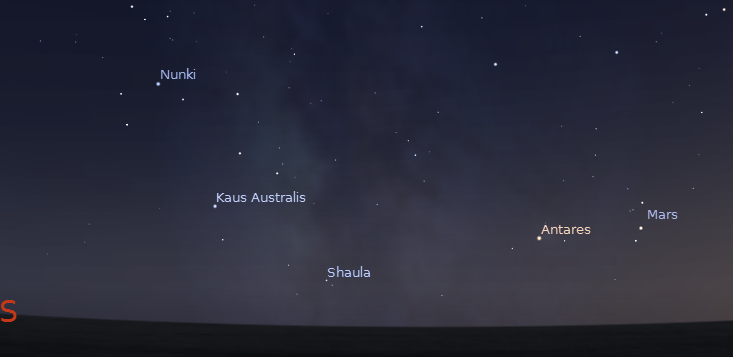
Mars is approaching Antares at 8 p.m. on October 10, 2012. Created using Stellarium.
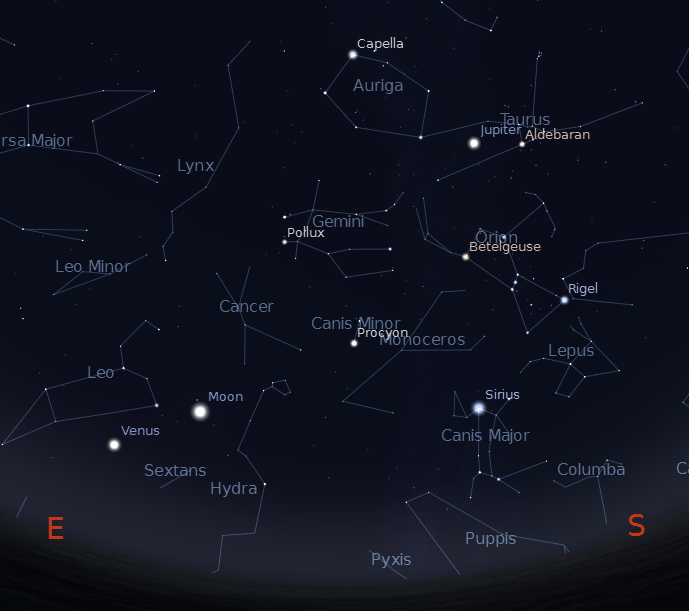
Morning Sky at 6 a.m. with Jupiter and Venus on October 11, 2012. Created using Stellarium.
Note that the moon is really a thin crescent and is over blown at this scale.
10/03/2012 – Ephemeris – Where are the bright planets this week?
Wednesday, October 3rd. The sun will rise at 7:43. It’ll be up for 11 hours and 35 minutes, setting at 7:18. The moon, 4 days past full, will rise at 8:59 this evening.
Let’s see how many bright planets we can find this week. Mars and Saturn now set too close to the sun to be easily seen in the evening sky. Both are in the west southwestern sky and very low in twilight. Saturn sets at 8:10 p.m., while Mars sets at 9:08. The planetary action moves to later in the evening and the morning. Jupiter, will rise at 10:09 p.m. in the east northeast. It is located in the constellation of Taurus. The last bright planet of the night is the morning star Venus which will rise at 4:13 a.m. also in the east northeast. Venus is now in Leo outshining the star Regulus next to it. The planets Venus and Jupiter and the winter constellations are a great sight for early risers. You can enjoy them without danger of frost bite.
Times are for the Traverse City/Interlochen area of Michigan. They may be different for your location.
Addendum
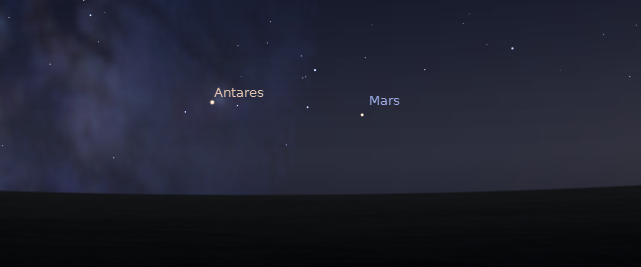
Mars and Antares low in the southwest at 8:20 p.m. on October 3, 2012. Created using Stellarium.
Mars is moving towards Antares, whose name means Rival of Mars. They have the same color. Mars, though will be dimmed and will pass north of the red giant star.
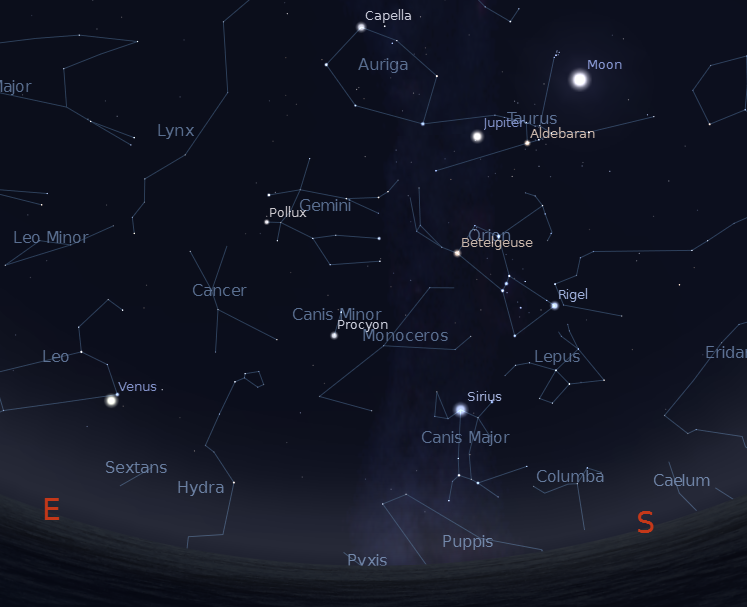
Morning skies including Jupiter and Venus at 6 a.m. on October 4, 2012. Created using Stellarium.
Click on the image to enlarge.
09/26/2012 – Ephemeris – Where are the bright planets this week
Ephemeris for Wednesday, September 26th. The sun will rise at 7:34. It’ll be up for 11 hours and 56 minutes, setting at 7:31. The moon, 3 days before full, will set at 5:00 tomorrow morning.
Let’s see how many bright planets we can find this week. Mars and Saturn now set too close to the sun to be easily seen in the evening sky. Both are in the west southwestern sky and very low in twilight. Saturn sets at 8:36 p.m., while Mars sets at 9:21. The planetary action moves to later in the evening and the morning. Jupiter, will rise at 10:40 p.m. in the east northeast. It is located in the constellation of Taurus. The last bright planet of the night is the morning star Venus which will rise at 3:56 a.m. also in the east northeast. Venus is now moving between Cancer and Leo. The planets Venus and Jupiter and the winter constellations are a great sight for early risers. You can enjoy them without danger of frost bite.
Times are for the Traverse City/Interlochen area of Michigan. They may be different for your location.
Addendum
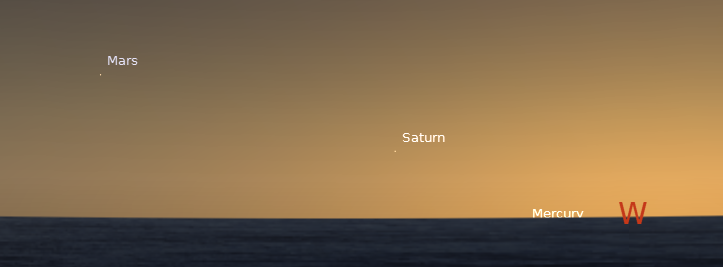
Mars and Saturn low in twilight September 26, 2012 8 p.m. Created using Stellarium.
Note that Mercury has already set.
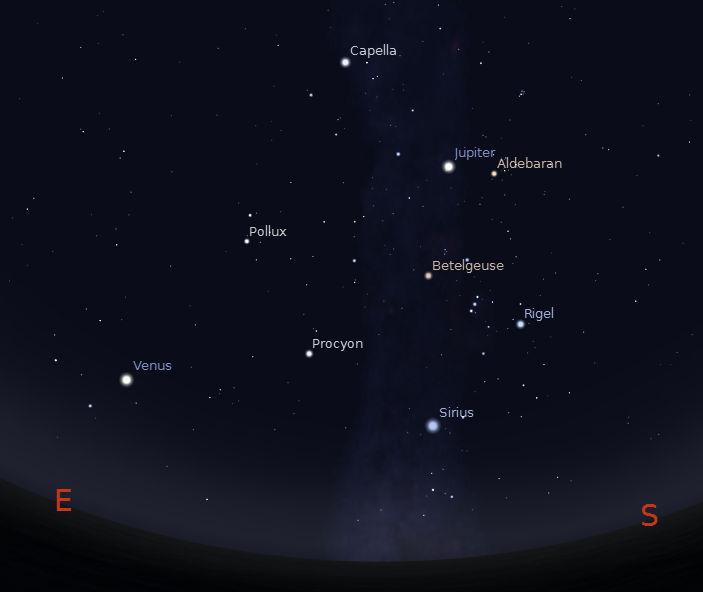
The winter stars in the morning with Jupiter and Venus on September 27, 2012 at 6 a.m. Created using Stellarium.
09/19/2012 – Ephemeris – Where are the bright planets this week?
Ephemeris for Wednesday, September 19th. The sun will rise at 7:26. It’ll be up for 12 hours and 18 minutes, setting at 7:44. The moon, 3 days before first quarter, will set at 9:40 this evening.
Let’s see how many bright planets we can find this week. Mars and Saturn now set too close to the sun to be easily seen in the evening sky. Both are in the west southwestern sky and very low in twilight. Saturn sets at 9:02 p.m., while Mars sets at 9:33. The planetary action moves to later in the evening and the morning. Jupiter, will rise at 11:07 p.m. in the east northeast. It is located in the constellation of Taurus. The last bright planet of the night is the morning star Venus which will rise at 3:45 a.m. also in the east northeast. Venus is now moving through Cancer towards Leo. The planets Venus and Jupiter and the winter constellations are a great sight for early risers.
Times are for the Traverse City/Interlochen area of Michigan. They may be different for your location.
Addendum
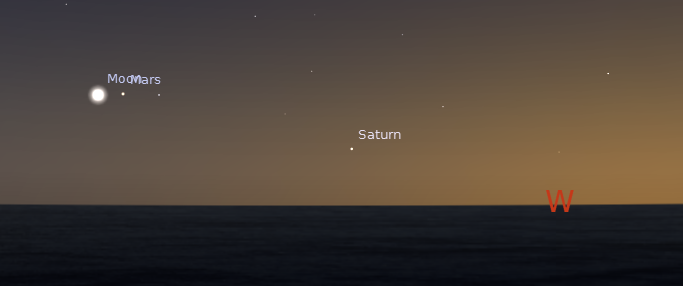
Mars, the moon and Saturn at 8:30 p.m. on September 19, 2012. Created using Stellarium.
Note that the sky will be brighter than this. The moon will be a thin crescent, and not at all bright. tell me if you can spot these guys.
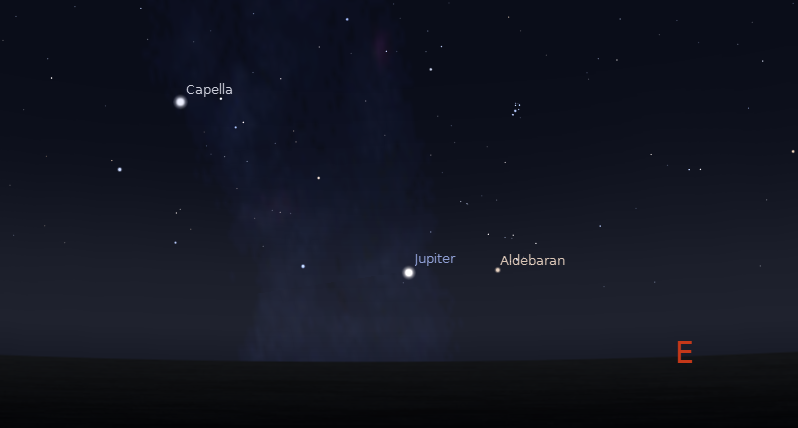
Jupiter, nearly an hour after rising – midnight September 20, 2012. Created using Stellarium.
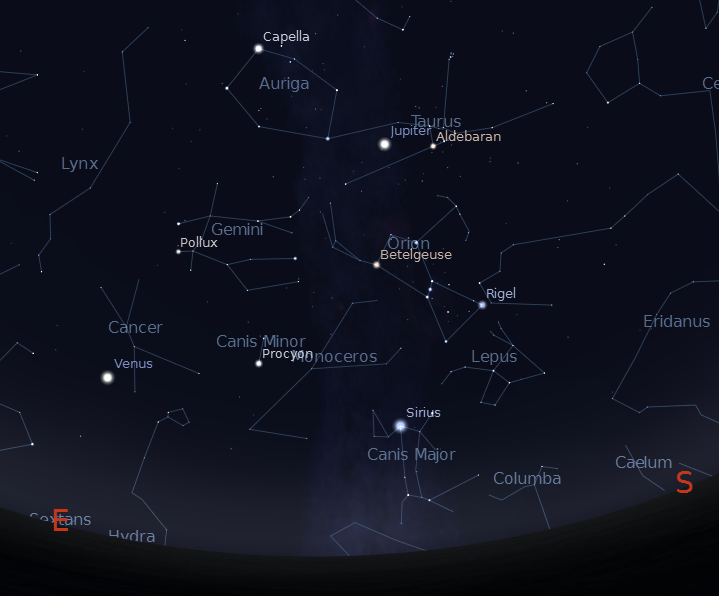
Jupiter and Venus among the star of winter at 6 a.m. on September 20, 2012. Created using Stellarium.
On a personal note
This would have been my mother’s 100th birthday. She passed away 34 years ago. It is she who first taught me the constellations.
09/12/2012 – Ephemeris – Where are the bright planets this week?
Ephemeris for Wednesday, September 12th. The sun will rise at 7:18. It’ll be up for 12 hours and 39 minutes, setting at 7:57. The moon, 3 days before new, will rise at 4:34 tomorrow morning.
Let’s see how many bright planets we can find this week. Mars, Saturn and the star Spica make an elongated triangle in the west southwest in twilight after sunset. Mars is on the left with Saturn on the upper right and Spica below. It may take binoculars to spot them. Spica will set first at 8:57 followed by Saturn at 9:28 and Mars at 9:51. It’s getting harder and harder to spot these guys each evening. The morning sky features the two brightest planets: Jupiter, will actually rise before midnight at which will rise at 11:29 p.m. in the east northeast and Venus, which will rise at 3:33 a.m. also in the east northeast. Jupiter is near the head of Taurus the bull, while Venus is in Cancer. The moon will be near it tomorrow morning, as it is this morning.
Times are for the Traverse City/Interlochen area of Michigan. They may be different for your location.
Addendum
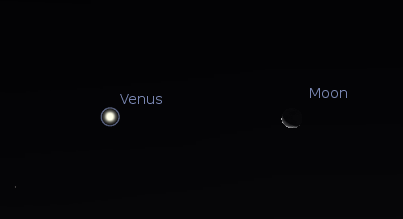
Venus and the moon on September 12, at 5:30 a.m. Created using Stellarium.
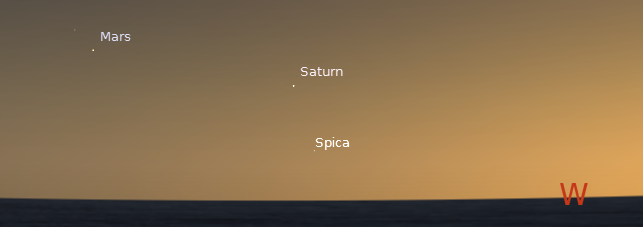
Planets Mars, Saturn and the star Spica in twilight at 8:30 p.m. on September 12, 2012. Created using Stellarium.
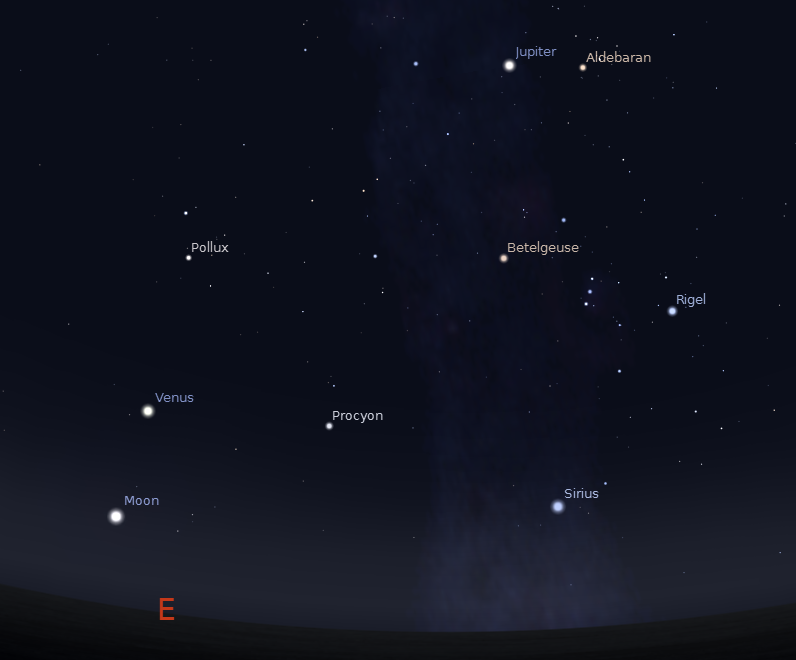
The planets Venus and Jupiter among the winter stars visible ay 5:30 a.m. September 13, 2012. Created using Stellarium.
09/05/2012 – Ephemeris – Where are the bright planets this week?
Ephemeris for Wednesday, September 5th. The sun will rise at 7:10. It’ll be up for 13 hours exactly, setting at 8:10. The moon, 3 days before last quarter, will rise at 10:24 this evening.
Let’s see how many bright planets we can find this week. Mars, Saturn and the star Spica make an elongated triangle in the west southwest in twilight after sunset. Mars is on the left with Saturn on the upper right and Spica below. Spica will set first at 9:24 followed by Saturn at 9:57 and Mars at 10:07. This will be about the last week you’ll see Saturn and Spica in the evening until next year.. The morning sky features the two brightest planets: Jupiter, which will rise at 11:54 p.m. in the east northeast and Venus, which will rise at 3:23 a.m. also in the east northeast. Jupiter is near the head of Taurus the bull, while Venus is moving between Gemini and Cancer.
Times are for the Traverse City/Interlochen area of Michigan. They may be different for your location.
Addendum
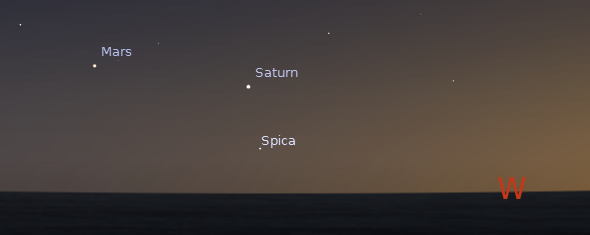
Mars, Saturn and the star Spica at 9 p.m. Created using Stellarium.
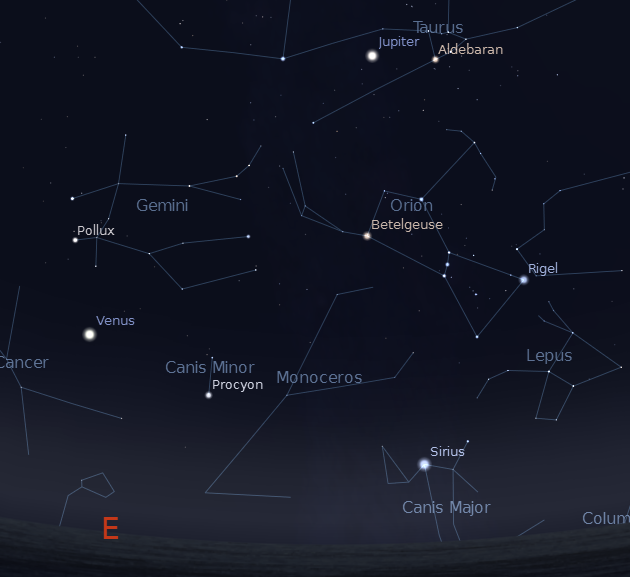
Jupiter, Venus and a preview of the stars and constellations of winter. Created using Stellarium.
08/29/2012 – Ephemeris – Where are the bright planets this week?
Ephemeris for Wednesday, August 29th. The sun will rise at 7:02. It’ll be up for 13 hours and 21 minutes, setting at 8:23. The moon, 2 days before full, will set at 6:04 tomorrow morning.
Let’s see what’s happening with the bright planets for this week. Mars Saturn and the star Spica make a bright but elongating triangle in the west southwest after sunset. Mars is on the upper left with Saturn on the upper right and Spica below. They are located in the constellation Virgo the virgin. Saturn will be setting in the west at 10:20 p.m, and Mars will set 3 minutes later. The morning sky features the two brightest planets: Jupiter, which will rise at 12:23 a.m. in the east northeast and Venus, which will rise at 3:16 also in the east northeast. Jupiter is near the head of Taurus the bull, while Venus is moving between Gemini and Cancer. Early morning is a good time to get a preview of winter stars.
Times are for the Traverse City/Interlochen area of Michigan. They may be different for your location.
Addendum
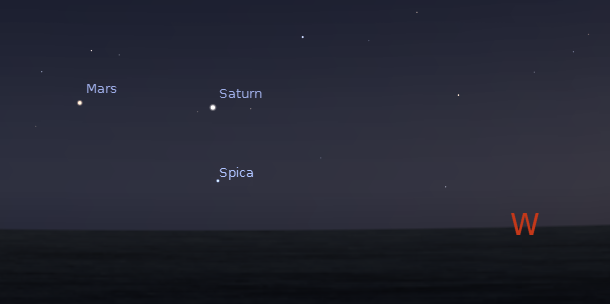
Mars, Saturn and Spica at 9:30 p.m. on August 29, 2012. Created using Stellarium.
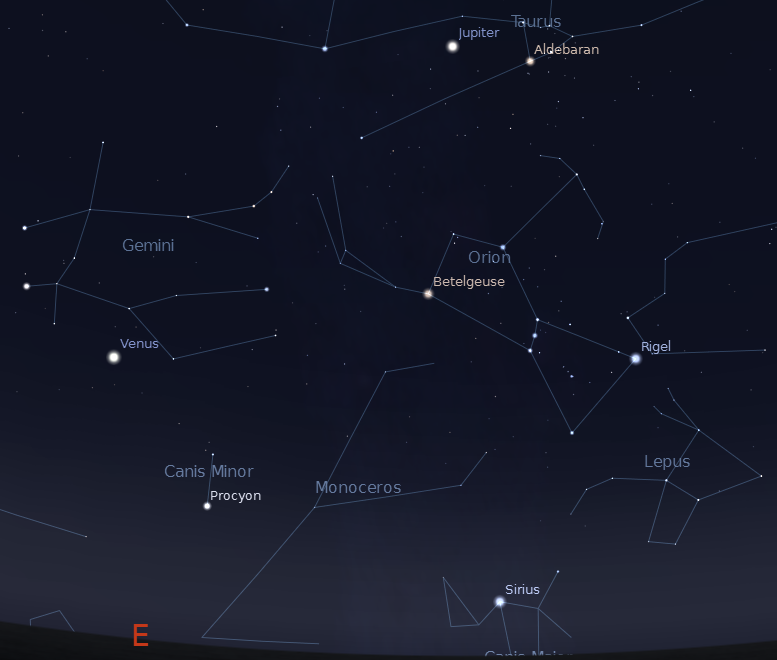
Jupiter, Venus and the stars of winter rising at 5:30 a.m. on August 30, 2012. Created using Stellarium.
08/22/2012 – Ephemeris – Where are the bright planets this week?
Ephemeris for Wednesday, August 22nd. The sun rises at 6:53. It’ll be up for 13 hours and 41 minutes, setting at 8:35. The moon, 2 days before first quarter, will set at 10:58 this evening. | Let’s see what’s happening with the bright planets for this week. Mars Saturn and the star Spica make a bright triangle in the west southwest after sunset. Mars is on the upper left with Saturn on the upper right and Spica below. They are located in the constellation Virgo the virgin. Mars will be setting in the west at 10:41 p.m, and Saturn will set at 11:46. The morning sky features the two brightest planets: Jupiter, which will rise at 12:47 a.m. in the east northeast and Venus, which will rise at 3:11 also in the east northeast. Venus’ rising times are now getting later after its greatest elongation last week. The bright star Aldebaran in Taurus the bull will appear just to the right and a bit below Jupiter tomorrow morning
Times are for the Traverse City/Interlochen area of Michigan. They may be different for your location.
Addendum
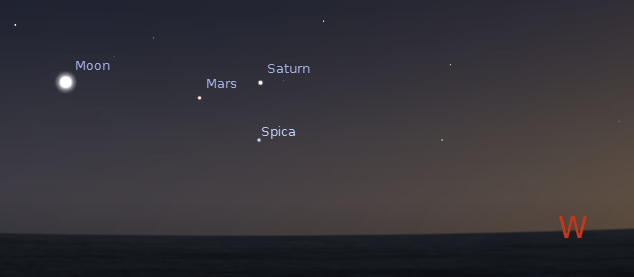
The planets and the moon low in the west southwest at 9:30 p.m. Created using Stellarium.
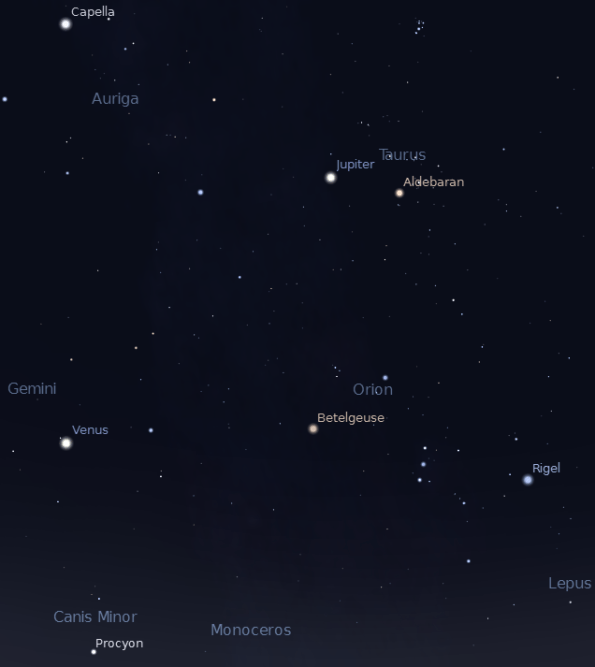
Venus, Jupiter and the winter stars at 5:30 a.m. on August 23rd. Created using Stellarium.
08/15/2012 – Ephemeris – Where are the bright planets this week
Ephemeris for Wednesday, August 15th. The sun rises at 6:45. It’ll be up for 14 hours and 1 minute, setting at 8:47. The moon, 2 days before new, will rise at 5:45 tomorrow morning.
Let’s see what’s happening with the bright planets for this week. Mars Saturn and the star Spica make a bright skinny triangle in the west southwest after sunset. Mars is in the middle between Saturn on the top and Spica. They are located in the constellation Virgo the virgin. Mars will be setting in the west at 10:59 p.m. Saturn will set at 11:12. The triangle is going to fatten up over the next week as Mars heads eastward. The morning sky features the two brightest planets: Jupiter, which will rise at 1:12 a.m. in the east northeast and Venus, which will rise at 3:08 also in the east northeast. The bright star Aldebaran in Taurus the bull will appear just to the lower right of Jupiter tomorrow morning, but Venus will be at greatest elongation from the sun.
Times are for the Traverse City/Interlochen area of Michigan. They may be different for your location.
Addendum
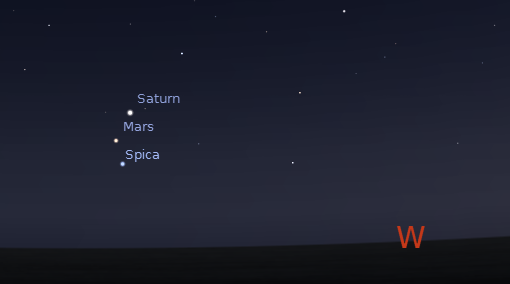
Looking west at 10 p.m. on August 15, 2012. Created using Stellarium.
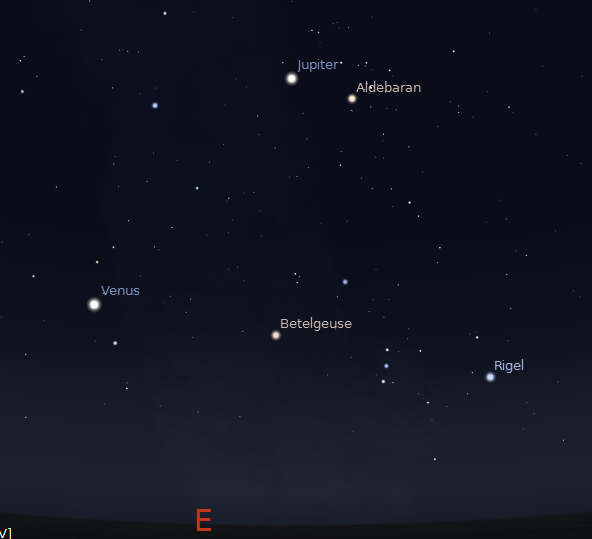
Looking east at 5 a.m. August 16, 2012. Created using Stellarium.

