Archive
2013 in review
The WordPress.com stats helper monkeys prepared a 2013 annual report for this blog.

Here’s an excerpt:
The concert hall at the Sydney Opera House holds 2,700 people. This blog was viewed about 31,000 times in 2013. If it were a concert at Sydney Opera House, it would take about 11 sold-out performances for that many people to see it.
12/31/2013 – Ephemeris – That was the year that was
Ephemeris for New Years Eve, Tuesday, December 31st. The sun will rise at 8:19. It’ll be up for 8 hours and 52 minutes, setting at 5:12. The moon, 1 day before new, will rise at 8:06 tomorrow morning.
Let’s pause on this last day of 2013 to look back at the year in astronomy and space. One of the two hopefully bright comets panned out this year.. That was PanSTARRS last March. Unfortunately Comet ISON disintegrated Thanksgiving day. I hope you saw the videos of that. In July the Cassini spacecraft took a beautiful photo of Saturn, its rings and the inner planets including the Earth and the Moon. Earlier this month it was reported that the Jupiter’s moon Europa has a south polar water plume, like Saturn’s Enceladus. The Voyager 1 spacecraft has left the Sun’s magnetic bubble to enter the interstellar medium. The biggest news was that a large meteoroid exploded over Siberia February 15th.
Times are for the Traverse City/Interlochen area of Michigan. They may be different for your location.
12/30/2013 – Ephemeris – The tale of Gemini the twins
Ephemeris for Monday, December 30th. The sun will rise at 8:19. It’ll be up for 8 hours and 52 minutes, setting at 5:11. The moon, 2 days before new, will rise at 7:09 tomorrow morning.
The constellation Gemini, the Twins is visible in the east at 9 p.m. with the bright planet Jupiter interloping against its stars. The namesake stars of the two lads, will be on the left end of the constellation, nearly vertically aligned. Castor is on top, while Pollux, a slightly brighter star is on the bottom. Lines of stars from Castor and Pollux to the right delineate the lads. In Greek mythology Castor and Pollux were twins, and half brothers, Castor was fathered by a mere mortal, while Pollux was fathered by Zeus in the famous Leda and the swan affair. The brothers, however were inseparable, and when Castor was killed during the quest for the Golden Fleece, Pollux pleaded with Zeus to let him die also. Zeus placed them together in the sky forever.
Times are for the Traverse City/Interlochen area of Michigan. They may be different for your location.
Addendum
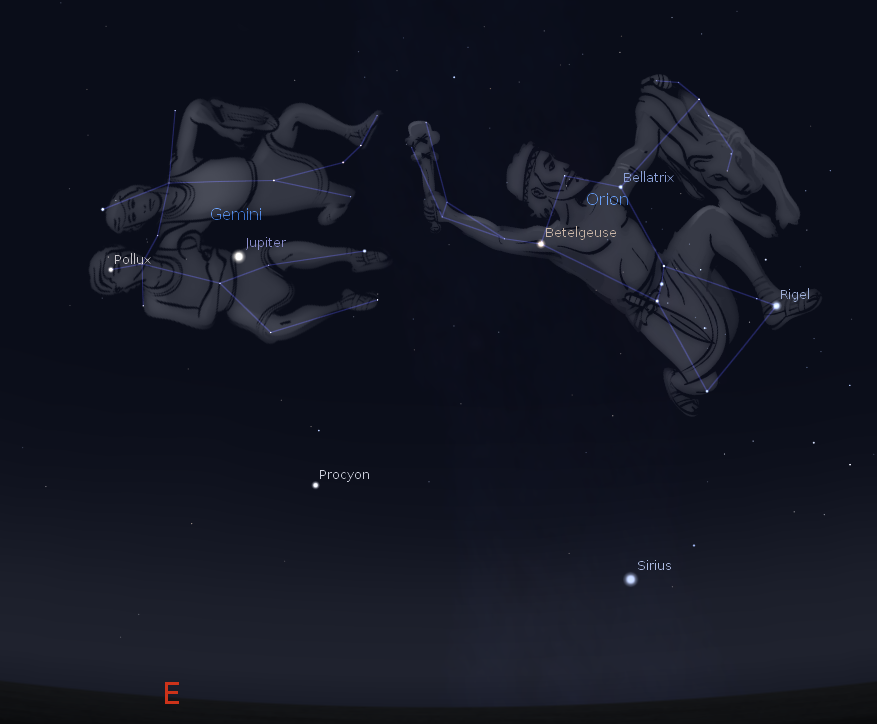
Gemini with Jupiter and Orion near by at 9 p.m. on December 30, 2013. Created using Stellarium.
12/27/2013 – Ephemeris – The star Procyon: “Before the Dog”
Ephemeris for Friday, December 27th. The sun will rise at 8:18. It’ll be up for 8 hours and 50 minutes, setting at 5:08. The moon, 2 days past last quarter, will rise at 3:48 tomorrow morning.
Yesterday I talked about the brilliant star Sirius, the dog star pointed to by the stars of the belt of Orion. Today we’ll look at another dog star. Procyon, the bright star in Canis Minor, the lesser dog. It is pointed to by the top two stars in the Orion rectangle Bellatrix and Betelgeuse. One of the translations of Procyon means “Before the Dog”. This seemingly odd title is explained that even though Procyon is east of Sirius and all things being equal, well at least latitude or declination the eastern star should rise after the western star. However Procyon is north of Sirius and if one is sufficiently north of the equator, the eastern most star can rise first. This is what happens. Procyon is a bit farther away than Sirius and isn’t quite as bright either.
Times are for the Traverse City/Interlochen area of Michigan. They may be different for your location.
Addendum
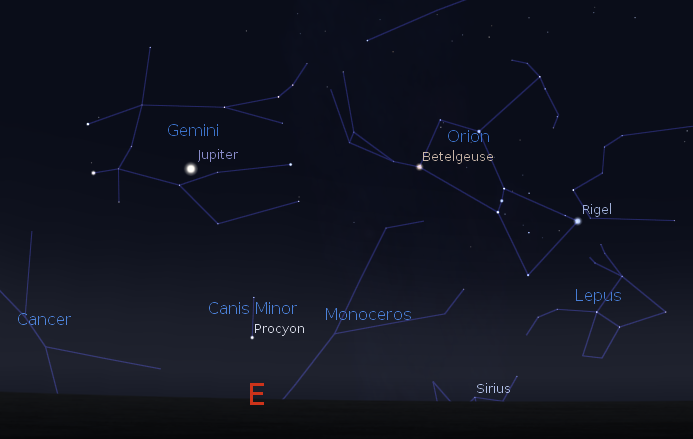
Procyon is already up as Sirius rises. Procyon also sets after Sirius. Created using Stellarium.
Note: Stellarium approximates atmospheric extinction, that is dims objects when they are near the horizon an effect due to looking through more of the Earth’s atmosphere when looking close to the horizon. That’s why Sirius looks rather fainter than in yesterday’s image.
12/26/2013 – Ephemeris – Sirius, the brightest night-time star
Ephemeris for Thursday, December 26th. The sun will rise at 8:18. It’ll be up for 8 hours and 49 minutes, setting at 5:08. The moon, 1 day past last quarter, will rise at 2:40 tomorrow morning.
At 9 in the evening the great constellation of Orion the hunter can be seen in the southeast. Its large rectangle of bright stars is tilting to the left, while in the center is a row of three stars, his belt. These stars tilt downward and a bit to the left to a very bright star merrily twinkling above the horizon in the southeast. This star is called Sirius, also known as the Dog Star because it’s in the heart of Orion larger hunting dog, Canis Major. It is an arc light white star as seen in binoculars or telescope. It’s a neighboring star, just twice the distance of the closest star to the sun at 8.6 light years. It’s name, Sirius, has nothing to do with a dog, but is from the Greek meaning scorching for its brightness or sparkling, due to its intense twinkling.
Times are for the Traverse City/Interlochen area of Michigan. They may be different for your location.
Addendum
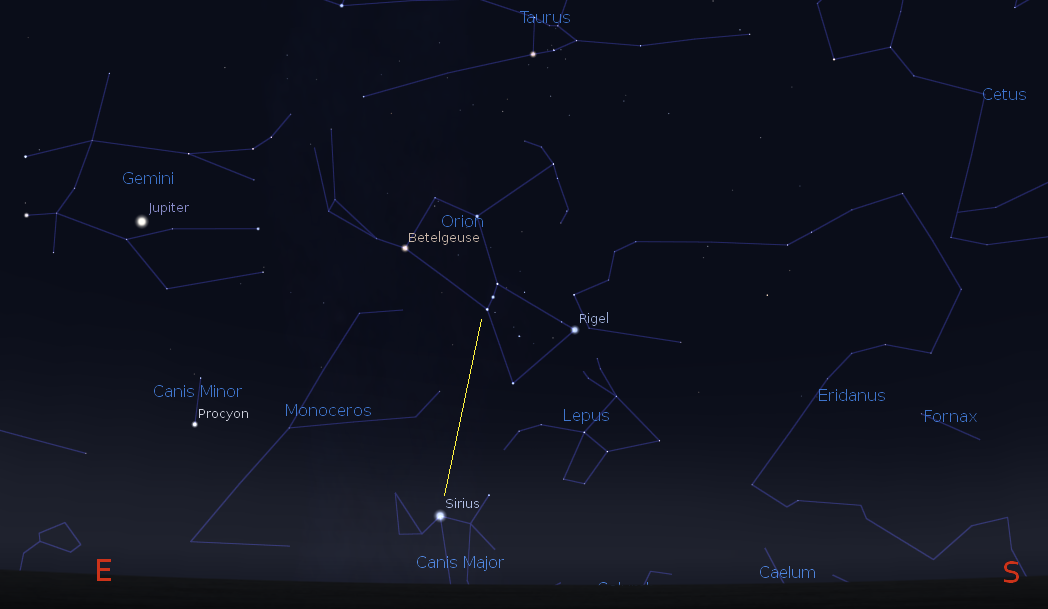
How to find Sirius from Orion. 9 p.m., December 26, 2013. Created using Stellarium.
12/25/2015 – Ephemeris – Where are the bright planets and Comet Lovejoy this week?
Ephemeris for Christmas Day, Wednesday, December 25th. The sun will rise at 8:18. It’ll be up for 8 hours and 49 minutes, setting at 5:07. The moon, at last quarter today, will rise at 1:34 tomorrow morning.
This is our weekly look at the planets. Venus is brilliant in the southwest after sunset. It will set at 7:08 p.m. Venus is noticeably closing with the sun. It will be lost in the glare of the sun in less than 2 weeks. Venus is a thin crescent, and we’re at the point where the crescent can be visible in binoculars. The giant planet Jupiter will rise at 5:56 p.m. in the east northeast. It’s cruising against the stars of Gemini now. It will pass due south at 1:35 a.m. Mars will rise at 1:02 a.m. in the east. Reddish Mars is to the upper right of the bright star Spica. It will be above the moon tomorrow morning. Saturn will rise at 4:36 a.m. in the east southeast. The ringed planet will best be seen in the evening next summer. There is a comet visible in binoculars in the morning sky. It’s Comet Lovejoy.
Times are for the Traverse City/Interlochen area of Michigan. They may be different for your location.
Addendum

Venus in the southwest at 6 p.m. on December 25, 2013. Created using Stellarium.
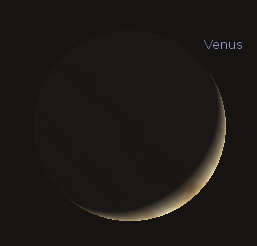
The thin crescent of Venus seen in a telescope. December 25, 2013. Created using Stellarium.
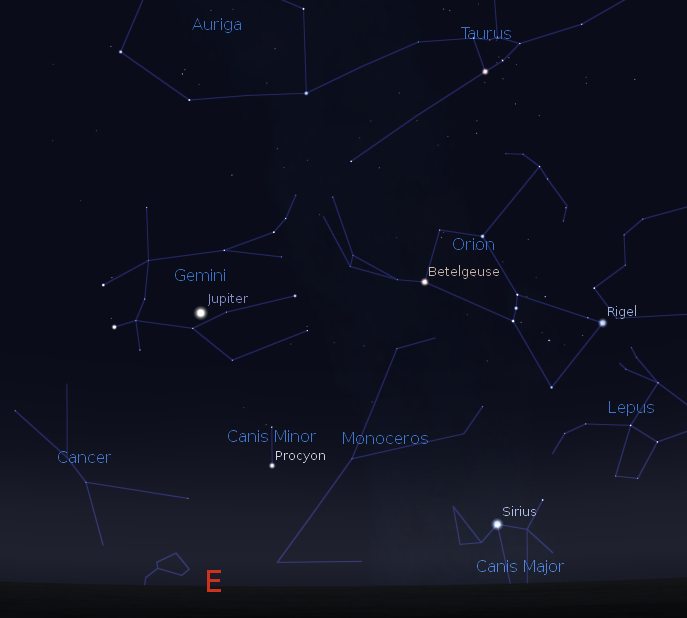
Jupiter and the constellations of winter at 9 p.m. on December 25, 2013. Created using Stellarium.
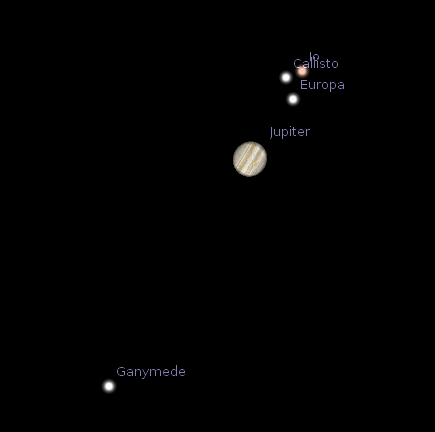
Apparent traffic jam of Jovian satellites as seen in a telescope at 9 p.m. on December 25, 2013. That actual rotation of the image depends on the telescope. Created using Stellarium.
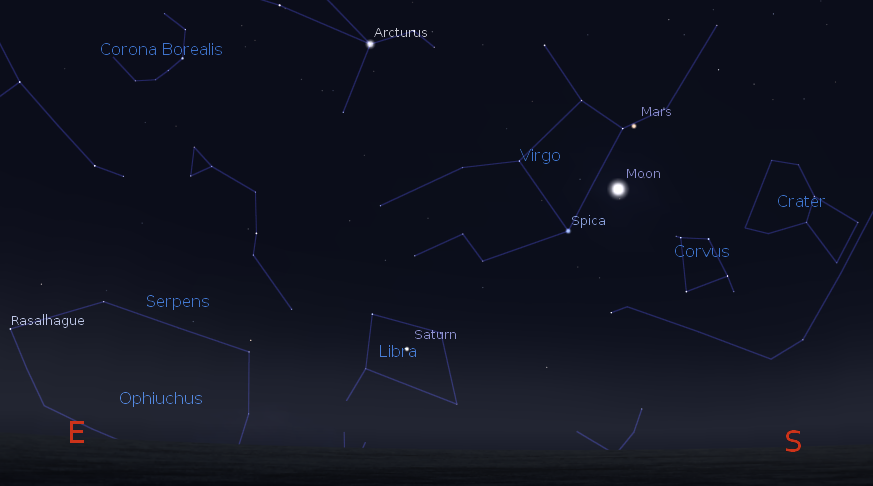
Mars and Saturn among the spring constellations at 6 a.m. December 26, 2013. Created using Stellarium.
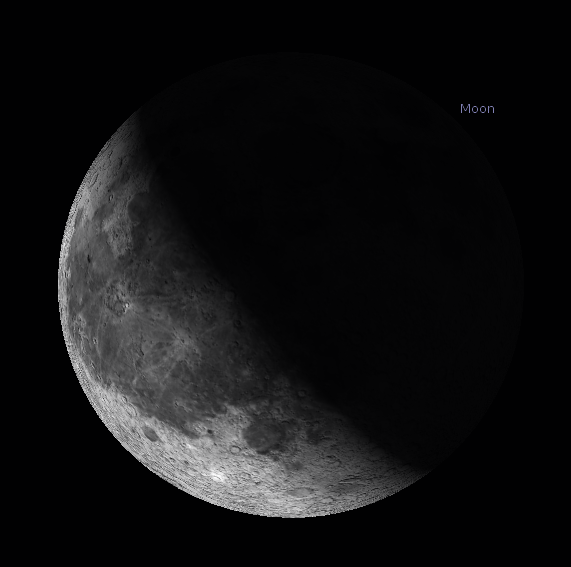
The Moon as seen in binoculars or telescope at 6 a.m. December 26, 2013. Created using Stellarium.
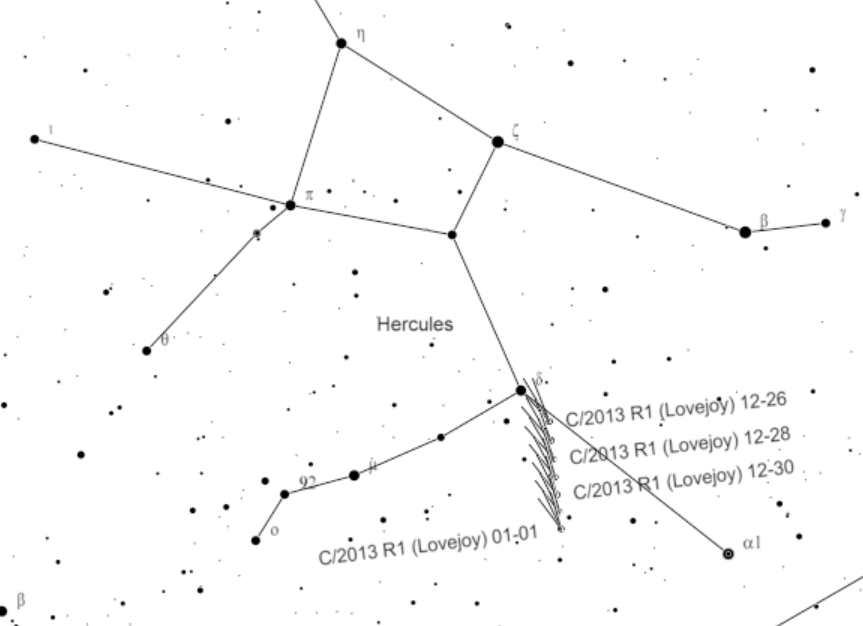
The track of Comet Lovejoy, which still should be visible in binoculars from 12/26/2013 to 01/01/2014 at 6 a.m. Created using Cartes du Ciel (Sky Charts).
Note that Stellarium and Cartes du Ciel as free programs. Links to them can be found at the right under Free Astronomical Programs.
12/24/2013 – Ephemeris – Two Christmas stars are visible this year
Ephemeris for Christmas Eve, Tuesday, December 24th. The sun will rise at 8:17. It’ll be up for 8 hours and 49 minutes, setting at 5:06. The moon, 1 day before last quarter, will rise at 12:31 tomorrow morning.
We are to be visited by not one but two Christmas Stars this year. And like what the original Star of Bethlehem may have been, these aren’t stars either but planets. Between Venus and Jupiter we will have full coverage until dawn. Venus will dazzle in the southwest after sunset. After it sets Jupiter will hold forth as the second brightest planet after Venus, rising in the east northeast in twilight, then moving very high in the sky near midnight, and will be near the west northwestern horizon and dawn breaks Christmas Day. These were the two planets whose very close conjunctions in 3 and again in 2 BC may have been interpreted by the Magi as the Star that announced the new King of Israel.
Times are for the Traverse City/Interlochen area of Michigan. They may be different for your location.
Addendum

Venus setting and Jupiter rising. The two Christmas stars this year. Christmas Eve 2013 at 6:45 p.m. Created using Stellarium.
12/23/2013 – Ephemeris – The constellation Orion: The hard luck hero
Ephemeris for Monday, December 23rd. The sun will rise at 8:17. It’ll be up for 8 hours and 49 minutes, setting at 5:06. The moon, 2 days before last quarter, will rise at 11:29 this evening.
The large and bright constellation of Orion is now in the southeast at 9 p.m. It is seen as an upright rectangle of bright stars tilting to the left, his shoulders and knees, with a belt of three stars in the center. Orion is a minor character in Greek mythology, much less celebrated than Hercules, which has a dim constellation named for him. Orion was a hunter. He had an ill-fated romance with Merope, whose father King Oenopion, had him blinded. After having his sight restored, Orion became a companion of Diana goddess of the hunt and they wanted to marry. Apollo, Diana’s brother disapproved of Orion also and was able to trick Diana into accidentally killing Orion with her bow. Another story had Orion dying of a scorpion sting.
Times are for the Traverse City/Interlochen area of Michigan. They may be different for your location.
Addendum
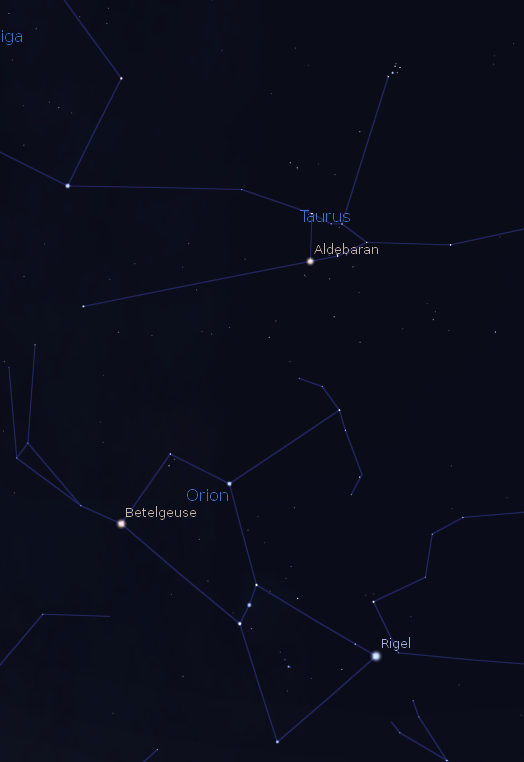
Taurus and Orion with Orion’s brightest stars named. Created using Stellarium.
12/20/2013 – Ephemeris – Winter begins tomorow
Ephemeris for Friday, December 20th. The sun will rise at 8:15. It’ll be up for 8 hours and 48 minutes, setting at 5:04. The moon, 3 days past full, will rise at 8:32 this evening.
The thermometer and snowfall tell us that winter ought to be here. Well it will be at 12:11 p.m. (17:11 UT) tomorrow afternoon. At that point the sun will be directly over the Tropic of Capricorn at 23 ½ degrees south latitude. Odd name because 2,000 years ago the sun was in indeed entering Capricornus. Now it’s entering in Sagittarius, right above the spout of the teapot asterism we know so well in summer. From then on the sun will be climbing up the sky each noon until June 21st next year when summer will start. To which I say Go Sun Go! The sun will barely make it to 22 degrees above the southern horizon at local noon in Interlochen and be out for only 8 hours and 48 minutes. If it stayed there all year we’d be in a deep freeze colder than Antarctica.
Times are for the Traverse City/Interlochen area of Michigan. They may be different for your location.
Addendum
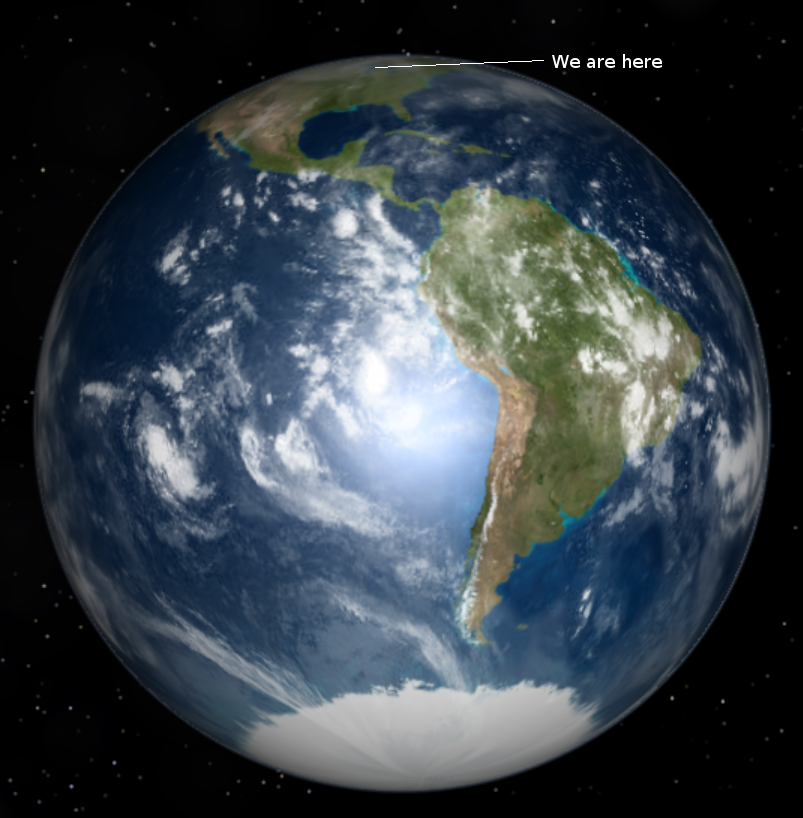
Sun’s view of the Earth at the instant of winter solstice. Created using Celestia.
12/19/2013 – Ephemeris – The mystery of the Star of Bethlehem
Ephemeris for Thursday, December 19th. The sun will rise at 8:15. It’ll be up for 8 hours and 49 minutes, setting at 5:04. The moon, 2 days past full, will rise at 7:34 this evening.
The Star of Bethlehem is one of the great mysteries of Christmas. The Chinese of that time were the only ones that recorded the happenings in the heavens. There were no bright stars that appeared near the time of Christ’s birth. That leads us to the Magi themselves, if that’s who they were. Magi were astrologer priests of the Zoroastrian religion in Persia. They saw signs in the positions of the planets that would go unnoticed to the Jews to which astrology was forbidden. Conjunctions where two or more planets gathered together were the most powerful of these configurations. There was a triple conjunction of Jupiter and Saturn in seven BC, and two extremely close conjunctions between Jupiter and Venus in 3 and 2 BC. Could one of those be it?
Times are for the Traverse City/Interlochen area of Michigan. They may be different for your location.
Addendum
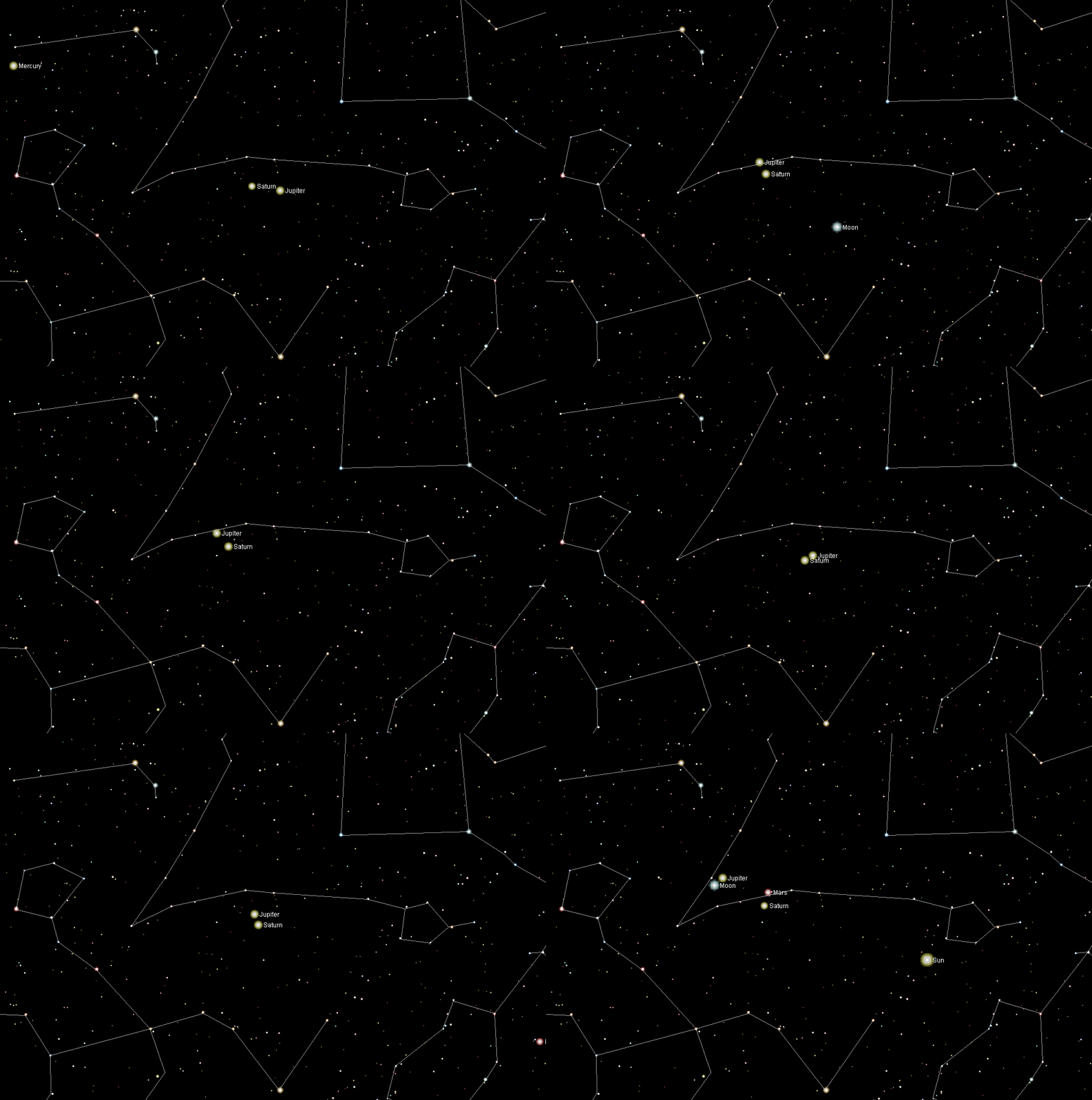
The Jupiter-Saturn triple conjunction of 7 BC. Click on the image to enlarge and animate. Created using Cartes du Ciel.
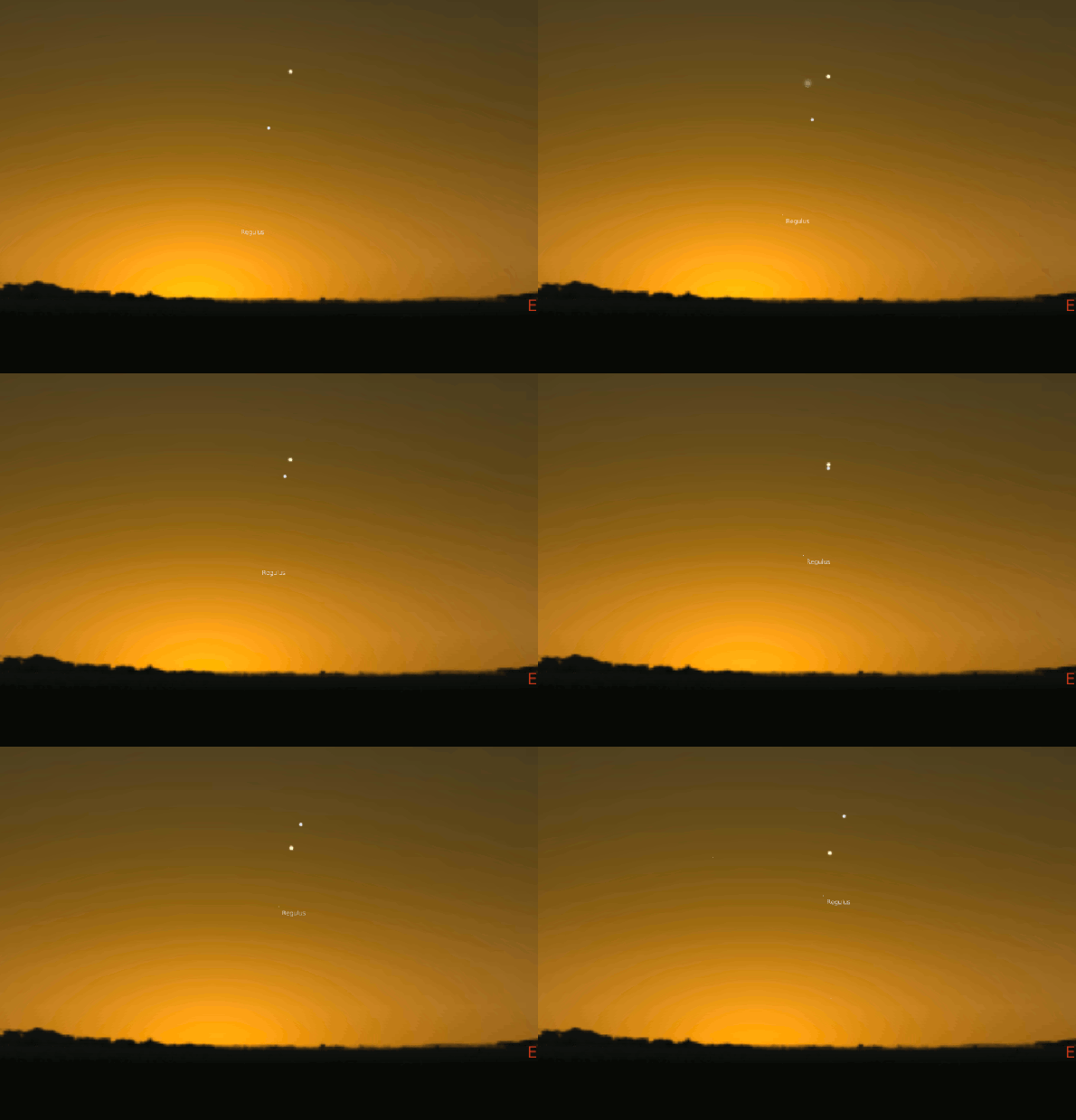
Animation of the Jupiter-Venus conjunction of August 3, 3 BC. in the morning twilight. Created using Stellarium.
Click on the image to enlarge and show the animation. Jupiter is rising while Venus, the brighter one, is heading back to the sun. Jupiter will seem to mate with Venus. 9 months later, the human gestation period their paths seem to cross again.
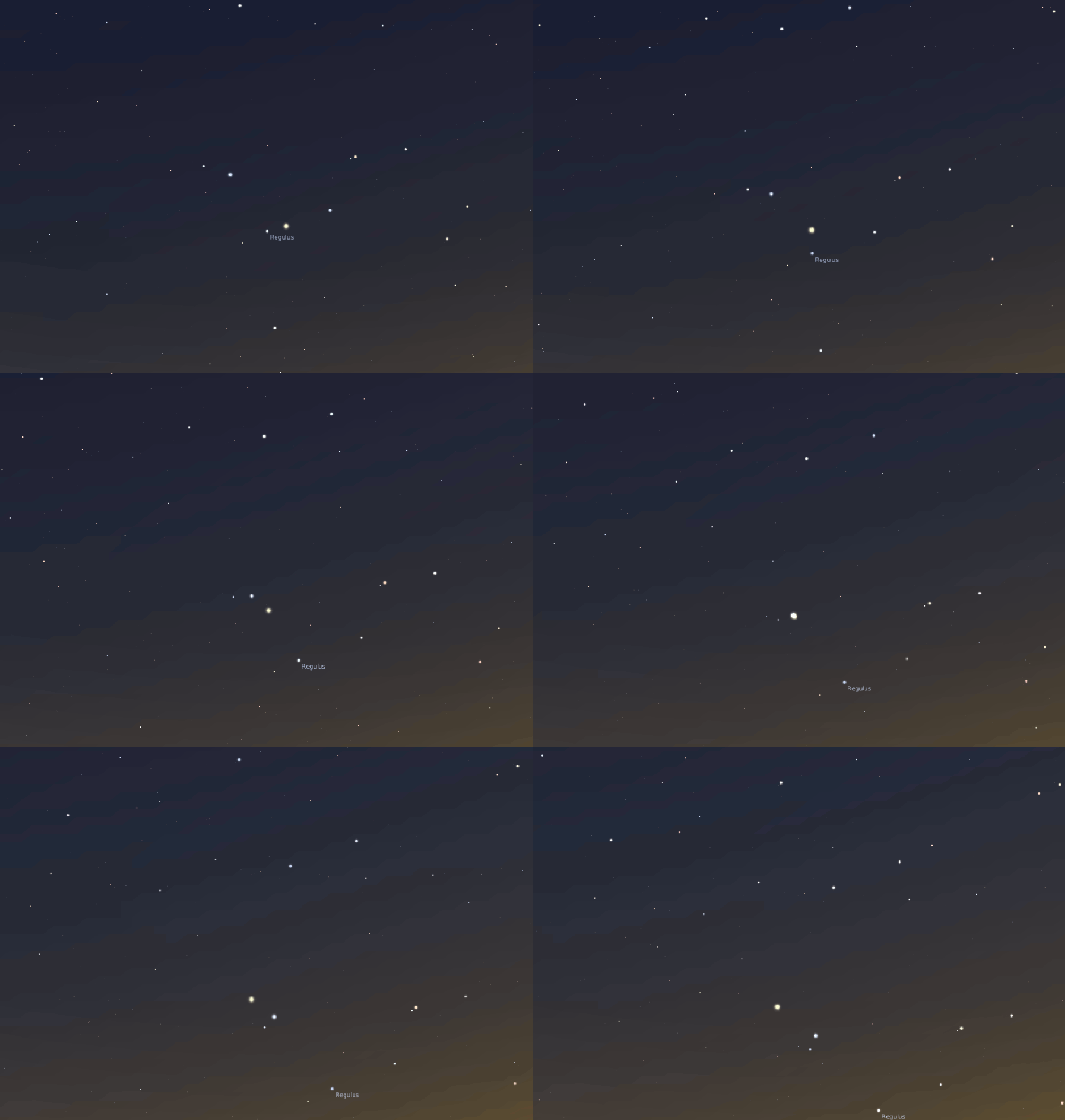
June of 2 BC just after sunset Jupiter and Venus again cross paths. Created using Stellarium.
Click on the image to enlarge and show the animation.
 Bob Moler's Ephemeris Blog