Archive
Ephemeris: 10/18/2023 – Where have the naked-eye planets wandered off to this week
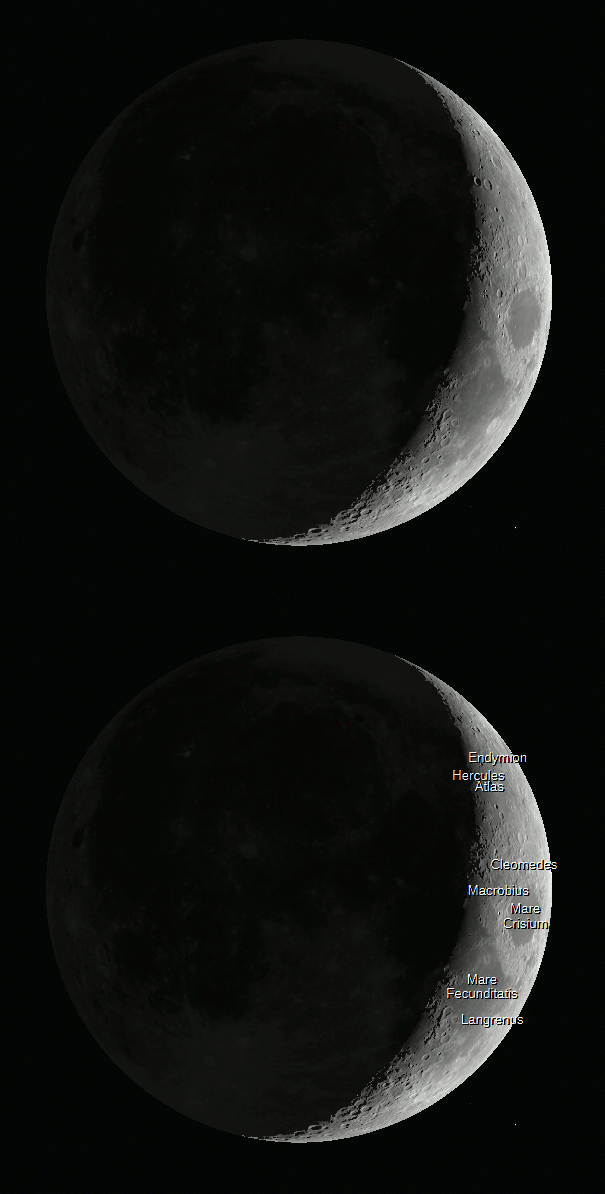
This is Ephemeris for Wednesday, October 18th. Today the Sun will be up for 10 hours and 51 minutes, setting at 6:53, and it will rise tomorrow at 8:03. The Moon, 3 days before first quarter, will set at 8:50 this evening.
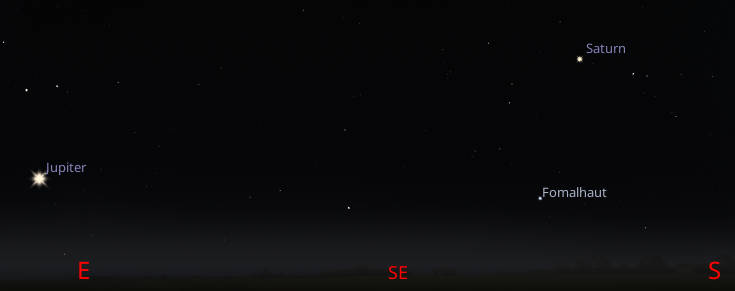
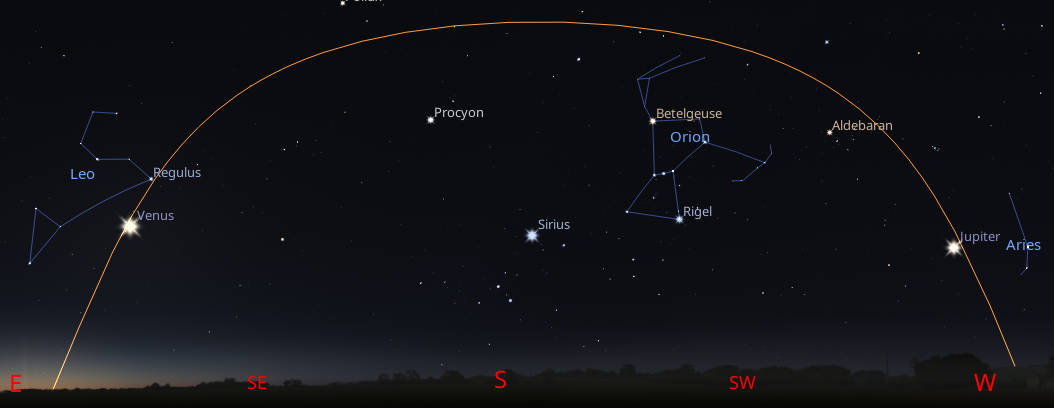
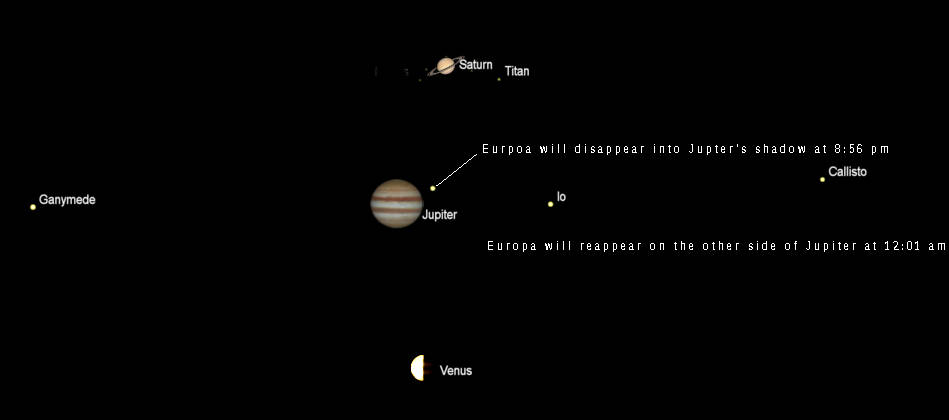
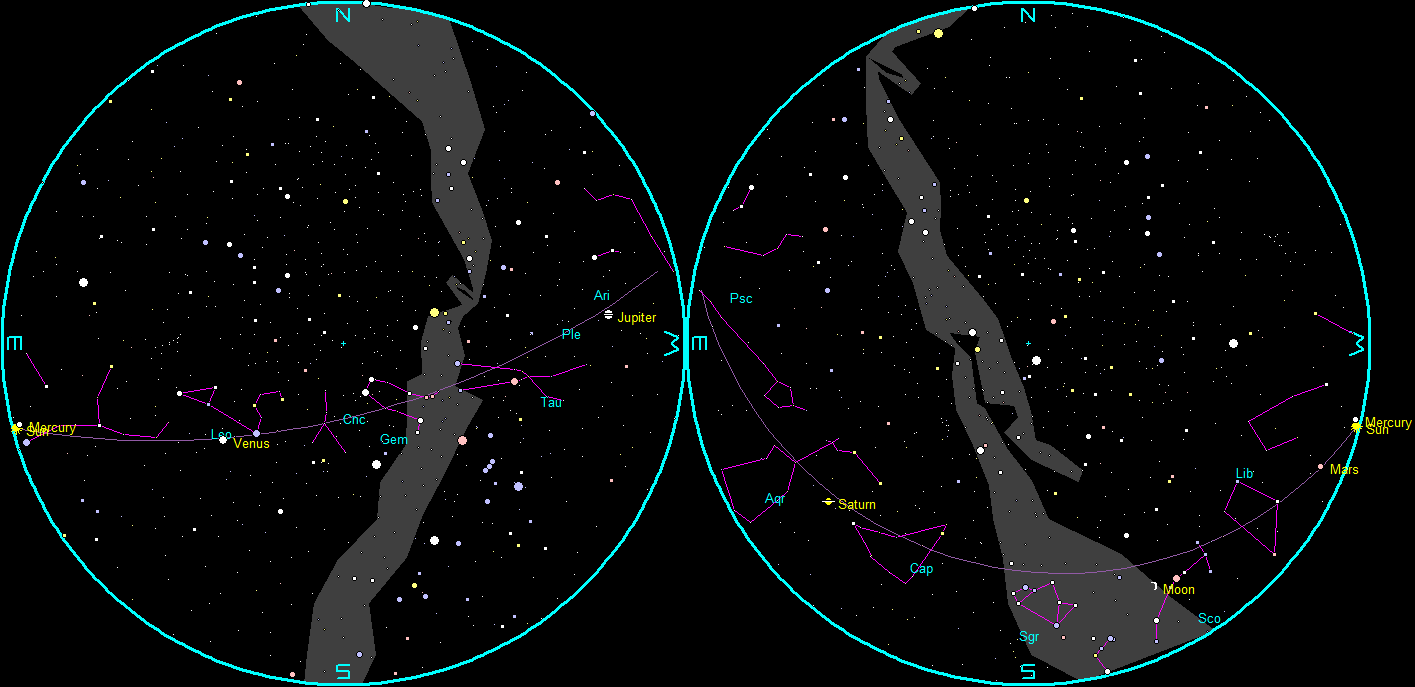
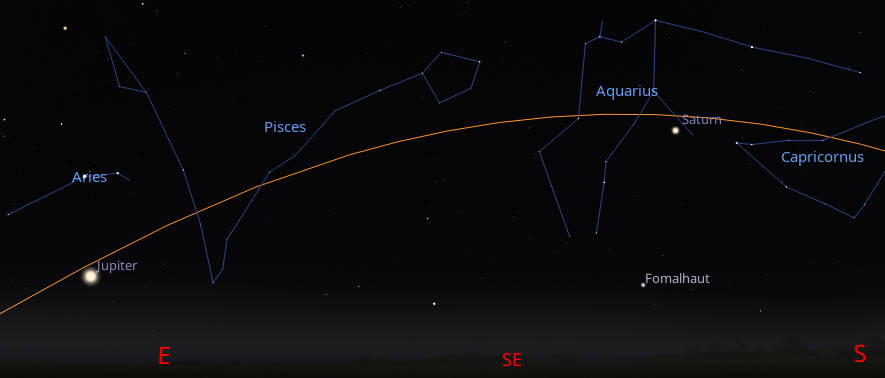
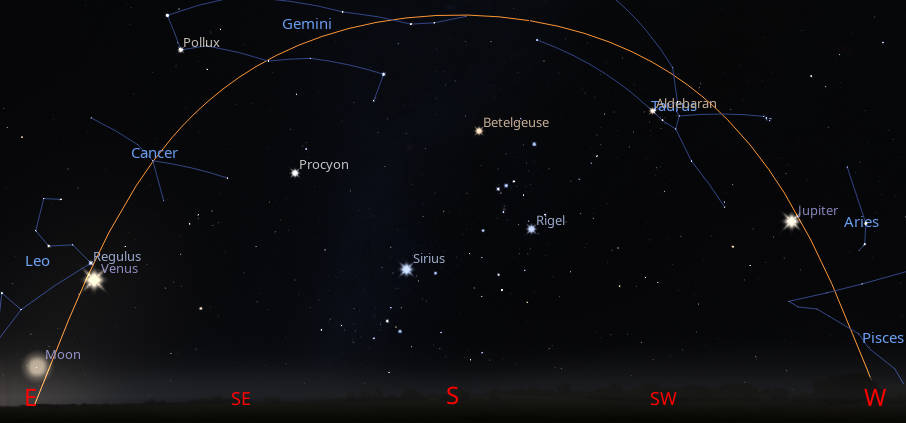
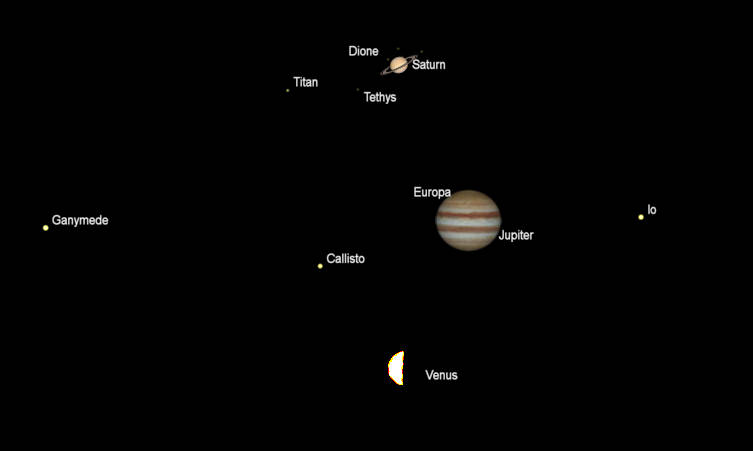
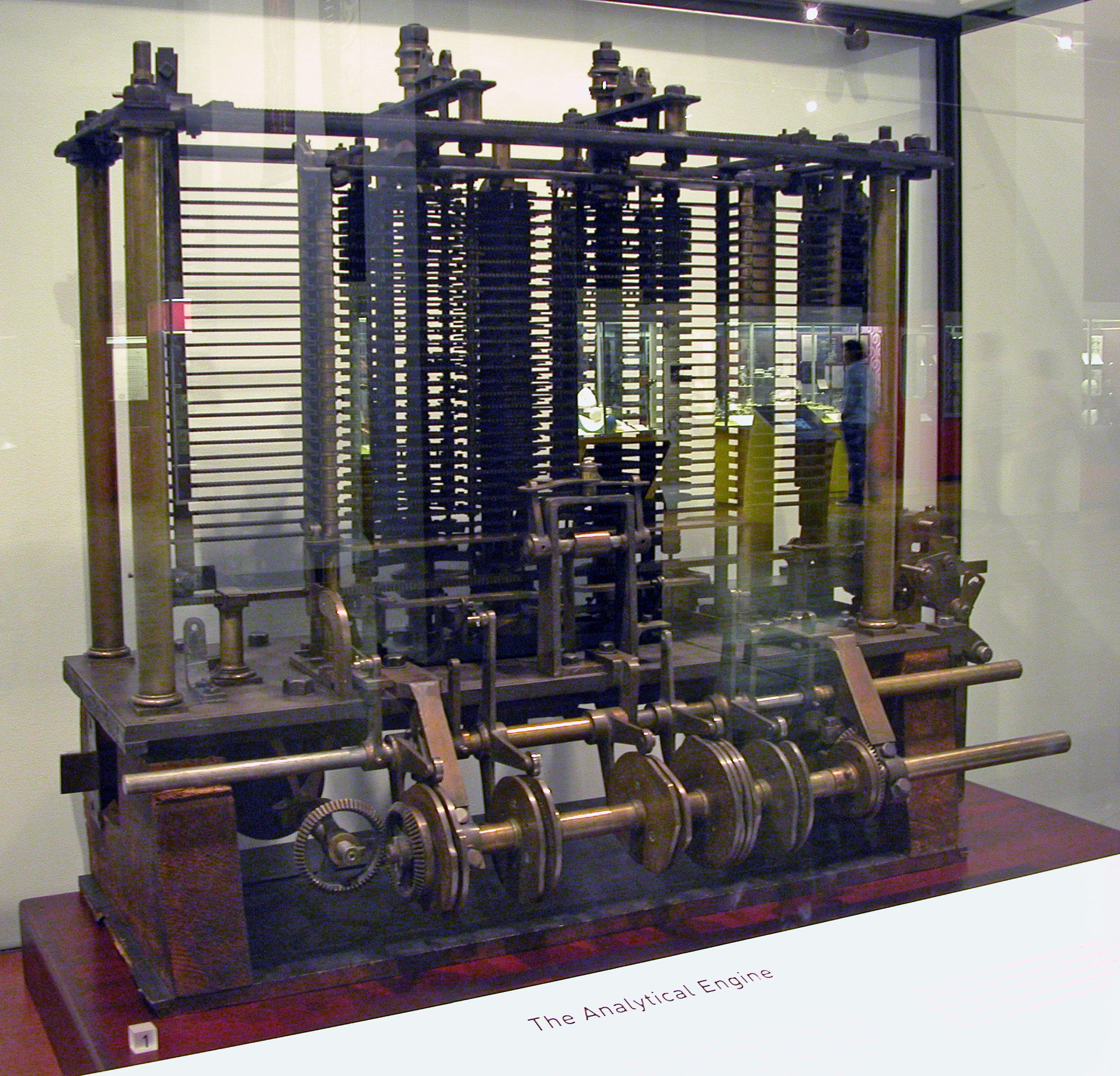
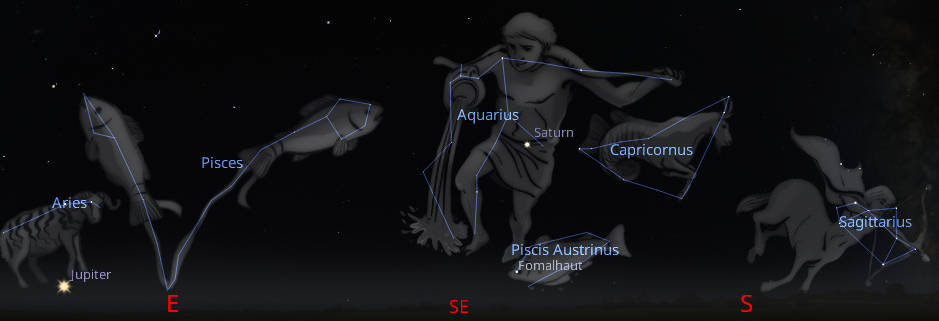
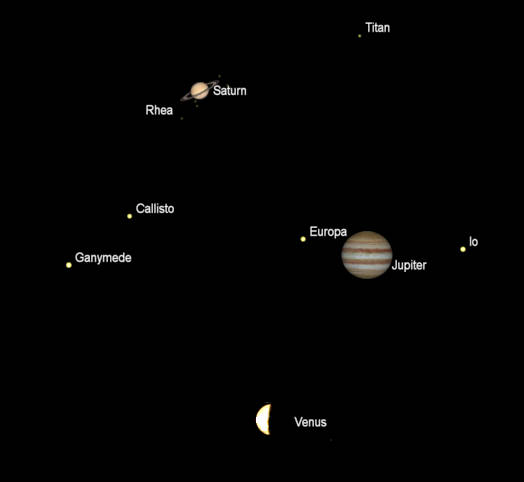
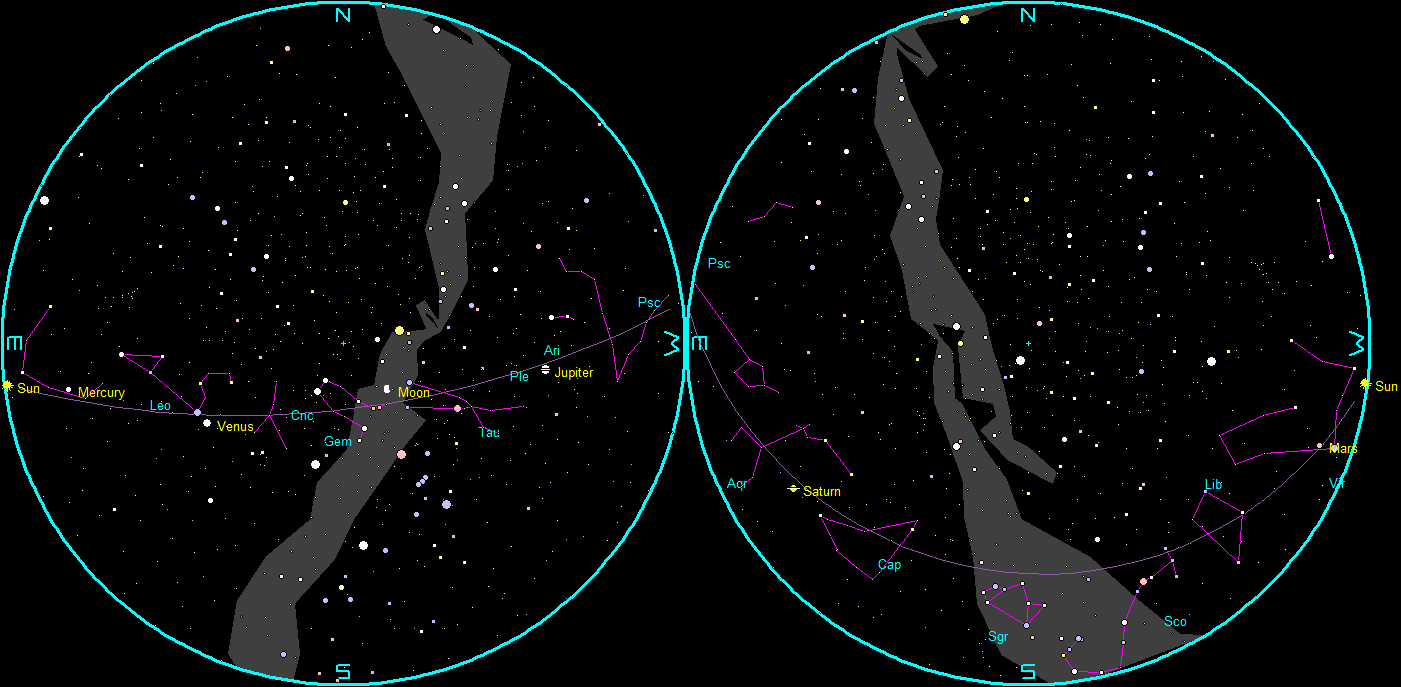
Let’s find out where the naked-eye planets have wandered off to this week. Three of those five planets are now visible, but Mars sets too close to sunset to be seen, and Mercury rises too close to sunrise, and besides it will enter the evening sky after Friday. Saturn is the sole official evening planet visible. It can be spotted in the southeast to south in the evening. And it will still be visible in the morning hours until it sets at 3:17 am. Saturn is seen against the stars of Aquarius this year and next. Jupiter and Venus are the visible morning planets. Jupiter, still a morning planet, will rise at 7:34 pm. It’s in Aries this year. Jupiter has to rise before sunset to be an evening planet. Venus, the brilliant morning star, will rise in the east-northeast at 4:02 am.
The astronomical event times given are for the Traverse City/Interlochen area of Michigan (EDT, UT –4 hours). They may be different for your location.
Addendum
Ephemeris: 10/17/2023 – How the Fisher paints the trees with their fall colors
This is Ephemeris for Tuesday, October 17th. Today the Sun will be up for 10 hours and 54 minutes, setting at 6:55, and it will rise tomorrow at 8:01. The Moon, 3 days past new, will set at 8:12 this evening.
The tree leaves are beginning to turn to reds and yellows as we advance into autumn. The native Anishinaabek peoples, whose homeland we share, have a story about how that came to be. Of how a magical weasel-like creature called the Fisher or, in their native language, Ojiig, brought summer to the Earth from Skyland. For his trouble, he was shot with an arrow in his only vulnerable spot, his tail. As he fell to Earth Gichi Manitou, the Great Spirit, caught him and placed him in the sky where we see the Great Bear and the Big Dipper. Every late autumn night we see his tail, the handle of the dipper, slowly swooping down to the horizon where his bloody tail paints the trees with their autumn colors.
The astronomical event times given are for the Traverse City/Interlochen area of Michigan (EDT, UT – 4 hours). They may be different for your location.
Addendum
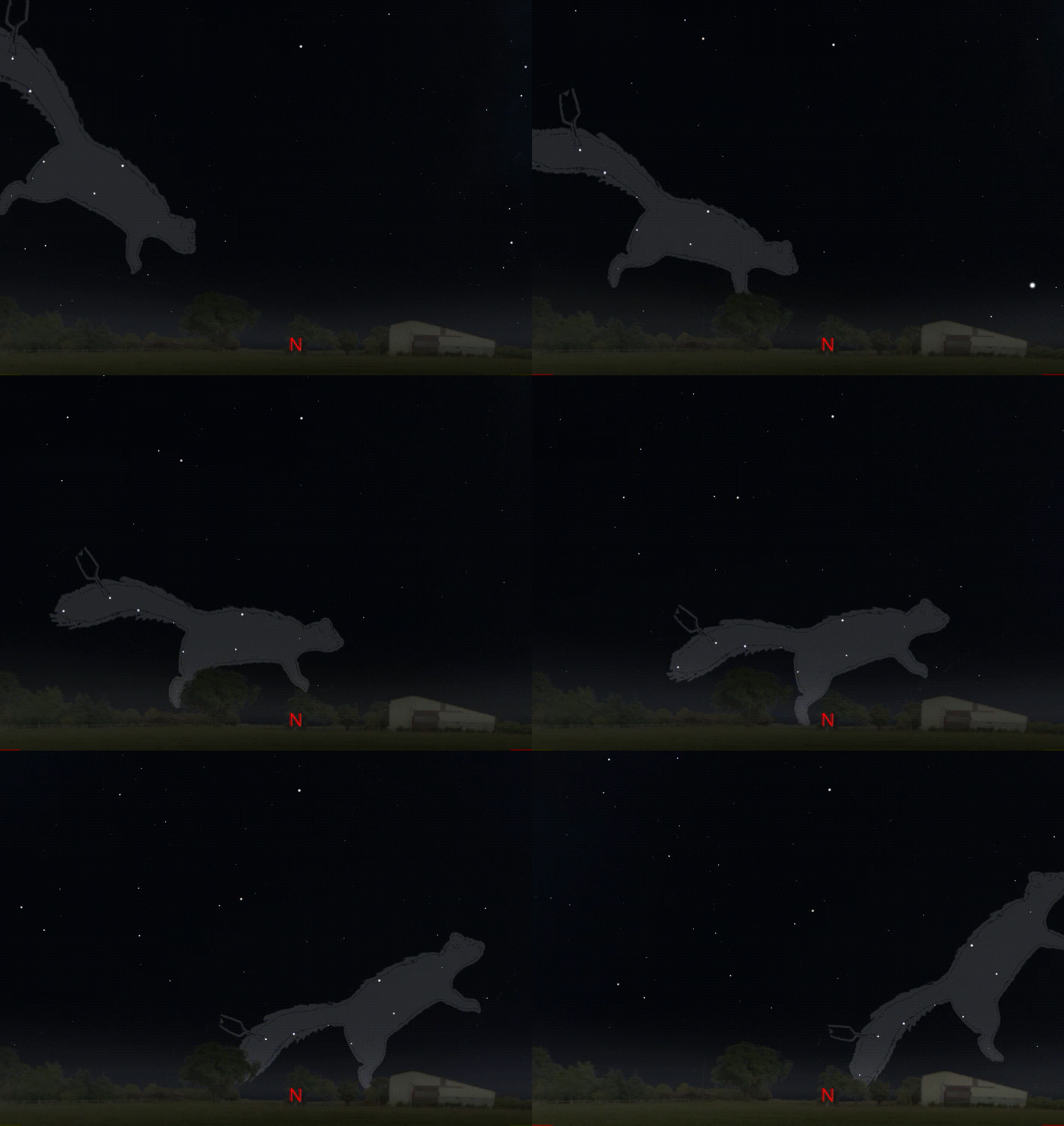
For my take on how the Fisher brought summer to the Earth, click here.
Extra: About last Saturday’s partial solar eclipse
Last Saturday I went to the Betsie Valley District Library in Thompsonville, MI for the partial solar eclipse that was visible from that location. Unfortunately, it was cloudy. It wasn’t solid clouds, so there probably was a chance at seeing something. What I did was to give an alternate program about the total solar eclipses I’ve traveled to since 1963, and a look at next April’s total solar eclipse. I was getting ready to finish up when I noticed that there were shadows outside. That meant that the Sun was out. We stopped there and went outside and got to witness at least the maximum part of the eclipse. We had about 15 minutes before the clouds came in again. So we were able to see at least part of this partial eclipse.
Ephemeris: 10/16/2023 – Finding the constellation of Andromeda
This is Ephemeris for Monday, October 16th. Today the Sun will be up for 10 hours and 57 minutes, setting at 6:56, and it will rise tomorrow at 8:00. The Moon, 2 days past new, will set at 7:43 this evening.
In the east at 9 this evening can be found a large square of stars, the Great Square of Pegasus the upside down flying horse. The square is standing on one corner. What looks like its hind legs stretching away from the left corner star is another constellation, Andromeda the chained princess. She is seen in the sky as two nearly horizontal but diverging curved strings of stars that curve upward. She was doomed to be devoured by a sea monster that was ravaging the coast due to her mother, Queen Cassiopeia’s boasting, which angered the god Poseidon. She was rescued by the hero Perseus, a nearby constellation, riding his steed Pegasus.
The astronomical event times given are for the Traverse City/Interlochen area of Michigan (EDT, UT –4 hours). They may be different for your location.
Addendum

Ephemeris: 10/13/2023 – Tomorrow’s solar eclipse
This is Ephemeris for Friday, October 13th. Today the Sun will be up for 11 hours and 6 minutes, setting at 7:01, and it will rise tomorrow at 7:56. The Moon, 1 day before new, will rise at 7:45 tomorrow morning.
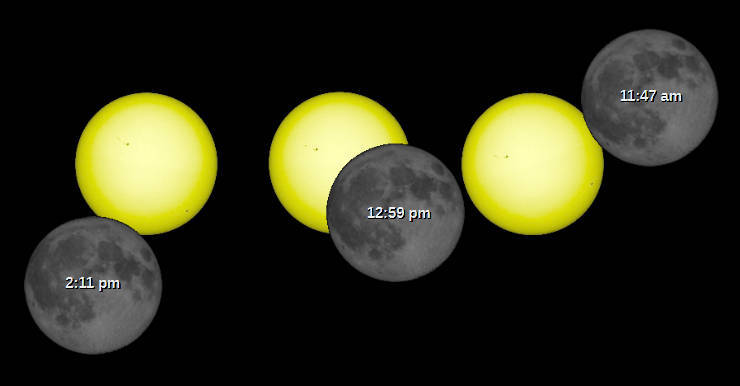
The safest way to view tomorrow’s solar eclipse is by projection, we call it pinhole projection, although the pinhole can be up to 1/4 inch in diameter and will cast a usable image of the Sun about 6 feet. My wife once used the mirror in her compact to reflect the Sun’s image onto the north side of a building across the street. It’s probably too late to buy them, but if you have any eclipse glasses leftover from the 2017 eclipse make sure they don’t have any pinholes in them. They can be used to view the eclipse. Make sure they are ISO approved. Still projection is your safest bet. For our area the eclipse will last from 11:42 am to 2:18 pm. I’ll be at the Betsie Valley District Library in Thompsonville for the eclipse. You’ll be in good shape for next April 8th total eclipse, whose path of totality will be much closer to us.
Jerry Dobek, Northwestern Michigan College instructor will be on campus with telescopes to view the eclipse on campus.
The astronomical event times given are for the Traverse City/Interlochen area of Michigan (EDT, UT –4 hours). They may be different for your location.
Addenda
In case of clouds, I will still be at the Betsie Valley District Library with an alternate program of my experience with five previous total solar eclipses, and a look at some future eclipses. Being a NASA Solar System Ambassador, I’ll have some NASA stickers and other things to hand out to the kids, big or small.
The next solar eclipse
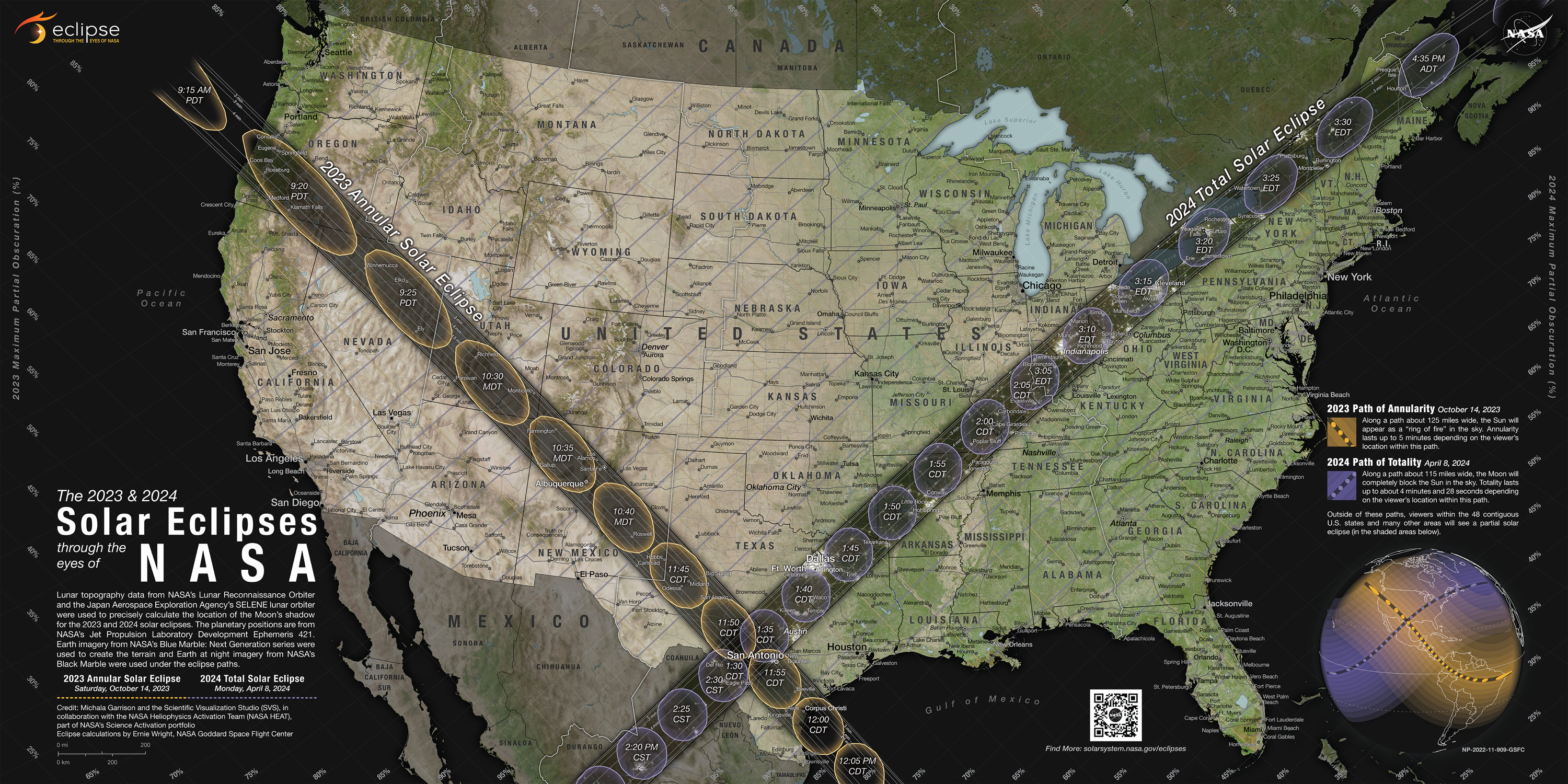
The next eclipse visible from our area will occur on April 8, 2024, six months from now. It will be a total solar eclipse whose path of totality is within a day trip from our area, if it’s clear in Indiana or Ohio. I’ll have a lot more information as we approach April. On the Internet search for american eclipse 2024, or words to that effect. It’s always best to plan early.
Ephemeris: 10/12/2023 – Saturday’s (October 14, 2023) Annular Solar Eclipse
This is Bob Moler with Ephemeris for Thursday, October 12th. Today the Sun will be up for 11 hours and 9 minutes, setting at 7:03, and it will rise tomorrow at 7:55. The Moon, 2 days before new, will rise at 6:39 tomorrow morning.
There will be a partial solar eclipse Saturday for most of the unit for the 48 Continental United States. It will be maximum on a line from Oregon through Texas. It’s called an annular eclipse. At its maximum an annular eclipse is an eclipse where the Moon is too far away to completely cover the face of the Sun so at maximum it leaves a ring of the Sun. Some call it a Ring of Fire. We’re well north of that line so we will see a partial eclipse where about 35% of the Sun will be covered by the Moon at its peak, although the Moon will encroach about 45% of the diameter of the Sun. For northern Michigan the eclipse will start at about 11:42 am, maximum eclipse is about 1 pm and the eclipse will end at 2:18 pm. I’ll talk about eclipse viewing safety tomorrow.
The astronomical event times given are for the Traverse City/Interlochen area of Michigan (EDT, UT –4 hours). They may be different for your location.
Addendum
Ephemeris: 10/11/2023 – Where have the naked-eye planets wandered off to this week?
This is Ephemeris for International Day of the Girl, Wednesday, October 11th. Today the Sun will be up for 11 hours and 12 minutes, setting at 7:05, and it will rise tomorrow at 7:54. The Moon, 3 days before new, will rise at 5:35 tomorrow morning.
Let’s find out where the naked-eye planets have wandered off to this week. Three of those five planets are now visible, but Mars sets too close to sunset to be seen, and Mercury rises too close to sunrise. Saturn is the sole official evening planet visible. It can be spotted in the southeast in the evening. And it will still be visible in the morning hours until it sets at 3:46 am. Saturn is seen against the stars of Aquarius this year and next. Jupiter and Venus are the visible morning planets. Jupiter, still a morning planet, will rise at 8:04 pm. It’s in Ares this year. It has to rise before sunset to be an official evening planet. Venus, the brilliant morning star, will rise in the east-northeast at 3:57 am, and be seen in the east thereafter.
The astronomical event times given are for the Traverse City/Interlochen area of Michigan (EDT, UT –4 hours). They may be different for your location.
Addendum
Ephemeris: 10/10/2023 – The first computer programmer
This is Ephemeris for Ada Lovelace Day, Tuesday, October 10th. Today the Sun will be up for 11 hours and 15 minutes, setting at 7:07, and it will rise tomorrow at 7:52. The Moon, halfway from last quarter to new, will rise at 4:31 tomorrow morning.
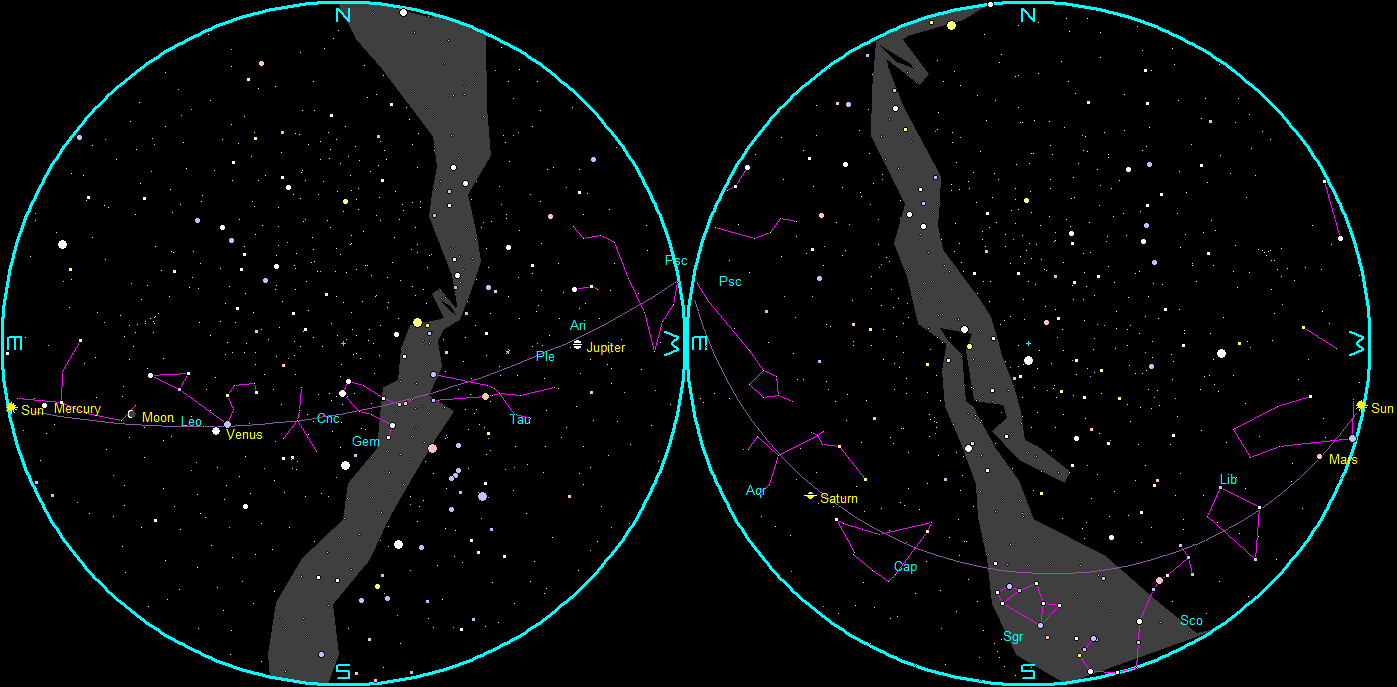
Ada Lovelace (1815-1852), or more properly Augusta Ada King, Countess of Lovelace, was the daughter of Lord Byron and worked for Charles Babbage, a brilliant mechanical engineer and mathematician in the early 19th century. She is considered the first computer programmer. She devised a way to use the same punch cards that were used on the Jacquard loom to store and run her programs, even though Babbage was unable to complete his mechanical computer the Analytical Engine in the mid 1800s. This day is set aside to celebrate the accomplishments of all the women of Science, Technology, Engineering and Math, (STEM). The computer language, Ada, was named after her, and was created for the US Department of Defense.
The astronomical event times given are for the Traverse City/Interlochen area of Michigan (EDT, UT –4 hours). They may be different for your location.
Addendum


Ephemeris: 10/09/2023 – Happy Indigenous Peoples Day
This is Ephemeris for Indigenous Peoples Day, Monday, October 9th. Today the Sun will be up for 11 hours and 18 minutes, setting at 7:09, and it will rise tomorrow at 7:51. The Moon, 3 days past last quarter, will rise at 3:26 tomorrow morning.
Today, the second Monday in October, is, by many, celebrated as Indigenous Peoples Day alongside of, or instead of Columbus Day. It’s funny that with all the memorials to Columbus in the United States, Columbus himself had never set foot onto what would become the United States or even North America for that matter. On his first voyage to what had later been called the New World, Columbus was clearly lost, thinking he was at the islands off the coast of India, so he called the inhabitants Indians, where they retain that confusing title to this day. Maybe we should change the name of North America to what the indigenous peoples call it: Turtle Island.
The astronomical event times given are for the Traverse City/Interlochen area of Michigan (EDT, UT –4 hours). They may be different for your location.
Addendum

Ephemeris: 10/04/2023 – Let’s find out where the naked-eye planets have wandered off to this week
This is Ephemeris for Wednesday, October 4th. Today the Sun will be up for 11 hours and 33 minutes, setting at 7:18, and it will rise tomorrow at 7:45. The Moon, 2 days before last quarter, will rise at 10:18 this evening.
Let’s find out where the naked-eye planets have wandered off to this week. Three of those five planets are now visible, but Mars sets too close to sunset to be seen, and Mercury rises too late. Saturn is the sole evening planet visible. It can be spotted in the southeast in the evening. And it will still be visible most of the morning hours morning until it sets at 4:15 am. Saturn is in retrograde or westward motion now, against the stars of Aquarius, and will continue to do so until November 5th. Jupiter and Venus are the visible morning planets. Jupiter, in Aries, will rise at 8:29 pm. It, like Saturn is in retrograde, which will last the rest of this year. Venus is our brilliant morning star which will rise in the east-northeast at 3:56 am.
The astronomical event times given are for the Traverse City/Interlochen area of Michigan (EDT, UT –4 hours). They may be different for your location.
Addendum
Ephemeris: 10/03/2023 – How to find Cassiopeia the queen
This is Bob Moler with Ephemeris for Tuesday, October 3rd. Today the Sun will be up for 11 hours and 36 minutes, setting at 7:19, and it will rise tomorrow at 7:44. The Moon, 3 days before last quarter, will rise at 9:35 this evening.
The stars of the autumn skies are slowly replacing the summer stars from the east. By 9 pm Scorpius the scorpion is gone, The Teapot asterism of Sagittarius is pouring its tea on the southwestern horizon. Looking halfway up in the northeastern sky these autumn the evenings one can find the letter W shaped constellation of Cassiopeia the queen. Cassiopeia is so far north that it never sets for us in Michigan. It is opposite the pole star Polaris from the handle of Big Dipper. Above and left of Cassiopeia is a dim upside down church steeple shaped constellation of Cepheus the king, her husband.
The astronomical event times given are for the Traverse City/Interlochen area of Michigan (EDT, UT –4 hours). They may be different for your location.
Addendum
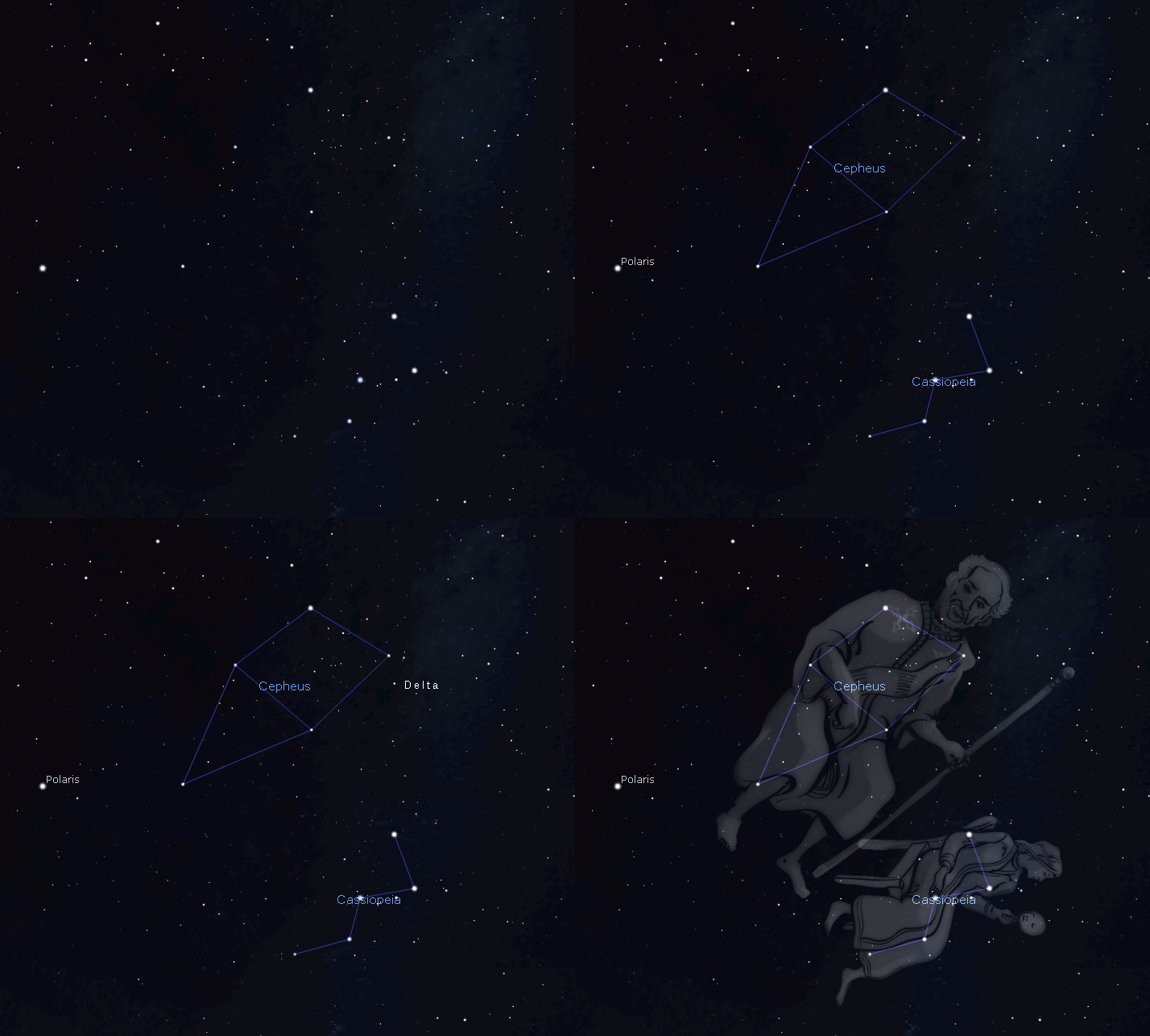
Delta Cephei is the archetype for the important Cepheid variable stars that are used in distance measurement as far as the nearest galaxies. Delta itself varies its brightness from magnitude 4.37 up to 3.48. In astronomy the lower the magnitude the brighter the star. The difference of 0.89 magnitude equals a difference in brightness of 2.27 times. Delta has a pulsation period of 5.367 days. For Cepheids, the longer the period the brighter the star.
 Bob Moler's Ephemeris Blog