Archive
Ephemeris: 11/15/2023 – Other possible contact binary solar system bodies
This is Ephemeris for Thursday, November 16th. Today the Sun will be up for 9 hours and 32 minutes, setting at 5:13, and it will rise tomorrow at 7:42. The Moon, 3 days past new, will set at 7:34 this evening.
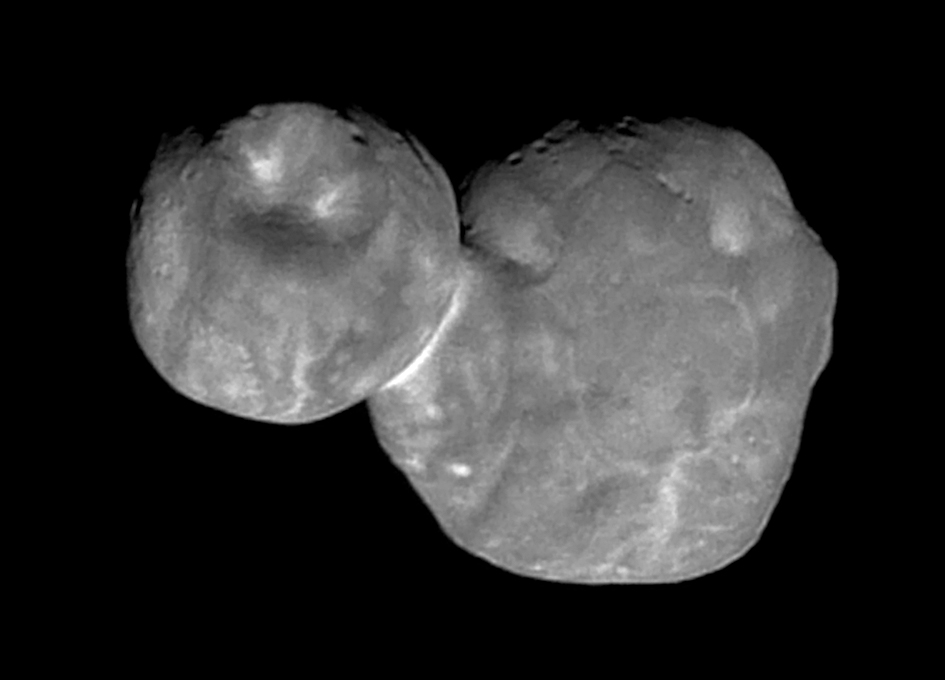
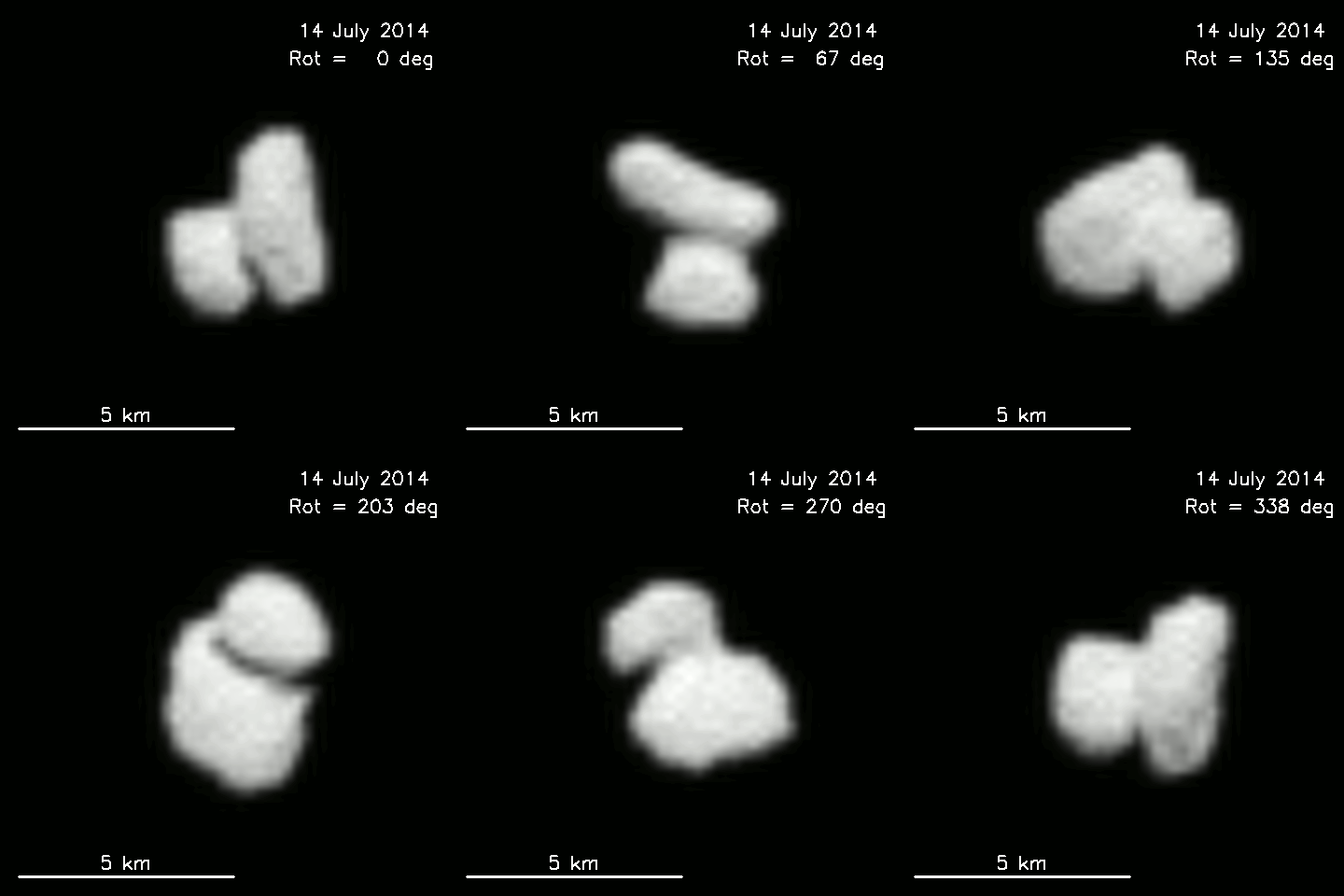
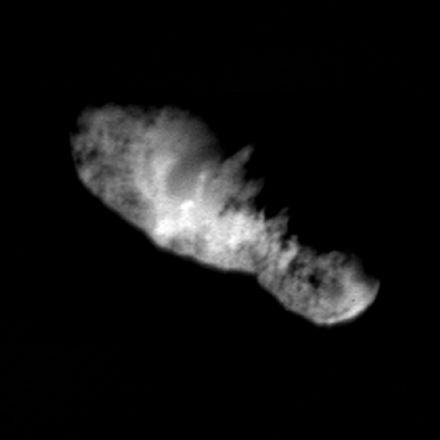
Thinking about it after seeing the contact the binary satellite of the asteroid that the Lucy spacecraft just flew by I have memories of several other bodies that could be contact binaries. The first one is that the New Horizons spacecraft passed four years ago which looked like two bodies stuck together, actually two pancakes because they weren’t spherical, but they were rather flattened. That Kuiper Belt Object now has the name Arrokoth. Comet 67 P, I won’t try to pronounce its name (Churyumov-Gerasimenko), that the Rosetta spacecraft orbited a few years ago, kinda looked like a rubber ducky with a small part attached to a larger part. It could be a contact binary. Again and there are a couple of comet nuclei that look like bowling pins. They may be contact binaries too.
The astronomical event times given are for the Traverse City/Interlochen area of Michigan (EST, UT –5 hours). They may be different for your location.
Addendum



Ephemeris: 11/15/2023 – Where have the naked-eye planets wandered off to this week
This is Ephemeris for Wednesday, November 15th. Today the Sun will be up for 9 hours and 35 minutes, setting at 5:14, and it will rise tomorrow at 7:40. The Moon, 2 days past new, will set at 6:35 this evening.
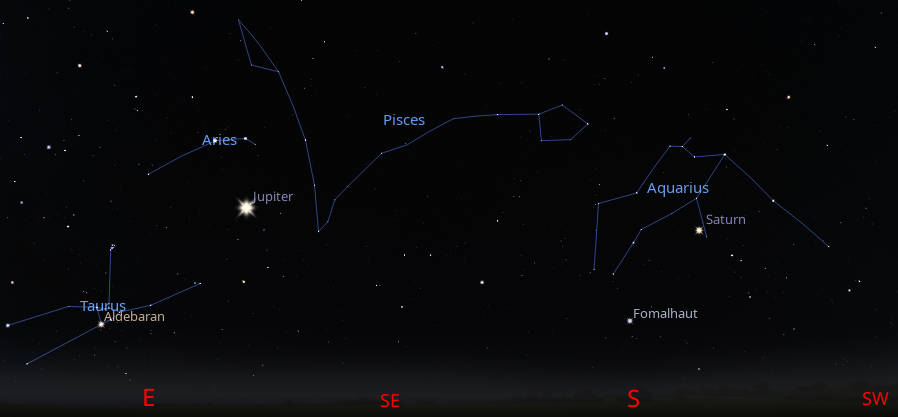
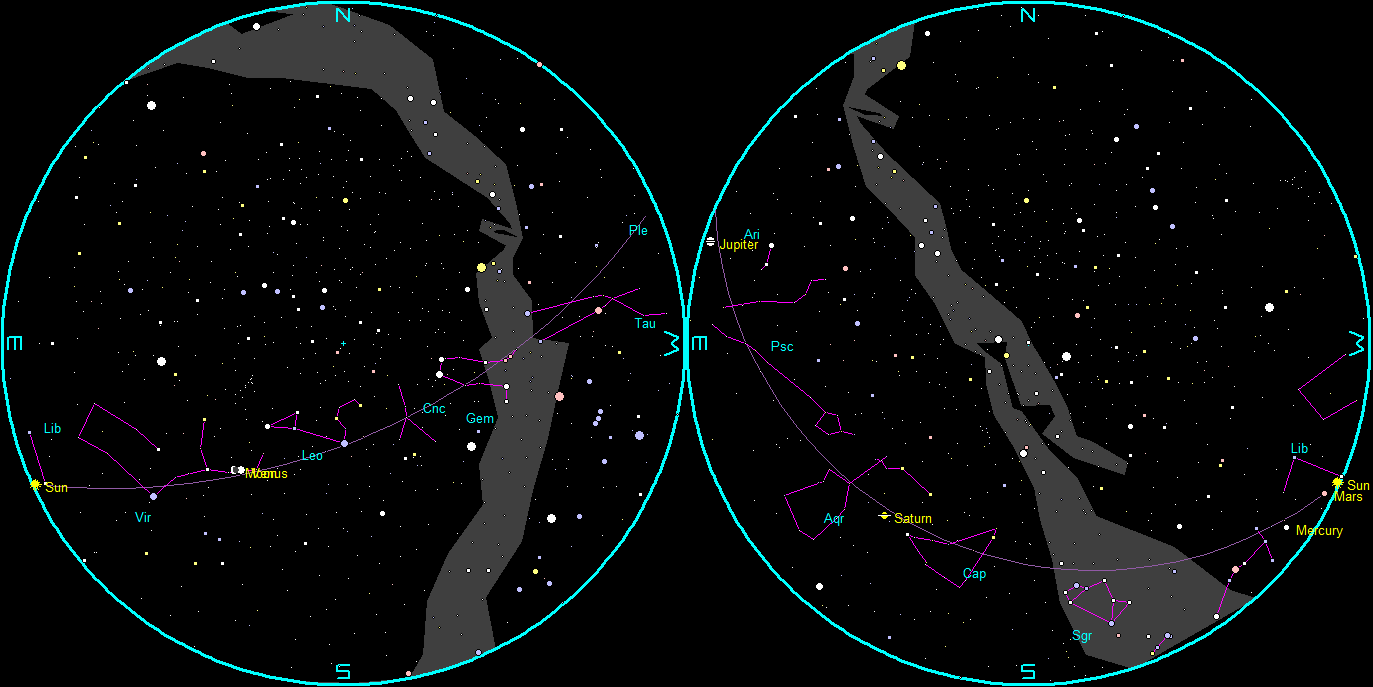
Let’s find out where the naked-eye planets have wandered off to this week. Three of those five planets are now visible but both Mars and Mercury set too close to sunset to be seen. Mars will actually be in conjunction with the Sun Friday and become a morning planet thereafter. So, Saturn and Jupiter are the only evening planets visible. Saturn, seen against the stars of Aquarius, can be seen moving from the south to the southwest in the evening. Saturn will be visible till almost 12:45 am. Jupiter is seen moving from low in the east to the high south in the evening, the brightest object in the sky. In Aries this year, Jupiter will be up most of the night. Venus, the brilliant morning star, will rise in the east-northeast at 3:41 am.
The astronomical event times given are for the Traverse City/Interlochen area of Michigan (EST, UT –5 hours). They may be different for your location.
Addendum
Ephemeris: 11/14/2023 – Lucy sees an asteroid with a double moon
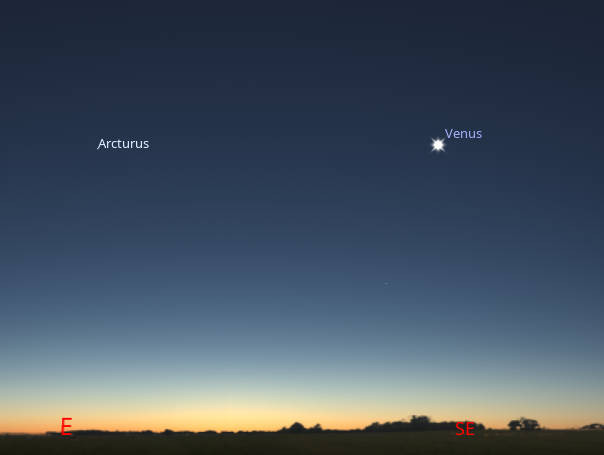
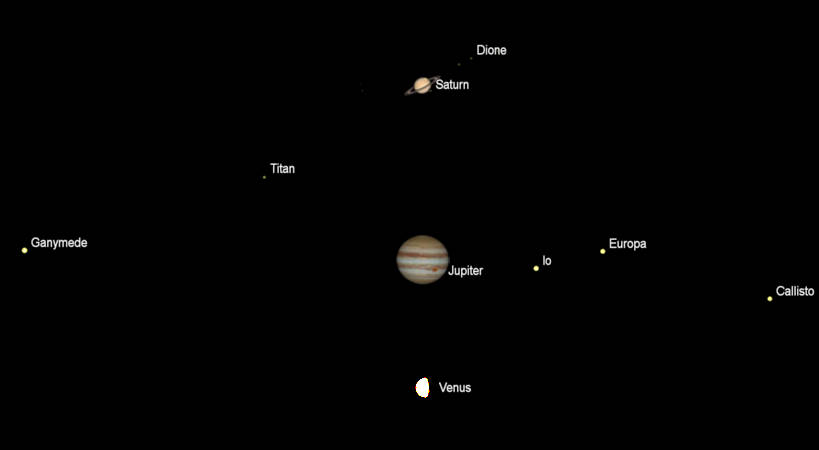
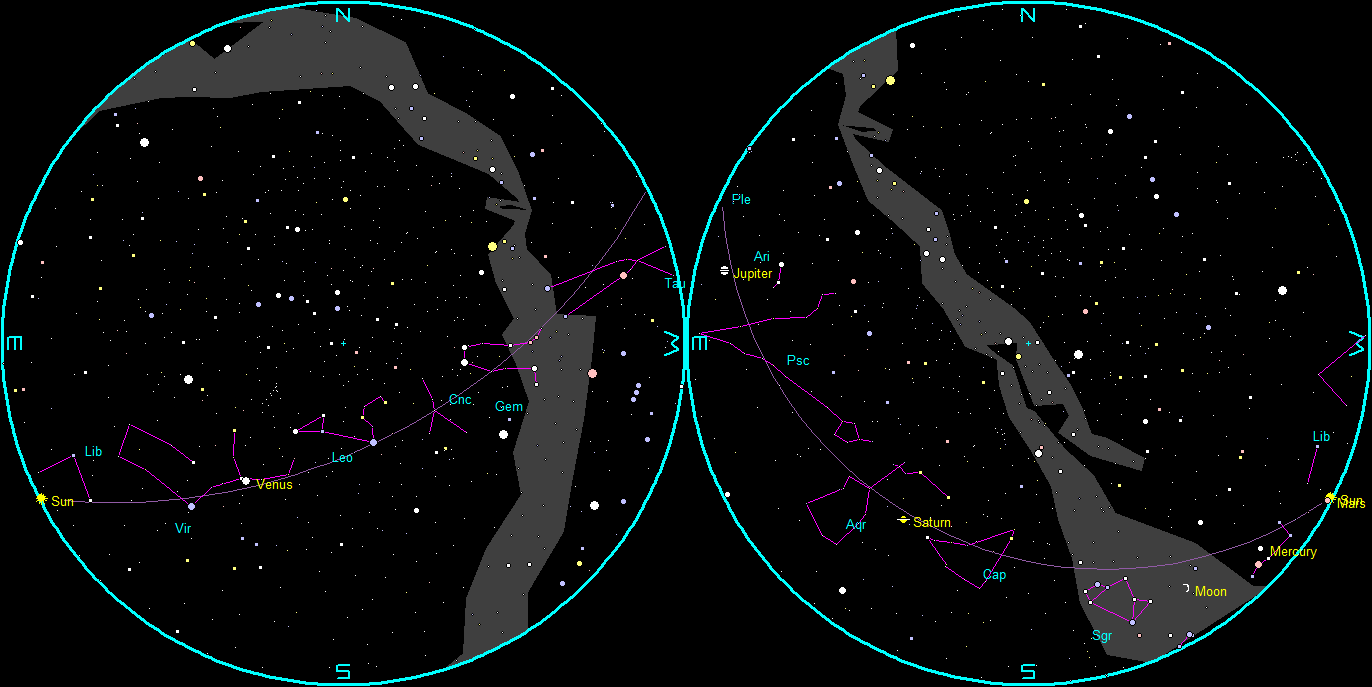
This is Bob Moler with Ephemeris for Tuesday, November 14th. Today the Sun will be up for 9 hours and 37 minutes, setting at 5:15, and it will rise tomorrow at 7:39. The Moon, 1 day past new, will set at 5:48 this evening.
Two years ago a spacecraft called Lucy was sent out towards the Trojan Asteroids of Jupiter. On the way there it was going to pass another small asteroid, but they found another one that Lucy would come close to, the mission planners tweaked its orbit earlier this year. So Lucy can get close to the small asteroid called Dinkinesh. When Lucy got close to Dinkinesh earlier this month, it took photos, and they found that it had a satellite, and they took other photos from a different angle, and they found out that the satellite actually was two satellites in contact, a contact binary, two bodies stuck together. So that was quite a surprise. Neither body looked smooshed, so their collision appears to have been very gentle.
The astronomical event times given are for the Traverse City/Interlochen area of Michigan (EST, UT –5 hours). They may be different for your location.
Addendum

Dinkinesh is the Ethiopian name for the fossil, since it was found in Ethiopia. The name for the fossil given by the discoverers was Lucy, mainly because The Beatles song Lucy in the sky with diamonds was a big hit back then, and it was constantly played in the camp.
The next main belt asteroid that Lucy is going to pass on its way out to Jupiter’s Trojan asteroids is named Donaldjohansson in honor of the discoverer of the Lucy fossil. Jupiter’s Trojan asteroids are two groups of asteroids in the same orbit as Jupiter. One set is 60 degrees ahead of Jupiter in its orbit and the second set is 60 degrees behind Jupiter in its orbit. They’re there because they are at special gravitational points called Lagrangian points. The point ahead of Jupiter is the L4 point and the one trailing is L5. You may have heard me talk about L1 and L2 points having to do with the Earth and Sun system. These are two other Lagrangian points in line with the Sun-Earth axis, that are useful to orbit spacecraft around. There’s another one, but we don’t think there’s anything out there because that’s on the other side of the Sun from us, and none of the other planets have a body opposite to the Sun from them either, so the L3 point is not a viable point.
Ephemeris: 11/13/2023 – Betelgeuse is acting weird again
This is Ephemeris for Monday, November 13th. Today the Sun will be up for 9 hours and 40 minutes, setting at 5:16, and it will rise tomorrow at 7:38. The Moon is new today, and won’t be visible.
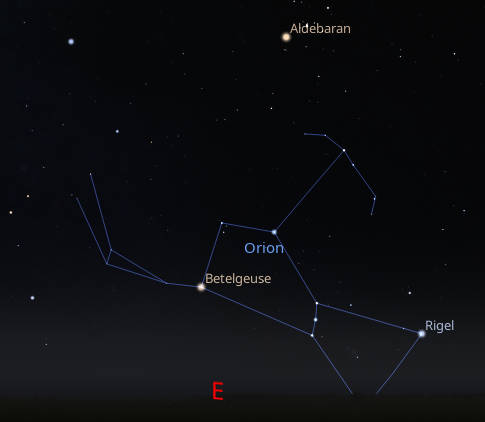
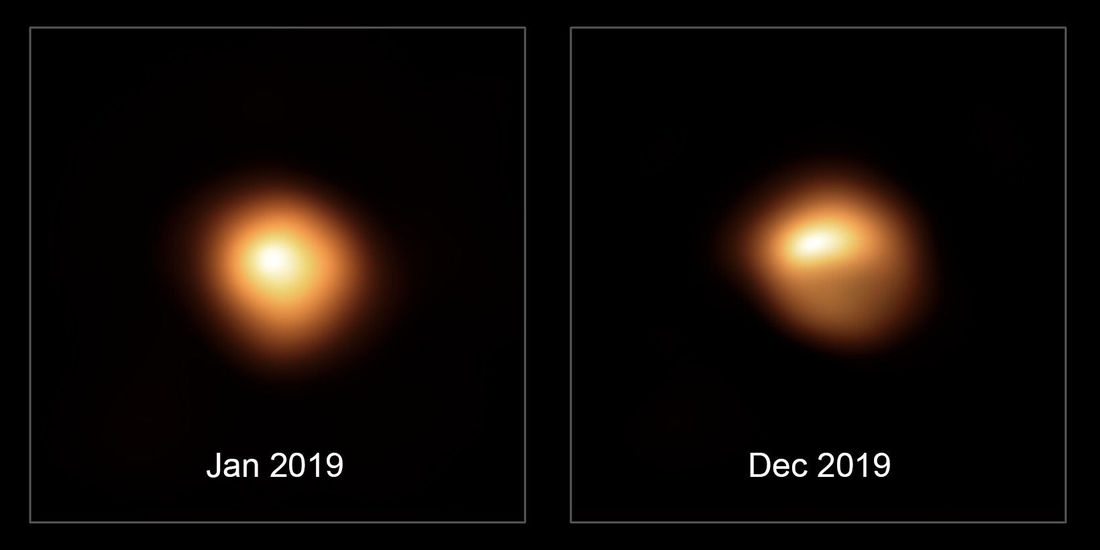
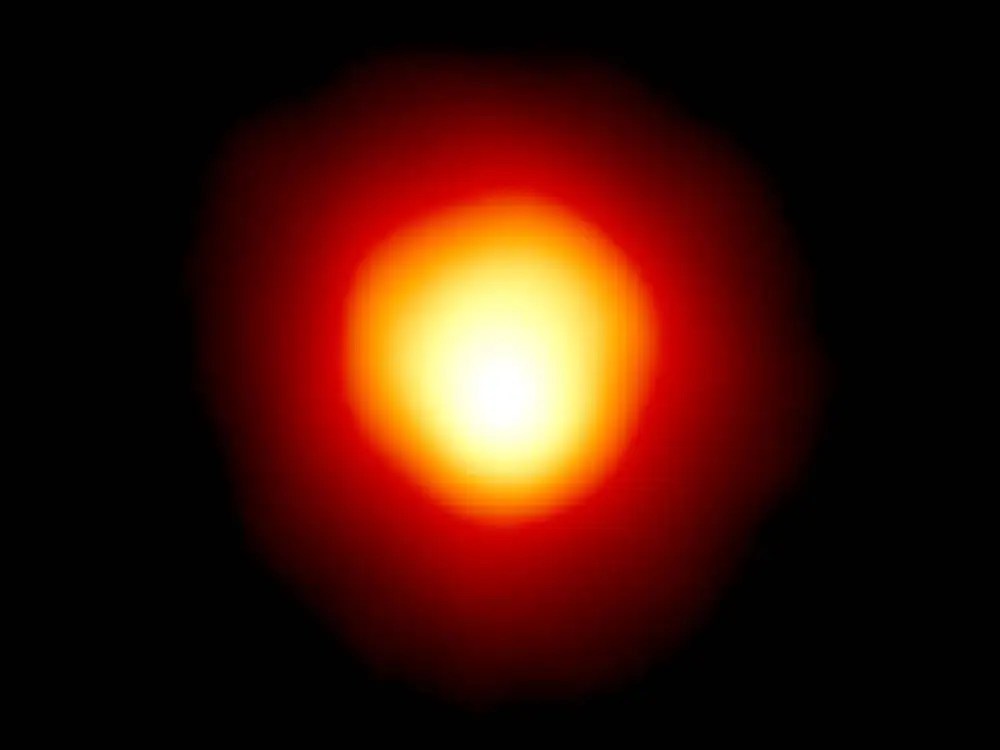
The constellation Orion is rising early in the evening now so what’s up with Betelgeuse. Betelgeuse is the bright reddish upper leftmost star of the torso of Orion the hunter, it’s in his shoulder. Betelgeuse has been acting up lately. In 2019 and 2020 Betelgeuse had dimmed significantly. Astronomers didn’t know why at the time, but found out later that it ejected a large cloud of gas and dust which blocked the light from the star. Now in the last year Betelgeuse has increased its brightness significantly, so it’s much brighter than normal. Again, we don’t exactly know why. Some have speculated that Betelgeuse is about ready to go supernova. We’ve known that for a while, but soon is measured within hundreds of thousands of years. So astronomers are keeping an eye on Betelgeuse to see what happens next.
The astronomical event times given are for the Traverse City/Interlochen area of Michigan (EST, UT –5 hours). They may be different for your location.
Addendum
Ephemeris: 11/10/2023 – The Northern Taurid Meteor Shower reaches its peak Sunday night
This is Bob Moler with Ephemeris for Friday, November 10th. Today the Sun will be up for 9 hours and 47 minutes, setting at 5:20, and it will rise tomorrow at 7:34. The Moon, 3 days before new, will rise at 5:38 tomorrow morning.
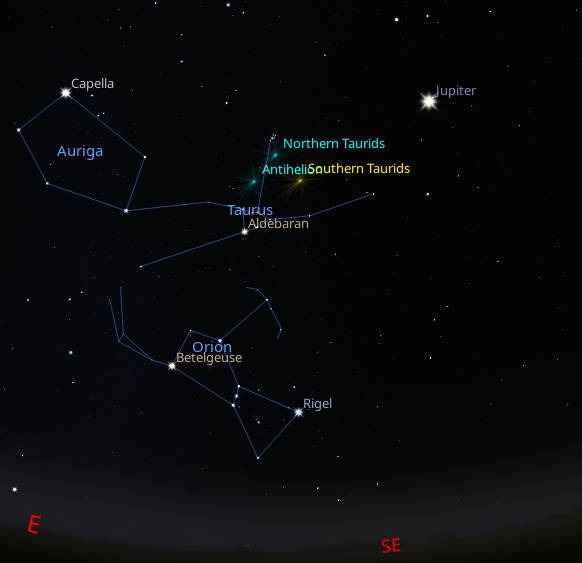
On Sunday night the North Taurid Meteor shower will reach its peak of about 15 meteors an hour. That’s not very many. However, there are reports that they are rather slow meteors and quite bright. They’re related to Encke’s comet. That comet has the shortest period of any comet of 3.3 years. So the meteoroid debris are not falling in from very far away from the Sun to reach us, so they’re moving rather slowly. The South Taurid meteor shower reached its peak last weekend with about the same number of meteors, and from the same comet. They’re also tangled up with something called the Antihelion meteor source, which is an ill-defined source of meteors which is directly opposite the Sun. Their radiant is near the Pleiades.
The astronomical event times given are for the Traverse City/Interlochen area of Michigan (EST, UT –5 hours). They may be different for your location.
Ephemeris: 11/09/2023 – The Milky Way will collide with the Great Andromeda Galaxy
This is Bob Moler with Ephemeris for Thursday, November 9th. Today the Sun will be up for 9 hours and 49 minutes, setting at 5:21, and it will rise tomorrow at 7:32. The Moon, halfway from last quarter to new, will rise at 4:31 tomorrow morning.
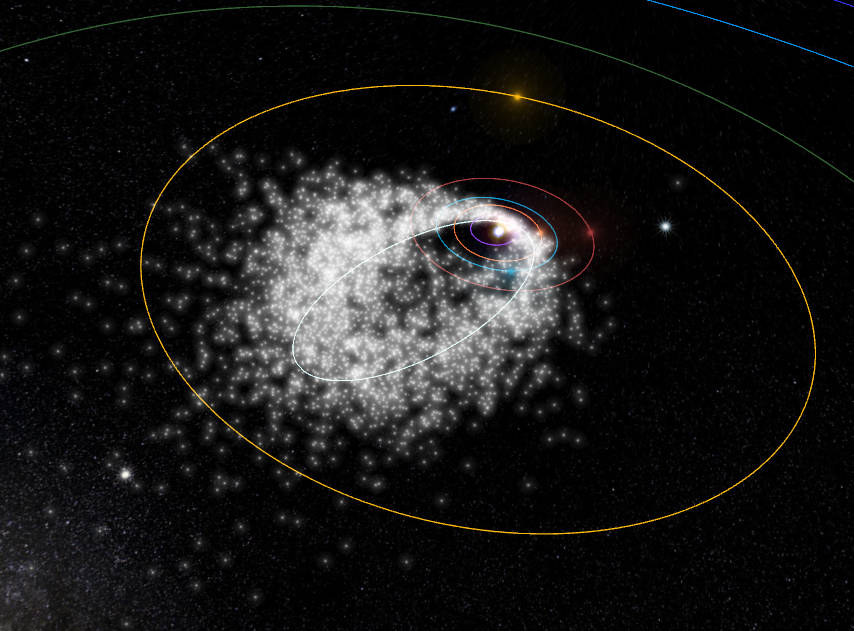
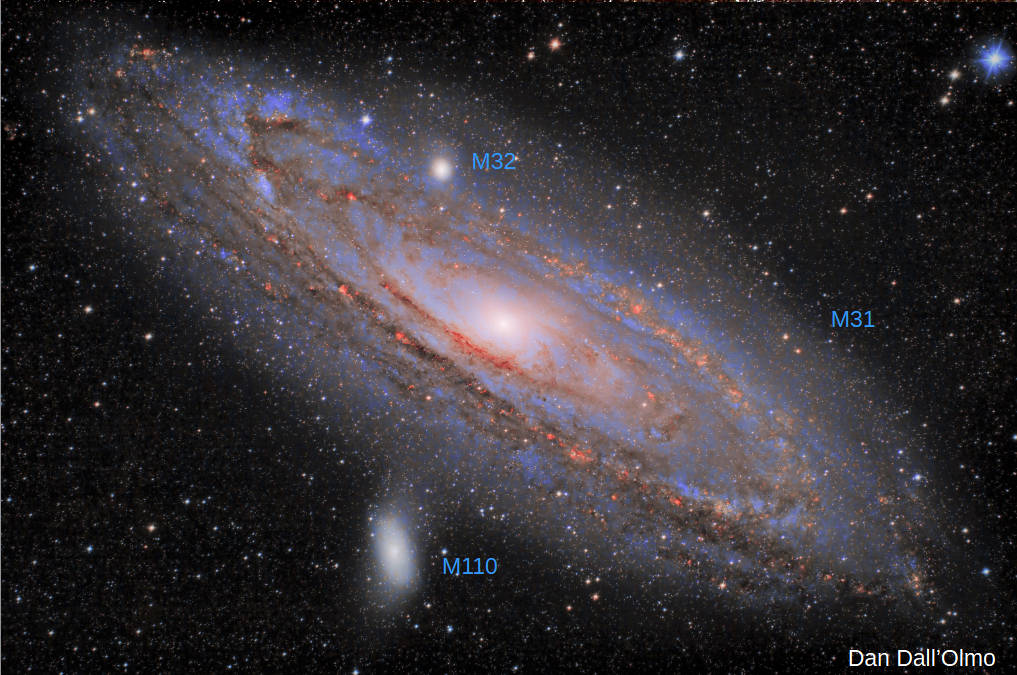
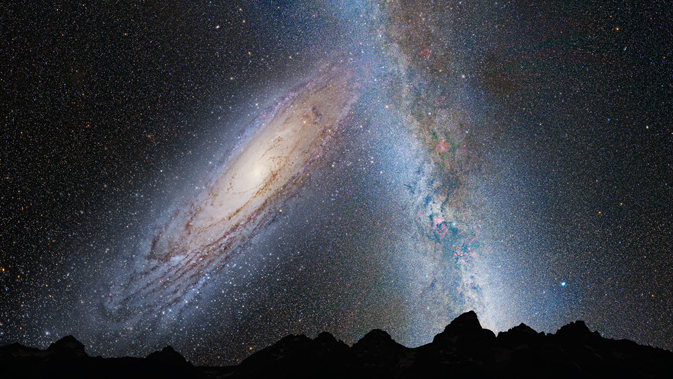
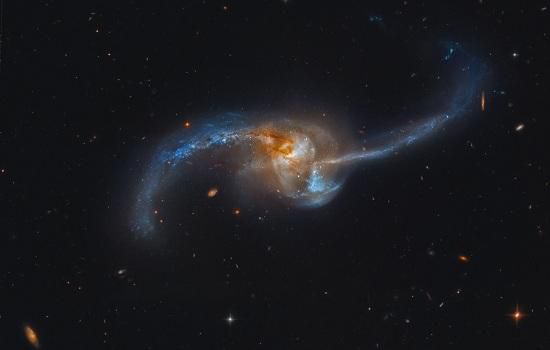
Stars are at extreme distances compared to their sizes, even if one includes their planetary systems. Galaxies in a galaxy cluster are much closer with respect to their size. Astronomers have determined that our Milky Way galaxy will collide with the Great Andromeda Galaxy, some two and a half million light years away, in about four and a half billion years. Don’t worry, it is very unlikely that any stars will collide during the event, though the solar system may be in for a wild ride. As the galaxies approach each other their beautiful spiral structures will begin to distort into tidal tails. Multiple passes of the two will occur before they will coalesce into one large elliptical galaxy. Other galaxies of the Local Group will join in over time.
The astronomical event times given are for the Traverse City/Interlochen area of Michigan (EST, UT –5 hours). They may be different for your location.
Addendum
Ephemeris: 11/08/2023 – Where have the naked-eye planets wandered off to this week?
This is Ephemeris for Wednesday, November 8th. Today the Sun will be up for 9 hours and 52 minutes, setting at 5:22, and it will rise tomorrow at 7:31. The Moon, 3 days past last quarter, will rise at 3:26 tomorrow morning.
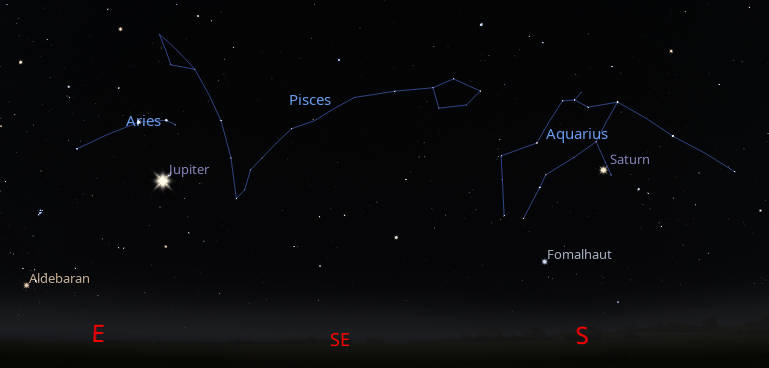
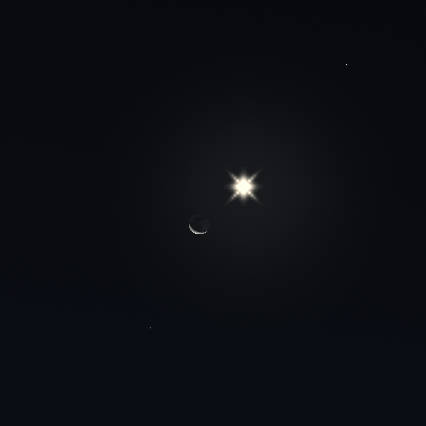
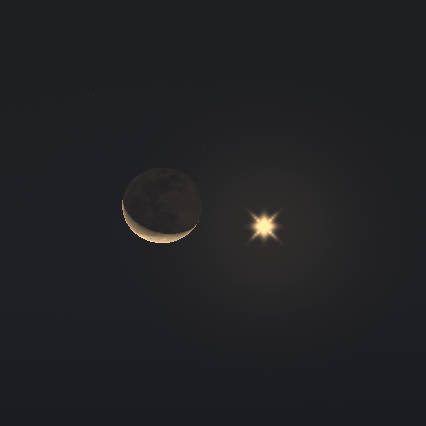
Let’s find out where the naked-eye planets have wandered off to this week. Three of those five planets are now visible but both Mars and Mercury set too close to sunset to be seen. So, Saturn and Jupiter are the only evening planets visible. Saturn, seen against the stars of Aquarius, can be seen in the south in the evening. Saturn will be visible till almost 1 am. Jupiter is seen rising in the eastern sky in the evening, the brightest object in the sky. In Aries this year, Jupiter will be up all night. Venus, the brilliant morning star, will rise in the east-northeast at 3:29 am. It will be seen above the waning crescent Moon. In the southeast at 7 am in the bright morning twilight.
The astronomical event times given are for the Traverse City/Interlochen area of Michigan (EST, UT –5 hours). They may be different for your location.
Addendum
Ephemeris: 11/07/2023 – How to find the Great Andromeda Galaxy
This is Ephemeris for Election Day for some, Tuesday, November 7th. Today the Sun will be up for 9 hours and 55 minutes, setting at 5:23, and it will rise tomorrow at 7:30. The Moon, 2 days past last quarter, will rise at 2:22 tomorrow morning.
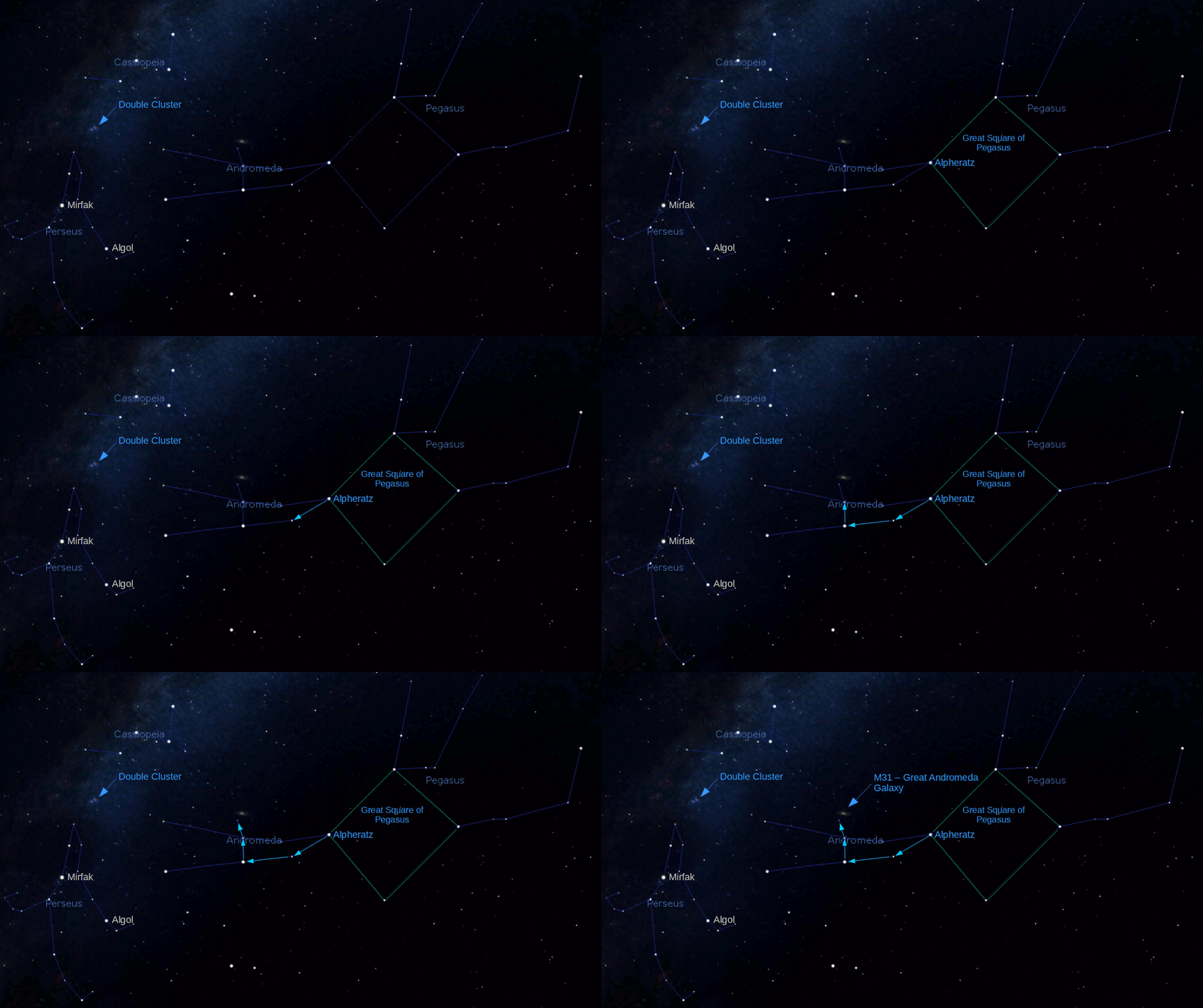
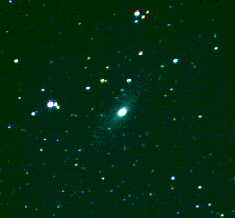
The closest large galaxy to our Milky Way galaxy is the Great Andromeda Galaxy, seen high in the eastern sky when it gets dark. It is barely visible to the naked eye. To locate it, first find a large square of stars high in the east-southeast standing on one corner, the Great Square of Pegasus. The left star of the square is the head of the constellation Andromeda. Follow two stars to the left and a bit downward, then two stars straight up. The galaxy is near that last star as a small smudge of light. Binoculars are the best way to see it as a thin spindle of light. Using a telescope, one can see, besides its nucleus, its two satellite galaxies.
The astronomical event times given are for the Traverse City/Interlochen area of Michigan (EST, UT –5 hours). They may be different for your location.
Addendum
Ephemeris: 11/06/2023 – The Pleiades or Seven Sisters
This is Ephemeris for Monday, November 6th. Today the Sun will be up for 9 hours and 57 minutes, setting at 5:25, and it will rise tomorrow at 7:28. The Moon, 1 day past last quarter, will rise at 1:18 tomorrow morning.
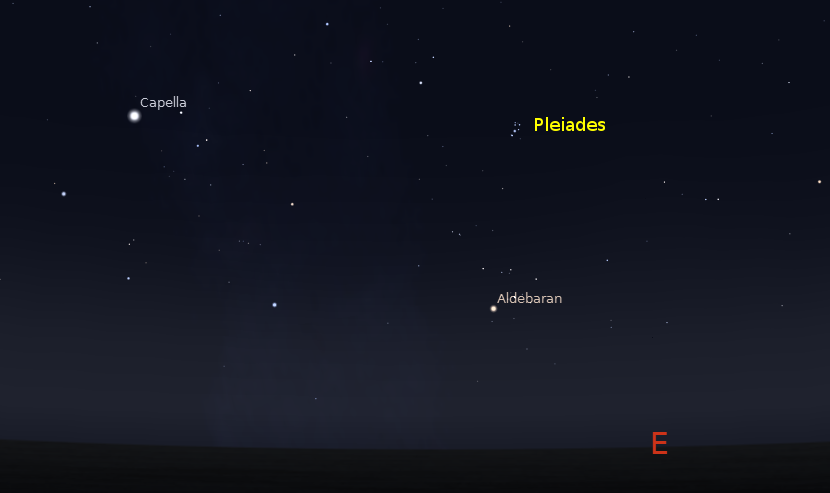
A marvelous member of the autumn skies can be found low in the east after 8 in the evening. It is the famous star cluster called the Pleiades or the Seven Sisters. I might also add the ‘Tiny Dipper’. Many people can spot a tiny dipper shape in its six or seven stars, and mistake it for the Little Dipper. With binoculars, one can see over a hundred stars appear, along with the dipper shape of the brightest. In photographs, the Pleiades actually contain wisps of the dust they are currently passing through. In Greek mythology, the sisters were daughters of the god Atlas and Pleione.
The astronomical event times given are for the Traverse City/Interlochen area of Michigan (EST, UT –5 hours). They may be different for your location.
Addendum
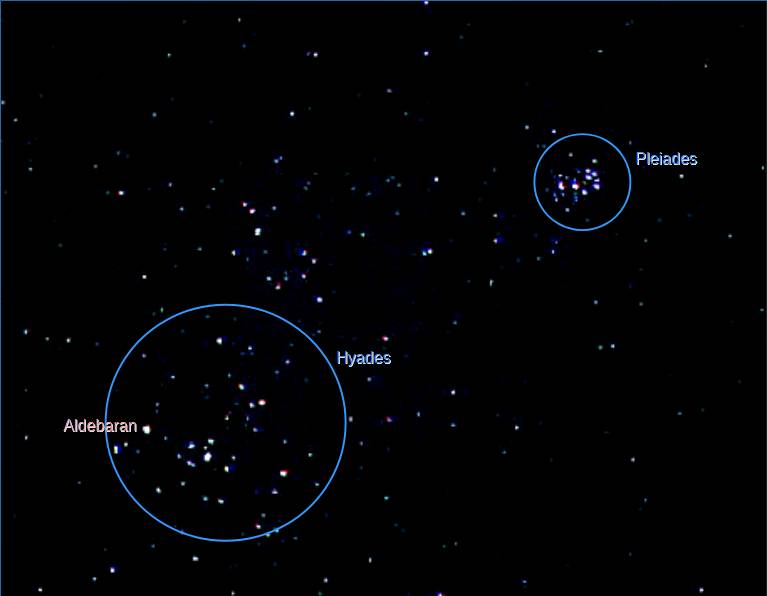
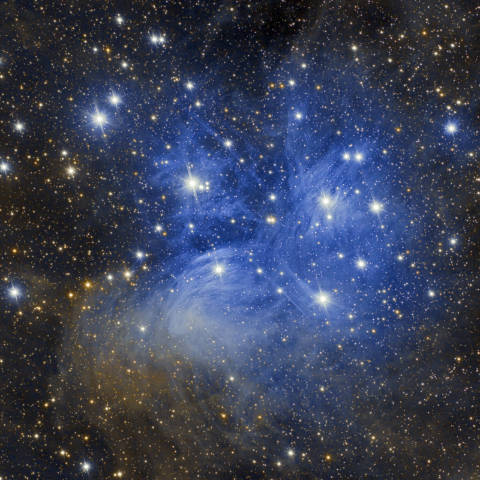
I’ll be coming back to the Pleiades from time to time over the autumn and winter months to cover, especially, the mythology of the Pleiades from different cultures.
Ephemeris: 11/03/2023 – GTAS meeting tonight
This is Bob Moler with Ephemeris for Friday, November 3rd. The Sun will rise at 8:23. It’ll be up for 10 hours and 5 minutes, setting at 6:28. The Moon, 2 days before last quarter, will rise at 11:00 this evening.
A documentary on the astronomical life of Jack Newton will be shown tonight at 8 pm at the meeting of the Grand Traverse Astronomical Society at Northwestern Michigan College’s Rogers Observatory, and on Zoom. Jack Newton is a rather famous Canadian amateur astronomer and a pioneer in astrophotography starting in the days before digital photography. After the meeting, at 9 pm, if it’s clear the society will host a star party to view the dark autumn skies including Saturn. The observatory is located south of Traverse City on Birmley Road between Garfield and Keystone roads. Zoom instructions will be at gtastro.org. On Sunday we get to fall back an hour, and get an extra hour of sleep as we go back an hour to standard time.
The astronomical event times given are for the Traverse City/Interlochen area of Michigan (EDT, UT –4 hours). They may be different for your location.
 Bob Moler's Ephemeris Blog