Archive
Ephemeris: 02/14/2025 – A Valentine’s Day Rendezvous
This is Ephemeris for St Valentine’s Day, Friday, February 14th. Today the Sun will be up for 10 hours and 26 minutes, setting at 6:10, and it will rise tomorrow at 7:42. The Moon, 2 days past full, will rise at 8:34 this evening.
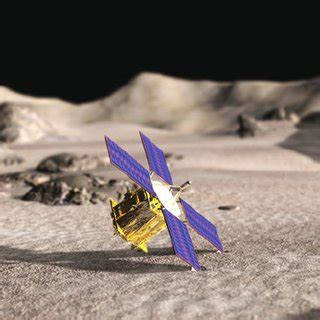
Twenty-five years ago to the day, the NEAR-Shoemaker* spacecraft entered into orbit of the near Earth asteroid 433 Eros. It wasn’t originally planned to enter orbit of the asteroid named after the Greek god of love on Valentine’s Day, 2000. It arose after an aborted course correction a year earlier. After solving the problem, a new course was plotted and NEAR-Shoemaker was gently inserted into orbit of this 21 mile long asteroid, shaped like a bent bread stick with a bite taken out of the center of it. The spacecraft spent almost a year orbiting Eros at various altitudes. The spacecraft ended its mission by gently dropping onto the middle of the asteroid, where it stayed alive for ten days before succumbing to the cold.
The astronomical event times given are for the Traverse City/Interlochen area of Michigan (EST, UT – 5 hours). Times will be different for other locations.
* The spacecraft was launched as NEAR for Near Earth Asteroid Rendezvous. It was renamed en route NEAR-Shoemaker after Eugene Shoemaker’s death in 1997. Shoemaker was a geologist who trained Apollo astronauts and proved that the Barringer Meteor Crater was indeed an impact site and not a volcanic caldera, and that most of the Moon’s craters were also caused by impacts. He with his wife Carolyn and David Levy discovered Comet Shoemaker-Levy 9, which crashed into Jupiter in 22 pieces in July 1994, gaining worldwide attention.
Addendum
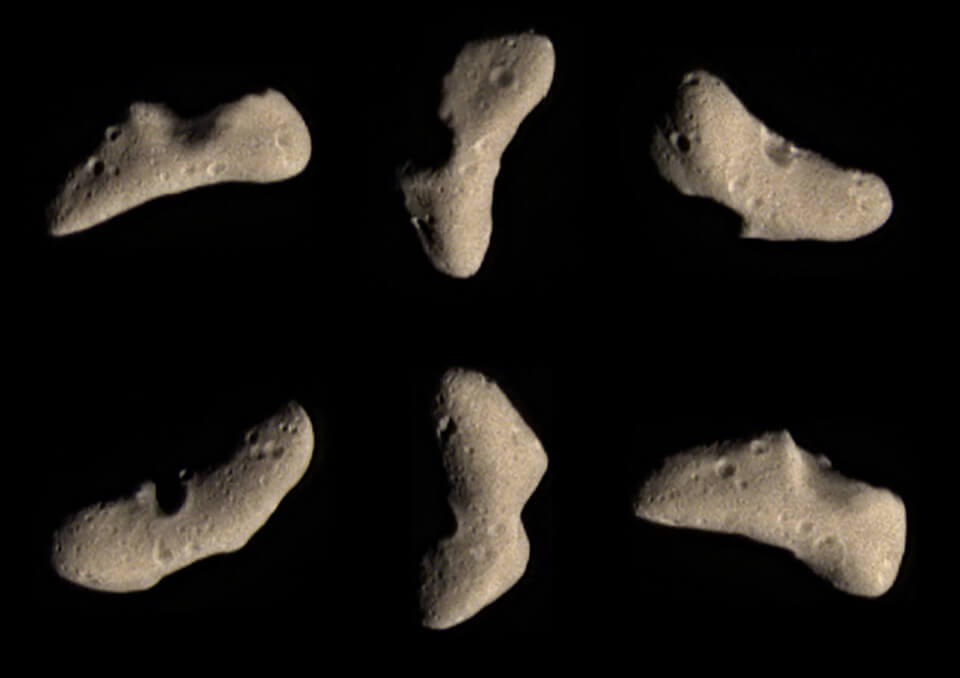
NASA/JPL/JHUAPL. Caption from: https://eros2019.imcce.fr/eros.html via Google Translate.
Ephemeris: 02/13/2025 – A personal story
This is Bob Moler with Ephemeris for Thursday, February 13th. Today the Sun will be up for 10 hours and 23 minutes, setting at 6:08, and it will rise tomorrow at 7:44. The Moon, 1 day past full, will rise at 7:29 this evening.
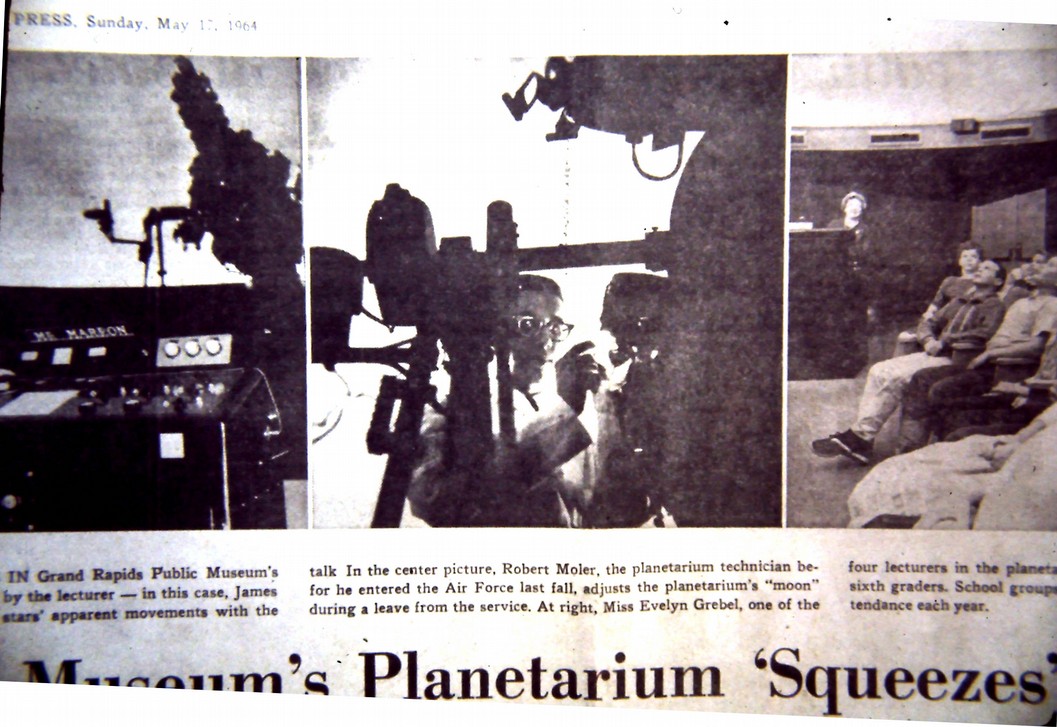
Whenever I hear the term DEI used by someone that questions the qualifications of a person, or they speak of being apprehensive when they see someone of color or a woman piloting an airplane or having great responsibilities, I get angry. As a not so amateur astronomer in the past I’ve worked in and lectured at planetariums though I didn’t have the academic qualifications for, or sheepskin to prove it. I’m not sure that a black person could get away with what I did. But one thing I did learn as an amateur astronomer and working on star parties such as the ones we have in the summer at Sleeping Bear Dunes, is that everyone is the same color under the light of the stars.
The astronomical event times given are for the Traverse City/Interlochen area of Michigan (EST, UT – 5 hours). Times will be different for other locations.
Addendum
Ephemeris: 02/12/2025 – Taking our weekly look at the whereabouts of the naked-eye planets
This is Ephemeris for Darwin Day, Wednesday, February 12th. Today the Sun will be up for 10 hours and 20 minutes, setting at 6:07, and it will rise tomorrow at 7:45. The Moon, at full today, will rise at 6:21 this evening.
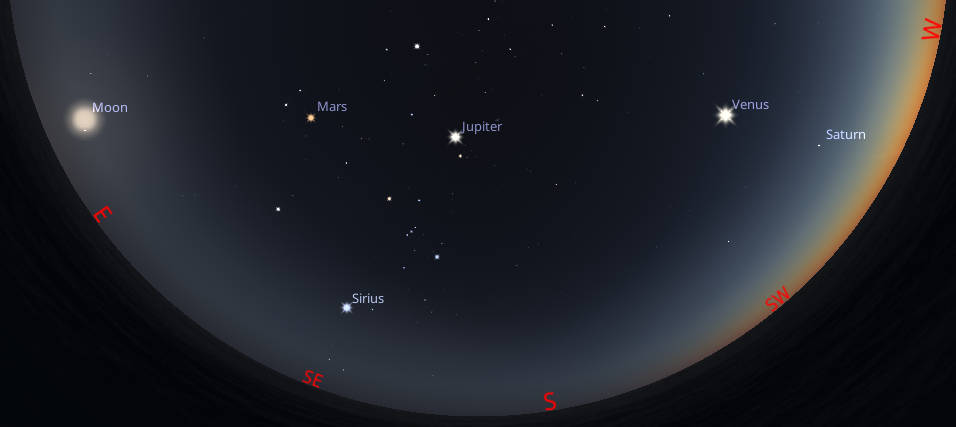
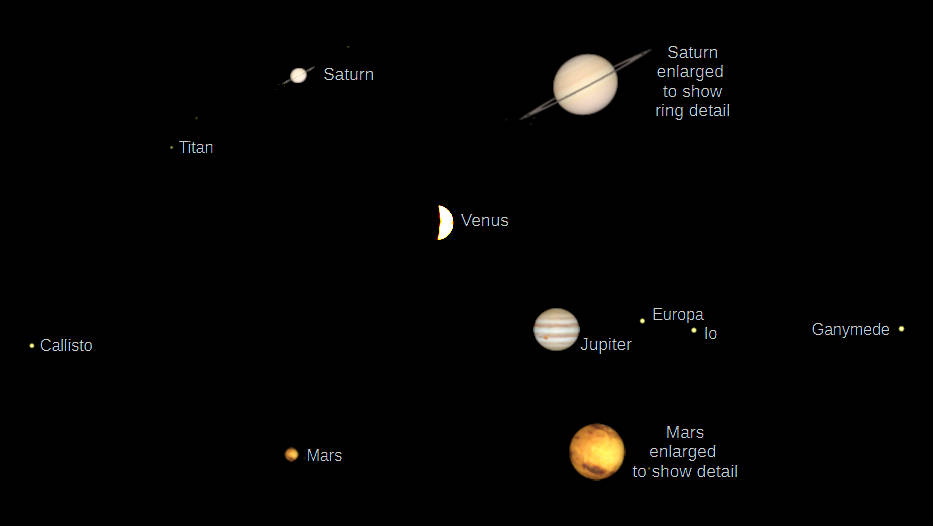
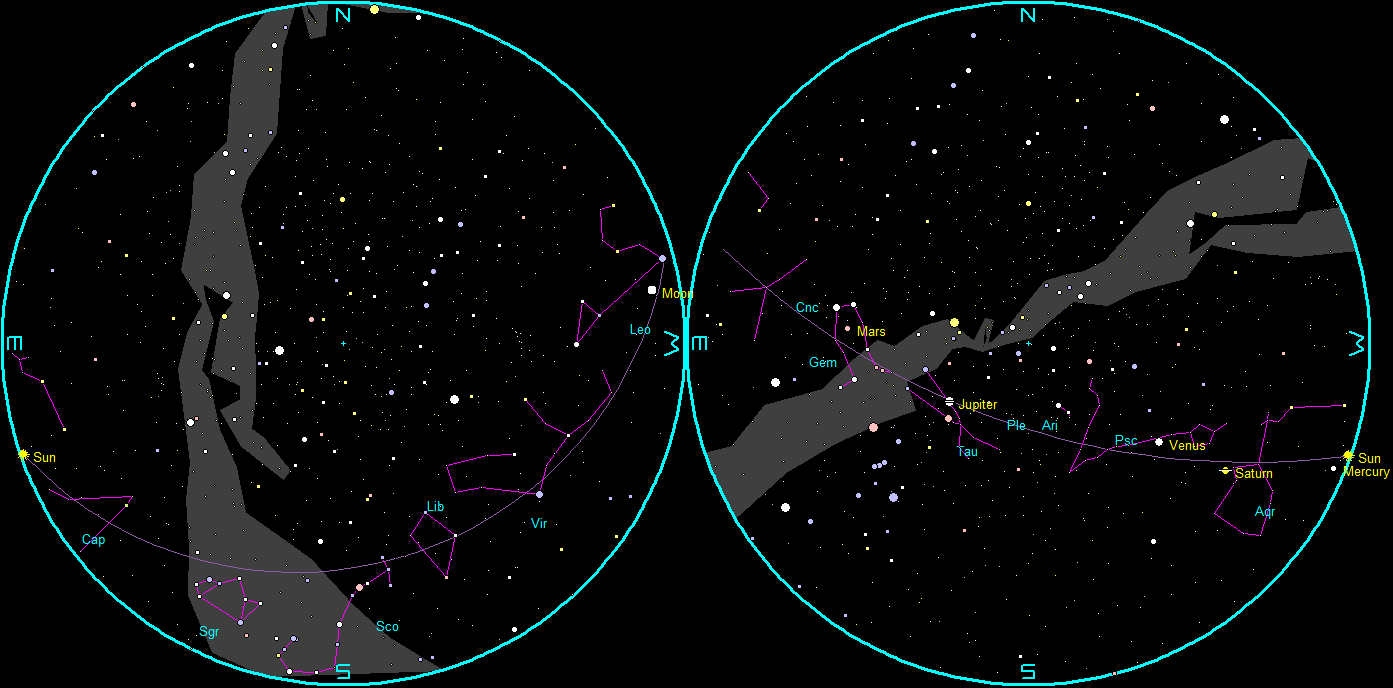
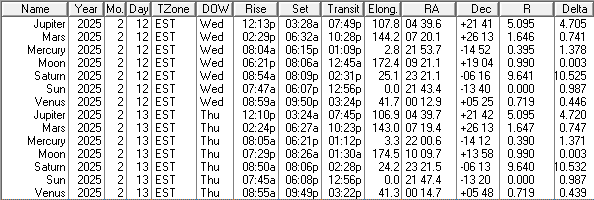
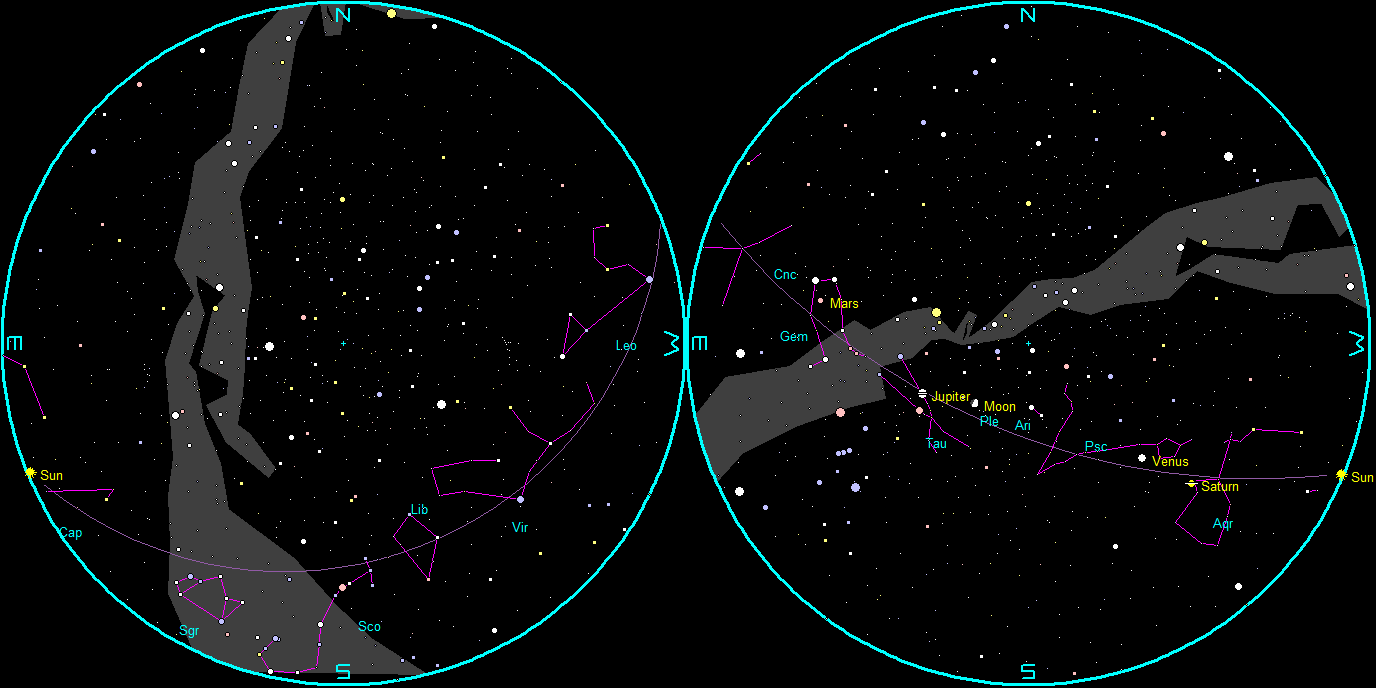
Let’s take our weekly look at the whereabouts of the naked-eye planets. At 7 PM this evening four of the five naked eye planets will be out. Starting from the West we have Venus the brightest of all in the west southwest. Far below it, near the horizon, will be the much dimmer Saturn, which we are about to lose to the evening twilight. Jupiter, the second-brightest planet will be high in the south-southeast. It is reversing course and beginning to head back eastward now. Farther below it is the spectacular constellation of Orion the hunter. The 4th planet out is Mars, the third-brightest planet now, with its distinctive reddish hue, west of the stars Castor and Pollux in Gemini, and just about due east. The full Moon will be rising in the east.
The astronomical event times given are for the Traverse City/Interlochen area of Michigan (EST, UT – 5 hours). Times will be different for other locations.
Addendum
Ephemeris: 02/11/2025 – Newly discovered asteroid may have our number
This is Ephemeris for Tuesday, February 11th. Today the Sun will be up for 10 hours and 17 minutes, setting at 6:06, and it will rise tomorrow at 7:47. The Moon, 1 day before full, will set at 8:06 tomorrow morning.
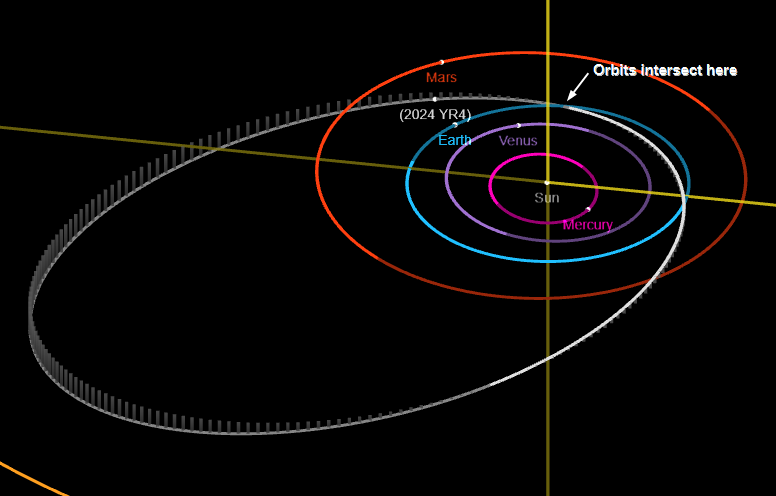
Late last year a tiny asteroid was found because it was close to the Earth and given the designation 2024 YR4. After observing it for a month it was discovered that it had a 1½ % chance of hitting the Earth when it came around again in 2032. Remember the fireball that exploded over Chelyabinsk Russia almost exactly 10 years ago? It exploded high in the air, and caused flying glass injuries to over a thousand people who saw the flash and rushed to the windows to see it when the atmospheric shock wave arrived. This object appears to be about 3 times the size of that object, nearly a football field in diameter, and thus could be 27 times the mass and volume. It’s four year orbit of the Sun will bring it back close to Earth in 2028 for us to get a better look at it and its orbit, and the last chance to alter its orbit.
The astronomical event times given are for the Traverse City/Interlochen area of Michigan (EST, UT – 5 hours). Times will be different for other locations.
Addendum
Ephemeris: 02/10/2025 – How old are the features on the Moon?
This is Ephemeris for Monday, February 10th. Today the Sun will be up for 10 hours and 14 minutes, setting at 6:04, and it will rise tomorrow at 7:48. The Moon, 2 days before full, will set at 7:42 tomorrow morning.
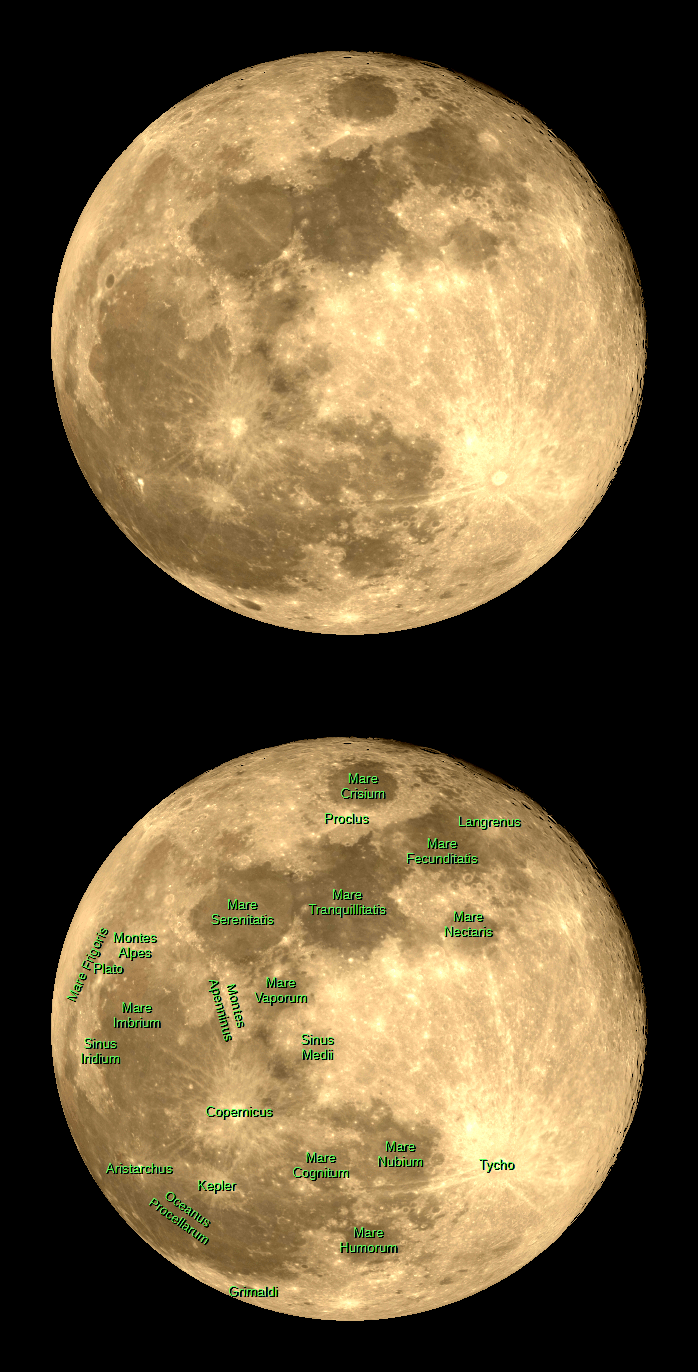
In dating Moon rocks scientists get a range of dates from 4.6 to 3.3 billion years. An age of a rock is determined by the decay of a radioactive element one of which is uranium 238 decaying to lead 206. So the ratios of these two elements gives a date when a rock was last solidified. This clock is reset when a rock was last melted either by volcanism or by asteroid impact. It turns out that the rocks of the highlands, the lighter area on the Moon where most of the craters are, date to close to 4.5 billion years, and are probably the original crust of the Moon. The rocks from the lunar maria or seas are younger from about 4.1 billion years down to 3.8 billion years. So they were thought to be caused by asteroid impacts from the Late Heavy Bombardment.
The astronomical event times given are for the Traverse City/Interlochen area of Michigan (EST, UT – 5 hours). Times will be different for other locations.
Addendum
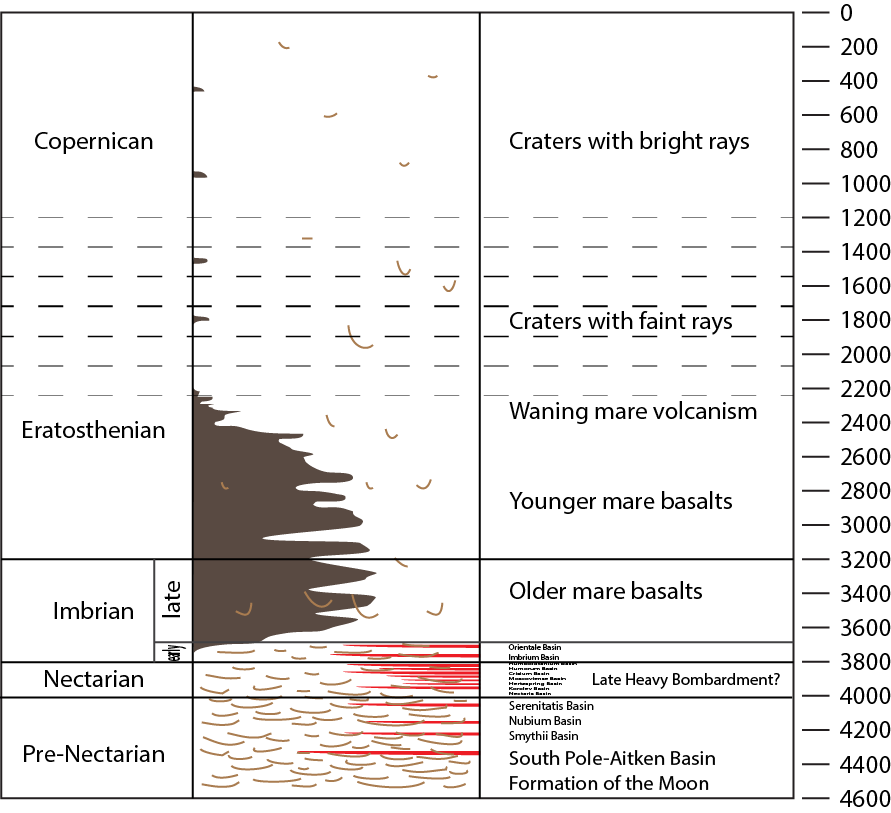
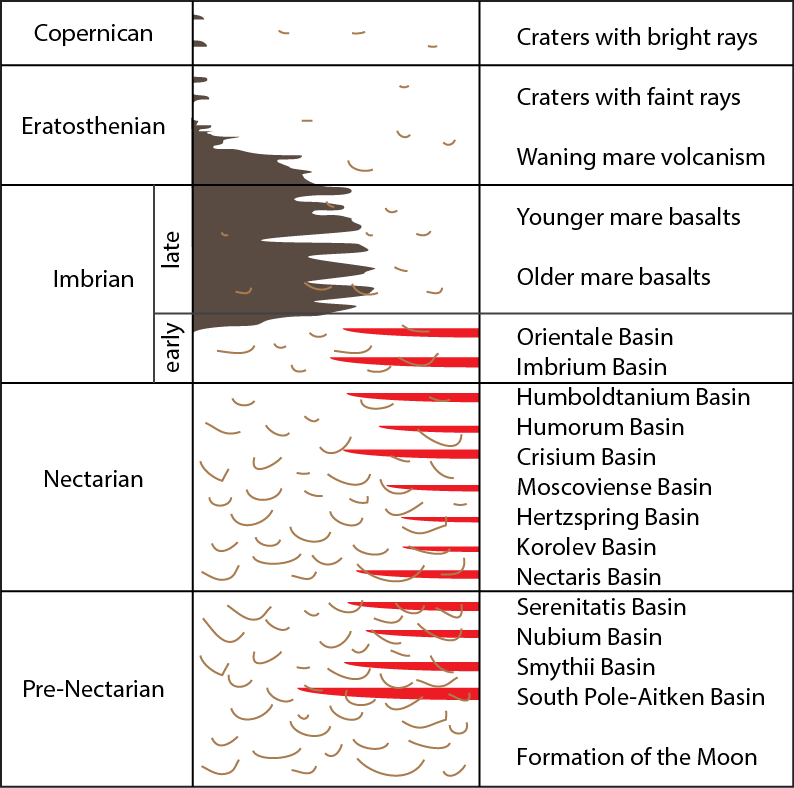
The Late Heavy Bombardment is not accepted by all planetary scientists. The main evidence is the cratering and maria on the Moon.
Ephemeris: 02/07/2025 – GTAS meeting tonight – Earth’s Impact Craters
This is Ephemeris for Friday, February 7th. Today the Sun will be up for 10 hours and 6 minutes, setting at 6:00, and it will rise tomorrow at 7:52. The Moon, 2 days past first quarter, will set at 5:36 tomorrow morning.
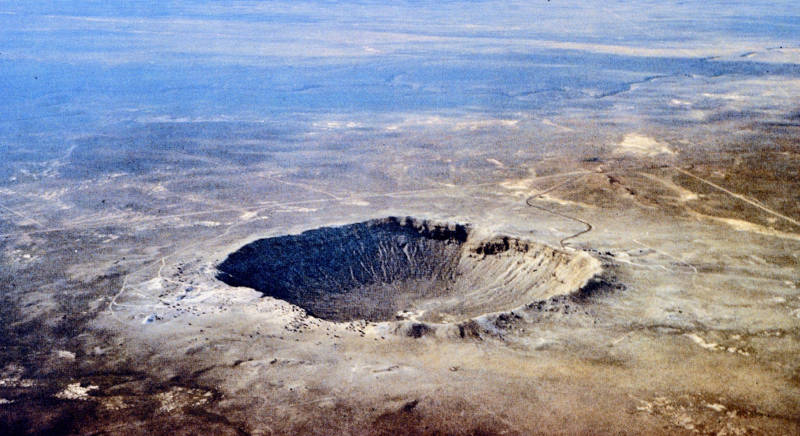
The Grand Traverse Astronomical Society will host its February meeting tonight at 8 PM at Northwestern Michigan College’s Joseph H. Rogers Observatory. The talk for the evening will be given by Society President, and Observatory Director, Jerry Dobek on the topic of Earth’s Impact Craters. Unlike the Moon, Earth’s impact craters have been mostly hidden. After the meeting, about 9 PM if it’s clear, there will be viewing of the heavens through the observatory’s telescopes, featuring Jupiter, the Moon and the Great Orion Nebula, which will be hindered a bit by moonlight. The observatory is located on Birmley Road. South of Traverse City between Garfield and Keystone roads. All are welcome, free of charge.
The meeting is also available on Zoom. The link is at gtastro.org
The astronomical event times given are for the Traverse City/Interlochen area of Michigan (EST, UT – 5 hours). Times will be different for other locations.
Addendum
Ephemeris: 02/06/2025 – The Moon tonight, two days after first quarter
This is Ephemeris for Thursday, February 6th. Today the Sun will be up for 10 hours and 3 minutes, setting at 5:59, and it will rise tomorrow at 7:54. The Moon, 1 day past first quarter, will set at 4:30 tomorrow morning.
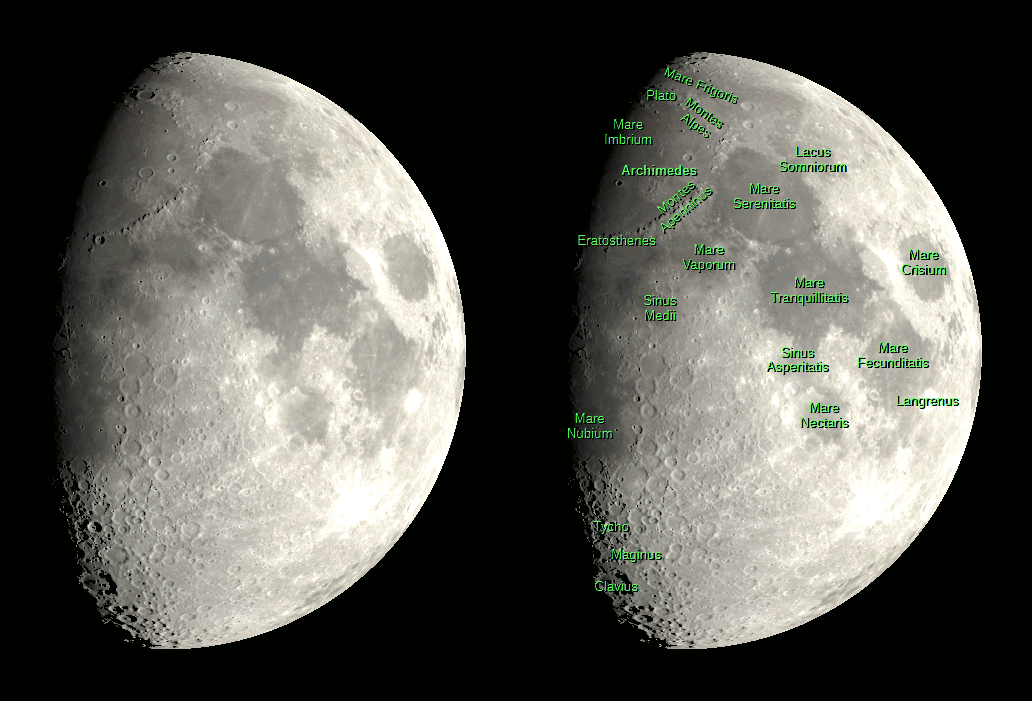
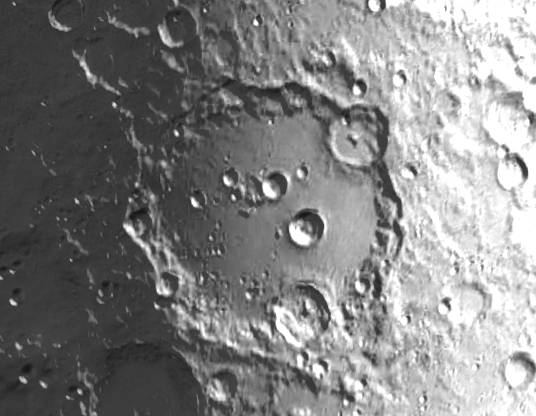
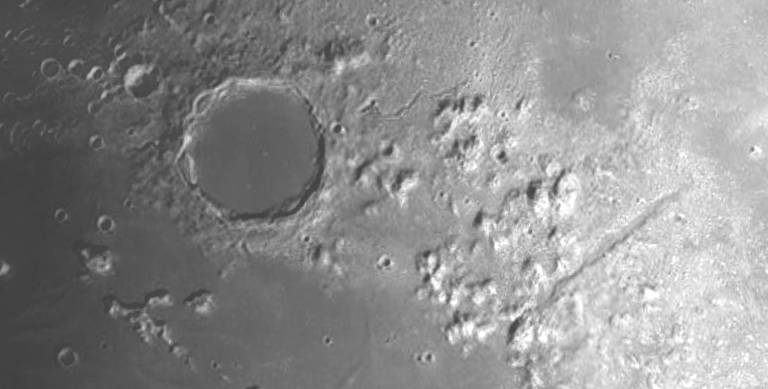
Tonight the moon will be about a day and a half past first quarter it is showing some very nice craters for the binoculars or small telescope. Near the south end of the moon near the terminator, the sunrise line, is the crater called Clavius which has an arc of several craters within it, each of decreasing size. North or above that is the sharp-edged crater called Tycho which, during a full moon, shows several long ejecta rays across the face of the Moon, but are almost invisible now. Near the top edge of the Moon the flat floored crater called Plato is seen by the edge of the large sea Mare Imbrium or Sea of Showers. A mountain range at the opposite side of Imbrium is called the Apennines Mountains.
The astronomical event times given are for the Traverse City/Interlochen area of Michigan (EST, UT – 5 hours). Times will be different for other locations.
Addendum
Ephemeris: 02/05/2025 – Let’s take our weekly look at the naked-eye planets
This is Ephemeris for Wednesday, February 5th. Today the Sun will be up for 10 hours and 1 minute, setting at 5:57, and it will rise tomorrow at 7:55. The Moon, at first quarter today, will set at 3:14 tomorrow morning.
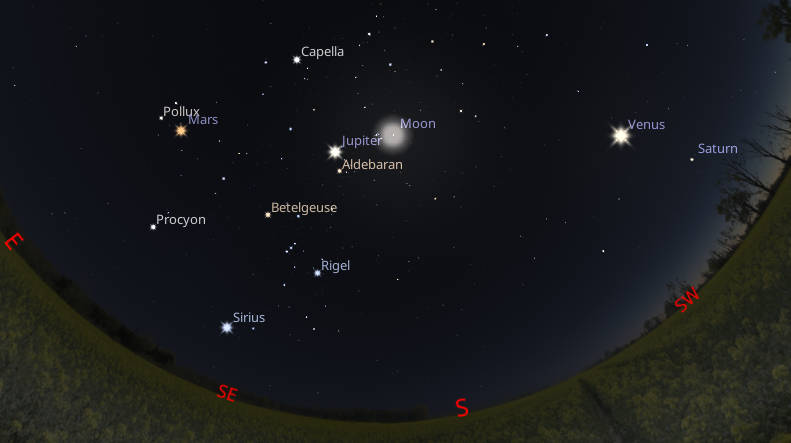
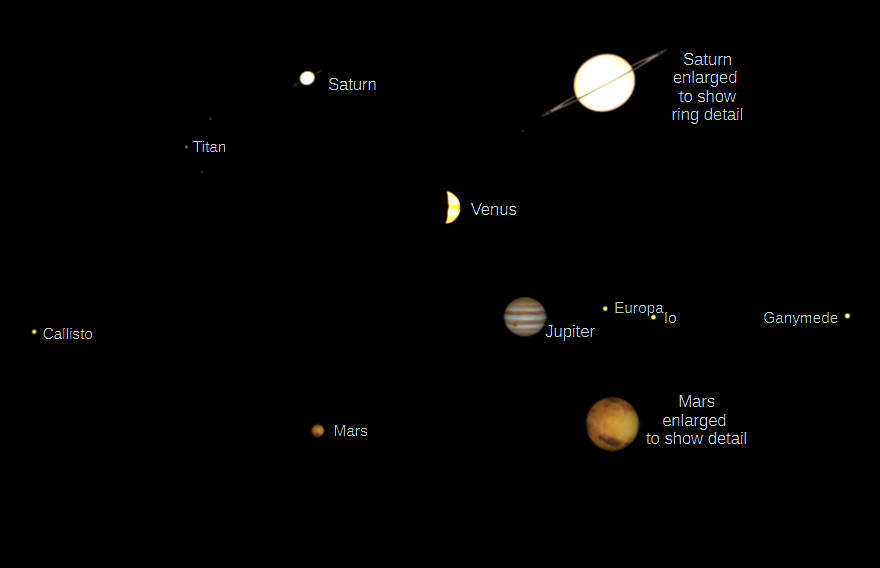
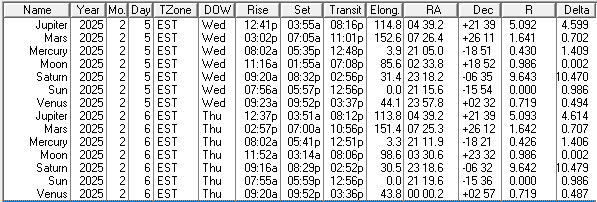
Let’s take our weekly look at the whereabouts of the naked-eye planets. At 7:30 PM this evening four of the five naked eye planets will be out. Starting from the West we have Venus the brightest of all in the west southwest. Far below it, near the horizon, will be the much dimmer Saturn. Jupiter, the second-brightest planet will be high in the south-southeast. It is reversing course and beginning to head back eastward now. Farther below it is the spectacular constellation of Orion the hunter. The 4th planet out is Mars, the third-brightest planet now, with its distinctive reddish hue, near the star Pollux in Gemini, and just about due east. The fifth naked eye planet, Mercury, is too close to the Sun to be visible.
The astronomical event times given are for the Traverse City/Interlochen area of Michigan (EST, UT – 5 hours). Times will be different for other locations.
Addendum
Ephemeris: 02/04/2025 – Two Moon landers currently en route
This is Bob Moler with Ephemeris for Tuesday, February 4th. Today the Sun will be up for 9 hours and 58 minutes, setting at 5:56, and it will rise tomorrow at 7:56. The Moon, 1 day before first quarter, will set at 1:55 tomorrow morning.
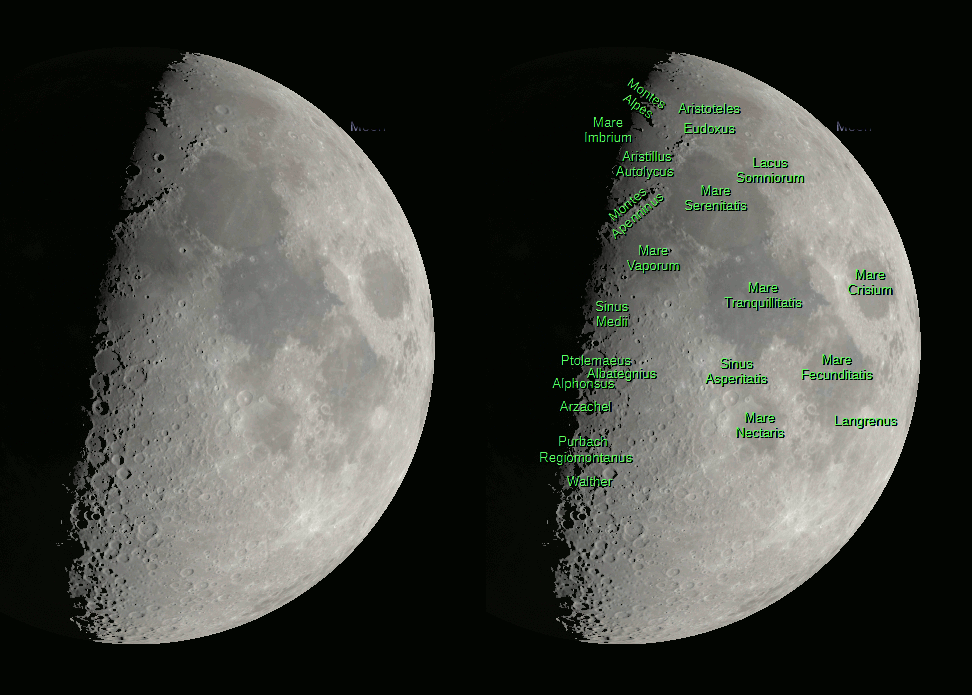
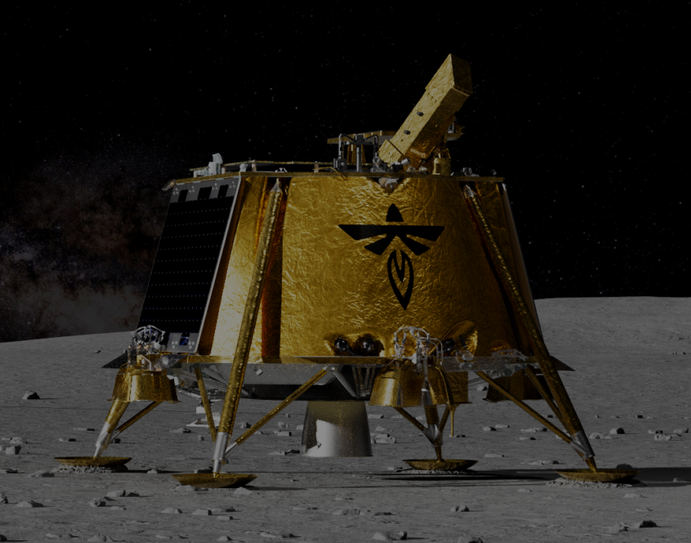
On January 15th a SpaceX Falcon 9 rocket launched 2 missions, at one time, to land on the Moon They will arrive at the Moon months apart. The first to attempt to land is Firefly’s Blue Ghost Lander with a mission called Ghost Riders in the Sky. It is currently spending about a month in Earth orbit before heading out to the Moon, which will take four days and spend another two weeks orbiting the Moon before attempting to land in the small area called Mare Crisium, the Sea of Crises. The second Lander by the Japanese company ispace, called Resilience, will take a more circuitous route to the moon, flying by it later this month and then coming back to the Moon several months later to enter orbit and then finally land on Mare Frigoris, the Cold Sea. So the two missions will not be active on the Moon at the same time.
The astronomical event times given are for the Traverse City/Interlochen area of Michigan (EST, UT – 5 hours). Times will be different for other locations.
Addendum

Ephemeris: 02/03/2025 – Did the groundhog see his shadow yesterday?
Did it matter?
This is Ephemeris for Monday, February 3rd. Today the Sun will be up for 9 hours and 55 minutes, setting at 5:54, and it will rise tomorrow at 7:57. The Moon, 2 days before first quarter, will set at 12:35 tomorrow morning.
I don’t know if Punxsutawney Phil saw his shadow yesterday morning or not, but February 2nd was a special day to the ancients. It is celebrated as a cross-quarter day, the middle of the season of winter, though the real date of the middle of winter is tomorrow. And if Phil saw his shadow, and we do get 6 more weeks of winter, that’s OK too. By the calendar, it’s actually more like 6 ½ weeks to the vernal or spring equinox the official end of winter, plus this is Northern Michigan. I don’t know if Phil is any better or worse than the National Weather Service at long range forecasts. Of the other cross-quarter days, two others stand out. They are May 1st, May Day; and Halloween.
The astronomical event times given are for the Traverse City/Interlochen area of Michigan (EST, UT – 5 hours). Times will be different for other locations.
Addendum


 Bob Moler's Ephemeris Blog